NihontoWatch Mon

NihontoWatchBETA

マーケットオークション
事典
NihontoWatch Mon

NihontoWatchBETA

マーケットオークション
事典

説明

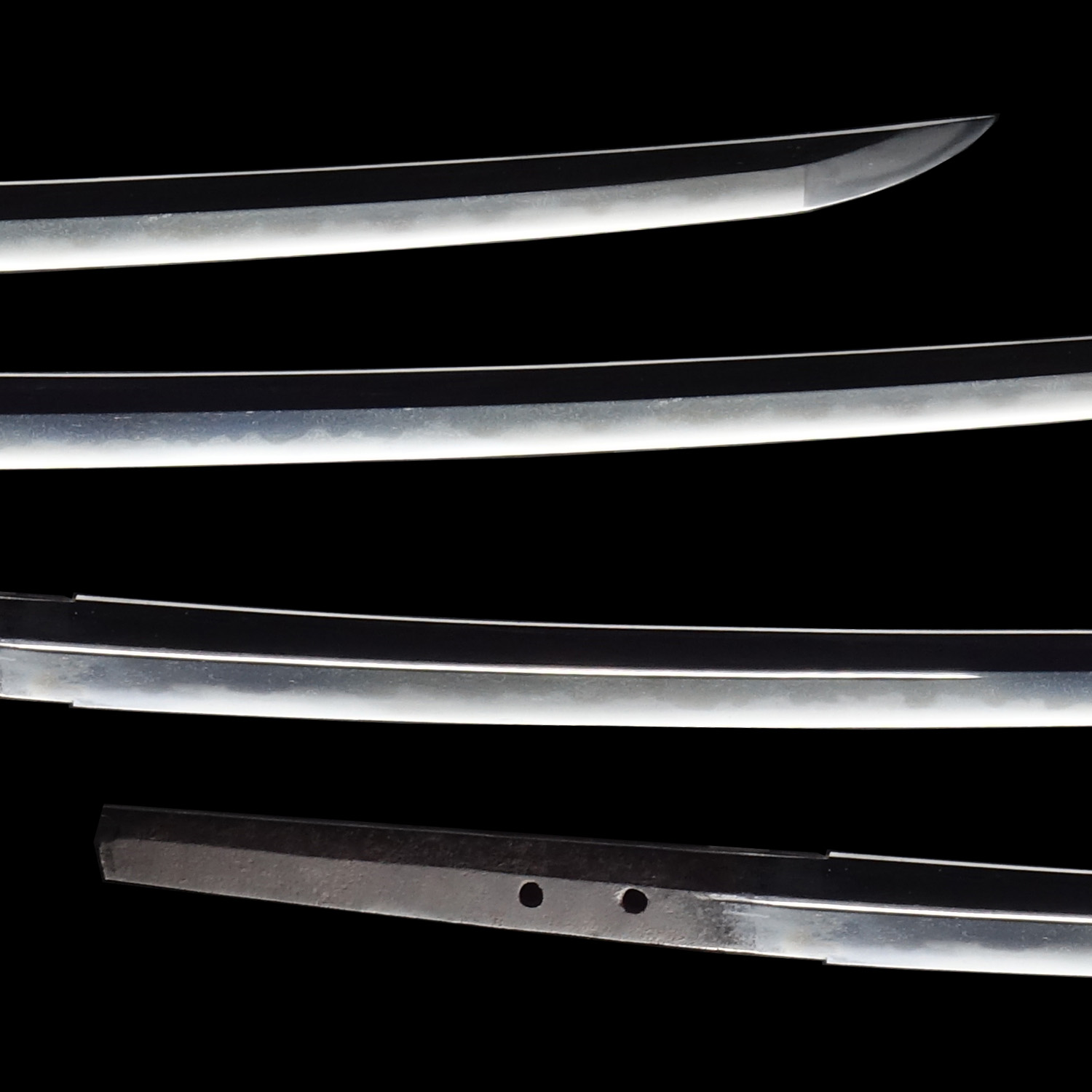
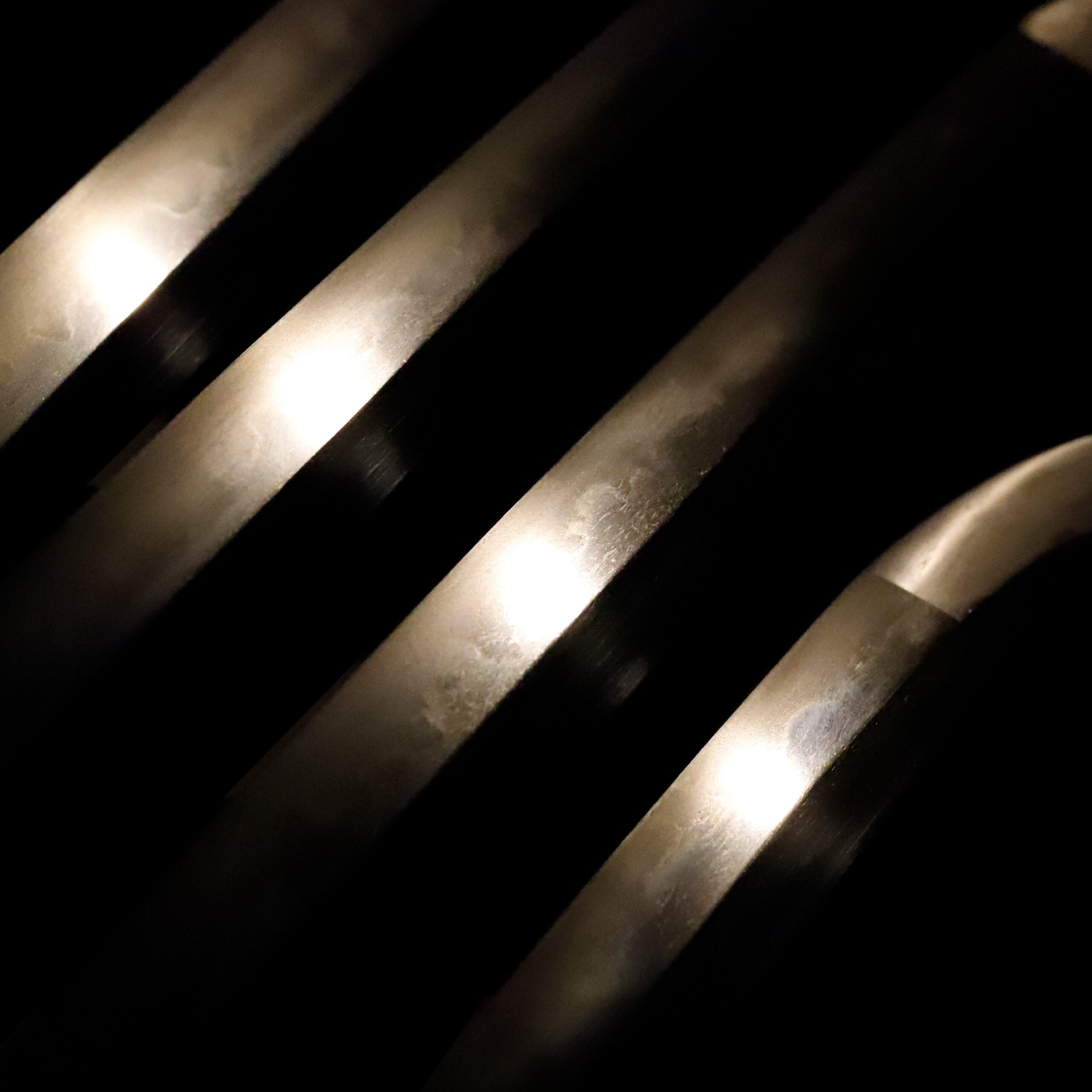
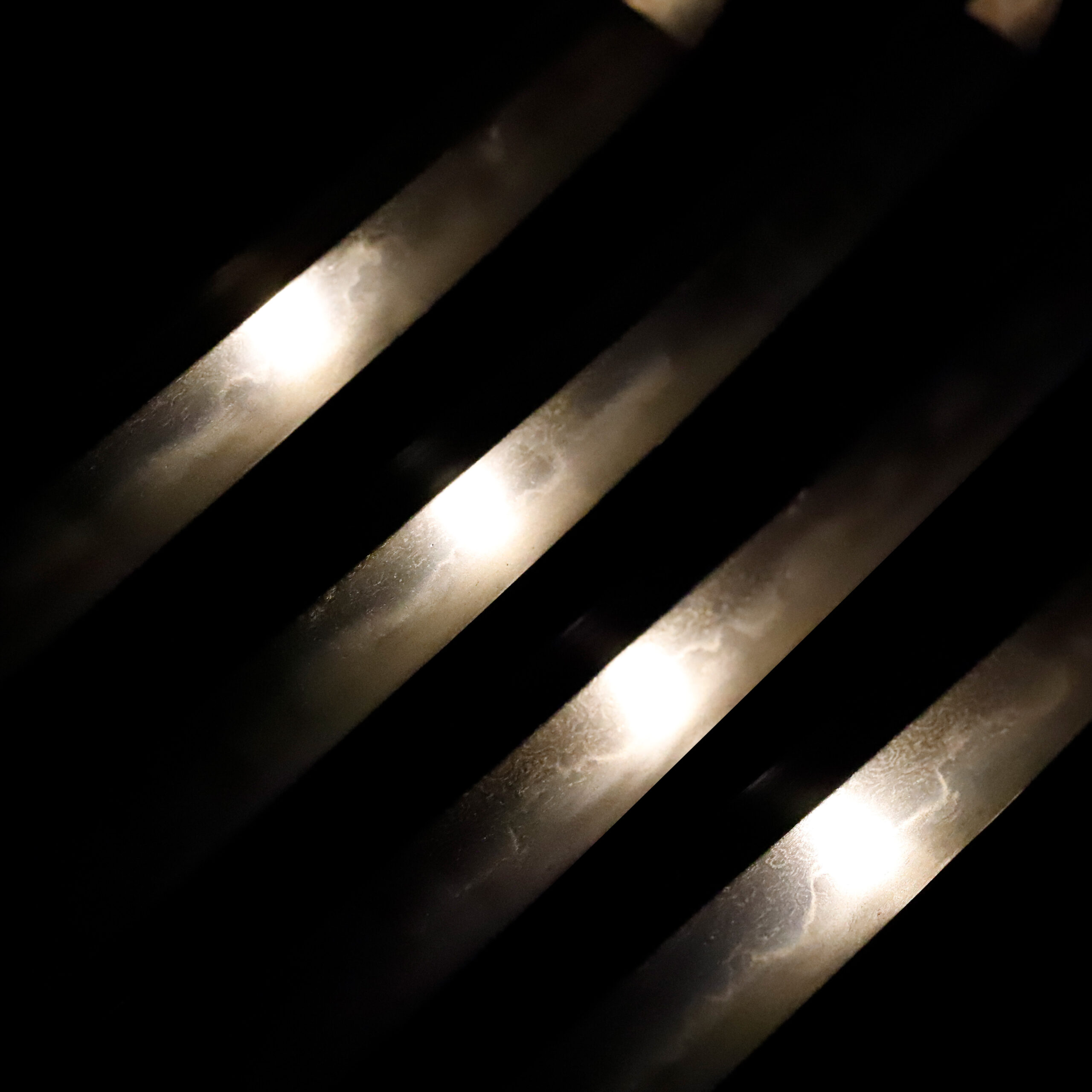
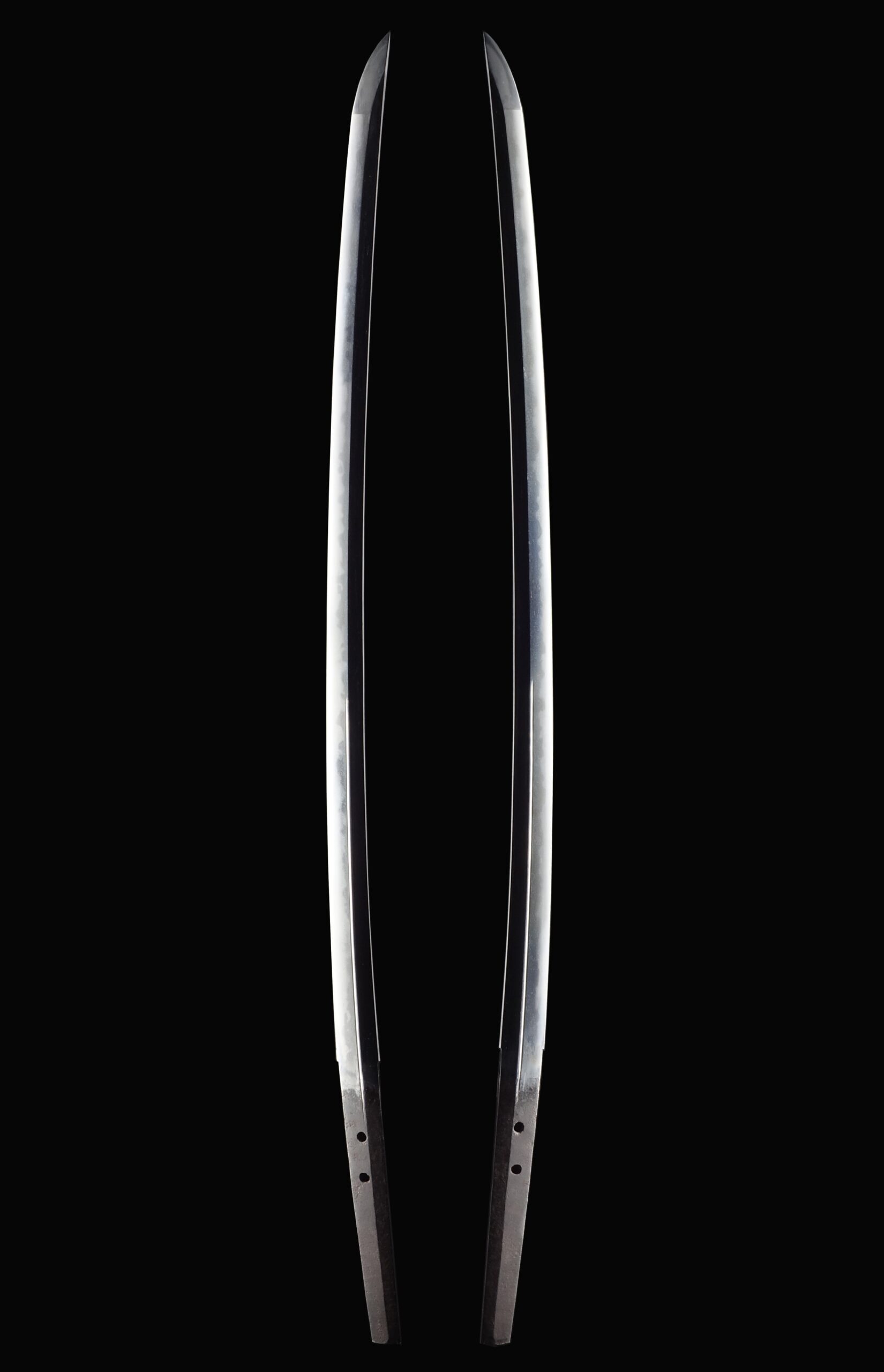
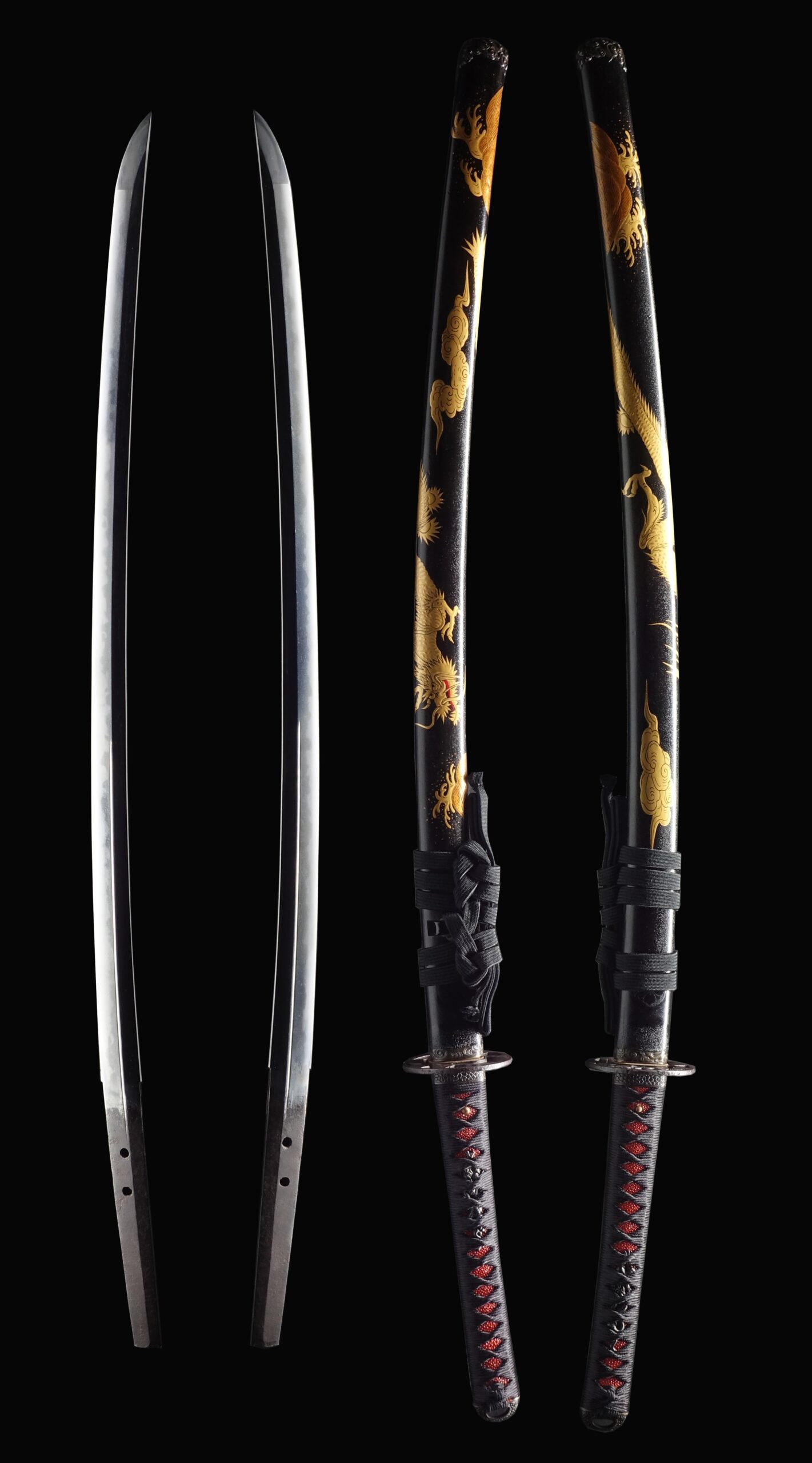
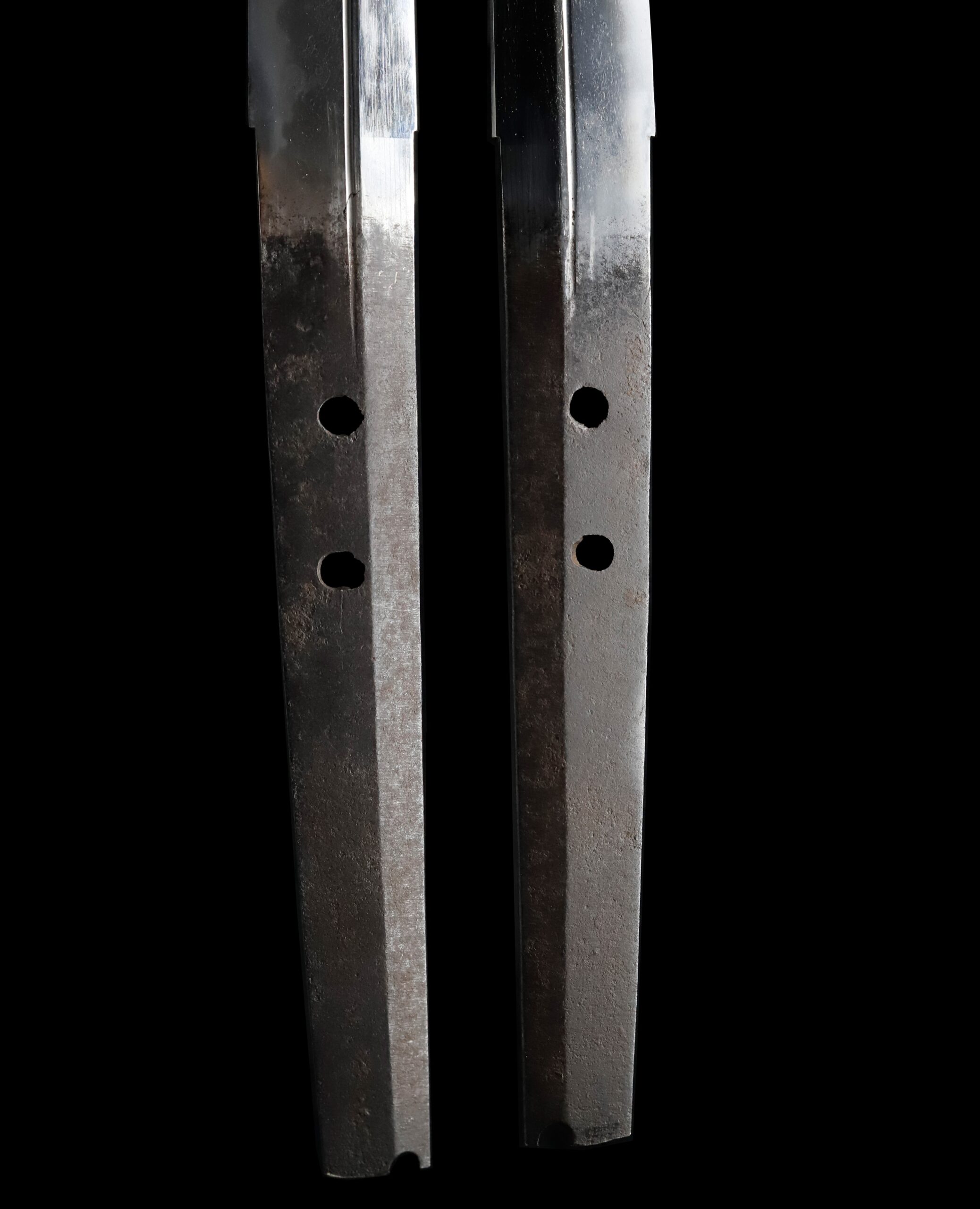
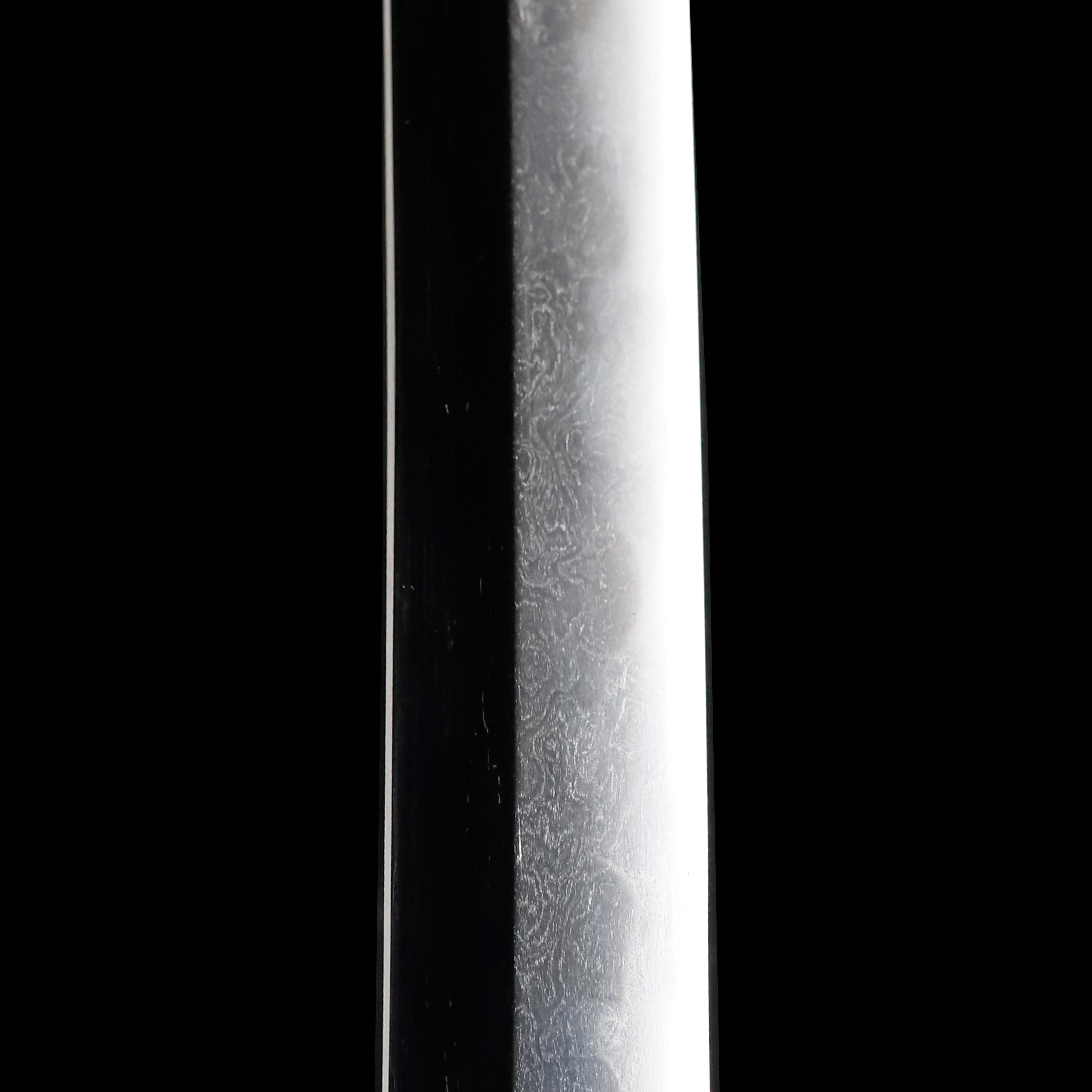
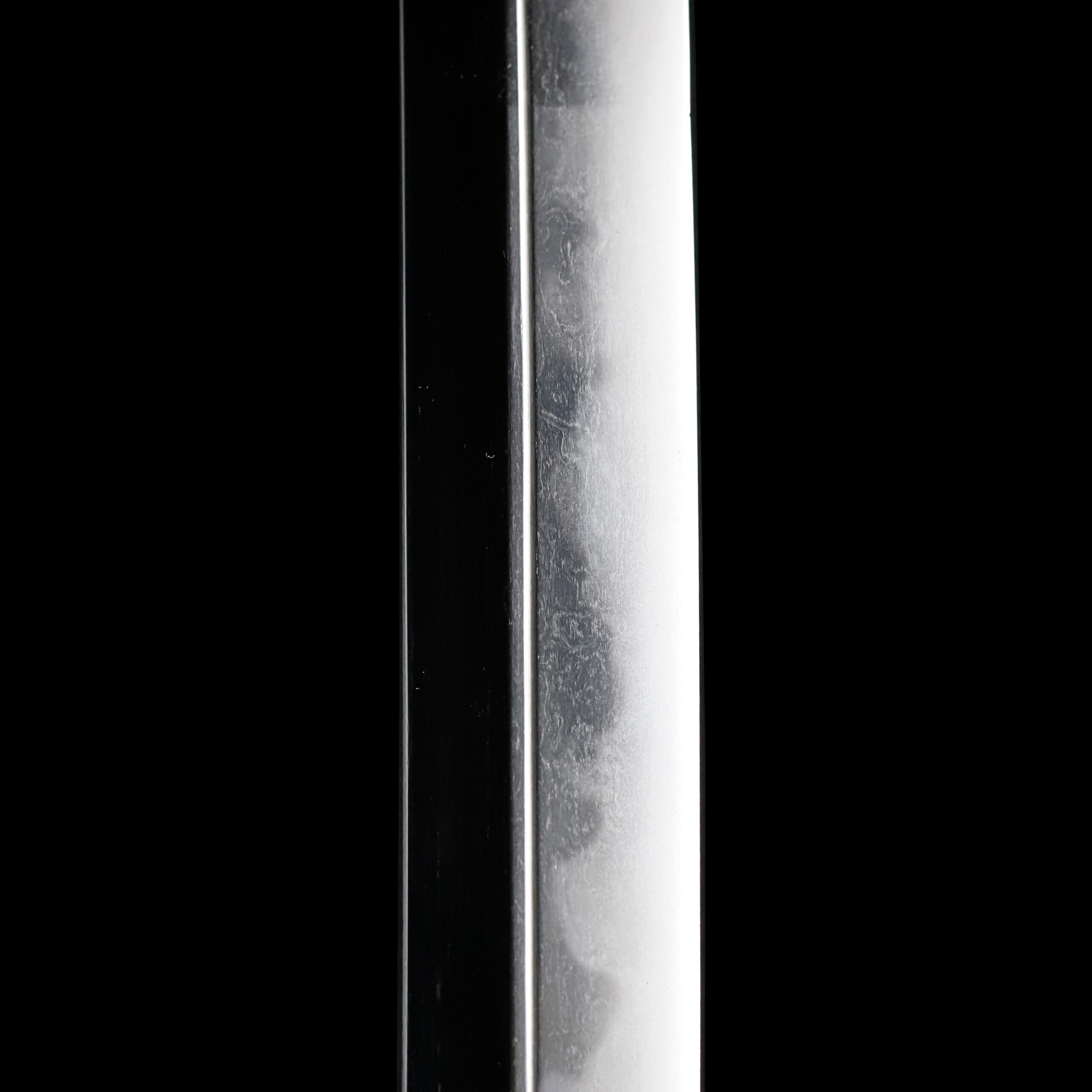
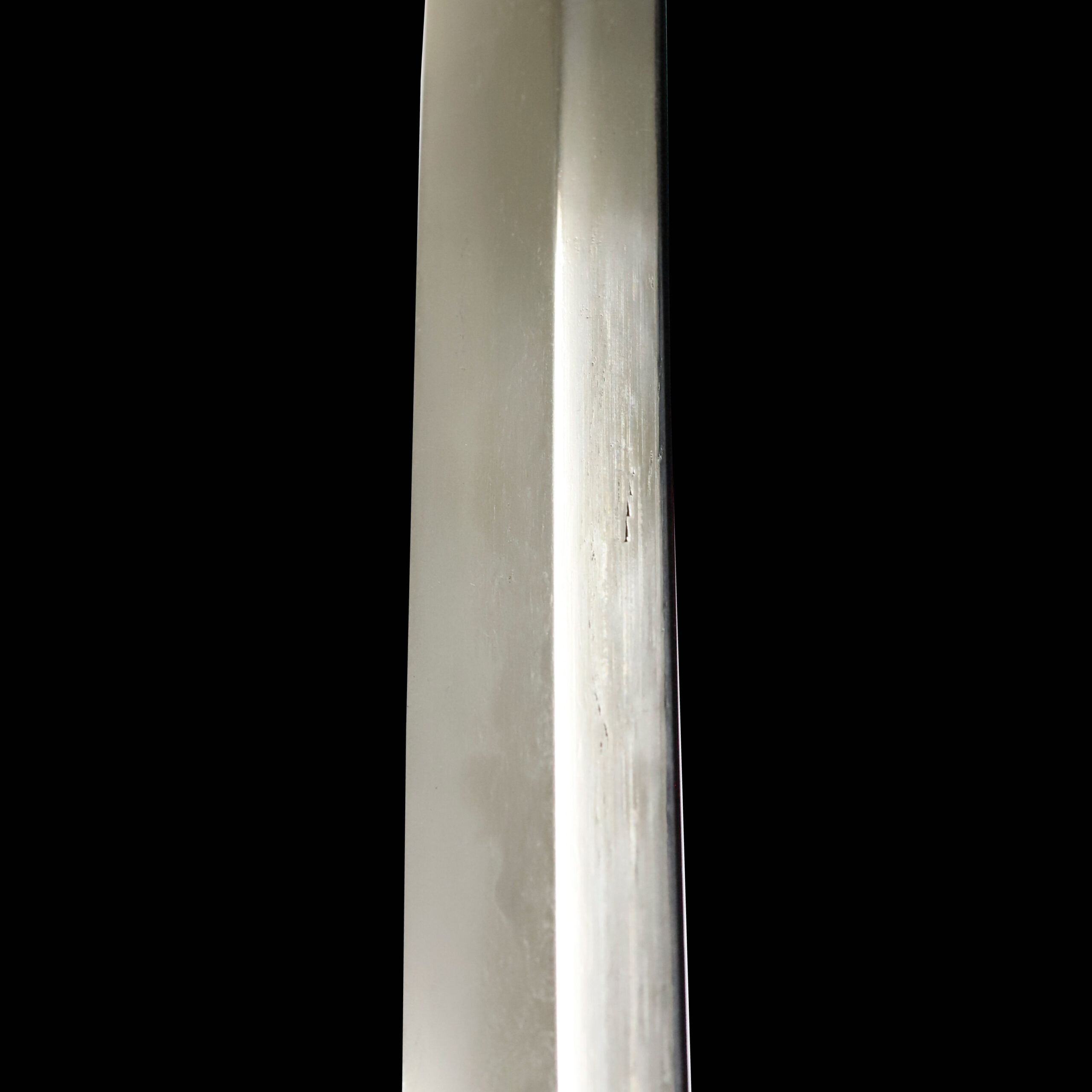
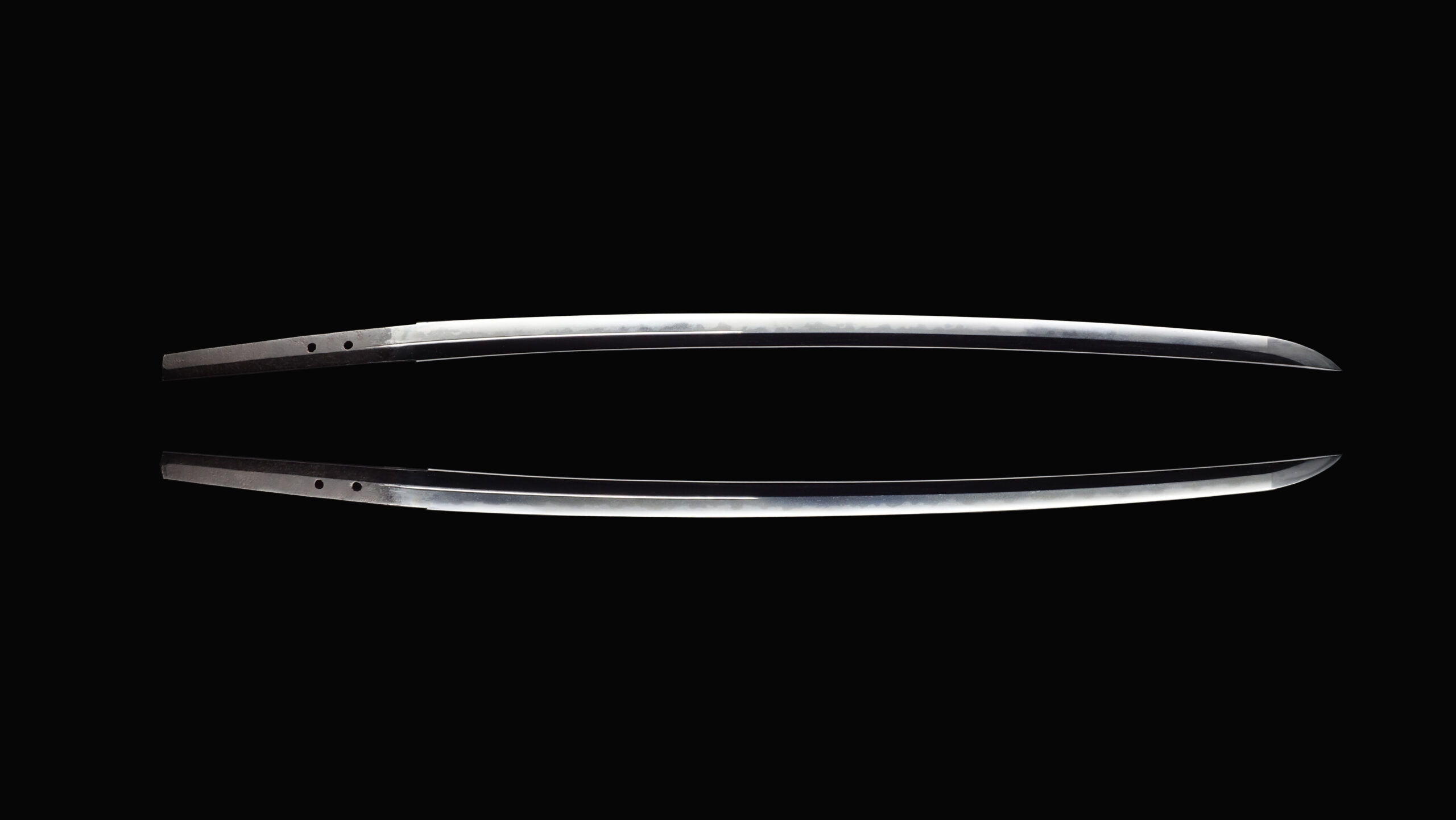
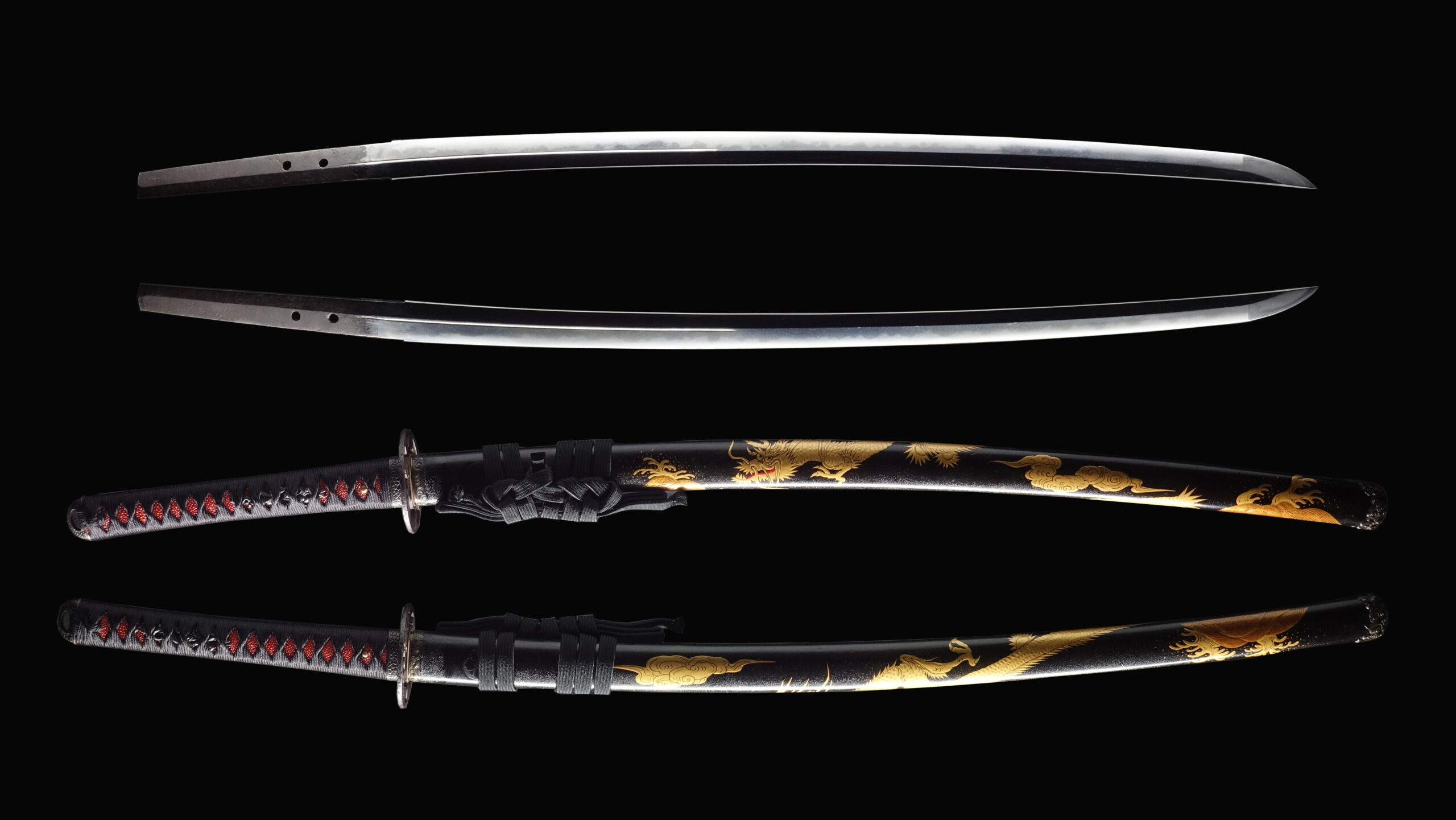
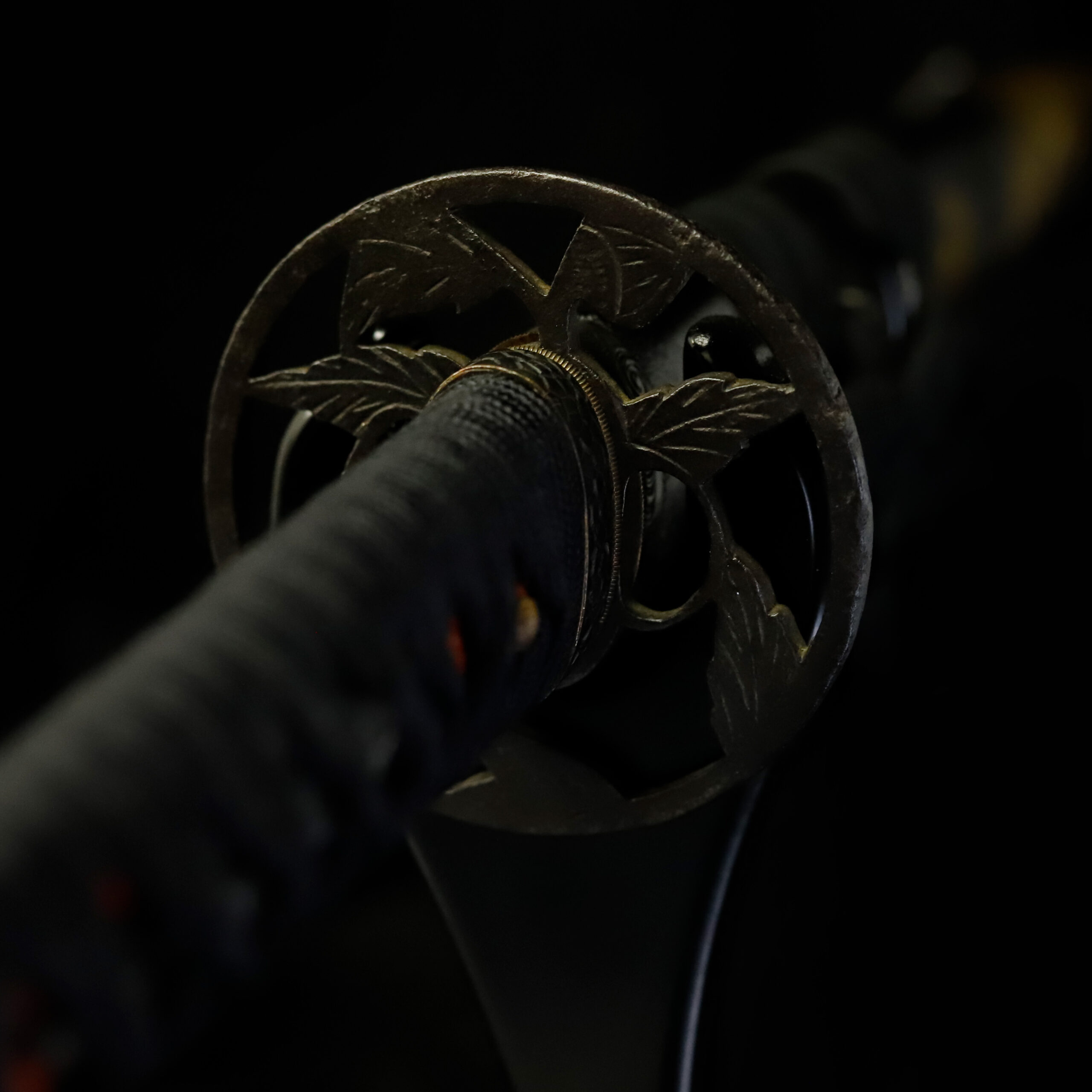
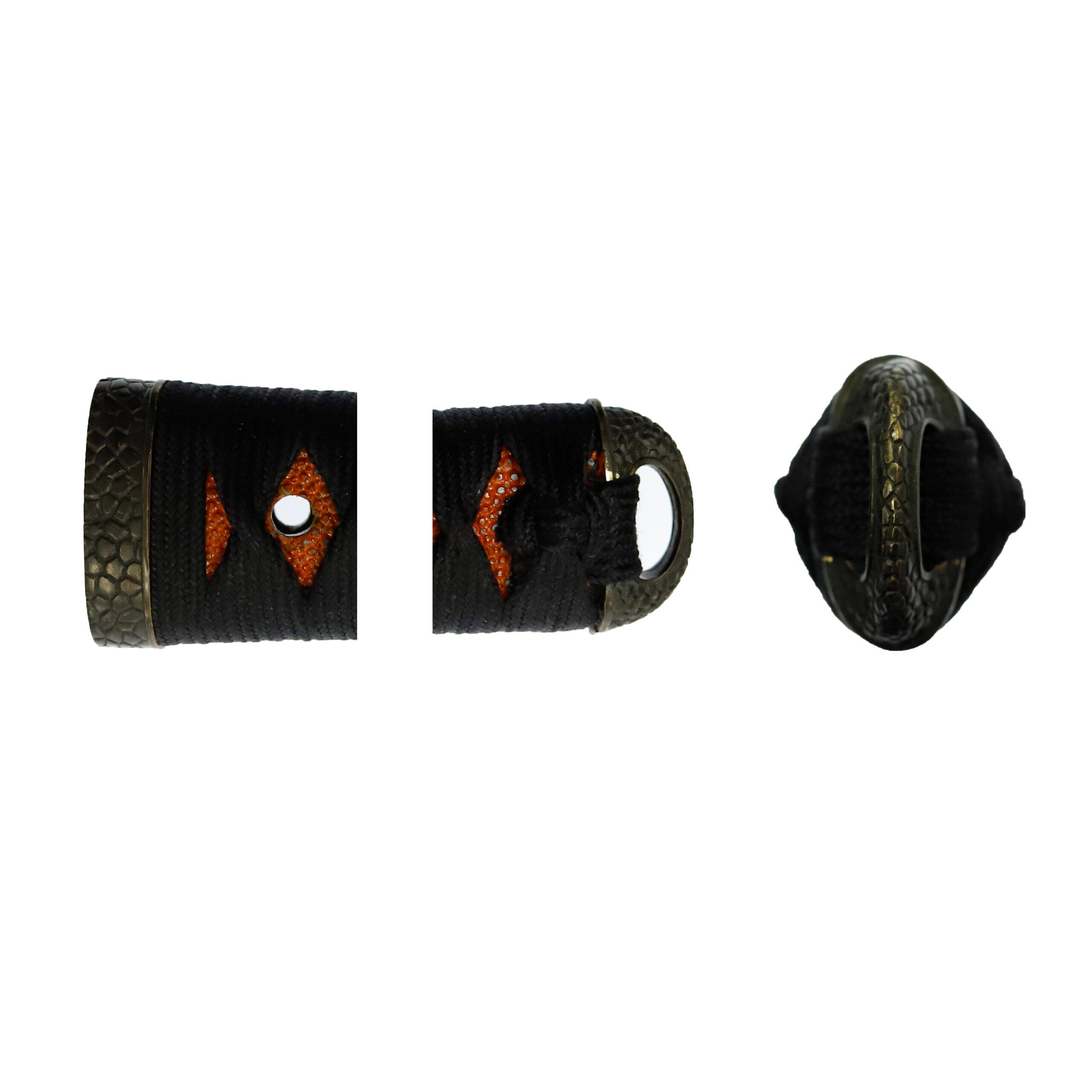
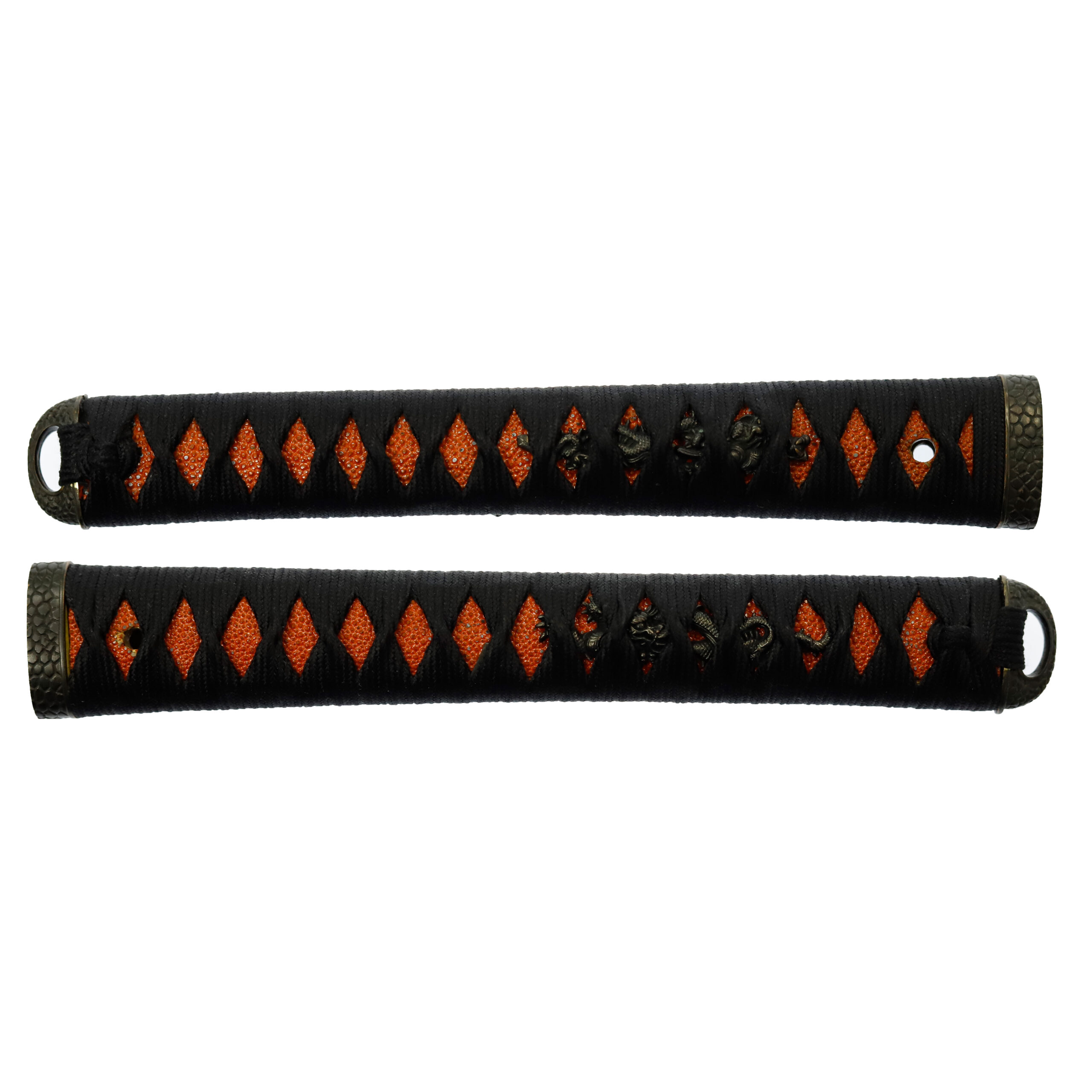
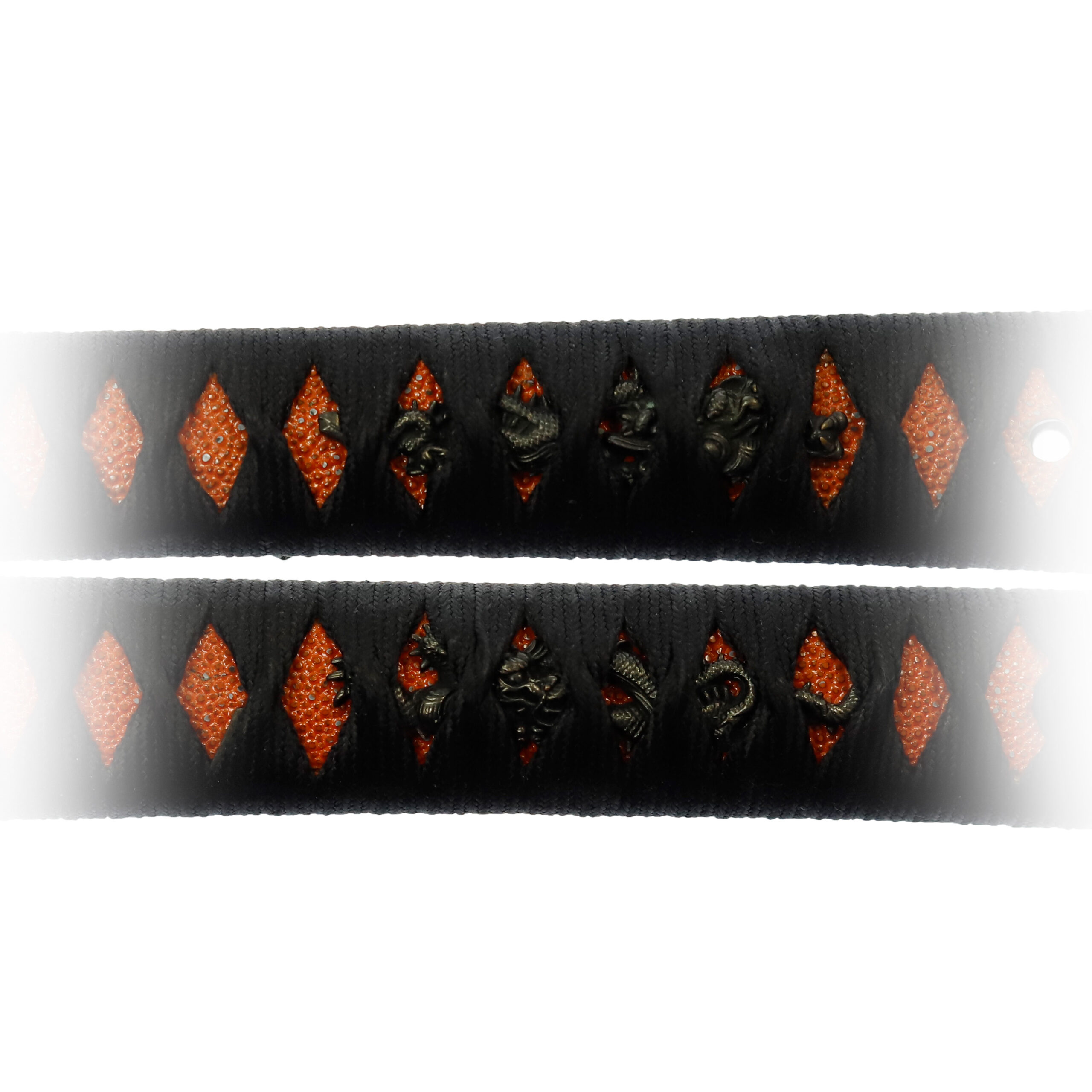
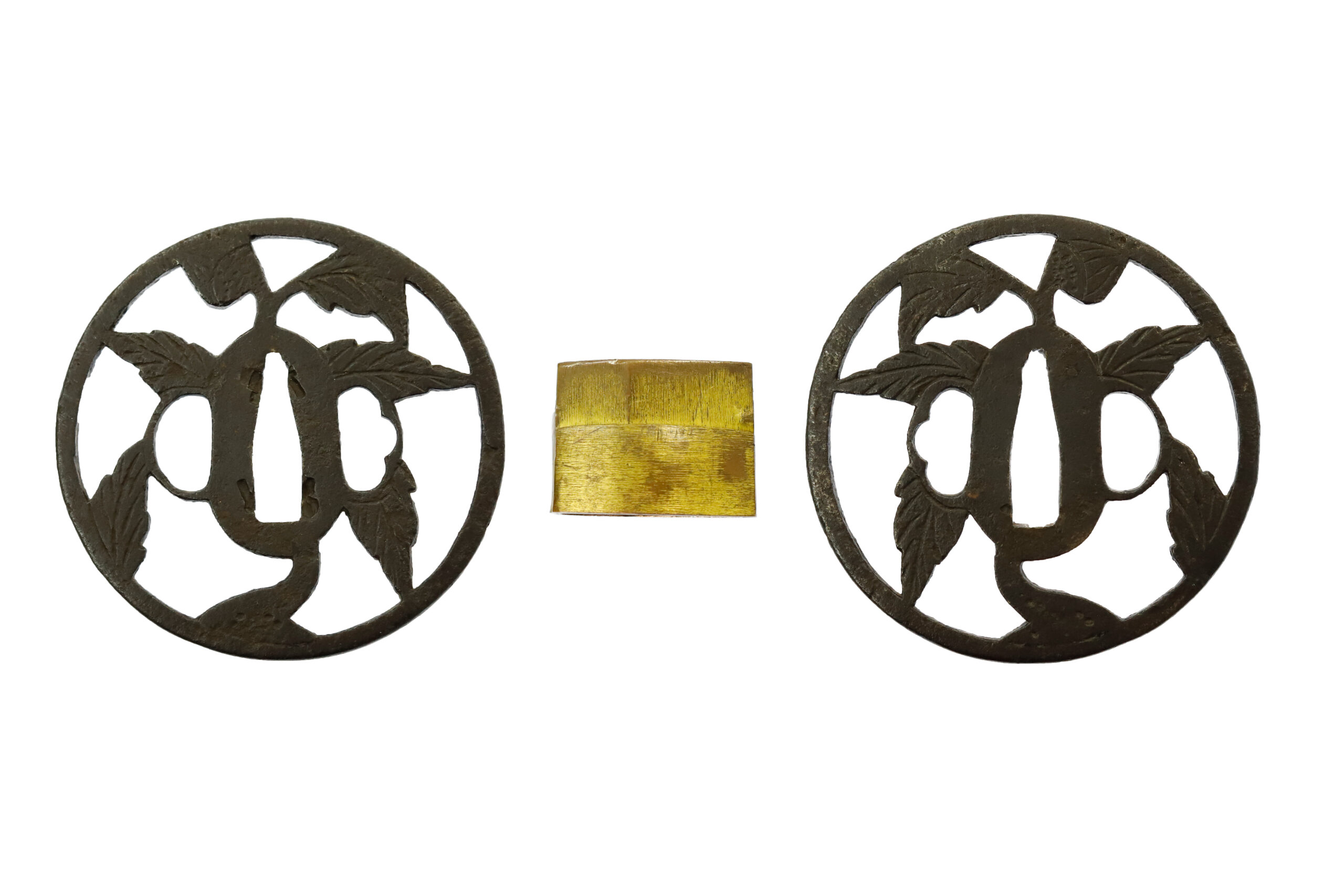
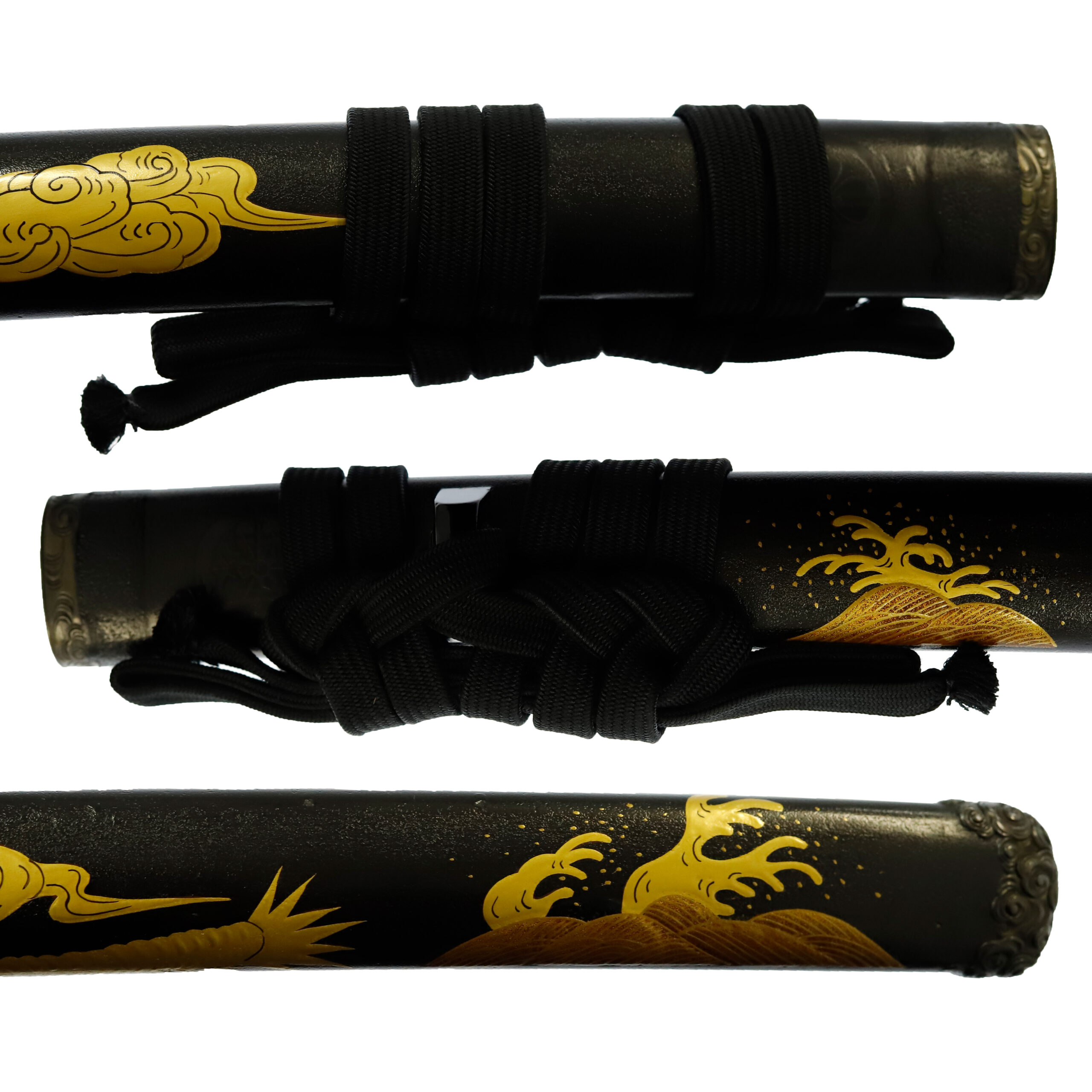
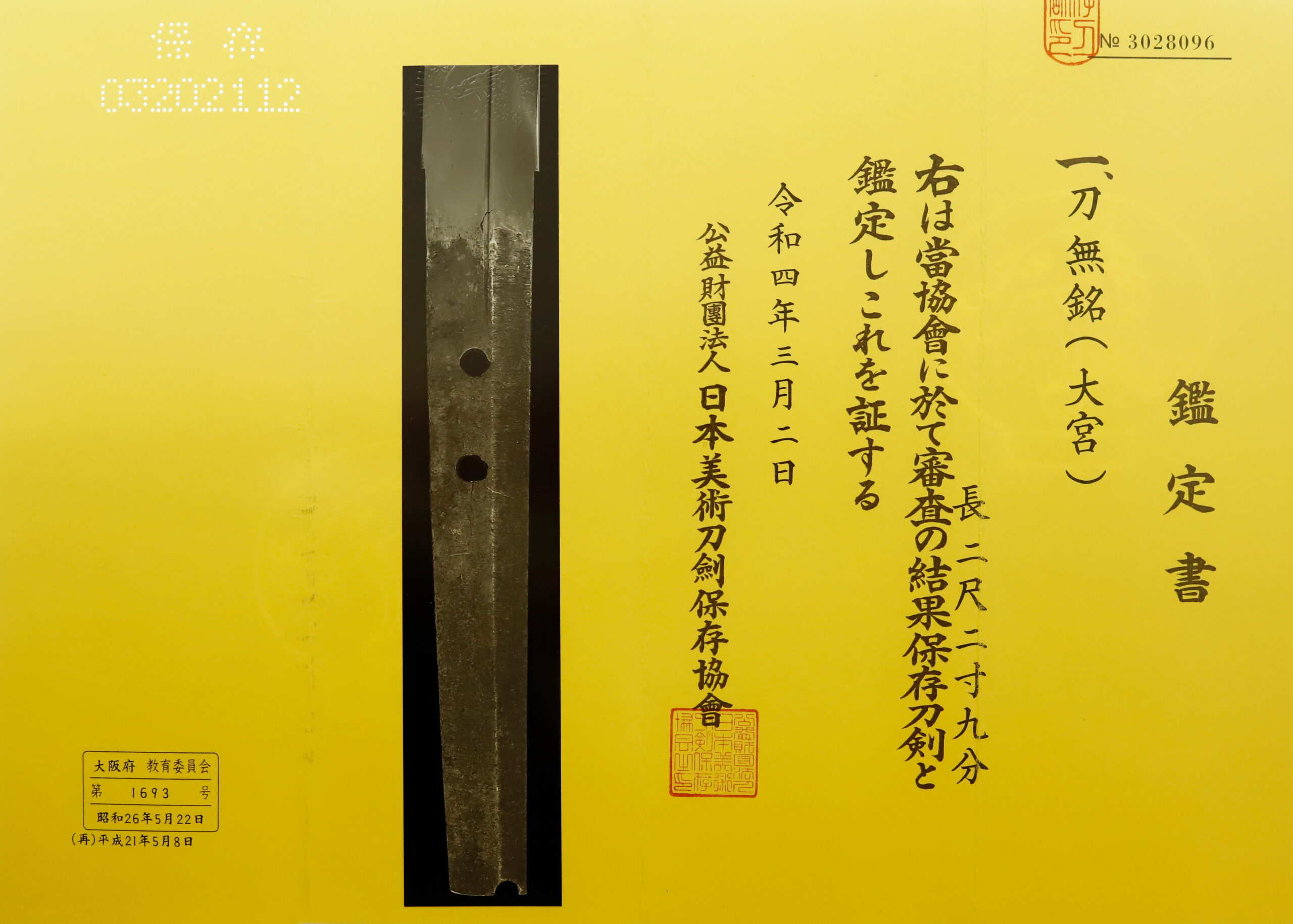
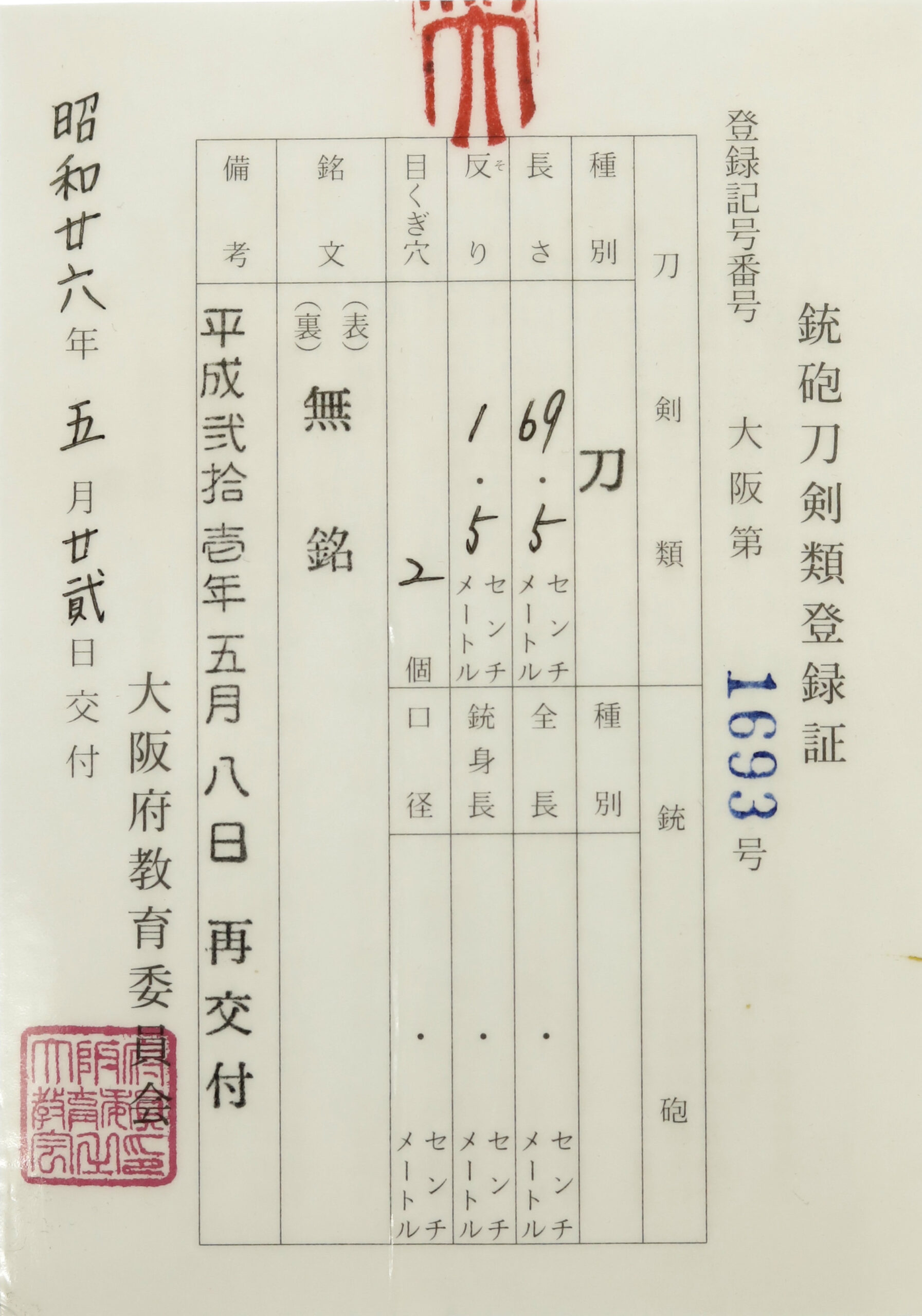
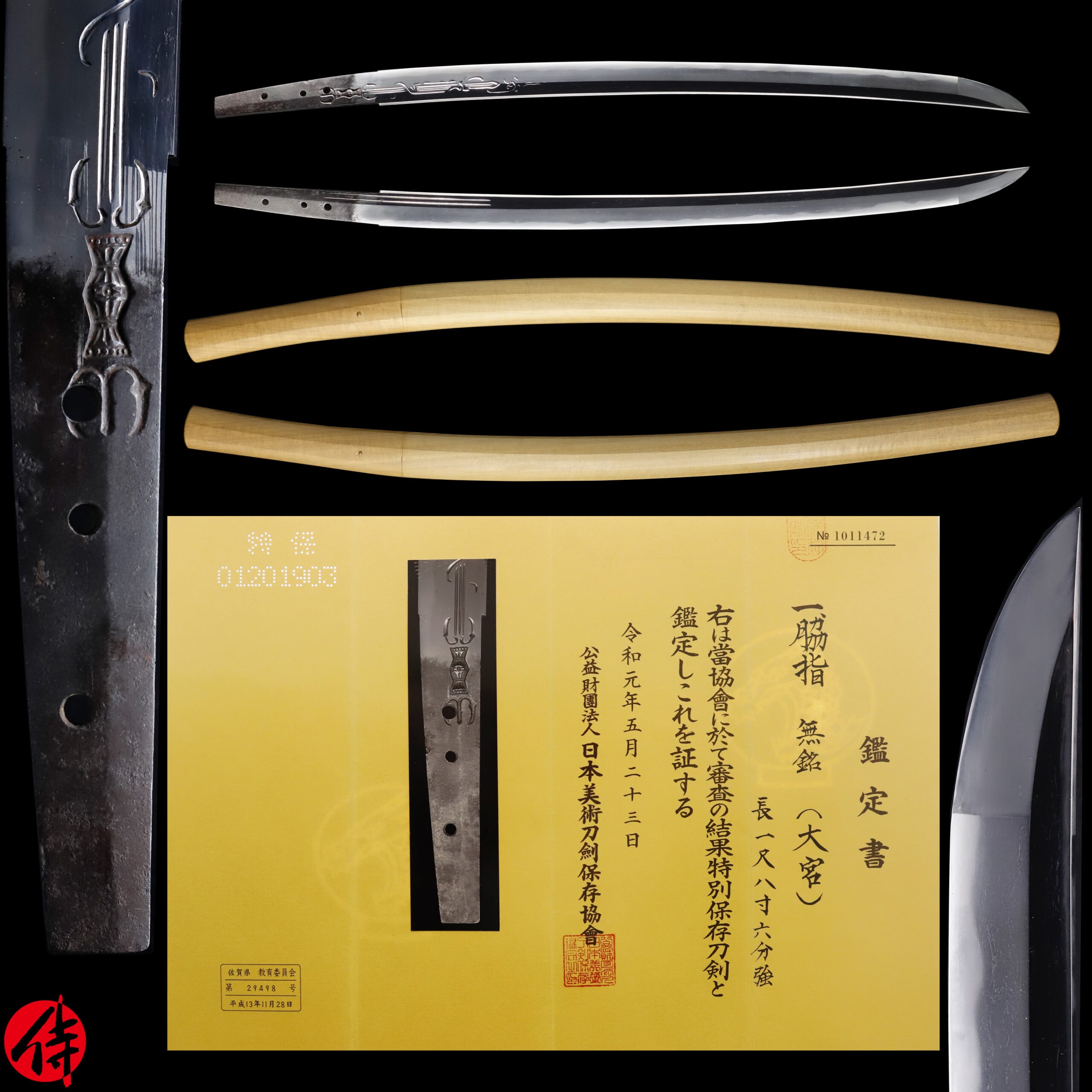
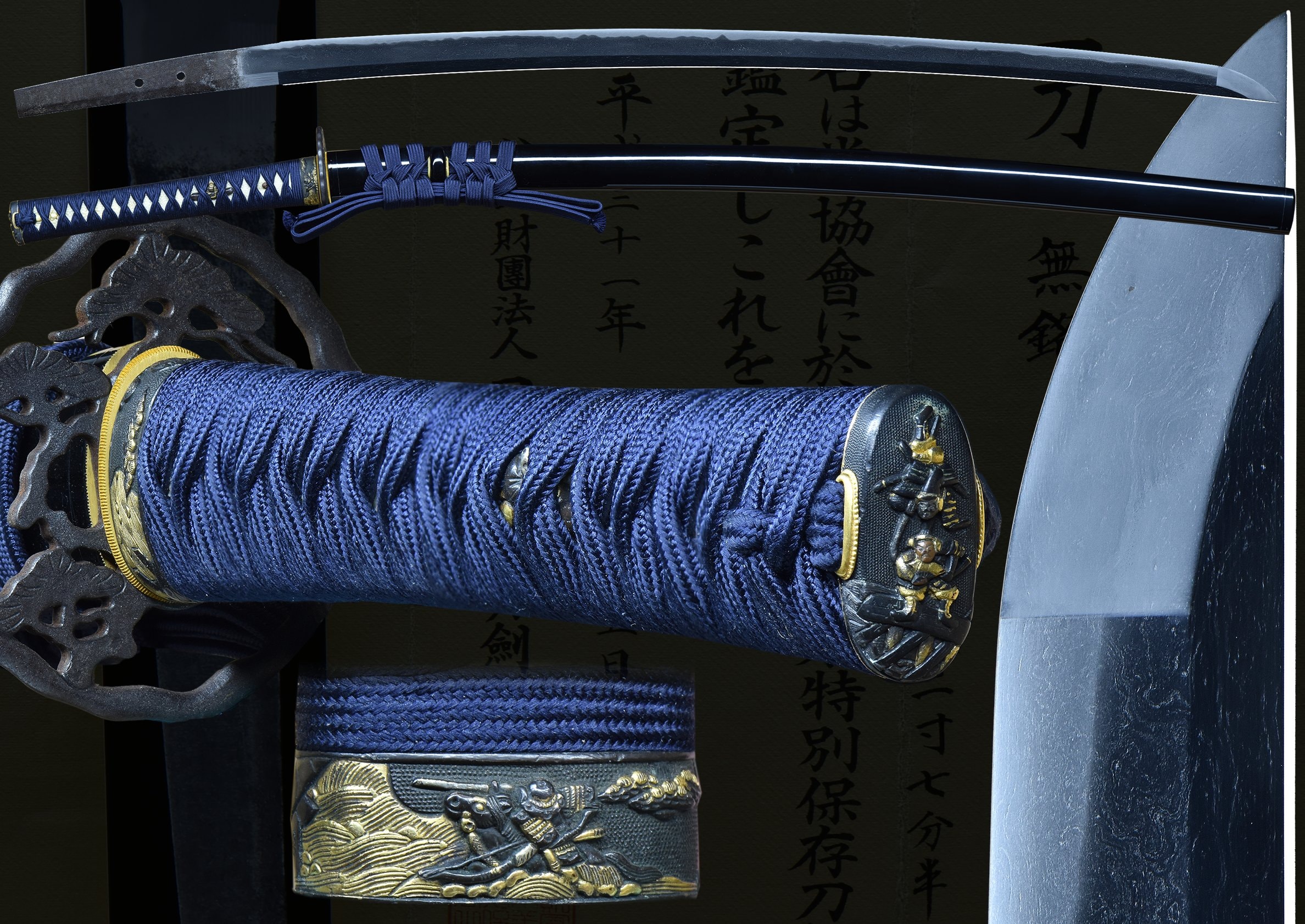
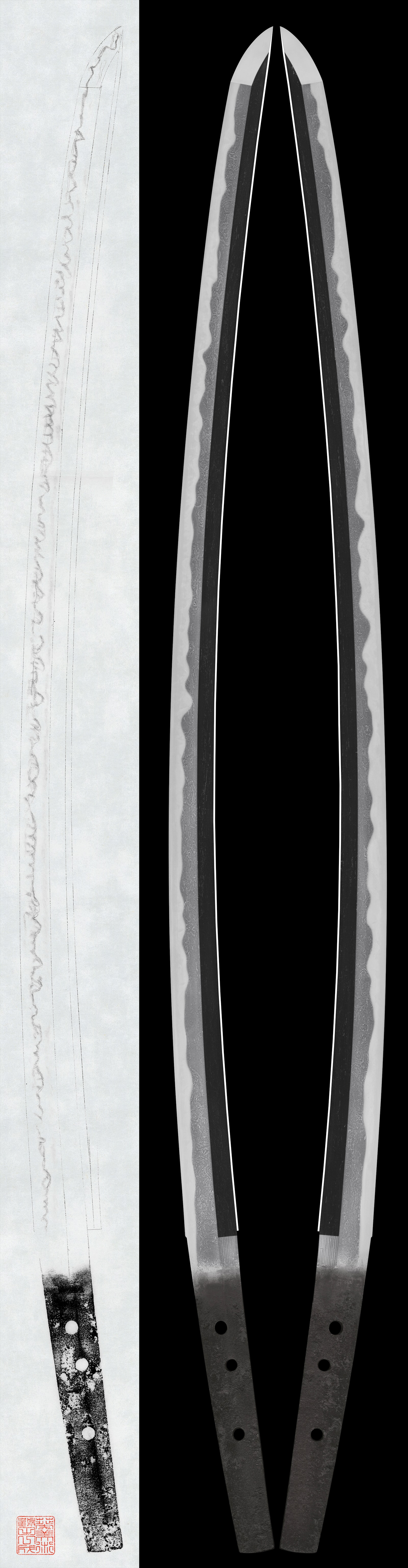
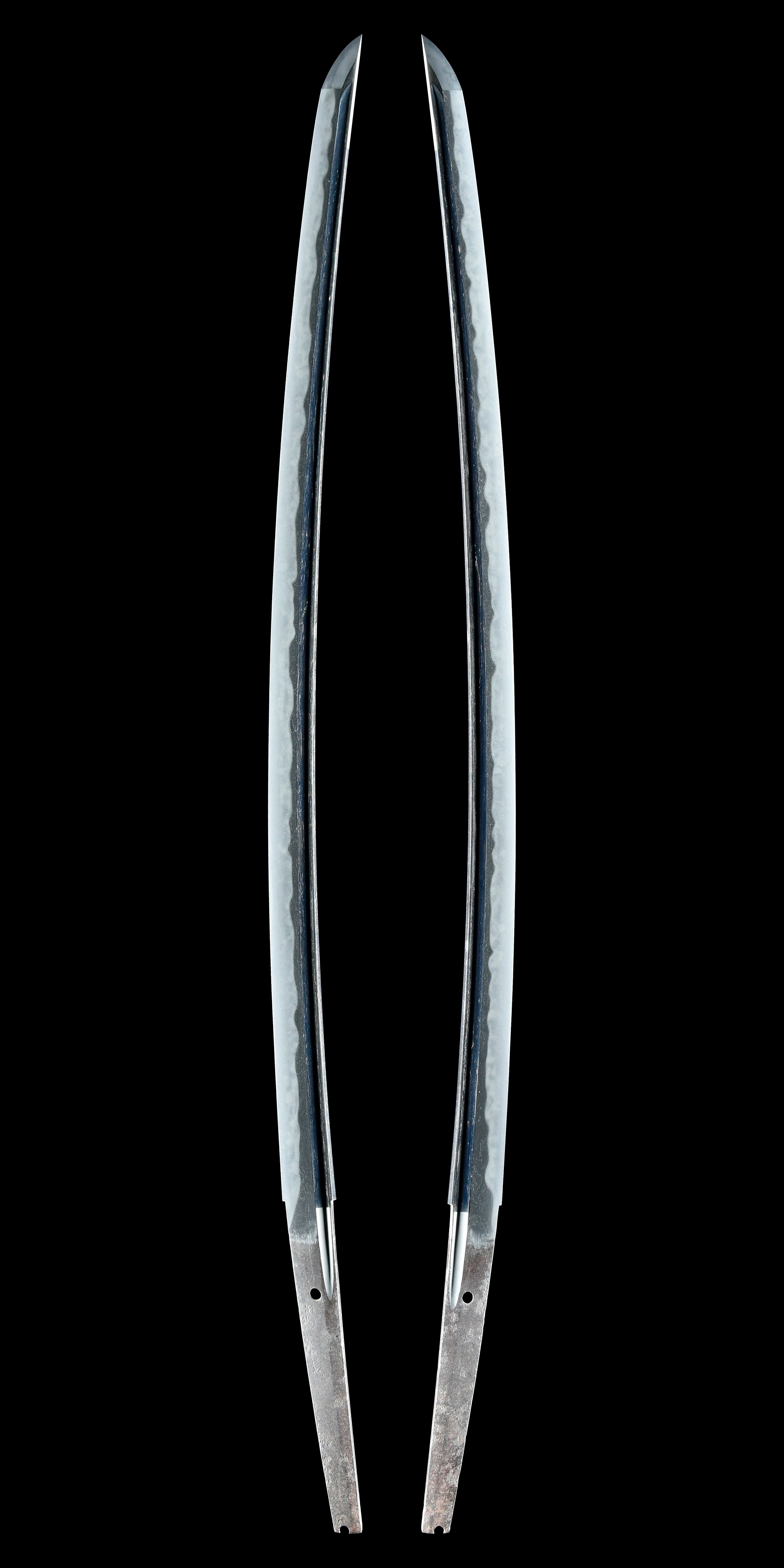
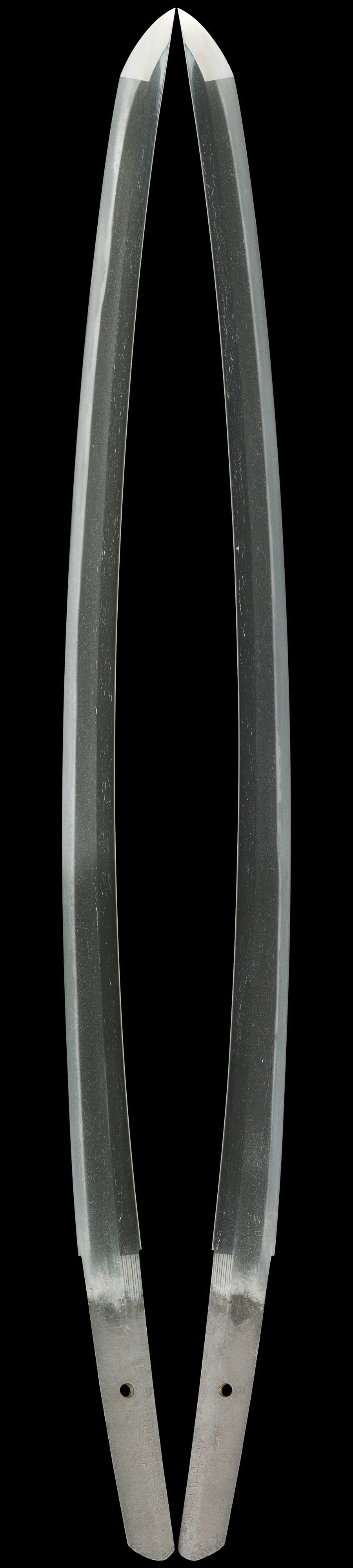
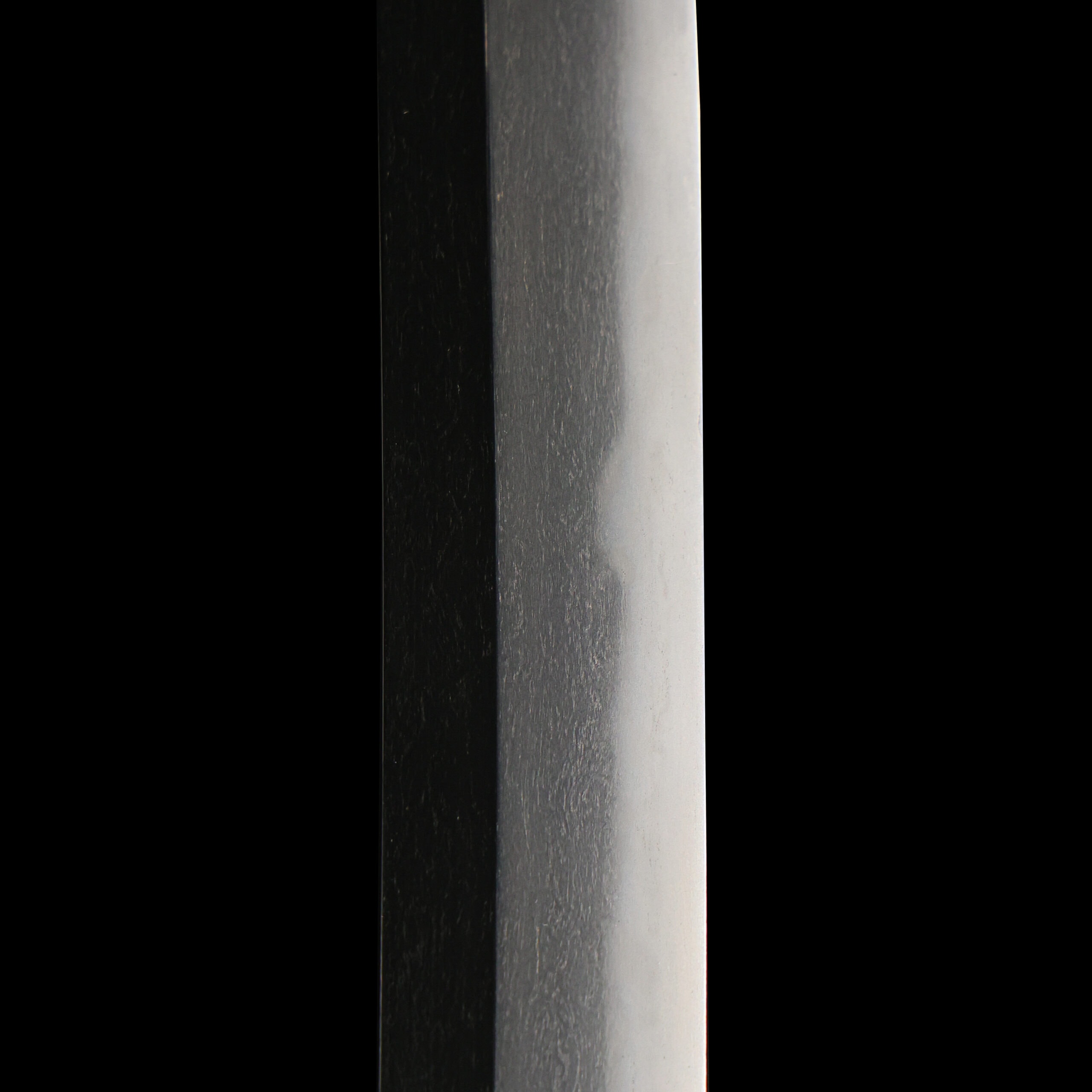
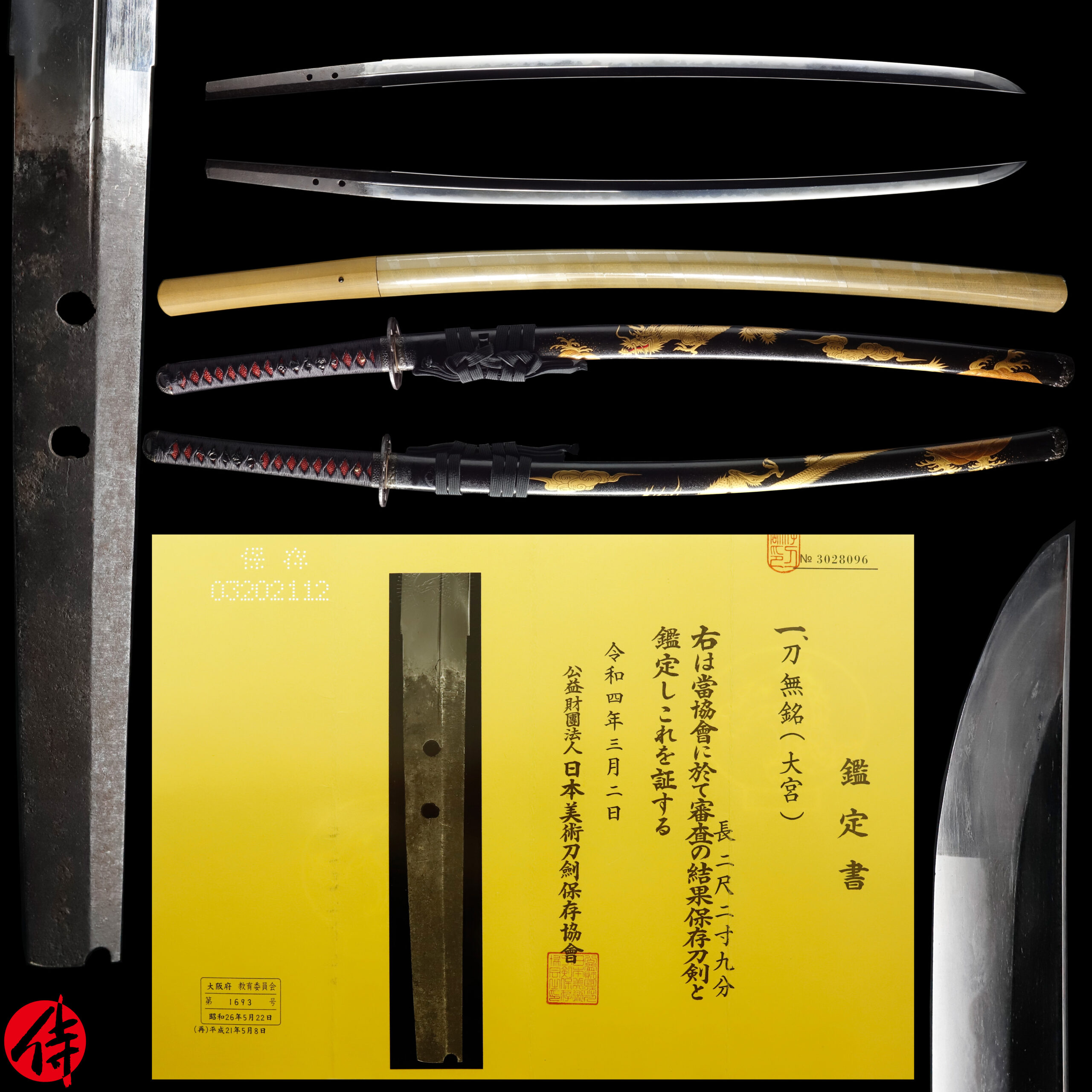
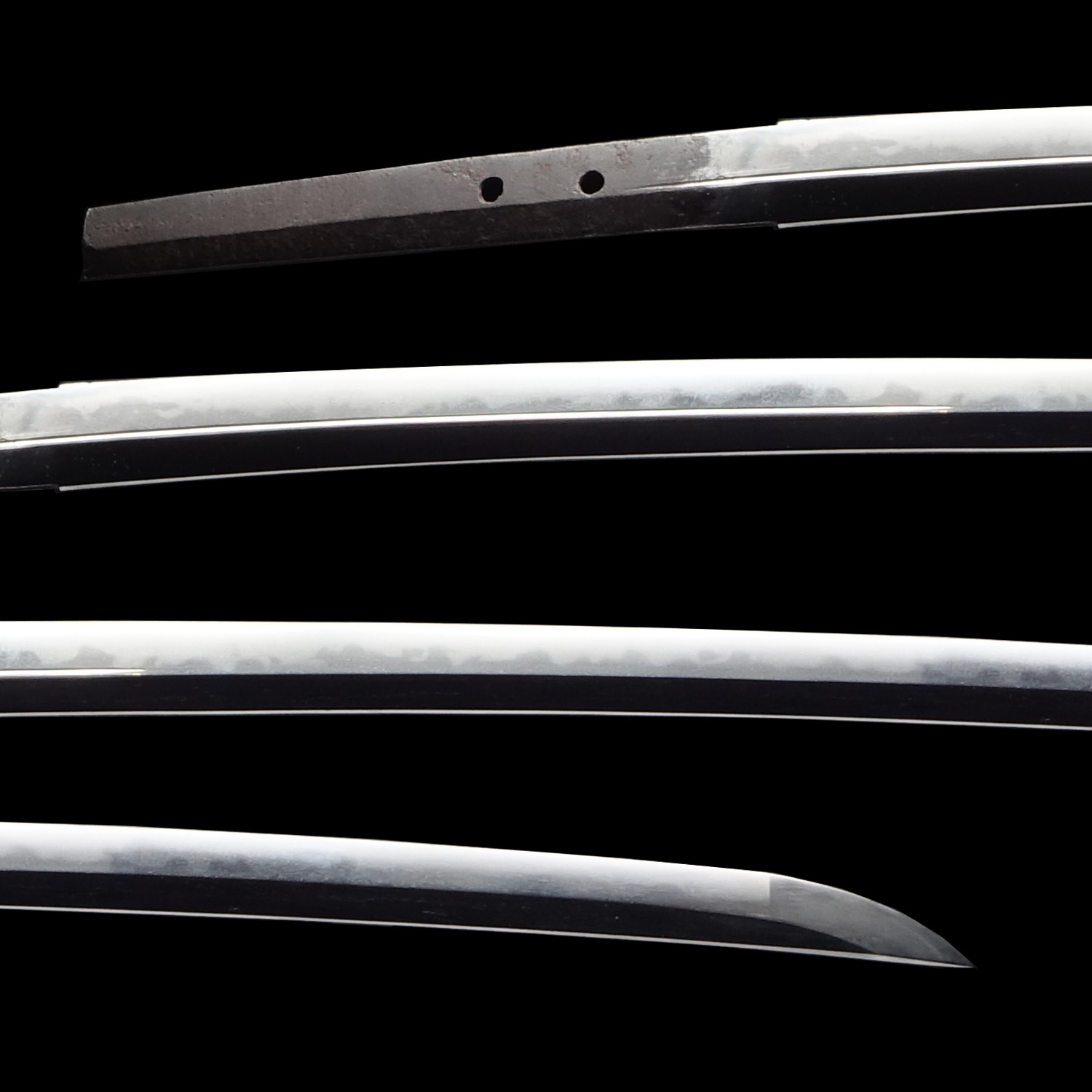
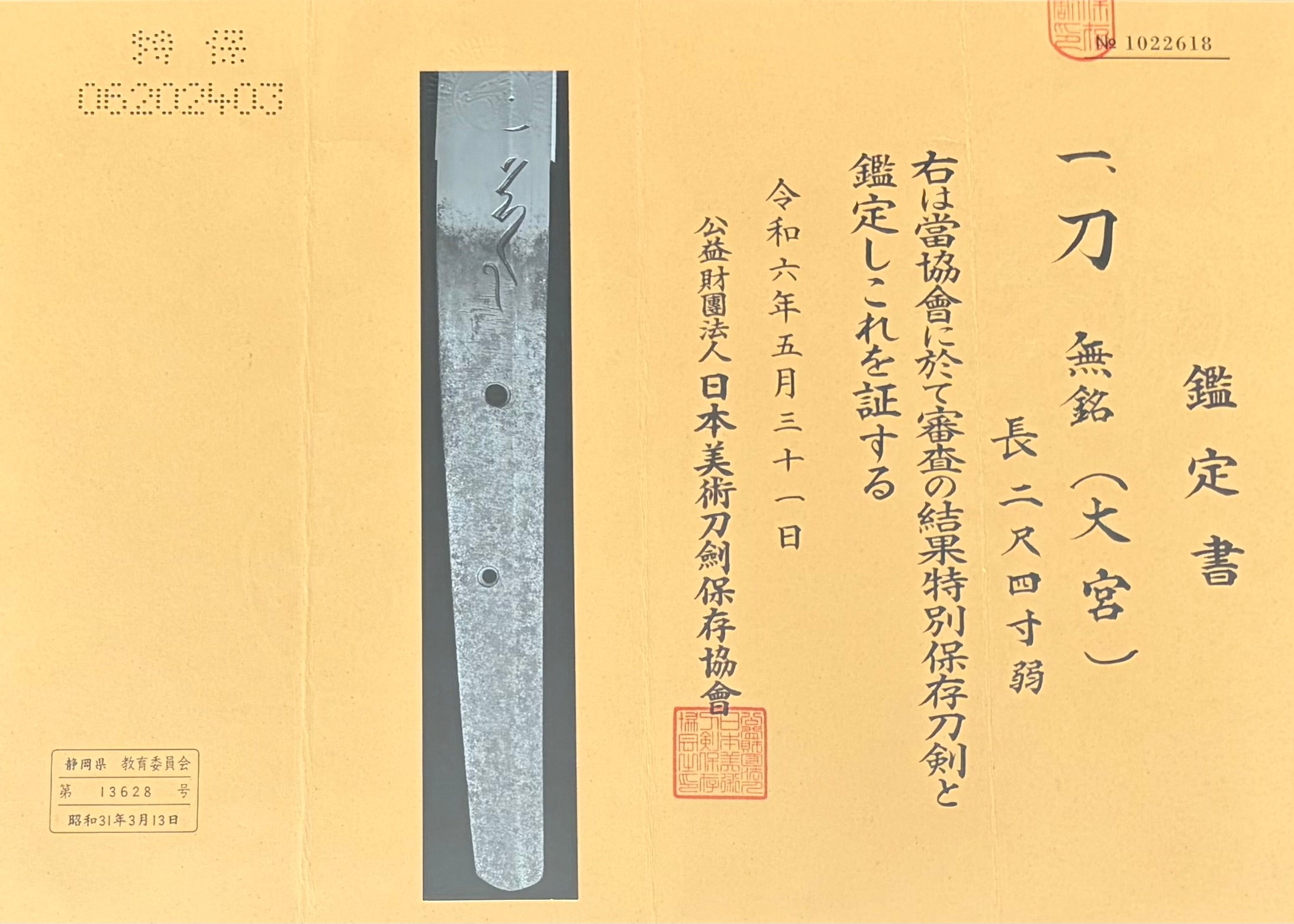
Antique Japanese Sword Katana attributed to Omiya with NBTHK Hozon Certificate 【Description】 Summary This blade is attributed to Omiya (大宮), a prestigious school that was especially active during the mid-late Nanbokucho period (mid-late 14th century). Omiya school was one of the many branches of Osafune school (headquarters). The swordsmiths who belonged to this school resided in Omiya village in today’s Okayama prefecture. It is said that Omiya school was founded by Kunimori (国盛) during the late Kamakura period. According to one theory, Kunimori was originally from Yamashiro province(today’s Kyoto) and moved to Omiya village in Bizen province. Omiya school was active at the same time as Kanemitsu school, one of the most famous branches among Osafune schools. Kanetmisu invented the unique Japanese sword-forging technique called Soden Bizen, which is a combination of SOSHU Den and BIZEN DEN. And the swordsmiths who belonged to Omiya school also mastered this technique. The swords forged in Soden Bizen were very popular among Samurai back then. Other famous figures who were from Omiya school are Morikage, Moritsugu, and Morishige. It was common to have Mori (盛) letters in their maker’s names. This History of Bizen Osafune School It is said that Osafune school was founded by Mitsutada (光忠), who was active during the mid-Kamakura period. Bizen Osafune school was the biggest one of all other schools in Bizen province, and they received many orders from feudal lords or renowned Samurai. They were called Osafunemono and beloved by Samurai warriors. Among the swordsmiths who belonged to this school, Nagamitsu, Sanenaga, and Kagemitsu are known as Osafune Sansaku, the three renowned Osafune swordsmiths. There are also four other prominent swordsmiths who were from Bizen Osafune school. They are called Osafune Shiten-no, the four masters of Osafune school. Their names are Nagamitsu, Kanemitsu, Nagayoshi, and Motoshige. BIZEN is located near the Chugoku Mountains, where iron sands, one of the essential materials for making Japanese swords, were abundant. Furthermore, BIZEN swordsmiths had close access to Yoshi River, where they could find water and charcoal. This geological location contributed to the swordsmiths forging high-quality refined blades. We presume BIZEN was quite active in sword-forging from ancient times. It is said that BIZEN DEN was created by groups of swordsmiths there during the late Heian era (Late 12th century ). These ancient swordsmiths in Bizen province are called Ko-Bizen (Old Bizen) swordsmiths. By inheriting the sword forging techniques from Ko-Bizen swordsmiths, the Bizen Osafune school flourished from the mid-Kamakura period. This blade is appraised as a Hozon Touken (保存刀剣) issued by NBTHK (Nihon Bijutsu Touken Hozon Kyokai: 日本美術刀剣保存協会). This authentication paper was only given to authentic Japanese swords, well preserved and high quality with artistic value. *Please keep in mind that there are a couple of Kitae Kizu on this blade. If you like to see the detailed condition, please feel free to contact us. 【Blade】 Cutting Edge Length (Nagasa) : 69.5 cm ( 27.3 inches) Curvature (Sori) : 1.5 cm (0.59 inches) Hamon : The crystalline structure which forms along the cutting edge of a blade as a result of the hardening process. Jimon (Jihada) : Visible steel surface pattern created by folding and hammering during forging process. Nakago : Nakago is the tang of the Japanese sword. Japanese swordsmiths left the black rust on the tang because it prevents red rust while the tang is in its handle. And the discoloration of the tang was created over time, and it is a great indicator for a Japanese sword specialist to estimate when the sword was forged. Koshirae : Koshirae is the mounting of the Japanese sword. There are several parts that consist of Koshirae such as Saya (Scabbard), Tsuka (Handle), Tsuba (Handguard). Fuchi-Kashira : A pair of matching sword fittings that cover the upper and bottom parts of its sword hilt.

NihontoWatch MonNihontoWatchBETA
MarketAuctionsEncyclopedia
刀剣›備前伝›大宮›Nanbokucho Katana attributed to Omiya | Samurai Museum Shop
刀保存
大宮派

Nanbokucho Katana attributed to Omiya | Samurai Museum Shop

無銘 · Omiya · 南北朝 · 長さ 69.5cm · 反り 1.5cm
売却済
大宮派 — 1 of 21
大宮派 — 2 of 21
大宮派 — 3 of 21
大宮派 — 4 of 21
大宮派 — 5 of 21
大宮派 — 6 of 21
大宮派 — 7 of 21
大宮派 — 8 of 21
大宮派 — 9 of 21
大宮派 — 10 of 21
大宮派 — 11 of 21
大宮派 — 12 of 21
大宮派 — 13 of 21
大宮派 — 14 of 21
大宮派 — 15 of 21
大宮派 — 16 of 21
大宮派 — 17 of 21
大宮派 — 18 of 21
大宮派 — 19 of 21
大宮派 — 20 of 21
大宮派 — 21 of 21
1 / 21
1 / 21
大宮派 — 1 of 21大宮派 — 2 of 21大宮派 — 3 of 21大宮派 — 4 of 21大宮派 — 5 of 21大宮派 — 6 of 21大宮派 — 7 of 21大宮派 — 8 of 21大宮派 — 9 of 21大宮派 — 10 of 21大宮派 — 11 of 21大宮派 — 12 of 21大宮派 — 13 of 21大宮派 — 14 of 21大宮派 — 15 of 21大宮派 — 16 of 21大宮派 — 17 of 21大宮派 — 18 of 21大宮派 — 19 of 21大宮派 — 20 of 21大宮派 — 21 of 21
法量・詳細
刀工
大宮派
種別
刀
流派
Omiya
活動期
南北朝
国
備前
銘
無銘(在銘率 0%)
法量
長さ 69.5cm反り 1.5cm
説明

Antique Japanese Sword Katana attributed to Omiya with NBTHK Hozon Certificate 【Description】 Summary This blade is attributed to Omiya (大宮), a prestigious school that was especially active during the mid-late Nanbokucho period (mid-late 14th century). Omiya school was one of the many branches of Osafune school (headquarters). The swordsmiths who belonged to this school resided in Omiya village in today’s Okayama prefecture. It is said that Omiya school was founded by Kunimori (国盛) during the late Kamakura period. According to one theory, Kunimori was originally from Yamashiro province(today’s Kyoto) and moved to Omiya village in Bizen province. Omiya school was active at the same time as Kanemitsu school, one of the most famous branches among Osafune schools. Kanetmisu invented the unique Japanese sword-forging technique called Soden Bizen, which is a combination of SOSHU Den and BIZEN DEN. And the swordsmiths who belonged to Omiya school also mastered this technique. The swords forged in Soden Bizen were very popular among Samurai back then. Other famous figures who were from Omiya school are Morikage, Moritsugu, and Morishige. It was common to have Mori (盛) letters in their maker’s names. This History of Bizen Osafune School It is said that Osafune school was founded by Mitsutada (光忠), who was active during the mid-Kamakura period. Bizen Osafune school was the biggest one of all other schools in Bizen province, and they received many orders from feudal lords or renowned Samurai. They were called Osafunemono and beloved by Samurai warriors. Among the swordsmiths who belonged to this school, Nagamitsu, Sanenaga, and Kagemitsu are known as Osafune Sansaku, the three renowned Osafune swordsmiths. There are also four other prominent swordsmiths who were from Bizen Osafune school. They are called Osafune Shiten-no, the four masters of Osafune school. Their names are Nagamitsu, Kanemitsu, Nagayoshi, and Motoshige. BIZEN is located near the Chugoku Mountains, where iron sands, one of the essential materials for making Japanese swords, were abundant. Furthermore, BIZEN swordsmiths had close access to Yoshi River, where they could find water and charcoal. This geological location contributed to the swordsmiths forging high-quality refined blades. We presume BIZEN was quite active in sword-forging from ancient times. It is said that BIZEN DEN was created by groups of swordsmiths there during the late Heian era (Late 12th century ). These ancient swordsmiths in Bizen province are called Ko-Bizen (Old Bizen) swordsmiths. By inheriting the sword forging techniques from Ko-Bizen swordsmiths, the Bizen Osafune school flourished from the mid-Kamakura period. This blade is appraised as a Hozon Touken (保存刀剣) issued by NBTHK (Nihon Bijutsu Touken Hozon Kyokai: 日本美術刀剣保存協会). This authentication paper was only given to authentic Japanese swords, well preserved and high quality with artistic value. *Please keep in mind that there are a couple of Kitae Kizu on this blade. If you like to see the detailed condition, please feel free to contact us. 【Blade】 Cutting Edge Length (Nagasa) : 69.5 cm ( 27.3 inches) Curvature (Sori) : 1.5 cm (0.59 inches) Hamon : The crystalline structure which forms along the cutting edge of a blade as a result of the hardening process. Jimon (Jihada) : Visible steel surface pattern created by folding and hammering during forging process. Nakago : Nakago is the tang of the Japanese sword. Japanese swordsmiths left the black rust on the tang because it prevents red rust while the tang is in its handle. And the discoloration of the tang was created over time, and it is a great indicator for a Japanese sword specialist to estimate when the sword was forged. Koshirae : Koshirae is the mounting of the Japanese sword. There are several parts that consist of Koshirae such as Saya (Scabbard), Tsuka (Handle), Tsuba (Handguard). Fuchi-Kashira : A pair of matching sword fittings that cover the upper and bottom parts of its sword hilt.

流派について

大宮

備前伝 · 備前

現在7点販売中

›

大宮派は、備前国長船の地に働きながら、その出自を京都山城に持つ点において他の備前鍛冶と趣を異にする一派である。説明書はこの一門を、もと山城国猪熊大宮の住人であった遠祖国盛に遡らせ、これが鎌倉時代の文応の頃に備前へ移り住んだと伝える。すなわち京の大宮の血が備前の地に根を下ろし、山城の精美な地鉄と備前の華やかな丁子乱れとを併せ呑んだところに、この一派の本質がある。初期の国盛・助盛の作は稀有で、一門が最も栄えるのは南北朝時代に入ってからであり、応安・貞治・永和・嘉慶の各年にわたり「備州長船盛景」などと長銘を切った盛景がその中心に立つ。説明書は「南北朝時代の同派中では盛景が最も作品が多く上手でもある」[[c:1]]と端的に記し、盛重がこれに続いて南北朝から室町へと一派を伝えた。 この一派を貫く手は、長船本流の丁子そのものではなく、山城の地を帯びた相伝備前の刃である。地鉄は肌立ちごころの板目に杢を交え、処々肌の開いた地に地沸細かにつき、地景入り地斑を交えて、その上に備前の乱れ映りが在銘無銘いずれにも立つ。地刃ともに沸の強い点が、本派における相伝備前の証と判ぜられる。刃文は小のたれを基とし、これに互の目、角ばる刃、尖りごころの刃を交え、足・葉よく入り、匂を主調に小沸つき、刃中に細かく砂流し・金筋がかかる。匂口は同時代長船一流の明るく華やかな刃に対して、やや沈みごころに傾くところに一派の気質があらわれる。なかでも尖りごころの刃は作域を越えて繰り返し現れ、長船本流の丁子主調と大宮の手とを分かつ静かな看どころとなる。作域は広く、のたれを主調とするもの、丁子や互の目の交じる華やかな乱れ刃、角互の目を主調とするもの、さらに青江風の直刃にまで及び、説明書は永和二年紀の盛景の太刀を「正に青江や雲類を想わせる直刃の作柄」[[c:2]]と評してその多彩を示す。帽子は乱れ込んで尖りごころまたは小丸に返り掃きかけ、彫物は棒樋から二筋樋、最上手の梵字・三鈷剣に及ぶ。盛重に至っては大宮派の特色が薄れ、末備前の長船と異ならぬ作も見え、これは一派が次第に長船派へ併呑されていったことを示すと読まれている。 鑑定の勘所は、まず鮮明な乱れ映りで一門を備前と読み、次に長船嫡流との別を分かつことにある。明るい乱れ映りと沈みごころに丁子を交えた刃は、より広くおおどかな兼光の刃から本派を分かち、その近さの一方で長義一派の箱がかった大乱れとも異にする。とはいえ長義との近接は確かで、ある特別重要刀剣の刀の説明書は大宮派が兼光や長義に隠れがちであることを述べたうえで「作風は長義に似て並ぶ程である」[[c:3]]と記し、薙刀直しののたれが兼光ほどおおどかにならず裾野短く頭やや角ばる点をもって盛景の手を明示するとする。主要工の格は盛景を筆頭とし、藤代はこれを上々作に位置づけ、現存に最も時代の溯る鎌倉末期の在銘太刀は同名作と地刃を異にして資料的に頗る貴重とされる。なお近年、作風および逆鏨に切る銘字の共通性より、長銘の盛景はむしろ近景・義景に連なる長船傍系の工で、二字に太鏨大振りに銘を切る鍛冶こそが真の大宮鍛冶ではないかとする説が説明書に記され、一派の名そのものがなお研究に委ねられている。伝来は大名家のそれで、肥前鍋島家、上杉家、伊達家、松山藩久松松平家などに伝わり、一口は皇室の御物として記録される。在銘年紀の大宮盛景が世に出ることは時折に限られるが、現れればそれは、京の大宮の精美を備前の地に移し、相伝備前の第一線に身を置いたこの一派の手を、確かに伝える証である。

16名の刀工指定141口
主要刀工
刀工時代指定
盛景1356-139092
盛景1299-13025
友盛1156-11590
次盛1338-13420
次盛1278-12880
大宮流派を見る →
NBTHK鑑定書
Hozon Tōken保存刀剣
Sword Worthy of Preservation
›

銘が正しい、または無銘でも年代・国・系統を確実に指摘できる、保存に値する真正の作と鑑定されたものです。

NBTHKについて›

日本美術刀剣保存協会(NBTHK)は、1948年に設立され、文化庁の監督を受ける公益財団法人で、東京・刀剣博物館に本部を置きます。専門の審査員が出品作を直接審査し、美術的・歴史的価値に応じた鑑定書を発行します。NBTHKの鑑定書は、日本刀および刀装具の真正性を示す最も広く認知された基準です。

NBTHK公式サイト→
販売店
サ
サムライミュージアム
🇯🇵日本から発送
›
✓認証販売店samuraimuseum.jp
✓海外発送可✓英語対応PayPalクレジットカード
返品ポリシー

Returns/exchanges limited to defects caused by shipping (except willful misconduct or gross negligence by the company); customers must contact within 72 hours of receiving the product.

サムライミュージアムの出品一覧を見る→販売店サイトでこの商品を見る→

大宮派の売約済み

Samurai Store
保存
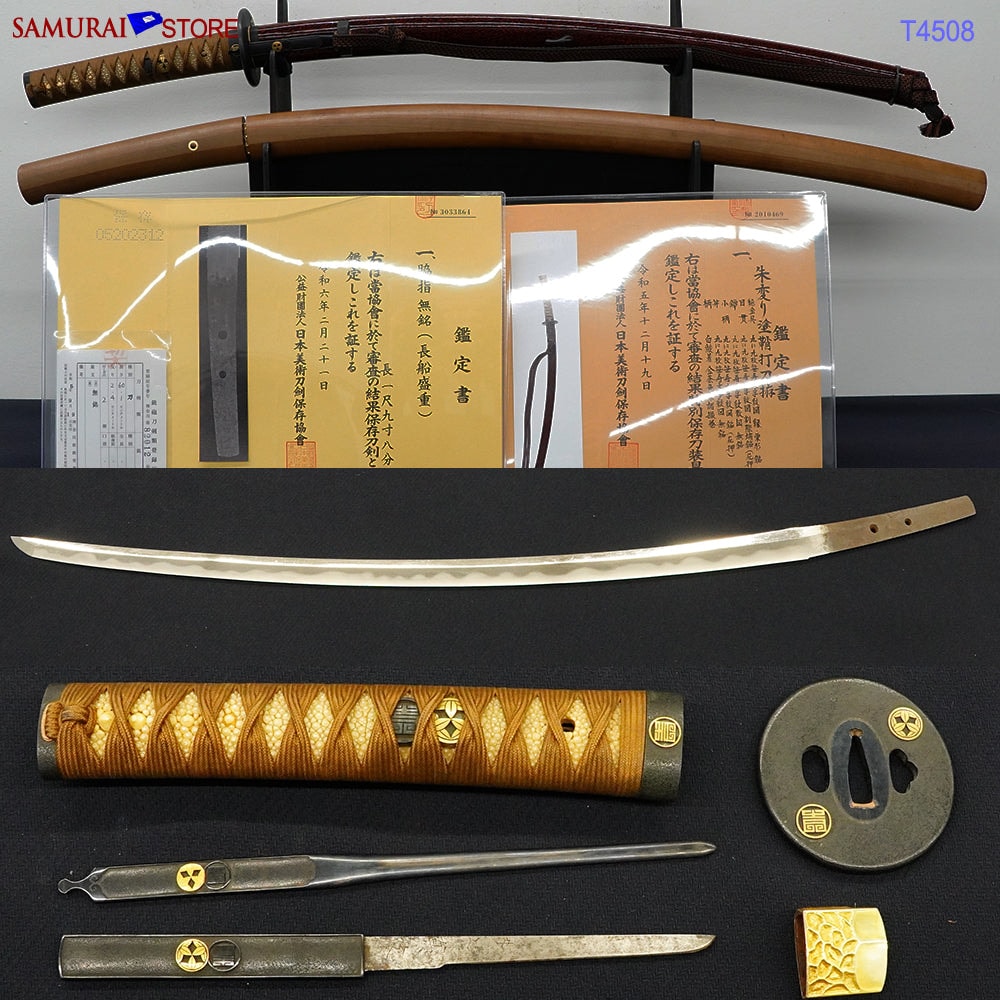
Katana - Hozon - by Omiya School - 刀 T4508 刀 拵付(NBTHK保存刀剣鑑定書・特別保存刀装具鑑定書付)Katana - Hozon - by Omiya School - 刀 T4508 刀 拵付(NBTHK保存刀剣鑑定書・特別保存刀装具鑑定書付)
売切れ

刀

作大宮派
60.1cm·室町
売却済
Token Oranda
特別保存
Katana - Tokuho - by Omiya School - Mumei Omiya katana with double Shirasaya NBTHK Tokubetsu Hozon 73cm Nagasa Bonji Nanbokucho period (14th century)Katana - Tokuho - by Omiya School - Mumei Omiya katana with double Shirasaya NBTHK Tokubetsu Hozon 73cm Nagasa Bonji Nanbokucho period (14th century)
売切れ

刀

作大宮派
73.03cm·南北朝
売却済
草薙の舎
特別保存
Katana - Tokuho - by Omiya School - 景光や吉岡一文字の大作を見るが如く大傑作の『大宮』特別保存刀剣!豪華菊紋赤銅拵え付Katana - Tokuho - by Omiya School - 景光や吉岡一文字の大作を見るが如く大傑作の『大宮』特別保存刀剣!豪華菊紋赤銅拵え付
売切れ

刀

作大宮派
売却済
明倫産業
保存
Katana - Hozon - by Omiya School - 無銘 長船盛重(南北朝期相伝備前) Osafune MorishigeKatana - Hozon - by Omiya School - 無銘 長船盛重(南北朝期相伝備前) Osafune Morishige
売切れ

刀

作大宮派
70.6cm·南北朝
売却済
銀座誠友堂
重要
Katana - Jūyō - by Omiya School - 刀 [大宮] [日本美術刀剣保存協会] 重要刀剣Katana - Jūyō - by Omiya School - 刀 [大宮] [日本美術刀剣保存協会] 重要刀剣
売切れ

刀

作大宮派
73.6cm·南北朝
売却済
Nihonto Antiques
特別保存
Katana - Tokuho - by Omiya School - 長船盛景 (fss-901)Katana - Tokuho - by Omiya School - 長船盛景 (fss-901)
売切れ

刀

作大宮派
68.9cm·Enbun (1356-1361) ND
売却済
明倫産業
特別保存
Katana - Tokuho - by Omiya School - 伝大宮(糸巻太刀拵付) Den OmiyaKatana - Tokuho - by Omiya School - 伝大宮(糸巻太刀拵付) Den Omiya
売切れ

刀

作大宮派
68.7cm·鎌倉
売却済
サムライミュージアム
特別保存
Wakizashi - Tokuho - by Omiya School - 日本刀 脇差 大宮 伝 日本美術刀剣保存協会 特別保存刀剣鑑定書付Wakizashi - Tokuho - by Omiya School - 日本刀 脇差 大宮 伝 日本美術刀剣保存協会 特別保存刀剣鑑定書付
売切れ

脇差

作大宮派
56.6cm·南北朝
売却済

大宮派の作

すべて見る →
永楽堂
重要
Katana - Jūyō - by Omiya Morikage - 大宮盛景 刀 重要刀剣Katana - Jūyō - by Omiya Morikage - 大宮盛景 刀 重要刀剣

刀

作盛景
70.9cm·南北朝
¥4,000,000
サムライミュージアム
重要
Katana - Jūyō - by Omiya Morikage - 日本刀 大刀 伝大宮盛景 第三十一回重要刀剣指定品(日本美術刀剣保存協会)Katana - Jūyō - by Omiya Morikage - 日本刀 大刀 伝大宮盛景 第三十一回重要刀剣指定品(日本美術刀剣保存協会)

刀

作盛景
73.2cm·室町
¥47,630
Nihontocraft
重要
Katana - Jūyō - by Omiya Morikage - 備州長船盛景Katana - Jūyō - by Omiya Morikage - 備州長船盛景

刀

作盛景
69.5cm·Enbun (1356-1361) ND
¥46,000
刀心
特別保存
Katana - Tokuho - by Omiya School - 無銘(伝 大宮) 2-1019Katana - Tokuho - by Omiya School - 無銘(伝 大宮) 2-1019

刀

作大宮派
68.23cm·南北朝
¥2,750,000
葵美術
特別保存
Katana - Tokuho - by Omiya Morishige - 刀:無銘(長船盛重)(日本美術刀剣保存協会 特別保存刀剣)Katana - Tokuho - by Omiya Morishige - 刀:無銘(長船盛重)(日本美術刀剣保存協会 特別保存刀剣)

刀

作盛重
64.4cm·室町
¥2,000,000
美術刀剣松本
保存
Katana - Hozon - by Omiya Morishige - 商品番号 KA-0822Katana - Hozon - by Omiya Morishige - 商品番号 KA-0822

刀

作盛重
71.6cm·南北朝
¥1,200,000
安東貿易
脇差写真非公開
Wakizashi - by Omiya Morishige - 脇差 備州長船盛重 応永六年二月日

脇差

作盛重
48.1cm·Oei (1394-1428)
¥450,000

備前の伝統

すべて見る →
葵美術
重要美術品
Daisho - Jubi - by Osafune Nagamitsu - 大小:刀(重要美術品)無銘(伝長光)/脇差:無銘(伝長光)/無銘(石州直綱)(日本美術刀剣保存協会 特別保存刀剣)Daisho - Jubi - by Osafune Nagamitsu - 大小:刀(重要美術品)無銘(伝長光)/脇差:無銘(伝長光)/無銘(石州直綱)(日本美術刀剣保存協会 特別保存刀剣)

大小

作長光
Kencho (1249-1256)
お問い合わせ
永楽堂
重要
Tachi - Jūyō - by Fukuoka Ichimonji School - 福岡一文字 太刀 重要刀剣Tachi - Jūyō - by Fukuoka Ichimonji School - 福岡一文字 太刀 重要刀剣

太刀

作福岡一文字派
74.8cm·鎌倉
お問い合わせ
永楽堂
特別保存
Tachi - Tokuho - by Osafune Sanenaga - 真長 太刀 特別保存刀剣Tachi - Tokuho - by Osafune Sanenaga - 真長 太刀 特別保存刀剣

太刀

作眞長
71.2cm·Shoan (1299-1302)
¥7,500,000
つるぎの屋
重要
Katana - Jūyō - by Fukuoka Ichimonji School - 刀 無銘 福岡一文字Katana - Jūyō - by Fukuoka Ichimonji School - 刀 無銘 福岡一文字

刀

作福岡一文字派
70cm·鎌倉
¥10,000,000
飯田高遠堂
重要
Tachi - Jūyō - by Osafune Shigezane - 備州長船住重真 延文三年一二月日Tachi - Jūyō - by Osafune Shigezane - 備州長船住重真 延文三年一二月日

太刀

作重眞
81cm·南北朝
¥33,000,000
葵美術
特別保存
Katana - Tokuho - by Osafune Motomitsu - 刀:無銘(伝長船元光)(日本美術刀剣保存協会 特別保存刀剣)Katana - Tokuho - by Osafune Motomitsu - 刀:無銘(伝長船元光)(日本美術刀剣保存協会 特別保存刀剣)

刀

作基光
71.51cm·Koei (1342-1345) ND
開始価格¥1,200,000
Nihonto.com
重要
Tanto - Jūyō - by Osafune Kagemitsu - 重要刀剣 備前景光 短刀 #110112Tanto - Jūyō - by Osafune Kagemitsu - 重要刀剣 備前景光 短刀 #110112

短刀

作景光
25.3cm·Geno (1319-1321)
¥89,500
飯田高遠堂
重要
Tachi - Jūyō - by Osafune Nagamitsu - 備前国長船住左近将監長光造 永仁元年十二月日Tachi - Jūyō - by Osafune Nagamitsu - 備前国長船住左近将監長光造 永仁元年十二月日

太刀

作長光
63.4cm·Kencho (1249-1256)
¥55,000,000

刀剣

  • 刀
  • 脇差
  • 短刀
  • 太刀
  • 薙刀
  • 槍

刀装具

  • 鍔
  • 縁頭
  • 小柄
  • 目貫

鑑定別

  • 特重
  • 重要
  • 特別保存
  • 保存

リソース

  • 刀剣商一覧
  • 刀工一覧
  • すべて見る
Nihontowatch© 2026
利用規約プライバシーCookie運営者情報

説明

Antique Japanese Sword Katana attributed to Omiya with NBTHK Hozon Certificate 【Description】 Summary This blade is attributed to Omiya (大宮), a prestigious school that was especially active during the mid-late Nanbokucho period (mid-late 14th century). Omiya school was one of the many branches of Osafune school (headquarters). The swordsmiths who belonged to this school resided in Omiya village in today’s Okayama prefecture. It is said that Omiya school was founded by Kunimori (国盛) during the late Kamakura period. According to one theory, Kunimori was originally from Yamashiro province(today’s Kyoto) and moved to Omiya village in Bizen province. Omiya school was active at the same time as Kanemitsu school, one of the most famous branches among Osafune schools. Kanetmisu invented the unique Japanese sword-forging technique called Soden Bizen, which is a combination of SOSHU Den and BIZEN DEN. And the swordsmiths who belonged to Omiya school also mastered this technique. The swords forged in Soden Bizen were very popular among Samurai back then. Other famous figures who were from Omiya school are Morikage, Moritsugu, and Morishige. It was common to have Mori (盛) letters in their maker’s names. This History of Bizen Osafune School It is said that Osafune school was founded by Mitsutada (光忠), who was active during the mid-Kamakura period. Bizen Osafune school was the biggest one of all other schools in Bizen province, and they received many orders from feudal lords or renowned Samurai. They were called Osafunemono and beloved by Samurai warriors. Among the swordsmiths who belonged to this school, Nagamitsu, Sanenaga, and Kagemitsu are known as Osafune Sansaku, the three renowned Osafune swordsmiths. There are also four other prominent swordsmiths who were from Bizen Osafune school. They are called Osafune Shiten-no, the four masters of Osafune school. Their names are Nagamitsu, Kanemitsu, Nagayoshi, and Motoshige. BIZEN is located near the Chugoku Mountains, where iron sands, one of the essential materials for making Japanese swords, were abundant. Furthermore, BIZEN swordsmiths had close access to Yoshi River, where they could find water and charcoal. This geological location contributed to the swordsmiths forging high-quality refined blades. We presume BIZEN was quite active in sword-forging from ancient times. It is said that BIZEN DEN was created by groups of swordsmiths there during the late Heian era (Late 12th century ). These ancient swordsmiths in Bizen province are called Ko-Bizen (Old Bizen) swordsmiths. By inheriting the sword forging techniques from Ko-Bizen swordsmiths, the Bizen Osafune school flourished from the mid-Kamakura period. This blade is appraised as a Hozon Touken (保存刀剣) issued by NBTHK (Nihon Bijutsu Touken Hozon Kyokai: 日本美術刀剣保存協会). This authentication paper was only given to authentic Japanese swords, well preserved and high quality with artistic value. *Please keep in mind that there are a couple of Kitae Kizu on this blade. If you like to see the detailed condition, please feel free to contact us. 【Blade】 Cutting Edge Length (Nagasa) : 69.5 cm ( 27.3 inches) Curvature (Sori) : 1.5 cm (0.59 inches) Hamon : The crystalline structure which forms along the cutting edge of a blade as a result of the hardening process. Jimon (Jihada) : Visible steel surface pattern created by folding and hammering during forging process. Nakago : Nakago is the tang of the Japanese sword. Japanese swordsmiths left the black rust on the tang because it prevents red rust while the tang is in its handle. And the discoloration of the tang was created over time, and it is a great indicator for a Japanese sword specialist to estimate when the sword was forged. Koshirae : Koshirae is the mounting of the Japanese sword. There are several parts that consist of Koshirae such as Saya (Scabbard), Tsuka (Handle), Tsuba (Handguard). Fuchi-Kashira : A pair of matching sword fittings that cover the upper and bottom parts of its sword hilt.

NihontoWatch MonNihontoWatchBETA
MarketAuctionsEncyclopedia
刀剣›備前伝›大宮›Nanbokucho Katana attributed to Omiya | Samurai Museum Shop
刀保存
大宮派

Nanbokucho Katana attributed to Omiya | Samurai Museum Shop

無銘 · Omiya · 南北朝 · 長さ 69.5cm · 反り 1.5cm
売却済
大宮派 — 1 of 21
大宮派 — 2 of 21
大宮派 — 3 of 21
大宮派 — 4 of 21
大宮派 — 5 of 21
大宮派 — 6 of 21
大宮派 — 7 of 21
大宮派 — 8 of 21
大宮派 — 9 of 21
大宮派 — 10 of 21
大宮派 — 11 of 21
大宮派 — 12 of 21
大宮派 — 13 of 21
大宮派 — 14 of 21
大宮派 — 15 of 21
大宮派 — 16 of 21
大宮派 — 17 of 21
大宮派 — 18 of 21
大宮派 — 19 of 21
大宮派 — 20 of 21
大宮派 — 21 of 21
1 / 21
1 / 21
大宮派 — 1 of 21大宮派 — 2 of 21大宮派 — 3 of 21大宮派 — 4 of 21大宮派 — 5 of 21大宮派 — 6 of 21大宮派 — 7 of 21大宮派 — 8 of 21大宮派 — 9 of 21大宮派 — 10 of 21大宮派 — 11 of 21大宮派 — 12 of 21大宮派 — 13 of 21大宮派 — 14 of 21大宮派 — 15 of 21大宮派 — 16 of 21大宮派 — 17 of 21大宮派 — 18 of 21大宮派 — 19 of 21大宮派 — 20 of 21大宮派 — 21 of 21
法量・詳細
刀工
大宮派
種別
刀
流派
Omiya
活動期
南北朝
国
備前
銘
無銘(在銘率 0%)
法量
長さ 69.5cm反り 1.5cm
説明

Antique Japanese Sword Katana attributed to Omiya with NBTHK Hozon Certificate 【Description】 Summary This blade is attributed to Omiya (大宮), a prestigious school that was especially active during the mid-late Nanbokucho period (mid-late 14th century). Omiya school was one of the many branches of Osafune school (headquarters). The swordsmiths who belonged to this school resided in Omiya village in today’s Okayama prefecture. It is said that Omiya school was founded by Kunimori (国盛) during the late Kamakura period. According to one theory, Kunimori was originally from Yamashiro province(today’s Kyoto) and moved to Omiya village in Bizen province. Omiya school was active at the same time as Kanemitsu school, one of the most famous branches among Osafune schools. Kanetmisu invented the unique Japanese sword-forging technique called Soden Bizen, which is a combination of SOSHU Den and BIZEN DEN. And the swordsmiths who belonged to Omiya school also mastered this technique. The swords forged in Soden Bizen were very popular among Samurai back then. Other famous figures who were from Omiya school are Morikage, Moritsugu, and Morishige. It was common to have Mori (盛) letters in their maker’s names. This History of Bizen Osafune School It is said that Osafune school was founded by Mitsutada (光忠), who was active during the mid-Kamakura period. Bizen Osafune school was the biggest one of all other schools in Bizen province, and they received many orders from feudal lords or renowned Samurai. They were called Osafunemono and beloved by Samurai warriors. Among the swordsmiths who belonged to this school, Nagamitsu, Sanenaga, and Kagemitsu are known as Osafune Sansaku, the three renowned Osafune swordsmiths. There are also four other prominent swordsmiths who were from Bizen Osafune school. They are called Osafune Shiten-no, the four masters of Osafune school. Their names are Nagamitsu, Kanemitsu, Nagayoshi, and Motoshige. BIZEN is located near the Chugoku Mountains, where iron sands, one of the essential materials for making Japanese swords, were abundant. Furthermore, BIZEN swordsmiths had close access to Yoshi River, where they could find water and charcoal. This geological location contributed to the swordsmiths forging high-quality refined blades. We presume BIZEN was quite active in sword-forging from ancient times. It is said that BIZEN DEN was created by groups of swordsmiths there during the late Heian era (Late 12th century ). These ancient swordsmiths in Bizen province are called Ko-Bizen (Old Bizen) swordsmiths. By inheriting the sword forging techniques from Ko-Bizen swordsmiths, the Bizen Osafune school flourished from the mid-Kamakura period. This blade is appraised as a Hozon Touken (保存刀剣) issued by NBTHK (Nihon Bijutsu Touken Hozon Kyokai: 日本美術刀剣保存協会). This authentication paper was only given to authentic Japanese swords, well preserved and high quality with artistic value. *Please keep in mind that there are a couple of Kitae Kizu on this blade. If you like to see the detailed condition, please feel free to contact us. 【Blade】 Cutting Edge Length (Nagasa) : 69.5 cm ( 27.3 inches) Curvature (Sori) : 1.5 cm (0.59 inches) Hamon : The crystalline structure which forms along the cutting edge of a blade as a result of the hardening process. Jimon (Jihada) : Visible steel surface pattern created by folding and hammering during forging process. Nakago : Nakago is the tang of the Japanese sword. Japanese swordsmiths left the black rust on the tang because it prevents red rust while the tang is in its handle. And the discoloration of the tang was created over time, and it is a great indicator for a Japanese sword specialist to estimate when the sword was forged. Koshirae : Koshirae is the mounting of the Japanese sword. There are several parts that consist of Koshirae such as Saya (Scabbard), Tsuka (Handle), Tsuba (Handguard). Fuchi-Kashira : A pair of matching sword fittings that cover the upper and bottom parts of its sword hilt.

流派について

大宮

備前伝 · 備前

現在7点販売中

›

大宮派は、備前国長船の地に働きながら、その出自を京都山城に持つ点において他の備前鍛冶と趣を異にする一派である。説明書はこの一門を、もと山城国猪熊大宮の住人であった遠祖国盛に遡らせ、これが鎌倉時代の文応の頃に備前へ移り住んだと伝える。すなわち京の大宮の血が備前の地に根を下ろし、山城の精美な地鉄と備前の華やかな丁子乱れとを併せ呑んだところに、この一派の本質がある。初期の国盛・助盛の作は稀有で、一門が最も栄えるのは南北朝時代に入ってからであり、応安・貞治・永和・嘉慶の各年にわたり「備州長船盛景」などと長銘を切った盛景がその中心に立つ。説明書は「南北朝時代の同派中では盛景が最も作品が多く上手でもある」[[c:1]]と端的に記し、盛重がこれに続いて南北朝から室町へと一派を伝えた。 この一派を貫く手は、長船本流の丁子そのものではなく、山城の地を帯びた相伝備前の刃である。地鉄は肌立ちごころの板目に杢を交え、処々肌の開いた地に地沸細かにつき、地景入り地斑を交えて、その上に備前の乱れ映りが在銘無銘いずれにも立つ。地刃ともに沸の強い点が、本派における相伝備前の証と判ぜられる。刃文は小のたれを基とし、これに互の目、角ばる刃、尖りごころの刃を交え、足・葉よく入り、匂を主調に小沸つき、刃中に細かく砂流し・金筋がかかる。匂口は同時代長船一流の明るく華やかな刃に対して、やや沈みごころに傾くところに一派の気質があらわれる。なかでも尖りごころの刃は作域を越えて繰り返し現れ、長船本流の丁子主調と大宮の手とを分かつ静かな看どころとなる。作域は広く、のたれを主調とするもの、丁子や互の目の交じる華やかな乱れ刃、角互の目を主調とするもの、さらに青江風の直刃にまで及び、説明書は永和二年紀の盛景の太刀を「正に青江や雲類を想わせる直刃の作柄」[[c:2]]と評してその多彩を示す。帽子は乱れ込んで尖りごころまたは小丸に返り掃きかけ、彫物は棒樋から二筋樋、最上手の梵字・三鈷剣に及ぶ。盛重に至っては大宮派の特色が薄れ、末備前の長船と異ならぬ作も見え、これは一派が次第に長船派へ併呑されていったことを示すと読まれている。 鑑定の勘所は、まず鮮明な乱れ映りで一門を備前と読み、次に長船嫡流との別を分かつことにある。明るい乱れ映りと沈みごころに丁子を交えた刃は、より広くおおどかな兼光の刃から本派を分かち、その近さの一方で長義一派の箱がかった大乱れとも異にする。とはいえ長義との近接は確かで、ある特別重要刀剣の刀の説明書は大宮派が兼光や長義に隠れがちであることを述べたうえで「作風は長義に似て並ぶ程である」[[c:3]]と記し、薙刀直しののたれが兼光ほどおおどかにならず裾野短く頭やや角ばる点をもって盛景の手を明示するとする。主要工の格は盛景を筆頭とし、藤代はこれを上々作に位置づけ、現存に最も時代の溯る鎌倉末期の在銘太刀は同名作と地刃を異にして資料的に頗る貴重とされる。なお近年、作風および逆鏨に切る銘字の共通性より、長銘の盛景はむしろ近景・義景に連なる長船傍系の工で、二字に太鏨大振りに銘を切る鍛冶こそが真の大宮鍛冶ではないかとする説が説明書に記され、一派の名そのものがなお研究に委ねられている。伝来は大名家のそれで、肥前鍋島家、上杉家、伊達家、松山藩久松松平家などに伝わり、一口は皇室の御物として記録される。在銘年紀の大宮盛景が世に出ることは時折に限られるが、現れればそれは、京の大宮の精美を備前の地に移し、相伝備前の第一線に身を置いたこの一派の手を、確かに伝える証である。

16名の刀工指定141口
主要刀工
刀工時代指定
盛景1356-139092
盛景1299-13025
友盛1156-11590
次盛1338-13420
次盛1278-12880
大宮流派を見る →
NBTHK鑑定書
Hozon Tōken保存刀剣
Sword Worthy of Preservation
›

銘が正しい、または無銘でも年代・国・系統を確実に指摘できる、保存に値する真正の作と鑑定されたものです。

NBTHKについて›

日本美術刀剣保存協会(NBTHK)は、1948年に設立され、文化庁の監督を受ける公益財団法人で、東京・刀剣博物館に本部を置きます。専門の審査員が出品作を直接審査し、美術的・歴史的価値に応じた鑑定書を発行します。NBTHKの鑑定書は、日本刀および刀装具の真正性を示す最も広く認知された基準です。

NBTHK公式サイト→
販売店
サ
サムライミュージアム
🇯🇵日本から発送
›
✓認証販売店samuraimuseum.jp
✓海外発送可✓英語対応PayPalクレジットカード
返品ポリシー

Returns/exchanges limited to defects caused by shipping (except willful misconduct or gross negligence by the company); customers must contact within 72 hours of receiving the product.
サムライミュージアムの出品一覧を見る→販売店サイトでこの商品を見る→

大宮派の売約済み

Samurai Store
保存
Katana - Hozon - by Omiya School - 刀 T4508 刀 拵付(NBTHK保存刀剣鑑定書・特別保存刀装具鑑定書付)Katana - Hozon - by Omiya School - 刀 T4508 刀 拵付(NBTHK保存刀剣鑑定書・特別保存刀装具鑑定書付)
売切れ

刀

作大宮派
60.1cm·室町
売却済
Token Oranda
特別保存
Katana - Tokuho - by Omiya School - Mumei Omiya katana with double Shirasaya NBTHK Tokubetsu Hozon 73cm Nagasa Bonji Nanbokucho period (14th century)Katana - Tokuho - by Omiya School - Mumei Omiya katana with double Shirasaya NBTHK Tokubetsu Hozon 73cm Nagasa Bonji Nanbokucho period (14th century)
売切れ

刀

作大宮派
73.03cm·南北朝
売却済
草薙の舎
特別保存
Katana - Tokuho - by Omiya School - 景光や吉岡一文字の大作を見るが如く大傑作の『大宮』特別保存刀剣!豪華菊紋赤銅拵え付Katana - Tokuho - by Omiya School - 景光や吉岡一文字の大作を見るが如く大傑作の『大宮』特別保存刀剣!豪華菊紋赤銅拵え付
売切れ

刀

作大宮派
売却済
明倫産業
保存
Katana - Hozon - by Omiya School - 無銘 長船盛重(南北朝期相伝備前) Osafune MorishigeKatana - Hozon - by Omiya School - 無銘 長船盛重(南北朝期相伝備前) Osafune Morishige
売切れ

刀

作大宮派
70.6cm·南北朝
売却済
銀座誠友堂
重要
Katana - Jūyō - by Omiya School - 刀 [大宮] [日本美術刀剣保存協会] 重要刀剣Katana - Jūyō - by Omiya School - 刀 [大宮] [日本美術刀剣保存協会] 重要刀剣
売切れ

刀

作大宮派
73.6cm·南北朝
売却済
Nihonto Antiques
特別保存
Katana - Tokuho - by Omiya School - 長船盛景 (fss-901)Katana - Tokuho - by Omiya School - 長船盛景 (fss-901)
売切れ

刀

作大宮派
68.9cm·Enbun (1356-1361) ND
売却済
明倫産業
特別保存
Katana - Tokuho - by Omiya School - 伝大宮(糸巻太刀拵付) Den OmiyaKatana - Tokuho - by Omiya School - 伝大宮(糸巻太刀拵付) Den Omiya
売切れ

刀

作大宮派
68.7cm·鎌倉
売却済
サムライミュージアム
特別保存
Wakizashi - Tokuho - by Omiya School - 日本刀 脇差 大宮 伝 日本美術刀剣保存協会 特別保存刀剣鑑定書付Wakizashi - Tokuho - by Omiya School - 日本刀 脇差 大宮 伝 日本美術刀剣保存協会 特別保存刀剣鑑定書付
売切れ

脇差

作大宮派
56.6cm·南北朝
売却済

大宮派の作

すべて見る →
永楽堂
重要
Katana - Jūyō - by Omiya Morikage - 大宮盛景 刀 重要刀剣Katana - Jūyō - by Omiya Morikage - 大宮盛景 刀 重要刀剣

刀

作盛景
70.9cm·南北朝
¥4,000,000
サムライミュージアム
重要
Katana - Jūyō - by Omiya Morikage - 日本刀 大刀 伝大宮盛景 第三十一回重要刀剣指定品(日本美術刀剣保存協会)Katana - Jūyō - by Omiya Morikage - 日本刀 大刀 伝大宮盛景 第三十一回重要刀剣指定品(日本美術刀剣保存協会)

刀

作盛景
73.2cm·室町
¥47,630
Nihontocraft
重要
Katana - Jūyō - by Omiya Morikage - 備州長船盛景Katana - Jūyō - by Omiya Morikage - 備州長船盛景

刀

作盛景
69.5cm·Enbun (1356-1361) ND
¥46,000
刀心
特別保存
Katana - Tokuho - by Omiya School - 無銘(伝 大宮) 2-1019Katana - Tokuho - by Omiya School - 無銘(伝 大宮) 2-1019

刀

作大宮派
68.23cm·南北朝
¥2,750,000
葵美術
特別保存
Katana - Tokuho - by Omiya Morishige - 刀:無銘(長船盛重)(日本美術刀剣保存協会 特別保存刀剣)Katana - Tokuho - by Omiya Morishige - 刀:無銘(長船盛重)(日本美術刀剣保存協会 特別保存刀剣)

刀

作盛重
64.4cm·室町
¥2,000,000
美術刀剣松本
保存
Katana - Hozon - by Omiya Morishige - 商品番号 KA-0822Katana - Hozon - by Omiya Morishige - 商品番号 KA-0822

刀

作盛重
71.6cm·南北朝
¥1,200,000
安東貿易
脇差写真非公開
Wakizashi - by Omiya Morishige - 脇差 備州長船盛重 応永六年二月日

脇差

作盛重
48.1cm·Oei (1394-1428)
¥450,000

備前の伝統

すべて見る →
葵美術
重要美術品
Daisho - Jubi - by Osafune Nagamitsu - 大小:刀(重要美術品)無銘(伝長光)/脇差:無銘(伝長光)/無銘(石州直綱)(日本美術刀剣保存協会 特別保存刀剣)Daisho - Jubi - by Osafune Nagamitsu - 大小:刀(重要美術品)無銘(伝長光)/脇差:無銘(伝長光)/無銘(石州直綱)(日本美術刀剣保存協会 特別保存刀剣)

大小

作長光
Kencho (1249-1256)
お問い合わせ
永楽堂
重要
Tachi - Jūyō - by Fukuoka Ichimonji School - 福岡一文字 太刀 重要刀剣Tachi - Jūyō - by Fukuoka Ichimonji School - 福岡一文字 太刀 重要刀剣

太刀

作福岡一文字派
74.8cm·鎌倉
お問い合わせ
永楽堂
特別保存
Tachi - Tokuho - by Osafune Sanenaga - 真長 太刀 特別保存刀剣Tachi - Tokuho - by Osafune Sanenaga - 真長 太刀 特別保存刀剣

太刀

作眞長
71.2cm·Shoan (1299-1302)
¥7,500,000
つるぎの屋
重要
Katana - Jūyō - by Fukuoka Ichimonji School - 刀 無銘 福岡一文字Katana - Jūyō - by Fukuoka Ichimonji School - 刀 無銘 福岡一文字

刀

作福岡一文字派
70cm·鎌倉
¥10,000,000
飯田高遠堂
重要
Tachi - Jūyō - by Osafune Shigezane - 備州長船住重真 延文三年一二月日Tachi - Jūyō - by Osafune Shigezane - 備州長船住重真 延文三年一二月日

太刀

作重眞
81cm·南北朝
¥33,000,000
葵美術
特別保存
Katana - Tokuho - by Osafune Motomitsu - 刀:無銘(伝長船元光)(日本美術刀剣保存協会 特別保存刀剣)Katana - Tokuho - by Osafune Motomitsu - 刀:無銘(伝長船元光)(日本美術刀剣保存協会 特別保存刀剣)

刀

作基光
71.51cm·Koei (1342-1345) ND
開始価格¥1,200,000
Nihonto.com
重要
Tanto - Jūyō - by Osafune Kagemitsu - 重要刀剣 備前景光 短刀 #110112Tanto - Jūyō - by Osafune Kagemitsu - 重要刀剣 備前景光 短刀 #110112

短刀

作景光
25.3cm·Geno (1319-1321)
¥89,500
飯田高遠堂
重要
Tachi - Jūyō - by Osafune Nagamitsu - 備前国長船住左近将監長光造 永仁元年十二月日Tachi - Jūyō - by Osafune Nagamitsu - 備前国長船住左近将監長光造 永仁元年十二月日

太刀

作長光
63.4cm·Kencho (1249-1256)
¥55,000,000

刀剣

  • 刀
  • 脇差
  • 短刀
  • 太刀
  • 薙刀
  • 槍

刀装具

  • 鍔
  • 縁頭
  • 小柄
  • 目貫

鑑定別

  • 特重
  • 重要
  • 特別保存
  • 保存

リソース

  • 刀剣商一覧
  • 刀工一覧
  • すべて見る
Nihontowatch© 2026
利用規約プライバシーCookie運営者情報
NihontoWatch Mon

NihontoWatchBETA

マーケットオークション
事典
NihontoWatch Mon

NihontoWatchBETA

マーケットオークション
事典