鎌倉時代は備前の頂点である。伝えでは一文字派の工が後鳥羽上皇の御番鍛冶に列し、世紀の半ばには光忠が長船派を興して、注文は公家からも武家政権からも流れ込んだ。国宝刀剣の数で備前に並ぶ国はない。
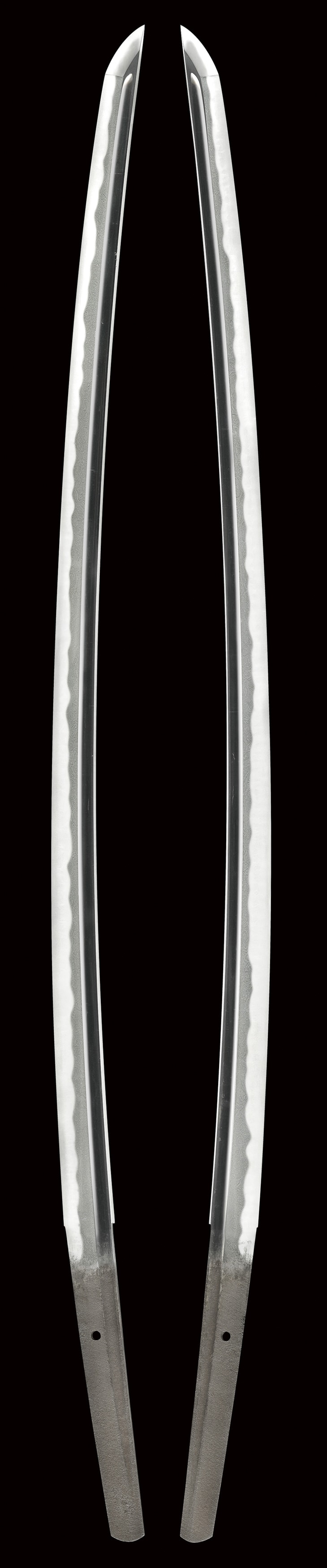
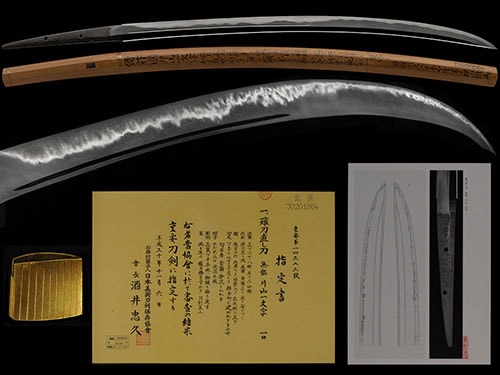
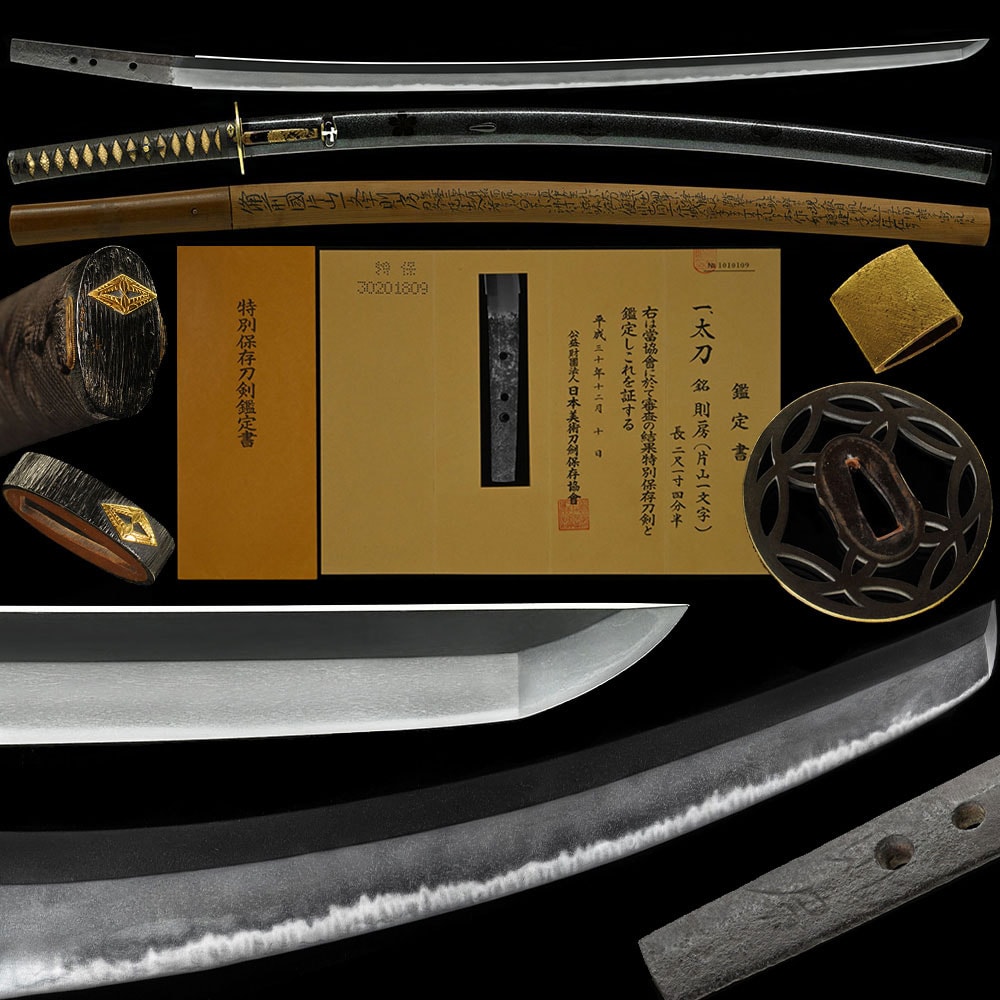
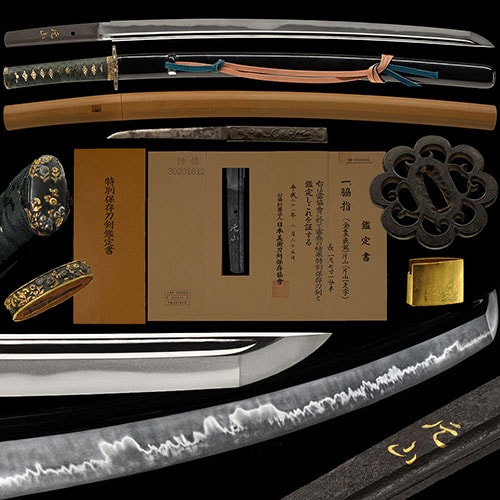
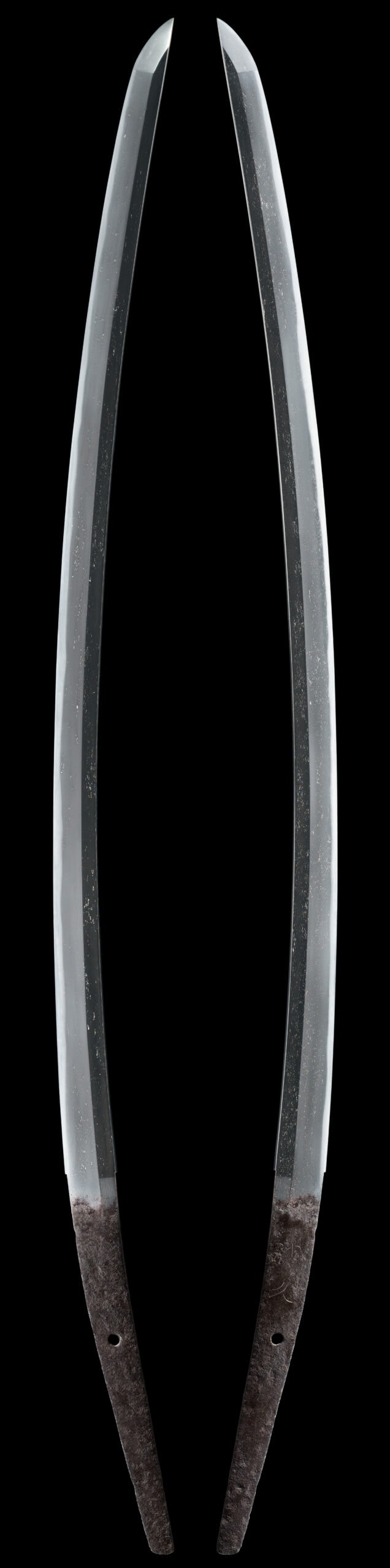
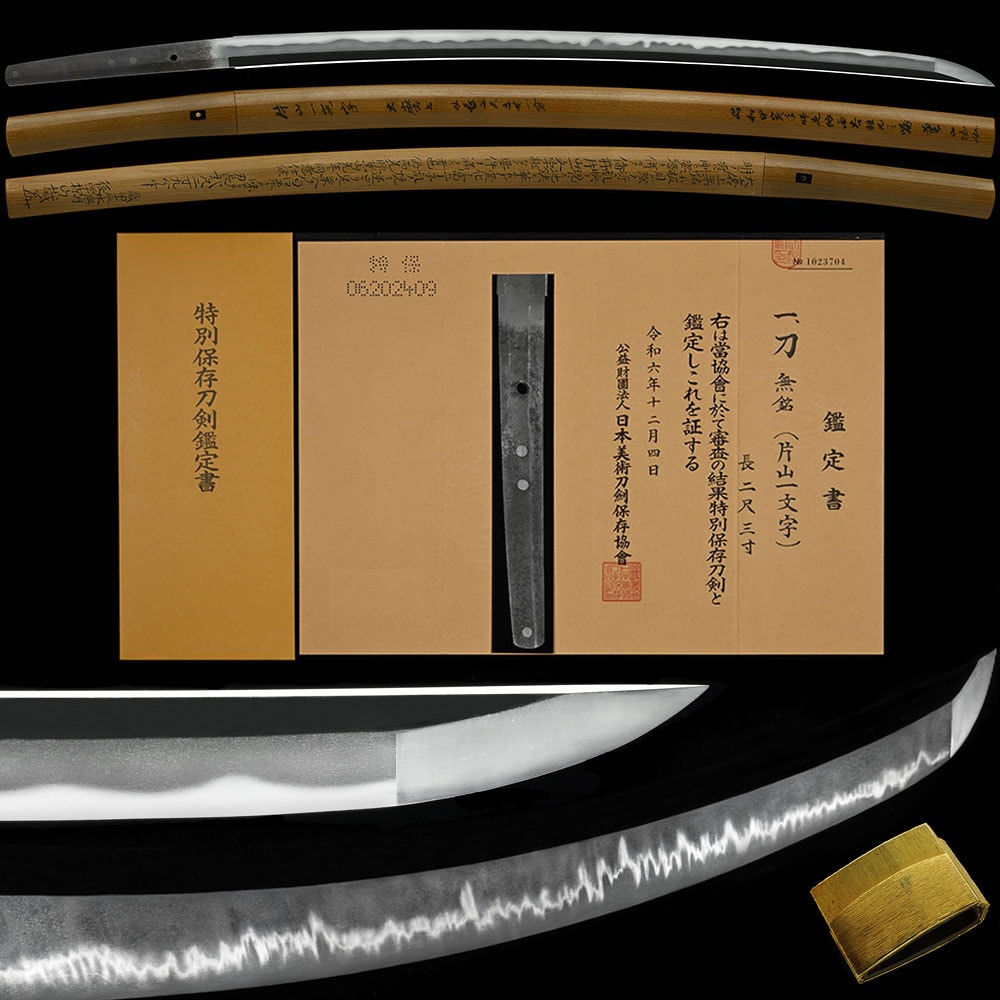
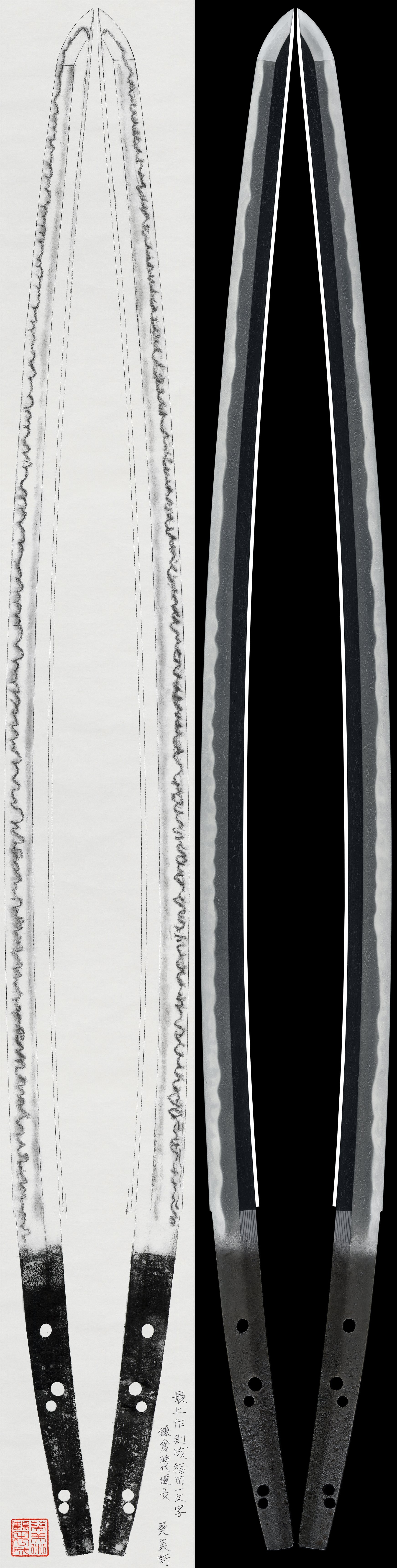
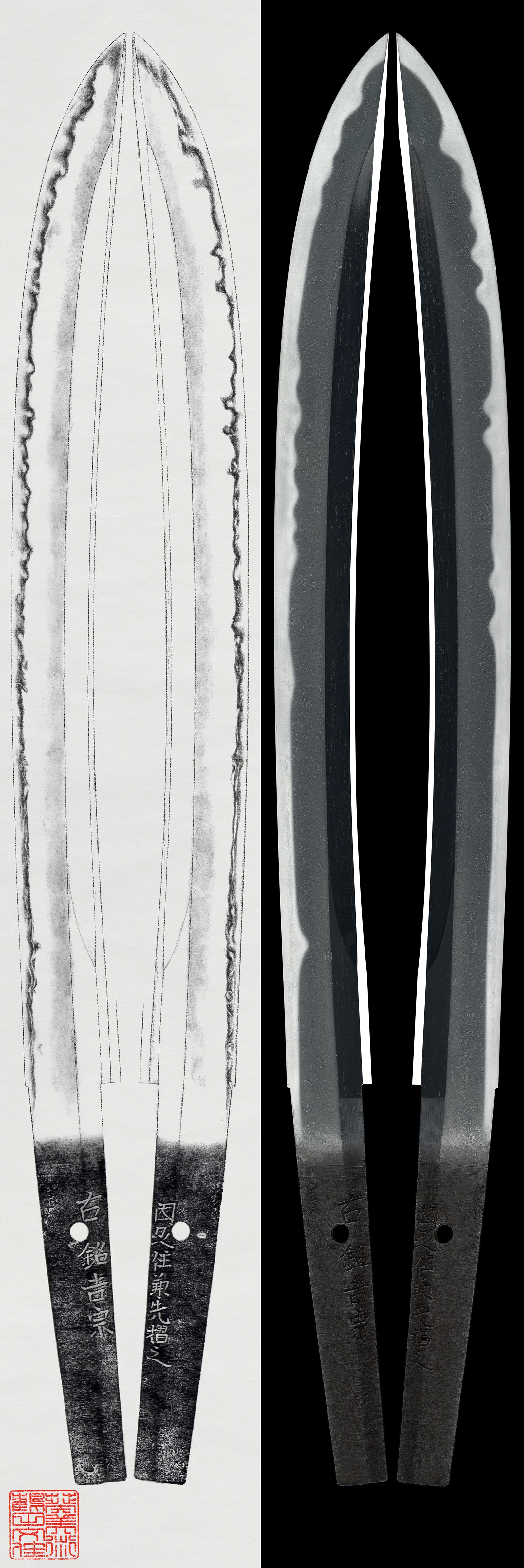
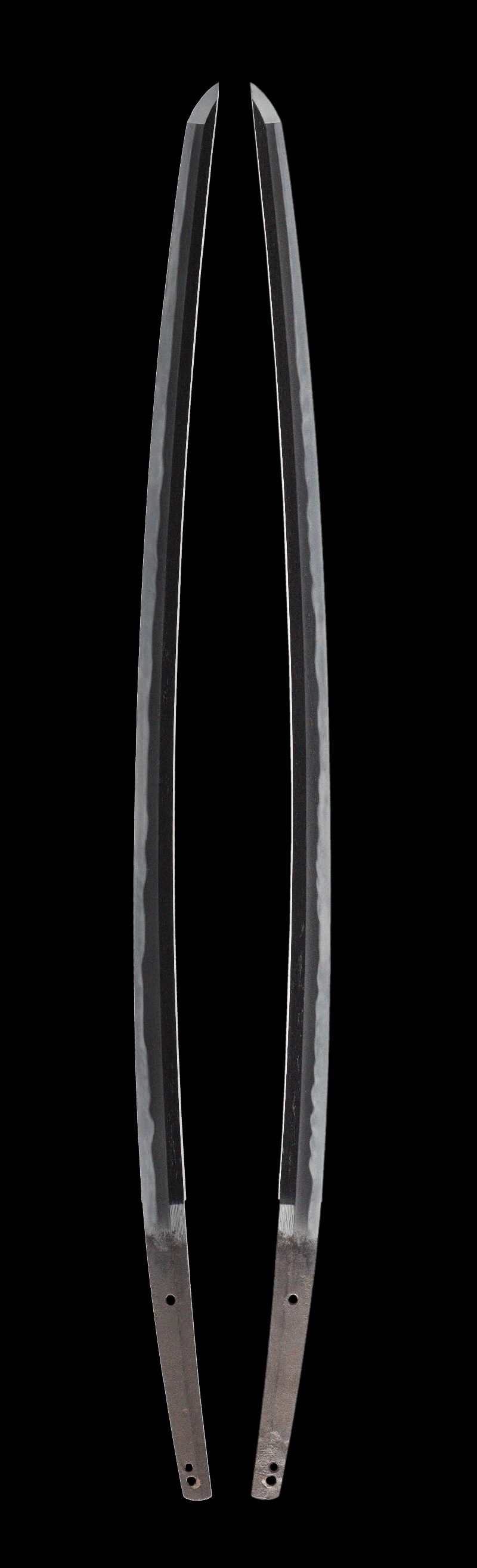
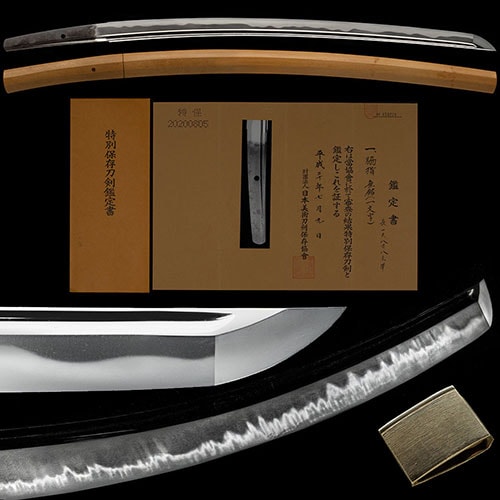
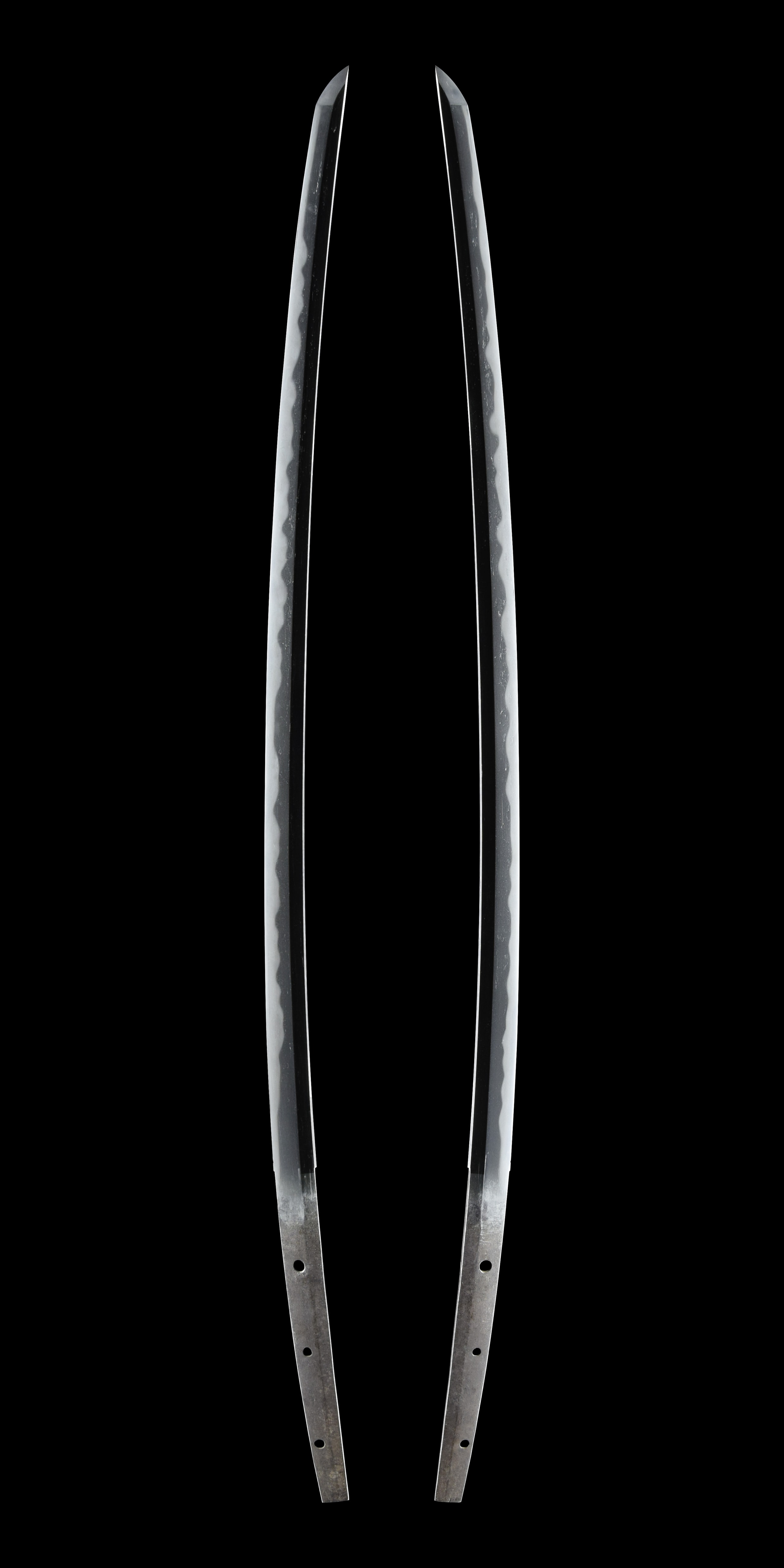
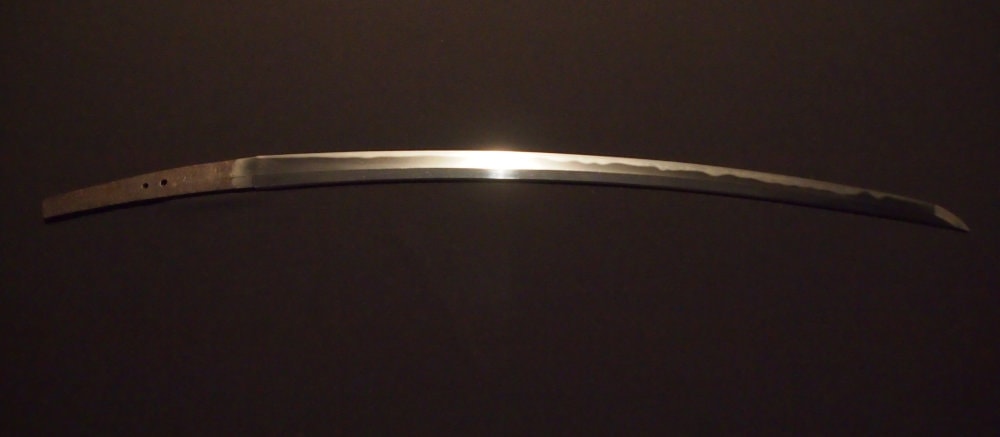
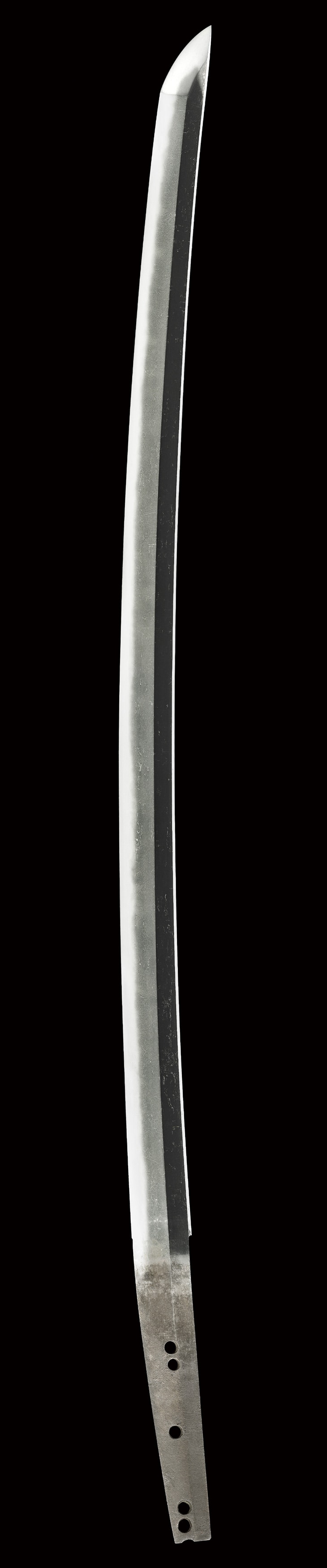
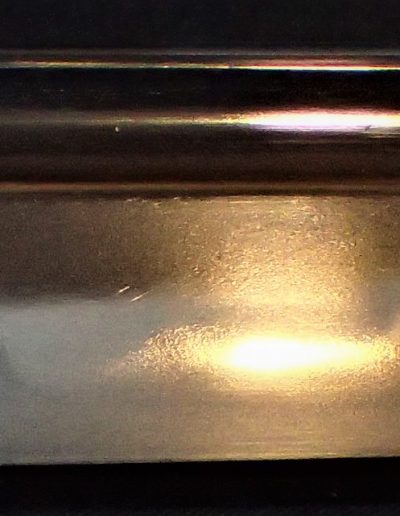
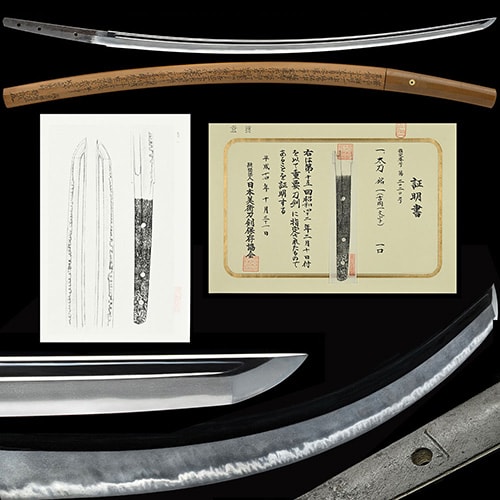
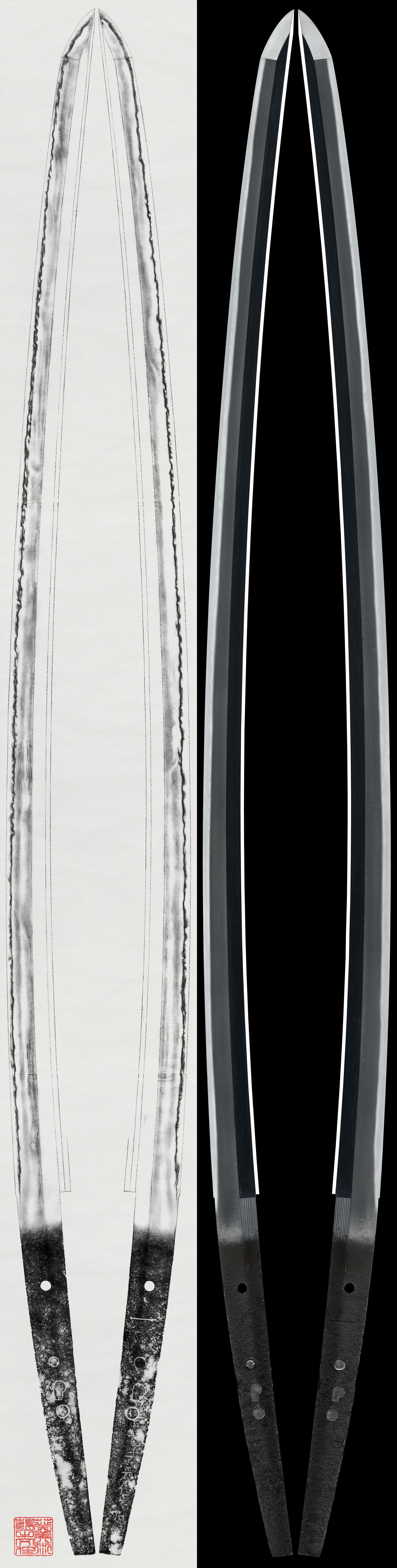
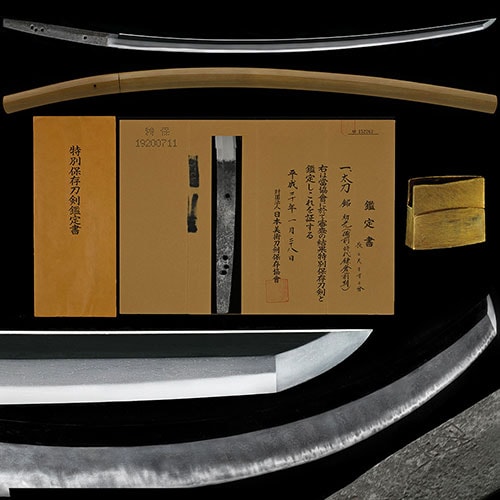
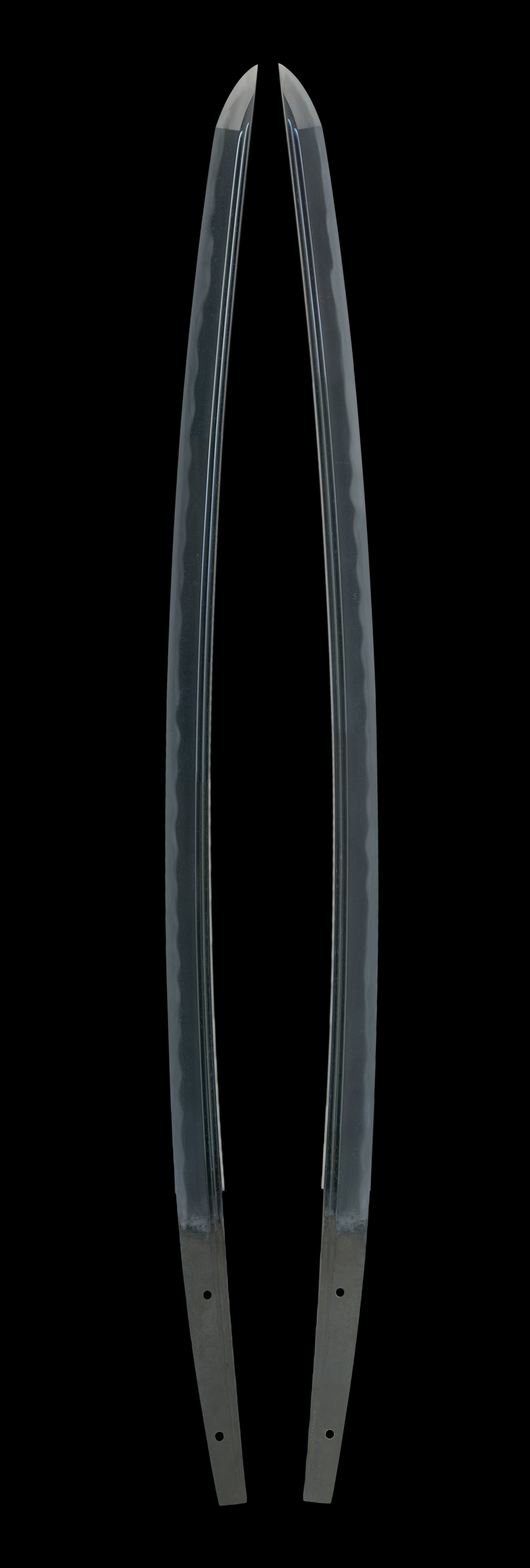
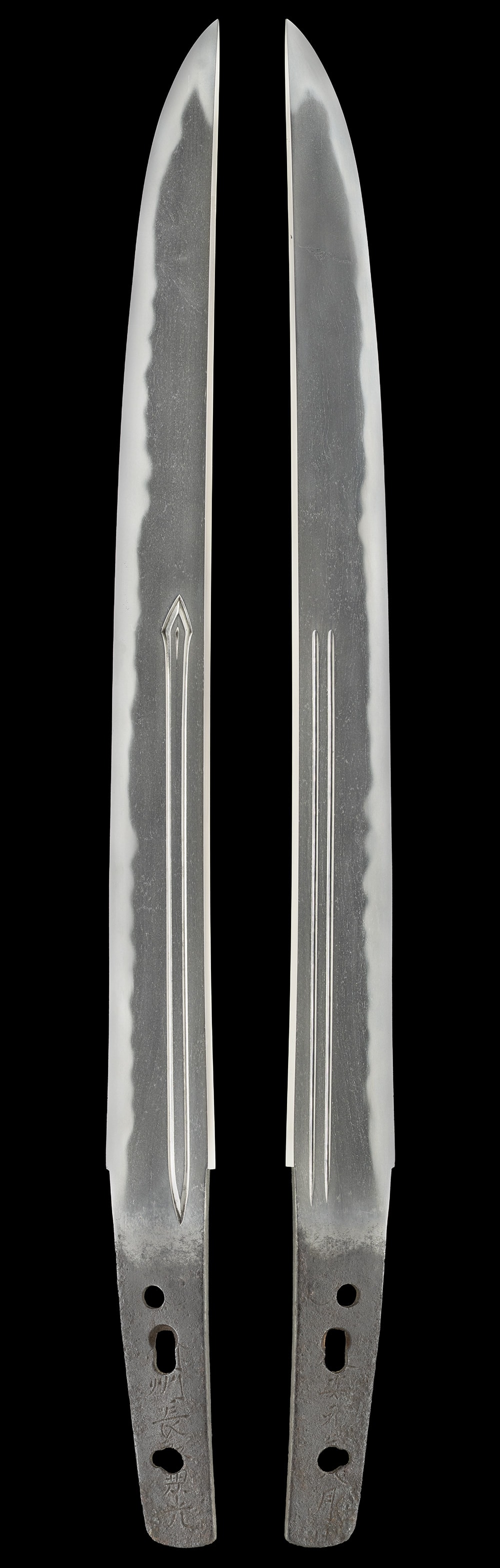
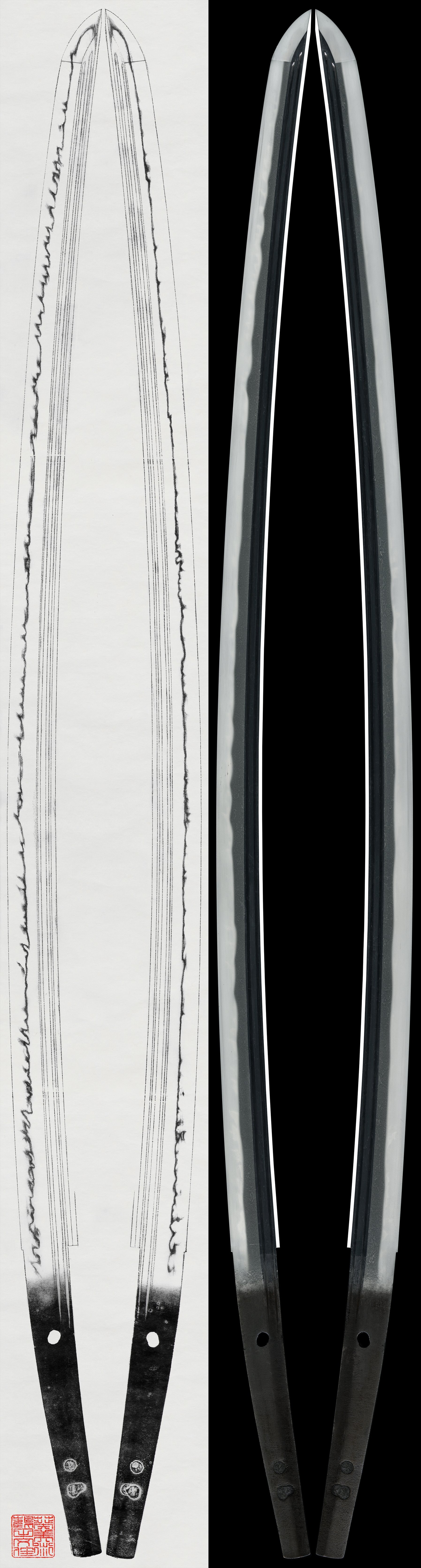
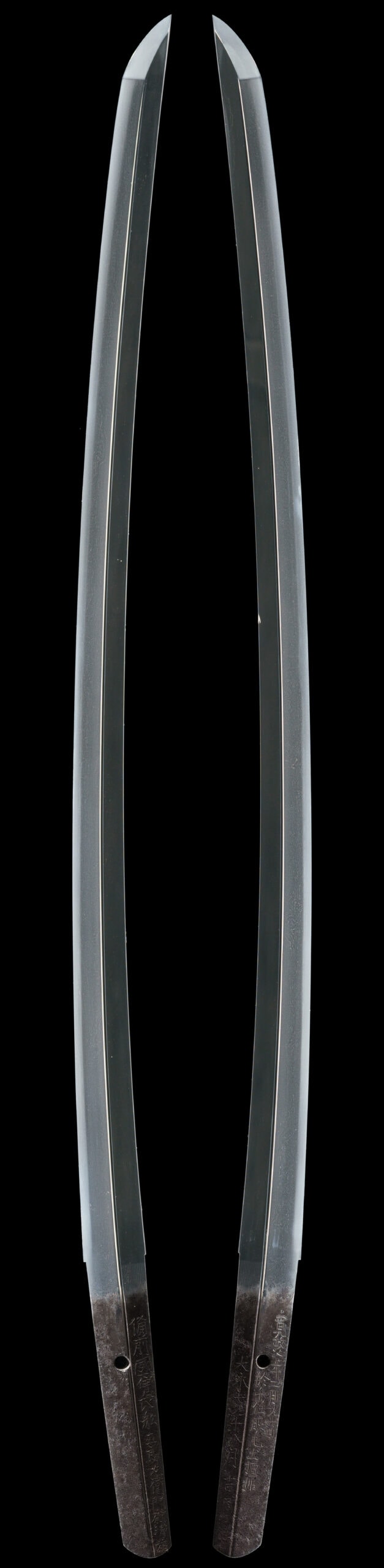
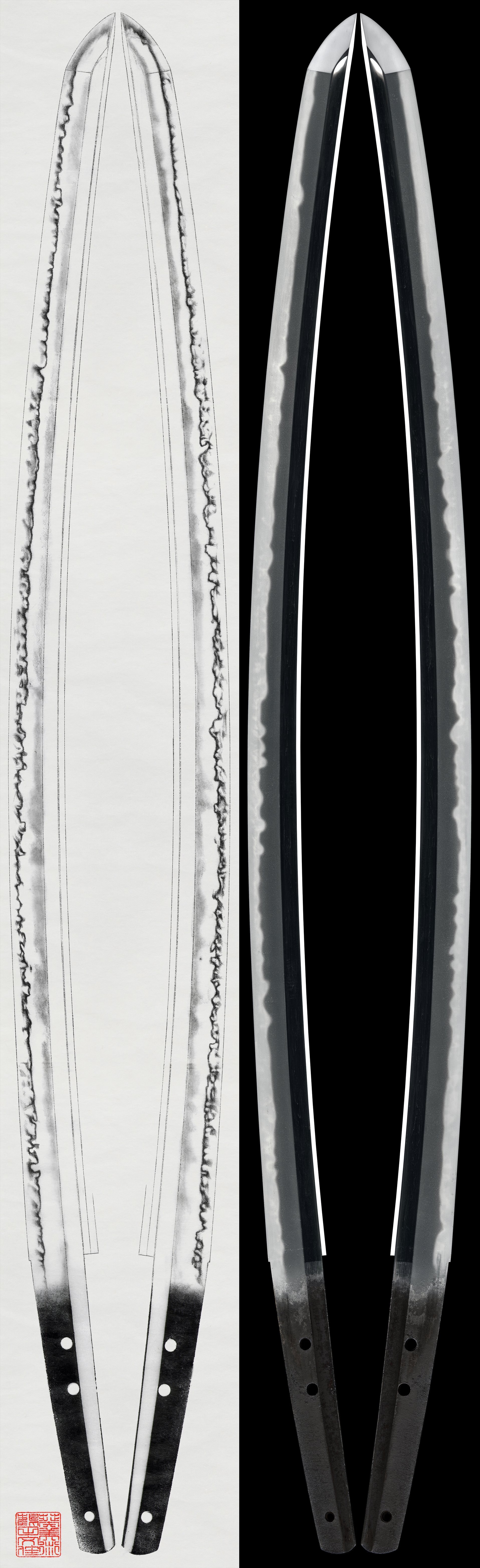
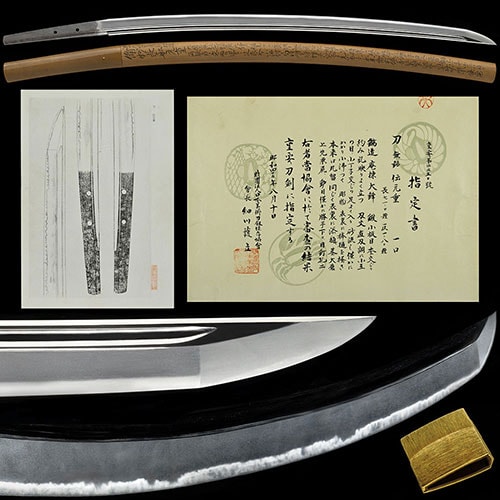
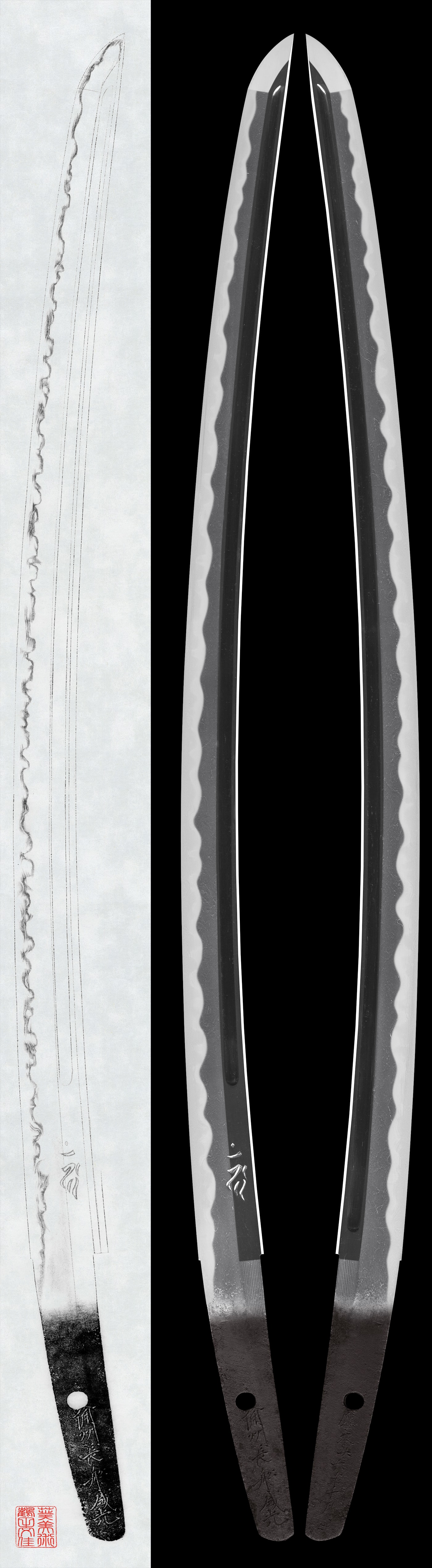
商品番号 UJWA248 – カタログ 36 – 売約済 福岡一文字則房 大脇指 (福岡一文字則房) 本作は、鎌倉時代の黄金期を築いた名門「福岡一文字」派の作として、日本美術刀剣保存協会(日美保)より重要刀剣の指定を受けています。さらにNTHK-NPO(日本刀剣保存会)の鑑定では、一文字派の中でも屈指の名工である「則房」と個銘まで極められました。 福岡一文字派の名は、備前国福岡の地に拠点を置いたことに由来します。茎に刻まれた「一」の銘は、日本刀の歴史において不朽の象徴となっています。則房は本名を高津右馬之助と称し、建長年間(1249-1256)に活躍しました。吉房、助真と並び「一文字三名工」の一人に数えられ、その作品のうち二振が国宝に指定されています。藤代義雄氏の評価においても「上々作」に列せられる最高位の絵師です。 地肌は板目肌が美しく練れ、そこに乱れ映りが鮮やかに立ち、見る者を瞬時に13世紀の備前へと誘います。地鉄は特有の青みを帯び、細かな小沸が厚くついて輝く様は、最高峰の技術で鍛えられた証と言えるでしょう。 灯火の下で静かに刀身を翳せば、この一振の真価が露わになります。華麗な丁子乱れの刃文が地中に生命を吹き込み、下半の重厚な重花丁子から、物頭にかけてのゆったりとした造形まで、実に多彩な変化を見せます。さらに、焼き出しから大丁子が乱舞し、金筋や砂流しが随所に現れる様は、まさに圧巻の一言に尽きます。 白鞘には、元人間国宝の本阿弥日洲氏(1979年)と、田野辺道宏氏(2016年)による鞘書きが両面に施されています。現代を代表する二大鑑定家による共演は、極めて稀で価値あるものです。 本作には、第26回重要刀剣指定書(1979年)およびNTHK-NPO優秀作鑑定書が付属いたします。
 NihontoWatch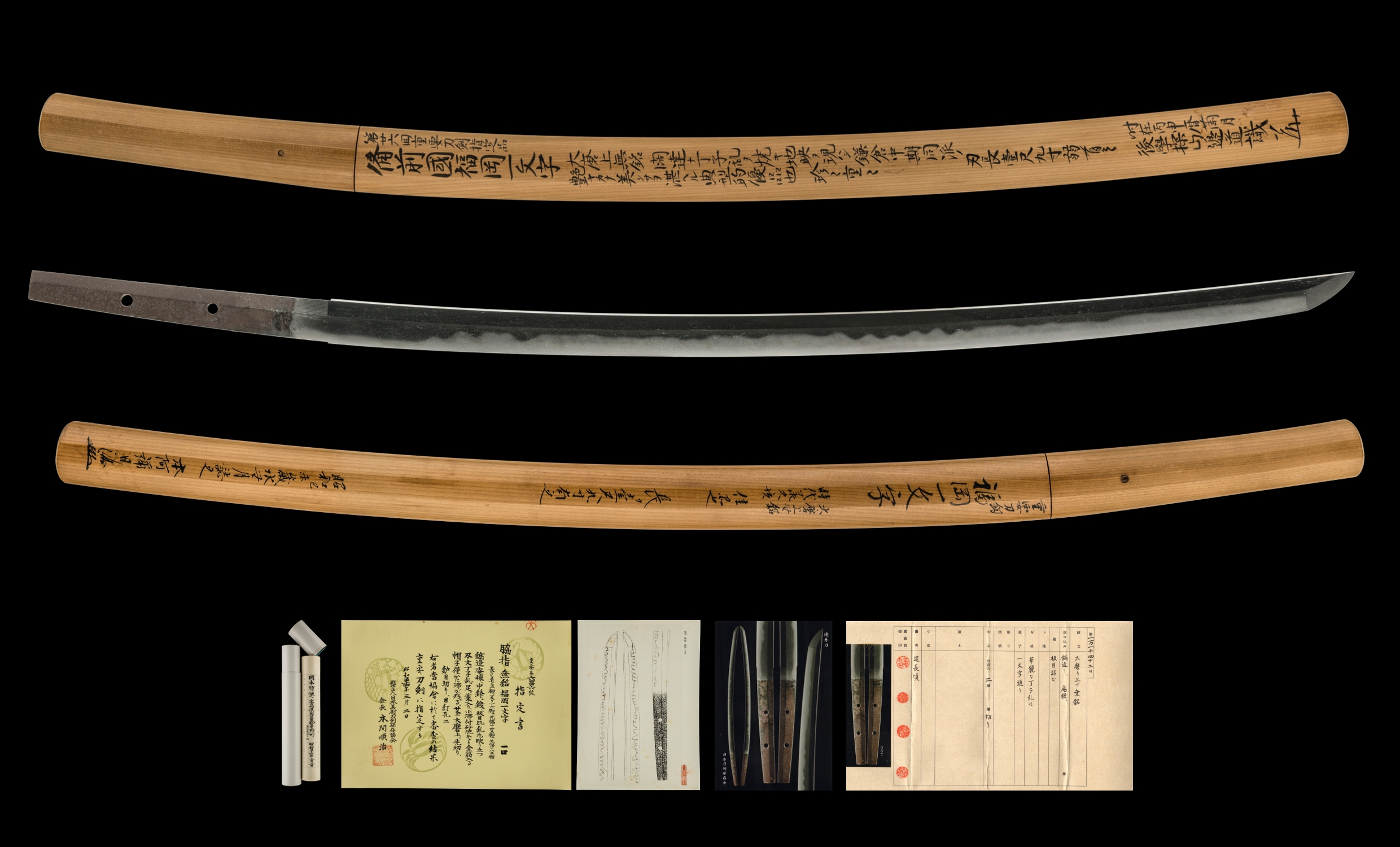
Katayama Ichimonji (Bizen/Bitchu) · 備前 · 1249-1256頃
藤代 Jo-jo saku · 刀剣大鑑 上位1%
則房は鎌倉時代中期の工で、一文字派を最高潮へ導いた上手の一人である。諸書は「助真・吉房らと並んで華やかな丁子乱れを焼き」[[c:1]]、「鎌倉時代中期の一文字派を代表する刀工」[[c:2]]の一人として彼を読む。福岡一文字派助房の子と伝え、「のち片山の地に移住したため片山一文字と称されている」[[c:3]]。
片山なる地そのものについては定説がない。従来は備中国とするのが通説であったが、近年は「近年備前国福岡近在の片山ではないかとする説」[[c:4]]が浮上し、今後の検討を促している。名にはもう一つの問題がある。「則房の銘字には数種の書体が見られ」[[c:5]]、作風にも幅があることから、同名は一人ではなく数代存続したものと考えられている。「現存する有銘の作は太刀に限られているが、古来薙刀の名手と伝え」[[c:6]]、無銘の薙刀にそれと伝えるものが多く遺存する。
鍛えは板目で、精到な作ではよくつみ、豪壮な作では肌立ち、杢を交え、細かな地景が入る。その上に立つのが、この派を鑑する第一の見どころ、鮮やかな乱れ映りであり、かねは明るく冷たく冴え、地沸は微塵につく。乱れ映りと活きた板目の地は他のすべての土台であり、諸書がまず則房と鑑する標として繰り返し挙げるところである。
刃文は丁子乱れに互の目を交え、足・葉よく入り、匂深く小沸つき、僅かに砂流し・金筋がかかり、処々上半に飛焼・棟焼を交える。鑑別の眼目は明快で、「則房の見どころは、地がねが強く冴え、丁子乱れが逆がかり、刃中の足が細かいところにある」[[c:7]]。逆がかりこそ同派中で彼を分かつもので、その「丁子乱れが助真・吉房らに比して幾分小模様となり」[[c:8]]、逆ごころと短く細かな足とが相俟って最も確かな手がかりとなる。
帽子こそ注意して見るべき点である。乱れ込んで小丸となり、しばしば尖りごころに返って掃きかける。諸書はある一口について「帽子乱れ込み、掃きかけ、先表は尖りごころに返り」[[c:9]]と記す。豪壮な作では表が焼詰め風となり、裏が小丸に返って掃きかけることもある。掃きかけて尖る先は、その下の逆がかる丁子と同じく彼の標であり、掃きかけを伴わぬ平らな小丸は鑑定に一拍を置かせる。
蒐集の上では、則房は古刀の名工の中でも最も入手困難な部類に属する。藤代は上々作に列し、その作は国宝と多数の特別重要刀剣を数え、諸家の歴史を帯びる。大和郡山の柳沢家に伝来した太刀、徳川将軍家・徳川吉宗・綱吉の所持品、池田家・高須松平家を歴た刀、上杉家の宝物帳に載る薙刀などである。柳沢家の太刀の一口には本阿弥光忠の折紙の記憶がなお残る。市場に出るものはほとんどなく、名品は九州国立博物館・静嘉堂文庫美術館・東京富士美術館・ふくやま美術館などに収まり、その作が売立に現れることは、計画して臨む購入というより、一生に一度あるかないかの出来事に近い。
則房の位置づけを、日本刀全体および伝統・時代・時期ごとに示します。各位(随一・屈指・有数・著名)は、NBTHK および文化庁による指定に加え、三作や名物帳などの歴史的栄誉を加味したものです。
各項目を選ぶと評価方法が表示されます。
備前伝 · 備中
時期区分: 福岡一文字· 1207–1288
現在2点販売中
福岡一文字派は、備前国福岡の地にあって鎌倉時代中期にその最盛期を迎えた一文字派の一章であり、古一文字の小乱れを基調とした古調な作風を脱して、絢爛たる丁子乱れへと到達した時期にあたる。中心となる刀工には則宗をはじめ、助宗、吉房、助真らが挙げられ、また本区分の説示には助房とその子と伝える吉房・則房・助真の系譜、助守、成近、弘利、助秀といった工の名が見える。則房は助真・吉房らと並んで華やかな丁子乱れを焼き、鎌倉時代中期の一文字派を代表する刀工と位置づけられる。一文字派は鎌倉時代初期から南北朝期にかけて備前国に栄えた一大流派で、福岡・吉岡・片山・岩戸などの地に繁栄し多くの良工を輩出したが、その中でも福岡の地に拠ったこの中期の一群が、もっとも豪壮かつ華麗な作域を展開した。 本区分の作風は、太刀姿が身幅広く、猪首鋒の豪壮な体配となり、地に映りを鮮明にあらわし、焼幅に変化をつけた匂出来の華麗な大房丁子を焼いて強烈な個性を見せる点にある。鍛えは板目あるいは小板目に杢を交え、地沸微塵に厚くつき、地景細かに入り、乱れ映りが鮮明に立ち、かねが冴える。刃文は丁子乱れを主調に、重花丁子・蛙子・互の目・尖りごころの刃などを交え、出入りがあって腰高に焼き、足・葉よく入り、匂深く小沸つき、金筋・砂流しがかかる。則房に至っては、同じ華やかな丁子の刃文でも吉房・助真に比して乱れが幾分小模様となり、刃中の足が短く細かく、乱れが逆ごころをおびるところに特色があり、地がねが強く冴える点も見どころとされる。直刃を基調とした穏やかで古調な古一文字とは華やかさにおいて画然と異なり、また丁子乱れの中に互の目が目立ち穏やかに揃った後代の吉岡一文字とも、その大模様で豪放な乱れにおいて対照をなしている。 福岡一文字の鑑定は、鮮明に立つ乱れ映りと、明るく冴えた匂口、足・葉の豊富な働き、そして腰反りの高い豪壮な太刀姿を要点とする。名工としては則房のほか、丁子乱れが極めて華麗で吉房の出来に通じる助守、区上を焼き落として下半に大丁子、上半に小模様な乱れを見せる成近、匂勝ちに小沸ついた丁子乱れに古色をとどめる弘利らがあり、それぞれに一文字派の華やかさと変化に富む作域を示している。説示には、播磨国竜野脇坂家に伝わった助守、仙台伊達家に伝わった成近、大和郡山柳沢家や尾張徳川家支藩高須松平家に伝来した則房など、近世大名家の所伝を留める優品が数多く見え、福岡一文字の作が古来いかに重んじられてきたかをよく物語っている。 詳しく見る →
鎌倉時代の備前
鎌倉時代は備前の頂点である。伝えでは一文字派の工が後鳥羽上皇の御番鍛冶に列し、世紀の半ばには光忠が長船派を興して、注文は公家からも武家政権からも流れ込んだ。国宝刀剣の数で備前に並ぶ国はない。
特別保存刀剣の中から、特に出来が優れ、国認定の重要美術品に準ずると判断された名品です。年に一度の重要刀剣審査で選ばれます。
極めて選別的で、日本に登録された約250万口の刀剣のうち、重要刀剣に達したものは12,307口(約203口に1口)にすぎません。
日本美術刀剣保存協会(NBTHK)は、1948年に設立され、文化庁の監督を受ける公益財団法人で、東京・刀剣博物館に本部を置きます。専門の審査員が出品作を直接審査し、美術的・歴史的価値に応じた鑑定書を発行します。NBTHKの鑑定書は、日本刀および刀装具の真正性を示す最も広く認知された基準です。
NBTHK公式サイトAll swords come with a three-day inspection period beginning from the date of delivery. If not satisfied, the sword may be returned within this period for a full refund of the purchase price. Outside of this period, all sales are final. Swords purchased on a layaway payment plan are not eligible for the three-day inspection period.
商品番号 UJWA248 – カタログ 36 – 売約済 福岡一文字則房 大脇指 (福岡一文字則房) 本作は、鎌倉時代の黄金期を築いた名門「福岡一文字」派の作として、日本美術刀剣保存協会(日美保)より重要刀剣の指定を受けています。さらにNTHK-NPO(日本刀剣保存会)の鑑定では、一文字派の中でも屈指の名工である「則房」と個銘まで極められました。 福岡一文字派の名は、備前国福岡の地に拠点を置いたことに由来します。茎に刻まれた「一」の銘は、日本刀の歴史において不朽の象徴となっています。則房は本名を高津右馬之助と称し、建長年間(1249-1256)に活躍しました。吉房、助真と並び「一文字三名工」の一人に数えられ、その作品のうち二振が国宝に指定されています。藤代義雄氏の評価においても「上々作」に列せられる最高位の絵師です。 地肌は板目肌が美しく練れ、そこに乱れ映りが鮮やかに立ち、見る者を瞬時に13世紀の備前へと誘います。地鉄は特有の青みを帯び、細かな小沸が厚くついて輝く様は、最高峰の技術で鍛えられた証と言えるでしょう。 灯火の下で静かに刀身を翳せば、この一振の真価が露わになります。華麗な丁子乱れの刃文が地中に生命を吹き込み、下半の重厚な重花丁子から、物頭にかけてのゆったりとした造形まで、実に多彩な変化を見せます。さらに、焼き出しから大丁子が乱舞し、金筋や砂流しが随所に現れる様は、まさに圧巻の一言に尽きます。 白鞘には、元人間国宝の本阿弥日洲氏(1979年)と、田野辺道宏氏(2016年)による鞘書きが両面に施されています。現代を代表する二大鑑定家による共演は、極めて稀で価値あるものです。 本作には、第26回重要刀剣指定書(1979年)およびNTHK-NPO優秀作鑑定書が付属いたします。
NihontoWatchKatayama Ichimonji (Bizen/Bitchu) · 備前 · 1249-1256頃
藤代 Jo-jo saku · 刀剣大鑑 上位1%
則房は鎌倉時代中期の工で、一文字派を最高潮へ導いた上手の一人である。諸書は「助真・吉房らと並んで華やかな丁子乱れを焼き」[[c:1]]、「鎌倉時代中期の一文字派を代表する刀工」[[c:2]]の一人として彼を読む。福岡一文字派助房の子と伝え、「のち片山の地に移住したため片山一文字と称されている」[[c:3]]。
片山なる地そのものについては定説がない。従来は備中国とするのが通説であったが、近年は「近年備前国福岡近在の片山ではないかとする説」[[c:4]]が浮上し、今後の検討を促している。名にはもう一つの問題がある。「則房の銘字には数種の書体が見られ」[[c:5]]、作風にも幅があることから、同名は一人ではなく数代存続したものと考えられている。「現存する有銘の作は太刀に限られているが、古来薙刀の名手と伝え」[[c:6]]、無銘の薙刀にそれと伝えるものが多く遺存する。
鍛えは板目で、精到な作ではよくつみ、豪壮な作では肌立ち、杢を交え、細かな地景が入る。その上に立つのが、この派を鑑する第一の見どころ、鮮やかな乱れ映りであり、かねは明るく冷たく冴え、地沸は微塵につく。乱れ映りと活きた板目の地は他のすべての土台であり、諸書がまず則房と鑑する標として繰り返し挙げるところである。
刃文は丁子乱れに互の目を交え、足・葉よく入り、匂深く小沸つき、僅かに砂流し・金筋がかかり、処々上半に飛焼・棟焼を交える。鑑別の眼目は明快で、「則房の見どころは、地がねが強く冴え、丁子乱れが逆がかり、刃中の足が細かいところにある」[[c:7]]。逆がかりこそ同派中で彼を分かつもので、その「丁子乱れが助真・吉房らに比して幾分小模様となり」[[c:8]]、逆ごころと短く細かな足とが相俟って最も確かな手がかりとなる。
帽子こそ注意して見るべき点である。乱れ込んで小丸となり、しばしば尖りごころに返って掃きかける。諸書はある一口について「帽子乱れ込み、掃きかけ、先表は尖りごころに返り」[[c:9]]と記す。豪壮な作では表が焼詰め風となり、裏が小丸に返って掃きかけることもある。掃きかけて尖る先は、その下の逆がかる丁子と同じく彼の標であり、掃きかけを伴わぬ平らな小丸は鑑定に一拍を置かせる。
蒐集の上では、則房は古刀の名工の中でも最も入手困難な部類に属する。藤代は上々作に列し、その作は国宝と多数の特別重要刀剣を数え、諸家の歴史を帯びる。大和郡山の柳沢家に伝来した太刀、徳川将軍家・徳川吉宗・綱吉の所持品、池田家・高須松平家を歴た刀、上杉家の宝物帳に載る薙刀などである。柳沢家の太刀の一口には本阿弥光忠の折紙の記憶がなお残る。市場に出るものはほとんどなく、名品は九州国立博物館・静嘉堂文庫美術館・東京富士美術館・ふくやま美術館などに収まり、その作が売立に現れることは、計画して臨む購入というより、一生に一度あるかないかの出来事に近い。
則房の位置づけを、日本刀全体および伝統・時代・時期ごとに示します。各位(随一・屈指・有数・著名)は、NBTHK および文化庁による指定に加え、三作や名物帳などの歴史的栄誉を加味したものです。
各項目を選ぶと評価方法が表示されます。
備前伝 · 備中
時期区分: 福岡一文字· 1207–1288
現在2点販売中
福岡一文字派は、備前国福岡の地にあって鎌倉時代中期にその最盛期を迎えた一文字派の一章であり、古一文字の小乱れを基調とした古調な作風を脱して、絢爛たる丁子乱れへと到達した時期にあたる。中心となる刀工には則宗をはじめ、助宗、吉房、助真らが挙げられ、また本区分の説示には助房とその子と伝える吉房・則房・助真の系譜、助守、成近、弘利、助秀といった工の名が見える。則房は助真・吉房らと並んで華やかな丁子乱れを焼き、鎌倉時代中期の一文字派を代表する刀工と位置づけられる。一文字派は鎌倉時代初期から南北朝期にかけて備前国に栄えた一大流派で、福岡・吉岡・片山・岩戸などの地に繁栄し多くの良工を輩出したが、その中でも福岡の地に拠ったこの中期の一群が、もっとも豪壮かつ華麗な作域を展開した。 本区分の作風は、太刀姿が身幅広く、猪首鋒の豪壮な体配となり、地に映りを鮮明にあらわし、焼幅に変化をつけた匂出来の華麗な大房丁子を焼いて強烈な個性を見せる点にある。鍛えは板目あるいは小板目に杢を交え、地沸微塵に厚くつき、地景細かに入り、乱れ映りが鮮明に立ち、かねが冴える。刃文は丁子乱れを主調に、重花丁子・蛙子・互の目・尖りごころの刃などを交え、出入りがあって腰高に焼き、足・葉よく入り、匂深く小沸つき、金筋・砂流しがかかる。則房に至っては、同じ華やかな丁子の刃文でも吉房・助真に比して乱れが幾分小模様となり、刃中の足が短く細かく、乱れが逆ごころをおびるところに特色があり、地がねが強く冴える点も見どころとされる。直刃を基調とした穏やかで古調な古一文字とは華やかさにおいて画然と異なり、また丁子乱れの中に互の目が目立ち穏やかに揃った後代の吉岡一文字とも、その大模様で豪放な乱れにおいて対照をなしている。 福岡一文字の鑑定は、鮮明に立つ乱れ映りと、明るく冴えた匂口、足・葉の豊富な働き、そして腰反りの高い豪壮な太刀姿を要点とする。名工としては則房のほか、丁子乱れが極めて華麗で吉房の出来に通じる助守、区上を焼き落として下半に大丁子、上半に小模様な乱れを見せる成近、匂勝ちに小沸ついた丁子乱れに古色をとどめる弘利らがあり、それぞれに一文字派の華やかさと変化に富む作域を示している。説示には、播磨国竜野脇坂家に伝わった助守、仙台伊達家に伝わった成近、大和郡山柳沢家や尾張徳川家支藩高須松平家に伝来した則房など、近世大名家の所伝を留める優品が数多く見え、福岡一文字の作が古来いかに重んじられてきたかをよく物語っている。 詳しく見る →
鎌倉時代の備前
鎌倉時代は備前の頂点である。伝えでは一文字派の工が後鳥羽上皇の御番鍛冶に列し、世紀の半ばには光忠が長船派を興して、注文は公家からも武家政権からも流れ込んだ。国宝刀剣の数で備前に並ぶ国はない。
特別保存刀剣の中から、特に出来が優れ、国認定の重要美術品に準ずると判断された名品です。年に一度の重要刀剣審査で選ばれます。
極めて選別的で、日本に登録された約250万口の刀剣のうち、重要刀剣に達したものは12,307口(約203口に1口)にすぎません。
日本美術刀剣保存協会(NBTHK)は、1948年に設立され、文化庁の監督を受ける公益財団法人で、東京・刀剣博物館に本部を置きます。専門の審査員が出品作を直接審査し、美術的・歴史的価値に応じた鑑定書を発行します。NBTHKの鑑定書は、日本刀および刀装具の真正性を示す最も広く認知された基準です。
NBTHK公式サイトAll swords come with a three-day inspection period beginning from the date of delivery. If not satisfied, the sword may be returned within this period for a full refund of the purchase price. Outside of this period, all sales are final. Swords purchased on a layaway payment plan are not eligible for the three-day inspection period.