室町は刀剣業を産業に変えた。徒歩の集団戦とともに打刀が興り、長船と関は数打ち物と注文打ちを並行して産し、勘合貿易は日本刀を数万振の単位で海外へ運んだ。
 NihontoWatchNihontoWatch
The Shitahara school traces its roots back five centuries to Chikashige, who worked in the Hachioji area of Musashi during the Daiei period. After the fall of their early patrons, the school became the official smiths of the Tokugawa family, producing swords and spears from the late Muromachi period through to the close of the Edo period. They were the only school working in what is now Tokyo prior to the 1600s, and earned a reputation for forging blades that samurai warriors could trust with their lives. This katana is attributed to Yasushige, eldest son of Chikashige and first generation of the name, who received the character “Yasu” as a gift from Hôjô Ujiyasu, third head of the Go-Hôjô clan. His prime working period falls squarely within the Eiroku era, circa 1558–1570. The blade rewards close inspection. Characteristic shitahara-hada swirls across the surface — a compelling mix of mokume, itame and nagare-hada grain patterns that converge towards the central area of the blade, with gorgeous chocolatey chikei throughout. The hamon is a bright $1 with ko-notare undulation, pointed togari and well-defined ashi; impressive lines of kinsuji and brushed sunagashi thread through it for the full length of the blade in crisp nie-deki. The tip resolves into a lively kaen-boshi. The blade is an ô-suriage nakago, shortened from its original length during the late Muromachi to early Edo period; what remains of the tang retains a distinctive katte-sagari file pattern and a gaku-mei window, from which a spurious earlier signature was removed prior to resubmission to the NBTHK — which duly awarded Hozon certification attributing the blade to Shitahara Yasushige, a strong and accurate assessment. Backing up the school’s wazamonô reputation, this katana carries a gold-inlaid tameshigiri inscription on the nakago recording that Yamano Ka’emon no Jô Nagahisa severed three stacked bodies in a single stroke on December 26th, 1660, when he was 62 years old. Nagahisa is the foremost name in Japanese sword testing, and it is notably rare for a Muromachi-period blade to bear his certification — the great majority of his tests were performed on early shintô blades from the 1600s. Accompanying the sword is a superb late Edo period koshirae centred on a celebrated Mogarashi Sôten tsuba — densely carved iron with gold inlay depicting warriors in combat and a phoenix in the lower left, certified by the NTHK-NPO. The silk braiding of the tsuka survives in beautifully preserved condition from the Edo period, and the habakiis gold foil over copper.
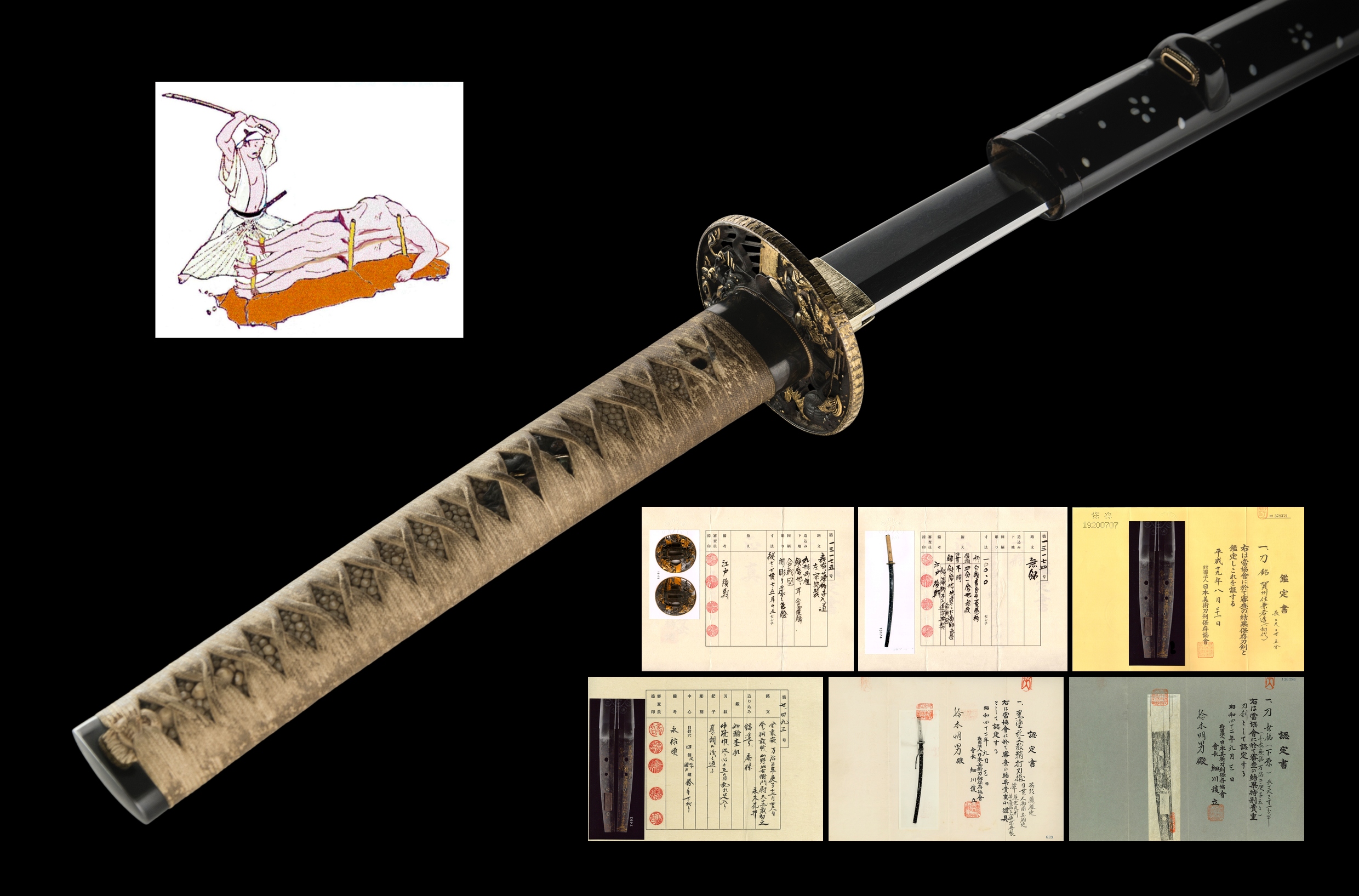
販売店の記載のまま
新刀 · 武蔵 · 1558-1570頃
刀剣大鑑 上位60%
現在1点販売中
康重の位置づけを、日本刀全体および伝法・時代・時期ごとに示します。各区分(随一・屈指・有数・著名)は、NBTHK および文化庁による指定に加え、三作や名物帳などの歴史的栄誉を加味したものです。
各項目を選ぶと評価方法が表示されます。
新刀 · 武蔵
現在7点販売中
下原派は武蔵国八王子の地に拠った刀工の一群で、室町末期に興り、以後江戸末期に至るまで作刀を続けた。古刀期の武蔵国を代表する鍛冶とされ、説示では周重・康重・照重・広重の四工を著名な工として挙げる。なかでも照重は康重・広重と並んで一派を代表する存在で、山本源二郎照重、山本与五郎康重のように山本姓を称した工も知られる。照重については銘鑑が初代を享禄、二代を永禄、三代を天正に充てており、永禄から天正の頃の作がもっとも時代の上がるものと鑑せられている。甲州の注文に応じて鍛えた薙刀も伝わり、地方を越えて求められた様子がうかがえる。 作風は末相州および村正一派の風に末関風を加味したものと説かれる。鍛えは板目に杢がしきりに交じって肌立ち、刃寄りが流れて綾杉風となり、渦を巻いたような肌があらわれる点に地がねの特色がある。刃文は湾れを基調に互の目が二つ三つ連れて尖り刃を交え、やや規則的に乱れて小沸がつき、砂流しのかかるものもある。帽子は乱れ込んで丸く返るものや先の尖って返るものがみられる。細かに肌立った杢目の地がねと、規則的に連れる互の目乱れにのたれを交えた刃文の組み合わせが、この一派を見分ける手がかりとなる。 鑑定にあたっては、肌立った地がねに綾杉風の流れと渦巻く肌があらわれること、互の目が規則的に連れて乱れる刃文の調子を要点とする。彫物では表に棒樋を掻き、倶利迦羅竜や不動、梵字を添えるものが多く、倶利迦羅竜の尾の巻き方に一派らしさが出るとされる。茎は栗尻に切鑢を施し、棟寄りに長銘を切るものが多い。室町末期の打刀や薙刀を代表する優品が重要刀剣に列せられており、照重の薙刀は両刃造という珍しい形状を伝える。武蔵国の在地鍛冶として実用に応えつつ、相州と関の風を併せ呑んだ独自の地刃を築いた点に、下原一派の位置づけがある。 詳しく見る →
室町時代
室町は刀剣業を産業に変えた。徒歩の集団戦とともに打刀が興り、長船と関は数打ち物と注文打ちを並行して産し、勘合貿易は日本刀を数万振の単位で海外へ運んだ。
本作はNBTHKの旧鑑定書(貴重・特別貴重)を有しますが、これらは現在発行されておらず、現在の日刀保ではほとんど認められていません。極めを確認するには、公的な鑑定機関(NBTHK・NTHKなど)に再提出し、現行の鑑定を受けることもご検討ください。
All swords come with a three-day inspection period beginning from the date of delivery. If not satisfied, the sword may be returned within this period for a full refund of the purchase price. Outside of this period, all sales are final. Swords purchased on a layaway payment plan are not eligible for the three-day inspection period.