室町は刀剣業を産業に変えた。徒歩の集団戦とともに打刀が興り、長船と関は数打ち物と注文打ちを並行して産し、勘合貿易は日本刀を数万振の単位で海外へ運んだ。
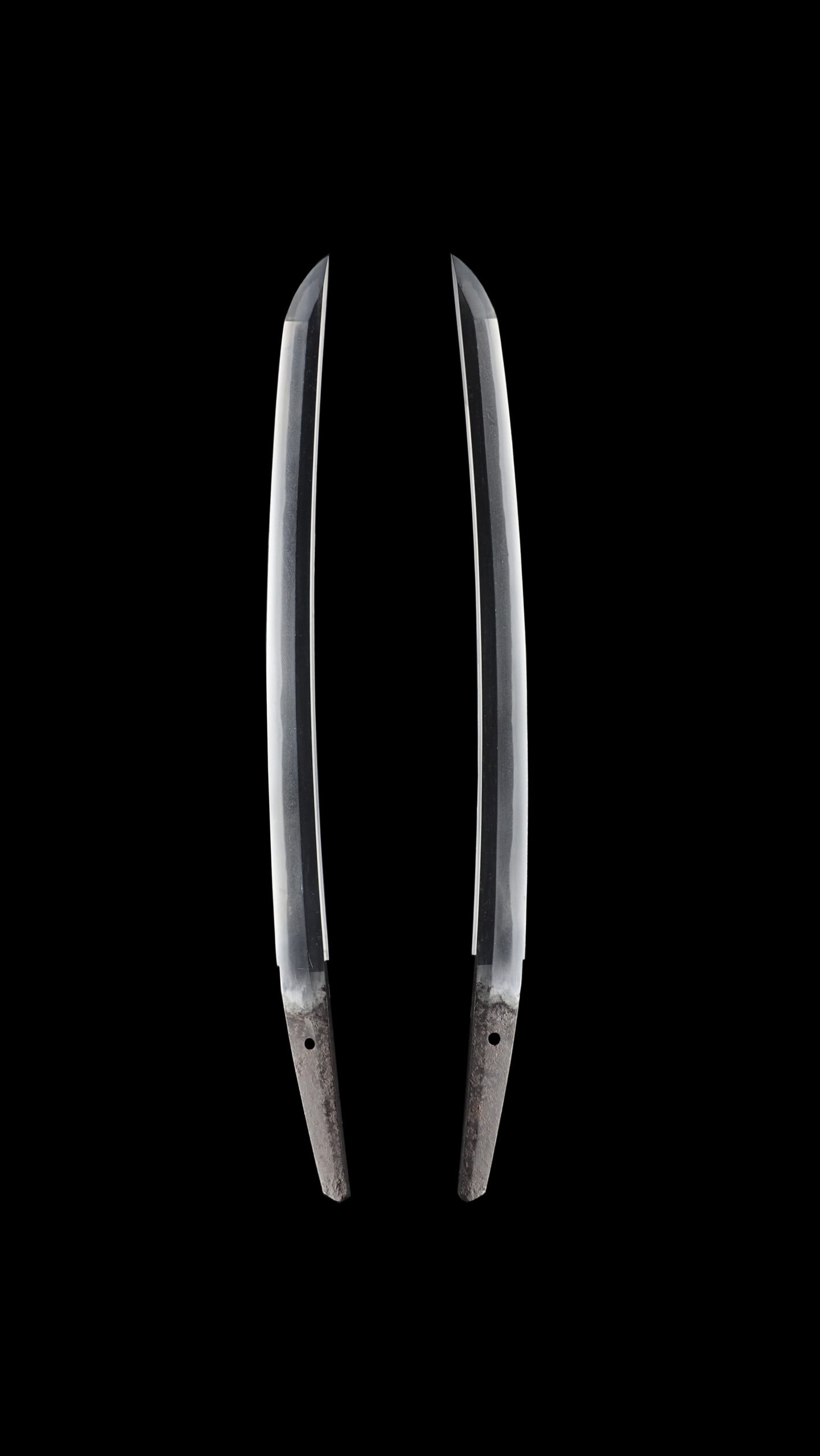
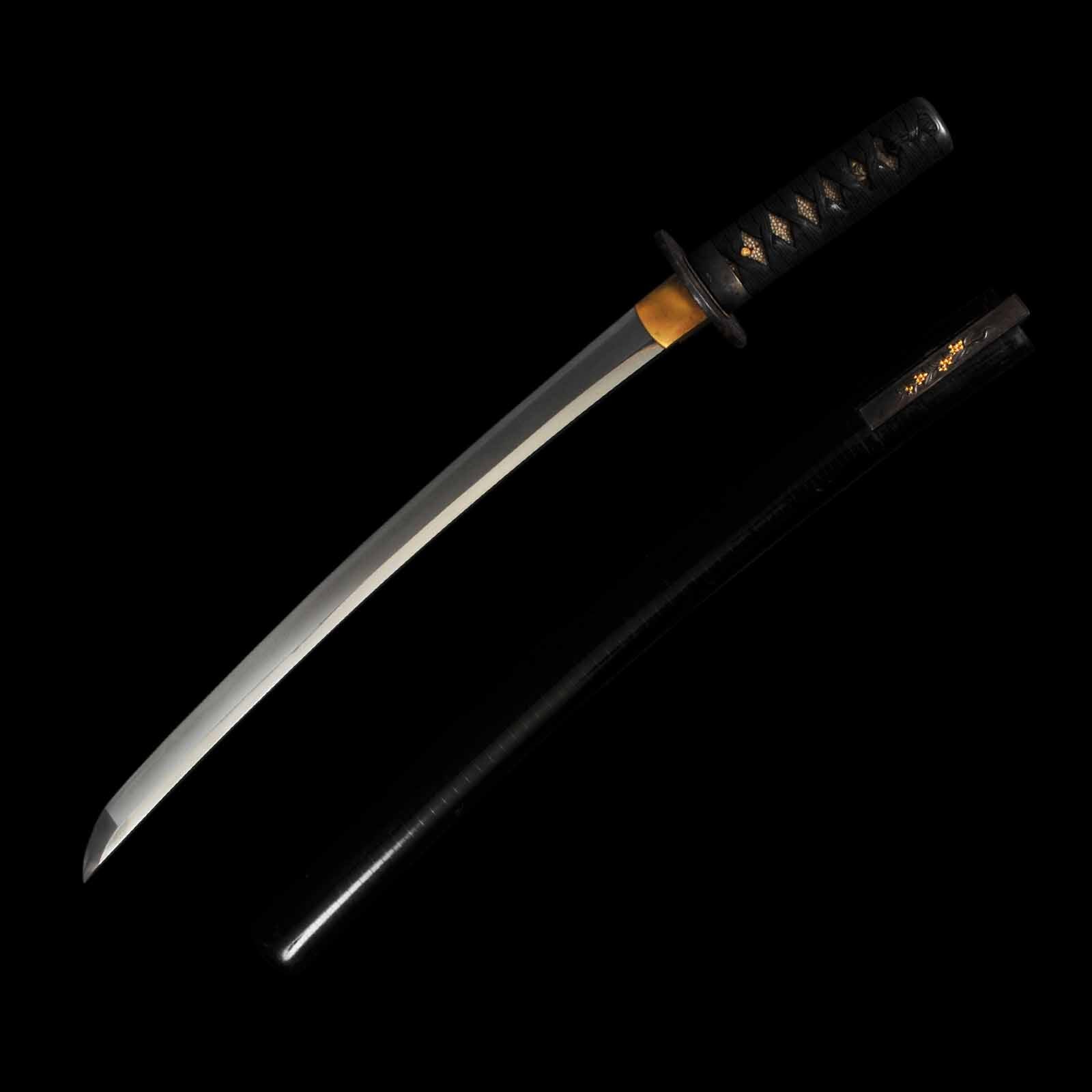
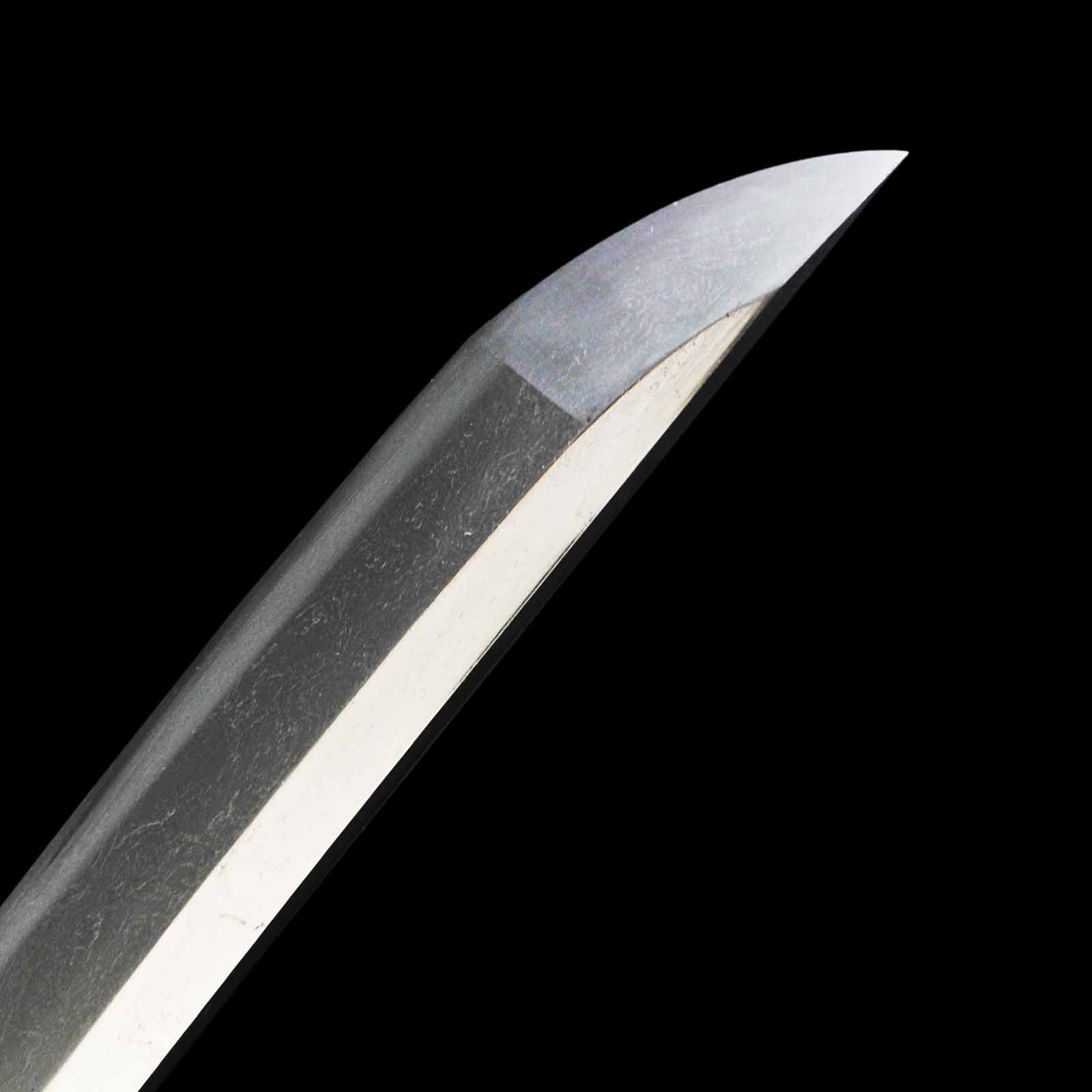
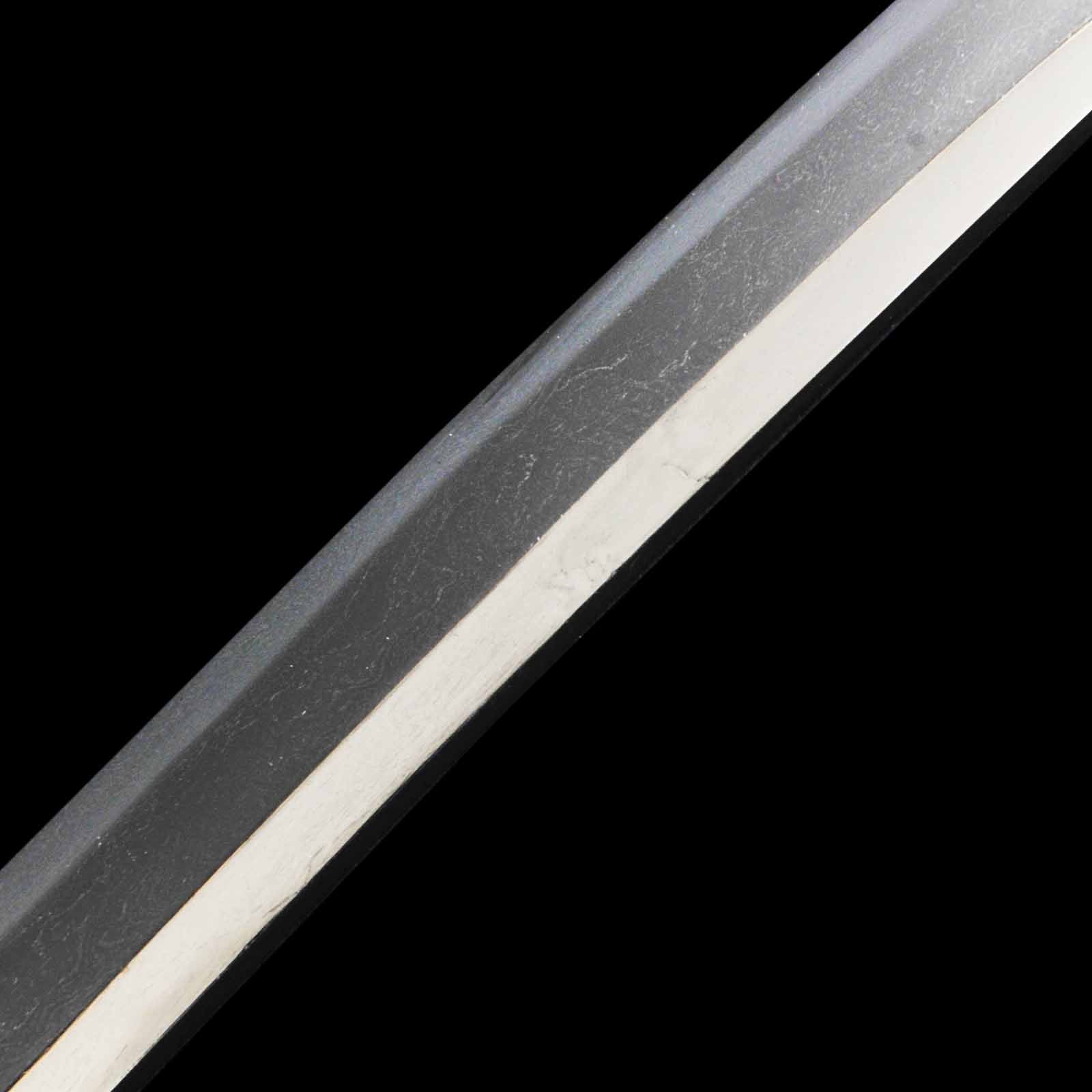
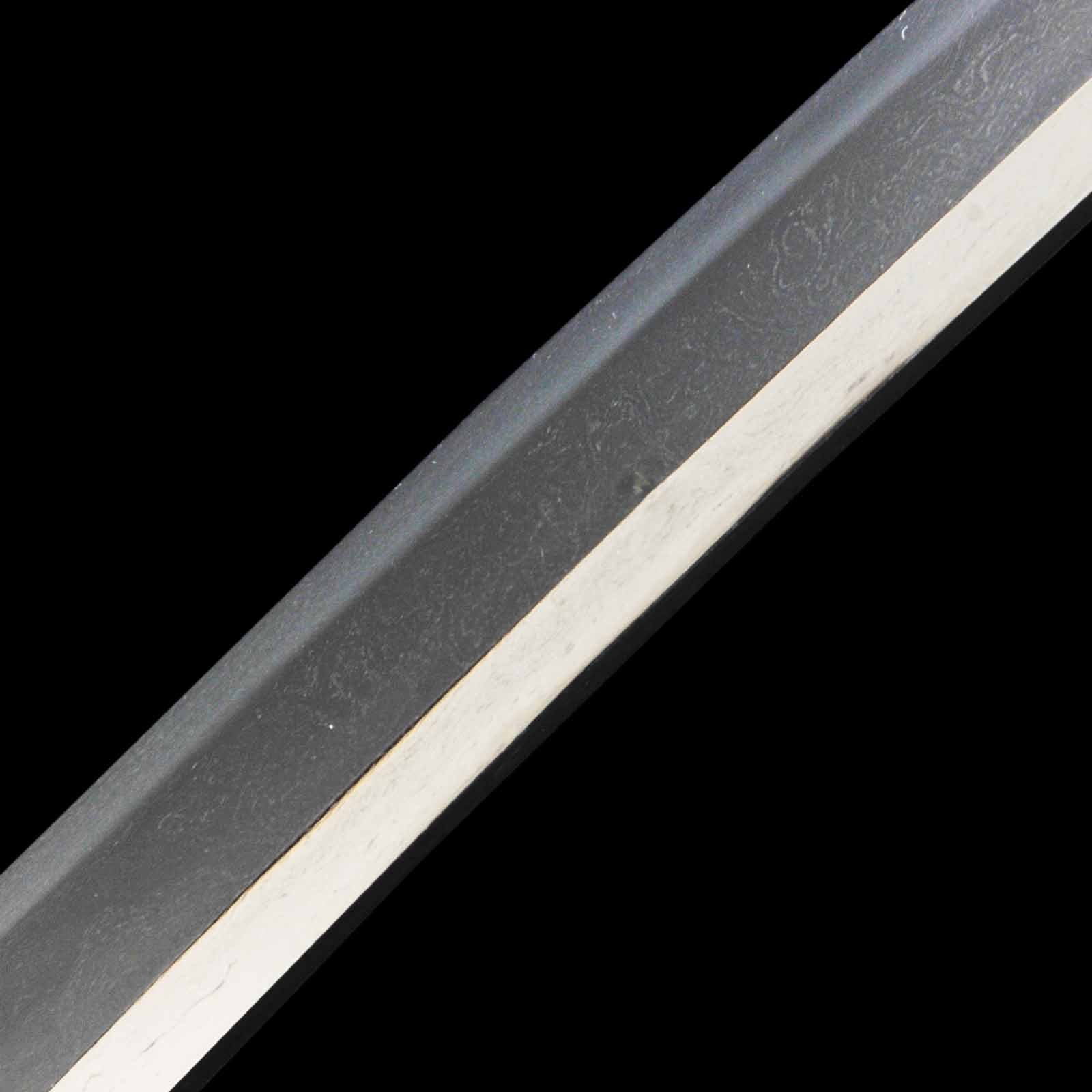
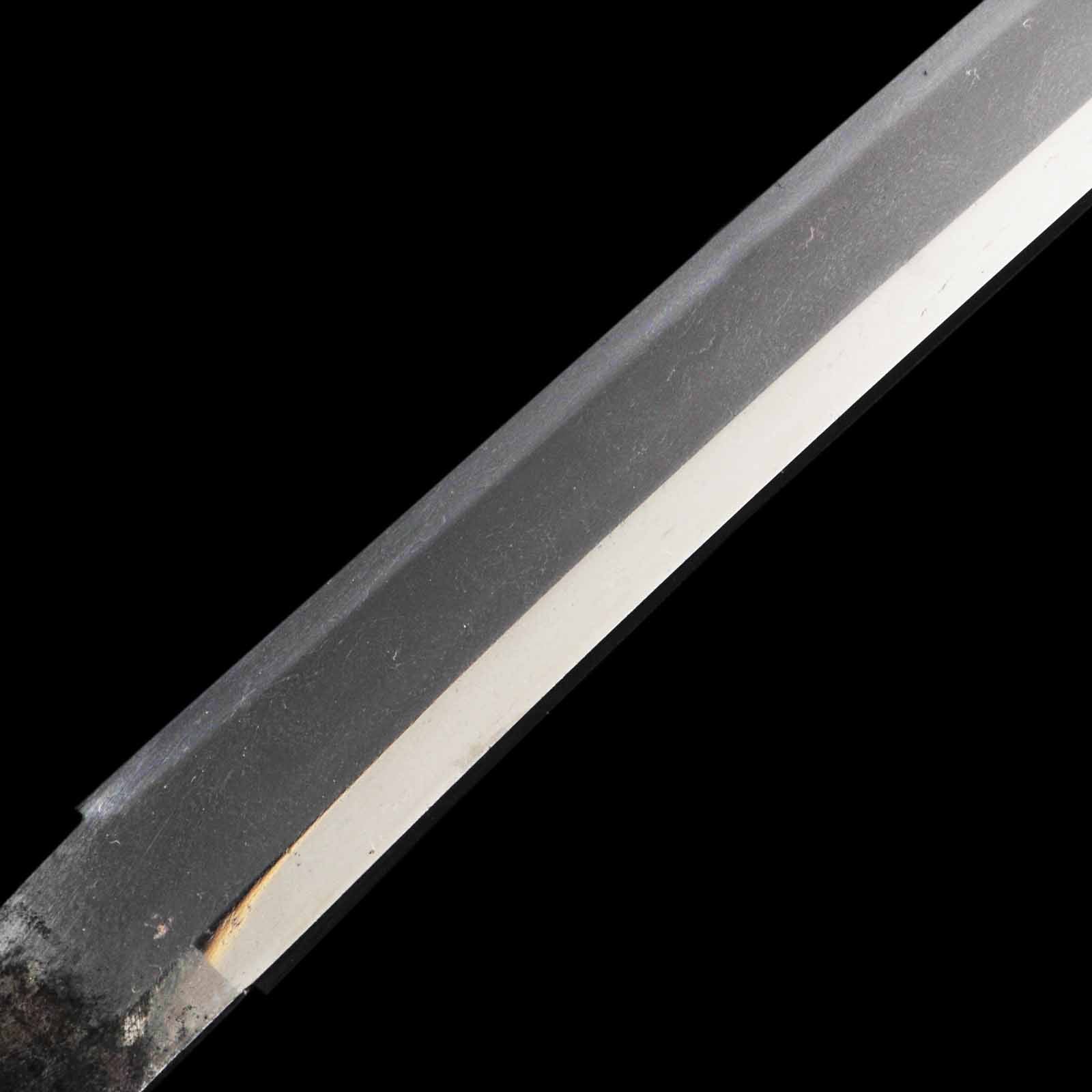
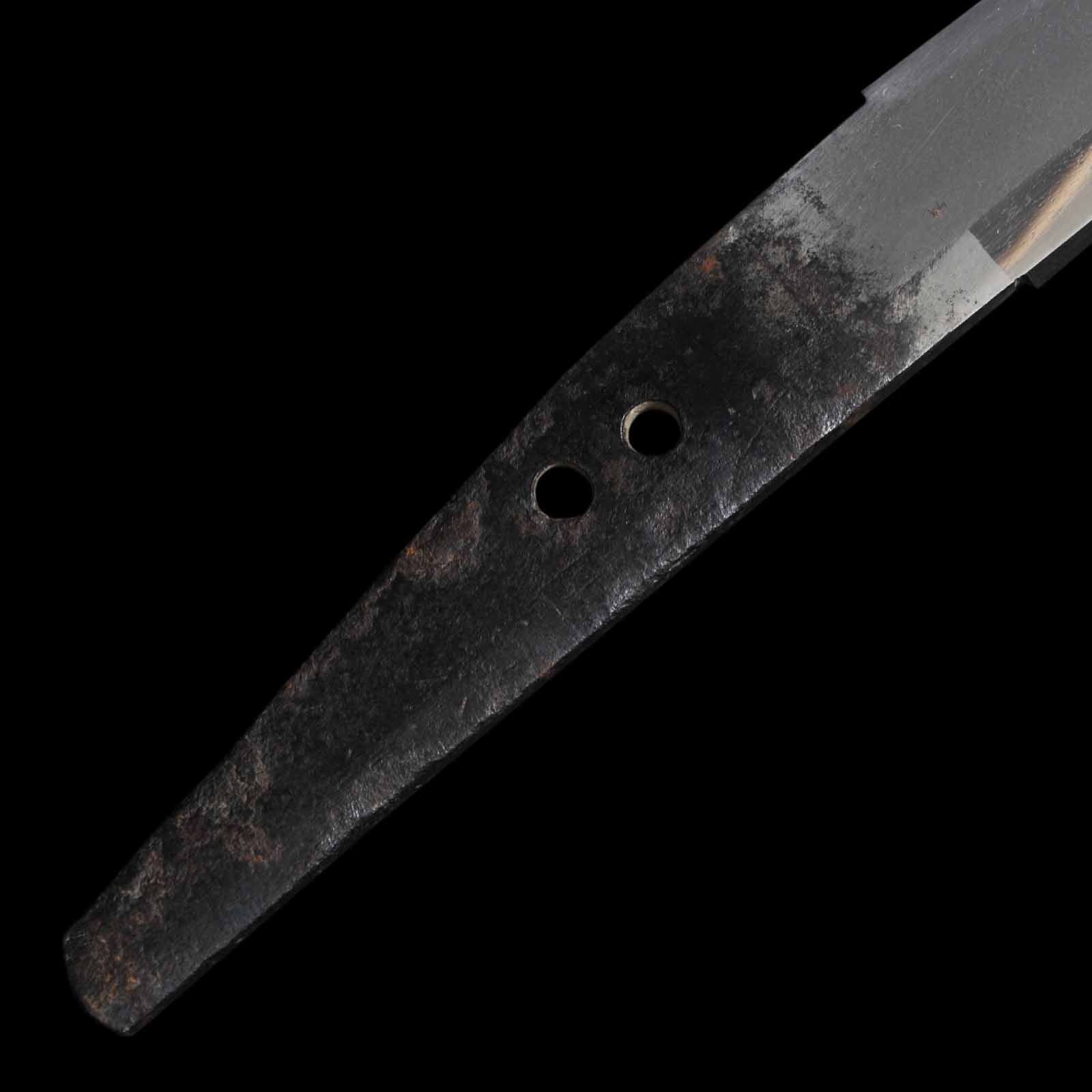
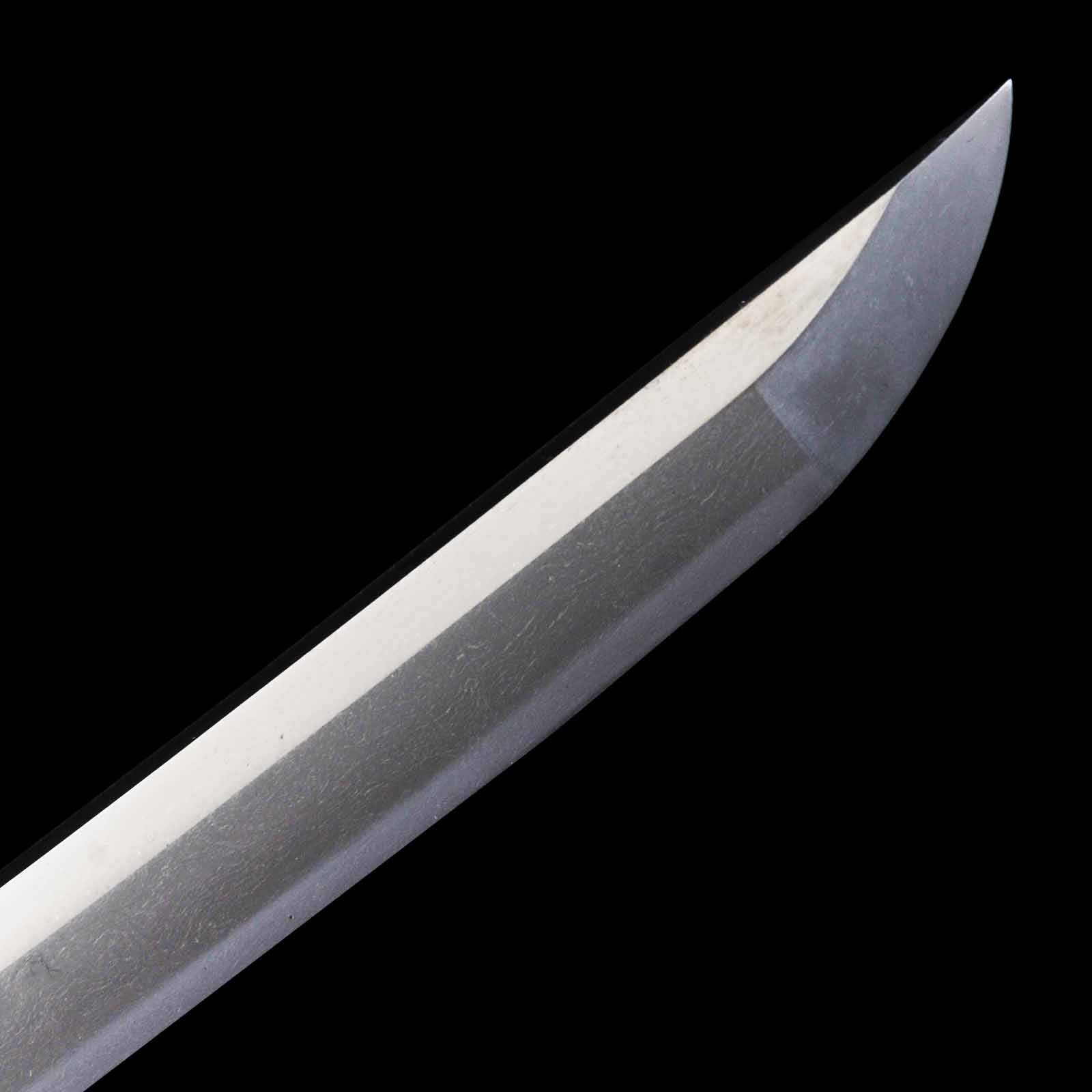
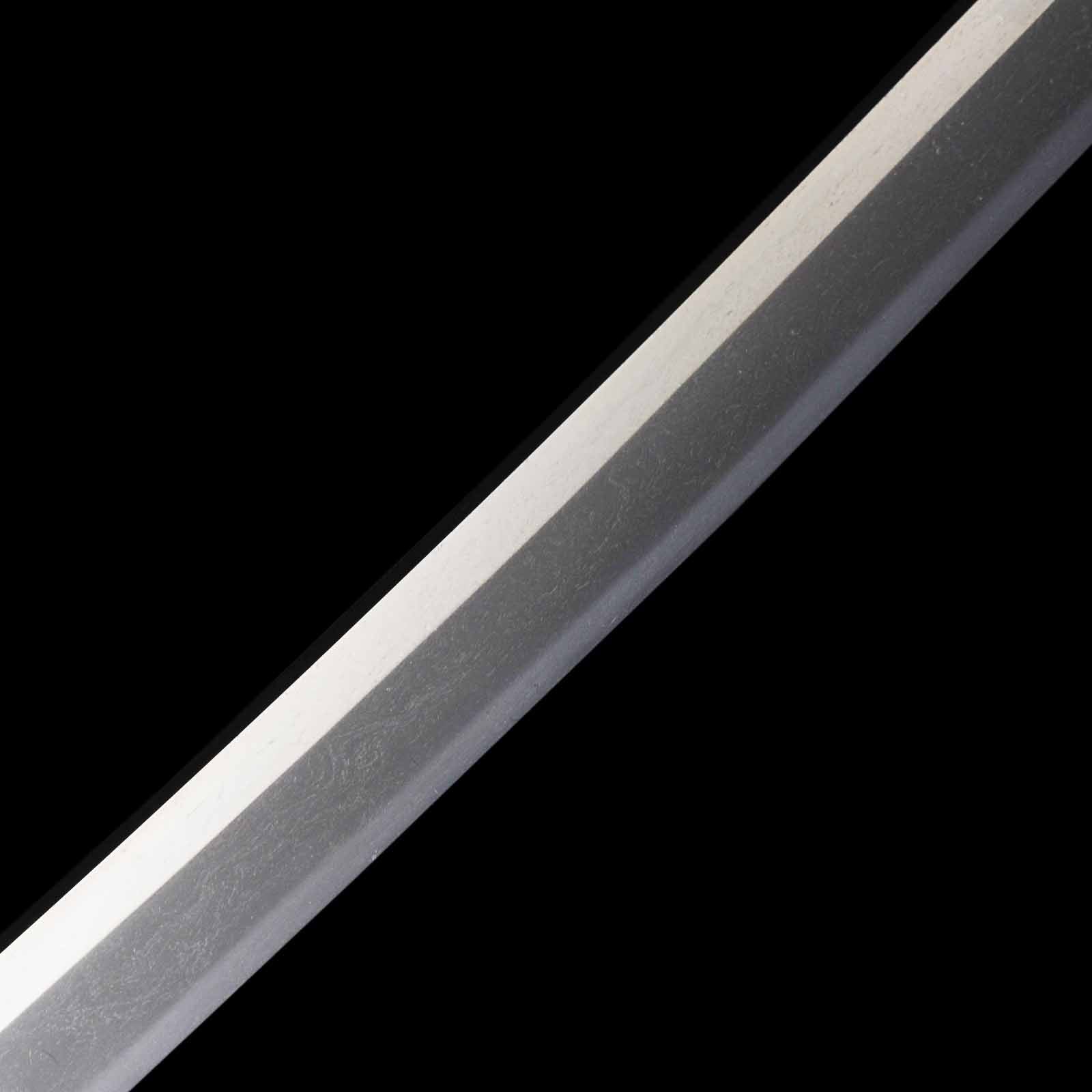
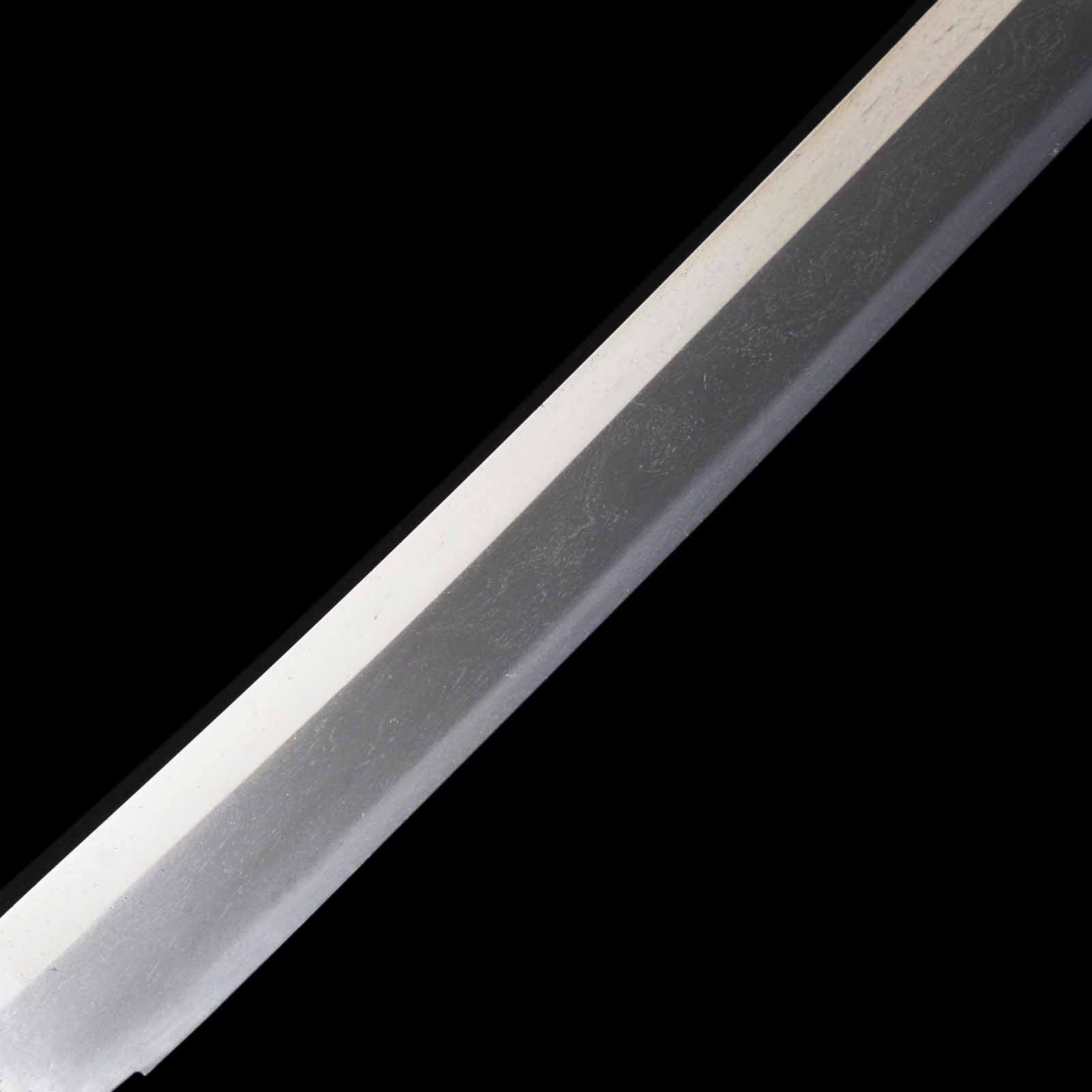
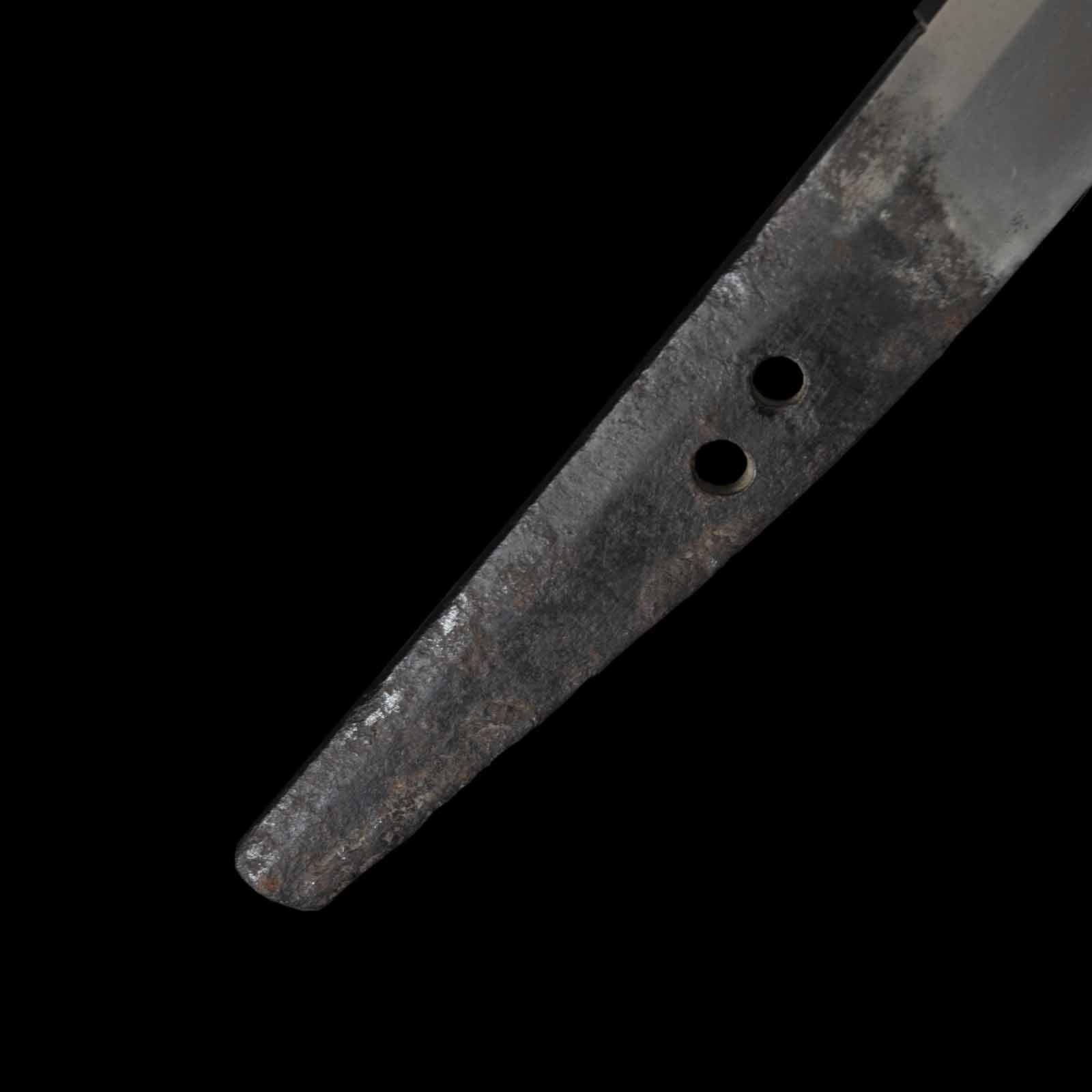
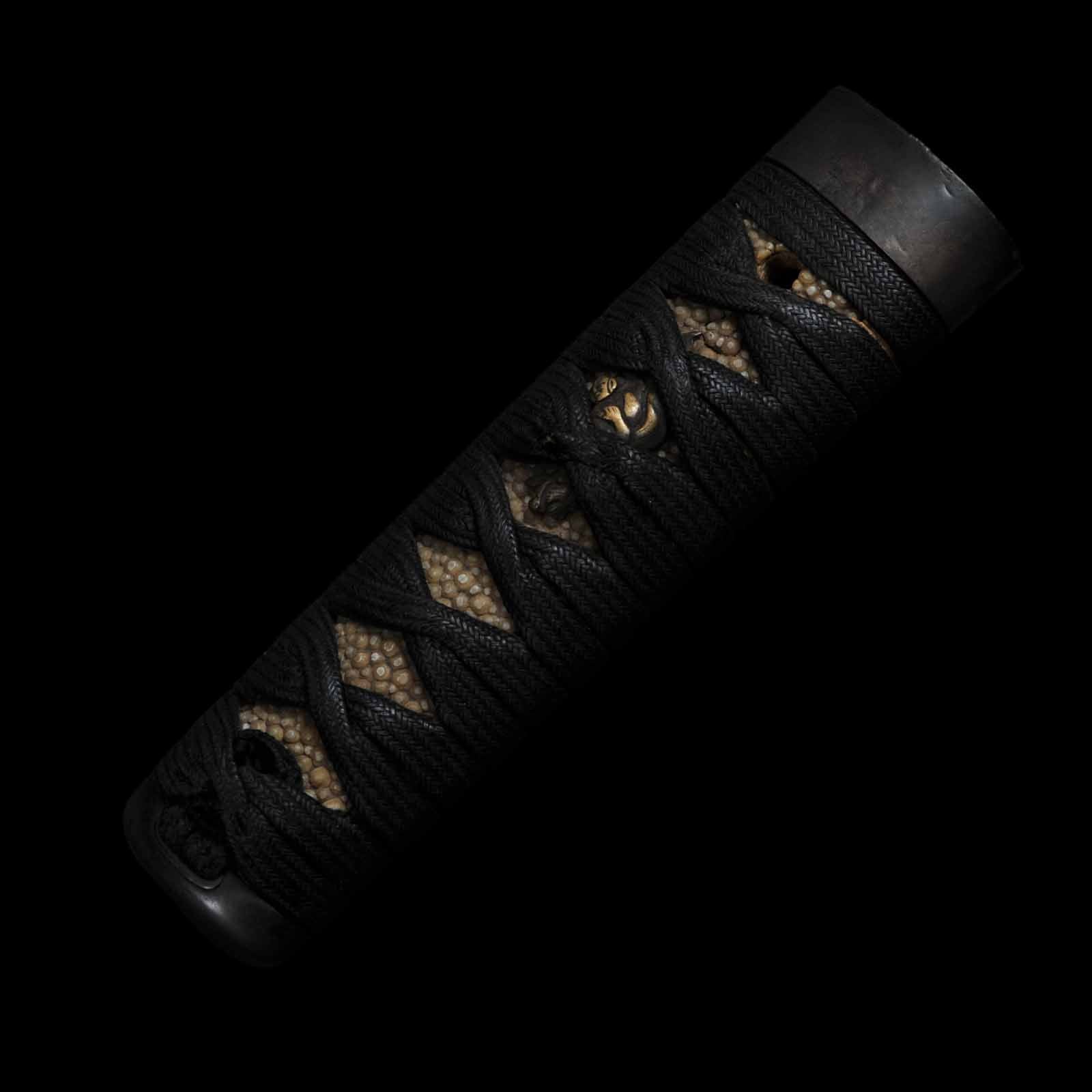
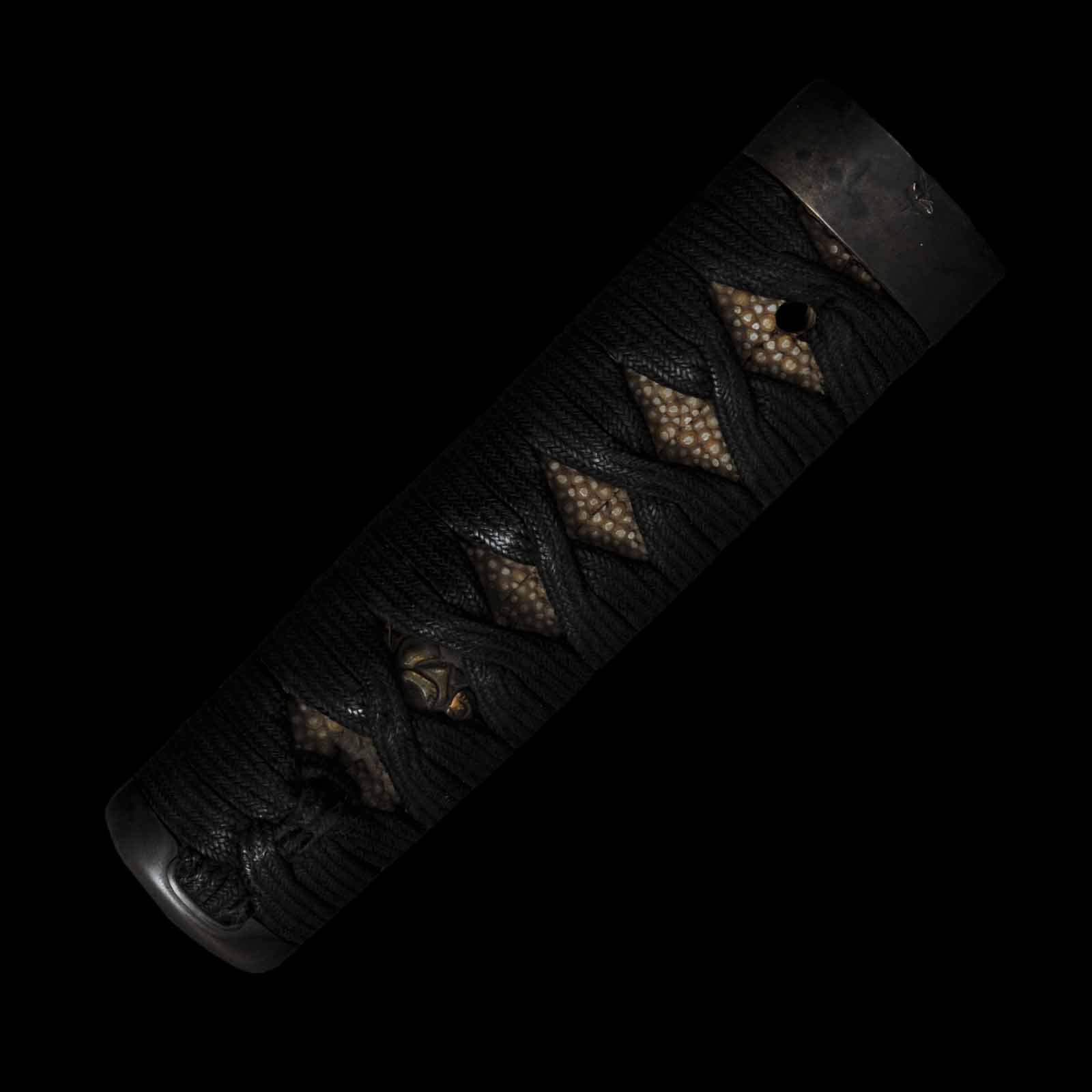
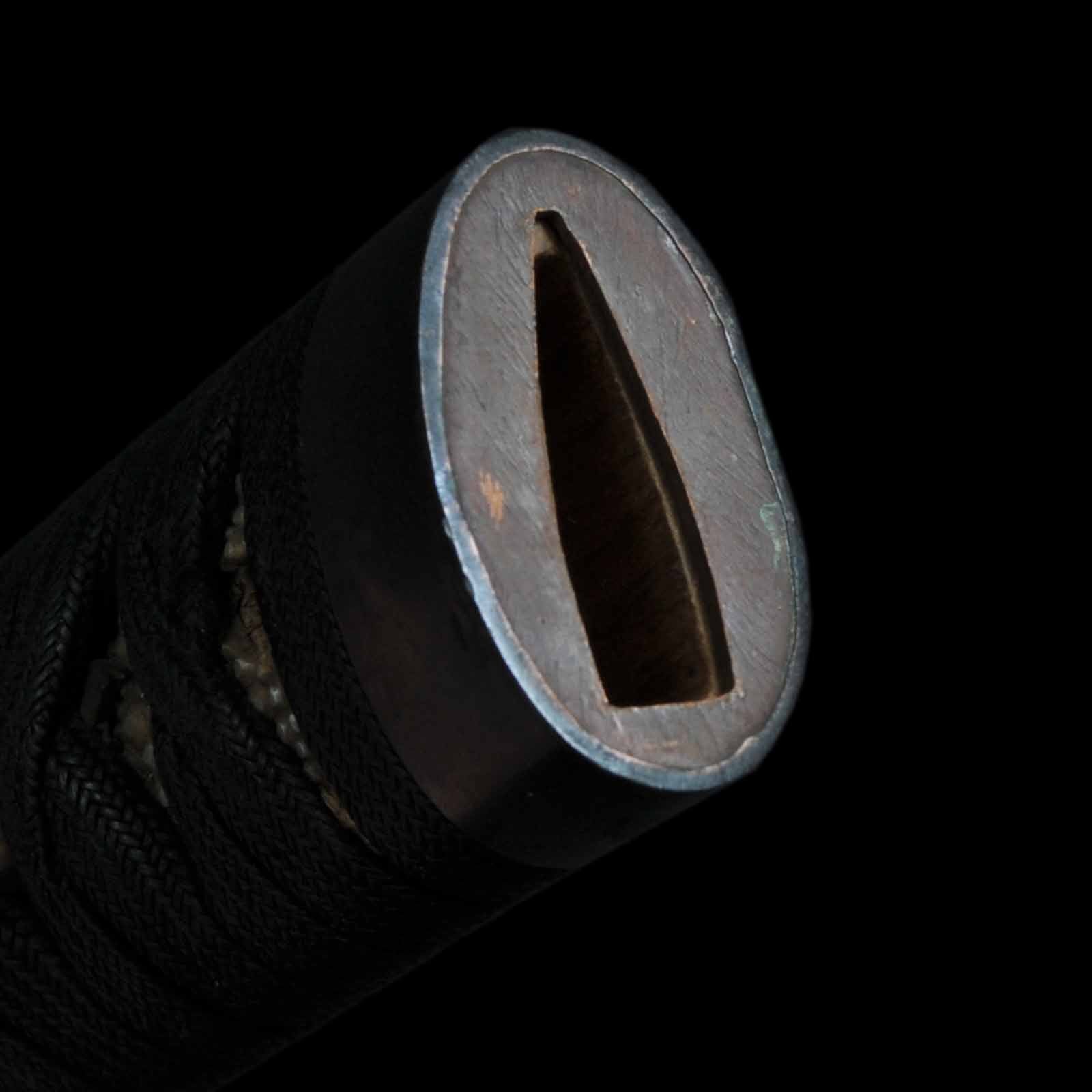
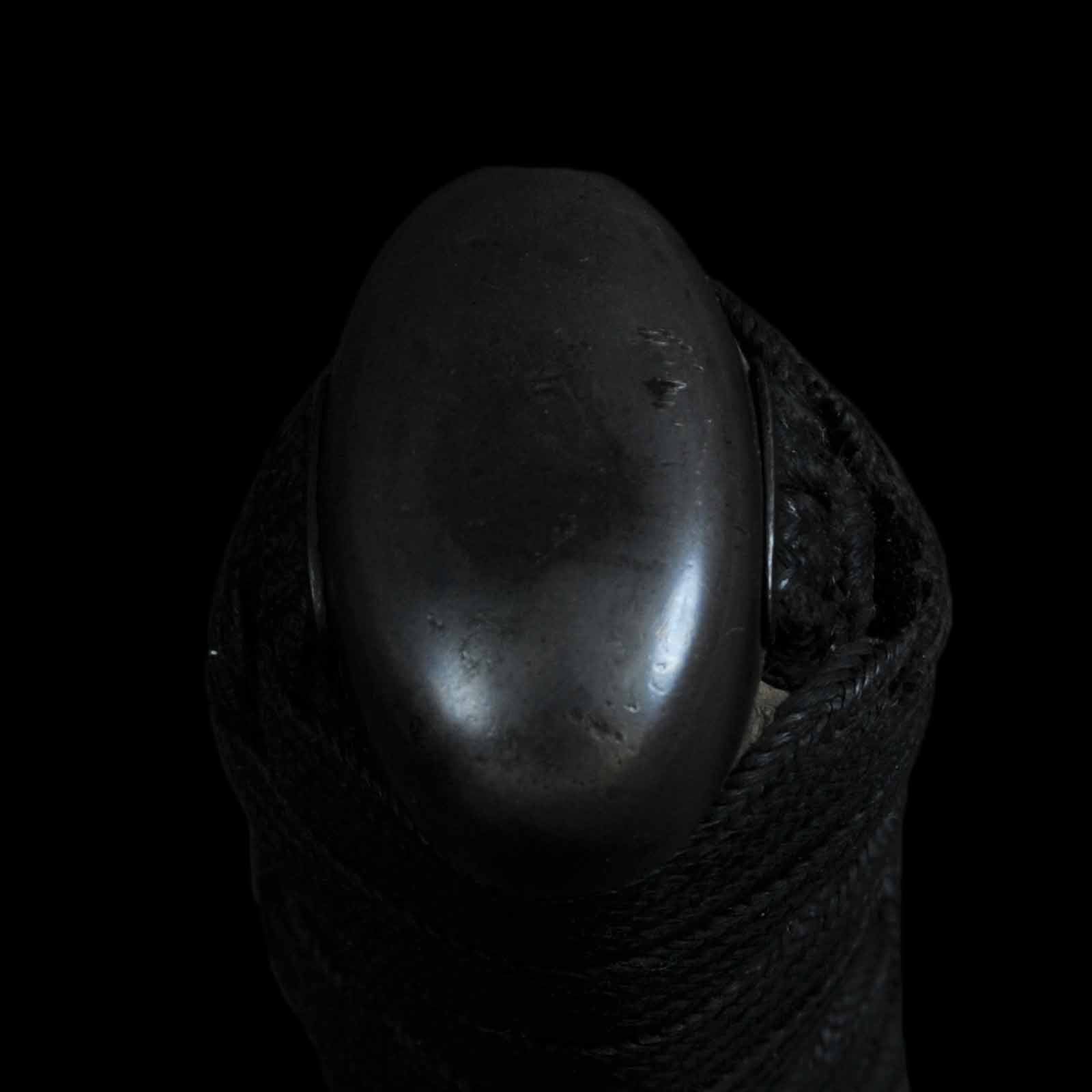
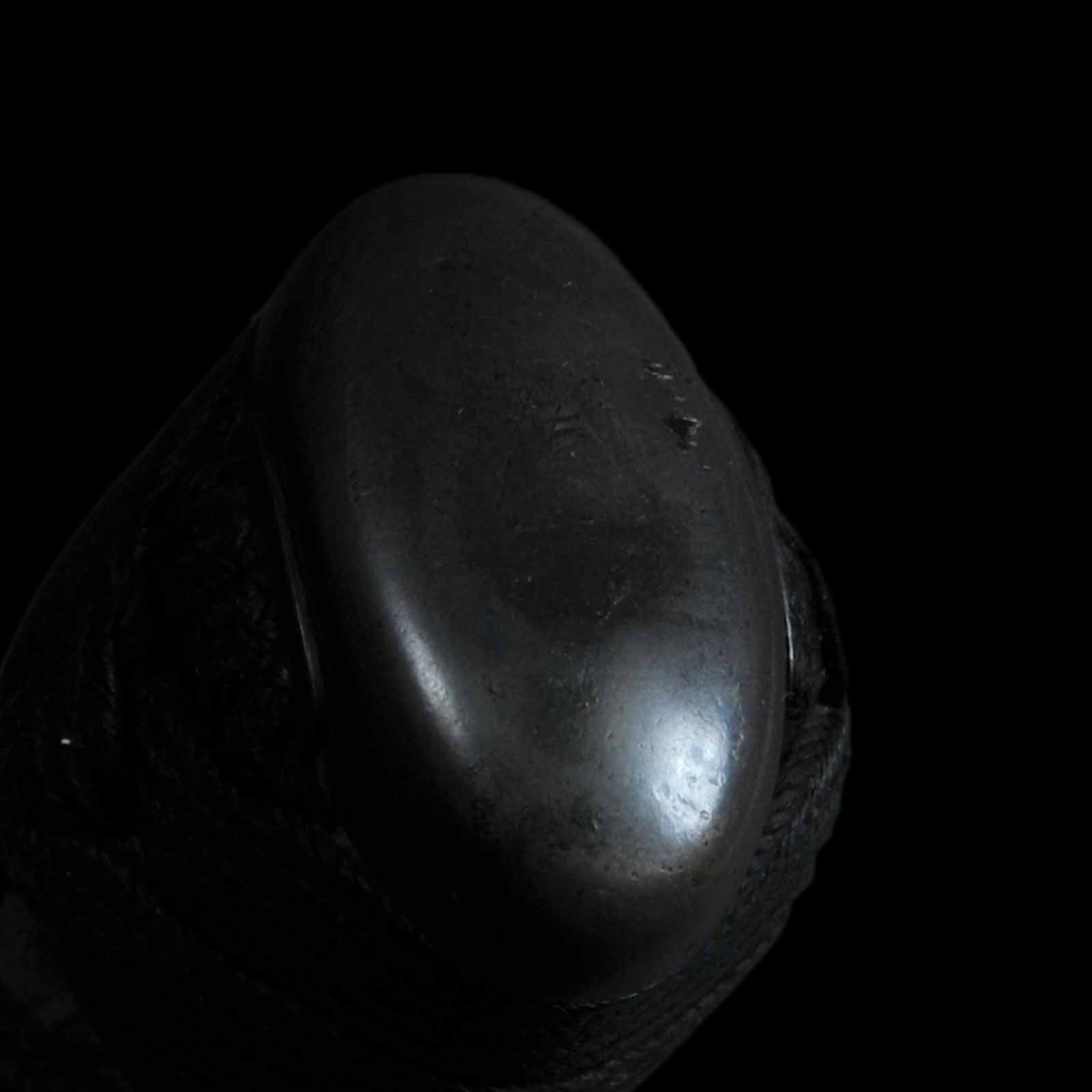
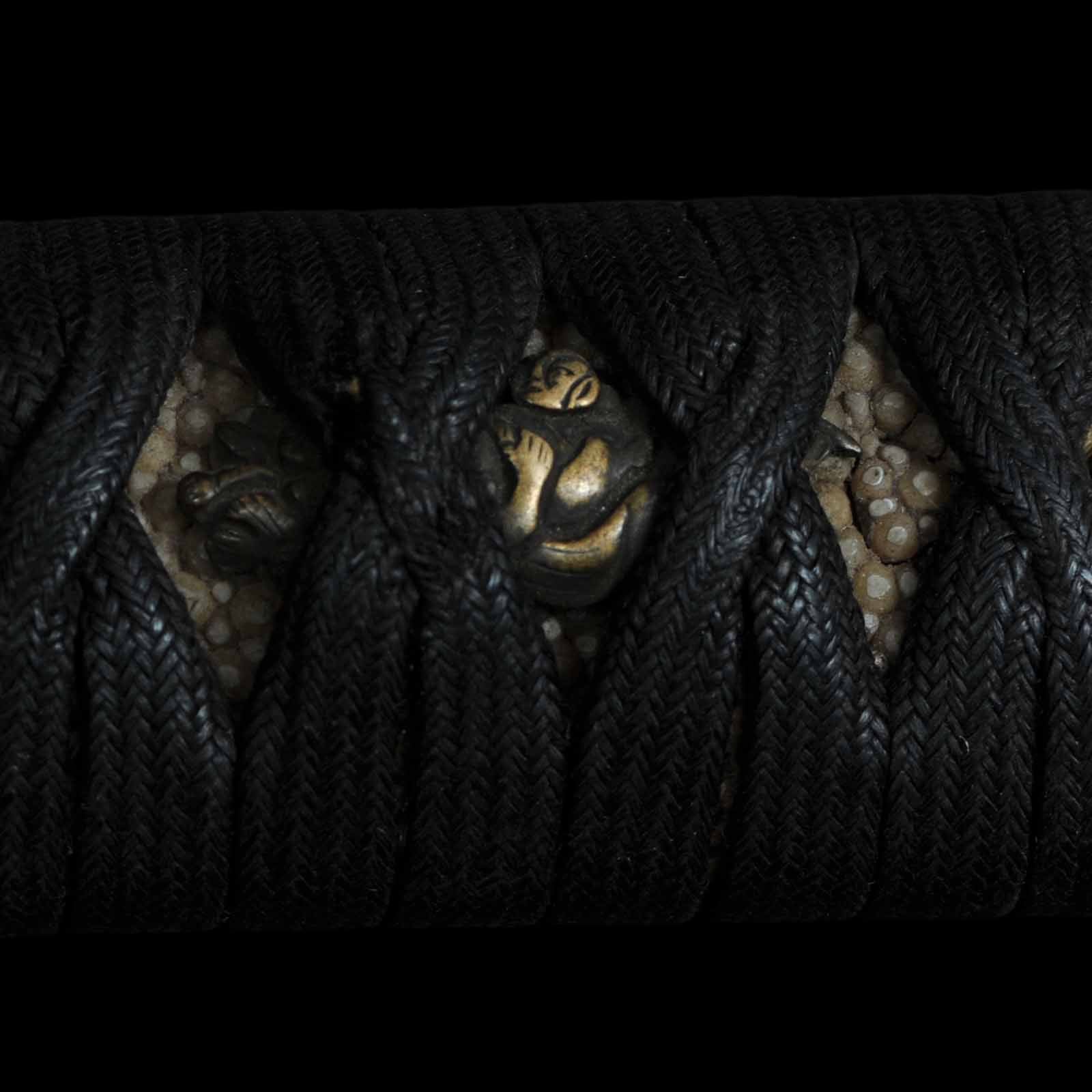
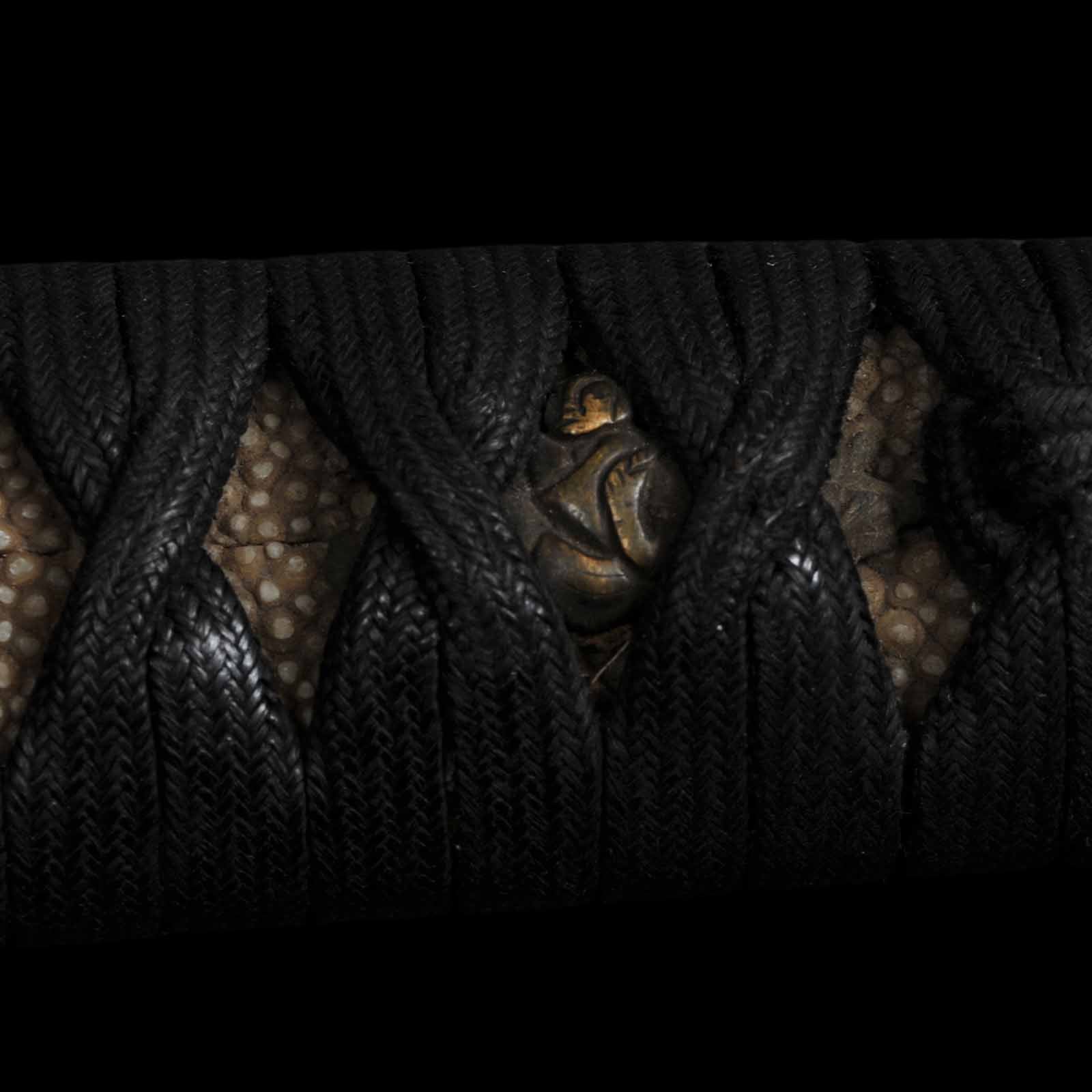
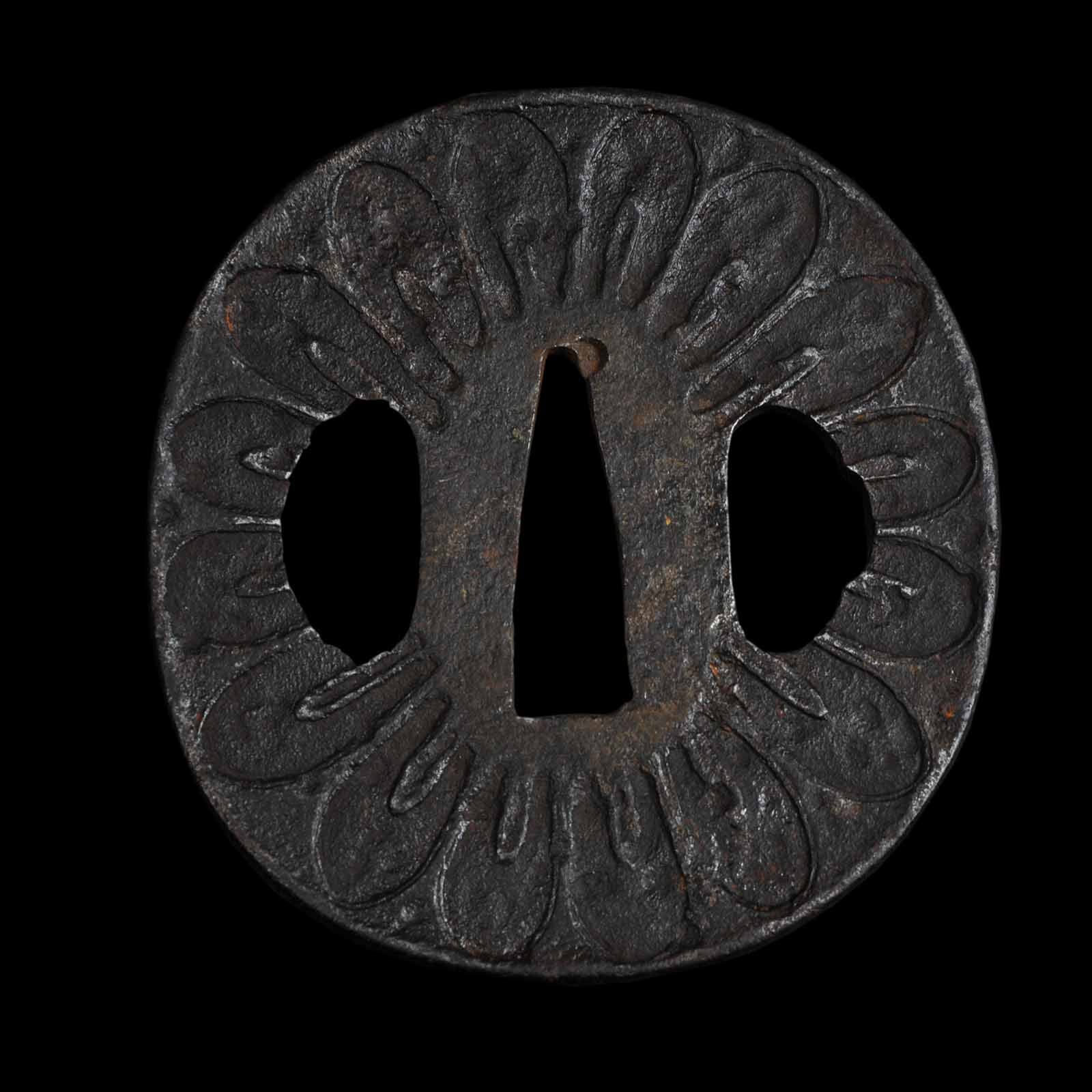
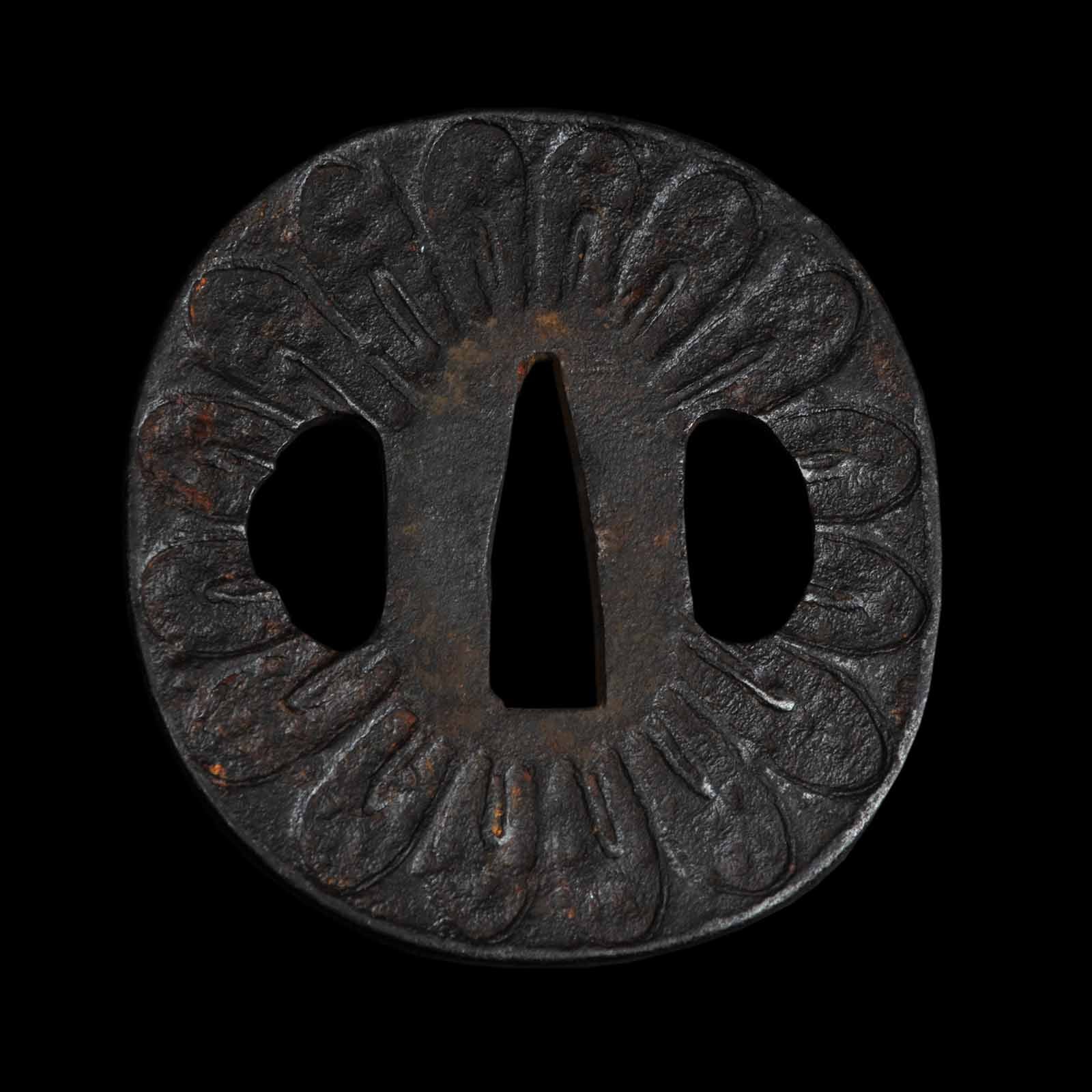
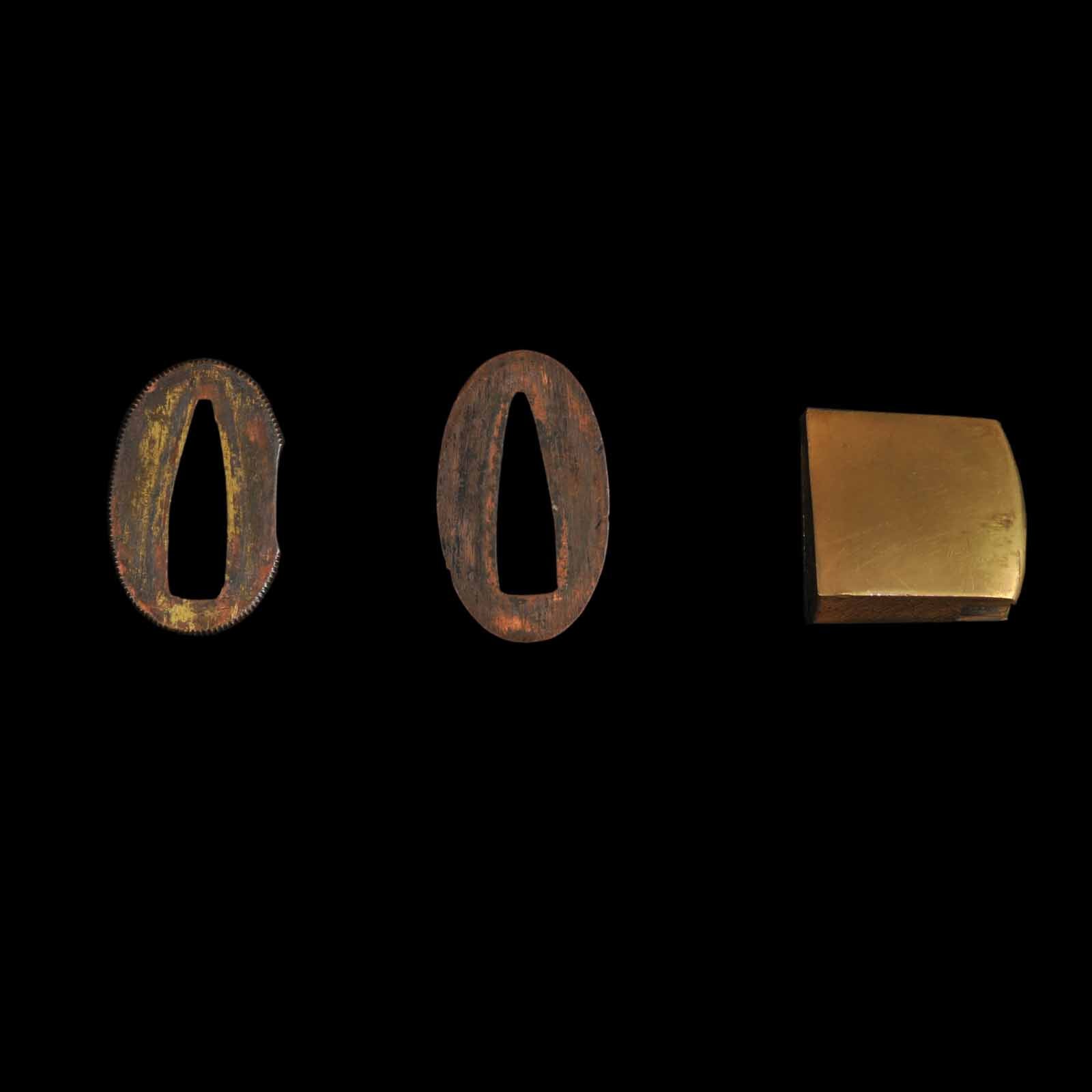
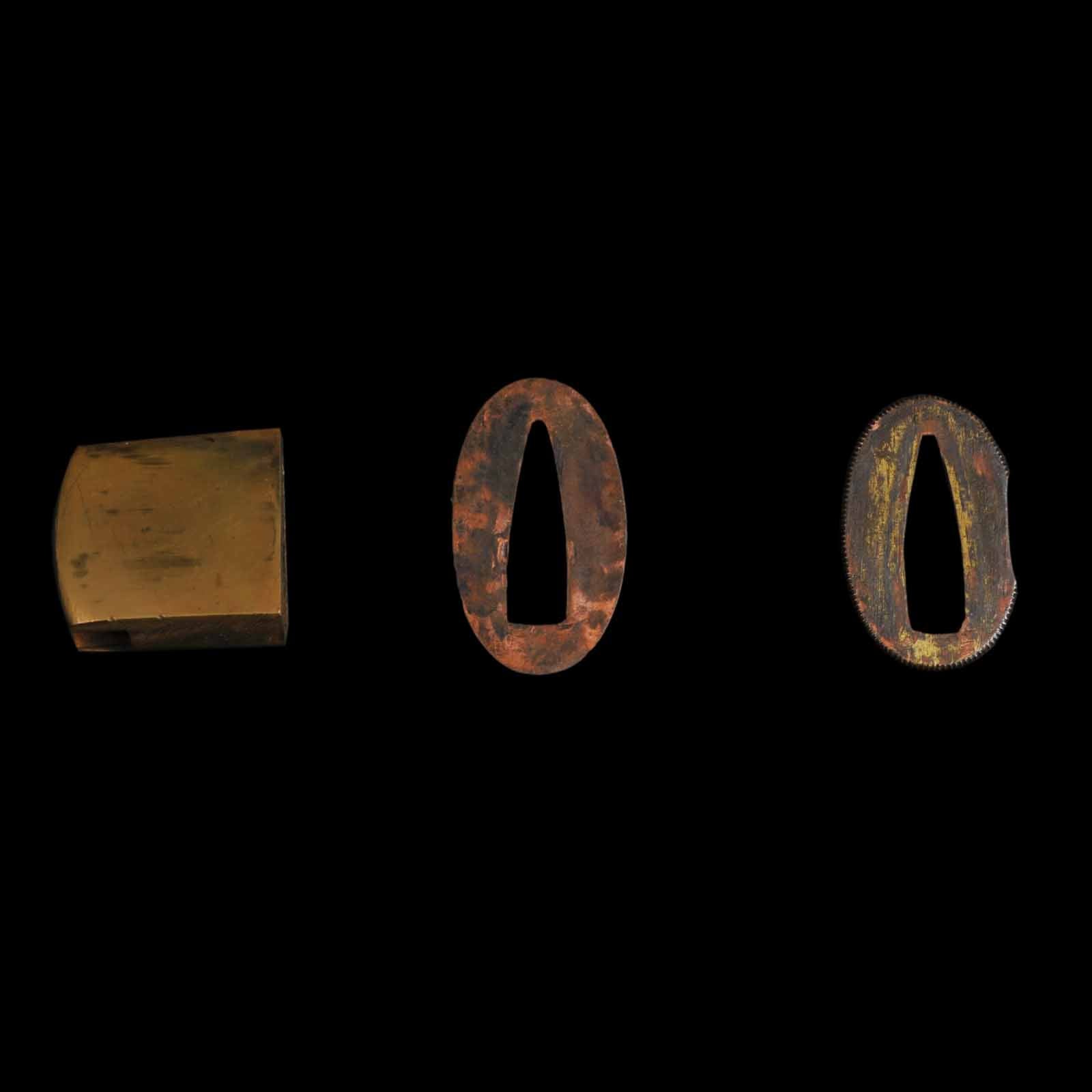
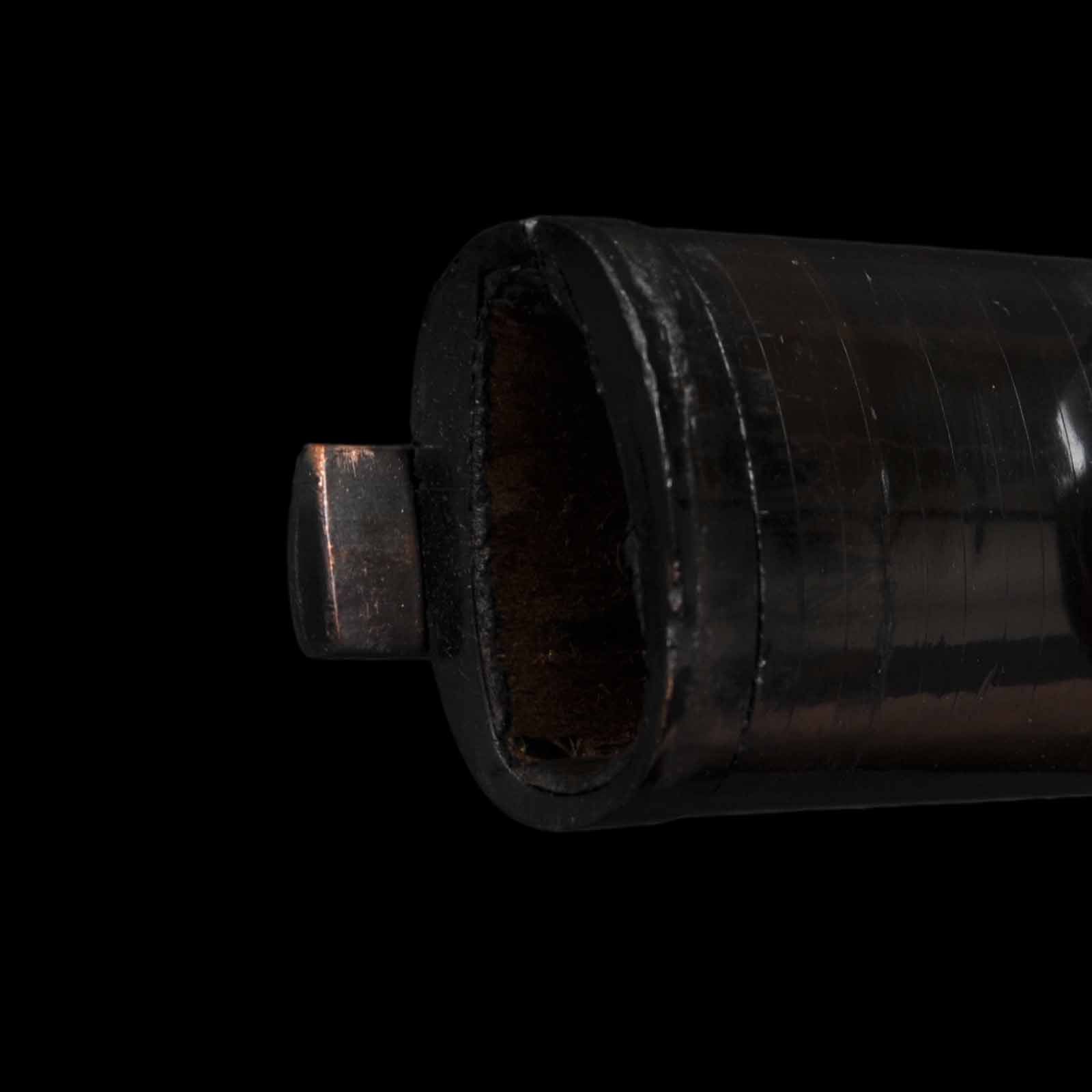
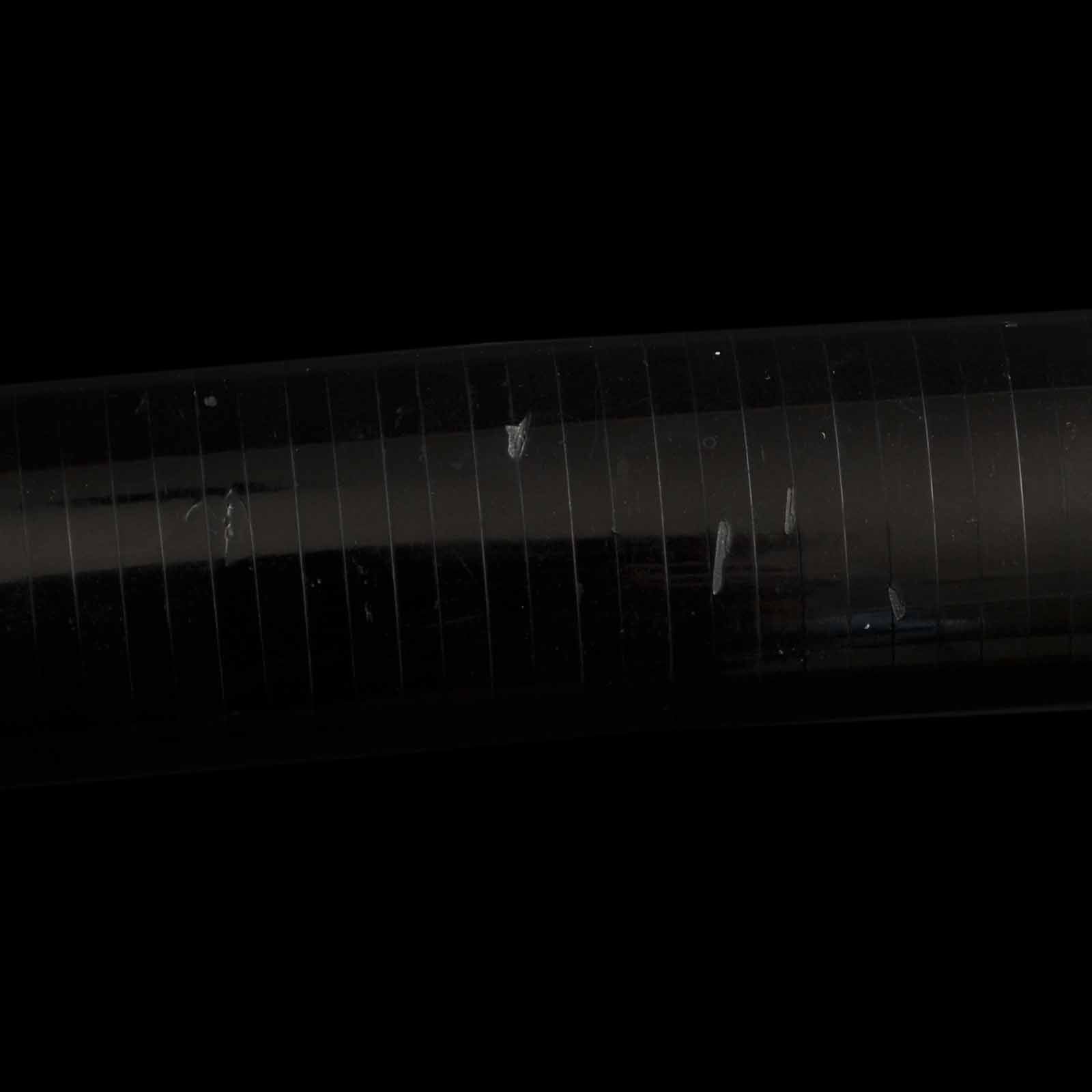
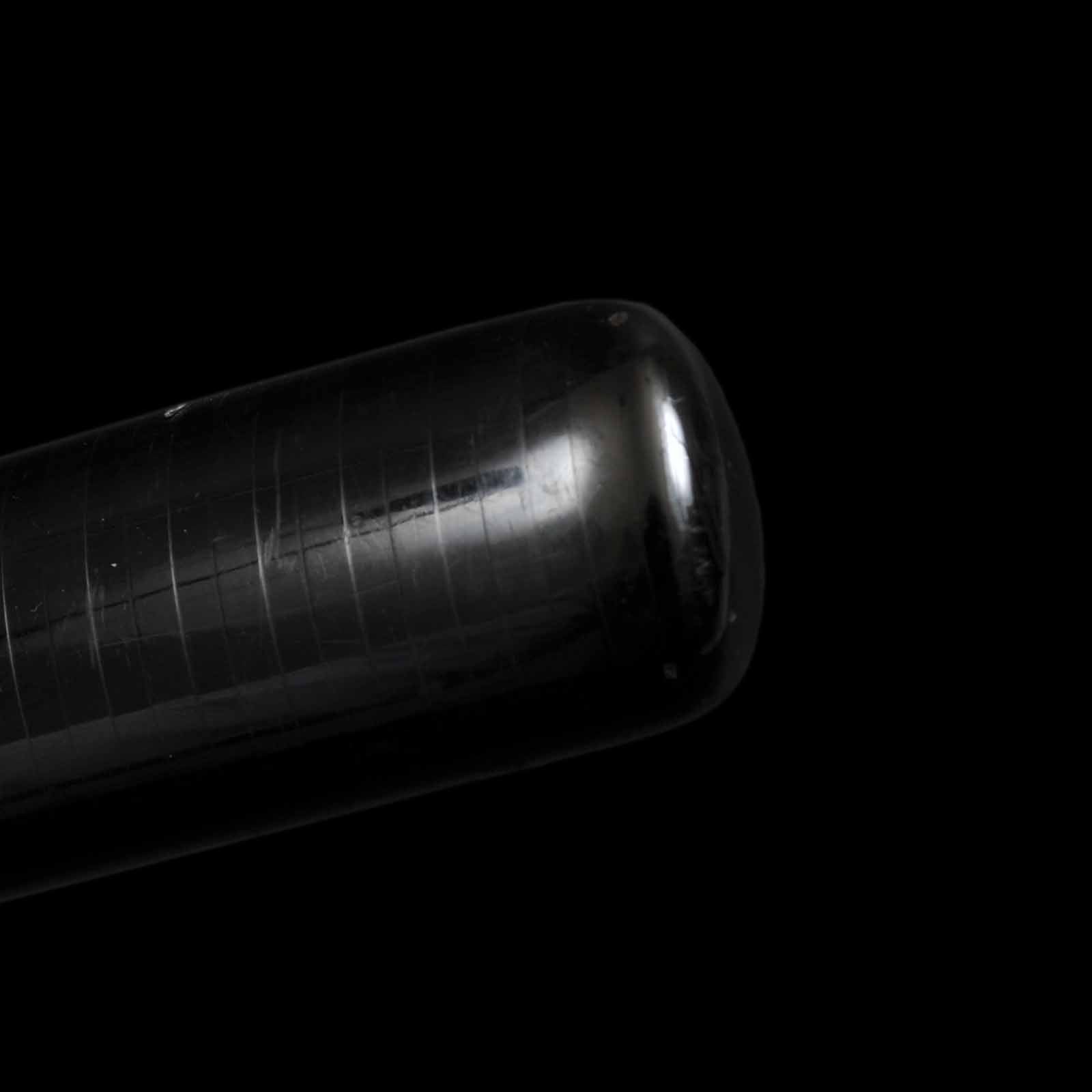
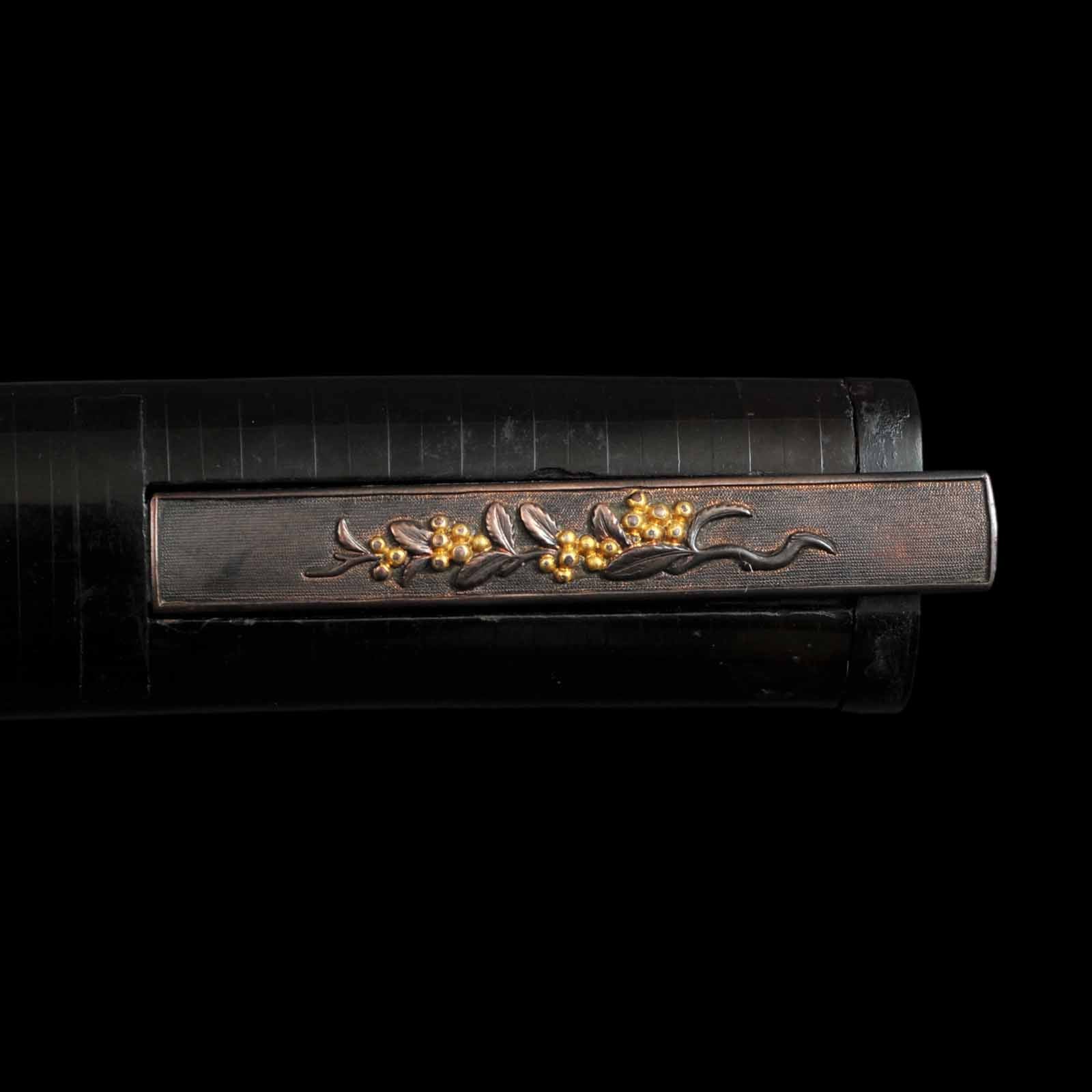
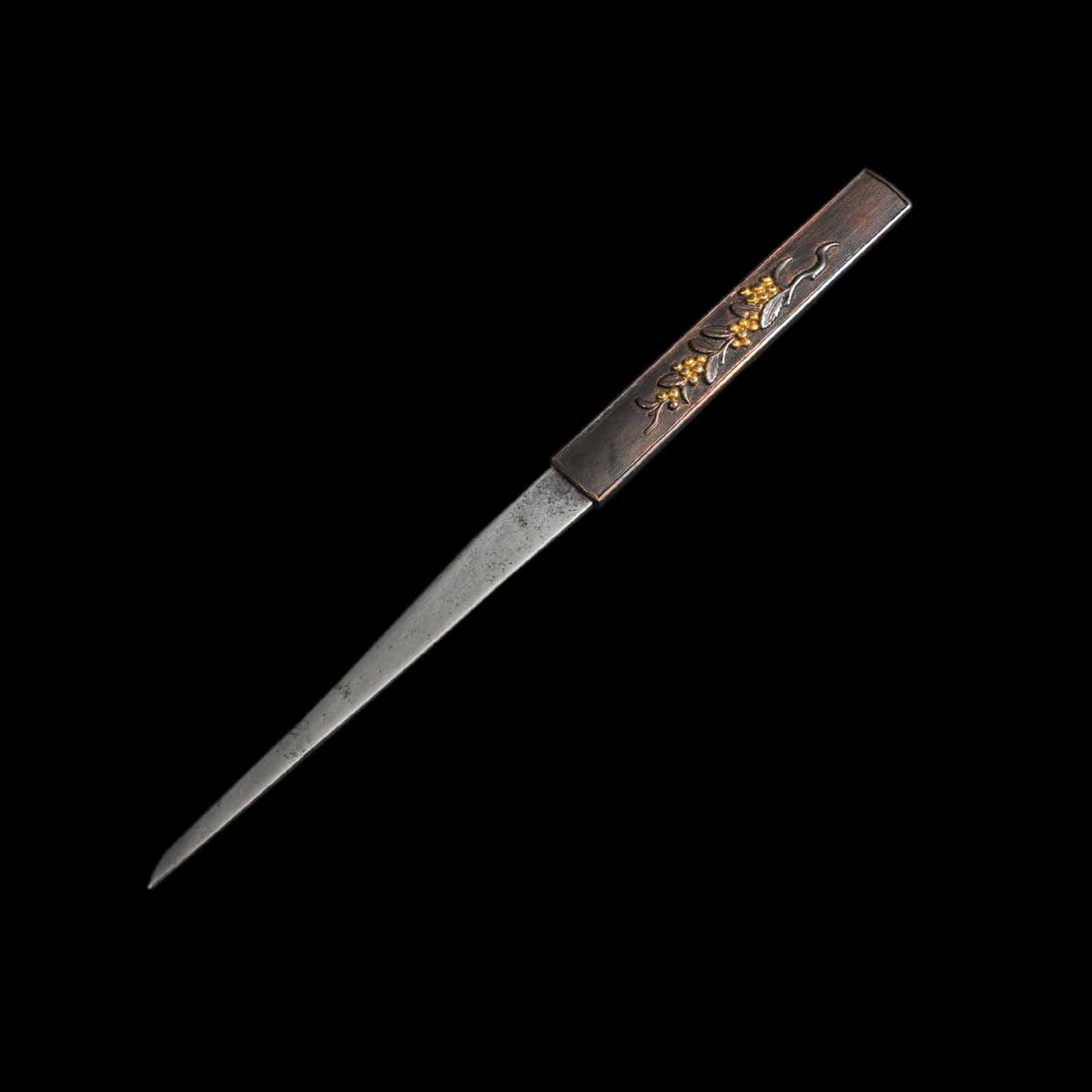
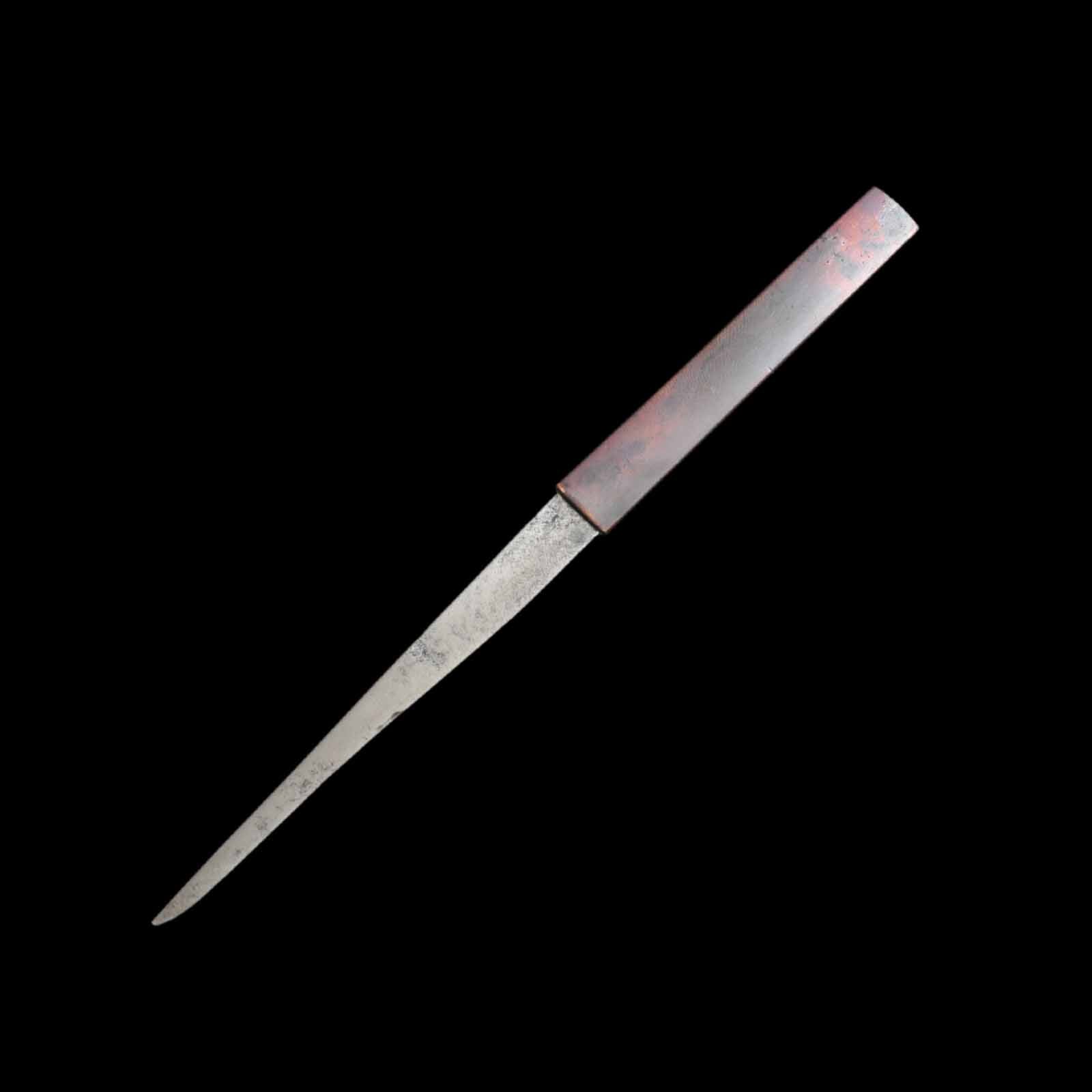
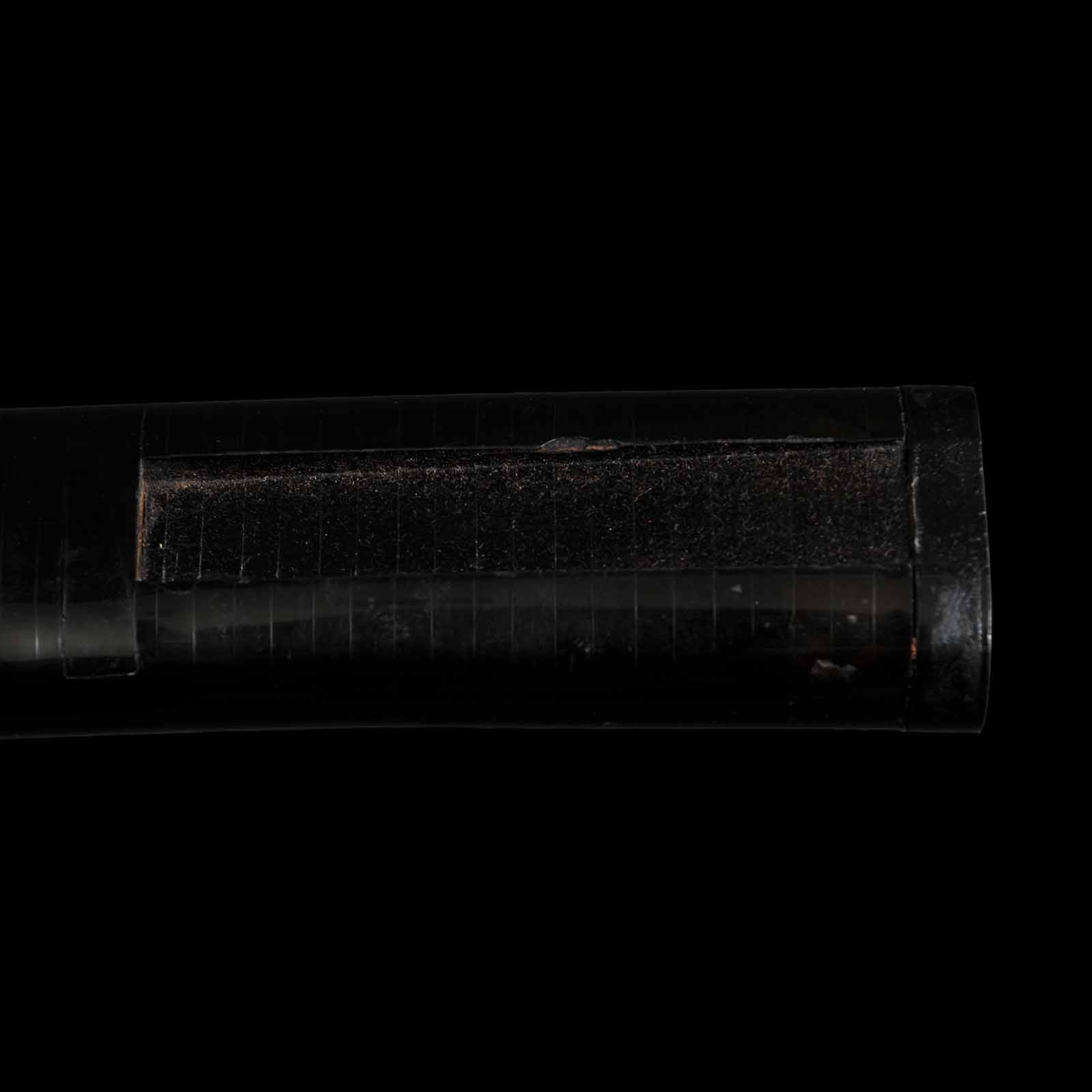
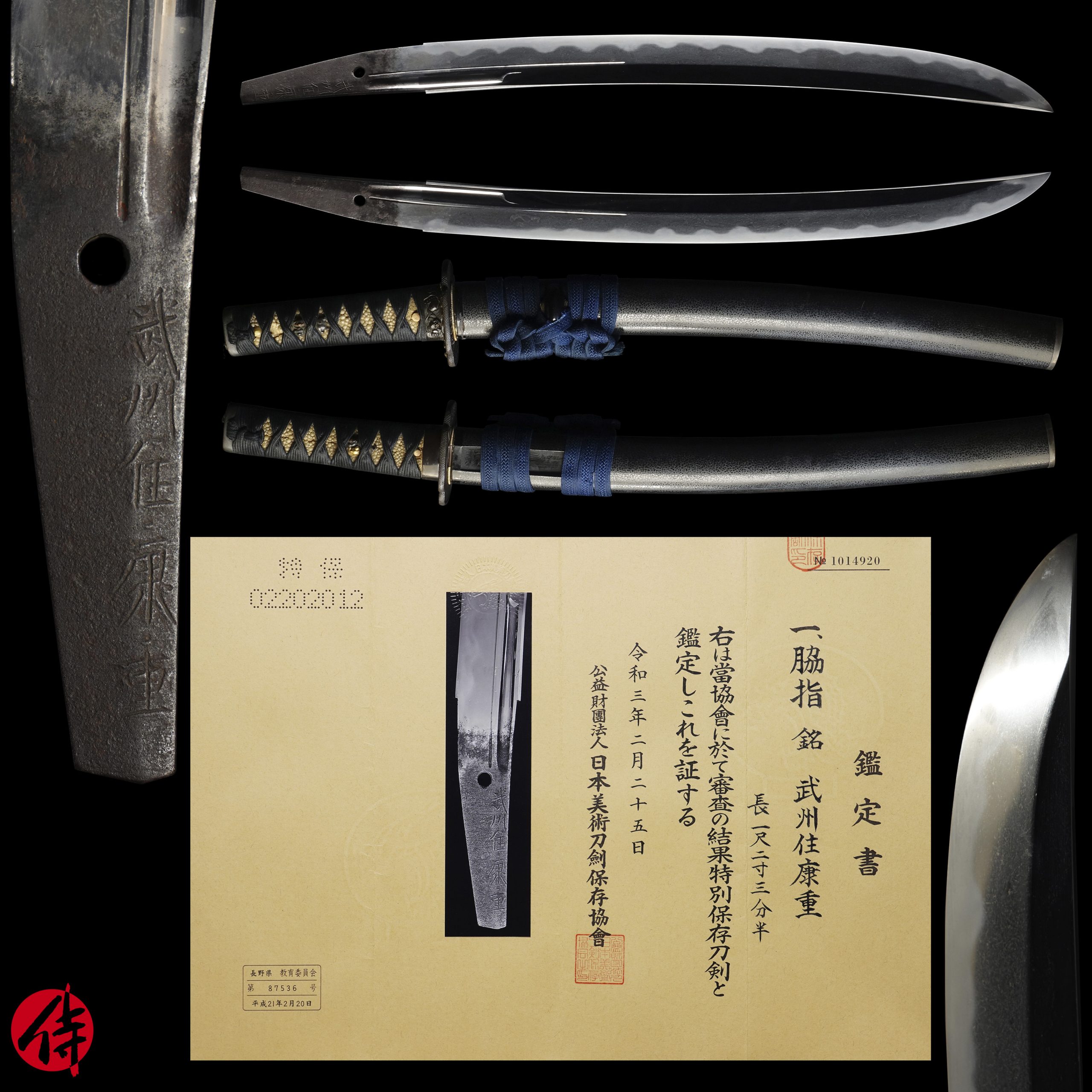
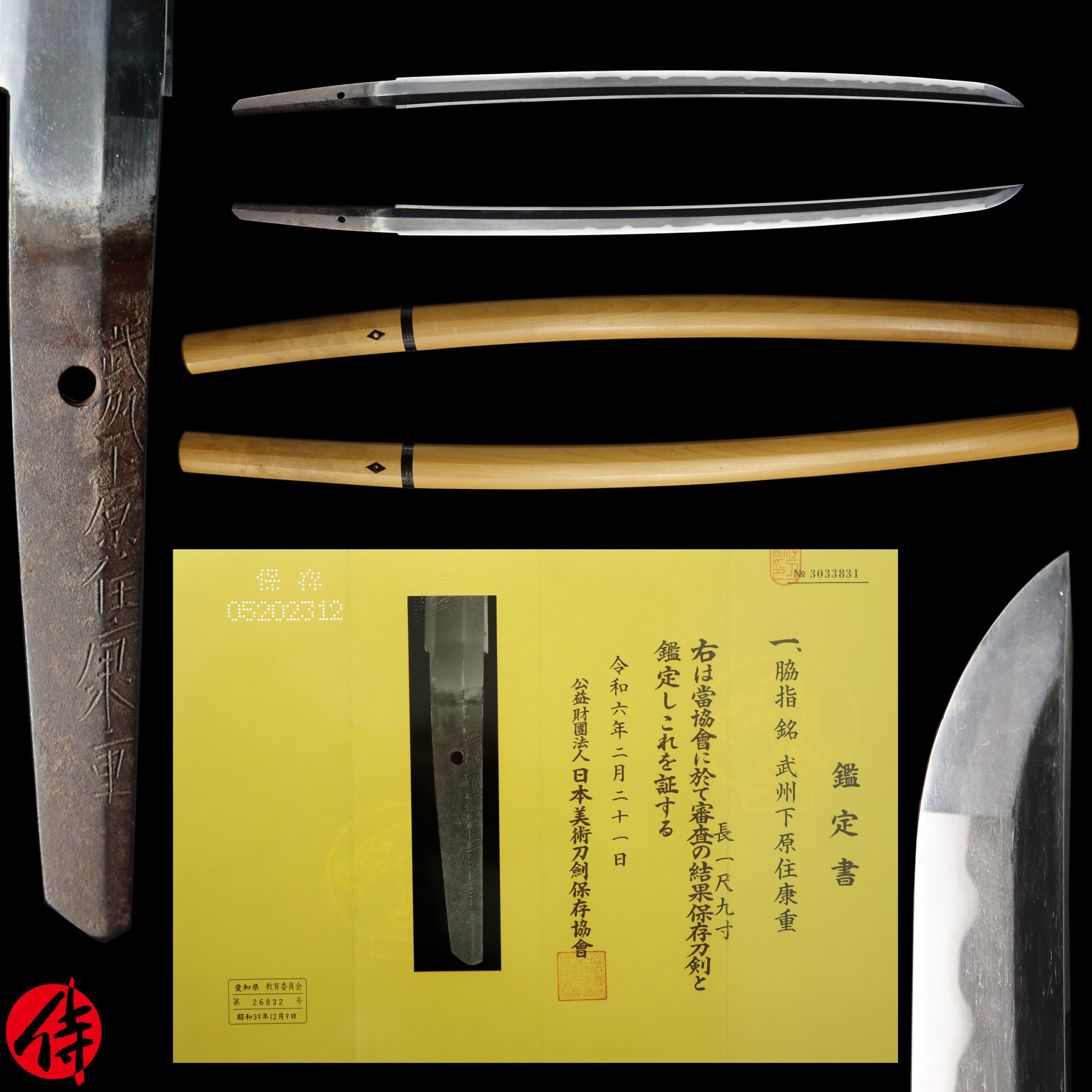
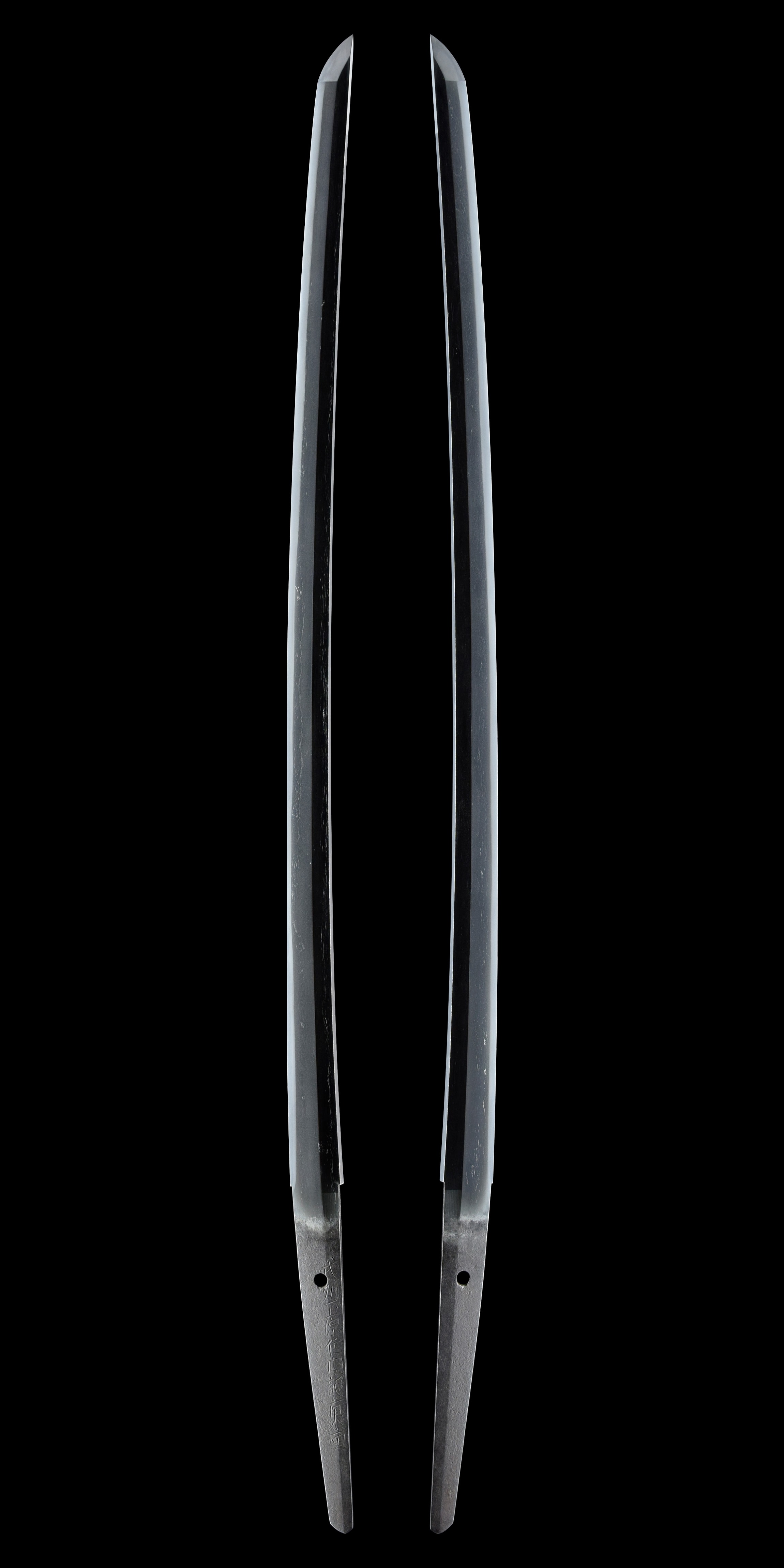
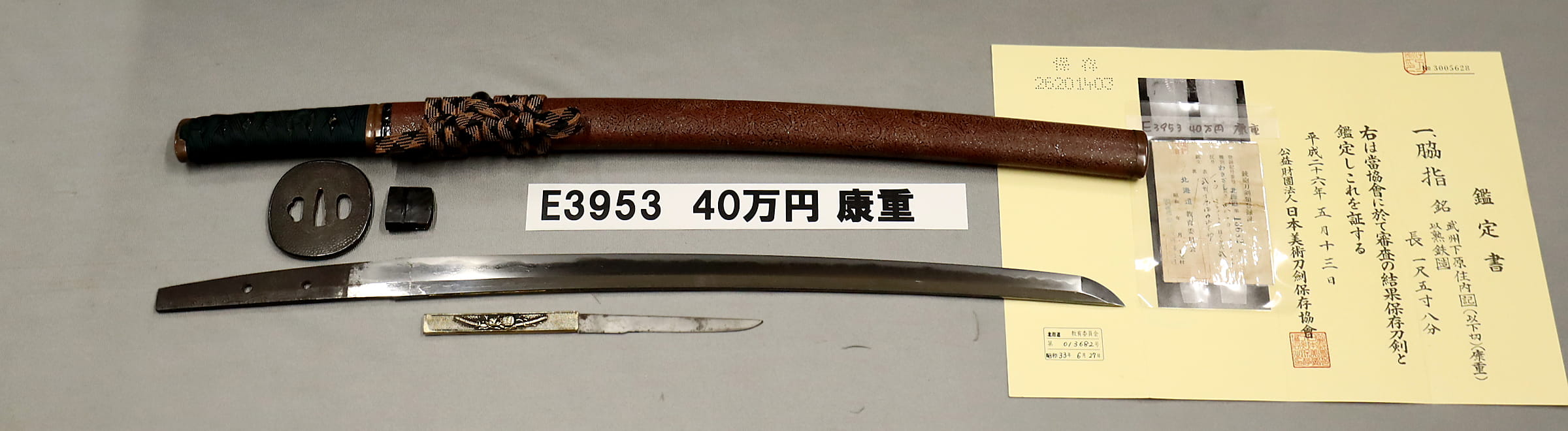
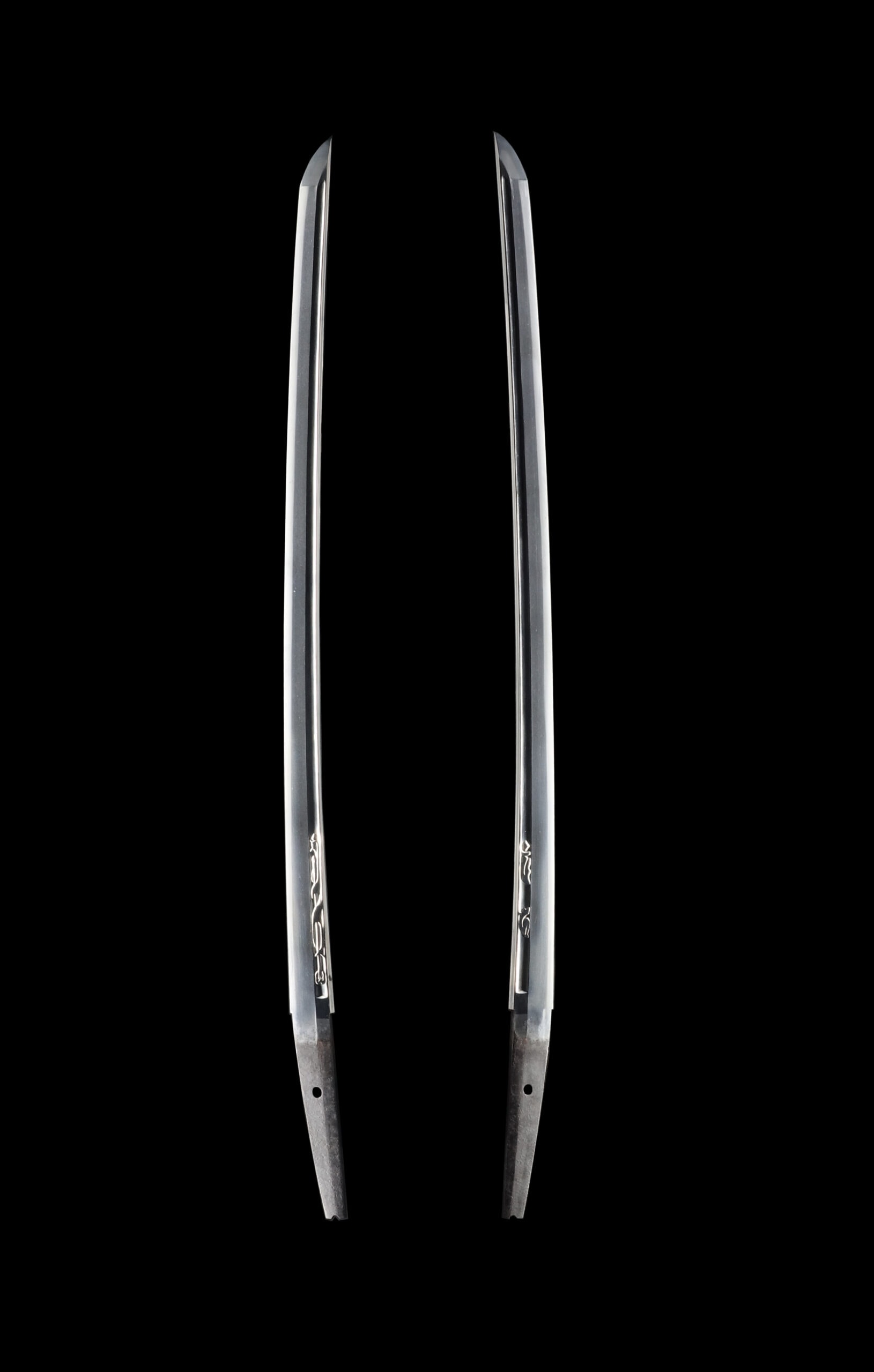
本作は「武州住康重」と銘があり、小柄を備えた打刀拵に収まった脇差です。 康重といえば、武州(現在の東京都八王子市付近)で活躍した刀工集団「下原派」に属する名工です。下原派は室町時代から江戸時代末期にかけて繁栄し、山本周重を始祖とする山本一族を中心に構成されました。なかでも周重、康重、国重、照重らは特に著名です。 本作の地鉄は板目に木目が交じり、渦巻き状の肌合いを見せています。刃文は細直刃が非常に美しく、帽子は掃き掛けごころとなります。致命的な欠点はなく良好なコンディションですが、差表の刃元から約19cmの付近に埋金の跡が見られます。外装の金具はすべて当時のままで、華美な装飾を排した質実剛健な印象の一振です。鞘には小柄が付属しています。 長さ:43.0 cm 反り:1.0 cm 目釘穴:2個 先幅:21.1 mm 先重ね:4.3 mm 元幅:29.4 mm 元重ね:6.0 mm 銘:武州住康重 時代:古刀 造り:鎬造、庵棟 地鉄:梨地肌 刃文:濤瀾 帽子:中丸 重量(鞘払):580 g 茎:生茎 拵:黒糸地巻柄、黒篠笛塗鞘 お探しの刀剣が掲載されていない場合は、お気軽にお問い合わせください。
 NihontoWatch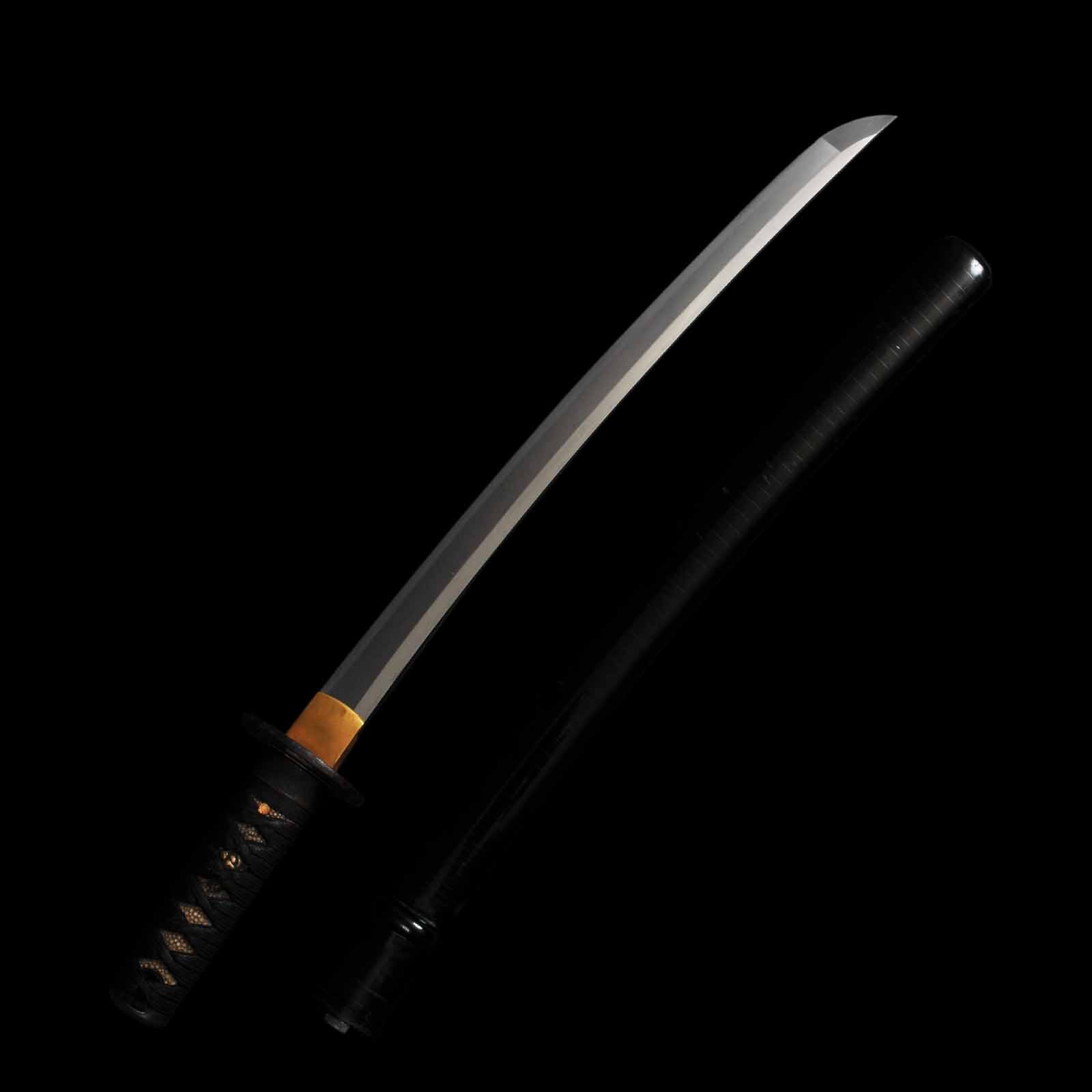
新刀 · 武蔵 · 1558-1570頃
刀剣大鑑 上位60%
現在3点販売中
康重の位置づけを、日本刀全体および伝統・時代・時期ごとに示します。各位(随一・屈指・有数・著名)は、NBTHK および文化庁による指定に加え、三作や名物帳などの歴史的栄誉を加味したものです。
各項目を選ぶと評価方法が表示されます。
新刀 · 武蔵
現在12点販売中
下原派は武蔵国八王子の地に拠った刀工の一群で、室町末期に興り、以後江戸末期に至るまで作刀を続けた。古刀期の武蔵国を代表する鍛冶とされ、説示では周重・康重・照重・広重の四工を著名な工として挙げる。なかでも照重は康重・広重と並んで一派を代表する存在で、山本源二郎照重、山本与五郎康重のように山本姓を称した工も知られる。照重については銘鑑が初代を享禄、二代を永禄、三代を天正に充てており、永禄から天正の頃の作がもっとも時代の上がるものと鑑せられている。甲州の注文に応じて鍛えた薙刀も伝わり、地方を越えて求められた様子がうかがえる。 作風は末相州および村正一派の風に末関風を加味したものと説かれる。鍛えは板目に杢がしきりに交じって肌立ち、刃寄りが流れて綾杉風となり、渦を巻いたような肌があらわれる点に地がねの特色がある。刃文は湾れを基調に互の目が二つ三つ連れて尖り刃を交え、やや規則的に乱れて小沸がつき、砂流しのかかるものもある。帽子は乱れ込んで丸く返るものや先の尖って返るものがみられる。細かに肌立った杢目の地がねと、規則的に連れる互の目乱れにのたれを交えた刃文の組み合わせが、この一派を見分ける手がかりとなる。 鑑定にあたっては、肌立った地がねに綾杉風の流れと渦巻く肌があらわれること、互の目が規則的に連れて乱れる刃文の調子を要点とする。彫物では表に棒樋を掻き、倶利迦羅竜や不動、梵字を添えるものが多く、倶利迦羅竜の尾の巻き方に一派らしさが出るとされる。茎は栗尻に切鑢を施し、棟寄りに長銘を切るものが多い。室町末期の打刀や薙刀を代表する優品が重要刀剣に列せられており、照重の薙刀は両刃造という珍しい形状を伝える。武蔵国の在地鍛冶として実用に応えつつ、相州と関の風を併せ呑んだ独自の地刃を築いた点に、下原一派の位置づけがある。 詳しく見る →
室町時代
室町は刀剣業を産業に変えた。徒歩の集団戦とともに打刀が興り、長船と関は数打ち物と注文打ちを並行して産し、勘合貿易は日本刀を数万振の単位で海外へ運んだ。
販売店の出品ページで鑑定書を確認できませんでした。日本刀および刀装具は通常、NBTHK(または NTHK)の鑑定を受けます。鑑定書がない場合、極めは販売店の見解にとどまり、第三者による確認は行われていません。ご購入前に販売店へ鑑定書の有無をお問い合わせのうえ、慎重にご判断ください。
As a general rule, returns/exchanges are not accepted on Japanese sword orders unless damaged upon delivery. Other items: returns/exchanges accepted within 7 days of delivery. Cancellation for personal reasons incurs a 30% restocking fee (70% refunded). Return shipping must be prepaid and insured by the buyer; shipping/handling fees are non-refundable. Contact katana@tozando.co.jp to initiate a return.
本作は「武州住康重」と銘があり、小柄を備えた打刀拵に収まった脇差です。 康重といえば、武州(現在の東京都八王子市付近)で活躍した刀工集団「下原派」に属する名工です。下原派は室町時代から江戸時代末期にかけて繁栄し、山本周重を始祖とする山本一族を中心に構成されました。なかでも周重、康重、国重、照重らは特に著名です。 本作の地鉄は板目に木目が交じり、渦巻き状の肌合いを見せています。刃文は細直刃が非常に美しく、帽子は掃き掛けごころとなります。致命的な欠点はなく良好なコンディションですが、差表の刃元から約19cmの付近に埋金の跡が見られます。外装の金具はすべて当時のままで、華美な装飾を排した質実剛健な印象の一振です。鞘には小柄が付属しています。 長さ:43.0 cm 反り:1.0 cm 目釘穴:2個 先幅:21.1 mm 先重ね:4.3 mm 元幅:29.4 mm 元重ね:6.0 mm 銘:武州住康重 時代:古刀 造り:鎬造、庵棟 地鉄:梨地肌 刃文:濤瀾 帽子:中丸 重量(鞘払):580 g 茎:生茎 拵:黒糸地巻柄、黒篠笛塗鞘 お探しの刀剣が掲載されていない場合は、お気軽にお問い合わせください。
NihontoWatch新刀 · 武蔵 · 1558-1570頃
刀剣大鑑 上位60%
現在3点販売中
康重の位置づけを、日本刀全体および伝統・時代・時期ごとに示します。各位(随一・屈指・有数・著名)は、NBTHK および文化庁による指定に加え、三作や名物帳などの歴史的栄誉を加味したものです。
各項目を選ぶと評価方法が表示されます。
新刀 · 武蔵
現在12点販売中
下原派は武蔵国八王子の地に拠った刀工の一群で、室町末期に興り、以後江戸末期に至るまで作刀を続けた。古刀期の武蔵国を代表する鍛冶とされ、説示では周重・康重・照重・広重の四工を著名な工として挙げる。なかでも照重は康重・広重と並んで一派を代表する存在で、山本源二郎照重、山本与五郎康重のように山本姓を称した工も知られる。照重については銘鑑が初代を享禄、二代を永禄、三代を天正に充てており、永禄から天正の頃の作がもっとも時代の上がるものと鑑せられている。甲州の注文に応じて鍛えた薙刀も伝わり、地方を越えて求められた様子がうかがえる。 作風は末相州および村正一派の風に末関風を加味したものと説かれる。鍛えは板目に杢がしきりに交じって肌立ち、刃寄りが流れて綾杉風となり、渦を巻いたような肌があらわれる点に地がねの特色がある。刃文は湾れを基調に互の目が二つ三つ連れて尖り刃を交え、やや規則的に乱れて小沸がつき、砂流しのかかるものもある。帽子は乱れ込んで丸く返るものや先の尖って返るものがみられる。細かに肌立った杢目の地がねと、規則的に連れる互の目乱れにのたれを交えた刃文の組み合わせが、この一派を見分ける手がかりとなる。 鑑定にあたっては、肌立った地がねに綾杉風の流れと渦巻く肌があらわれること、互の目が規則的に連れて乱れる刃文の調子を要点とする。彫物では表に棒樋を掻き、倶利迦羅竜や不動、梵字を添えるものが多く、倶利迦羅竜の尾の巻き方に一派らしさが出るとされる。茎は栗尻に切鑢を施し、棟寄りに長銘を切るものが多い。室町末期の打刀や薙刀を代表する優品が重要刀剣に列せられており、照重の薙刀は両刃造という珍しい形状を伝える。武蔵国の在地鍛冶として実用に応えつつ、相州と関の風を併せ呑んだ独自の地刃を築いた点に、下原一派の位置づけがある。 詳しく見る →
室町時代
室町は刀剣業を産業に変えた。徒歩の集団戦とともに打刀が興り、長船と関は数打ち物と注文打ちを並行して産し、勘合貿易は日本刀を数万振の単位で海外へ運んだ。
販売店の出品ページで鑑定書を確認できませんでした。日本刀および刀装具は通常、NBTHK(または NTHK)の鑑定を受けます。鑑定書がない場合、極めは販売店の見解にとどまり、第三者による確認は行われていません。ご購入前に販売店へ鑑定書の有無をお問い合わせのうえ、慎重にご判断ください。
As a general rule, returns/exchanges are not accepted on Japanese sword orders unless damaged upon delivery. Other items: returns/exchanges accepted within 7 days of delivery. Cancellation for personal reasons incurs a 30% restocking fee (70% refunded). Return shipping must be prepaid and insured by the buyer; shipping/handling fees are non-refundable. Contact katana@tozando.co.jp to initiate a return.





![Wakizashi - Tokuho - 作 照重 - 脇差[武州下原住照重(良業物)][日本美術刀剣保存協会]特別保存刀剣](/_next/image?url=https%3A%2F%2Fitbhfhyptogxcjbjfzwx.supabase.co%2Fstorage%2Fv1%2Fobject%2Fpublic%2Flisting-images%2Fworld-seiyudo%2FL31350%2F00.jpg&w=2560&q=90)