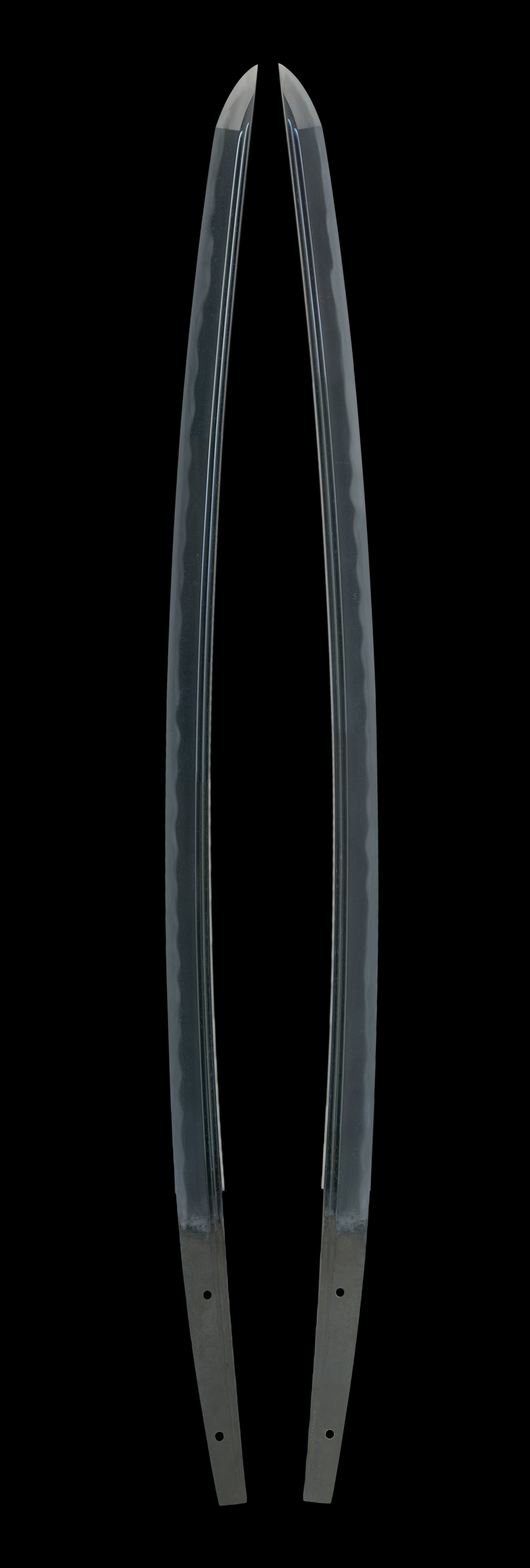
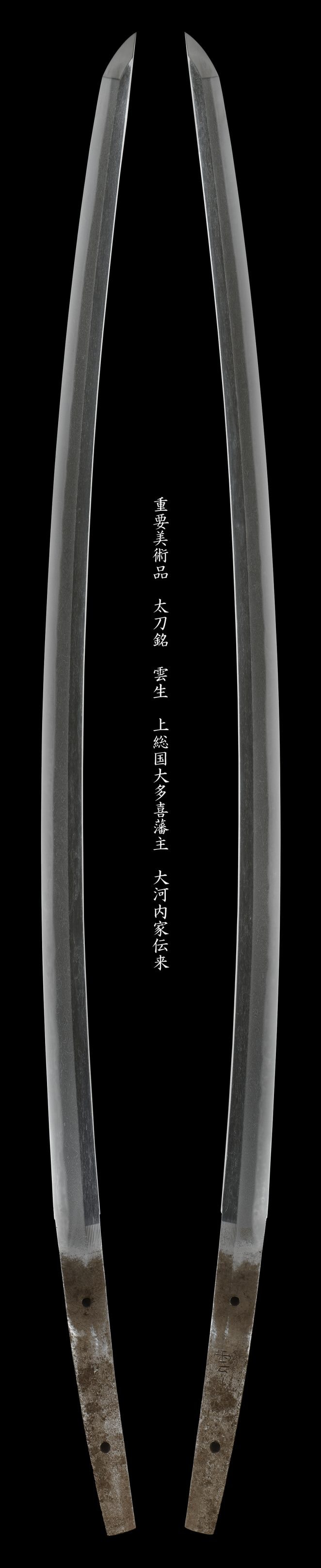
1800年前後、水心子正秀は著述をもって、鍛刀は古作の法に立ち返るべしと説いた。復古刀の運動である。最大の後継者直胤は、数百年絶えていた備前伝と相州伝を確信をもって再現した。
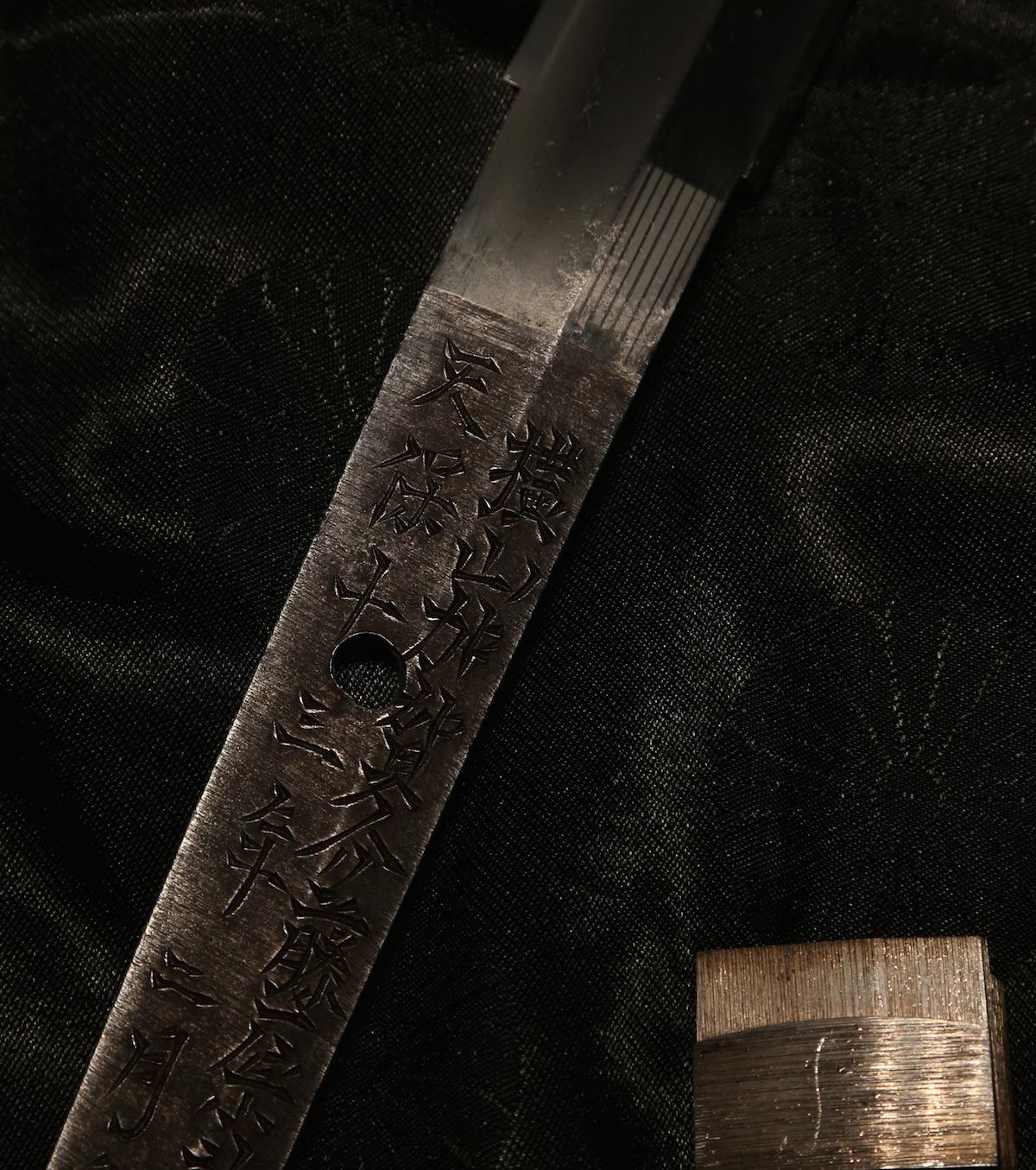
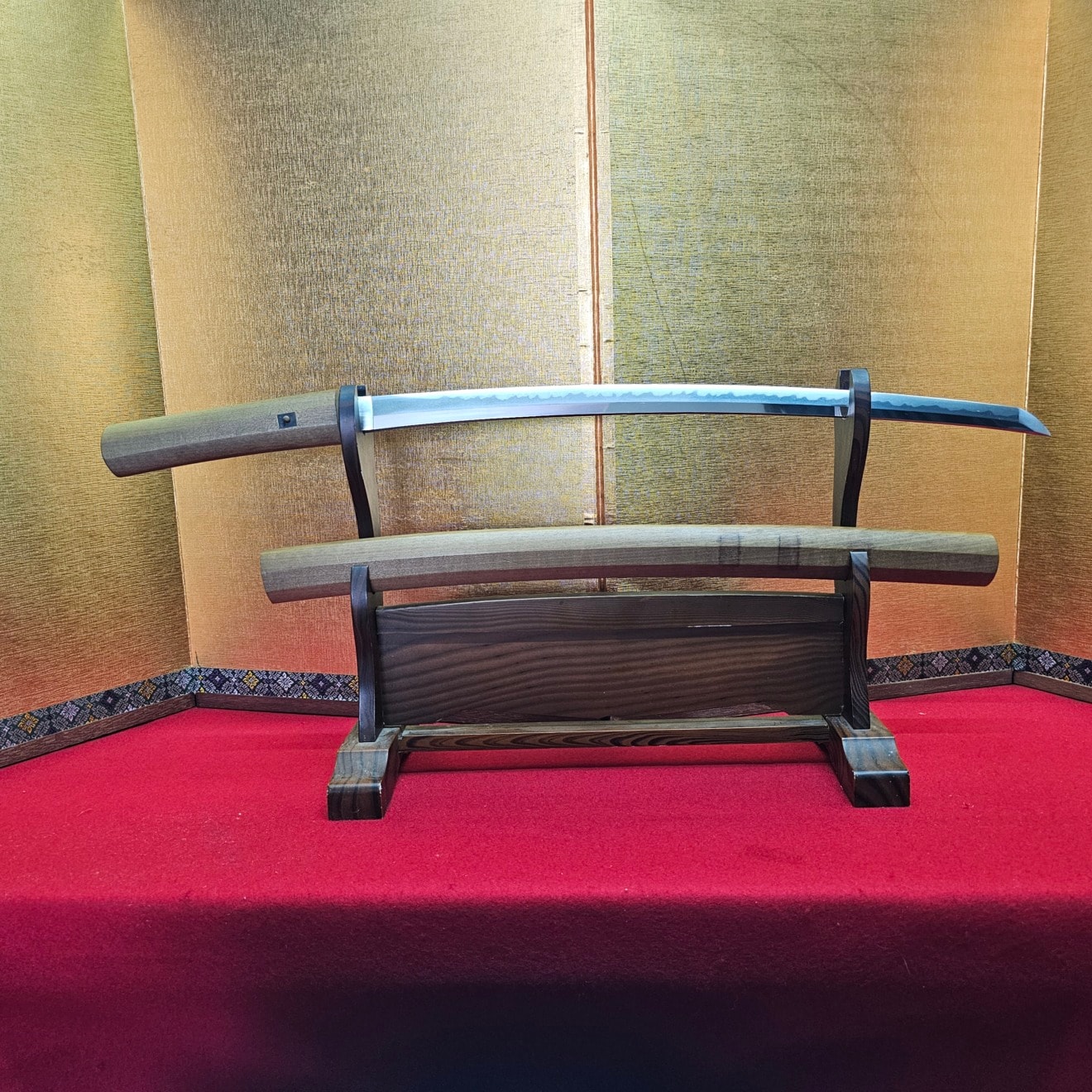
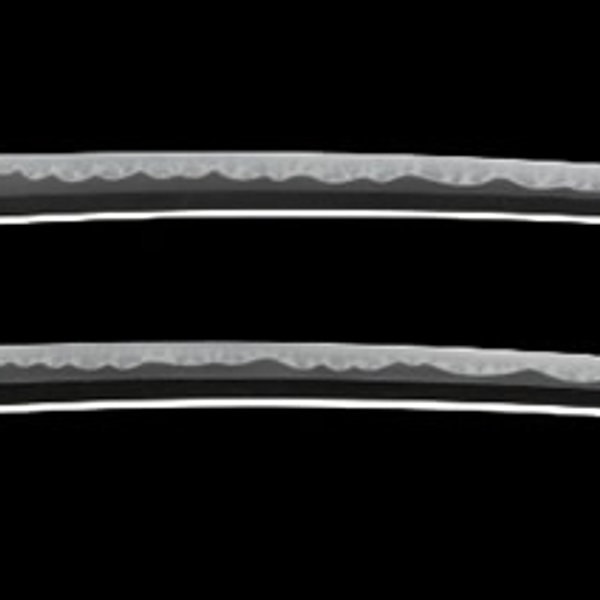
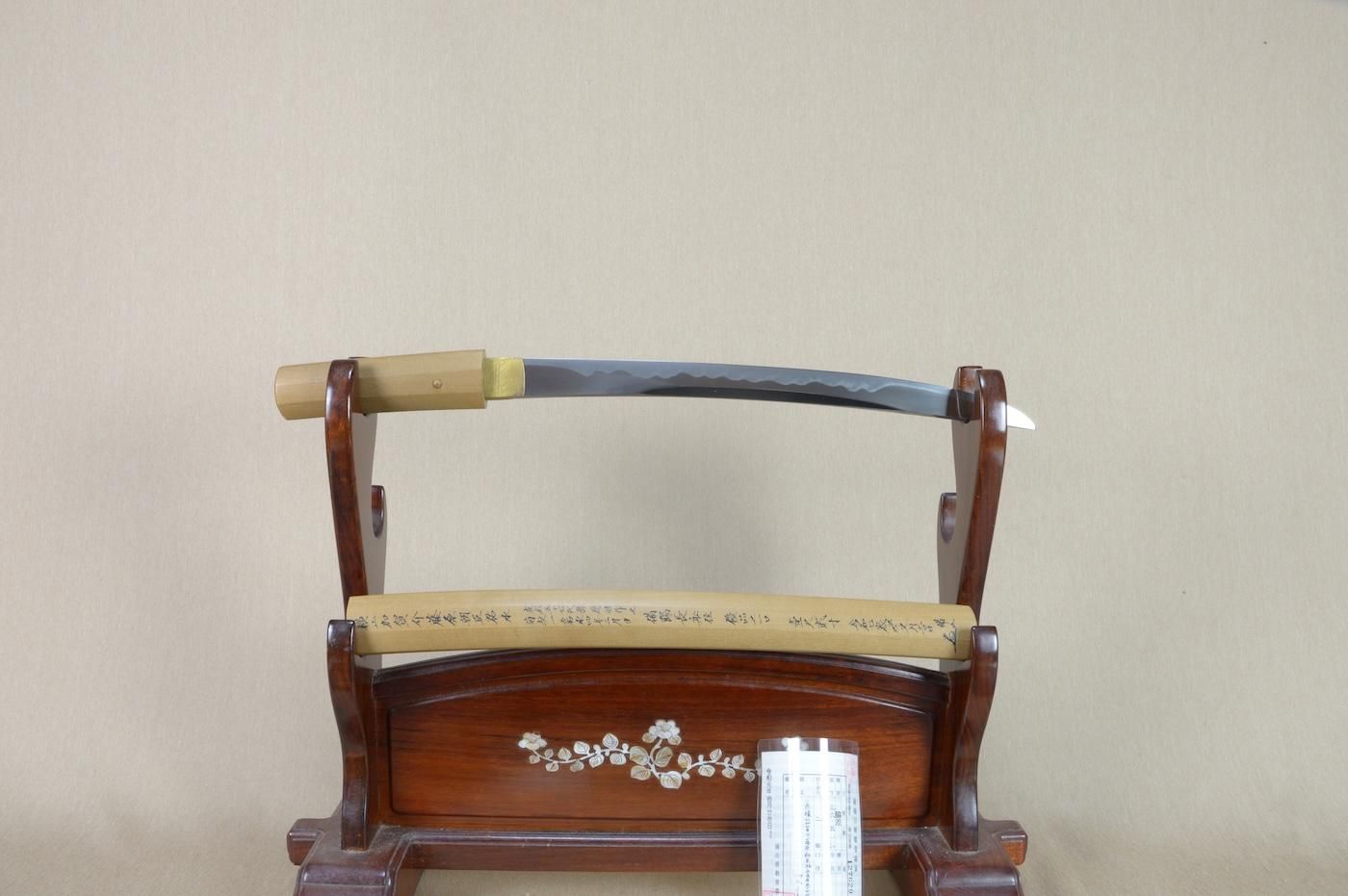
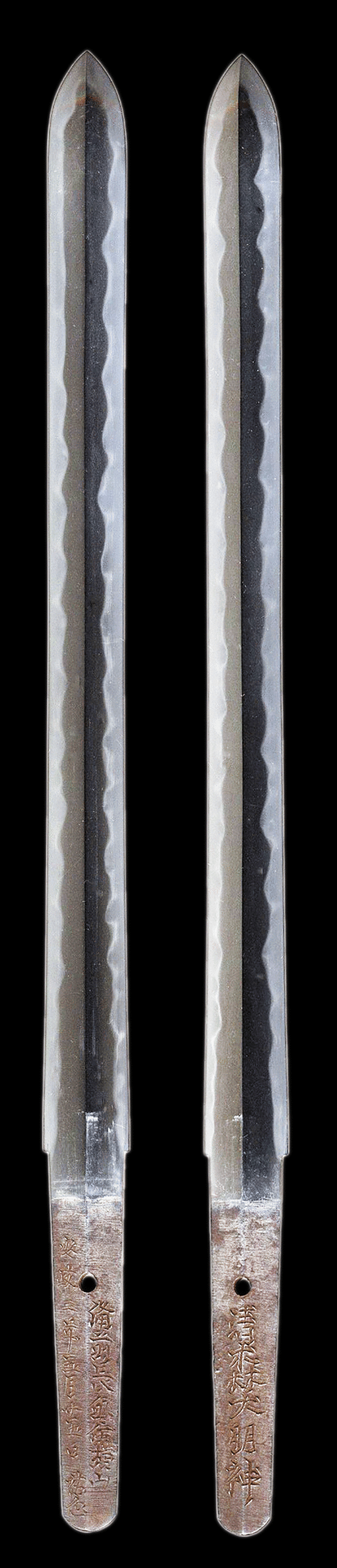
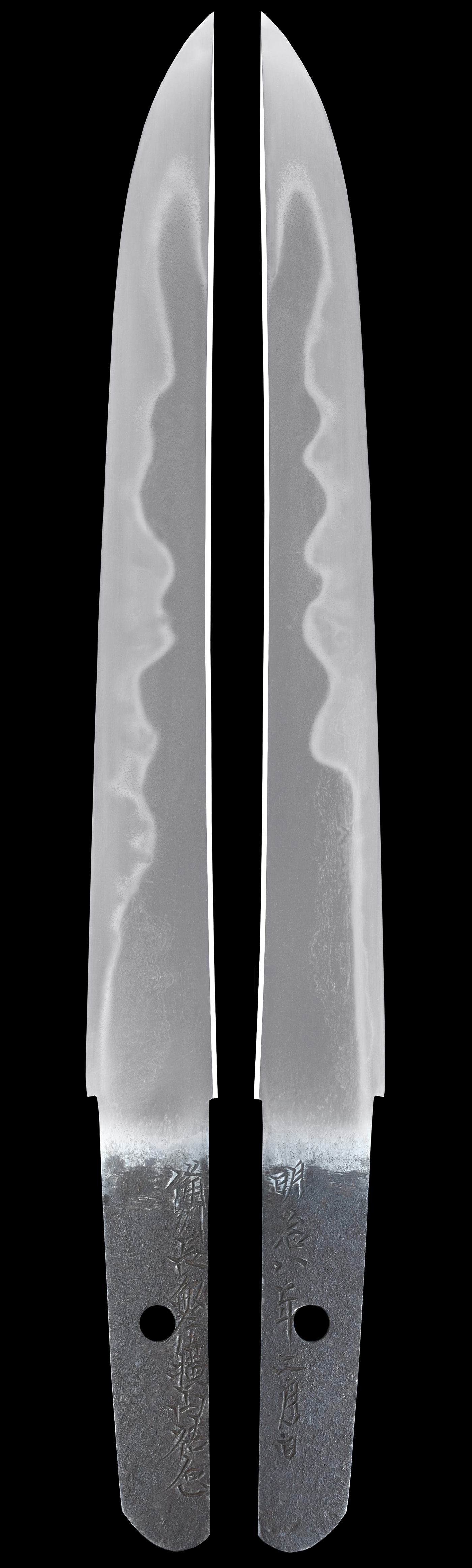
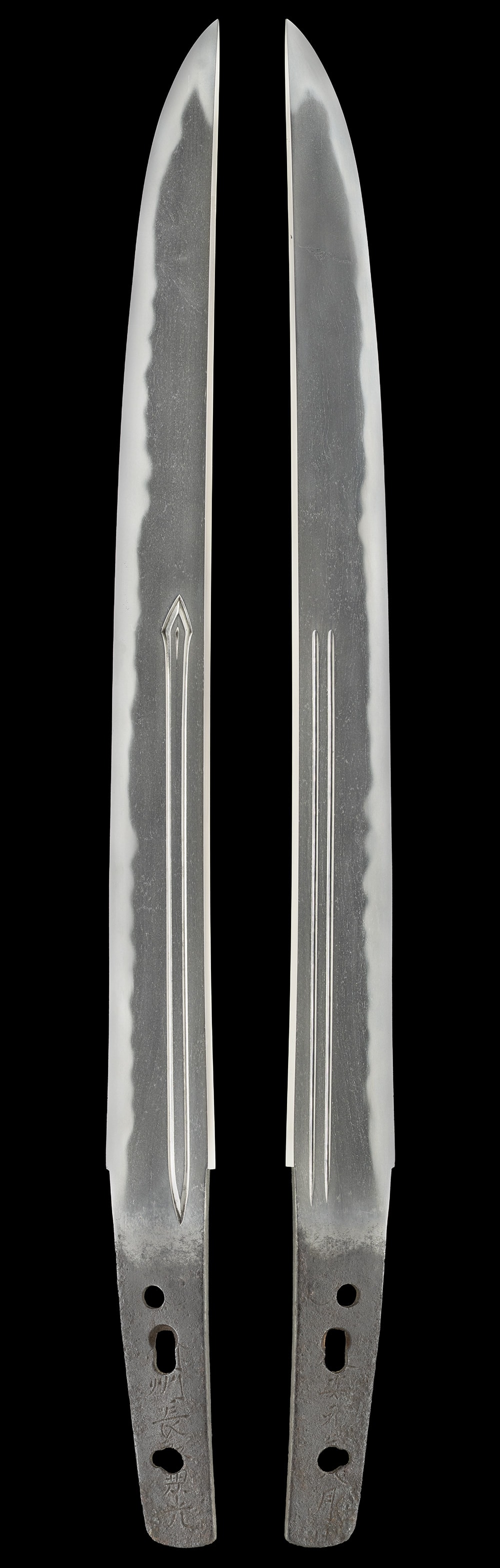
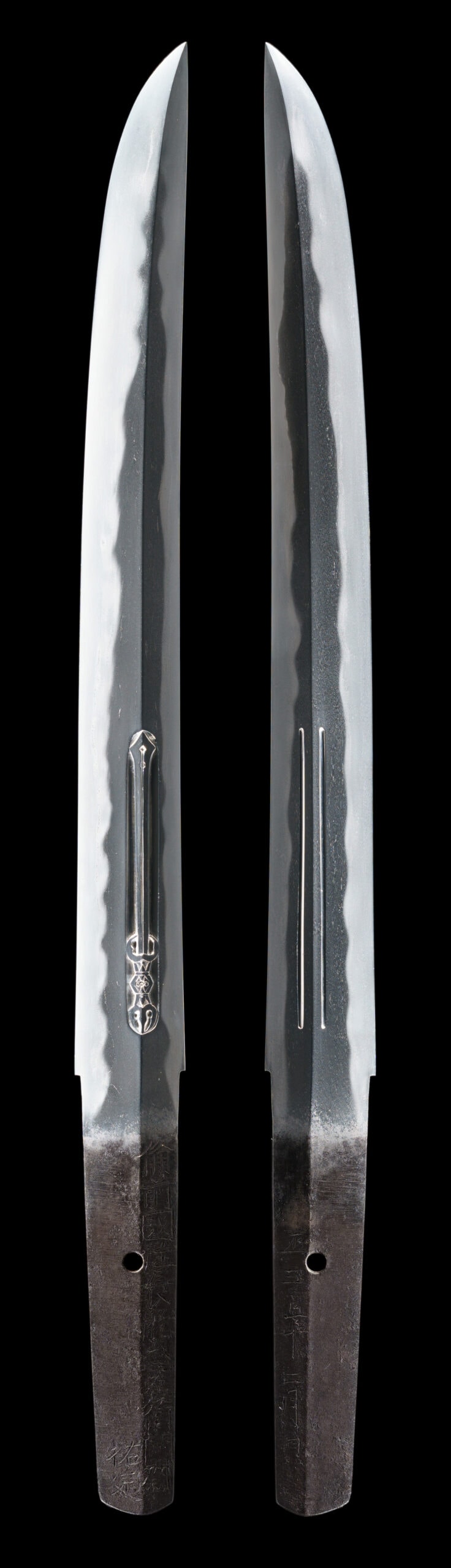
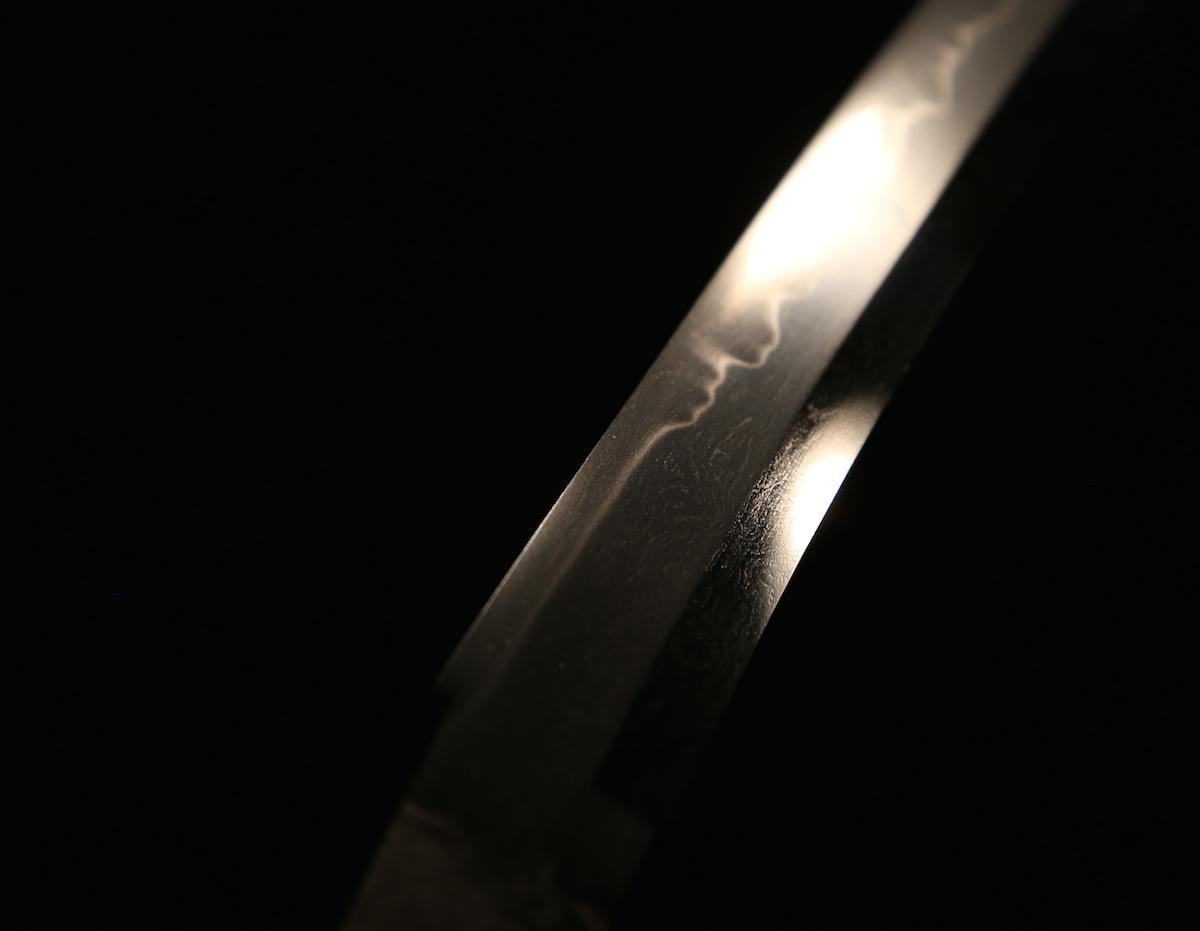
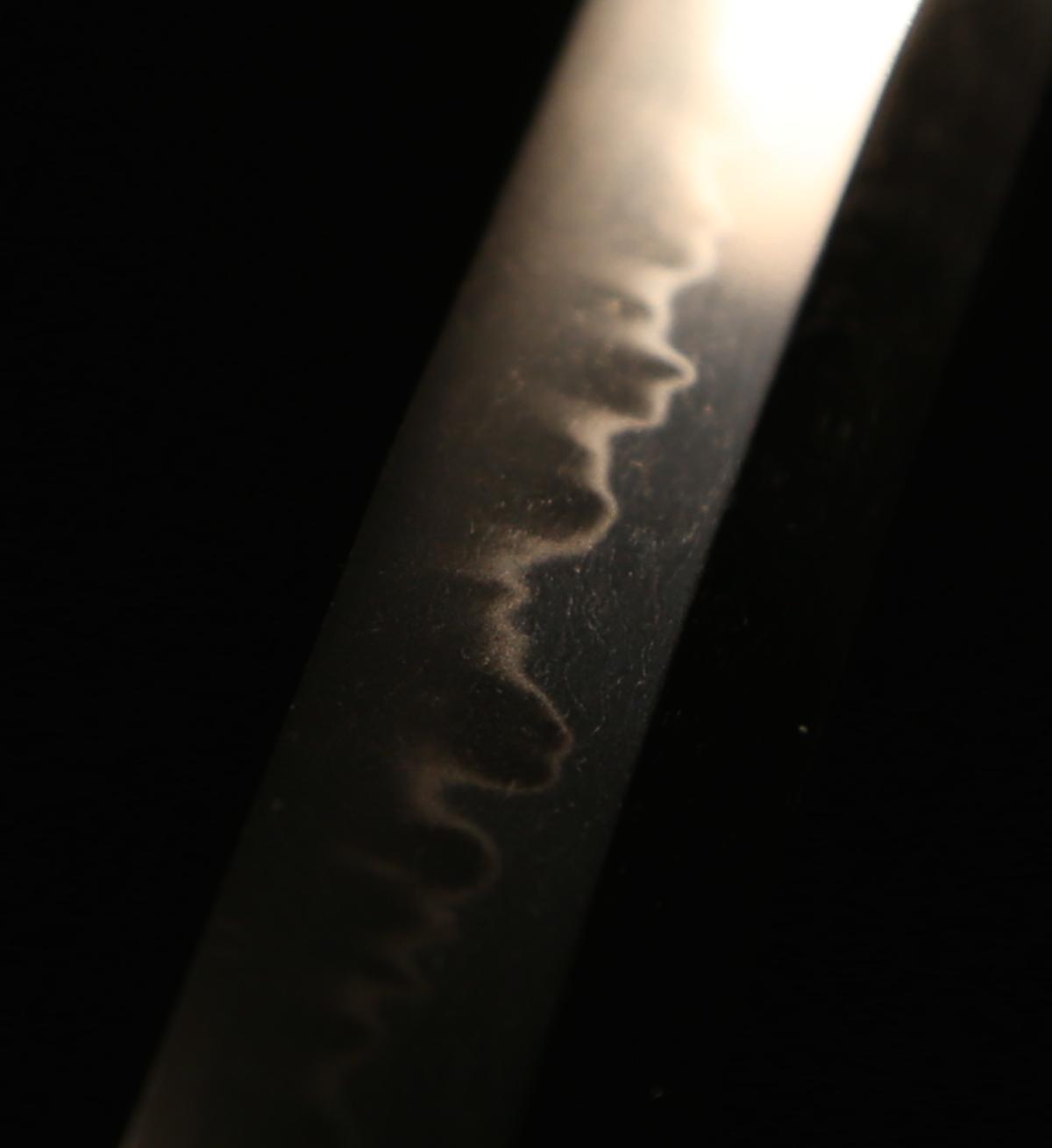
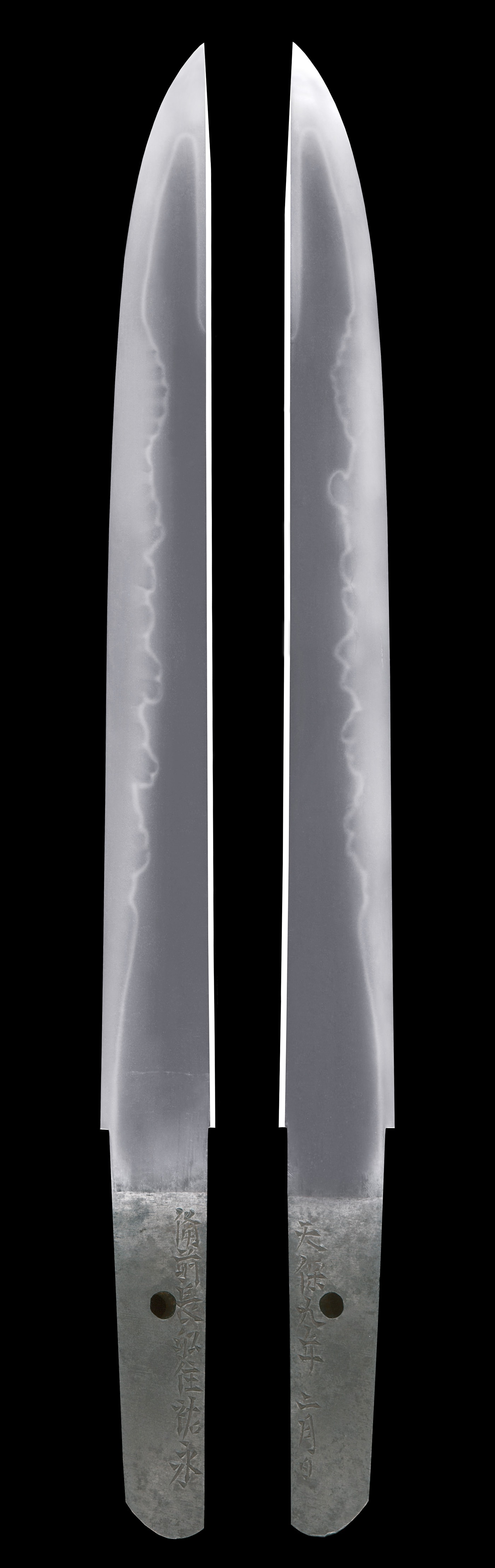
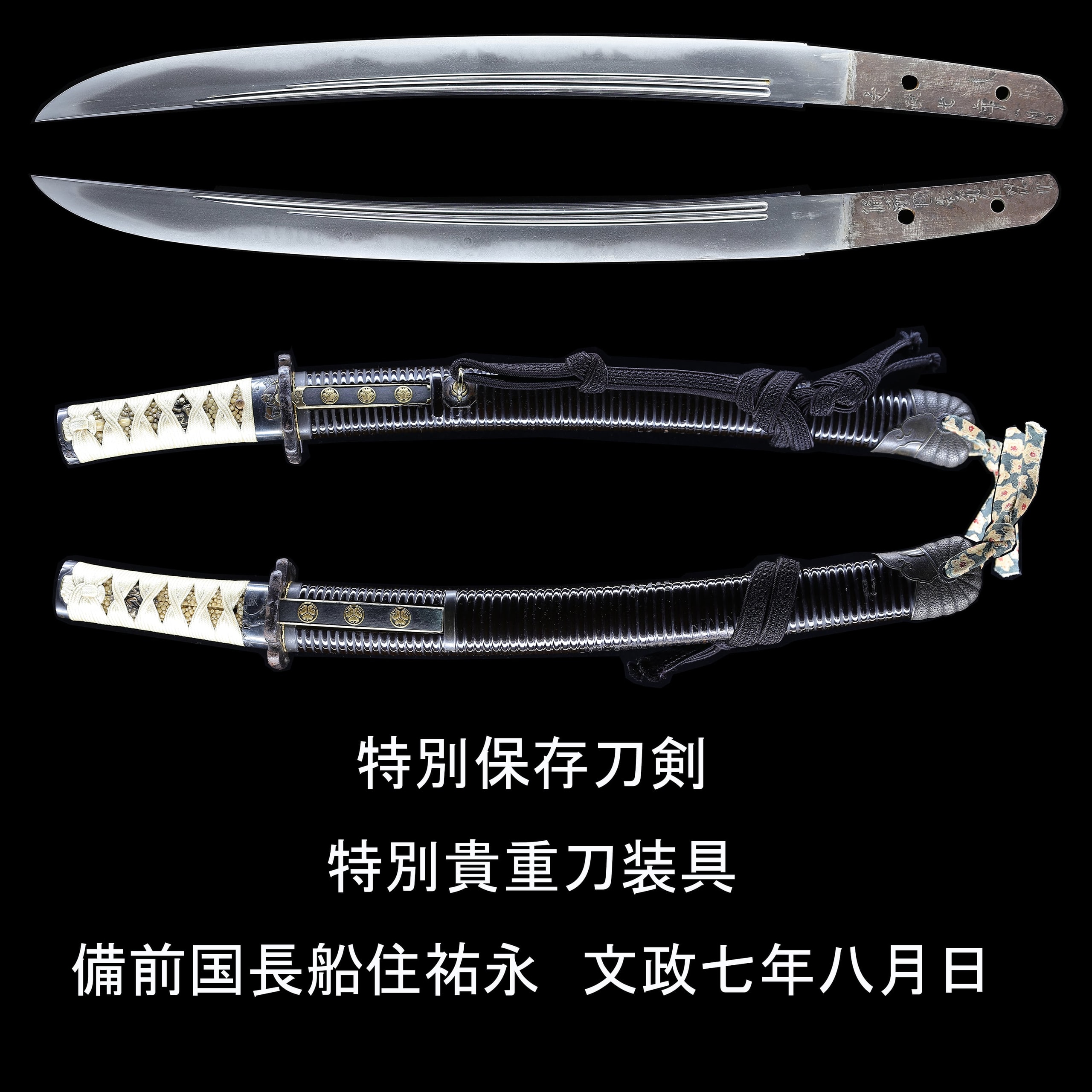
Yokoyama Sukenaga Boy’s Sword A beautifully made boy’s sword forged by one of the prominent smiths of the Shinshinto Period, Yokoyama Sukenaga. This type of miniature sword is commonly associated as part of samurai boy’s ensemble he would wear for “Boy’s Day”, or “Tango no Sekku” as it was known in the old days, but this usage, and the holiday itself there lay some misconceptions. Tango no Sekku was one of several auspicious holidays originating from around the 10th century with roots back to ancient Chinese fetivals. Over time, the dates, elements, and focus of the celebration changed, so much so that today it is known as “Kodomo no Hi” or children’s day, combining a day for both boys and girls, and also celebrates mothers. However the display of samurai related decorations continues as well as the flying of Koinobori (carp flags or streamers) which are a symbol of both strength and determination. Minature versions of armor, helmets, archery equipment, and swords have been a part of the day since about late Edo or Meiji period and continues today when business put out displays in April for the coming holiday. But the wearing of such swords by boys for the celebration post-dates the making of this particular sword because the maker of this sword, Yokoyama Sukenaga, passed away in 1851. However, in wealthier families, a miniature genuine sword were sometimes commissioned from a sword smith for the boy in the family, and it would in every way be made as a full size sword would be including koshirae in some cases. Quality, signed examples by notable smiths are quite rare and unique, demonstrating both the serious consideration of the family, and the skill of a smith to make an exacting sword in miniature form which is a difficult task. Images can be deceiving, and it is somewhat difficult to determine that this is actually a miniature sword because it has been scaled down quite skillfully, all the way down to the signature. The Japanese have always had a fascination fo
 NihontoWatch


備前伝 · 備前 · 1830-1844頃
藤代 Jo saku · 刀剣大鑑 上位63%
現在13点販売中
備前伝 · 備前
現在40点販売中
新々刀 復古の運動
1800年前後、水心子正秀は著述をもって、鍛刀は古作の法に立ち返るべしと説いた。復古刀の運動である。最大の後継者直胤は、数百年絶えていた備前伝と相州伝を確信をもって再現した。
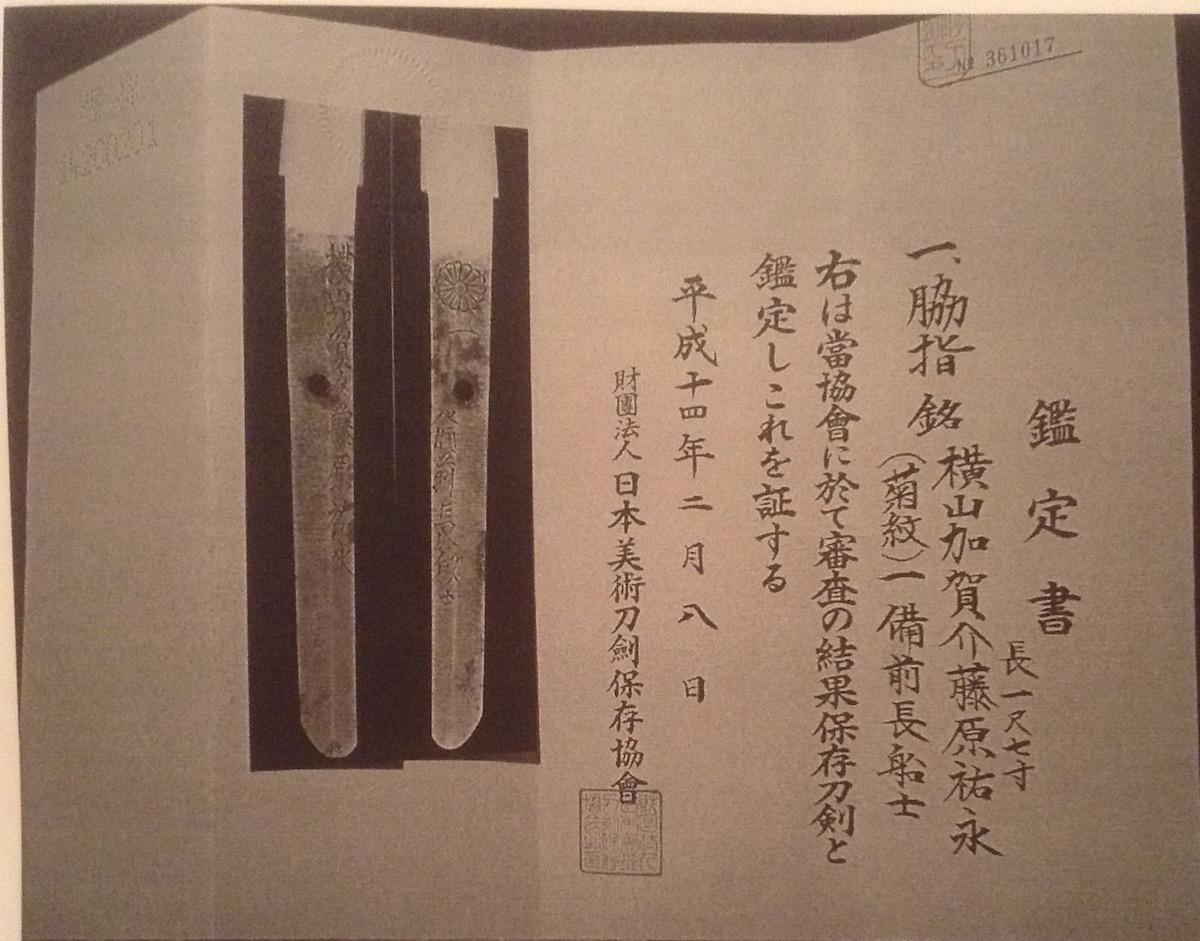
銘が正しい、または無銘でも年代・国・系統を確実に指摘できる、保存に値する真正の作と鑑定されたものです。
日本美術刀剣保存協会(NBTHK)は、1948年に設立され、文化庁の監督を受ける公益財団法人で、東京・刀剣博物館に本部を置きます。専門の審査員が出品作を直接審査し、美術的・歴史的価値に応じた鑑定書を発行します。NBTHKの鑑定書は、日本刀および刀装具の真正性を示す最も広く認知された基準です。
NBTHK公式サイト



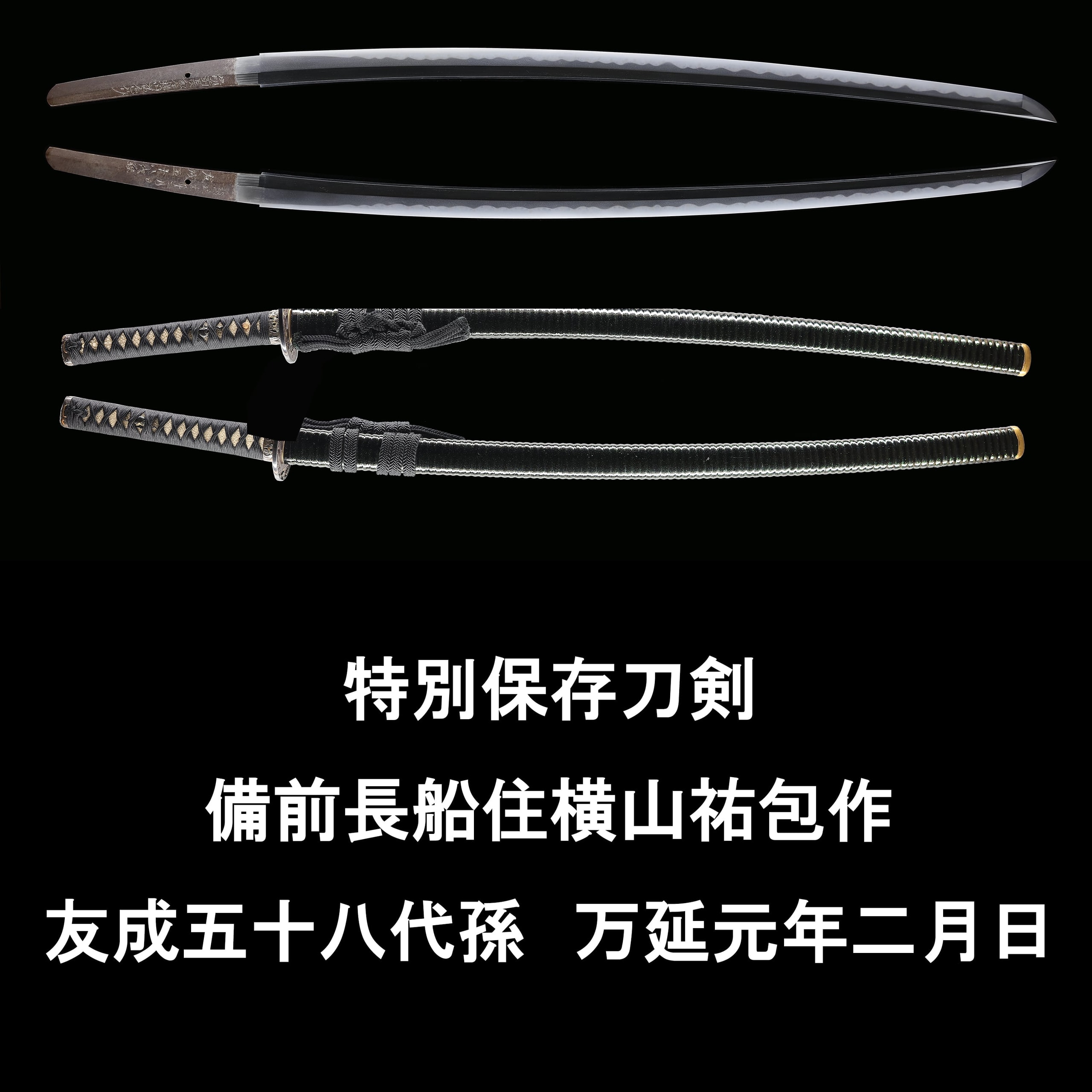
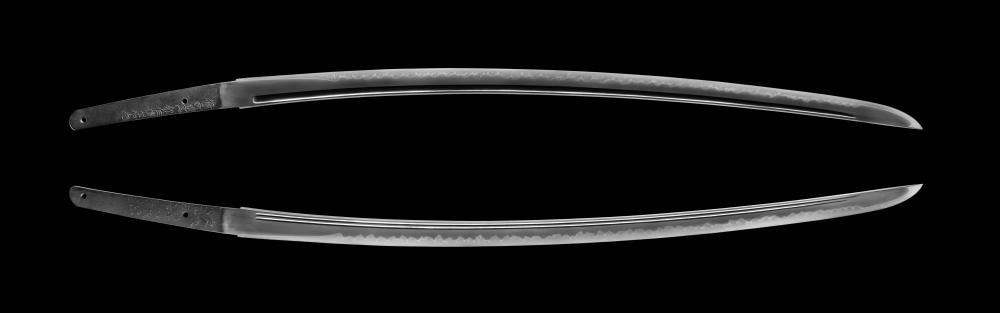
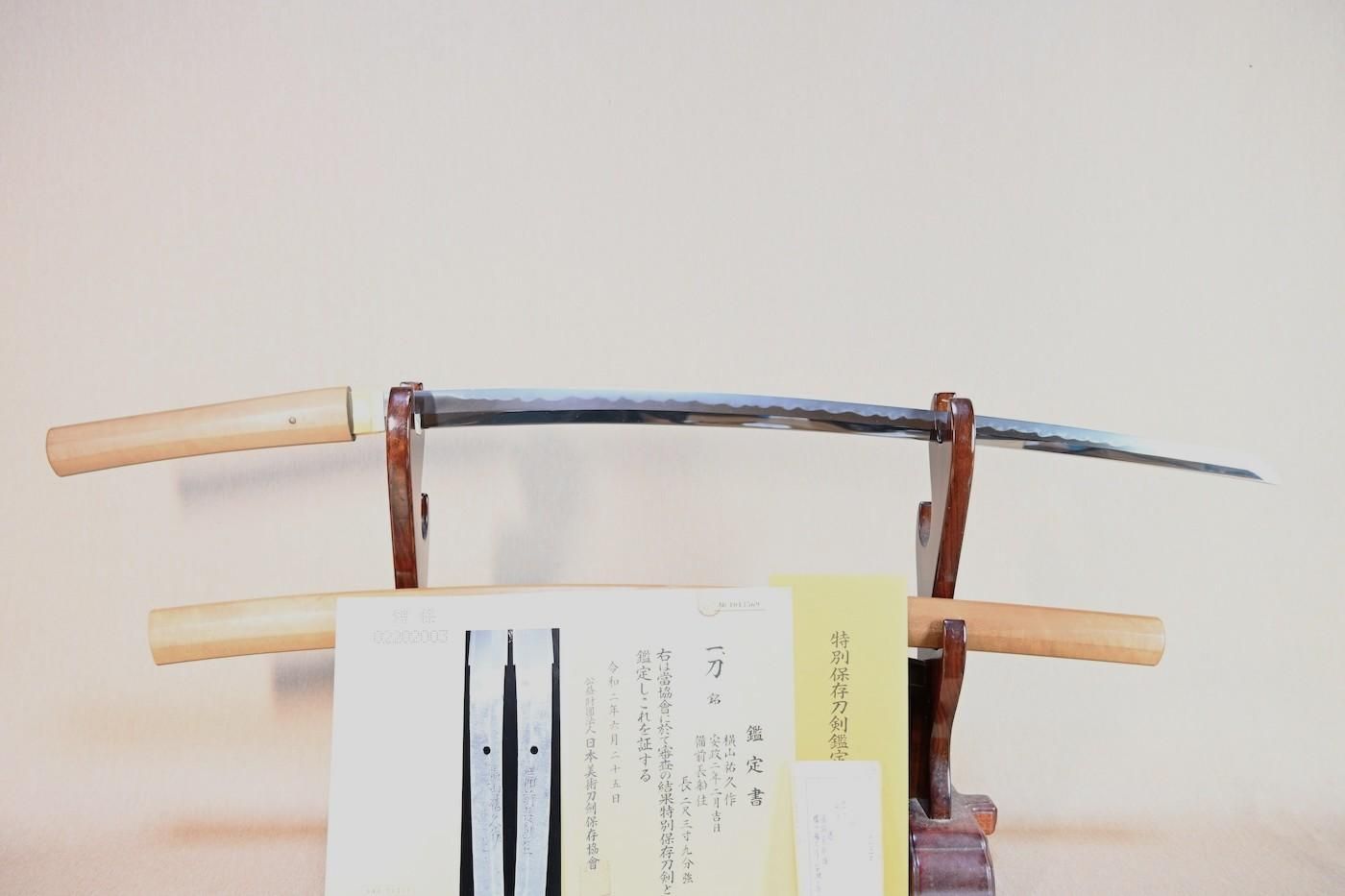
![Katana - Tokuho - 作 祐永 - 刀[横山河内守藤原朝臣祐永][日本美術刀剣保存協会]特別保存刀剣](/_next/image?url=https%3A%2F%2Fitbhfhyptogxcjbjfzwx.supabase.co%2Fstorage%2Fv1%2Fobject%2Fpublic%2Flisting-images%2Fworld-seiyudo%2FL31448%2F00.jpg&w=2560&q=90)