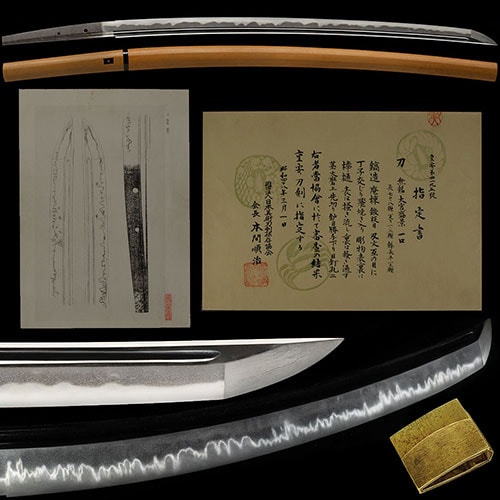

Juyo-Token, 64th Session — Designated November 6, 2018
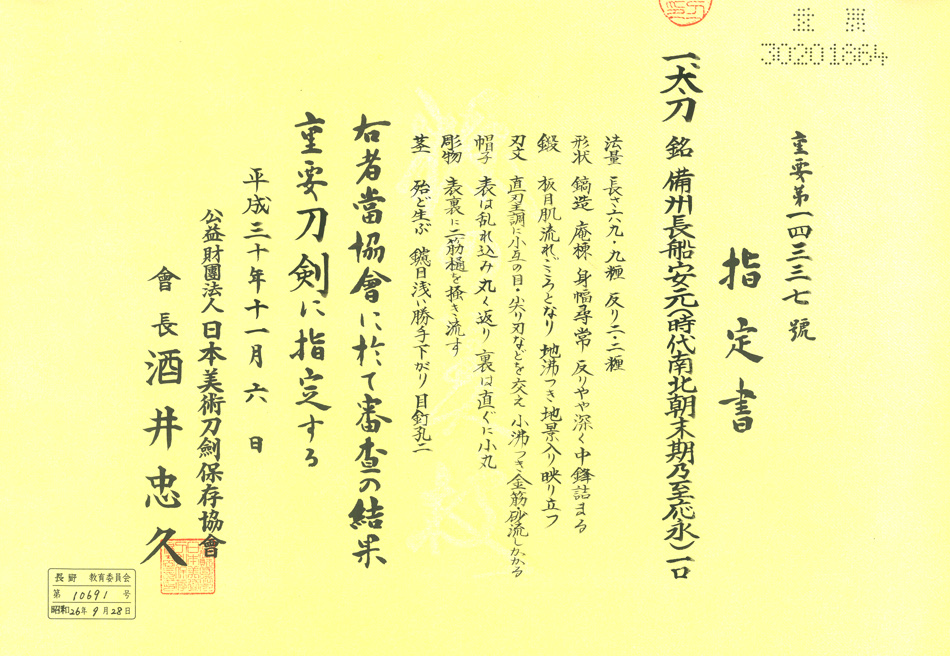
Tachi, mei: Bishū Osafune Yasumoto (備州長船安元)
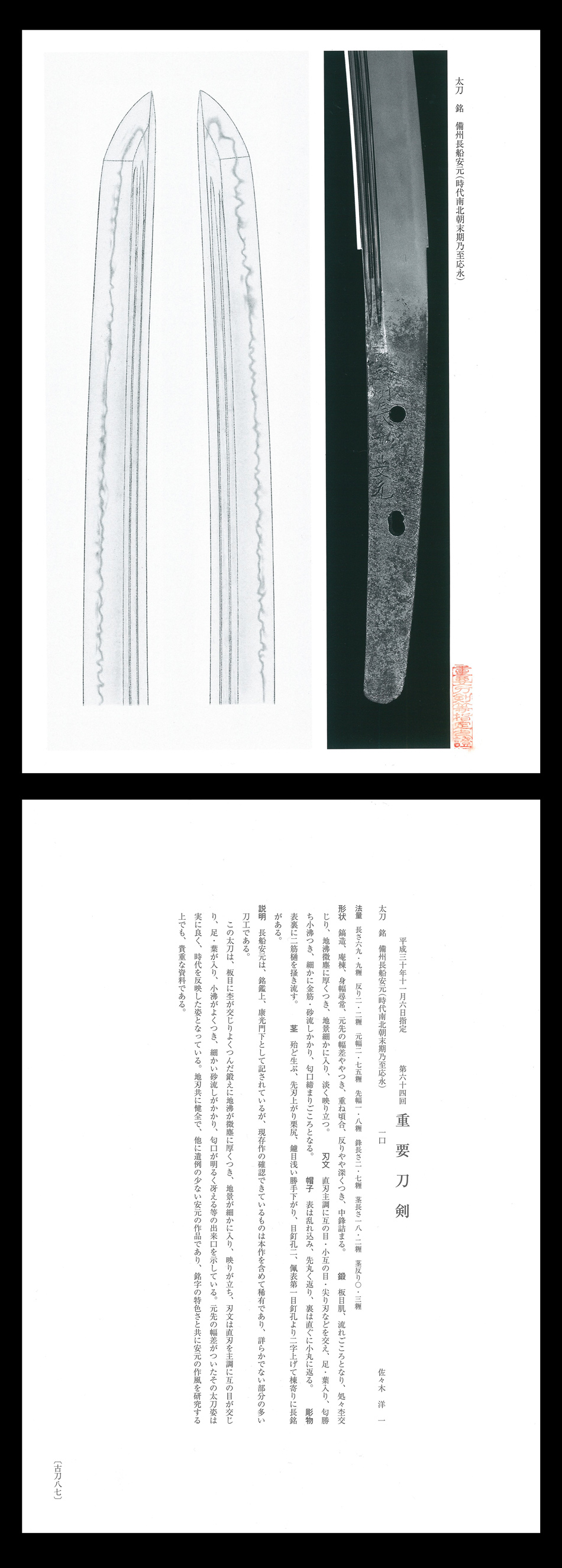
Measurements Nagasa 69.9 cm, sori 2.2 cm, motohaba 2.75 cm, sakihaba 1.8 cm, kissaki-nagasa 2.7 cm, nakago-nagasa 18.2 cm, nakago-sori 0.3 cm
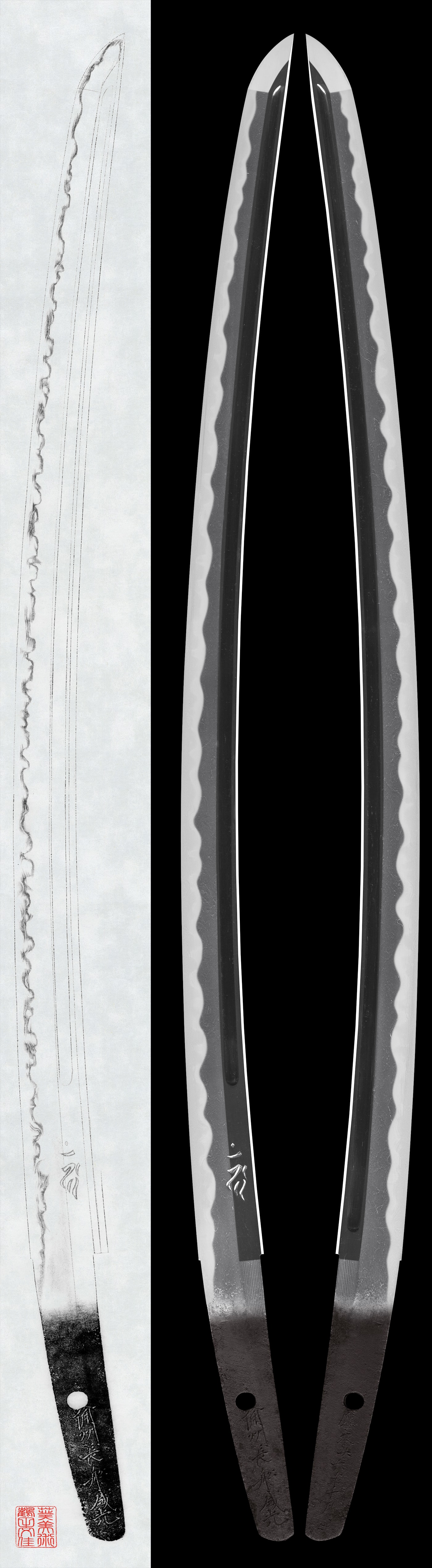
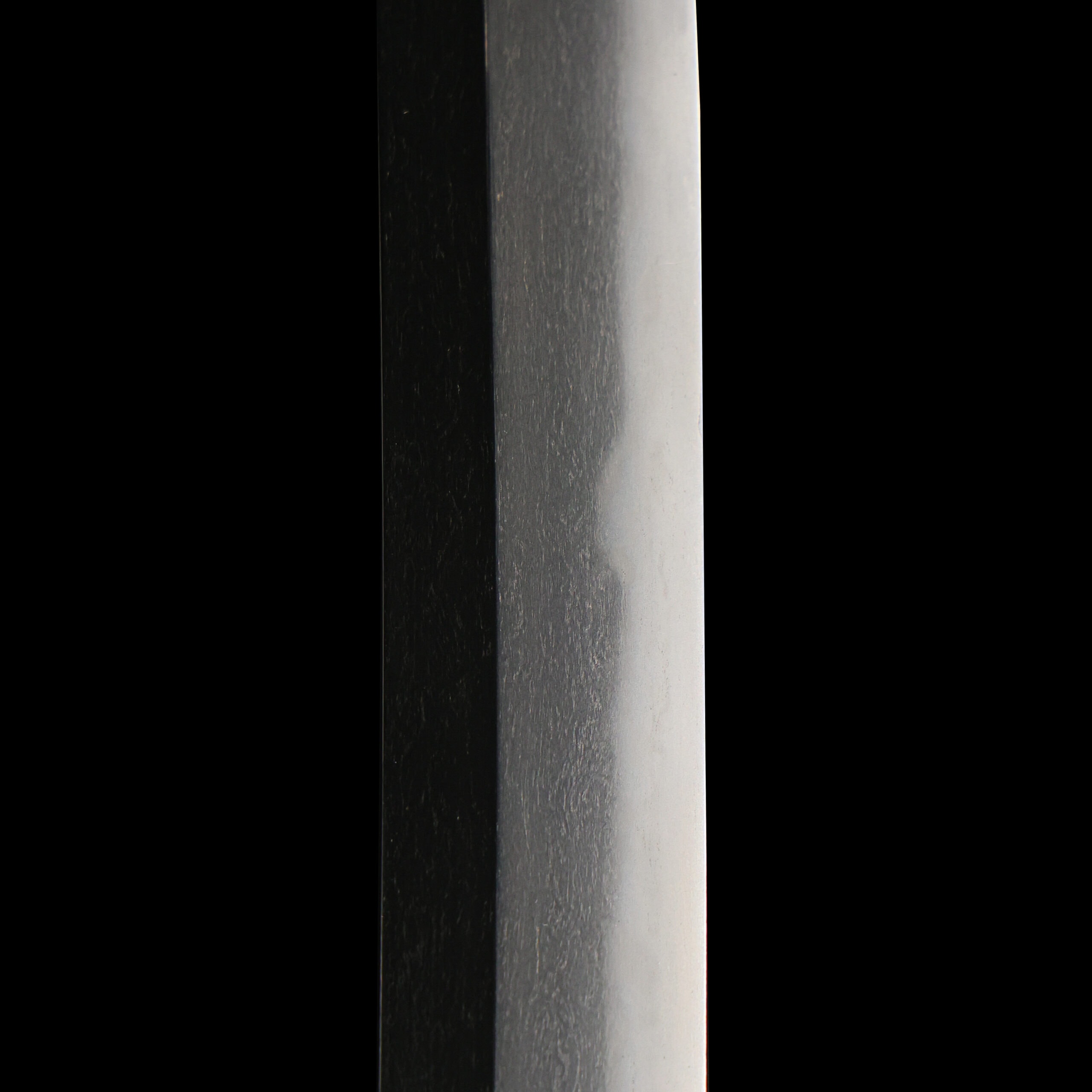
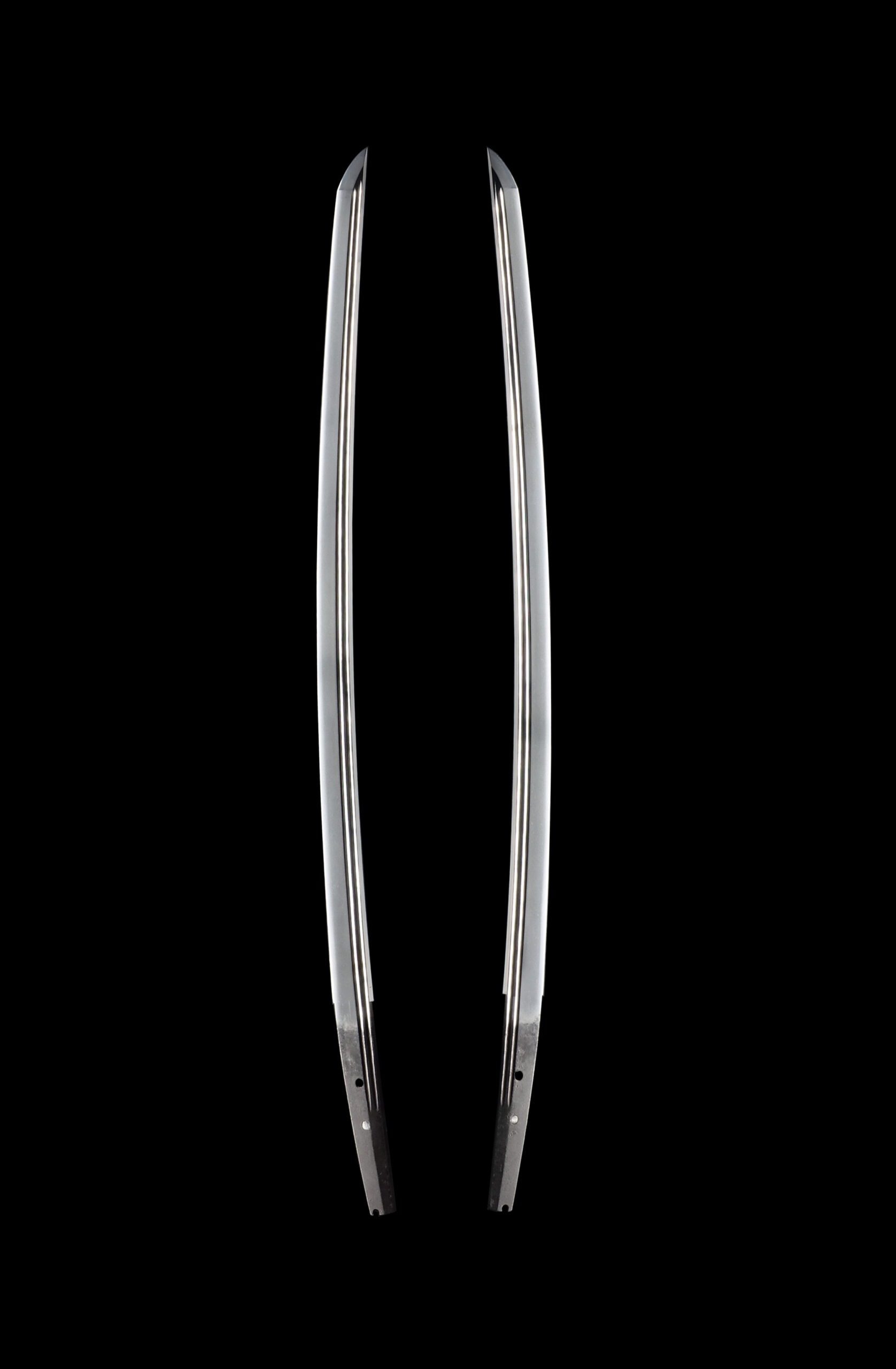
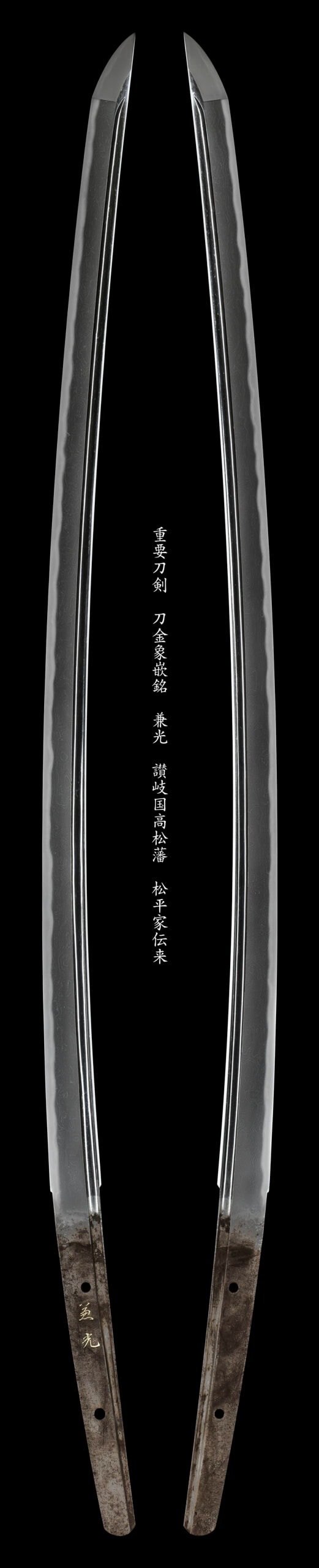
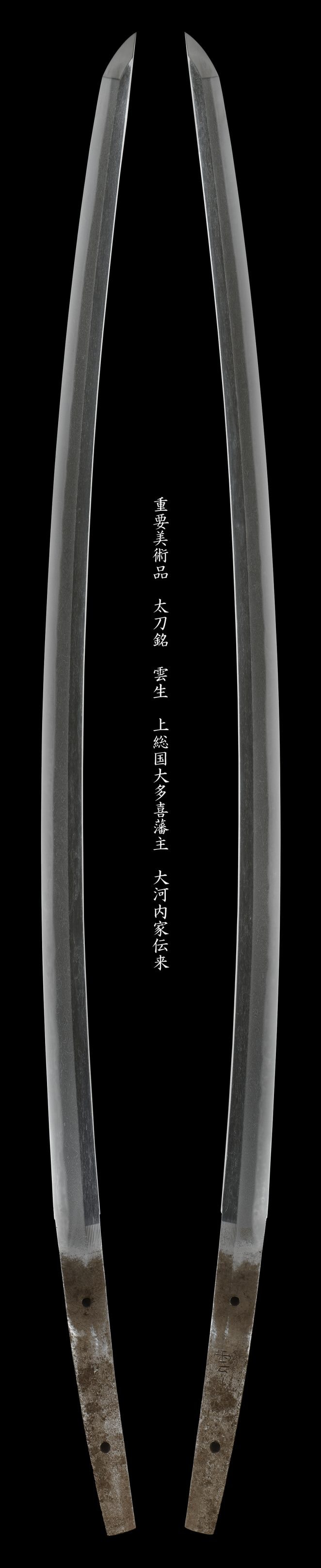
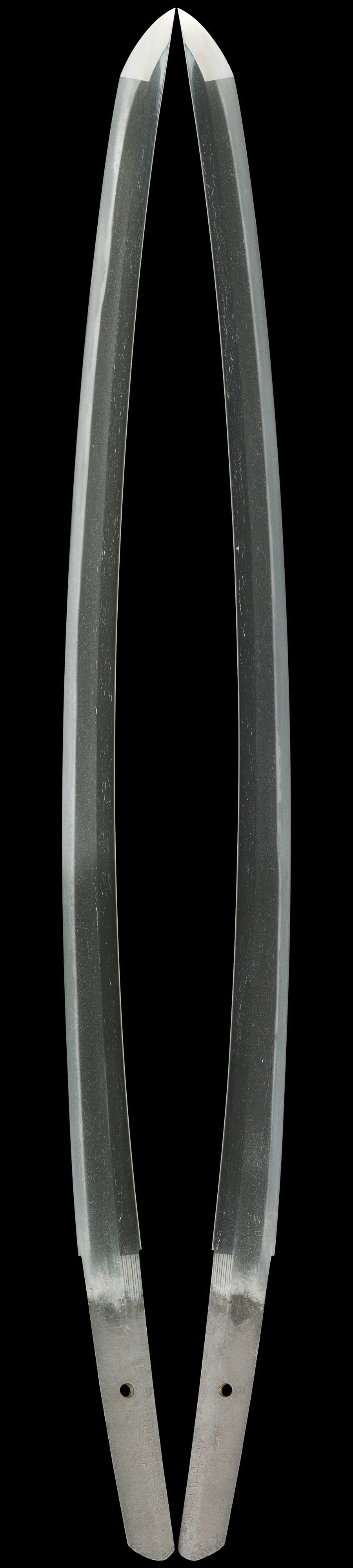
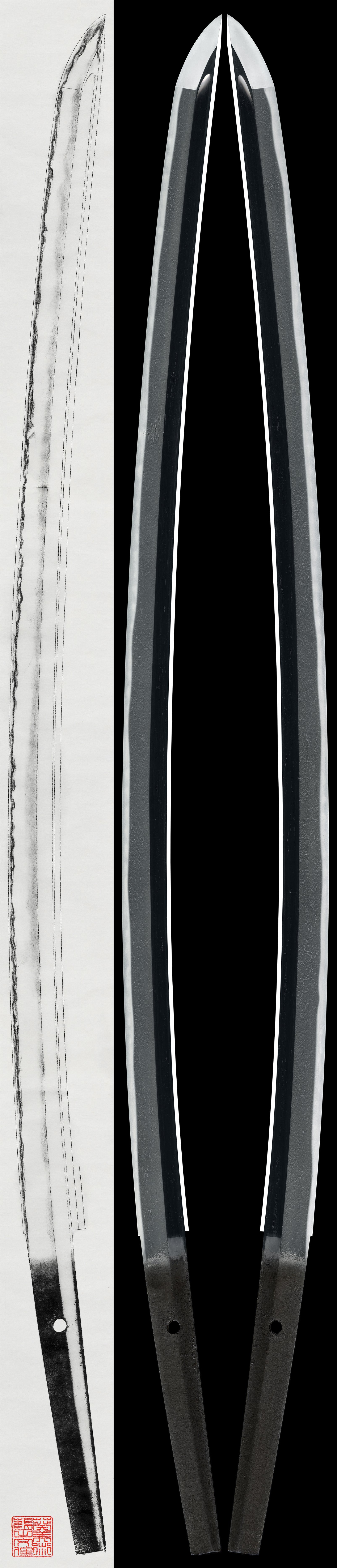
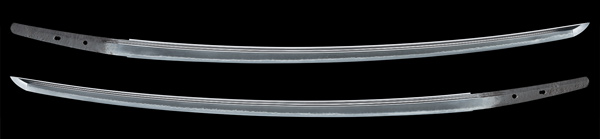
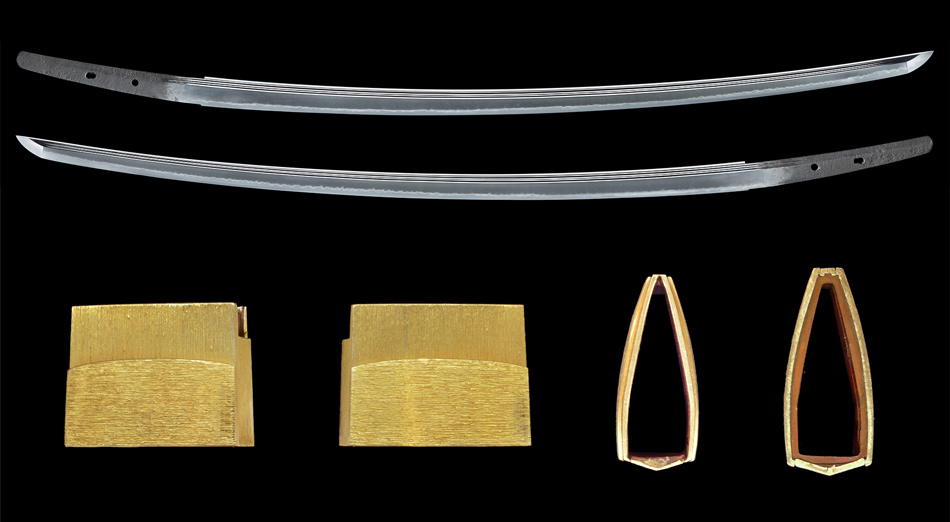
Description Keijo: Shinogi-zukuri with iori-mune; standard mihaba with somewhat evident taper from base to tip; moderate kasane; rather deep sori; compact chu-kissaki. Kitae: Itame-hada tending toward nagare, with scattered mokume; very fine ji-nie adhering thickly; fine chikei entering; utsuri standing faintly. Hamon: Suguha as the main tone, mixed with gunome, ko-gunome, and togariba; with ashi and yo; nioi prevailing with ko-nie; fine kinsuji and sunagashi appearing; the nioiguchi shows a tendency to tighten and is bright and clear. Boshi: On the omote, midare-komi with a rounded turnback; on the ura, sugu with ko-maru turnback. Horimono: On both sides, double grooves (futasuji-hi) carved kaki-nagashi. Nakago: Almost ubu; ha-agari kurijiri; file marks are shallow katte-sagari; two mekugi-ana; on the haki-omote, a long signature is placed toward the mune, beginning two characters above the first mekugi-ana.
Artisan Osafune Yasumoto
Era Late Nanbokuchō period to the Ōei era
Explanation Osafune Yasumoto is recorded in the reference works on signatures (meikan) as a smith in the school of Yasumitsu; however, extant works that can be confirmed are exceedingly rare—including the present blade—so he remains a swordsmith about whom much is not yet clear.
This tachi shows a well-condensed forging of itame mixed with mokume, in which very fine ji-nie adheres thickly, fine chikei appears, and utsuri is visible. The hamon, while fundamentally suguha, incorporates gunome elements; ashi and yo enter, ko-nie adheres well, and fine sunagashi is seen, with a bright, clear nioiguchi. The tachi’s form—with an evident difference between the widths at the base and the tip—is truly excellent, presenting a shape that reflects its period. Both ji and ha are kenzen (sound and well-preserved). As a work by Yasumoto—of whom there are few surviving examples—this blade, together with the distinctive features of its mei, constitutes valuable material for research into Yasumoto’s style.
Setsumei by Sasaki Hiroshi (佐々木洋)
[Koto 87]