NihontoWatch Mon

NihontoWatch

マーケットオークション
事典
NihontoWatch Mon

NihontoWatch

マーケットオークション
事典

説明

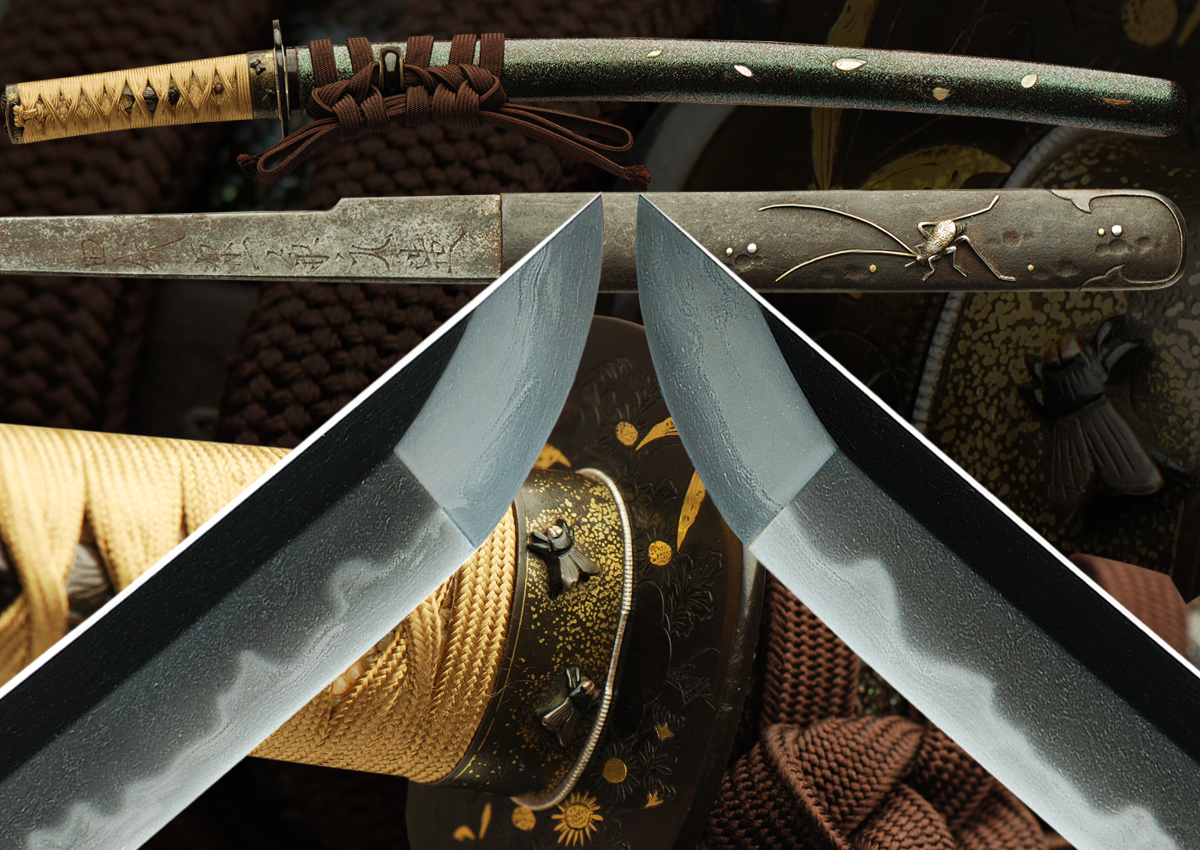
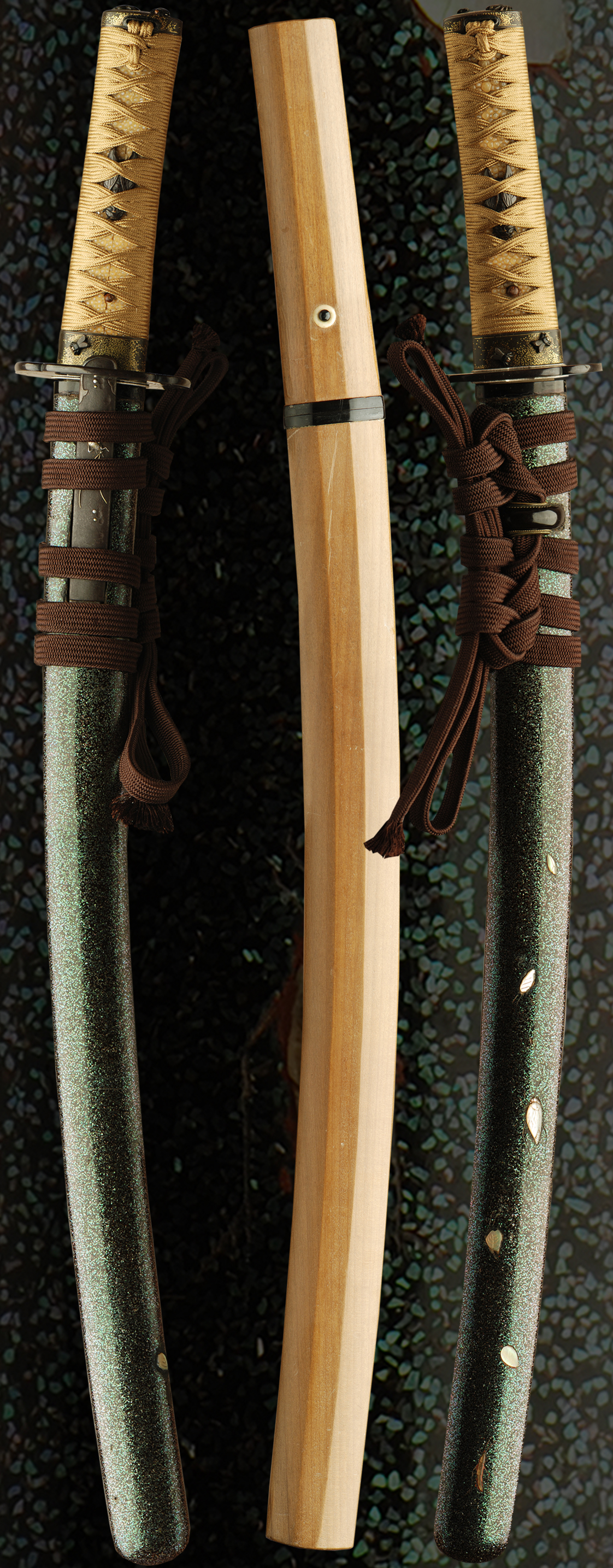
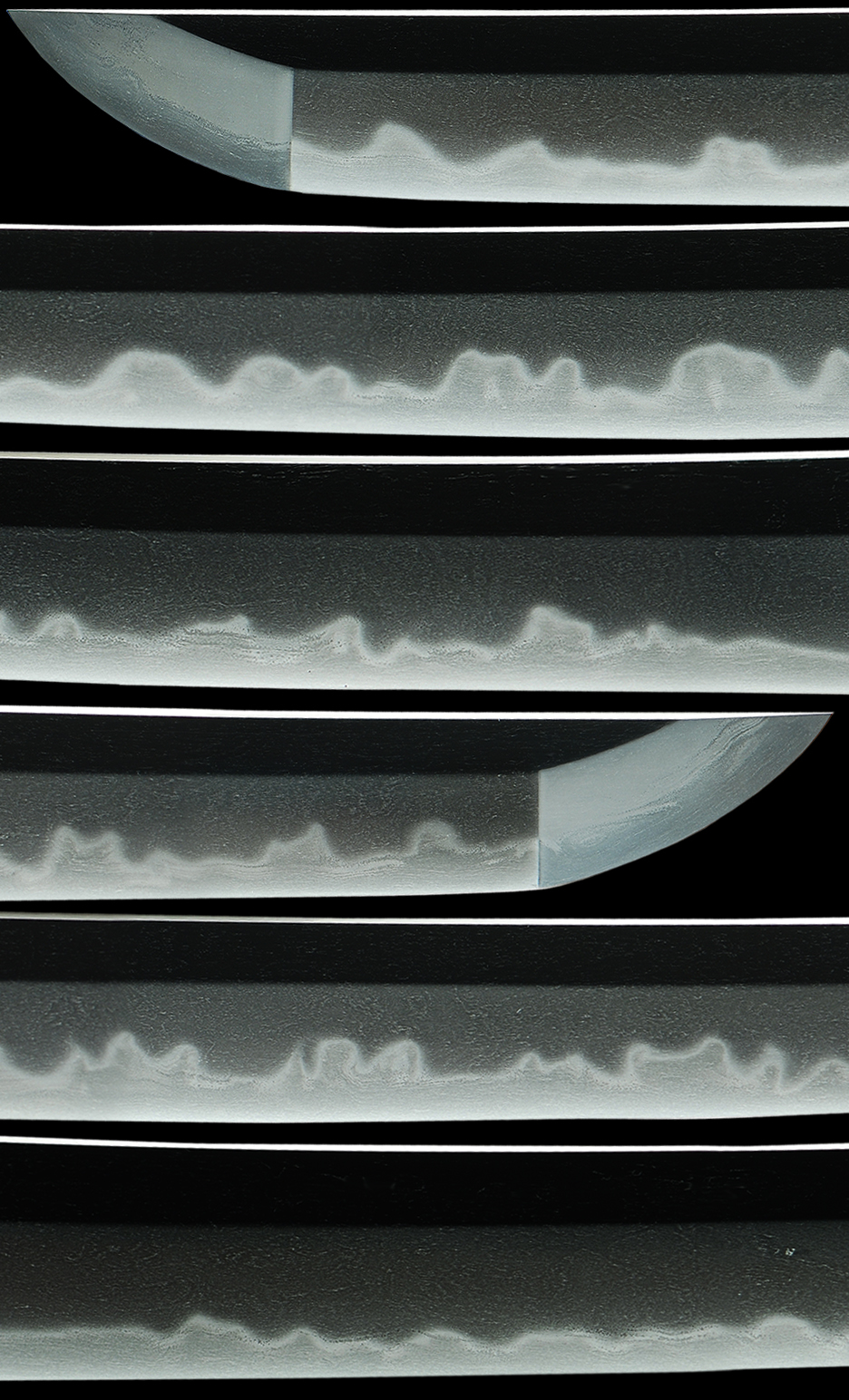
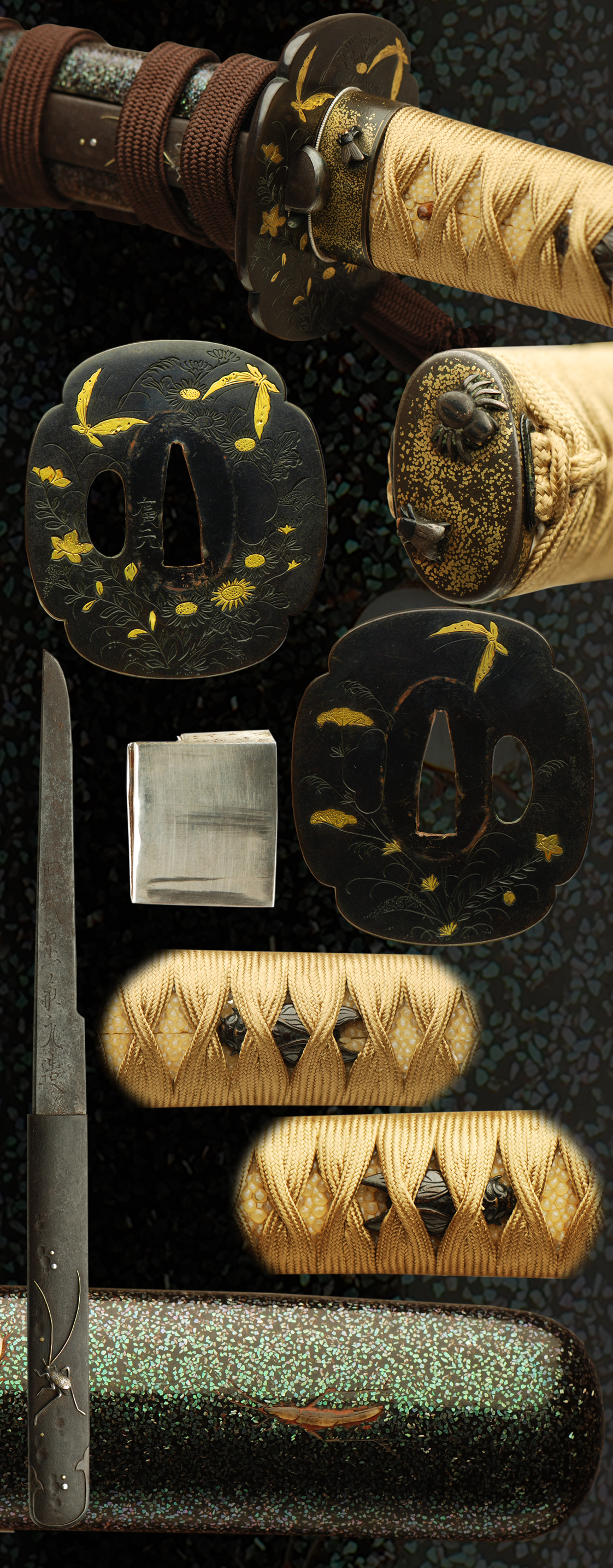
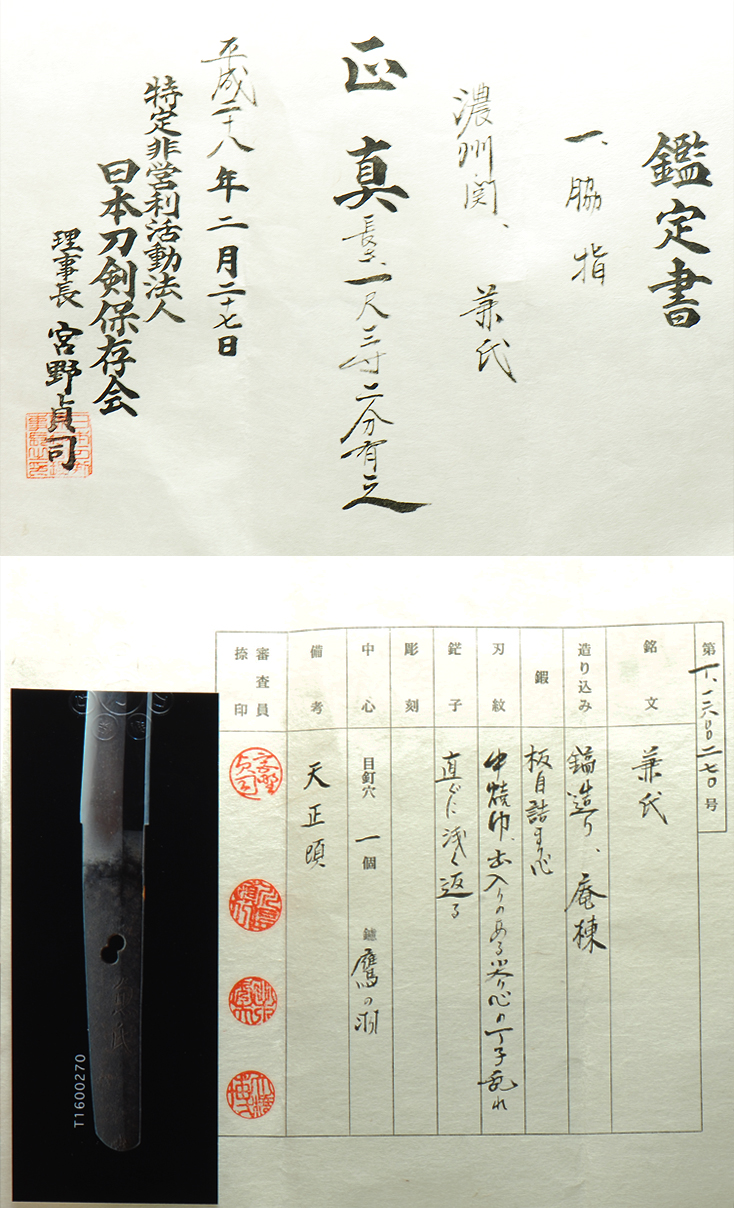
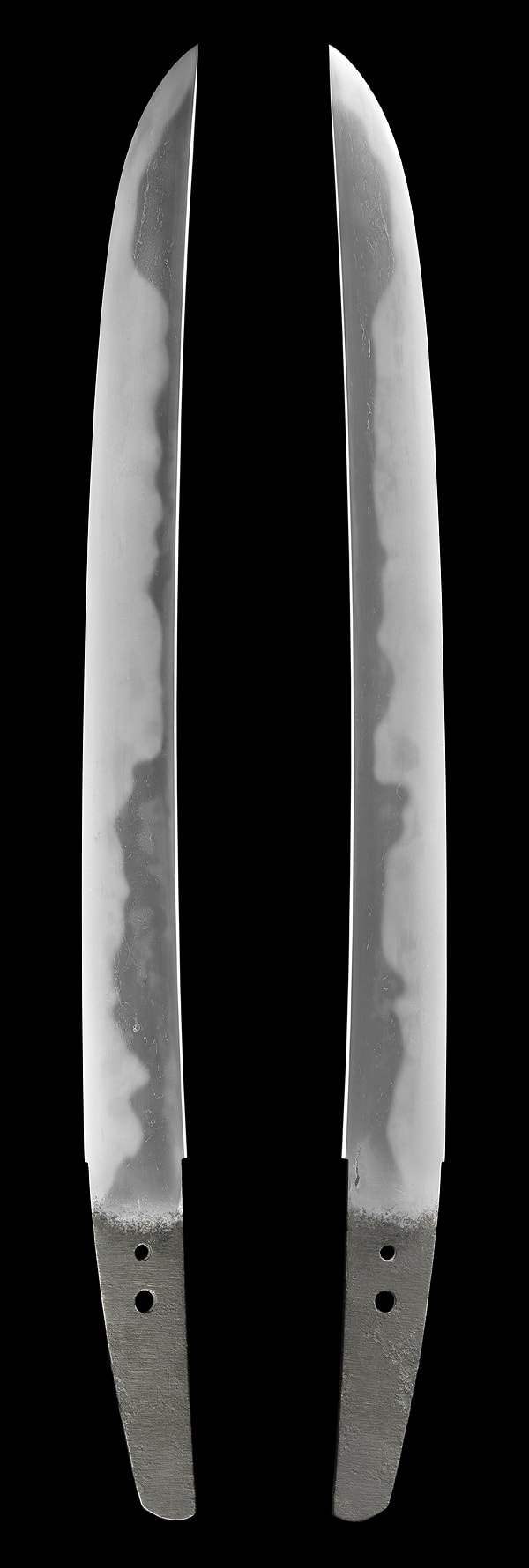
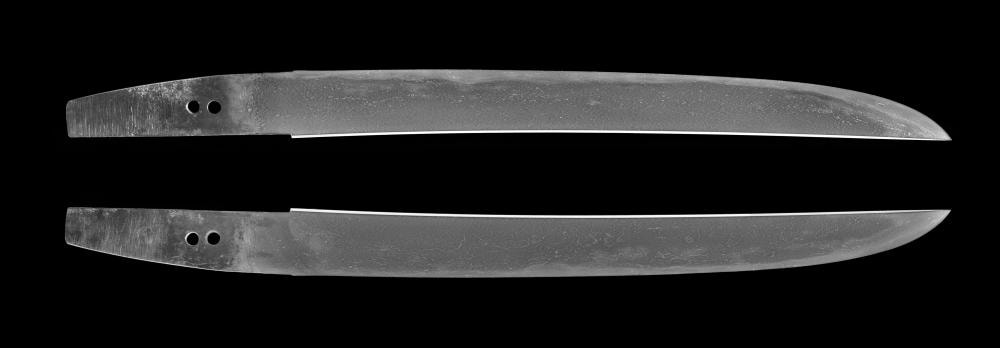
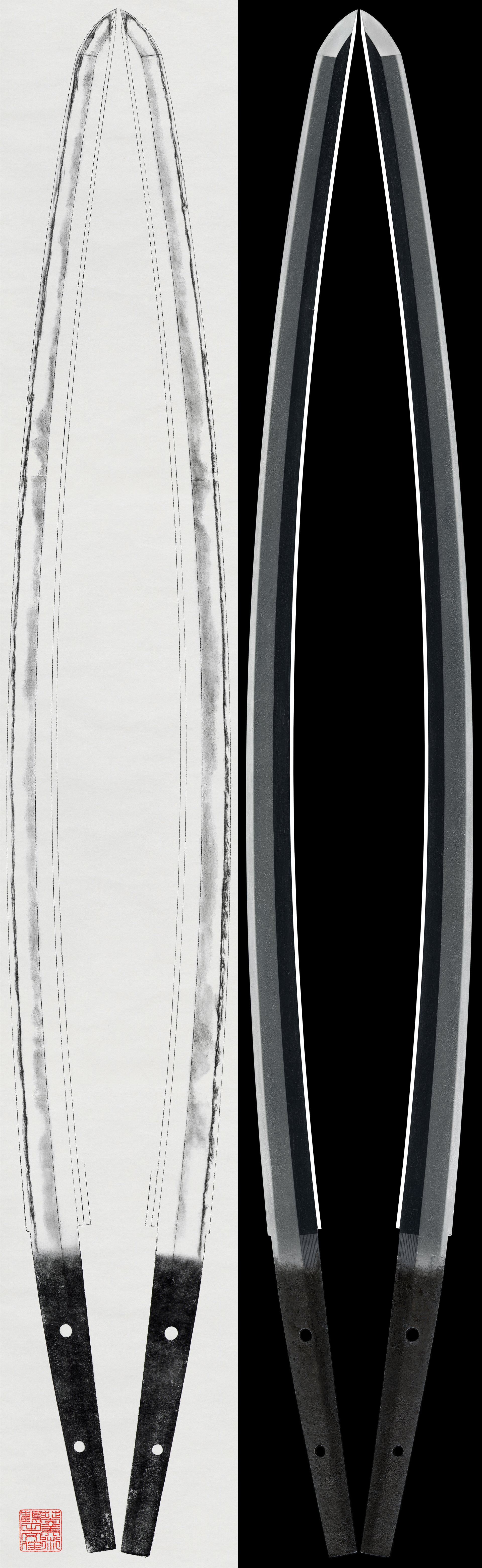
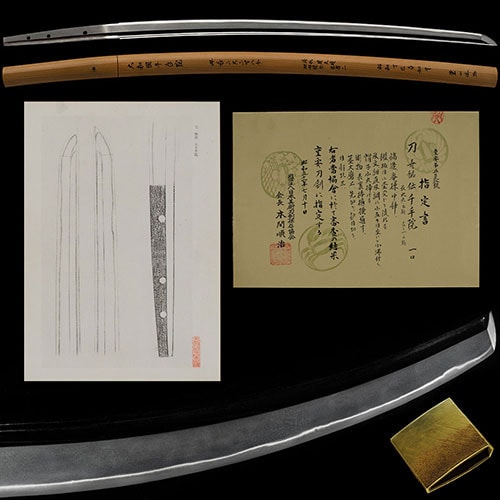
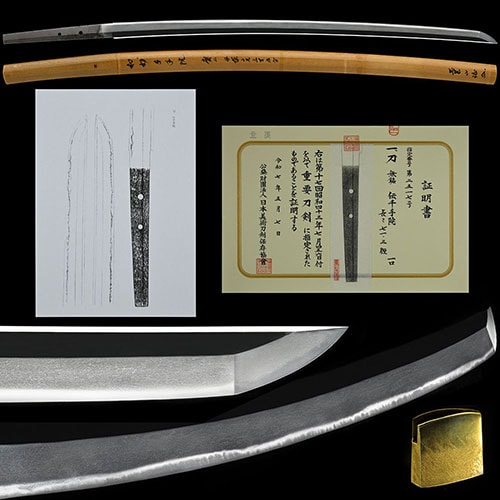
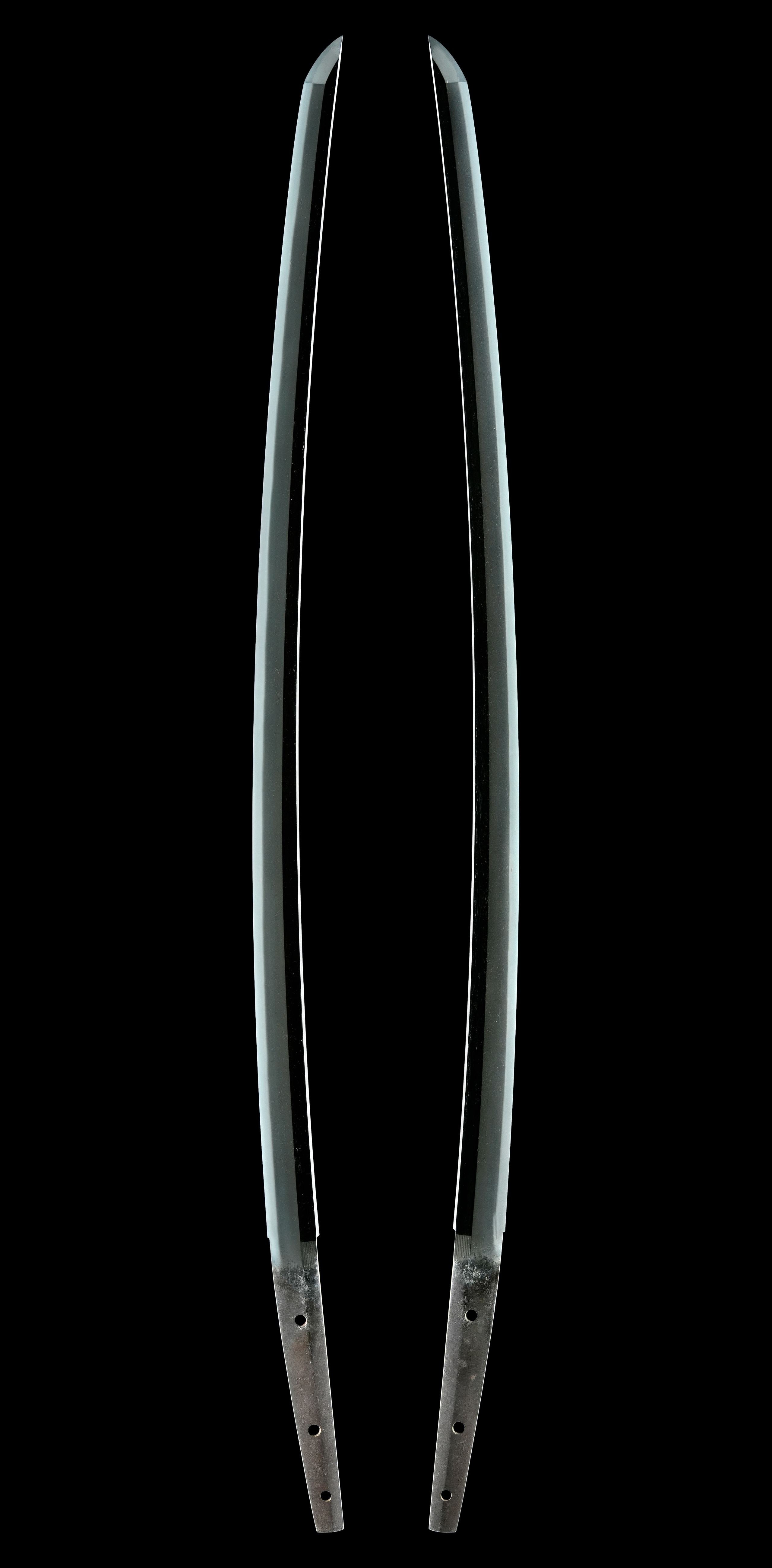
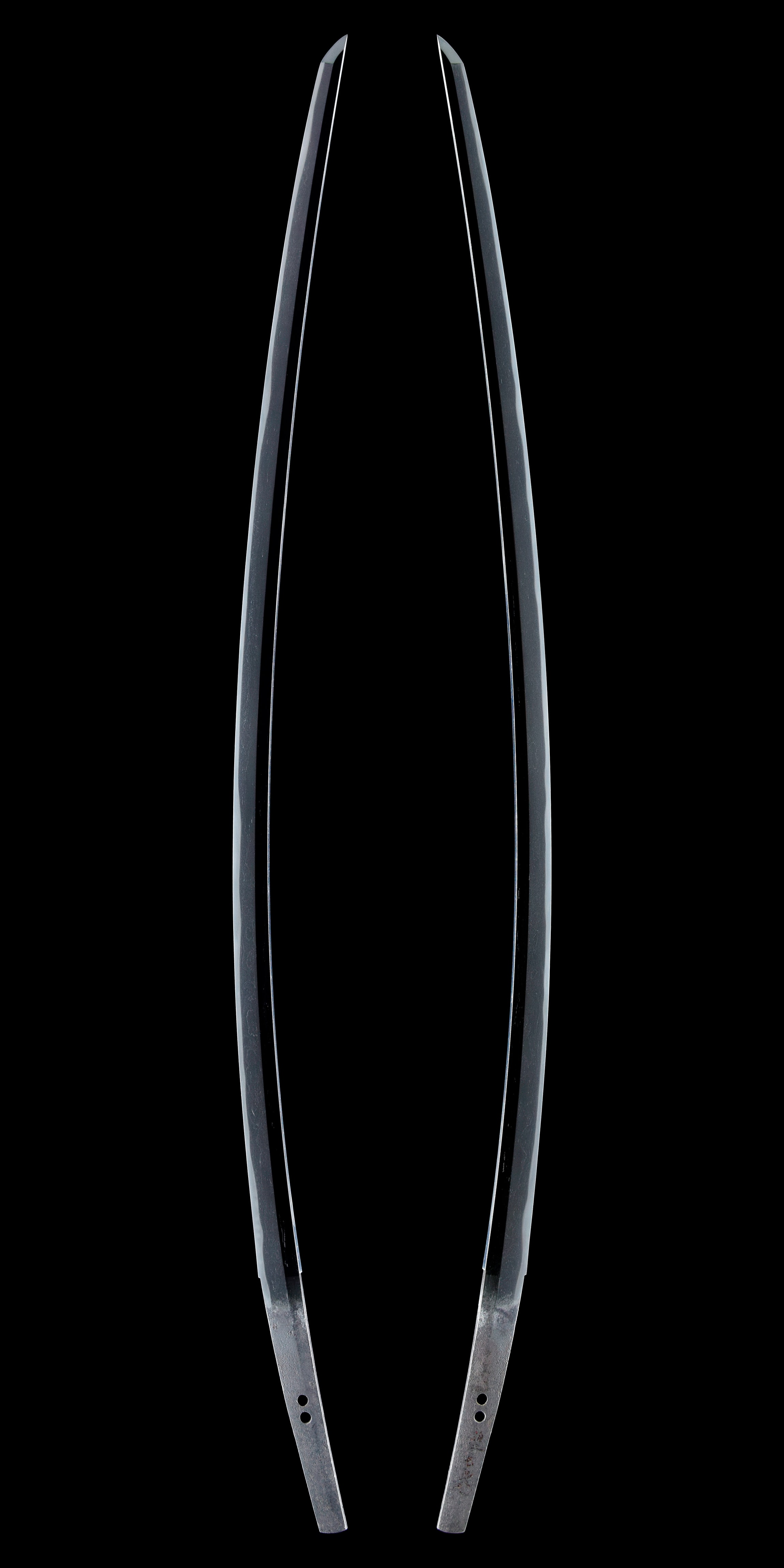
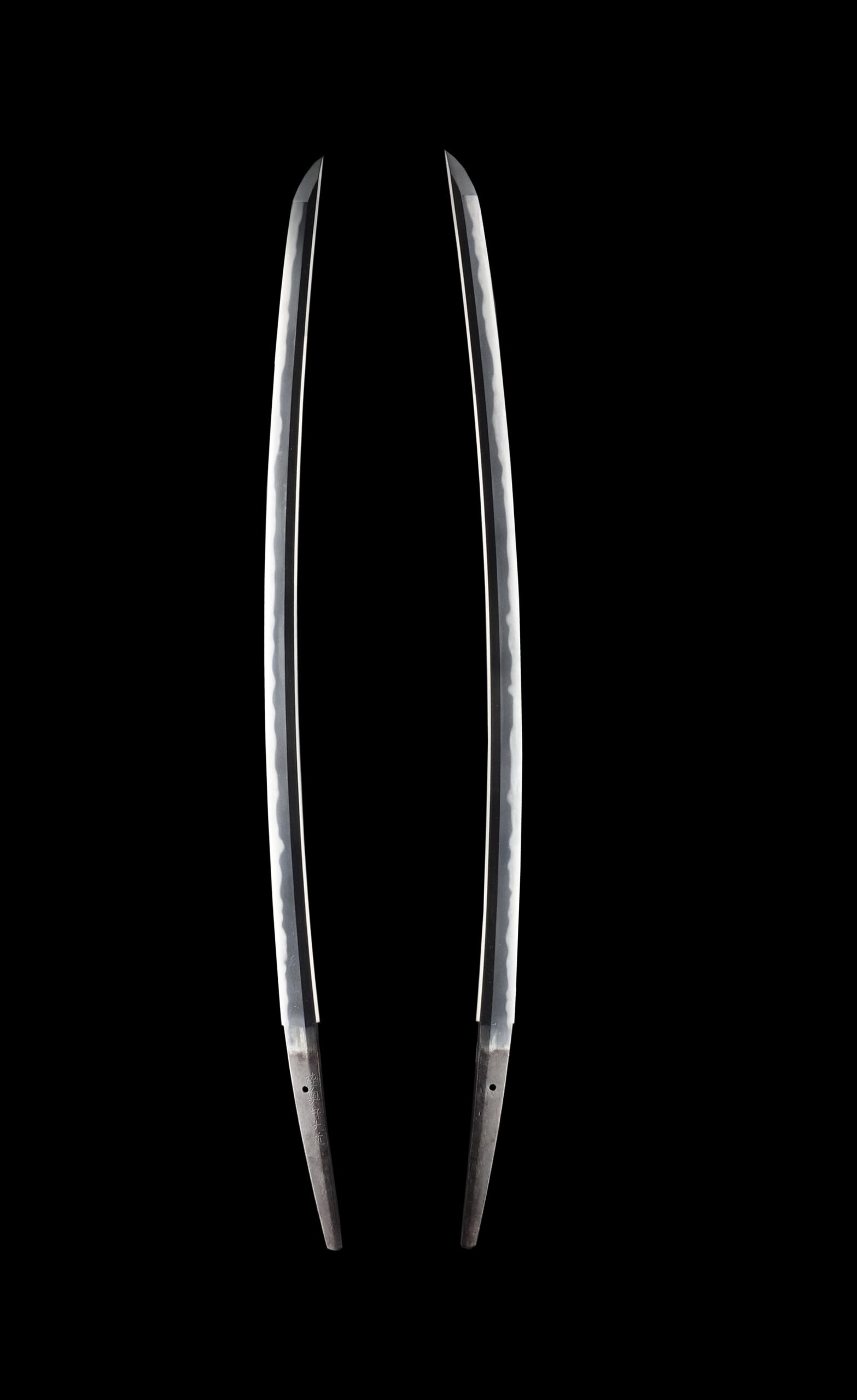
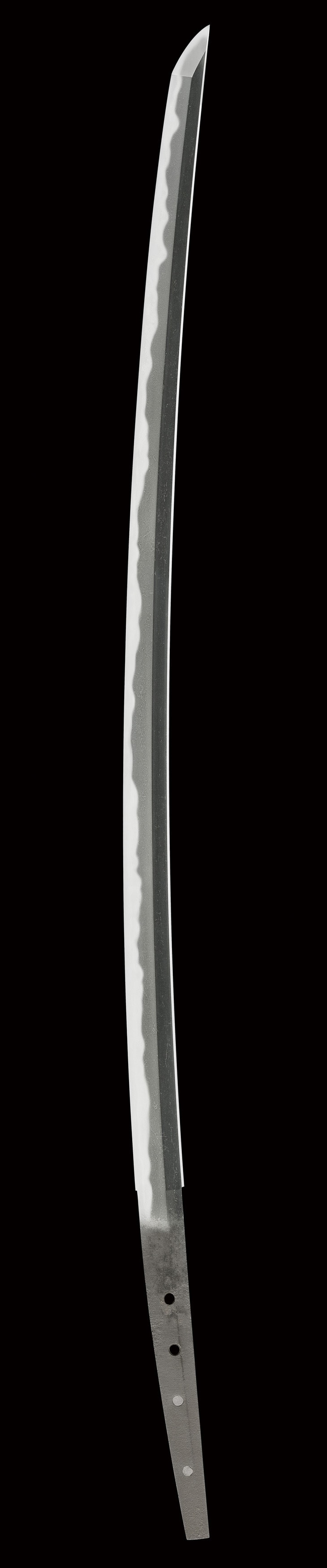
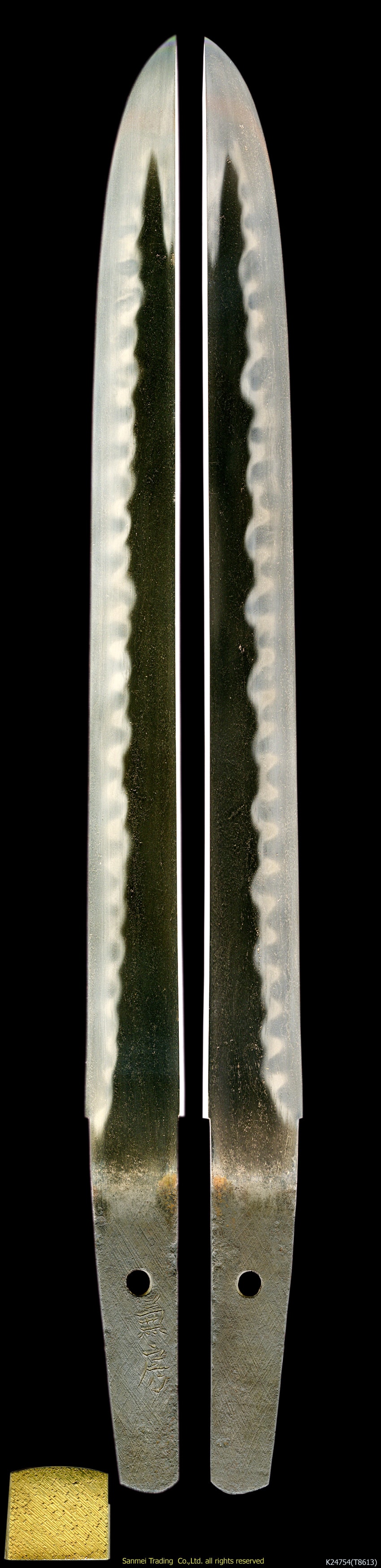
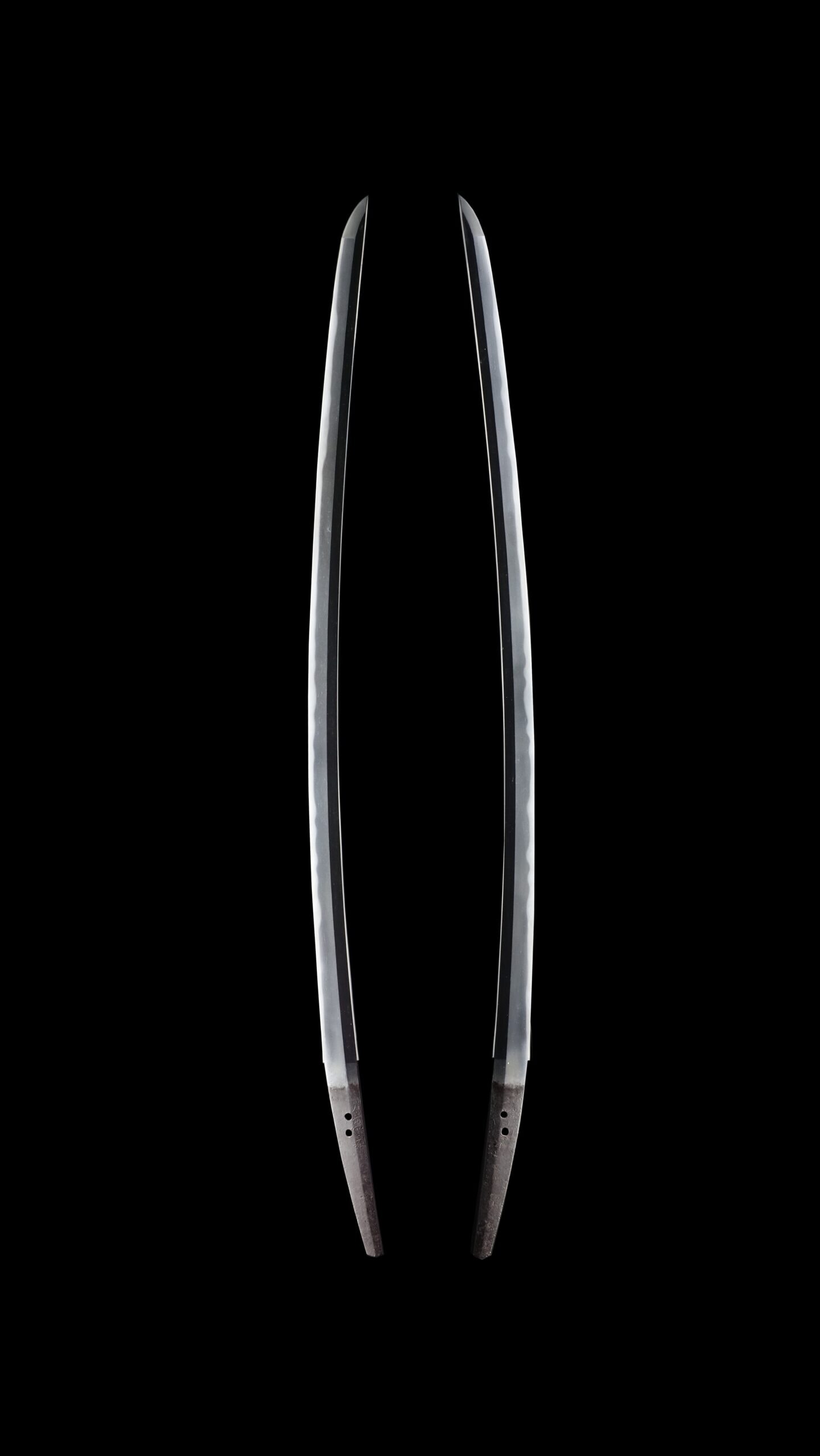
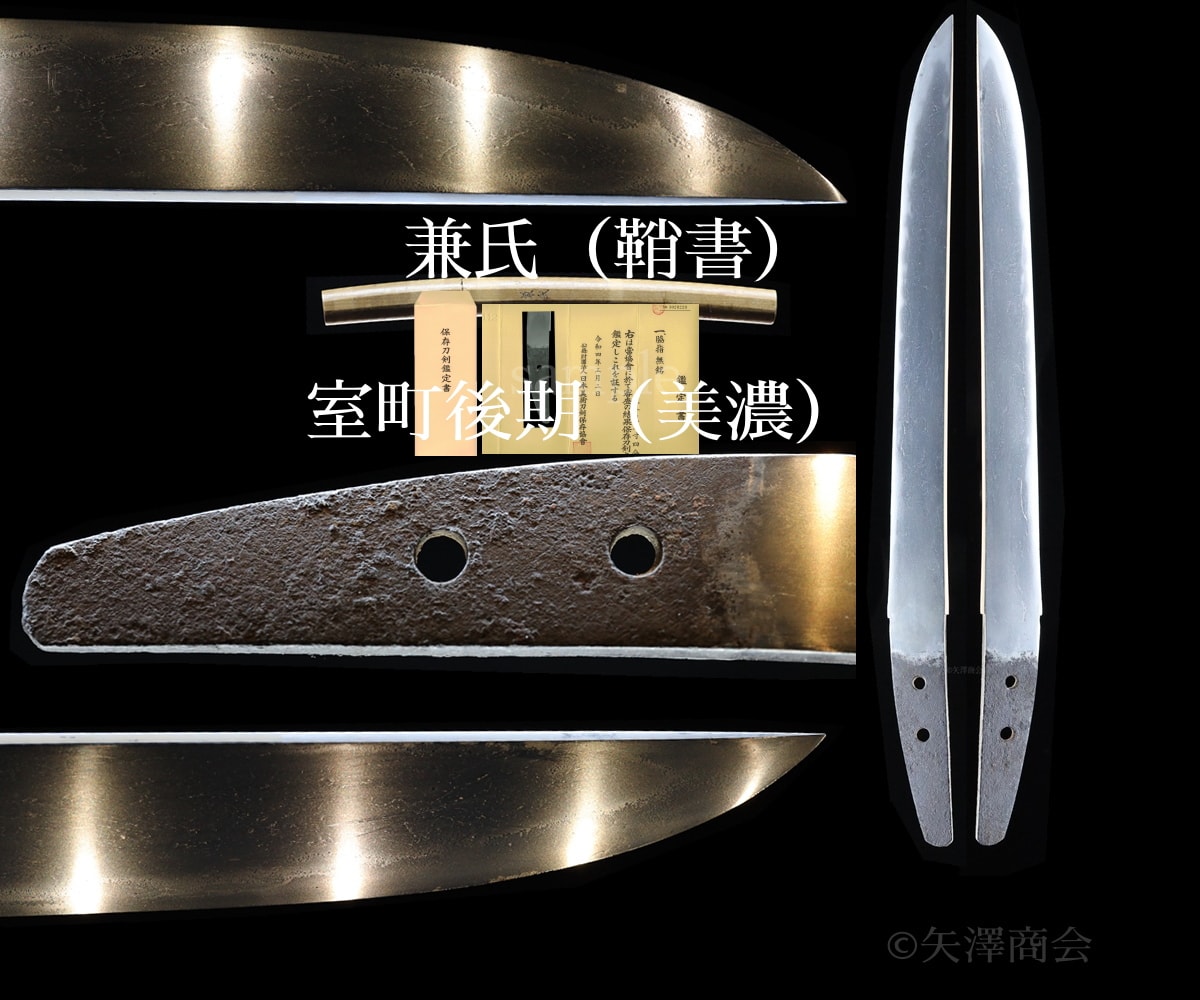
KANEUJI (兼氏), Tensho , (1573), Mino – “Kaneuji” (兼氏), “Kaneuji saku” (兼氏作), “Nōshū-jū Kaneuji” (濃州住兼氏), Akasaka school, according to tradition this Tensho-era Kaneuji was the son or the grandson of a Kaneuji who moved from Naoe to Akasaka, wazamono, chū-jō-sakuAn exquisite late koto blade signed Kaneuji. The Kaneuji line of swordsmiths are famous and date back to the EARLY koto era. They were known to make fine quality swords that cut very well. This sword measures in at 15 5/8′′ . This blade is a beautiful example of a late koto sword with great activity and a wonderful hada covered in ji-nie. The hamon is a vibrant gunome-midare filled with sunagashi, kinsuji and ko-nie abounds. The hada has beautiful thick nioi guchi that is vibrant and bright, loaded with layers of sunagashi. There is an active itame O-mokume mix with flowing itame throughout the blade. Shirrake utsuri can clearly be seen. There is masame in the shinogi-ji. Chikei can be seen all over as well as being peppered with ji-nie. The blade is signed and papered to Kane Uji and given an approximate date of 1573. The longish kissaki has a boshi that is ko-maru finished in hakikake style with kinsuji. The hada has a perfect burl effect and a pleasure to behold. .AN EXCERPT FROM:Yamanaka’s Nihonto Newsletter:General: No specific Mino section which is in the format of the other books. Instead, In Vol II, two issues were dedicated to discussing the specific characteristics of the key schools and smiths. The key smiths and schools are as follows: Kaneuji and his school, Naoe Shizu (Kaneuji’s followers), Kaneshige (worked in Soshu and Mino traditions), Zenjo School (founded by Kaneyoshi who came from Yamato province) , Kanemoto School, Kanesada School (famous 2nd generation “No-sada”), Akasaka Senjuin (Yamato province, Senjuin School, founder is Kuninaga who moved to Mino province, Hachiya School (founded by Kanesada, different kanji than other “No-sada” group.Kaneuji:Hada: Steel grain will show up clearly, much uruoi, ko-mokume with o-hada mixed together, shinogi-ji will have masame, some muneyakiHamon: narrow, worked in nie, small designs of gunome-midare w/nie kuzure, rough nie, inazuma, sunagashi in small places, tagariba mixed in places, midare will be small,Boshi: shallow in midare-komi ending in yakizume or slight kaeri, kaen is seen on some works.Naoe Shizu work resembles the 1st and 2nd Kaneuji work, with hamon becoming wider.The Fuchi-Kashira and tsuba have a bug and floral motif. The mounts are of a very good quality from tsuka to saya. The fuchi / kashira are bug themed with a gold dust like back drop with floral tsuba that beautifully finish the tsuka with an exceptional deep gold tsukaito wrap and brown sageo. The saya is an exquisite sea shell suspended in lacquer with mother of pearl (radon) inlay in the form of bugs. There is a signed kodzuka blade and kodzuka of bug motif also to finish this theme,. The floral motif was often used as a theme for Asian art. Mythological subjects and auspicious symbols were sometimes used as motifs for Japanese sword furniture. Floral motifs could stand alone as designs unto themselves, particularly if they had seasonal or symbolic associations, but they were also used as decorative patterns surrounding or backing more pictorial motifs such as bugs etc. There is a silver foil habaki and seppa.The blade also is mounted in a beautiful older shirasaya trimmed with horn and ivory mekugi ana ringlet. The blade is papered by the NTHK-NPO and is in an exquisite polish. Mei:KaneujiDate:Tensho (1573)Nagasa:15-5/8 inchesSori:9.0 mmWidth at the ha-machi:25.2 mmWidth at the yokote:18.1mmThickness at the mune-machi:5.9 mmConstruction:Shinogi zukuriMune:IoriNakago:UbuKitae:ItameHamon:Midare GunomeBoshi:Kaen/flameCondition:Good polish Subscribe for the Latest Updates!Join our mailing list to receive the latest News & Updates fromNihonto Antiques.SUBSCRIBEYou have Successfully Subscribed!Your email address will be kept private & will only be used to send updates from this site!

NihontoWatch MonNihontoWatch
MarketAuctionsEncyclopedia
刀剣›美濃伝›千手院›美濃千手院›兼氏›KANEUJI WAKAZASHI (fss-780)
脇差NTHK
兼氏

KANEUJI WAKAZASHI (fss-780)

在銘 · Akasaka · 古刀 · 長さ 39.69cm · 反り 0.9cm

売却済
兼氏 — 1 of 6
兼氏 — 2 of 6
兼氏 — 3 of 6
兼氏 — 4 of 6
兼氏 — 5 of 6
兼氏 — 6 of 6
1 / 6
1 / 6
兼氏 — 1 of 6兼氏 — 2 of 6兼氏 — 3 of 6兼氏 — 4 of 6兼氏 — 5 of 6兼氏 — 6 of 6
法量・詳細
刀工
兼氏
種別
脇差
流派
Mino Senjuin
活動期
1573–1592年頃(Tensho)
国
美濃
銘
在銘
法量
長さ 39.69cm反り 0.9cm元幅 2.52cm先幅 1.81cm重ね 0.59cm
説明

KANEUJI (兼氏), Tensho , (1573), Mino – “Kaneuji” (兼氏), “Kaneuji saku” (兼氏作), “Nōshū-jū Kaneuji” (濃州住兼氏), Akasaka school, according to tradition this Tensho-era Kaneuji was the son or the grandson of a Kaneuji who moved from Naoe to Akasaka, wazamono, chū-jō-sakuAn exquisite late koto blade signed Kaneuji. The Kaneuji line of swordsmiths are famous and date back to the EARLY koto era. They were known to make fine quality swords that cut very well. This sword measures in at 15 5/8′′ . This blade is a beautiful example of a late koto sword with great activity and a wonderful hada covered in ji-nie. The hamon is a vibrant gunome-midare filled with sunagashi, kinsuji and ko-nie abounds. The hada has beautiful thick nioi guchi that is vibrant and bright, loaded with layers of sunagashi. There is an active itame O-mokume mix with flowing itame throughout the blade. Shirrake utsuri can clearly be seen. There is masame in the shinogi-ji. Chikei can be seen all over as well as being peppered with ji-nie. The blade is signed and papered to Kane Uji and given an approximate date of 1573. The longish kissaki has a boshi that is ko-maru finished in hakikake style with kinsuji. The hada has a perfect burl effect and a pleasure to behold. .AN EXCERPT FROM:Yamanaka’s Nihonto Newsletter:General: No specific Mino section which is in the format of the other books. Instead, In Vol II, two issues were dedicated to discussing the specific characteristics of the key schools and smiths. The key smiths and schools are as follows: Kaneuji and his school, Naoe Shizu (Kaneuji’s followers), Kaneshige (worked in Soshu and Mino traditions), Zenjo School (founded by Kaneyoshi who came from Yamato province) , Kanemoto School, Kanesada School (famous 2nd generation “No-sada”), Akasaka Senjuin (Yamato province, Senjuin School, founder is Kuninaga who moved to Mino province, Hachiya School (founded by Kanesada, different kanji than other “No-sada” group.Kaneuji:Hada: Steel grain will show up clearly, much uruoi, ko-mokume with o-hada mixed together, shinogi-ji will have masame, some muneyakiHamon: narrow, worked in nie, small designs of gunome-midare w/nie kuzure, rough nie, inazuma, sunagashi in small places, tagariba mixed in places, midare will be small,Boshi: shallow in midare-komi ending in yakizume or slight kaeri, kaen is seen on some works.Naoe Shizu work resembles the 1st and 2nd Kaneuji work, with hamon becoming wider.The Fuchi-Kashira and tsuba have a bug and floral motif. The mounts are of a very good quality from tsuka to saya. The fuchi / kashira are bug themed with a gold dust like back drop with floral tsuba that beautifully finish the tsuka with an exceptional deep gold tsukaito wrap and brown sageo. The saya is an exquisite sea shell suspended in lacquer with mother of pearl (radon) inlay in the form of bugs. There is a signed kodzuka blade and kodzuka of bug motif also to finish this theme,. The floral motif was often used as a theme for Asian art. Mythological subjects and auspicious symbols were sometimes used as motifs for Japanese sword furniture. Floral motifs could stand alone as designs unto themselves, particularly if they had seasonal or symbolic associations, but they were also used as decorative patterns surrounding or backing more pictorial motifs such as bugs etc. There is a silver foil habaki and seppa.The blade also is mounted in a beautiful older shirasaya trimmed with horn and ivory mekugi ana ringlet. The blade is papered by the NTHK-NPO and is in an exquisite polish. Mei:KaneujiDate:Tensho (1573)Nagasa:15-5/8 inchesSori:9.0 mmWidth at the ha-machi:25.2 mmWidth at the yokote:18.1mmThickness at the mune-machi:5.9 mmConstruction:Shinogi zukuriMune:IoriNakago:UbuKitae:ItameHamon:Midare GunomeBoshi:Kaen/flameCondition:Good polish Subscribe for the Latest Updates!Join our mailing list to receive the latest News & Updates fromNihonto Antiques.SUBSCRIBEYou have Successfully Subscribed!Your email address will be kept private & will only be used to send updates from this site!

作者について

兼氏

美濃伝 · 美濃 · 1573-1592頃

藤代 Chu-jo saku · 刀剣大鑑 上位76%

現在1点販売中

›
兼氏の作 1点が現在販売中→
兼氏 — 詳細美濃伝派
流派について

美濃千手院

美濃伝 · 美濃

現在7点販売中

›

美濃千手院は赤坂千手院とも呼ばれ、大和千手院派の流れを汲む一派である。説示によれば、大和千手院の刀工が美濃国赤坂へ移住して興ったもので、その移住期は建武の頃と伝える国重をはじめとして南北朝末葉に及ぶとされ、室町時代に殊に繁栄した。校正古刀銘鑑はこの派の祖を国長とし、貞和頃から延文・永徳を経て明応に至るまで複数の国長がいたことを記す。説示が扱う工には、二字銘の太刀を残す国重、貞治頃と銘鑑にある国行、応安元年紀の短刀を遺す国長、室町の弘長と弘重、さらに後代の道永や道印、康道、ただ千手院とのみ切る者がある。これとは別に、越前敦賀から美濃へ移った越州藤原国行があり、応安六年から翌年八月までの間に濃州入りしたと押形所載の銘から推測されている。 作風は板目に柾がかり、あるいは柾目の強い鍛えに大和の特色が濃く現れる点を共通の語法とする。説示は肌立ちごころとなって地沸がつき、地景が入り、総体に白けごころを帯び、鉄色に黒みのあることを繰り返し記す。刃文は直刃や小のたれを基調に互の目や小乱れを交え、刃縁にほつれや喰違いを見せ、砂流しと金筋がかかって匂口締まりごころに小沸がつく。帽子は乱れ込んで掃きかけ、尖りごころに返るものが多い。一般の関物と比べて大和気質が一段と濃く、刃文の出来に隔たりがあることが見分けの手がかりとされる。越州国行に限っては別の作域を示し、板目に柾を交えて荒めの沸がつき、湯走りや飛焼、棟焼を交えて皆焼状となり、相州伝を思わせる沸出来を強調する。 鑑定の要点は、地鉄に大和の根を残しつつ刃に美濃色への移行を読むことにあり、地刃が他の美濃物と争い難い一致を見せる一方、刃文の傾きで識別される。個名を切る作は頗る少なく、千手院とのみ銘するものが多いため、有銘の国行や国重、国長の作は貴重な資料とされる。代表作には佩表に二字銘を有する国行の太刀、南北朝期の国重の太刀、応安元年紀の国長短刀、弘長と弘重の合作槍、千手院作の大身槍があり、銘鑑や光山押形と銘振りを照合して極めの根拠とする。越州国行の濃州住の在銘作は、移住後の作例として、また細直刃という新たな作域を示す点で資料性が高い。室町後期まで命脈を保ったこの一派は、大和から美濃へ流れた刀工の足跡を地刃に刻む系統として位置づけられる。

6名の刀工指定14口
主要刀工
刀工時代指定
國行1362-13688
道印1469-14870
康道1504-15210
兼氏1492-15010
康繼1532-15550
美濃千手院流派を見る →
NTHK(日本刀剣保存会)鑑定
Kanteishō鑑定書
NTHK Appraisal Certificate
›

NTHKの中心的な鑑定書で、相応の出来を備えた作に発行されます。在銘作は銘の正真を、無銘作は審査員による刀工・流派の極めを示します。点数を記す詳細な審査表が付されます。

NTHKについて›

NTHK(日本刀剣保存会)は、NBTHK(1948年設立)に先立つ1910年に創立された、日本で最も古い刀剣鑑定団体です。長く会を率いた会長の没後、NTHKとNTHK-NPOの二つに分かれ、いずれも審査を続けています。NTHKの鑑定書は、点数と審査員の所見を併記する詳細な審査表が特徴で、特に無銘作の極めに定評があります。

販売店
N
Nihonto Antiques
🇺🇸アメリカから発送
›
✓認証販売店nihontoantiques.com
✓英語対応
返品ポリシー

We offer a 48 hour inspection period for all Antique items shipped within the United States only. If the item is not to your satisfaction, we will gladly refund your money less any shipping and handling fees. All sales are final after the 48 hour inspection period. Please note that all discounted items are a final sale and not returnable.
Nihonto Antiquesの出品一覧を見る→販売店サイトでこの商品を見る→

兼氏の他の作

すべて見る →
矢澤商会
保存
Tanto - Hozon - by Senjuin Kaneuji - 短刀 保存(室町末期 美濃) 鞘書き 兼氏 白鞘入り 刃渡り25.2cm 反り0.1cmTanto - Hozon - by Senjuin Kaneuji - 短刀 保存(室町末期 美濃) 鞘書き 兼氏 白鞘入り 刃渡り25.2cm 反り0.1cm

短刀

作兼氏
25.2cm·室町
¥135,000

兼氏の売約済み

池田美術
Tanto - by Senjuin Kaneuji - 【内外共に美しいお刀】「兼氏」 29.1cm 、鑑賞に・居合・試斬刀として!!!Tanto - by Senjuin Kaneuji - 【内外共に美しいお刀】「兼氏」 29.1cm 、鑑賞に・居合・試斬刀として!!!
売切れ

短刀

作兼氏
29.1cm·Oei (1394-1428)
売却済
池田美術
Wakizashi - by Senjuin Kaneuji - 【研ぎ上がり、時代の風情を感じる一振】「兼氏」53.7cm 、鑑賞に・居合・試斬刀として!!!Wakizashi - by Senjuin Kaneuji - 【研ぎ上がり、時代の風情を感じる一振】「兼氏」53.7cm 、鑑賞に・居合・試斬刀として!!!
売切れ

脇差

作兼氏
53.7cm·桃山
売却済

美濃千手院派の作

すべて見る →
刀剣杉田
特別保存
Wakizashi - Tokuho - by Mino Senjuin School - 無銘(越州國行) (越前)(北陸道)Wakizashi - Tokuho - by Mino Senjuin School - 無銘(越州國行) (越前)(北陸道)

脇差

作美濃千手院派
33.4cm·南北朝
¥780,000
Nihonto Art
保存
Naginata - Hozon - by Mino Senjuin School - 長刀 無銘(兼先)日本美術刀剣保存協会 保存刀剣(兼先)Naginata - Hozon - by Mino Senjuin School - 長刀 無銘(兼先)日本美術刀剣保存協会 保存刀剣(兼先)

薙刀

作美濃千手院派
93.5cm·室町
¥3,450
勝武堂
特別保存
Tanto - Tokuho - by Senjuin Kuniyuki - 短刀 無銘(越州国行) / Tanto Mumei Esshu KuniyukiTanto - Tokuho - by Senjuin Kuniyuki - 短刀 無銘(越州国行) / Tanto Mumei Esshu Kuniyuki

短刀

作國行
26.2cm·Teiji (1362-1368) ND
¥950,000
刀心
保存
Wakizashi - Hozon - by Mino Senjuin School - 無銘(美濃千手院) - Mumei(Mino Senjuin) - 3-870Wakizashi - Hozon - by Mino Senjuin School - 無銘(美濃千手院) - Mumei(Mino Senjuin) - 3-870

脇差

作美濃千手院派
54.8cm·室町
¥385,000
矢澤商会
保存
Wakizashi - Hozon - by Mino Senjuin School - 古刀(室町時代)美濃千手院(赤坂千手院) 刃渡り55.4cm 反り1.5cm 白鞘入りWakizashi - Hozon - by Mino Senjuin School - 古刀(室町時代)美濃千手院(赤坂千手院) 刃渡り55.4cm 反り1.5cm 白鞘入り

脇差

作美濃千手院派
55.4cm·1334
¥200,000
中野古銭
Wakizashi - by Senjuin Kanesumi - D4123 18万円 兼住Wakizashi - by Senjuin Kanesumi - D4123 18万円 兼住

脇差

作兼住
50.4cm·室町
¥180,000

千手院派の作

すべて見る →
葵美術
重要
Katana - Jūyō - by Senjuin - 刀:無銘(千手院)第53回重要刀剣指定Katana - Jūyō - by Senjuin - 刀:無銘(千手院)第53回重要刀剣指定

刀

作千手院
69.4cm·鎌倉
開始価格¥4,000,000
刀剣小町
特別保存
Katana - Tokuho - by Senjuin School - 刀 白鞘入りKatana - Tokuho - by Senjuin School - 刀 白鞘入り

刀

作千手院派
71.4cm·鎌倉
¥880,000
永楽堂
重要
Katana - Jūyō - by Senjuin School - 千手院 刀 重要刀剣Katana - Jūyō - by Senjuin School - 千手院 刀 重要刀剣

刀

作千手院派
69.3cm·鎌倉
¥3,500,000
あやかし堂
特別保存
Ken - Tokuho - by Senjuin School - 剣 千手院Ken - Tokuho - by Senjuin School - 剣 千手院

剣

作千手院派
34.3cm·鎌倉
¥1,800,000
永楽堂
重要
Katana - Jūyō - by Senjuin School - 千手院 刀 重要刀剣Katana - Jūyō - by Senjuin School - 千手院 刀 重要刀剣

刀

作千手院派
71.3cm·鎌倉
¥3,900,000
刀心
重要
Katana - Jūyō - by Senjuin Nobuyoshi - 無銘(龍門) 2-1563Katana - Jūyō - by Senjuin Nobuyoshi - 無銘(龍門) 2-1563

刀

作延吉
69.26cm·鎌倉
お問い合わせ
刀心
特別保存
Tachi - Tokuho - by Senjuin School - 無銘(千手院)- 1-086Tachi - Tokuho - by Senjuin School - 無銘(千手院)- 1-086

太刀

作千手院派
75.67cm·鎌倉
¥3,520,000
刀剣小町
特別保存
Katana - Tokuho - by Senjuin School - 刀 白鞘入りKatana - Tokuho - by Senjuin School - 刀 白鞘入り

刀

作千手院派
66.3cm·南北朝
¥800,000

美濃の伝統

すべて見る →
勝武堂
保存
Katana - Hozon - by Kanemoto - 刀 兼元(孫六) (切付銘)三七郎[神戸信孝]Katana - Hozon - by Kanemoto - 刀 兼元(孫六) (切付銘)三七郎[神戸信孝]

刀

作兼元
70.1cm·Taiei (1521-1528)
¥5,000,000
葵美術
特別保存
Katana - Tokuho - by Yamato Shizu School - 刀:大和志津兼氏(金象嵌銘)本阿弥(花押)(光遜)日本美術刀剣保存協会 特別保存刀剣Katana - Tokuho - by Yamato Shizu School - 刀:大和志津兼氏(金象嵌銘)本阿弥(花押)(光遜)日本美術刀剣保存協会 特別保存刀剣

刀

作大和志津派
69.2cm·南北朝
¥2,300,000
儀平屋
保存
Katana - Hozon - by Zensho Yoshimasa - 保存刀剣 業物 上野大掾源吉正(武蔵・貞亨頃) 二尺三寸六分 打刀拵・白鞘入Katana - Hozon - by Zensho Yoshimasa - 保存刀剣 業物 上野大掾源吉正(武蔵・貞亨頃) 二尺三寸六分 打刀拵・白鞘入

刀

作吉正
71.5cm·江戸
¥530,000
サムライミュージアム
特別保存
Katana - Tokuho - by Seki Daido - 日本刀 刀 銘 陸奥守大道 NBTHK 特別保存刀剣鑑定書附Katana - Tokuho - by Seki Daido - 日本刀 刀 銘 陸奥守大道 NBTHK 特別保存刀剣鑑定書附

刀

作大道
71.9cm·Kanei (1624-1644)
¥12,531
コレクション情報
重要
Katana - Jūyō - by Shizu Kaneuji - 刀 大和志津(無銘)Katana - Jūyō - by Shizu Kaneuji - 刀 大和志津(無銘)

刀

作兼氏
69.5cm·Geno (1319-1321)
¥9,500,000
サムライ商会
特別保存
Katana - Tokuho - by Kanesada School - 刀 野田五郎藤原金定(美濃・元禄頃)Katana - Tokuho - by Kanesada School - 刀 野田五郎藤原金定(美濃・元禄頃)

刀

作兼定派
69.2cm·Bunmei (1469-1487)
¥850,000
刀剣徳川
特別保存
Tanto - Tokuho - by Seki Kanefusa - 兼房作 短刀 黒漆塗鮫皮研出鞘 小刀拵Tanto - Tokuho - by Seki Kanefusa - 兼房作 短刀 黒漆塗鮫皮研出鞘 小刀拵

短刀

作兼房
26.8cm·室町
¥700,000
サムライミュージアム
特別保存
Katana - Tokuho - by Kanemoto - 日本刀 刀 銘 兼元(孫六)日本美術刀剣保存協会 特別保存刀剣鑑定書附Katana - Tokuho - by Kanemoto - 日本刀 刀 銘 兼元(孫六)日本美術刀剣保存協会 特別保存刀剣鑑定書附

刀

作兼元
69.2cm·Taiei (1521-1528)
¥38,556

刀剣

  • 刀
  • 脇差
  • 短刀
  • 太刀
  • 薙刀
  • 槍

刀装具

  • 鍔
  • 縁頭
  • 小柄
  • 目貫

鑑定別

  • 特重
  • 重要
  • 特別保存
  • 保存

リソース

  • 刀剣商一覧
  • 刀工一覧
  • すべて見る
Nihontowatch© 2026
利用規約プライバシーCookie運営者情報

説明

KANEUJI (兼氏), Tensho , (1573), Mino – “Kaneuji” (兼氏), “Kaneuji saku” (兼氏作), “Nōshū-jū Kaneuji” (濃州住兼氏), Akasaka school, according to tradition this Tensho-era Kaneuji was the son or the grandson of a Kaneuji who moved from Naoe to Akasaka, wazamono, chū-jō-sakuAn exquisite late koto blade signed Kaneuji. The Kaneuji line of swordsmiths are famous and date back to the EARLY koto era. They were known to make fine quality swords that cut very well. This sword measures in at 15 5/8′′ . This blade is a beautiful example of a late koto sword with great activity and a wonderful hada covered in ji-nie. The hamon is a vibrant gunome-midare filled with sunagashi, kinsuji and ko-nie abounds. The hada has beautiful thick nioi guchi that is vibrant and bright, loaded with layers of sunagashi. There is an active itame O-mokume mix with flowing itame throughout the blade. Shirrake utsuri can clearly be seen. There is masame in the shinogi-ji. Chikei can be seen all over as well as being peppered with ji-nie. The blade is signed and papered to Kane Uji and given an approximate date of 1573. The longish kissaki has a boshi that is ko-maru finished in hakikake style with kinsuji. The hada has a perfect burl effect and a pleasure to behold. .AN EXCERPT FROM:Yamanaka’s Nihonto Newsletter:General: No specific Mino section which is in the format of the other books. Instead, In Vol II, two issues were dedicated to discussing the specific characteristics of the key schools and smiths. The key smiths and schools are as follows: Kaneuji and his school, Naoe Shizu (Kaneuji’s followers), Kaneshige (worked in Soshu and Mino traditions), Zenjo School (founded by Kaneyoshi who came from Yamato province) , Kanemoto School, Kanesada School (famous 2nd generation “No-sada”), Akasaka Senjuin (Yamato province, Senjuin School, founder is Kuninaga who moved to Mino province, Hachiya School (founded by Kanesada, different kanji than other “No-sada” group.Kaneuji:Hada: Steel grain will show up clearly, much uruoi, ko-mokume with o-hada mixed together, shinogi-ji will have masame, some muneyakiHamon: narrow, worked in nie, small designs of gunome-midare w/nie kuzure, rough nie, inazuma, sunagashi in small places, tagariba mixed in places, midare will be small,Boshi: shallow in midare-komi ending in yakizume or slight kaeri, kaen is seen on some works.Naoe Shizu work resembles the 1st and 2nd Kaneuji work, with hamon becoming wider.The Fuchi-Kashira and tsuba have a bug and floral motif. The mounts are of a very good quality from tsuka to saya. The fuchi / kashira are bug themed with a gold dust like back drop with floral tsuba that beautifully finish the tsuka with an exceptional deep gold tsukaito wrap and brown sageo. The saya is an exquisite sea shell suspended in lacquer with mother of pearl (radon) inlay in the form of bugs. There is a signed kodzuka blade and kodzuka of bug motif also to finish this theme,. The floral motif was often used as a theme for Asian art. Mythological subjects and auspicious symbols were sometimes used as motifs for Japanese sword furniture. Floral motifs could stand alone as designs unto themselves, particularly if they had seasonal or symbolic associations, but they were also used as decorative patterns surrounding or backing more pictorial motifs such as bugs etc. There is a silver foil habaki and seppa.The blade also is mounted in a beautiful older shirasaya trimmed with horn and ivory mekugi ana ringlet. The blade is papered by the NTHK-NPO and is in an exquisite polish. Mei:KaneujiDate:Tensho (1573)Nagasa:15-5/8 inchesSori:9.0 mmWidth at the ha-machi:25.2 mmWidth at the yokote:18.1mmThickness at the mune-machi:5.9 mmConstruction:Shinogi zukuriMune:IoriNakago:UbuKitae:ItameHamon:Midare GunomeBoshi:Kaen/flameCondition:Good polish Subscribe for the Latest Updates!Join our mailing list to receive the latest News & Updates fromNihonto Antiques.SUBSCRIBEYou have Successfully Subscribed!Your email address will be kept private & will only be used to send updates from this site!

NihontoWatch MonNihontoWatch
MarketAuctionsEncyclopedia
刀剣›美濃伝›千手院›美濃千手院›兼氏›KANEUJI WAKAZASHI (fss-780)
脇差NTHK
兼氏

KANEUJI WAKAZASHI (fss-780)

在銘 · Akasaka · 古刀 · 長さ 39.69cm · 反り 0.9cm

売却済
兼氏 — 1 of 6
兼氏 — 2 of 6
兼氏 — 3 of 6
兼氏 — 4 of 6
兼氏 — 5 of 6
兼氏 — 6 of 6
1 / 6
1 / 6
兼氏 — 1 of 6兼氏 — 2 of 6兼氏 — 3 of 6兼氏 — 4 of 6兼氏 — 5 of 6兼氏 — 6 of 6
法量・詳細
刀工
兼氏
種別
脇差
流派
Mino Senjuin
活動期
1573–1592年頃(Tensho)
国
美濃
銘
在銘
法量
長さ 39.69cm反り 0.9cm元幅 2.52cm先幅 1.81cm重ね 0.59cm
説明

KANEUJI (兼氏), Tensho , (1573), Mino – “Kaneuji” (兼氏), “Kaneuji saku” (兼氏作), “Nōshū-jū Kaneuji” (濃州住兼氏), Akasaka school, according to tradition this Tensho-era Kaneuji was the son or the grandson of a Kaneuji who moved from Naoe to Akasaka, wazamono, chū-jō-sakuAn exquisite late koto blade signed Kaneuji. The Kaneuji line of swordsmiths are famous and date back to the EARLY koto era. They were known to make fine quality swords that cut very well. This sword measures in at 15 5/8′′ . This blade is a beautiful example of a late koto sword with great activity and a wonderful hada covered in ji-nie. The hamon is a vibrant gunome-midare filled with sunagashi, kinsuji and ko-nie abounds. The hada has beautiful thick nioi guchi that is vibrant and bright, loaded with layers of sunagashi. There is an active itame O-mokume mix with flowing itame throughout the blade. Shirrake utsuri can clearly be seen. There is masame in the shinogi-ji. Chikei can be seen all over as well as being peppered with ji-nie. The blade is signed and papered to Kane Uji and given an approximate date of 1573. The longish kissaki has a boshi that is ko-maru finished in hakikake style with kinsuji. The hada has a perfect burl effect and a pleasure to behold. .AN EXCERPT FROM:Yamanaka’s Nihonto Newsletter:General: No specific Mino section which is in the format of the other books. Instead, In Vol II, two issues were dedicated to discussing the specific characteristics of the key schools and smiths. The key smiths and schools are as follows: Kaneuji and his school, Naoe Shizu (Kaneuji’s followers), Kaneshige (worked in Soshu and Mino traditions), Zenjo School (founded by Kaneyoshi who came from Yamato province) , Kanemoto School, Kanesada School (famous 2nd generation “No-sada”), Akasaka Senjuin (Yamato province, Senjuin School, founder is Kuninaga who moved to Mino province, Hachiya School (founded by Kanesada, different kanji than other “No-sada” group.Kaneuji:Hada: Steel grain will show up clearly, much uruoi, ko-mokume with o-hada mixed together, shinogi-ji will have masame, some muneyakiHamon: narrow, worked in nie, small designs of gunome-midare w/nie kuzure, rough nie, inazuma, sunagashi in small places, tagariba mixed in places, midare will be small,Boshi: shallow in midare-komi ending in yakizume or slight kaeri, kaen is seen on some works.Naoe Shizu work resembles the 1st and 2nd Kaneuji work, with hamon becoming wider.The Fuchi-Kashira and tsuba have a bug and floral motif. The mounts are of a very good quality from tsuka to saya. The fuchi / kashira are bug themed with a gold dust like back drop with floral tsuba that beautifully finish the tsuka with an exceptional deep gold tsukaito wrap and brown sageo. The saya is an exquisite sea shell suspended in lacquer with mother of pearl (radon) inlay in the form of bugs. There is a signed kodzuka blade and kodzuka of bug motif also to finish this theme,. The floral motif was often used as a theme for Asian art. Mythological subjects and auspicious symbols were sometimes used as motifs for Japanese sword furniture. Floral motifs could stand alone as designs unto themselves, particularly if they had seasonal or symbolic associations, but they were also used as decorative patterns surrounding or backing more pictorial motifs such as bugs etc. There is a silver foil habaki and seppa.The blade also is mounted in a beautiful older shirasaya trimmed with horn and ivory mekugi ana ringlet. The blade is papered by the NTHK-NPO and is in an exquisite polish. Mei:KaneujiDate:Tensho (1573)Nagasa:15-5/8 inchesSori:9.0 mmWidth at the ha-machi:25.2 mmWidth at the yokote:18.1mmThickness at the mune-machi:5.9 mmConstruction:Shinogi zukuriMune:IoriNakago:UbuKitae:ItameHamon:Midare GunomeBoshi:Kaen/flameCondition:Good polish Subscribe for the Latest Updates!Join our mailing list to receive the latest News & Updates fromNihonto Antiques.SUBSCRIBEYou have Successfully Subscribed!Your email address will be kept private & will only be used to send updates from this site!

作者について

兼氏

美濃伝 · 美濃 · 1573-1592頃

藤代 Chu-jo saku · 刀剣大鑑 上位76%

現在1点販売中

›
兼氏の作 1点が現在販売中→
兼氏 — 詳細美濃伝派
流派について

美濃千手院

美濃伝 · 美濃

現在7点販売中

›

美濃千手院は赤坂千手院とも呼ばれ、大和千手院派の流れを汲む一派である。説示によれば、大和千手院の刀工が美濃国赤坂へ移住して興ったもので、その移住期は建武の頃と伝える国重をはじめとして南北朝末葉に及ぶとされ、室町時代に殊に繁栄した。校正古刀銘鑑はこの派の祖を国長とし、貞和頃から延文・永徳を経て明応に至るまで複数の国長がいたことを記す。説示が扱う工には、二字銘の太刀を残す国重、貞治頃と銘鑑にある国行、応安元年紀の短刀を遺す国長、室町の弘長と弘重、さらに後代の道永や道印、康道、ただ千手院とのみ切る者がある。これとは別に、越前敦賀から美濃へ移った越州藤原国行があり、応安六年から翌年八月までの間に濃州入りしたと押形所載の銘から推測されている。 作風は板目に柾がかり、あるいは柾目の強い鍛えに大和の特色が濃く現れる点を共通の語法とする。説示は肌立ちごころとなって地沸がつき、地景が入り、総体に白けごころを帯び、鉄色に黒みのあることを繰り返し記す。刃文は直刃や小のたれを基調に互の目や小乱れを交え、刃縁にほつれや喰違いを見せ、砂流しと金筋がかかって匂口締まりごころに小沸がつく。帽子は乱れ込んで掃きかけ、尖りごころに返るものが多い。一般の関物と比べて大和気質が一段と濃く、刃文の出来に隔たりがあることが見分けの手がかりとされる。越州国行に限っては別の作域を示し、板目に柾を交えて荒めの沸がつき、湯走りや飛焼、棟焼を交えて皆焼状となり、相州伝を思わせる沸出来を強調する。 鑑定の要点は、地鉄に大和の根を残しつつ刃に美濃色への移行を読むことにあり、地刃が他の美濃物と争い難い一致を見せる一方、刃文の傾きで識別される。個名を切る作は頗る少なく、千手院とのみ銘するものが多いため、有銘の国行や国重、国長の作は貴重な資料とされる。代表作には佩表に二字銘を有する国行の太刀、南北朝期の国重の太刀、応安元年紀の国長短刀、弘長と弘重の合作槍、千手院作の大身槍があり、銘鑑や光山押形と銘振りを照合して極めの根拠とする。越州国行の濃州住の在銘作は、移住後の作例として、また細直刃という新たな作域を示す点で資料性が高い。室町後期まで命脈を保ったこの一派は、大和から美濃へ流れた刀工の足跡を地刃に刻む系統として位置づけられる。

6名の刀工指定14口
主要刀工
刀工時代指定
國行1362-13688
道印1469-14870
康道1504-15210
兼氏1492-15010
康繼1532-15550
美濃千手院流派を見る →
NTHK(日本刀剣保存会)鑑定
Kanteishō鑑定書
NTHK Appraisal Certificate
›

NTHKの中心的な鑑定書で、相応の出来を備えた作に発行されます。在銘作は銘の正真を、無銘作は審査員による刀工・流派の極めを示します。点数を記す詳細な審査表が付されます。

NTHKについて›

NTHK(日本刀剣保存会)は、NBTHK(1948年設立)に先立つ1910年に創立された、日本で最も古い刀剣鑑定団体です。長く会を率いた会長の没後、NTHKとNTHK-NPOの二つに分かれ、いずれも審査を続けています。NTHKの鑑定書は、点数と審査員の所見を併記する詳細な審査表が特徴で、特に無銘作の極めに定評があります。

販売店
N
Nihonto Antiques
🇺🇸アメリカから発送
›
✓認証販売店nihontoantiques.com
✓英語対応
返品ポリシー

We offer a 48 hour inspection period for all Antique items shipped within the United States only. If the item is not to your satisfaction, we will gladly refund your money less any shipping and handling fees. All sales are final after the 48 hour inspection period. Please note that all discounted items are a final sale and not returnable.

Nihonto Antiquesの出品一覧を見る→販売店サイトでこの商品を見る→

兼氏の他の作

すべて見る →
矢澤商会
保存
Tanto - Hozon - by Senjuin Kaneuji - 短刀 保存(室町末期 美濃) 鞘書き 兼氏 白鞘入り 刃渡り25.2cm 反り0.1cmTanto - Hozon - by Senjuin Kaneuji - 短刀 保存(室町末期 美濃) 鞘書き 兼氏 白鞘入り 刃渡り25.2cm 反り0.1cm

短刀

作兼氏
25.2cm·室町
¥135,000

兼氏の売約済み

池田美術
Tanto - by Senjuin Kaneuji - 【内外共に美しいお刀】「兼氏」 29.1cm 、鑑賞に・居合・試斬刀として!!!Tanto - by Senjuin Kaneuji - 【内外共に美しいお刀】「兼氏」 29.1cm 、鑑賞に・居合・試斬刀として!!!
売切れ

短刀

作兼氏
29.1cm·Oei (1394-1428)
売却済
池田美術
Wakizashi - by Senjuin Kaneuji - 【研ぎ上がり、時代の風情を感じる一振】「兼氏」53.7cm 、鑑賞に・居合・試斬刀として!!!Wakizashi - by Senjuin Kaneuji - 【研ぎ上がり、時代の風情を感じる一振】「兼氏」53.7cm 、鑑賞に・居合・試斬刀として!!!
売切れ

脇差

作兼氏
53.7cm·桃山
売却済

美濃千手院派の作

すべて見る →
刀剣杉田
特別保存
Wakizashi - Tokuho - by Mino Senjuin School - 無銘(越州國行) (越前)(北陸道)Wakizashi - Tokuho - by Mino Senjuin School - 無銘(越州國行) (越前)(北陸道)

脇差

作美濃千手院派
33.4cm·南北朝
¥780,000
Nihonto Art
保存
Naginata - Hozon - by Mino Senjuin School - 長刀 無銘(兼先)日本美術刀剣保存協会 保存刀剣(兼先)Naginata - Hozon - by Mino Senjuin School - 長刀 無銘(兼先)日本美術刀剣保存協会 保存刀剣(兼先)

薙刀

作美濃千手院派
93.5cm·室町
¥3,450
勝武堂
特別保存
Tanto - Tokuho - by Senjuin Kuniyuki - 短刀 無銘(越州国行) / Tanto Mumei Esshu KuniyukiTanto - Tokuho - by Senjuin Kuniyuki - 短刀 無銘(越州国行) / Tanto Mumei Esshu Kuniyuki

短刀

作國行
26.2cm·Teiji (1362-1368) ND
¥950,000
刀心
保存
Wakizashi - Hozon - by Mino Senjuin School - 無銘(美濃千手院) - Mumei(Mino Senjuin) - 3-870Wakizashi - Hozon - by Mino Senjuin School - 無銘(美濃千手院) - Mumei(Mino Senjuin) - 3-870

脇差

作美濃千手院派
54.8cm·室町
¥385,000
矢澤商会
保存
Wakizashi - Hozon - by Mino Senjuin School - 古刀(室町時代)美濃千手院(赤坂千手院) 刃渡り55.4cm 反り1.5cm 白鞘入りWakizashi - Hozon - by Mino Senjuin School - 古刀(室町時代)美濃千手院(赤坂千手院) 刃渡り55.4cm 反り1.5cm 白鞘入り

脇差

作美濃千手院派
55.4cm·1334
¥200,000
中野古銭
Wakizashi - by Senjuin Kanesumi - D4123 18万円 兼住Wakizashi - by Senjuin Kanesumi - D4123 18万円 兼住

脇差

作兼住
50.4cm·室町
¥180,000

千手院派の作

すべて見る →
葵美術
重要
Katana - Jūyō - by Senjuin - 刀:無銘(千手院)第53回重要刀剣指定Katana - Jūyō - by Senjuin - 刀:無銘(千手院)第53回重要刀剣指定

刀

作千手院
69.4cm·鎌倉
開始価格¥4,000,000
刀剣小町
特別保存
Katana - Tokuho - by Senjuin School - 刀 白鞘入りKatana - Tokuho - by Senjuin School - 刀 白鞘入り

刀

作千手院派
71.4cm·鎌倉
¥880,000
永楽堂
重要
Katana - Jūyō - by Senjuin School - 千手院 刀 重要刀剣Katana - Jūyō - by Senjuin School - 千手院 刀 重要刀剣

刀

作千手院派
69.3cm·鎌倉
¥3,500,000
あやかし堂
特別保存
Ken - Tokuho - by Senjuin School - 剣 千手院Ken - Tokuho - by Senjuin School - 剣 千手院

剣

作千手院派
34.3cm·鎌倉
¥1,800,000
永楽堂
重要
Katana - Jūyō - by Senjuin School - 千手院 刀 重要刀剣Katana - Jūyō - by Senjuin School - 千手院 刀 重要刀剣

刀

作千手院派
71.3cm·鎌倉
¥3,900,000
刀心
重要
Katana - Jūyō - by Senjuin Nobuyoshi - 無銘(龍門) 2-1563Katana - Jūyō - by Senjuin Nobuyoshi - 無銘(龍門) 2-1563

刀

作延吉
69.26cm·鎌倉
お問い合わせ
刀心
特別保存
Tachi - Tokuho - by Senjuin School - 無銘(千手院)- 1-086Tachi - Tokuho - by Senjuin School - 無銘(千手院)- 1-086

太刀

作千手院派
75.67cm·鎌倉
¥3,520,000
刀剣小町
特別保存
Katana - Tokuho - by Senjuin School - 刀 白鞘入りKatana - Tokuho - by Senjuin School - 刀 白鞘入り

刀

作千手院派
66.3cm·南北朝
¥800,000

美濃の伝統

すべて見る →
勝武堂
保存
Katana - Hozon - by Kanemoto - 刀 兼元(孫六) (切付銘)三七郎[神戸信孝]Katana - Hozon - by Kanemoto - 刀 兼元(孫六) (切付銘)三七郎[神戸信孝]

刀

作兼元
70.1cm·Taiei (1521-1528)
¥5,000,000
葵美術
特別保存
Katana - Tokuho - by Yamato Shizu School - 刀:大和志津兼氏(金象嵌銘)本阿弥(花押)(光遜)日本美術刀剣保存協会 特別保存刀剣Katana - Tokuho - by Yamato Shizu School - 刀:大和志津兼氏(金象嵌銘)本阿弥(花押)(光遜)日本美術刀剣保存協会 特別保存刀剣

刀

作大和志津派
69.2cm·南北朝
¥2,300,000
儀平屋
保存
Katana - Hozon - by Zensho Yoshimasa - 保存刀剣 業物 上野大掾源吉正(武蔵・貞亨頃) 二尺三寸六分 打刀拵・白鞘入Katana - Hozon - by Zensho Yoshimasa - 保存刀剣 業物 上野大掾源吉正(武蔵・貞亨頃) 二尺三寸六分 打刀拵・白鞘入

刀

作吉正
71.5cm·江戸
¥530,000
サムライミュージアム
特別保存
Katana - Tokuho - by Seki Daido - 日本刀 刀 銘 陸奥守大道 NBTHK 特別保存刀剣鑑定書附Katana - Tokuho - by Seki Daido - 日本刀 刀 銘 陸奥守大道 NBTHK 特別保存刀剣鑑定書附

刀

作大道
71.9cm·Kanei (1624-1644)
¥12,531
コレクション情報
重要
Katana - Jūyō - by Shizu Kaneuji - 刀 大和志津(無銘)Katana - Jūyō - by Shizu Kaneuji - 刀 大和志津(無銘)

刀

作兼氏
69.5cm·Geno (1319-1321)
¥9,500,000
サムライ商会
特別保存
Katana - Tokuho - by Kanesada School - 刀 野田五郎藤原金定(美濃・元禄頃)Katana - Tokuho - by Kanesada School - 刀 野田五郎藤原金定(美濃・元禄頃)

刀

作兼定派
69.2cm·Bunmei (1469-1487)
¥850,000
刀剣徳川
特別保存
Tanto - Tokuho - by Seki Kanefusa - 兼房作 短刀 黒漆塗鮫皮研出鞘 小刀拵Tanto - Tokuho - by Seki Kanefusa - 兼房作 短刀 黒漆塗鮫皮研出鞘 小刀拵

短刀

作兼房
26.8cm·室町
¥700,000
サムライミュージアム
特別保存
Katana - Tokuho - by Kanemoto - 日本刀 刀 銘 兼元(孫六)日本美術刀剣保存協会 特別保存刀剣鑑定書附Katana - Tokuho - by Kanemoto - 日本刀 刀 銘 兼元(孫六)日本美術刀剣保存協会 特別保存刀剣鑑定書附

刀

作兼元
69.2cm·Taiei (1521-1528)
¥38,556

刀剣

  • 刀
  • 脇差
  • 短刀
  • 太刀
  • 薙刀
  • 槍

刀装具

  • 鍔
  • 縁頭
  • 小柄
  • 目貫

鑑定別

  • 特重
  • 重要
  • 特別保存
  • 保存

リソース

  • 刀剣商一覧
  • 刀工一覧
  • すべて見る
Nihontowatch© 2026
利用規約プライバシーCookie運営者情報
NihontoWatch Mon

NihontoWatch

マーケットオークション
事典
NihontoWatch Mon

NihontoWatch

マーケットオークション
事典