大和五派は奈良の大寺の影で育った。手掻の名は東大寺転害門に由来する。柾目と静かな直刃の厳格は寺の美学であり、後世はまさにその節度を賞美してきた。
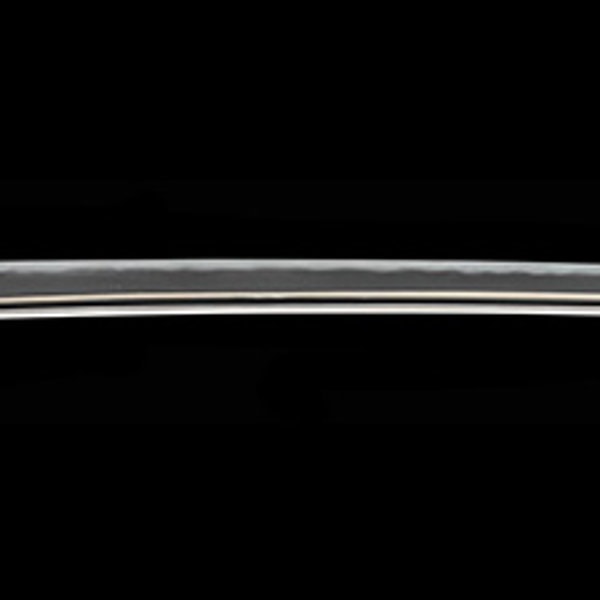
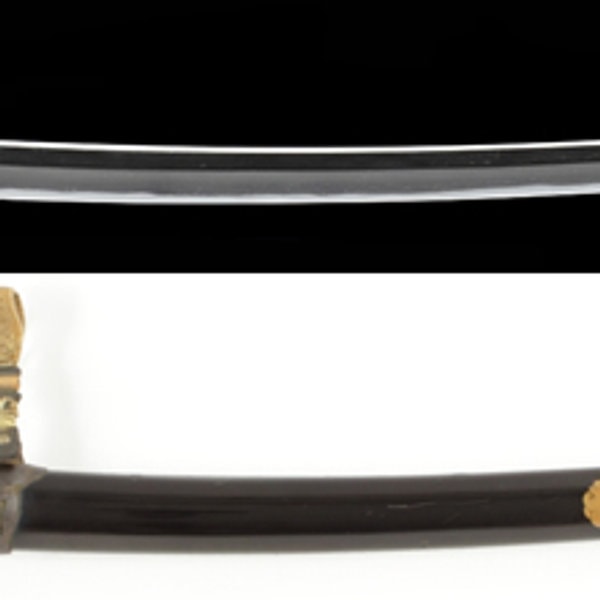
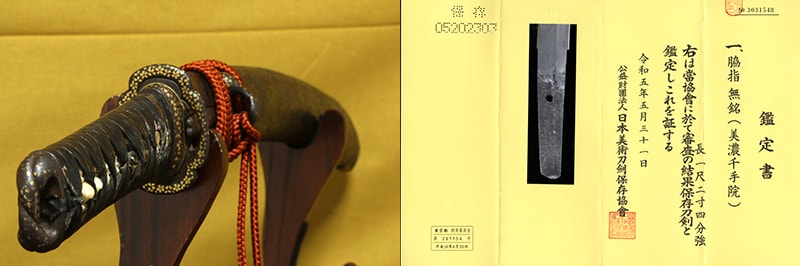
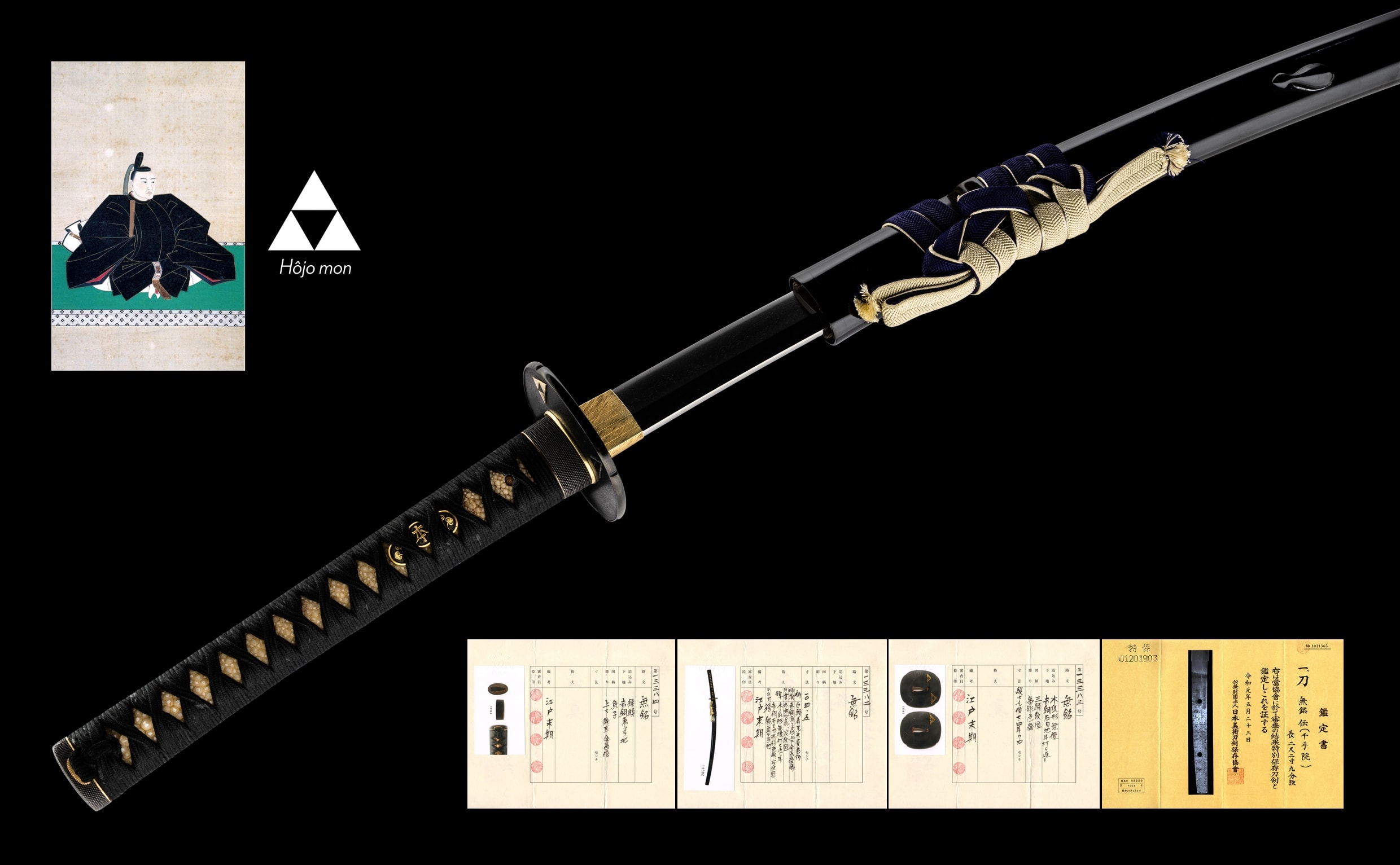
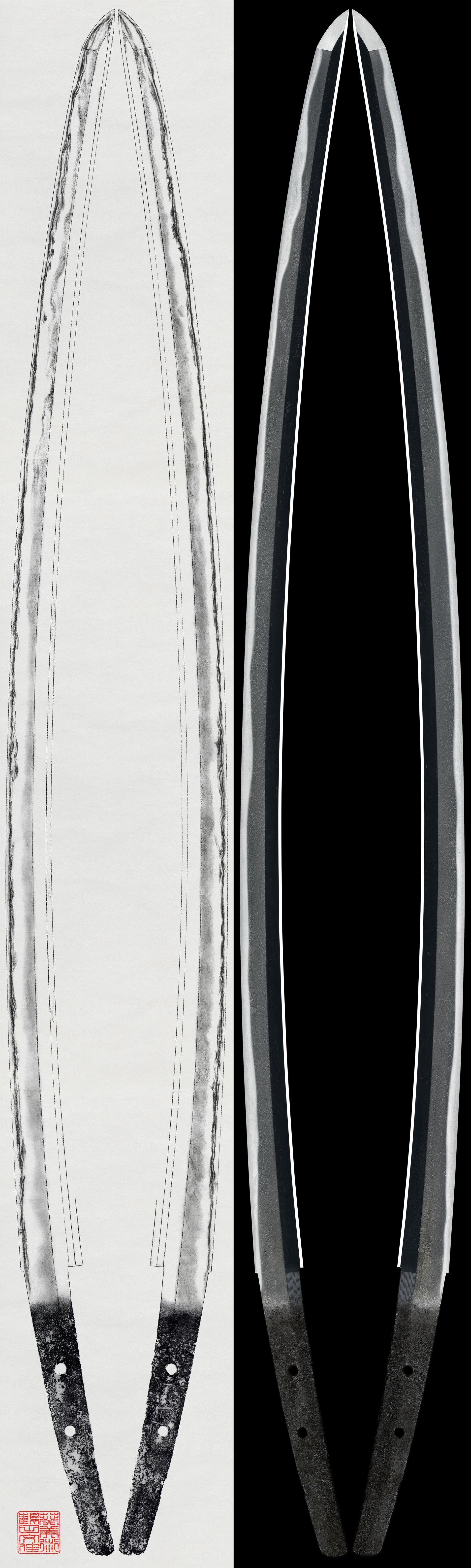
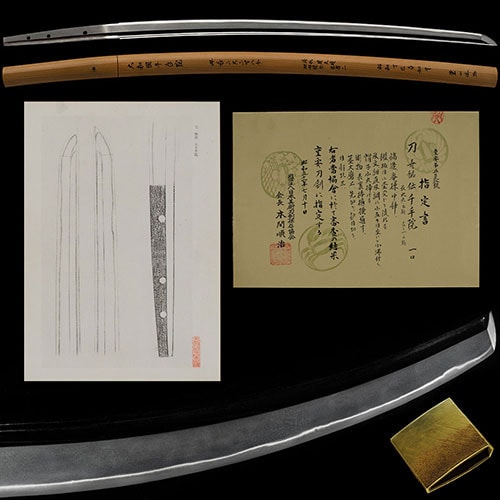
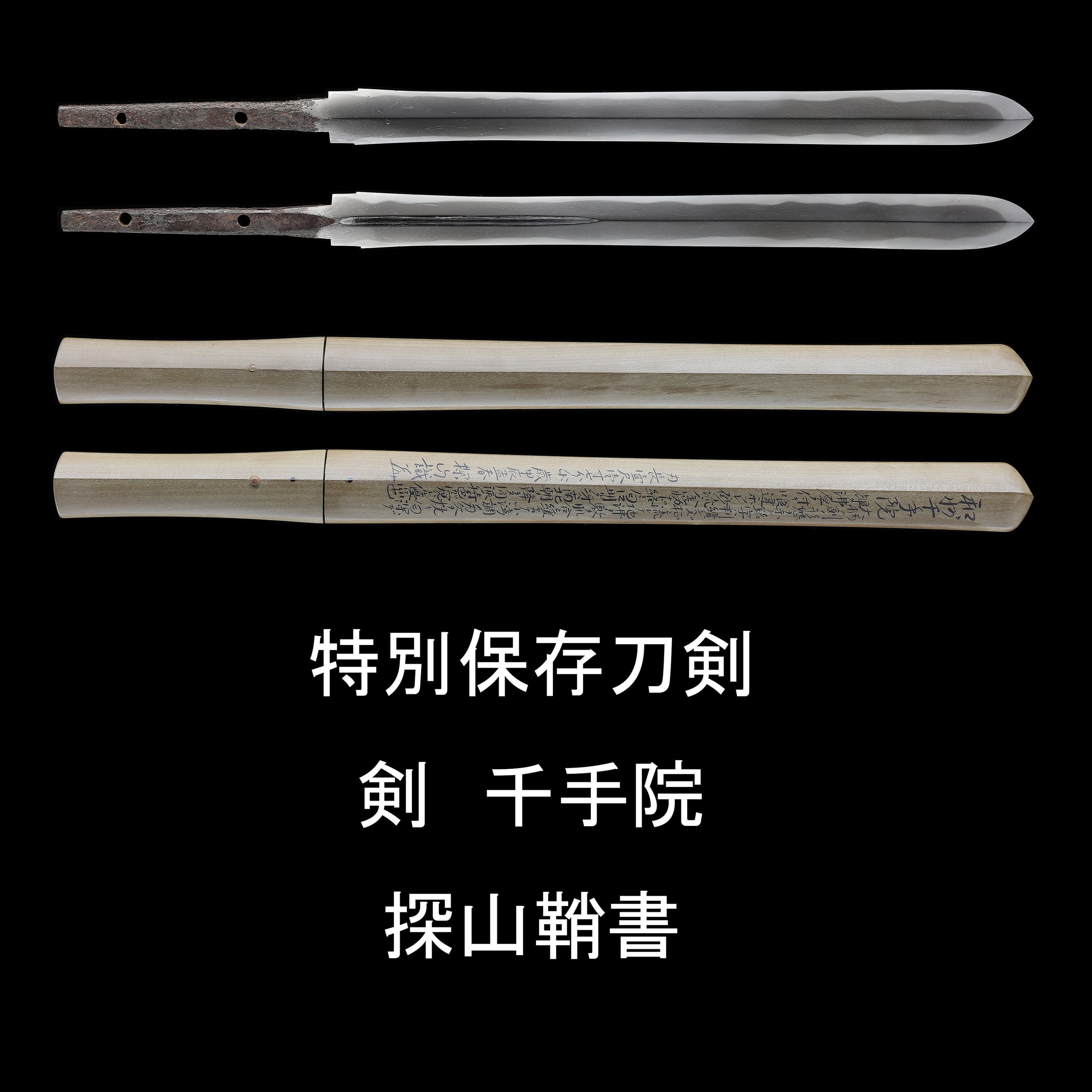
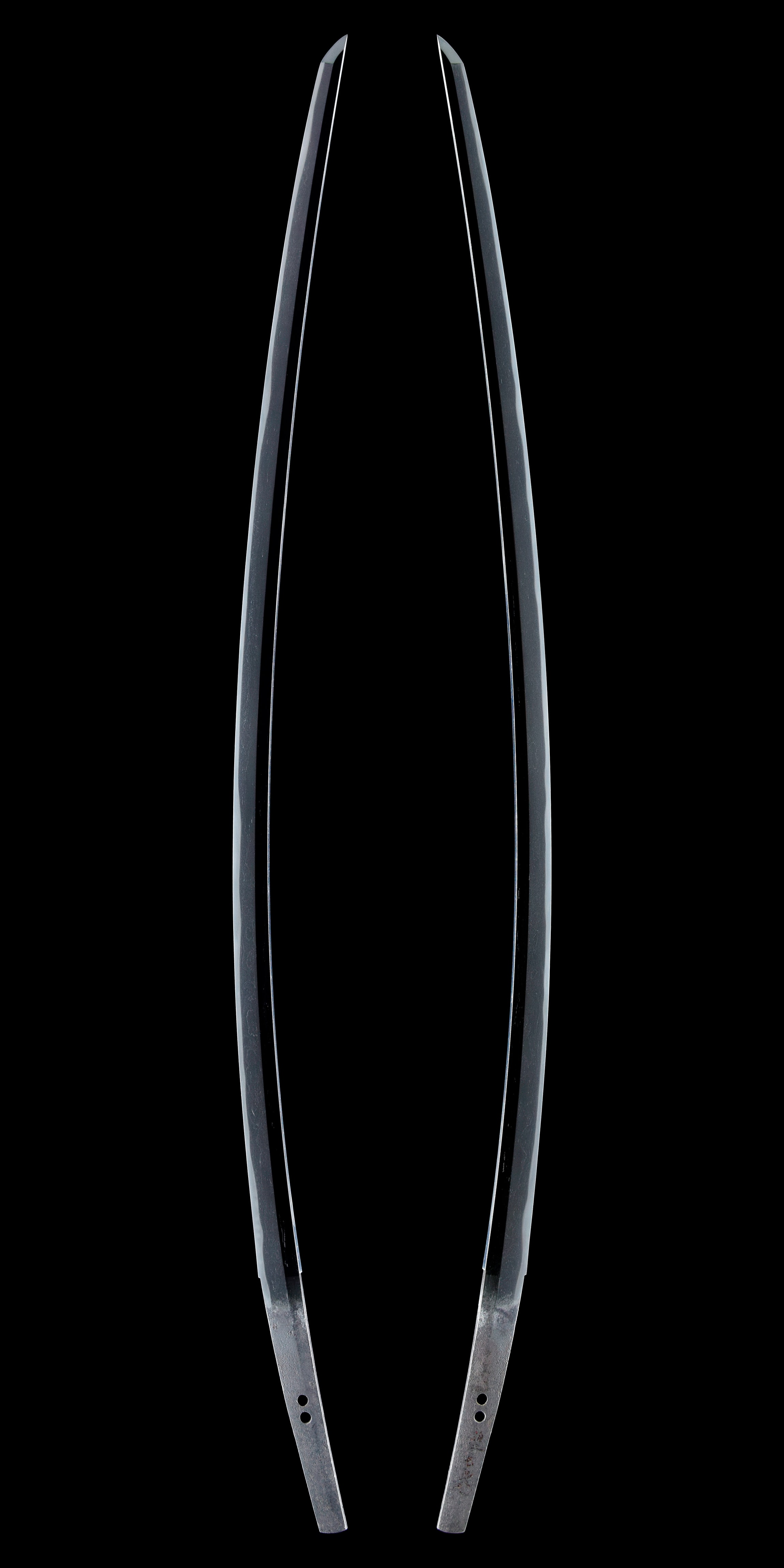
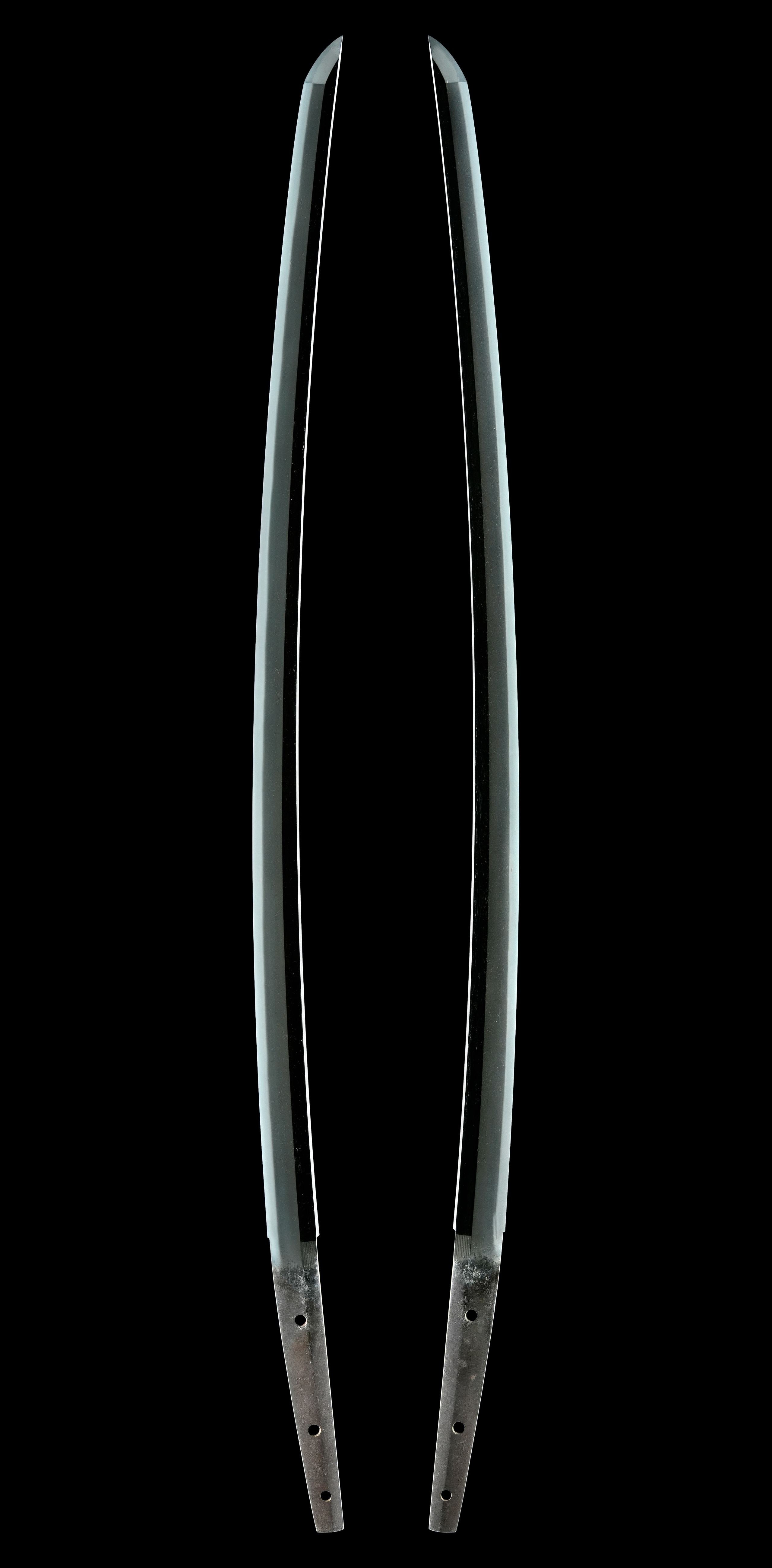
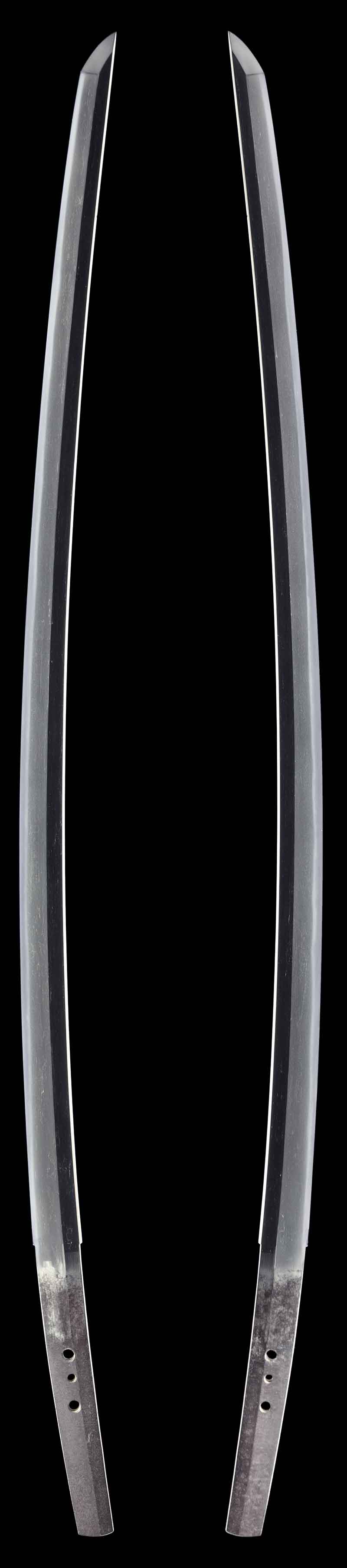
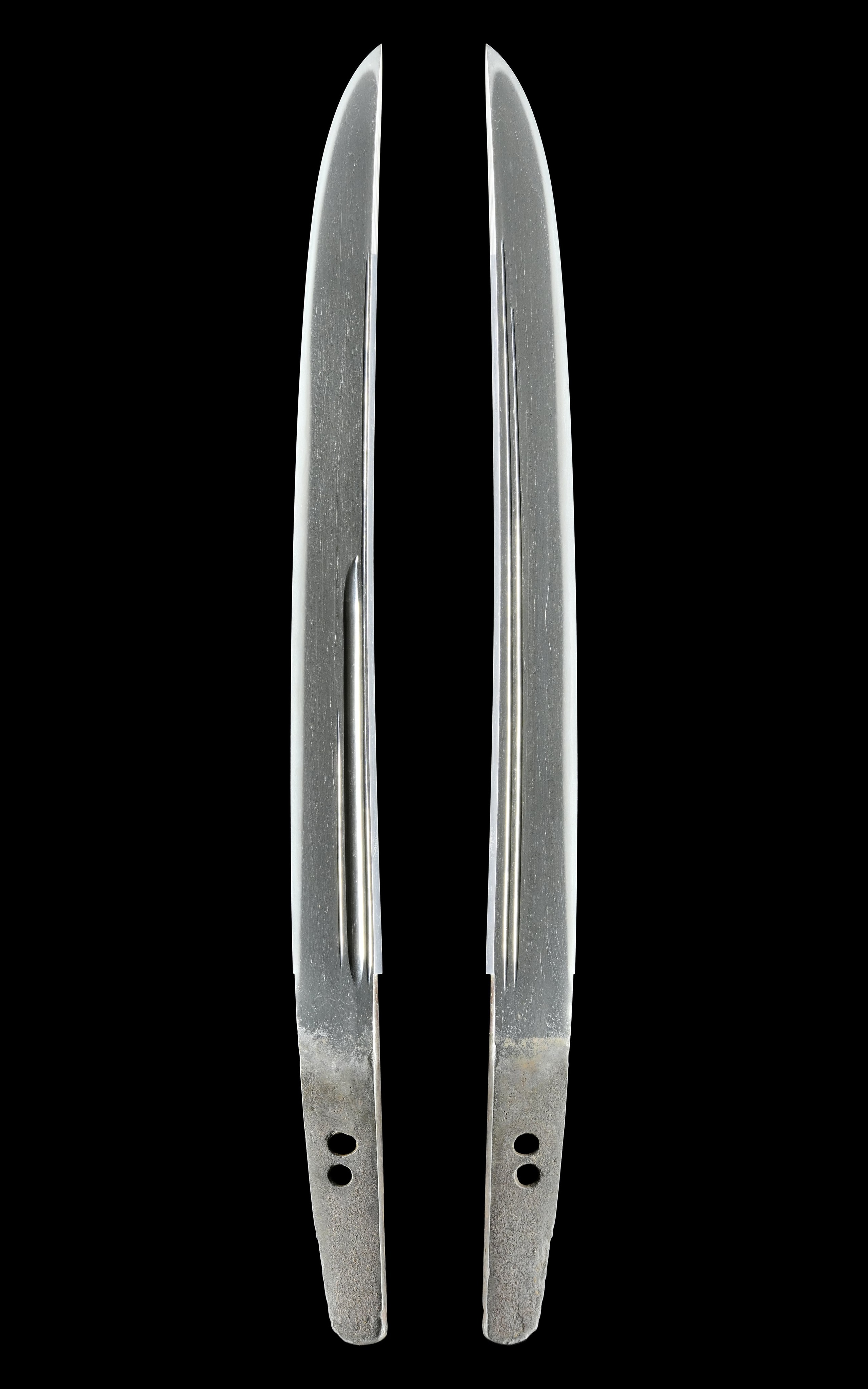
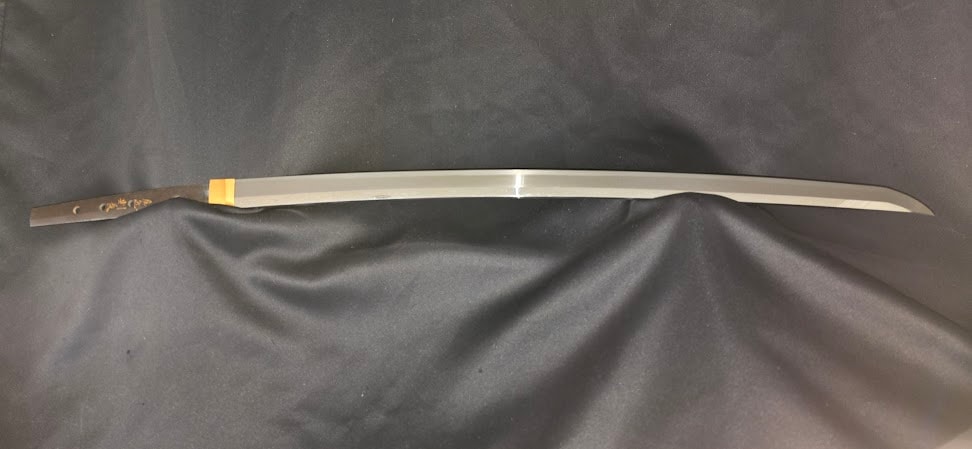
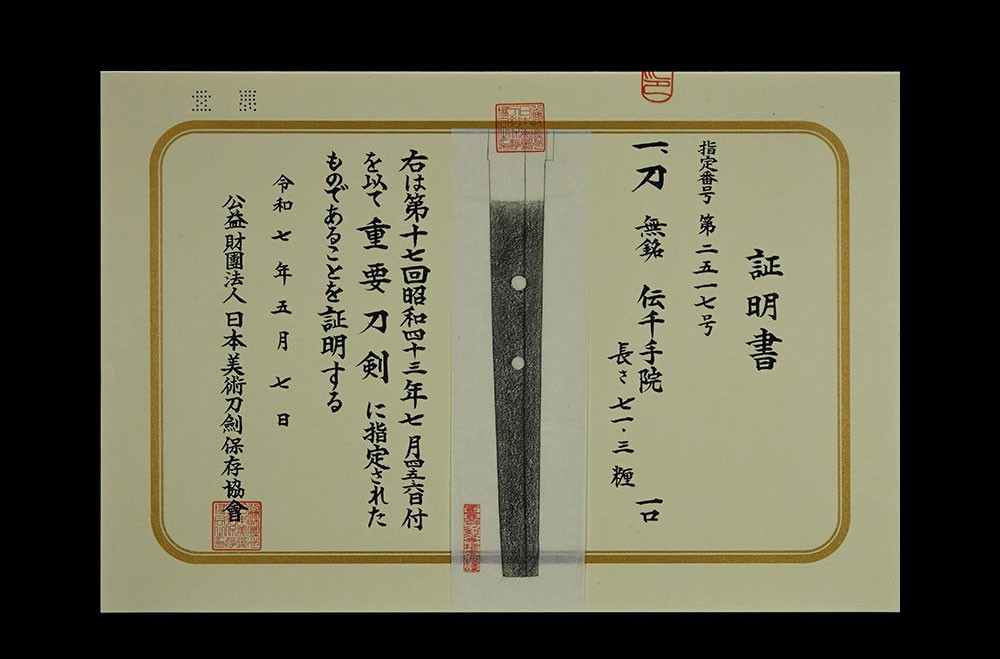
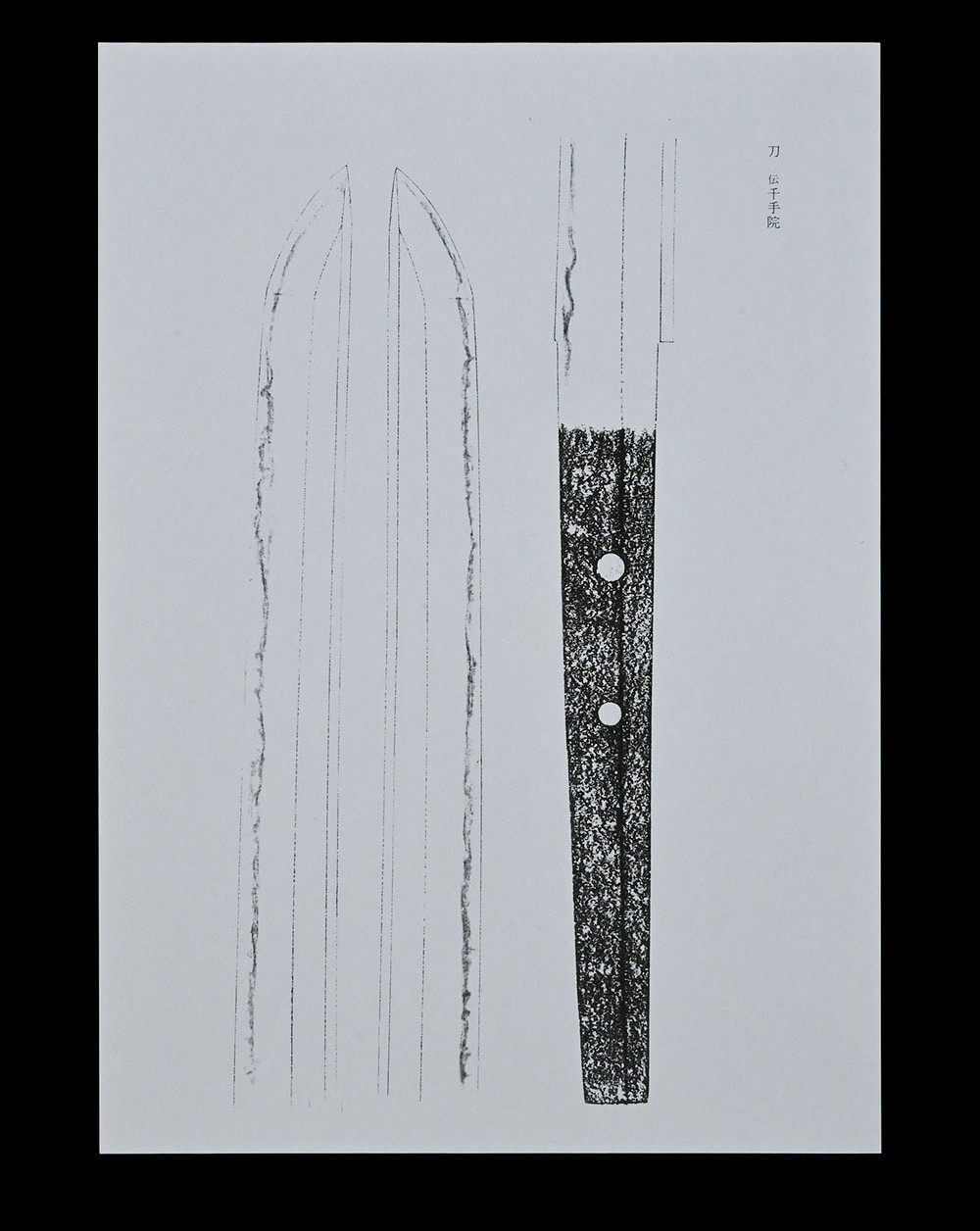
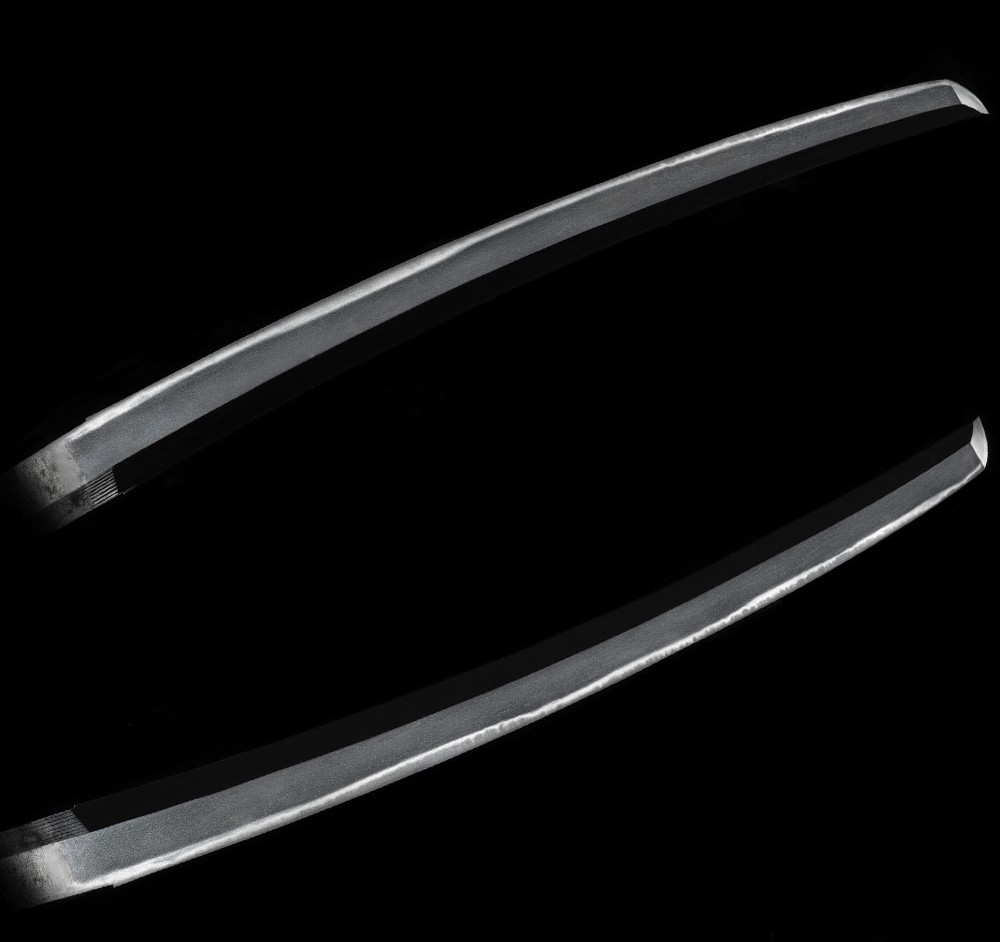
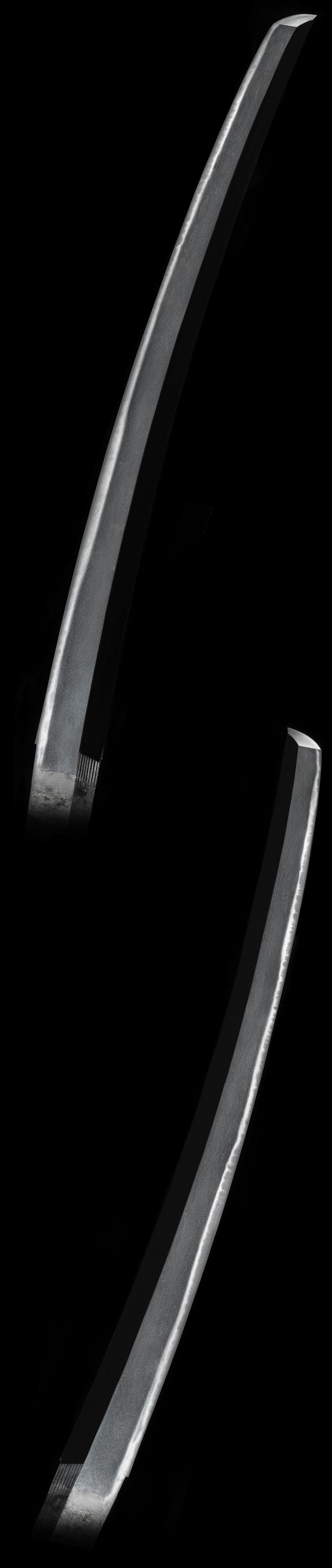
千手院派は、平安時代後期に興ったとされる大和最古の流派で、大和国奈良の東大寺に隷属する僧形の承仕法師が、もっぱら東大寺の僧兵の為に鍛刀をしていた。若草山麓の千手谷に鍛冶場があり、同地に千手観音を本尊とする千手院堂があり、その名が付いたと云う。この刀は、身幅広く、鎬高く、反りやや浅く、腰反りつき、中鋒となる鎌倉時代の姿で、柾目肌つみ、地沸厚く付き、地景入り、黒く冴えた美しい地鉄に、直刃調に、のたれて、小互の目交じり、二十刃掛り、小足頻りに入り、沸よくつき、輝く大小の沸が深くよくつき、金筋・沸筋掛り、匂口明るく冴える傑作である。指定書は紛失のため、証明証となります。
大磨上無銘の刀で、鎬が高く、幅の広い鎬造込みがかって地沸のよくついた地がね、直刃に互の目の交ったほつれて沸のついた刃文などすべて大和気質を強く示している。こうした作風は千手院派の作に最も多く見るところであり、鎌倉末期の作である。
 NihontoWatch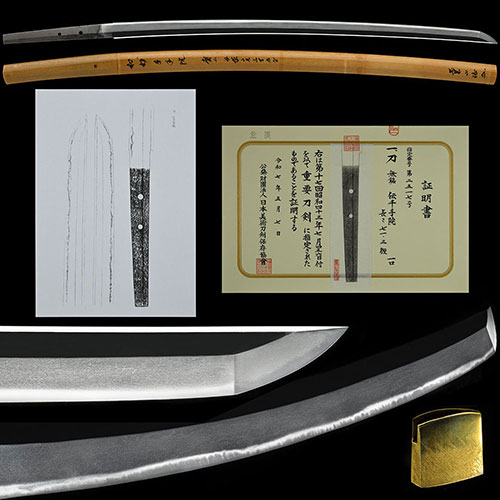

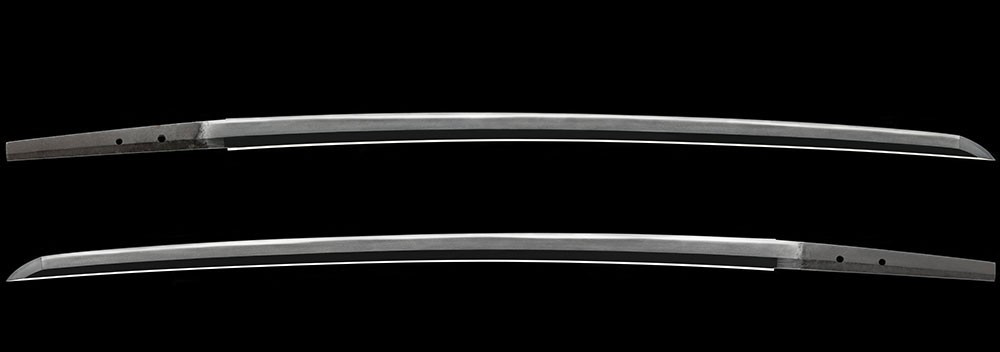
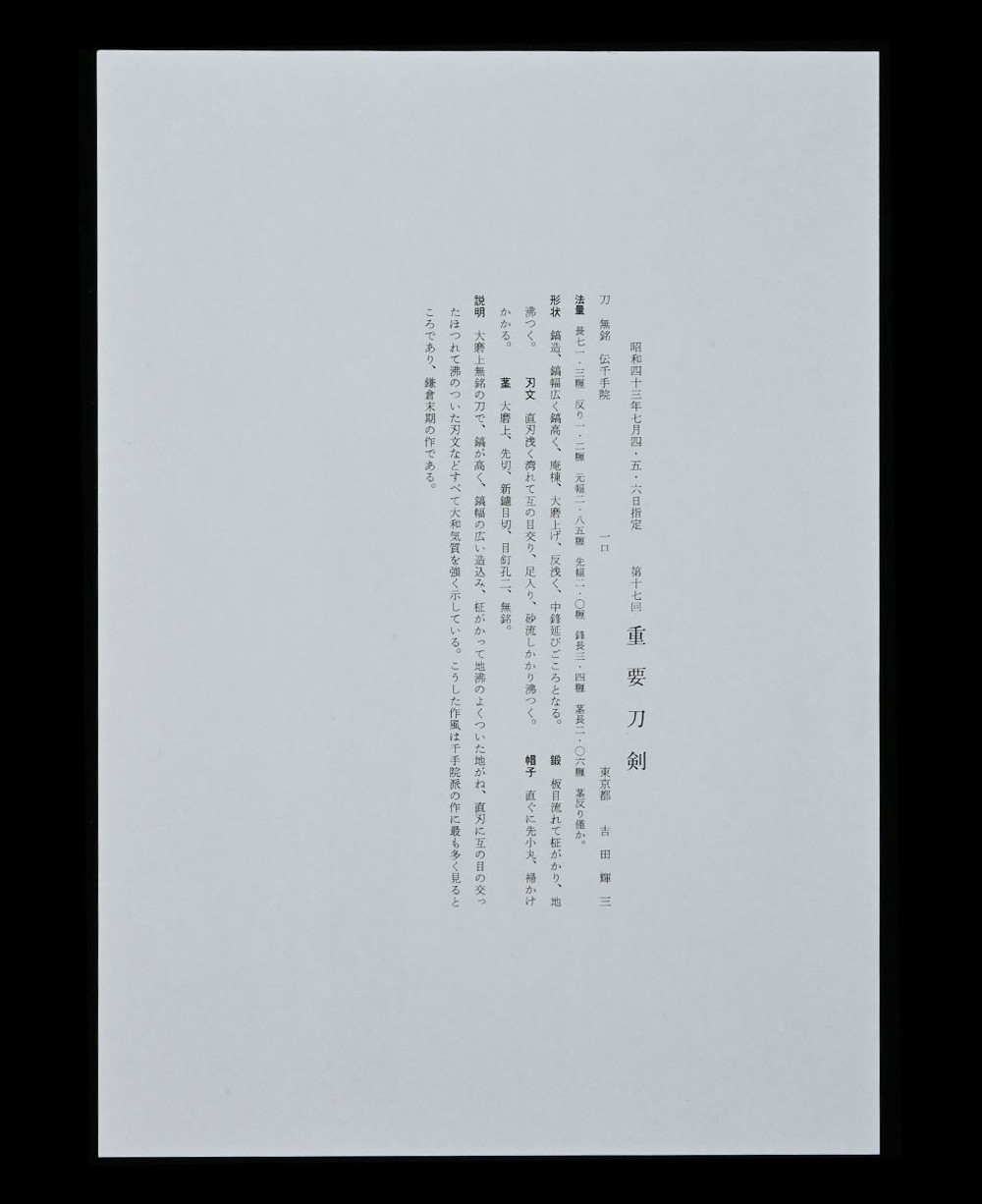
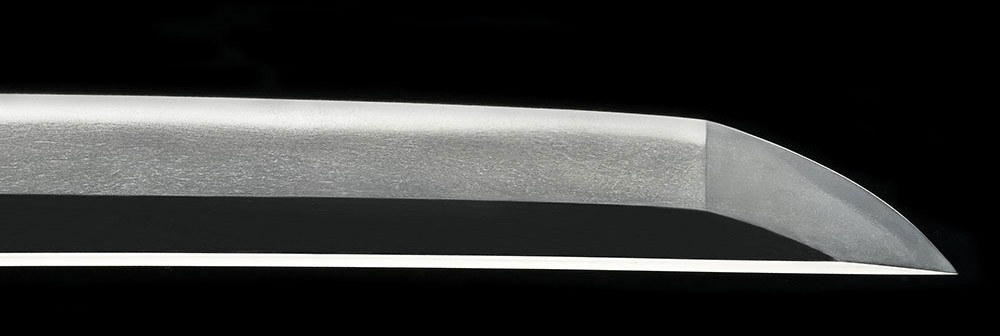
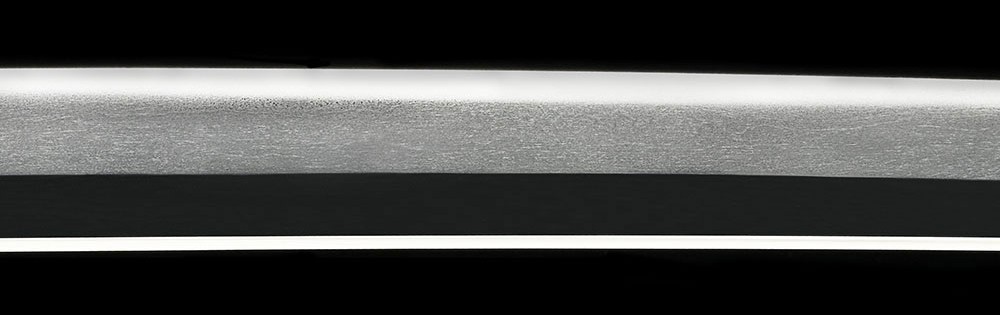
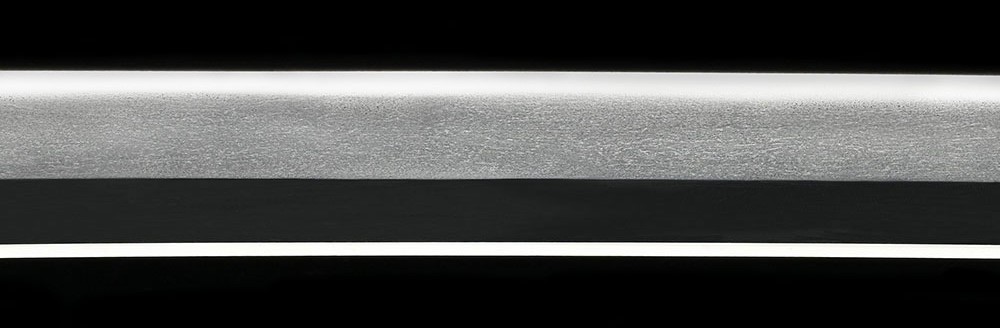
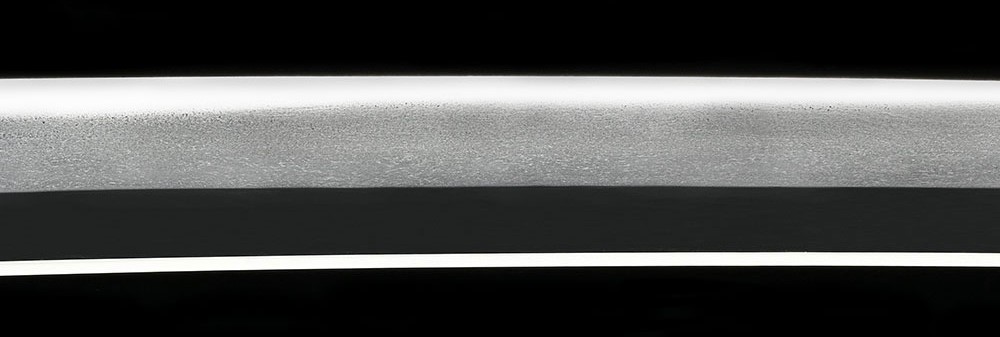
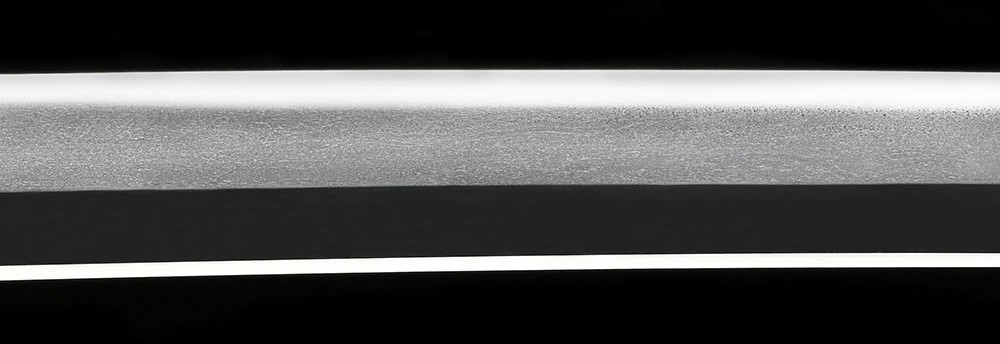
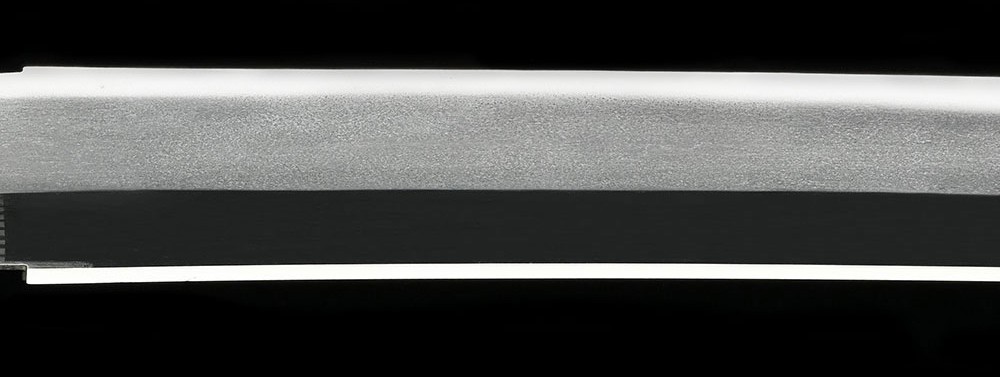
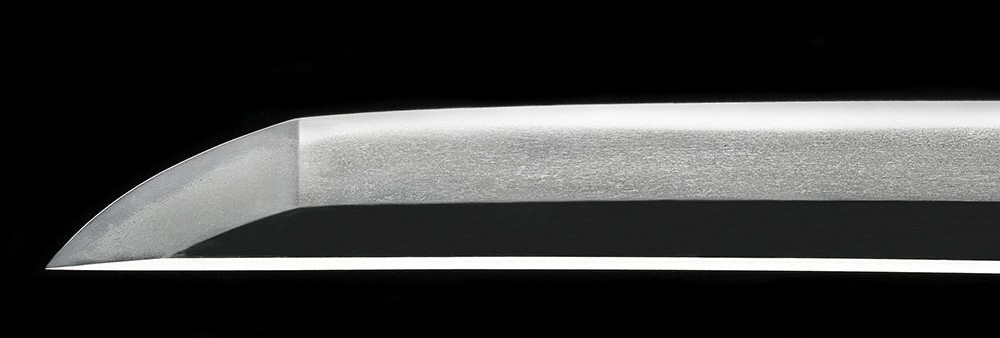
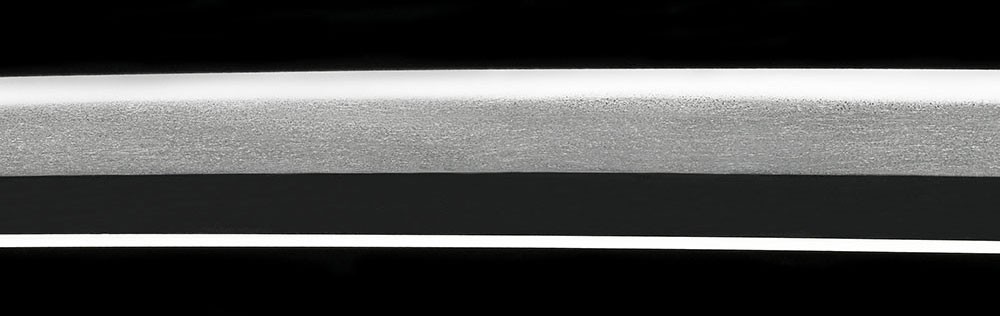
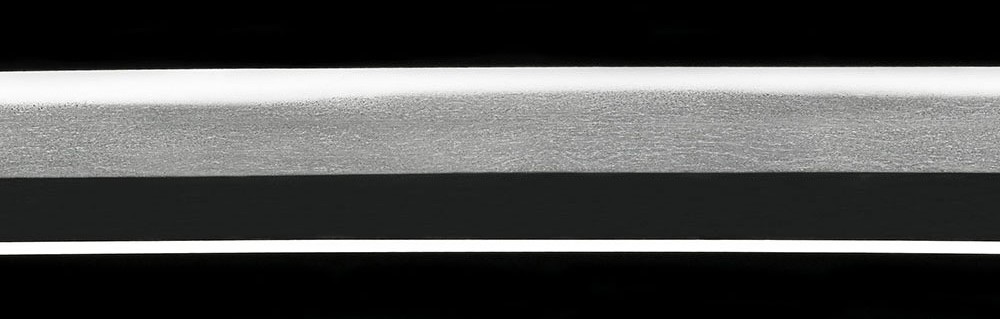
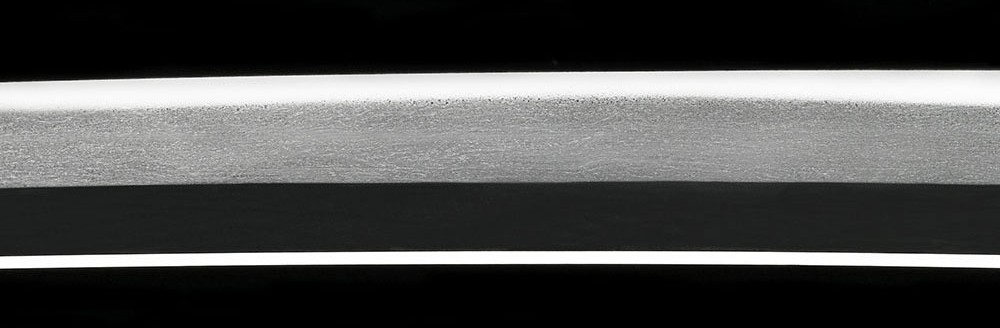
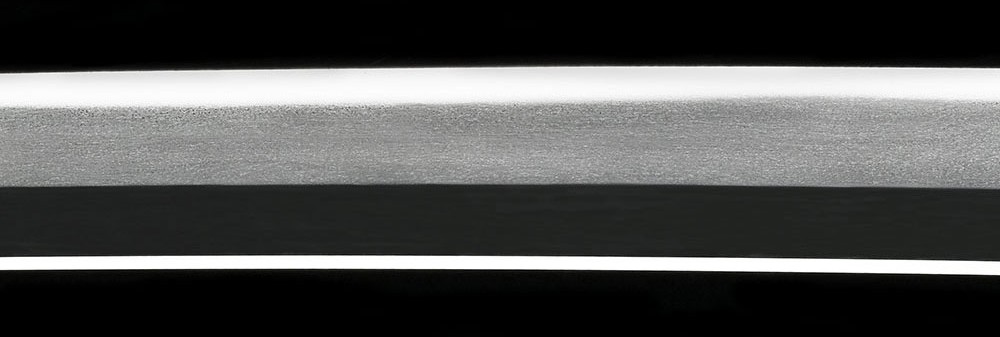
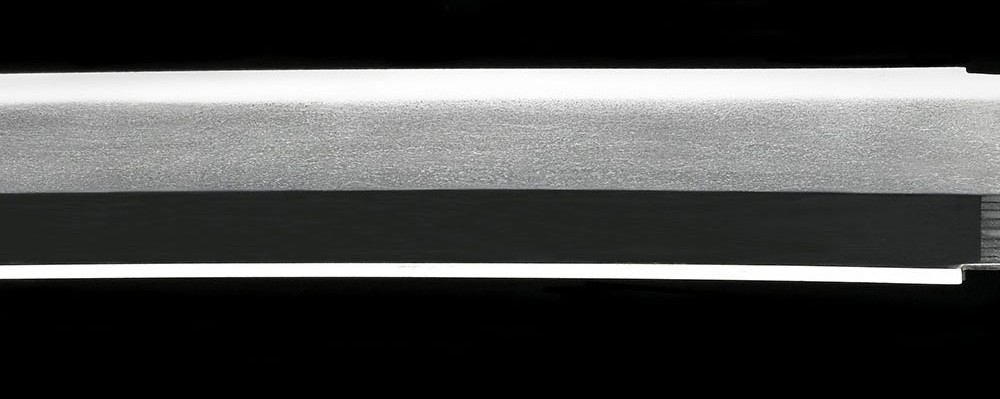
大磨上無銘の刀で、鎬が高く、幅の広い鎬造込みがかって地沸のよくついた地がね、直刃に互の目の交ったほつれて沸のついた刃文などすべて大和気質を強く示している。こうした作風は千手院派の作に最も多く見るところであり、鎌倉末期の作である。
大和伝 · 大和
現在21点販売中
千手院派は大和五派の中で最も発祥が古いとされ、奈良の若草山の西山麓、千手観音を祀る千手堂のある千手谷と呼ばれる地に在住した刀工の一群に発する。寺院に拠るその出自は単なる来歴ではなく、在銘作が総じて少ないという一派の性格の根にあって、これは千手院を含む大和の鍛冶が寺院の僧兵の需要に応えて作刀したためと解されている。古伝書は平安時代後期に行信、重弘の二名工があったと伝えるが、いずれも確実な遺例は未見であり、鎌倉時代初期には三字に「千手院」と切った太刀が現存する。門流は鎌倉時代から南北朝時代にかけて存続し、その間も有銘作は乏しく、それゆえ吉野郡龍門荘に住して龍門延吉と通称された延吉や、正安三年の年紀をもつ助光、文和の年紀を切った吉弘のごとき年紀の遺る工は、無銘極めの多いこの一派において格別の資料的重みを負う。地理的にも時代的にも幅広いその活動は、古千手院と後代の別を含みつつ、奈良の寺工という共通の土壌に立つ。 作風は地鉄に大和伝の語法がまず読まれる。板目を基本に大板目、杢目、流れ柾を交え、刃寄りに流れて柾がかり、総体に肌立ちごころとなって、地沸が厚くつき、地景が頻りに入る。淡い沸映りの立つものがあり、なかには延吉の備前寄りの手のごとく鮮明な乱れ映りを示すものもあって、映りの有無はこの一派を貫く変数である。刃文は直刃を基調とし、浅くのたれて小互の目、小丁子、小乱れを交え、刃縁にほつれ、打のけ、喰違刃、二重刃が現れ、刃中に小足が入り、金筋、砂流しが頻りにかかって、刃中にもまた柾が通う。匂口は明るく冴え、小沸がよくつく。帽子は直ぐに掃きかけて焼詰め、あるいは小丸に短く返る。同じ大和の基盤の上に二様の振幅が見られるのが特徴で、延吉や助光には備前気質を帯びた賑やかな丁子足の手と、映りの立たぬ大和色の濃い渋い直刃の手とが並び、吉弘に至っては相州物を想わせる強い沸と大乱れの華やかな出来と、浅くのたれた穏やかな直刃とが同工のうちに共存する。姿は鎬造、庵棟で、鎬幅が広く鎬が高いもの、腰反りが高く踏張りがあって中鋒ないし小鋒となるものなどが見られ、総じて古調を示す。 鑑定の勘所は、まず柾がかって流れる地鉄と、掃きかけ焼詰めの帽子の下にほつれ、喰違刃、二重刃の働く明るい直刃に置かれる。本阿弥家では古来、大和物のうちで賑やかに乱れているものに千手院の極めをあてる傾向があったと説明書は記し、この一派の極めの幅の広さを伝える。大和の内部にあって、千手院は同じ五派の手掻、尻懸、当麻、保昌と並び称されつつ別をなす。沸の働きと造込みでより明確に手を絞り込み得る当麻や、強い柾立つ無地の直刃に拠る保昌とは地刃の質において分かれ、より素朴な手掻とも映りや備前気質の加味の点で分かれる。主要工としては、一口の国宝の太刀に担われ大和初期の名として重きをなす延吉、年紀の基準作を東京国立博物館に伝えて在銘作のごく僅かな助光、地刃の変化が大和諸工中で最も大きいと評される吉弘がそれぞれ独立した手を示し、ほかにも長吉、吉行、助平、助延、助吉のごとき同族の工が諸書に名を連ねるが、その多くは総称的に千手院として伝わる。在銘の確かな作が世に出ることは稀であり、現存する遺品の大半は大磨上無銘の極めものであって、鎬の高い造込み、流れて柾がかる鍛え、明るい直刃のみからもその極めは首肯される。伝来は、龍門延吉の国宝太刀が後水尾天皇御料と伝え、堀子爵家や犬養毅、仙台伊達家、上杉家の旧蔵に納まる一口があるほかは、神社や公的機関に伝わるものを除けば多くは所在の知れぬ私蔵にあって、市場に現れることは少ない。 詳しく見る →
大和五派は奈良の大寺の影で育った。手掻の名は東大寺転害門に由来する。柾目と静かな直刃の厳格は寺の美学であり、後世はまさにその節度を賞美してきた。
特別保存刀剣の中から、特に出来が優れ、国認定の重要美術品に準ずると判断された名品です。年に一度の重要刀剣審査で選ばれます。
極めて選別的で、日本に登録された約250万口の刀剣のうち、重要刀剣に達したものは12,307口(約203口に1口)にすぎません。
日本美術刀剣保存協会(NBTHK)は、1948年に設立され、文化庁の監督を受ける公益財団法人で、東京・刀剣博物館に本部を置きます。専門の審査員が出品作を直接審査し、美術的・歴史的価値に応じた鑑定書を発行します。NBTHKの鑑定書は、日本刀および刀装具の真正性を示す最も広く認知された基準です。
NBTHK公式サイト商品発送後の返品・交換・キャンセルには、基本的に対応しておりません。商品に重大な瑕疵がある場合のみ、当サイトでご購入いただいた商品到着後3日以内であれば返品•交換が可能です。
千手院派は、平安時代後期に興ったとされる大和最古の流派で、大和国奈良の東大寺に隷属する僧形の承仕法師が、もっぱら東大寺の僧兵の為に鍛刀をしていた。若草山麓の千手谷に鍛冶場があり、同地に千手観音を本尊とする千手院堂があり、その名が付いたと云う。この刀は、身幅広く、鎬高く、反りやや浅く、腰反りつき、中鋒となる鎌倉時代の姿で、柾目肌つみ、地沸厚く付き、地景入り、黒く冴えた美しい地鉄に、直刃調に、のたれて、小互の目交じり、二十刃掛り、小足頻りに入り、沸よくつき、輝く大小の沸が深くよくつき、金筋・沸筋掛り、匂口明るく冴える傑作である。指定書は紛失のため、証明証となります。
大磨上無銘の刀で、鎬が高く、幅の広い鎬造込みがかって地沸のよくついた地がね、直刃に互の目の交ったほつれて沸のついた刃文などすべて大和気質を強く示している。こうした作風は千手院派の作に最も多く見るところであり、鎌倉末期の作である。
NihontoWatch大磨上無銘の刀で、鎬が高く、幅の広い鎬造込みがかって地沸のよくついた地がね、直刃に互の目の交ったほつれて沸のついた刃文などすべて大和気質を強く示している。こうした作風は千手院派の作に最も多く見るところであり、鎌倉末期の作である。
大和伝 · 大和
現在21点販売中
千手院派は大和五派の中で最も発祥が古いとされ、奈良の若草山の西山麓、千手観音を祀る千手堂のある千手谷と呼ばれる地に在住した刀工の一群に発する。寺院に拠るその出自は単なる来歴ではなく、在銘作が総じて少ないという一派の性格の根にあって、これは千手院を含む大和の鍛冶が寺院の僧兵の需要に応えて作刀したためと解されている。古伝書は平安時代後期に行信、重弘の二名工があったと伝えるが、いずれも確実な遺例は未見であり、鎌倉時代初期には三字に「千手院」と切った太刀が現存する。門流は鎌倉時代から南北朝時代にかけて存続し、その間も有銘作は乏しく、それゆえ吉野郡龍門荘に住して龍門延吉と通称された延吉や、正安三年の年紀をもつ助光、文和の年紀を切った吉弘のごとき年紀の遺る工は、無銘極めの多いこの一派において格別の資料的重みを負う。地理的にも時代的にも幅広いその活動は、古千手院と後代の別を含みつつ、奈良の寺工という共通の土壌に立つ。 作風は地鉄に大和伝の語法がまず読まれる。板目を基本に大板目、杢目、流れ柾を交え、刃寄りに流れて柾がかり、総体に肌立ちごころとなって、地沸が厚くつき、地景が頻りに入る。淡い沸映りの立つものがあり、なかには延吉の備前寄りの手のごとく鮮明な乱れ映りを示すものもあって、映りの有無はこの一派を貫く変数である。刃文は直刃を基調とし、浅くのたれて小互の目、小丁子、小乱れを交え、刃縁にほつれ、打のけ、喰違刃、二重刃が現れ、刃中に小足が入り、金筋、砂流しが頻りにかかって、刃中にもまた柾が通う。匂口は明るく冴え、小沸がよくつく。帽子は直ぐに掃きかけて焼詰め、あるいは小丸に短く返る。同じ大和の基盤の上に二様の振幅が見られるのが特徴で、延吉や助光には備前気質を帯びた賑やかな丁子足の手と、映りの立たぬ大和色の濃い渋い直刃の手とが並び、吉弘に至っては相州物を想わせる強い沸と大乱れの華やかな出来と、浅くのたれた穏やかな直刃とが同工のうちに共存する。姿は鎬造、庵棟で、鎬幅が広く鎬が高いもの、腰反りが高く踏張りがあって中鋒ないし小鋒となるものなどが見られ、総じて古調を示す。 鑑定の勘所は、まず柾がかって流れる地鉄と、掃きかけ焼詰めの帽子の下にほつれ、喰違刃、二重刃の働く明るい直刃に置かれる。本阿弥家では古来、大和物のうちで賑やかに乱れているものに千手院の極めをあてる傾向があったと説明書は記し、この一派の極めの幅の広さを伝える。大和の内部にあって、千手院は同じ五派の手掻、尻懸、当麻、保昌と並び称されつつ別をなす。沸の働きと造込みでより明確に手を絞り込み得る当麻や、強い柾立つ無地の直刃に拠る保昌とは地刃の質において分かれ、より素朴な手掻とも映りや備前気質の加味の点で分かれる。主要工としては、一口の国宝の太刀に担われ大和初期の名として重きをなす延吉、年紀の基準作を東京国立博物館に伝えて在銘作のごく僅かな助光、地刃の変化が大和諸工中で最も大きいと評される吉弘がそれぞれ独立した手を示し、ほかにも長吉、吉行、助平、助延、助吉のごとき同族の工が諸書に名を連ねるが、その多くは総称的に千手院として伝わる。在銘の確かな作が世に出ることは稀であり、現存する遺品の大半は大磨上無銘の極めものであって、鎬の高い造込み、流れて柾がかる鍛え、明るい直刃のみからもその極めは首肯される。伝来は、龍門延吉の国宝太刀が後水尾天皇御料と伝え、堀子爵家や犬養毅、仙台伊達家、上杉家の旧蔵に納まる一口があるほかは、神社や公的機関に伝わるものを除けば多くは所在の知れぬ私蔵にあって、市場に現れることは少ない。 詳しく見る →
大和五派は奈良の大寺の影で育った。手掻の名は東大寺転害門に由来する。柾目と静かな直刃の厳格は寺の美学であり、後世はまさにその節度を賞美してきた。
特別保存刀剣の中から、特に出来が優れ、国認定の重要美術品に準ずると判断された名品です。年に一度の重要刀剣審査で選ばれます。
極めて選別的で、日本に登録された約250万口の刀剣のうち、重要刀剣に達したものは12,307口(約203口に1口)にすぎません。
日本美術刀剣保存協会(NBTHK)は、1948年に設立され、文化庁の監督を受ける公益財団法人で、東京・刀剣博物館に本部を置きます。専門の審査員が出品作を直接審査し、美術的・歴史的価値に応じた鑑定書を発行します。NBTHKの鑑定書は、日本刀および刀装具の真正性を示す最も広く認知された基準です。
NBTHK公式サイト商品発送後の返品・交換・キャンセルには、基本的に対応しておりません。商品に重大な瑕疵がある場合のみ、当サイトでご購入いただいた商品到着後3日以内であれば返品•交換が可能です。