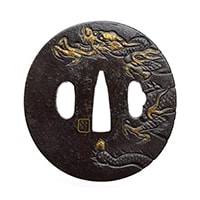
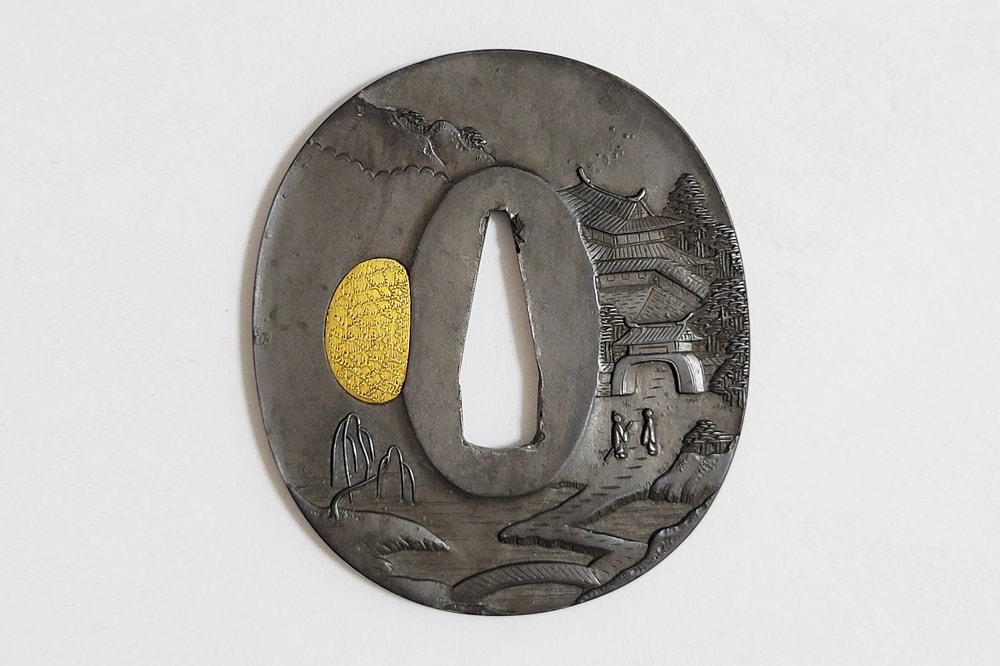
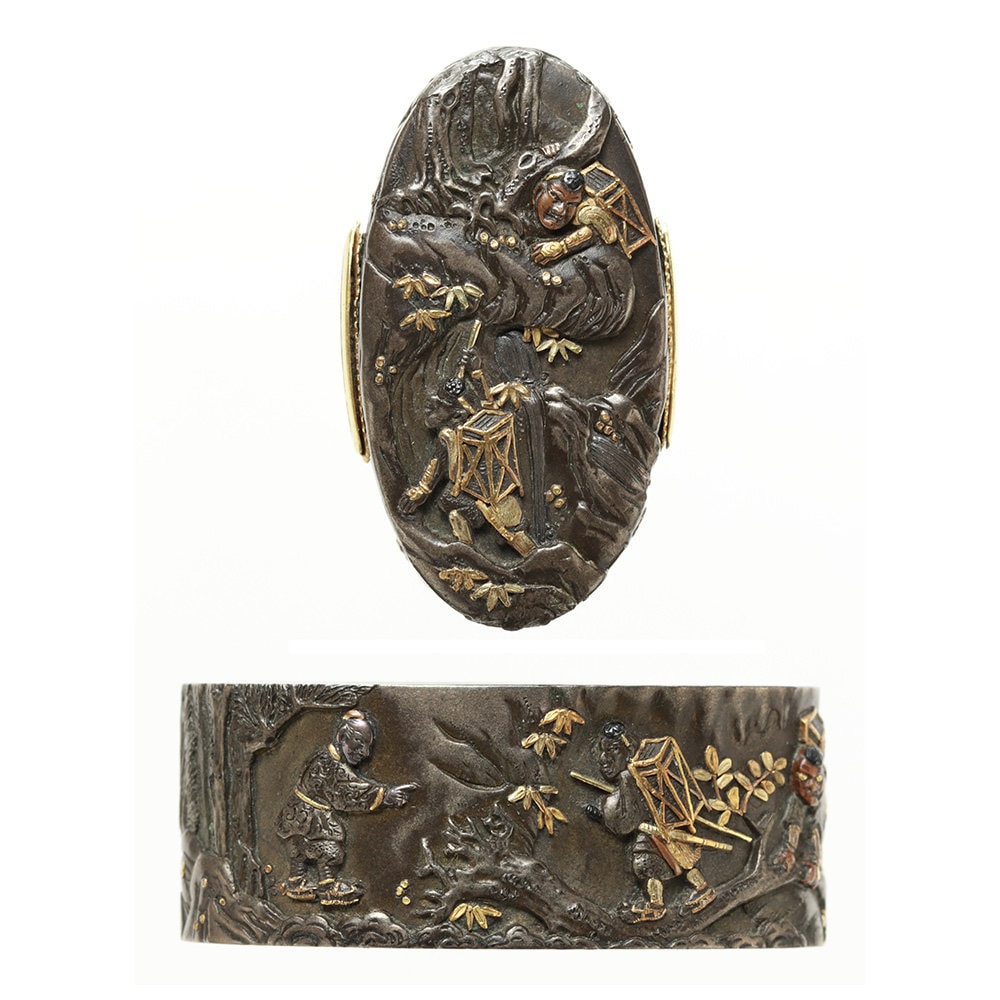
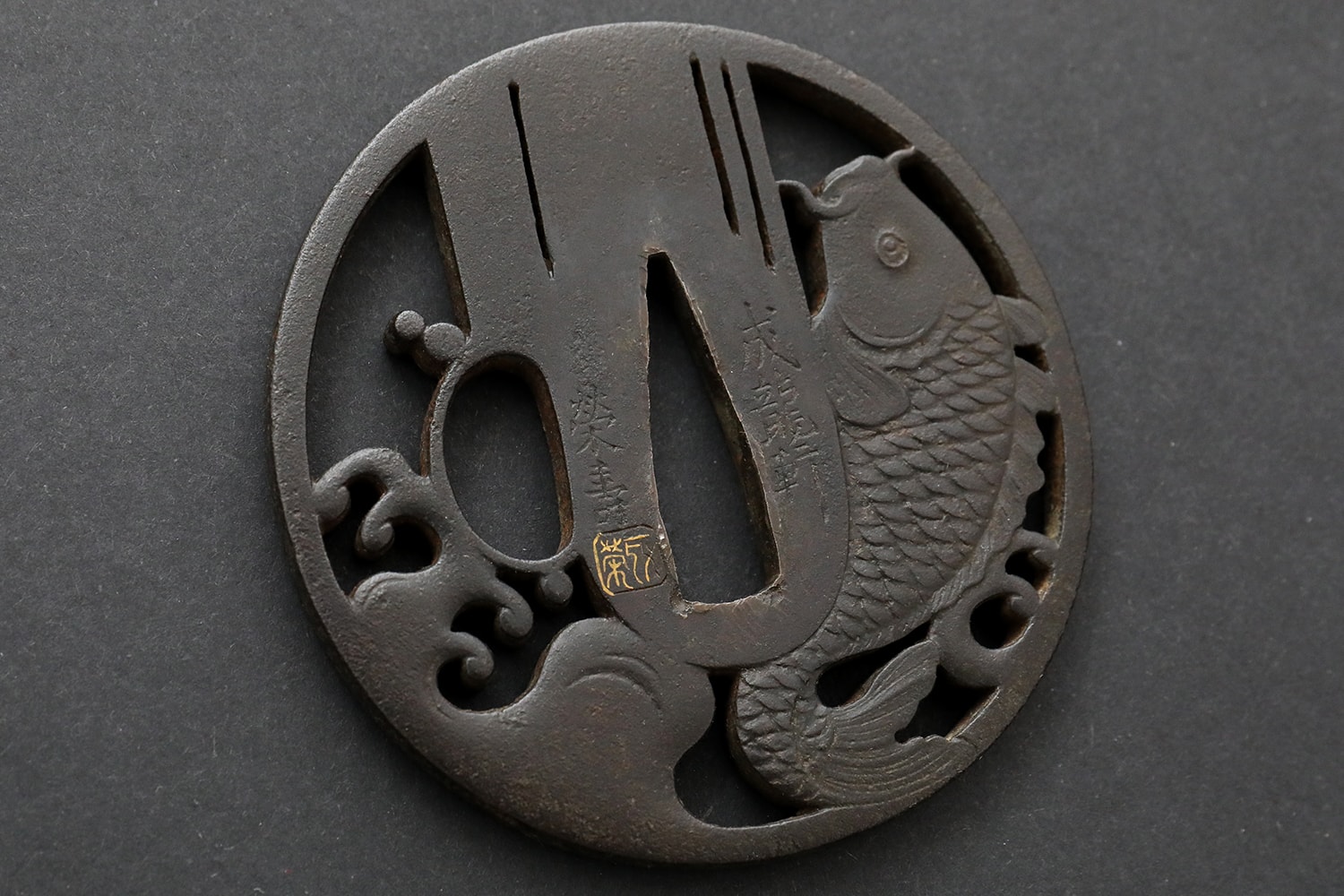
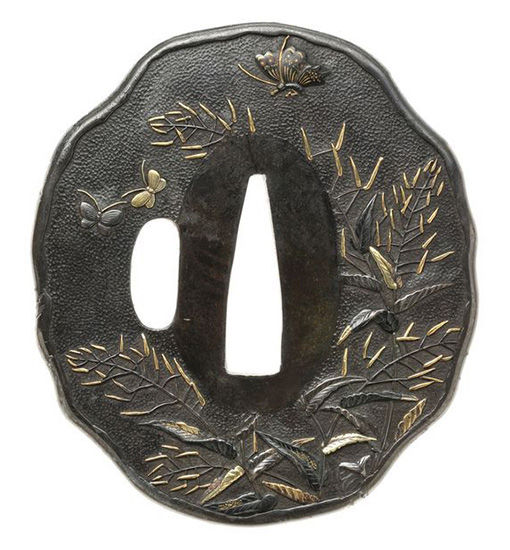
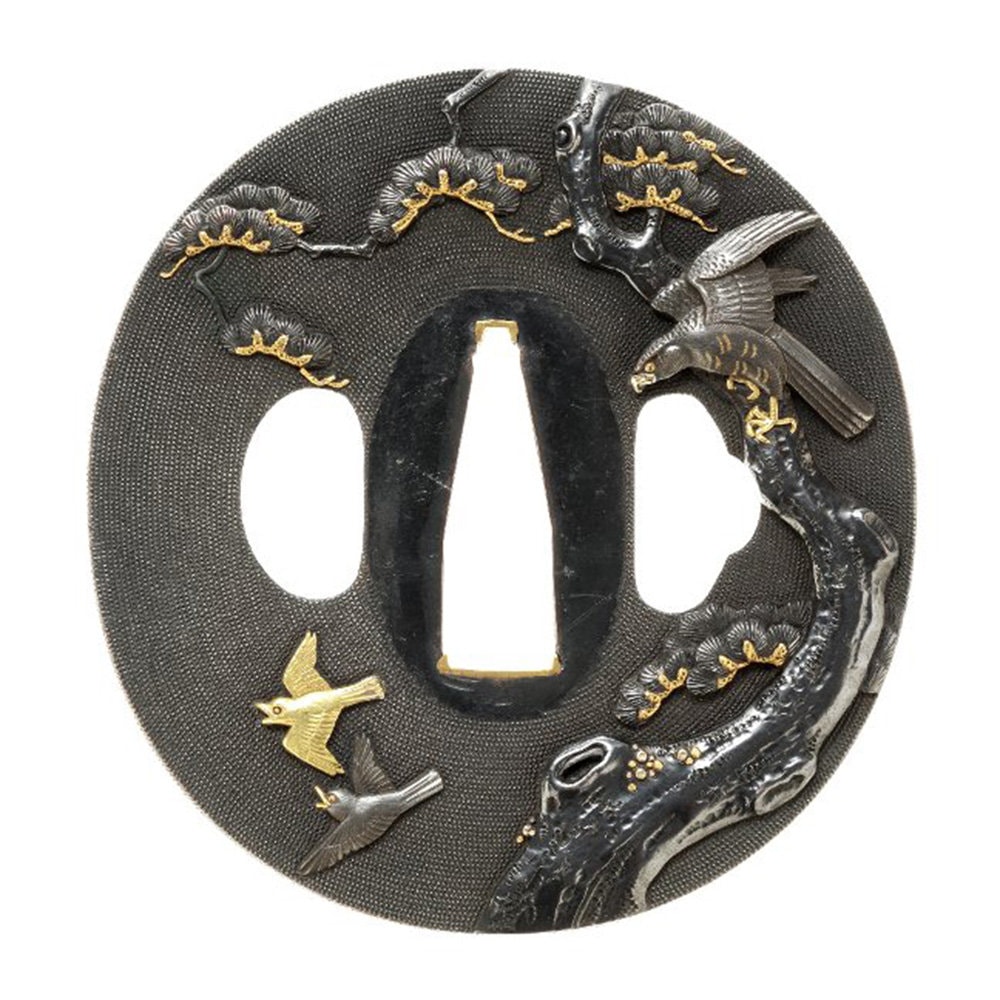
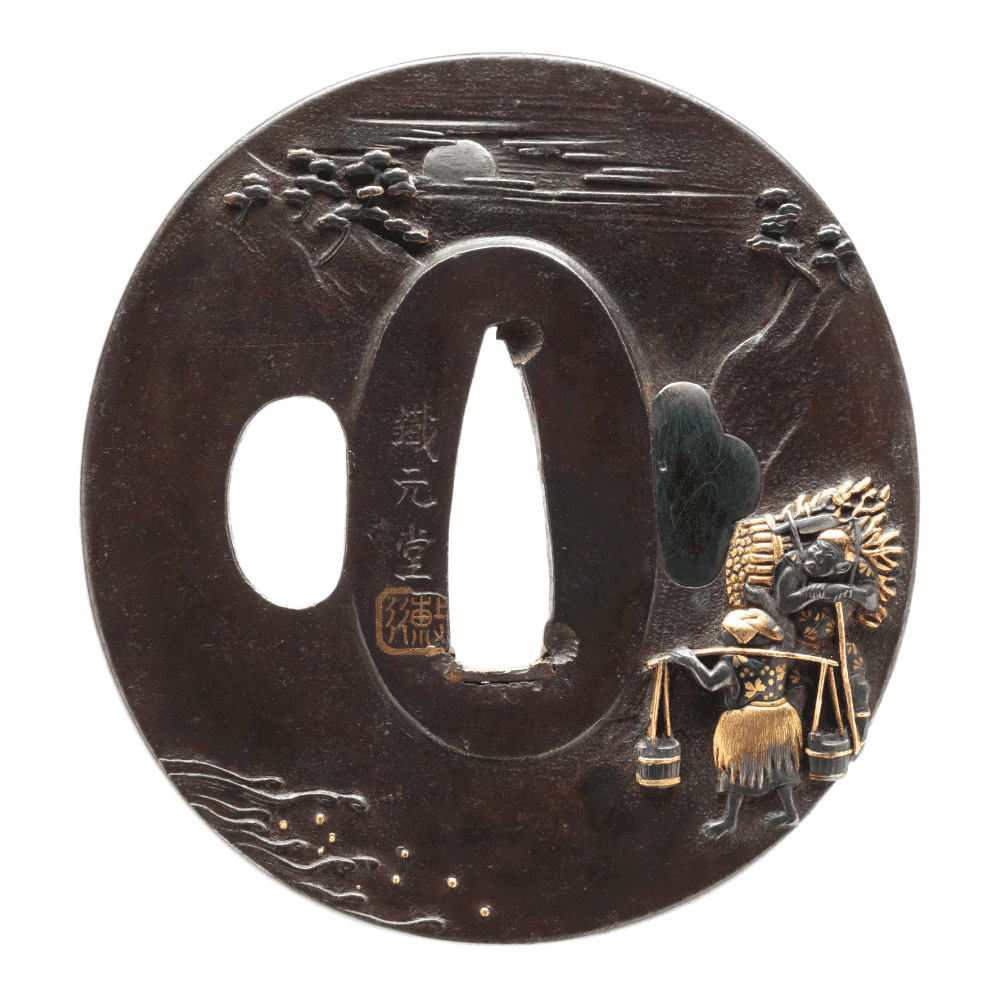
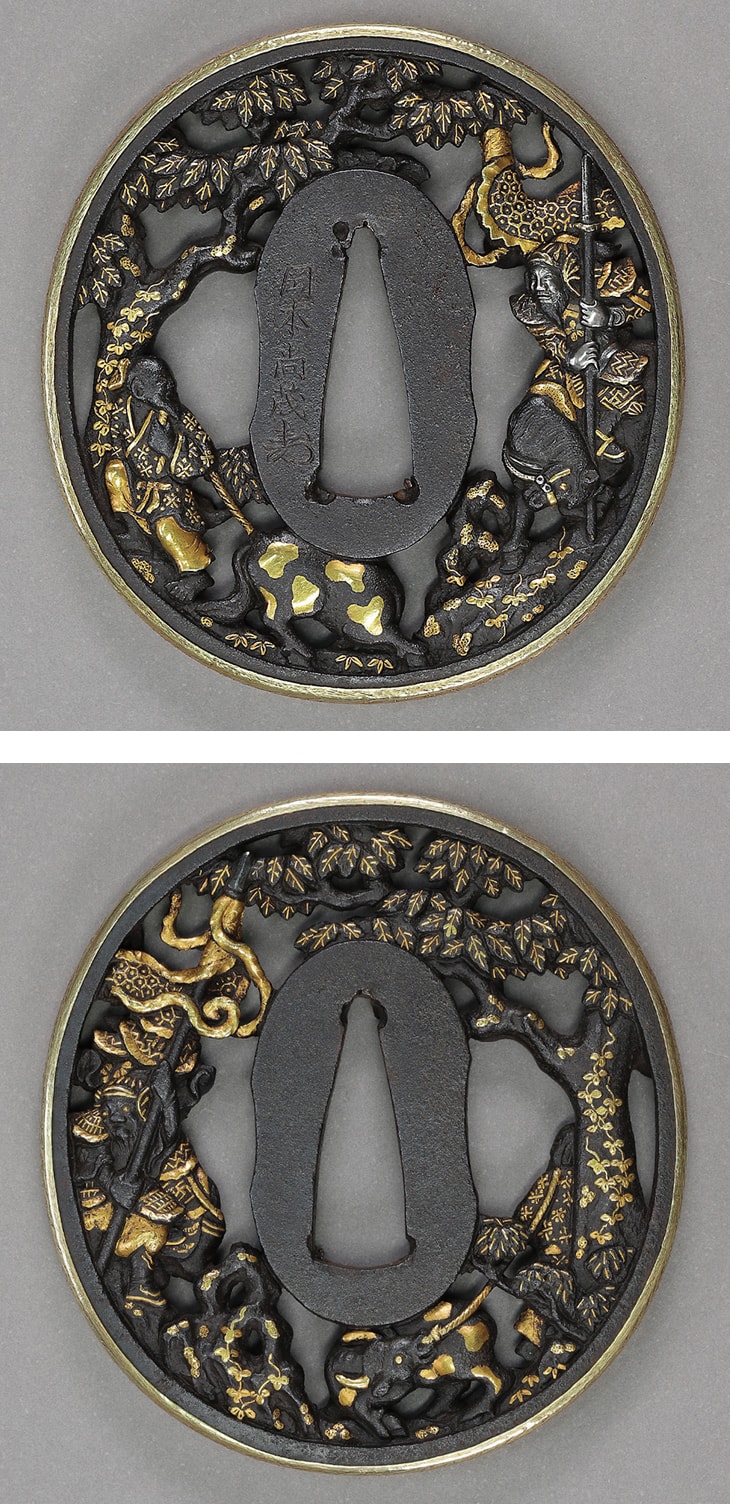
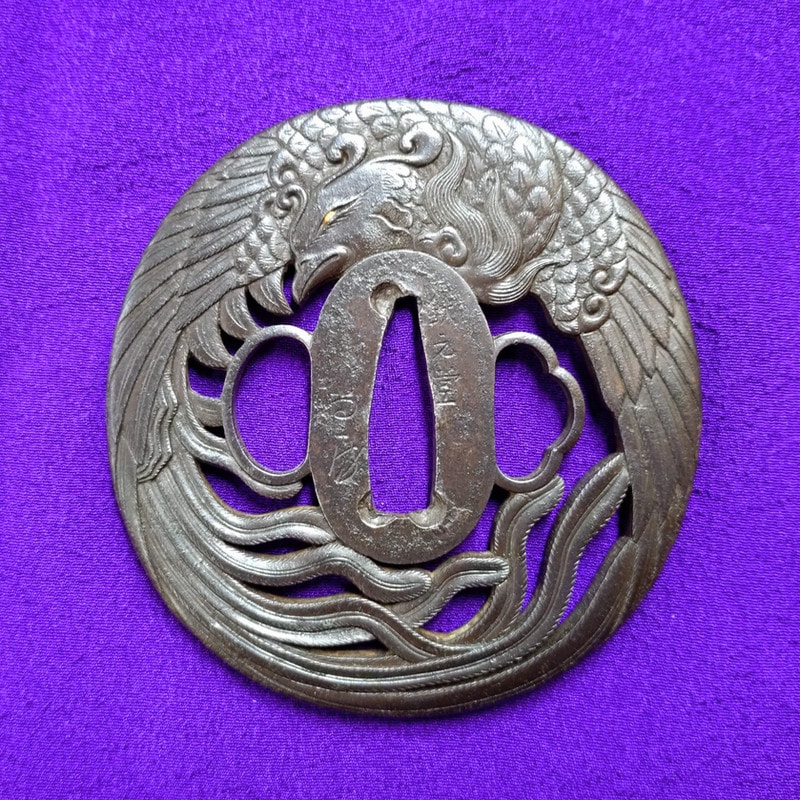
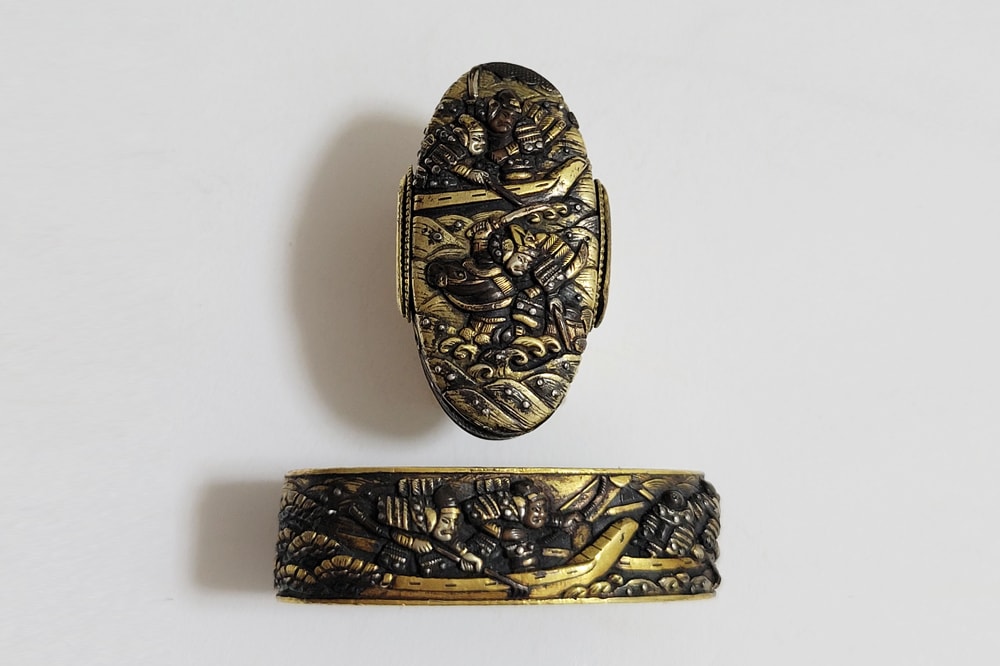
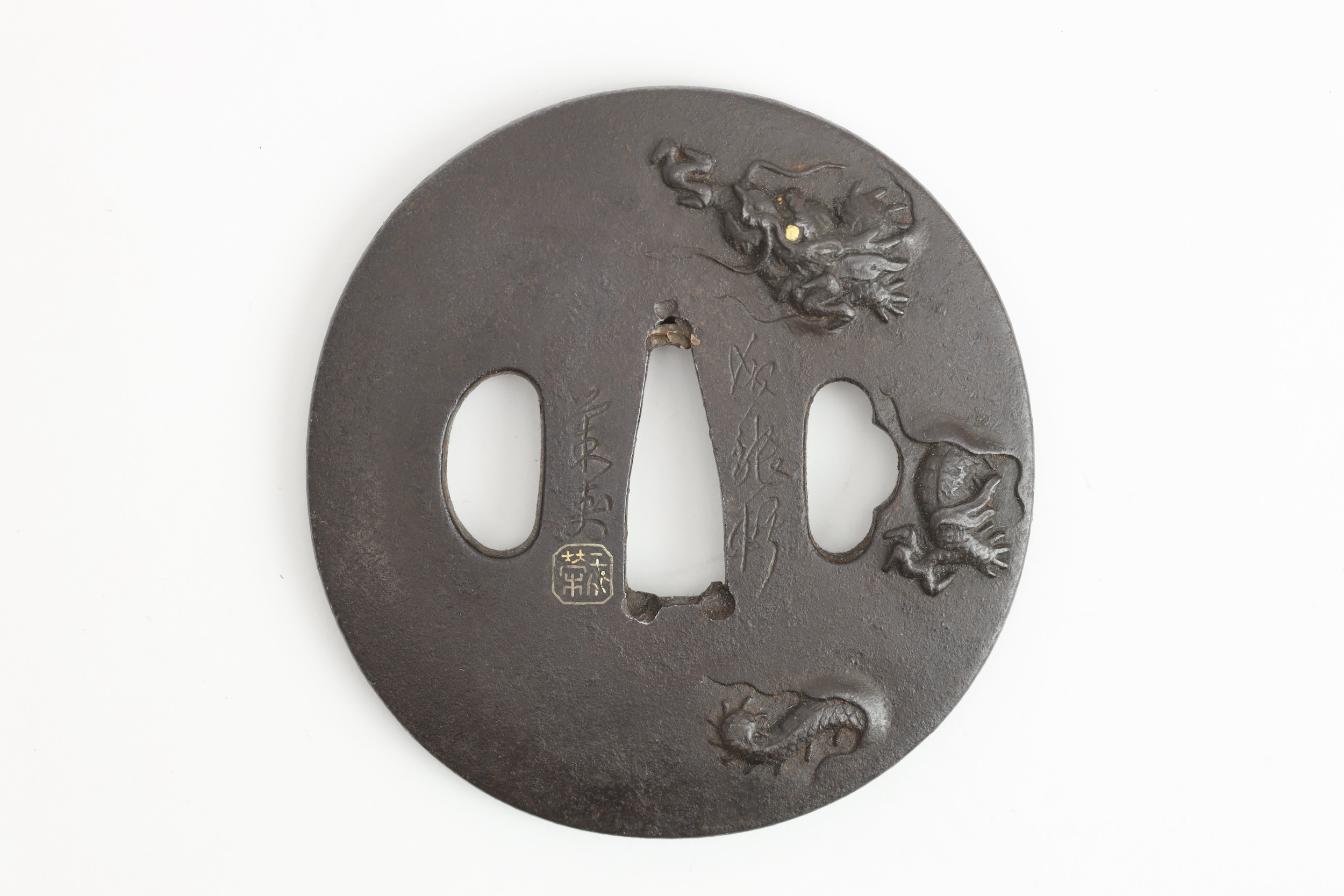
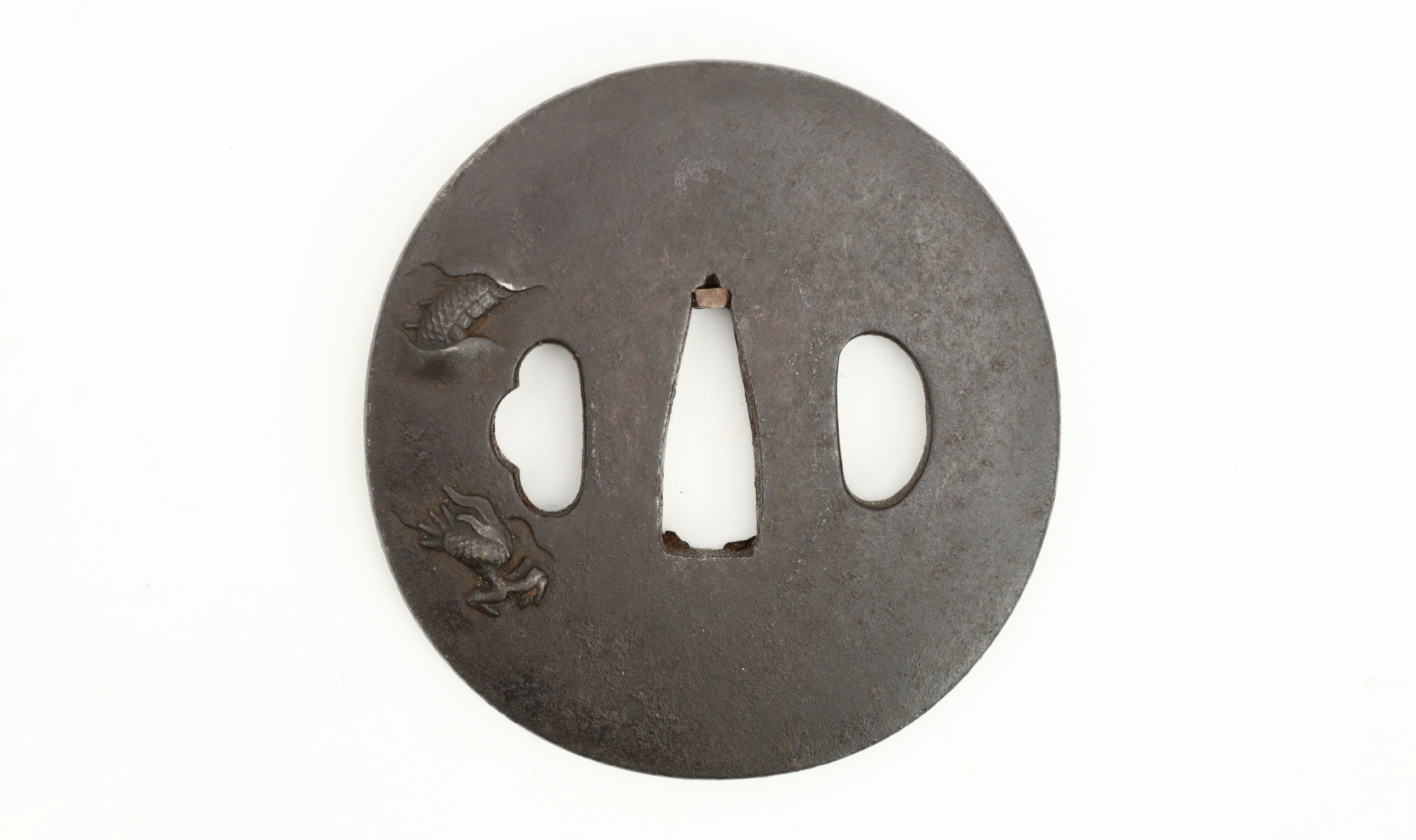
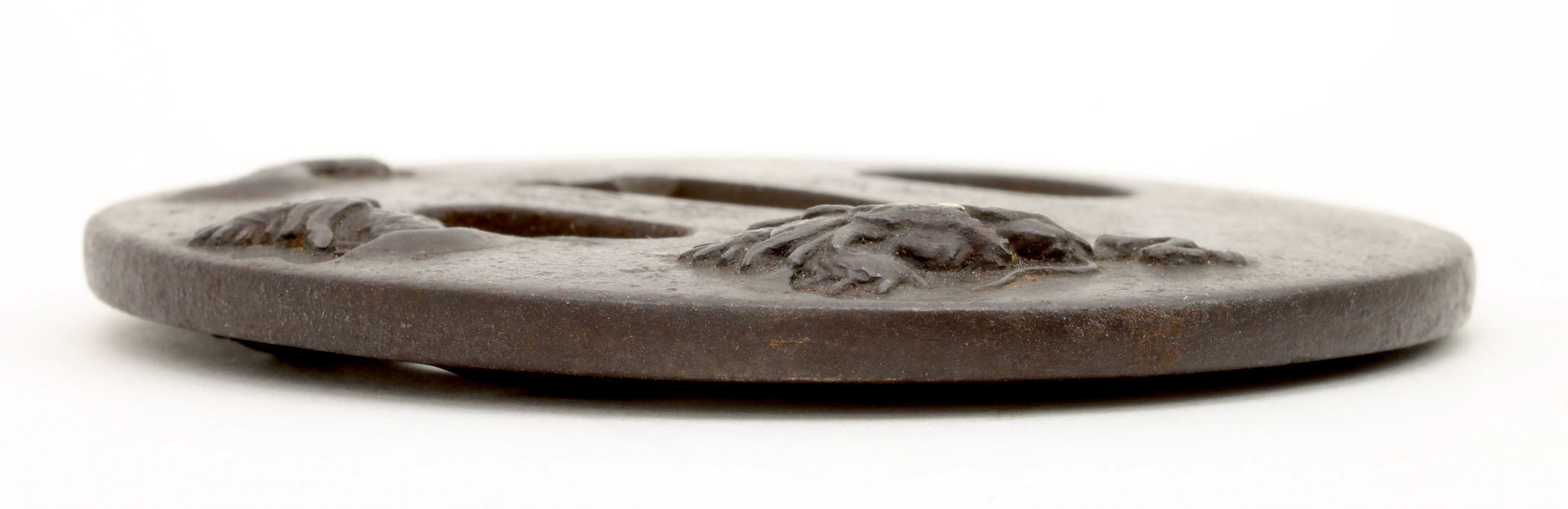
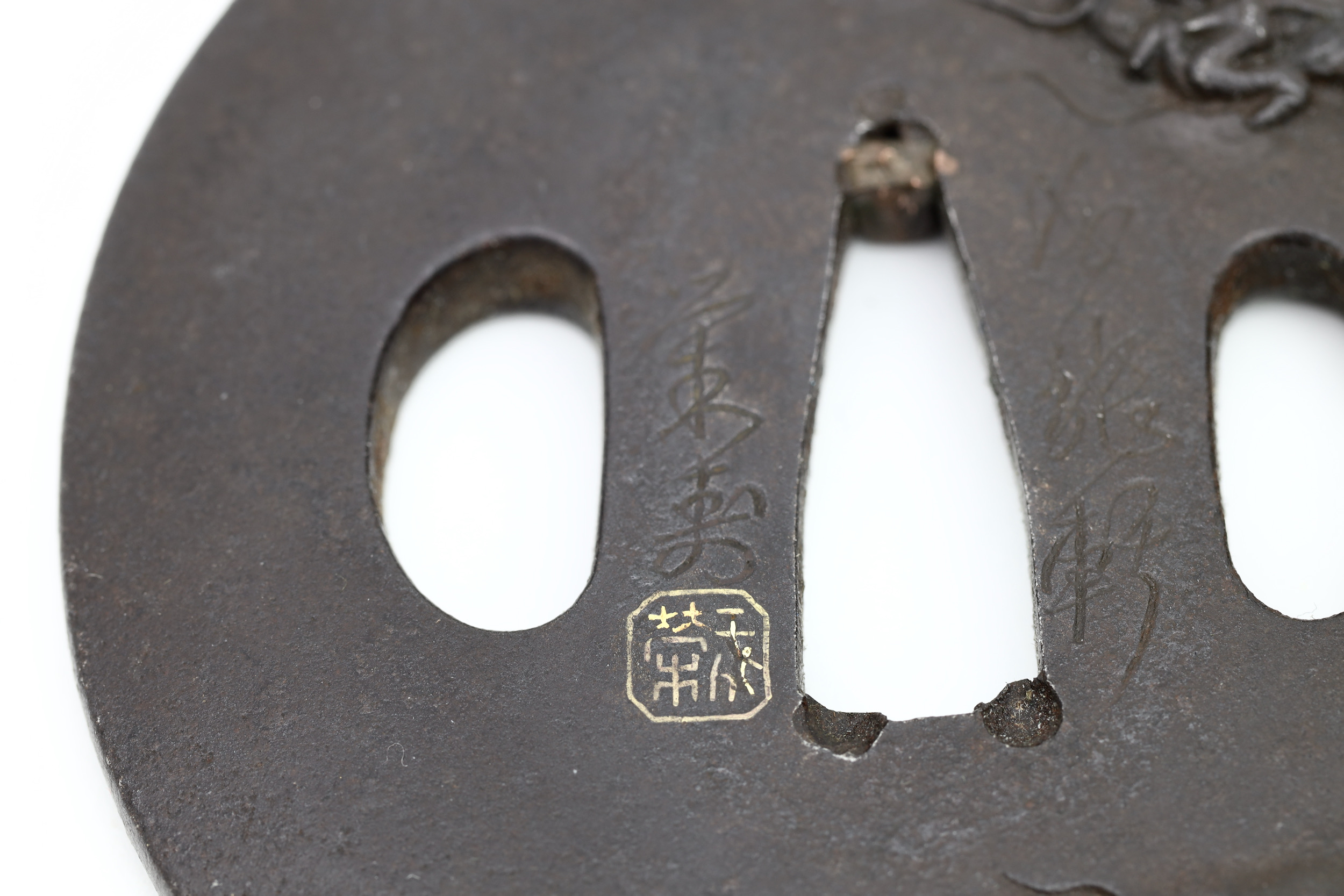
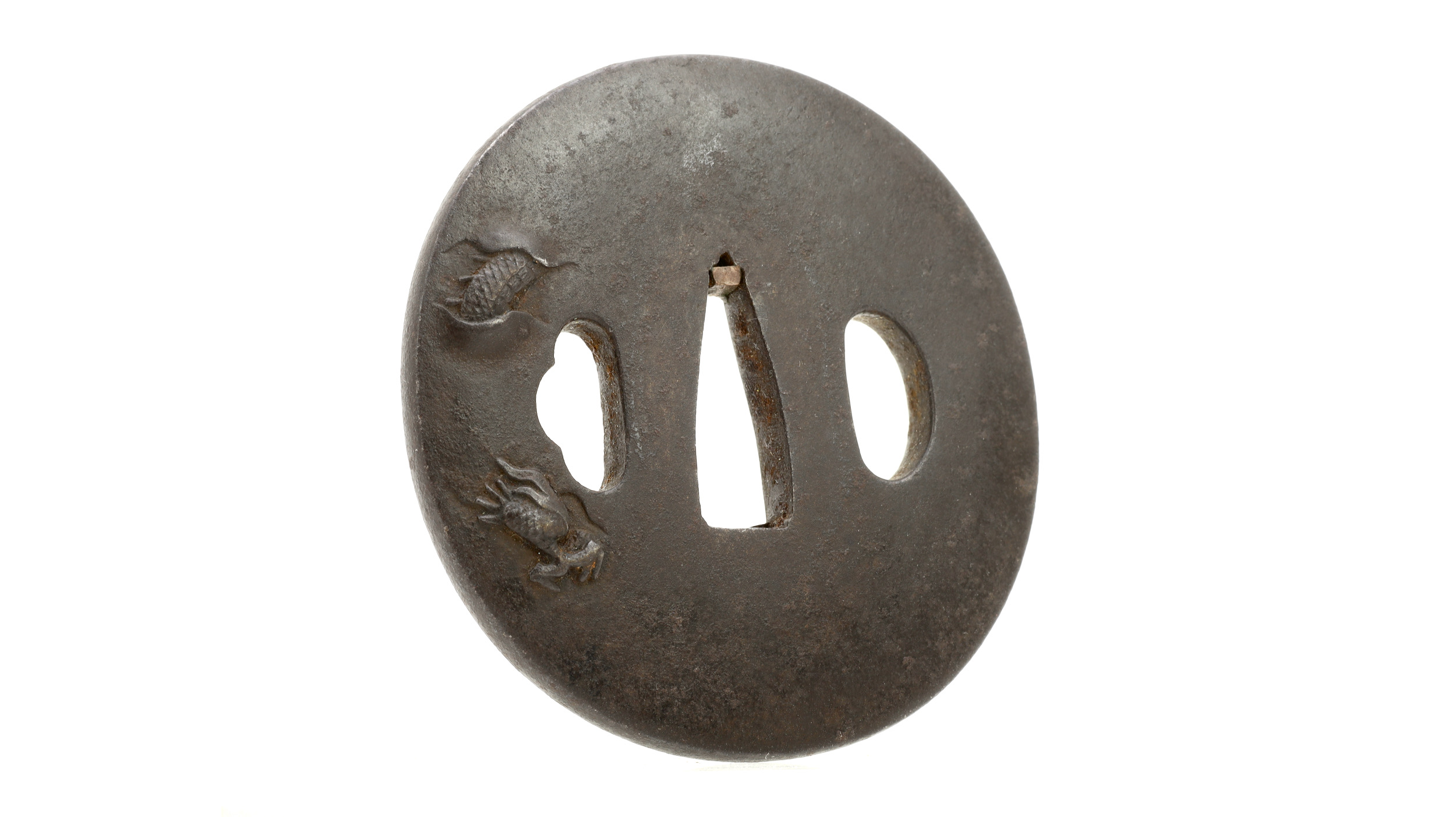
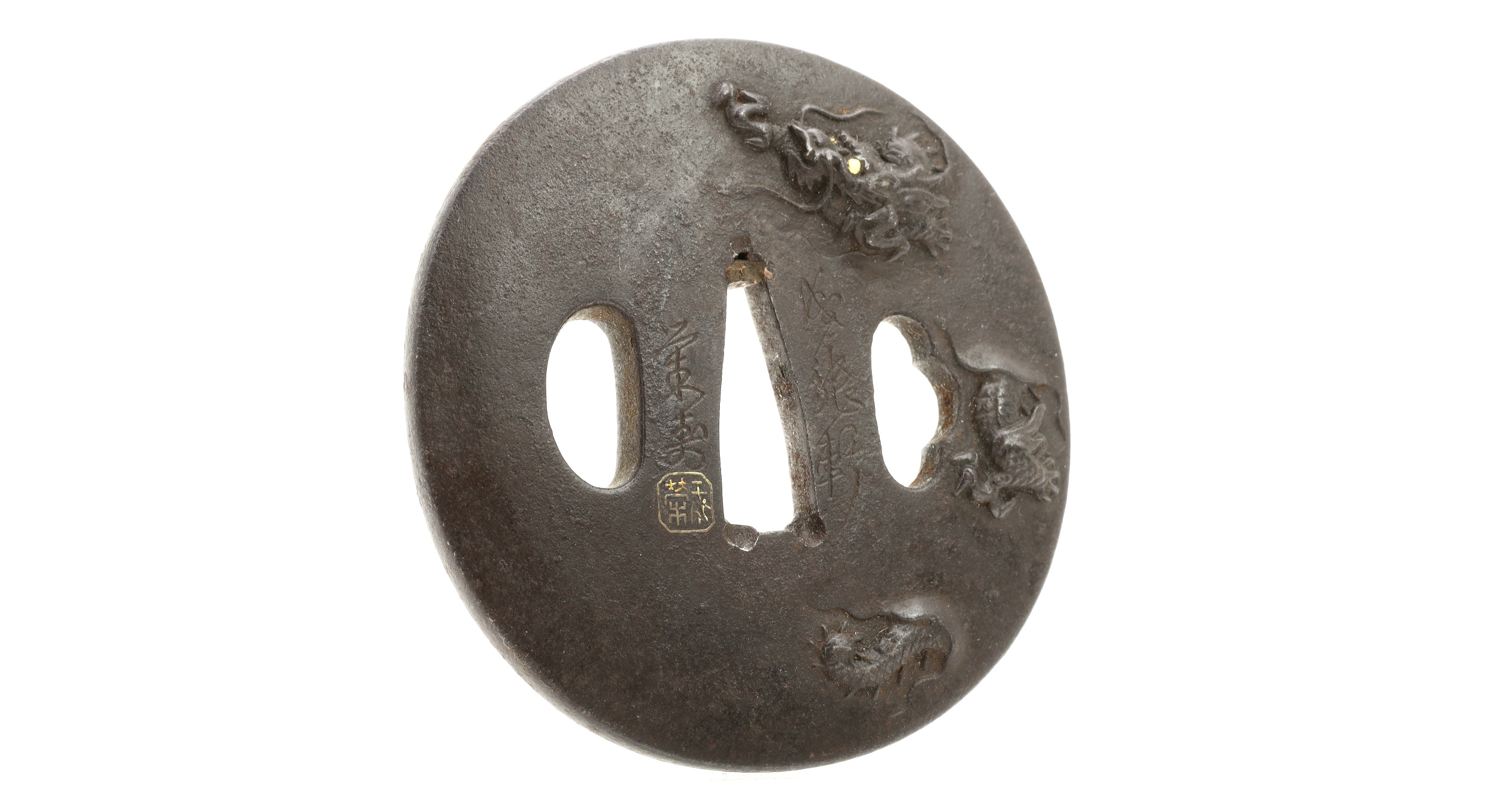
This is a well-executed tsuba by Seiryūken Eiju, featuring a dragon motif for which he was famous. It has a typical discoid cross-section and a golden inlaid personal seal. The dragon's body protrudes, giving it a lifelike appearance, with separately inlaid gold eyes.
 NihontoWatch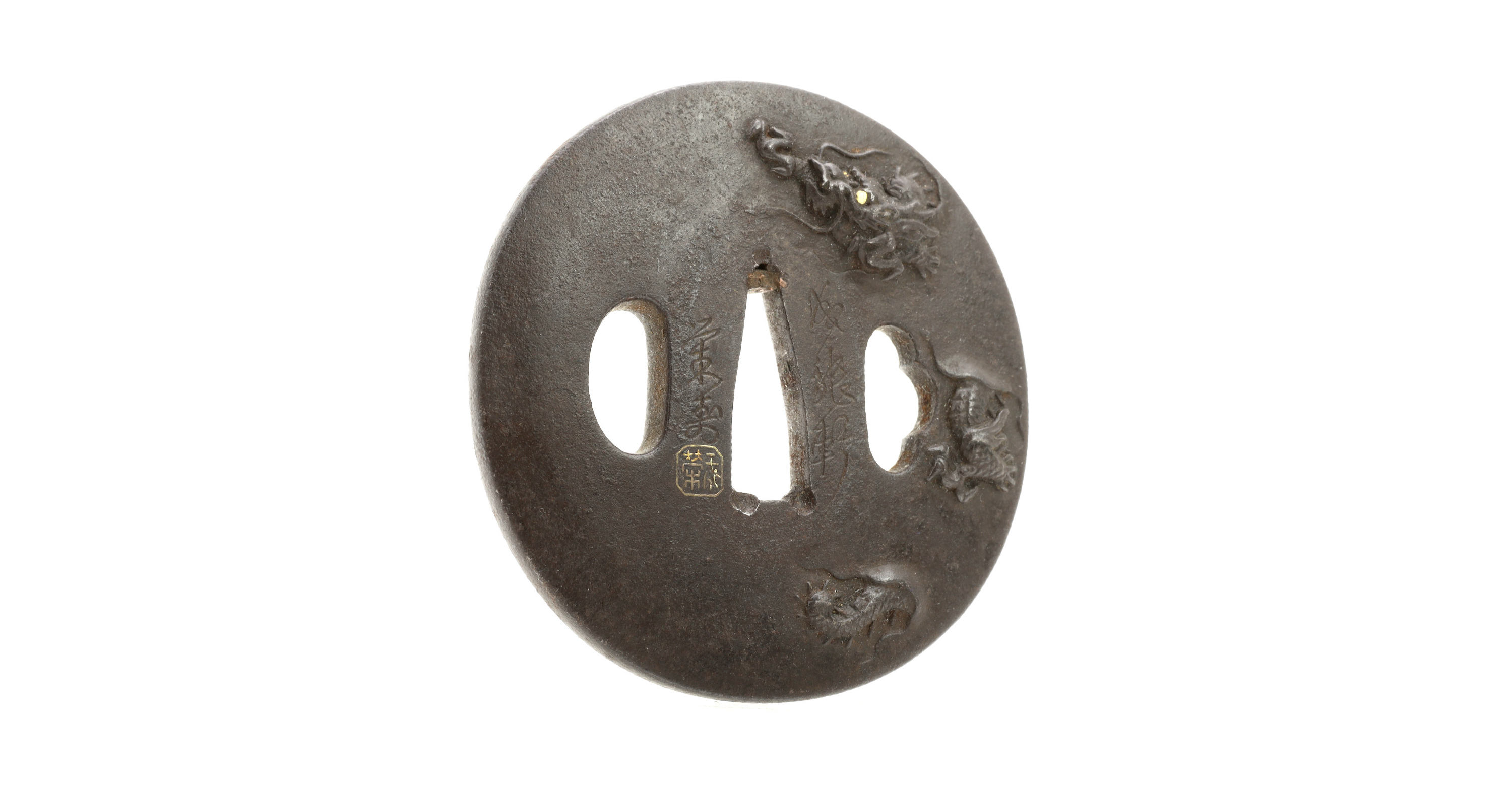
Machibori · Musashi
3 pieces on the market now
Machibori · Yamashiro
25 pieces on the market now
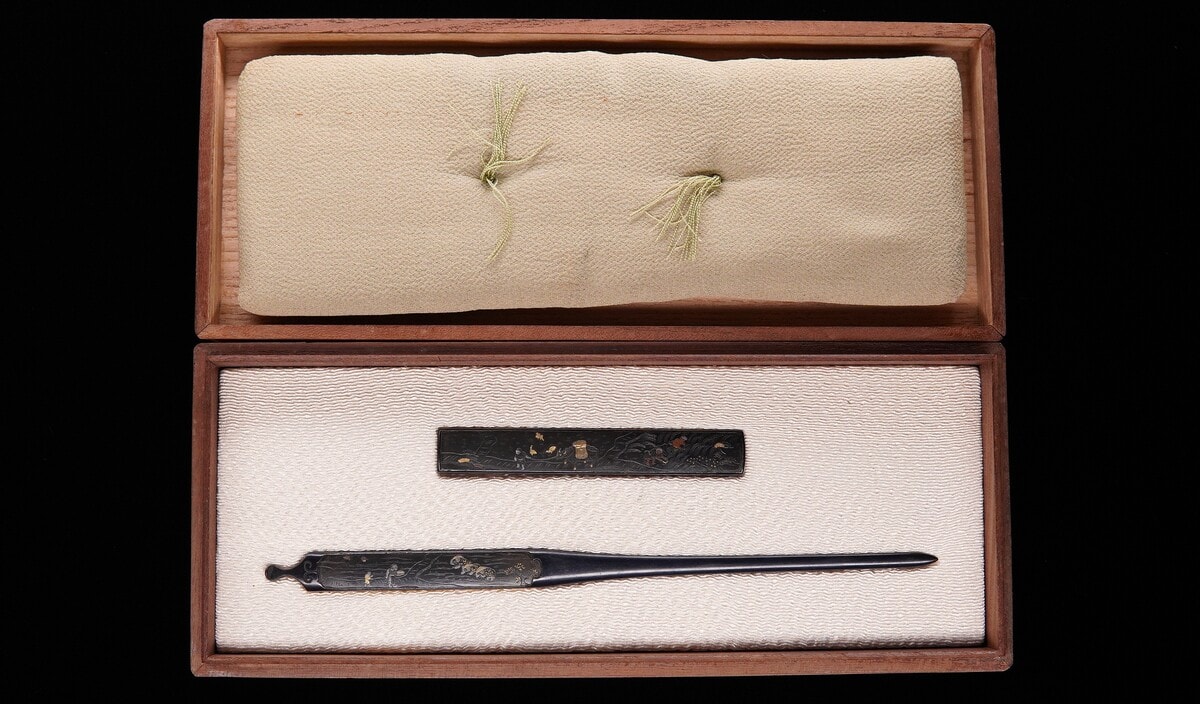
The Tetsugendo (鉄元堂) lineage emerged in Kyoto during the mid-Edo period, founded by Okamoto Genbei Toshiyuki, who trained under Tetsuya Denbei Kuniharu[[c:1]]. Known by his working name Naoshige (尚茂), the founder later adopted the art name Shoraku (正楽) after taking Buddhist tonsure, and died in An'ei 9 (1780). The lineage passed to a second generation, Naofusa (尚房), whose works also survive. Together with Ichinomiya Nagatsune and Otsuki Mitsuoki, the first-generation Shoraku was celebrated as one of the "Three Outstanding Metalworkers of Kyoto" (Kyoto kinko no sanketsu). The broader circle of Kyoto kinko working in related idioms includes Hosono Sozaemon Masamori, a metalworker resident at Nijo whose dated works span from Genroku 3 (1690) to Kyoho 3 (1718), and Yamazaki Ichiga (also called Nizaemon), whose first generation studied under Goto Shujo and whose line continued through several generations. The hallmark of the Tetsugendo school is its commanding mastery of iron. Shoraku worked chiefly in iron and earned a reputation as an artist who "handled iron with exceptional freedom" and "tolerated no rival" in that material. His characteristic method builds compositions upon a polished iron ground (tetsu migaki-ji) or a finely struck ishime-ji surface, developing figures through sukidashi-bori that transitions seamlessly into fully developed takabori (high relief), imparting depth and a heightened sense of volume.
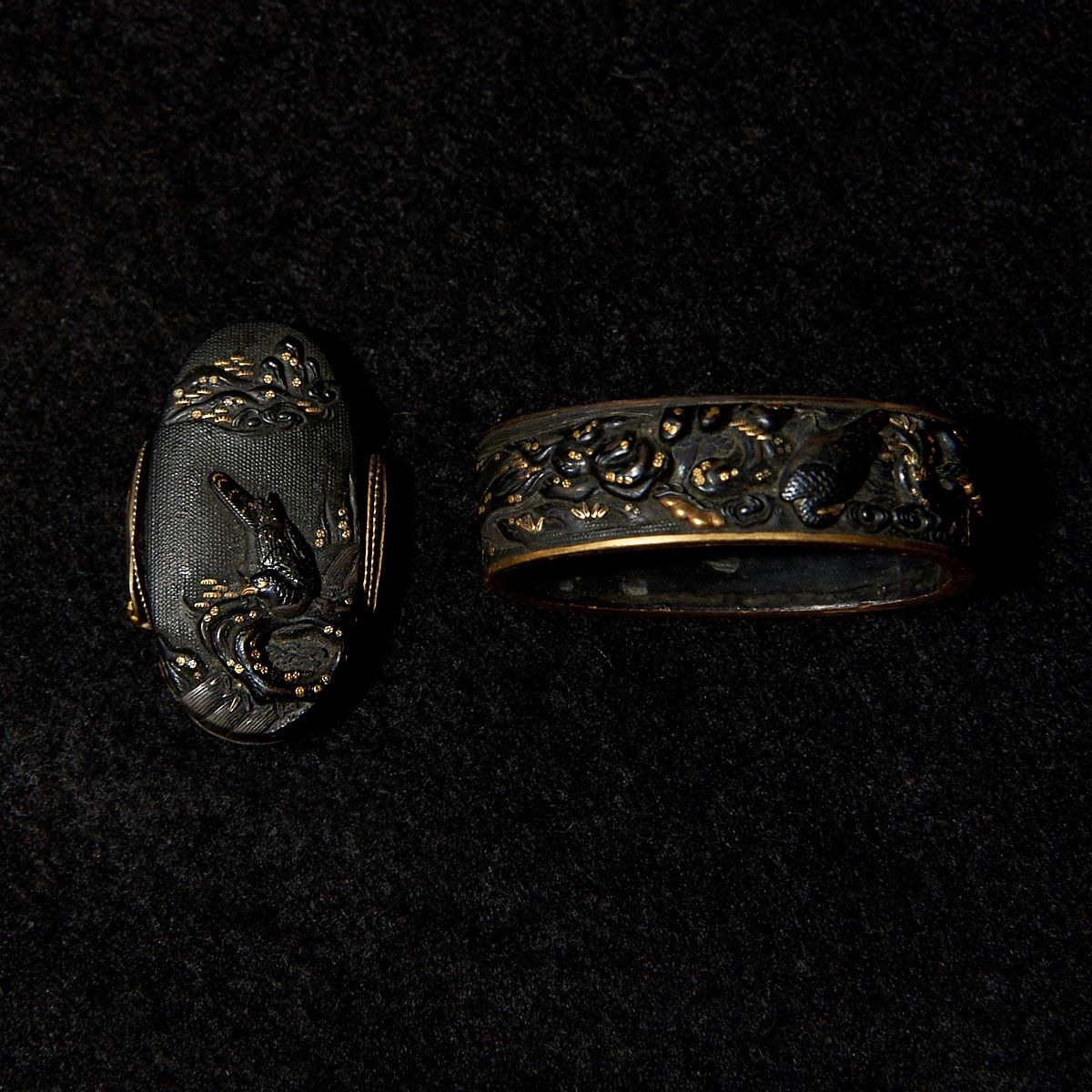
At key points across the iron plate, inlays of gold, silver, shakudo, shibuichi, suaka, and brass are applied with meticulous zogan iroe -- a combination "often regarded as a difficult undertaking" on iron, and one that the NBTHK repeatedly describes as achievable only by Tetsugendo. Subjects are overwhelmingly figural and grounded in direct observation: scenes of figures caught in a sudden evening shower (yudachi) rank among his greatest specialties and "many examples of this same subject are known"; exotic depictions of Tatar (Dattan) figures with Western dogs recur across tsuba and other fittings; and literary themes such as Kisho (Returning Woodcutter), Genjouraku (a gagaku court dance), Fujin and the Great Buddha, and Nanbanjin (Southern Barbarians) are rendered with rich naturalistic observation and a muscular vigor the setsumei call his "true mettle" (shinkotcho). Hosono Masamori, working on shibuichi and shakudo grounds rather than iron, developed a parallel pictorial world through exhaustive kebori and katakiribori combined with hira-zogan of various colored metals, producing panoramic townscape and agrarian scenes of extraordinary descriptive density. " The Tetsugendo lineage occupies a distinctive place in the tosogu canon as the foremost Kyoto school specializing in iron. The first-generation Shoraku's tsuba consistently demonstrate what the NBTHK describes as "a level of finish achievable only by Tetsugendo," from the subdued, moist richness of his iron plates through to the polychrome inlay work executed down to the smallest details. His yudachi compositions -- capturing the clamor and confusion of an evening squall across matched daisho sets of tsuba, fuchi-kashira, and other fittings -- are "very much his own domain," while his Tatar-figure tsuba, including a dated example from Tenmei 2 (1782), are valued both artistically and as documentary evidence for research into the first- and second-generation question. The menuki depicting Kusazuri-hiki on an imo-tsugi-ji ground of gold and shakudo reveal Shoraku's capacity to work outside iron with deliberate archaism, evoking the manner of Goto Yujo. " Hosono Masamori's panoramic scenes of Kyoto street life and agrarian labor, rendered with a minuteness in which "even the conversations among the people might be heard emerging from the scene," and Yamazaki Ichiga's refined Goto-inflected work on shakudo nanako-ji, further attest to the depth and range of this Kyoto kinko circle. Learn more →
| Smith | Era | Designated |
|---|---|---|
| Shoraku正楽 | — | 13 |
| Yamazaki Ichiga山﨑一賀 | — | 3 |
| Eiju栄寿 | — | 0 |
| Naofusa尚房 | Edo | 2 |
| Buzen武禅 | — | 0 |
We could not find an authenticity certificate on the seller’s listing. Japanese swords and fittings are normally papered by the NBTHK (or the NTHK). Without one, the attribution is the seller’s own assessment and has not been independently verified — treat it with caution and ask the dealer about certification before buying.
Returns accepted on items ordered from the site when an item does not appear to be as depicted and described; buyer must notify via email within 7 days of receipt. Refund covers purchase price minus shipping, bank fees, and currency conversion. Sales on items paid in terms are final, as are sales of items personally inspected.
This is a well-executed tsuba by Seiryūken Eiju, featuring a dragon motif for which he was famous. It has a typical discoid cross-section and a golden inlaid personal seal. The dragon's body protrudes, giving it a lifelike appearance, with separately inlaid gold eyes.
NihontoWatchMachibori · Musashi
3 pieces on the market now
Machibori · Yamashiro
25 pieces on the market now
The Tetsugendo (鉄元堂) lineage emerged in Kyoto during the mid-Edo period, founded by Okamoto Genbei Toshiyuki, who trained under Tetsuya Denbei Kuniharu[[c:1]]. Known by his working name Naoshige (尚茂), the founder later adopted the art name Shoraku (正楽) after taking Buddhist tonsure, and died in An'ei 9 (1780). The lineage passed to a second generation, Naofusa (尚房), whose works also survive. Together with Ichinomiya Nagatsune and Otsuki Mitsuoki, the first-generation Shoraku was celebrated as one of the "Three Outstanding Metalworkers of Kyoto" (Kyoto kinko no sanketsu). The broader circle of Kyoto kinko working in related idioms includes Hosono Sozaemon Masamori, a metalworker resident at Nijo whose dated works span from Genroku 3 (1690) to Kyoho 3 (1718), and Yamazaki Ichiga (also called Nizaemon), whose first generation studied under Goto Shujo and whose line continued through several generations. The hallmark of the Tetsugendo school is its commanding mastery of iron. Shoraku worked chiefly in iron and earned a reputation as an artist who "handled iron with exceptional freedom" and "tolerated no rival" in that material. His characteristic method builds compositions upon a polished iron ground (tetsu migaki-ji) or a finely struck ishime-ji surface, developing figures through sukidashi-bori that transitions seamlessly into fully developed takabori (high relief), imparting depth and a heightened sense of volume.
At key points across the iron plate, inlays of gold, silver, shakudo, shibuichi, suaka, and brass are applied with meticulous zogan iroe -- a combination "often regarded as a difficult undertaking" on iron, and one that the NBTHK repeatedly describes as achievable only by Tetsugendo. Subjects are overwhelmingly figural and grounded in direct observation: scenes of figures caught in a sudden evening shower (yudachi) rank among his greatest specialties and "many examples of this same subject are known"; exotic depictions of Tatar (Dattan) figures with Western dogs recur across tsuba and other fittings; and literary themes such as Kisho (Returning Woodcutter), Genjouraku (a gagaku court dance), Fujin and the Great Buddha, and Nanbanjin (Southern Barbarians) are rendered with rich naturalistic observation and a muscular vigor the setsumei call his "true mettle" (shinkotcho). Hosono Masamori, working on shibuichi and shakudo grounds rather than iron, developed a parallel pictorial world through exhaustive kebori and katakiribori combined with hira-zogan of various colored metals, producing panoramic townscape and agrarian scenes of extraordinary descriptive density. " The Tetsugendo lineage occupies a distinctive place in the tosogu canon as the foremost Kyoto school specializing in iron. The first-generation Shoraku's tsuba consistently demonstrate what the NBTHK describes as "a level of finish achievable only by Tetsugendo," from the subdued, moist richness of his iron plates through to the polychrome inlay work executed down to the smallest details. His yudachi compositions -- capturing the clamor and confusion of an evening squall across matched daisho sets of tsuba, fuchi-kashira, and other fittings -- are "very much his own domain," while his Tatar-figure tsuba, including a dated example from Tenmei 2 (1782), are valued both artistically and as documentary evidence for research into the first- and second-generation question. The menuki depicting Kusazuri-hiki on an imo-tsugi-ji ground of gold and shakudo reveal Shoraku's capacity to work outside iron with deliberate archaism, evoking the manner of Goto Yujo. " Hosono Masamori's panoramic scenes of Kyoto street life and agrarian labor, rendered with a minuteness in which "even the conversations among the people might be heard emerging from the scene," and Yamazaki Ichiga's refined Goto-inflected work on shakudo nanako-ji, further attest to the depth and range of this Kyoto kinko circle. Learn more →
| Smith | Era | Designated |
|---|---|---|
| Shoraku正楽 | — | 13 |
| Yamazaki Ichiga山﨑一賀 | — | 3 |
| Eiju栄寿 | — | 0 |
| Naofusa尚房 | Edo | 2 |
| Buzen武禅 | — | 0 |
We could not find an authenticity certificate on the seller’s listing. Japanese swords and fittings are normally papered by the NBTHK (or the NTHK). Without one, the attribution is the seller’s own assessment and has not been independently verified — treat it with caution and ask the dealer about certification before buying.
Returns accepted on items ordered from the site when an item does not appear to be as depicted and described; buyer must notify via email within 7 days of receipt. Refund covers purchase price minus shipping, bank fees, and currency conversion. Sales on items paid in terms are final, as are sales of items personally inspected.