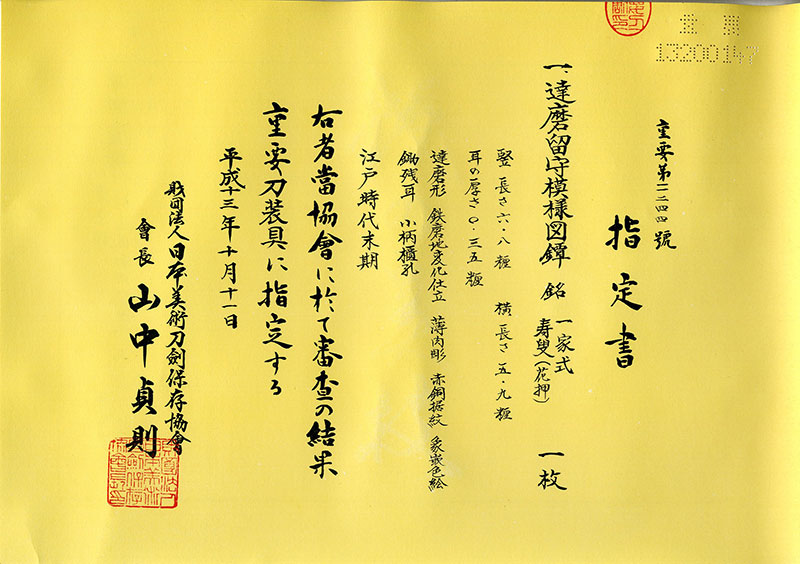
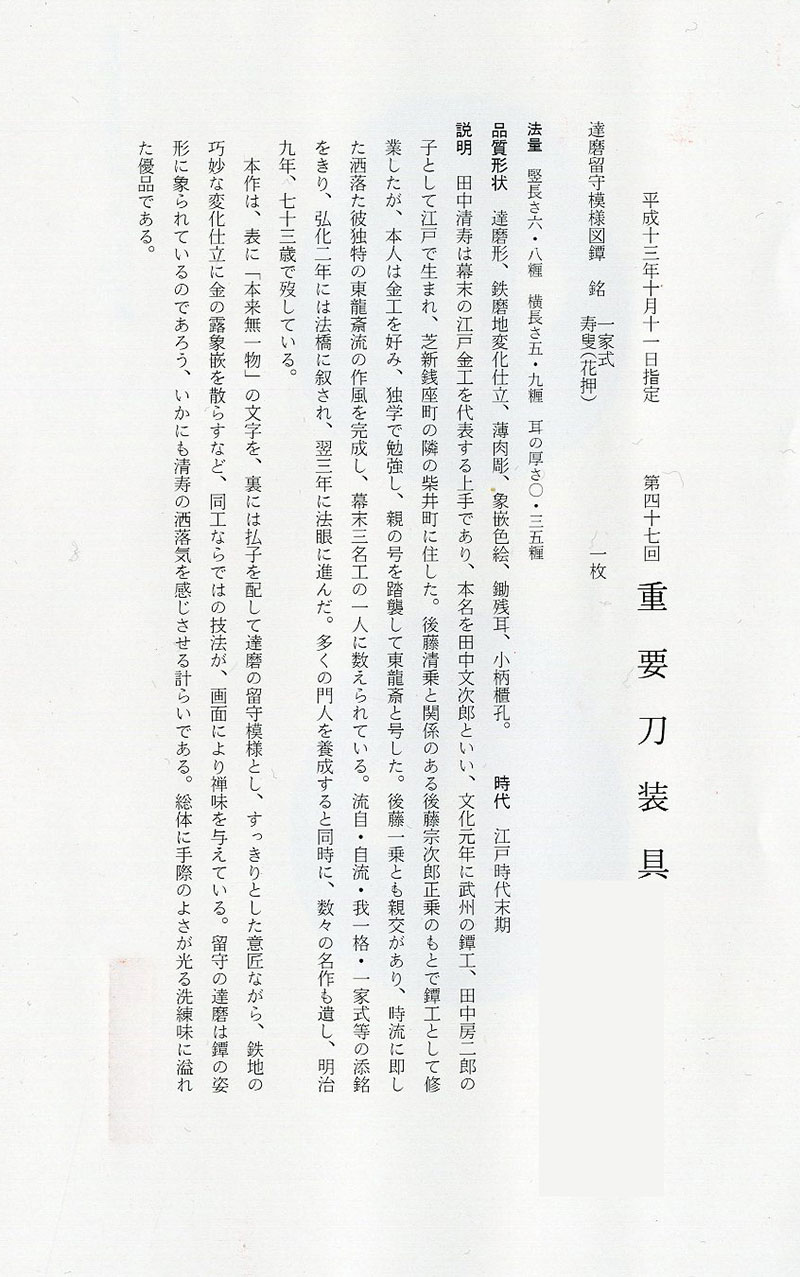
-Tōsōgu, 47th Session — Designated October 11, 2001
, : Tanaka Seijū (田中清寿)
Measurements (height): 6.0 cm (width): 5.9 cm Mimi thickness: 0.35 cm
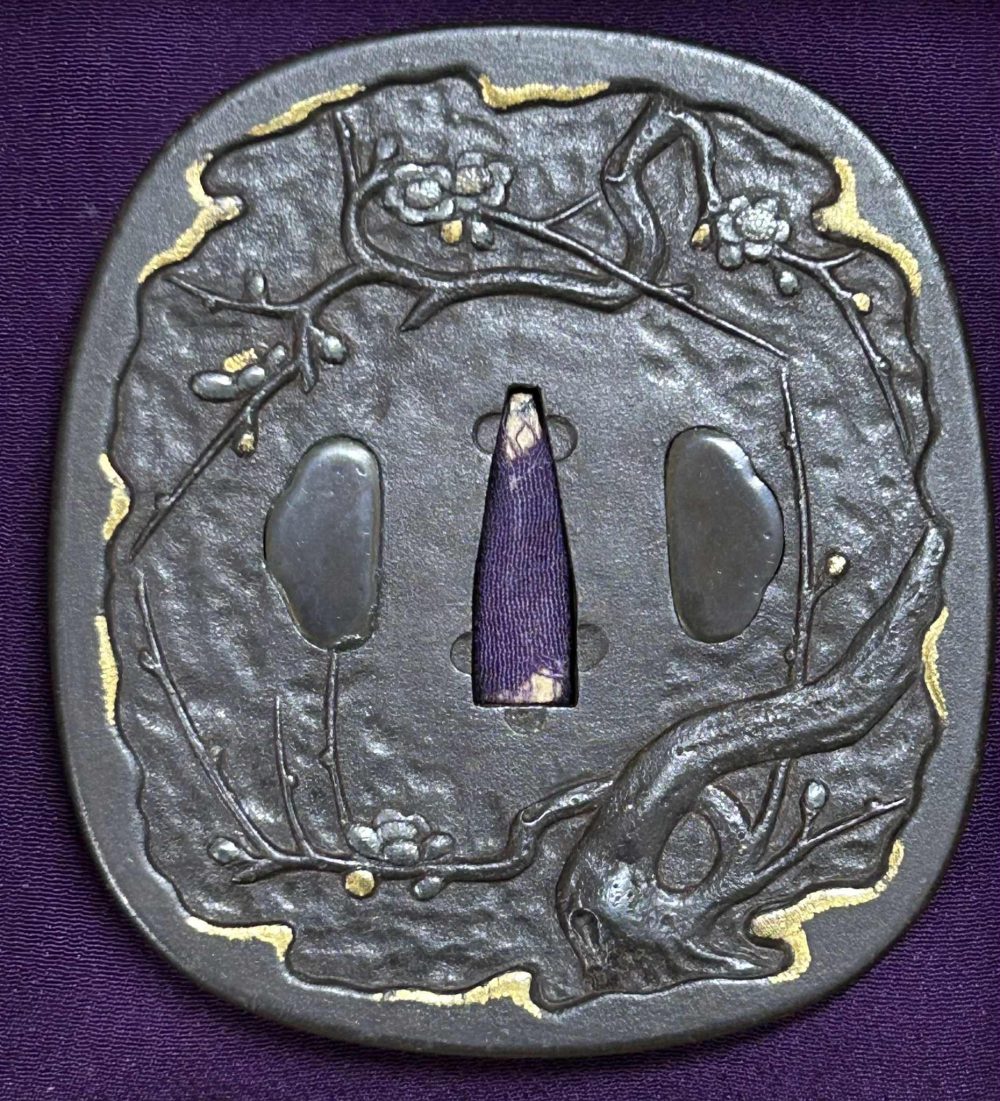
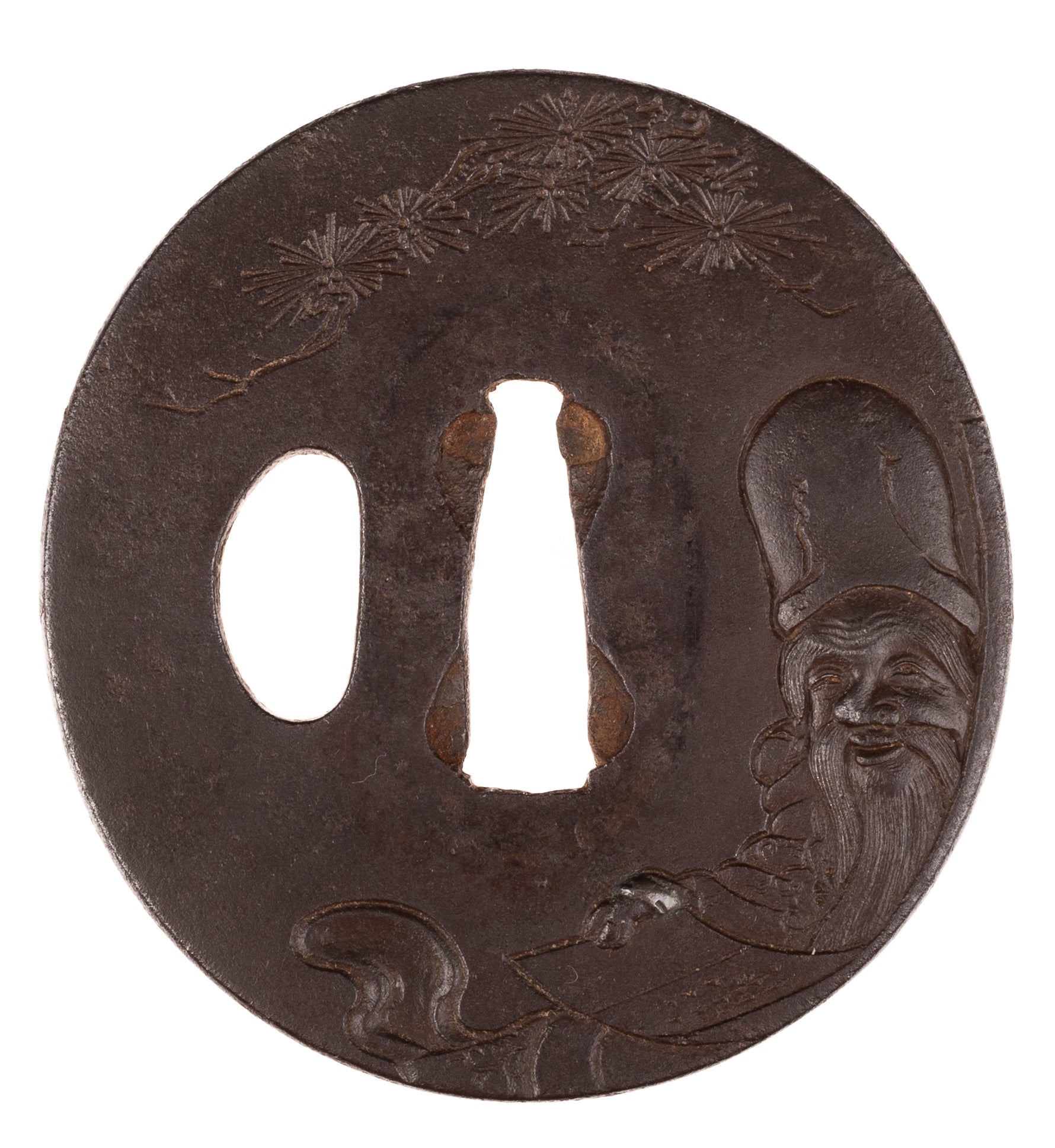
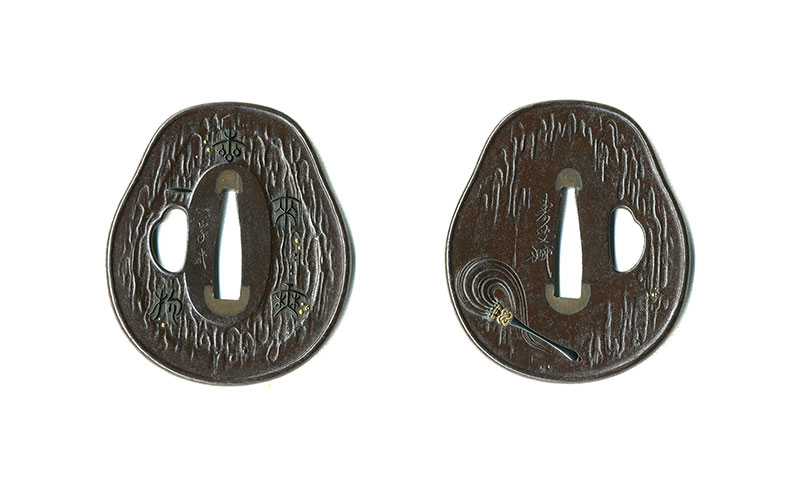
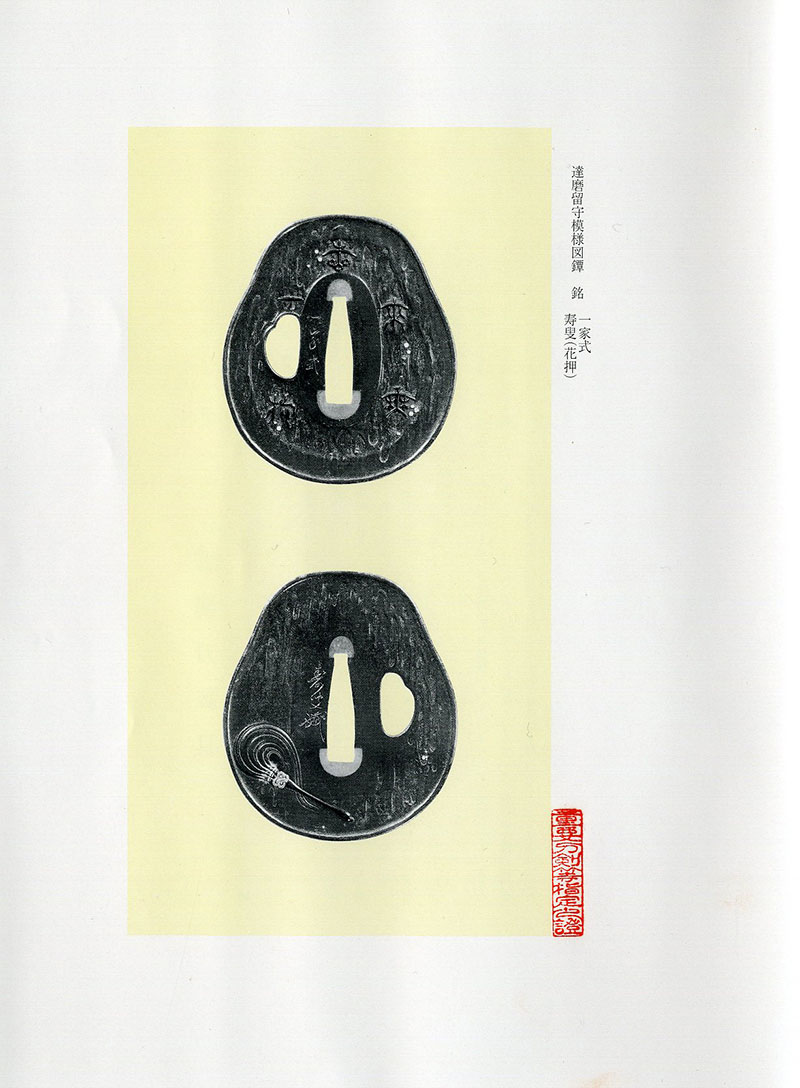
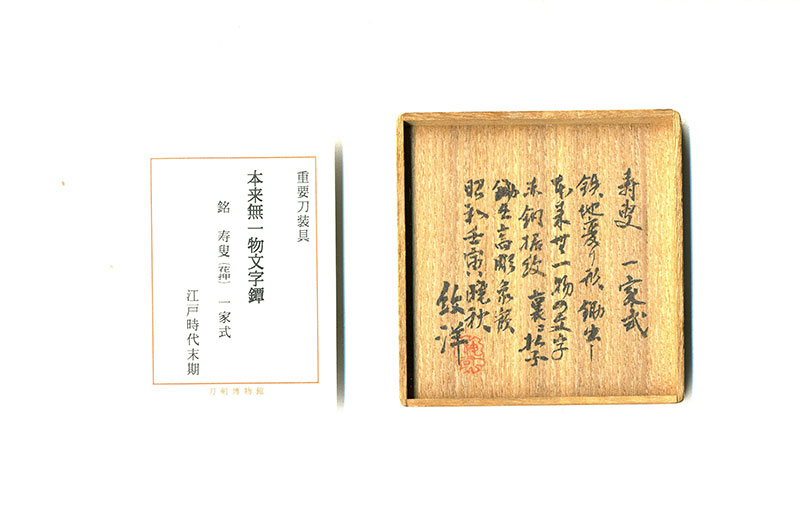
Description Form: Daruma-gata (Bodhidharma-shaped) Material: iron Surface/Finish: polished ground () with an ingeniously varied surface treatment (henka shitate) Construction: (single plate) Design: “Daruma-in-absence” (Daruma rusu-moyō): on the front, the Zen phrase “Honrai mu ichimotsu” (“Originally there is not a single thing”); on the reverse, a hossu (fly whisk) Decoration: low relief carving (), inlay and polychrome metalwork (zōgan iroe), with scattered gold “dew” inlay ( no tsuyu-) Rim: (rim areas left intentionally unworked/“left remaining”) : one Signature: additional inscription “” (一家式); signed “Jusō” (寿叟) with
Artisan Tanaka Seijū—also known by the art names Tōryūsai and Jusō—was a leading late- metalsmith in and is counted among the “three great masters” (bakumatsu san-meikō) of the period.
Era Late period
Explanation Tanaka Seijū (personal name: Tanaka Bunjiro) was born in in Bunka 1 (1804) as the son of the -maker Tanaka Fusahirō. He lived in Shibai-chō, adjacent to Shiba Shinsen-za-chō. He trained as a -maker under Gotō Sōjirō Masanori, who had connections with Gotō Seijō; however, Seijū himself preferred broader metalwork and pursued study largely through self-directed efforts, inheriting his father’s gō and using the name Tōryūsai. He also maintained a close association with Gotō Ichijō. By responding keenly to contemporary taste, he established a stylish and distinctly personal “Tōryūsai-style” manner, and he is regarded as one of the foremost craftsmen of the bakumatsu era.
He cut various addenda to his signatures—such as ryū jiko (流自), jiryū (自流), ga-ikkaku (我一格), and (一家式). In Kōka 2 (1845) he was granted the rank of Hōkyō, and advanced to Hōgen the following year. While training many pupils, he also left numerous notable works, and he died in Meiji 9 (1876) at the age of seventy-three.
This presents on the front the inscription “Honrai mu ichimotsu,” and on the reverse a hossu, together forming a witty “Daruma-in-absence” design. Although the overall conception is clean and restrained, Seijū’s characteristic methods—such as the subtly contrived changes in the iron ground and the scattering of gold “dew” inlay—lend the surface a heightened Zen flavor. The “absent Daruma” is surely implied by the very Daruma-gata outline of the guard, an ingenious touch that strongly conveys Seijū’s sense of stylish playfulness. Overall, it is a refined, expertly handled work and an excellent piece.