NihontoWatch MonNihontoWatch
Market
Encyclopedia
Kantei

Description

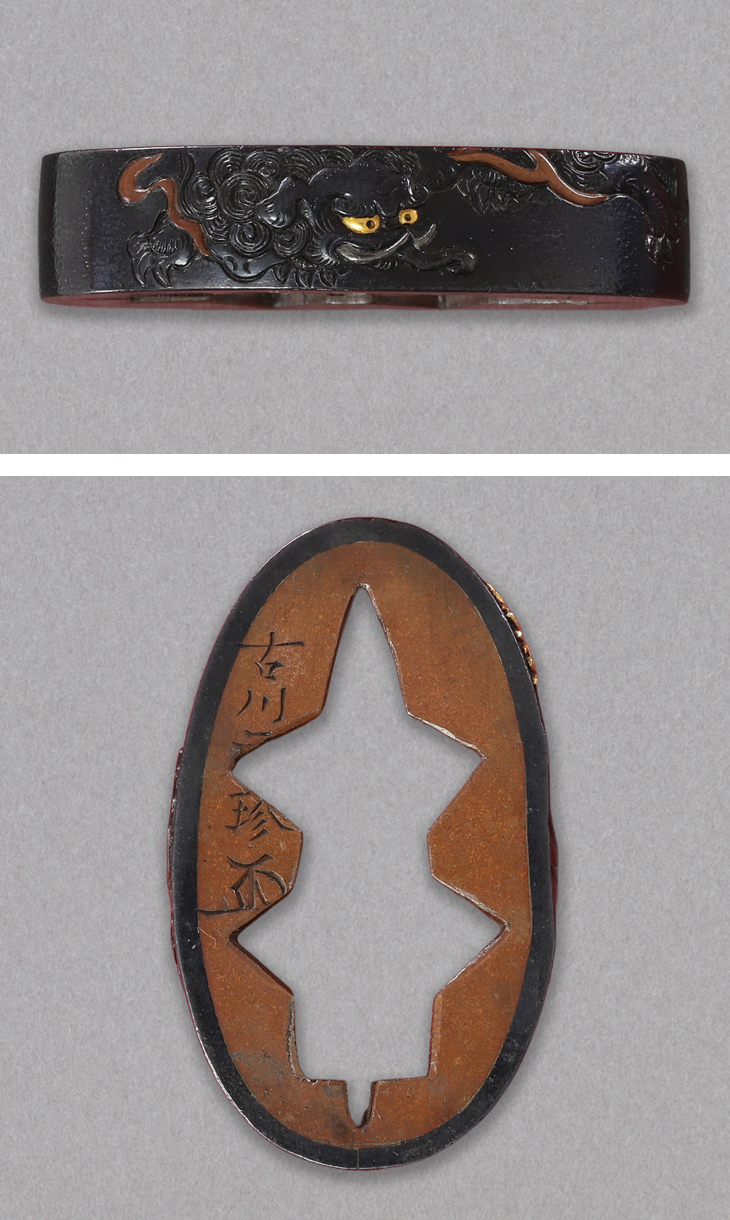
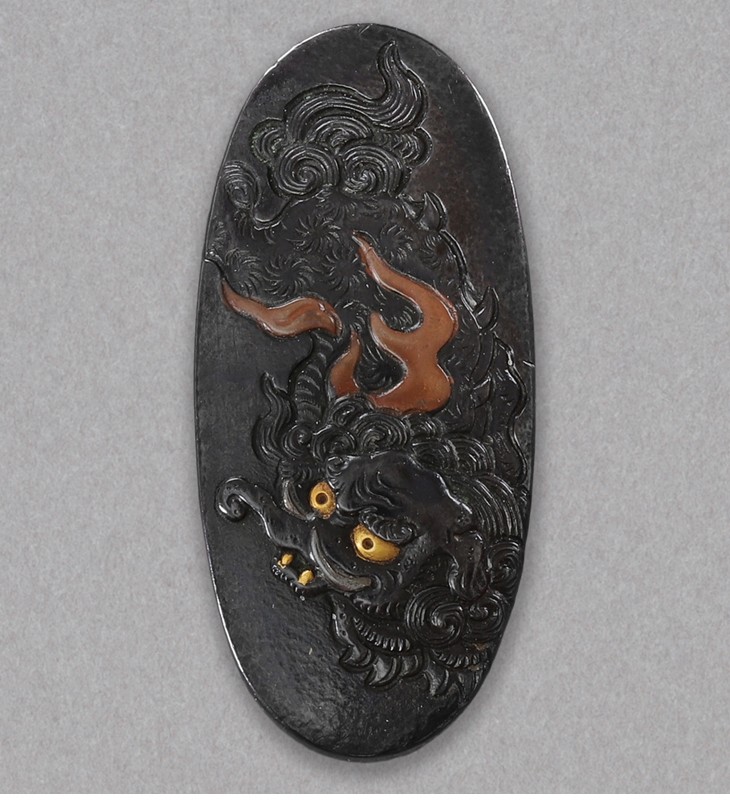
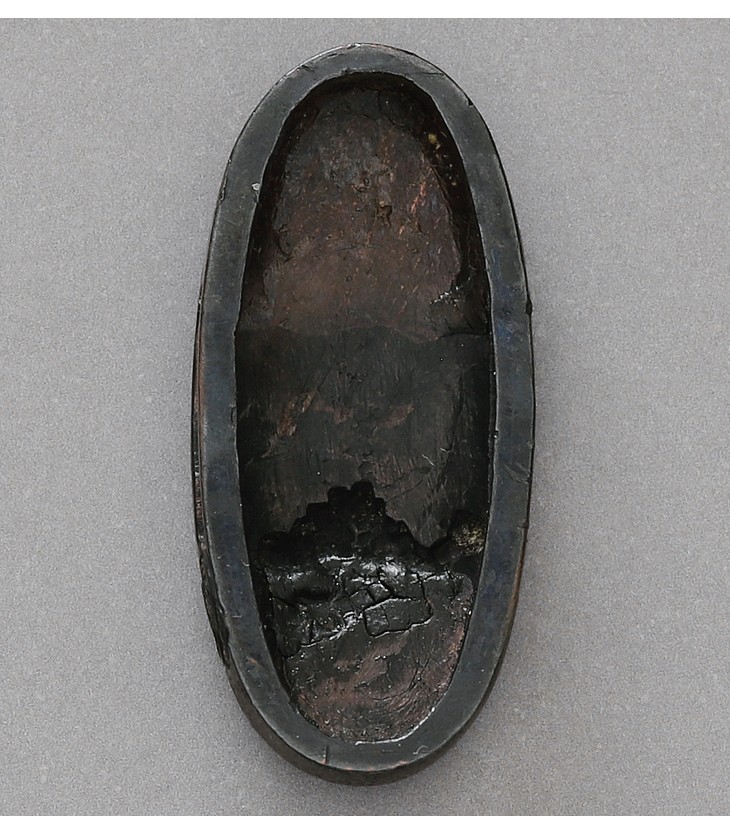
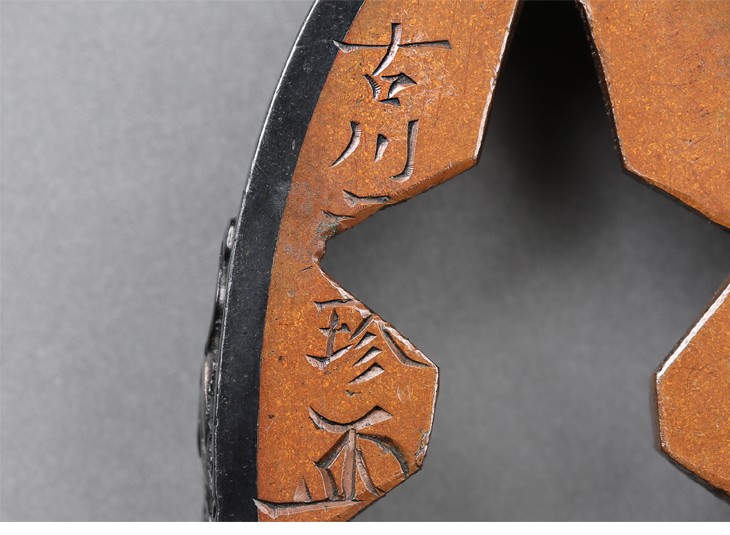
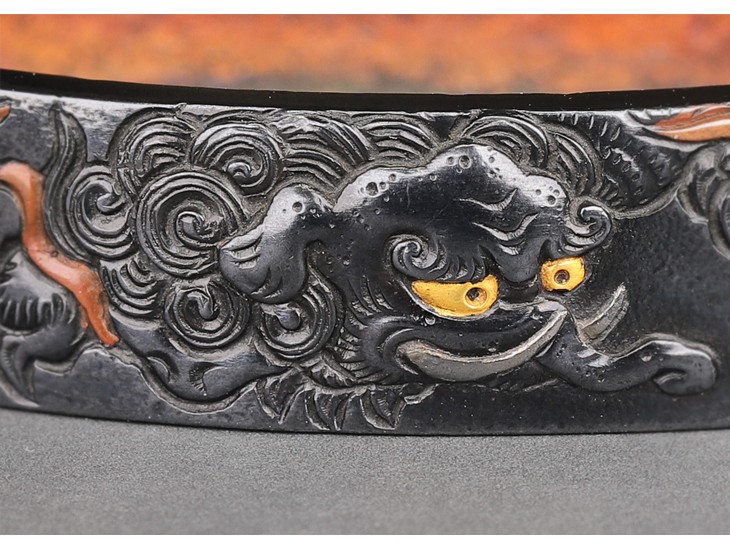
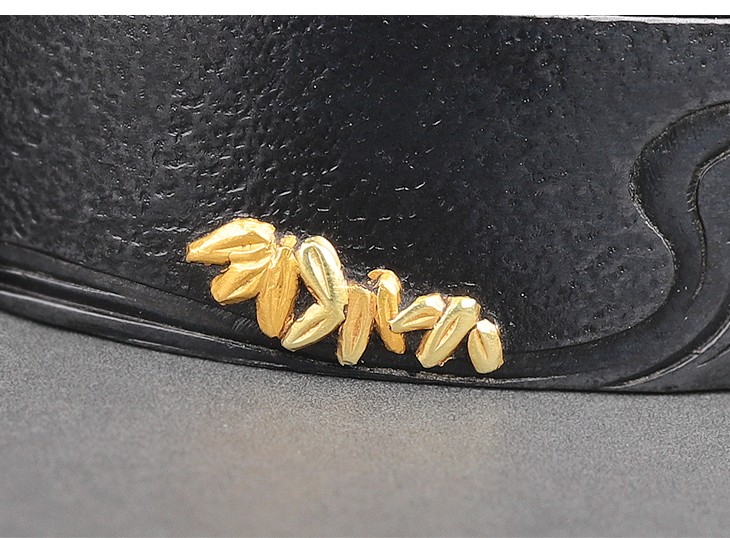
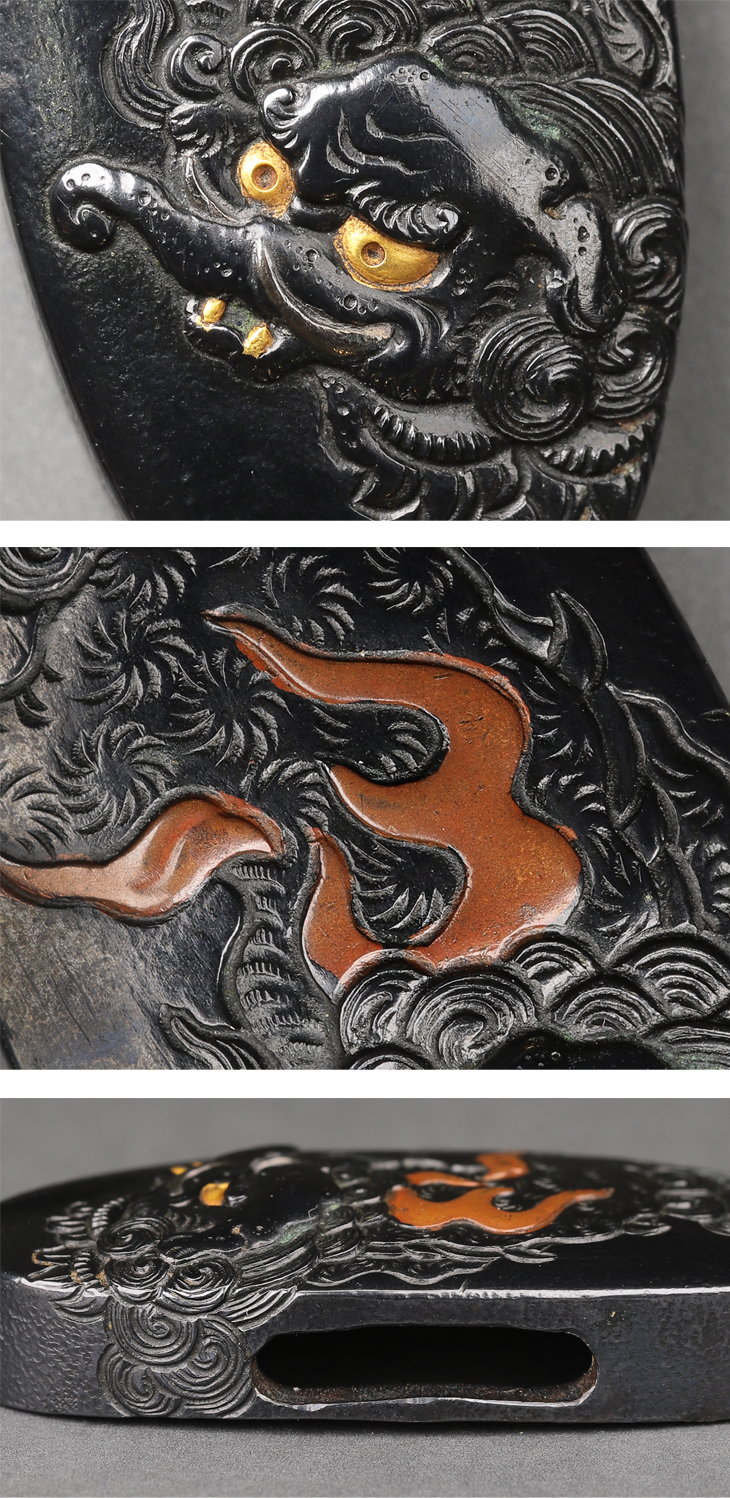
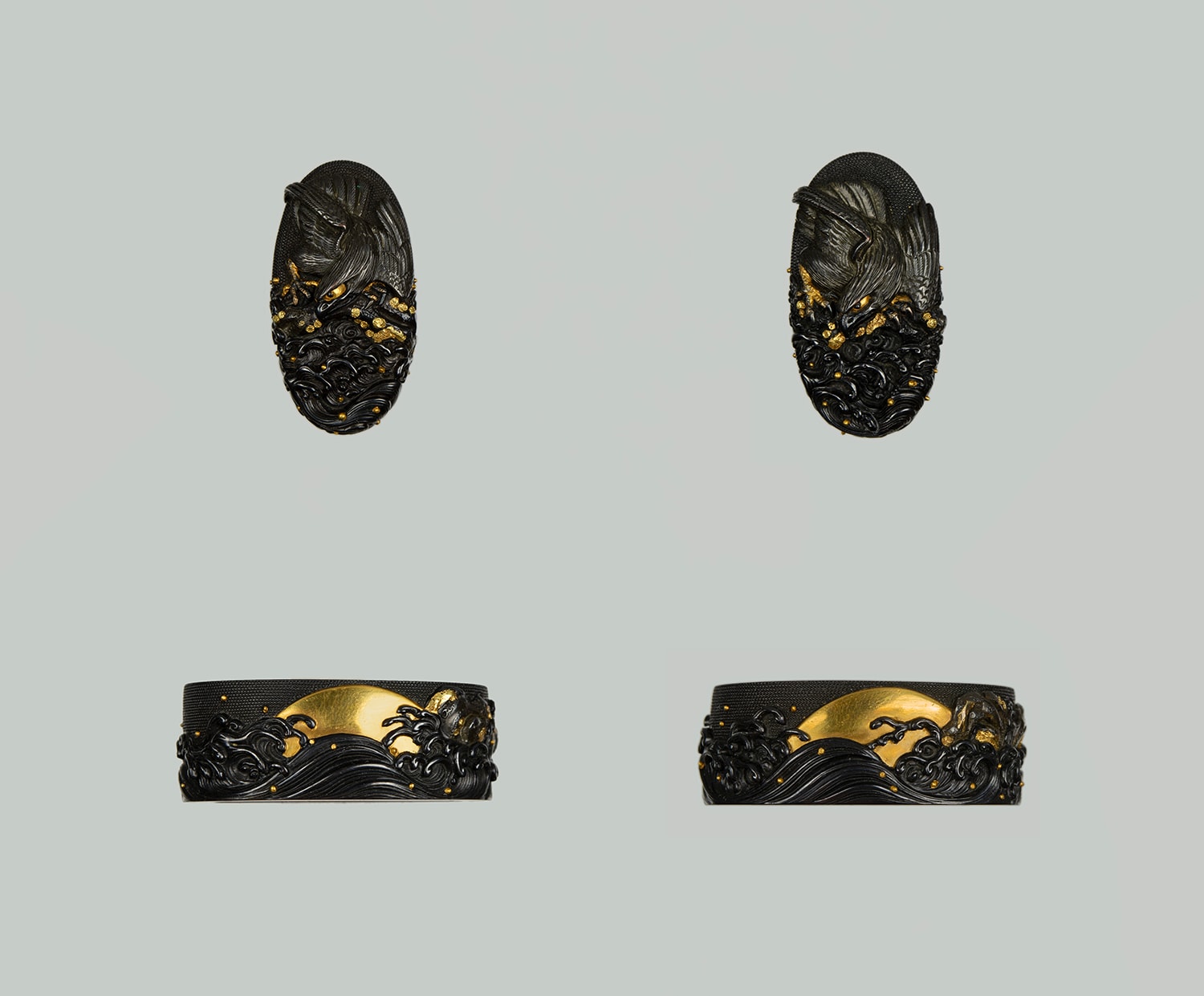
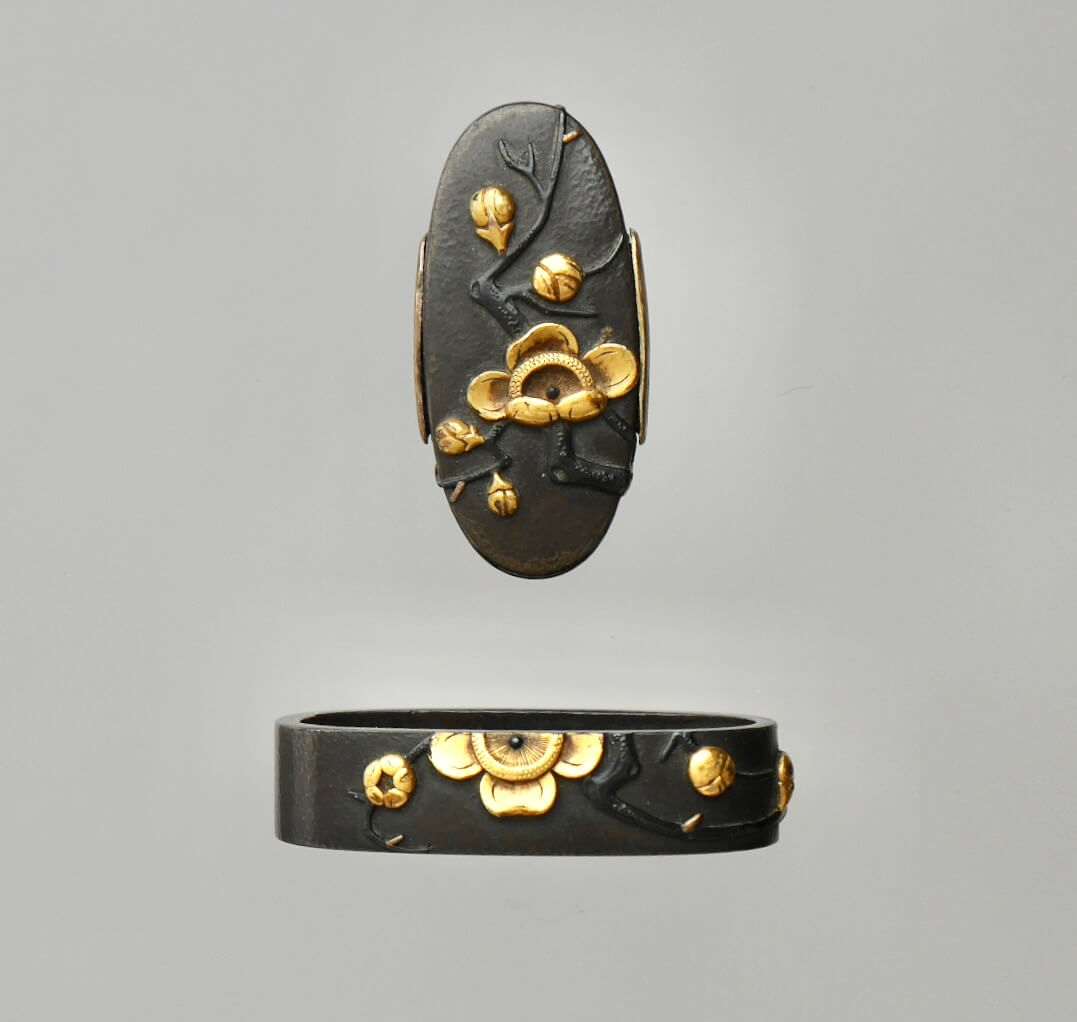
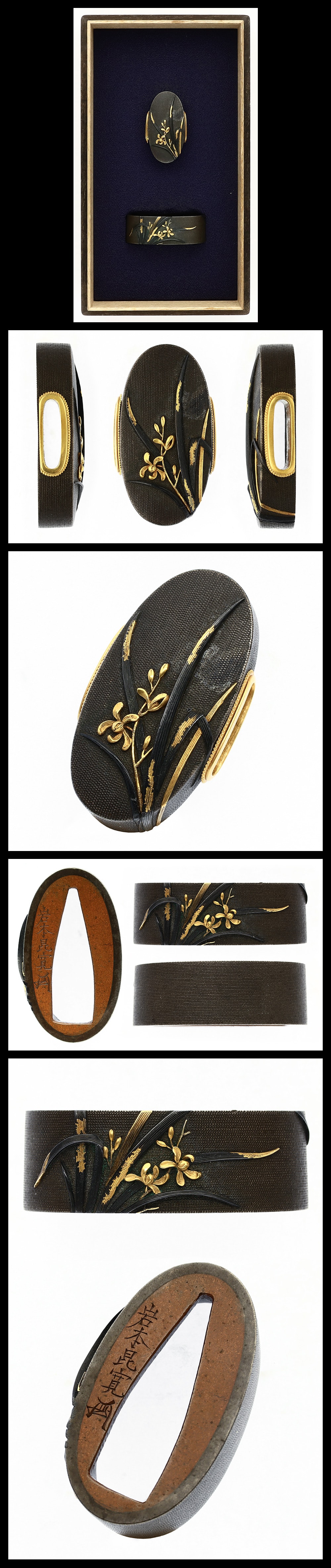
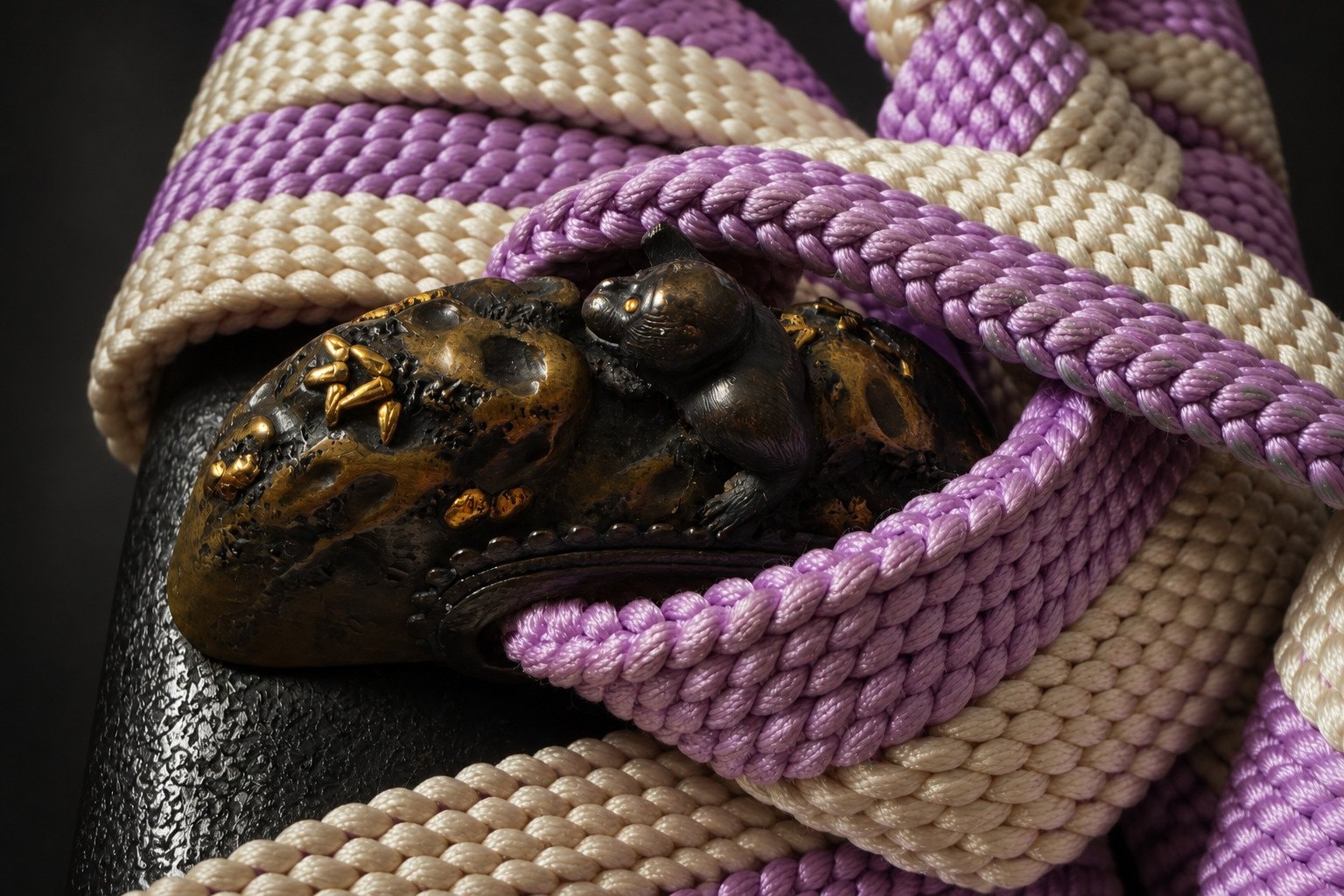
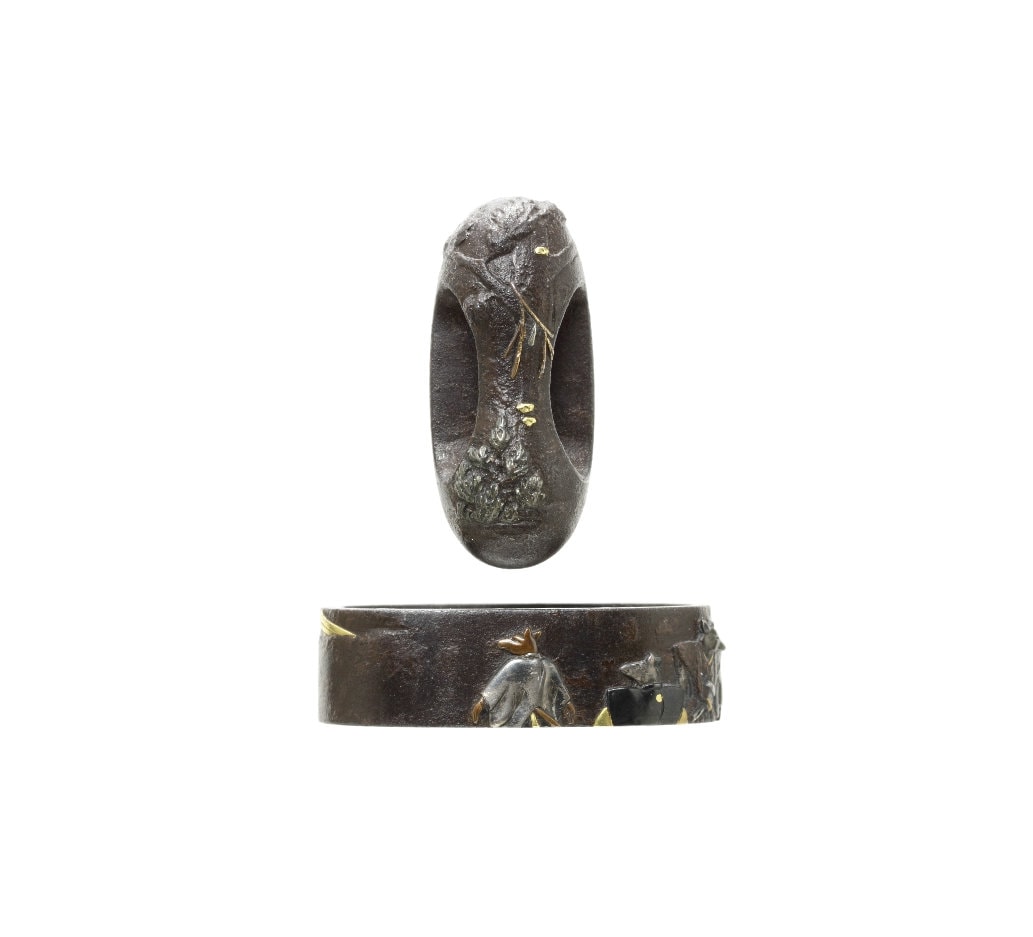
This is a rare fuchigashira (sword collar and pommel set) depicting the mythical creature Baku, made by Furukawa Genchin. It features shakudo ishime-ji (pear-skin ground) with sukidashi takabori (raised carving) and gold, silver, and suaka (copper alloy) iroe zogan (inlay). Genchin, the founder of the Furukawa family, was a master metalworker known for both katakiribori and takabori techniques, leaving behind many masterpieces like this one.

NihontoWatch MonNihontoWatch
MarketEncyclopediaKantei
Fittings›Machibori›Yokoya›Genchin›Fuchigashira: Baku no Zu
fuchi-kashiraHozon
Yokoya Genchin

Fuchigashira: Baku no Zu

mei · Edo

¥285,000
Visit seller website →
Yokoya Genchin (元珍) · Edo4 works for sale · median ask ¥225,000 →
Fuchi-KashiraHozon
Could you name the smith from the blade alone? Today’s kantei →
Yokoya Genchin — 1 of 8
Yokoya Genchin — 2 of 8
Yokoya Genchin — 3 of 8
Yokoya Genchin — 4 of 8
Yokoya Genchin — 5 of 8
Yokoya Genchin — 6 of 8
Yokoya Genchin — 7 of 8
Yokoya Genchin — 8 of 8
1 / 8
1 / 8
Yokoya Genchin — 1 of 8Yokoya Genchin — 2 of 8Yokoya Genchin — 3 of 8Yokoya Genchin — 4 of 8Yokoya Genchin — 5 of 8Yokoya Genchin — 6 of 8Yokoya Genchin — 7 of 8Yokoya Genchin — 8 of 8
Yokoya Genchin (元珍) · Edo4 works for sale · median ask ¥225,000 →
Fuchi-KashiraHozon
Could you name the smith from the blade alone? Today’s kantei →
Measurements & details
Era

Edo

Signature

Signed

Papers

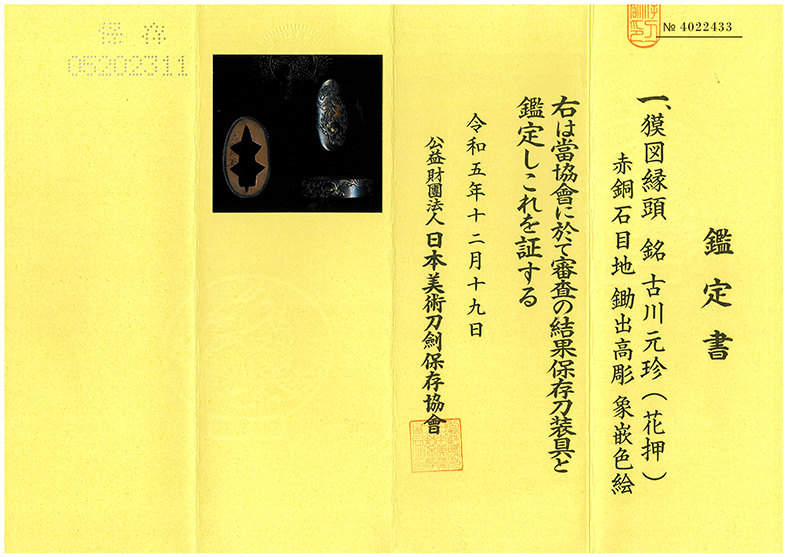
Hozon (NBTHK)

Description

This is a rare fuchigashira (sword collar and pommel set) depicting the mythical creature Baku, made by Furukawa Genchin. It features shakudo ishime-ji (pear-skin ground) with sukidashi takabori (raised carving) and gold, silver, and suaka (copper alloy) iroe zogan (inlay). Genchin, the founder of the Furukawa family, was a master metalworker known for both katakiribori and takabori techniques, leaving behind many masterpieces like this one.

About the maker

Genchin

元珍

Machibori · around 1670

4 pieces on the market now

›

Historical importance

Where Genchin stands among comparable artisans: across all of nihontō, and within tradition, era, and period. The tiers (Foremost · Leading · Major · Notable) weigh official designations from the NBTHK and Japan's Agency for Cultural Affairs, together with historical honors of lasting repute such as the Sansaku and Meibutsu-chō.

随一
Foremost
屈指
Leading
有数
Major
著名
Notable

Select a lens to see how it's measured.

Designation record
1 designated works
Jūyō
1
4 works by Genchin on the market→
Genchin — full profileMachibori school

Study this maker →

About the school

Yokoya

横谷

Machibori · Edo

105 pieces on the market now

›

The Yokoya school was the largest metalworking lineage of the Edo period, founded in the early seventeenth century when the first-generation Yokoya Soyo -- sometimes distinguished as "Sofu Soyo" or "Ko-Soyo" -- studied under Goto Injo Mitsutomi and established an independent atelier in Edo. The school's trajectory was decisively shaped by the third-generation master Somin (1670--1733), who trained in the hereditary iebori manner of the Goto house but, finding its convention-bound idiom unsatisfying, resigned his shogunal stipend and entered the sphere of independent work. There he "exercised his abilities to the fullest, achieved great success, and came to be called the founder of machibori" -- the town-carver tradition that would fundamentally reshape the world of Edo-period sword fittings. Somin cultivated a close friendship with the Kano-school-trained painter Hanabusa Iccho, from whom he received guidance regarding pictorial conceptions, and also studied with Kano Tan'yu, deepening his art through direct engagement with painters' designs. His adopted son and successor Soyo (1700--1734) faithfully continued the atelier's methods, while Soju (1651--1734), a disciple connected with both the first-generation Soyo and Somin, contributed rigorously unified daisho koshirae that exemplify the school's commitment to integrated, thematic ensembles. The Yokoya school's collective technical achievement divides broadly into two principal modes, both originated or perfected by Somin and transmitted through successive generations. The first is richly modeled takabori with polychrome metal inlay (iroe) in gold, silver, and shibuichi on shakudo nanako-ji grounds, where the carving displays an overwhelming abundance of modeled volume -- bold rises and falls in the flesh producing a forceful and crisply articulated manner that clearly reveals the school's Goto lineage and the thoroughness of its training. Soyo's works in this mode are described as possessing "both the capability and the dignity expected of Somin's successor," while Soju's takabori on shakudo nanako-ji achieves a dignified and well-ordered atmosphere across complete, unified fitting suites.

The second mode is katakiribori, a single-edge chisel technique that Somin originated, in which pronounced modulation and decisive strokes alternate depth and shallowness at will, producing modulations of speed and emphasis that recall ink painting. Soyo inherited this specialty with excellent technique, deftly alternating chisels of varying widths to combine bold katakiribori with delicate kebori linework. Among the school's most distinctive inventions are the celebrated "Yokoya lions" -- shishi rendered with such immediacy that one experiences the illusion that the lion might spring forth from the kozuka itself -- and Somin's innovative vertically oriented tatezu compositions depicting lions, tigers, horses, and other subjects from unconventional angles. The Yokoya school's enduring significance lies in its having opened a new artistic direction through freer, life-sketch-based realism that broke decisively with the formalized conventions of the Goto house while retaining that lineage's technical rigor. Somin's command of nanako-ji grounds in shakudo, polished shibuichi surfaces, and techniques such as sukidashi-bori, kebori, and yobori was comprehensive, and this breadth of technical vocabulary was transmitted intact to his successors. Soju's hereditary daisho mounting of the Uesugi family of Yonezawa Domain exemplifies the school's integrative vision -- every component sustaining a single coherent theme across the entire suite -- while Soyo's takabori works, described as "extremely rare," lend special value to surviving matched sets. Whether working in the restrained monochrome palette of polished shakudo or introducing touches of color through kinhira-zogan accents and gold iroe, the Yokoya masters consistently achieved what the NBTHK characterizes as a severity and awe-inspiring intensity that exerted a major influence on later generations of metalworkers, establishing the machibori tradition as the dominant creative current of Edo-period sword fittings. Learn more →

54 recorded smiths386 designated works
Leading smiths
SmithEraDesignated
Somin宗珉—50
Soyo宗與—13
Soju宗壽—3
Yoshisada宜貞—0
Genchin元珍16701
Explore the Yokoya school →
NBTHK Certificate
Hozon Tōsōgu保存刀装具
Fitting Worthy of Preservation
›

Certifies a genuine fitting worth preserving: a correct signature, or, if unsigned, an identifiable era and school, with recognized artistic and craft value.

About the NBTHK›

The NBTHK (Nihon Bijutsu Tōken Hozon Kyōkai, the Society for the Preservation of Japanese Art Swords) is a public-interest incorporated foundation founded in 1948 and supervised by Japan’s Agency for Cultural Affairs (Bunkachō); it is based at the Japanese Sword Museum in Tokyo. Its expert panels physically examine each submitted work (shinsa) and issue a certificate (kanteishō) ranking it by artistic and historical merit. NBTHK papers are the most widely recognized standard of authentication for Japanese swords and fittings.

NBTHK official site→
Seller
S
Samurai Nippon
Established 1977 · 49 yrs on the market
🇯🇵Ships from Japan
›
✓Verified dealersamurai-nippon.net
Settles in JPY
✓Ships worldwide✓English supportWire transferPayPalCredit card
Return policy

For one-of-a-kind items such as swords, sword fittings, and antiques, please contact us about a return within 3 days of the item's arrival and ship it back within 8 days. Refunds are issued the same day the returned item arrives.

View all of Samurai Nippon’s listings→View this item on the dealer’s site→

More works by Yokoya Genchin

View all →
Nihonto US
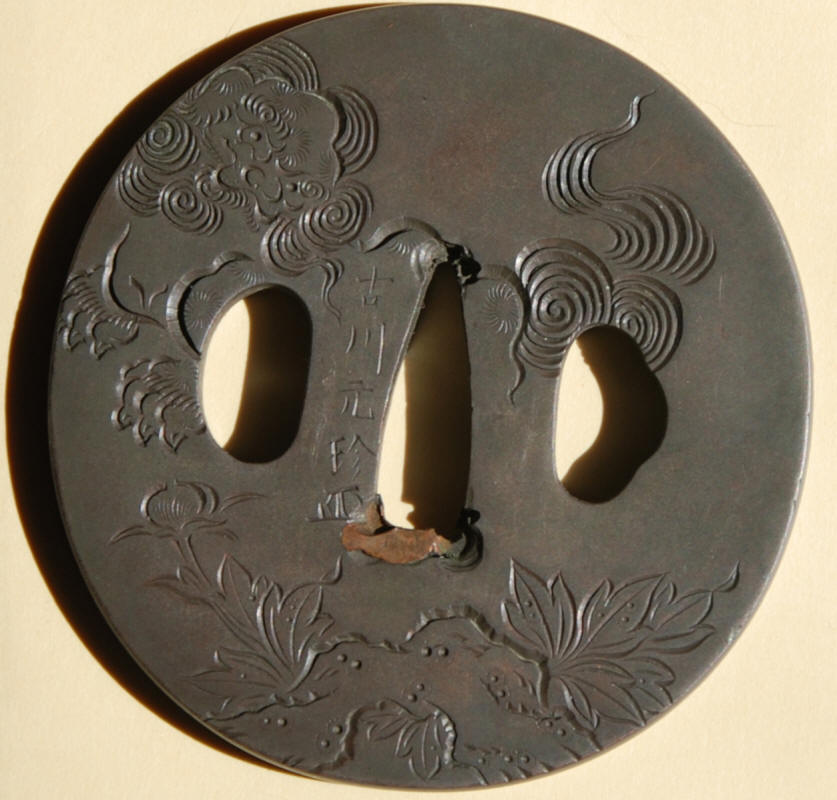
Tsuba - by Yokoya Genchin - Furukawa Genchin - Fu DogTsuba - by Yokoya Genchin - Furukawa Genchin - Fu Dog

Tsuba

ByYokoya Genchin
¥3,000
Toushin
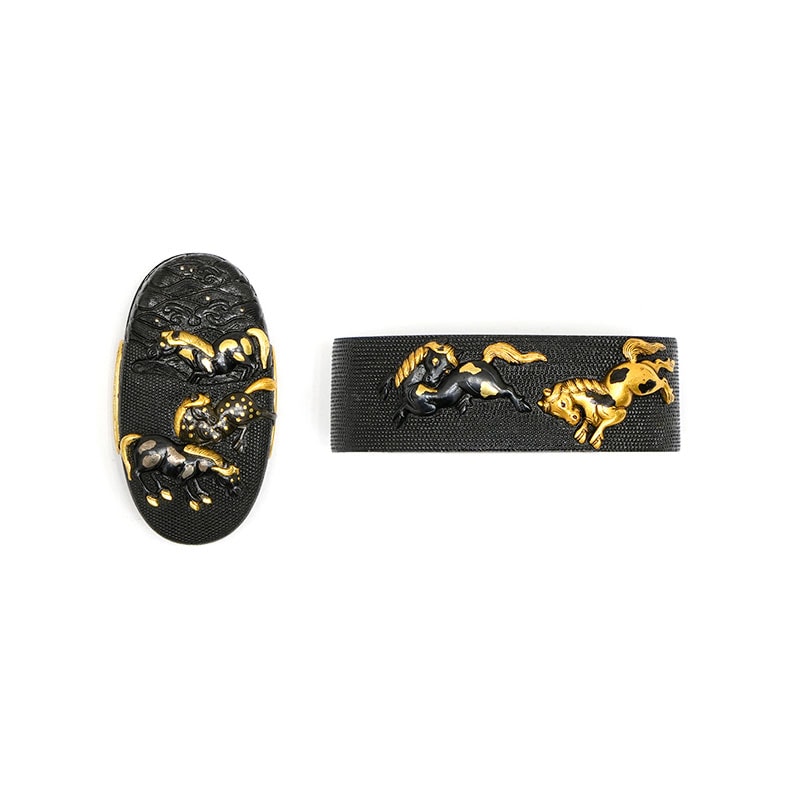
Fuchi-Kashira - by Yokoya Genchin - Fuchi-Kashira: Furukawa Genchin - HorsesFuchi-Kashira - by Yokoya Genchin - Fuchi-Kashira: Furukawa Genchin - Horses

Fuchi-Kashira

ByYokoya Genchin
¥165,000
Toyuukai
Hozon
Kogai - Hozon - by Yokoya Genchin - Kogai with Flutist Design, Furukawa Ganchin (with Kaō), NBTHK Hozon CertificateKogai - Hozon - by Yokoya Genchin - Kogai with Flutist Design, Furukawa Ganchin (with Kaō), NBTHK Hozon Certificate

Kōgai

ByYokoya Genchin
¥150,000

Previously sold by Yokoya Genchin

View all →
Nihonto US
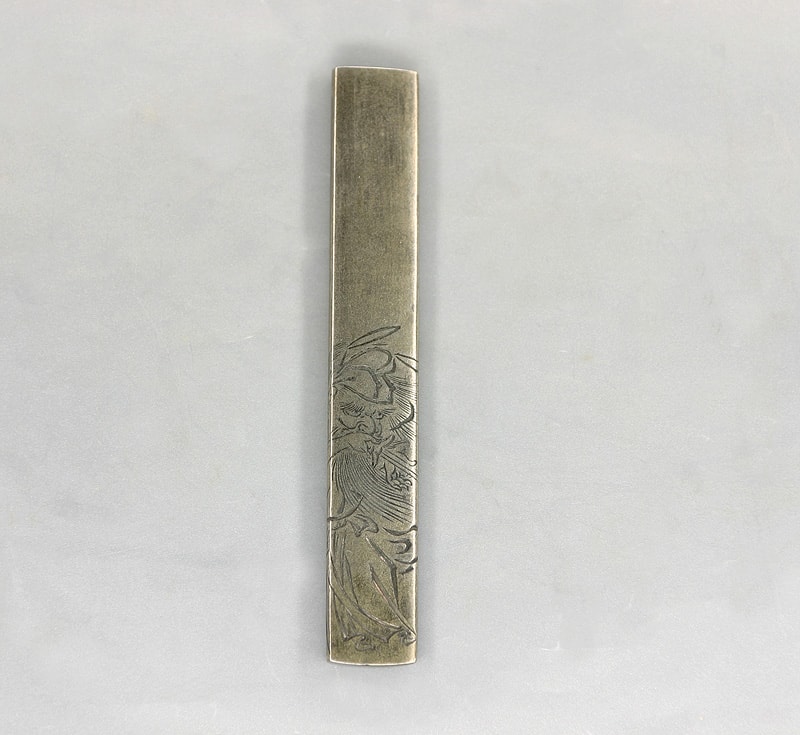
Kozuka - by Yokoya Genchin - Furukawa GenchinKozuka - by Yokoya Genchin - Furukawa Genchin
Sold

Kozuka

ByYokoya Genchin
SOLD

More from the Yokoya school

View all →
Touken Matsumoto
Jūyō
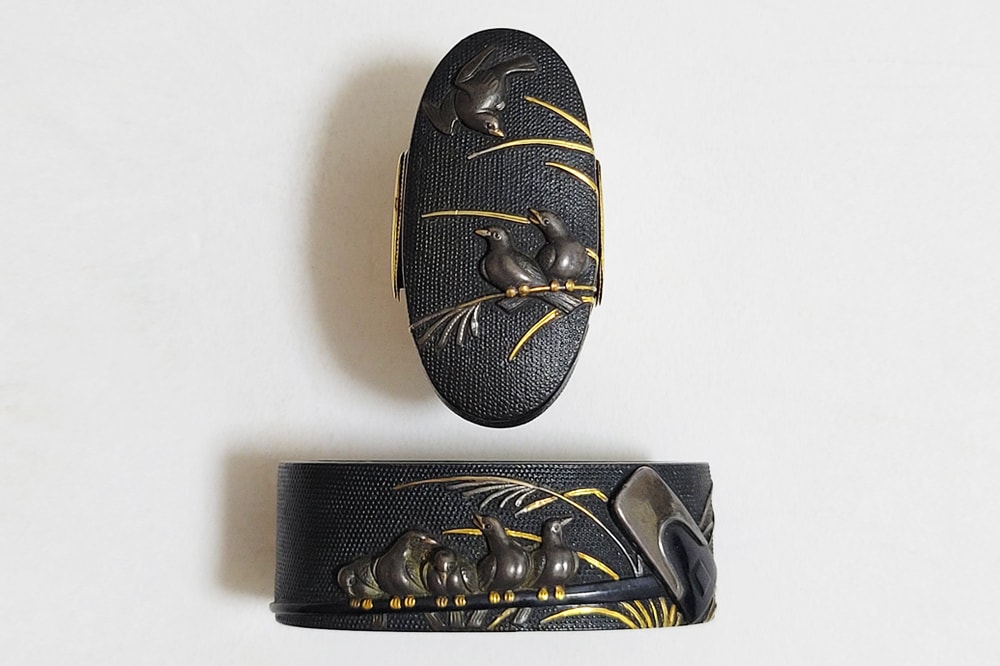
Fuchi-Kashira - Jūyō - by Iwamoto Konkan - Fuchi-Kashira: Thrush on a Hoe DesignFuchi-Kashira - Jūyō - by Iwamoto Konkan - Fuchi-Kashira: Thrush on a Hoe Design

Fuchi-Kashira

ByIwamoto Konkan
¥2,500,000
Ginza Seikodo
Tokuho
Kozuka - Tokuho - by Yokoya Somin - Somin - Depiction of Shoki (Zhong Kui)Kozuka - Tokuho - by Yokoya Somin - Somin - Depiction of Shoki (Zhong Kui)

Kozuka

ByYokoya Somin
¥1,500,000
Connoisseur Arms
Jūyō
Tsuba - Jūyō - by Iwamoto Konju - Juyo Daisho Tsuba Masterpiece by Iwamoto KonjuTsuba - Jūyō - by Iwamoto Konju - Juyo Daisho Tsuba Masterpiece by Iwamoto Konju

Tsuba

ByIwamoto Konju
Ask
Iida Koendo
Jūyō
Mitokoromono - Jūyō - by Kikuoka Mitsuyuki - Juyo Tosogu: Kikuoka MitsuyukiMitokoromono - Jūyō - by Kikuoka Mitsuyuki - Juyo Tosogu: Kikuoka Mitsuyuki

Mitokoromono

ByKikuoka Mitsuyuki
¥8,800,000
Gallery Youyou
Hozon
Kozuka - Hozon - by Kikuoka Yukinobu - Autumn Grass and Rooster DesignKozuka - Hozon - by Kikuoka Yukinobu - Autumn Grass and Rooster Design

Kozuka

ByKikuoka Yukinobu
¥660,000
Nihontocraft
Jūyō
Fuchi-Kashira - Jūyō - by Omori Teruhide - Omori Eishu (Teruhide)Fuchi-Kashira - Jūyō - by Omori Teruhide - Omori Eishu (Teruhide)

Fuchi-Kashira

ByOmori Teruhide
¥55,000
Gallery Youyou
Hozon
Fuchi-Kashira - Hozon - by Omori Terumasa - Fuchi-Kashira with Plum Tree DesignFuchi-Kashira - Hozon - by Omori Terumasa - Fuchi-Kashira with Plum Tree Design

Fuchi-Kashira

ByOmori Terumasa
¥450,000
Aoi Art
Jūyō
Fuchi-Kashira - Jūyō - by Iwamoto Konkan - Fuchikashira: Iwamoto KonkanFuchi-Kashira - Jūyō - by Iwamoto Konkan - Fuchikashira: Iwamoto Konkan

Fuchi-Kashira

ByIwamoto Konkan
¥2,500,000

More from the Machibori tradition

View all →
Supein Nihonto
Koshirae - by Tsuchiya School - Wakizashi Koshirae with Tiger, Bamboo & Yasuchika Tsuba – Edo PeriodKoshirae - by Tsuchiya School - Wakizashi Koshirae with Tiger, Bamboo & Yasuchika Tsuba – Edo Period

Koshirae

ByTsuchiya School
¥3,900
Touken Komachi
Hozon
Tsuba - Hozon - by Hamano School - Wakizashi Koshirae with Tomiyuki Tsuba and Fuchi-Kashira, Black Lacquer SayaTsuba - Hozon - by Hamano School - Wakizashi Koshirae with Tomiyuki Tsuba and Fuchi-Kashira, Black Lacquer Saya

Tsuba

ByHamano School
¥800,000
Touken Matsumoto
Tokuho
Tsuba - Tokuho - by Mito Hirotoshi - Tsuba with Lin Hejing Design, Signed Ichijosai Hirotoshi (Kao)Tsuba - Tokuho - by Mito Hirotoshi - Tsuba with Lin Hejing Design, Signed Ichijosai Hirotoshi (Kao)

Tsuba

ByMito Hirotoshi
¥500,000
Choshuya
Tokuho
Fuchi-Kashira - Tokuho - by Otsuki Matsuo Gassan - Fuchigashira: Fox Wedding Motif, Signed Oko Gassan (Kongosai)Fuchi-Kashira - Tokuho - by Otsuki Matsuo Gassan - Fuchigashira: Fox Wedding Motif, Signed Oko Gassan (Kongosai)

Fuchi-Kashira

ByOtsuki Matsuo Gassan
¥700,000
Ayakashi
Tokuho
Kozuka - Tokuho - by Tsuchiya School - Pine and Moon Design by YoshichikaKozuka - Tokuho - by Tsuchiya School - Pine and Moon Design by Yoshichika

Kozuka

ByTsuchiya School
¥280,000
Samurai Nippon
Tokubetsu Kichō
Kozuka - Tokubetsu Kichō - by Otsuki Mitsuhiro - Waves and Plovers DesignKozuka - Tokubetsu Kichō - by Otsuki Mitsuhiro - Waves and Plovers Design

Kozuka

ByOtsuki Mitsuhiro
¥85,000
Katanahanbai
Tokuho
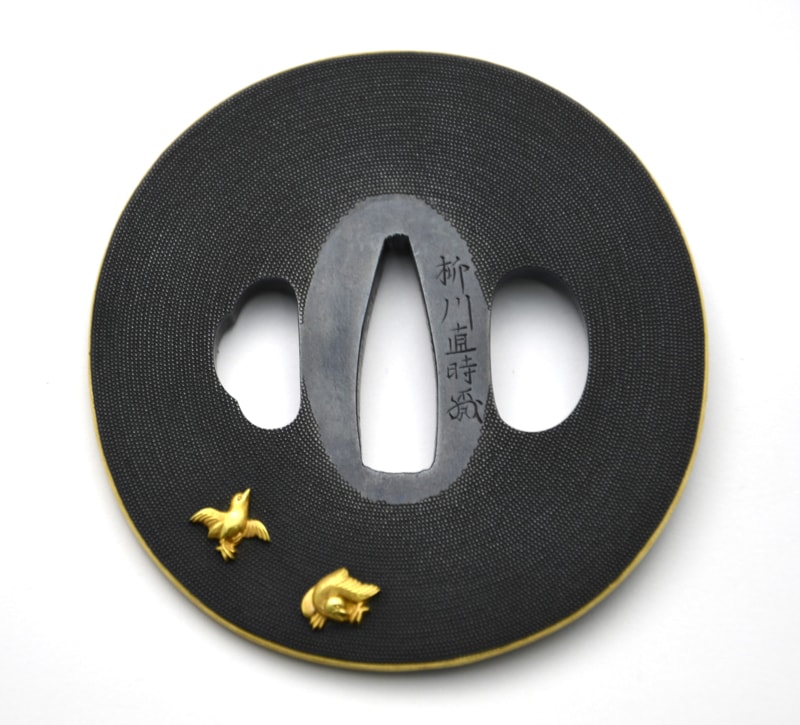
Tsuba - Tokuho - by Yanagawa Naotoki - Parent and Chickens DesignTsuba - Tokuho - by Yanagawa Naotoki - Parent and Chickens Design

Tsuba

ByYanagawa Naotoki
¥1,600,000
Toukentakarado
Hozon
Fuchi-Kashira - Hozon - by Iwamoto Kanri - Fuchi Kashira: Iwamoto Hirotoshi (kaō) Chicken and Child DesignFuchi-Kashira - Hozon - by Iwamoto Kanri - Fuchi Kashira: Iwamoto Hirotoshi (kaō) Chicken and Child Design

Fuchi-Kashira

ByIwamoto Kanri
¥350,000

Swords

  • Katana
  • Wakizashi
  • Tantō
  • Tachi
  • Naginata
  • Yari
  • Japanese Swords
  • Samurai Swords

Fittings

  • Tsuba
  • Fuchi-Kashira
  • Kozuka
  • Menuki
  • Sword Guards (Tsuba)

Armor

  • Kabuto
  • Samurai Armor
  • All Samurai Armor

By Certification

  • Tokujū
  • Jūyō
  • Tokuho
  • Hozon

Resources

  • Dealer Directory
  • Artist Directory
  • The Daily Kantei
  • Glossary
  • Browse All
Nihontowatch© 2026
TermsPrivacyCookiesAbout

¥285,000

View on Samurai Nippon
NihontoWatch MonNihontoWatch
Market
Encyclopedia
Kantei