Around 1800 Suishinshi Masahide argued in his writings that the craft must return to the old masters’ methods: the fukkotō revival. His greatest successor Naotane worked convincingly in Bizen and Sōshū manners that had been dead for centuries.
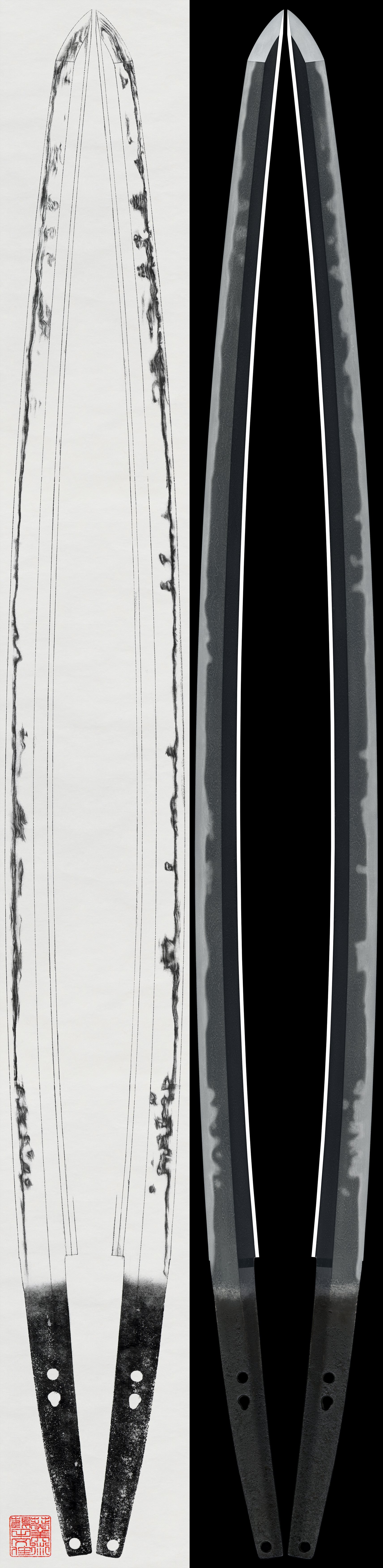
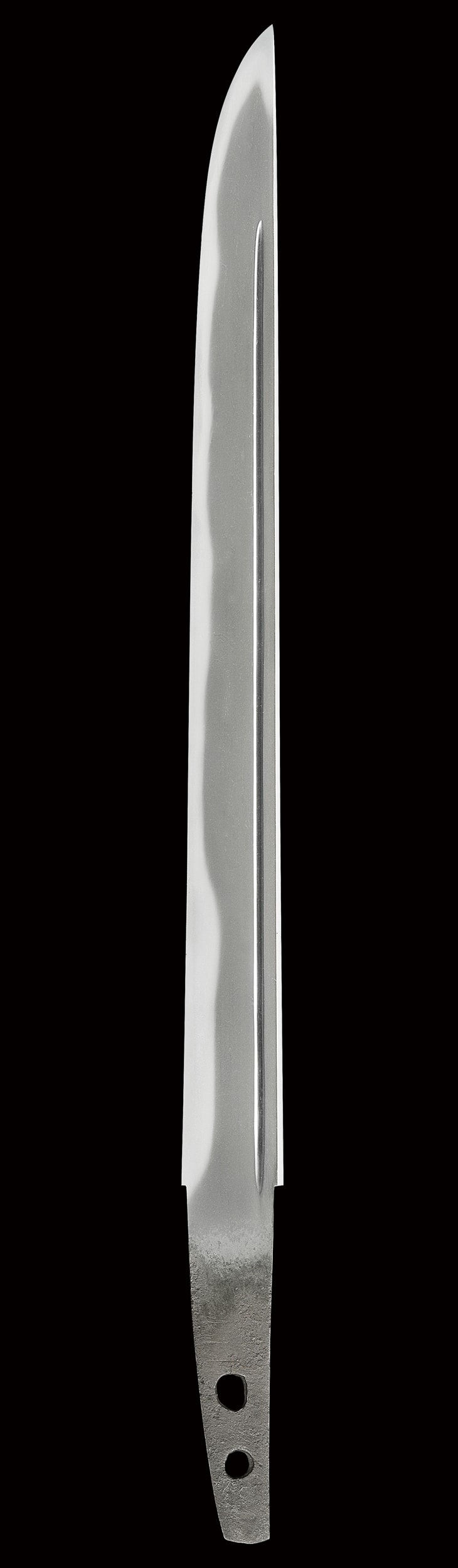
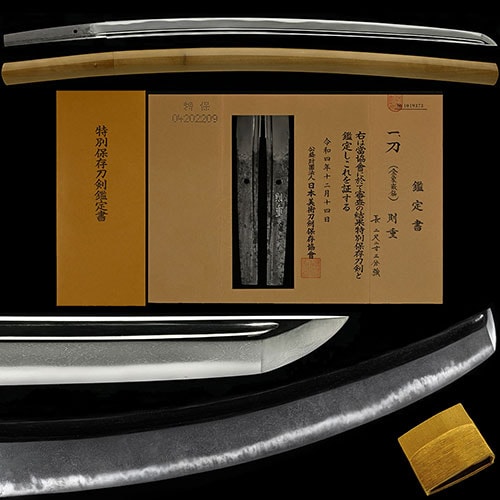
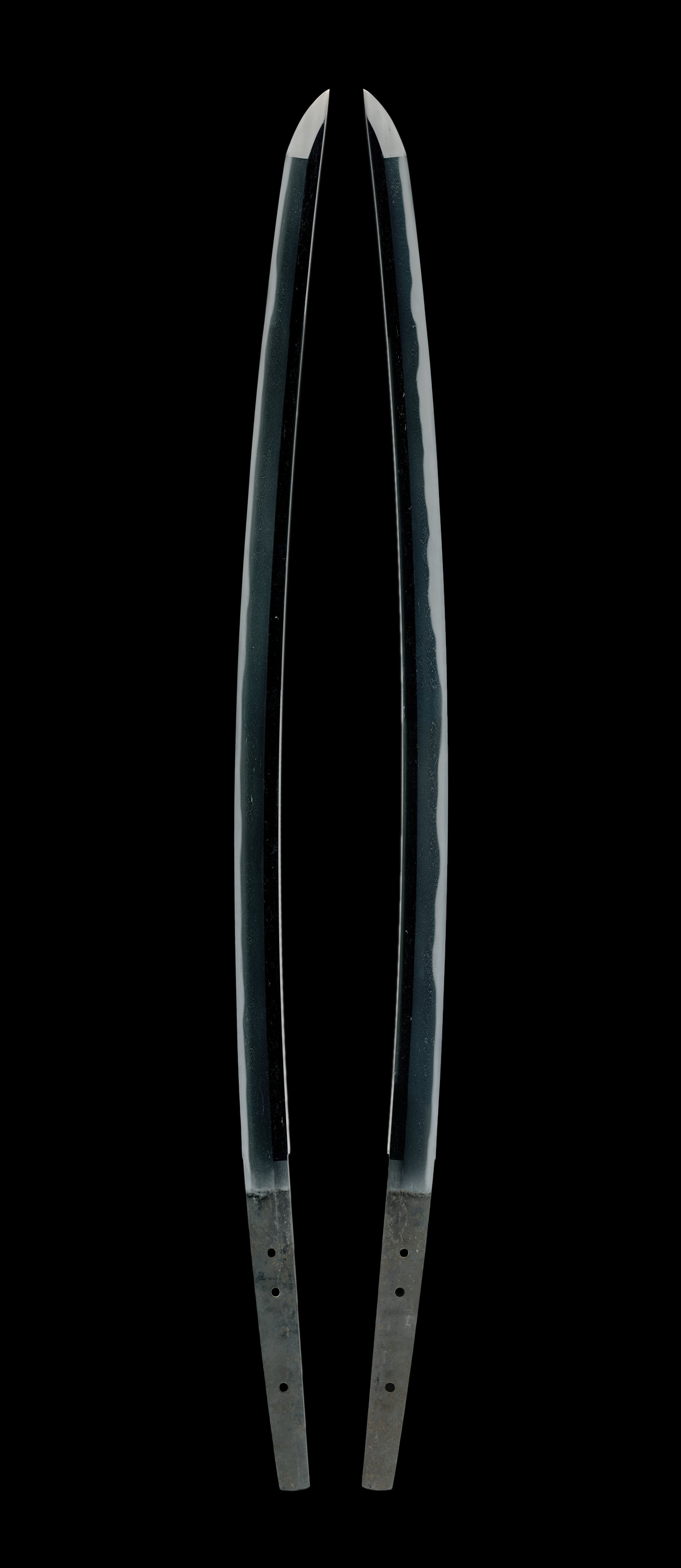
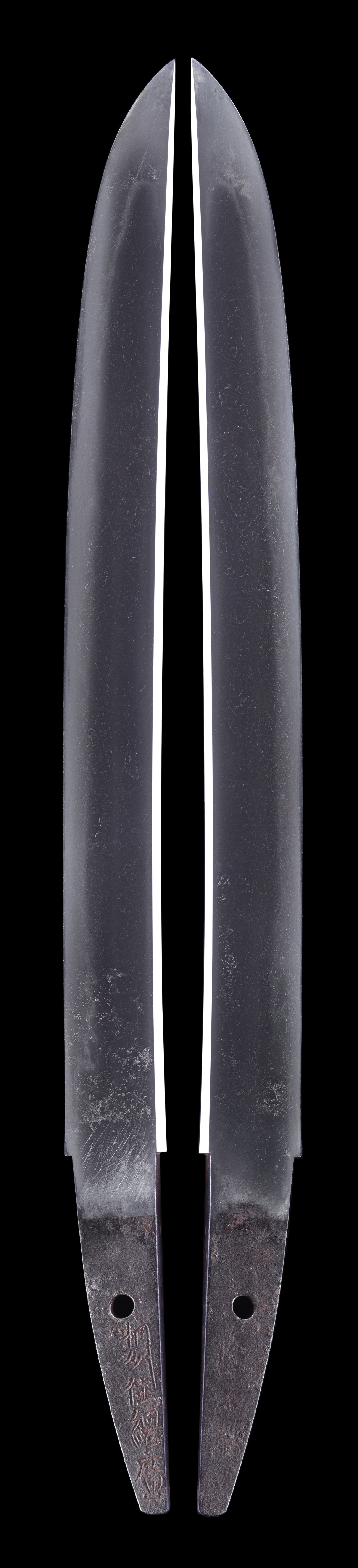
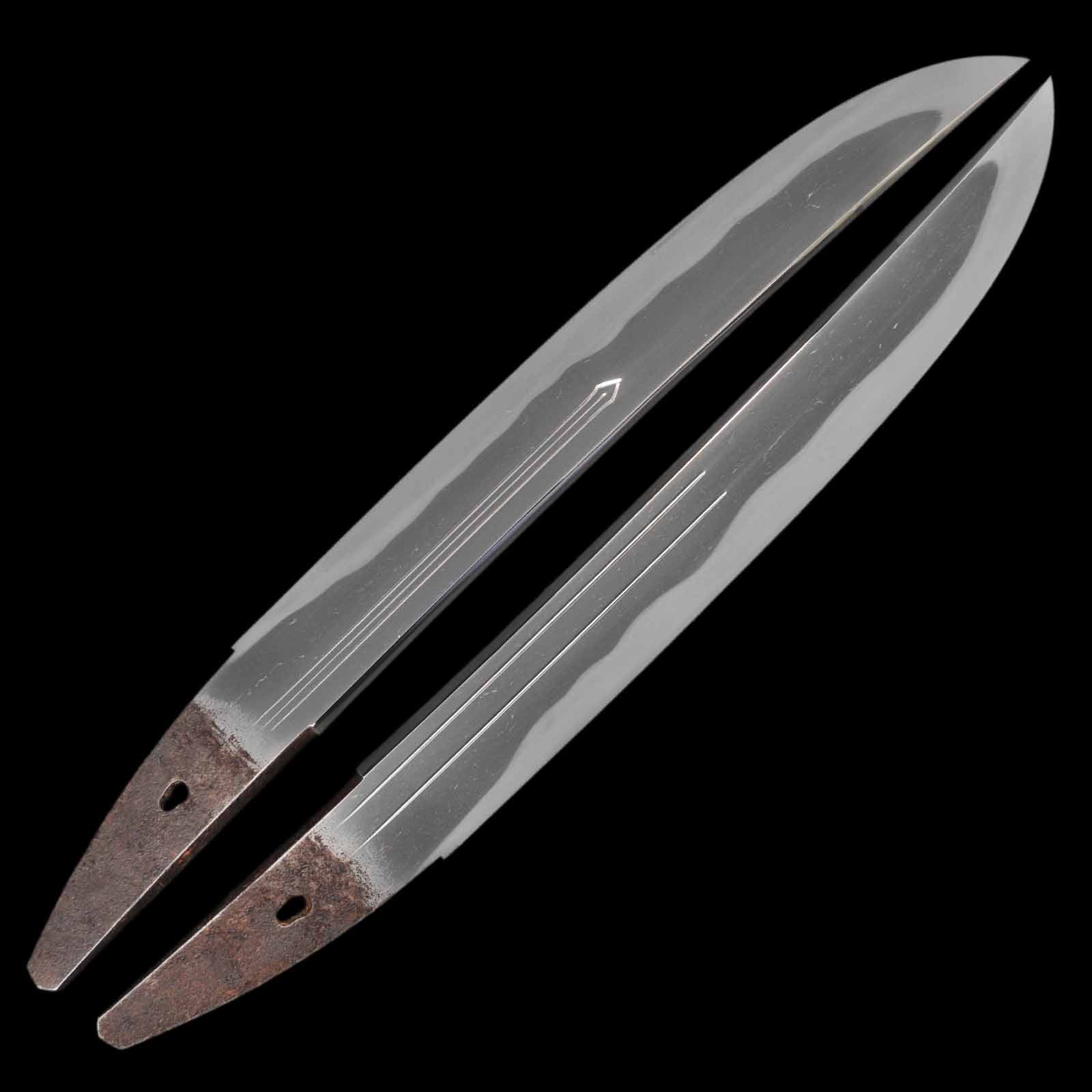
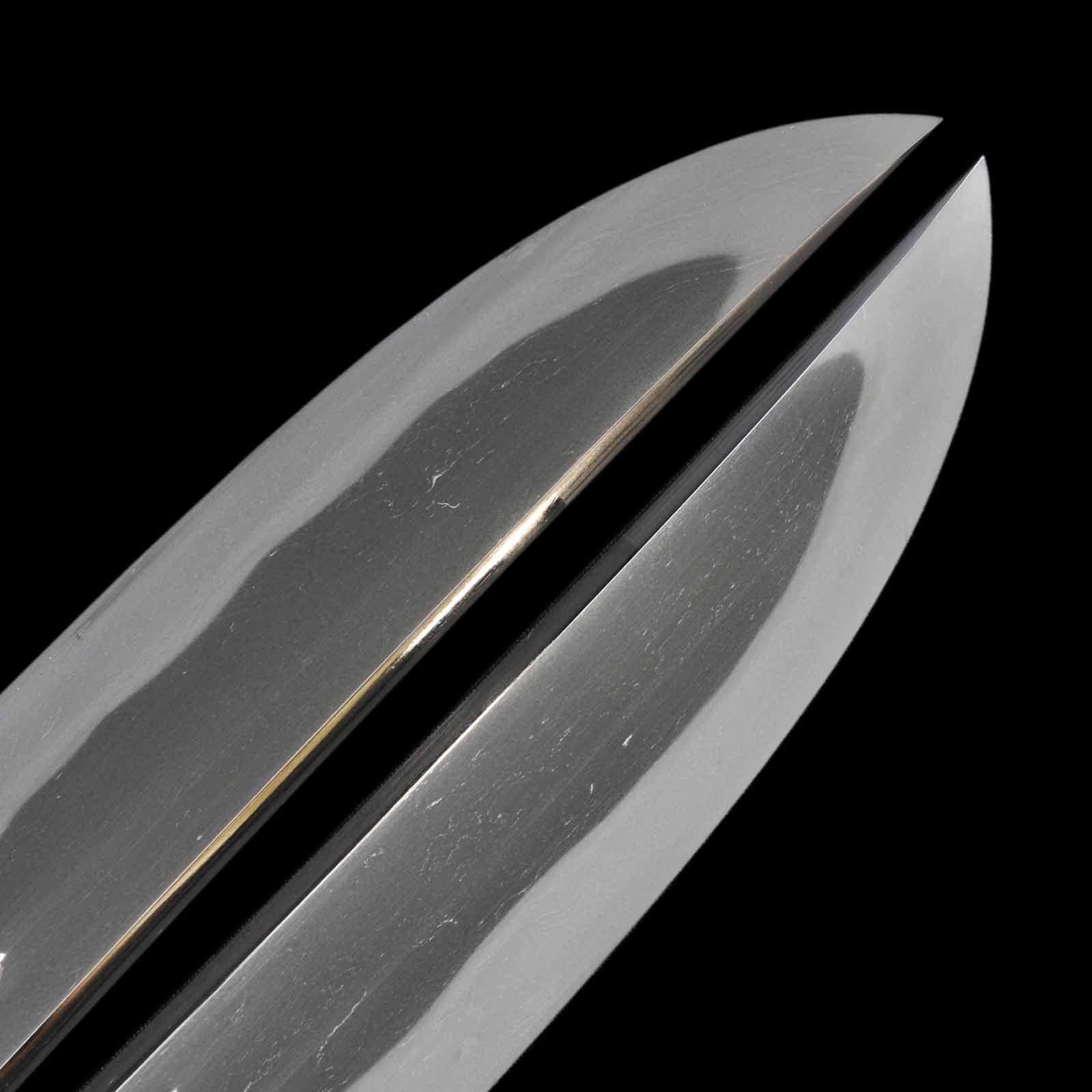
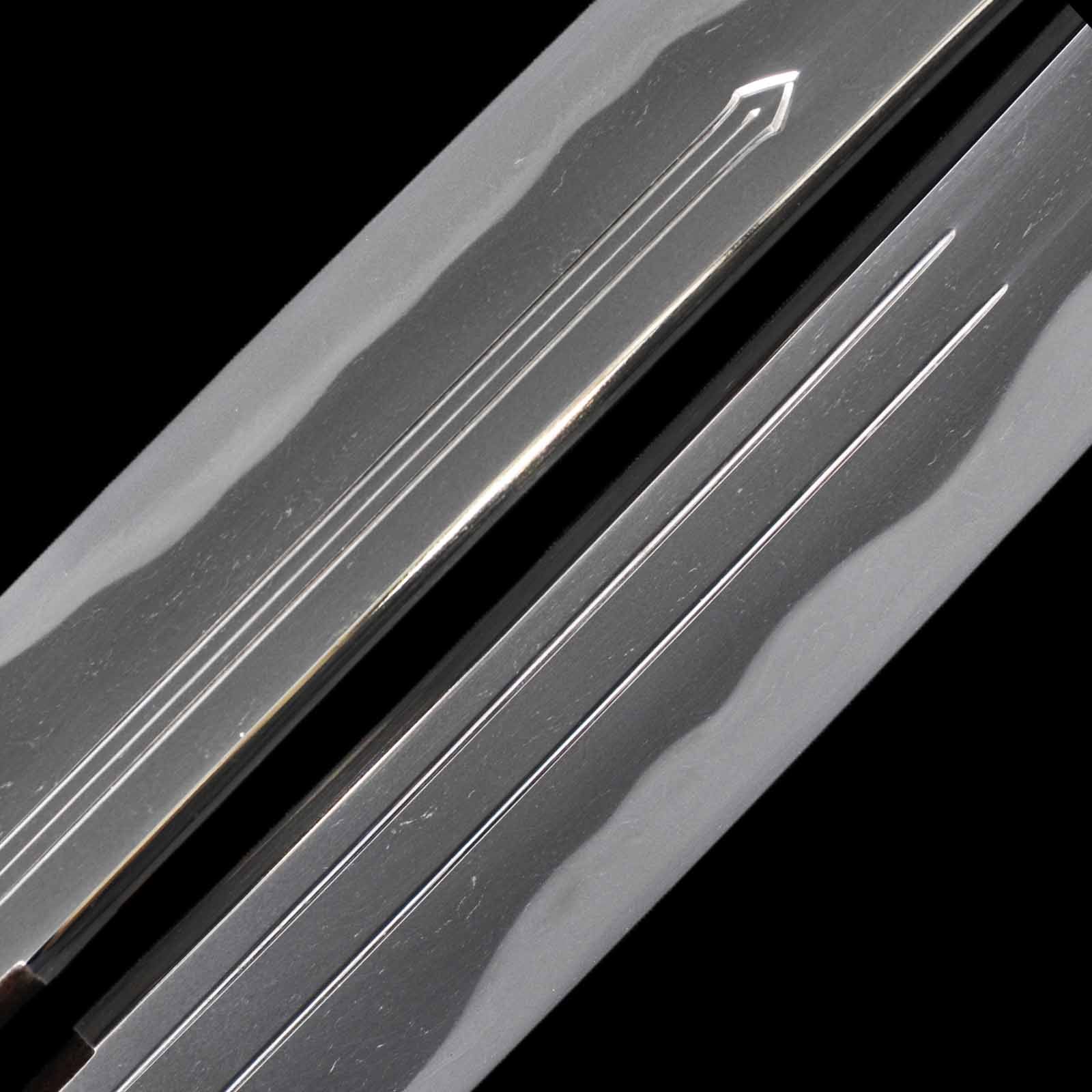
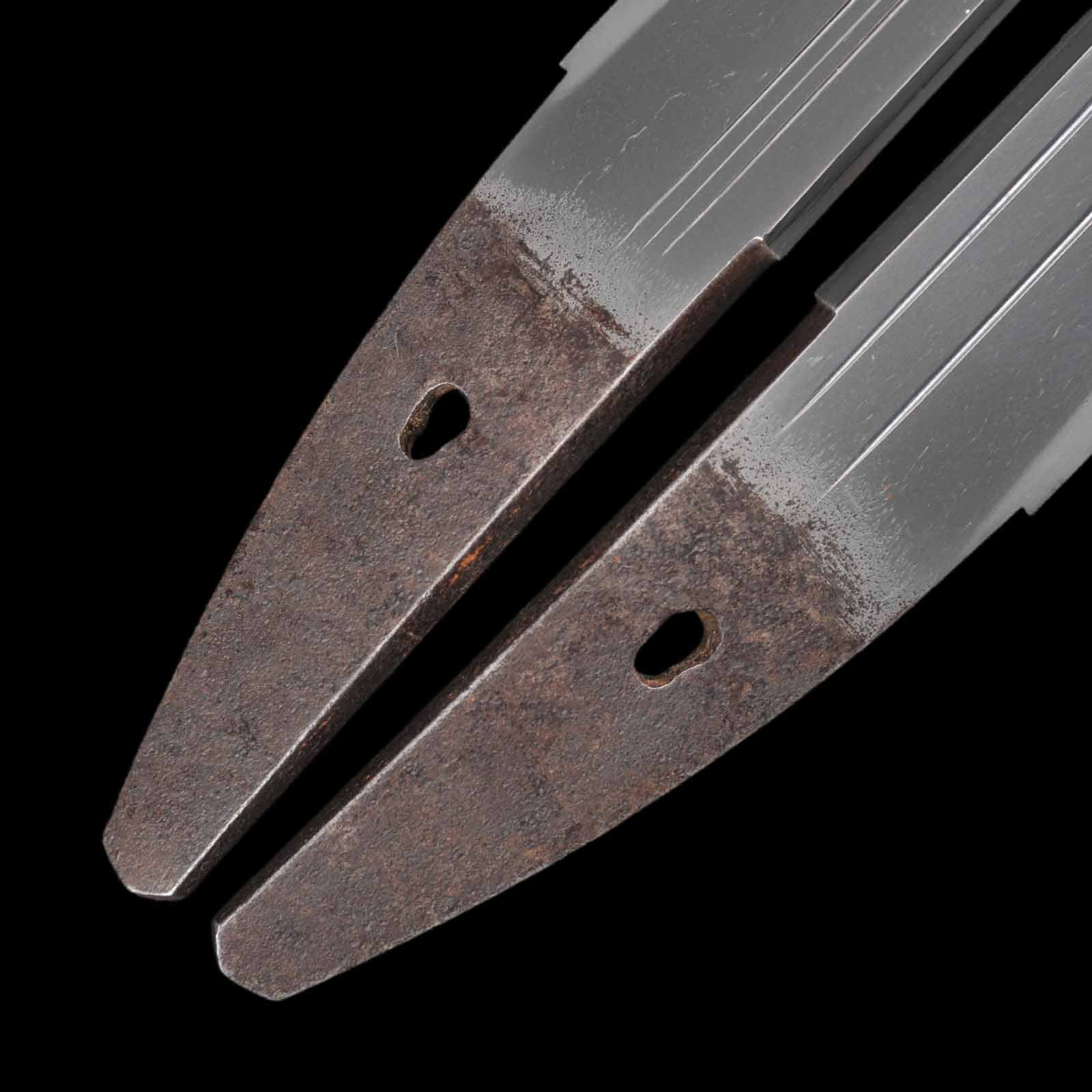
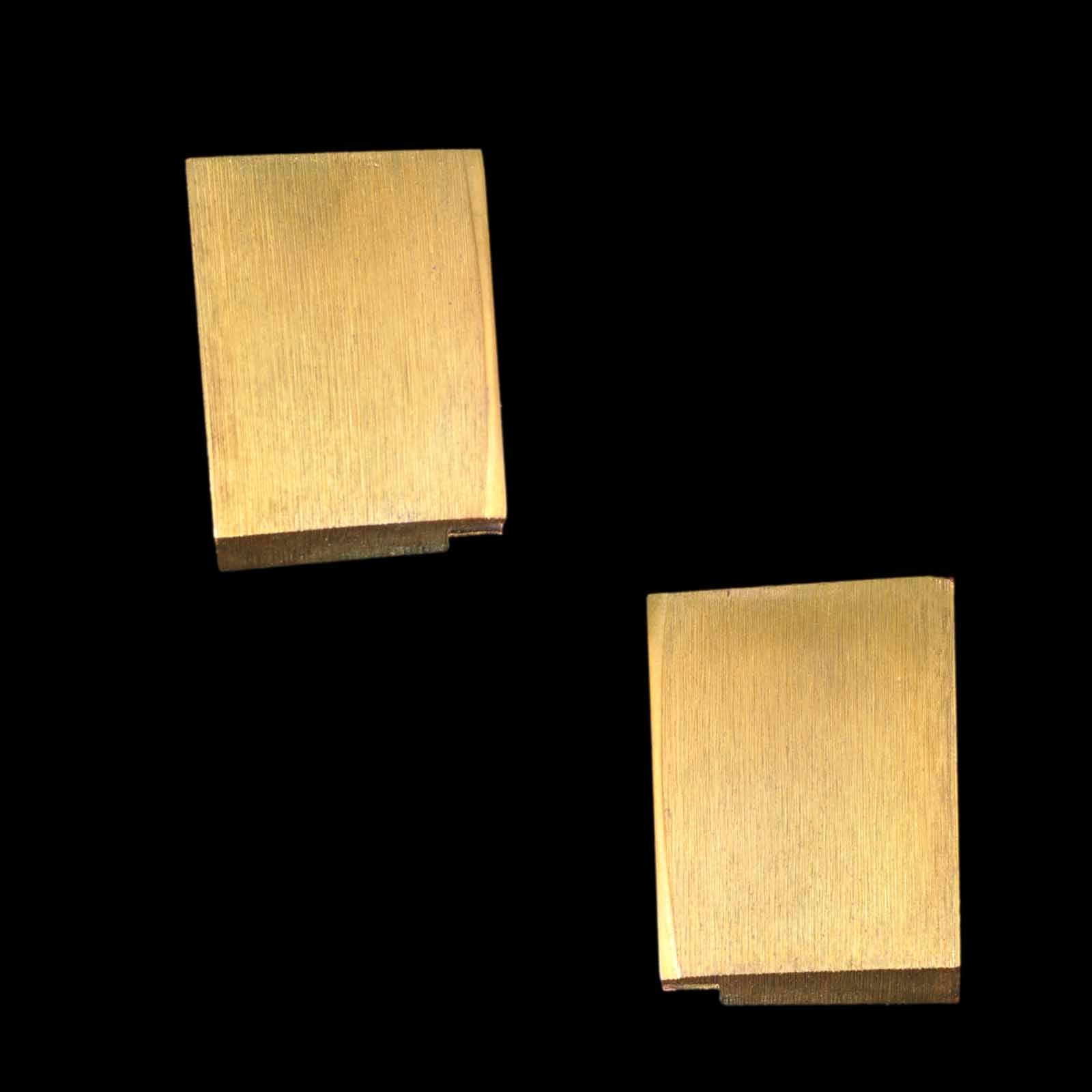
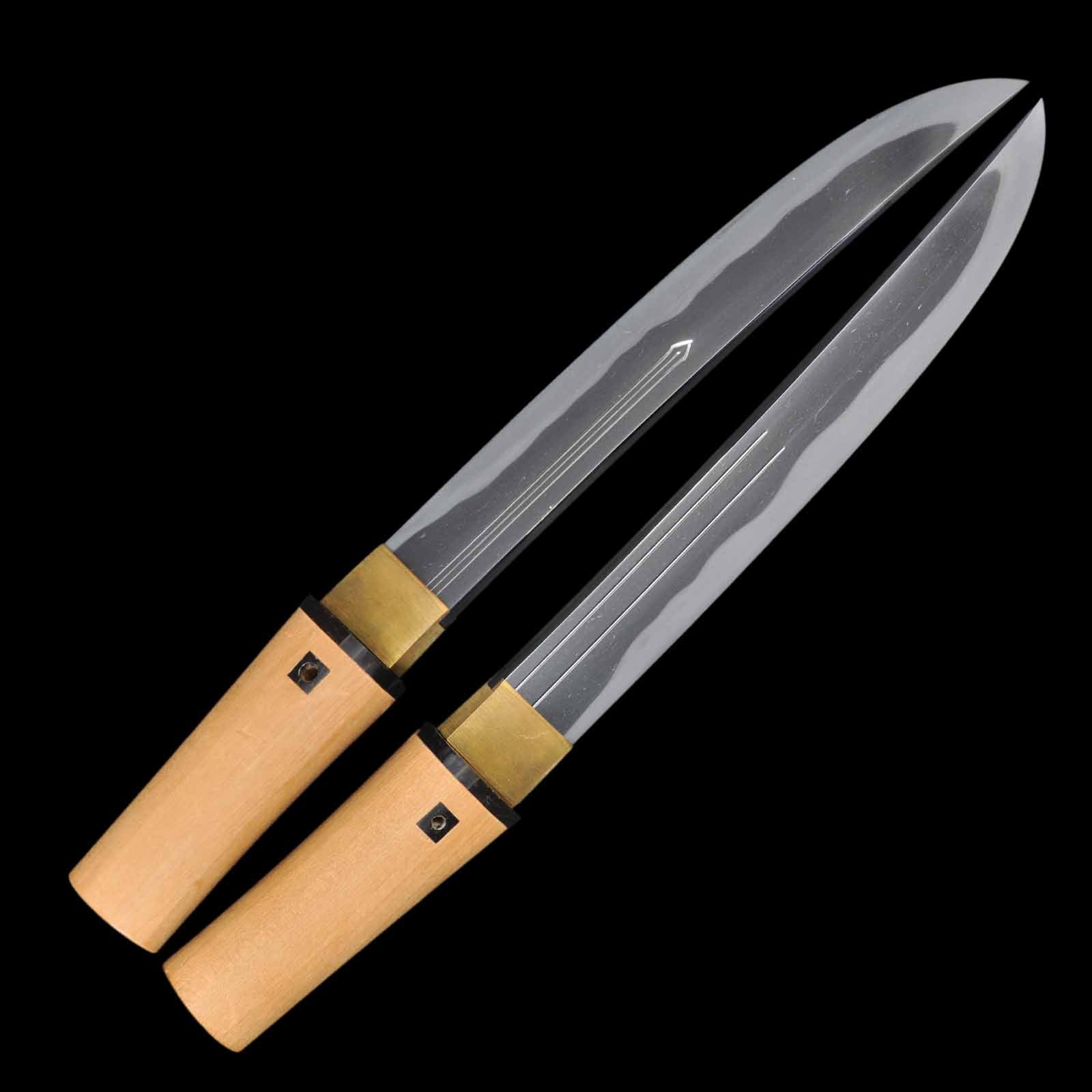
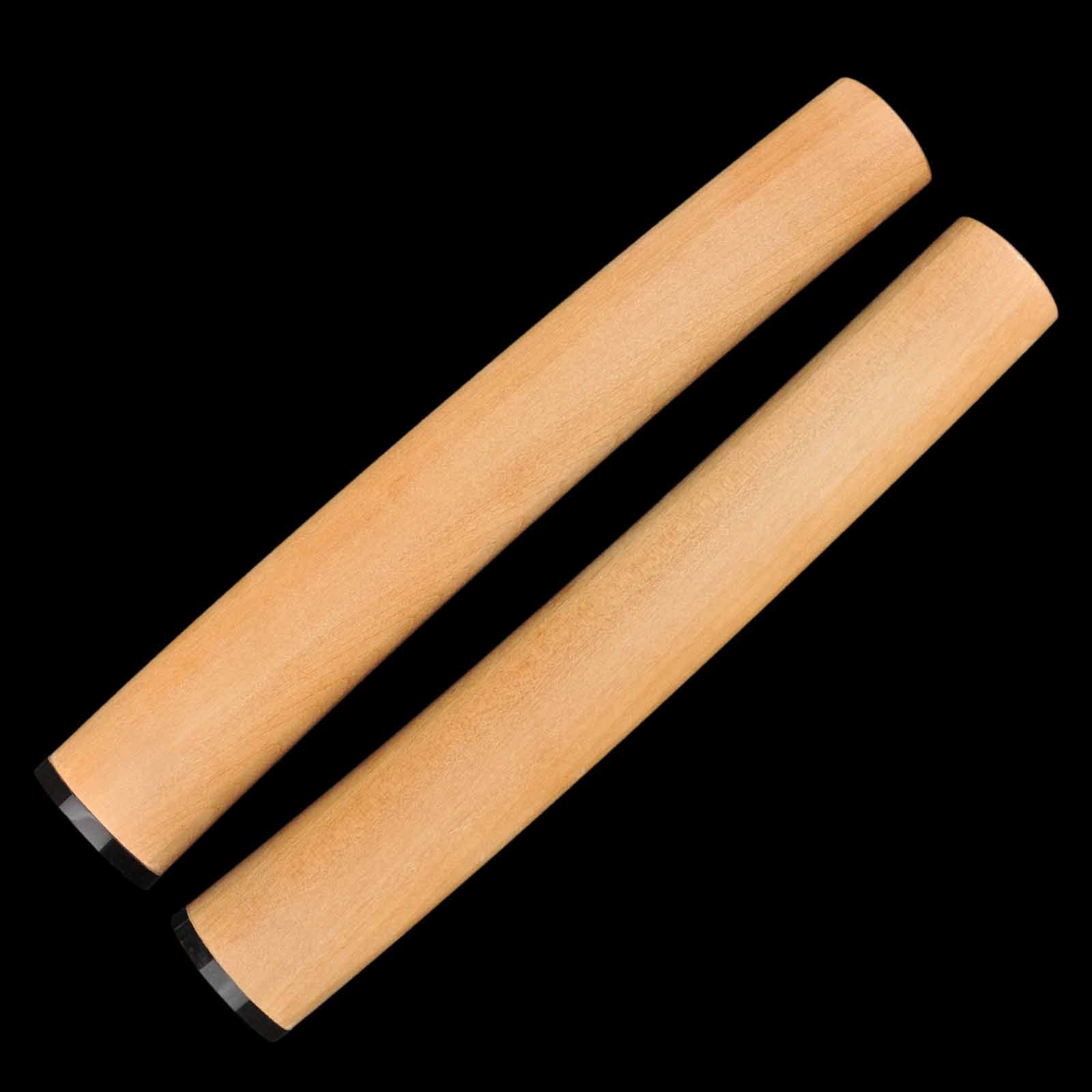
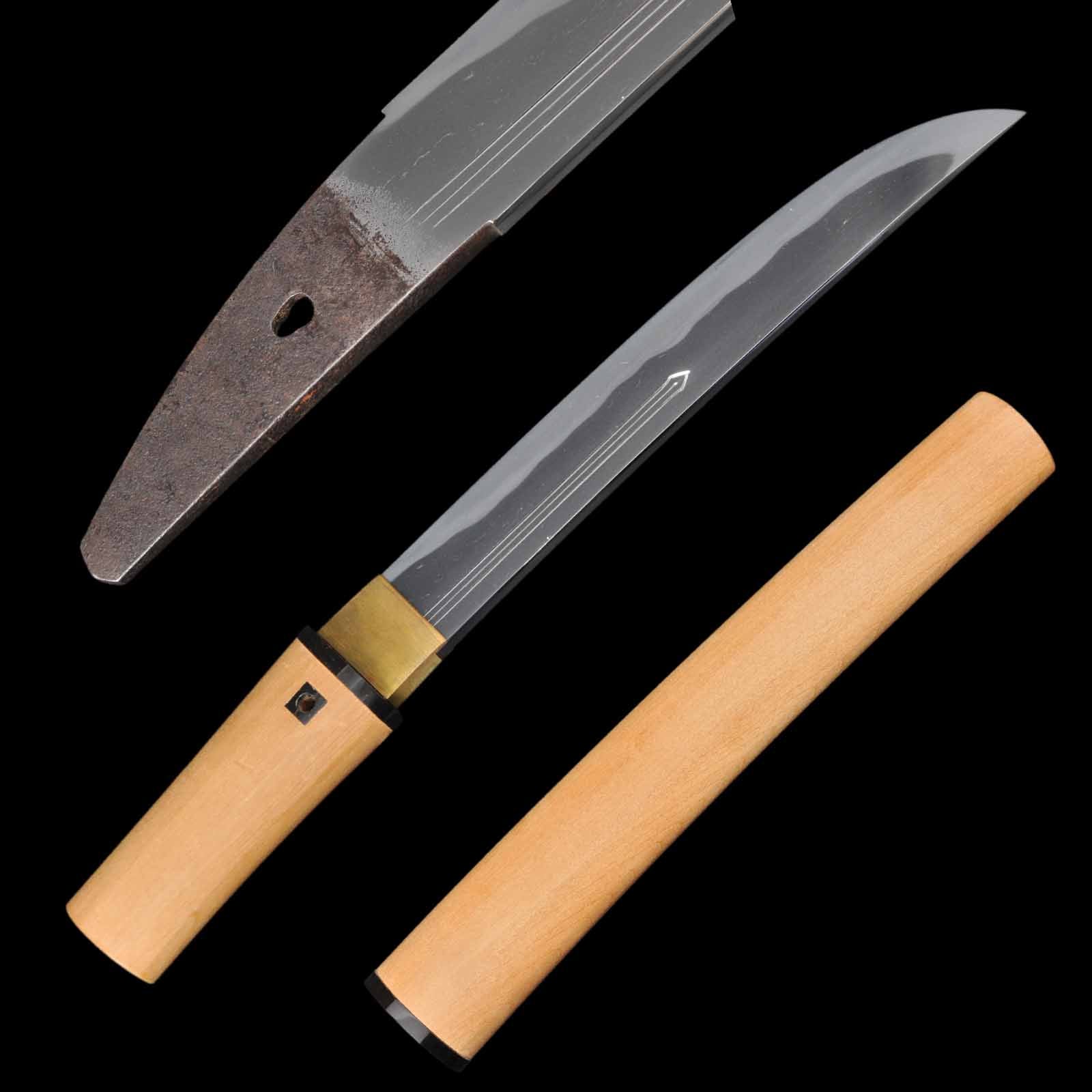
This is an unsigned (mumei) late-Edo period tanto, crafted as an utsushi (copy) of the famous National Treasure "Hocho Masamune." It features elegant carvings of a suken (ritual sword) on the omote and goma-bashi (ritual chopsticks) on the ura, reflecting deep religious feeling. The blade is in excellent condition, housed in a shirasaya with a gold habaki, showcasing the advanced skill of Shin-Shinto era smiths.
 NihontoWatch
mumei · Soshu · Shin-shinto · nagasa 22.4cm · sori 0.3cm
The Shinshintō revival
Around 1800 Suishinshi Masahide argued in his writings that the craft must return to the old masters’ methods: the fukkotō revival. His greatest successor Naotane worked convincingly in Bizen and Sōshū manners that had been dead for centuries.
We could not find an authenticity certificate on the seller’s listing. Japanese swords and fittings are normally papered by the NBTHK (or the NTHK). Without one, the attribution is the seller’s own assessment and has not been independently verified — treat it with caution and ask the dealer about certification before buying.
As a general rule, returns/exchanges are not accepted on Japanese sword orders unless damaged upon delivery. Other items: returns/exchanges accepted within 7 days of delivery. Cancellation for personal reasons incurs a 30% restocking fee (70% refunded). Return shipping must be prepaid and insured by the buyer; shipping/handling fees are non-refundable. Contact katana@tozando.co.jp to initiate a return.
¥400,000
This is an unsigned (mumei) late-Edo period tanto, crafted as an utsushi (copy) of the famous National Treasure "Hocho Masamune." It features elegant carvings of a suken (ritual sword) on the omote and goma-bashi (ritual chopsticks) on the ura, reflecting deep religious feeling. The blade is in excellent condition, housed in a shirasaya with a gold habaki, showcasing the advanced skill of Shin-Shinto era smiths.
NihontoWatchmumei · Soshu · Shin-shinto · nagasa 22.4cm · sori 0.3cm
The Shinshintō revival
Around 1800 Suishinshi Masahide argued in his writings that the craft must return to the old masters’ methods: the fukkotō revival. His greatest successor Naotane worked convincingly in Bizen and Sōshū manners that had been dead for centuries.
We could not find an authenticity certificate on the seller’s listing. Japanese swords and fittings are normally papered by the NBTHK (or the NTHK). Without one, the attribution is the seller’s own assessment and has not been independently verified — treat it with caution and ask the dealer about certification before buying.
As a general rule, returns/exchanges are not accepted on Japanese sword orders unless damaged upon delivery. Other items: returns/exchanges accepted within 7 days of delivery. Cancellation for personal reasons incurs a 30% restocking fee (70% refunded). Return shipping must be prepaid and insured by the buyer; shipping/handling fees are non-refundable. Contact katana@tozando.co.jp to initiate a return.
¥400,000