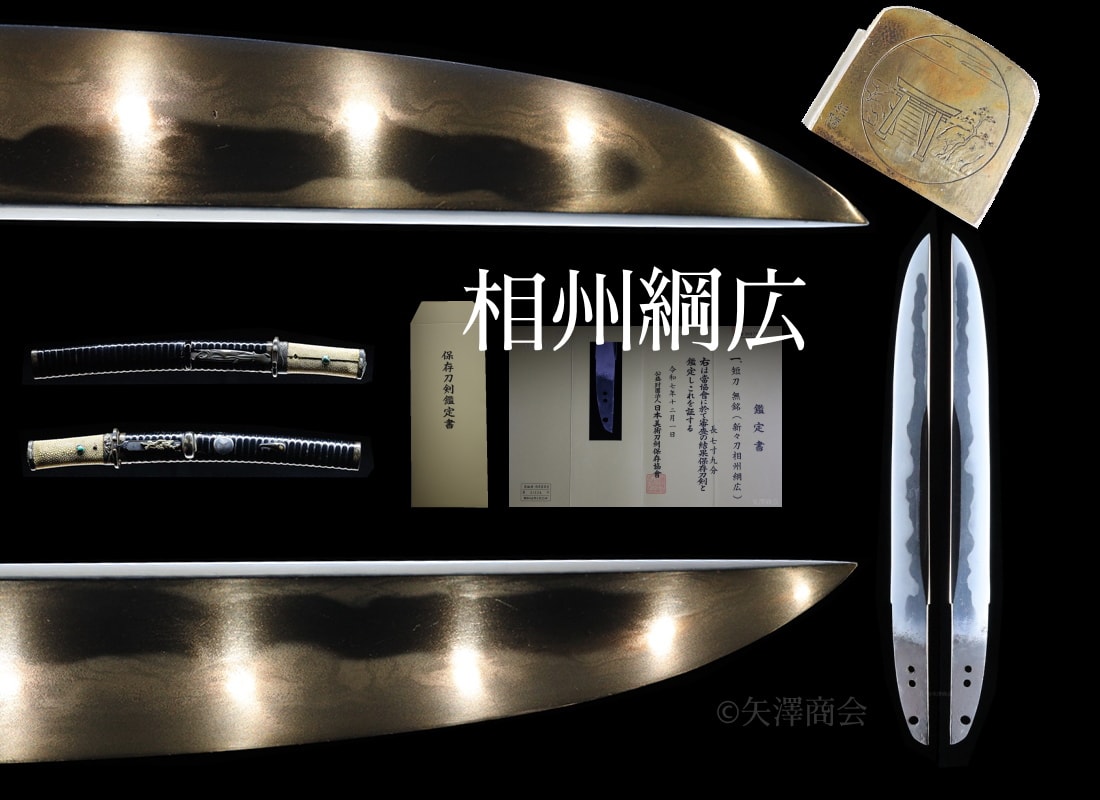
Sōshū was born in a boomtown: Kamakura, seat of the warrior government, dense with elite patrons. Tradition holds that master smiths were summoned east to serve it, and from their students came Shintōgo Kunimitsu and then Masamune.
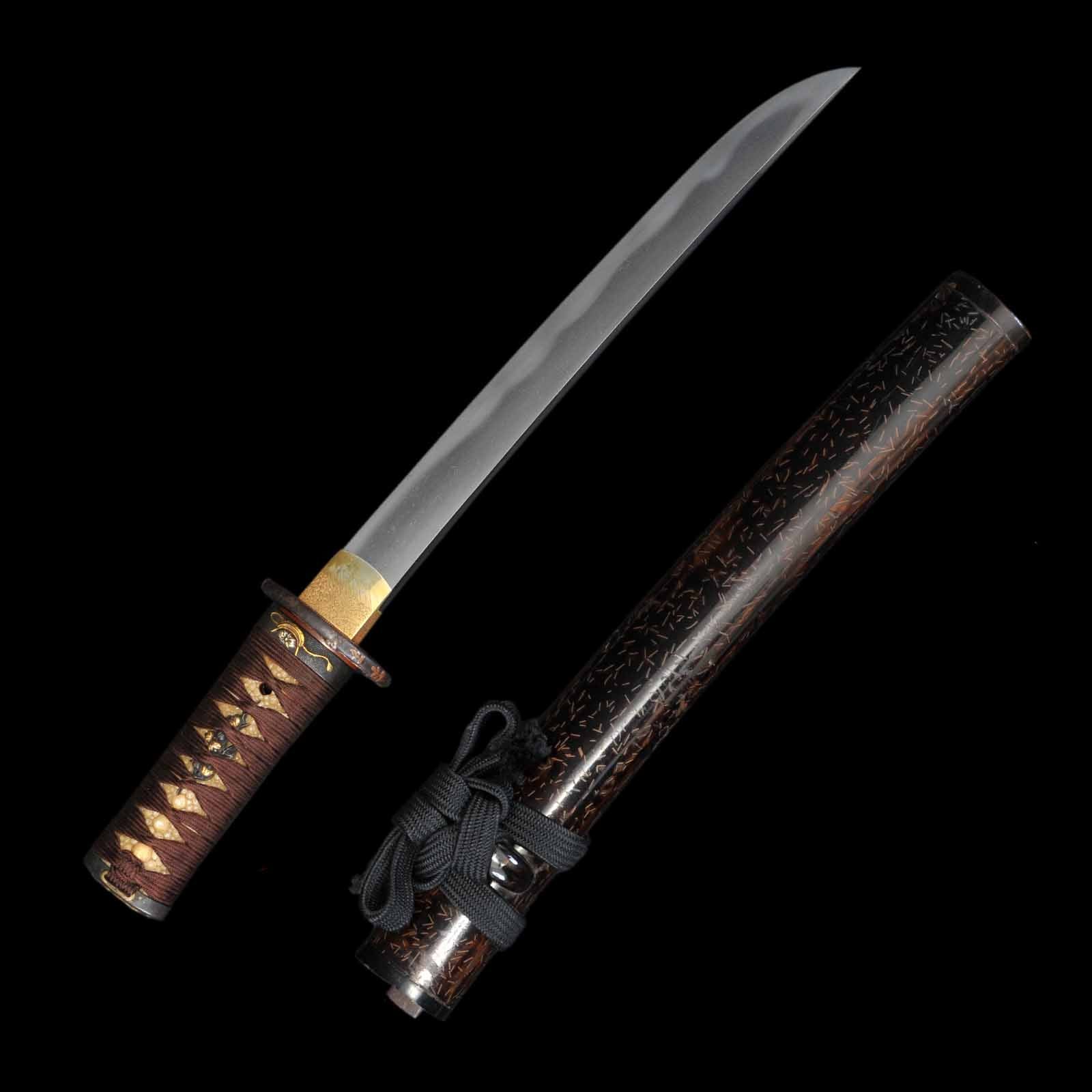
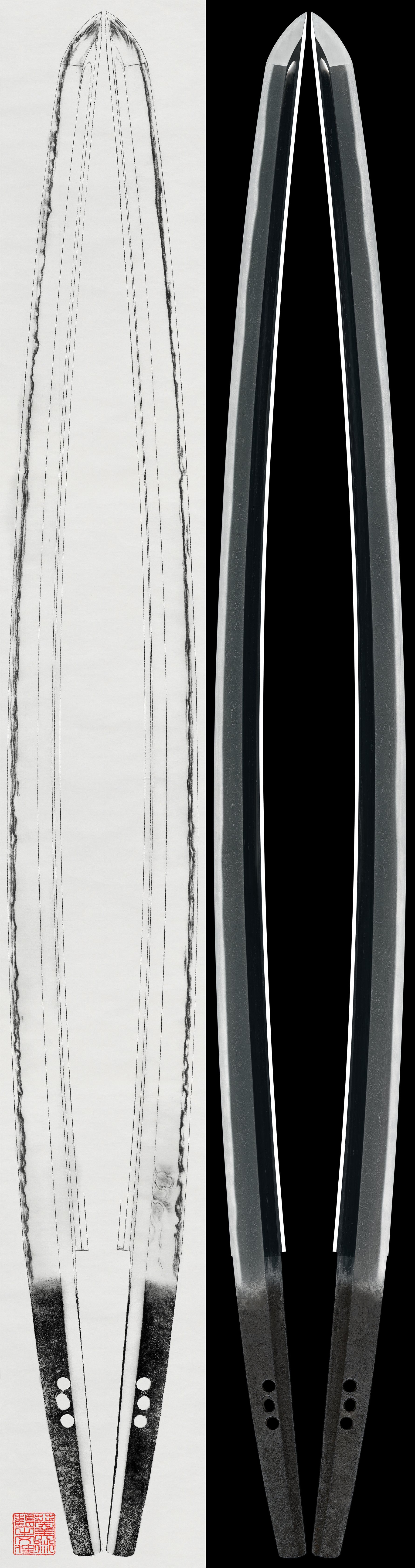
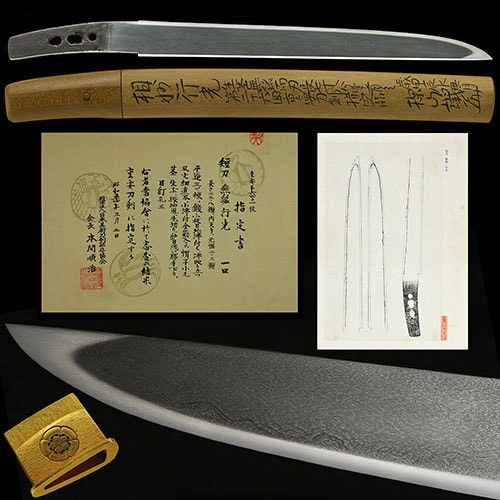
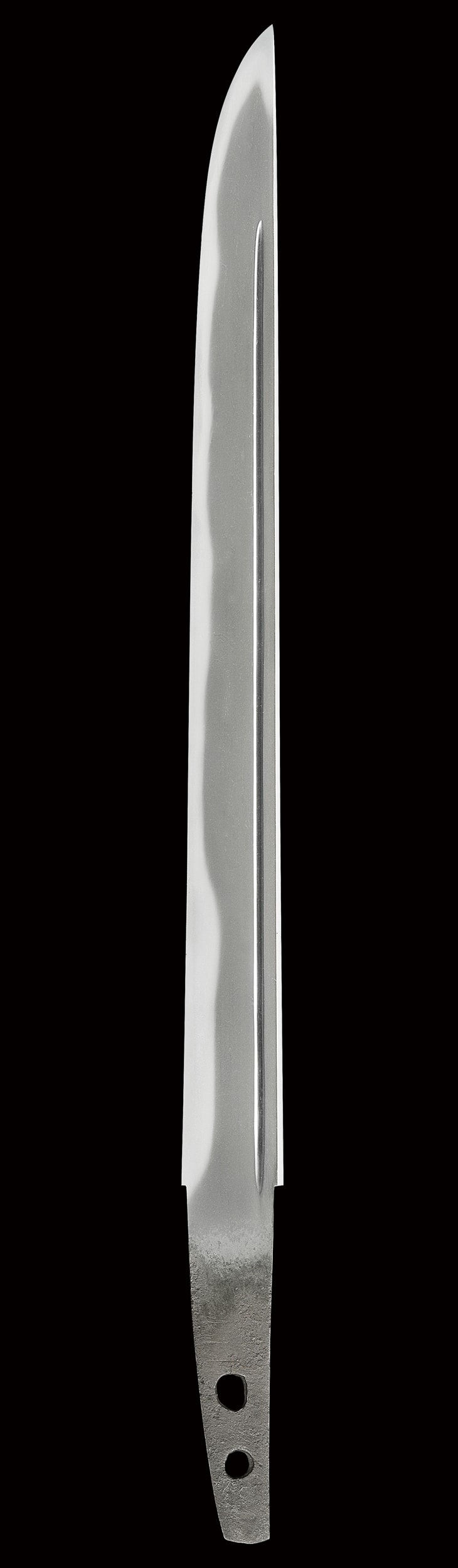
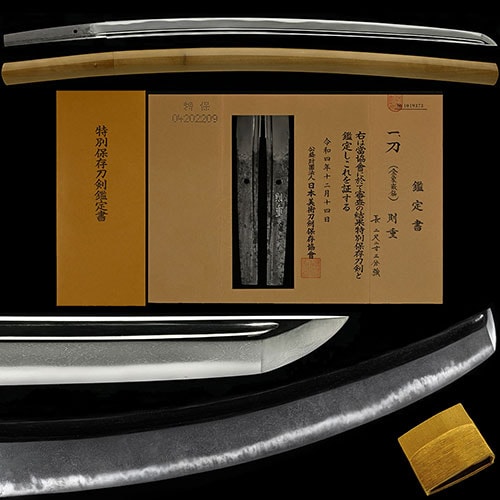
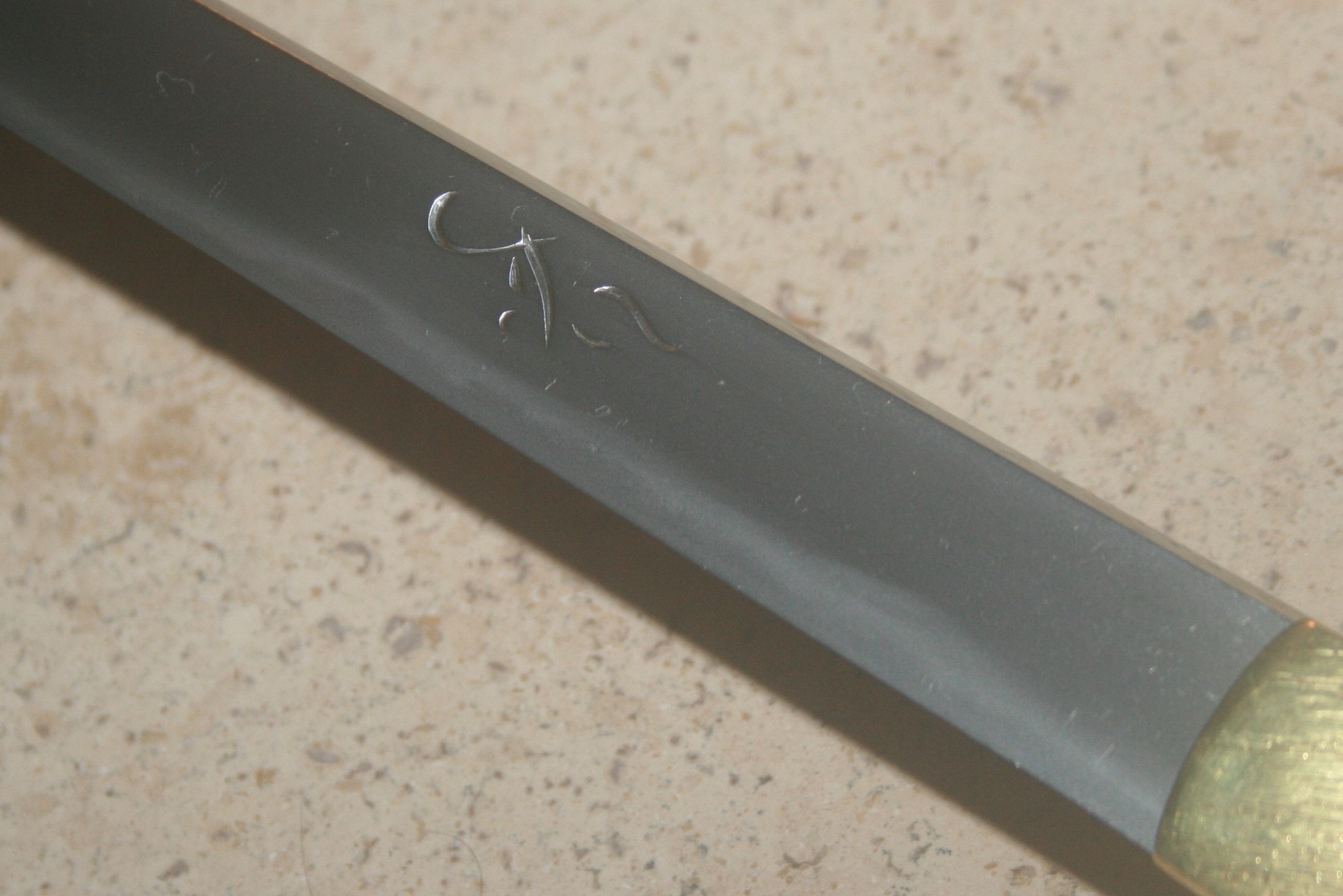
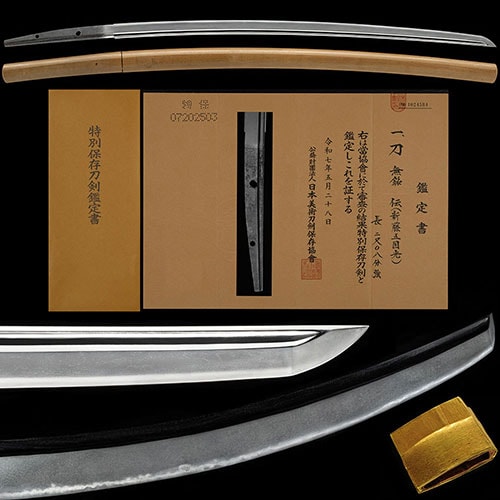
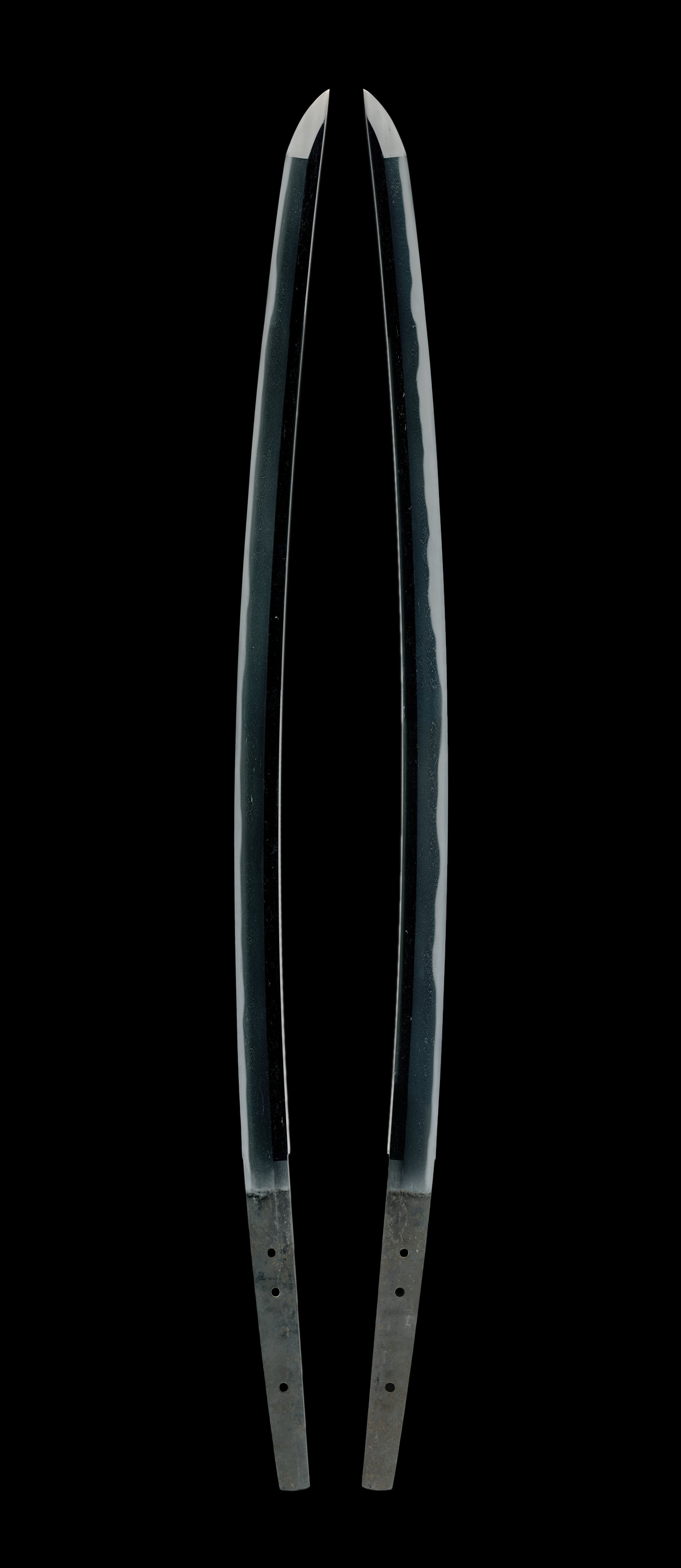
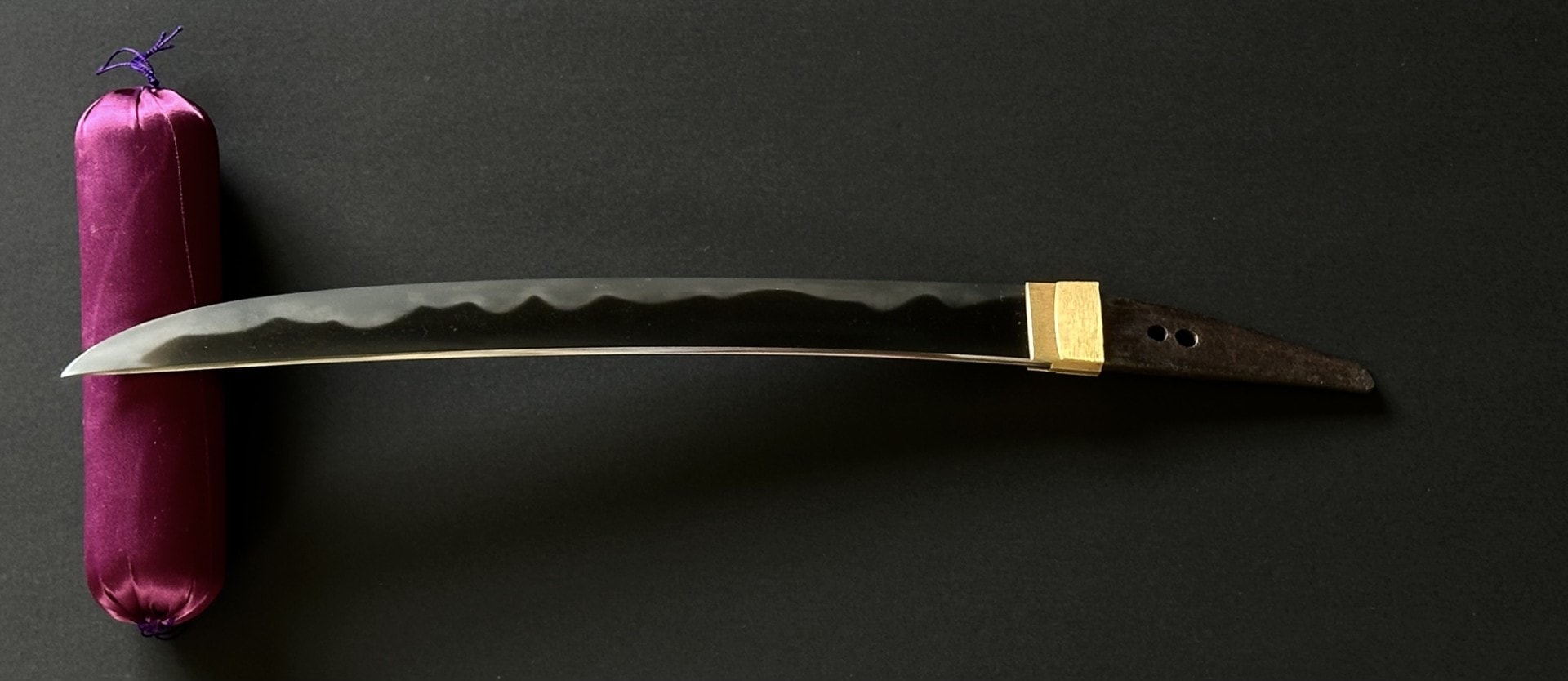
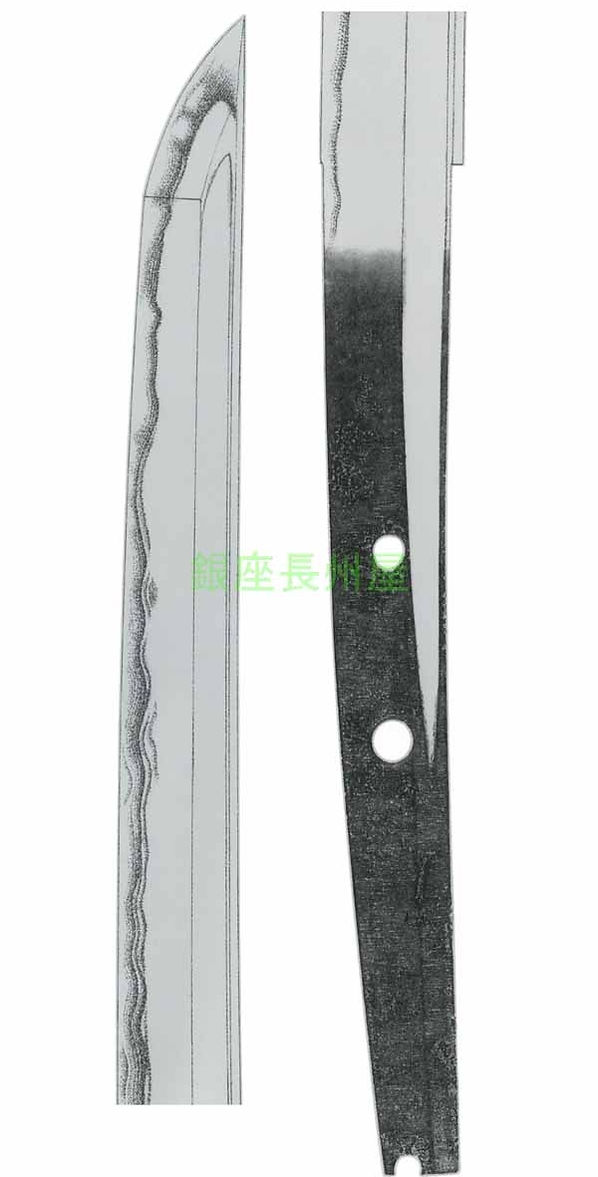
This katana is attributed to Yukimitsu, a smith of the Soshu tradition from the late Kamakura period (around Kagen era). His flamboyant style, characterized by strong nie and gunome-ha in a notare hamon, predates Masamune and Sadamune. The yakiba, a combination of nie and nioi, is highly luminous and transparent, with a flowing grain pattern.
 NihontoWatch
Soshu-den · Sagami
48 pieces on the market now
The Soshu school took root in Kamakura, the seat of the Hojo regents in Sagami province, where the demand of the warrior government drew the country's leading smiths to a single town. The published sources count Awataguchi Kunitsuna of Yamashiro and the Bizen masters Kunimune and Sukezane among the immigrant pioneers of Kamakura sword-making, but the first native smith of Sagami, the man who cut his Kamakura residence and his dates into the nakago, was Shintogo Kunimitsu, reckoned the de facto founder of the Soshu-den. Working from the close of the thirteenth century into the 1330s, Kunimitsu built his refined manner on Awataguchi foundations: his tanto read at a glance like Yamashiro work until the conspicuous chikei and kinsuji in ji and ha betray the new tradition. From his forge came the three masters Yukimitsu, Masamune and Norishige, with Daishinbo Yukei as carving specialist and Kunihiro among the smith's own sons; through them the nie-laden suguha of the founder opened into the mature nie-deki that would define the school. A shared vocabulary runs through the whole register. The forging is itame mixed with mokume, the grain standing in places, covered in thick ji-nie with chikei entering abundantly, so the steel reads bright and clear in the manner the texts call particular to the upper rank of Soshu-den work. Over it the temper runs as a notare mixed with gunome, the nioiguchi deep, the nie thick, kinsuji and sunagashi working busily through the ha, with yubashiri drifting into the ji and a swept hakikake boshi above. From this common ground the internal arc unfolds.
Kunimitsu and Yukimitsu hold the restrained early hand, a calm suguha tending to shallow notare; Norishige carries the bold standing grain laced with thick chikei until the surface reads like pine bark (matsukawa-hada), his nioiguchi subdued and sunken. Masamune raises the nie to its highest refinement, a notare-based midareba alive with leaping kinsuji and chikei that the sources liken to splashed-ink (haboku) landscape painting; Sadamune, succeeding him in the mainline, works a calmer, more relaxed notare and excels as the carving master of the school. With Hiromitsu and Akihiro the temper escapes the edge entirely into the full-fledged hitatsura of Nanbokucho, tobiyaki and muneyaki firing the whole blade, Hiromitsu marked by his round dango-choji and Akihiro by a rougher, more openly active steel. A collector seeks Soshu for the nie itself, the most refined expression of hardened-steel artistry the tradition produced, and Masamune stands at its summit, his name carrying the heaviest weight of designation in the field and a place among Fujishiro's Sai-jo saku. To kantei the school is to read the recognition core the appraisers return to again and again: a chikei-rich standing itame, a deep and bright nioiguchi, busy kinsuji and sunagashi, and the swept boshi. The discriminations are fine and qualitative, Norishige's sunken nioiguchi and heavier grain set against Masamune's tighter quieter ji; Go Yoshihiro, who carried the manner west into Etchu, lit a degree brighter still with masame creeping into the hada and a deep ichimai-swept point; Yukimitsu kept the smaller, quieter pattern; Takagi Sadamune, who took the tradition into Omi, stood a touch more and ran shizumi in the nioiguchi where he fell short of the master. Because the great names left almost nothing signed, most of what survives is o-suriage mumei resting on Hon'ami attribution, and the signed meibutsu (the Kinoshita Masamune, the Mutsu Shintogo, the Okurikara Hiromitsu) carry provenance through the men who held the country: Oda Nobunaga, Toyotomi Hideyoshi, Tokugawa Ieyasu, and the Maeda, Date, Hosokawa and Uesugi houses, with the highest blades resting in the great museums and shrines. The school's influence radiated outward, Norishige's pine-bark forging passing through Tametsugu to the later Etchu smiths and the perfected hitatsura reaching swordsmiths of other provinces, so that the Soshu-den became one of the five great traditions by which the whole field is read. Learn more →
| Smith | Era | Designated |
|---|---|---|
| Masamune正宗 | 1288-1293 | 87 |
| Sadamune貞宗 | 1329-1331 | 88 |
| Akihiro秋廣 | 1346-1370 | 28 |
| Go Yoshihiro義弘 | 1299-1302 | 54 |
| Kunimitsu國光 | 1293-1322 | 68 |
Sōshū in the Kamakura period
Sōshū was born in a boomtown: Kamakura, seat of the warrior government, dense with elite patrons. Tradition holds that master smiths were summoned east to serve it, and from their students came Shintōgo Kunimitsu and then Masamune.
We could not find an authenticity certificate on the seller’s listing. Japanese swords and fittings are normally papered by the NBTHK (or the NTHK). Without one, the attribution is the seller’s own assessment and has not been independently verified — treat it with caution and ask the dealer about certification before buying.
If, due to our fault, the item differs significantly from its proper condition, the item may be returned. Cooling-off is within one week of the item's arrival.