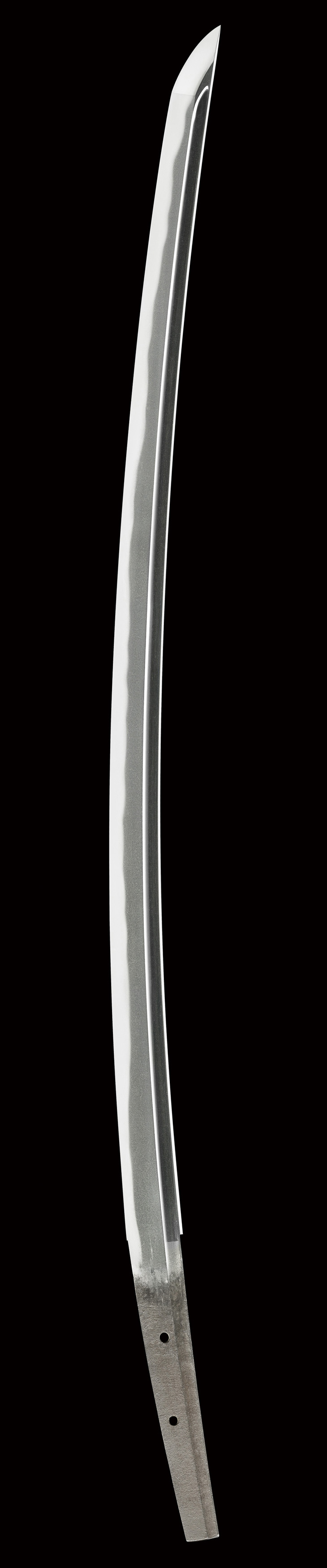
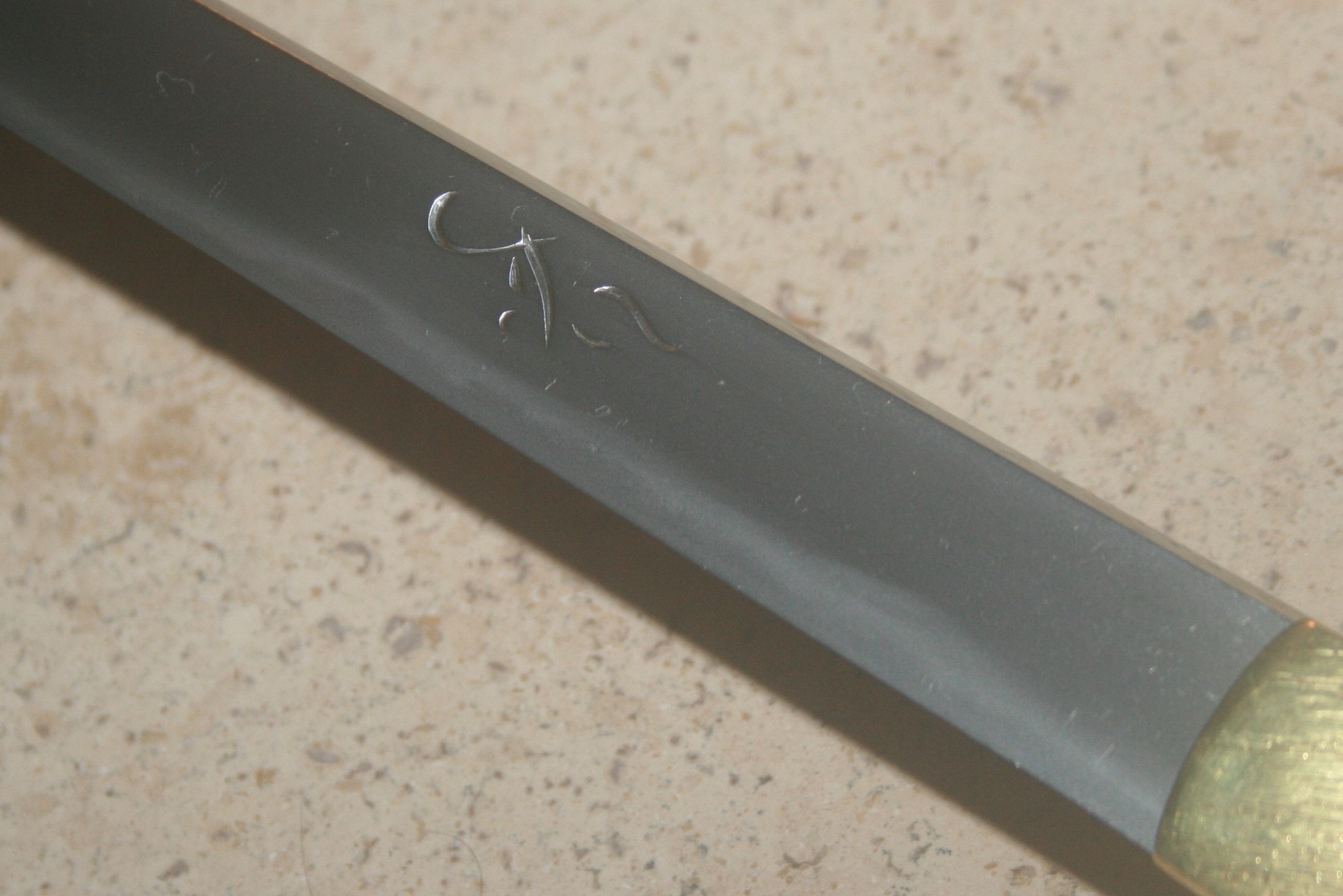
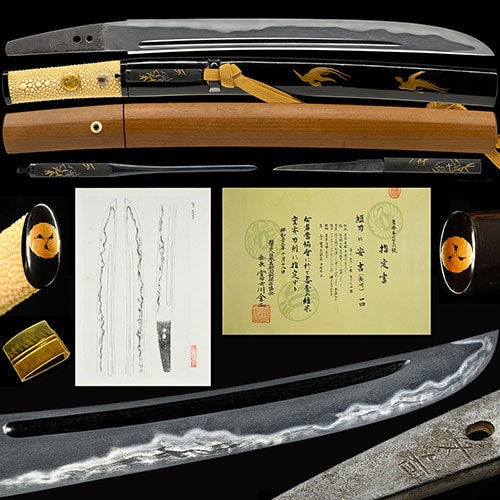
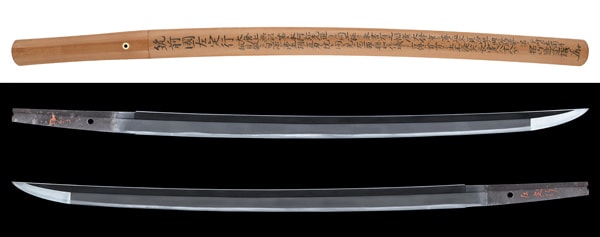
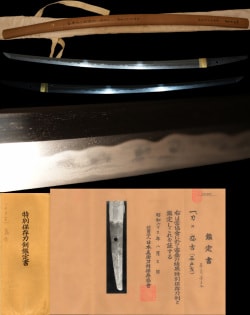
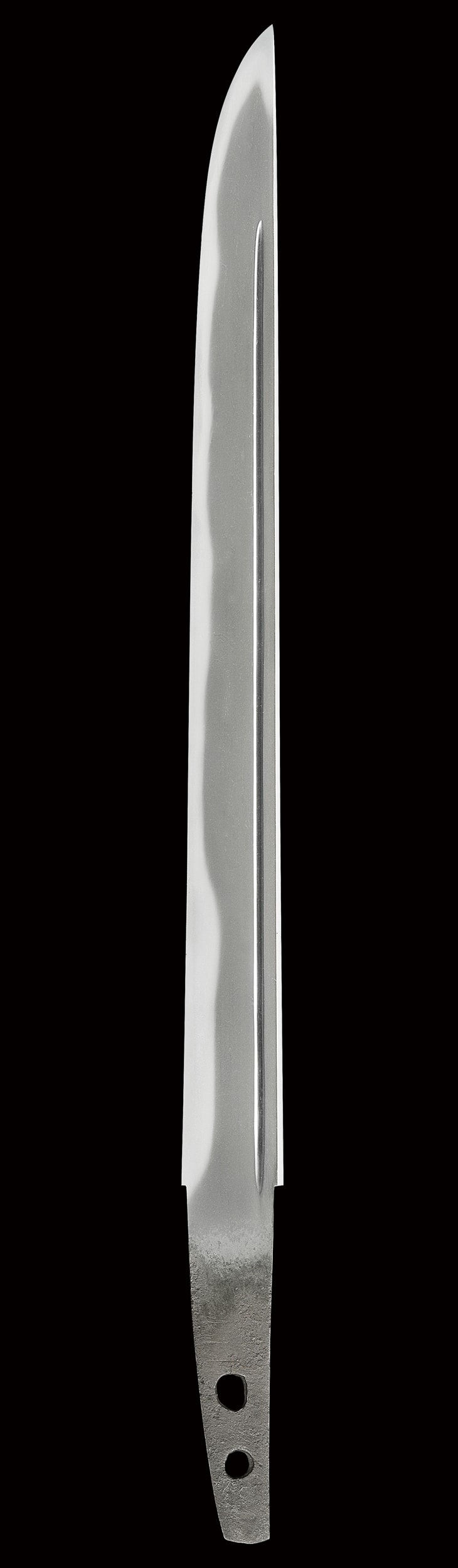
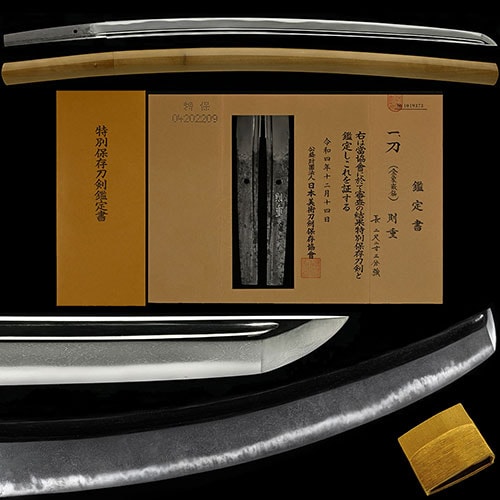
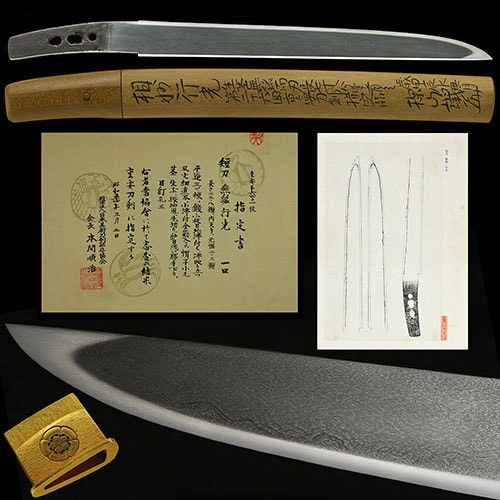
A small hira-zukuri tantō, signed Kunihiro saku and dated Shōhei 12 (1357), is the fixed point of his record: from it the published sources read the span of his activity, for signed work by his hand is otherwise scarce. Kunihiro worked in the Chikuzen Sa school, the Samonji line of the Nanbokuchō period, and is transmitted as a son of Yoshihiro or, by another account, of Sadayuki. The published sources place him among the leading hands carried on from Ō-Sa, in a school that, as they put it, emerged in the early Nanbokuchō and cast off the older traditional Kyūshū manner to establish a style in which the steel and temper are 'bright and clear, refined in workmanship'[[c:1]]. Within that school Yasuyoshi, Yukihiro, Yoshisada, Kunihiro, Hiroyuki, Hiroyasu and Sadayoshi all inherited the master's manner; Kunihiro is the one to whom the boldest, highest-tempered work was assigned.
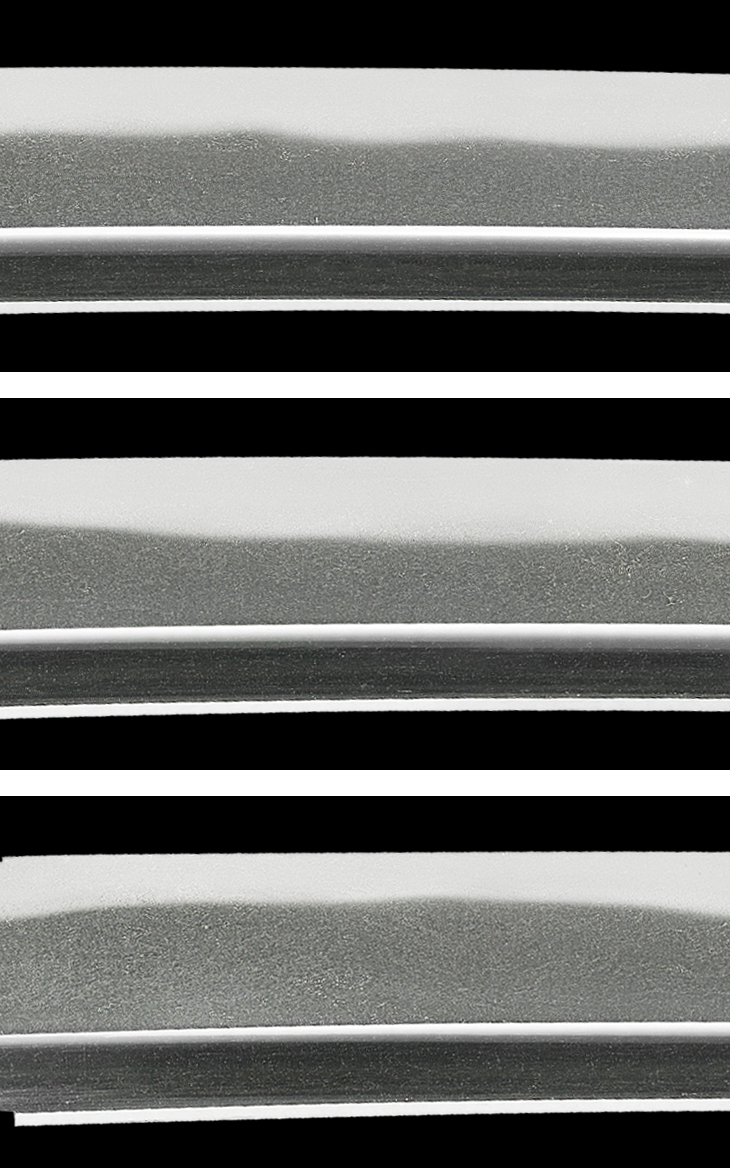
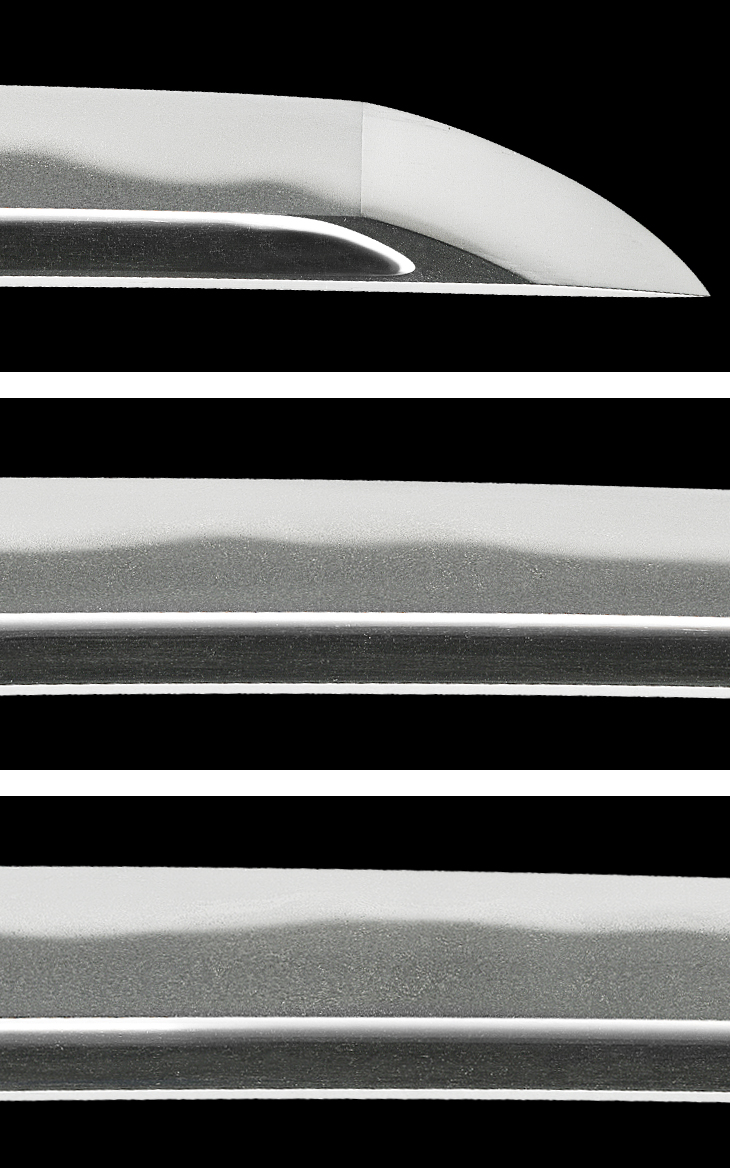
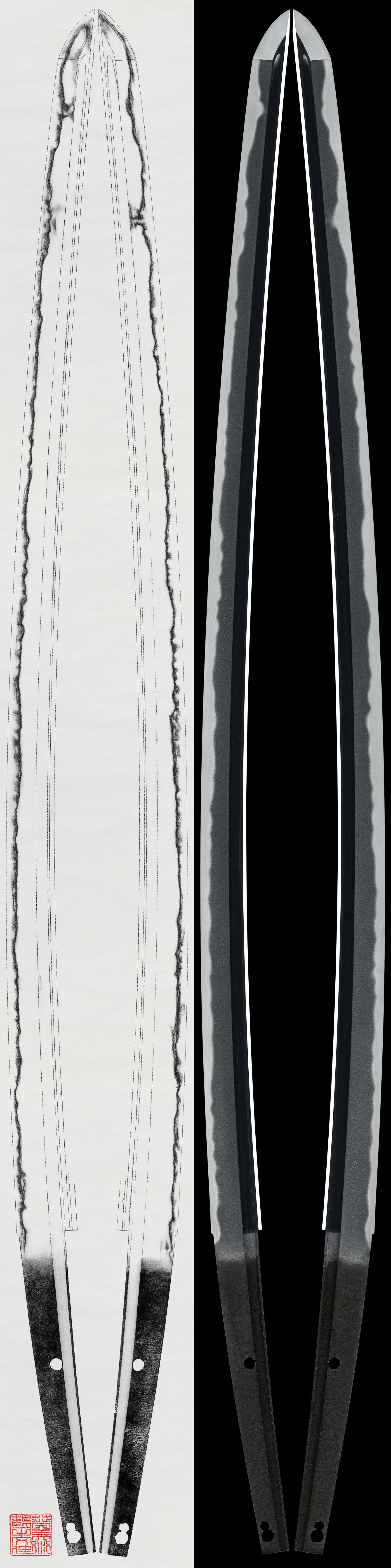
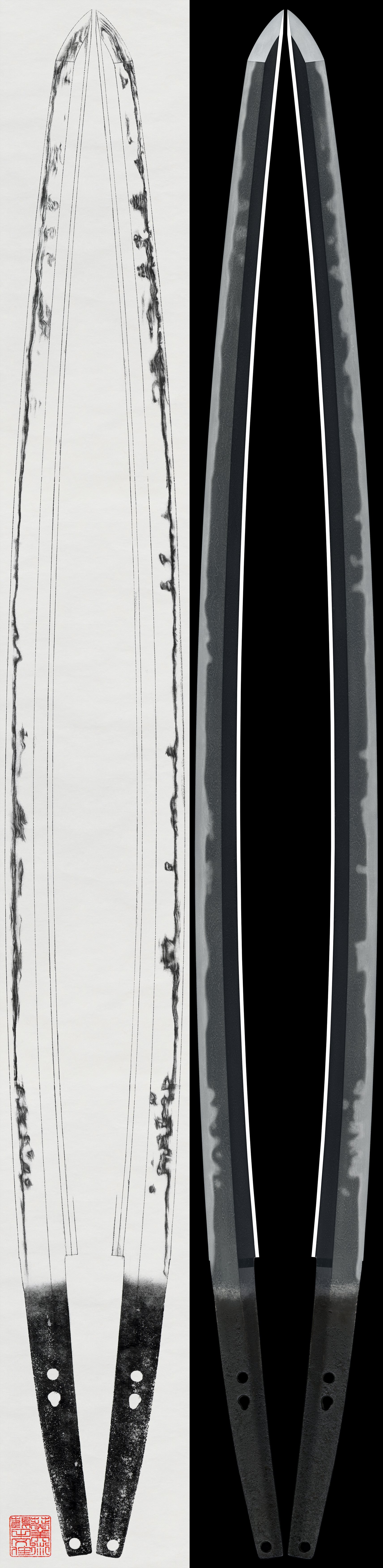
His characteristic hand is a large-patterned irregular temper led by undulation. The published sources name two manners in his work and describe the first as 'a somewhat large-patterned midareba with notare as the main theme'[[c:2]], into which he sets gunome, ko-gunome, ko-notare and ha with a pointed tendency, the whole tempered high and flamboyant. The nioi is deep and the nie attaches thickly and unevenly, with coarse nie gathering in places; fine kinsuji and sunagashi spill into the ji and run freely, and yubashiri-like tobiyaki appears frequently. It is the showiest of the Sa-group manners, and the reason it is his: the Hon'ami house, judging Sa-group blades, tended to assign the name Kunihiro to those examples showing 'the most vigorously unsettled midare'[[c:3]].
The jigane is the constant beneath both manners. It is a standing itame mixed with mokume and a flowing grain, thick in ji-nie with bold chikei entering frequently, the steel carrying a somewhat blackish cast. This is the Sōshū-derived jigane of the Sa school, open and active, not the bright tight ko-itame and utsuri of Bizen; where the forging tightens on his smaller signed pieces the ji-nie grows fine and the steel brightens. Over it the bōshi of the prime work runs into midare-komi, thrusts up and ends pointed, with vigorous hakikake and a long return, while the quieter pieces run straight to a small round. His second manner, named alongside the first, is a suguha-toned temper mixed with gunome, calmer and seen chiefly on the hira-zukuri tantō and the sun-nobi wakizashi.
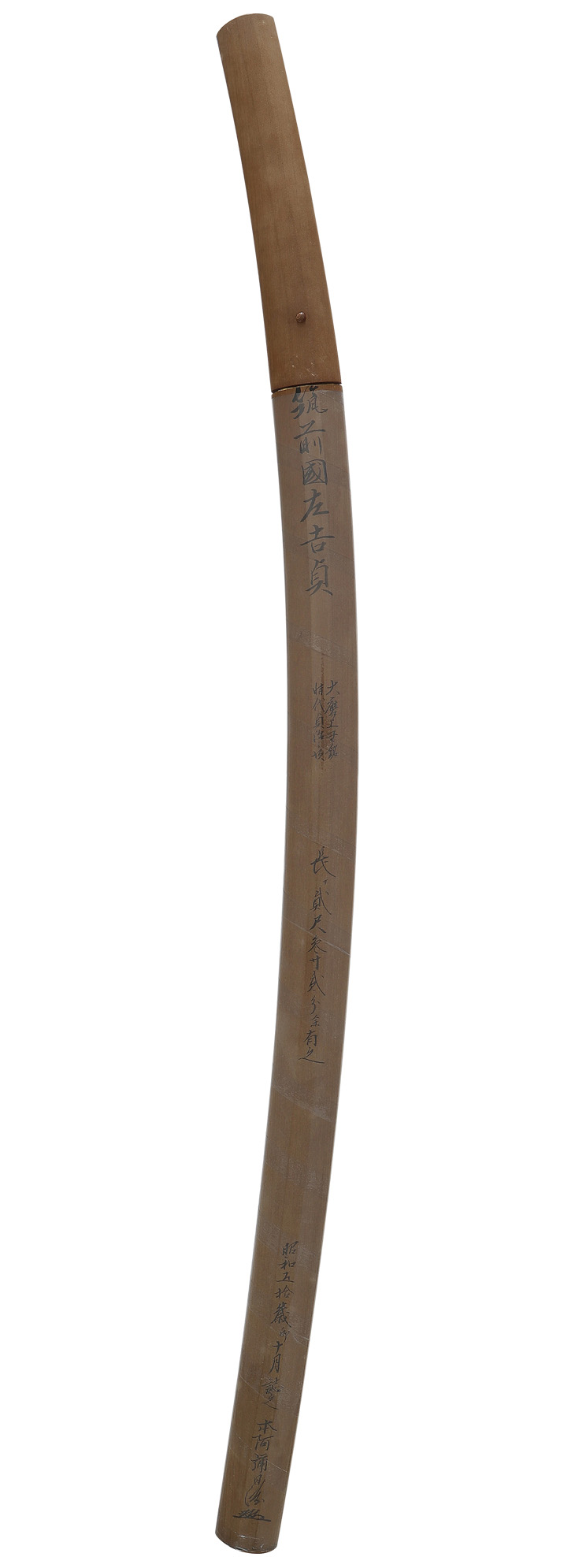
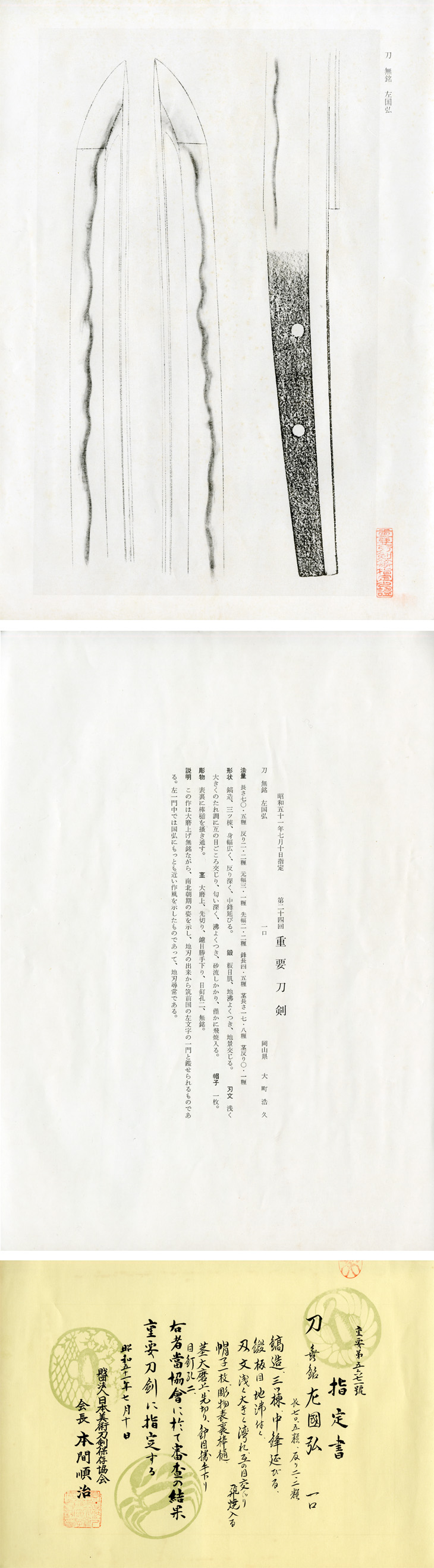
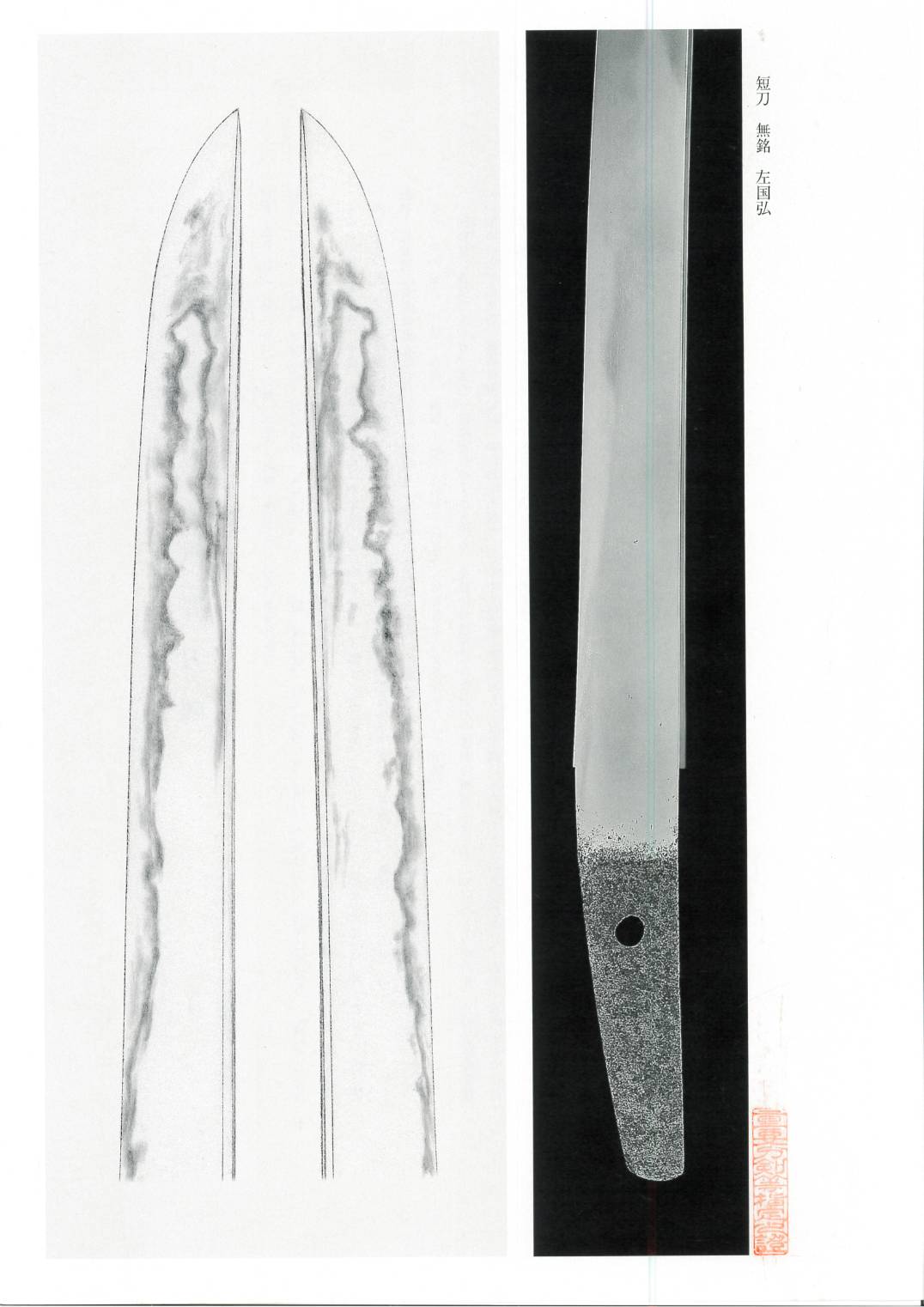
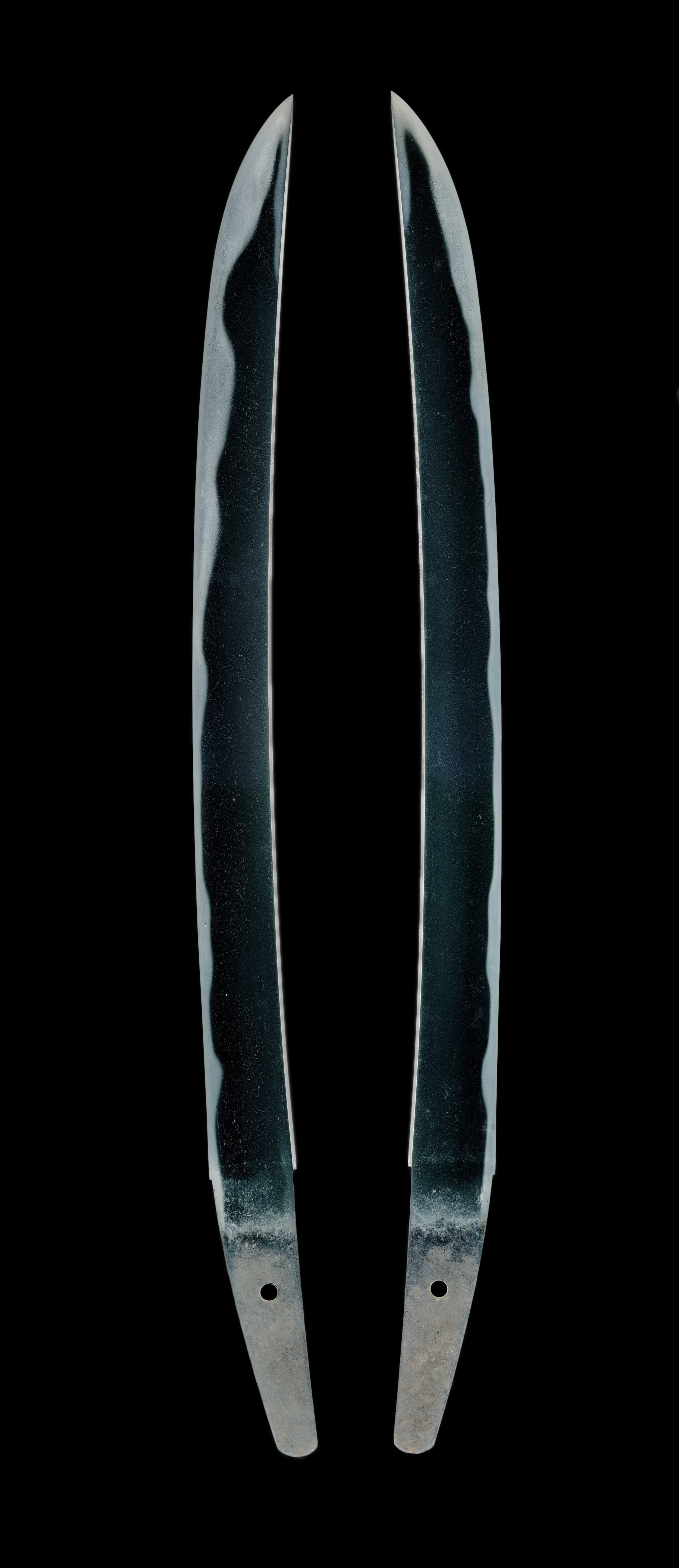
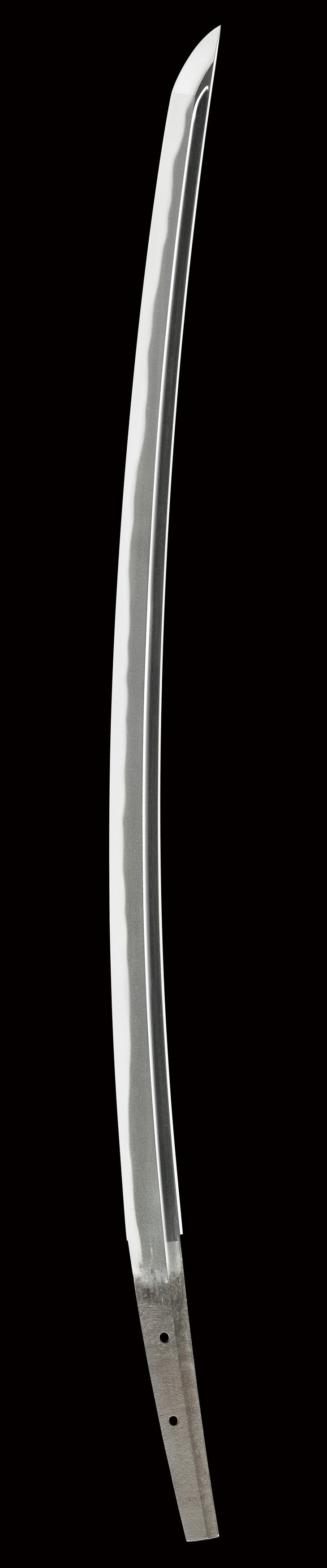
Most of his surviving record is not signed at all. The Sa school's long Nanbokuchō tachi were shortened in later centuries into katana, and the great majority of blades that carry his name today are ō-suriage mumei, wide in body with little taper, shallow in sori and large in the kissaki, the grand high-Nanbokuchō shape. On these the published sources affirm the Sa school from every point and judge the manner 'most fittingly compared to Kunihiro within the school'[[c:4]], precisely because the tempering is high and large in scale, the nie variable, the internal activity abundant and the yubashiri-like tobiyaki well marked. The signed tantō dated Shōhei 12 anchors the chronology; one signed tachi survives, published in the Kōzan Oshigata, and is held to be of high documentary value for the study of the whole line.
What sets him apart is named within his own school rather than against another. The hands of the Sa smiths are so closely matched that individual attribution is difficult, and the published commentary is candid about it: the attribution to Kunihiro rests on the boldness and scale of the workmanship, not on a single personal tell. He is distinguished from his schoolmates by carrying the most flamboyant, highest-tempered midare of the group, his bold yubashiri and pointed, thrusting bōshi the marks the judges look to. The same commentary is honest about his standing within the line, granting that his technique 'falls far short of Ō-Sa'[[c:5]]; yet on his best small work the refined, bright ji and ha are found to share 'a continuous affinity with Ō-Sa'[[c:6]], the kinship that places him among the school's leading hands.
For the collector Kunihiro is a scarce Nanbokuchō name. Fujishiro grades him Jō-jō saku. He has no National Treasures; his record reaches the Important Cultural Property rank in two signed tantō preserved at shrines, one at Kotohira-gū in Kagawa and one at Shinonome Jinja in Ehime, both heritage held in religious keeping. Beyond these, the documented blades run through the higher modern tiers, four at Tokubetsu Jūyō and the rest at Jūyō, with roughly fifty designated works on record in all. Their provenance reaches into the daimyō houses, a katana once held by the Tokugawa shogunal family and a blade transmitted in the Hisamatsu Matsudaira house, with examples now in the Tokugawa Art Museum and the Iwate Prefectural Museum. Signed work is exceptionally rare and the dated tantō a document in itself; of the shortened mumei katana, only a small number fall in the Tokubetsu Jūyō and Jūyō tiers, so a Sa Kunihiro comes to a private collector only seldom, and a signed example rarer still, a tangible record of how the Sa school carried its bright, bold manner into the height of the Nanbokuchō.