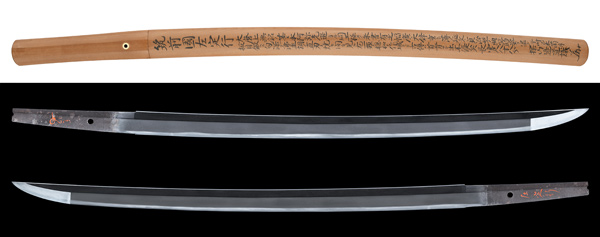
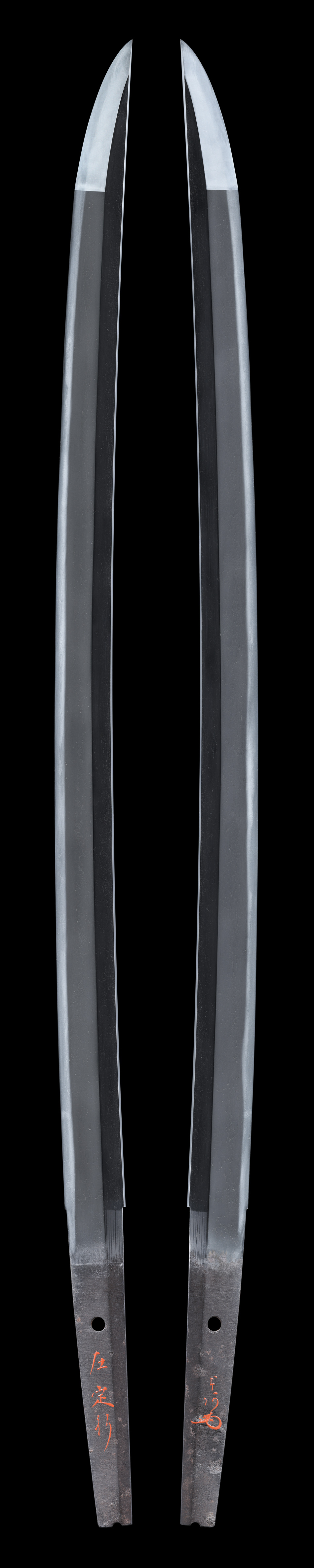
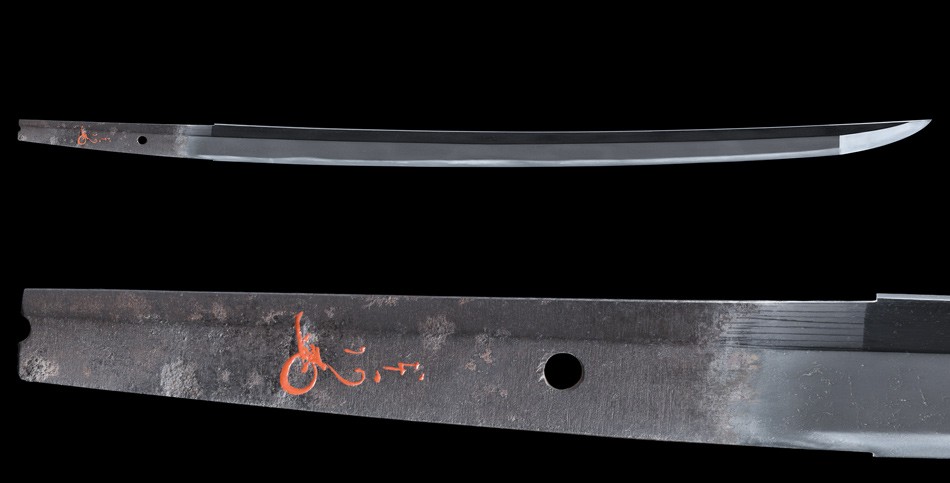
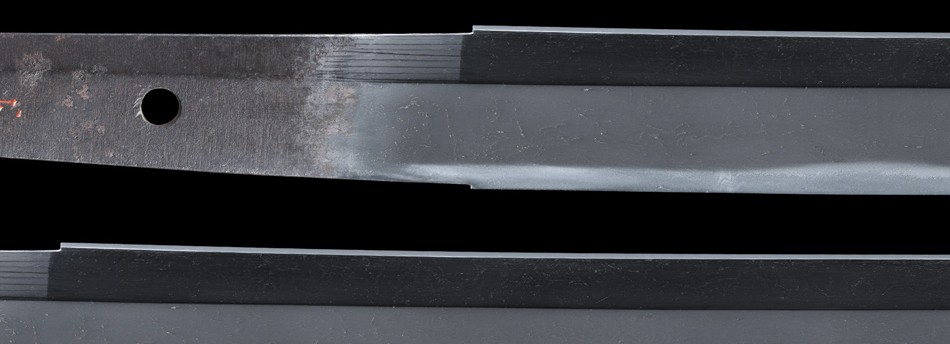
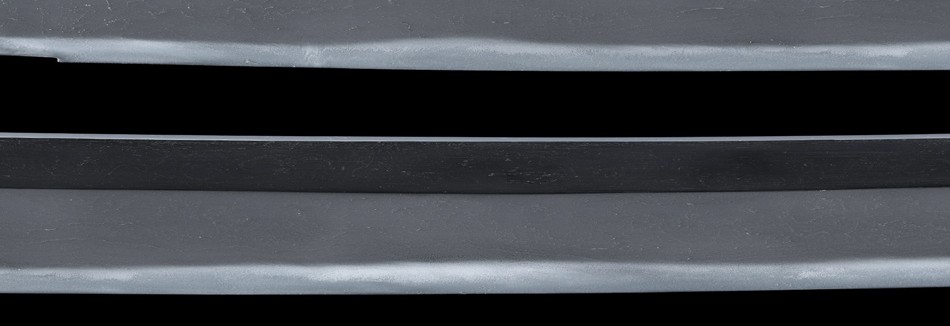
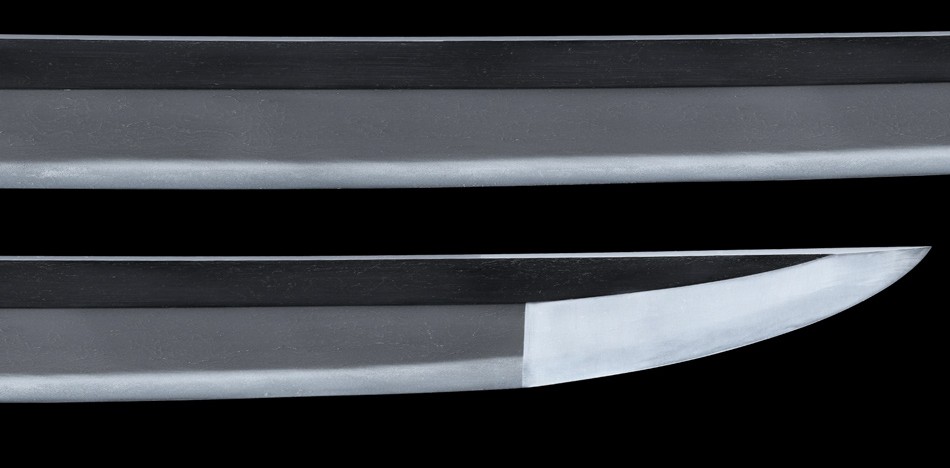
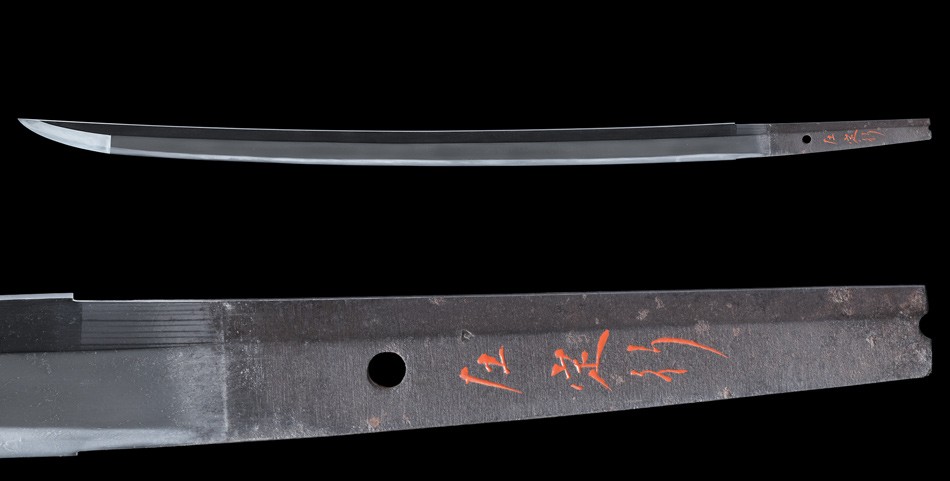
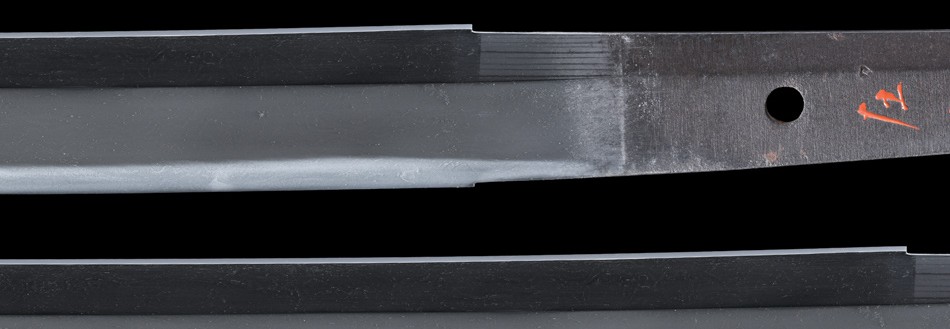
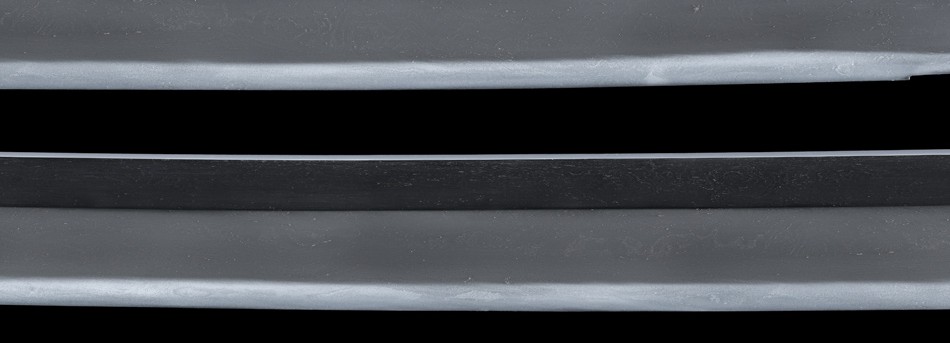
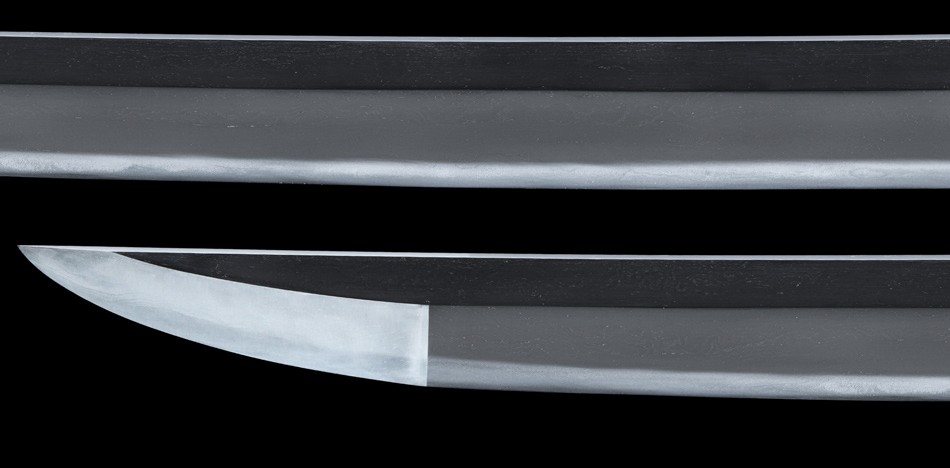
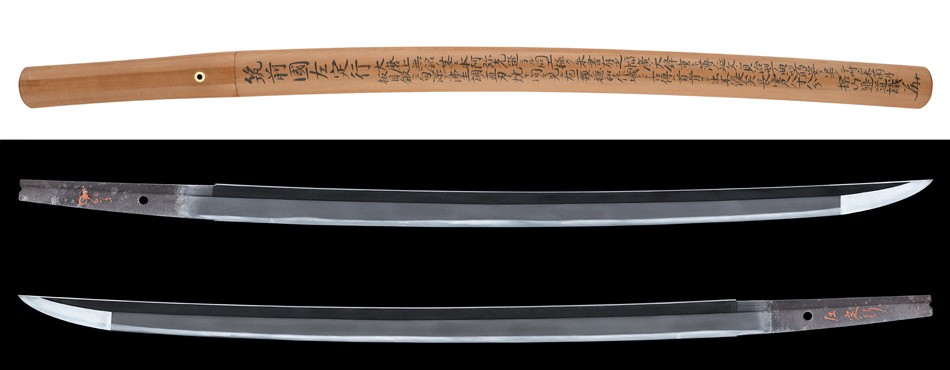
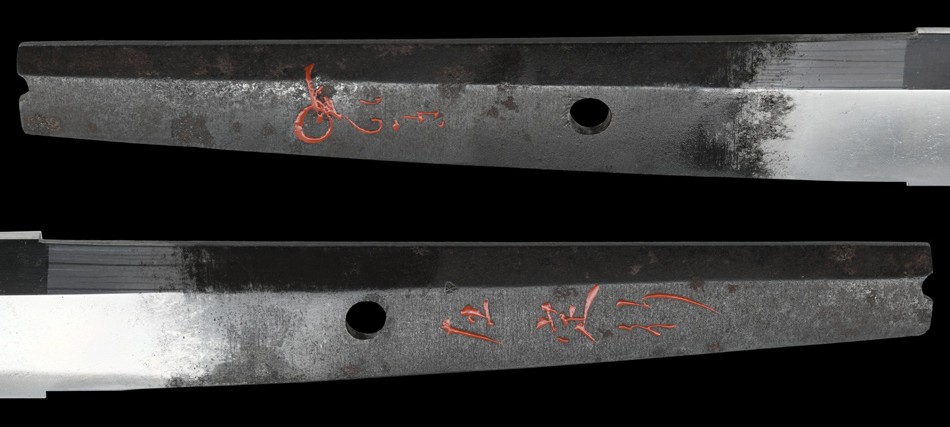
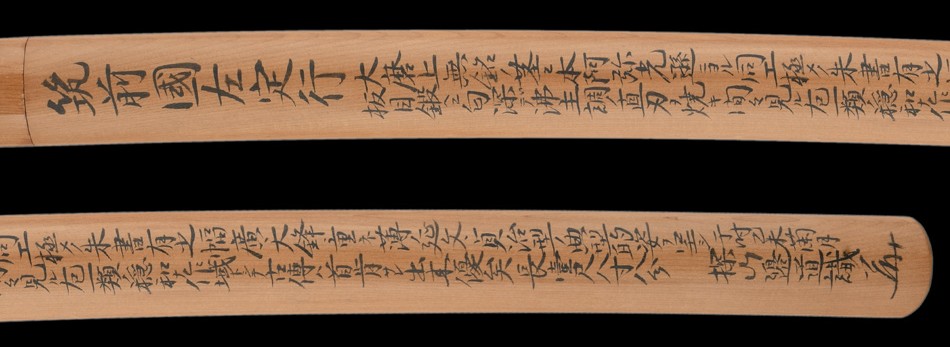
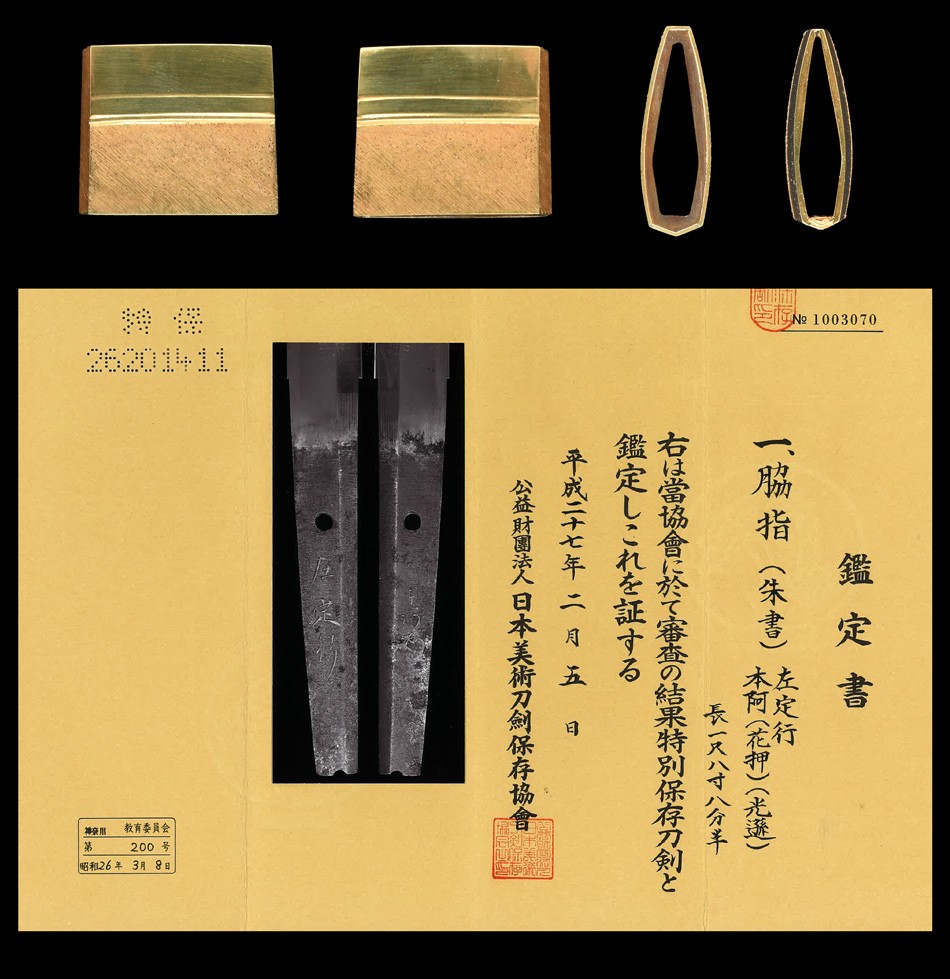
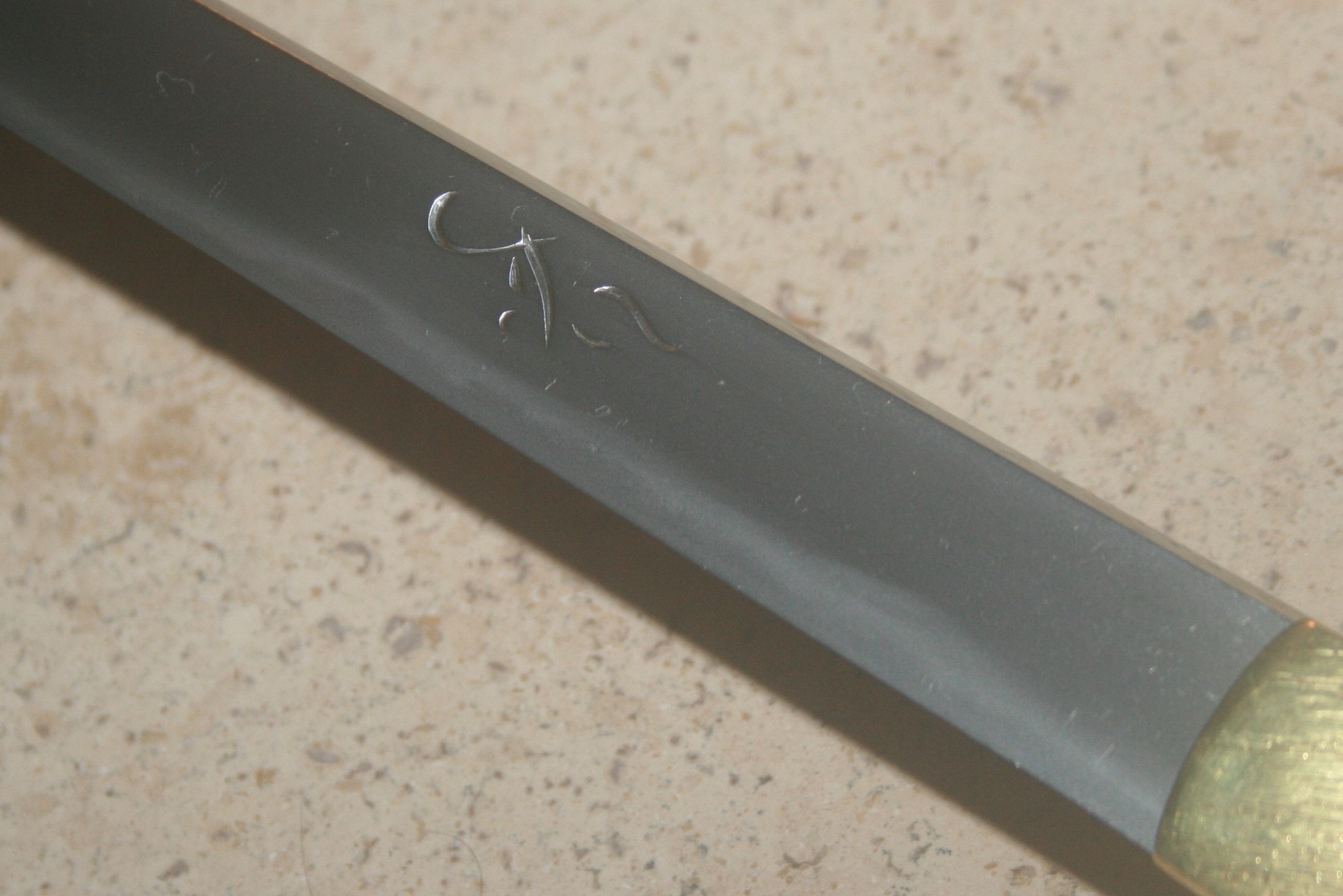
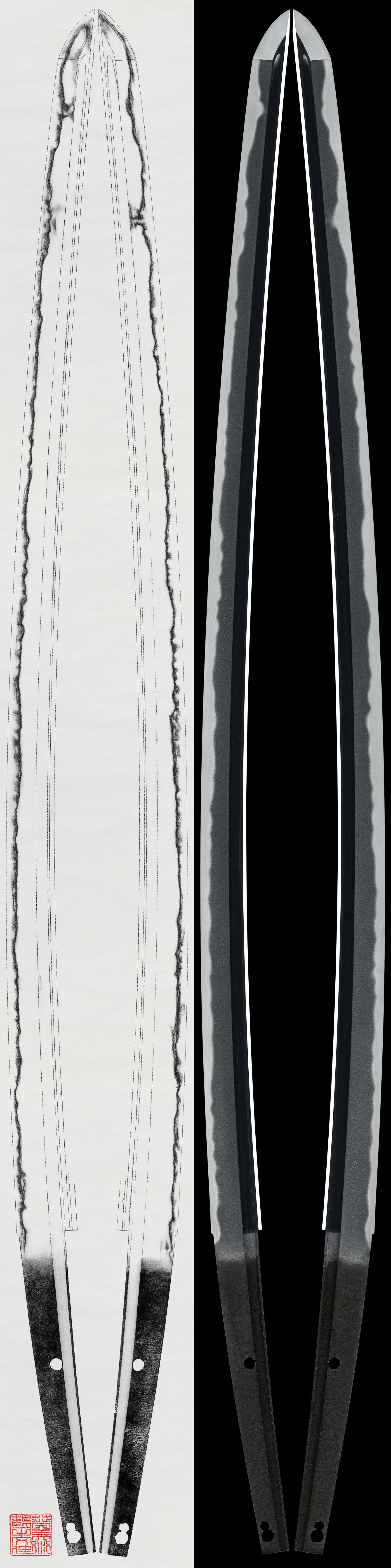
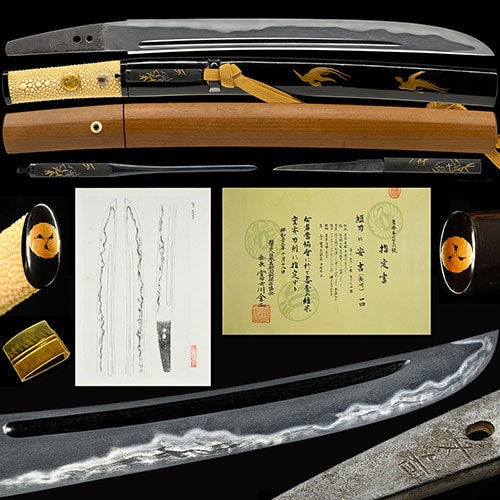
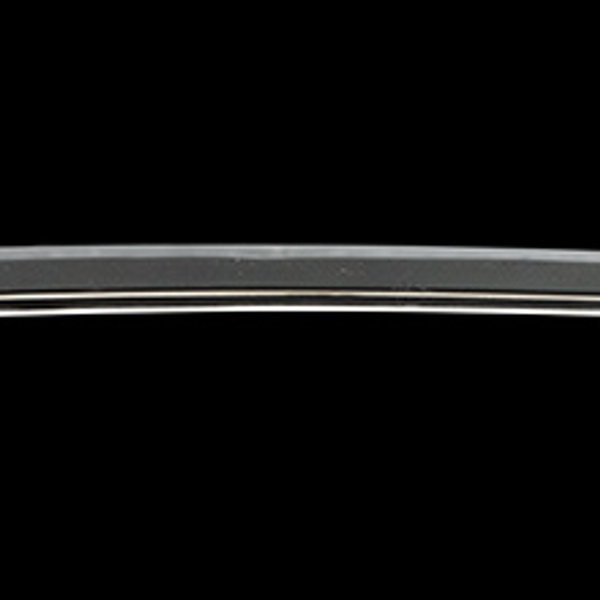
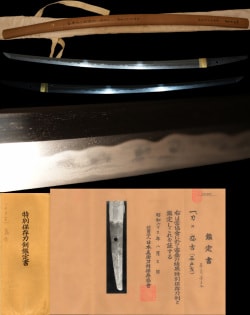
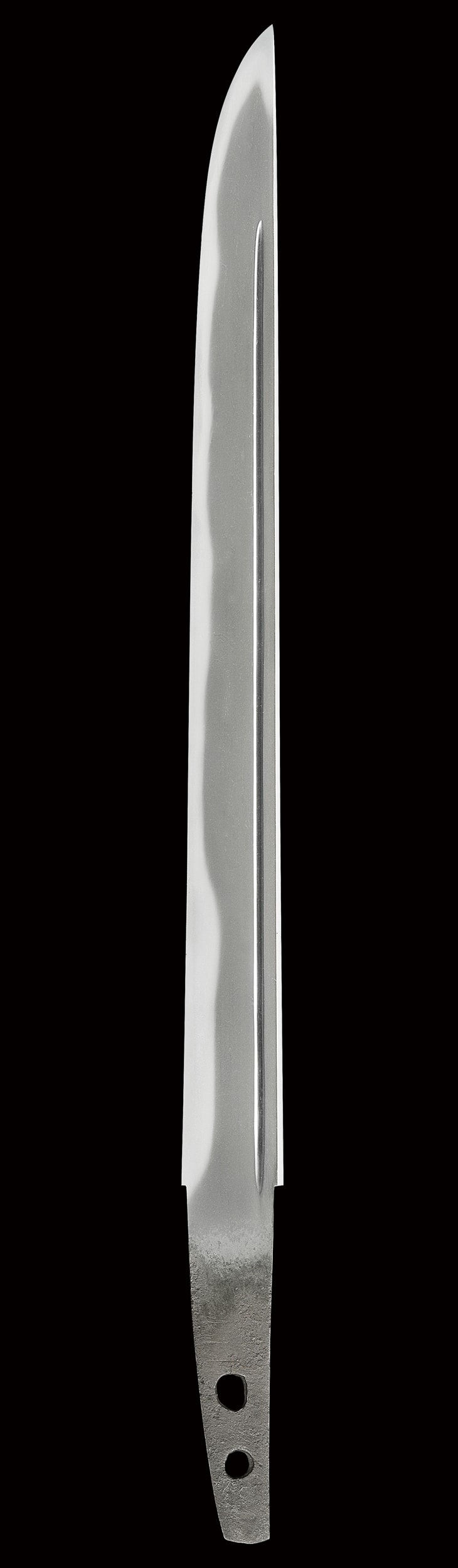
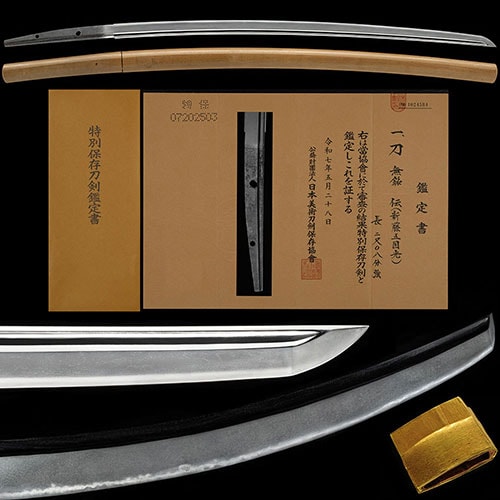
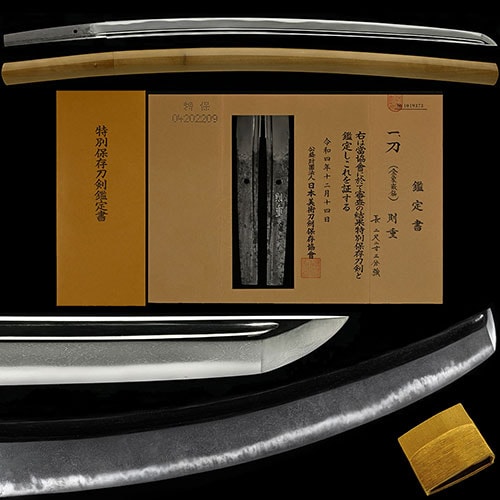
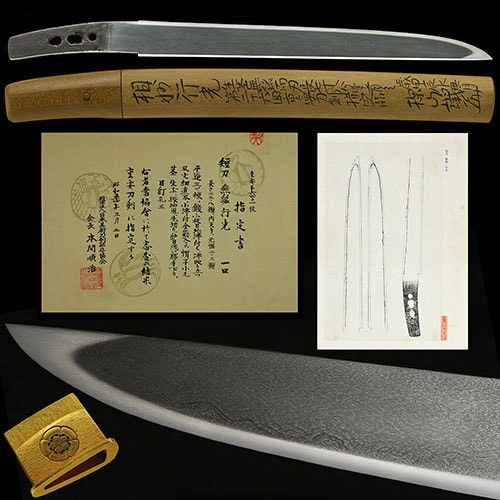
This is a wakizashi by Sano Sadayuki, certified as Tokubetsu Hozon Token by NBTHK. It was made in Aki province during the early Nanbokucho period, around 1347. The blade features an O-kissaki shape, Shinogizukuri structure, and Iorimune.
mei · Nanbokucho · nagasa 57.1cm · sori 0.75cm


Soshu-den · Chikuzen · around 1350-1352
Tōken Taikan top 18%
1 piece on the market now
Sadayuki belonged to the Sa school of Chikuzen Province, a lineage that emerged in the early Nanbokucho period and broke decisively from the classical styles previously characteristic of Kyushu workmanship. Traditionally regarded as a student of Yukihiro, with an alternative transmission placing him under Yasuyoshi, Sadayuki is recorded with an extant date of Shohei 12 (1357) in the Umetada Oshigata, placing his activity squarely at the zenith of the Nanbokucho period. One theory holds that he later relocated to Aki Province. Signed works are few, and the overwhelming majority of attributions rely on kinzogan-mei appraisals, including examples authenticated by Hon'ami Koshitsu.
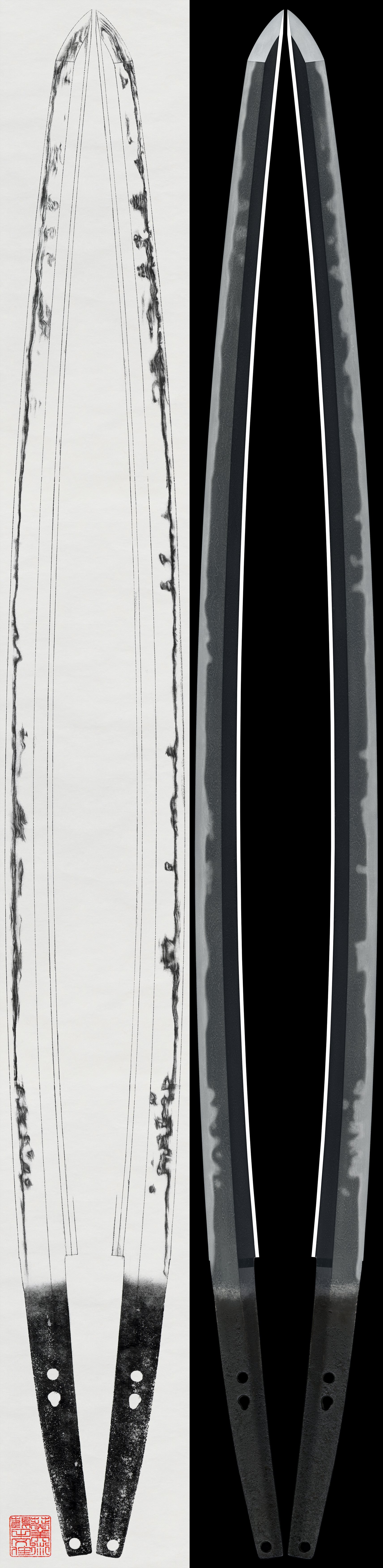
The designated pieces exhibit the unmistakable technical vocabulary of the Sa lineage in both jihada and hamon. The forging shows itame mixed with mokume and nagare-hada, with fine hada-dachi, thickly applied ji-nie, and abundant chikei, producing a bright and luminous jigane. The hamon is characteristically founded on a shallow ko-notare mixed with gunome, ko-gunome, and togariba, with strongly adhering nie and frequent hataraki including kinsuji, sunagashi, and intermittent yubashiri at the yakigashira. The boshi enters midare-komi and turns back with a pointed tendency, often showing hakikake. Where the nie is particularly thick, nie-kuzure appears along the habuchi, lending the temper a vigorous and expressive character.
Sadayuki's works preserve the heroic proportions of their era: wide mihaba, extended chu-kissaki, and generous hiraniku in the long blades, and sunnobi hira-zukuri forms in the shorter pieces. Both ji and ha are consistently bright and clear, confirming the Sa school's refined sensibility, and the sound condition of these blades attests to the enduring quality of Sadayuki's forge craft.
Where Sadayuki stands among comparable artisans: across all of nihontō, and within tradition, era, and period. The tiers (Foremost · Leading · Major · Notable) weigh official designations from the NBTHK and Japan's Agency for Cultural Affairs, together with historical honors of lasting repute such as the Sansaku and Meibutsu-chō.
Select a lens to see how it's measured.
Soshu-den · Chikuzen
Phase: Sue-Sa末左· 1338–1450
16 pieces on the market now
When the single character 左 passed from the founder's hand to those of his pupils and sons, the Sa workshop of Chikuzen entered the chapter the sword books gather under the name Sue-Sa. The NBTHK names the line repeatedly: Yasuyoshi, Yukihiro, Yoshisada, Kunihiro, Hiroyuki, Hiroyasu, Sadayoshi, with Kōan and Sadakuni read among them, each said to have taken up the master's manner. The succession is also a dispersal. Learn more →
| Smith | Era | Designated |
|---|---|---|
| Sa左 | 1334-1338 | 73 |
| Yasuyoshi安吉 | 1346-1370 | 45 |
| Kunihiro國弘 | 1346-1370 | 48 |
| Yoshisada吉貞 | 1345-1359 | 48 |
| Hiroyasu弘安 | 1346-1370 | 24 |
A Hozon-certified blade judged to show notably superior workmanship and a better state of preservation. The bar is higher: re-tempered blades and most unsigned Muromachi/Edo works are excluded.
The NBTHK (Nihon Bijutsu Tōken Hozon Kyōkai, the Society for the Preservation of Japanese Art Swords) is a public-interest incorporated foundation founded in 1948 and supervised by Japan’s Agency for Cultural Affairs (Bunkachō); it is based at the Japanese Sword Museum in Tokyo. Its expert panels physically examine each submitted work (shinsa) and issue a certificate (kanteishō) ranking it by artistic and historical merit. NBTHK papers are the most widely recognized standard of authentication for Japanese swords and fittings.
NBTHK official siteNo cooling-off period or returns; refund only if the purchased sword is proven fake, capped at purchase price (excludes commission sales, accessories, auction items).
This is a wakizashi by Sano Sadayuki, certified as Tokubetsu Hozon Token by NBTHK. It was made in Aki province during the early Nanbokucho period, around 1347. The blade features an O-kissaki shape, Shinogizukuri structure, and Iorimune.
mei · Nanbokucho · nagasa 57.1cm · sori 0.75cm


Soshu-den · Chikuzen · around 1350-1352
Tōken Taikan top 18%
1 piece on the market now
Sadayuki belonged to the Sa school of Chikuzen Province, a lineage that emerged in the early Nanbokucho period and broke decisively from the classical styles previously characteristic of Kyushu workmanship. Traditionally regarded as a student of Yukihiro, with an alternative transmission placing him under Yasuyoshi, Sadayuki is recorded with an extant date of Shohei 12 (1357) in the Umetada Oshigata, placing his activity squarely at the zenith of the Nanbokucho period. One theory holds that he later relocated to Aki Province. Signed works are few, and the overwhelming majority of attributions rely on kinzogan-mei appraisals, including examples authenticated by Hon'ami Koshitsu.
The designated pieces exhibit the unmistakable technical vocabulary of the Sa lineage in both jihada and hamon. The forging shows itame mixed with mokume and nagare-hada, with fine hada-dachi, thickly applied ji-nie, and abundant chikei, producing a bright and luminous jigane. The hamon is characteristically founded on a shallow ko-notare mixed with gunome, ko-gunome, and togariba, with strongly adhering nie and frequent hataraki including kinsuji, sunagashi, and intermittent yubashiri at the yakigashira. The boshi enters midare-komi and turns back with a pointed tendency, often showing hakikake. Where the nie is particularly thick, nie-kuzure appears along the habuchi, lending the temper a vigorous and expressive character.
Sadayuki's works preserve the heroic proportions of their era: wide mihaba, extended chu-kissaki, and generous hiraniku in the long blades, and sunnobi hira-zukuri forms in the shorter pieces. Both ji and ha are consistently bright and clear, confirming the Sa school's refined sensibility, and the sound condition of these blades attests to the enduring quality of Sadayuki's forge craft.
Where Sadayuki stands among comparable artisans: across all of nihontō, and within tradition, era, and period. The tiers (Foremost · Leading · Major · Notable) weigh official designations from the NBTHK and Japan's Agency for Cultural Affairs, together with historical honors of lasting repute such as the Sansaku and Meibutsu-chō.
Select a lens to see how it's measured.
Soshu-den · Chikuzen
Phase: Sue-Sa末左· 1338–1450
16 pieces on the market now
When the single character 左 passed from the founder's hand to those of his pupils and sons, the Sa workshop of Chikuzen entered the chapter the sword books gather under the name Sue-Sa. The NBTHK names the line repeatedly: Yasuyoshi, Yukihiro, Yoshisada, Kunihiro, Hiroyuki, Hiroyasu, Sadayoshi, with Kōan and Sadakuni read among them, each said to have taken up the master's manner. The succession is also a dispersal. Learn more →

| Smith | Era | Designated |
|---|---|---|
| Sa左 | 1334-1338 | 73 |
| Yasuyoshi安吉 | 1346-1370 | 45 |
| Kunihiro國弘 | 1346-1370 | 48 |
| Yoshisada吉貞 | 1345-1359 | 48 |
| Hiroyasu弘安 | 1346-1370 | 24 |
A Hozon-certified blade judged to show notably superior workmanship and a better state of preservation. The bar is higher: re-tempered blades and most unsigned Muromachi/Edo works are excluded.
The NBTHK (Nihon Bijutsu Tōken Hozon Kyōkai, the Society for the Preservation of Japanese Art Swords) is a public-interest incorporated foundation founded in 1948 and supervised by Japan’s Agency for Cultural Affairs (Bunkachō); it is based at the Japanese Sword Museum in Tokyo. Its expert panels physically examine each submitted work (shinsa) and issue a certificate (kanteishō) ranking it by artistic and historical merit. NBTHK papers are the most widely recognized standard of authentication for Japanese swords and fittings.
NBTHK official siteNo cooling-off period or returns; refund only if the purchased sword is proven fake, capped at purchase price (excludes commission sales, accessories, auction items).