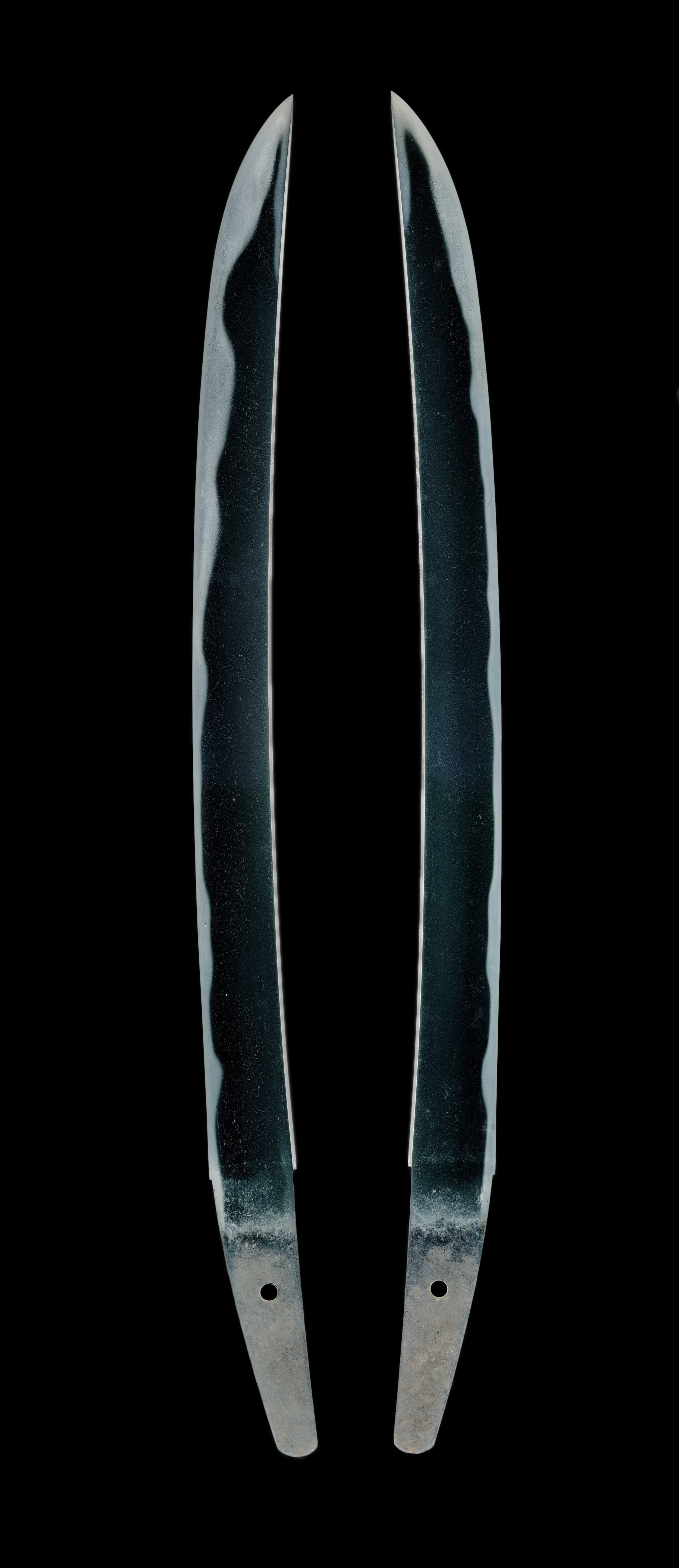
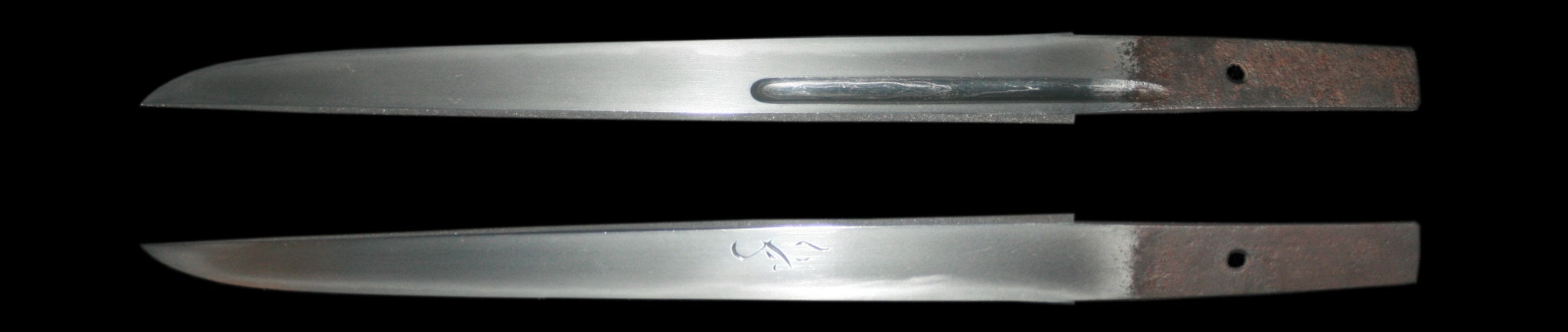
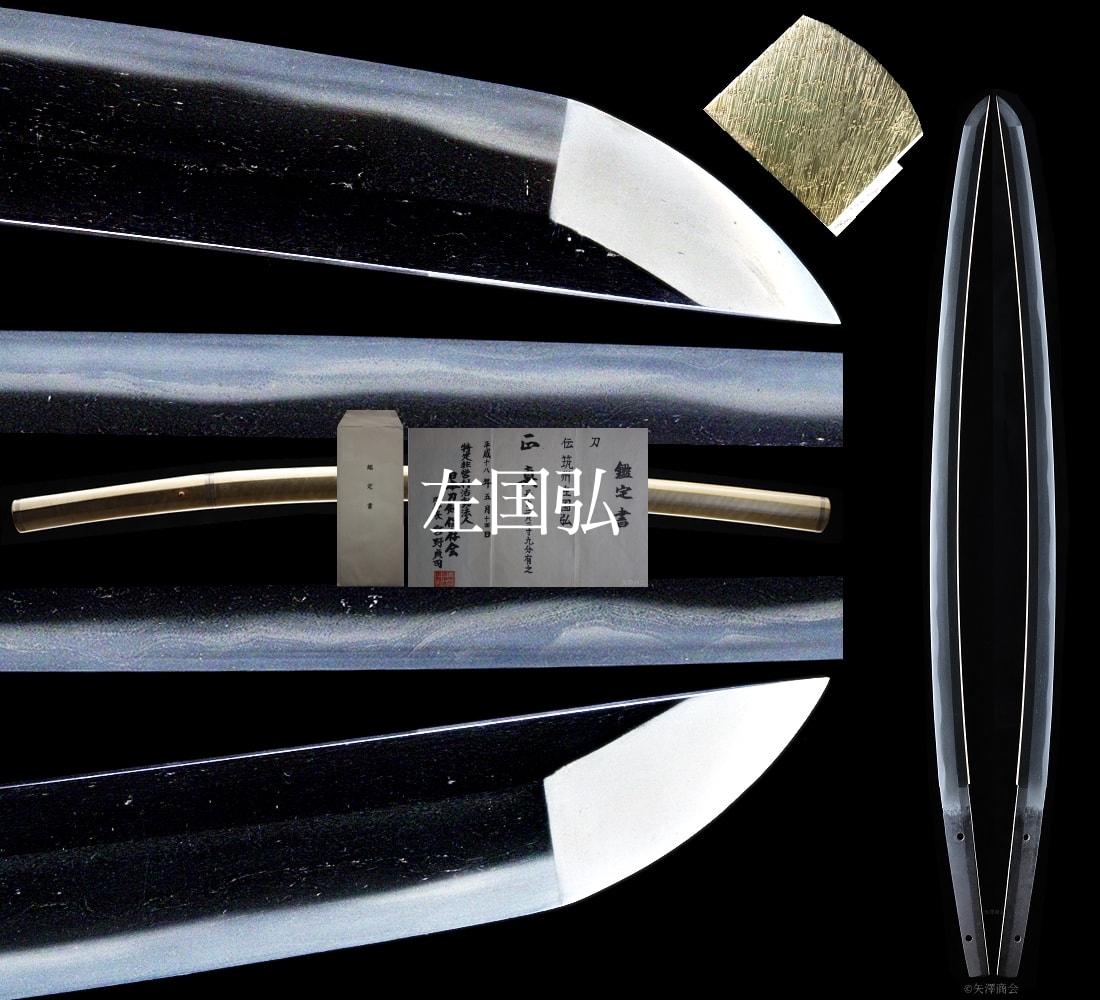
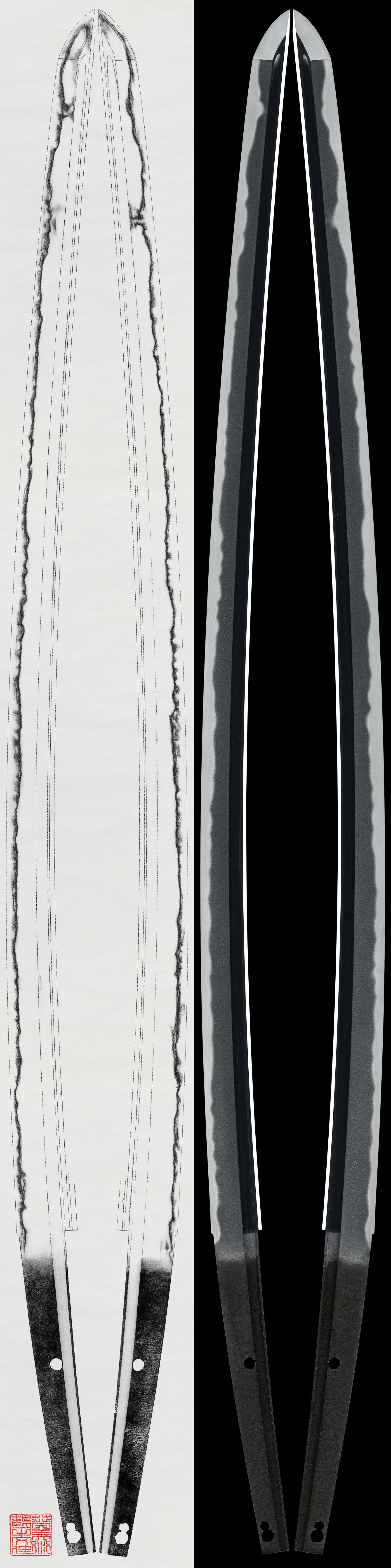
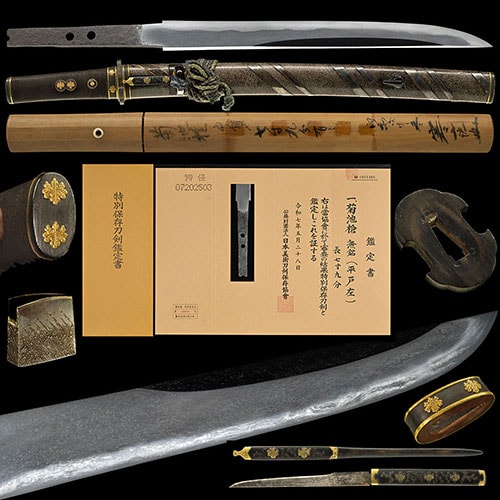
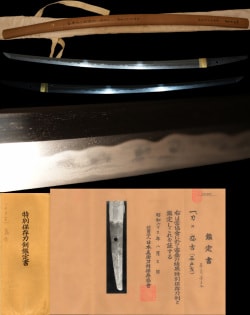
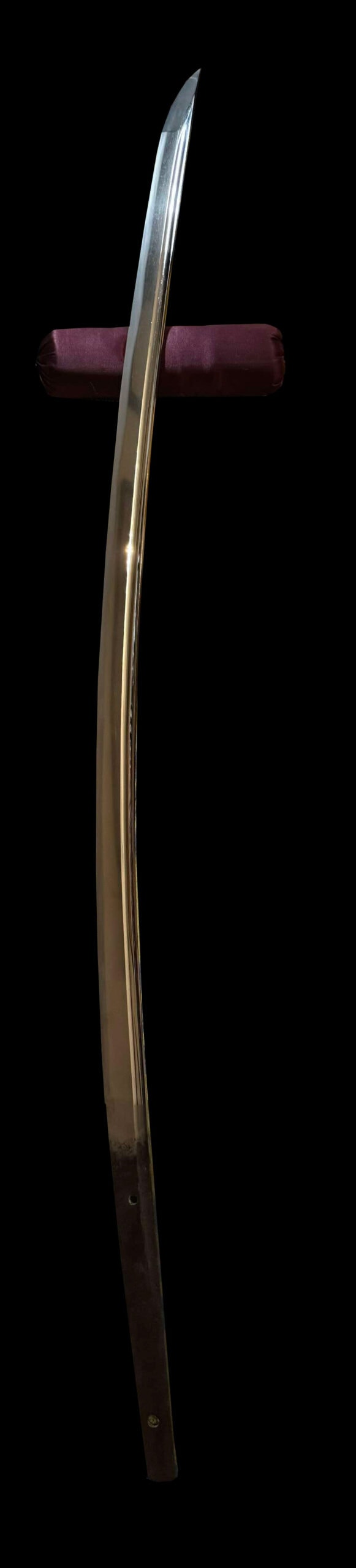
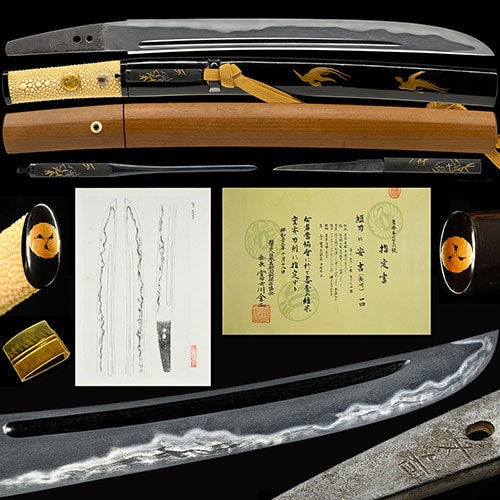
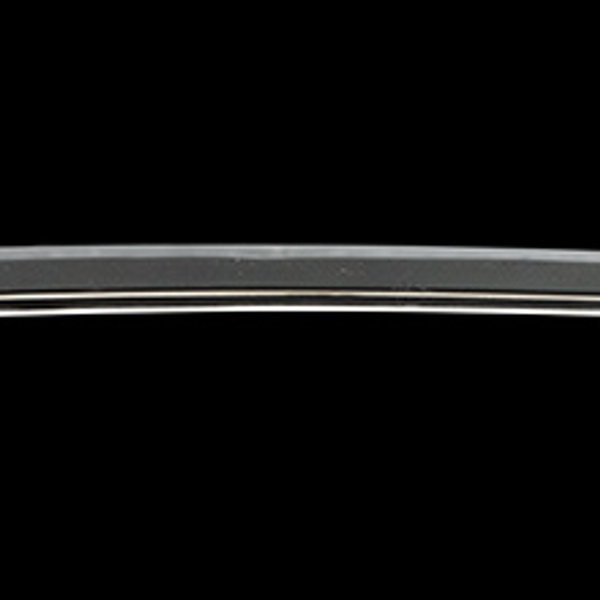
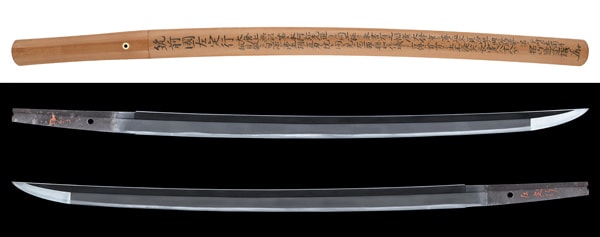
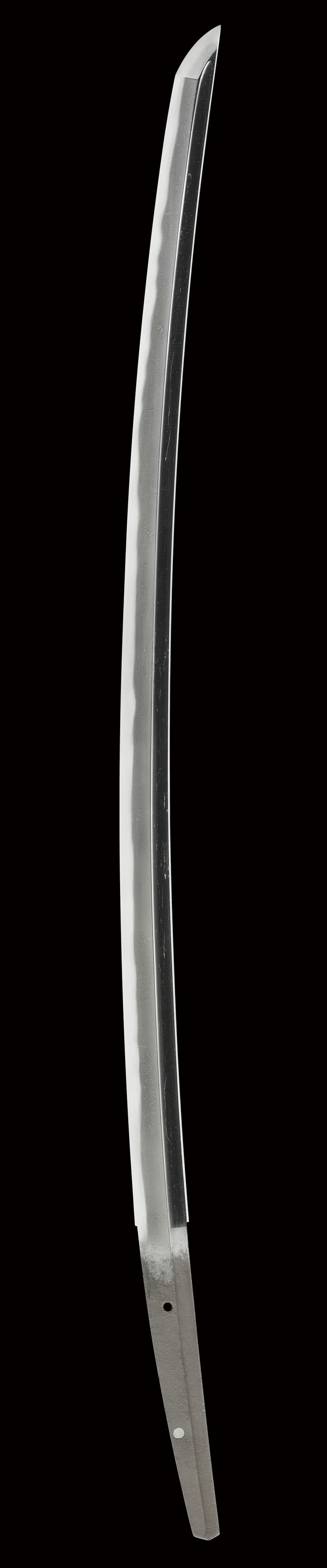
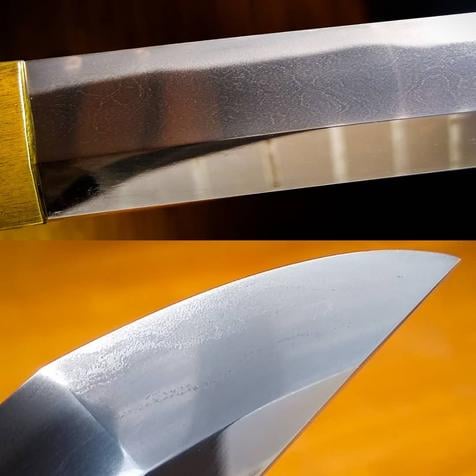
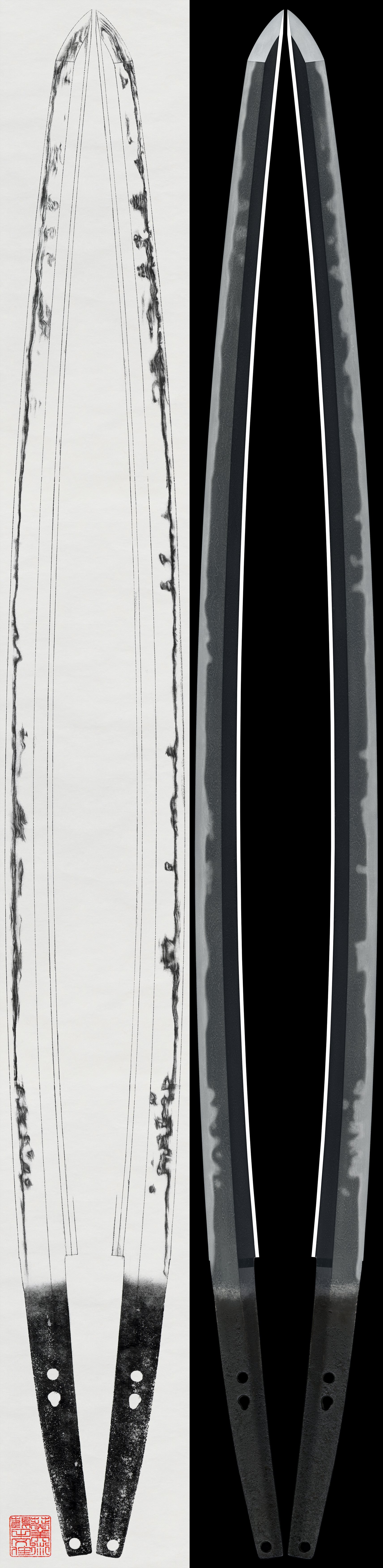
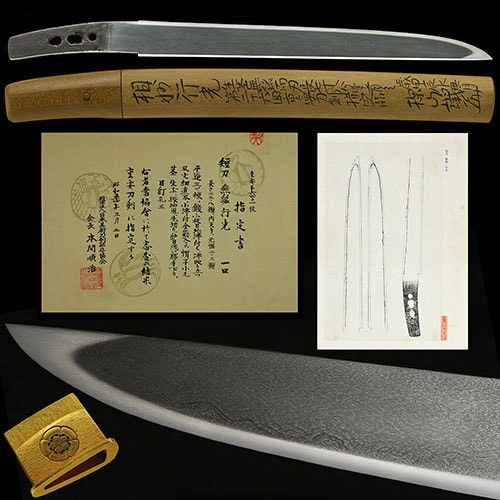
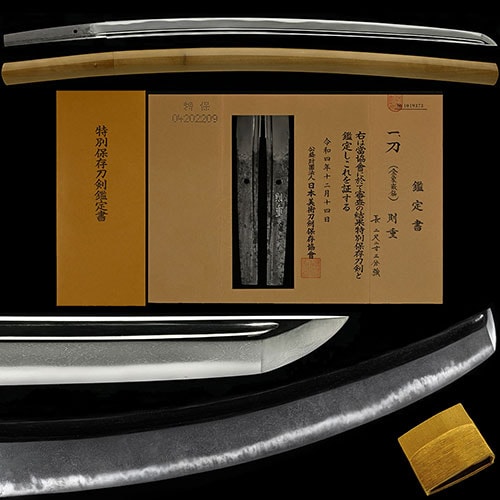
This katana was forged by Sadahiro of Akita Yuzawa for Satake Yoshizane, a senior vassal of the Akita clan. The blade has a wide body, thick kasane, and moderate curvature with an elongated kissaki. The hamon is a bright and clear chuji-suguha with fine ko-nie and numerous small ashi.
 NihontoWatch
mei · Bunka (1804-1818) · nagasa 73.7cm · sori 1.3cm








Soshu-den · Chikuzen · around 1368-1375
Tōken Taikan top 91%
1 piece on the market now
Where Sadahiro stands among comparable artisans: across all of nihontō, and within tradition, era, and period. The tiers (Foremost · Leading · Major · Notable) weigh official designations from the NBTHK and Japan's Agency for Cultural Affairs, together with historical honors of lasting repute such as the Sansaku and Meibutsu-chō.
Select a lens to see how it's measured.
Soshu-den · Chikuzen
Phase: Sue-Sa末左· 1338–1450
16 pieces on the market now
When the single character 左 passed from the founder's hand to those of his pupils and sons, the Sa workshop of Chikuzen entered the chapter the sword books gather under the name Sue-Sa. The NBTHK names the line repeatedly: Yasuyoshi, Yukihiro, Yoshisada, Kunihiro, Hiroyuki, Hiroyasu, Sadayoshi, with Kōan and Sadakuni read among them, each said to have taken up the master's manner. The succession is also a dispersal. Learn more →
| Smith | Era | Designated |
|---|---|---|
| Sa左 | 1334-1338 | 73 |
| Yasuyoshi安吉 | 1346-1370 | 45 |
| Kunihiro國弘 | 1346-1370 | 48 |
| Yoshisada吉貞 | 1345-1359 | 48 |
| Hiroyasu弘安 | 1346-1370 | 24 |
A Hozon-certified blade judged to show notably superior workmanship and a better state of preservation. The bar is higher: re-tempered blades and most unsigned Muromachi/Edo works are excluded.
The NBTHK (Nihon Bijutsu Tōken Hozon Kyōkai, the Society for the Preservation of Japanese Art Swords) is a public-interest incorporated foundation founded in 1948 and supervised by Japan’s Agency for Cultural Affairs (Bunkachō); it is based at the Japanese Sword Museum in Tokyo. Its expert panels physically examine each submitted work (shinsa) and issue a certificate (kanteishō) ranking it by artistic and historical merit. NBTHK papers are the most widely recognized standard of authentication for Japanese swords and fittings.
NBTHK official siteIf, due to our fault, the item differs significantly from its proper condition, the item may be returned. Cooling-off is within one week of the item's arrival.
This katana was forged by Sadahiro of Akita Yuzawa for Satake Yoshizane, a senior vassal of the Akita clan. The blade has a wide body, thick kasane, and moderate curvature with an elongated kissaki. The hamon is a bright and clear chuji-suguha with fine ko-nie and numerous small ashi.
NihontoWatchmei · Bunka (1804-1818) · nagasa 73.7cm · sori 1.3cm
Soshu-den · Chikuzen · around 1368-1375
Tōken Taikan top 91%
1 piece on the market now
Where Sadahiro stands among comparable artisans: across all of nihontō, and within tradition, era, and period. The tiers (Foremost · Leading · Major · Notable) weigh official designations from the NBTHK and Japan's Agency for Cultural Affairs, together with historical honors of lasting repute such as the Sansaku and Meibutsu-chō.
Select a lens to see how it's measured.
Soshu-den · Chikuzen
Phase: Sue-Sa末左· 1338–1450
16 pieces on the market now
When the single character 左 passed from the founder's hand to those of his pupils and sons, the Sa workshop of Chikuzen entered the chapter the sword books gather under the name Sue-Sa. The NBTHK names the line repeatedly: Yasuyoshi, Yukihiro, Yoshisada, Kunihiro, Hiroyuki, Hiroyasu, Sadayoshi, with Kōan and Sadakuni read among them, each said to have taken up the master's manner. The succession is also a dispersal. Learn more →
| Smith | Era | Designated |
|---|---|---|
| Sa左 | 1334-1338 | 73 |
| Yasuyoshi安吉 | 1346-1370 | 45 |
| Kunihiro國弘 | 1346-1370 | 48 |
| Yoshisada吉貞 | 1345-1359 | 48 |
| Hiroyasu弘安 | 1346-1370 | 24 |
A Hozon-certified blade judged to show notably superior workmanship and a better state of preservation. The bar is higher: re-tempered blades and most unsigned Muromachi/Edo works are excluded.
The NBTHK (Nihon Bijutsu Tōken Hozon Kyōkai, the Society for the Preservation of Japanese Art Swords) is a public-interest incorporated foundation founded in 1948 and supervised by Japan’s Agency for Cultural Affairs (Bunkachō); it is based at the Japanese Sword Museum in Tokyo. Its expert panels physically examine each submitted work (shinsa) and issue a certificate (kanteishō) ranking it by artistic and historical merit. NBTHK papers are the most widely recognized standard of authentication for Japanese swords and fittings.
NBTHK official siteIf, due to our fault, the item differs significantly from its proper condition, the item may be returned. Cooling-off is within one week of the item's arrival.