NihontoWatch Mon

NihontoWatch

MarketAuctions
Encyclopedia
NihontoWatch Mon

NihontoWatch

MarketAuctions
Encyclopedia

Description

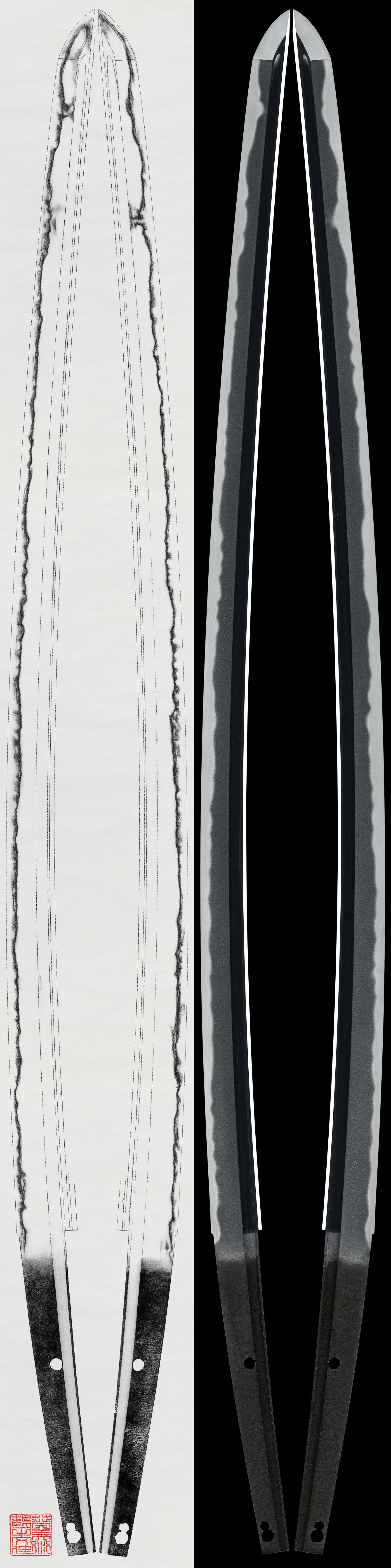
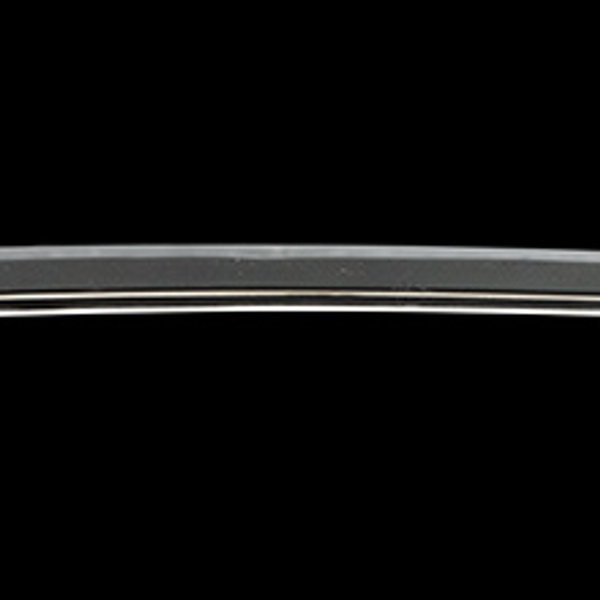
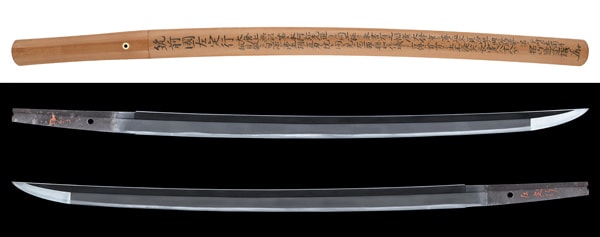
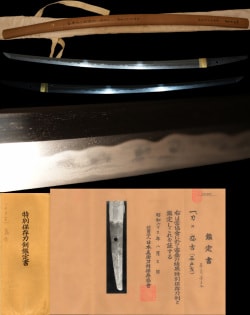
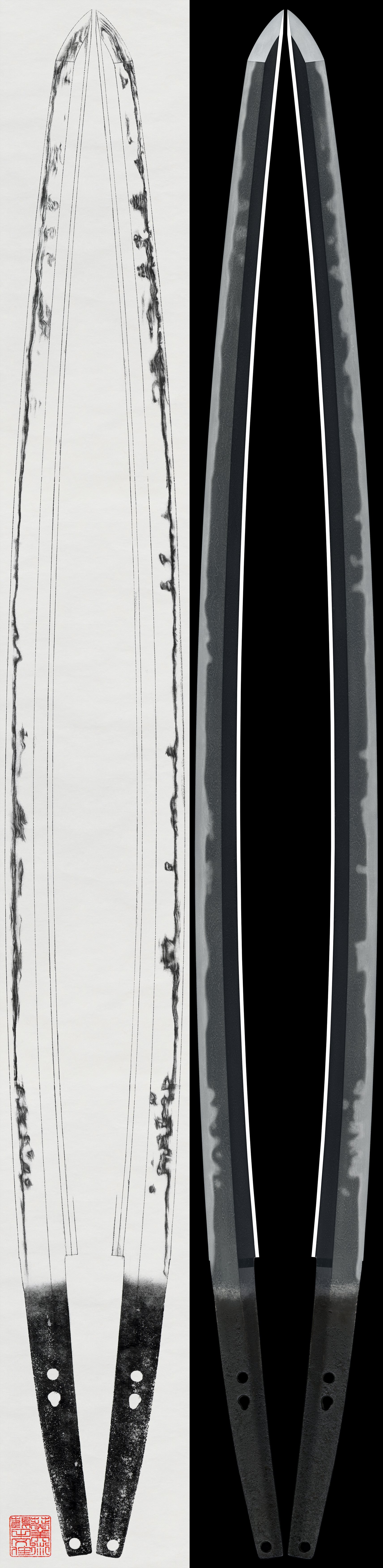
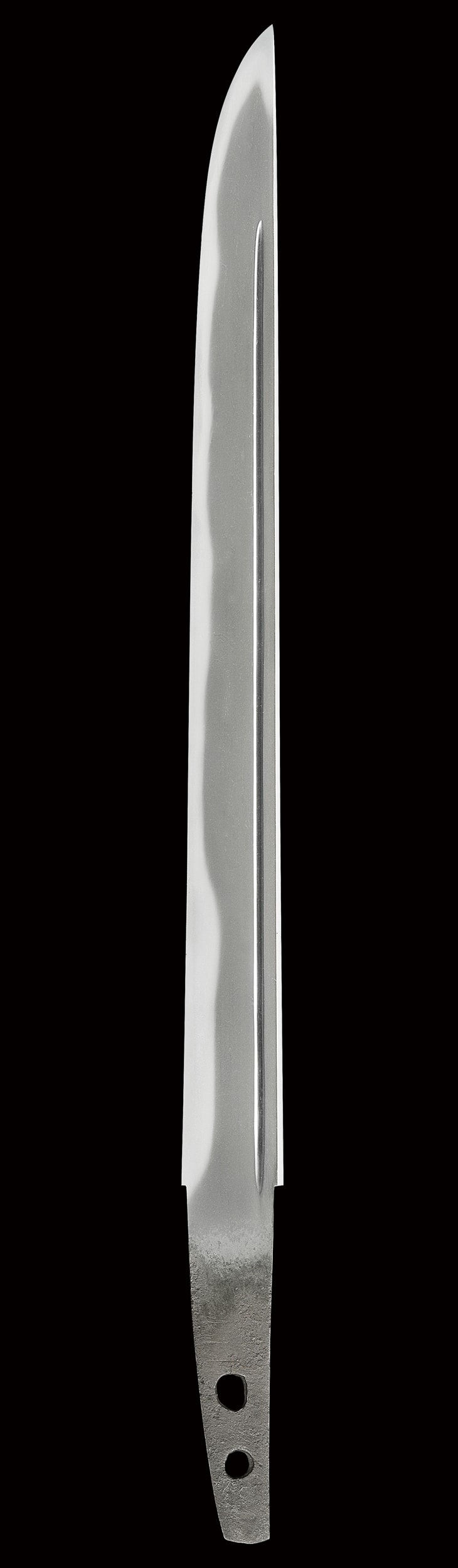
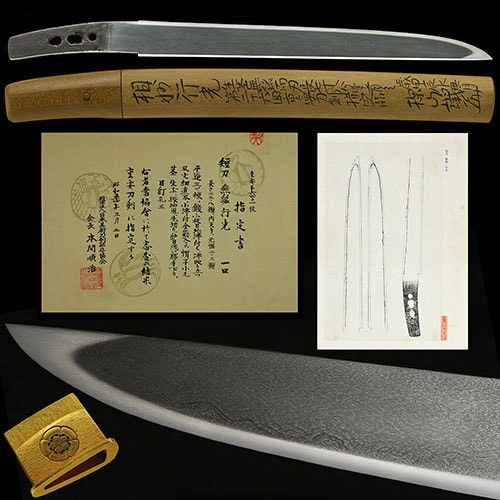
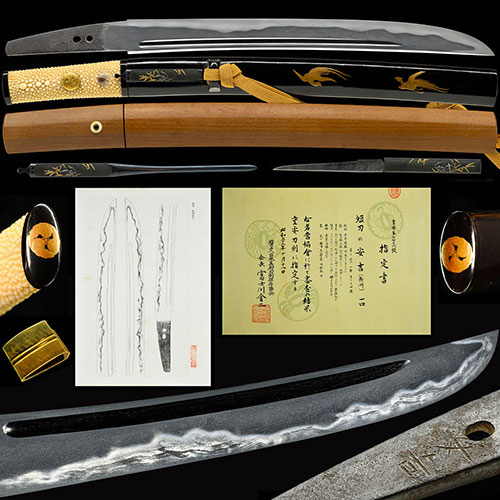
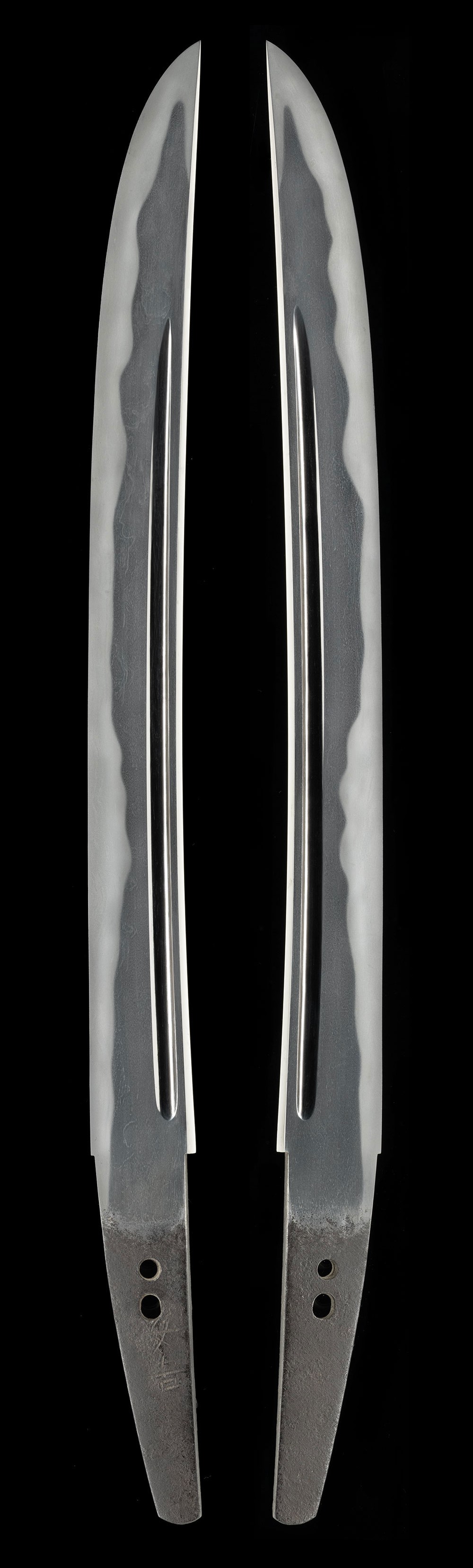
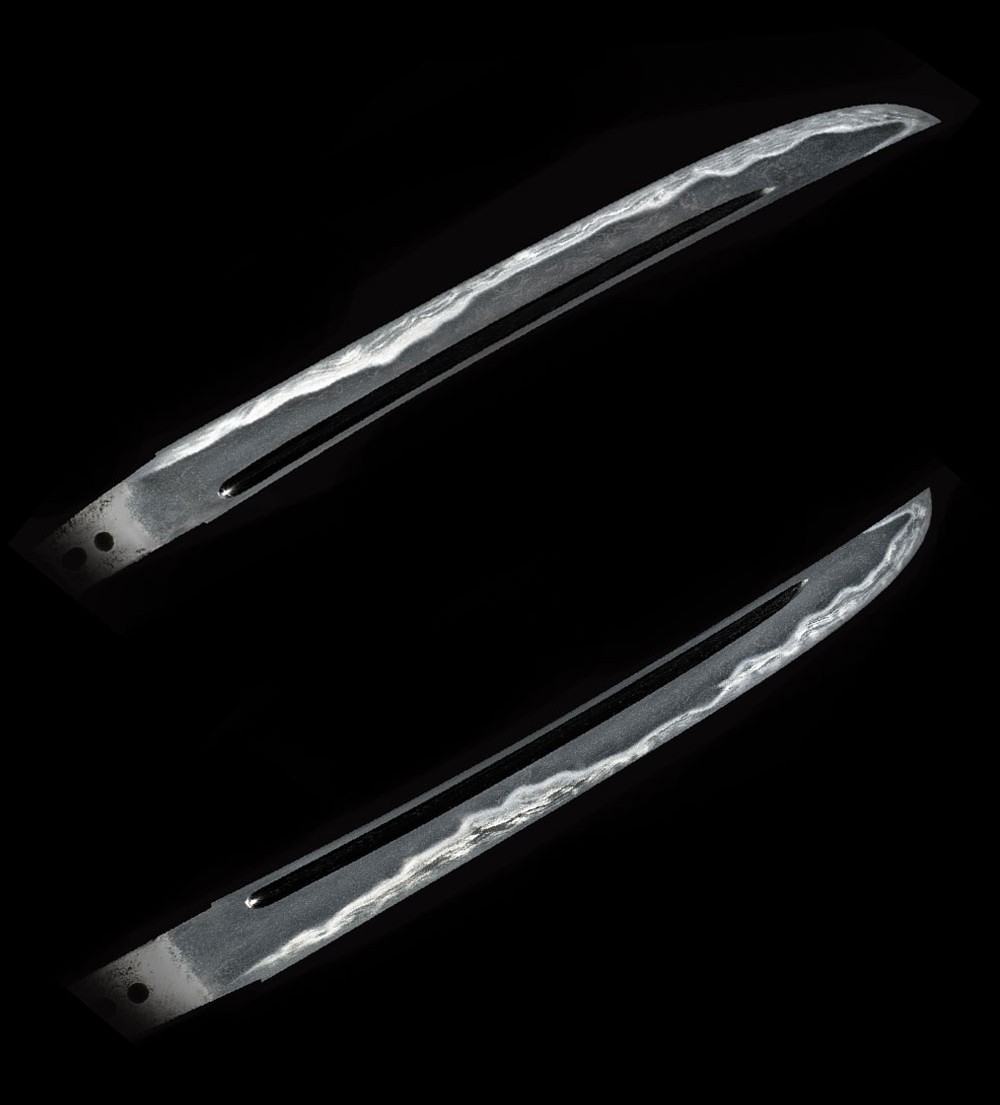
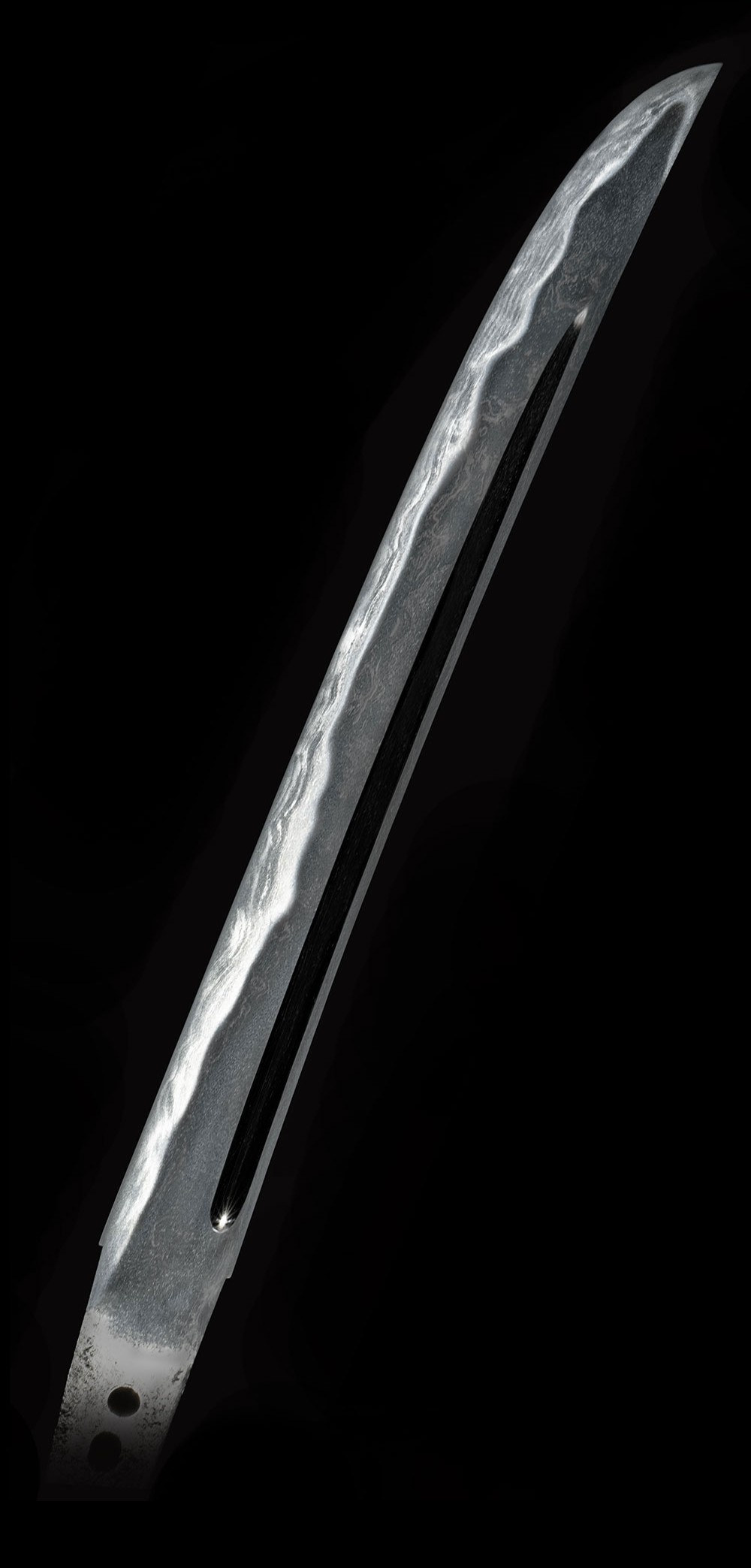
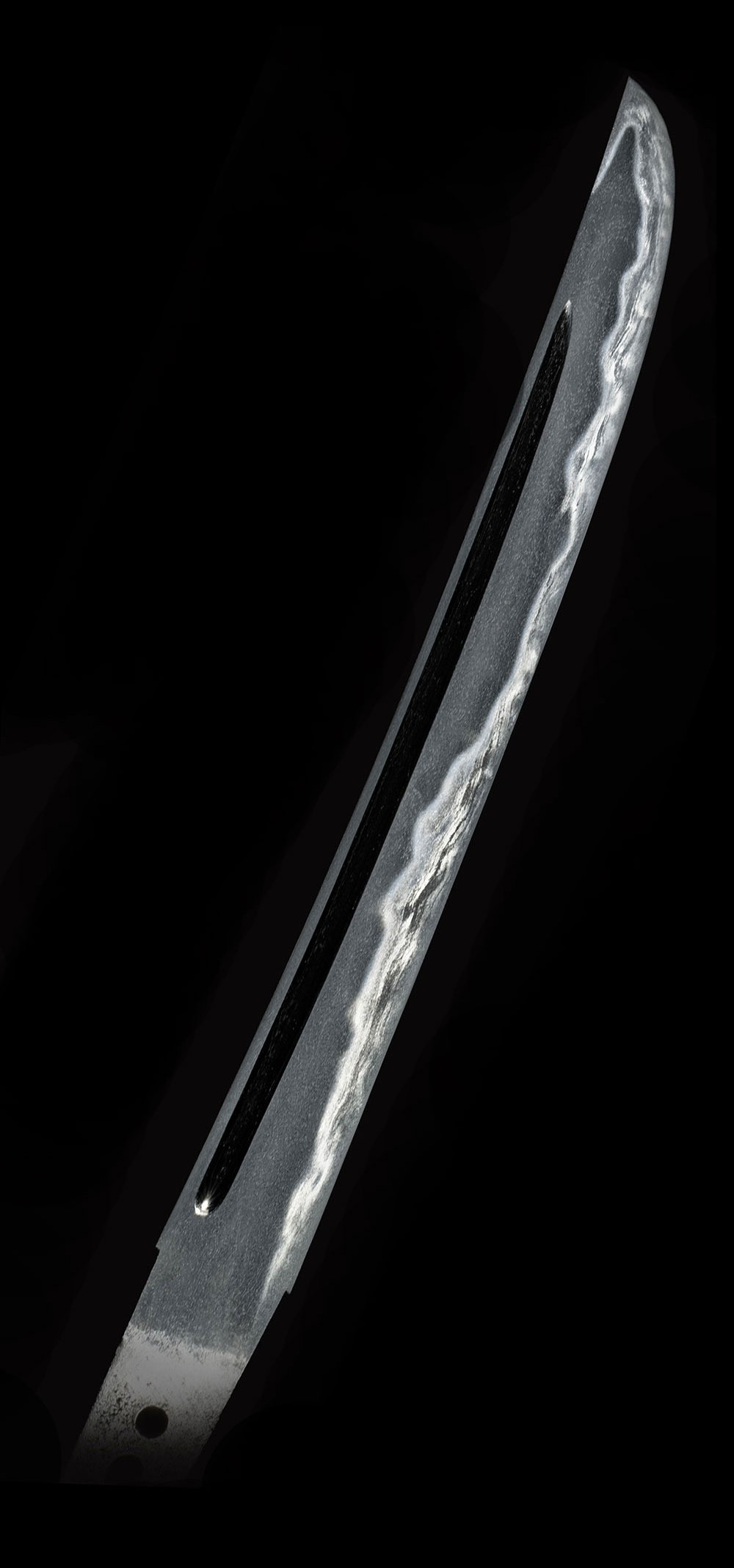
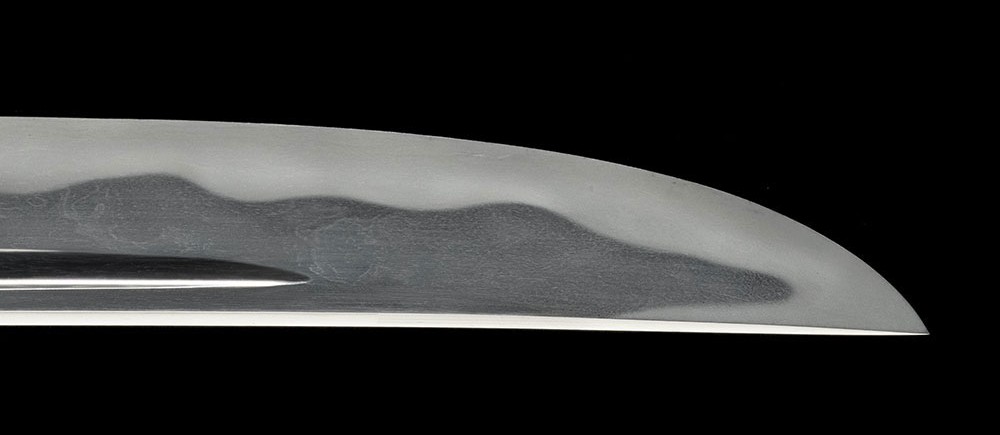
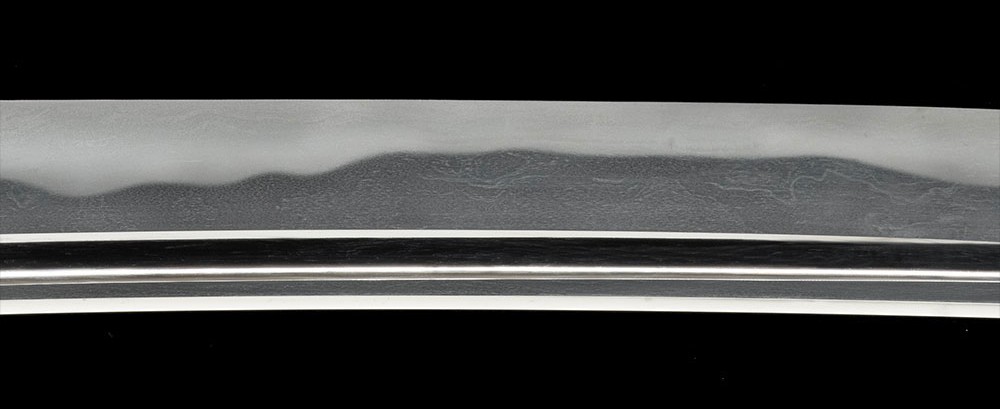
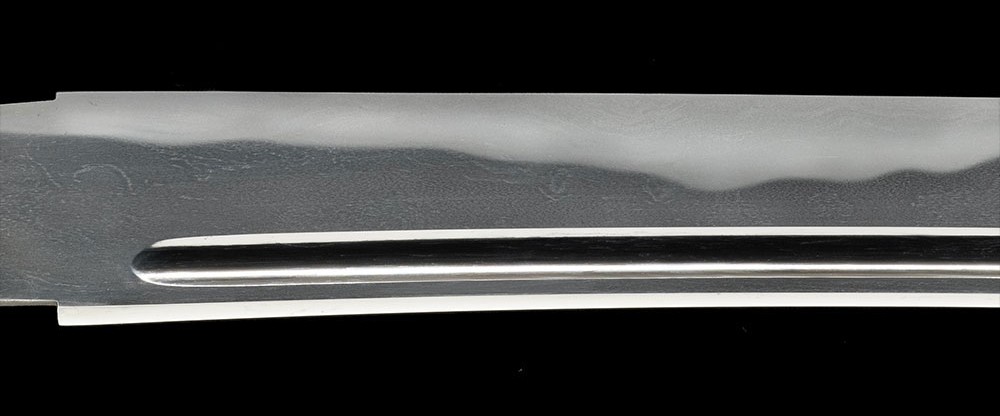
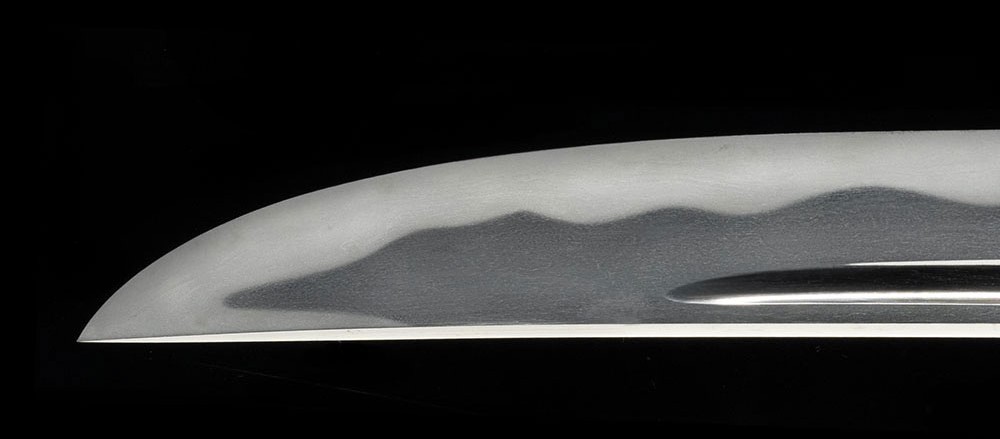
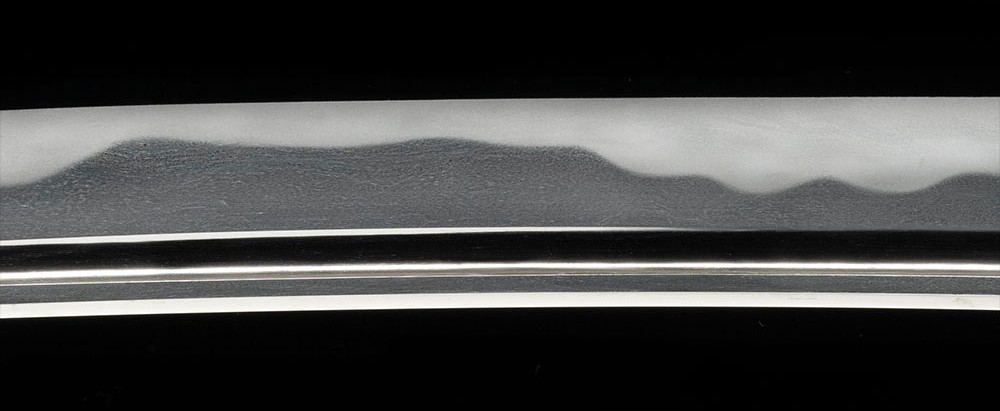
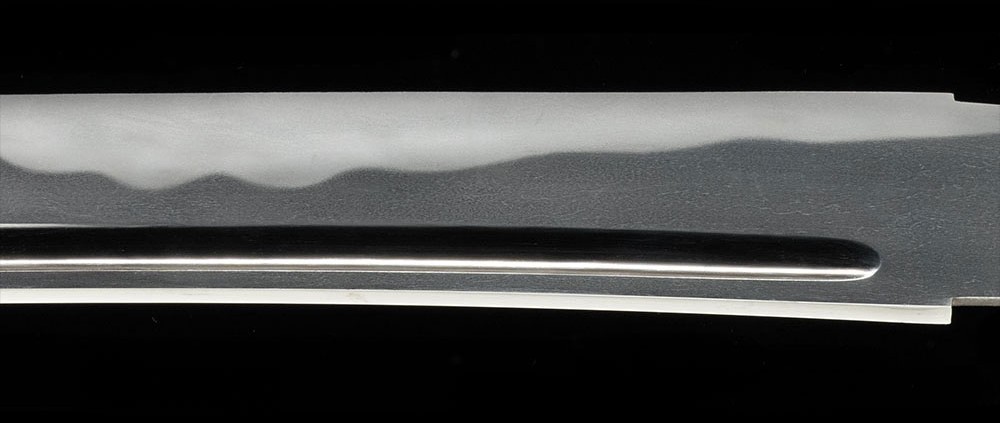
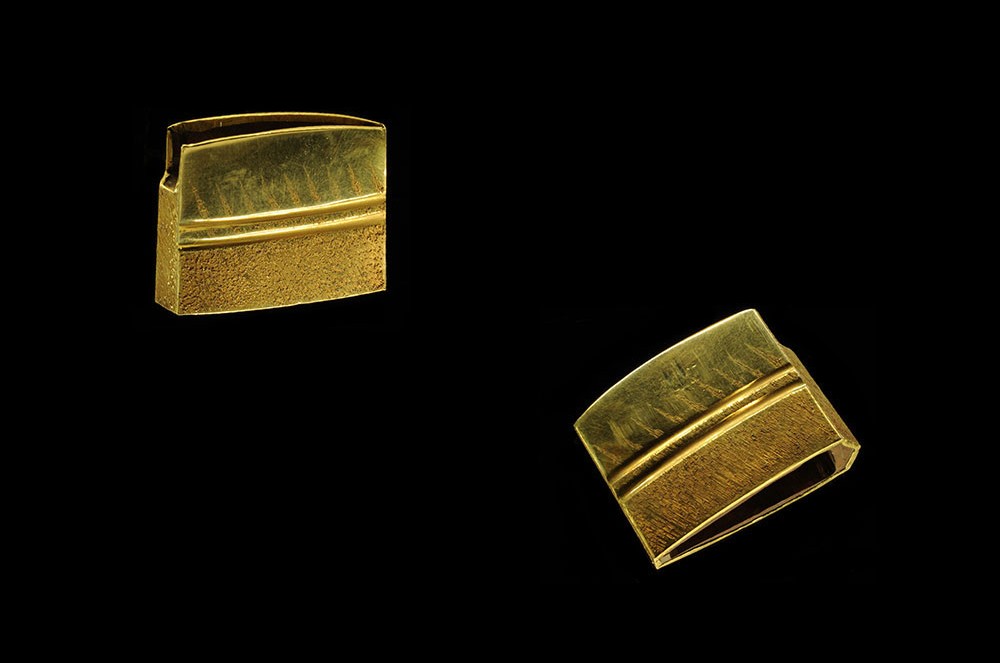
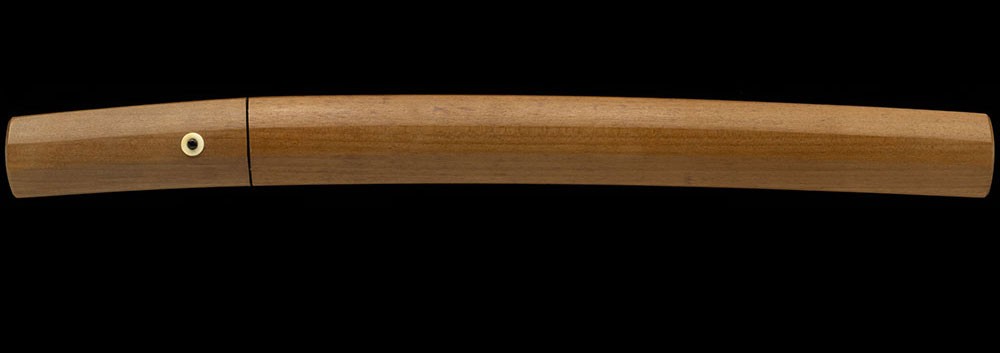
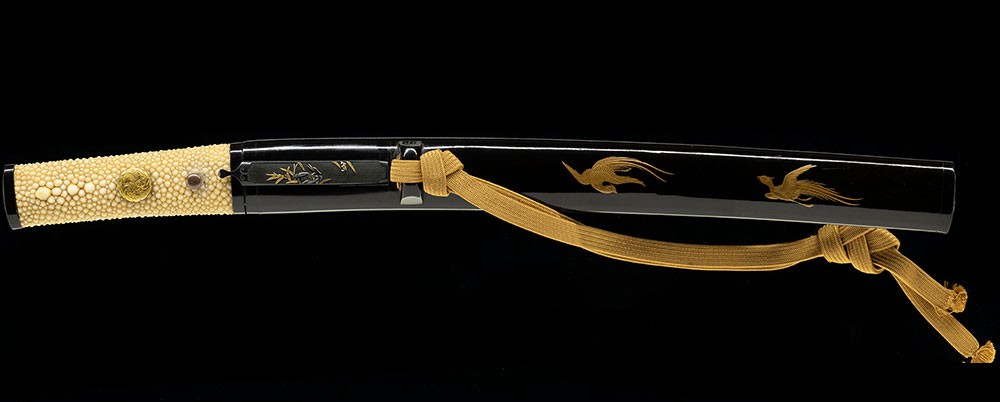
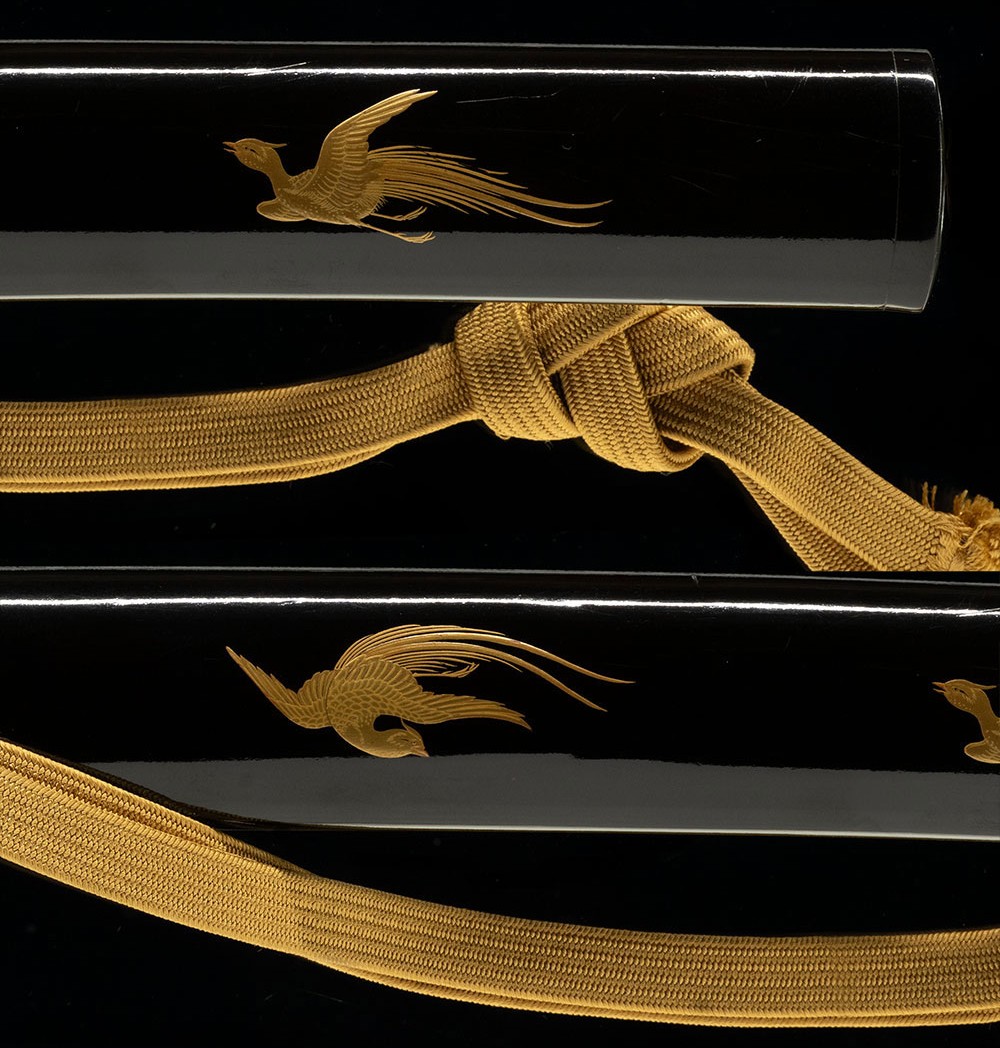
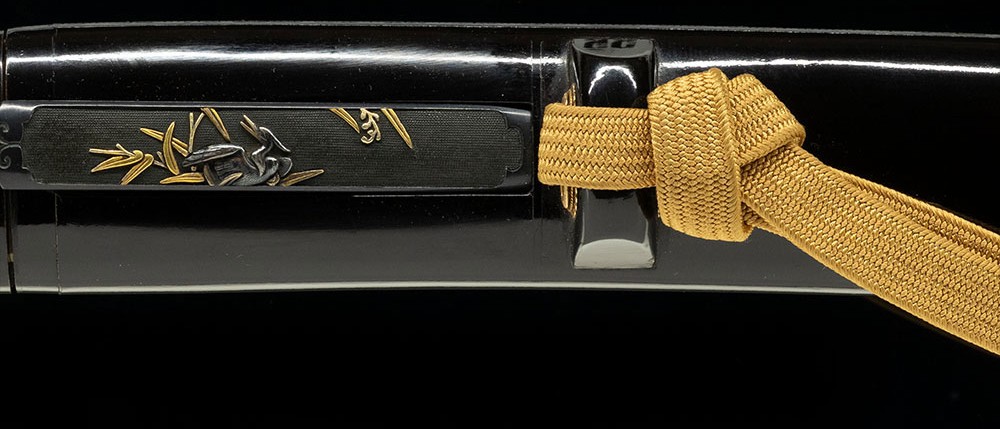
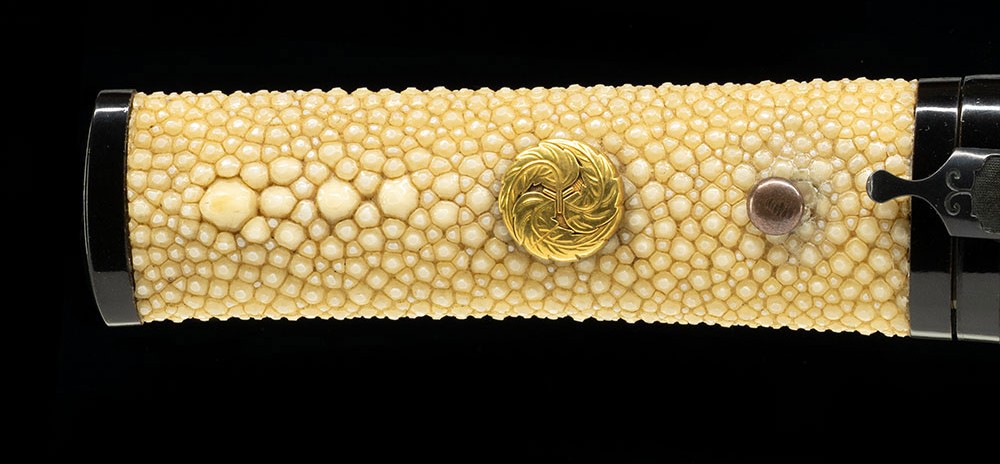
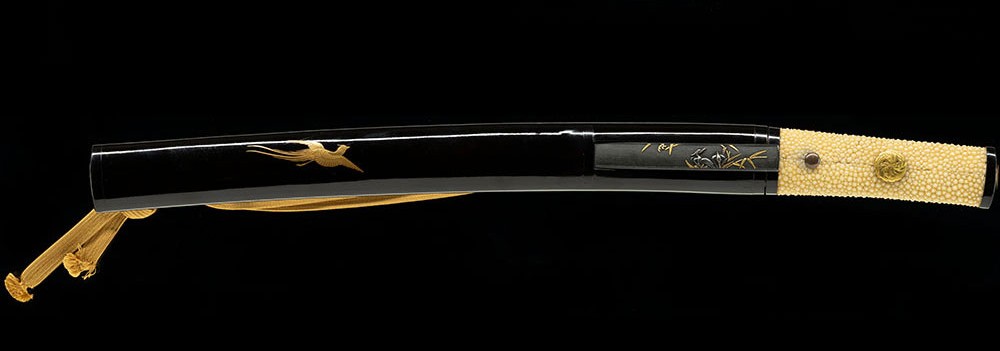
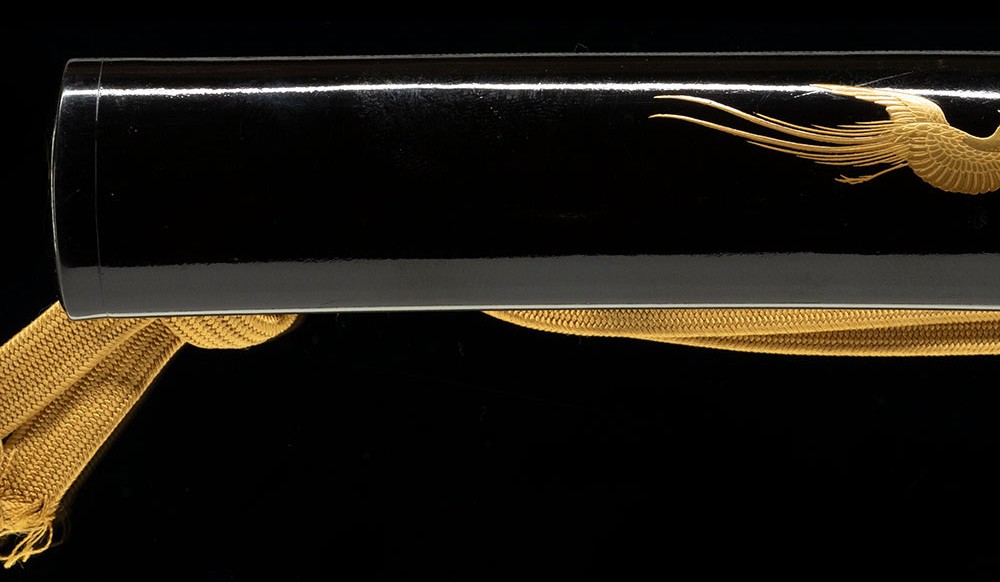
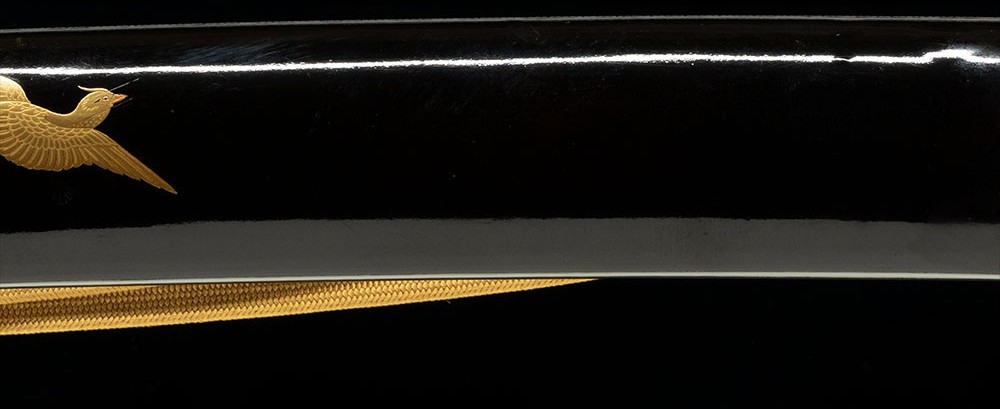
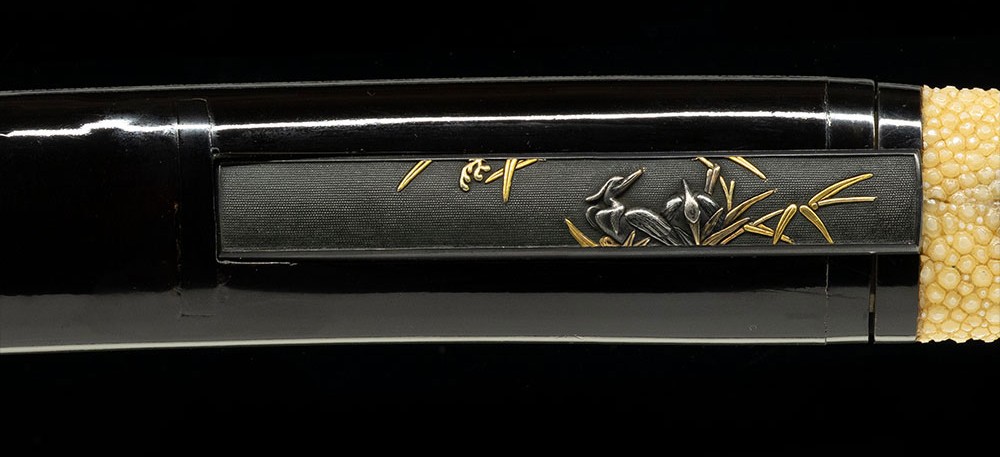
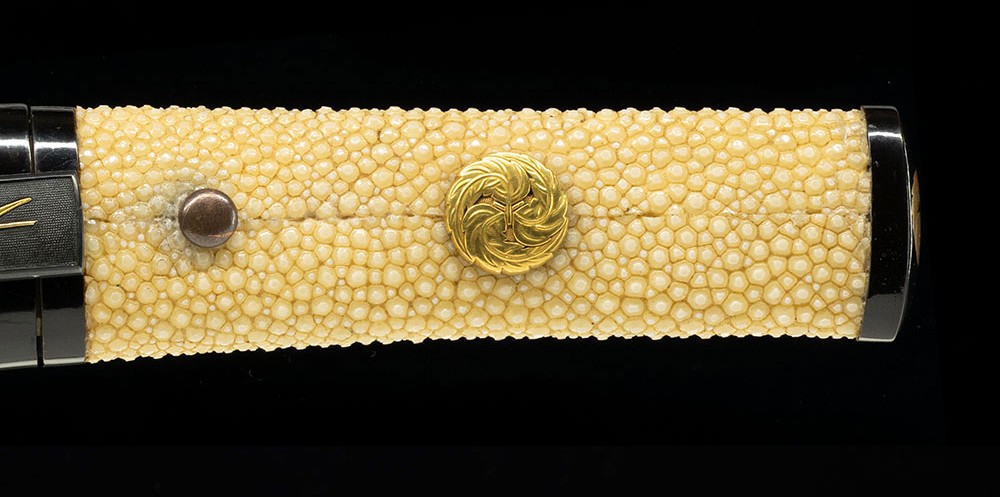
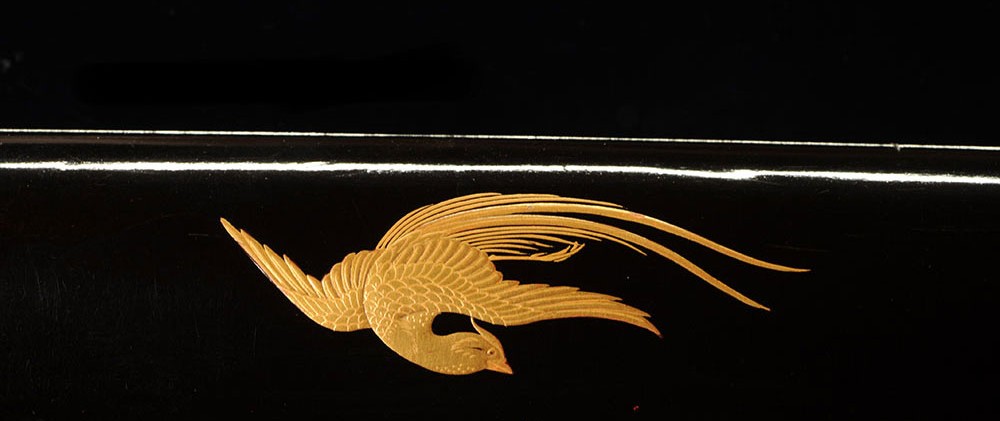
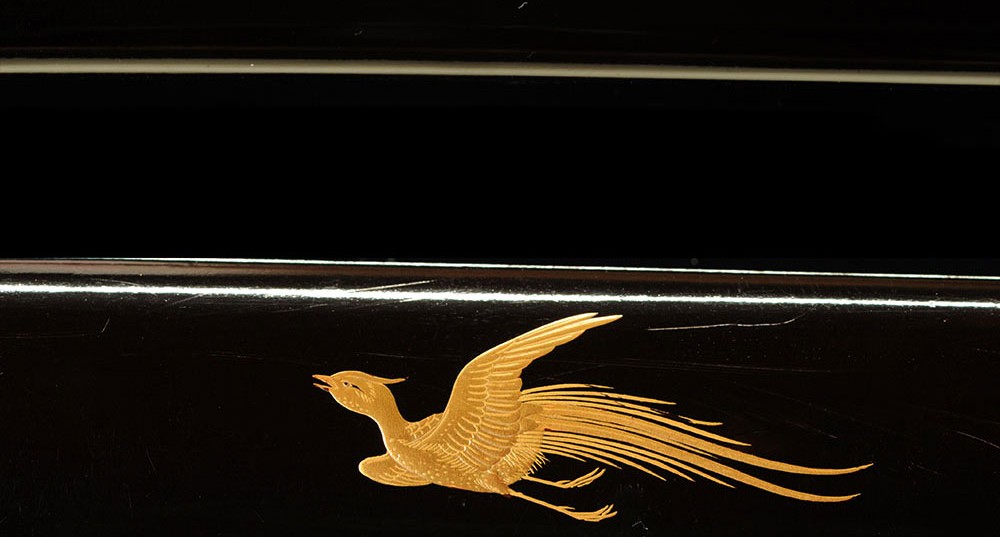
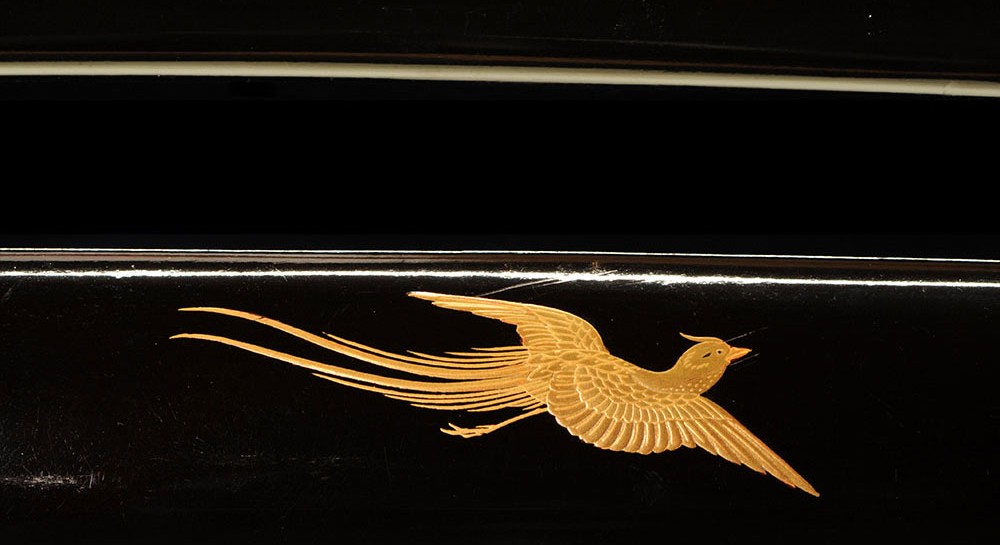
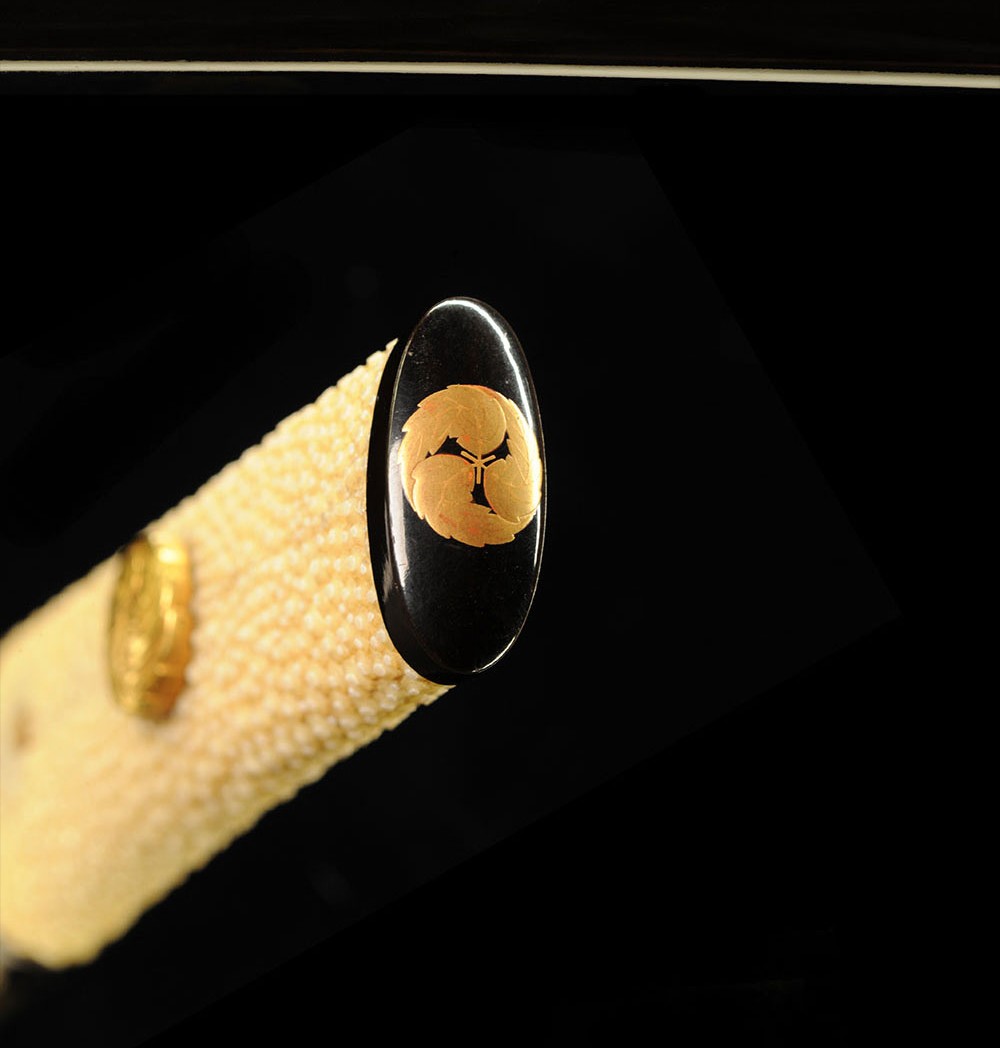
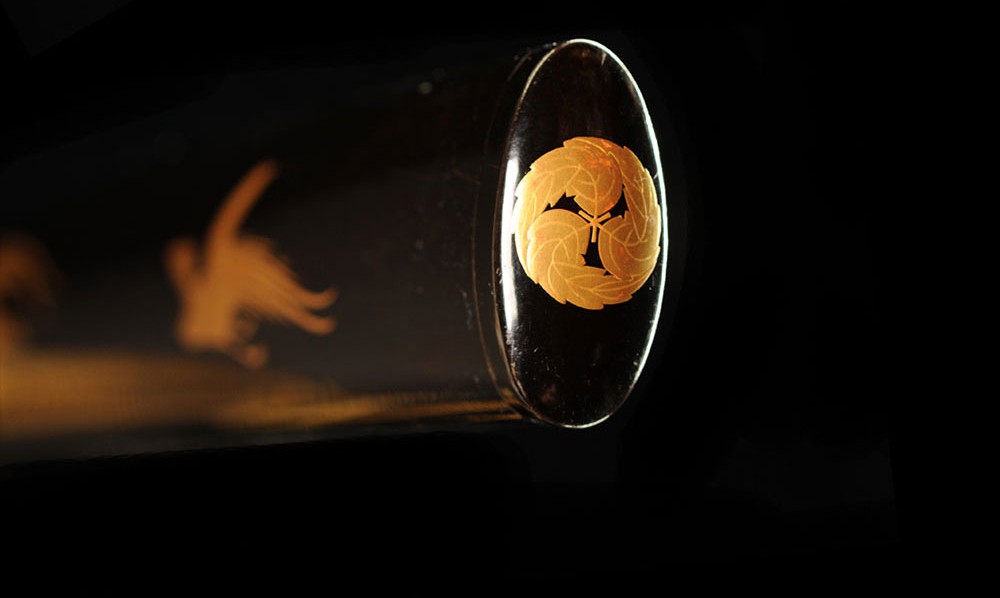
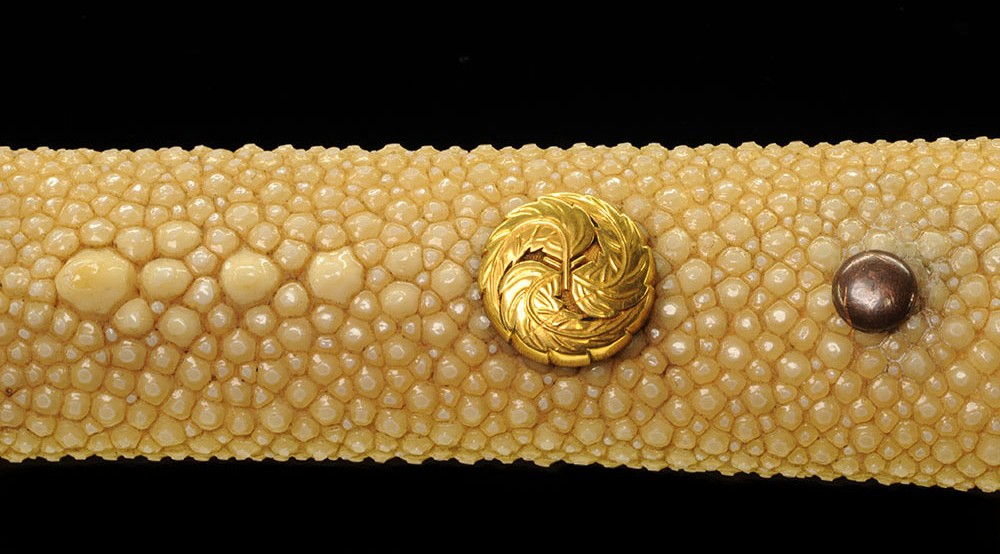
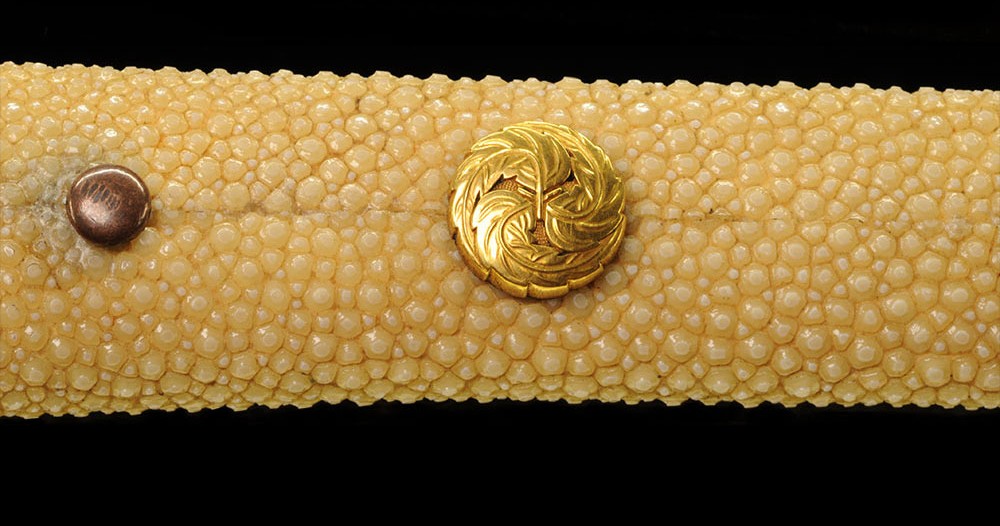
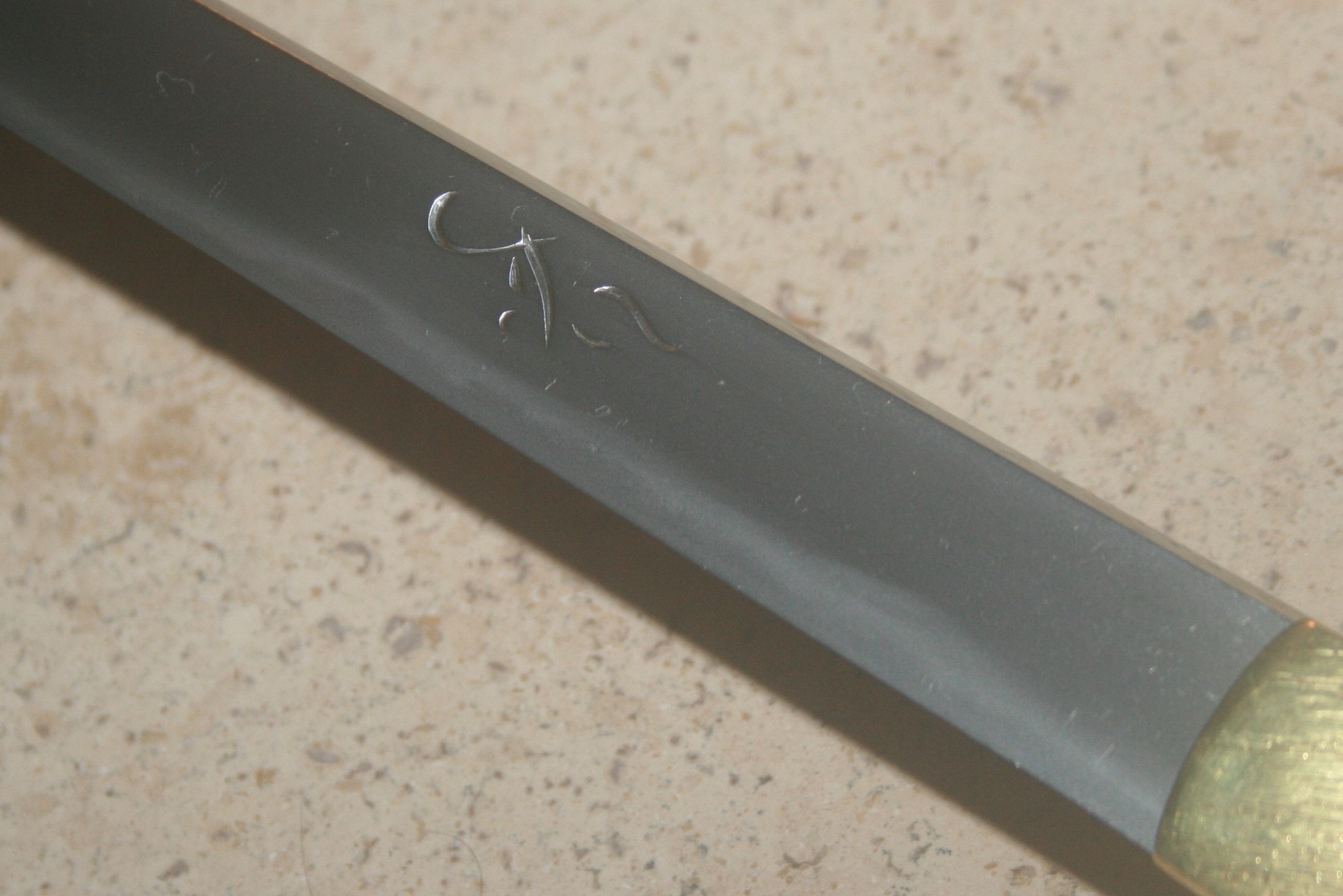
This is a masterpiece tanto by Yasuyoshi, son of Samonji, from the Nanbokucho period. It features a bright and clear jiba with frequent kinsuji and sunagashi, characteristic of the smith's work. The tanto comes with an exquisite Houou (phoenix design) Kinmakie Aikuchi Koshirae from the Edo period.

NBTHK Setsumei

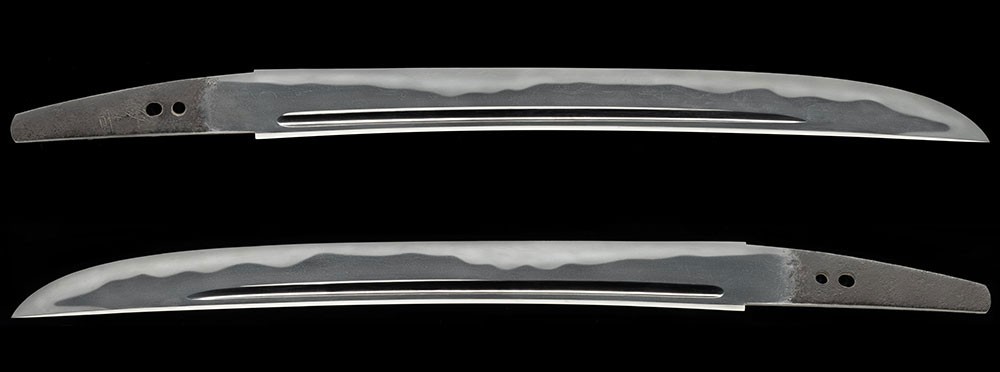
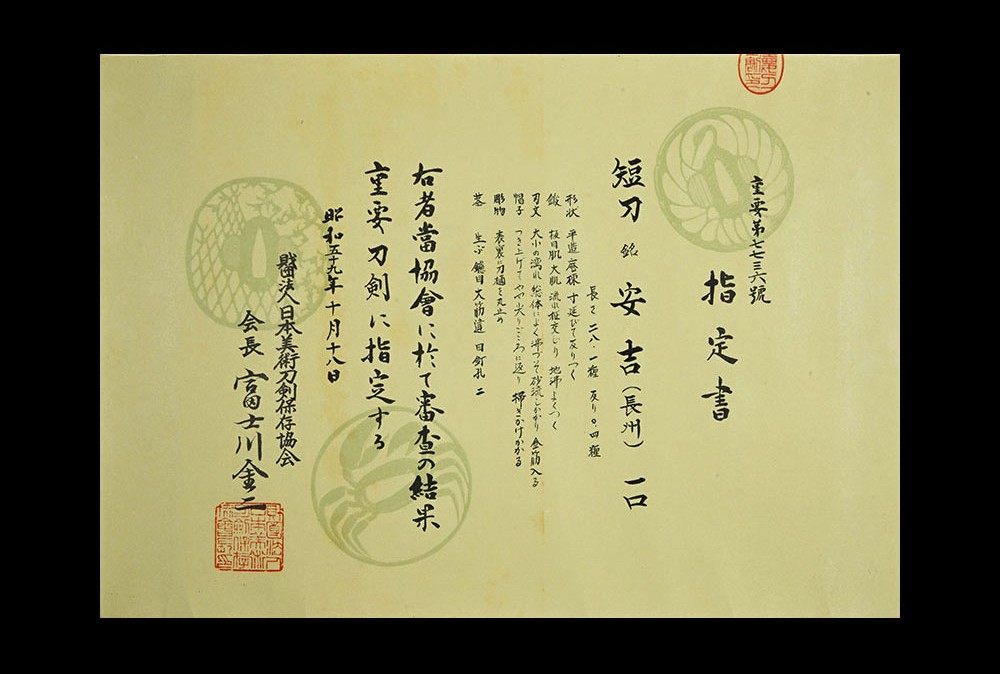
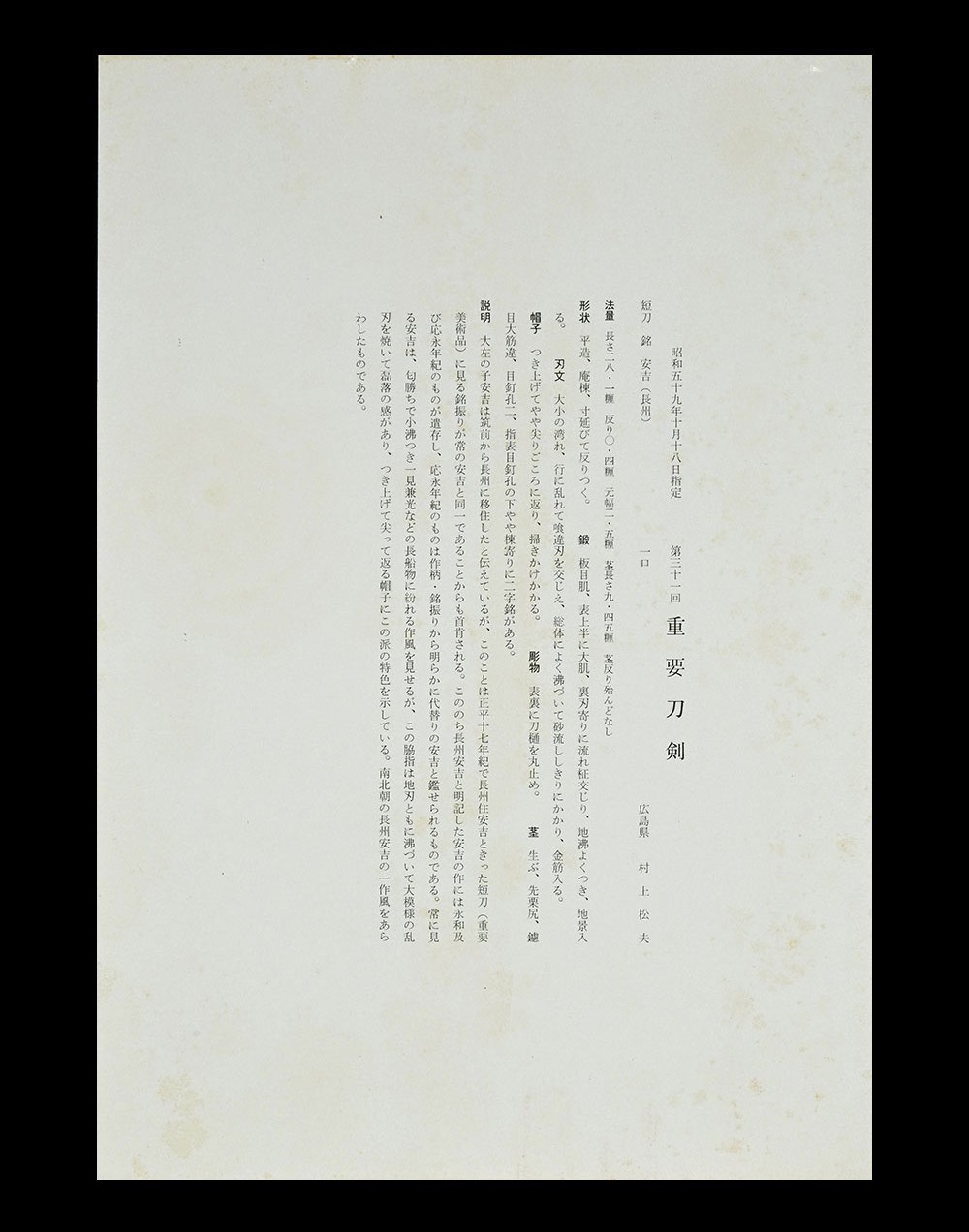
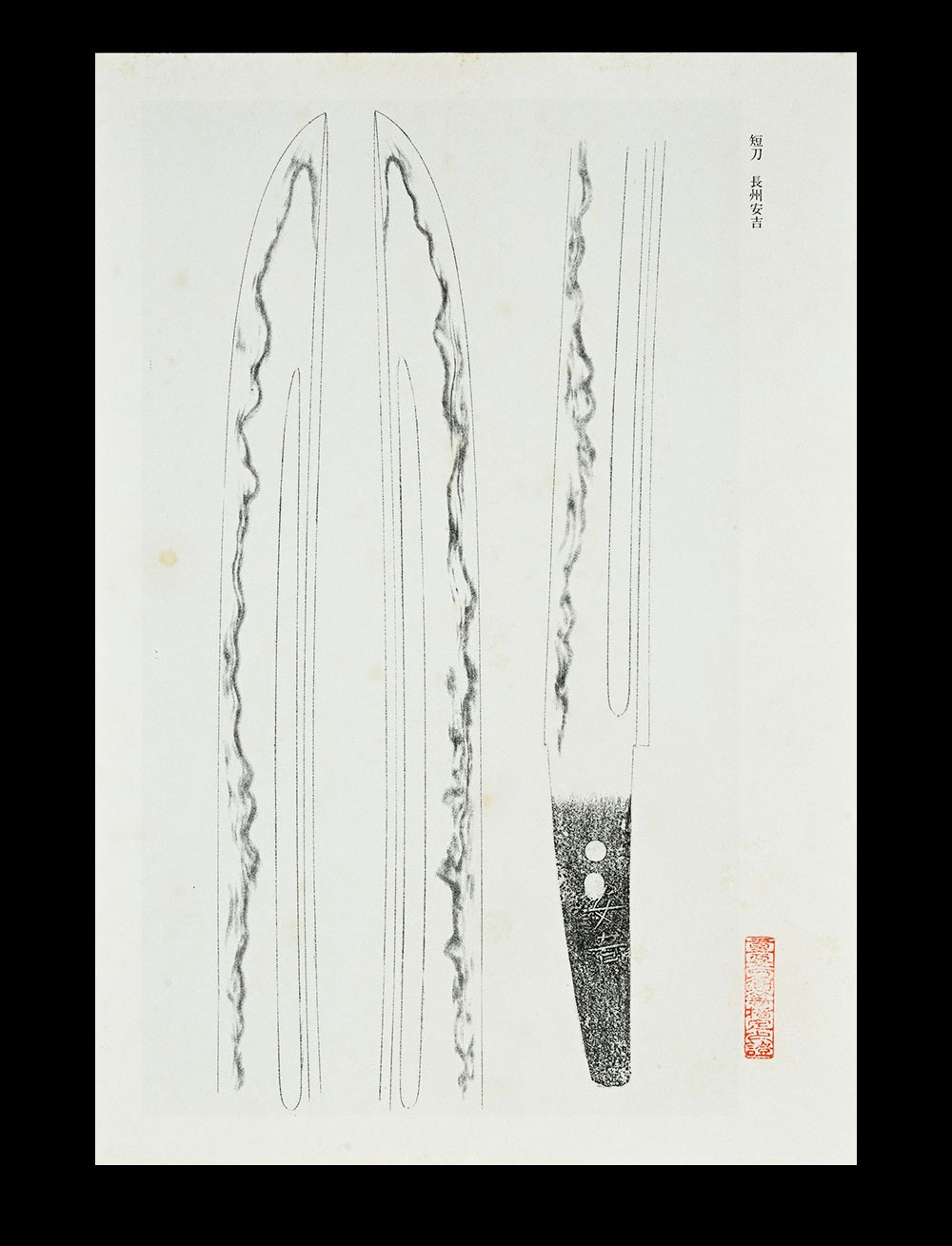
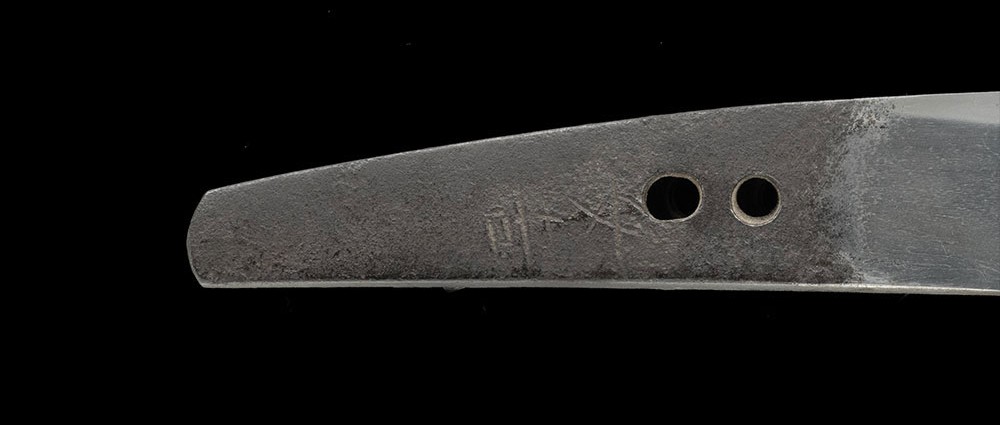
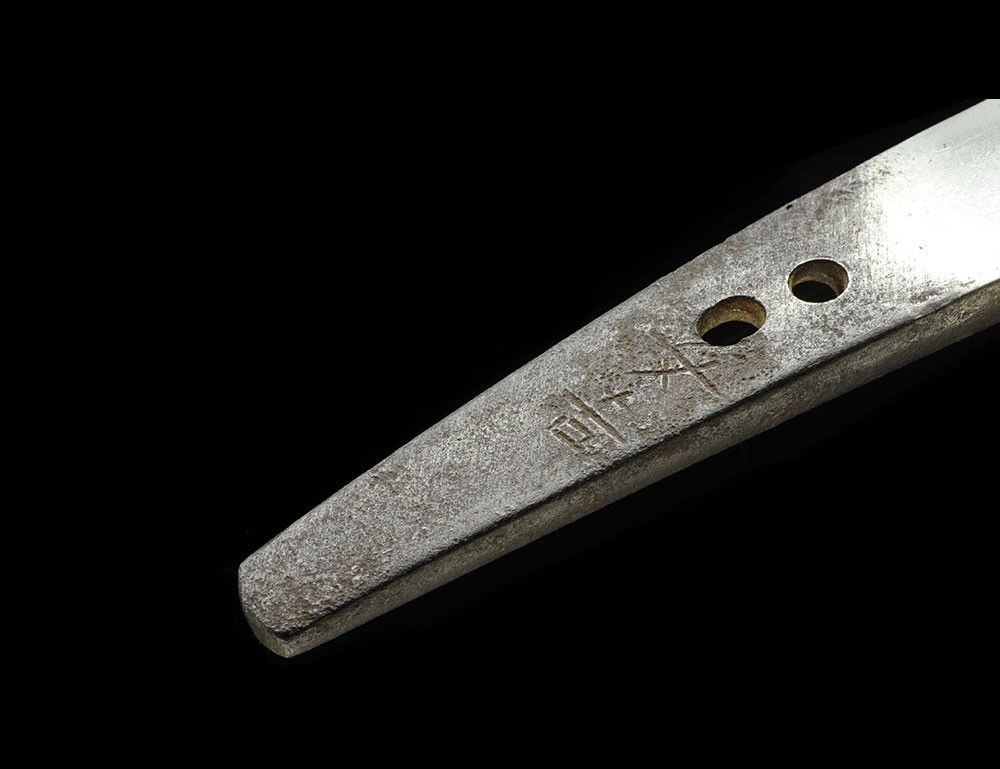
Juyo-Token, 31st Session — Designated October 18, 1984 Tanto, mei: Chōshū Yasuyoshi (安吉) Measurements Nagasa 28.1 cm, sori 0.4 cm, motohaba 2.5 cm, nakago-nagasa 9.45 cm, nakago-sori almost none Description Keijo: hira-zukuri, iori-mune; slightly elongated (sunobi) with a slight sori. Kitae: itame-hada; on the omote upper half there is coarse grain (o-hada); near the edge on the ura it shows flowing masame mixed in; ji-nie adheres well and chikei appears. Hamon: notare mixed with midare, incorporating kuichigai-ba; overall richly covered in nie, with abundant sunagashi running repeatedly, and kinsuji entering. Boshi: rises in a tsukiage manner and turns back with a somewhat pointed tendency; hakikake is present. Horimono: On both sides a katana is carved, finished in maru-dome. Nakago: ubu; tip kurijiri; file marks are large o-sujikai; two mekugi-ana; on the sashi-omote, below the mekugi-ana and somewhat toward the mune, there is a two-character signature. Artisan Chōshū Yasuyoshi (安吉) Era Nanbokuchō period Explanation Yasuyoshi, known as the son of Ōsa (Ōsa no ko Yasuyoshi), is traditionally said to have moved from Chikuzen to Chōshū. This is readily accepted in view of a tanto (designated Important Art Object) bearing the inscription “Chōshū-jū Yasuyoshi” and dated Shōhei 17 (1352), whose signature style (meiburi) is identical to that of the Yasuyoshi ordinarily encountered. Thereafter, extant works explicitly inscribed “Chōshū Yasuyoshi” remain from the Eiwa (1375–1379) and Shitoku (1384–1387) eras; however, a work dated to the Ōei era (1394–1428) is, from its workmanship and signature style, clearly regarded as by a succeeding-generation Yasuyoshi. The Yasuyoshi most commonly seen tends to show a notare with small nie, and at first glance may be mistaken for Osafune work such as Kanemitsu. This piece, however, is strongly nie-laden in both ji and ha, and exhibits a large-patterned midare-ba, giving an open, bold impression. The boshi, which rises in a tsukiage manner and returns pointedly, displays the distinctive character of this group. This work thus expresses one stylistic mode of Chōshū Yasuyoshi in the Nanbokuchō period. (October, Shōwa 59 ) The Society for the Preservation of the Japanese Art Sword (NBTHK), Chairman Satō Kanzan

NihontoWatch MonNihontoWatch
MarketAuctionsEncyclopedia
Swords›Sōshū-den›Sa›Nagato Sa›Sue-Sa›Yasuyoshi›Tanto: Yasuyoshi - Juyo Token
tantoJūyō
Sa Yasuyoshi

Tanto: Yasuyoshi - Juyo Token

mei · Shohei (1346-1370) · nagasa 28.1cm · sori 0.4cm

¥9,500,000
Visit seller website →
Sa Yasuyoshi — 1 of 39
Sa Yasuyoshi — 2 of 39
Sa Yasuyoshi — 3 of 39
Sa Yasuyoshi — 4 of 39
Sa Yasuyoshi — 5 of 39
Sa Yasuyoshi — 6 of 39
Sa Yasuyoshi — 7 of 39
Sa Yasuyoshi — 8 of 39
Sa Yasuyoshi — 9 of 39
Sa Yasuyoshi — 10 of 39
Sa Yasuyoshi — 11 of 39
Sa Yasuyoshi — 12 of 39
Sa Yasuyoshi — 13 of 39
Sa Yasuyoshi — 14 of 39
Sa Yasuyoshi — 15 of 39
Sa Yasuyoshi — 16 of 39
Sa Yasuyoshi — 17 of 39
Sa Yasuyoshi — 18 of 39
Sa Yasuyoshi — 19 of 39
Sa Yasuyoshi — 20 of 39
Sa Yasuyoshi — 21 of 39
Sa Yasuyoshi — 22 of 39
Sa Yasuyoshi — 23 of 39
Sa Yasuyoshi — 24 of 39
Sa Yasuyoshi — 25 of 39
Sa Yasuyoshi — 26 of 39
Sa Yasuyoshi — 27 of 39
Sa Yasuyoshi — 28 of 39
Sa Yasuyoshi — 29 of 39
Sa Yasuyoshi — 30 of 39
Sa Yasuyoshi — 31 of 39
Sa Yasuyoshi — 32 of 39
Sa Yasuyoshi — 33 of 39
Sa Yasuyoshi — 34 of 39
Sa Yasuyoshi — 35 of 39
Sa Yasuyoshi — 36 of 39
Sa Yasuyoshi — 37 of 39
Sa Yasuyoshi — 38 of 39
Sa Yasuyoshi — 39 of 39
1 / 39
1 / 39
Sa Yasuyoshi — 1 of 39Sa Yasuyoshi — 2 of 39Sa Yasuyoshi — 3 of 39Sa Yasuyoshi — 4 of 39Sa Yasuyoshi — 5 of 39Sa Yasuyoshi — 6 of 39Sa Yasuyoshi — 7 of 39Sa Yasuyoshi — 8 of 39Sa Yasuyoshi — 9 of 39Sa Yasuyoshi — 10 of 39Sa Yasuyoshi — 11 of 39Sa Yasuyoshi — 12 of 39Sa Yasuyoshi — 13 of 39Sa Yasuyoshi — 14 of 39Sa Yasuyoshi — 15 of 39Sa Yasuyoshi — 16 of 39Sa Yasuyoshi — 17 of 39Sa Yasuyoshi — 18 of 39Sa Yasuyoshi — 19 of 39Sa Yasuyoshi — 20 of 39Sa Yasuyoshi — 21 of 39Sa Yasuyoshi — 22 of 39Sa Yasuyoshi — 23 of 39Sa Yasuyoshi — 24 of 39Sa Yasuyoshi — 25 of 39Sa Yasuyoshi — 26 of 39Sa Yasuyoshi — 27 of 39Sa Yasuyoshi — 28 of 39Sa Yasuyoshi — 29 of 39Sa Yasuyoshi — 30 of 39Sa Yasuyoshi — 31 of 39Sa Yasuyoshi — 32 of 39Sa Yasuyoshi — 33 of 39Sa Yasuyoshi — 34 of 39Sa Yasuyoshi — 35 of 39Sa Yasuyoshi — 36 of 39Sa Yasuyoshi — 37 of 39Sa Yasuyoshi — 38 of 39Sa Yasuyoshi — 39 of 39
Measurements & details
Smith
Sa Yasuyoshi
Type
Tanto
School
Nagato Sa
Period
Around 1394–1428(Shohei)
Province
Nagato
Signature
Signed(100% of this smith's designated works are signed)
Measurements
Nagasa 28.1cmSori 0.4cmMotohaba 2.7cmKasane 0.61cmWeight 170g
Description

This is a masterpiece tanto by Yasuyoshi, son of Samonji, from the Nanbokucho period. It features a bright and clear jiba with frequent kinsuji and sunagashi, characteristic of the smith's work. The tanto comes with an exquisite Houou (phoenix design) Kinmakie Aikuchi Koshirae from the Edo period.

NBTHK Zufu Commentary

Juyo #31

AI translation — may contain errors

-, 31st Session — Designated October 18, 1984

, : Chōshū Yasuyoshi (安吉)

Measurements 28.1 cm, 0.4 cm, 2.5 cm, 9.45 cm, almost none

Description Keijo: , ; slightly elongated () with a slight . : ; on the upper half there is coarse grain (o-); near the edge on the it shows flowing mixed in; adheres well and appears. : mixed with , incorporating ; overall richly covered in , with abundant running repeatedly, and entering. : rises in a manner and turns back with a somewhat pointed tendency; is present. : On both sides a is carved, finished in . : ; tip ; file marks are large ; two ; on the , below the and somewhat toward the , there is a two-character signature.

Artisan Chōshū Yasuyoshi (安吉)

Era period

Explanation Yasuyoshi, known as the son of Ōsa (Ōsa no ko Yasuyoshi), is traditionally said to have moved from to Chōshū. This is readily accepted in view of a (designated Important Art Object) bearing the inscription “Chōshū-jū Yasuyoshi” and dated Shōhei 17 (1352), whose signature style () is identical to that of the Yasuyoshi ordinarily encountered. Thereafter, extant works explicitly inscribed “Chōshū Yasuyoshi” remain from the Eiwa (1375–1379) and Shitoku (1384–1387) eras; however, a work dated to the Ōei era (1394–1428) is, from its workmanship and signature style, clearly regarded as by a succeeding-generation Yasuyoshi.

The Yasuyoshi most commonly seen tends to show a with small , and at first glance may be mistaken for work such as Kanemitsu. This piece, however, is strongly -laden in both and , and exhibits a large-patterned -ba, giving an open, bold impression. The , which rises in a manner and returns pointedly, displays the distinctive character of this group. This work thus expresses one stylistic mode of Chōshū Yasuyoshi in the period.

(October, Shōwa 59 [1984]) The Society for the Preservation of the Japanese Art Sword (), Chairman Satō Kanzan
About the maker

Yasuyoshi

安吉

Soshu-den · Nagato · around 1394-1428

Fujishiro Jo-jo saku

1 piece on the market now

›

Yasuyoshi, the son of O-Sa, succeeded as the second generation of the Sa lineage and is traditionally said to have moved from Chikuzen to Choshu (Nagato Province). This account is supported by an extant tanto dated Shohei 17 (1362) bearing the inscription "Choshu-ju Yasuyoshi," whose manner of signing matches his usual style. Subsequent works explicitly stating "Choshu Yasuyoshi" include examples dated to the Eiwa and Oei eras. The Oei-dated pieces are judged to be by a successor generation on the basis of workmanship and signature style, while whether the Eiwa-dated works represent late production by the first generation or early work by a successor remains a subject for future research. Descendants and students continued the Yasuyoshi name for several generations from the late Nanbokucho through the early Muromachi period, collectively known as "Choshu Sa."

In the forge, Yasuyoshi's work typically displays itame-hada mixed with mokume and nagare-hada, with the grain sometimes standing and ji-nie adhering. A whitish shirake-utsuri is a hallmark of the school, and tightly forged pieces show extremely fine ji-nie with delicate chikei and clear steel. The hamon most characteristically takes the form of shallow ko-notare mixed with gunome, with ashi entering and a nioiguchi that is bright and clear. The temper is primarily nioi-dominant with ko-nie, accompanied by fine kinsuji and sunagashi. The boshi typically enters in midare-komi with a pointed tendency and a long kaeri. Compared with O-Sa, the setsumei consistently note that Yasuyoshi's work does not exhibit the same degree of brilliance in both jigane and temper, though certain pieces with strong nie and kuichigai-ba demonstrate a broader range within his oeuvre.

Yasuyoshi's blades are generally of larger and more imposing sugata than those of his father, with wide mihaba and thin kasane. Among his finer works, the forging is well-refined and compact, with the Sa school's characteristic features clearly retained. Pieces of distinguished provenance, including examples transmitted in the Inshu Ikeda and Maeda collections, attest to the esteem in which his work has long been held.

Historical importance

Where Yasuyoshi stands among comparable artisans: across all of nihontō, and within tradition, era, and period. The tiers (Foremost · Leading · Major · Notable) weigh official designations from the NBTHK and Japan's Agency for Cultural Affairs, together with historical honors of lasting repute such as the Sansaku and Meibutsu-chō.

随一
Foremost
屈指
Leading
有数
Major
著名
Notable

Select a lens to see how it's measured.

Designation record
3 designated works
Jūyō
3
1 work by Yasuyoshi on the market→
Yasuyoshi — full profileSoshu-den school
About the school

Nagato Sa

長門左

Soshu-den · Nagato

Phase: Sue-Sa末左· 1338–1450

1 piece on the market now

›

When the single character 左 passed from the founder's hand to those of his pupils and sons, the Sa workshop of Chikuzen entered the chapter the sword books gather under the name Sue-Sa. The NBTHK names the line repeatedly: Yasuyoshi, Yukihiro, Yoshisada, Kunihiro, Hiroyuki, Hiroyasu, Sadayoshi, with Kōan and Sadakuni read among them, each said to have taken up the master's manner. The succession is also a dispersal. Learn more →

9 recorded smiths16 designated works
Leading smiths
SmithEraDesignated
Akikuni顯國1394-14284
Yasuyoshi安吉1394-14283
Nagahiro長廣1469-14870
Yukisuke行助1469-14870
Yukiaki行觀1394-14280
Explore the Nagato Sa school →
NBTHK Certificate
Jūyō Tōken重要刀剣
Important Sword
›

A blade of top-grade workmanship and condition, formally judged to rank with a nationally recognized Important Art Object (Jūyō Bijutsuhin). Awarded only at the NBTHK’s competitive annual examination.

Of Japan’s roughly 2.5 million registered swords, only 12,307 (about 1 in 203) have ever attained Jūyō.

About the NBTHK›

The NBTHK (Nihon Bijutsu Tōken Hozon Kyōkai, the Society for the Preservation of Japanese Art Swords) is a public-interest incorporated foundation founded in 1948 and supervised by Japan’s Agency for Cultural Affairs (Bunkachō); it is based at the Japanese Sword Museum in Tokyo. Its expert panels physically examine each submitted work (shinsa) and issue a certificate (kanteishō) ranking it by artistic and historical merit. NBTHK papers are the most widely recognized standard of authentication for Japanese swords and fittings.

NBTHK official site→
Seller
E
Eirakudo
🇯🇵Ships from Japan
›
✓Verified dealereirakudo.shop
Settles in JPY
✓Ships worldwide✓English supportWire transferCredit card
Return policy

Returns/exchanges/cancellations not accepted after shipment except for significant defects; if defective, return/exchange possible within 3 days of arrival (return shipping paid by customer).

View all of Eirakudo’s listings→View this item on the dealer’s site→

More Sue-Sa works

View all →
Toukentakarado
Tokuho
Wakizashi - Tokuho - by Sa Kunihiro - Mumei Attributed to Den Sa KunihiroWakizashi - Tokuho - by Sa Kunihiro - Mumei Attributed to Den Sa Kunihiro

Wakizashi

BySa Kunihiro
¥1,500,000
Katana Yamadaiya
Tokuho
Katana - Tokuho - by Sa Kunihiro - Tokubetsu Hozon Token: Mumei (Attributed to Sakunihiro)Katana - Tokuho - by Sa Kunihiro - Tokubetsu Hozon Token: Mumei (Attributed to Sakunihiro)

Katana

BySa Kunihiro
¥1,650,000
Onihonto
Tokuho
Tanto - Tokuho - by Sa Yasuyoshi - YasuyoshiTanto - Tokuho - by Sa Yasuyoshi - Yasuyoshi

Tantō

BySa Yasuyoshi
¥16,000
Aoi Art
Tokuho
Katana - Tokuho - by Sa Sadayoshi - Unsigned (Attributed to Sa Sadayoshi)Katana - Tokuho - by Sa Sadayoshi - Unsigned (Attributed to Sa Sadayoshi)

Katana

BySa Sadayoshi
Starting Bid¥1,300,000
Choshuya
Tokuho
Katana - Tokuho - by Sa Sadahiro - SadahiroKatana - Tokuho - by Sa Sadahiro - Sadahiro

Katana

BySa Sadahiro
¥850,000
Yazawa Shokai
Jūyō
Katana - Jūyō - by Sa Kunihiro - Chikuzen Sa Kunihiro - Shohei Period (Nanbokucho Era) - Nagasa 69.3cm, Sori 1.9cmKatana - Jūyō - by Sa Kunihiro - Chikuzen Sa Kunihiro - Shohei Period (Nanbokucho Era) - Nagasa 69.3cm, Sori 1.9cm

Katana

BySa Kunihiro
¥1,000,000
Aoi Art
Jūyō
Katana - Jūyō - by Sa Yoshisada - Unsigned (Sa Yoshisada)Katana - Jūyō - by Sa Yoshisada - Unsigned (Sa Yoshisada)

Katana

BySa Yoshisada
¥5,000,000
Hyozaemon
Tokuho
Tokuho - by Sue-Sa School - Naginata-naoshi Wakizashi: Soshu High-Grade WorkTokuho - by Sue-Sa School - Naginata-naoshi Wakizashi: Soshu High-Grade Work

Naginata-naoshi Wakizashi: Soshu High-Grade Work

BySue-Sa School
Ask

More from the Sa school

View all →
Kusanagi
Tokuho
Katana - Tokuho - by Sa School - Tokubetsu Hozon Token by Sa Yoshisada, a Jojo-saku smith and son of Samonji; a magnificent Soshu-den work.Katana - Tokuho - by Sa School - Tokubetsu Hozon Token by Sa Yoshisada, a Jojo-saku smith and son of Samonji; a magnificent Soshu-den work.

Katana

BySa School
¥1,800,000
Eirakudo
Tokuho
Yari - Tokuho - by Hirado Sa School - Hirato-SaYari - Tokuho - by Hirado Sa School - Hirato-Sa

Yari

ByHirado Sa School
¥900,000
Nihon Art
Jūyō
Katana - Jūyō - by Sue-Sa School - Sue-Sa - Juyo TokenKatana - Jūyō - by Sue-Sa School - Sue-Sa - Juyo Token

Katana

BySue-Sa School
Ask
Choshuya
Katana - by Sue-Sa School - O-suriage Mumei: Dai-Sa IchimonKatana - by Sue-Sa School - O-suriage Mumei: Dai-Sa Ichimon

Katana

BySue-Sa School
Ask
World Seiyudo
Tokuho
Wakizashi - Tokuho - by Sa Sadayuki - Sano Sadayuki - NBTHK Tokubetsu Hozon TokenWakizashi - Tokuho - by Sa Sadayuki - Sano Sadayuki - NBTHK Tokubetsu Hozon Token

Wakizashi

BySa Sadayuki
¥1,500,000
Nipponto
Tokuho
Katana - Tokuho - by Sa School - Mumei, Saki Yoshiyoshi, Sano YoshisadaKatana - Tokuho - by Sa School - Mumei, Saki Yoshiyoshi, Sano Yoshisada

Katana

BySa School
¥1,750,000
Nipponto
Tokuho
Tanto - Tokuho - by Hirado Sa School - Den (Attributed) Tanto by Hirado Sa (Yasuyoshi)Tanto - Tokuho - by Hirado Sa School - Den (Attributed) Tanto by Hirado Sa (Yasuyoshi)

Tantō

ByHirado Sa School
¥680,000

More from the Sōshū tradition

View all →
Samurai Nippon
Jūyō
Katana - Jūyō - by Soshu Norishige - Mumei (Attributed to Norishige)Katana - Jūyō - by Soshu Norishige - Mumei (Attributed to Norishige)

Katana

BySoshu Norishige
Ask
Nihon Art
Jūyō
Katana - Jūyō - by Soshu Norishige - Juyo Etchu Norishige Katana with Kochu KinzoganmeiKatana - Jūyō - by Soshu Norishige - Juyo Etchu Norishige Katana with Kochu Kinzoganmei

Katana

BySoshu Norishige
Ask
Eirakudo
Tokuho
Katana - Tokuho - by Shintogo Kunimitsu - Shintogo Kunimitsu - Tokubetsu Hozon TokenKatana - Tokuho - by Shintogo Kunimitsu - Shintogo Kunimitsu - Tokubetsu Hozon Token

Katana

ByShintogo Kunimitsu
¥7,500,000
Aoi Art
Tokuho
Katana - Tokuho - by Gō Yoshihiro - Mumei (Unsigned) Den Go YoshihiroKatana - Tokuho - by Gō Yoshihiro - Mumei (Unsigned) Den Go Yoshihiro

Katana

ByGō Yoshihiro
¥35,000,000
Tsuruginoya
Tokujū
Katana - Tokuju - by Soshu Yukimitsu - Soshu YukimitsuKatana - Tokuju - by Soshu Yukimitsu - Soshu Yukimitsu

Katana

BySoshu Yukimitsu
Ask
Eirakudo
Jūyō
Tanto - Jūyō - by Soshu Yukimitsu - Soshu Yukimitsu - Juyo TokenTanto - Jūyō - by Soshu Yukimitsu - Soshu Yukimitsu - Juyo Token

Tantō

BySoshu Yukimitsu
Ask
Choshuya
Jūyō
Tanto - Jūyō - by Soshu Norishige - Ubu-nakago Mumei NorishigeTanto - Jūyō - by Soshu Norishige - Ubu-nakago Mumei Norishige

Tantō

BySoshu Norishige
¥6,500,000
Eirakudo
Tokuho
Katana - Tokuho - by Soshu Norishige - Norishige - Tokubetsu Hozon TokenKatana - Tokuho - by Soshu Norishige - Norishige - Tokubetsu Hozon Token

Katana

BySoshu Norishige
¥6,500,000

Swords

  • Katana
  • Wakizashi
  • Tantō
  • Tachi
  • Naginata
  • Yari

Fittings

  • Tsuba
  • Fuchi-Kashira
  • Kozuka
  • Menuki

By Certification

  • Tokujū
  • Jūyō
  • Tokuho
  • Hozon

Resources

  • Dealer Directory
  • Artist Directory
  • Glossary
  • Browse All
Nihontowatch© 2026
TermsPrivacyCookiesAbout

Description

This is a masterpiece tanto by Yasuyoshi, son of Samonji, from the Nanbokucho period. It features a bright and clear jiba with frequent kinsuji and sunagashi, characteristic of the smith's work. The tanto comes with an exquisite Houou (phoenix design) Kinmakie Aikuchi Koshirae from the Edo period.

NBTHK Setsumei

Juyo-Token, 31st Session — Designated October 18, 1984 Tanto, mei: Chōshū Yasuyoshi (安吉) Measurements Nagasa 28.1 cm, sori 0.4 cm, motohaba 2.5 cm, nakago-nagasa 9.45 cm, nakago-sori almost none Description Keijo: hira-zukuri, iori-mune; slightly elongated (sunobi) with a slight sori. Kitae: itame-hada; on the omote upper half there is coarse grain (o-hada); near the edge on the ura it shows flowing masame mixed in; ji-nie adheres well and chikei appears. Hamon: notare mixed with midare, incorporating kuichigai-ba; overall richly covered in nie, with abundant sunagashi running repeatedly, and kinsuji entering. Boshi: rises in a tsukiage manner and turns back with a somewhat pointed tendency; hakikake is present. Horimono: On both sides a katana is carved, finished in maru-dome. Nakago: ubu; tip kurijiri; file marks are large o-sujikai; two mekugi-ana; on the sashi-omote, below the mekugi-ana and somewhat toward the mune, there is a two-character signature. Artisan Chōshū Yasuyoshi (安吉) Era Nanbokuchō period Explanation Yasuyoshi, known as the son of Ōsa (Ōsa no ko Yasuyoshi), is traditionally said to have moved from Chikuzen to Chōshū. This is readily accepted in view of a tanto (designated Important Art Object) bearing the inscription “Chōshū-jū Yasuyoshi” and dated Shōhei 17 (1352), whose signature style (meiburi) is identical to that of the Yasuyoshi ordinarily encountered. Thereafter, extant works explicitly inscribed “Chōshū Yasuyoshi” remain from the Eiwa (1375–1379) and Shitoku (1384–1387) eras; however, a work dated to the Ōei era (1394–1428) is, from its workmanship and signature style, clearly regarded as by a succeeding-generation Yasuyoshi. The Yasuyoshi most commonly seen tends to show a notare with small nie, and at first glance may be mistaken for Osafune work such as Kanemitsu. This piece, however, is strongly nie-laden in both ji and ha, and exhibits a large-patterned midare-ba, giving an open, bold impression. The boshi, which rises in a tsukiage manner and returns pointedly, displays the distinctive character of this group. This work thus expresses one stylistic mode of Chōshū Yasuyoshi in the Nanbokuchō period. (October, Shōwa 59 ) The Society for the Preservation of the Japanese Art Sword (NBTHK), Chairman Satō Kanzan

NihontoWatch MonNihontoWatch
MarketAuctionsEncyclopedia
Swords›Sōshū-den›Sa›Nagato Sa›Sue-Sa›Yasuyoshi›Tanto: Yasuyoshi - Juyo Token
tantoJūyō
Sa Yasuyoshi

Tanto: Yasuyoshi - Juyo Token

mei · Shohei (1346-1370) · nagasa 28.1cm · sori 0.4cm

¥9,500,000
Visit seller website →
Sa Yasuyoshi — 1 of 39
Sa Yasuyoshi — 2 of 39
Sa Yasuyoshi — 3 of 39
Sa Yasuyoshi — 4 of 39
Sa Yasuyoshi — 5 of 39
Sa Yasuyoshi — 6 of 39
Sa Yasuyoshi — 7 of 39
Sa Yasuyoshi — 8 of 39
Sa Yasuyoshi — 9 of 39
Sa Yasuyoshi — 10 of 39
Sa Yasuyoshi — 11 of 39
Sa Yasuyoshi — 12 of 39
Sa Yasuyoshi — 13 of 39
Sa Yasuyoshi — 14 of 39
Sa Yasuyoshi — 15 of 39
Sa Yasuyoshi — 16 of 39
Sa Yasuyoshi — 17 of 39
Sa Yasuyoshi — 18 of 39
Sa Yasuyoshi — 19 of 39
Sa Yasuyoshi — 20 of 39
Sa Yasuyoshi — 21 of 39
Sa Yasuyoshi — 22 of 39
Sa Yasuyoshi — 23 of 39
Sa Yasuyoshi — 24 of 39
Sa Yasuyoshi — 25 of 39
Sa Yasuyoshi — 26 of 39
Sa Yasuyoshi — 27 of 39
Sa Yasuyoshi — 28 of 39
Sa Yasuyoshi — 29 of 39
Sa Yasuyoshi — 30 of 39
Sa Yasuyoshi — 31 of 39
Sa Yasuyoshi — 32 of 39
Sa Yasuyoshi — 33 of 39
Sa Yasuyoshi — 34 of 39
Sa Yasuyoshi — 35 of 39
Sa Yasuyoshi — 36 of 39
Sa Yasuyoshi — 37 of 39
Sa Yasuyoshi — 38 of 39
Sa Yasuyoshi — 39 of 39
1 / 39
1 / 39
Sa Yasuyoshi — 1 of 39Sa Yasuyoshi — 2 of 39Sa Yasuyoshi — 3 of 39Sa Yasuyoshi — 4 of 39Sa Yasuyoshi — 5 of 39Sa Yasuyoshi — 6 of 39Sa Yasuyoshi — 7 of 39Sa Yasuyoshi — 8 of 39Sa Yasuyoshi — 9 of 39Sa Yasuyoshi — 10 of 39Sa Yasuyoshi — 11 of 39Sa Yasuyoshi — 12 of 39Sa Yasuyoshi — 13 of 39Sa Yasuyoshi — 14 of 39Sa Yasuyoshi — 15 of 39Sa Yasuyoshi — 16 of 39Sa Yasuyoshi — 17 of 39Sa Yasuyoshi — 18 of 39Sa Yasuyoshi — 19 of 39Sa Yasuyoshi — 20 of 39Sa Yasuyoshi — 21 of 39Sa Yasuyoshi — 22 of 39Sa Yasuyoshi — 23 of 39Sa Yasuyoshi — 24 of 39Sa Yasuyoshi — 25 of 39Sa Yasuyoshi — 26 of 39Sa Yasuyoshi — 27 of 39Sa Yasuyoshi — 28 of 39Sa Yasuyoshi — 29 of 39Sa Yasuyoshi — 30 of 39Sa Yasuyoshi — 31 of 39Sa Yasuyoshi — 32 of 39Sa Yasuyoshi — 33 of 39Sa Yasuyoshi — 34 of 39Sa Yasuyoshi — 35 of 39Sa Yasuyoshi — 36 of 39Sa Yasuyoshi — 37 of 39Sa Yasuyoshi — 38 of 39Sa Yasuyoshi — 39 of 39
Measurements & details
Smith
Sa Yasuyoshi
Type
Tanto
School
Nagato Sa
Period
Around 1394–1428(Shohei)
Province
Nagato
Signature
Signed(100% of this smith's designated works are signed)
Measurements
Nagasa 28.1cmSori 0.4cmMotohaba 2.7cmKasane 0.61cmWeight 170g
Description

This is a masterpiece tanto by Yasuyoshi, son of Samonji, from the Nanbokucho period. It features a bright and clear jiba with frequent kinsuji and sunagashi, characteristic of the smith's work. The tanto comes with an exquisite Houou (phoenix design) Kinmakie Aikuchi Koshirae from the Edo period.

NBTHK Zufu Commentary

Juyo #31

AI translation — may contain errors

-, 31st Session — Designated October 18, 1984

, : Chōshū Yasuyoshi (安吉)

Measurements 28.1 cm, 0.4 cm, 2.5 cm, 9.45 cm, almost none

Description Keijo: , ; slightly elongated () with a slight . : ; on the upper half there is coarse grain (o-); near the edge on the it shows flowing mixed in; adheres well and appears. : mixed with , incorporating ; overall richly covered in , with abundant running repeatedly, and entering. : rises in a manner and turns back with a somewhat pointed tendency; is present. : On both sides a is carved, finished in . : ; tip ; file marks are large ; two ; on the , below the and somewhat toward the , there is a two-character signature.

Artisan Chōshū Yasuyoshi (安吉)

Era period

Explanation Yasuyoshi, known as the son of Ōsa (Ōsa no ko Yasuyoshi), is traditionally said to have moved from to Chōshū. This is readily accepted in view of a (designated Important Art Object) bearing the inscription “Chōshū-jū Yasuyoshi” and dated Shōhei 17 (1352), whose signature style () is identical to that of the Yasuyoshi ordinarily encountered. Thereafter, extant works explicitly inscribed “Chōshū Yasuyoshi” remain from the Eiwa (1375–1379) and Shitoku (1384–1387) eras; however, a work dated to the Ōei era (1394–1428) is, from its workmanship and signature style, clearly regarded as by a succeeding-generation Yasuyoshi.

The Yasuyoshi most commonly seen tends to show a with small , and at first glance may be mistaken for work such as Kanemitsu. This piece, however, is strongly -laden in both and , and exhibits a large-patterned -ba, giving an open, bold impression. The , which rises in a manner and returns pointedly, displays the distinctive character of this group. This work thus expresses one stylistic mode of Chōshū Yasuyoshi in the period.

(October, Shōwa 59 [1984]) The Society for the Preservation of the Japanese Art Sword (), Chairman Satō Kanzan

About the maker

Yasuyoshi

安吉

Soshu-den · Nagato · around 1394-1428

Fujishiro Jo-jo saku

1 piece on the market now

›

Yasuyoshi, the son of O-Sa, succeeded as the second generation of the Sa lineage and is traditionally said to have moved from Chikuzen to Choshu (Nagato Province). This account is supported by an extant tanto dated Shohei 17 (1362) bearing the inscription "Choshu-ju Yasuyoshi," whose manner of signing matches his usual style. Subsequent works explicitly stating "Choshu Yasuyoshi" include examples dated to the Eiwa and Oei eras. The Oei-dated pieces are judged to be by a successor generation on the basis of workmanship and signature style, while whether the Eiwa-dated works represent late production by the first generation or early work by a successor remains a subject for future research. Descendants and students continued the Yasuyoshi name for several generations from the late Nanbokucho through the early Muromachi period, collectively known as "Choshu Sa."

In the forge, Yasuyoshi's work typically displays itame-hada mixed with mokume and nagare-hada, with the grain sometimes standing and ji-nie adhering. A whitish shirake-utsuri is a hallmark of the school, and tightly forged pieces show extremely fine ji-nie with delicate chikei and clear steel. The hamon most characteristically takes the form of shallow ko-notare mixed with gunome, with ashi entering and a nioiguchi that is bright and clear. The temper is primarily nioi-dominant with ko-nie, accompanied by fine kinsuji and sunagashi. The boshi typically enters in midare-komi with a pointed tendency and a long kaeri. Compared with O-Sa, the setsumei consistently note that Yasuyoshi's work does not exhibit the same degree of brilliance in both jigane and temper, though certain pieces with strong nie and kuichigai-ba demonstrate a broader range within his oeuvre.

Yasuyoshi's blades are generally of larger and more imposing sugata than those of his father, with wide mihaba and thin kasane. Among his finer works, the forging is well-refined and compact, with the Sa school's characteristic features clearly retained. Pieces of distinguished provenance, including examples transmitted in the Inshu Ikeda and Maeda collections, attest to the esteem in which his work has long been held.

Historical importance

Where Yasuyoshi stands among comparable artisans: across all of nihontō, and within tradition, era, and period. The tiers (Foremost · Leading · Major · Notable) weigh official designations from the NBTHK and Japan's Agency for Cultural Affairs, together with historical honors of lasting repute such as the Sansaku and Meibutsu-chō.

随一
Foremost
屈指
Leading
有数
Major
著名
Notable

Select a lens to see how it's measured.

Designation record
3 designated works
Jūyō
3
1 work by Yasuyoshi on the market→
Yasuyoshi — full profileSoshu-den school
About the school

Nagato Sa

長門左

Soshu-den · Nagato

Phase: Sue-Sa末左· 1338–1450

1 piece on the market now

›

When the single character 左 passed from the founder's hand to those of his pupils and sons, the Sa workshop of Chikuzen entered the chapter the sword books gather under the name Sue-Sa. The NBTHK names the line repeatedly: Yasuyoshi, Yukihiro, Yoshisada, Kunihiro, Hiroyuki, Hiroyasu, Sadayoshi, with Kōan and Sadakuni read among them, each said to have taken up the master's manner. The succession is also a dispersal. Learn more →

9 recorded smiths16 designated works
Leading smiths
SmithEraDesignated
Akikuni顯國1394-14284
Yasuyoshi安吉1394-14283
Nagahiro長廣1469-14870
Yukisuke行助1469-14870
Yukiaki行觀1394-14280
Explore the Nagato Sa school →
NBTHK Certificate
Jūyō Tōken重要刀剣
Important Sword
›

A blade of top-grade workmanship and condition, formally judged to rank with a nationally recognized Important Art Object (Jūyō Bijutsuhin). Awarded only at the NBTHK’s competitive annual examination.

Of Japan’s roughly 2.5 million registered swords, only 12,307 (about 1 in 203) have ever attained Jūyō.

About the NBTHK›

The NBTHK (Nihon Bijutsu Tōken Hozon Kyōkai, the Society for the Preservation of Japanese Art Swords) is a public-interest incorporated foundation founded in 1948 and supervised by Japan’s Agency for Cultural Affairs (Bunkachō); it is based at the Japanese Sword Museum in Tokyo. Its expert panels physically examine each submitted work (shinsa) and issue a certificate (kanteishō) ranking it by artistic and historical merit. NBTHK papers are the most widely recognized standard of authentication for Japanese swords and fittings.

NBTHK official site→
Seller
E
Eirakudo
🇯🇵Ships from Japan
›
✓Verified dealereirakudo.shop
Settles in JPY
✓Ships worldwide✓English supportWire transferCredit card
Return policy

Returns/exchanges/cancellations not accepted after shipment except for significant defects; if defective, return/exchange possible within 3 days of arrival (return shipping paid by customer).

View all of Eirakudo’s listings→View this item on the dealer’s site→

More Sue-Sa works

View all →
Toukentakarado
Tokuho
Wakizashi - Tokuho - by Sa Kunihiro - Mumei Attributed to Den Sa KunihiroWakizashi - Tokuho - by Sa Kunihiro - Mumei Attributed to Den Sa Kunihiro

Wakizashi

BySa Kunihiro
¥1,500,000
Katana Yamadaiya
Tokuho
Katana - Tokuho - by Sa Kunihiro - Tokubetsu Hozon Token: Mumei (Attributed to Sakunihiro)Katana - Tokuho - by Sa Kunihiro - Tokubetsu Hozon Token: Mumei (Attributed to Sakunihiro)

Katana

BySa Kunihiro
¥1,650,000
Onihonto
Tokuho
Tanto - Tokuho - by Sa Yasuyoshi - YasuyoshiTanto - Tokuho - by Sa Yasuyoshi - Yasuyoshi

Tantō

BySa Yasuyoshi
¥16,000
Aoi Art
Tokuho
Katana - Tokuho - by Sa Sadayoshi - Unsigned (Attributed to Sa Sadayoshi)Katana - Tokuho - by Sa Sadayoshi - Unsigned (Attributed to Sa Sadayoshi)

Katana

BySa Sadayoshi
Starting Bid¥1,300,000
Choshuya
Tokuho
Katana - Tokuho - by Sa Sadahiro - SadahiroKatana - Tokuho - by Sa Sadahiro - Sadahiro

Katana

BySa Sadahiro
¥850,000
Yazawa Shokai
Jūyō
Katana - Jūyō - by Sa Kunihiro - Chikuzen Sa Kunihiro - Shohei Period (Nanbokucho Era) - Nagasa 69.3cm, Sori 1.9cmKatana - Jūyō - by Sa Kunihiro - Chikuzen Sa Kunihiro - Shohei Period (Nanbokucho Era) - Nagasa 69.3cm, Sori 1.9cm

Katana

BySa Kunihiro
¥1,000,000
Aoi Art
Jūyō
Katana - Jūyō - by Sa Yoshisada - Unsigned (Sa Yoshisada)Katana - Jūyō - by Sa Yoshisada - Unsigned (Sa Yoshisada)

Katana

BySa Yoshisada
¥5,000,000
Hyozaemon
Tokuho
Tokuho - by Sue-Sa School - Naginata-naoshi Wakizashi: Soshu High-Grade WorkTokuho - by Sue-Sa School - Naginata-naoshi Wakizashi: Soshu High-Grade Work

Naginata-naoshi Wakizashi: Soshu High-Grade Work

BySue-Sa School
Ask

More from the Sa school

View all →
Kusanagi
Tokuho
Katana - Tokuho - by Sa School - Tokubetsu Hozon Token by Sa Yoshisada, a Jojo-saku smith and son of Samonji; a magnificent Soshu-den work.Katana - Tokuho - by Sa School - Tokubetsu Hozon Token by Sa Yoshisada, a Jojo-saku smith and son of Samonji; a magnificent Soshu-den work.

Katana

BySa School
¥1,800,000
Eirakudo
Tokuho
Yari - Tokuho - by Hirado Sa School - Hirato-SaYari - Tokuho - by Hirado Sa School - Hirato-Sa

Yari

ByHirado Sa School
¥900,000
Nihon Art
Jūyō
Katana - Jūyō - by Sue-Sa School - Sue-Sa - Juyo TokenKatana - Jūyō - by Sue-Sa School - Sue-Sa - Juyo Token

Katana

BySue-Sa School
Ask
Choshuya
Katana - by Sue-Sa School - O-suriage Mumei: Dai-Sa IchimonKatana - by Sue-Sa School - O-suriage Mumei: Dai-Sa Ichimon

Katana

BySue-Sa School
Ask
World Seiyudo
Tokuho
Wakizashi - Tokuho - by Sa Sadayuki - Sano Sadayuki - NBTHK Tokubetsu Hozon TokenWakizashi - Tokuho - by Sa Sadayuki - Sano Sadayuki - NBTHK Tokubetsu Hozon Token

Wakizashi

BySa Sadayuki
¥1,500,000
Nipponto
Tokuho
Katana - Tokuho - by Sa School - Mumei, Saki Yoshiyoshi, Sano YoshisadaKatana - Tokuho - by Sa School - Mumei, Saki Yoshiyoshi, Sano Yoshisada

Katana

BySa School
¥1,750,000
Nipponto
Tokuho
Tanto - Tokuho - by Hirado Sa School - Den (Attributed) Tanto by Hirado Sa (Yasuyoshi)Tanto - Tokuho - by Hirado Sa School - Den (Attributed) Tanto by Hirado Sa (Yasuyoshi)

Tantō

ByHirado Sa School
¥680,000

More from the Sōshū tradition

View all →
Samurai Nippon
Jūyō
Katana - Jūyō - by Soshu Norishige - Mumei (Attributed to Norishige)Katana - Jūyō - by Soshu Norishige - Mumei (Attributed to Norishige)

Katana

BySoshu Norishige
Ask
Nihon Art
Jūyō
Katana - Jūyō - by Soshu Norishige - Juyo Etchu Norishige Katana with Kochu KinzoganmeiKatana - Jūyō - by Soshu Norishige - Juyo Etchu Norishige Katana with Kochu Kinzoganmei

Katana

BySoshu Norishige
Ask
Eirakudo
Tokuho
Katana - Tokuho - by Shintogo Kunimitsu - Shintogo Kunimitsu - Tokubetsu Hozon TokenKatana - Tokuho - by Shintogo Kunimitsu - Shintogo Kunimitsu - Tokubetsu Hozon Token

Katana

ByShintogo Kunimitsu
¥7,500,000
Aoi Art
Tokuho
Katana - Tokuho - by Gō Yoshihiro - Mumei (Unsigned) Den Go YoshihiroKatana - Tokuho - by Gō Yoshihiro - Mumei (Unsigned) Den Go Yoshihiro

Katana

ByGō Yoshihiro
¥35,000,000
Tsuruginoya
Tokujū
Katana - Tokuju - by Soshu Yukimitsu - Soshu YukimitsuKatana - Tokuju - by Soshu Yukimitsu - Soshu Yukimitsu

Katana

BySoshu Yukimitsu
Ask
Eirakudo
Jūyō
Tanto - Jūyō - by Soshu Yukimitsu - Soshu Yukimitsu - Juyo TokenTanto - Jūyō - by Soshu Yukimitsu - Soshu Yukimitsu - Juyo Token

Tantō

BySoshu Yukimitsu
Ask
Choshuya
Jūyō
Tanto - Jūyō - by Soshu Norishige - Ubu-nakago Mumei NorishigeTanto - Jūyō - by Soshu Norishige - Ubu-nakago Mumei Norishige

Tantō

BySoshu Norishige
¥6,500,000
Eirakudo
Tokuho
Katana - Tokuho - by Soshu Norishige - Norishige - Tokubetsu Hozon TokenKatana - Tokuho - by Soshu Norishige - Norishige - Tokubetsu Hozon Token

Katana

BySoshu Norishige
¥6,500,000

Swords

  • Katana
  • Wakizashi
  • Tantō
  • Tachi
  • Naginata
  • Yari

Fittings

  • Tsuba
  • Fuchi-Kashira
  • Kozuka
  • Menuki

By Certification

  • Tokujū
  • Jūyō
  • Tokuho
  • Hozon

Resources

  • Dealer Directory
  • Artist Directory
  • Glossary
  • Browse All
Nihontowatch© 2026
TermsPrivacyCookiesAbout
NihontoWatch Mon

NihontoWatch

MarketAuctions
Encyclopedia
NihontoWatch Mon

NihontoWatch

MarketAuctions
Encyclopedia