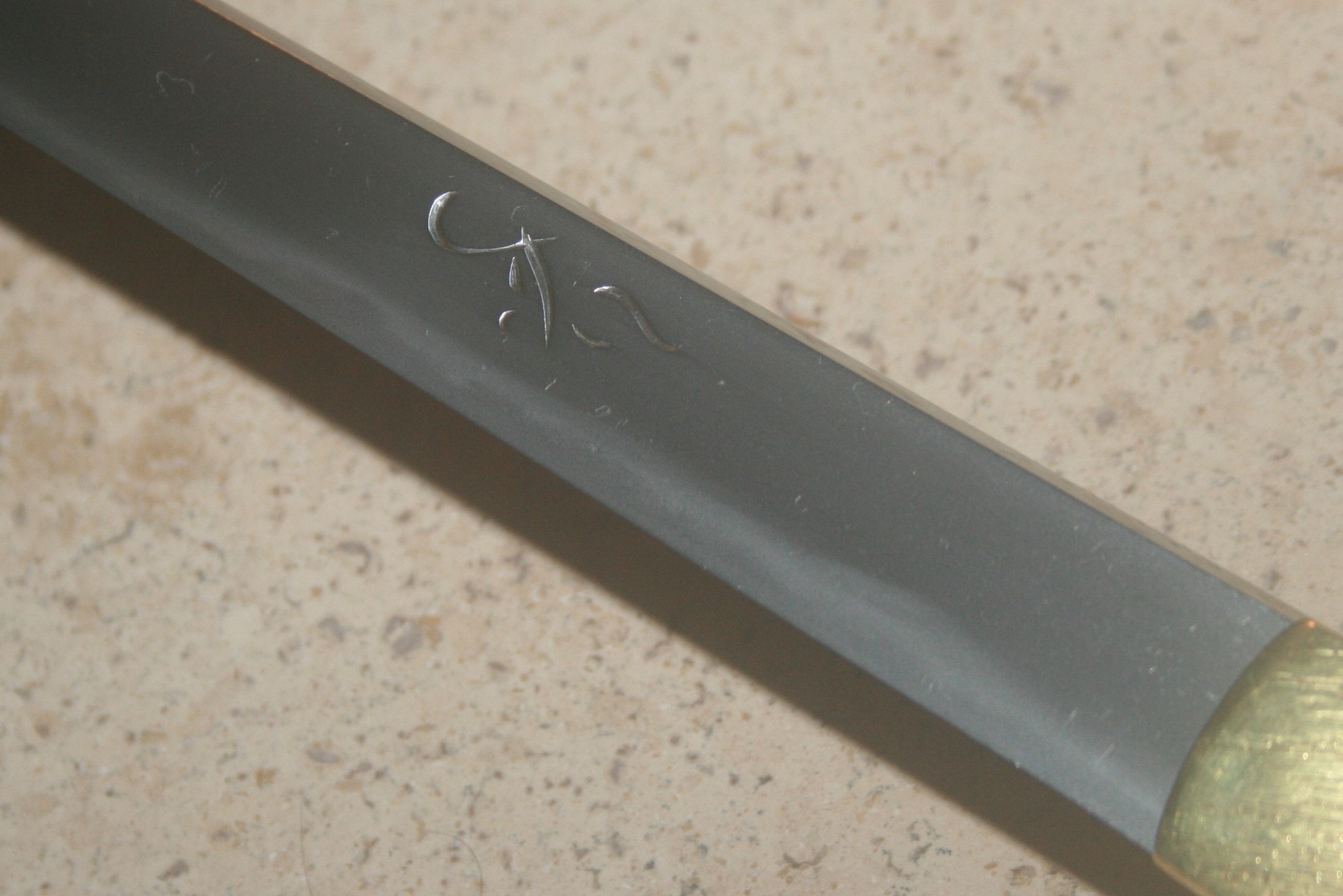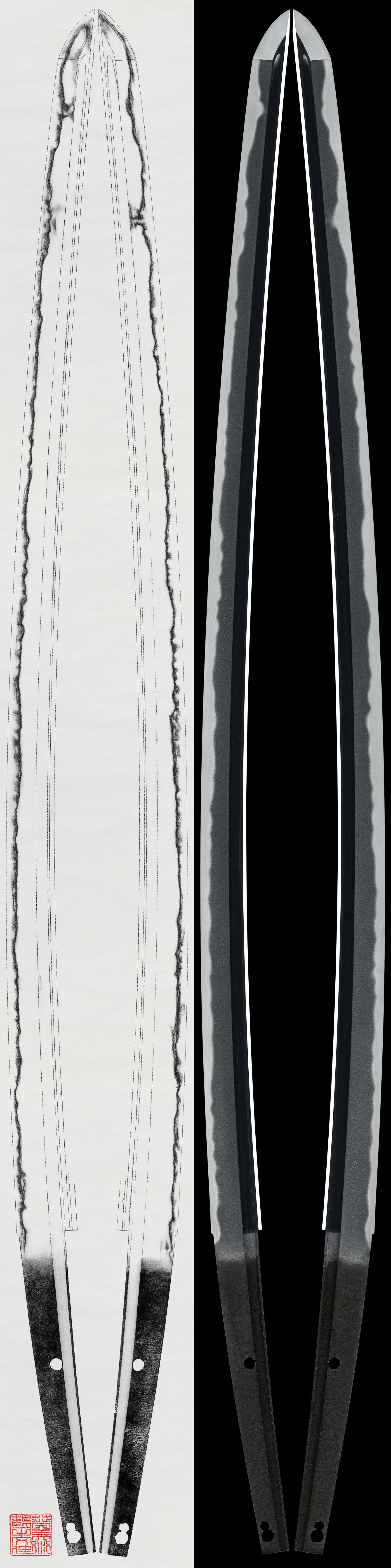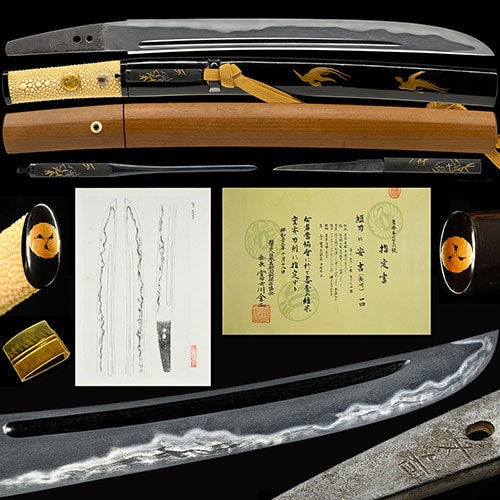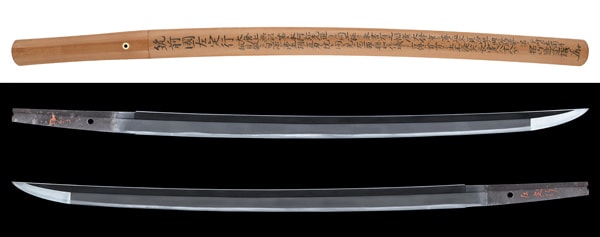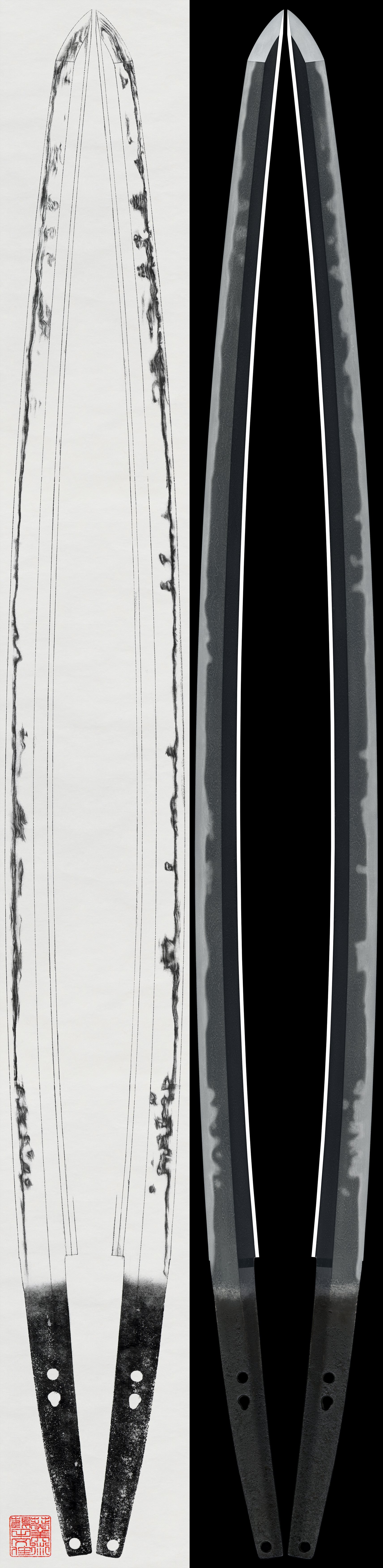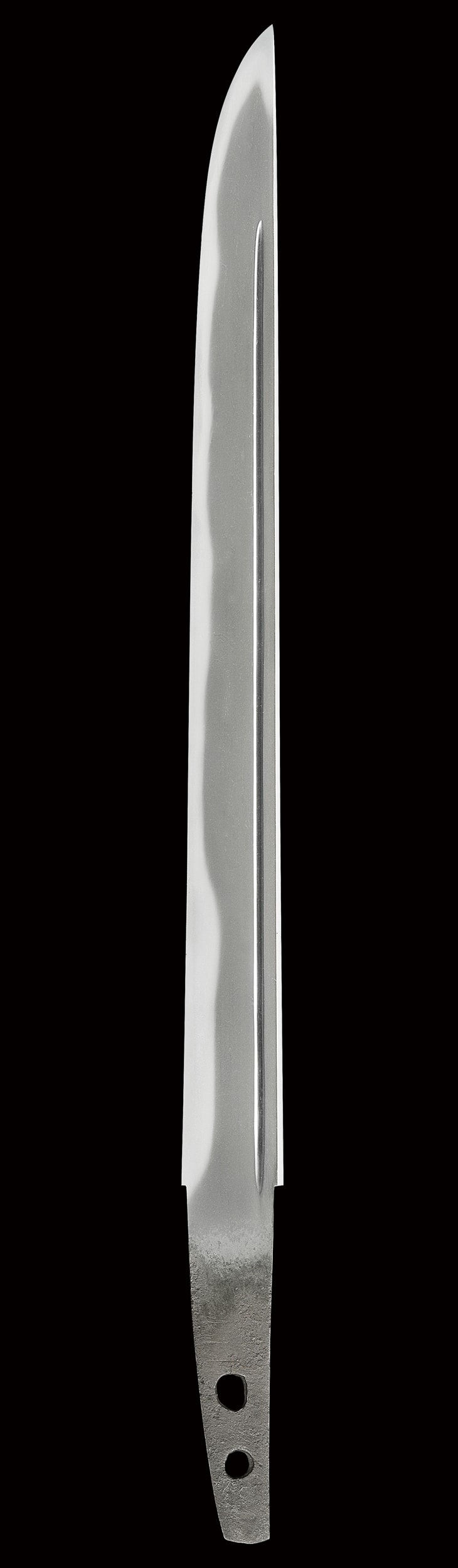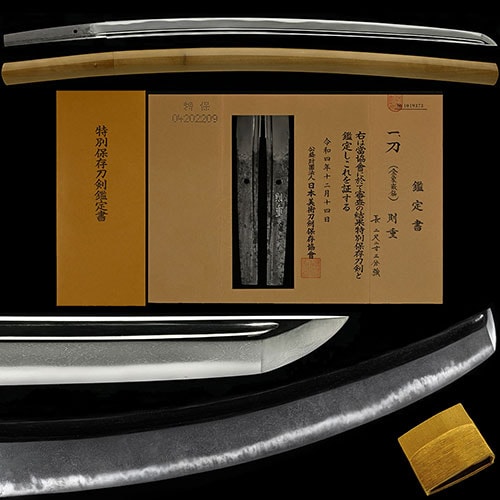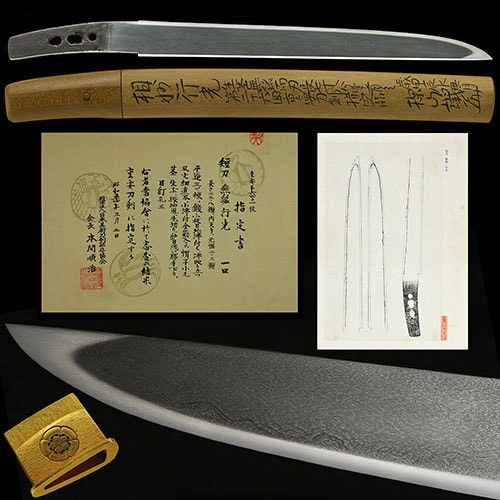
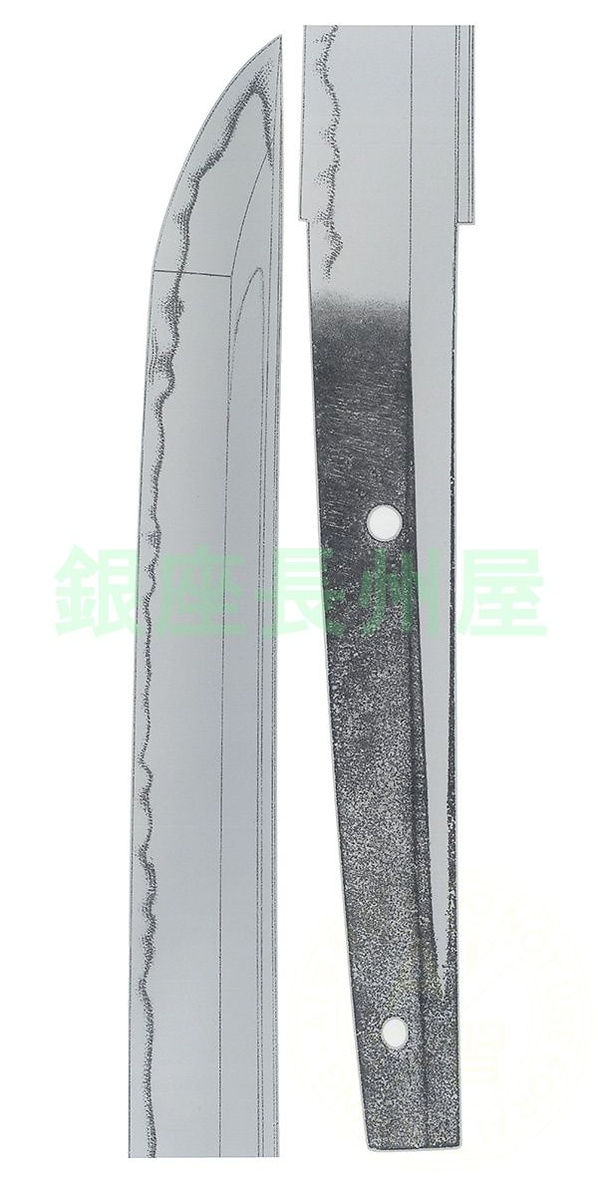
This is a katana from the Sa school, attributed to the Dai-Sa Ichimon (Great Sa Family). It is o-suriage mumei, meaning it has been greatly shortened and is unsigned. The blade dates to the Nanbokucho period, specifically around the Enbun era, and originates from Chikuzen Province. The Sa school is known for its vibrant jitetsu and hamon, often compared to Soshu Masamune works.
suriage-mumei · Sa · Nanbokucho


Soshu-den · Chikuzen
We could not find an authenticity certificate on the seller’s listing. Japanese swords and fittings are normally papered by the NBTHK (or the NTHK). Without one, the attribution is the seller’s own assessment and has not been independently verified — treat it with caution and ask the dealer about certification before buying.
If, due to our fault, the item differs significantly from its proper condition, the item may be returned. Cooling-off is within one week of the item's arrival.
This is a katana from the Sa school, attributed to the Dai-Sa Ichimon (Great Sa Family). It is o-suriage mumei, meaning it has been greatly shortened and is unsigned. The blade dates to the Nanbokucho period, specifically around the Enbun era, and originates from Chikuzen Province. The Sa school is known for its vibrant jitetsu and hamon, often compared to Soshu Masamune works.
suriage-mumei · Sa · Nanbokucho


Soshu-den · Chikuzen
We could not find an authenticity certificate on the seller’s listing. Japanese swords and fittings are normally papered by the NBTHK (or the NTHK). Without one, the attribution is the seller’s own assessment and has not been independently verified — treat it with caution and ask the dealer about certification before buying.
If, due to our fault, the item differs significantly from its proper condition, the item may be returned. Cooling-off is within one week of the item's arrival.