NihontoWatch MonNihontoWatch
Market
Encyclopedia
Kantei
NihontoWatch MonNihontoWatch
Market
Encyclopedia
Kantei

Description

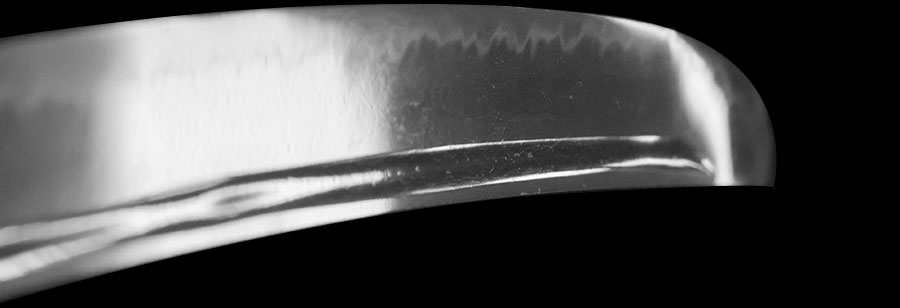
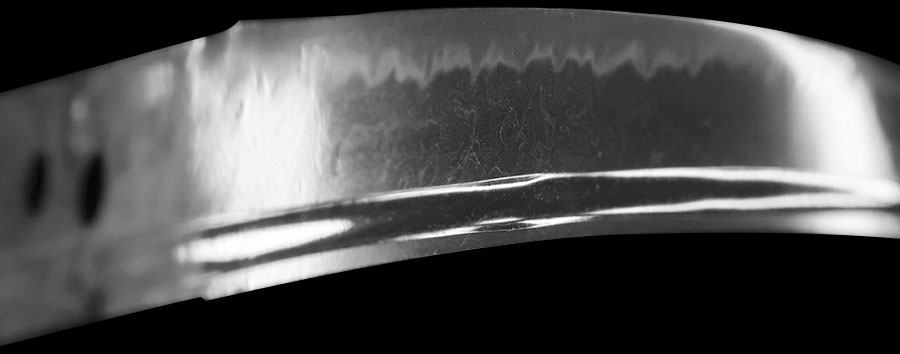
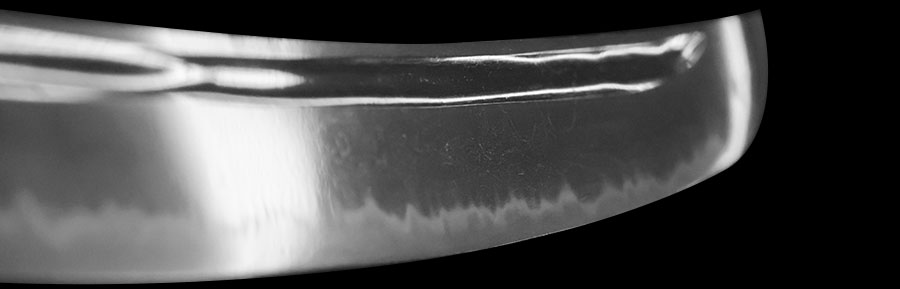
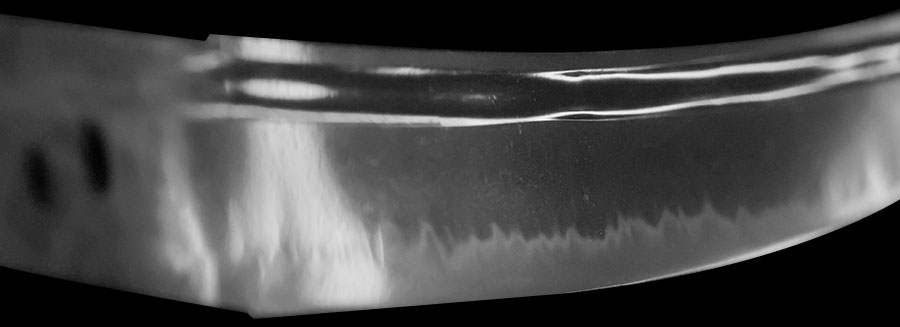
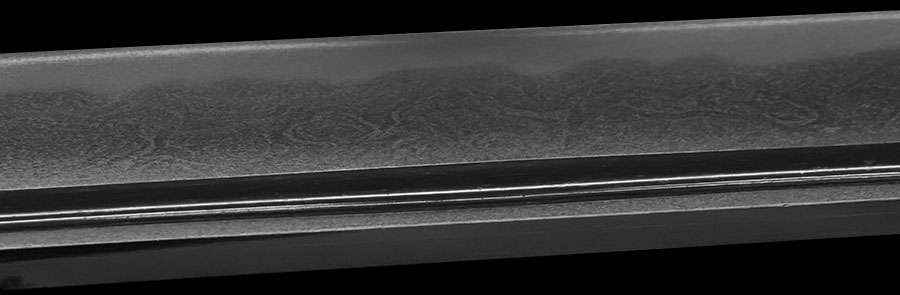
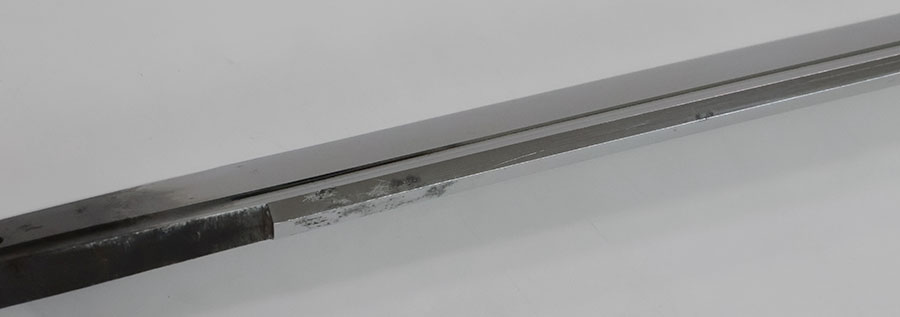
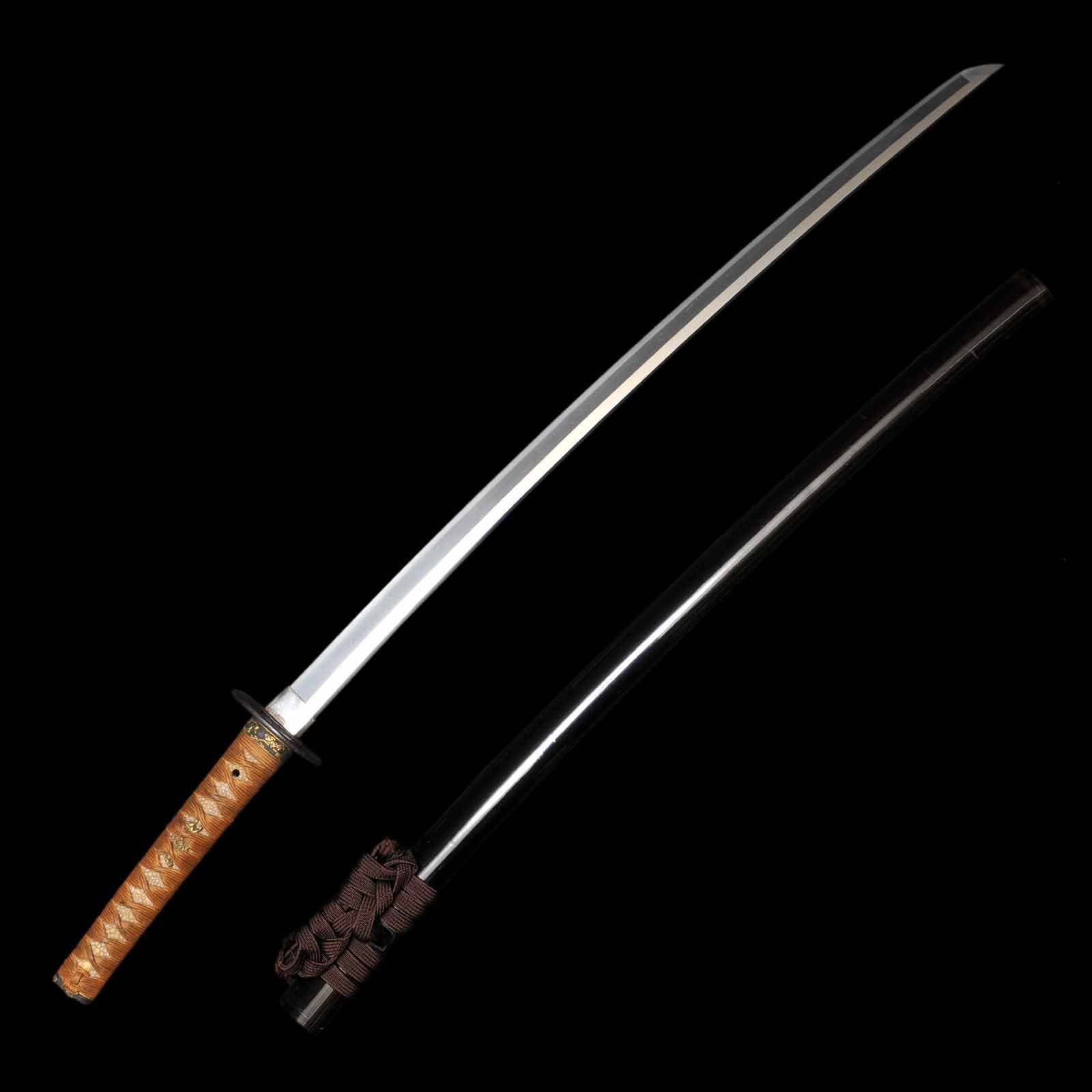
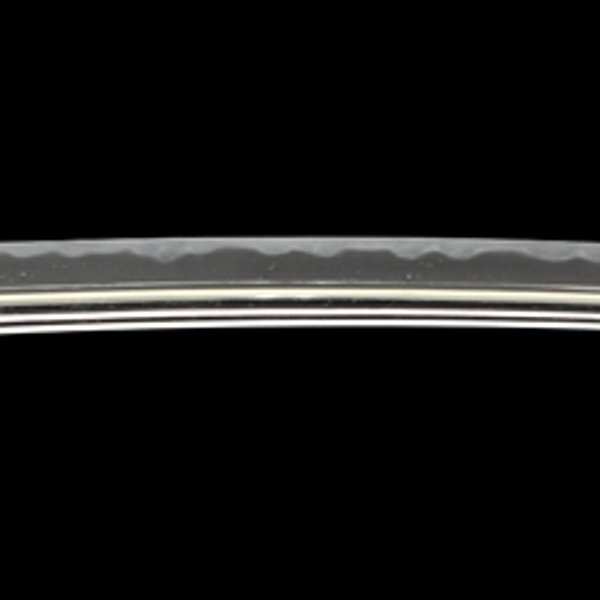
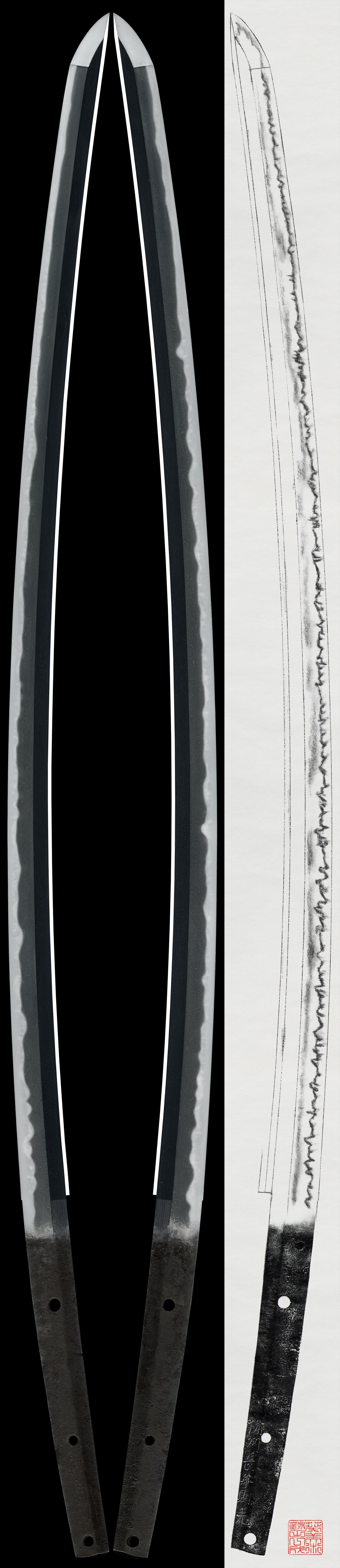
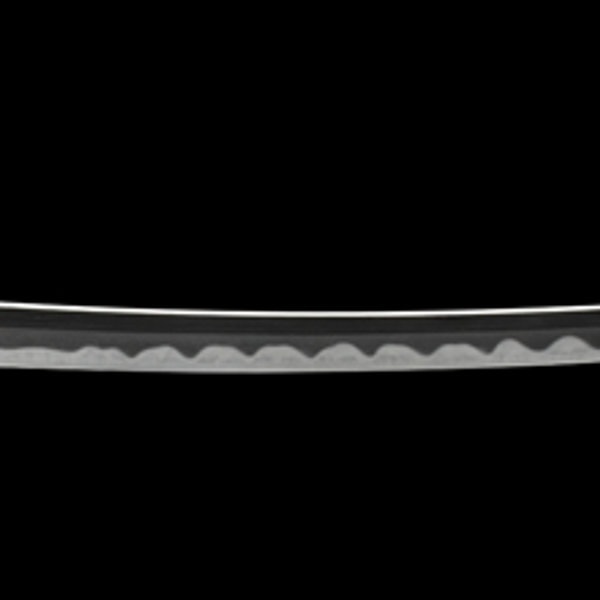
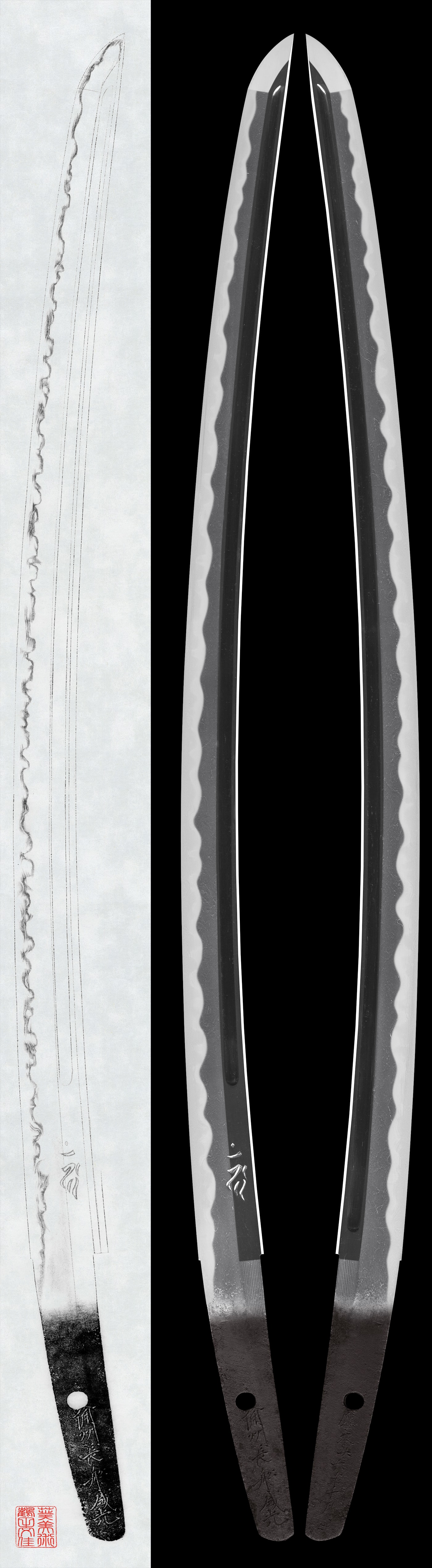
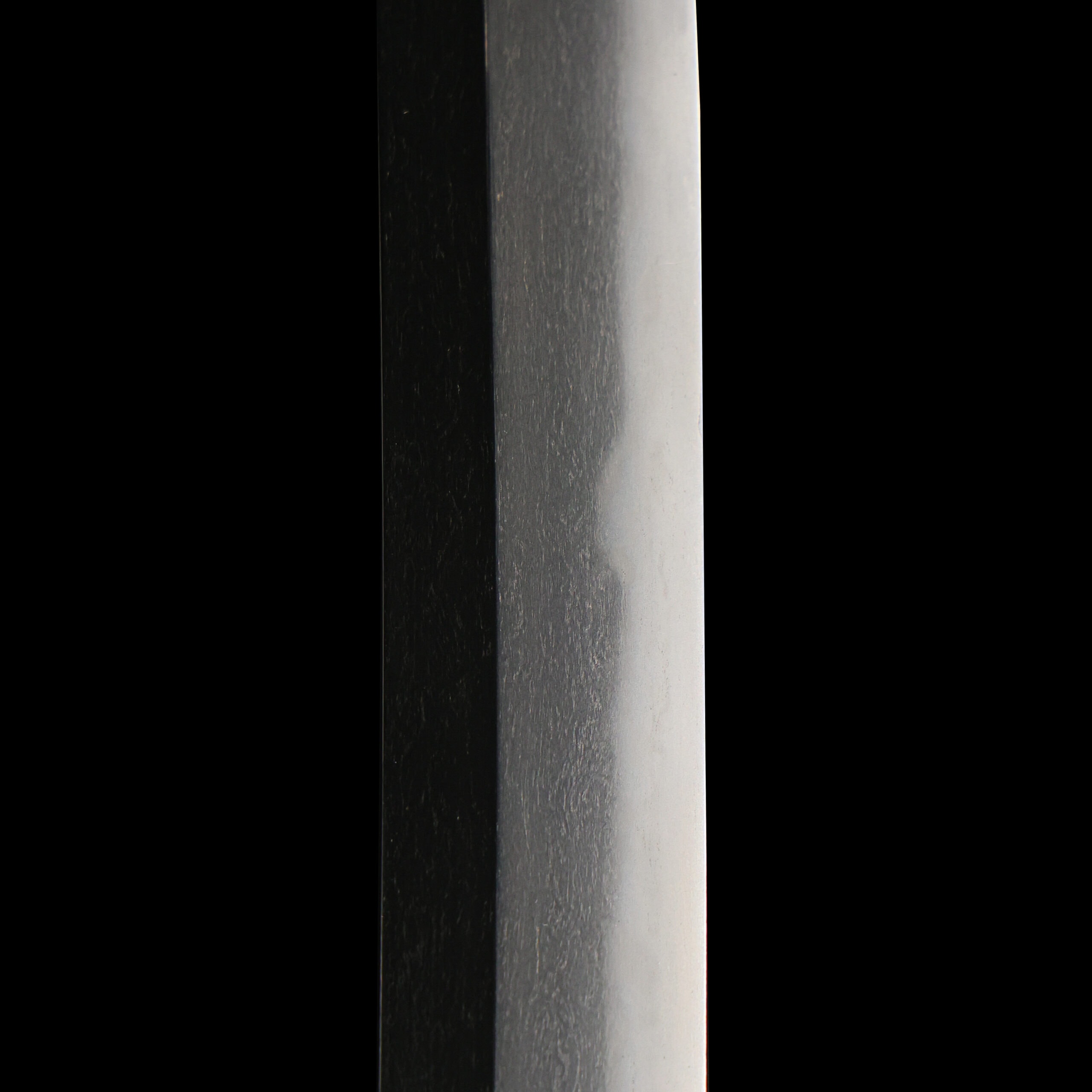
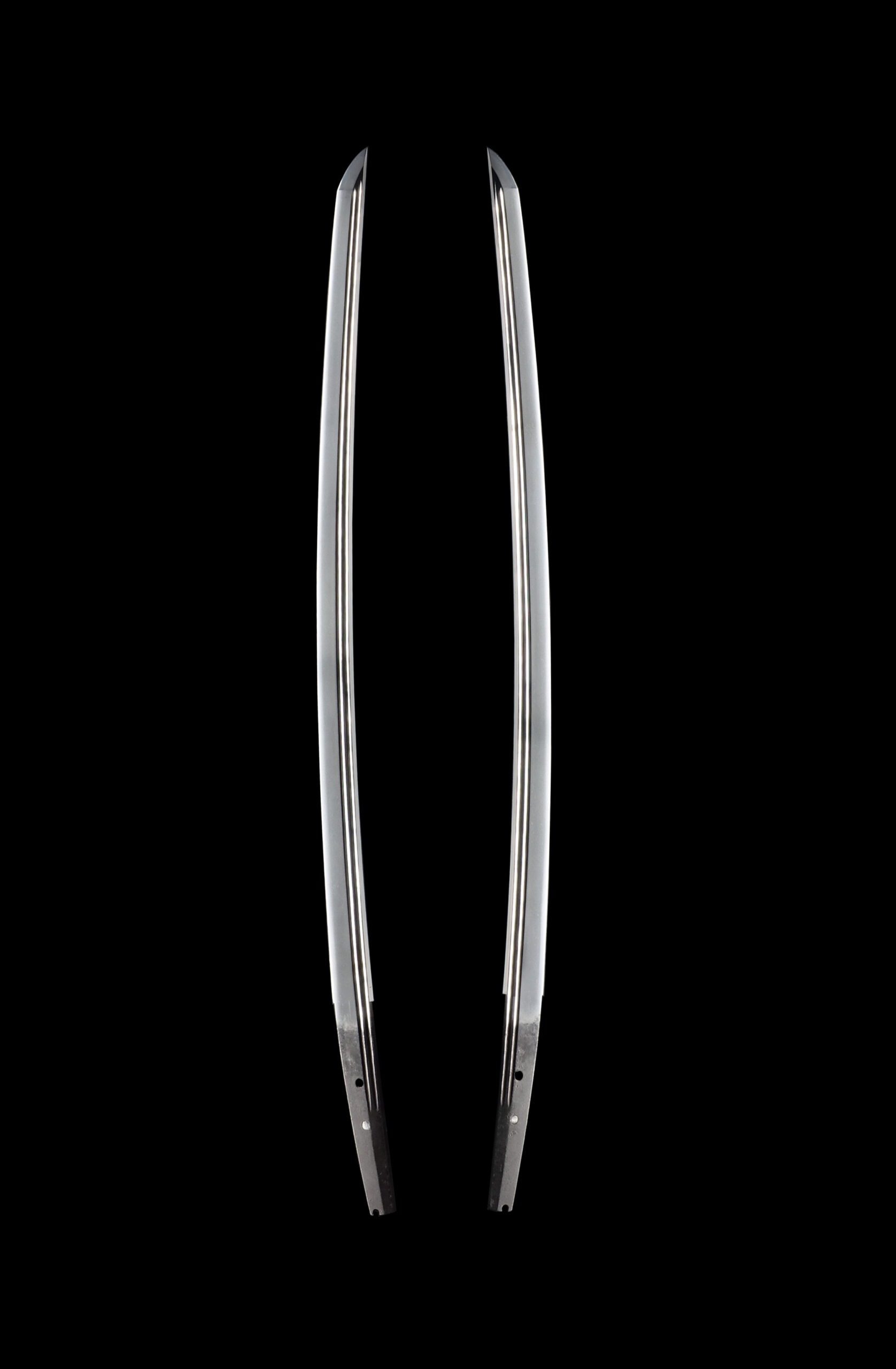
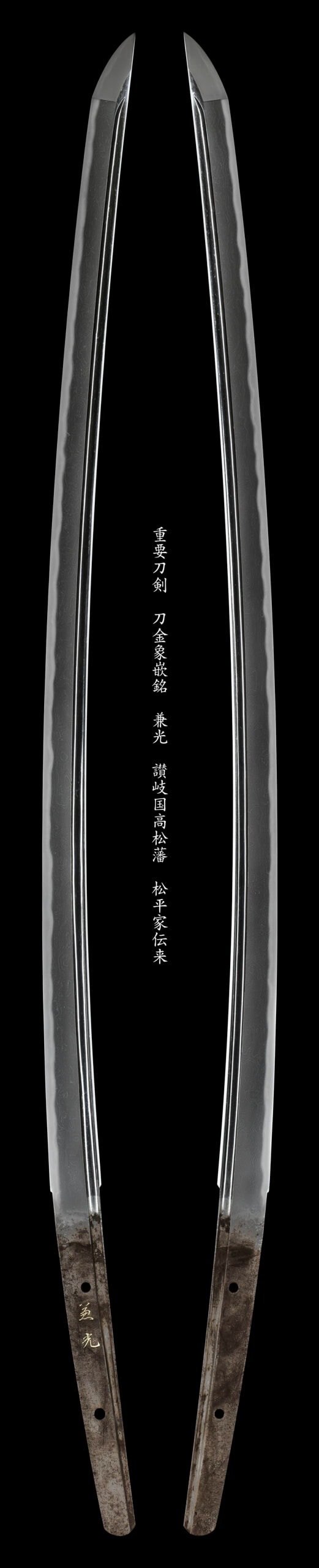
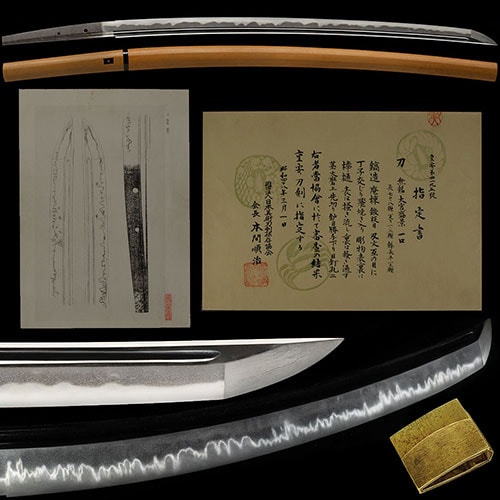
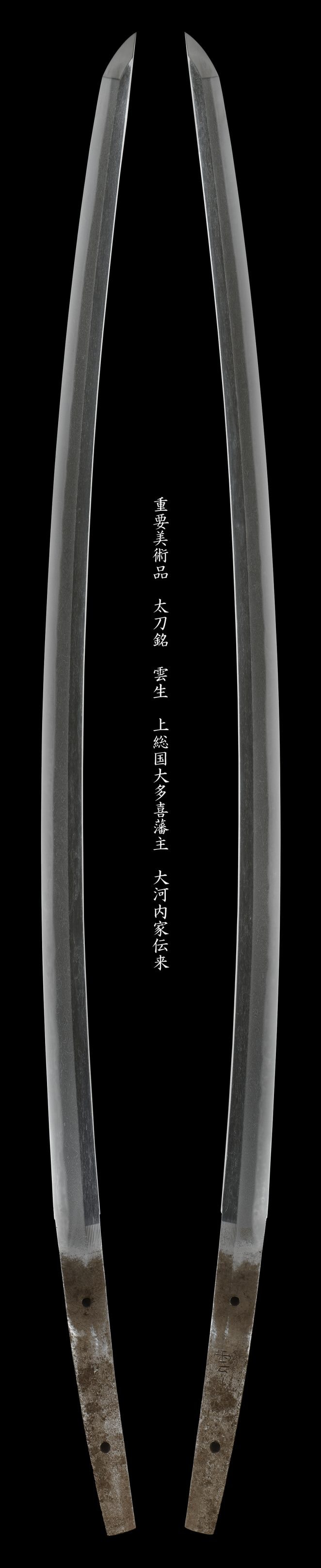
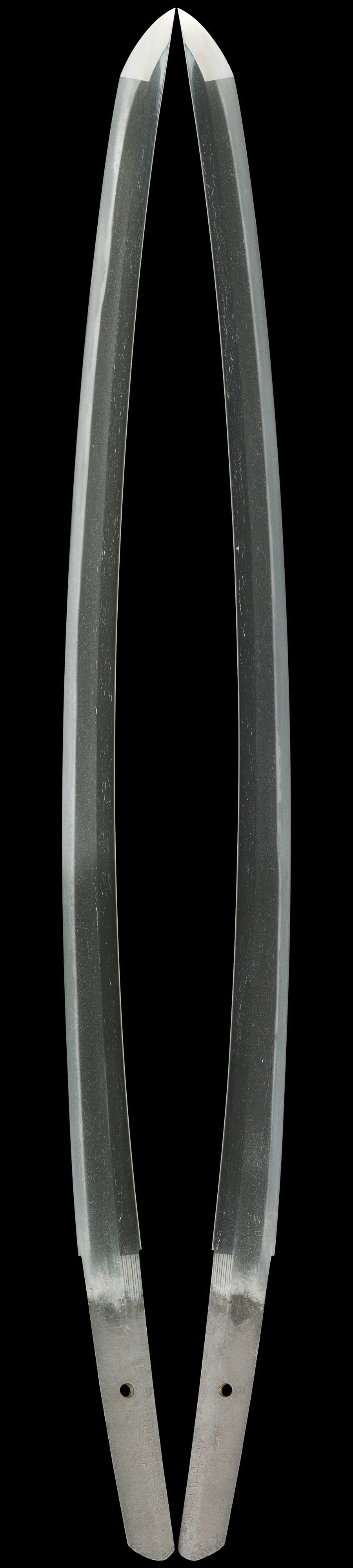
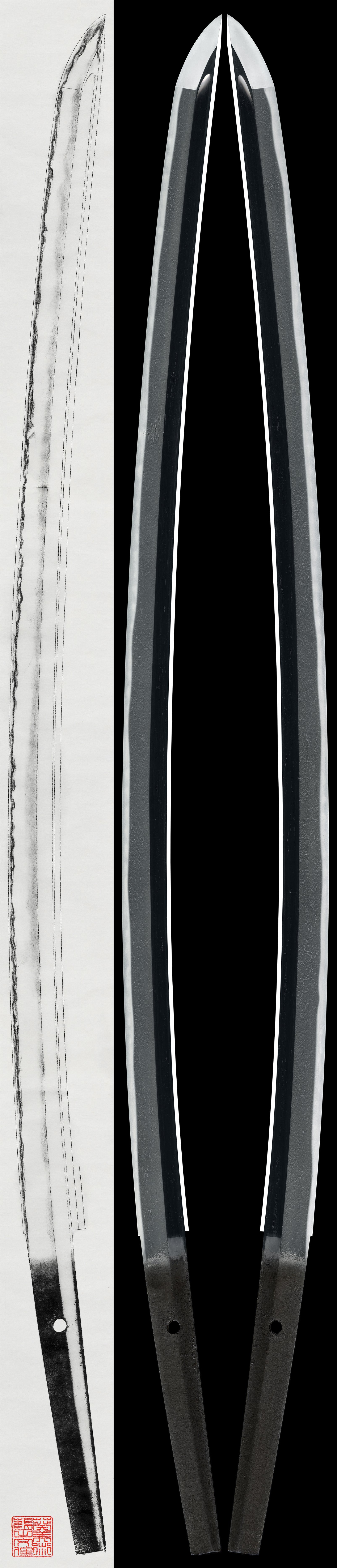
It has appeared, it has appeared! A wakizashi by Oei Bizen Osafune Yasumitsu, famous as a work of longing in the sword world, has appeared. The swordsmiths of Oei Bizen left behind particularly refined masterpieces and are exceptionally prized in the sword world; in particular, the master smiths of Bizen Osafune (Yasumitsu, Morimitsu, Moromitsu) are great masters who have been given the title of honor "Oei no Sanko" (The Three Brilliants of Oei) since ancient times. This precious niji-mei Yasumitsu is from the early period of the first generation Uemon Yasumitsu, made around Oei 4 (1397) (628 years ago) in the Muromachi period—exactly the time when Ashikaga Yoshimitsu built the Kinkaku-ji temple. This wakizashi is often referred to as a special-order piece (chumon-uchi) and shows a wonderful hira-zukuri wakizashi sugata with a distinct difference between the moto-mihaba and saki-mihaba that fits comfortably at the waist, having been preserved as the "sho" (short sword) of a daisho set cherished by a daimyo family. The jigane is a well-forged, excellent metal characteristic of Oei Bizen, featuring itame-hada mixed with mokume-hada, and displays a bo-utsuri from the moto, possessing great elegance. The horimono consists of skillfully carved bo-hi running through the nakago. The hamon is a magnificent nioi-deki with small nie, forming a deep-nioi gunome-choji midare. On this occasion, an elderly connoisseur has entrusted this to us, saying, "I have grown old, so please pass this on at a low price to someone who will cherish it." Because there is some light rust from age on the mune, we are offering this wakizashi—which used to be valued at over 2.5 million yen—at a special bargain price. Please enjoy this famous wakizashi with a rare extant niji-mei by Bizen Osafune Yasumitsu, a representative swordsmith of the Oei no Sanko and the orthodox Bizen Osafune lineage.

Certificate Reading

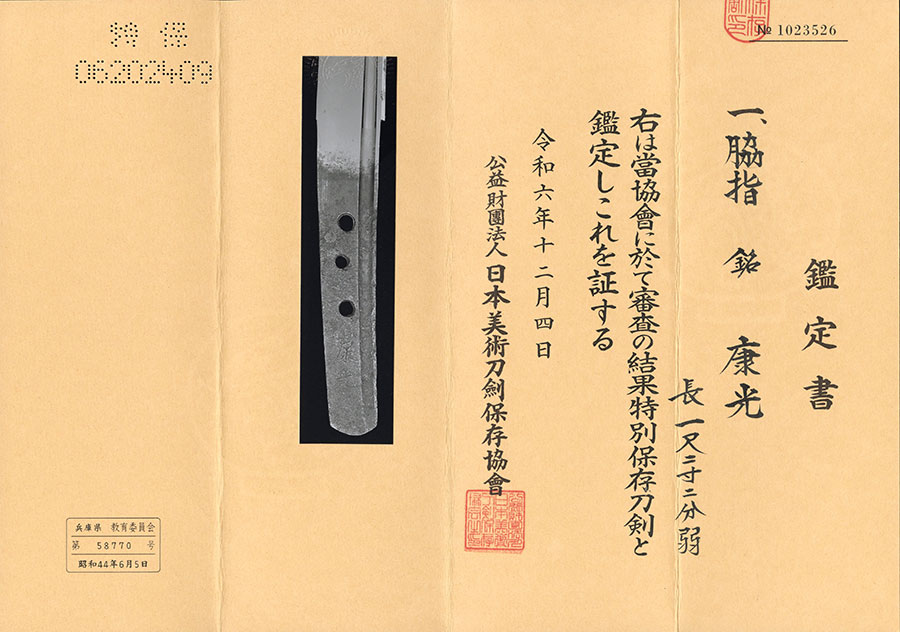
Certificate reading — 銘 康光

NihontoWatch MonNihontoWatch
MarketEncyclopediaKantei
Swords›Bizen-den›Osafune›Wakizashi by Yasumitsu of Bizen Osafune, Tokubetsu Hozon
wakizashiTokubetsu Hozon
Osafune School

Wakizashi by Yasumitsu of Bizen Osafune, Tokubetsu Hozon

Muromachi · nagasa 36.9cm · sori 0.5cm

SOLD
Wakizashi
Could you name the smith from the blade alone? Today’s kantei →
Osafune School — 1 of 16
Osafune School — 2 of 16
Osafune School — 3 of 16
Osafune School — 4 of 16
Osafune School — 5 of 16
Osafune School — 6 of 16
Osafune School — 7 of 16
Osafune School — 8 of 16
Osafune School — 9 of 16
Osafune School — 10 of 16
Osafune School — 11 of 16
Osafune School — 12 of 16
Osafune School — 13 of 16
Osafune School — 14 of 16
Osafune School — 15 of 16
Osafune School — 16 of 16
1 / 16
1 / 16
Osafune School — 1 of 16Osafune School — 2 of 16Osafune School — 3 of 16Osafune School — 4 of 16Osafune School — 5 of 16Osafune School — 6 of 16Osafune School — 7 of 16Osafune School — 8 of 16Osafune School — 9 of 16Osafune School — 10 of 16Osafune School — 11 of 16Osafune School — 12 of 16Osafune School — 13 of 16Osafune School — 14 of 16Osafune School — 15 of 16Osafune School — 16 of 16
Wakizashi
Could you name the smith from the blade alone? Today’s kantei →
Measurements & details
Smith
Osafune School
Type
Wakizashi
School
Osafune
Period
Muromachi
Province
備前
Measurements
Nagasa 36.9cmSori 0.5cmMotohaba 2.65cmSakihaba 1.55cmKasane 0.61cm
Description

It has appeared, it has appeared! A wakizashi by Oei Bizen Osafune Yasumitsu, famous as a work of longing in the sword world, has appeared. The swordsmiths of Oei Bizen left behind particularly refined masterpieces and are exceptionally prized in the sword world; in particular, the master smiths of Bizen Osafune (Yasumitsu, Morimitsu, Moromitsu) are great masters who have been given the title of honor "Oei no Sanko" (The Three Brilliants of Oei) since ancient times. This precious niji-mei Yasumitsu is from the early period of the first generation Uemon Yasumitsu, made around Oei 4 (1397) (628 years ago) in the Muromachi period—exactly the time when Ashikaga Yoshimitsu built the Kinkaku-ji temple. This wakizashi is often referred to as a special-order piece (chumon-uchi) and shows a wonderful hira-zukuri wakizashi sugata with a distinct difference between the moto-mihaba and saki-mihaba that fits comfortably at the waist, having been preserved as the "sho" (short sword) of a daisho set cherished by a daimyo family. The jigane is a well-forged, excellent metal characteristic of Oei Bizen, featuring itame-hada mixed with mokume-hada, and displays a bo-utsuri from the moto, possessing great elegance. The horimono consists of skillfully carved bo-hi running through the nakago. The hamon is a magnificent nioi-deki with small nie, forming a deep-nioi gunome-choji midare. On this occasion, an elderly connoisseur has entrusted this to us, saying, "I have grown old, so please pass this on at a low price to someone who will cherish it." Because there is some light rust from age on the mune, we are offering this wakizashi—which used to be valued at over 2.5 million yen—at a special bargain price. Please enjoy this famous wakizashi with a rare extant niji-mei by Bizen Osafune Yasumitsu, a representative swordsmith of the Oei no Sanko and the orthodox Bizen Osafune lineage.

About the school

Osafune

長船

Bizen-den · Bizen

236 pieces on the market now

›

No single workshop in the history of Japanese swordmaking grew larger or lasted longer than Osafune, the riverside village in Bizen Province whose name became, across three centuries, a byword for the province's mainline. Its de facto founder was Mitsutada (光忠), working at Osafune in the middle Kamakura period; tradition makes him the son of Chikatada, and the genealogies derive his line from the Ko-Bizen Masatsune group already settled in the village. His blades, bold and imposing with a jigane so refined the sources say it can at a glance suggest Kyoto work, were treasured from old as the swords of commanders, and from his hand the school spread immediately: his sons Nagamitsu (長光) and Sanenaga (眞長), his grandson Kagemitsu (景光), and outward through pupils and collaterals until, by the late Kamakura years, Osafune was less a family than an industry. The line is conventionally read as a three-generation spine, Mitsutada founding it, Nagamitsu setting its classical standard, Kagemitsu bringing both temper and forging to their finished form before handing the manner to his pupil Chikakage (近景), whose echo of the master is so close that signed Kagemitsu blades are sometimes read as Chikakage daimei. What binds the membership is a shared steel before any shared temper. The forging is itame mixed with mokume, tightening on the finest blades into a dense ko-itame; fine ji-nie adheres, chikei enter, and over all of it stands the midare-utsuri that anchors even the most Kyoto-like jigane back to Bizen. On that floor the founding generation tempers a flamboyant choji-midare mixed with gunome: Mitsutada's tadpole-headed kawazuko-choji, Nagamitsu's round-topped plump choji, the deep nioi with ko-nie, the bright nioiguchi. From here the school divides by hand and by era. Sanenaga draws the calm pole, a gentle chu-suguha of tightened nioiguchi; Kagemitsu completes the slanting, square-shouldered kataochi-gunome over a suguha base, the family's last great Kamakura invention, carried on by his close kinsman Kagemasa (景政). The Nanbokucho generation then turns toward Soshu-den: Kanemitsu (兼光), fourth master of the mainline, pioneers a broad notare and is read, with Chogi (長義), as the head of Soden-Bizen, the Bizen wing that worked Soshu nie into a jigane that still throws a Bizen utsuri.

Chogi is called the most un-Bizen of Bizen smiths, his ear-shaped mimigata his tell; around him Nagashige (長重), Yoshikage (義景), Tomomitsu (倫光) and Kanenaga (兼長) press the Soshu side by degrees, while Motoshige (元重), of a separate Hatakeda descent, carries an Aoe-tinged squared, slanting ha. Two generations later the Oei revival returns to Kamakura: Yasumitsu (康光) and Morimitsu (盛光), the twin pillars of Oei-Bizen, revive the tachi shape and the choji temper over a wide-waisted koshibiraki-gunome, both finishing in the pointed rosoku-no-shin (candle-wick) boshi that gives the late date away. For the collector the school is a school of discriminations, and to kantei it is to read those fine partitions. The constant midare-utsuri over a bright ko-itame fixes the province; the boshi then sorts the maker, Mitsutada's pointed midare-komi against Nagamitsu's composed ko-maru Sansaku turn, Kagemitsu's contained return, the candle-wick tongue of Oei. Within a single phase the calls turn on a half-step: Nagamitsu's plump crests against Sanenaga's cooler nioiguchi, Kagemasa's freer play against Kagemitsu's tighter order, Nagashige read out of Chogi by a nie that surpasses his brother's. The standing of the best is matched by their patrimony. Mitsutada, Nagamitsu and Kagemitsu each hold National Treasures and stand at the head of Fujishiro's Sai-jo saku; their named blades, the Daihannya Nagamitsu, the Kogaryu Kagemitsu, the O-Kanemitsu, passed through Nobunaga, Ieyasu, Uesugi Kenshin and the great daimyo houses. Because Nagamitsu and the Nanbokucho masters signed and survived in number, Osafune offers what most peerage names cannot, a deep field of Tokubetsu Juyo and Juyo work that a patient collector may still realistically hold. Through every register the same hand declares itself: the bright steel, the vivid reflection, and a temper that runs, across three centuries, as the spine of Bizen. Learn more →

113 recorded smiths2013 designated works
Leading smiths
SmithEraDesignated
Mitsutada光忠1238-123960
Nagamitsu長光1274-1304244
Kagemitsu景光1303-1336143
Kanemitsu兼光1323-1370231
Sanenaga眞長1299-130964
Explore the Osafune school →

Historical context

Bizen in the Muromachi period

›

War at home and trade abroad made Muromachi Bizen the busiest forge region in Japan: a century of Sengoku demand after the Ōnin War, and export missions to Ming China carrying blades by the tens of thousands.

Bizen in the Muromachi period →

NBTHK Certificate
Tokubetsu Hozon Tōken特別保存刀剣
Sword Especially Worthy of Preservation
›

A Hozon-certified blade judged to show notably superior workmanship and a better state of preservation. The bar is higher: re-tempered blades and most unsigned Muromachi/Edo works are excluded.

Signed: 康光 (Osafune School)
As written on the certificate
About the NBTHK›

The NBTHK (Nihon Bijutsu Tōken Hozon Kyōkai, the Society for the Preservation of Japanese Art Swords) is a public-interest incorporated foundation founded in 1948 and supervised by Japan’s Agency for Cultural Affairs (Bunkachō); it is based at the Japanese Sword Museum in Tokyo. Its expert panels physically examine each submitted work (shinsa) and issue a certificate (kanteishō) ranking it by artistic and historical merit. NBTHK papers are the most widely recognized standard of authentication for Japanese swords and fittings.

NBTHK official site→
Seller
N
Nipponto
Established 1953 · 73 yrs on the market
🇯🇵Ships from Japan
›
✓Verified dealernipponto.co.jp
✓Ships worldwide✓English supportPayPalCredit card
Return policy

For returns due to customer circumstances, the cost is the customer's responsibility. For returns due to our mis-shipment or a defective item, we bear the cost.

View all of Nipponto’s listings→View this item on the dealer’s site→

Previously sold — Osafune School

View all →
Choshuya
Wakizashi - by Osafune School - Yokoyama Kozuke Daijo Fujiwara SukesadaWakizashi - by Osafune School - Yokoyama Kozuke Daijo Fujiwara Sukesada
Sold

Wakizashi

ByOsafune School
SOLD
Samurai Shokai
Tokuho
Katana - Tokuho - by Osafune School - Biyo Osafune Sikeshige, dated Kansei 8th year, FebruaryKatana - Tokuho - by Osafune School - Biyo Osafune Sikeshige, dated Kansei 8th year, February
Sold

Katana

ByOsafune School
SOLD
Choshuya
Wakizashi - by Osafune School - Bizen Osafune Tsuneie, Eikyo 5th Year, 2nd Month (Ryowazamono)Wakizashi - by Osafune School - Bizen Osafune Tsuneie, Eikyo 5th Year, 2nd Month (Ryowazamono)
Sold

Wakizashi

ByOsafune School
SOLD
Tozando
Hozon
Katana - Hozon - by Osafune School - KanemitsuKatana - Hozon - by Osafune School - Kanemitsu
Sold

Katana

ByOsafune School
SOLD
Choshuya
Wakizashi - by Osafune School - O-suriage Mumei Bizen Osafune Iesuke (Wazamono), 266Wakizashi - by Osafune School - O-suriage Mumei Bizen Osafune Iesuke (Wazamono), 266
Sold

Wakizashi

ByOsafune School
SOLD
Choshuya
Tanto - by Osafune School - Mei: Bishu Osafune Norimitsu, Eikyo 12th Year, August 15th (Ryowazamono)Tanto - by Osafune School - Mei: Bishu Osafune Norimitsu, Eikyo 12th Year, August 15th (Ryowazamono)
Sold

Tantō

ByOsafune School
SOLD
Aoi Art
Tokuho
Tachi - Tokuho - by Osafune School - Bishu Osafune NorimitsuTachi - Tokuho - by Osafune School - Bishu Osafune Norimitsu
Sold

Tachi

ByOsafune School
SOLD
Choshuya
Tachi - by Osafune School - Mumei (Unsigned) Osafune TsuneieTachi - by Osafune School - Mumei (Unsigned) Osafune Tsuneie
Sold

Tachi

ByOsafune School
SOLD

More from the Osafune school

View all →
Nihonto.com
Jūyō
Tanto - Jūyō - by Osafune Kagemitsu - Juyo Tanto by Bizen KagemitsuTanto - Jūyō - by Osafune Kagemitsu - Juyo Tanto by Bizen Kagemitsu

Tantō

ByOsafune Kagemitsu
¥89,500
Aoi Art
Jūyō Bijutsuhin
Daisho - Jubi - by Osafune Nagamitsu - Dai Sho: Katana (Important Art Object): Mumei (Attributed to Nagamitsu) / Wakizashi: Mumei (Attributed to Sekishu Naotsuna)Daisho - Jubi - by Osafune Nagamitsu - Dai Sho: Katana (Important Art Object): Mumei (Attributed to Nagamitsu) / Wakizashi: Mumei (Attributed to Sekishu Naotsuna)

Daishō

ByOsafune Nagamitsu
Ask
Aoi Art
Tokuho
Wakizashi - Tokuho - by Oei-Bizen Morimitsu - Bishū Osafune Morimitsu, dated Ōei 26 (1419) - NBTHK Tokubetsu Hozon TokenWakizashi - Tokuho - by Oei-Bizen Morimitsu - Bishū Osafune Morimitsu, dated Ōei 26 (1419) - NBTHK Tokubetsu Hozon Token

Wakizashi

ByOei-Bizen Morimitsu
Starting Bid¥1,500,000
Eirakudo
Jūyō
Katana - Jūyō - by Motoshige - Motoshige - Juyo TokenKatana - Jūyō - by Motoshige - Motoshige - Juyo Token

Katana

ByMotoshige
¥6,000,000
Samurai Museum
Katana - by Osafune Kanemitsu - Antique Japanese Sword Katana Attributed to Den Osafune Kanemitsu NTHK Yushu Saku Kanteisho CertificateKatana - by Osafune Kanemitsu - Antique Japanese Sword Katana Attributed to Den Osafune Kanemitsu NTHK Yushu Saku Kanteisho Certificate

Katana

ByOsafune Kanemitsu
¥27,856
Samurai Museum
Tokuho
Wakizashi - Tokuho - by Osafune Kagemitsu - Antique Japanese Sword Wakizashi Attributed to Den Osafune Kagemitsu with NBTHK Tokubetsu Hozon CertificateWakizashi - Tokuho - by Osafune Kagemitsu - Antique Japanese Sword Wakizashi Attributed to Den Osafune Kagemitsu with NBTHK Tokubetsu Hozon Certificate

Wakizashi

ByOsafune Kagemitsu
¥3,200,000
Touken Matsumoto
Tokuho
Katana - Tokuho - by Sukesada School - Bishu Osafune SukesadaKatana - Tokuho - by Sukesada School - Bishu Osafune Sukesada

Katana

BySukesada School
¥650,000
Goushuya
Jūyō
Katana - Jūyō - by Osafune Kanemitsu - Kanemitsu with Gold Inlay InscriptionKatana - Jūyō - by Osafune Kanemitsu - Kanemitsu with Gold Inlay Inscription

Katana

ByOsafune Kanemitsu
Ask

More from the Bizen tradition

View all →
Tsuruginoya
Jūyō
Katana - Jūyō - by Fukuoka Ichimonji School - Mumei Fukuoka IchimonjiKatana - Jūyō - by Fukuoka Ichimonji School - Mumei Fukuoka Ichimonji

Katana

ByFukuoka Ichimonji School
Ask
Hyozaemon
Tokuho
Tokuho - by Fukuoka Ichimonji Yoshifusa - Naginata Naoshi Wakizashi by Fukuoka Ichimonji Yoshifusa, a Master of IchimonjiTokuho - by Fukuoka Ichimonji Yoshifusa - Naginata Naoshi Wakizashi by Fukuoka Ichimonji Yoshifusa, a Master of Ichimonji

Naginata Naoshi Wakizashi by Fukuoka Ichimonji Yoshifusa, a Master of Ichimonji

ByFukuoka Ichimonji Yoshifusa
Ask
Eirakudo
Tokuho
Katana - Tokuho - by Katayama Ichimonji School - Katayama Ichimonji - Tokubetsu Hozon TokenKatana - Tokuho - by Katayama Ichimonji School - Katayama Ichimonji - Tokubetsu Hozon Token

Katana

ByKatayama Ichimonji School
¥4,500,000
Giheiya
Hozon
Katana - Hozon - by Takada School - Mumei (Hira Takada) - 72.1cm, with Koshirae and ShirasayaKatana - Hozon - by Takada School - Mumei (Hira Takada) - 72.1cm, with Koshirae and Shirasaya

Katana

ByTakada School
¥350,000
Eirakudo
Jūyō
Katana - Jūyō - by Omiya Morikage - Ohmiya Morikage - Juyo TokenKatana - Jūyō - by Omiya Morikage - Ohmiya Morikage - Juyo Token

Katana

ByOmiya Morikage
¥4,000,000
Goushuya
Jūyō Bijutsuhin
Tachi - Jubi - by Ukai Unsho - Kumoio - From the collection of the Okouchi family, lord of Otaki Domain, Kazusa ProvinceTachi - Jubi - by Ukai Unsho - Kumoio - From the collection of the Okouchi family, lord of Otaki Domain, Kazusa Province

Tachi

ByUkai Unsho
Ask
Touken Matsumoto
Hozon
Wakizashi - Hozon - by Sukesada School - Bishu Osafune Sukesada, Eisho Juninen NigatsujitsuWakizashi - Hozon - by Sukesada School - Bishu Osafune Sukesada, Eisho Juninen Nigatsujitsu

Wakizashi

BySukesada School
¥650,000
Aoi Art
Tokuho
Katana - Tokuho - by Osafune Shigezane - Mumei (Osafune Shigezane)Katana - Tokuho - by Osafune Shigezane - Mumei (Osafune Shigezane)

Katana

ByOsafune Shigezane
Starting Bid¥1,650,000

Swords

  • Katana
  • Wakizashi
  • Tantō
  • Tachi
  • Naginata
  • Yari
  • Japanese Swords
  • Samurai Swords

Fittings

  • Tsuba
  • Fuchi-Kashira
  • Kozuka
  • Menuki
  • Sword Guards (Tsuba)

Armor

  • Kabuto
  • Samurai Armor
  • All Samurai Armor

By Certification

  • Tokujū
  • Jūyō
  • Tokuho
  • Hozon

Resources

  • Dealer Directory
  • Artist Directory
  • The Daily Kantei
  • Glossary
  • Browse All
Nihontowatch© 2026
TermsPrivacyCookiesAbout
Sold

Description

It has appeared, it has appeared! A wakizashi by Oei Bizen Osafune Yasumitsu, famous as a work of longing in the sword world, has appeared. The swordsmiths of Oei Bizen left behind particularly refined masterpieces and are exceptionally prized in the sword world; in particular, the master smiths of Bizen Osafune (Yasumitsu, Morimitsu, Moromitsu) are great masters who have been given the title of honor "Oei no Sanko" (The Three Brilliants of Oei) since ancient times. This precious niji-mei Yasumitsu is from the early period of the first generation Uemon Yasumitsu, made around Oei 4 (1397) (628 years ago) in the Muromachi period—exactly the time when Ashikaga Yoshimitsu built the Kinkaku-ji temple. This wakizashi is often referred to as a special-order piece (chumon-uchi) and shows a wonderful hira-zukuri wakizashi sugata with a distinct difference between the moto-mihaba and saki-mihaba that fits comfortably at the waist, having been preserved as the "sho" (short sword) of a daisho set cherished by a daimyo family. The jigane is a well-forged, excellent metal characteristic of Oei Bizen, featuring itame-hada mixed with mokume-hada, and displays a bo-utsuri from the moto, possessing great elegance. The horimono consists of skillfully carved bo-hi running through the nakago. The hamon is a magnificent nioi-deki with small nie, forming a deep-nioi gunome-choji midare. On this occasion, an elderly connoisseur has entrusted this to us, saying, "I have grown old, so please pass this on at a low price to someone who will cherish it." Because there is some light rust from age on the mune, we are offering this wakizashi—which used to be valued at over 2.5 million yen—at a special bargain price. Please enjoy this famous wakizashi with a rare extant niji-mei by Bizen Osafune Yasumitsu, a representative swordsmith of the Oei no Sanko and the orthodox Bizen Osafune lineage.

Certificate Reading

Certificate reading — 銘 康光

NihontoWatch MonNihontoWatch
MarketEncyclopediaKantei
Swords›Bizen-den›Osafune›Wakizashi by Yasumitsu of Bizen Osafune, Tokubetsu Hozon
wakizashiTokubetsu Hozon
Osafune School

Wakizashi by Yasumitsu of Bizen Osafune, Tokubetsu Hozon

Muromachi · nagasa 36.9cm · sori 0.5cm

SOLD
Wakizashi
Could you name the smith from the blade alone? Today’s kantei →
Osafune School — 1 of 16
Osafune School — 2 of 16
Osafune School — 3 of 16
Osafune School — 4 of 16
Osafune School — 5 of 16
Osafune School — 6 of 16
Osafune School — 7 of 16
Osafune School — 8 of 16
Osafune School — 9 of 16
Osafune School — 10 of 16
Osafune School — 11 of 16
Osafune School — 12 of 16
Osafune School — 13 of 16
Osafune School — 14 of 16
Osafune School — 15 of 16
Osafune School — 16 of 16
1 / 16
1 / 16
Osafune School — 1 of 16Osafune School — 2 of 16Osafune School — 3 of 16Osafune School — 4 of 16Osafune School — 5 of 16Osafune School — 6 of 16Osafune School — 7 of 16Osafune School — 8 of 16Osafune School — 9 of 16Osafune School — 10 of 16Osafune School — 11 of 16Osafune School — 12 of 16Osafune School — 13 of 16Osafune School — 14 of 16Osafune School — 15 of 16Osafune School — 16 of 16
Wakizashi
Could you name the smith from the blade alone? Today’s kantei →
Measurements & details
Smith
Osafune School
Type
Wakizashi
School
Osafune
Period
Muromachi
Province
備前
Measurements
Nagasa 36.9cmSori 0.5cmMotohaba 2.65cmSakihaba 1.55cmKasane 0.61cm
Description

It has appeared, it has appeared! A wakizashi by Oei Bizen Osafune Yasumitsu, famous as a work of longing in the sword world, has appeared. The swordsmiths of Oei Bizen left behind particularly refined masterpieces and are exceptionally prized in the sword world; in particular, the master smiths of Bizen Osafune (Yasumitsu, Morimitsu, Moromitsu) are great masters who have been given the title of honor "Oei no Sanko" (The Three Brilliants of Oei) since ancient times. This precious niji-mei Yasumitsu is from the early period of the first generation Uemon Yasumitsu, made around Oei 4 (1397) (628 years ago) in the Muromachi period—exactly the time when Ashikaga Yoshimitsu built the Kinkaku-ji temple. This wakizashi is often referred to as a special-order piece (chumon-uchi) and shows a wonderful hira-zukuri wakizashi sugata with a distinct difference between the moto-mihaba and saki-mihaba that fits comfortably at the waist, having been preserved as the "sho" (short sword) of a daisho set cherished by a daimyo family. The jigane is a well-forged, excellent metal characteristic of Oei Bizen, featuring itame-hada mixed with mokume-hada, and displays a bo-utsuri from the moto, possessing great elegance. The horimono consists of skillfully carved bo-hi running through the nakago. The hamon is a magnificent nioi-deki with small nie, forming a deep-nioi gunome-choji midare. On this occasion, an elderly connoisseur has entrusted this to us, saying, "I have grown old, so please pass this on at a low price to someone who will cherish it." Because there is some light rust from age on the mune, we are offering this wakizashi—which used to be valued at over 2.5 million yen—at a special bargain price. Please enjoy this famous wakizashi with a rare extant niji-mei by Bizen Osafune Yasumitsu, a representative swordsmith of the Oei no Sanko and the orthodox Bizen Osafune lineage.

About the school

Osafune

長船

Bizen-den · Bizen

236 pieces on the market now

›

No single workshop in the history of Japanese swordmaking grew larger or lasted longer than Osafune, the riverside village in Bizen Province whose name became, across three centuries, a byword for the province's mainline. Its de facto founder was Mitsutada (光忠), working at Osafune in the middle Kamakura period; tradition makes him the son of Chikatada, and the genealogies derive his line from the Ko-Bizen Masatsune group already settled in the village. His blades, bold and imposing with a jigane so refined the sources say it can at a glance suggest Kyoto work, were treasured from old as the swords of commanders, and from his hand the school spread immediately: his sons Nagamitsu (長光) and Sanenaga (眞長), his grandson Kagemitsu (景光), and outward through pupils and collaterals until, by the late Kamakura years, Osafune was less a family than an industry. The line is conventionally read as a three-generation spine, Mitsutada founding it, Nagamitsu setting its classical standard, Kagemitsu bringing both temper and forging to their finished form before handing the manner to his pupil Chikakage (近景), whose echo of the master is so close that signed Kagemitsu blades are sometimes read as Chikakage daimei. What binds the membership is a shared steel before any shared temper. The forging is itame mixed with mokume, tightening on the finest blades into a dense ko-itame; fine ji-nie adheres, chikei enter, and over all of it stands the midare-utsuri that anchors even the most Kyoto-like jigane back to Bizen. On that floor the founding generation tempers a flamboyant choji-midare mixed with gunome: Mitsutada's tadpole-headed kawazuko-choji, Nagamitsu's round-topped plump choji, the deep nioi with ko-nie, the bright nioiguchi. From here the school divides by hand and by era. Sanenaga draws the calm pole, a gentle chu-suguha of tightened nioiguchi; Kagemitsu completes the slanting, square-shouldered kataochi-gunome over a suguha base, the family's last great Kamakura invention, carried on by his close kinsman Kagemasa (景政). The Nanbokucho generation then turns toward Soshu-den: Kanemitsu (兼光), fourth master of the mainline, pioneers a broad notare and is read, with Chogi (長義), as the head of Soden-Bizen, the Bizen wing that worked Soshu nie into a jigane that still throws a Bizen utsuri.

Chogi is called the most un-Bizen of Bizen smiths, his ear-shaped mimigata his tell; around him Nagashige (長重), Yoshikage (義景), Tomomitsu (倫光) and Kanenaga (兼長) press the Soshu side by degrees, while Motoshige (元重), of a separate Hatakeda descent, carries an Aoe-tinged squared, slanting ha. Two generations later the Oei revival returns to Kamakura: Yasumitsu (康光) and Morimitsu (盛光), the twin pillars of Oei-Bizen, revive the tachi shape and the choji temper over a wide-waisted koshibiraki-gunome, both finishing in the pointed rosoku-no-shin (candle-wick) boshi that gives the late date away. For the collector the school is a school of discriminations, and to kantei it is to read those fine partitions. The constant midare-utsuri over a bright ko-itame fixes the province; the boshi then sorts the maker, Mitsutada's pointed midare-komi against Nagamitsu's composed ko-maru Sansaku turn, Kagemitsu's contained return, the candle-wick tongue of Oei. Within a single phase the calls turn on a half-step: Nagamitsu's plump crests against Sanenaga's cooler nioiguchi, Kagemasa's freer play against Kagemitsu's tighter order, Nagashige read out of Chogi by a nie that surpasses his brother's. The standing of the best is matched by their patrimony. Mitsutada, Nagamitsu and Kagemitsu each hold National Treasures and stand at the head of Fujishiro's Sai-jo saku; their named blades, the Daihannya Nagamitsu, the Kogaryu Kagemitsu, the O-Kanemitsu, passed through Nobunaga, Ieyasu, Uesugi Kenshin and the great daimyo houses. Because Nagamitsu and the Nanbokucho masters signed and survived in number, Osafune offers what most peerage names cannot, a deep field of Tokubetsu Juyo and Juyo work that a patient collector may still realistically hold. Through every register the same hand declares itself: the bright steel, the vivid reflection, and a temper that runs, across three centuries, as the spine of Bizen. Learn more →

113 recorded smiths2013 designated works
Leading smiths
SmithEraDesignated
Mitsutada光忠1238-123960
Nagamitsu長光1274-1304244
Kagemitsu景光1303-1336143
Kanemitsu兼光1323-1370231
Sanenaga眞長1299-130964
Explore the Osafune school →

Historical context

Bizen in the Muromachi period

›

War at home and trade abroad made Muromachi Bizen the busiest forge region in Japan: a century of Sengoku demand after the Ōnin War, and export missions to Ming China carrying blades by the tens of thousands.

Bizen in the Muromachi period →

NBTHK Certificate
Tokubetsu Hozon Tōken特別保存刀剣
Sword Especially Worthy of Preservation
›

A Hozon-certified blade judged to show notably superior workmanship and a better state of preservation. The bar is higher: re-tempered blades and most unsigned Muromachi/Edo works are excluded.

Signed: 康光 (Osafune School)
As written on the certificate
About the NBTHK›

The NBTHK (Nihon Bijutsu Tōken Hozon Kyōkai, the Society for the Preservation of Japanese Art Swords) is a public-interest incorporated foundation founded in 1948 and supervised by Japan’s Agency for Cultural Affairs (Bunkachō); it is based at the Japanese Sword Museum in Tokyo. Its expert panels physically examine each submitted work (shinsa) and issue a certificate (kanteishō) ranking it by artistic and historical merit. NBTHK papers are the most widely recognized standard of authentication for Japanese swords and fittings.

NBTHK official site→
Seller
N
Nipponto
Established 1953 · 73 yrs on the market
🇯🇵Ships from Japan
›
✓Verified dealernipponto.co.jp
✓Ships worldwide✓English supportPayPalCredit card
Return policy

For returns due to customer circumstances, the cost is the customer's responsibility. For returns due to our mis-shipment or a defective item, we bear the cost.

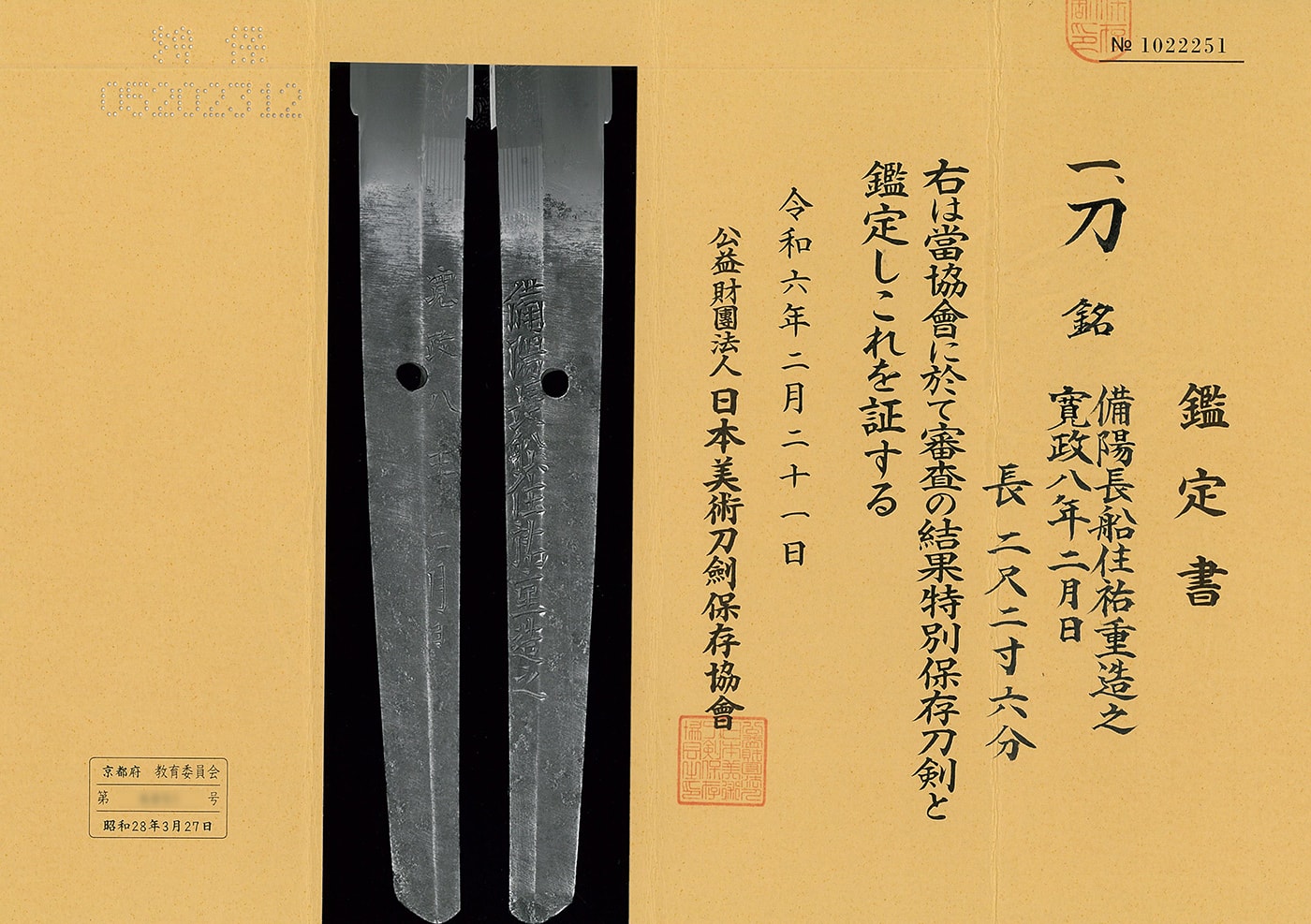
View all of Nipponto’s listings→View this item on the dealer’s site→

Previously sold — Osafune School

View all →
Choshuya
Wakizashi - by Osafune School - Yokoyama Kozuke Daijo Fujiwara SukesadaWakizashi - by Osafune School - Yokoyama Kozuke Daijo Fujiwara Sukesada
Sold

Wakizashi

ByOsafune School
SOLD
Samurai Shokai
Tokuho
Katana - Tokuho - by Osafune School - Biyo Osafune Sikeshige, dated Kansei 8th year, FebruaryKatana - Tokuho - by Osafune School - Biyo Osafune Sikeshige, dated Kansei 8th year, February
Sold

Katana

ByOsafune School
SOLD
Choshuya
Wakizashi - by Osafune School - Bizen Osafune Tsuneie, Eikyo 5th Year, 2nd Month (Ryowazamono)Wakizashi - by Osafune School - Bizen Osafune Tsuneie, Eikyo 5th Year, 2nd Month (Ryowazamono)
Sold

Wakizashi

ByOsafune School
SOLD
Tozando
Hozon
Katana - Hozon - by Osafune School - KanemitsuKatana - Hozon - by Osafune School - Kanemitsu
Sold

Katana

ByOsafune School
SOLD
Choshuya
Wakizashi - by Osafune School - O-suriage Mumei Bizen Osafune Iesuke (Wazamono), 266Wakizashi - by Osafune School - O-suriage Mumei Bizen Osafune Iesuke (Wazamono), 266
Sold

Wakizashi

ByOsafune School
SOLD
Choshuya
Tanto - by Osafune School - Mei: Bishu Osafune Norimitsu, Eikyo 12th Year, August 15th (Ryowazamono)Tanto - by Osafune School - Mei: Bishu Osafune Norimitsu, Eikyo 12th Year, August 15th (Ryowazamono)
Sold

Tantō

ByOsafune School
SOLD
Aoi Art
Tokuho
Tachi - Tokuho - by Osafune School - Bishu Osafune NorimitsuTachi - Tokuho - by Osafune School - Bishu Osafune Norimitsu
Sold

Tachi

ByOsafune School
SOLD
Choshuya
Tachi - by Osafune School - Mumei (Unsigned) Osafune TsuneieTachi - by Osafune School - Mumei (Unsigned) Osafune Tsuneie
Sold

Tachi

ByOsafune School
SOLD

More from the Osafune school

View all →
Nihonto.com
Jūyō
Tanto - Jūyō - by Osafune Kagemitsu - Juyo Tanto by Bizen KagemitsuTanto - Jūyō - by Osafune Kagemitsu - Juyo Tanto by Bizen Kagemitsu

Tantō

ByOsafune Kagemitsu
¥89,500
Aoi Art
Jūyō Bijutsuhin
Daisho - Jubi - by Osafune Nagamitsu - Dai Sho: Katana (Important Art Object): Mumei (Attributed to Nagamitsu) / Wakizashi: Mumei (Attributed to Sekishu Naotsuna)Daisho - Jubi - by Osafune Nagamitsu - Dai Sho: Katana (Important Art Object): Mumei (Attributed to Nagamitsu) / Wakizashi: Mumei (Attributed to Sekishu Naotsuna)

Daishō

ByOsafune Nagamitsu
Ask
Aoi Art
Tokuho
Wakizashi - Tokuho - by Oei-Bizen Morimitsu - Bishū Osafune Morimitsu, dated Ōei 26 (1419) - NBTHK Tokubetsu Hozon TokenWakizashi - Tokuho - by Oei-Bizen Morimitsu - Bishū Osafune Morimitsu, dated Ōei 26 (1419) - NBTHK Tokubetsu Hozon Token

Wakizashi

ByOei-Bizen Morimitsu
Starting Bid¥1,500,000
Eirakudo
Jūyō
Katana - Jūyō - by Motoshige - Motoshige - Juyo TokenKatana - Jūyō - by Motoshige - Motoshige - Juyo Token

Katana

ByMotoshige
¥6,000,000
Samurai Museum
Katana - by Osafune Kanemitsu - Antique Japanese Sword Katana Attributed to Den Osafune Kanemitsu NTHK Yushu Saku Kanteisho CertificateKatana - by Osafune Kanemitsu - Antique Japanese Sword Katana Attributed to Den Osafune Kanemitsu NTHK Yushu Saku Kanteisho Certificate

Katana

ByOsafune Kanemitsu
¥27,856
Samurai Museum
Tokuho
Wakizashi - Tokuho - by Osafune Kagemitsu - Antique Japanese Sword Wakizashi Attributed to Den Osafune Kagemitsu with NBTHK Tokubetsu Hozon CertificateWakizashi - Tokuho - by Osafune Kagemitsu - Antique Japanese Sword Wakizashi Attributed to Den Osafune Kagemitsu with NBTHK Tokubetsu Hozon Certificate

Wakizashi

ByOsafune Kagemitsu
¥3,200,000
Touken Matsumoto
Tokuho
Katana - Tokuho - by Sukesada School - Bishu Osafune SukesadaKatana - Tokuho - by Sukesada School - Bishu Osafune Sukesada

Katana

BySukesada School
¥650,000
Goushuya
Jūyō
Katana - Jūyō - by Osafune Kanemitsu - Kanemitsu with Gold Inlay InscriptionKatana - Jūyō - by Osafune Kanemitsu - Kanemitsu with Gold Inlay Inscription

Katana

ByOsafune Kanemitsu
Ask

More from the Bizen tradition

View all →
Tsuruginoya
Jūyō
Katana - Jūyō - by Fukuoka Ichimonji School - Mumei Fukuoka IchimonjiKatana - Jūyō - by Fukuoka Ichimonji School - Mumei Fukuoka Ichimonji

Katana

ByFukuoka Ichimonji School
Ask
Hyozaemon
Tokuho
Tokuho - by Fukuoka Ichimonji Yoshifusa - Naginata Naoshi Wakizashi by Fukuoka Ichimonji Yoshifusa, a Master of IchimonjiTokuho - by Fukuoka Ichimonji Yoshifusa - Naginata Naoshi Wakizashi by Fukuoka Ichimonji Yoshifusa, a Master of Ichimonji

Naginata Naoshi Wakizashi by Fukuoka Ichimonji Yoshifusa, a Master of Ichimonji

ByFukuoka Ichimonji Yoshifusa
Ask
Eirakudo
Tokuho
Katana - Tokuho - by Katayama Ichimonji School - Katayama Ichimonji - Tokubetsu Hozon TokenKatana - Tokuho - by Katayama Ichimonji School - Katayama Ichimonji - Tokubetsu Hozon Token

Katana

ByKatayama Ichimonji School
¥4,500,000
Giheiya
Hozon
Katana - Hozon - by Takada School - Mumei (Hira Takada) - 72.1cm, with Koshirae and ShirasayaKatana - Hozon - by Takada School - Mumei (Hira Takada) - 72.1cm, with Koshirae and Shirasaya

Katana

ByTakada School
¥350,000
Eirakudo
Jūyō
Katana - Jūyō - by Omiya Morikage - Ohmiya Morikage - Juyo TokenKatana - Jūyō - by Omiya Morikage - Ohmiya Morikage - Juyo Token

Katana

ByOmiya Morikage
¥4,000,000
Goushuya
Jūyō Bijutsuhin
Tachi - Jubi - by Ukai Unsho - Kumoio - From the collection of the Okouchi family, lord of Otaki Domain, Kazusa ProvinceTachi - Jubi - by Ukai Unsho - Kumoio - From the collection of the Okouchi family, lord of Otaki Domain, Kazusa Province

Tachi

ByUkai Unsho
Ask
Touken Matsumoto
Hozon
Wakizashi - Hozon - by Sukesada School - Bishu Osafune Sukesada, Eisho Juninen NigatsujitsuWakizashi - Hozon - by Sukesada School - Bishu Osafune Sukesada, Eisho Juninen Nigatsujitsu

Wakizashi

BySukesada School
¥650,000
Aoi Art
Tokuho
Katana - Tokuho - by Osafune Shigezane - Mumei (Osafune Shigezane)Katana - Tokuho - by Osafune Shigezane - Mumei (Osafune Shigezane)

Katana

ByOsafune Shigezane
Starting Bid¥1,650,000

Swords

  • Katana
  • Wakizashi
  • Tantō
  • Tachi
  • Naginata
  • Yari
  • Japanese Swords
  • Samurai Swords

Fittings

  • Tsuba
  • Fuchi-Kashira
  • Kozuka
  • Menuki
  • Sword Guards (Tsuba)

Armor

  • Kabuto
  • Samurai Armor
  • All Samurai Armor

By Certification

  • Tokujū
  • Jūyō
  • Tokuho
  • Hozon

Resources

  • Dealer Directory
  • Artist Directory
  • The Daily Kantei
  • Glossary
  • Browse All
Nihontowatch© 2026
TermsPrivacyCookiesAbout
Sold
NihontoWatch MonNihontoWatch
Market
Encyclopedia
Kantei
NihontoWatch MonNihontoWatch
Market
Encyclopedia
Kantei