Power sat in Kamakura, but taste was still made in Kyōto. The Awataguchi school’s pear-skin steel became a byword for perfection, and the Rai line supplied dignified tachi to the court, senior warriors, and the great temples alike.
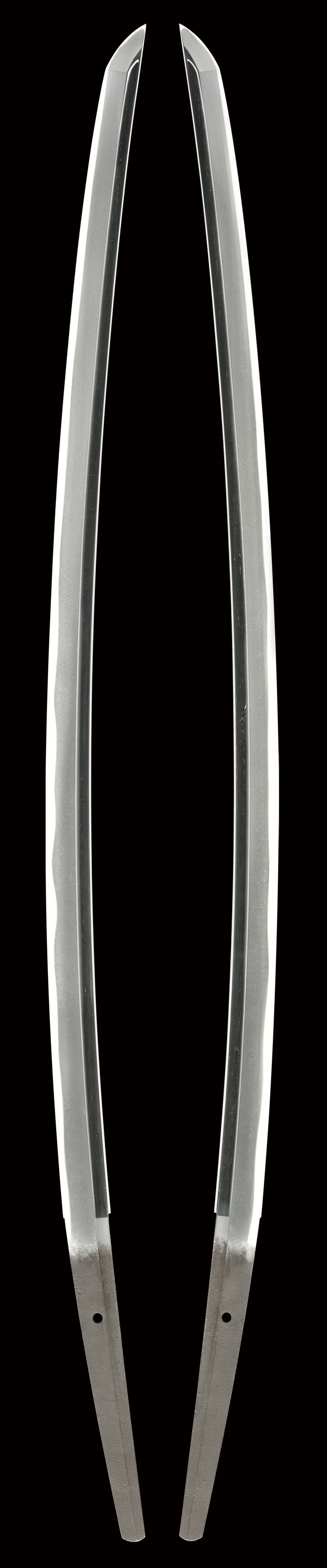
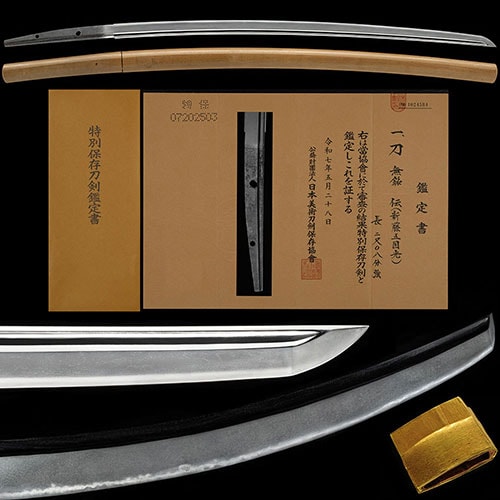
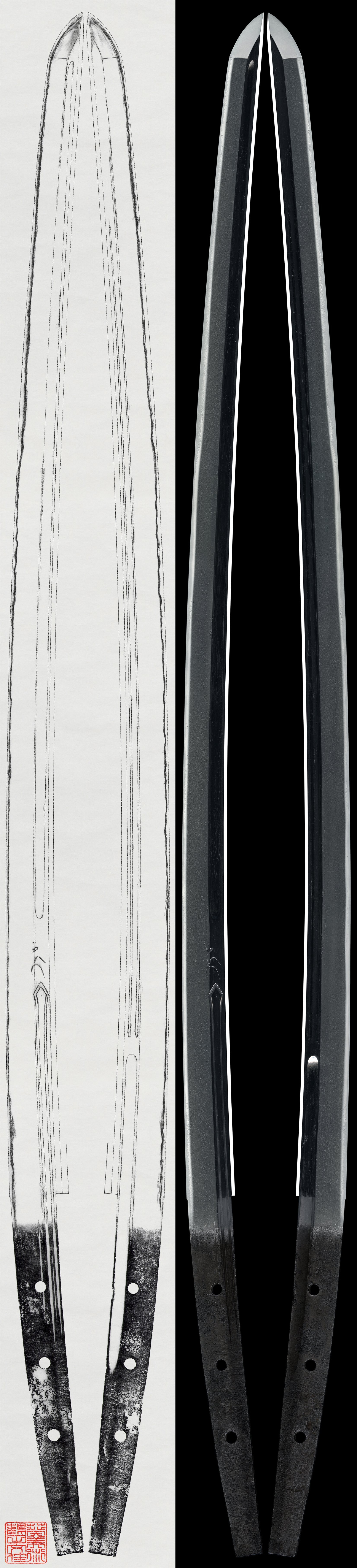
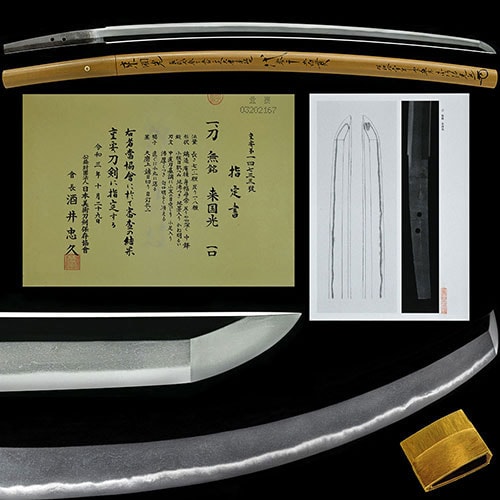
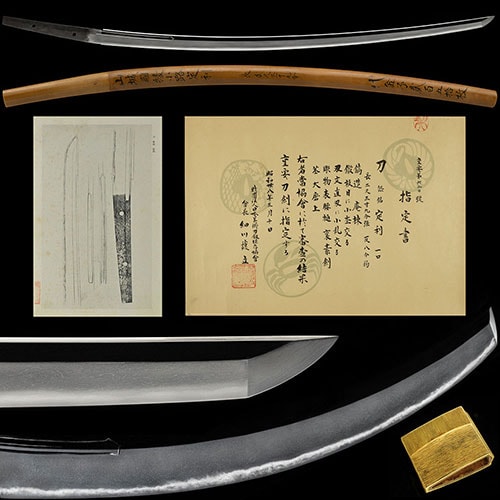
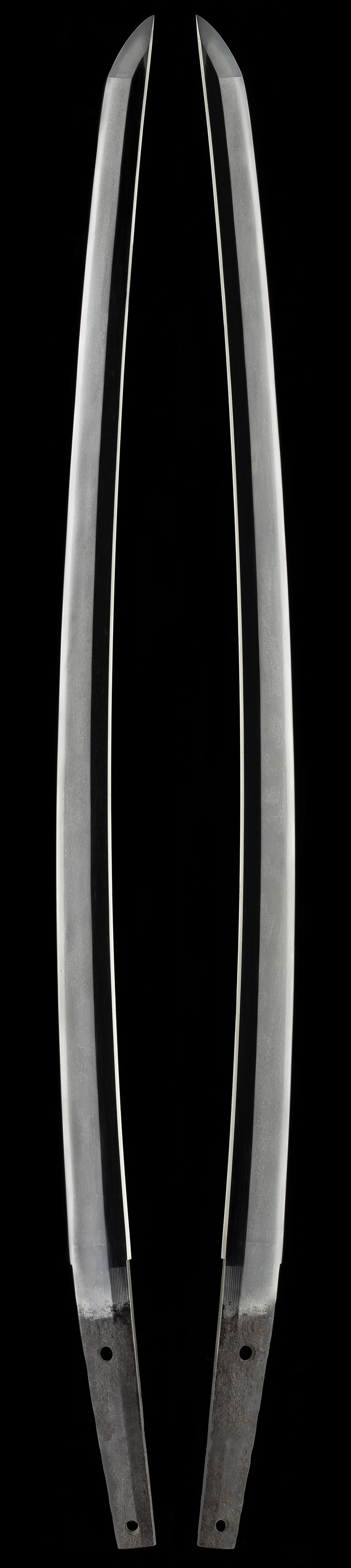
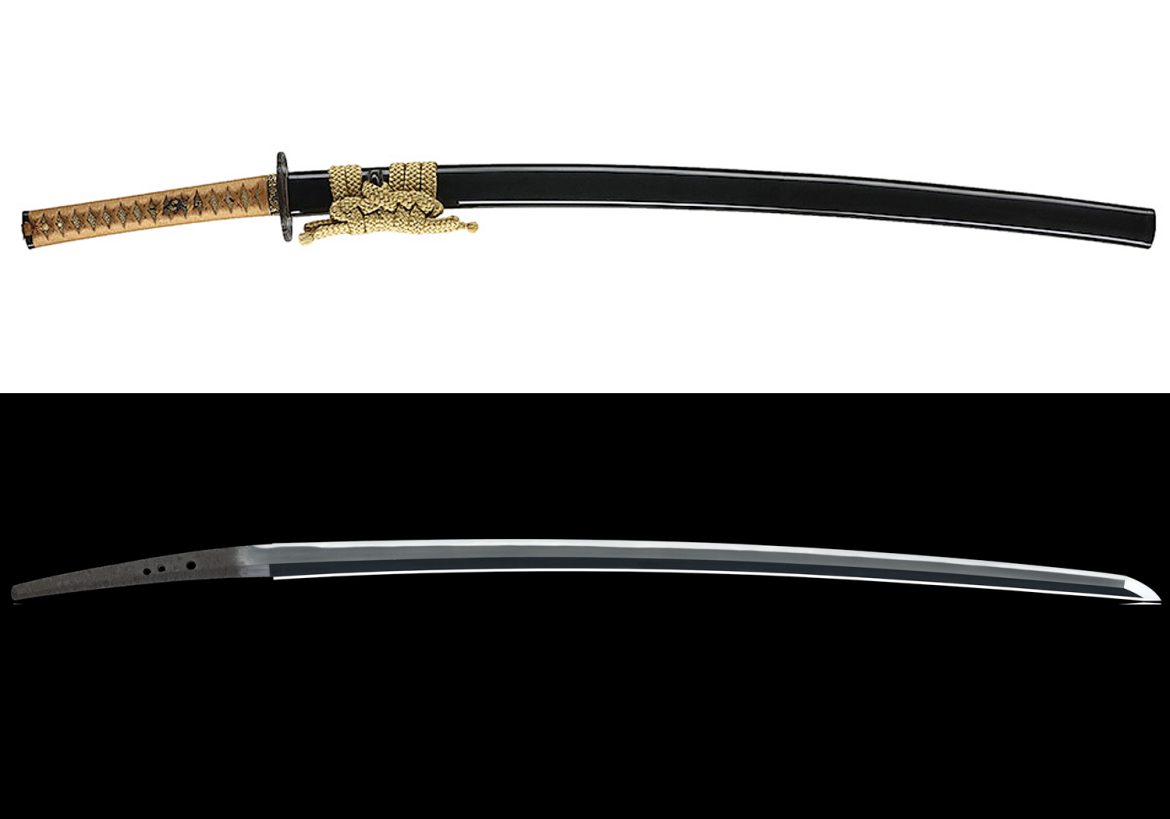
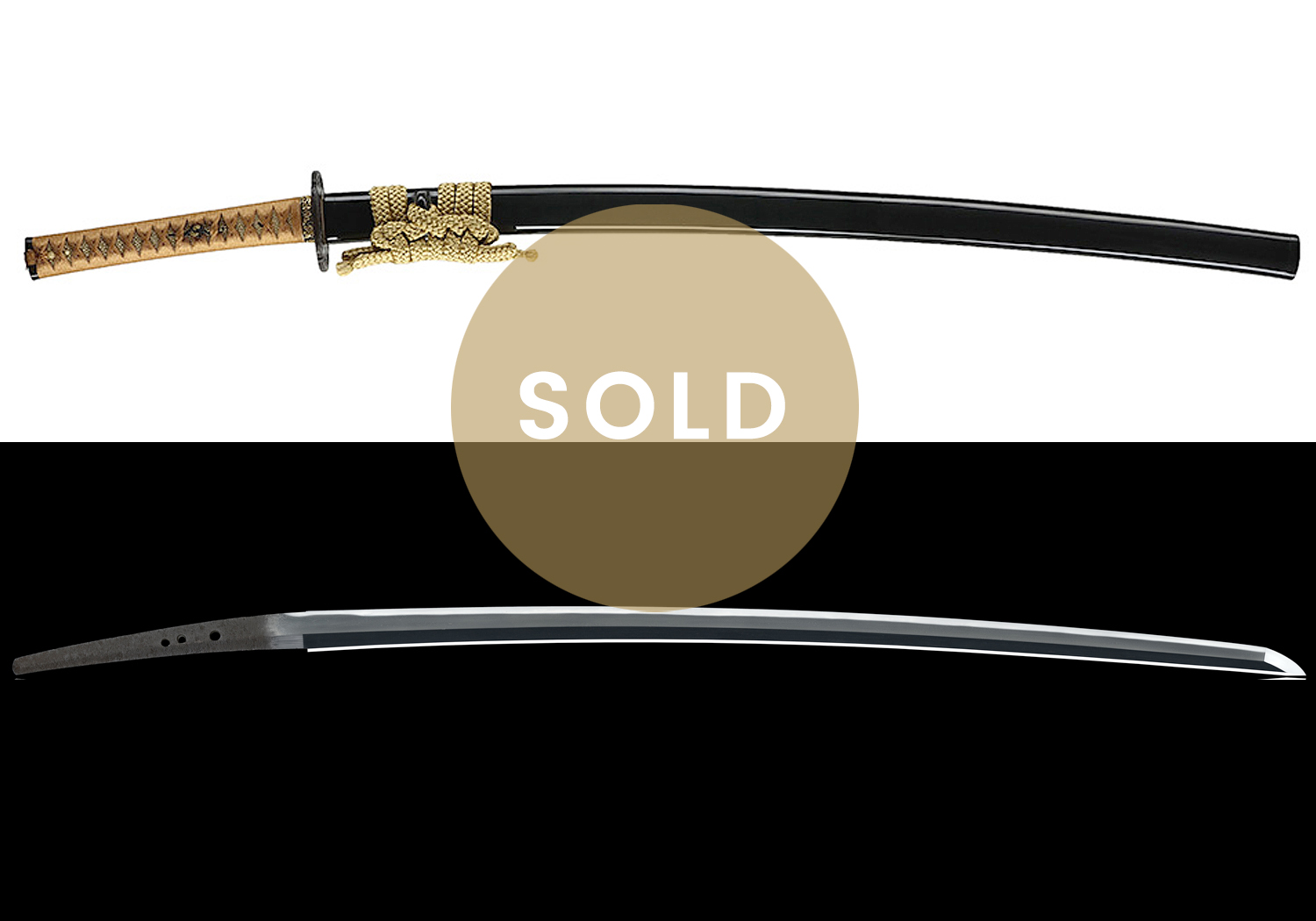
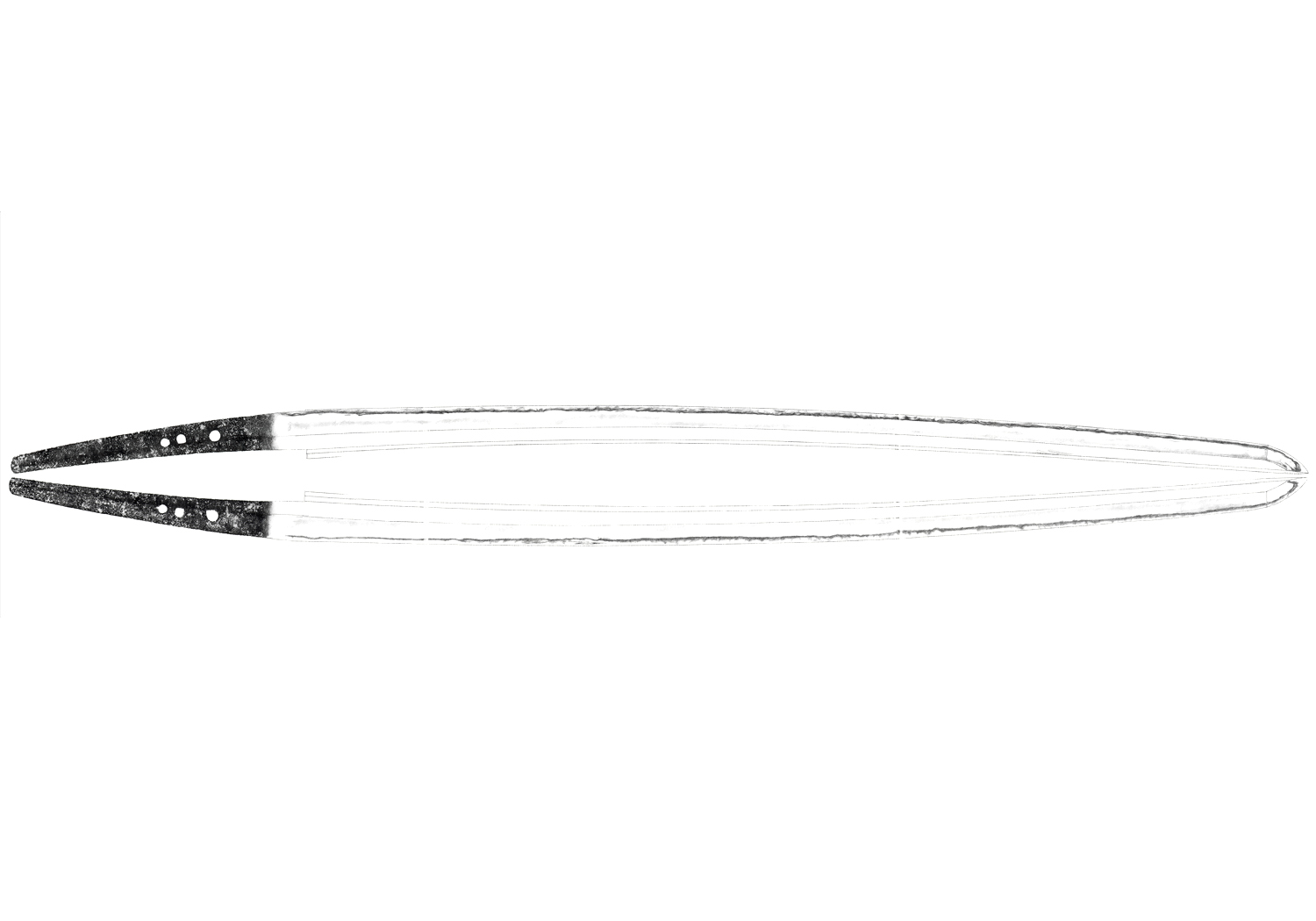
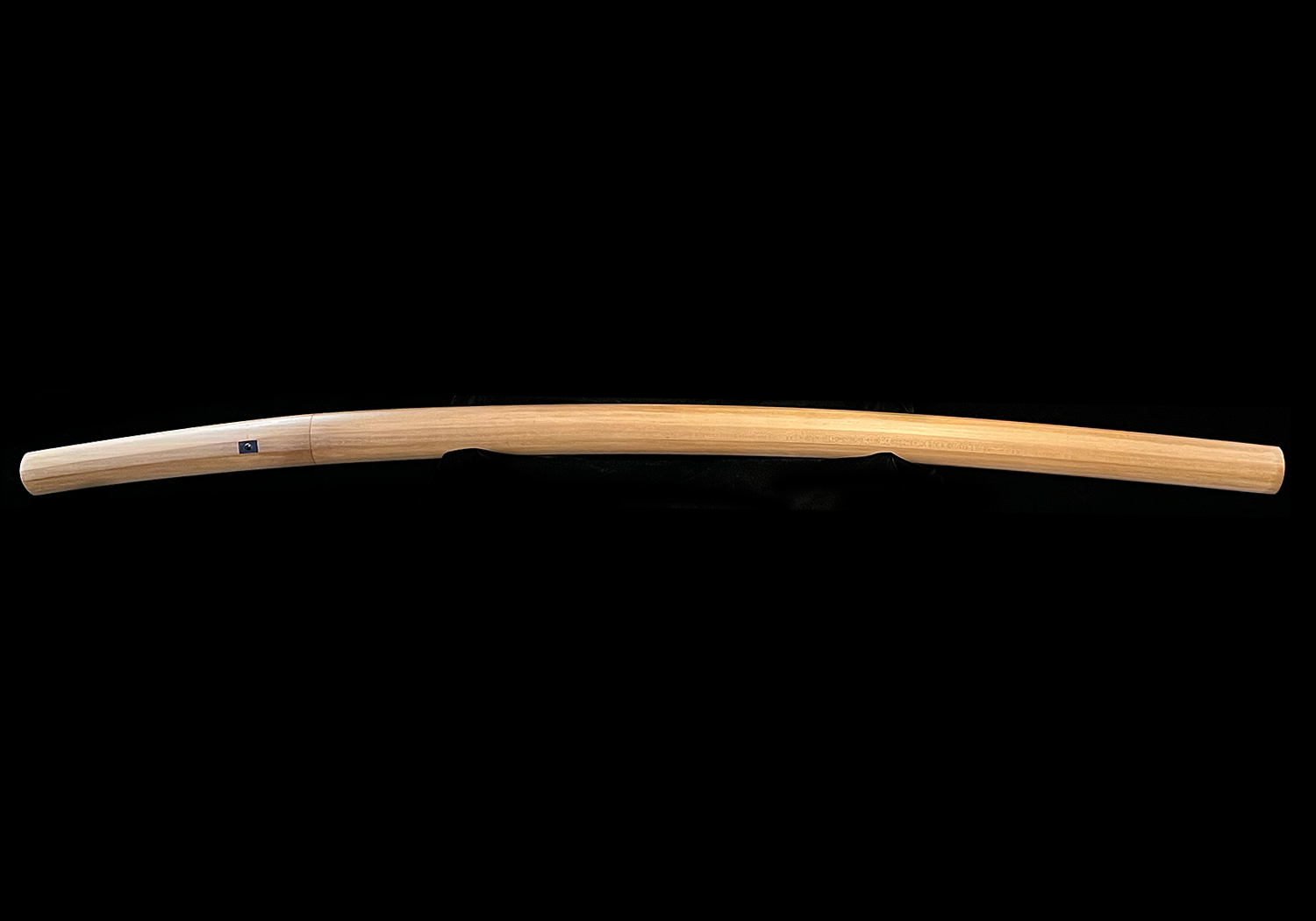
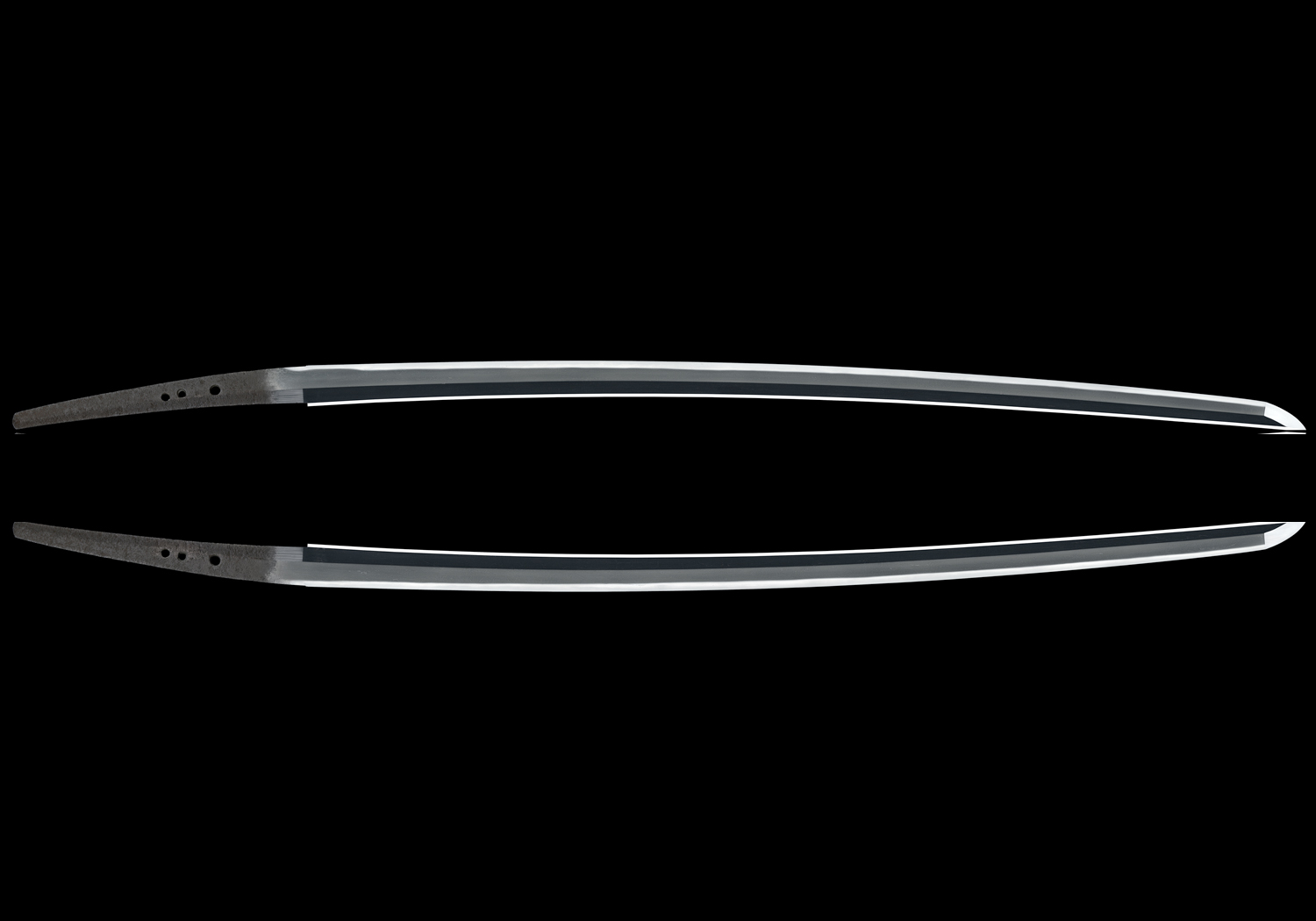
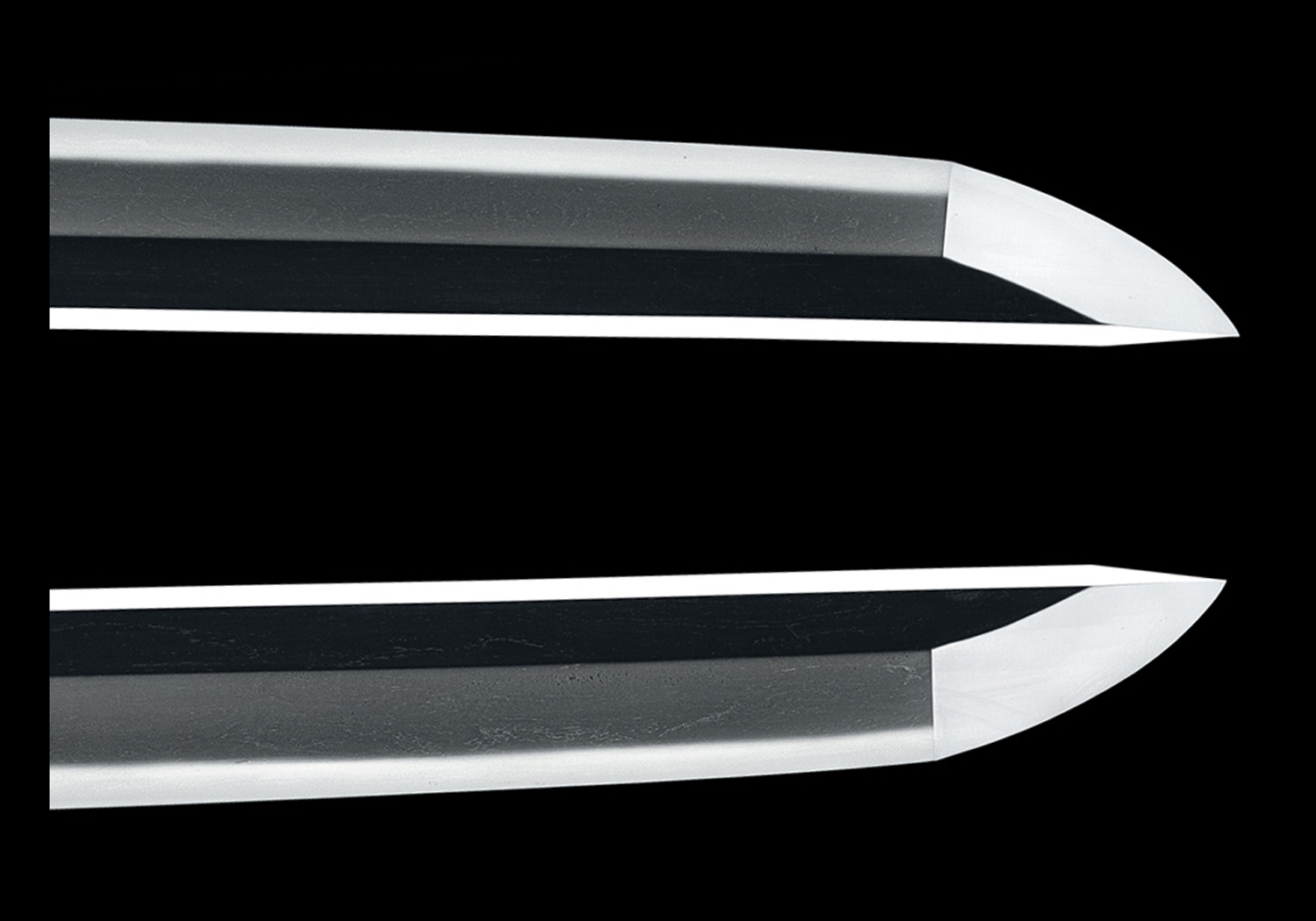
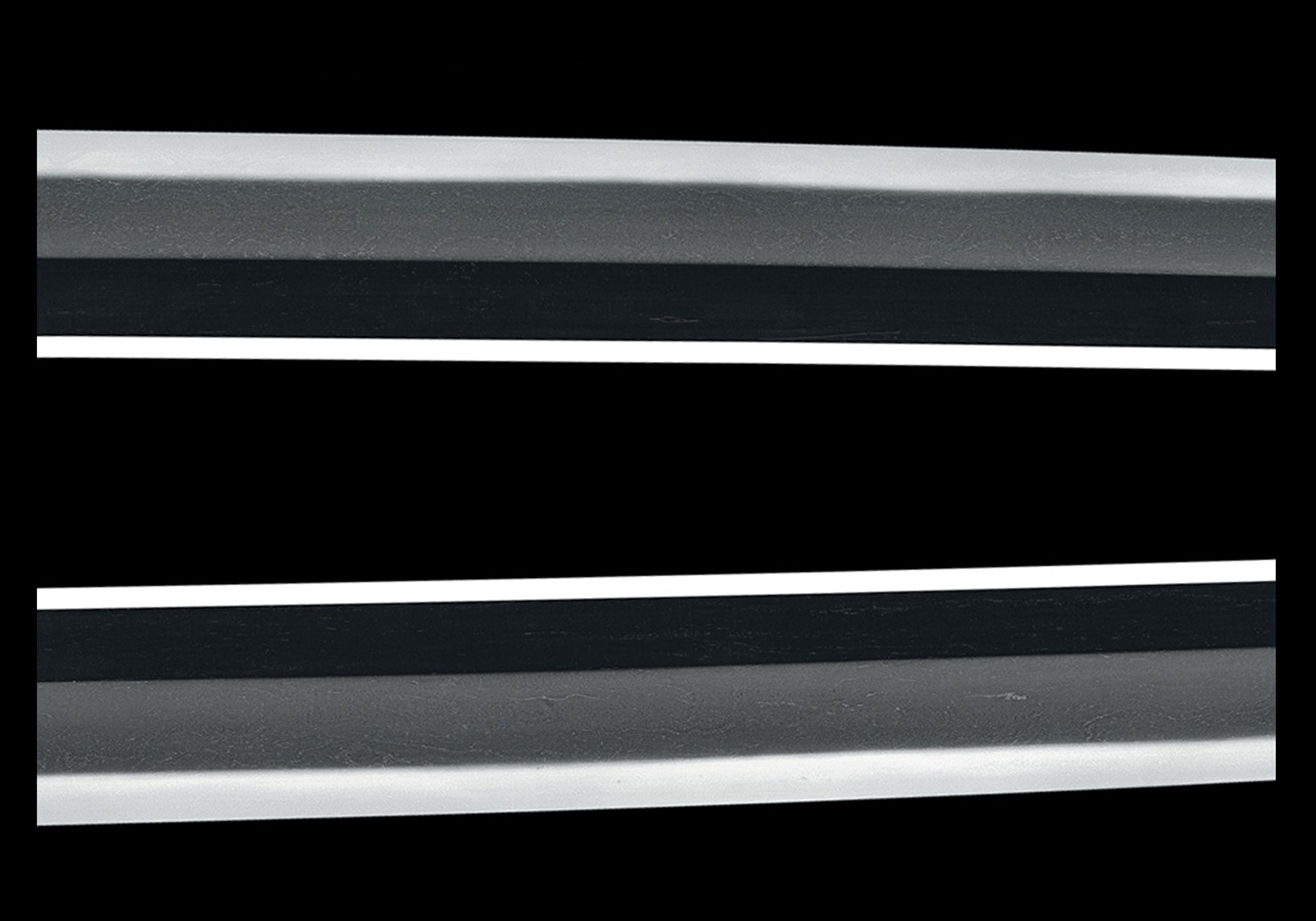
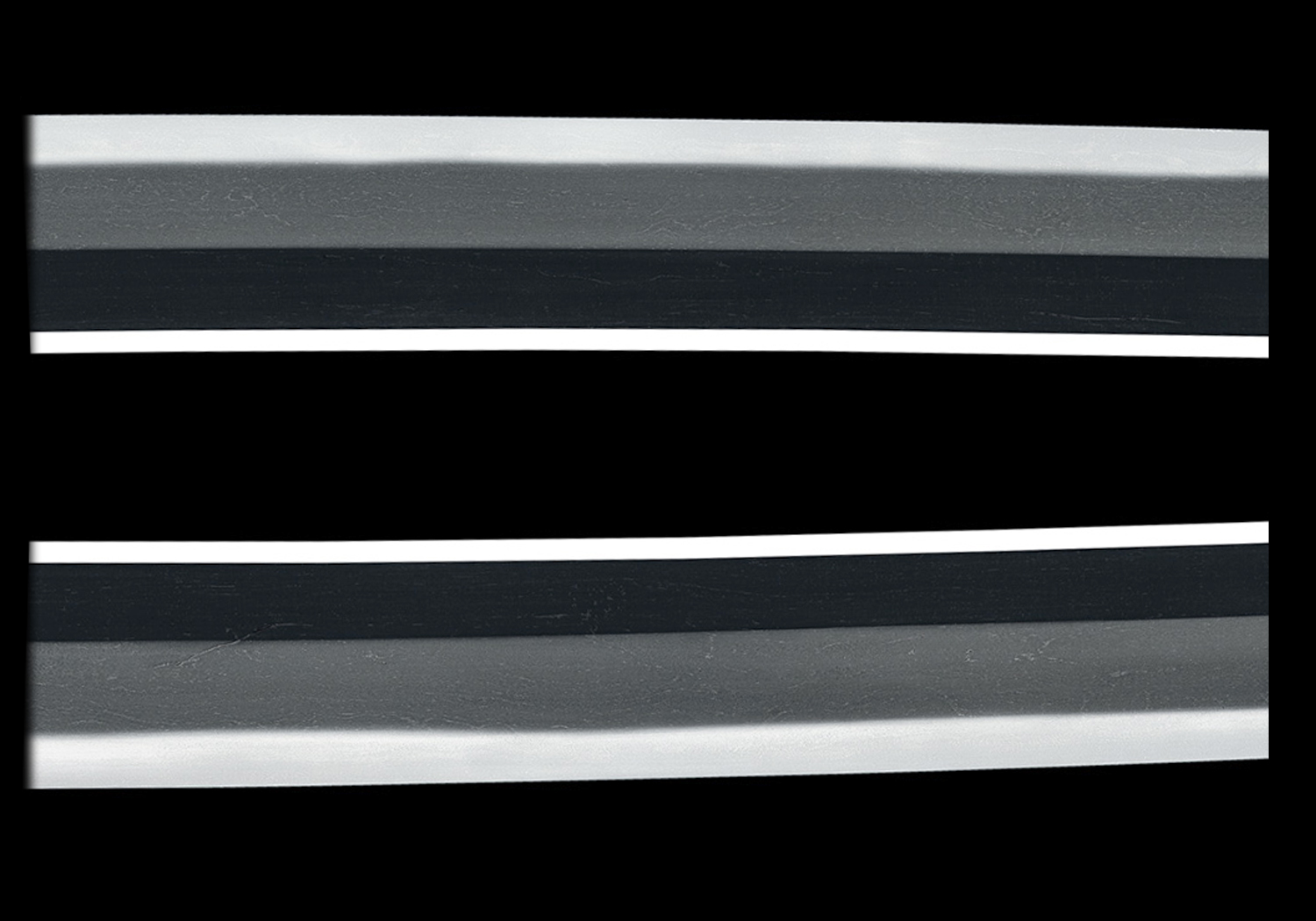
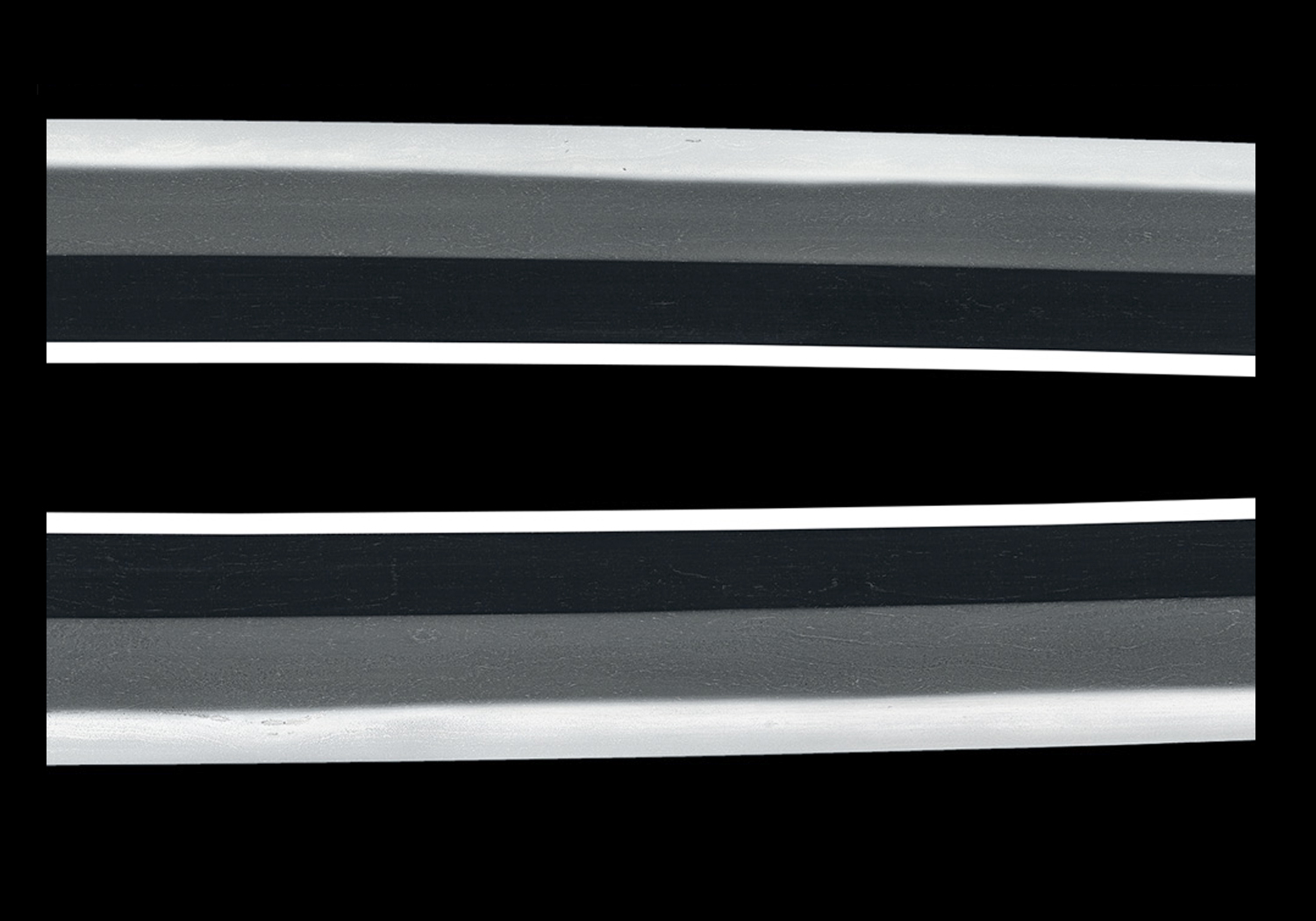
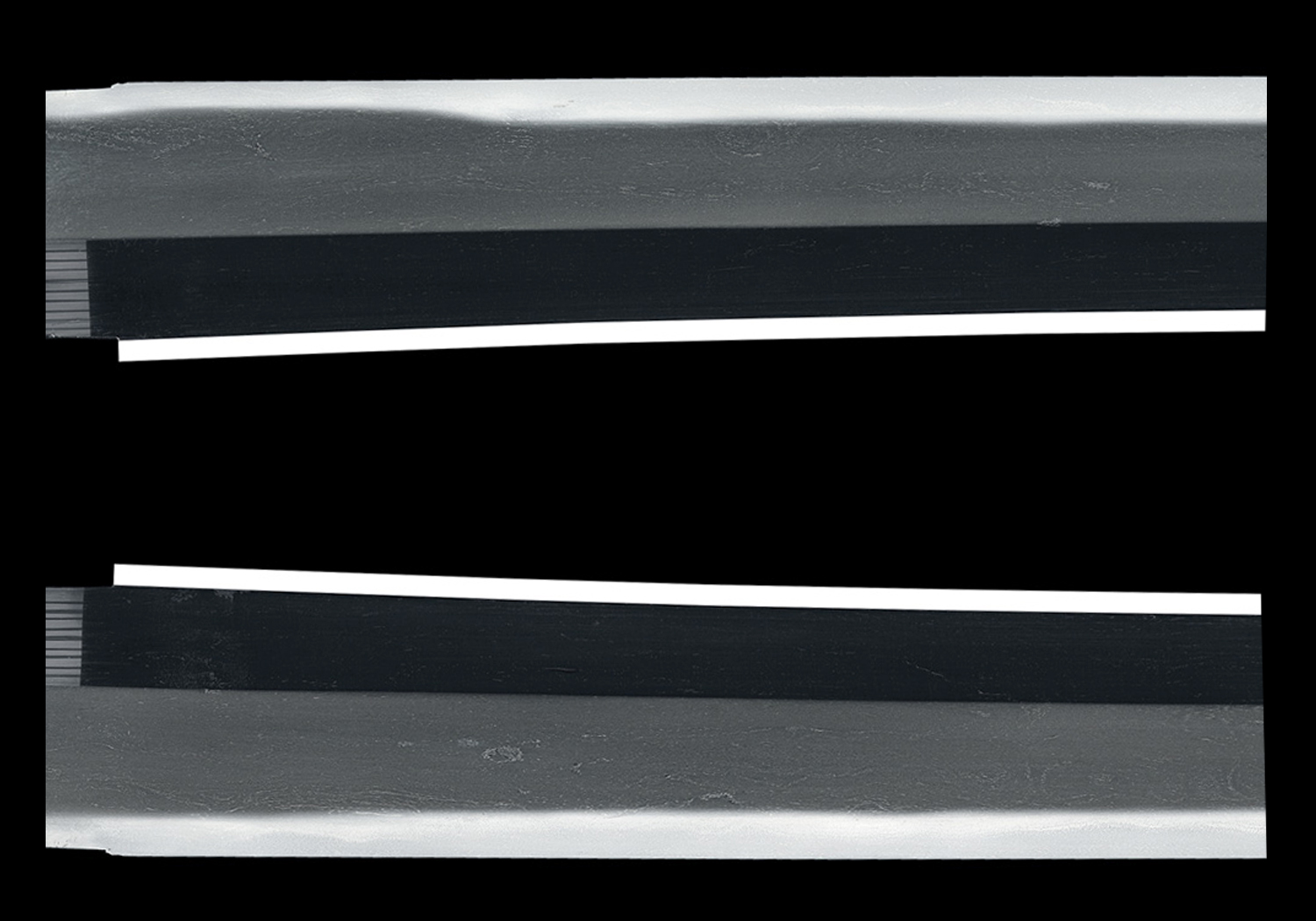
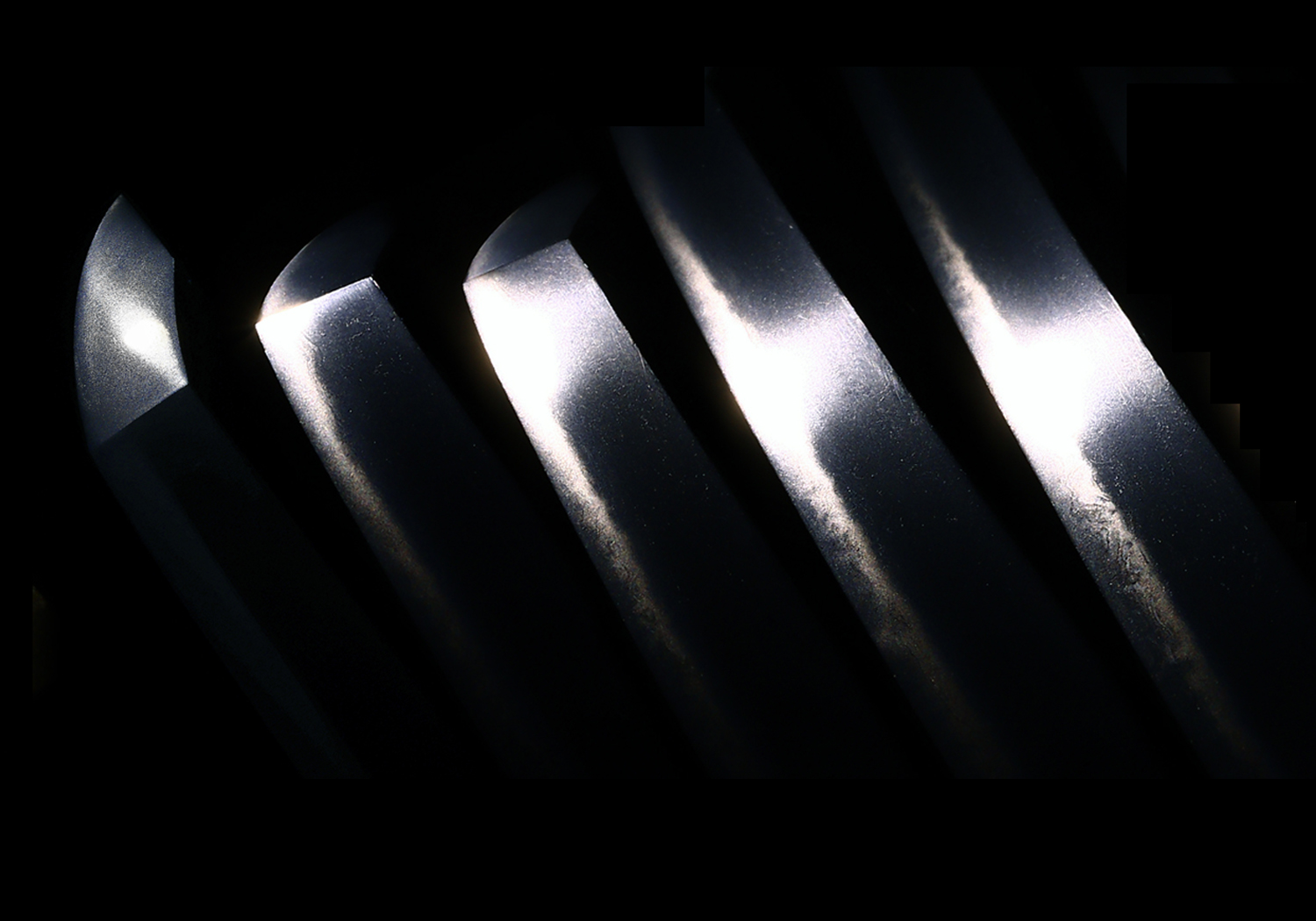
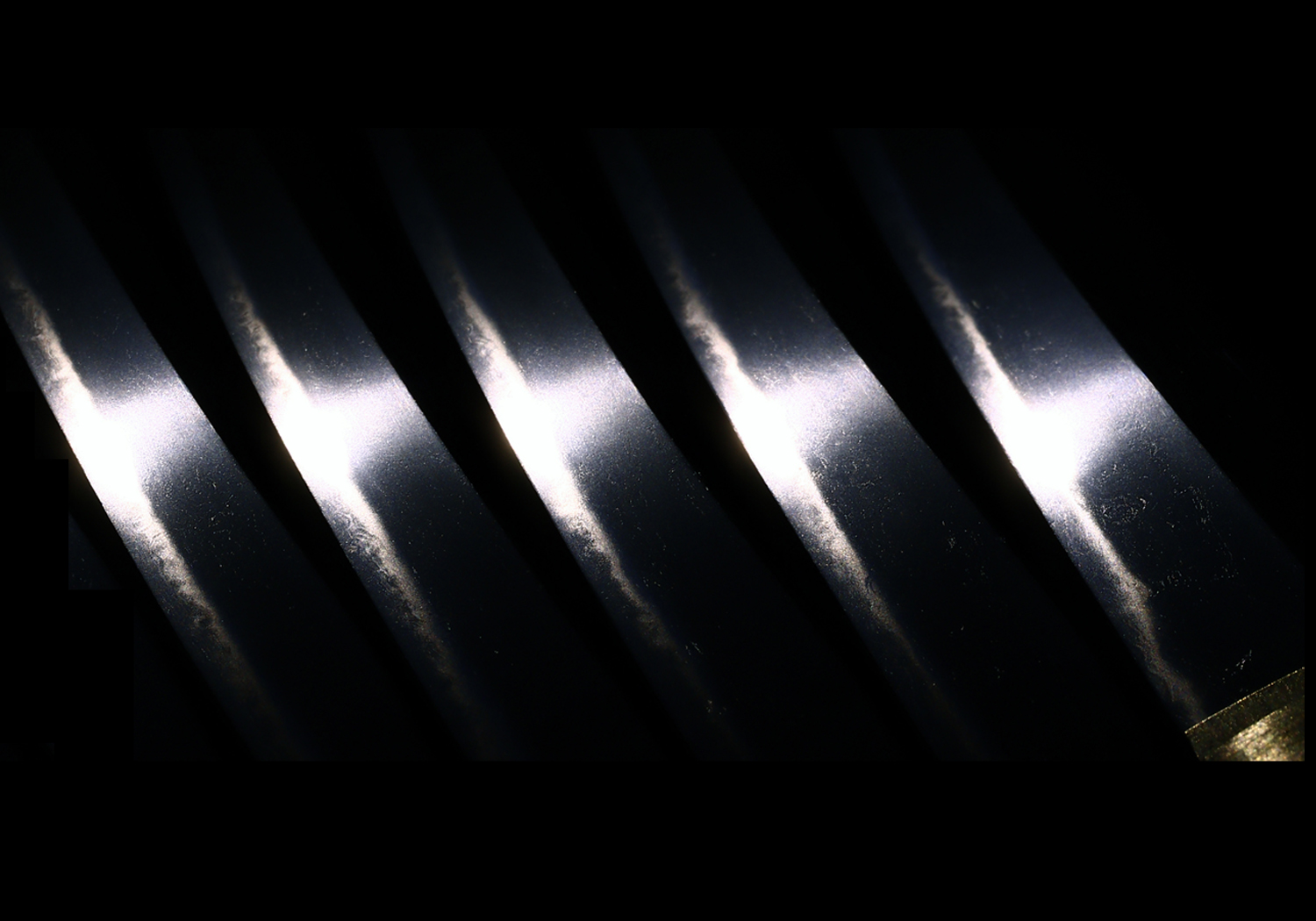
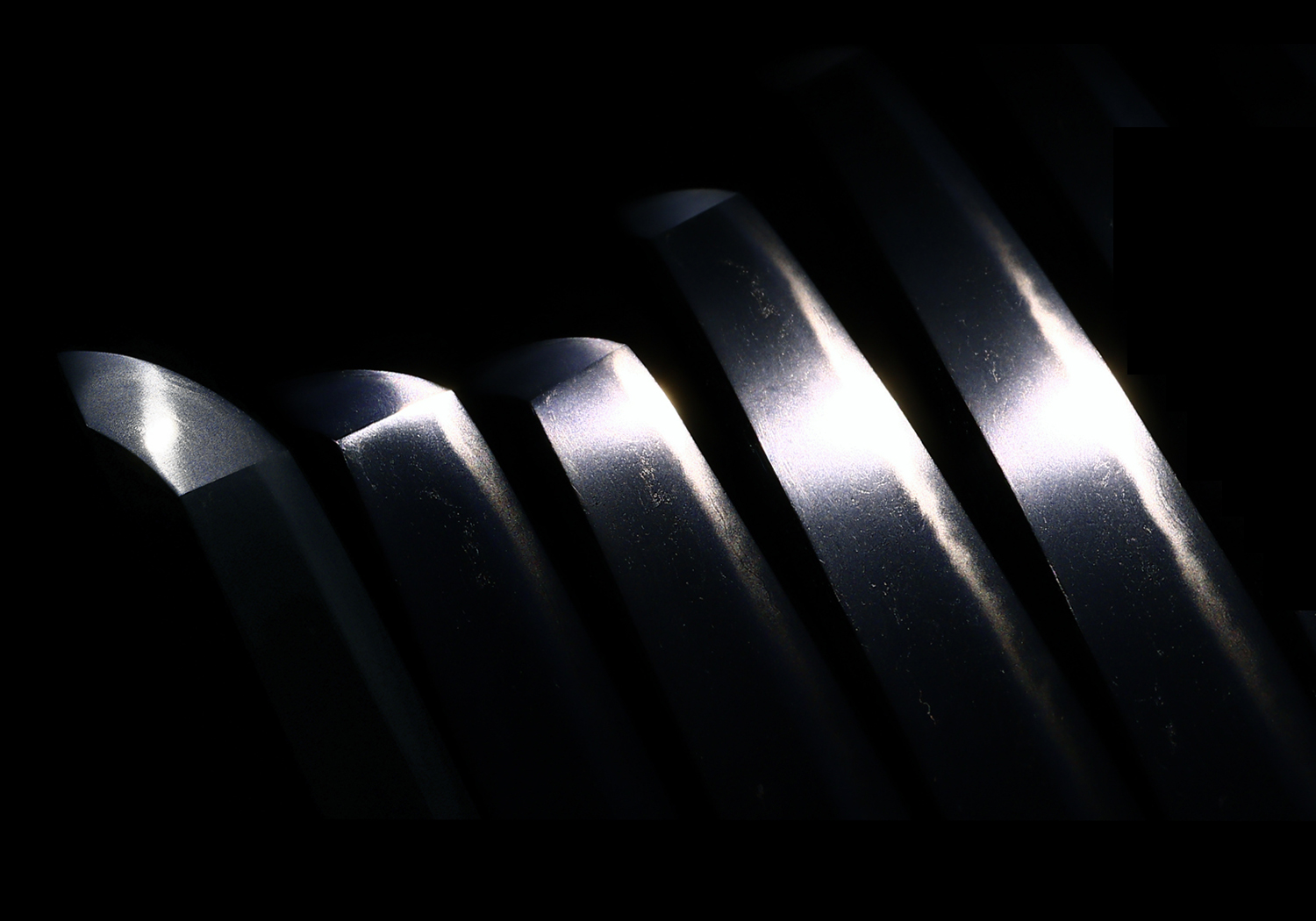
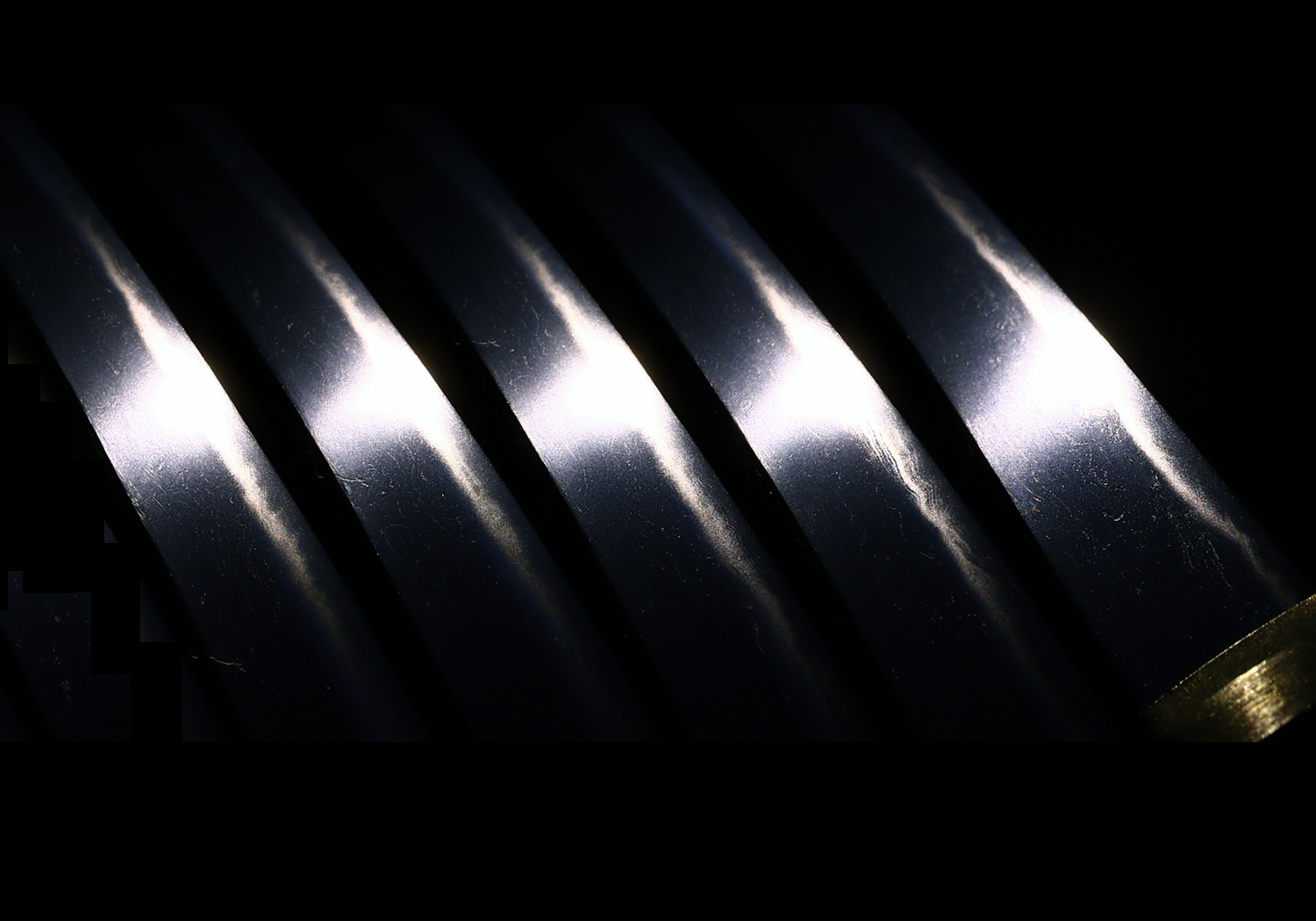
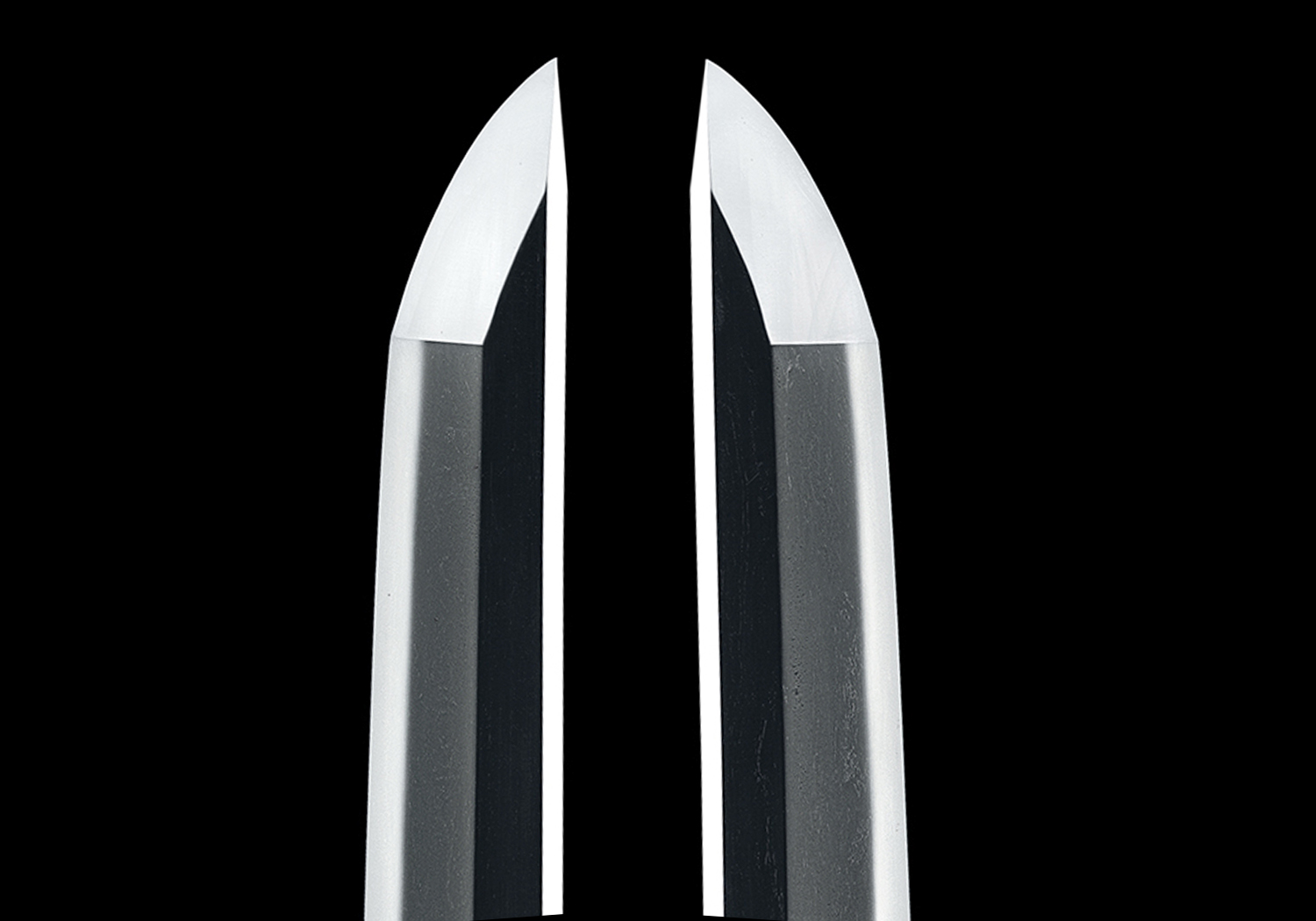
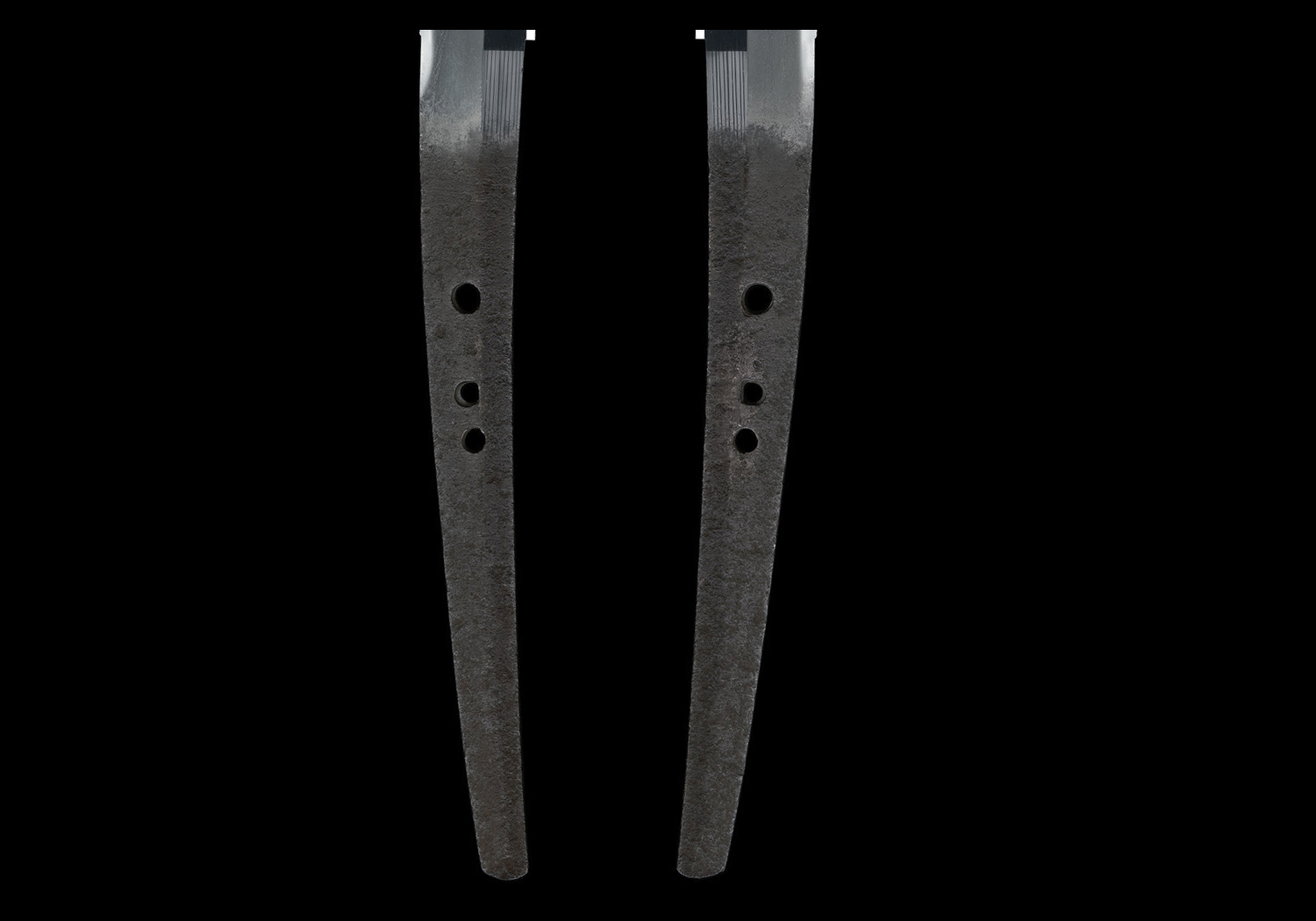
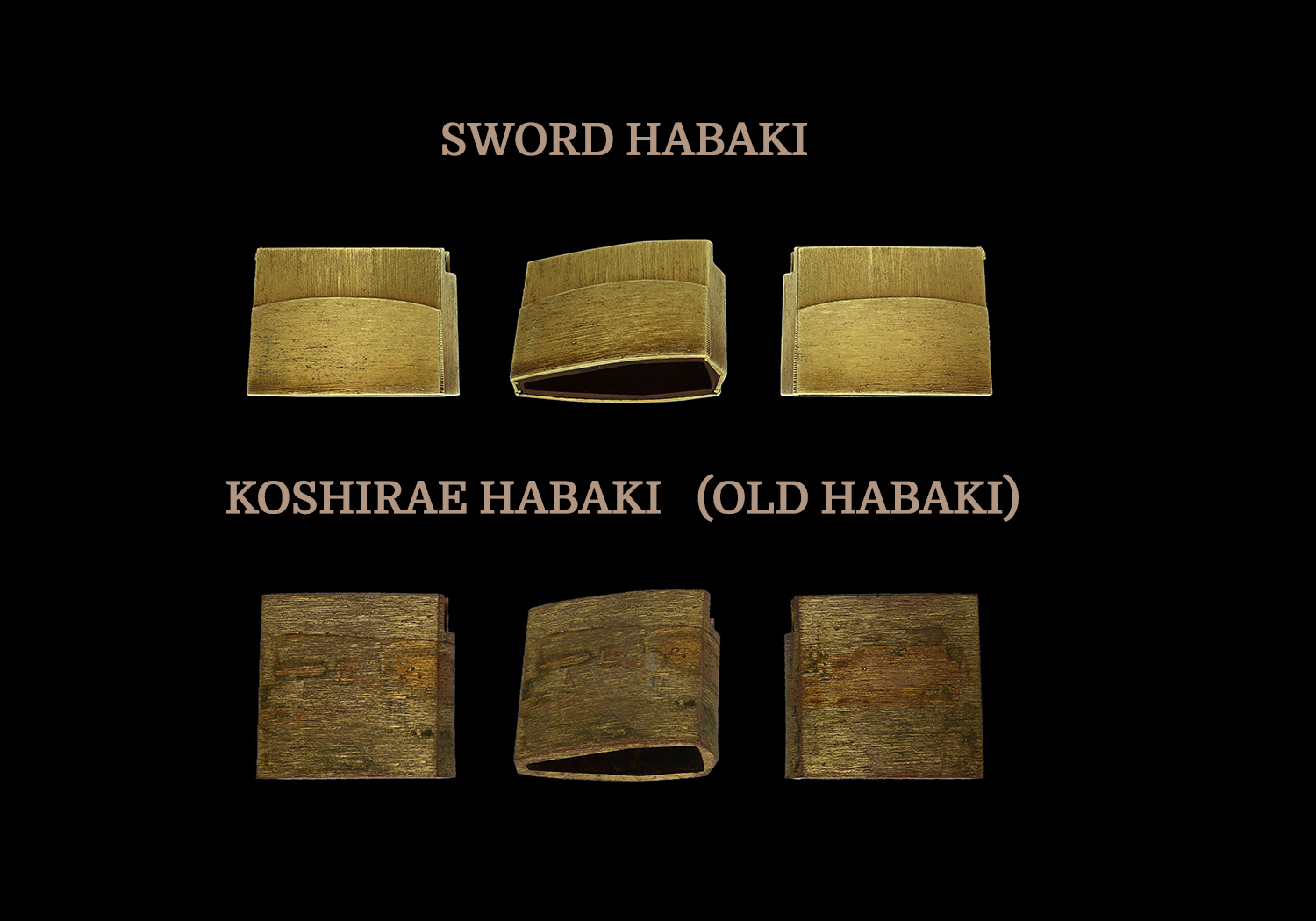
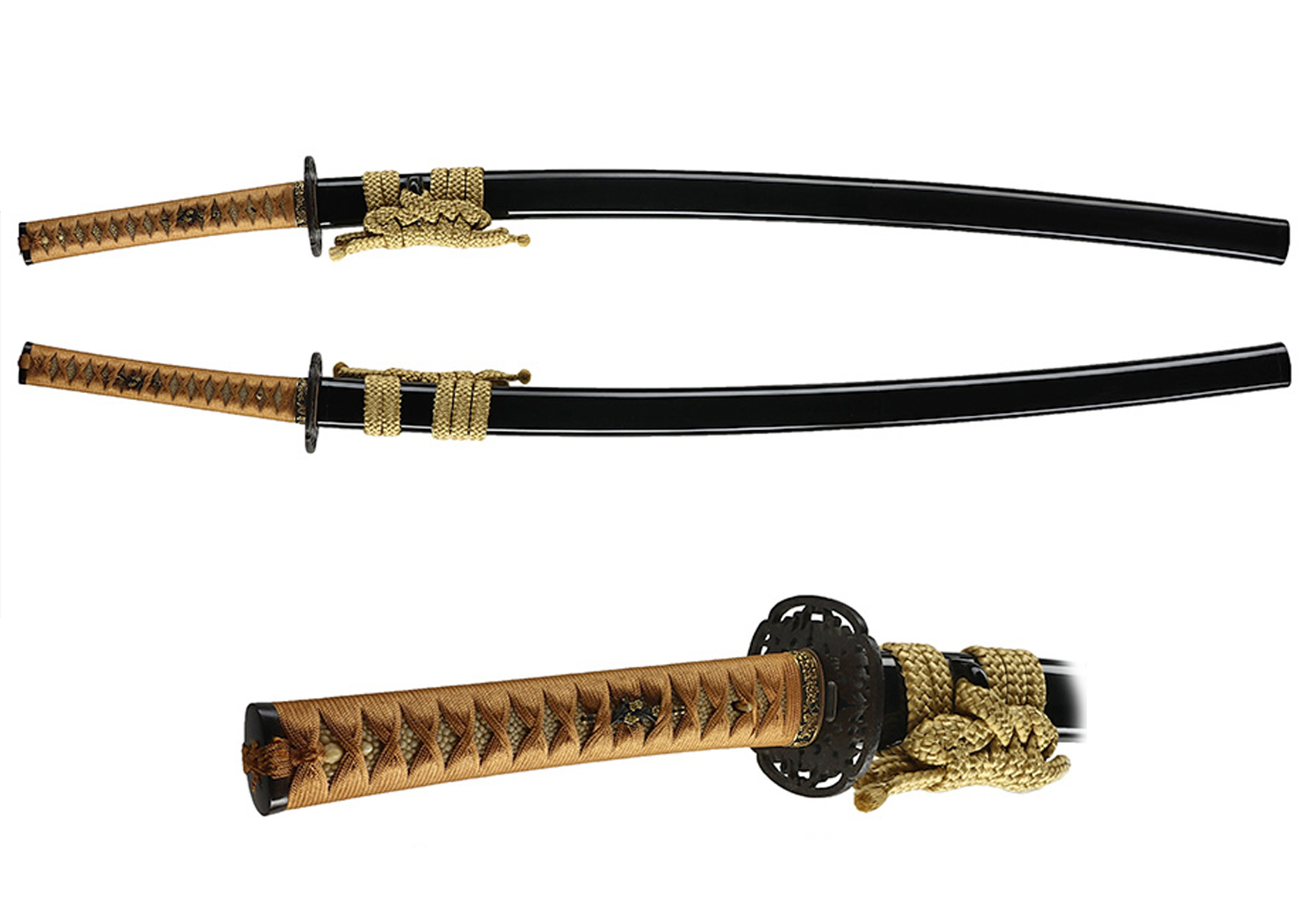
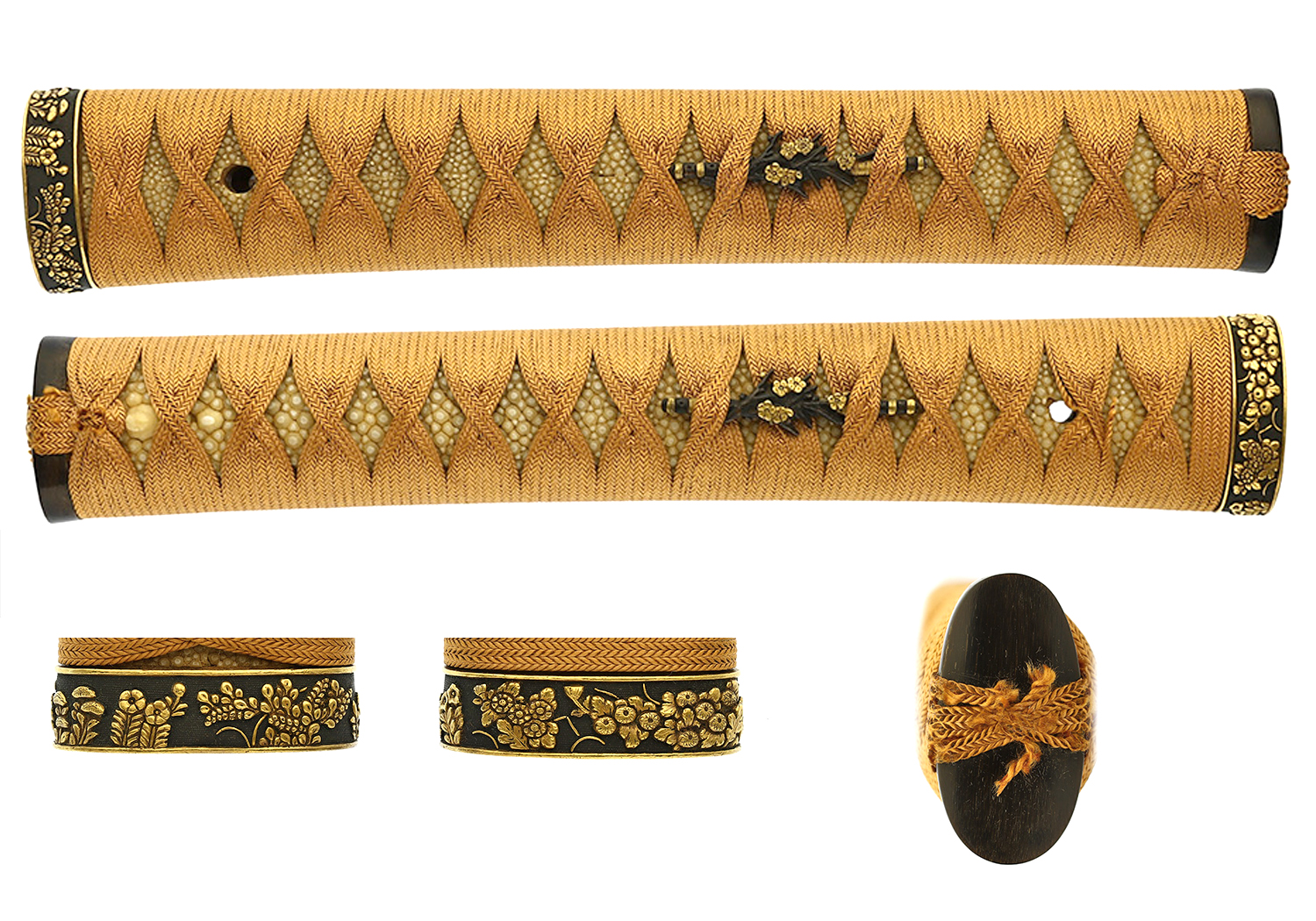
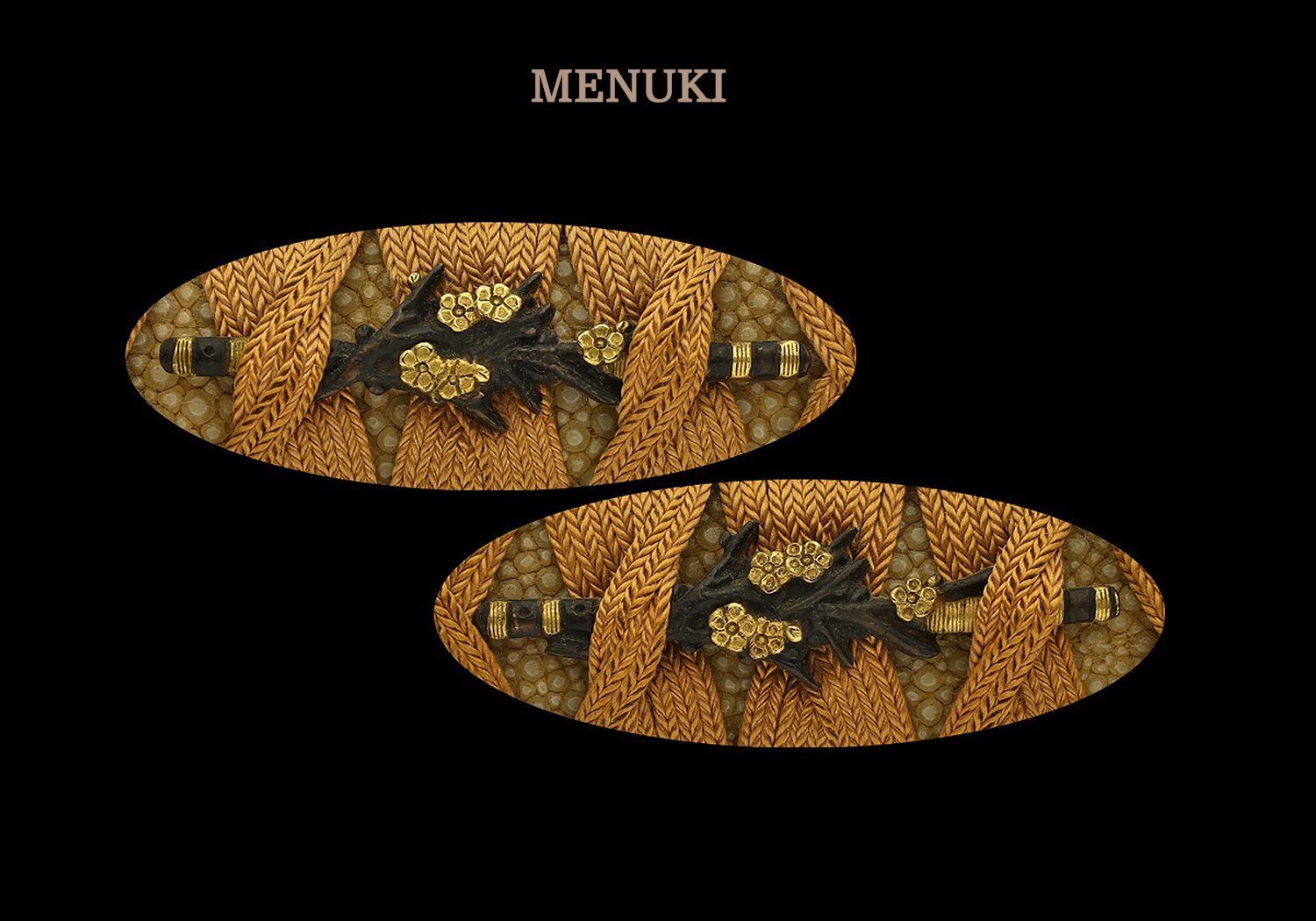
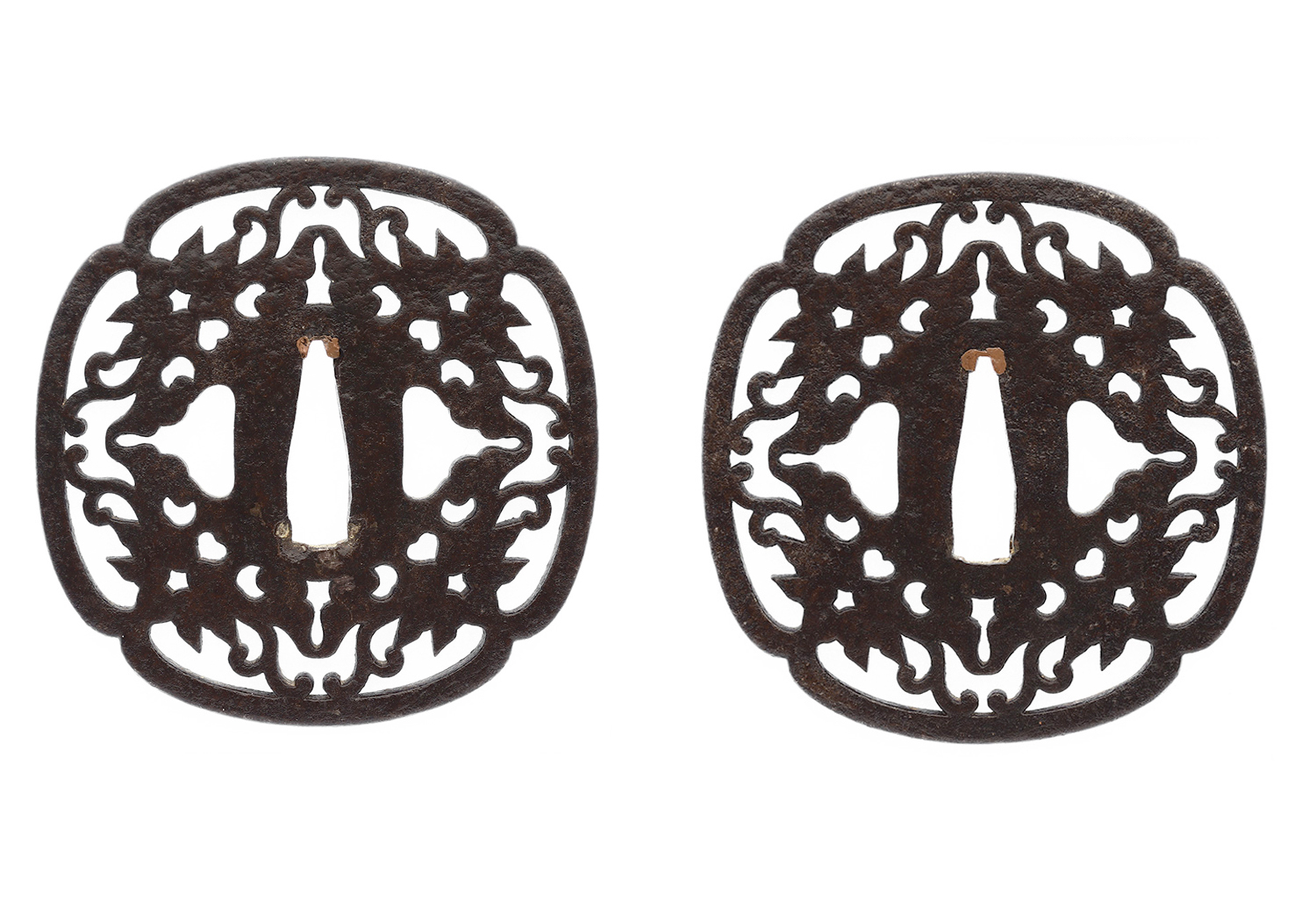
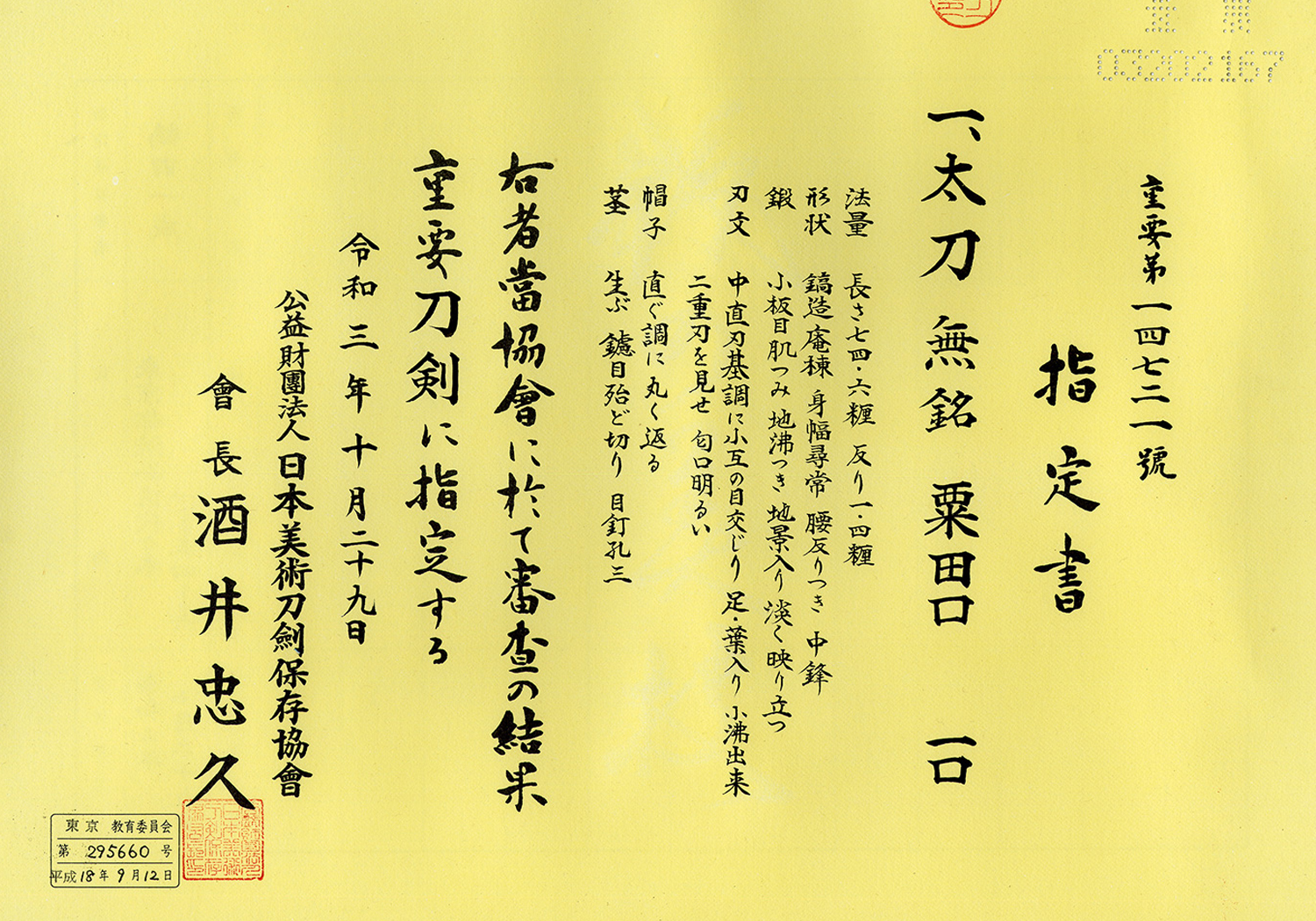
This is an ubu mumei katana attributed to the Awataguchi school, dating from the late Heian to early Kamakura period (circa 1150). It features an elegant shape with a slender mihaba, deep koshi-sori, and ko-kissaki. The blade is accompanied by an attractive koshirae and has been awarded Jûyô Tôken status by the NBTHK.
 NihontoWatch
mumei · Awataguchi · Kamakura · nagasa 74.6cm · sori 1.4cm

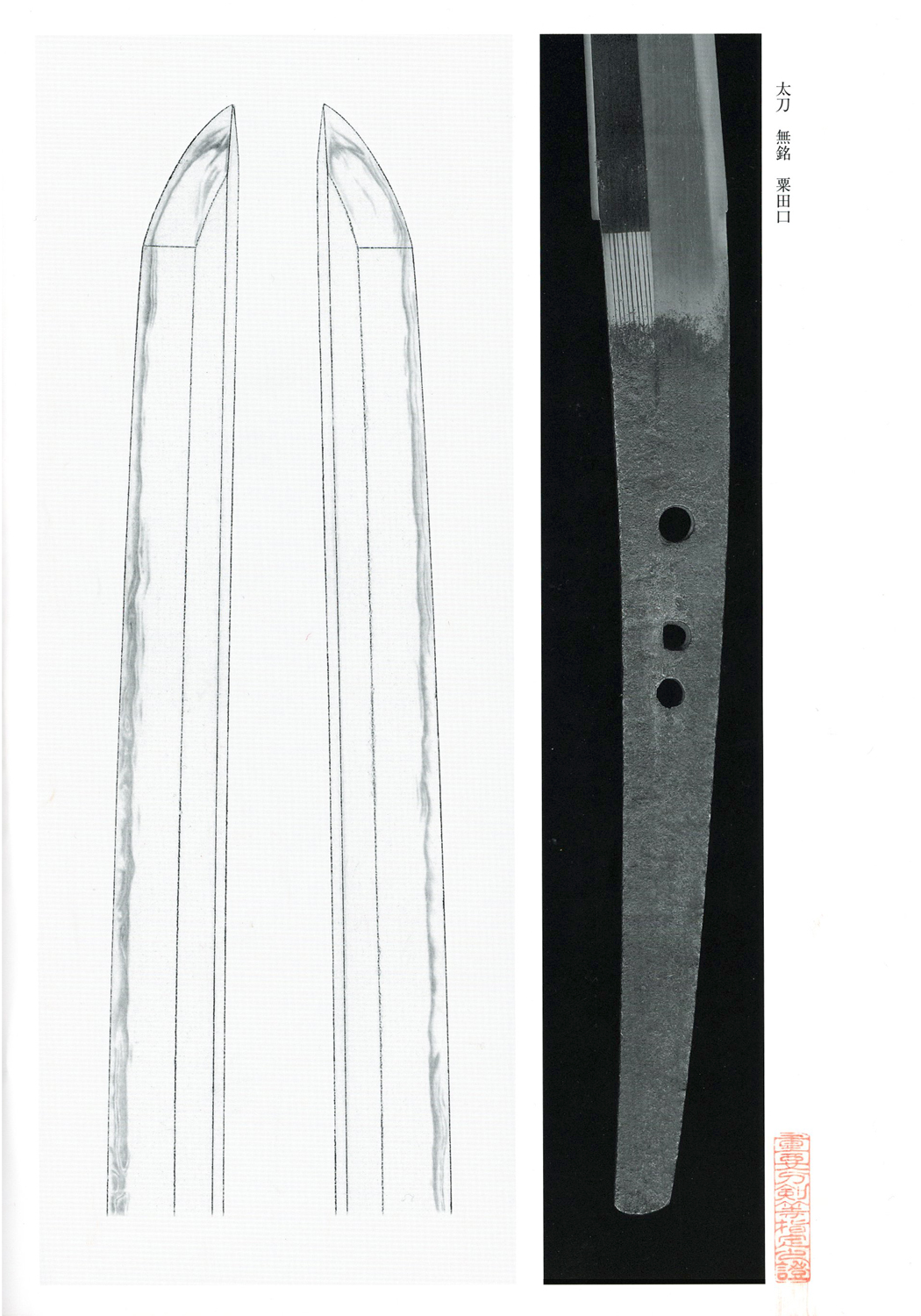
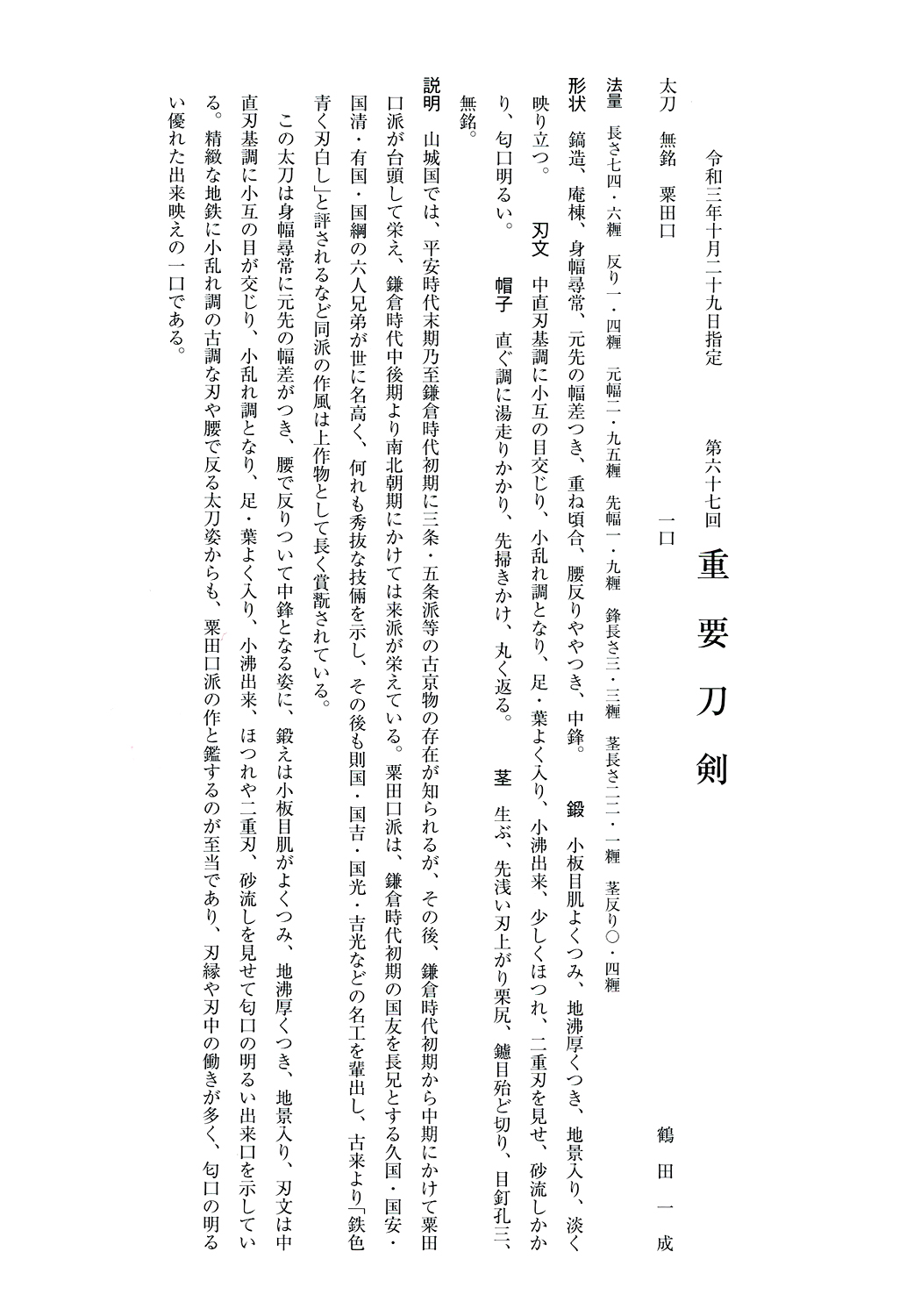
Yamashiro-den · Yamashiro
4 pieces on the market now
The steel is the first thing one learns to read in Awataguchi work: a ko-itame kneaded so tight that the surface takes on the pear-skin sheen the texts name nashiji-hada, the ji-nie dusted over it fine and even, slender chikei threading through, the whole carrying a moist luster (潤い) and a clarity that recurs in notice after notice. This is the steel of the early Yamashiro tradition at its summit. The forge stood at the foot of the Awataguchi slope in Kyoto, on the highway running toward Omi, and a community of smiths already worked there by the early Kamakura period; the tale collection Uji Shui Monogatari attests their presence, so this is a house with a documented place in the literature of its own century. The school is conventionally founded on the six brothers, Kunitomo the eldest, then Hisakuni, Kuniyasu, Kunikiyo, Arikuni and Kunitsuna, sons of the founder Kunika (also given as Kuniie). Kunitomo, Hisakuni and Kuniyasu were summoned as goban-kaji to forge on rotation at the cloistered court of the Retired Emperor Go-Toba, and Hisakuni is even transmitted as a teacher to the sovereign; that imperial patronage is the reason a slender tachi with so quiet a temper carries the authority it does. What binds the house across four generations is restraint married to refinement. Over the nashiji-hada the brothers set a calm suguha leaning into a shallow notare, mixed with ko-midare, ko-gunome and ko-choji, the nioiguchi tight and bright, ko-ashi and yo entering, kinsuji and sunagashi running within the ha; the boshi turns in a refined ko-maru that very often sweeps with hakikake. This is the opposite pole from the clove-flower flamboyance of contemporary Bizen, an edge whose interest lies in the activity within rather than the height of the pattern. Within that shared vocabulary the members are told apart by habit. Kunitomo and Kuniyasu hold to the compressed ko-midare of the founding generation, their nioiguchi clouding into urumi; Kuniyasu's linked ko-gunome picks him out alone within the school.
Kunitsuna is the divergence, a robust o-itame standing prominently over thick ji-nie, with conspicuously strong ha-nie that leans toward the Sagami manner about to be born. The later course runs through Norikuni, the bridge generation, into the tanto age of Kuniyoshi and Yoshimitsu, where the temper settles into bright suguha in fine ko-nie. Kuniyoshi's tell is the nijuba, the doubled (at times trebled) line along the ha; Yoshimitsu's is the linear kuisagari dropping of nie into the ji beneath the boshi, his suguha a narrow hoso-suguha under a bright nioiguchi. For the collector the school divides into work that can be studied and work that can be owned. Its summit, Toshiro Yoshimitsu, crowns the close of the line; paired with Shintogo Kunimitsu of Sagami as a master of the tanto and a virtuoso of suguha, and ranked in the Edo period with Masamune and Go among the Three Great Works under Heaven, he is a smith met in the great collections rather than possessed, his signed tanto the standard against which every attribution is measured. His teacher Kuniyoshi, whose nashiji-hada the texts name outright, is by Awataguchi measure not wholly beyond reach, his o-suriage mumei katana anchored on the doubled line. The house also seeded the eastern tradition: Kunitsuna's transmitted descent runs on to Shintogo Kunimitsu, the de facto founder of Soshu, whose own refined nashiji steel passes for Awataguchi until the chikei and kinsuji betray it, and from whose quiet nie-laden suguha Yukimitsu, Masamune and Norishige drew the nie-midare of the mature tradition. The refined nie-suguha the brothers fixed was likewise the wellspring the Rai masters drew from, the two hands sitting so close in the eye that gold-inlaid Rai attributions appear on blades grouped with Hisakuni. To kantei an Awataguchi blade is to read the pear-skin steel first, then the quiet nie-laden suguha, then the swept boshi, and to know which brother or pupil the habits name; to acquire one, of any generation, is among the scarcest encounters early Yamashiro affords. Learn more →
| Smith | Era | Designated |
|---|---|---|
| Yoshimitsu吉光 | 1259-1260 | 44 |
| Kuniyoshi國吉 | 1275-1278 | 51 |
| Kunitsuna國綱 | 1240-1264 | 18 |
| Hisakuni久國 | 1190-1199 | 21 |
| Norikuni則國 | 1222-1224 | 15 |
Yamashiro in the Kamakura period
Power sat in Kamakura, but taste was still made in Kyōto. The Awataguchi school’s pear-skin steel became a byword for perfection, and the Rai line supplied dignified tachi to the court, senior warriors, and the great temples alike.
A blade of top-grade workmanship and condition, formally judged to rank with a nationally recognized Important Art Object (Jūyō Bijutsuhin). Awarded only at the NBTHK’s competitive annual examination.
Of Japan’s roughly 2.5 million registered swords, only 12,307 (about 1 in 203) have ever attained Jūyō.
The NBTHK (Nihon Bijutsu Tōken Hozon Kyōkai, the Society for the Preservation of Japanese Art Swords) is a public-interest incorporated foundation founded in 1948 and supervised by Japan’s Agency for Cultural Affairs (Bunkachō); it is based at the Japanese Sword Museum in Tokyo. Its expert panels physically examine each submitted work (shinsa) and issue a certificate (kanteishō) ranking it by artistic and historical merit. NBTHK papers are the most widely recognized standard of authentication for Japanese swords and fittings.
NBTHK official siteThree-day inspection period and seven-day return period; buyer notifies by email within three days of receipt, no reason needed; full refund once item returned undamaged and unaltered.
This is an ubu mumei katana attributed to the Awataguchi school, dating from the late Heian to early Kamakura period (circa 1150). It features an elegant shape with a slender mihaba, deep koshi-sori, and ko-kissaki. The blade is accompanied by an attractive koshirae and has been awarded Jûyô Tôken status by the NBTHK.
NihontoWatchmumei · Awataguchi · Kamakura · nagasa 74.6cm · sori 1.4cm
Yamashiro-den · Yamashiro
4 pieces on the market now
The steel is the first thing one learns to read in Awataguchi work: a ko-itame kneaded so tight that the surface takes on the pear-skin sheen the texts name nashiji-hada, the ji-nie dusted over it fine and even, slender chikei threading through, the whole carrying a moist luster (潤い) and a clarity that recurs in notice after notice. This is the steel of the early Yamashiro tradition at its summit. The forge stood at the foot of the Awataguchi slope in Kyoto, on the highway running toward Omi, and a community of smiths already worked there by the early Kamakura period; the tale collection Uji Shui Monogatari attests their presence, so this is a house with a documented place in the literature of its own century. The school is conventionally founded on the six brothers, Kunitomo the eldest, then Hisakuni, Kuniyasu, Kunikiyo, Arikuni and Kunitsuna, sons of the founder Kunika (also given as Kuniie). Kunitomo, Hisakuni and Kuniyasu were summoned as goban-kaji to forge on rotation at the cloistered court of the Retired Emperor Go-Toba, and Hisakuni is even transmitted as a teacher to the sovereign; that imperial patronage is the reason a slender tachi with so quiet a temper carries the authority it does. What binds the house across four generations is restraint married to refinement. Over the nashiji-hada the brothers set a calm suguha leaning into a shallow notare, mixed with ko-midare, ko-gunome and ko-choji, the nioiguchi tight and bright, ko-ashi and yo entering, kinsuji and sunagashi running within the ha; the boshi turns in a refined ko-maru that very often sweeps with hakikake. This is the opposite pole from the clove-flower flamboyance of contemporary Bizen, an edge whose interest lies in the activity within rather than the height of the pattern. Within that shared vocabulary the members are told apart by habit. Kunitomo and Kuniyasu hold to the compressed ko-midare of the founding generation, their nioiguchi clouding into urumi; Kuniyasu's linked ko-gunome picks him out alone within the school.
Kunitsuna is the divergence, a robust o-itame standing prominently over thick ji-nie, with conspicuously strong ha-nie that leans toward the Sagami manner about to be born. The later course runs through Norikuni, the bridge generation, into the tanto age of Kuniyoshi and Yoshimitsu, where the temper settles into bright suguha in fine ko-nie. Kuniyoshi's tell is the nijuba, the doubled (at times trebled) line along the ha; Yoshimitsu's is the linear kuisagari dropping of nie into the ji beneath the boshi, his suguha a narrow hoso-suguha under a bright nioiguchi. For the collector the school divides into work that can be studied and work that can be owned. Its summit, Toshiro Yoshimitsu, crowns the close of the line; paired with Shintogo Kunimitsu of Sagami as a master of the tanto and a virtuoso of suguha, and ranked in the Edo period with Masamune and Go among the Three Great Works under Heaven, he is a smith met in the great collections rather than possessed, his signed tanto the standard against which every attribution is measured. His teacher Kuniyoshi, whose nashiji-hada the texts name outright, is by Awataguchi measure not wholly beyond reach, his o-suriage mumei katana anchored on the doubled line. The house also seeded the eastern tradition: Kunitsuna's transmitted descent runs on to Shintogo Kunimitsu, the de facto founder of Soshu, whose own refined nashiji steel passes for Awataguchi until the chikei and kinsuji betray it, and from whose quiet nie-laden suguha Yukimitsu, Masamune and Norishige drew the nie-midare of the mature tradition. The refined nie-suguha the brothers fixed was likewise the wellspring the Rai masters drew from, the two hands sitting so close in the eye that gold-inlaid Rai attributions appear on blades grouped with Hisakuni. To kantei an Awataguchi blade is to read the pear-skin steel first, then the quiet nie-laden suguha, then the swept boshi, and to know which brother or pupil the habits name; to acquire one, of any generation, is among the scarcest encounters early Yamashiro affords. Learn more →
| Smith | Era | Designated |
|---|---|---|
| Yoshimitsu吉光 | 1259-1260 | 44 |
| Kuniyoshi國吉 | 1275-1278 | 51 |
| Kunitsuna國綱 | 1240-1264 | 18 |
| Hisakuni久國 | 1190-1199 | 21 |
| Norikuni則國 | 1222-1224 | 15 |
Yamashiro in the Kamakura period
Power sat in Kamakura, but taste was still made in Kyōto. The Awataguchi school’s pear-skin steel became a byword for perfection, and the Rai line supplied dignified tachi to the court, senior warriors, and the great temples alike.
A blade of top-grade workmanship and condition, formally judged to rank with a nationally recognized Important Art Object (Jūyō Bijutsuhin). Awarded only at the NBTHK’s competitive annual examination.
Of Japan’s roughly 2.5 million registered swords, only 12,307 (about 1 in 203) have ever attained Jūyō.
The NBTHK (Nihon Bijutsu Tōken Hozon Kyōkai, the Society for the Preservation of Japanese Art Swords) is a public-interest incorporated foundation founded in 1948 and supervised by Japan’s Agency for Cultural Affairs (Bunkachō); it is based at the Japanese Sword Museum in Tokyo. Its expert panels physically examine each submitted work (shinsa) and issue a certificate (kanteishō) ranking it by artistic and historical merit. NBTHK papers are the most widely recognized standard of authentication for Japanese swords and fittings.
NBTHK official siteThree-day inspection period and seven-day return period; buyer notifies by email within three days of receipt, no reason needed; full refund once item returned undamaged and unaltered.