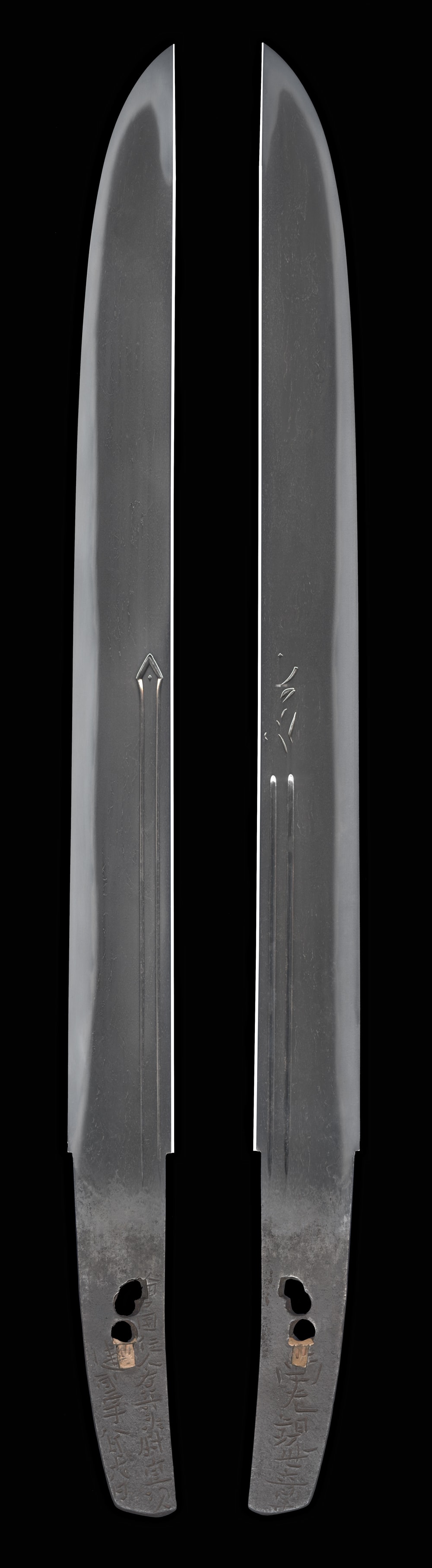
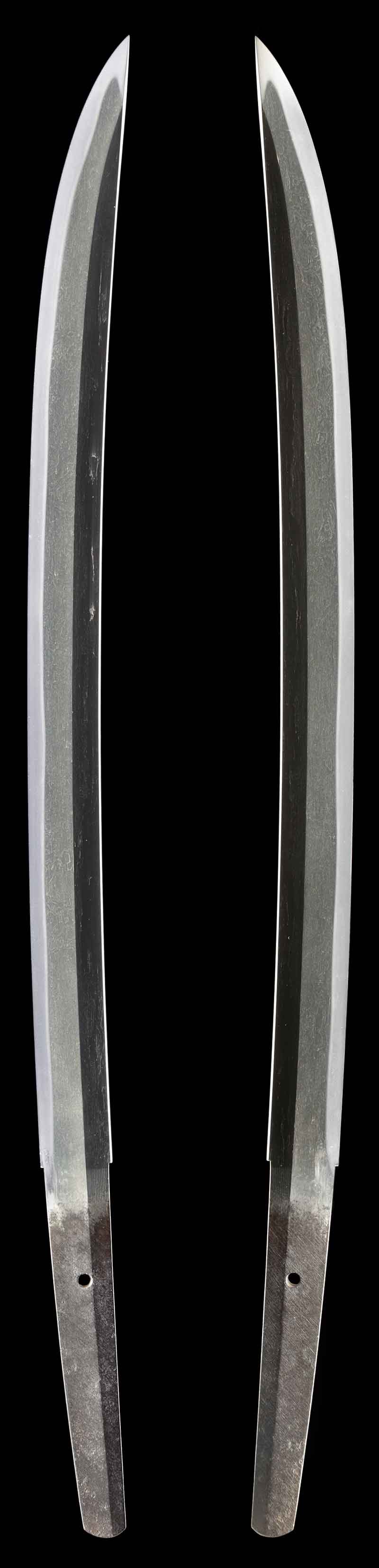
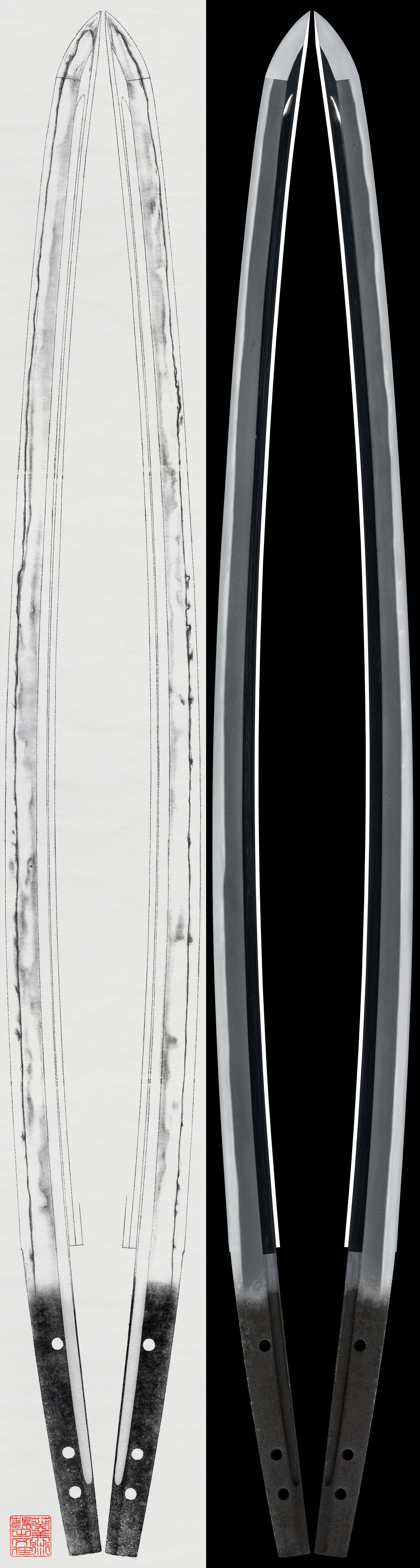
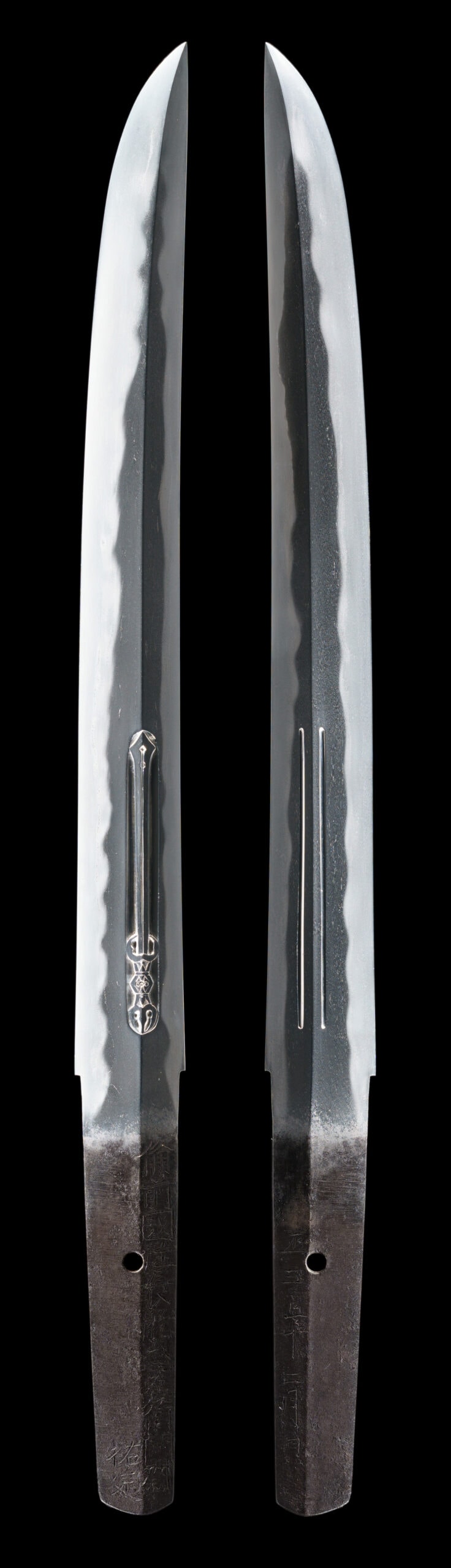
Sixty years of war between two courts drove blades long and broad, and Osafune met the demand: Kanemitsu and Chōgi led forges serving the provincial warriors who did the fighting, while Sōshū influence arrived with the armies to create Sōden-Bizen.
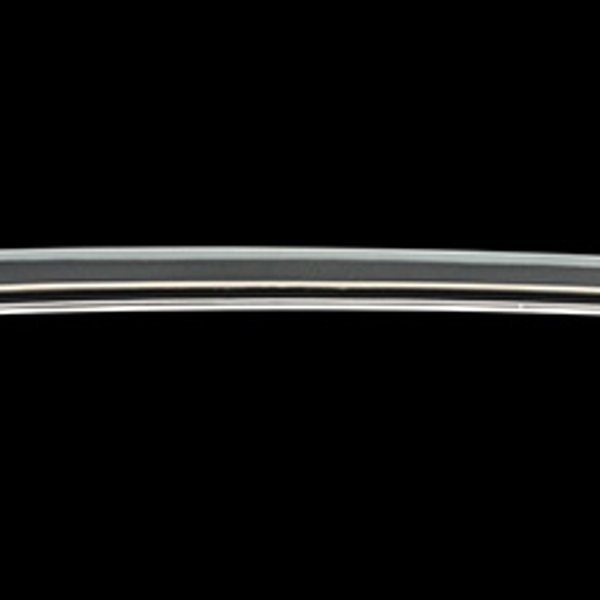
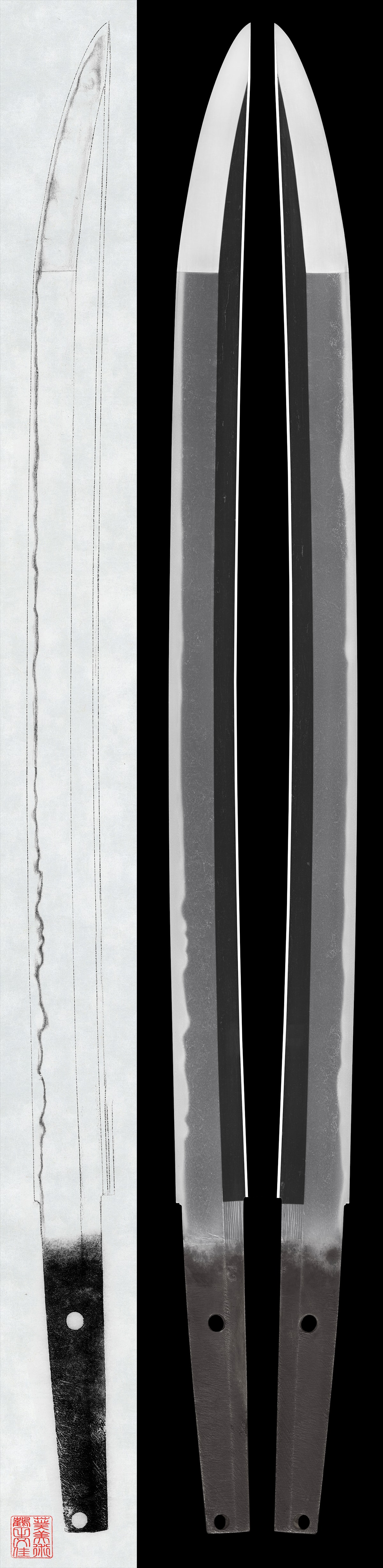
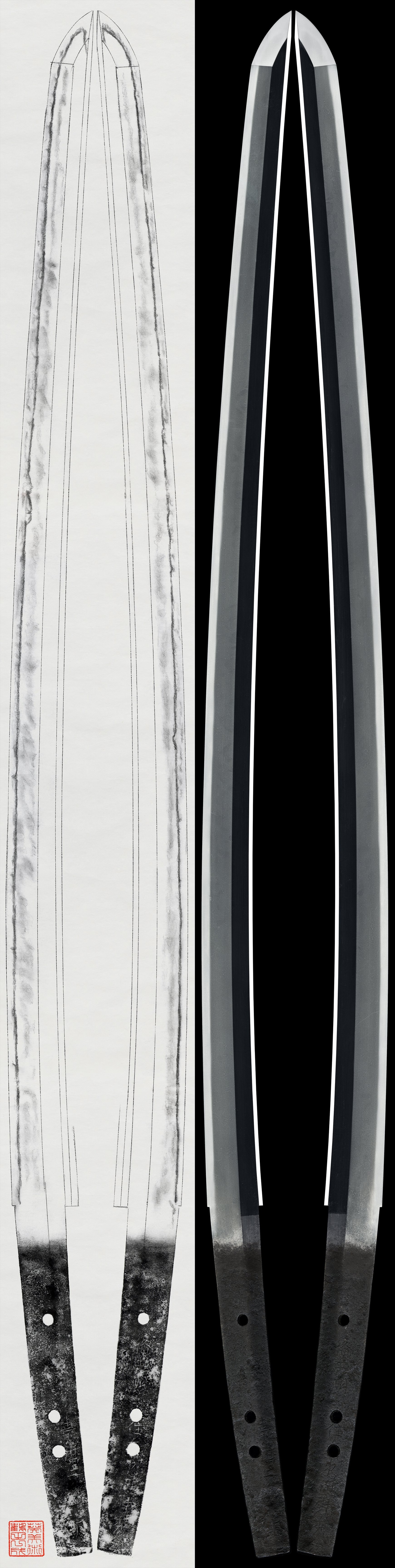
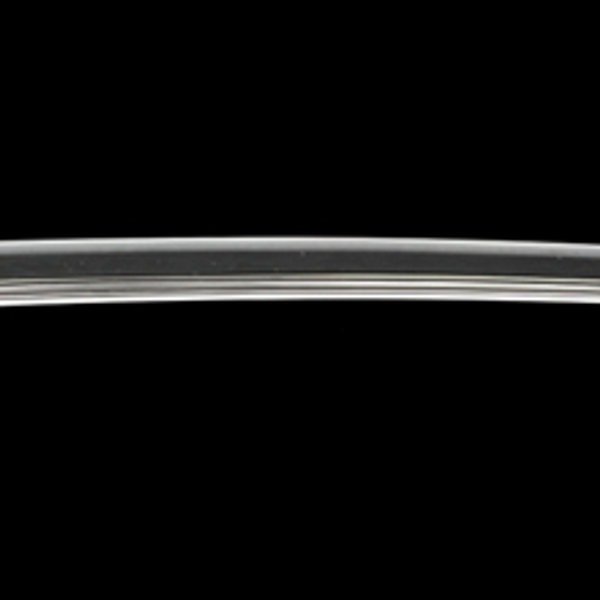
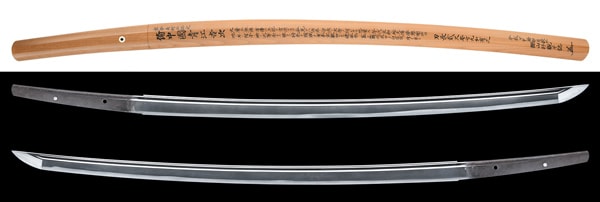
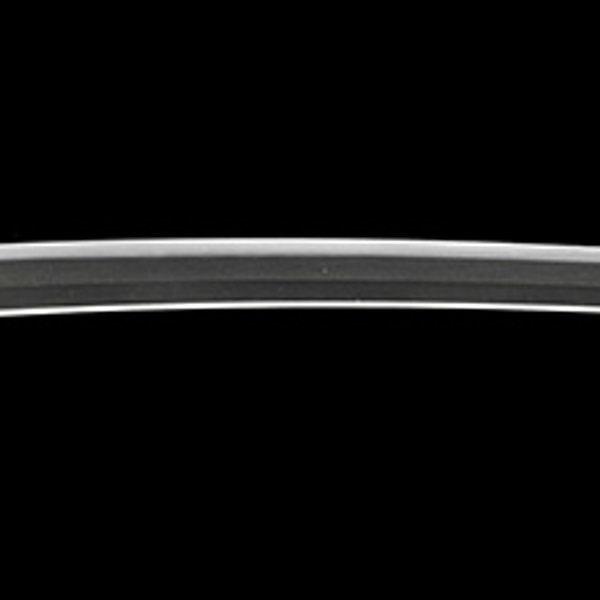
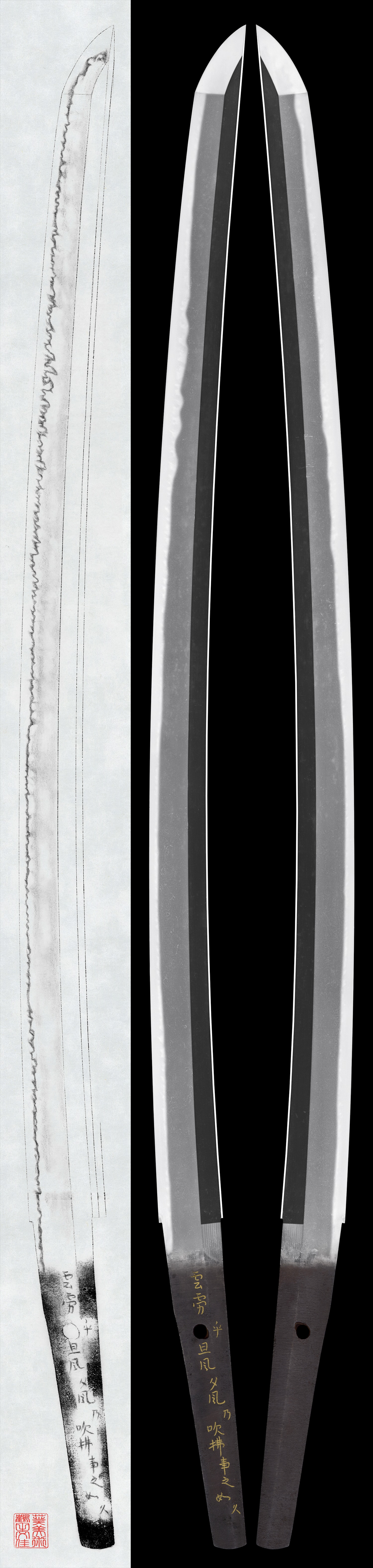
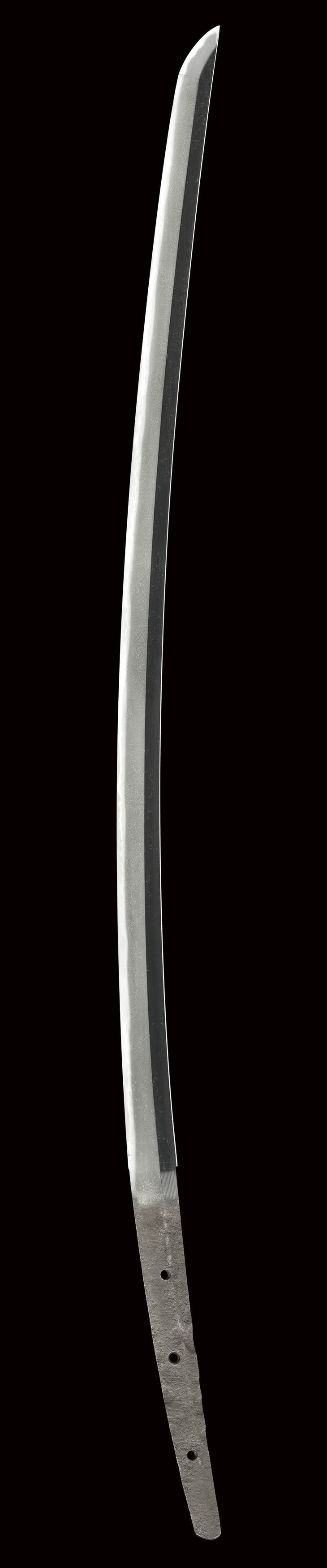
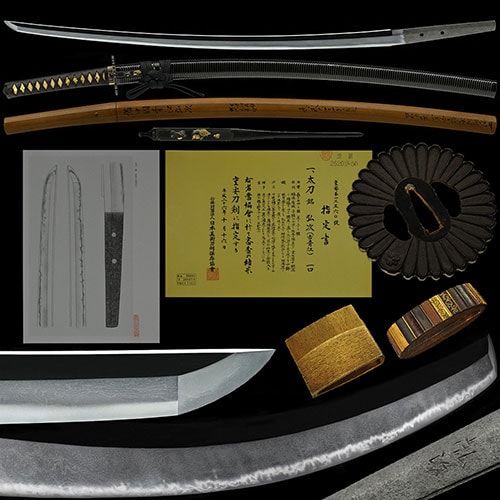
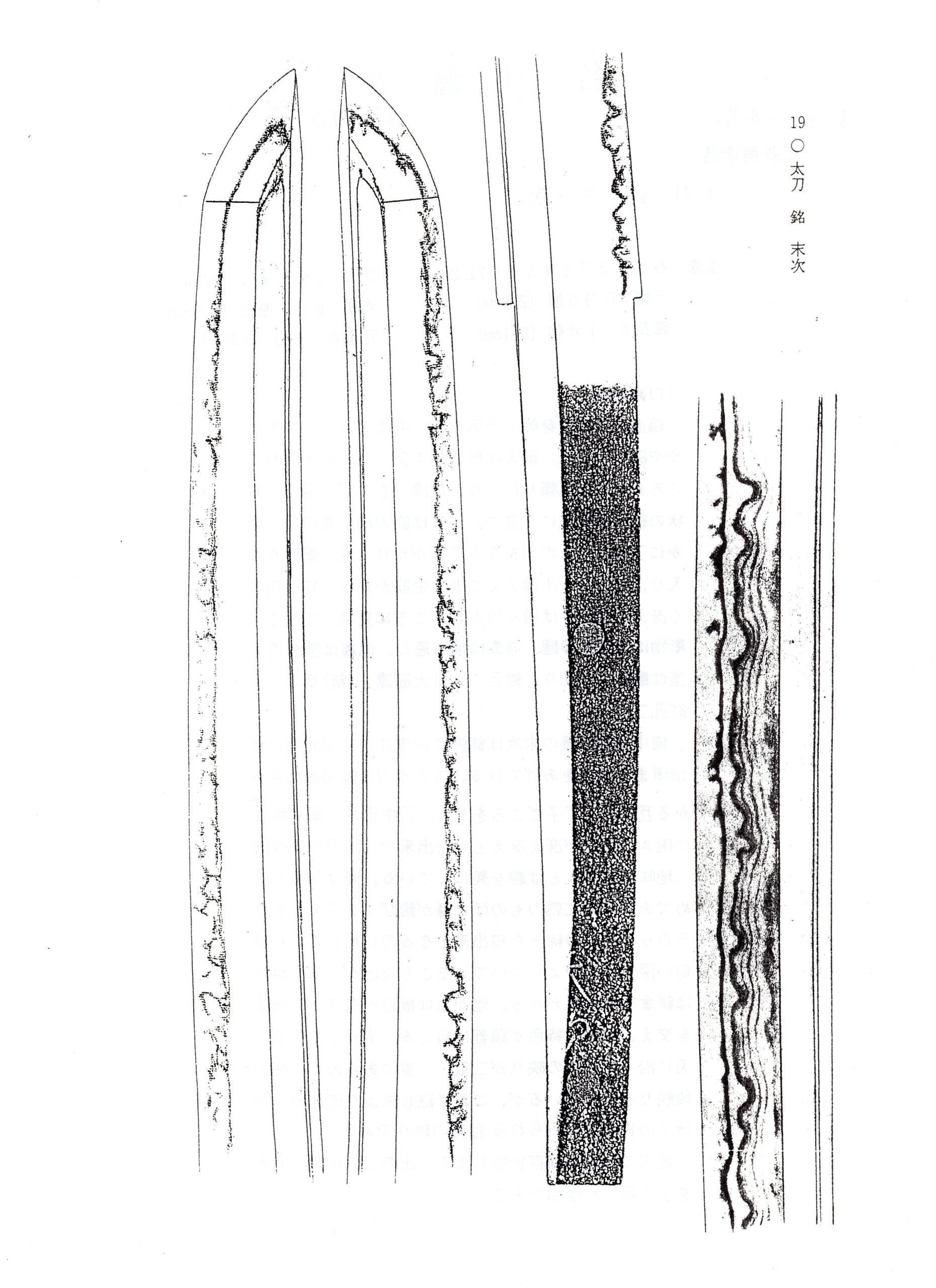
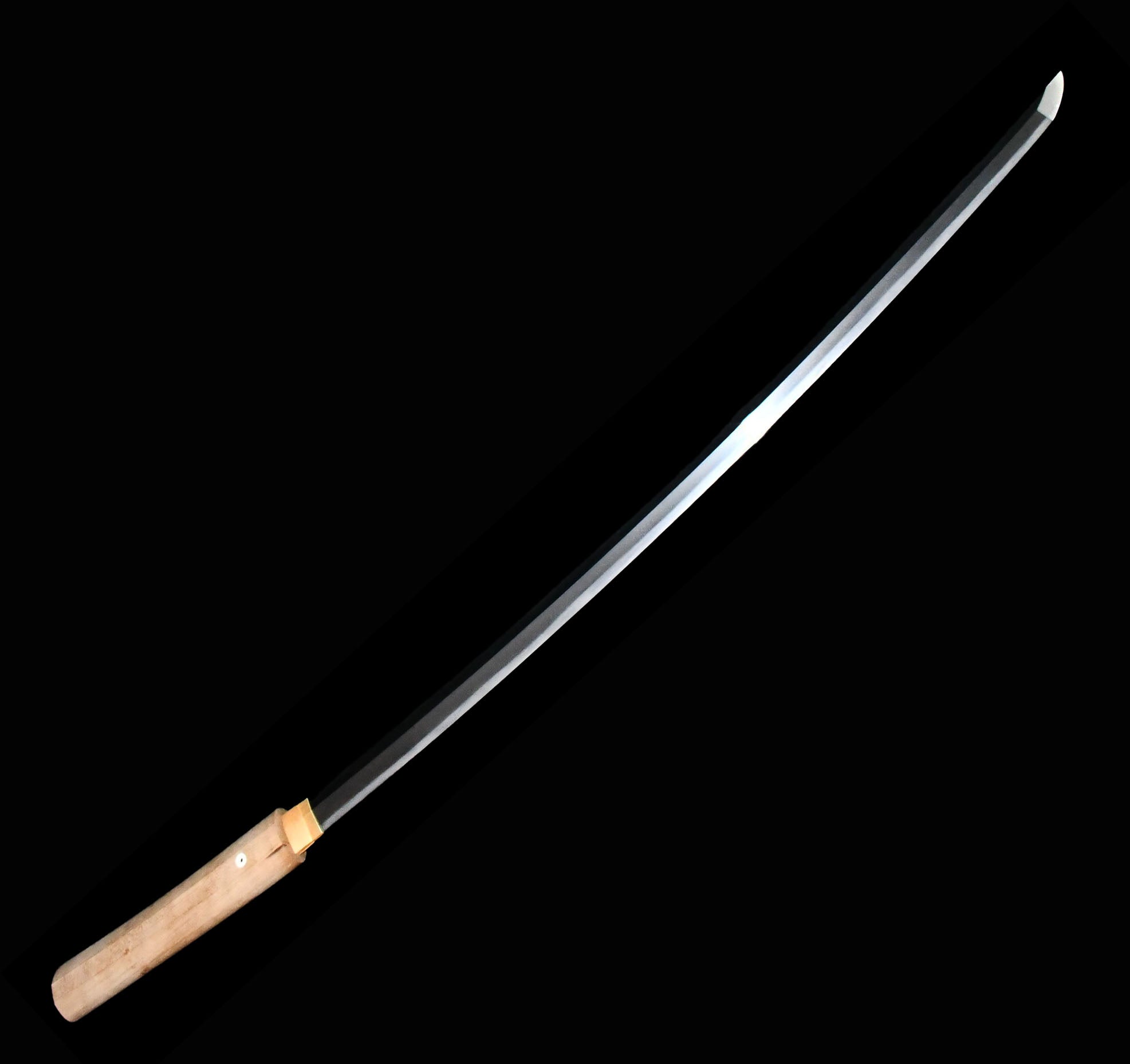
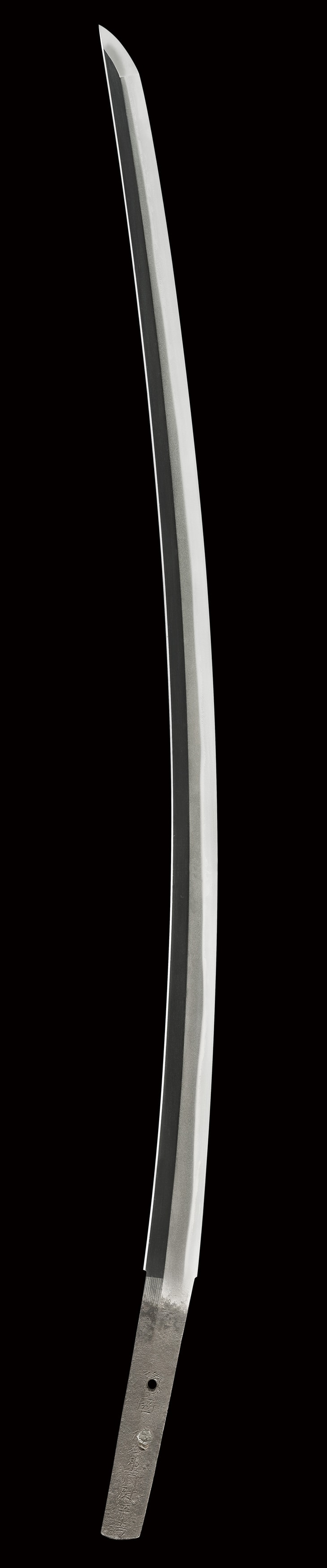
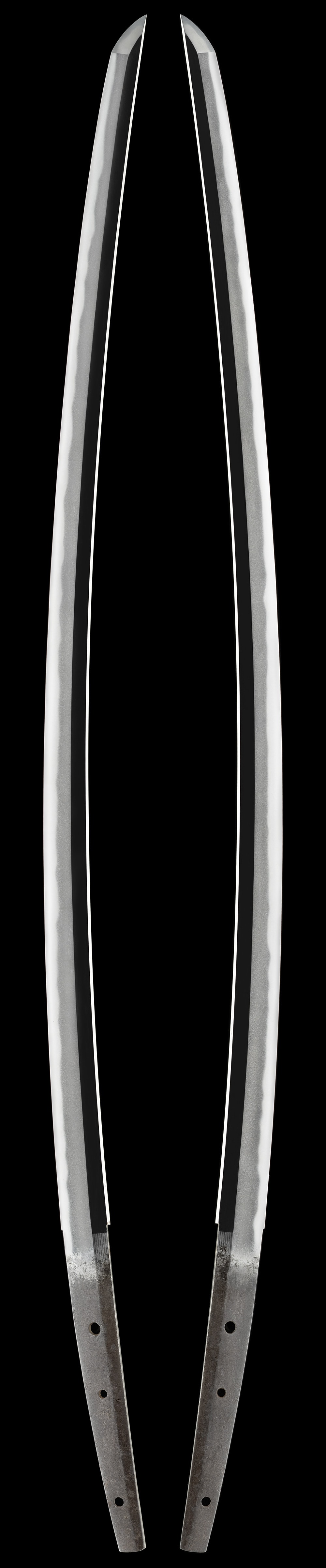
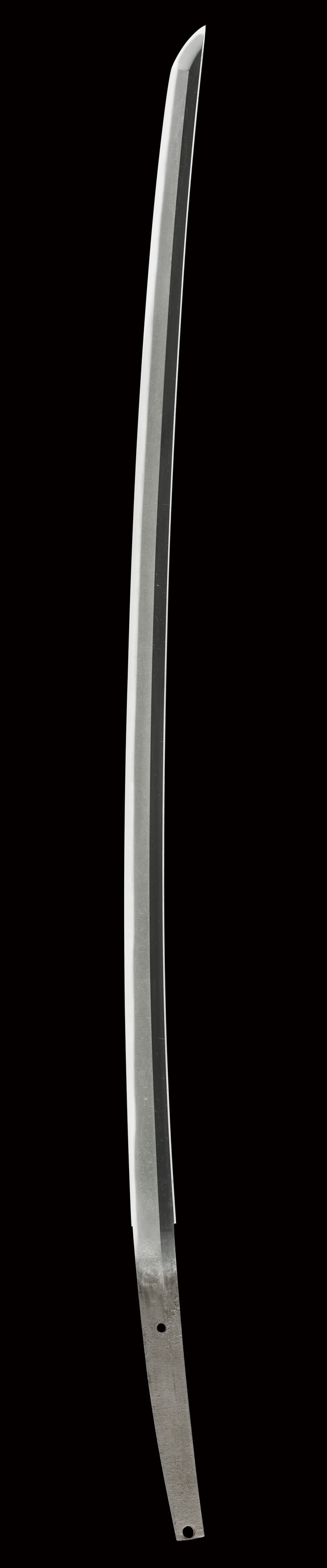
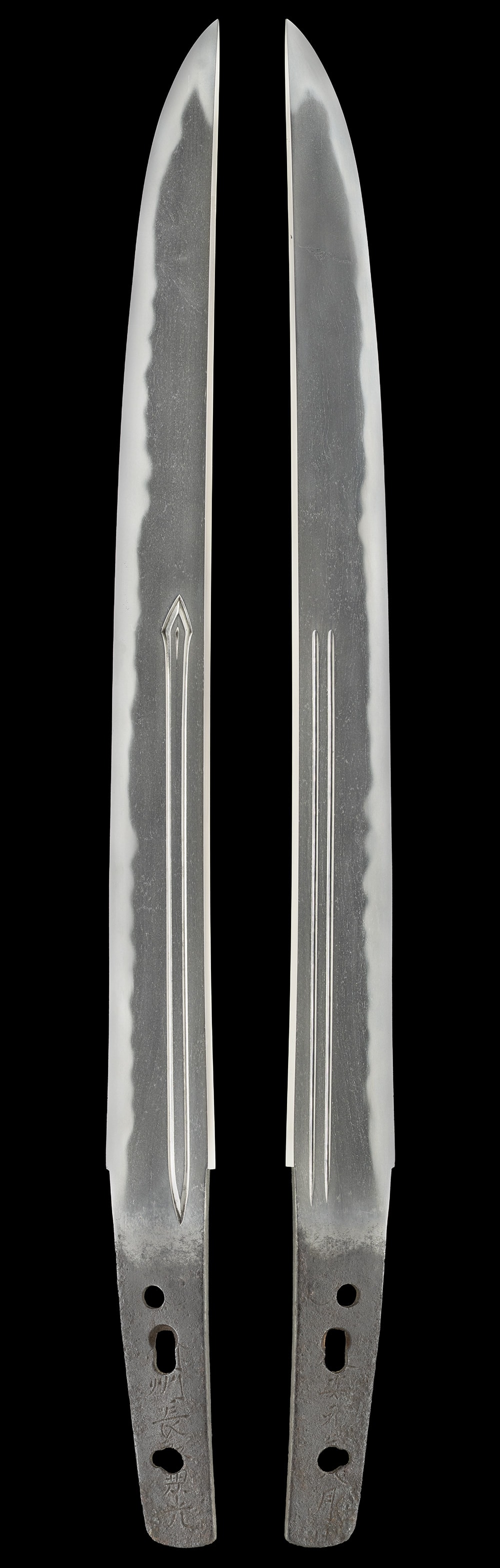
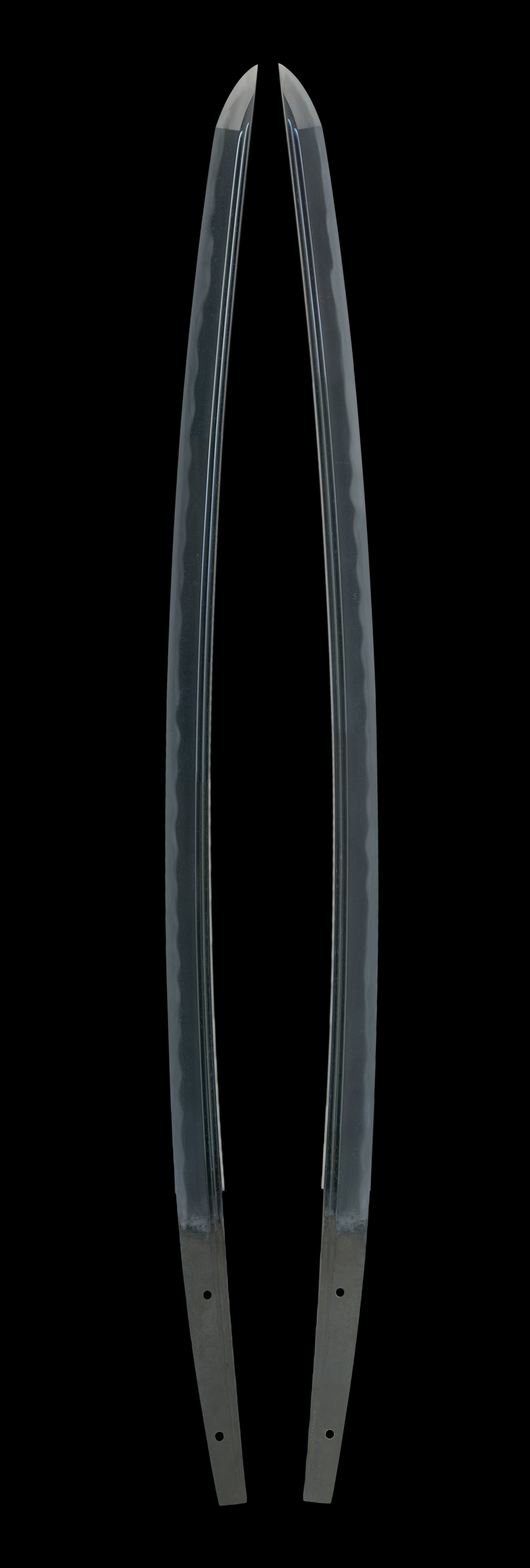
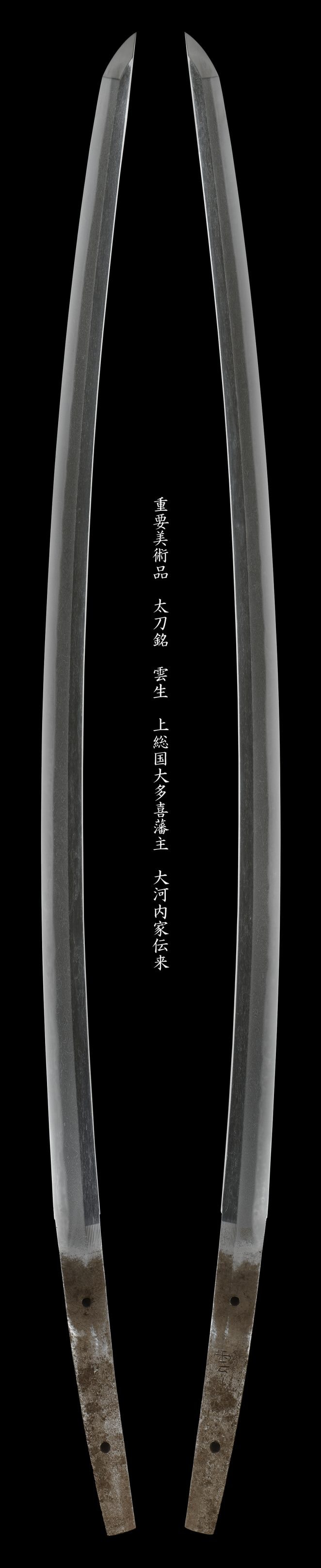
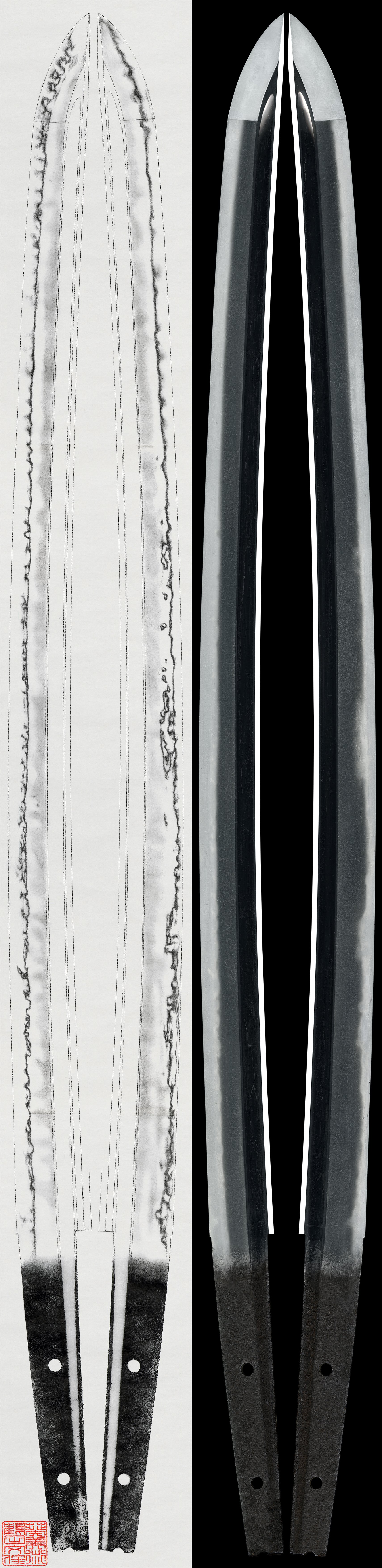
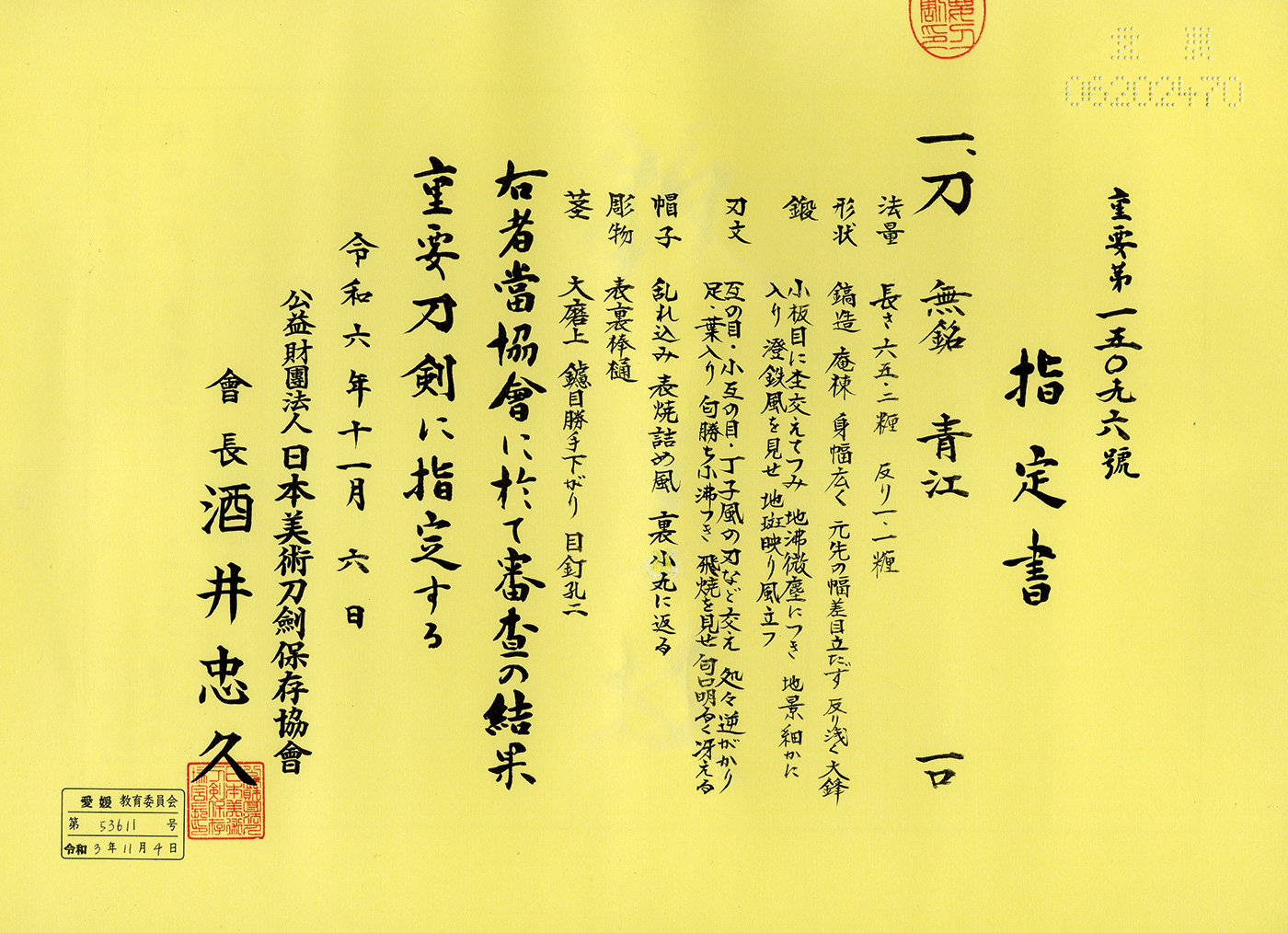
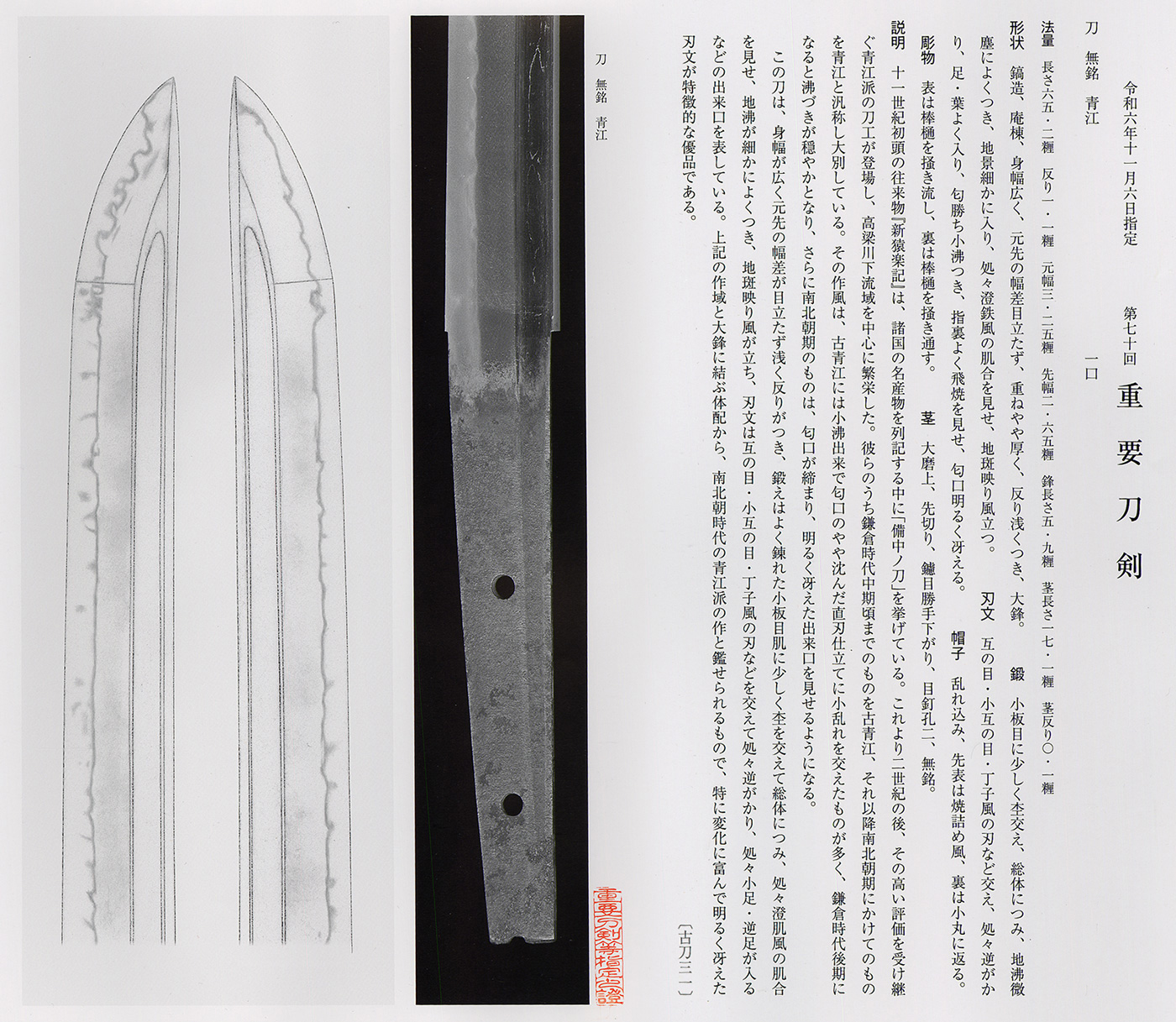
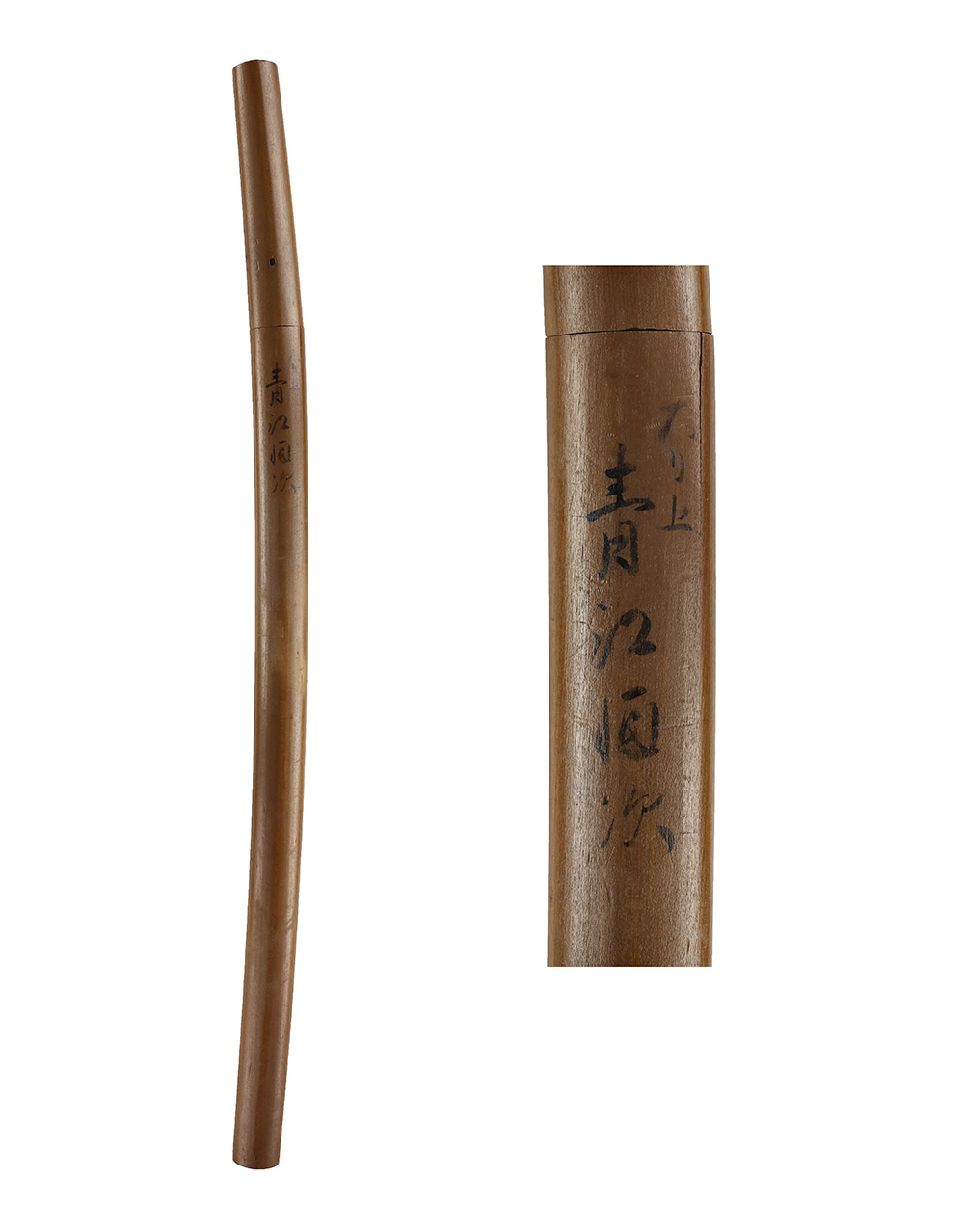
This Nanbokucho period katana from the Aoe school features a wide, thick blade with a big kissaki and a packed koitame jigane with mokume, jinie, chikei, and utsuri. The hamon is a nioi-deki gunomemidare with abundant ashi and yo, characteristic of Nanbokucho-period Aoe work. Despite its slightly shorter length, it presents a powerful form and is accompanied by the 70th NBTHK Juyo Certificate.
十一世紀初頭の往来物『新猿楽記』は、諸国の名産物を列記する中に「備中ノ刀」を挙げている。これより二世紀の後、その高い評価を受け継ぐ青江派の刀工が登場し、高梁川下流域を中心に繁栄した。彼らのうち鎌倉時代中期頃までのものを古青江、それ以降南北朝期にかけてのものを青江と汎称し大別している。その作風は、古青江には小沸出来で匂口のやや沈んだ直刃仕立てに小乱れを交えたものが多く、鎌倉時代後期になると沸づきが穏やかとなり、さらに南北朝期のものは、匂口が締まり、明るく冴えた出来口を見せるようになる。 この刀は、身幅が広く元先の幅差が目立たず浅く反りがつき、鍛えはよく錬れた小板目肌に少しく杢を交えて総体につみ、処々澄肌風の肌合を見せ、地沸が細かによくつき、地斑映り風が立ち、刃文は互の目・小互の目・丁子風の刃などを交えて処々逆がかり、処々小足・逆足が入るなどの出来口を表している。上記の作域と大鋒に結ぶ体配から、南北朝時代の青江派の作と鑑せられるもので、特に変化に富んで明るく冴えた刃文が特徴的な優品である。
 NihontoWatch
mumei · Aoe · Nanbokucho · nagasa 65.1cm · sori 1.1cm


Bizen-den · Bitchu
24 pieces on the market now
The Aoe school arose in Bitchu Province, a region celebrated for iron production since antiquity. The early eleventh-century miscellany Shin Sarugaku-ki already lists "the swords of Bitchu" among the noted products of the provinces, and roughly two centuries later the Aoe swordsmiths emerged as heirs to that high reputation, flourishing chiefly in the lower basin of the Takahashi River in such locales as Koji and Manju. The school is traditionally said to have begun with Yasutsugu around the Shoan era, and thereafter it prospered greatly down to the later part of the Nanbokucho period. Within this lineage, works produced up through approximately the mid-Kamakura period are distinguished as Ko-Aoe, while those from the late Kamakura period onward through the Nanbokucho era are broadly termed Aoe. Representative smiths of the Nanbokucho phase include Tsugunao, Tsuguyoshi, Moritsugu, and Naotsugu, yet a great many surviving blades are mumei and attributed to the school collectively rather than to individual hands, reflecting the depth and continuity of the tradition as a whole. The NBTHK identifies two principal modes of Aoe workmanship. The first is a suguha-based temper in which the nioiguchi tends toward tightness, producing a bright and clear effect; the second is the distinctive saka-choji-midare that reached full maturity around the Enbun era (1356-1361), during the height of the Nanbokucho period. Ko-Aoe works are generally ko-nie-deki, with a somewhat shizumi (subdued) nioiguchi in suguha mixed with small undulations; by the late Kamakura period the nie becomes calmer, and in Nanbokucho pieces the nioiguchi tightens and the construction shifts to nioi-deki. It is specifically noted that whereas smiths of other provinces in this period display nie-deki under the influence of the Soshu tradition, Aoe works remain nioi-deki -- a hallmark distinction.
The forging characteristically shows ko-itame mixed with mokume, with finely standing grain producing the so-called chirimen-hada (crepe-like texture); jifu (patchy, mottled surface features) and sumihada (sooty-toned areas) are frequently intermingled. The jihada regularly exhibits midare-utsuri, and toward the cutting edge a layered, streak-like utsuri known as dan-utsuri is a major highlight of the school. Fine ji-nie adheres thickly, with chikei entering well. Overall, when compared with Bizen works of the same era, Aoe blades present a somewhat restrained and austere taste. Across the tradition's long arc from the late Heian period to the close of the Nanbokucho era, the NBTHK consistently praises Aoe works for the brightness and clarity of both ji and ha, frequently employing the term saeru (clear, brilliant) to describe the nioiguchi. Blades are commended for being kenzen (sound and well-preserved), for retaining ample nikuoki (blade "flesh"), and for conveying an atmosphere of sincerity and quiet elegance. The recurring evaluative language -- "the salient points of Aoe are conspicuously displayed," "an especially fine example even among works attributed to this school[[c:1]]" -- underscores the NBTHK's regard for the tradition as one producing consistently high-caliber work whose collective identity is immediately recognizable. The school's Nanbokucho-period output, with its wide mihaba, imposing o-kissaki, and bold boshi that rises and returns with a pointed tendency, conveys the powerful period character of that age, while earlier Ko-Aoe pieces are valued for their thoroughly archaic feeling and deep flavor. Taken together, the Aoe school represents one of the major traditions of western Japan, distinguished by its refined forging, luminous suguha, and the singular visual drama of its utsuri effects. Learn more →
| Smith | Era | Designated |
|---|---|---|
| Aritsugu有次 | 1278-1288 | 0 |
| Kunitsugu国次 | 1394-1466 | 0 |
| Yukitsugu行次 | 1249-1256 | 0 |
| Yasuhiro安弘 | 1264-1275 | 0 |
| Saia西阿 | 1288-1333 | 0 |
Bizen in the Nanbokuchō period
Sixty years of war between two courts drove blades long and broad, and Osafune met the demand: Kanemitsu and Chōgi led forges serving the provincial warriors who did the fighting, while Sōshū influence arrived with the armies to create Sōden-Bizen.
A blade of top-grade workmanship and condition, formally judged to rank with a nationally recognized Important Art Object (Jūyō Bijutsuhin). Awarded only at the NBTHK’s competitive annual examination.
Of Japan’s roughly 2.5 million registered swords, only 12,357 (about 1 in 202) have ever attained Jūyō.
The NBTHK (Nihon Bijutsu Tōken Hozon Kyōkai, the Society for the Preservation of Japanese Art Swords) is a public-interest incorporated foundation founded in 1948 and supervised by Japan’s Agency for Cultural Affairs (Bunkachō); it is based at the Japanese Sword Museum in Tokyo. Its expert panels physically examine each submitted work (shinsa) and issue a certificate (kanteishō) ranking it by artistic and historical merit. NBTHK papers are the most widely recognized standard of authentication for Japanese swords and fittings.
NBTHK official siteIf you wish to return an item, please notify us within 3 days of receipt. After this period we cannot accept cancellations. Please ship the return to us within 5 business days. Cancellation is conditional on the item being kept in the same condition as at the time of sale, so please handle it with care.