Edo was the sword’s age of connoisseurship: the Hon’ami appraisers, the shogunal register of famous blades of 1719, and a thriving literature turned the sword into an object of study even as it ceased to be drawn in war.
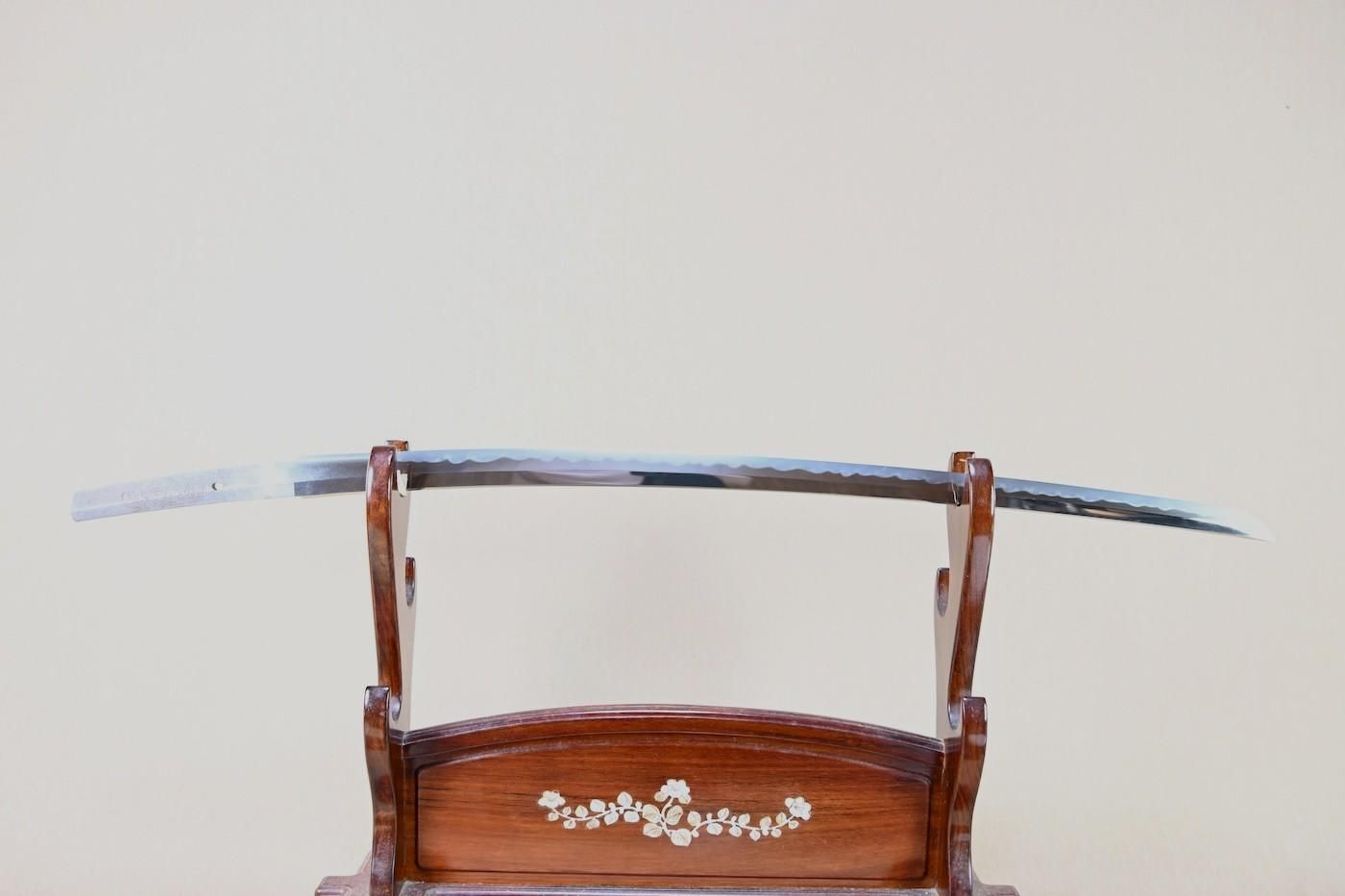
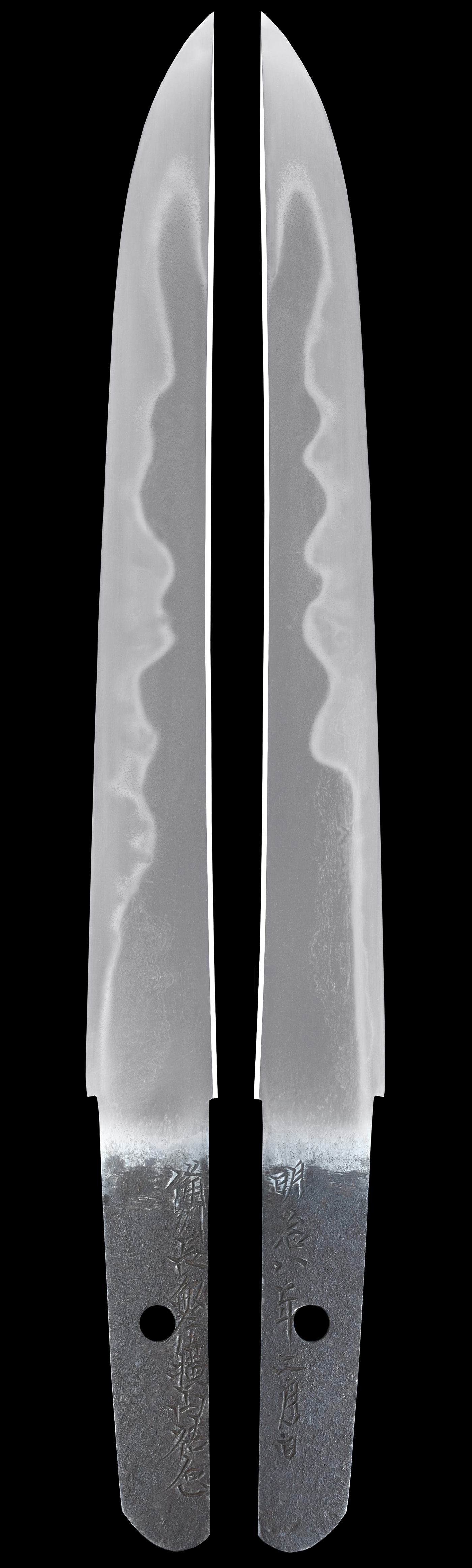
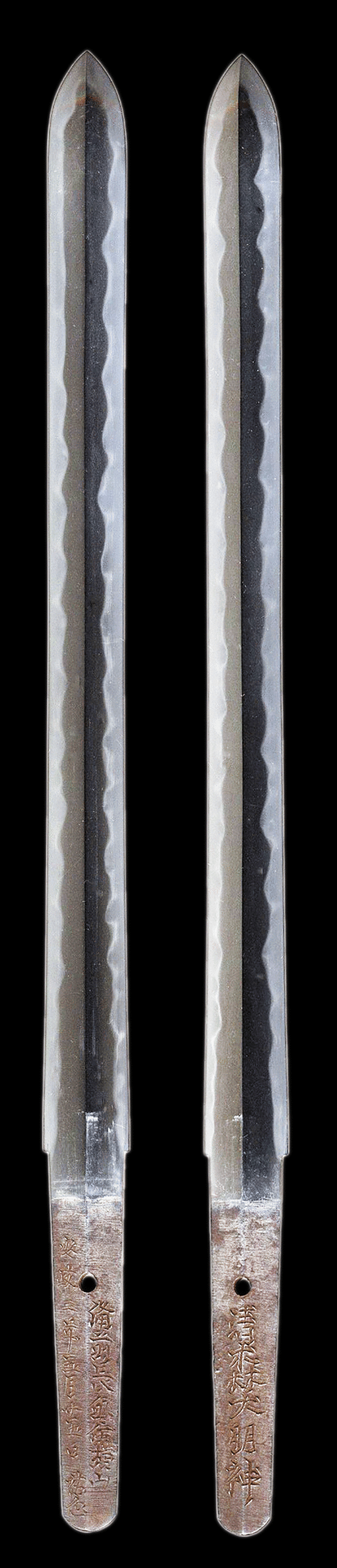
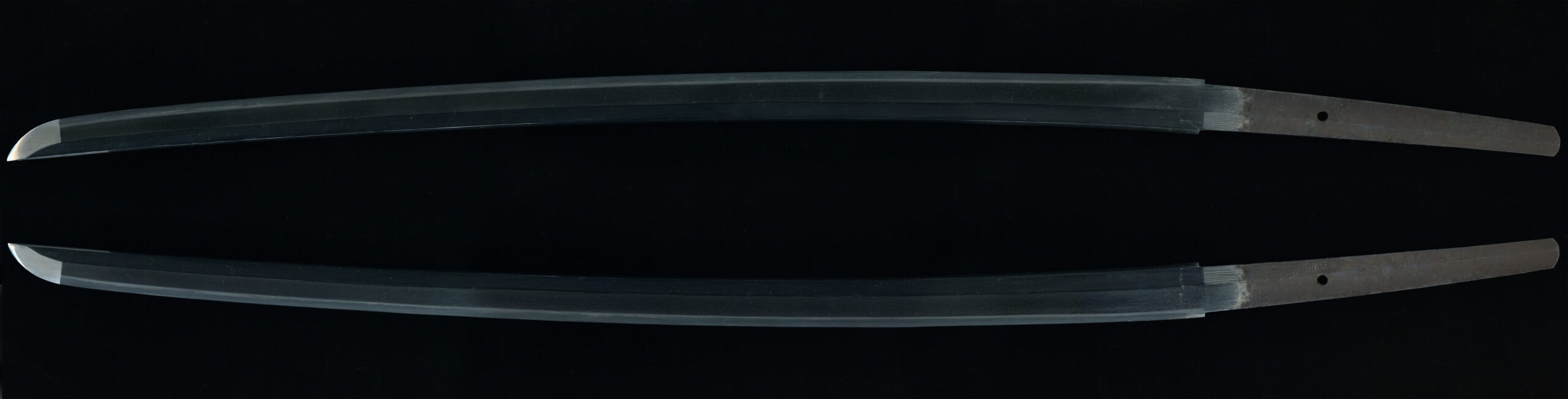
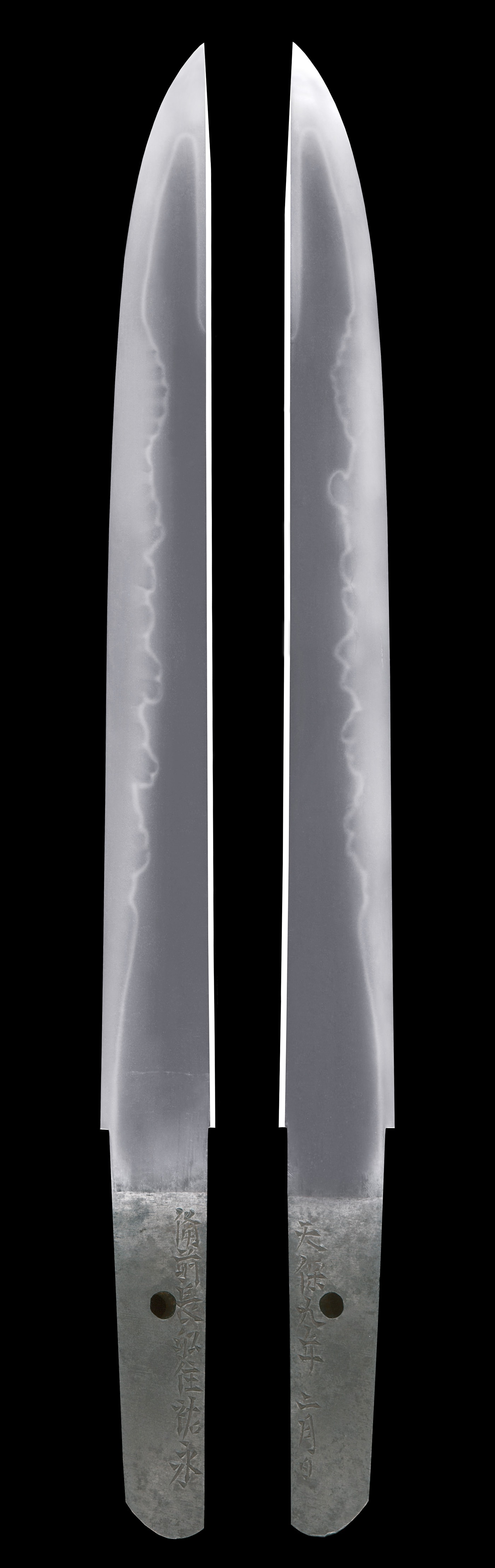
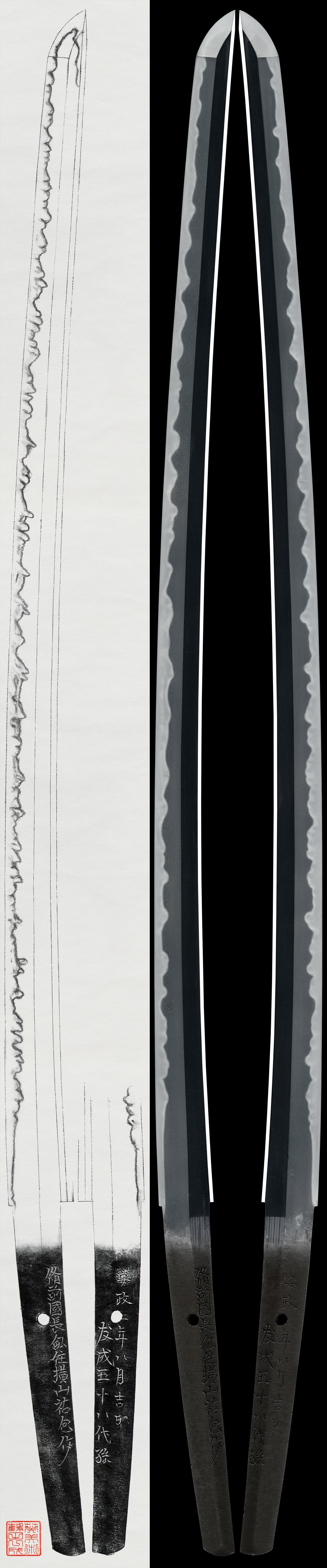
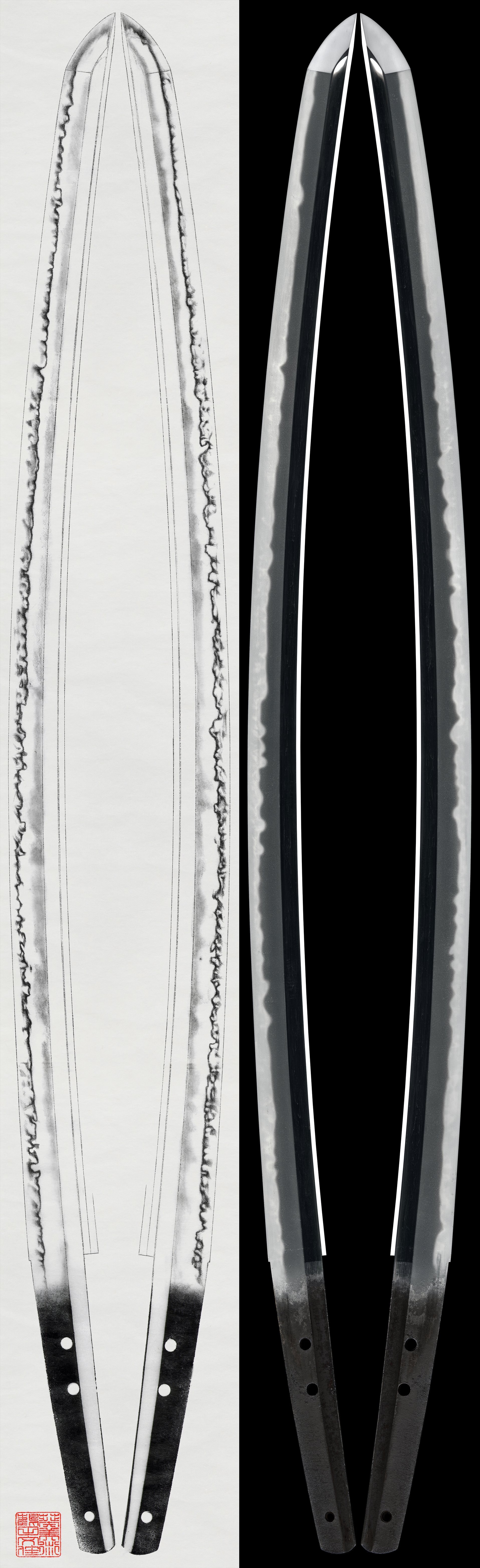
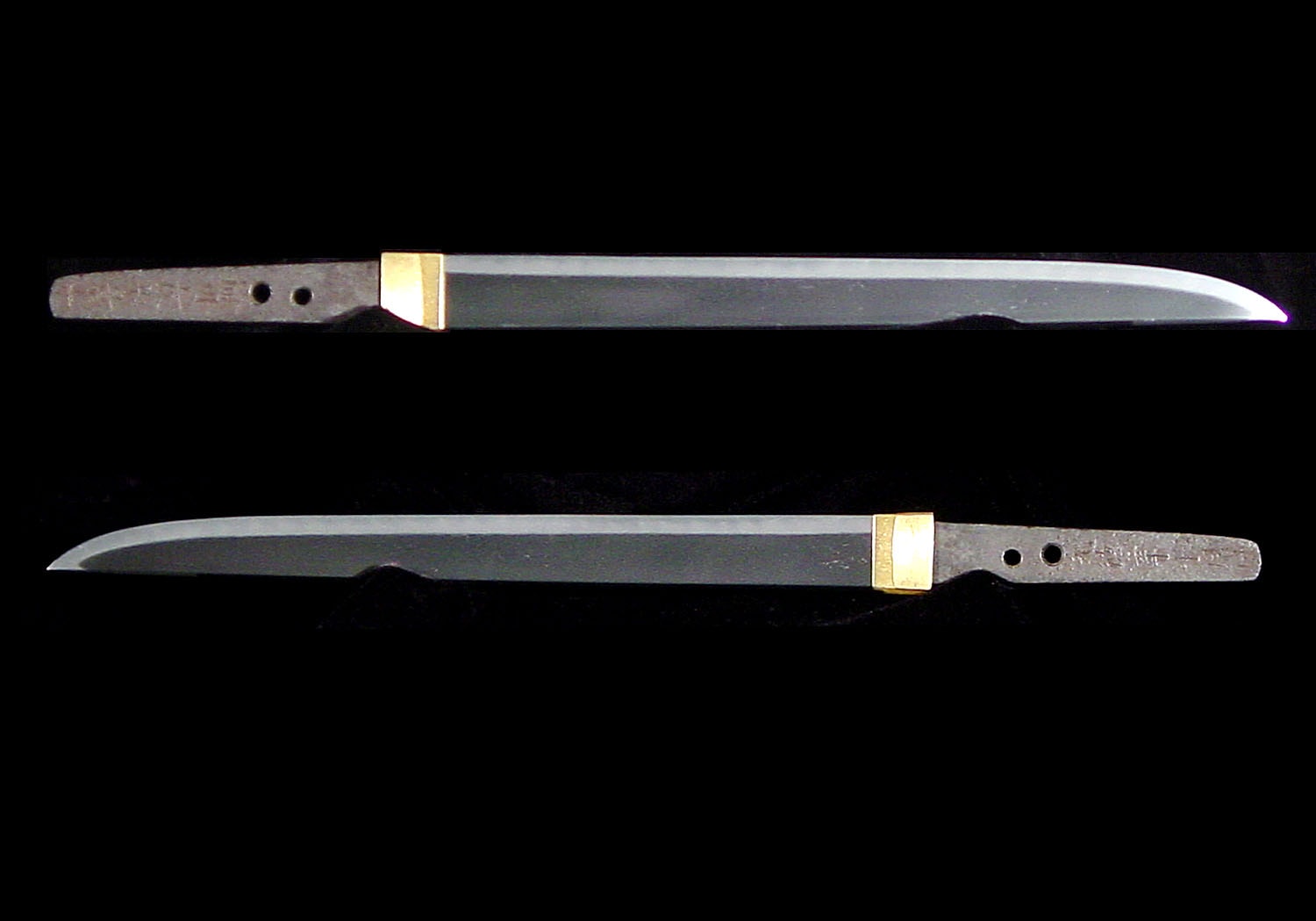
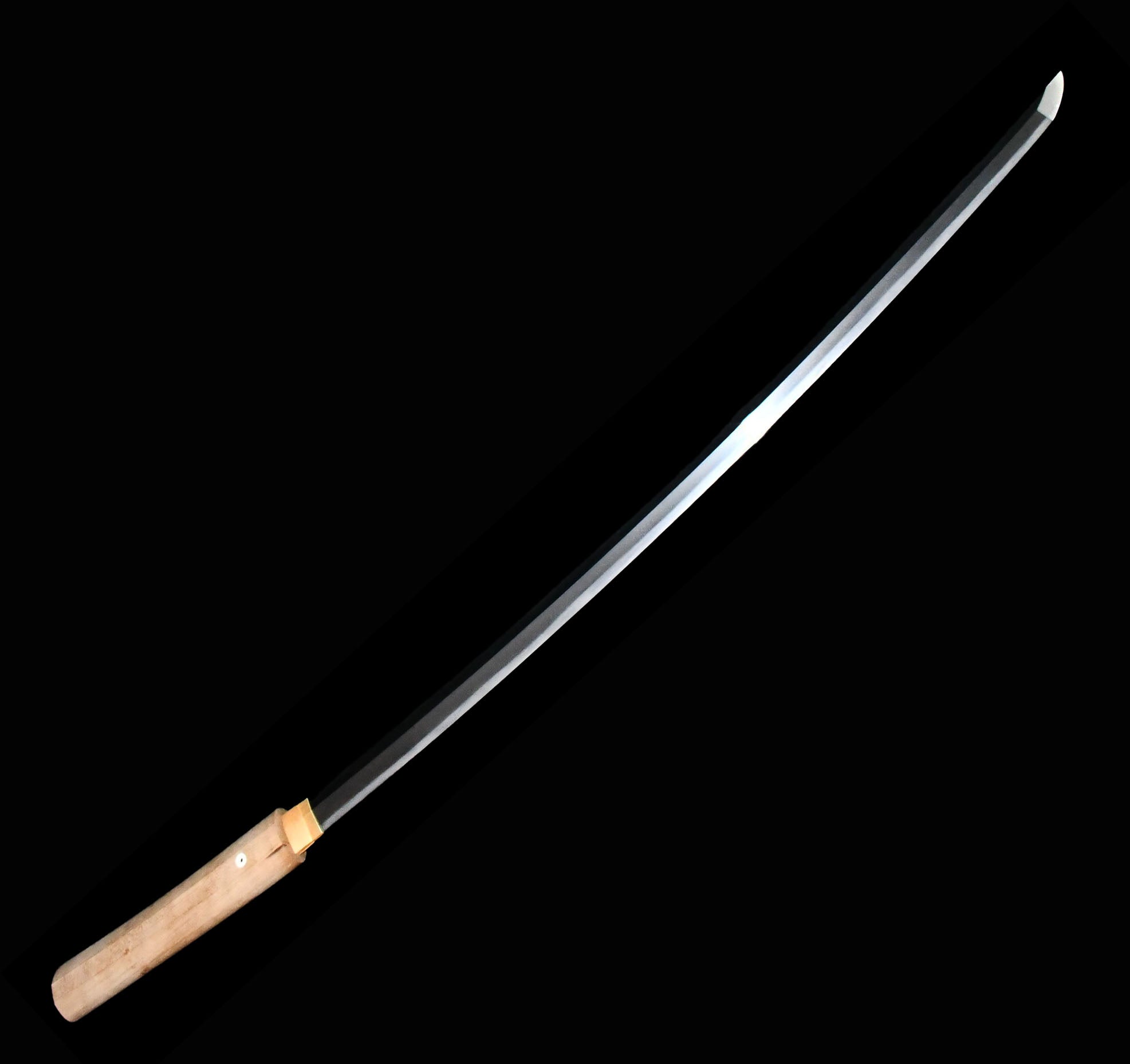
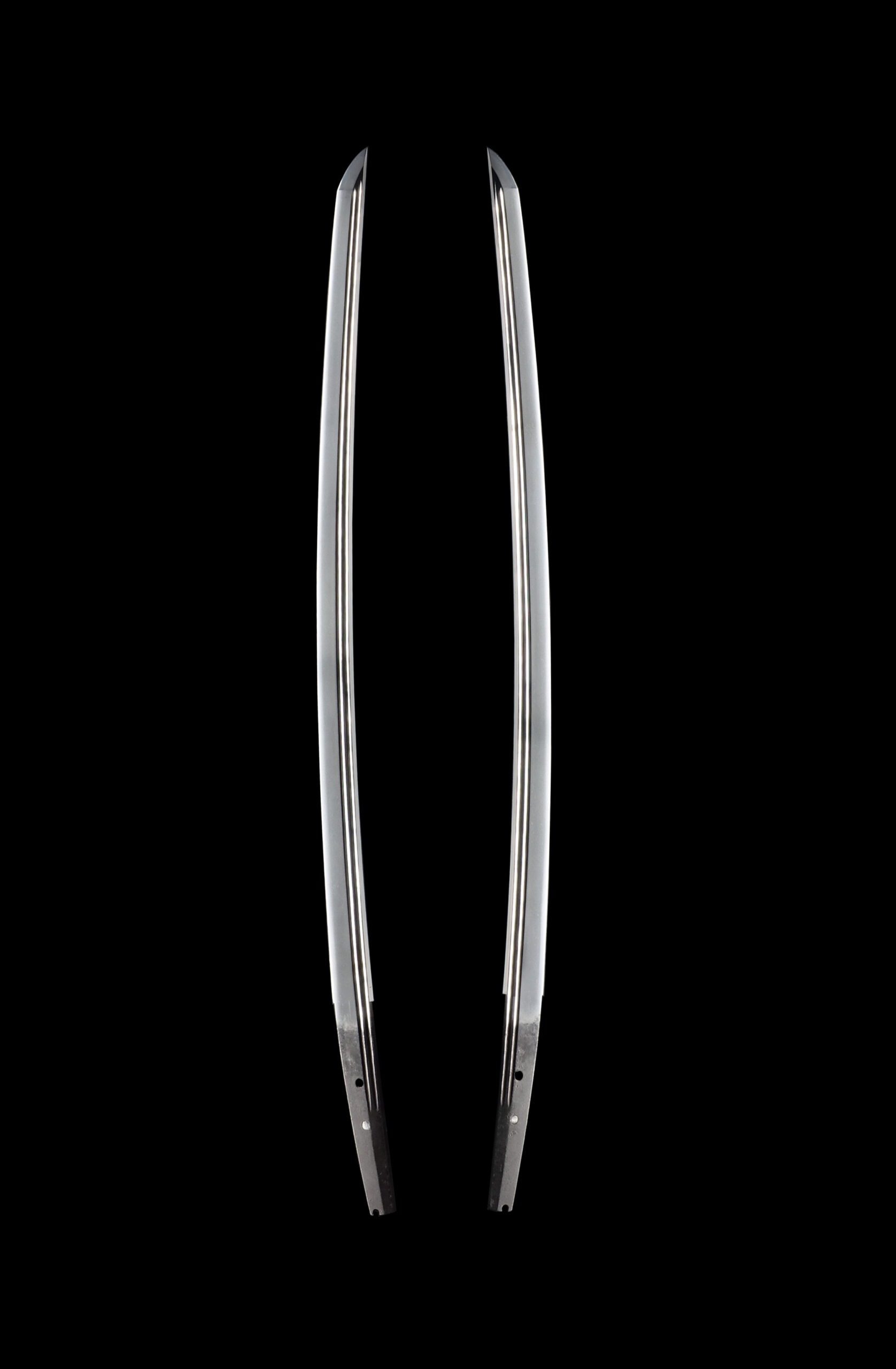
This is a tanto by Sukehiro, featuring a hirazukuri (flat construction) and mitsumune (three-sided back). The blade has an itame hada (wood grain pattern) and a notare hamon (wavy temper line) with a small kissaki (point) and large maru (turn-back). It comes with a solid gold habaki (collar) weighing 21g, a dry lacquer tea-colored ishime saya (scabbard), and a kozuka (small knife) with three family crests. The tanto is accompanied by a shirasaya (plain wood scabbard) and an NBTHK Hozon Token certificate.
 NihontoWatch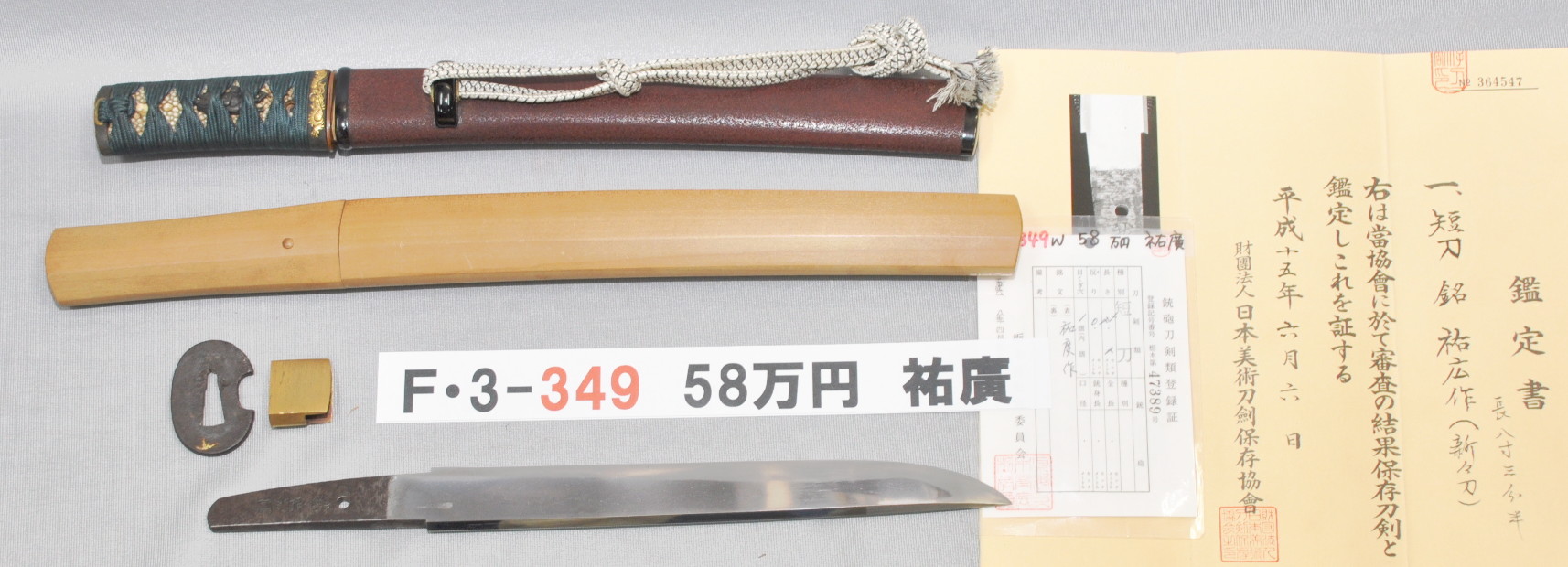
Bizen-den · Bizen · around 1854-1860
3 pieces on the market now
Bizen-den · Bizen
43 pieces on the market now
| Smith | Era | Designated |
|---|---|---|
| Sukenobu祐信 | 1830-1844 | 0 |
| Suketaka祐高 | 1865-1868 | 0 |
| Sukeharu祐春 | 1864-1865 | 0 |
| Sukehiro祐廣 | 1854-1860 | 0 |
| Sukekane祐包 | 1868-1912 | 0 |
Edo was the sword’s age of connoisseurship: the Hon’ami appraisers, the shogunal register of famous blades of 1719, and a thriving literature turned the sword into an object of study even as it ceased to be drawn in war.
Certifies a genuine blade worth preserving: a signature confirmed correct, or, if unsigned, an era, province, and school that the NBTHK can reliably identify.
The NBTHK (Nihon Bijutsu Tōken Hozon Kyōkai, the Society for the Preservation of Japanese Art Swords) is a public-interest incorporated foundation founded in 1948 and supervised by Japan’s Agency for Cultural Affairs (Bunkachō); it is based at the Japanese Sword Museum in Tokyo. Its expert panels physically examine each submitted work (shinsa) and issue a certificate (kanteishō) ranking it by artistic and historical merit. NBTHK papers are the most widely recognized standard of authentication for Japanese swords and fittings.
NBTHK official siteThis is a tanto by Sukehiro, featuring a hirazukuri (flat construction) and mitsumune (three-sided back). The blade has an itame hada (wood grain pattern) and a notare hamon (wavy temper line) with a small kissaki (point) and large maru (turn-back). It comes with a solid gold habaki (collar) weighing 21g, a dry lacquer tea-colored ishime saya (scabbard), and a kozuka (small knife) with three family crests. The tanto is accompanied by a shirasaya (plain wood scabbard) and an NBTHK Hozon Token certificate.
NihontoWatchBizen-den · Bizen · around 1854-1860
3 pieces on the market now
Bizen-den · Bizen
43 pieces on the market now
| Smith | Era | Designated |
|---|---|---|
| Sukenobu祐信 | 1830-1844 | 0 |
| Suketaka祐高 | 1865-1868 | 0 |
| Sukeharu祐春 | 1864-1865 | 0 |
| Sukehiro祐廣 | 1854-1860 | 0 |
| Sukekane祐包 | 1868-1912 | 0 |
Edo was the sword’s age of connoisseurship: the Hon’ami appraisers, the shogunal register of famous blades of 1719, and a thriving literature turned the sword into an object of study even as it ceased to be drawn in war.
Certifies a genuine blade worth preserving: a signature confirmed correct, or, if unsigned, an era, province, and school that the NBTHK can reliably identify.
The NBTHK (Nihon Bijutsu Tōken Hozon Kyōkai, the Society for the Preservation of Japanese Art Swords) is a public-interest incorporated foundation founded in 1948 and supervised by Japan’s Agency for Cultural Affairs (Bunkachō); it is based at the Japanese Sword Museum in Tokyo. Its expert panels physically examine each submitted work (shinsa) and issue a certificate (kanteishō) ranking it by artistic and historical merit. NBTHK papers are the most widely recognized standard of authentication for Japanese swords and fittings.
NBTHK official site