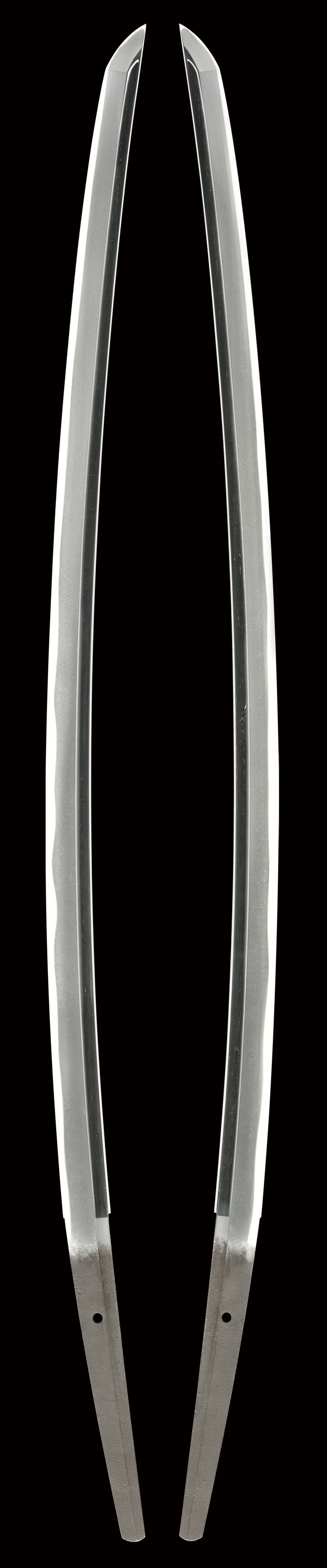
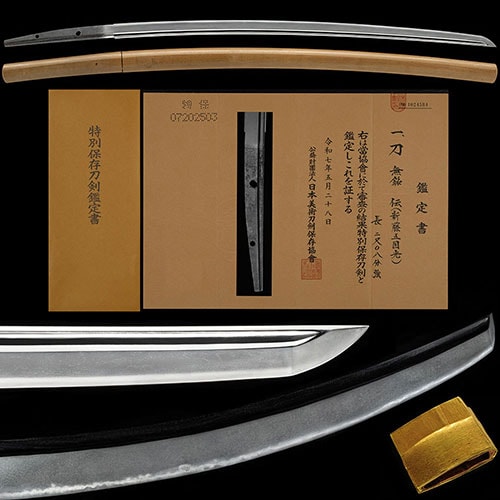
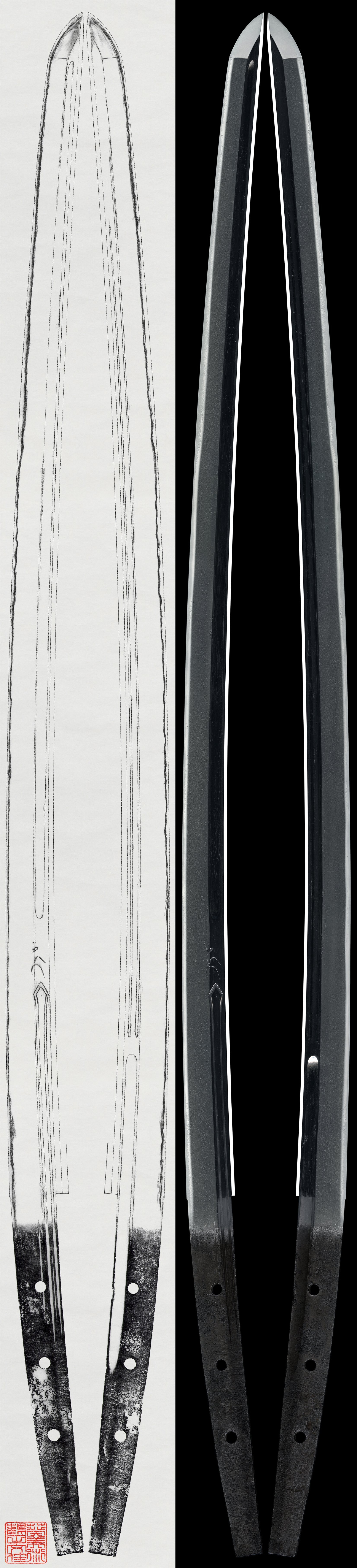
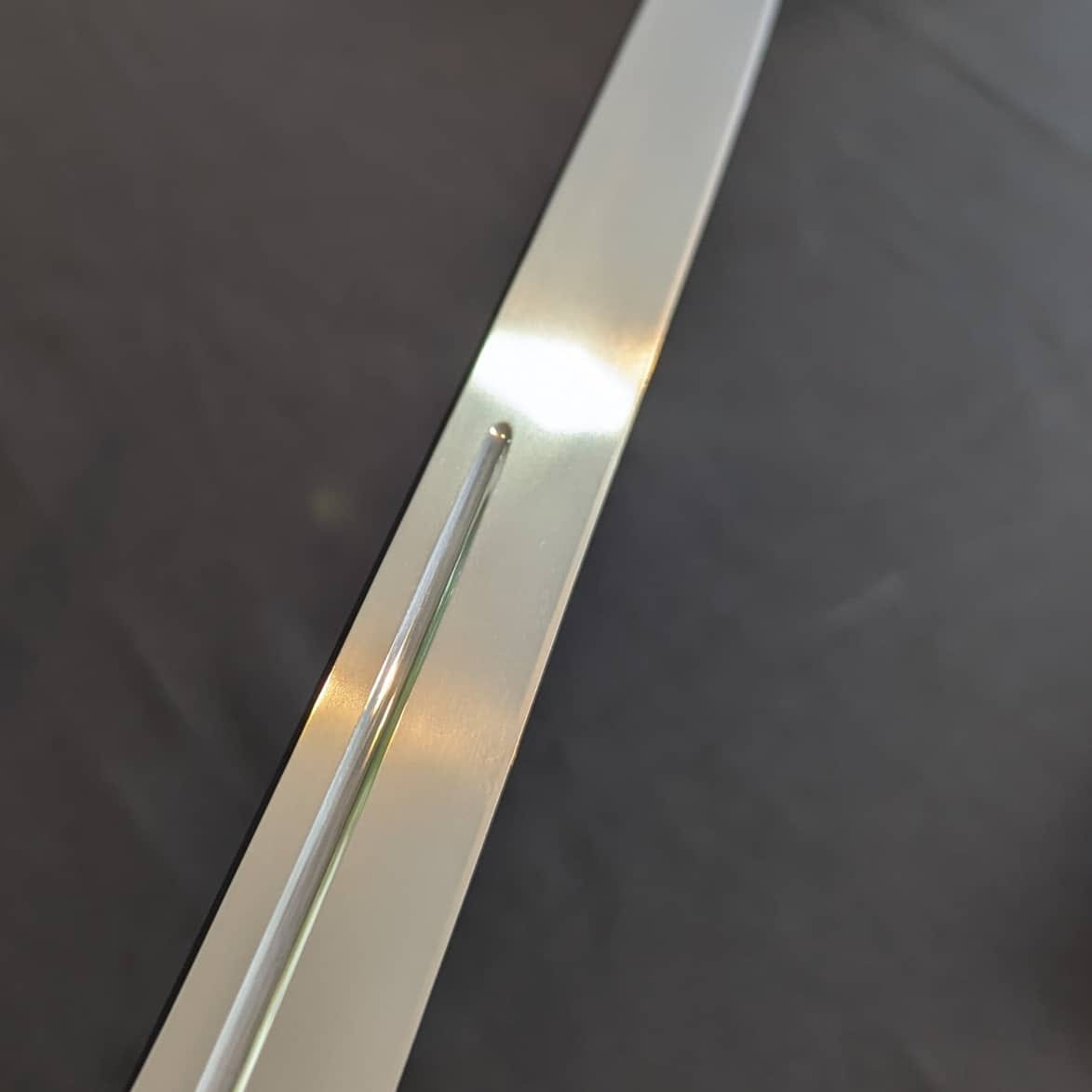
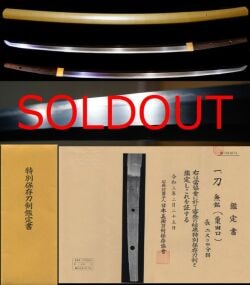
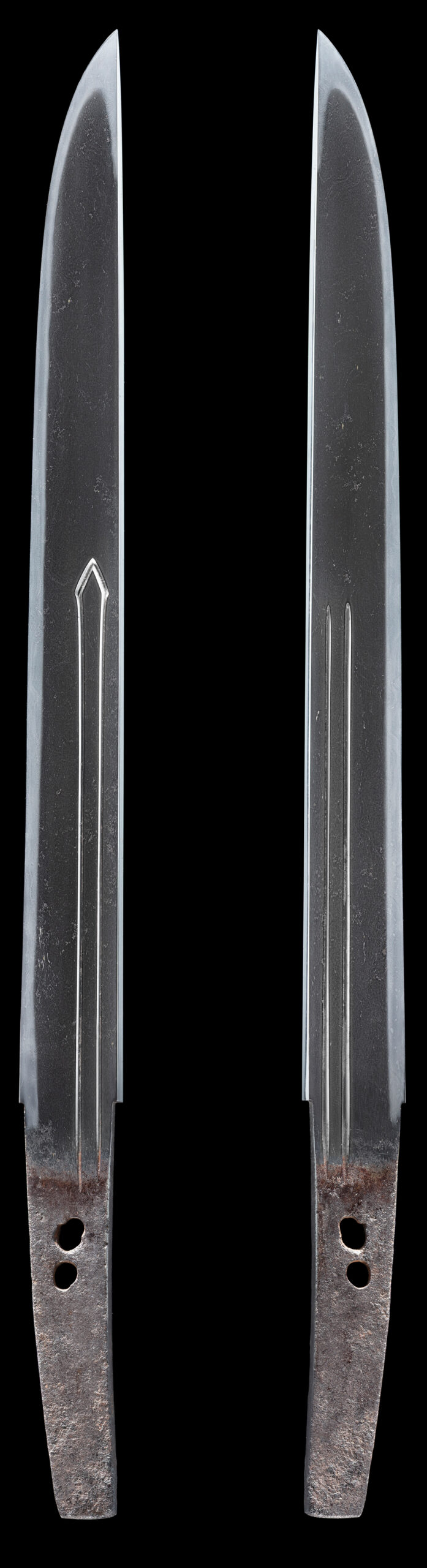
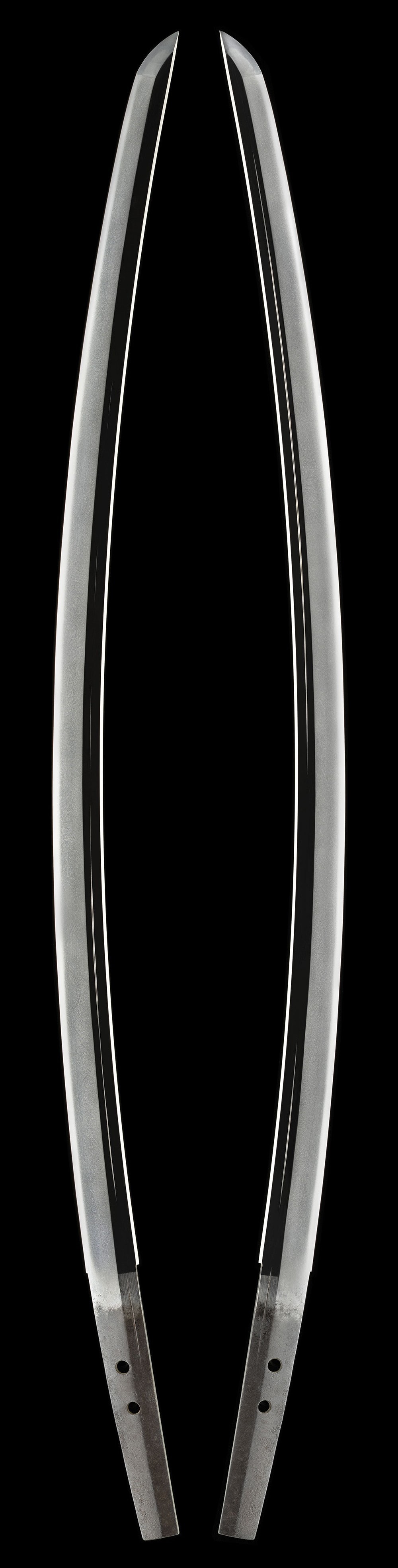
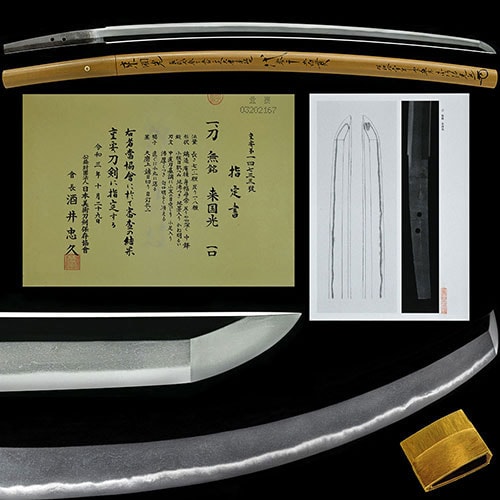
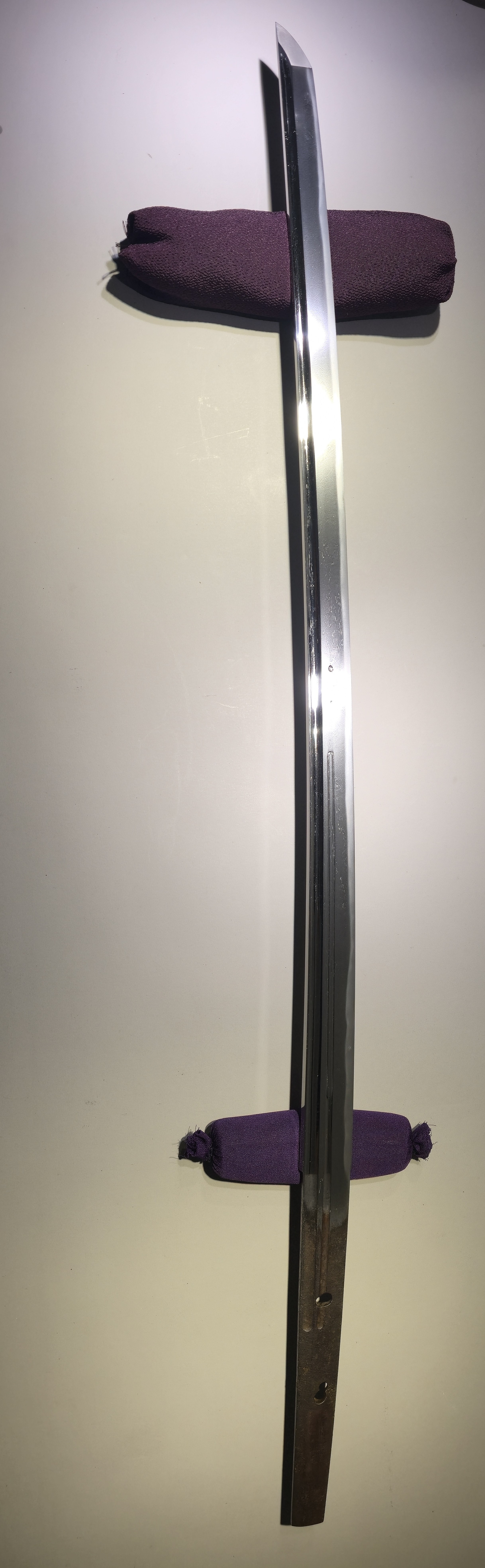
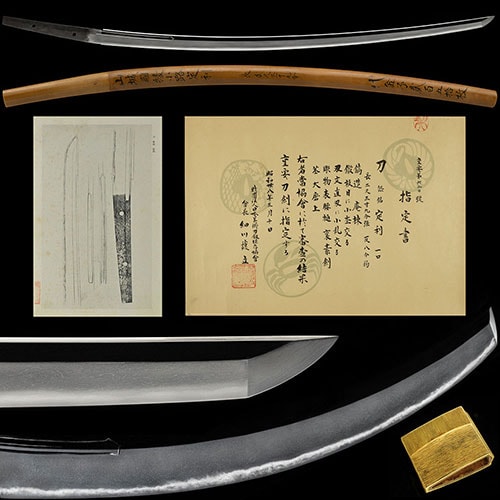
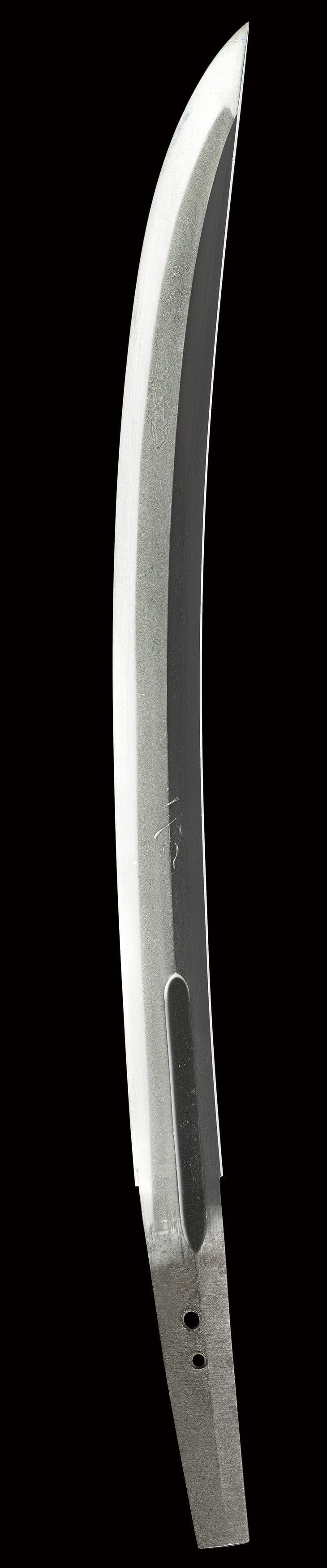
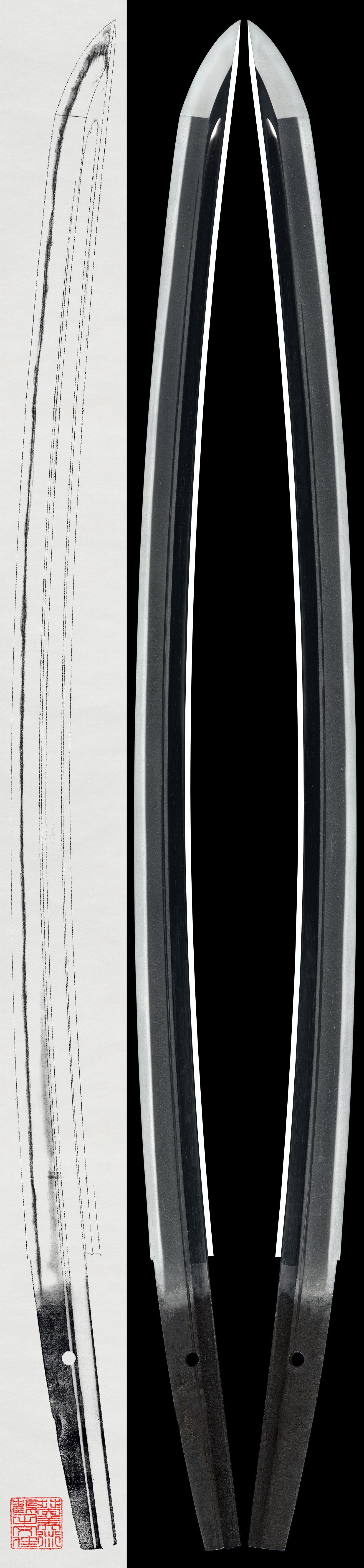
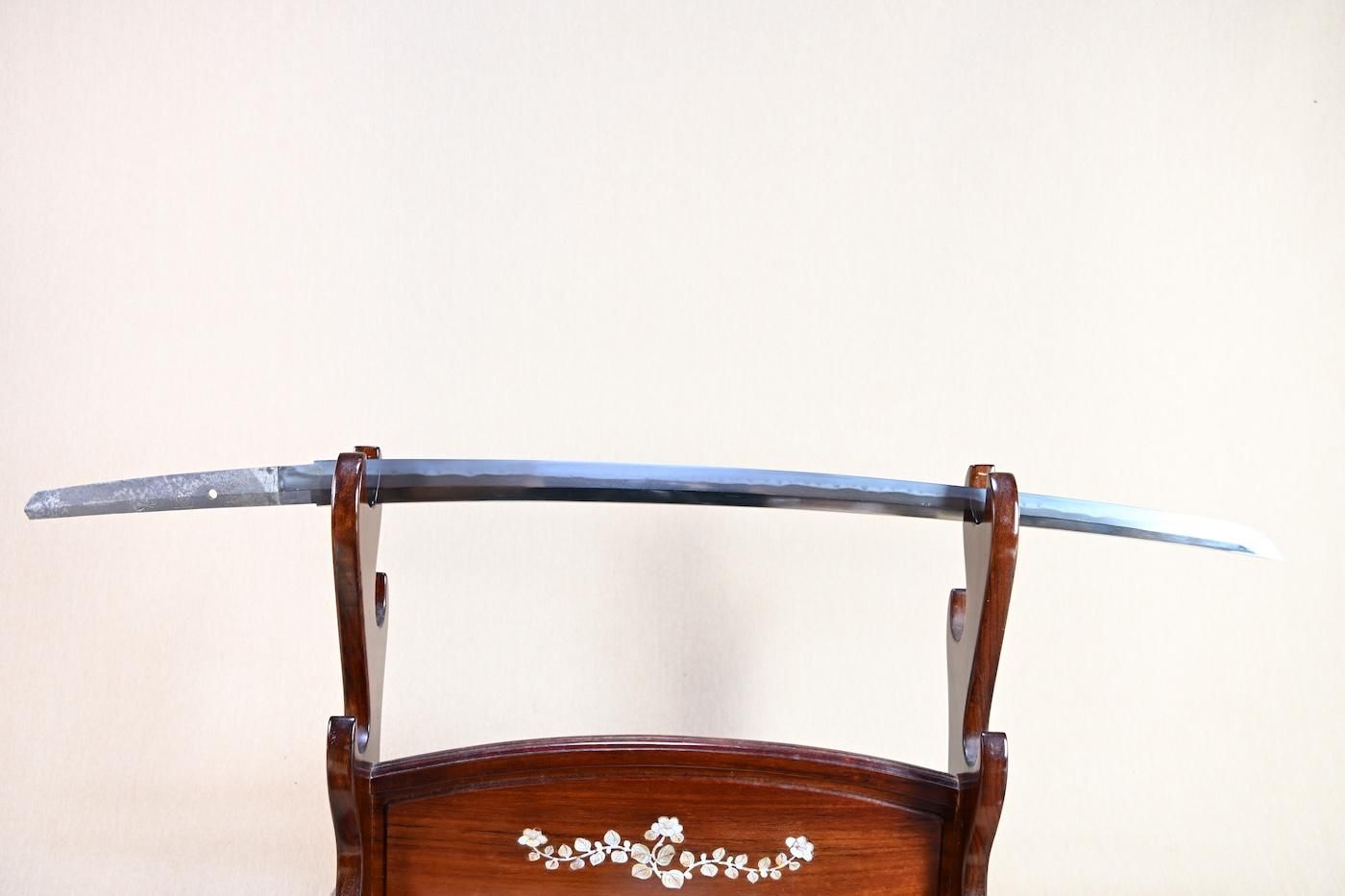
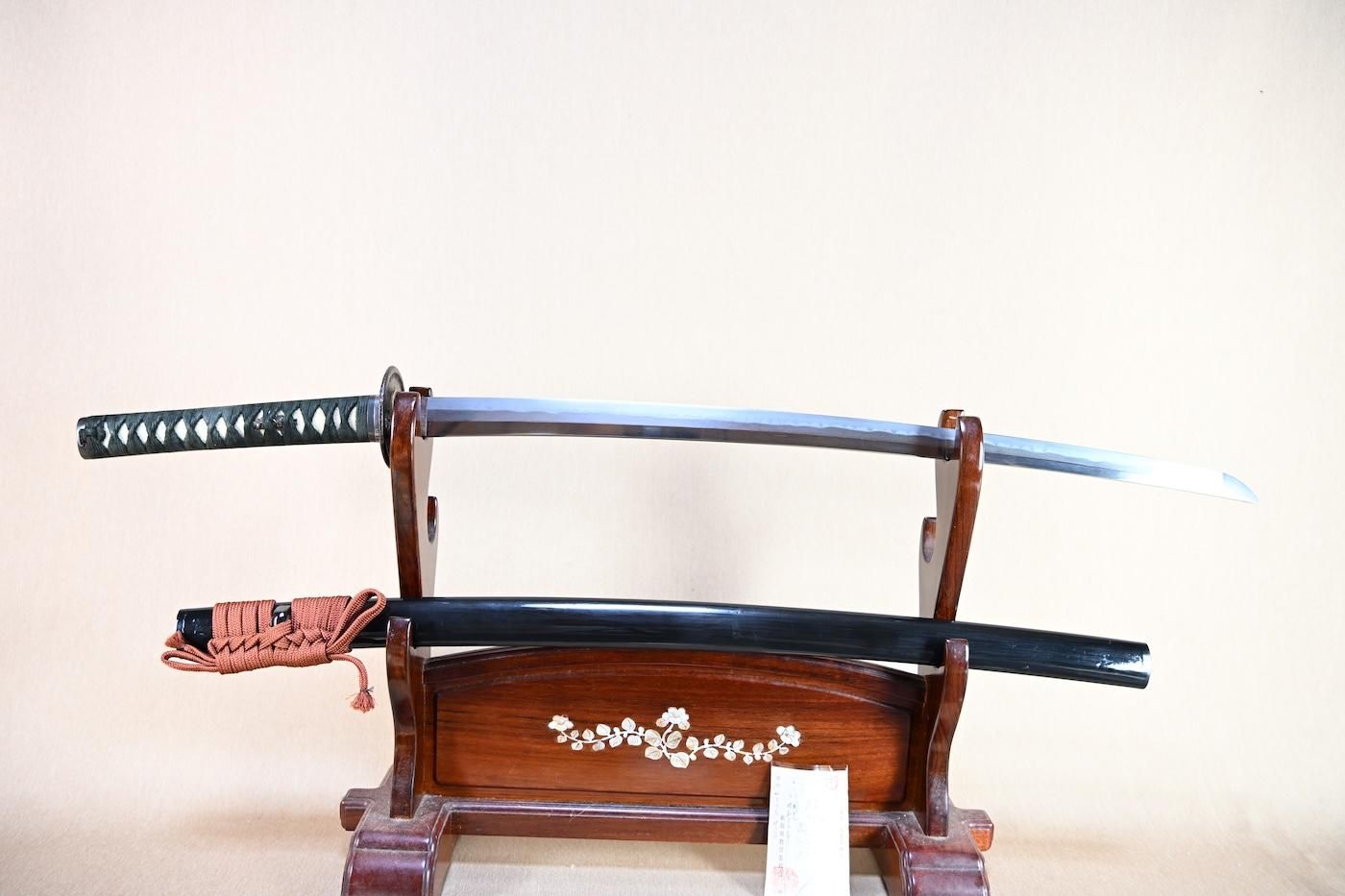
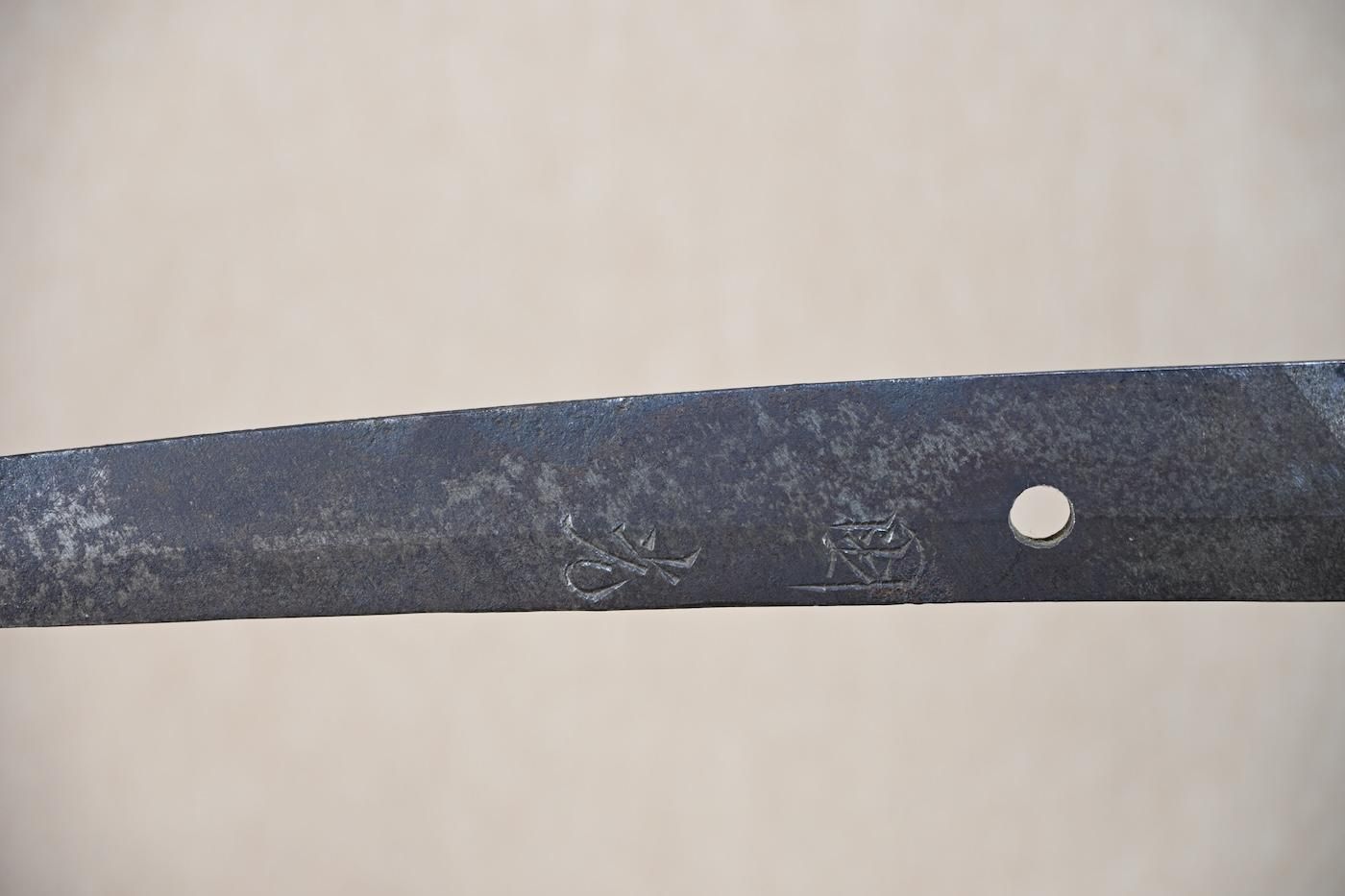
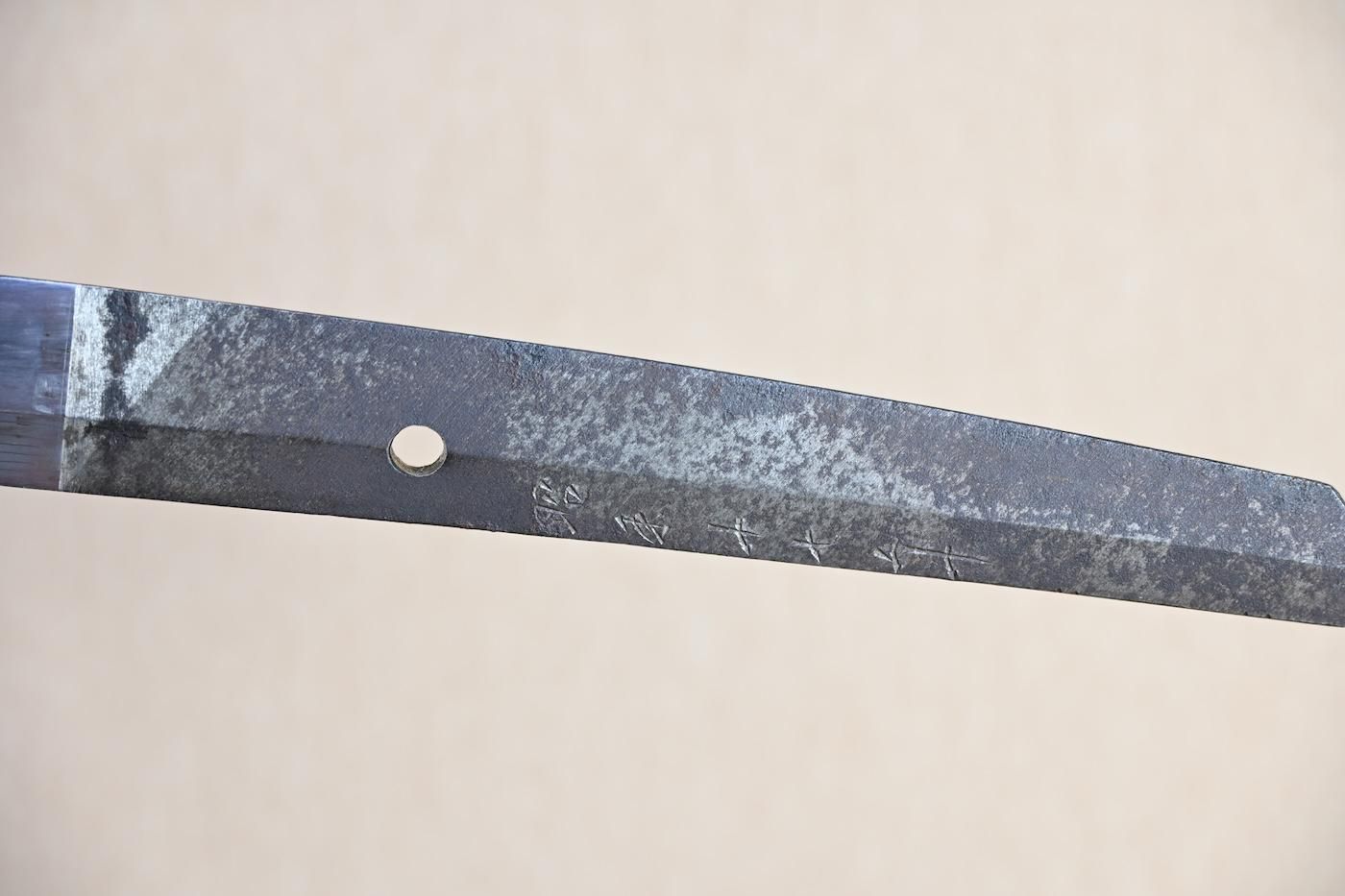
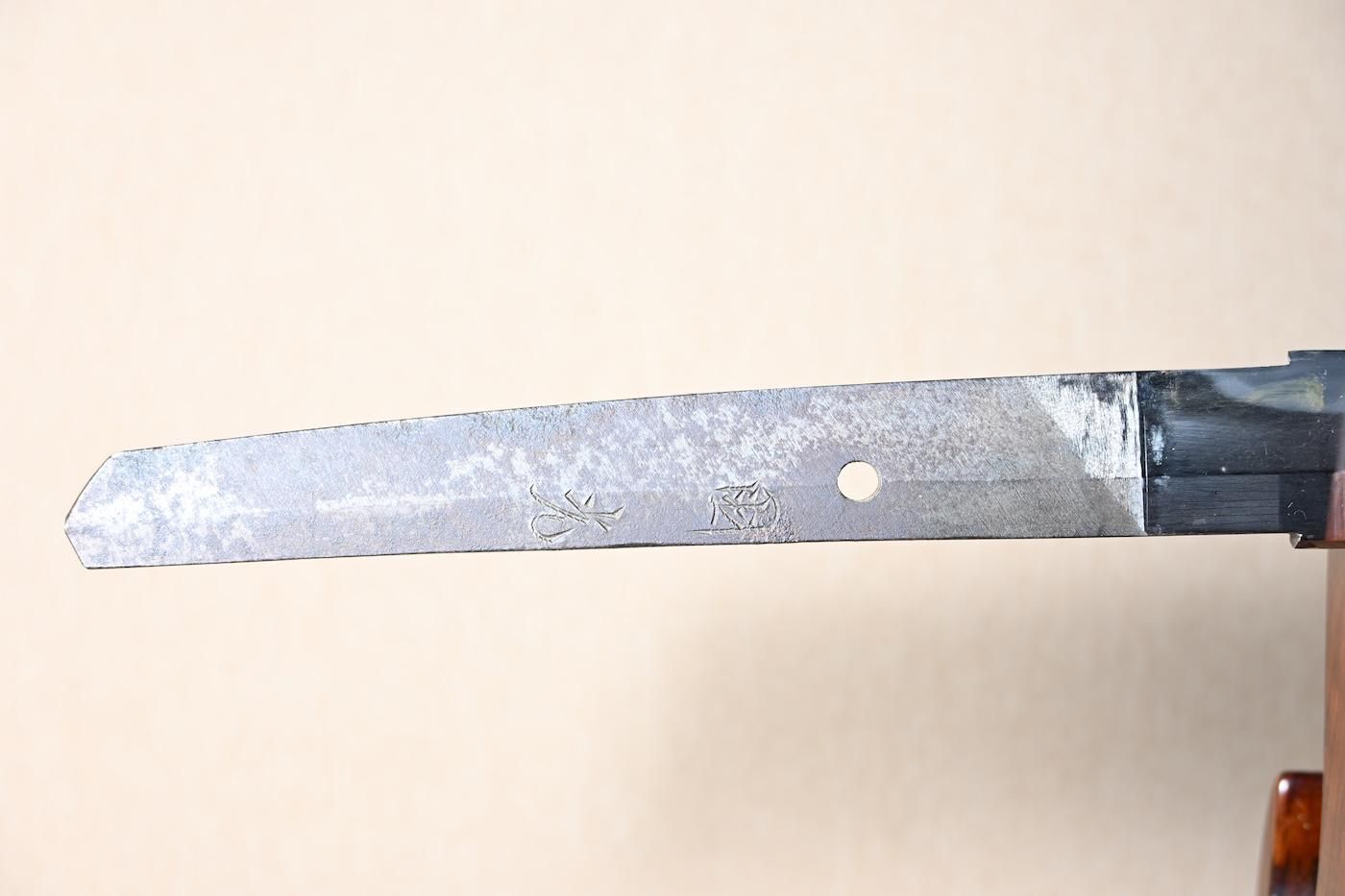
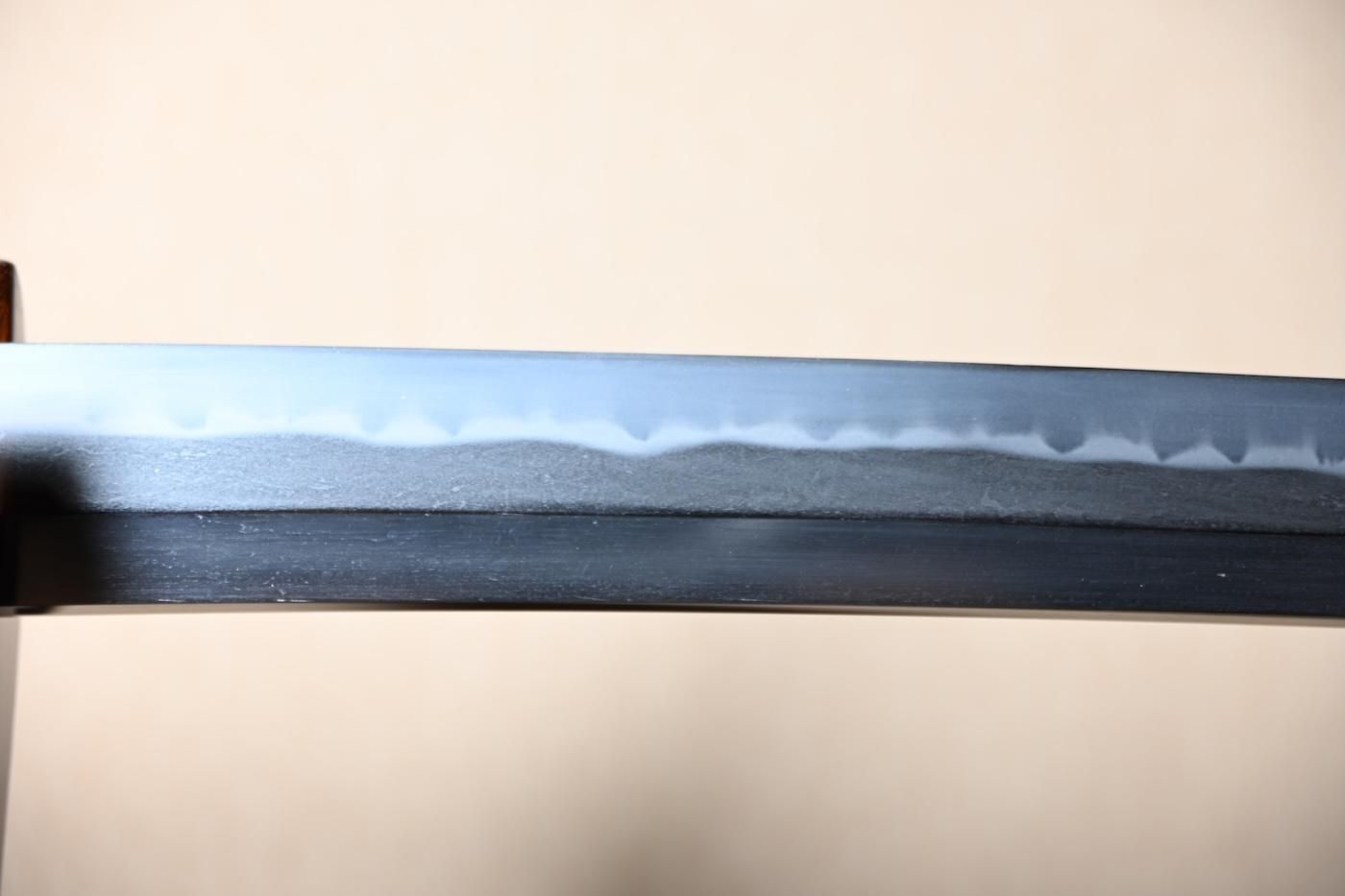
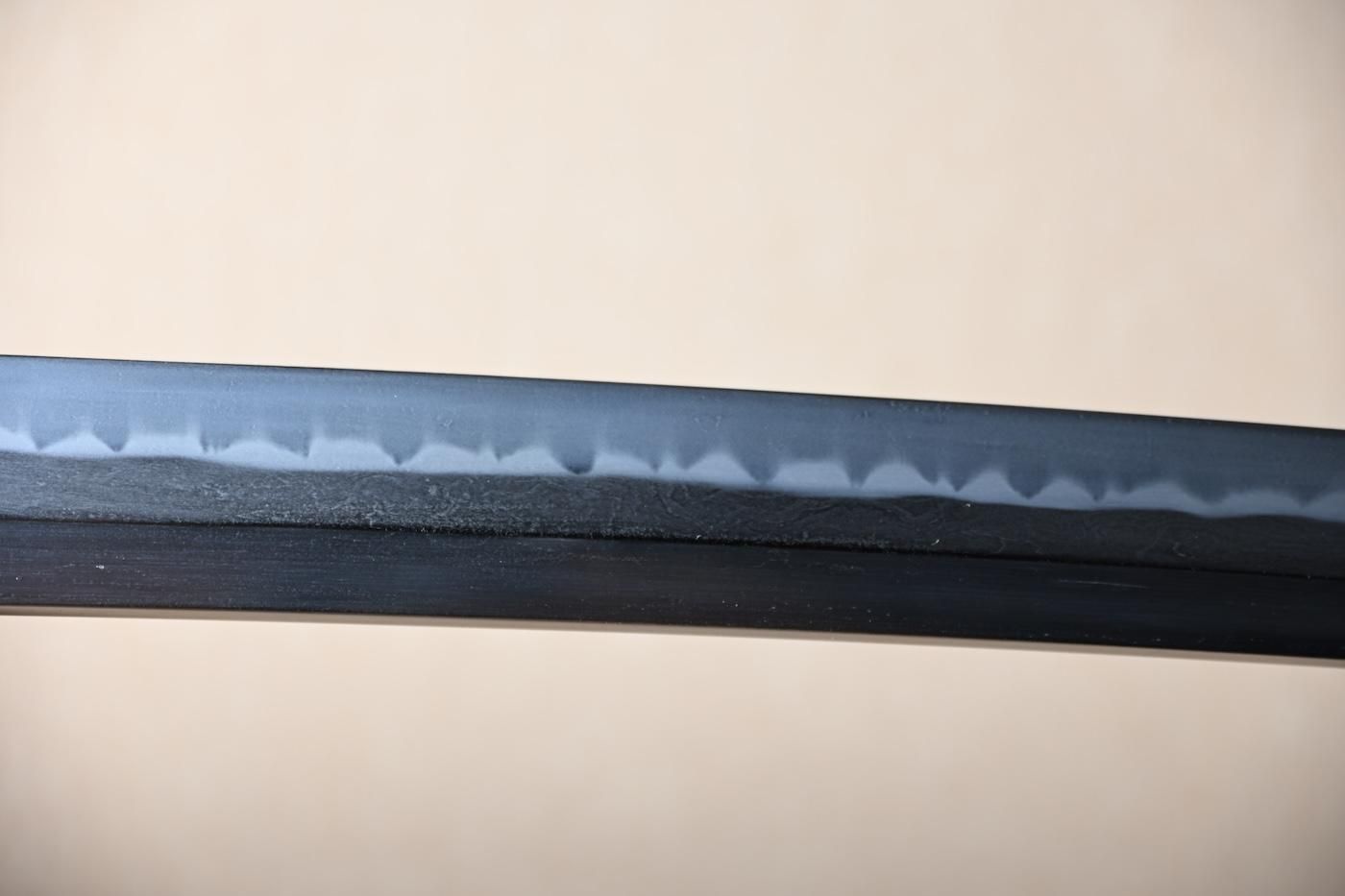
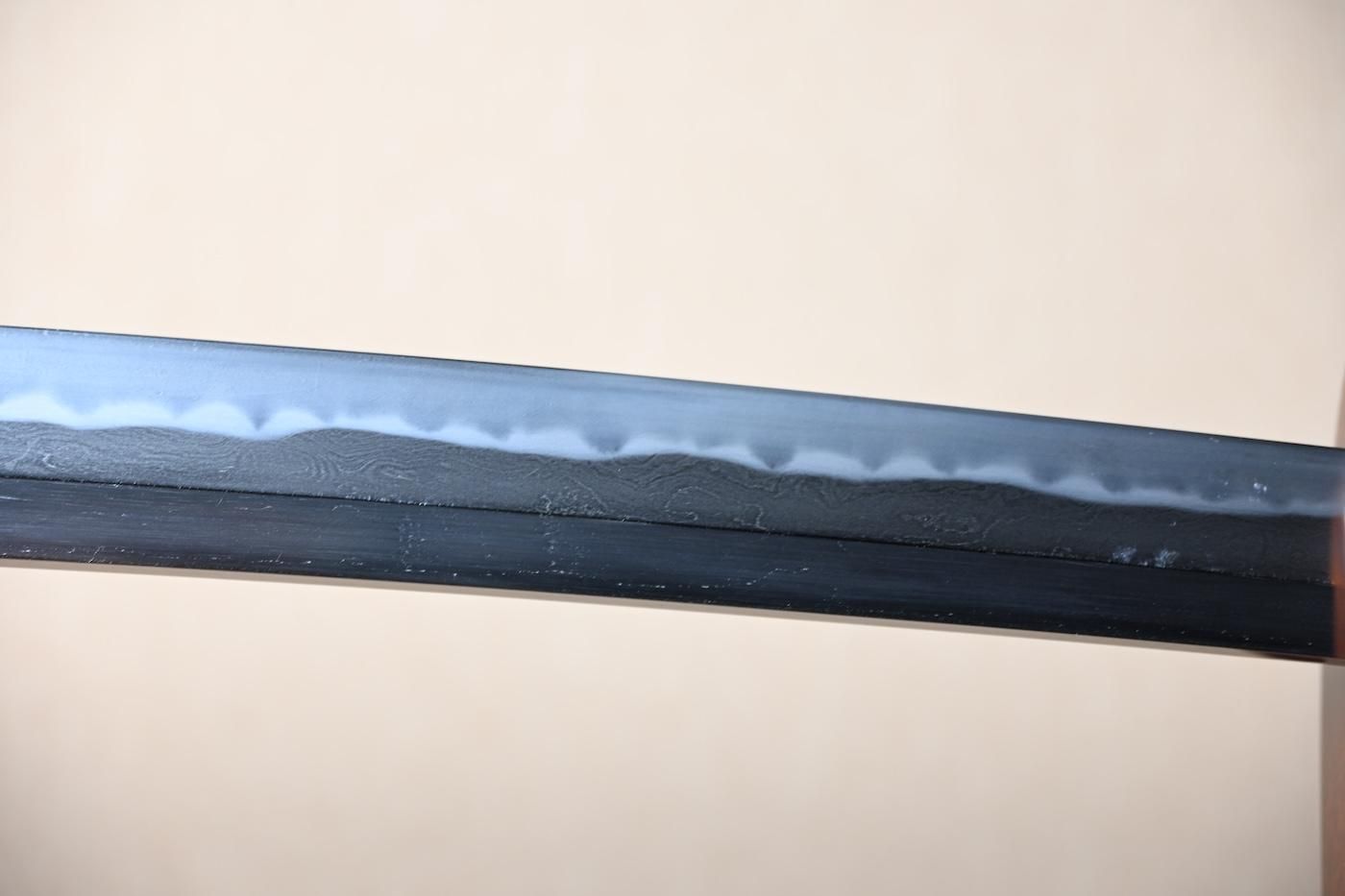
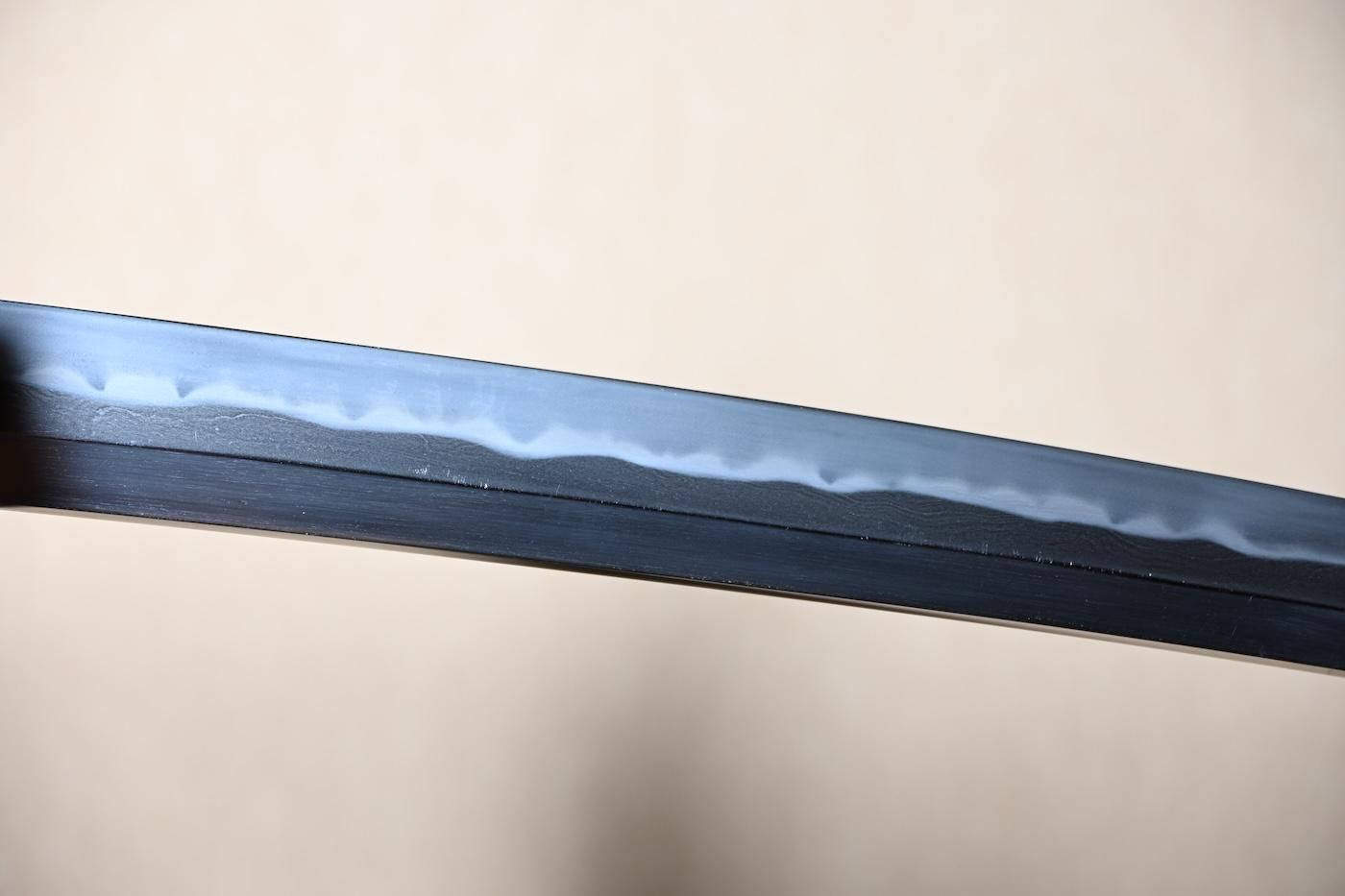
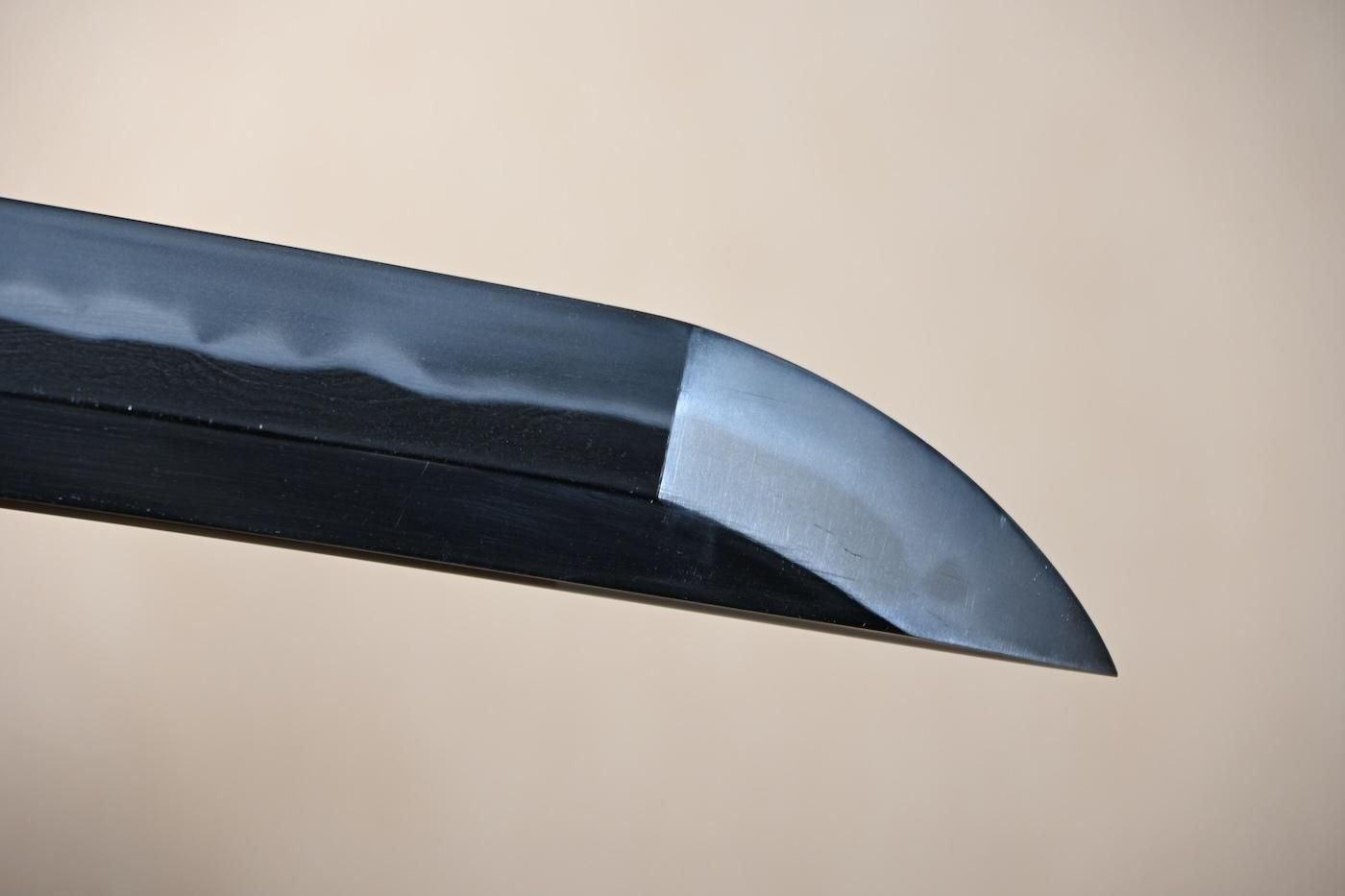
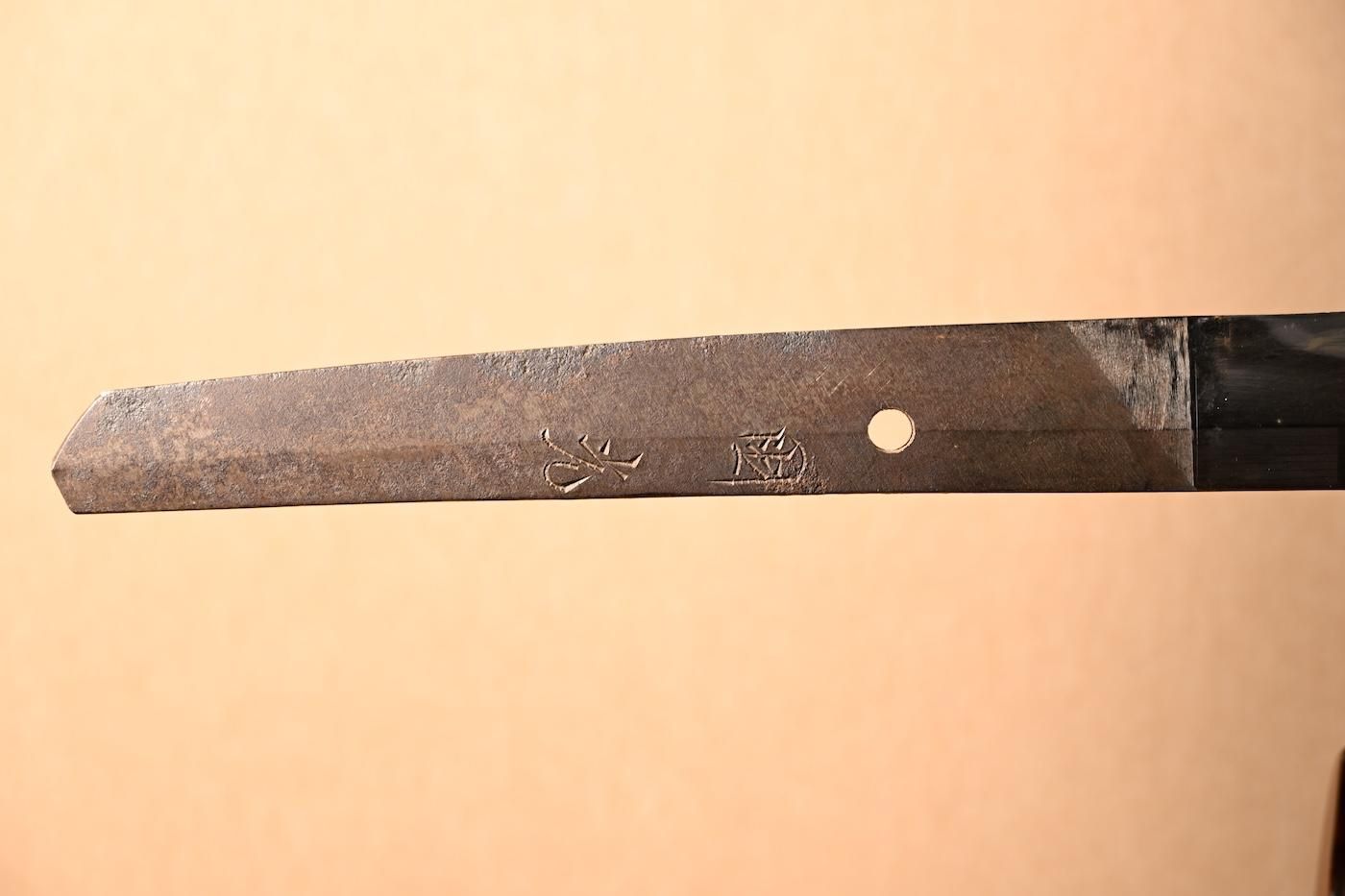
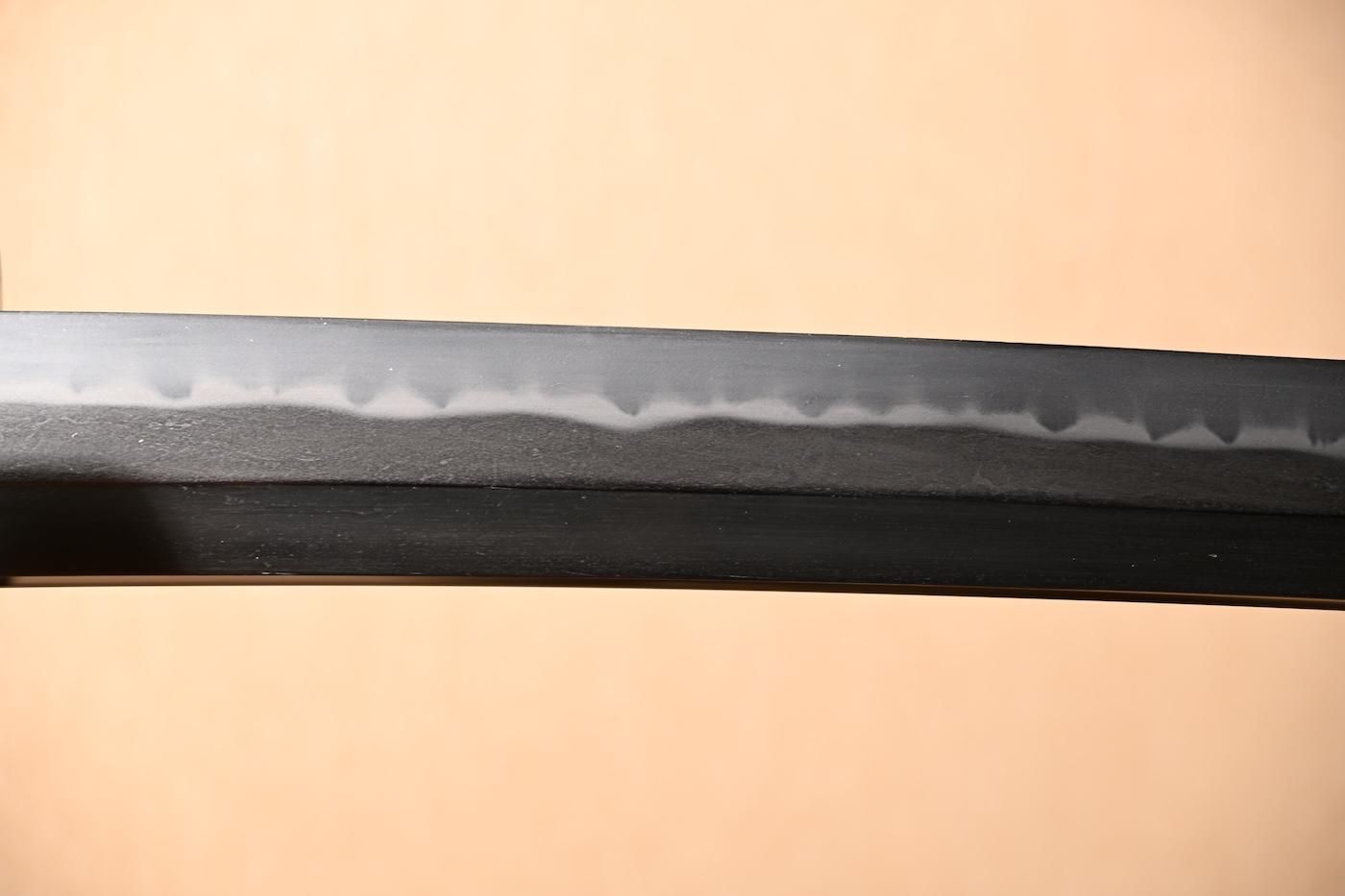
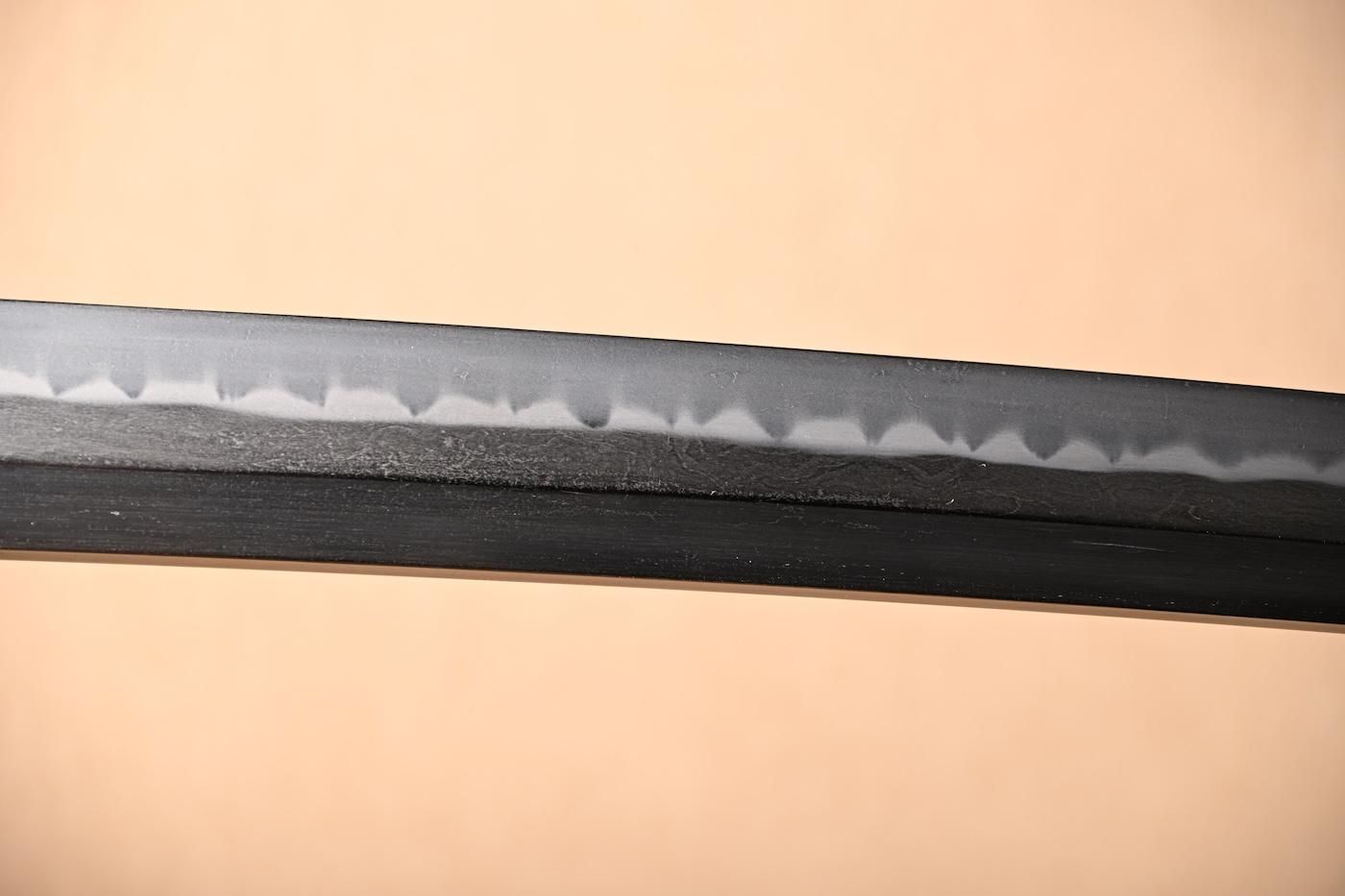
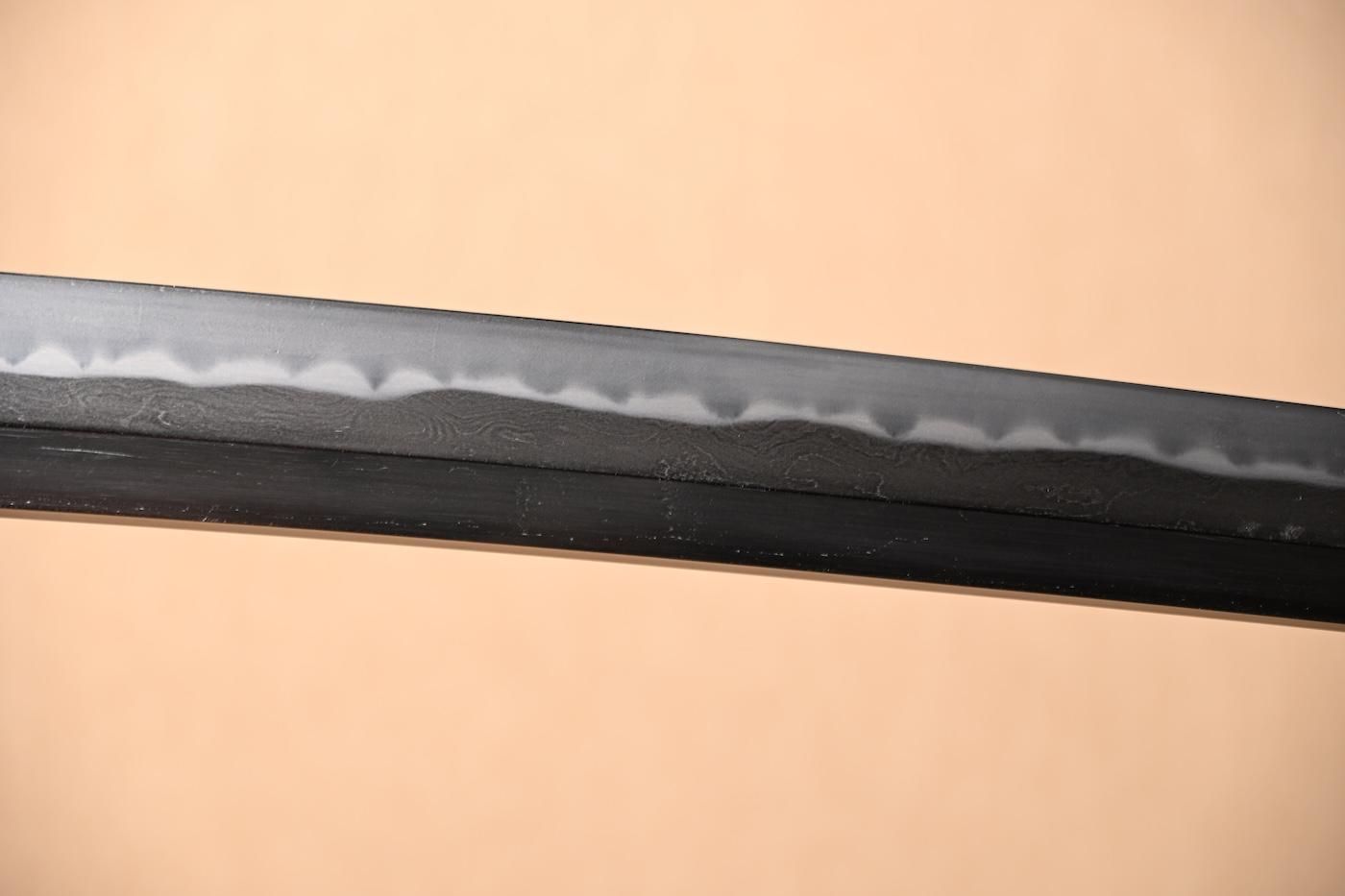
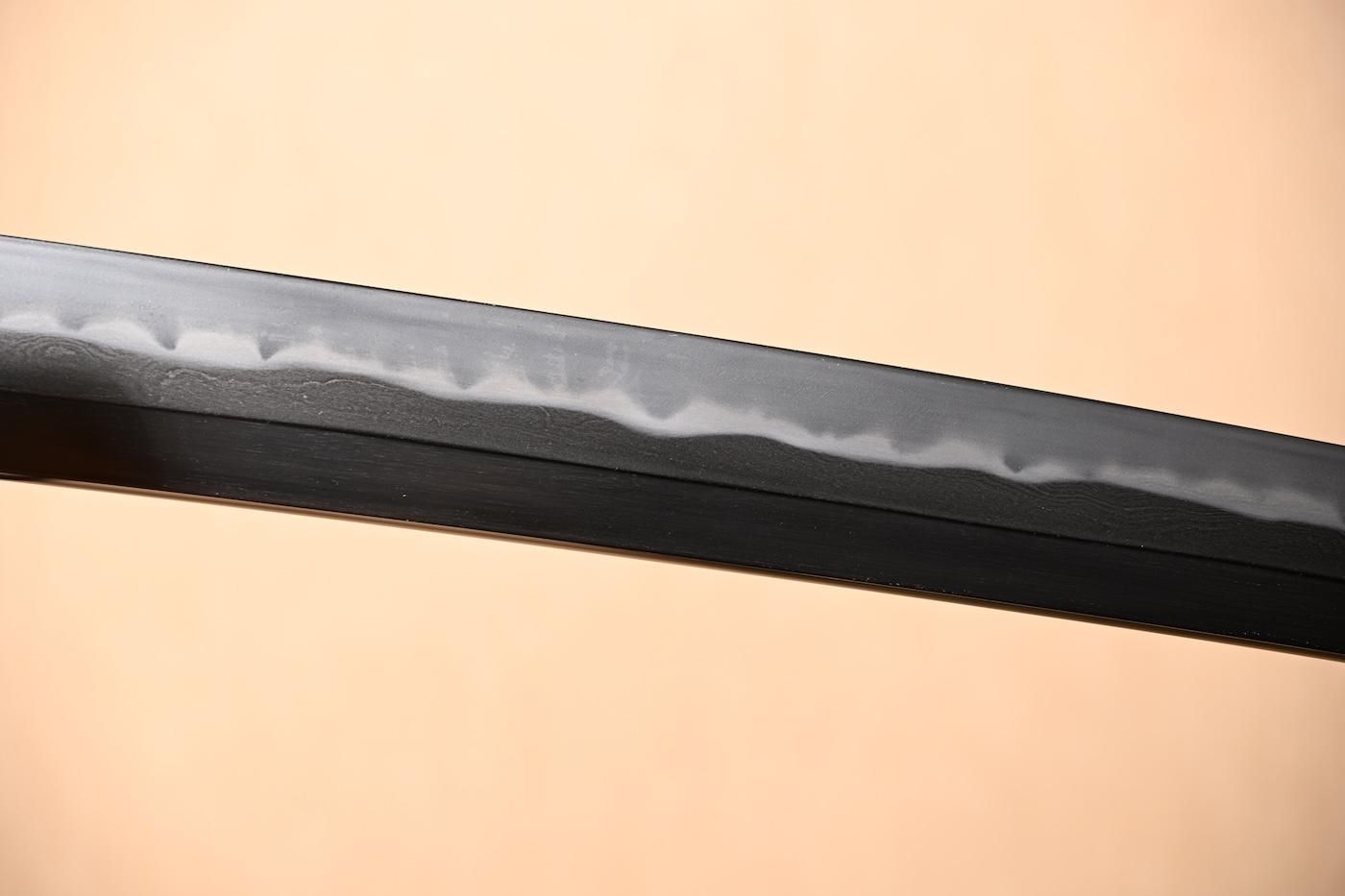
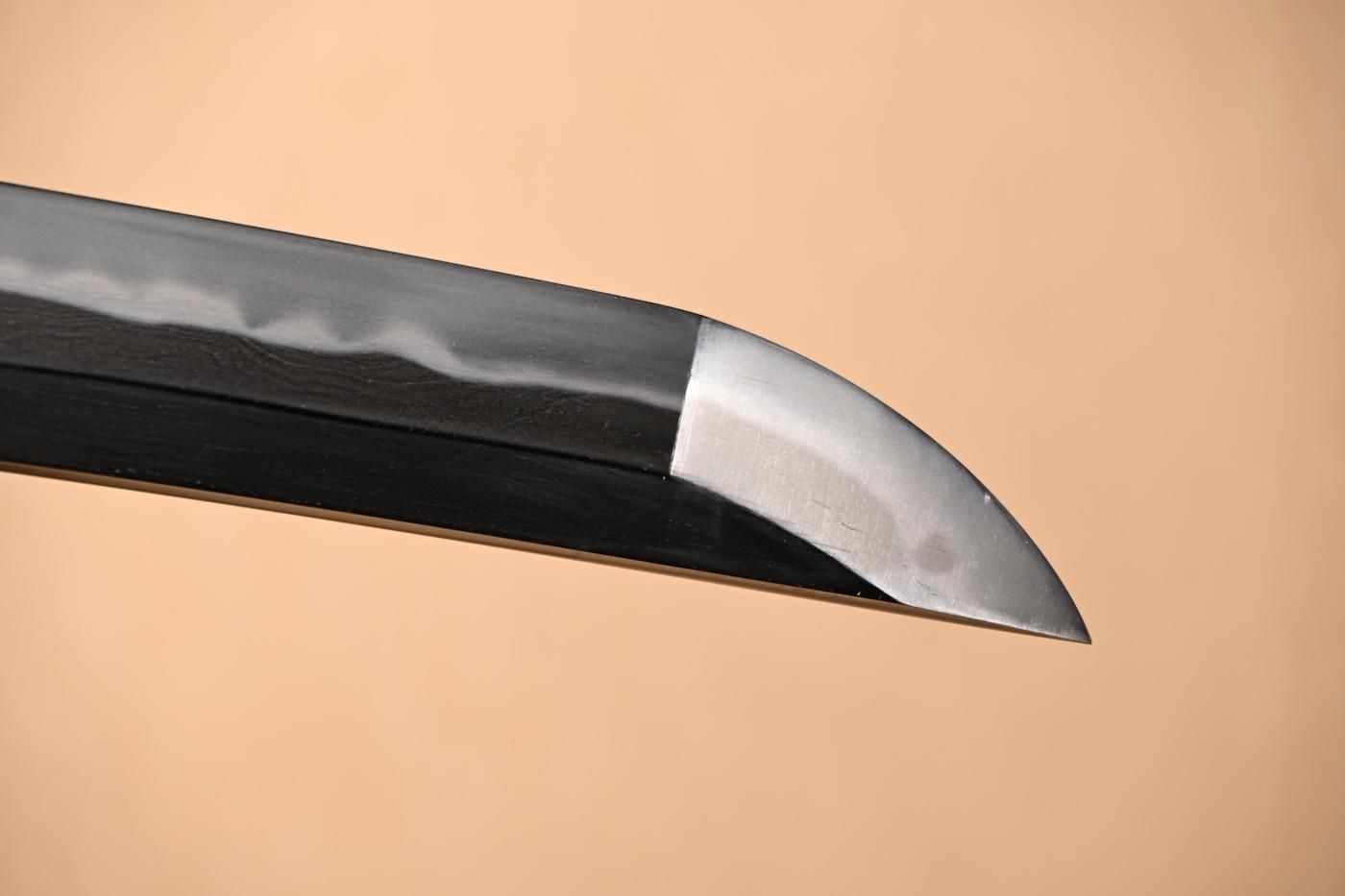
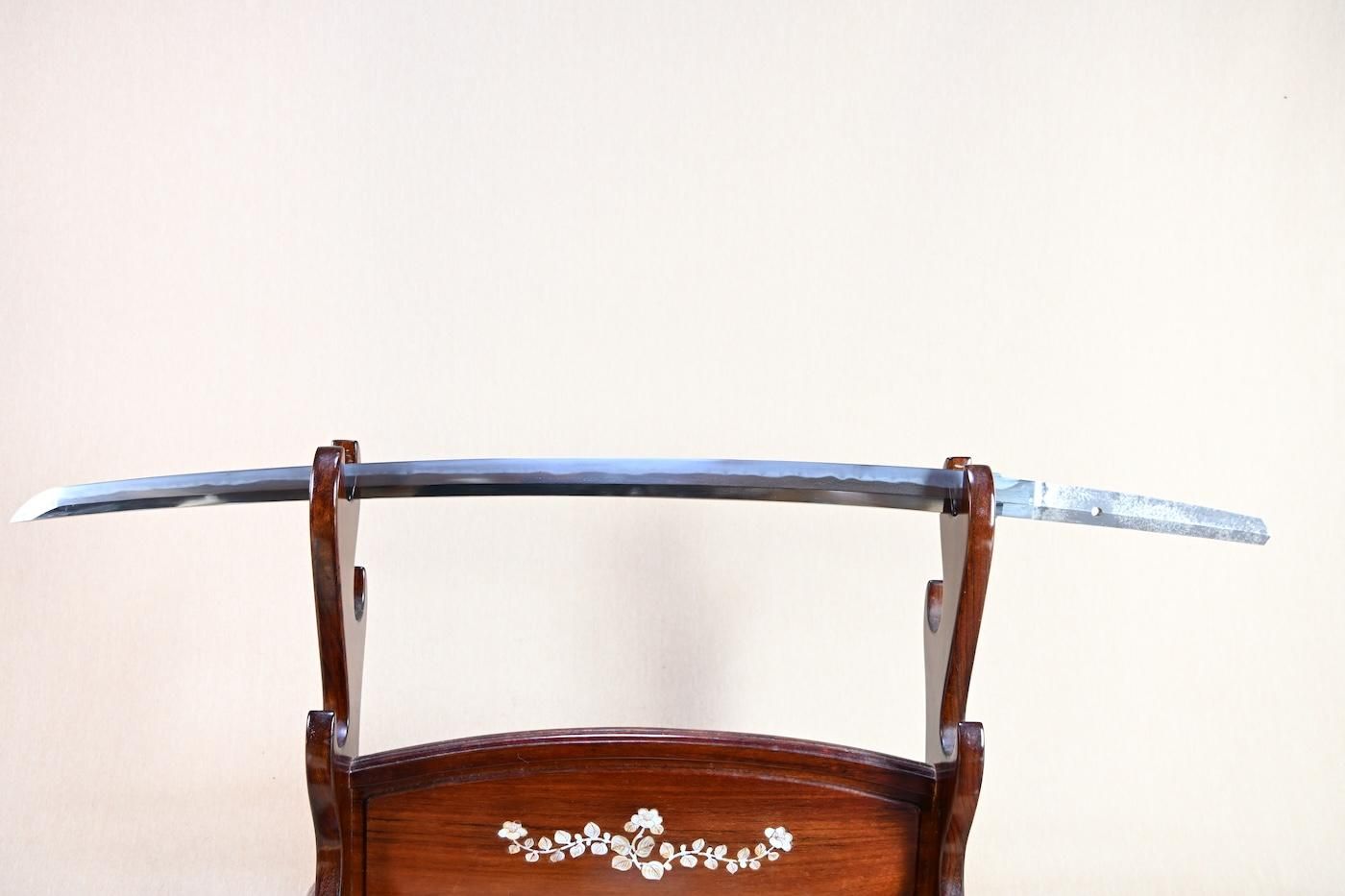
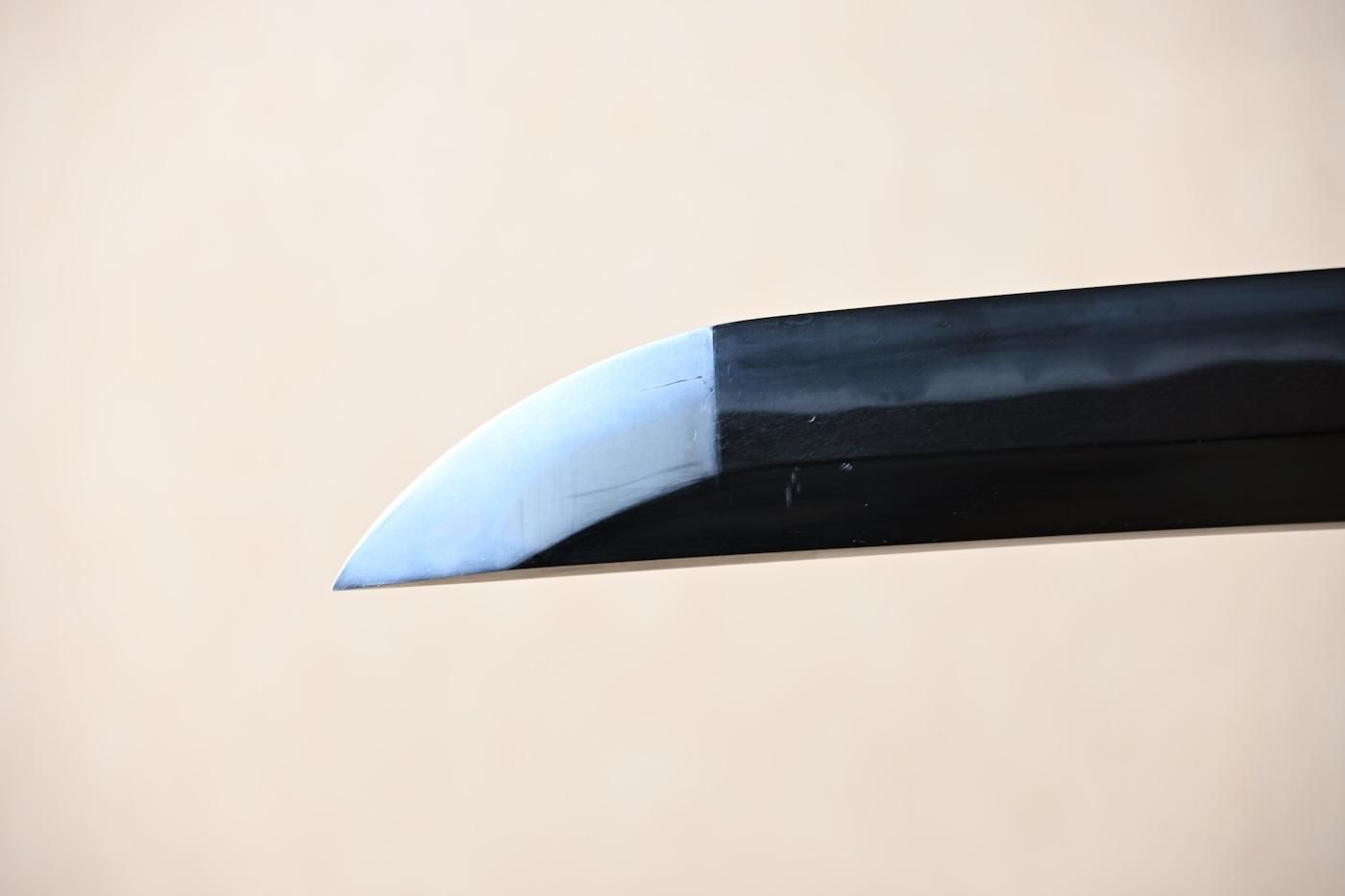
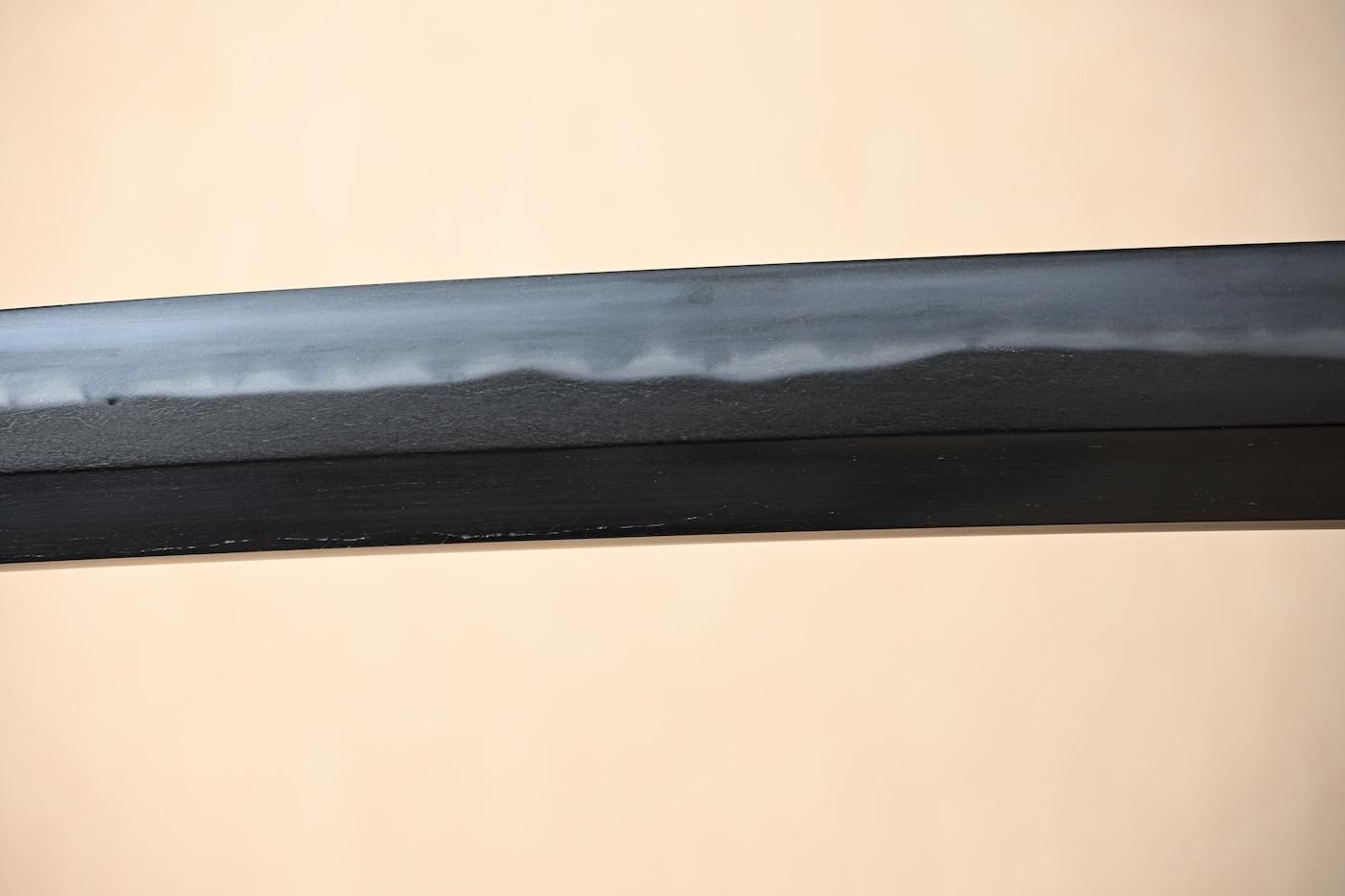
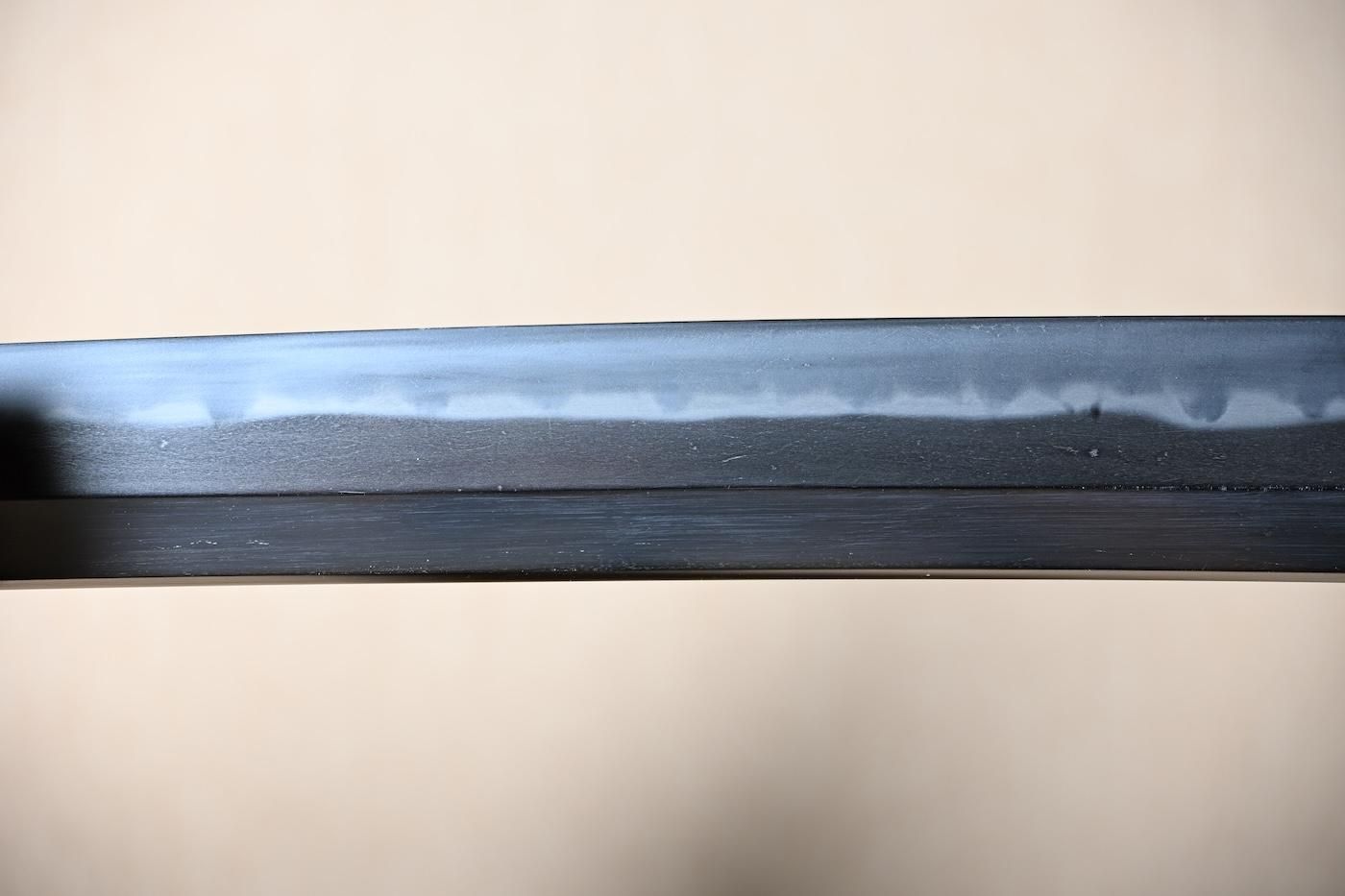
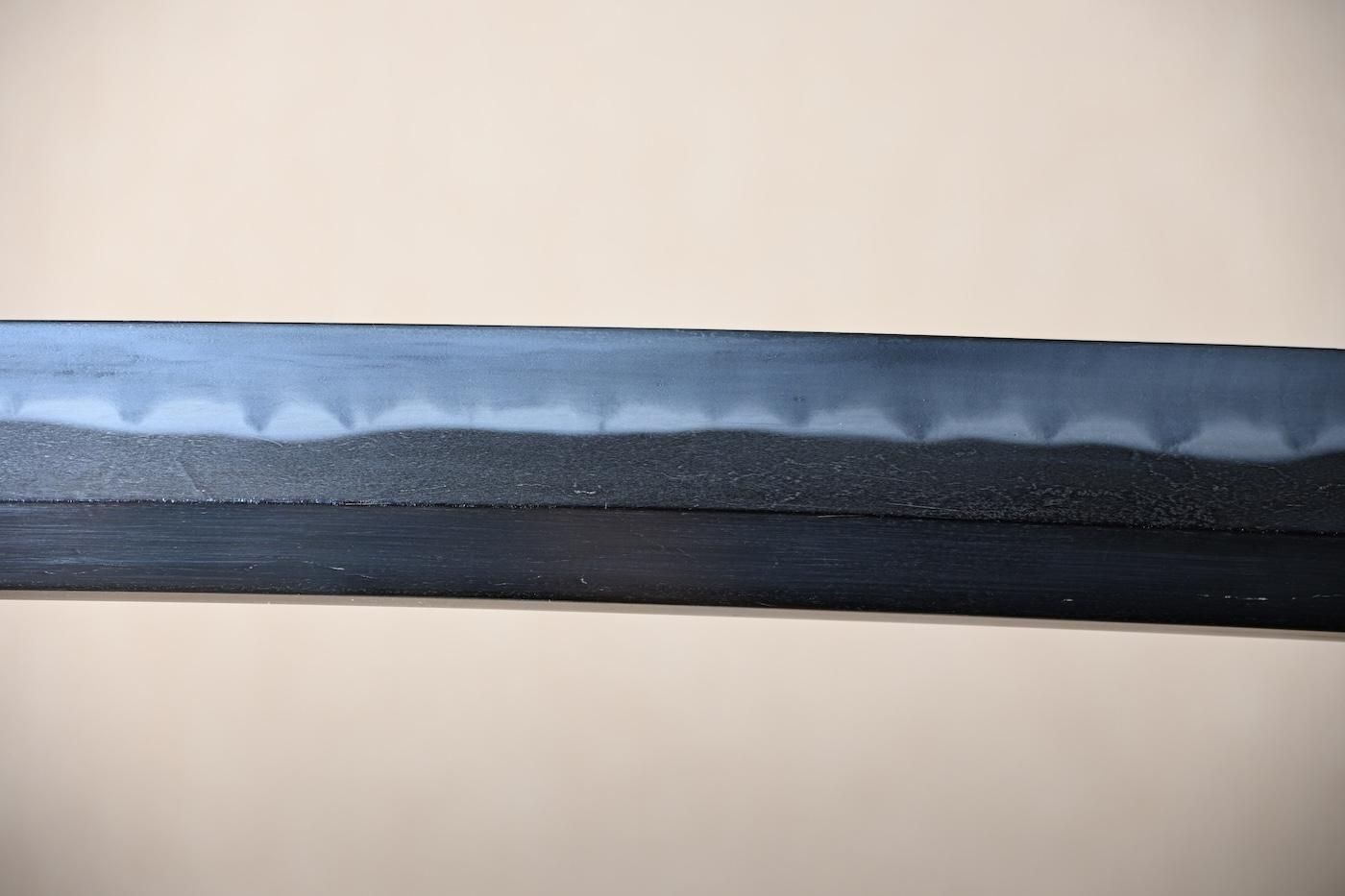
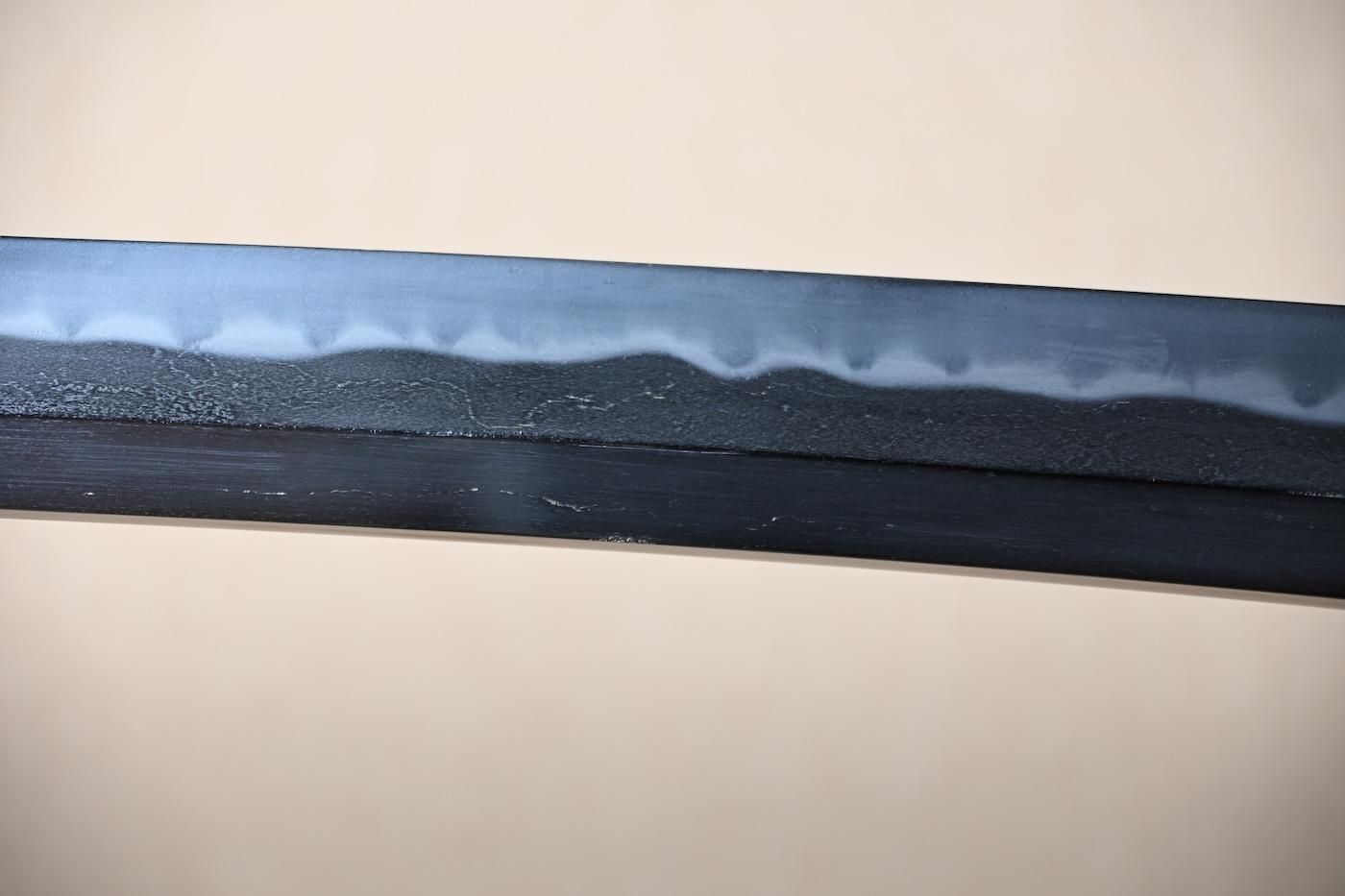
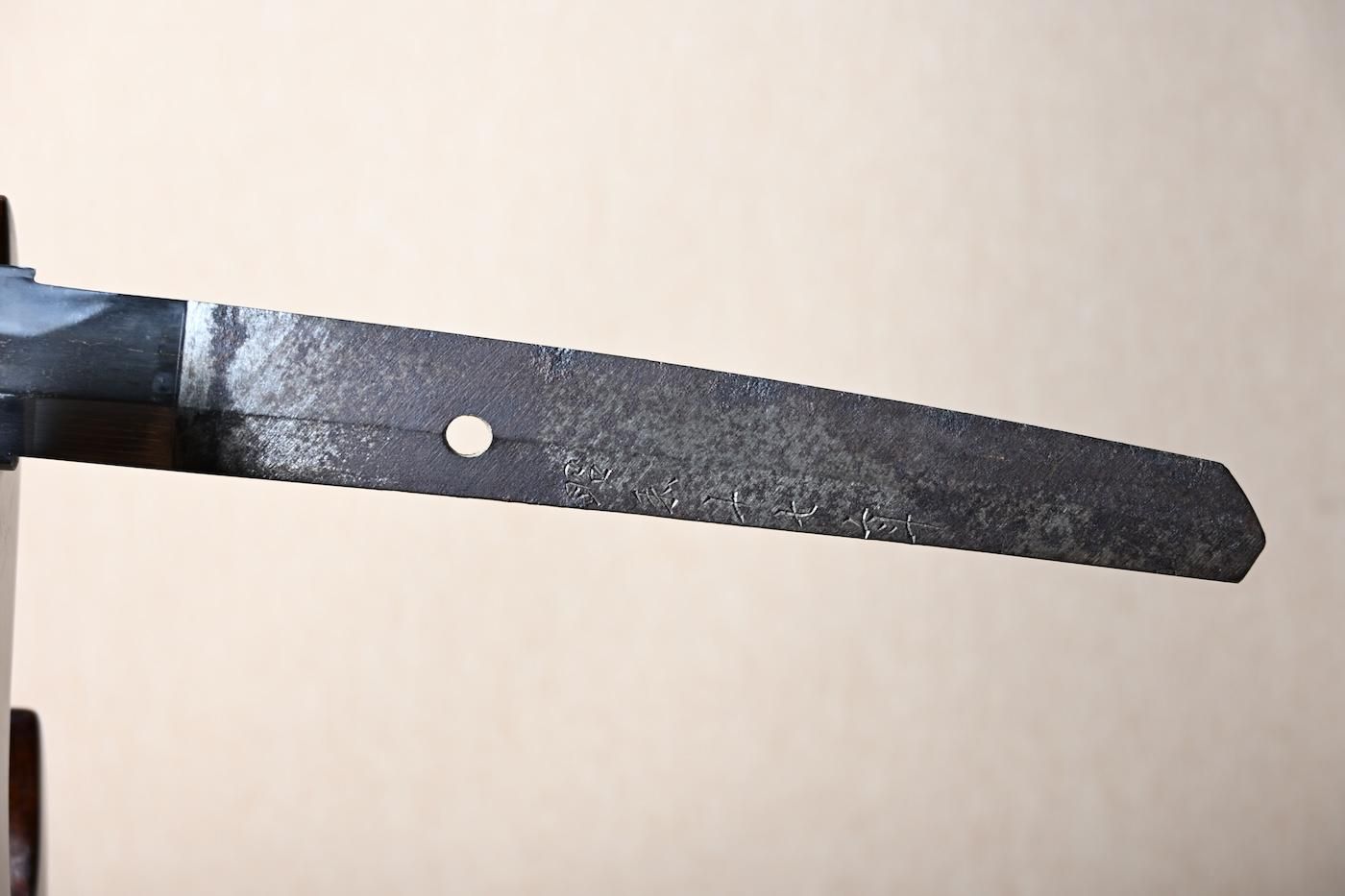
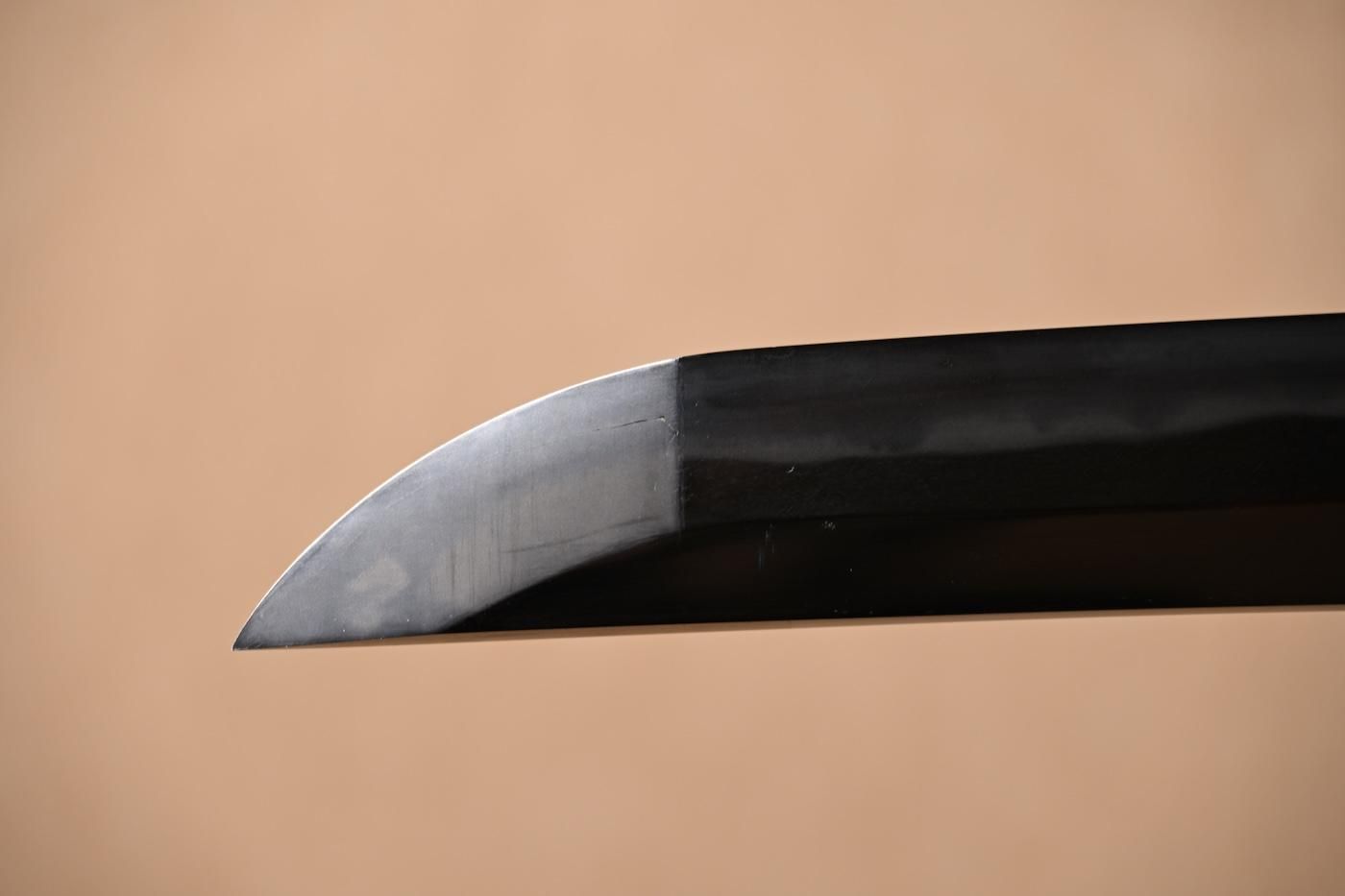
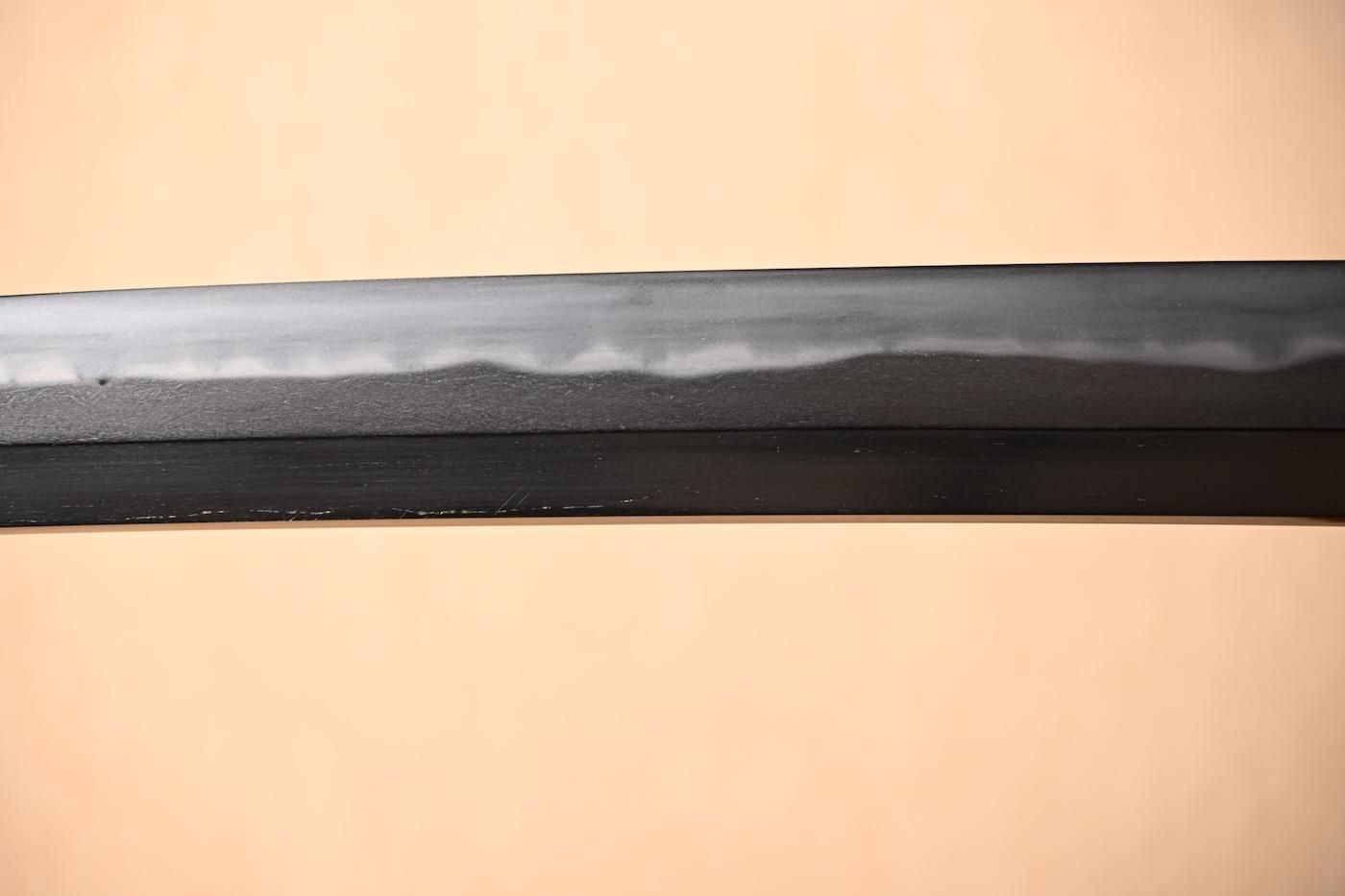
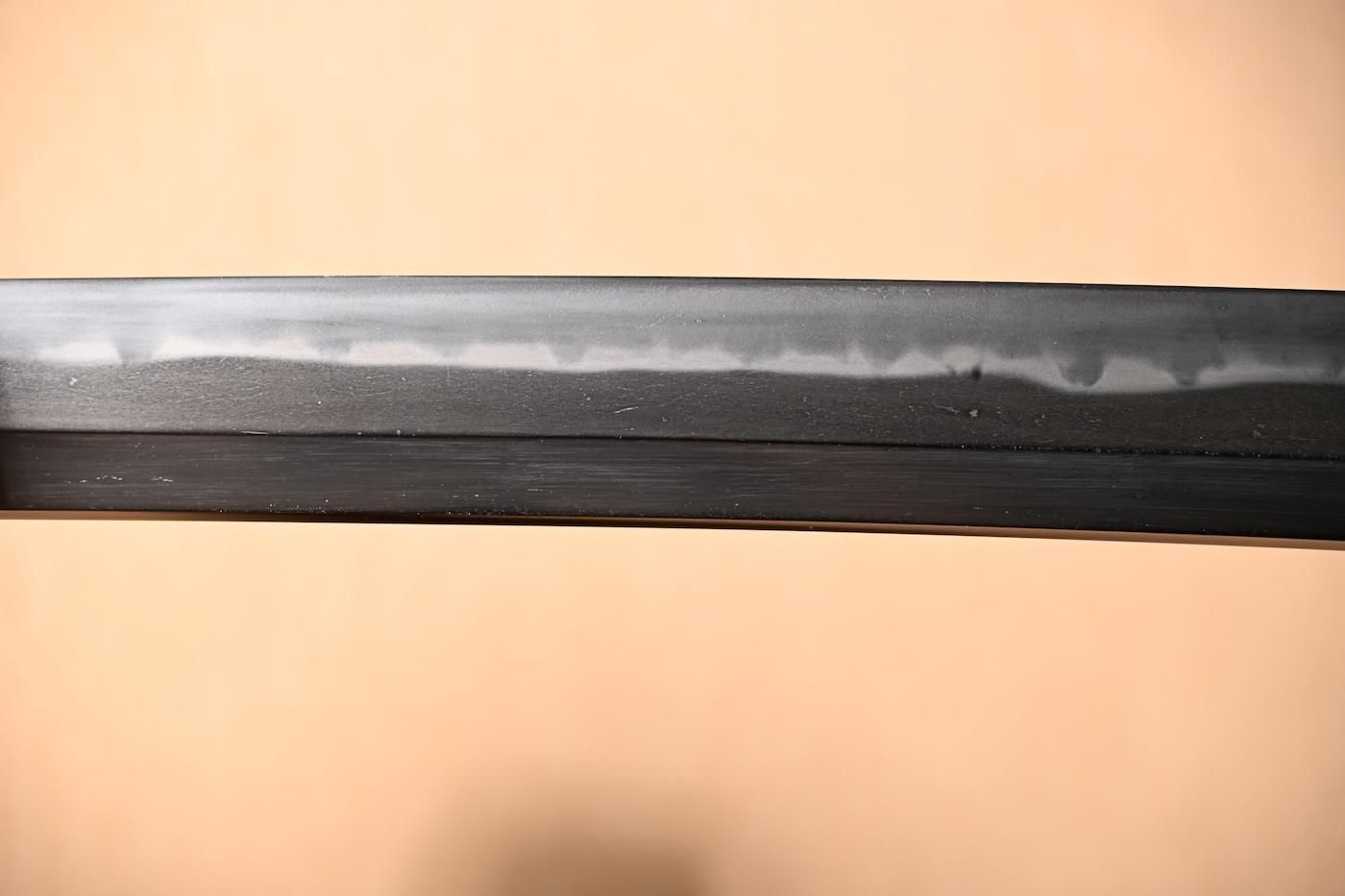
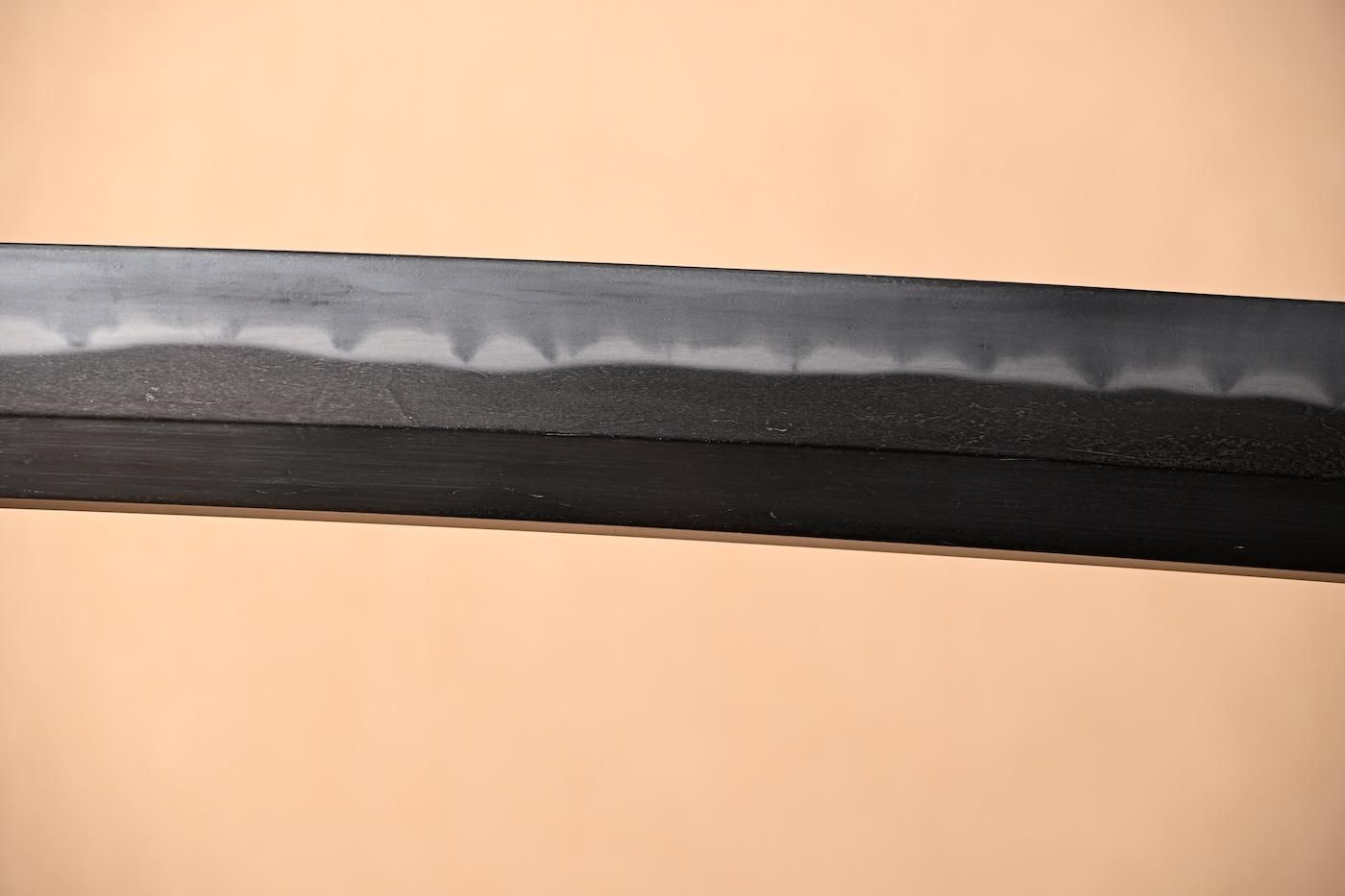
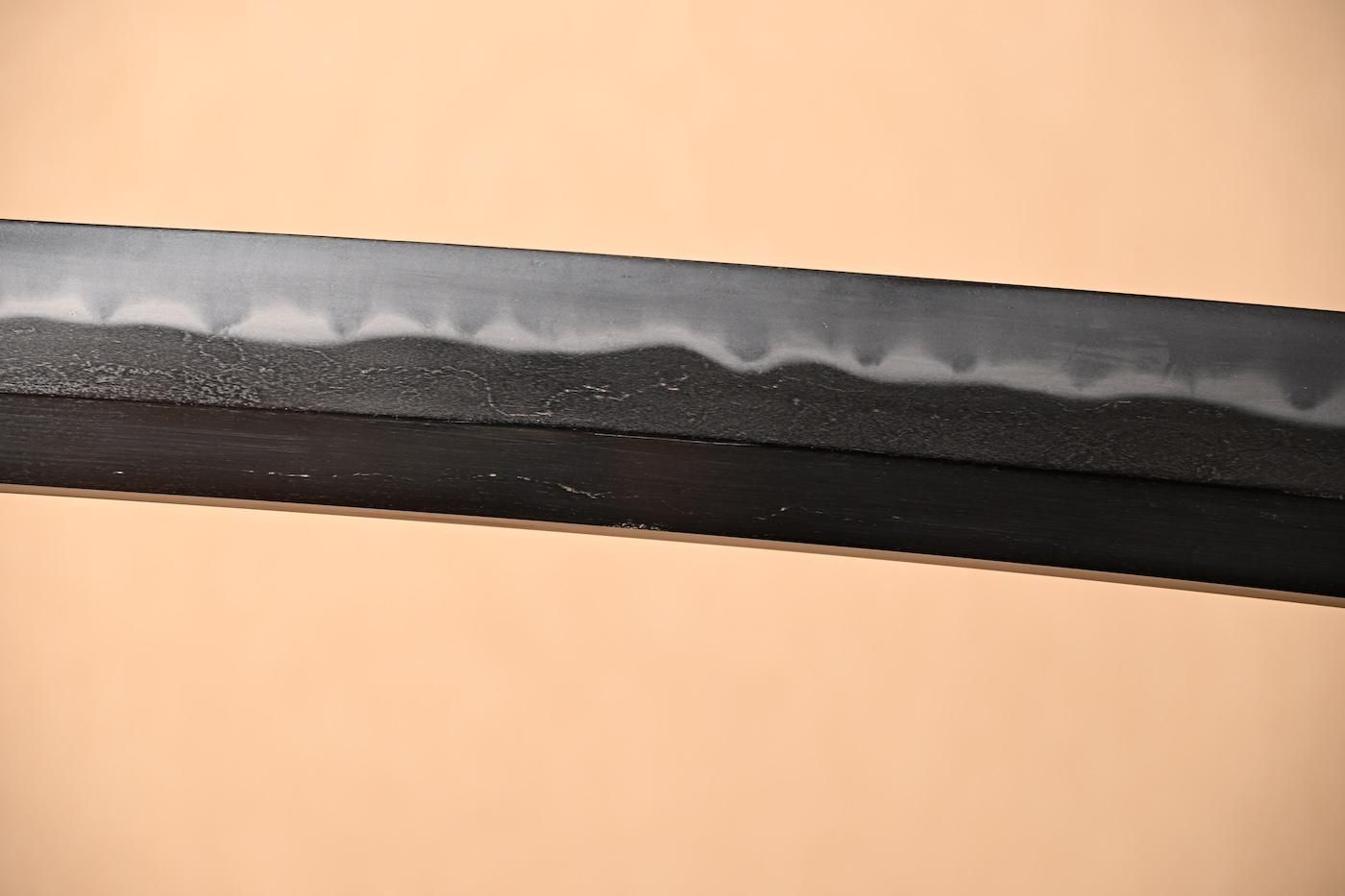
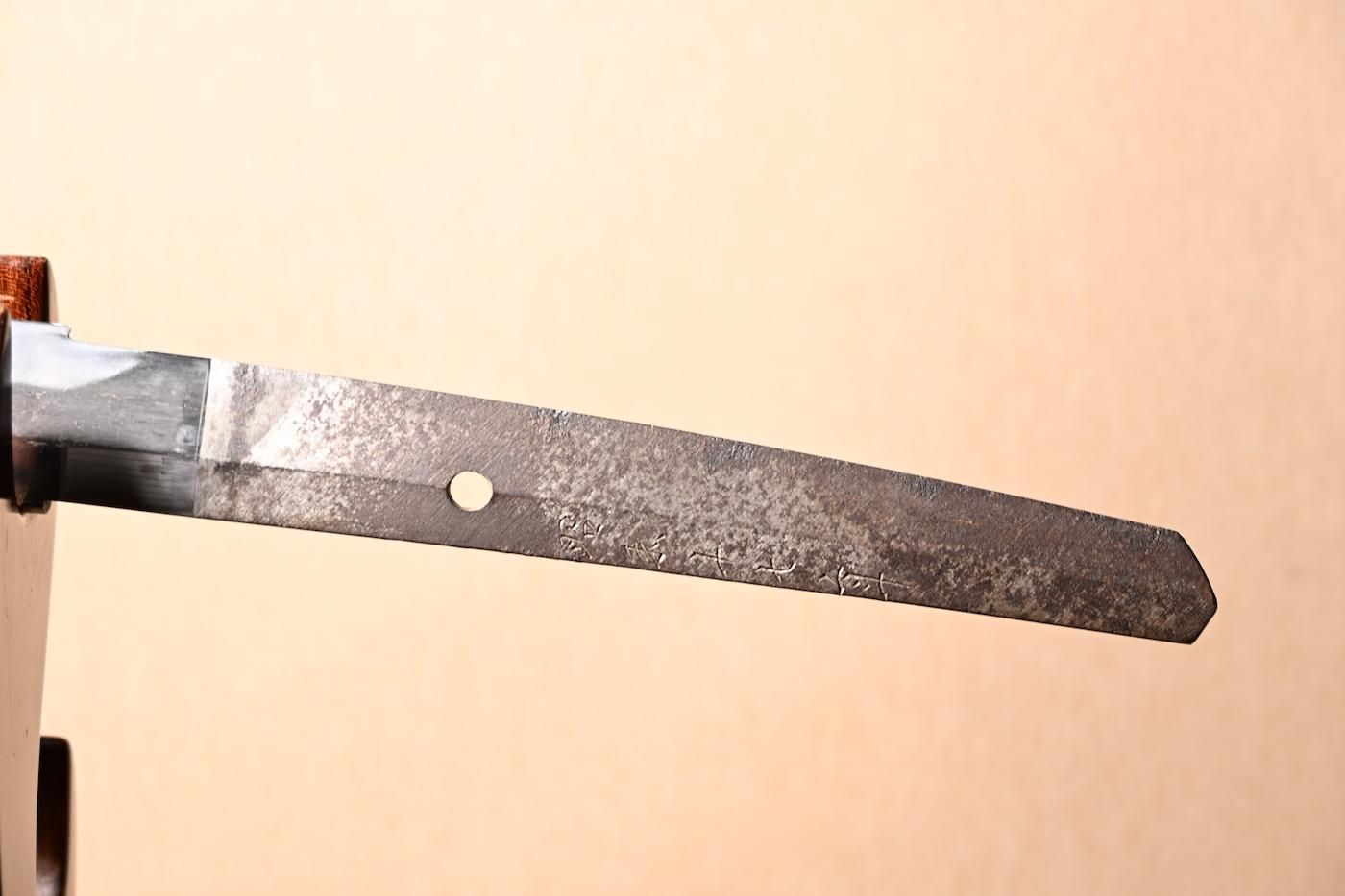
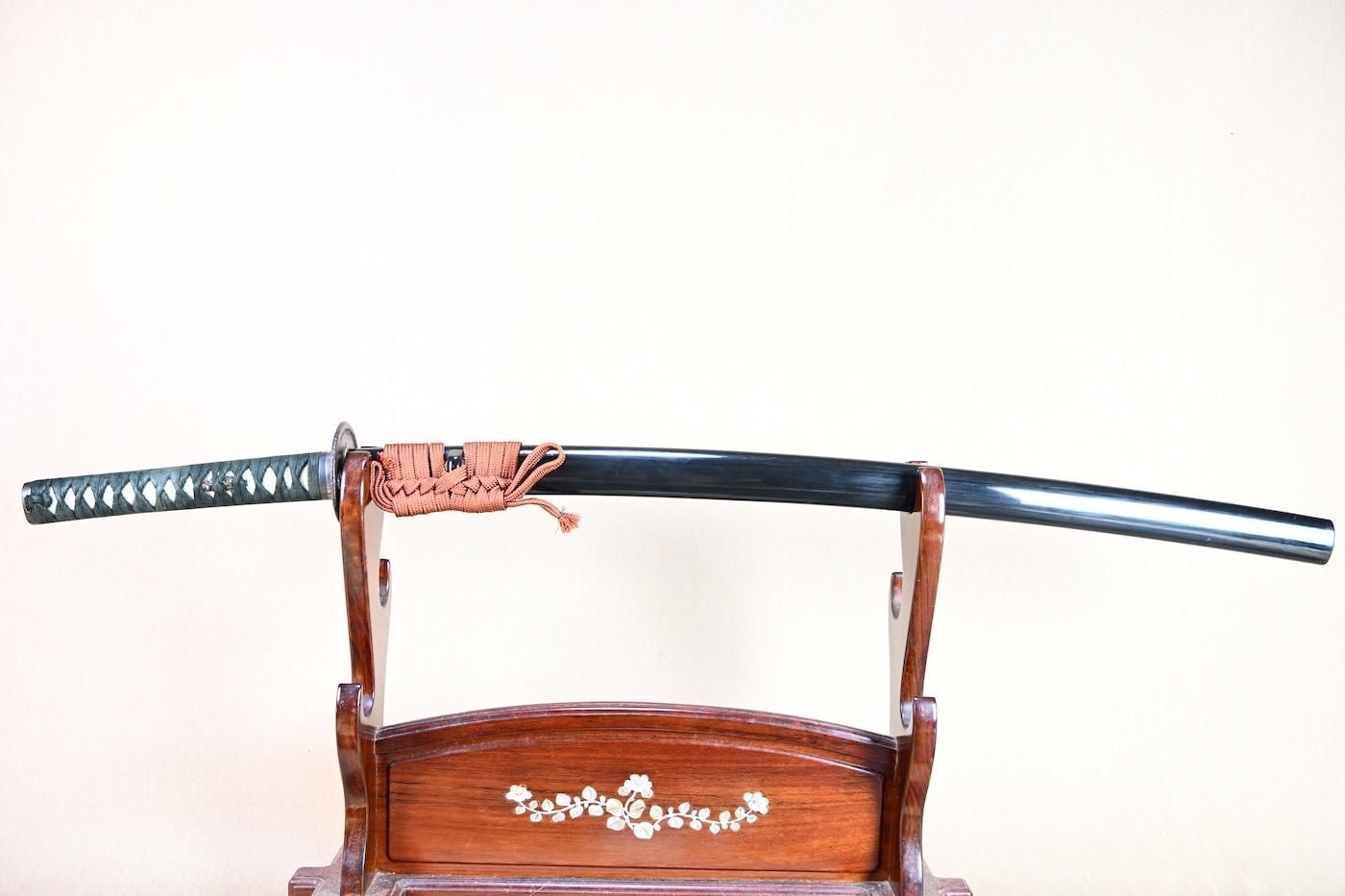
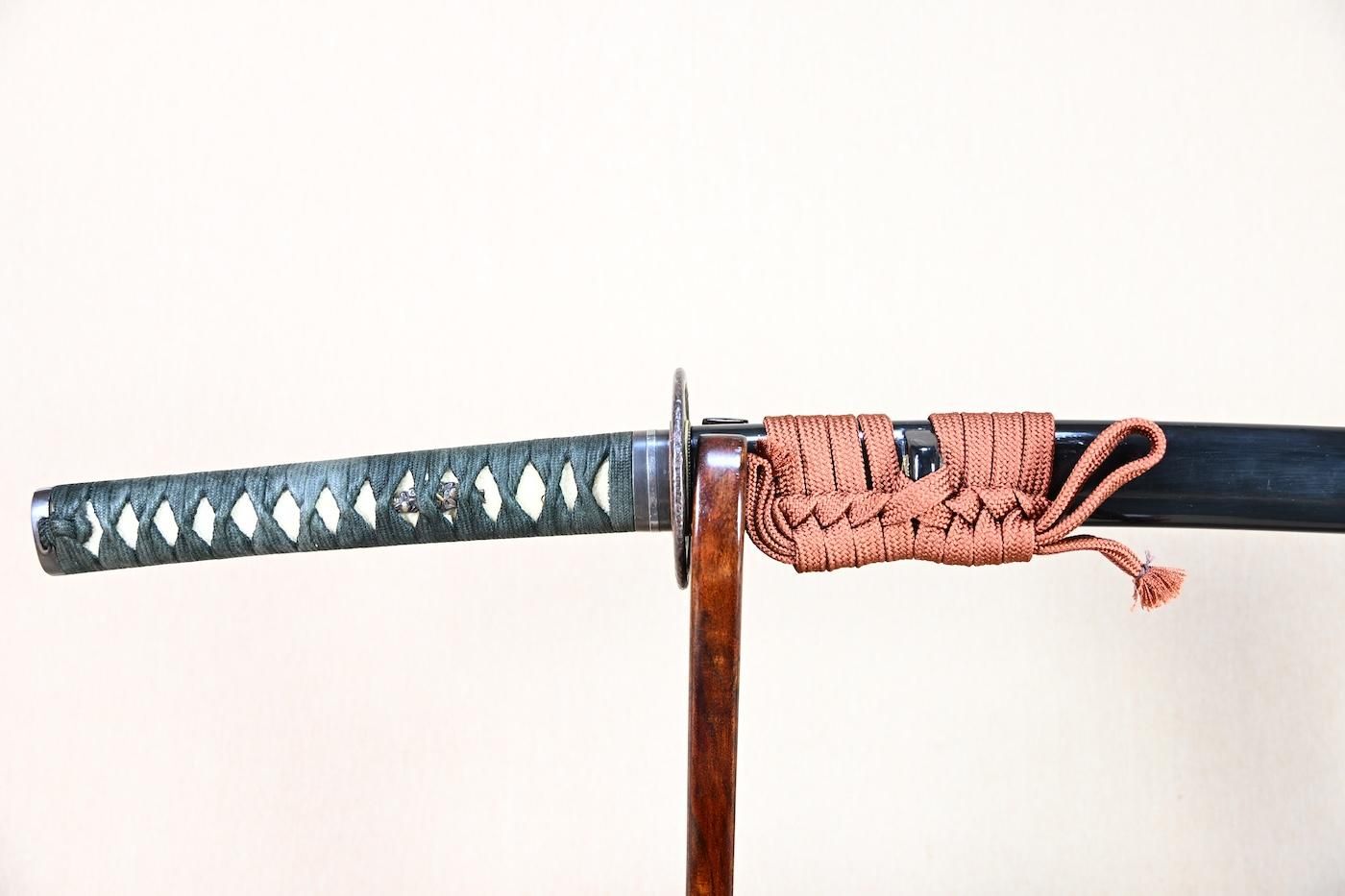
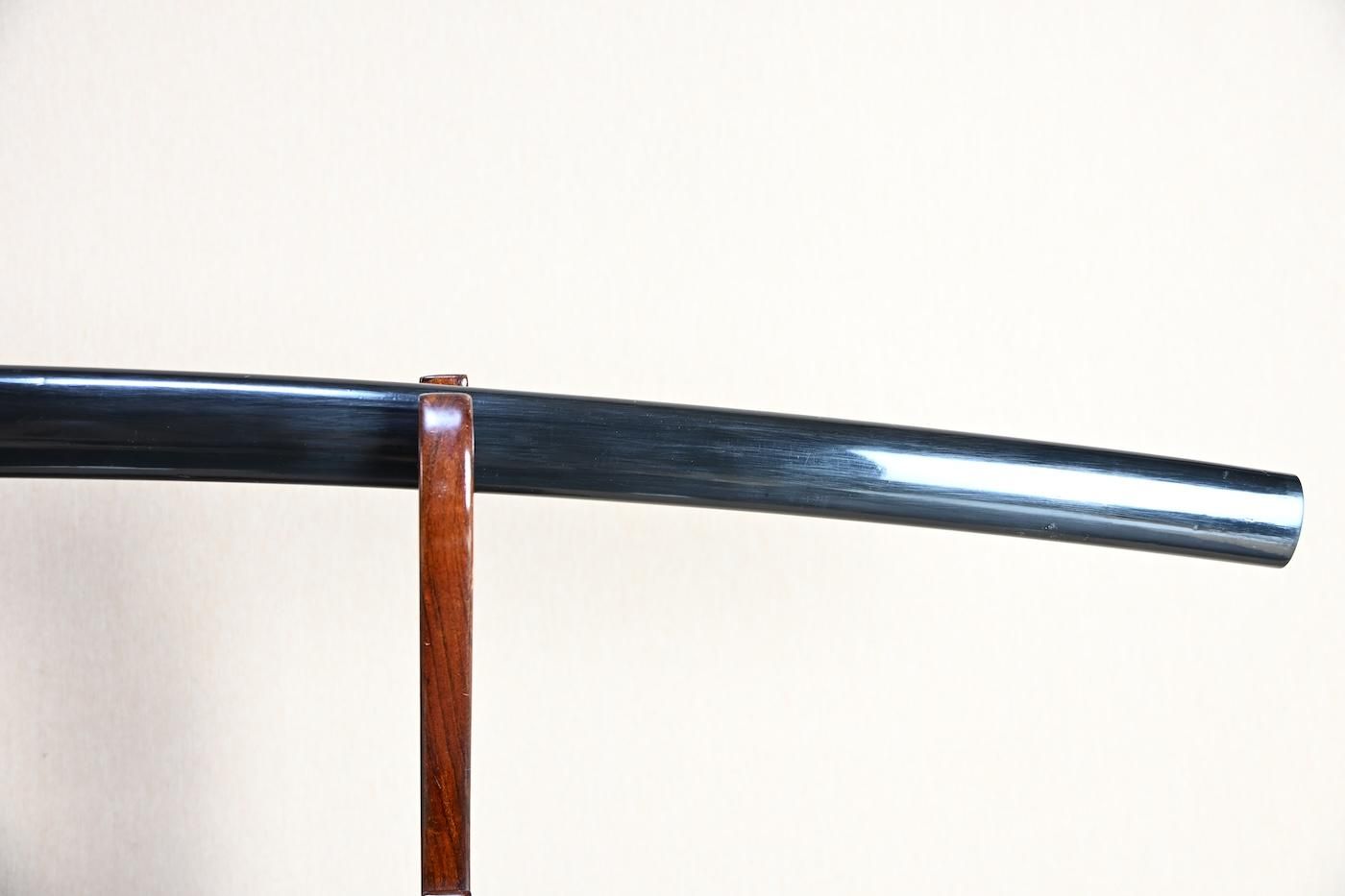
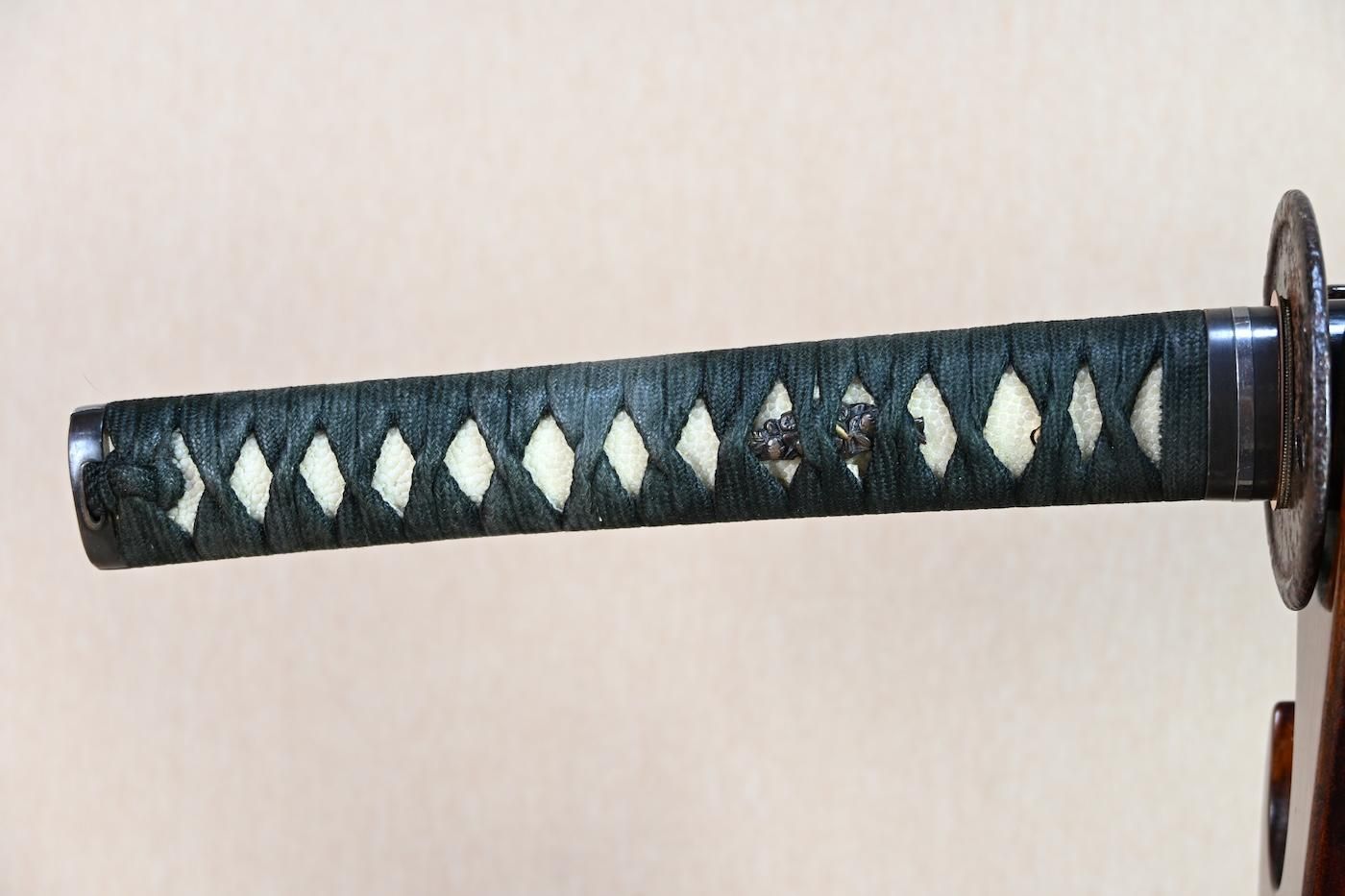
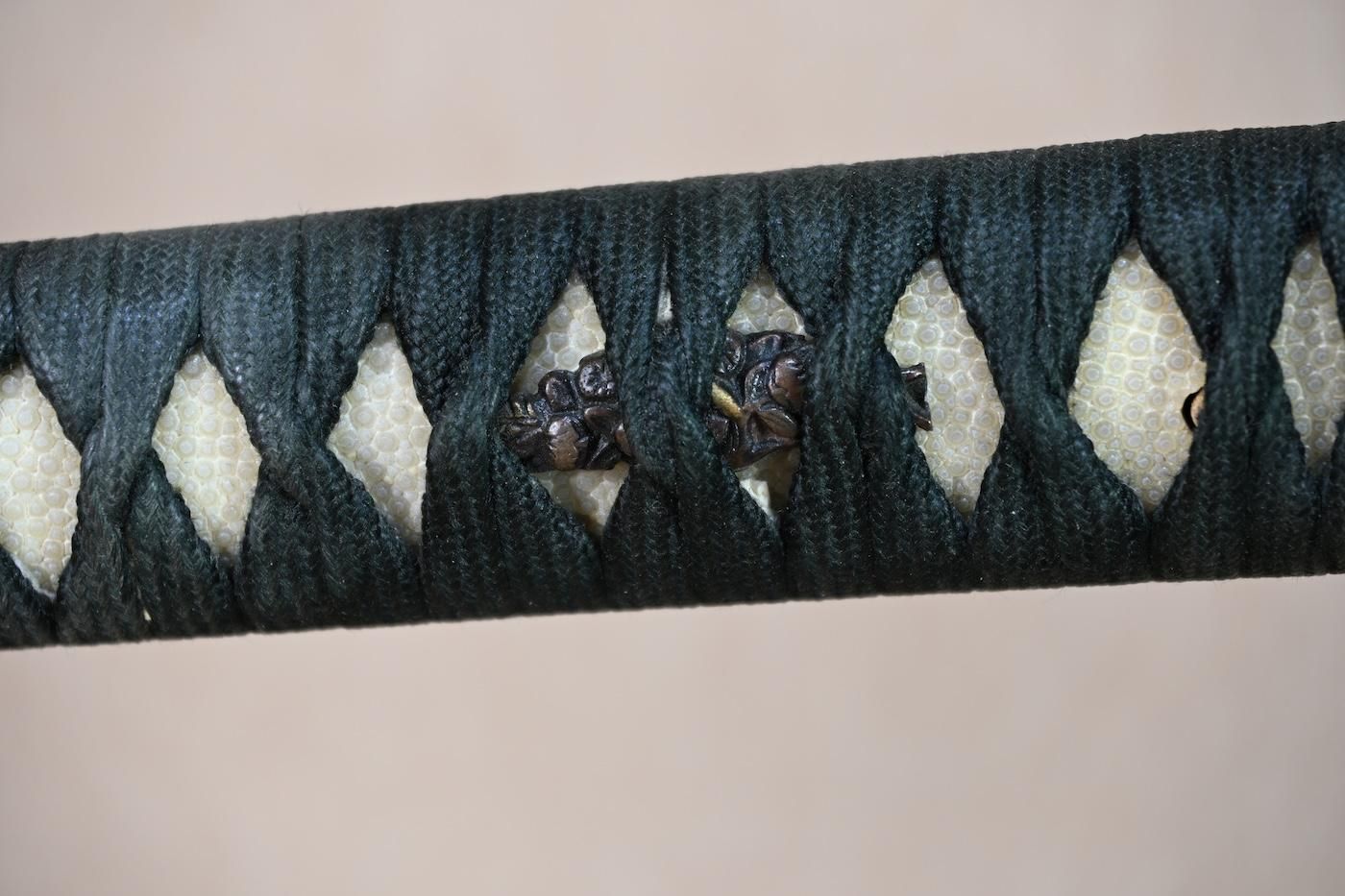
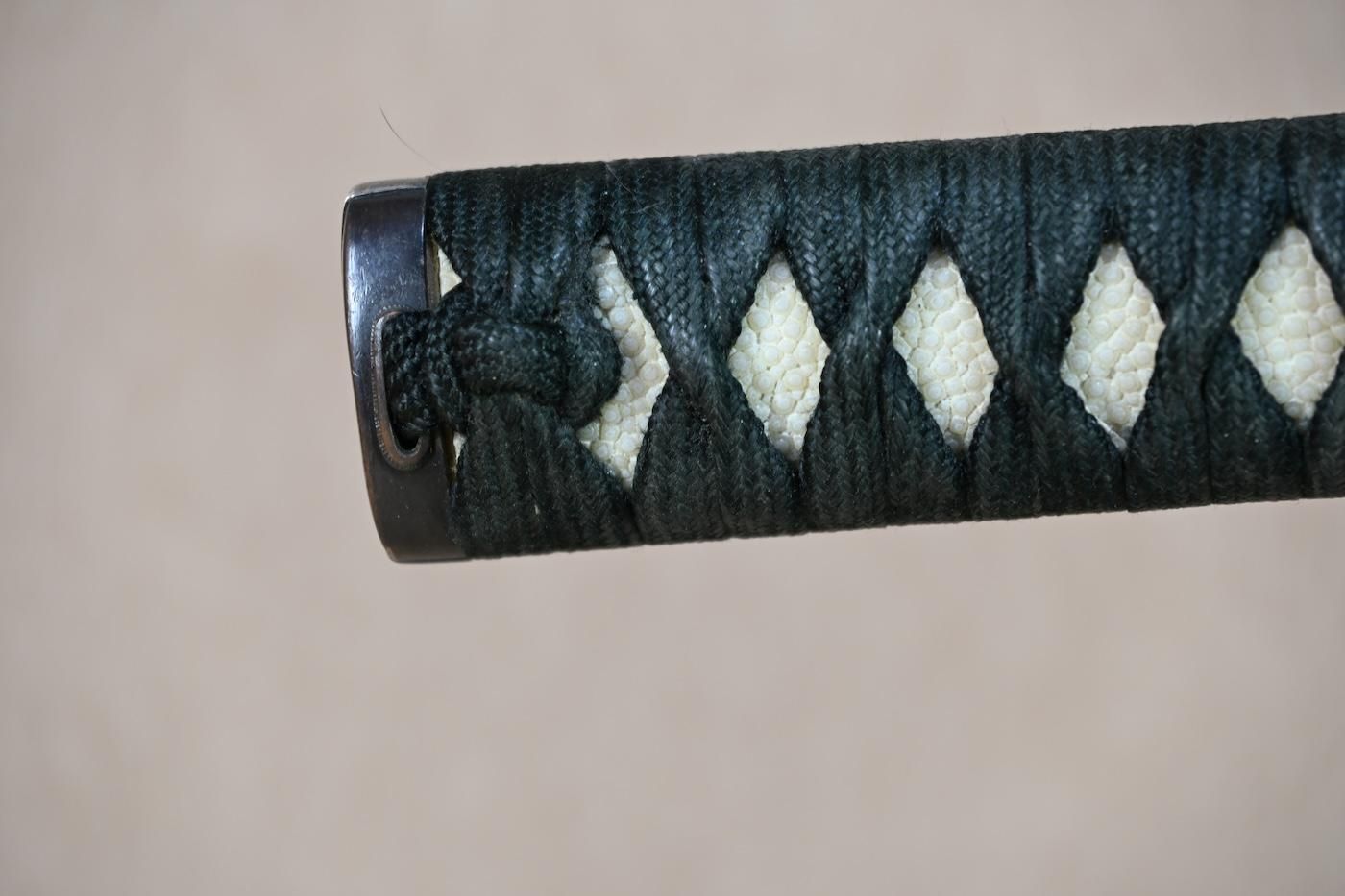
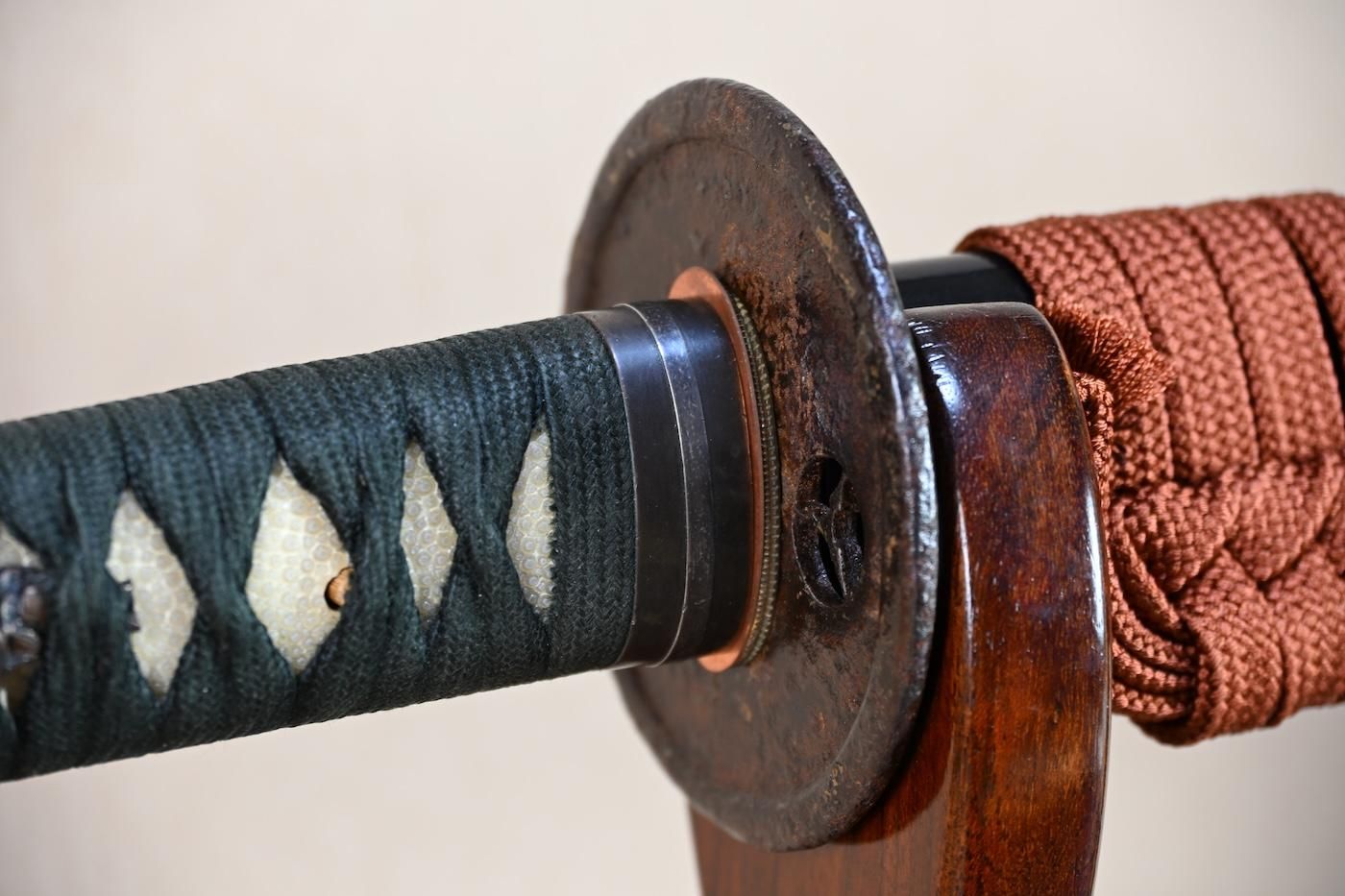
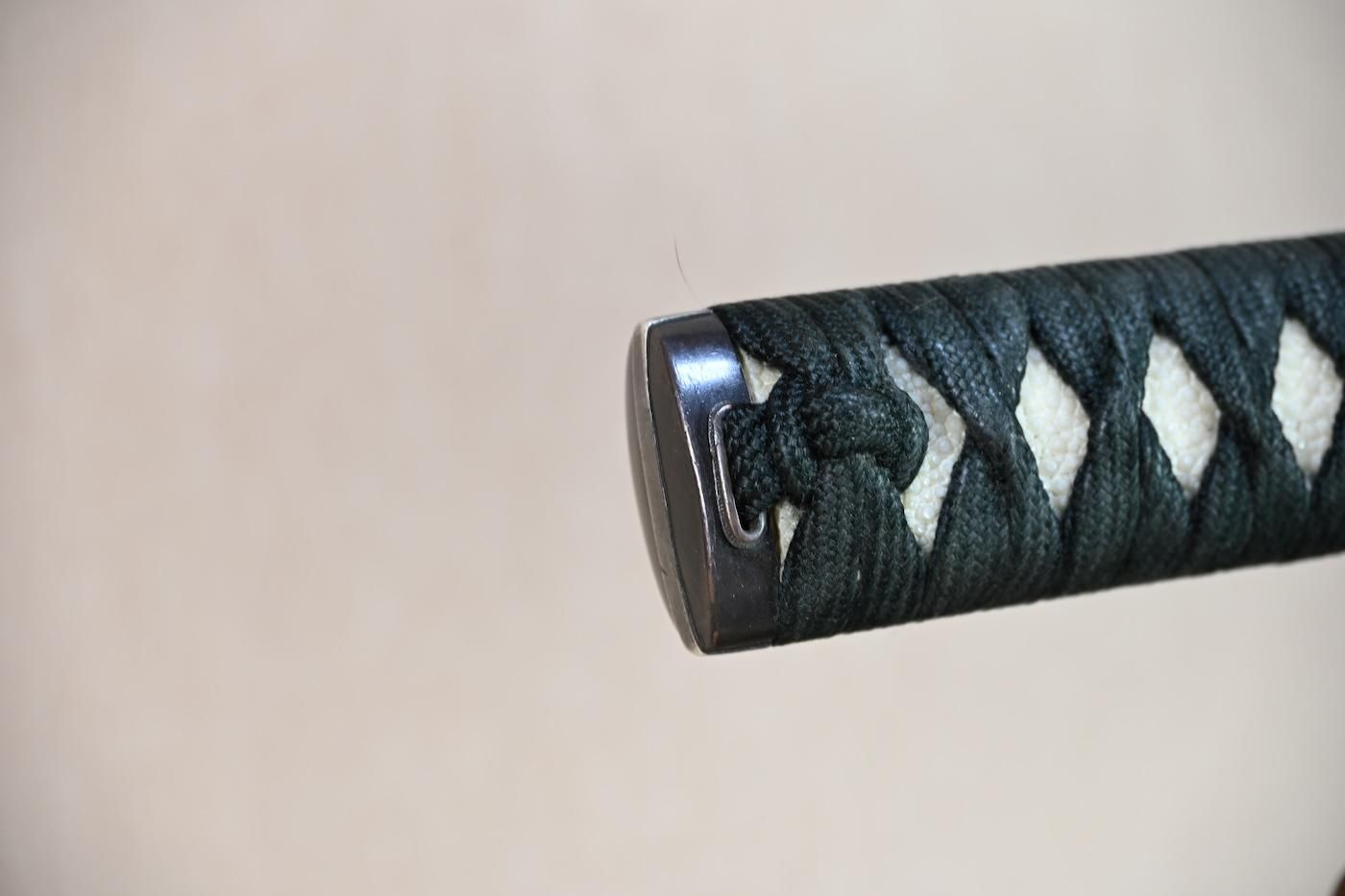
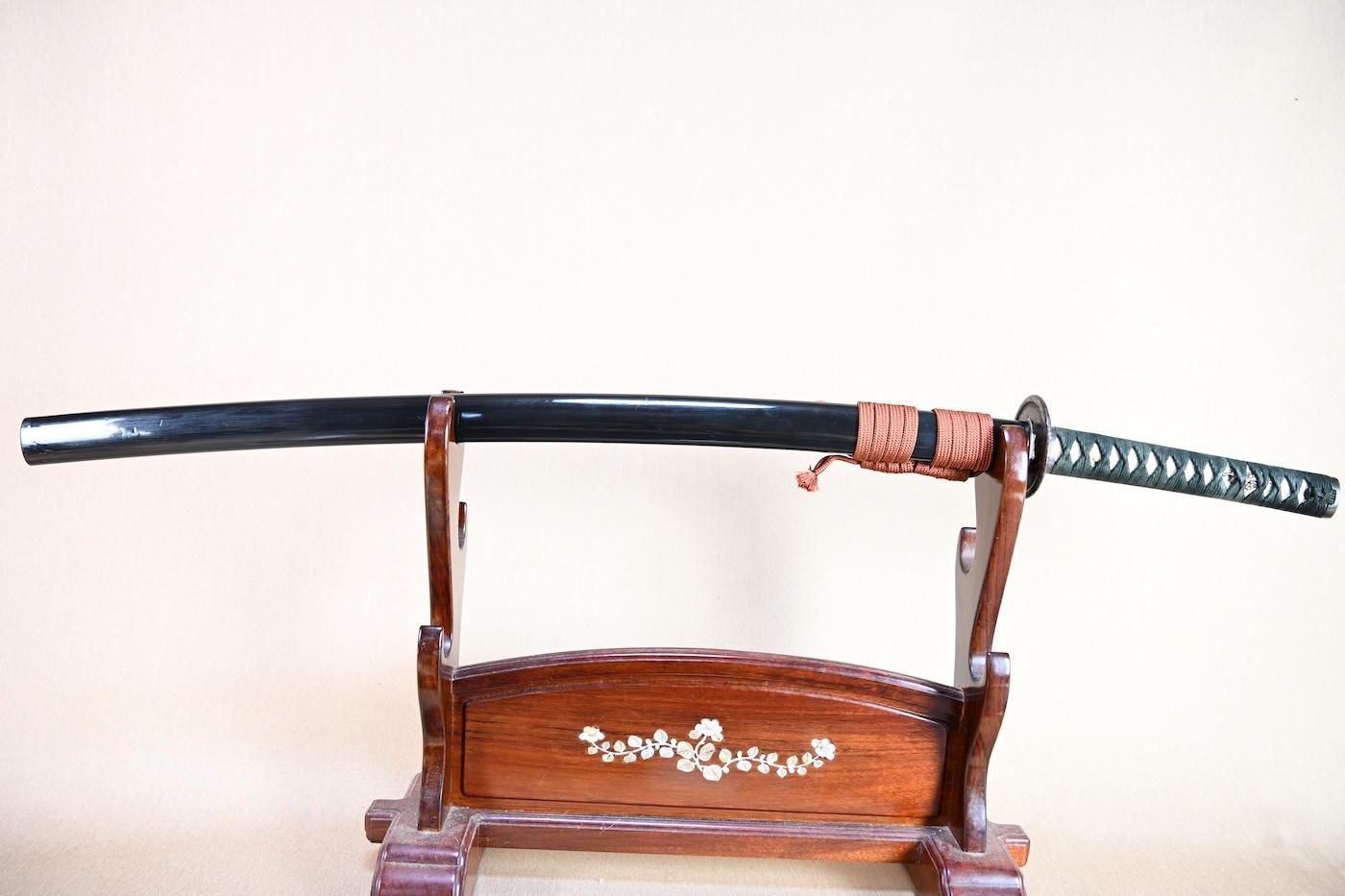
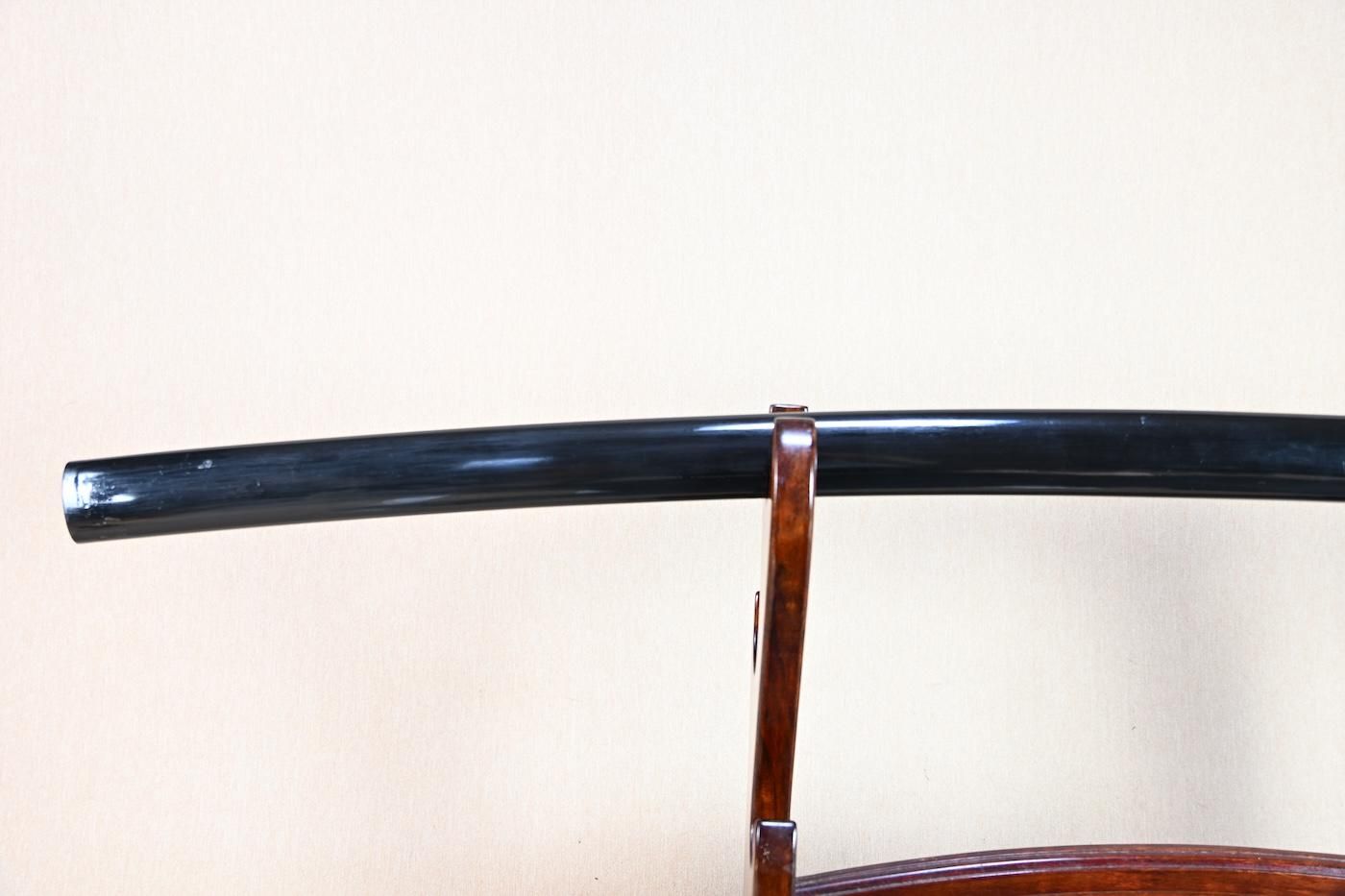
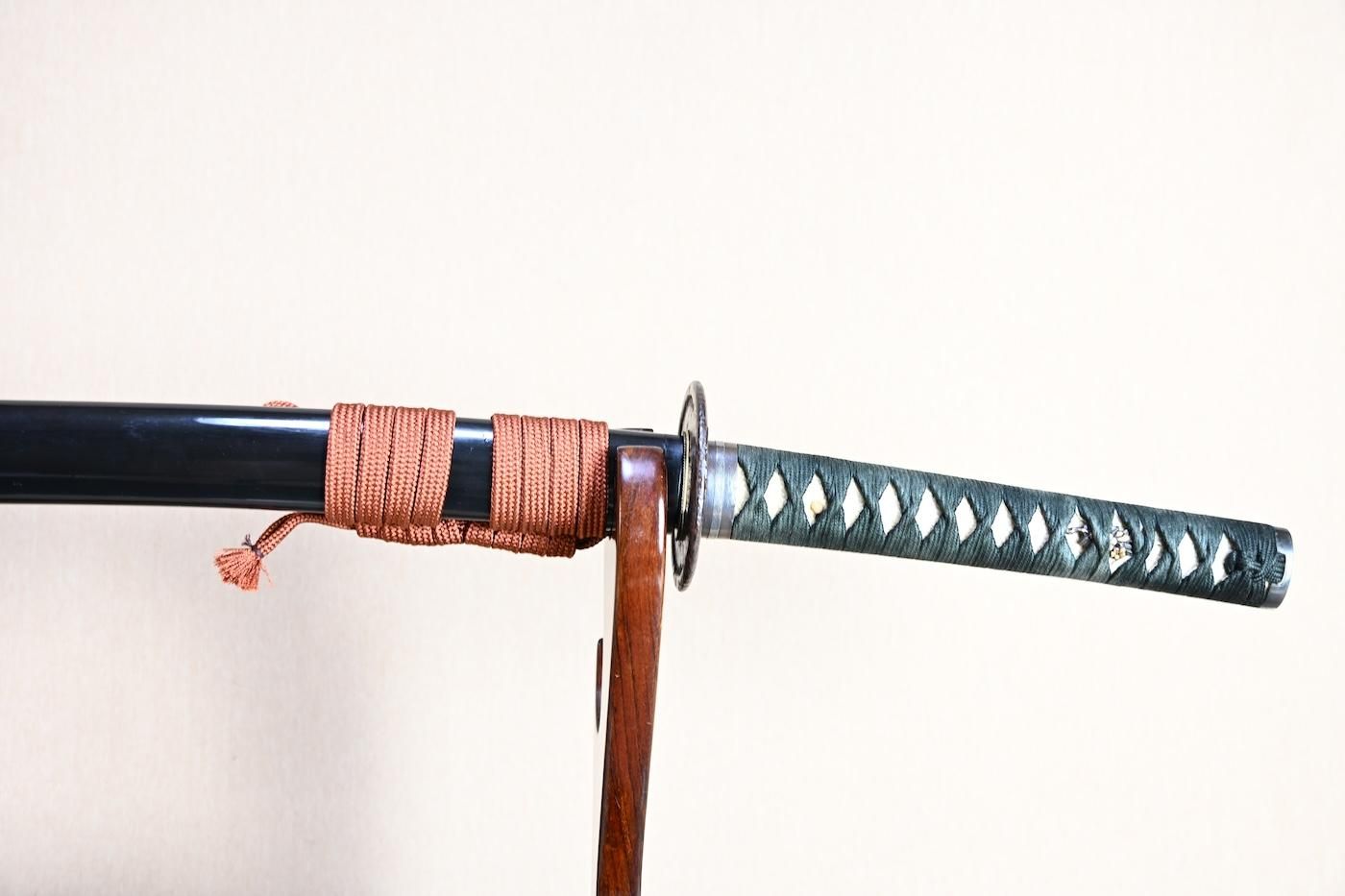
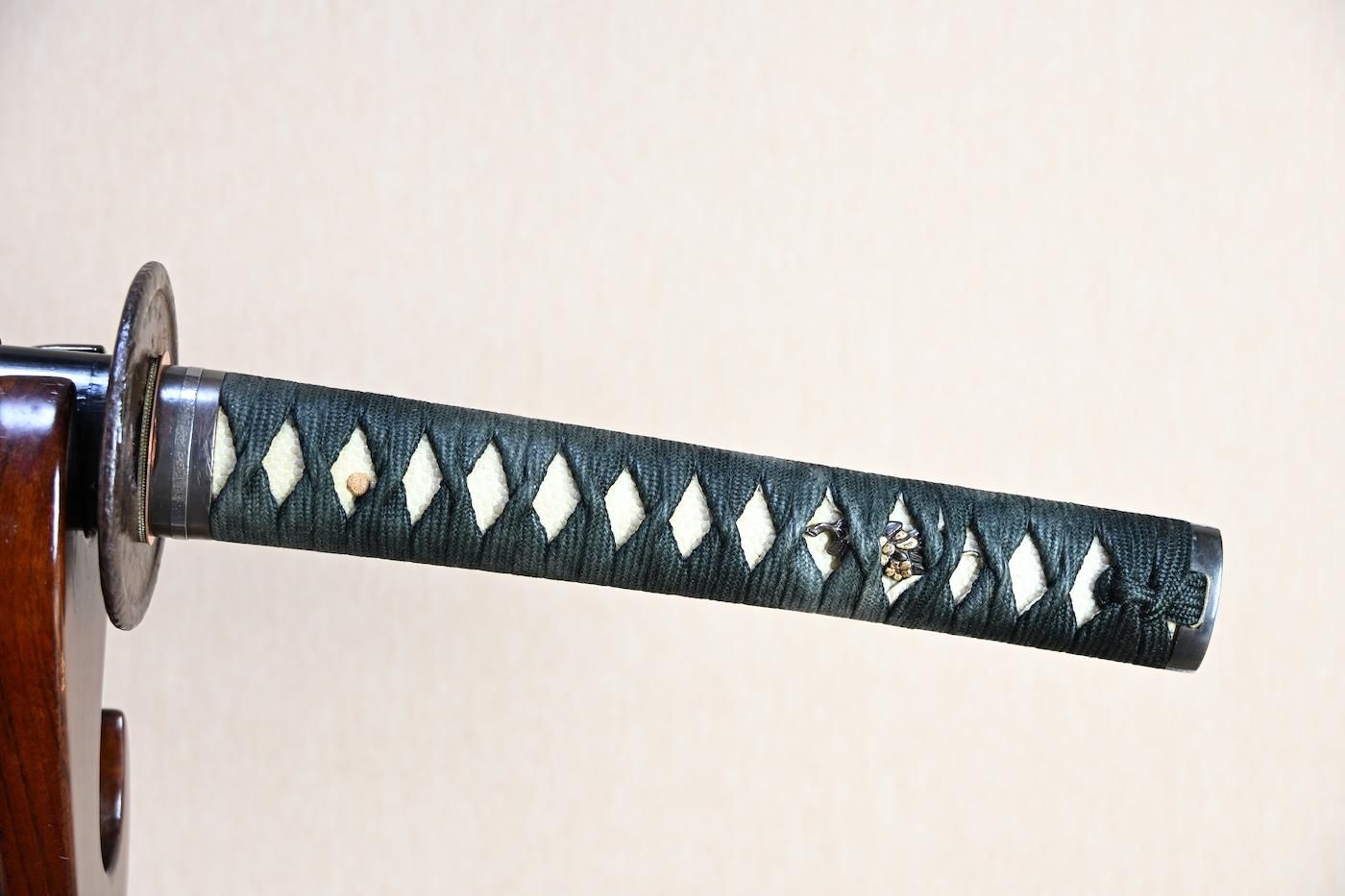
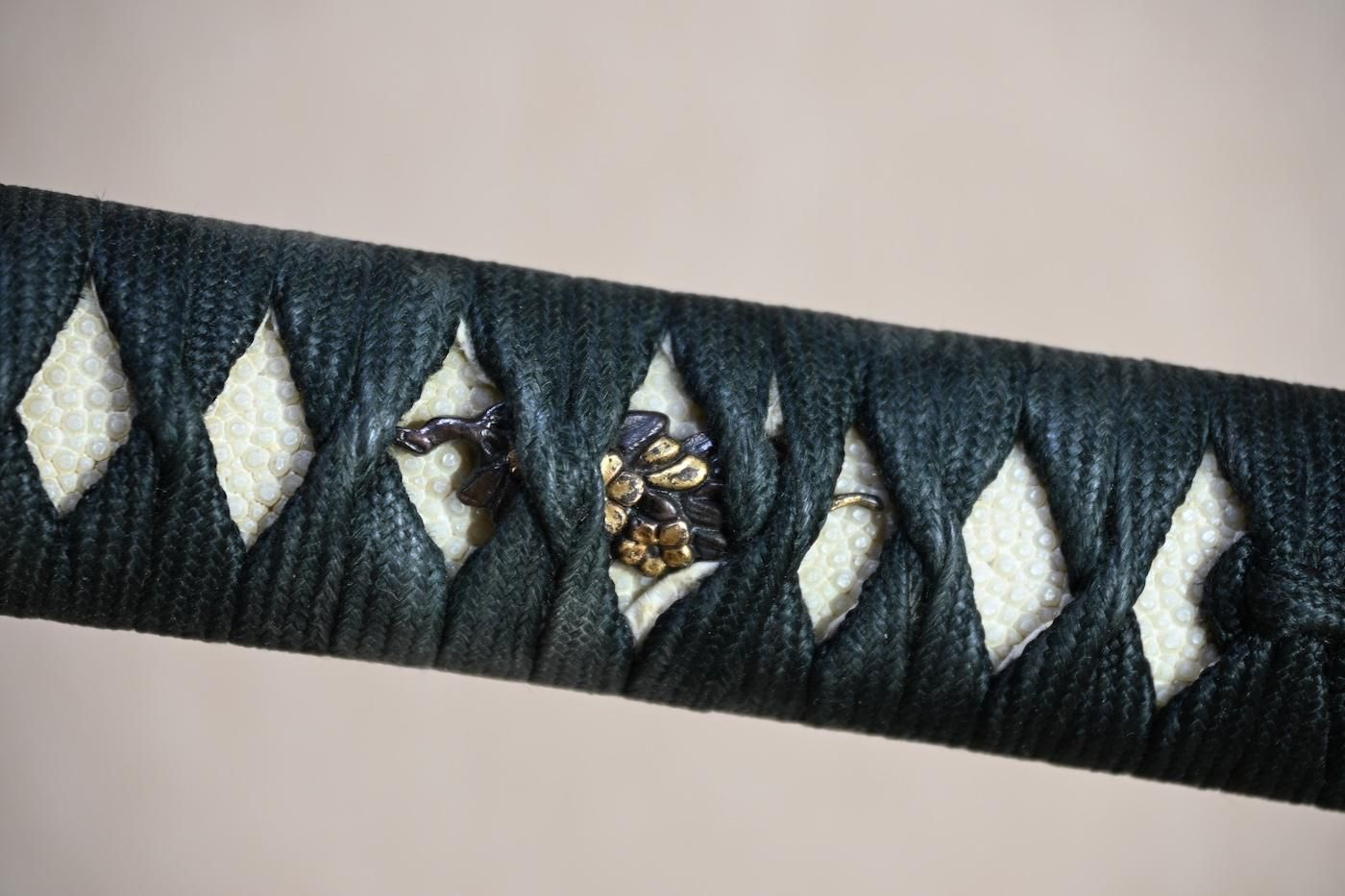
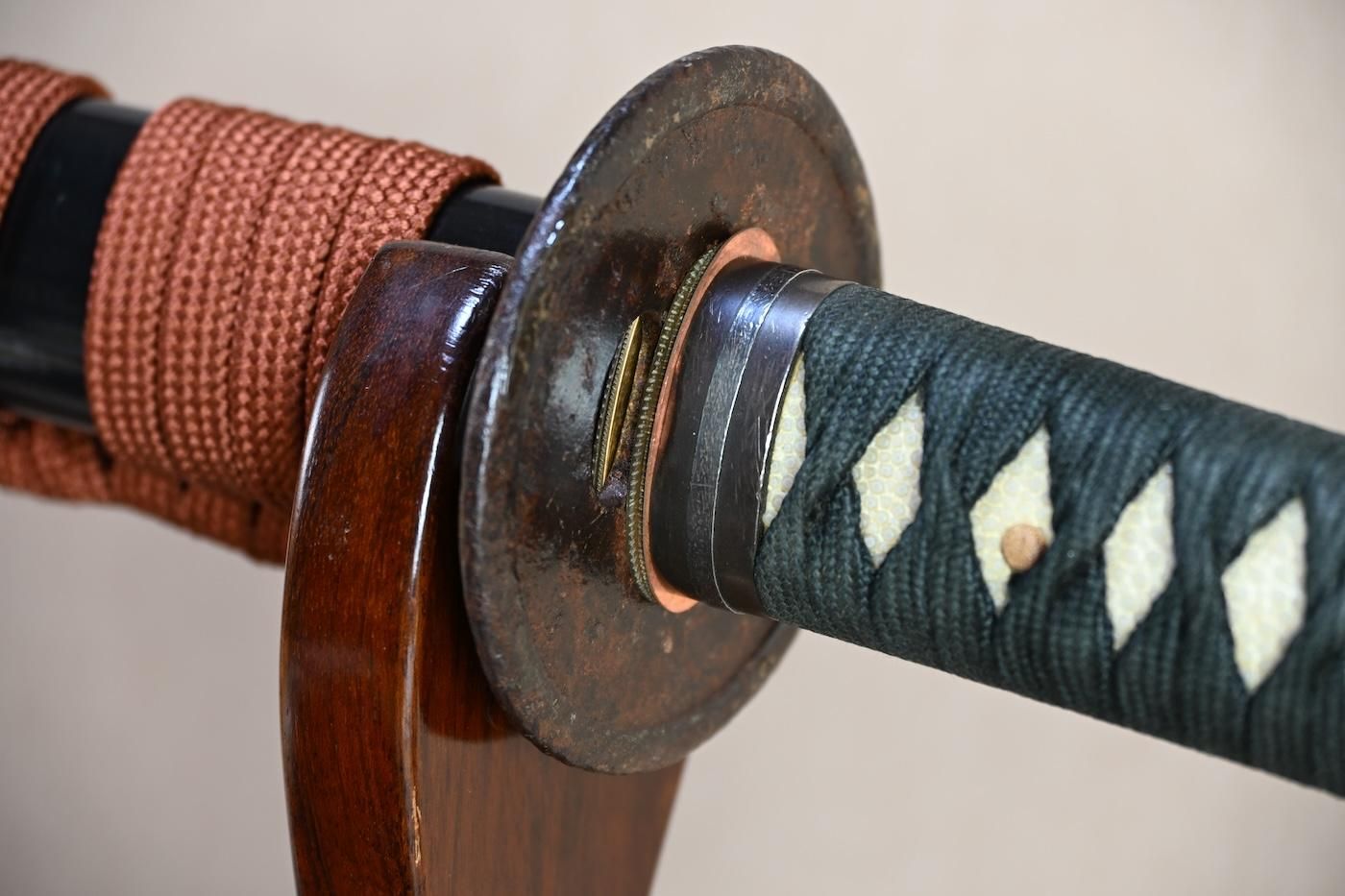
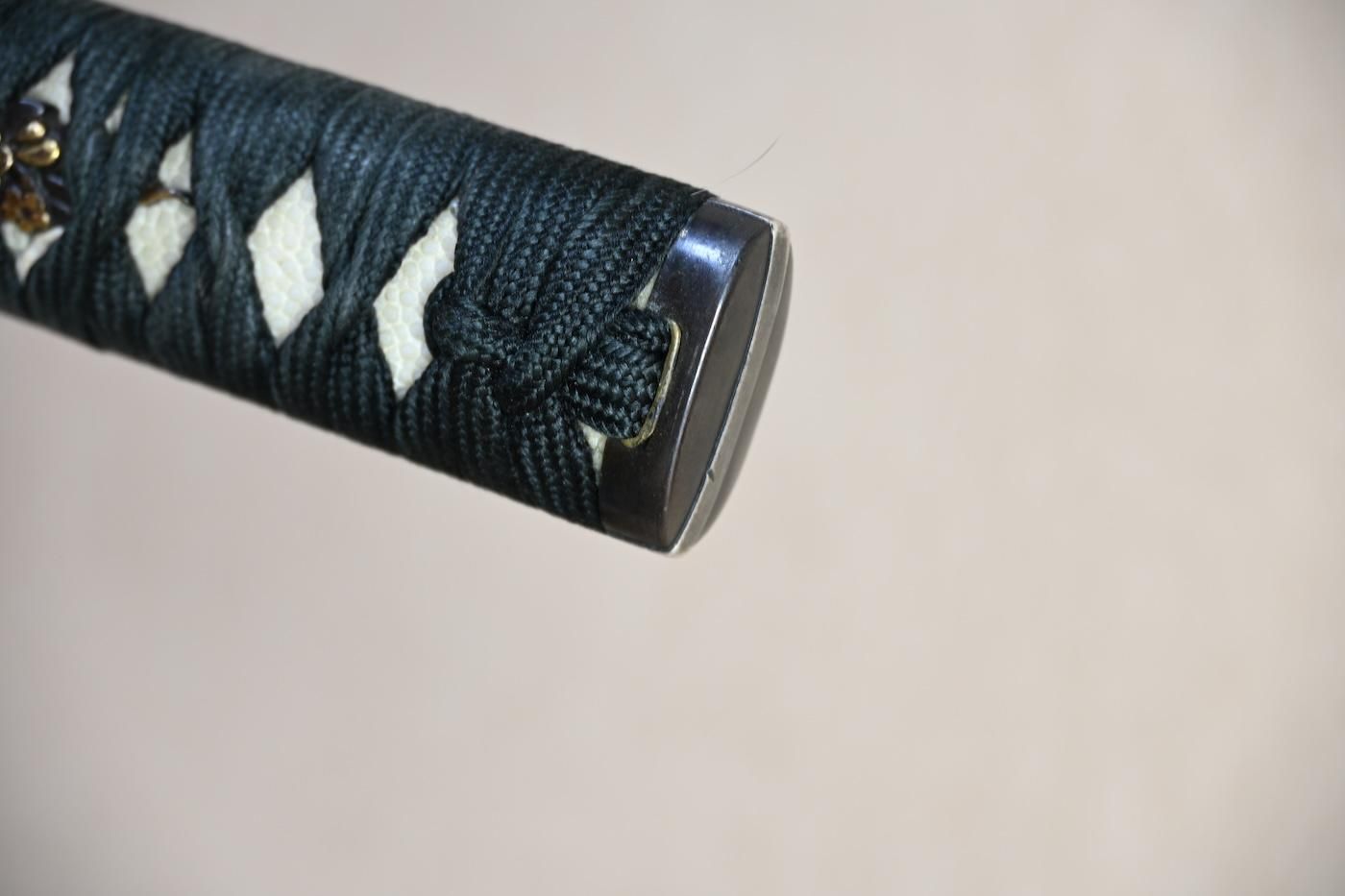
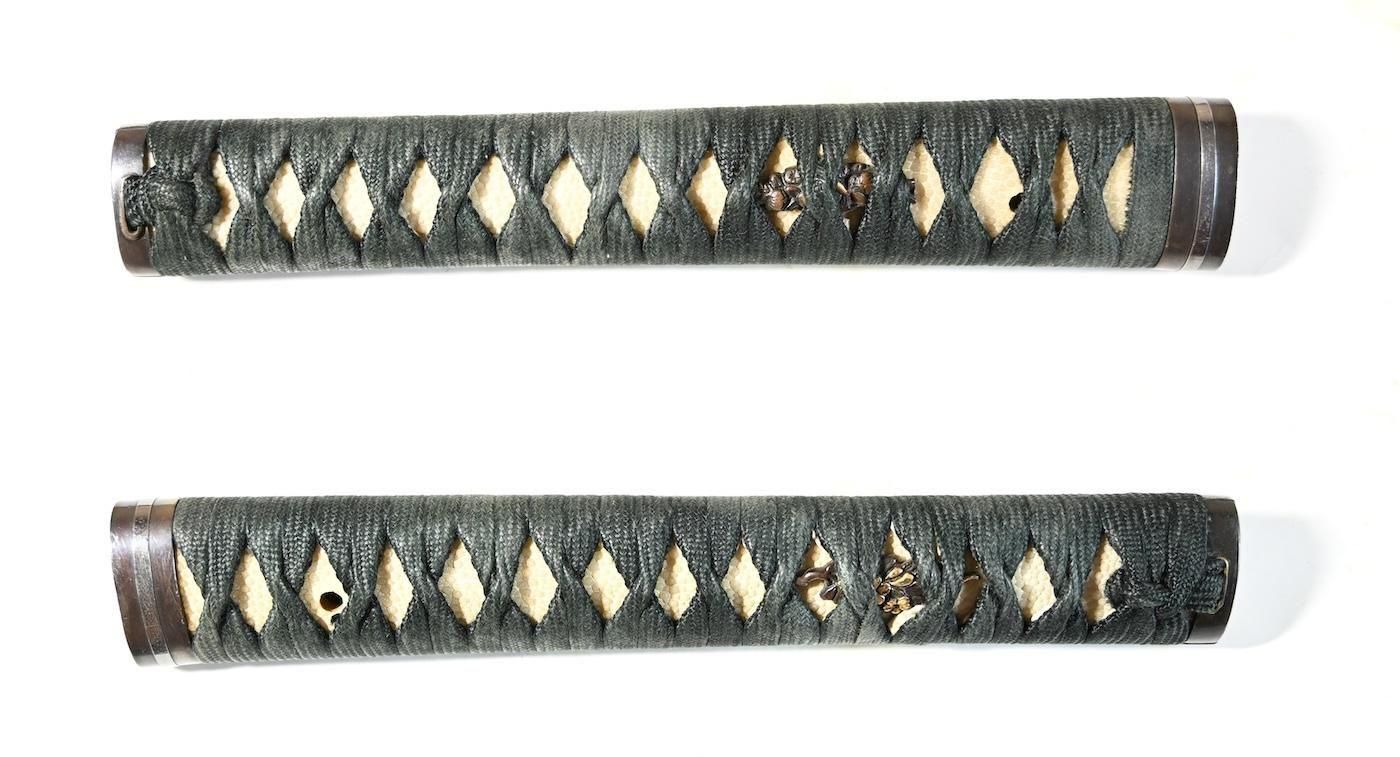
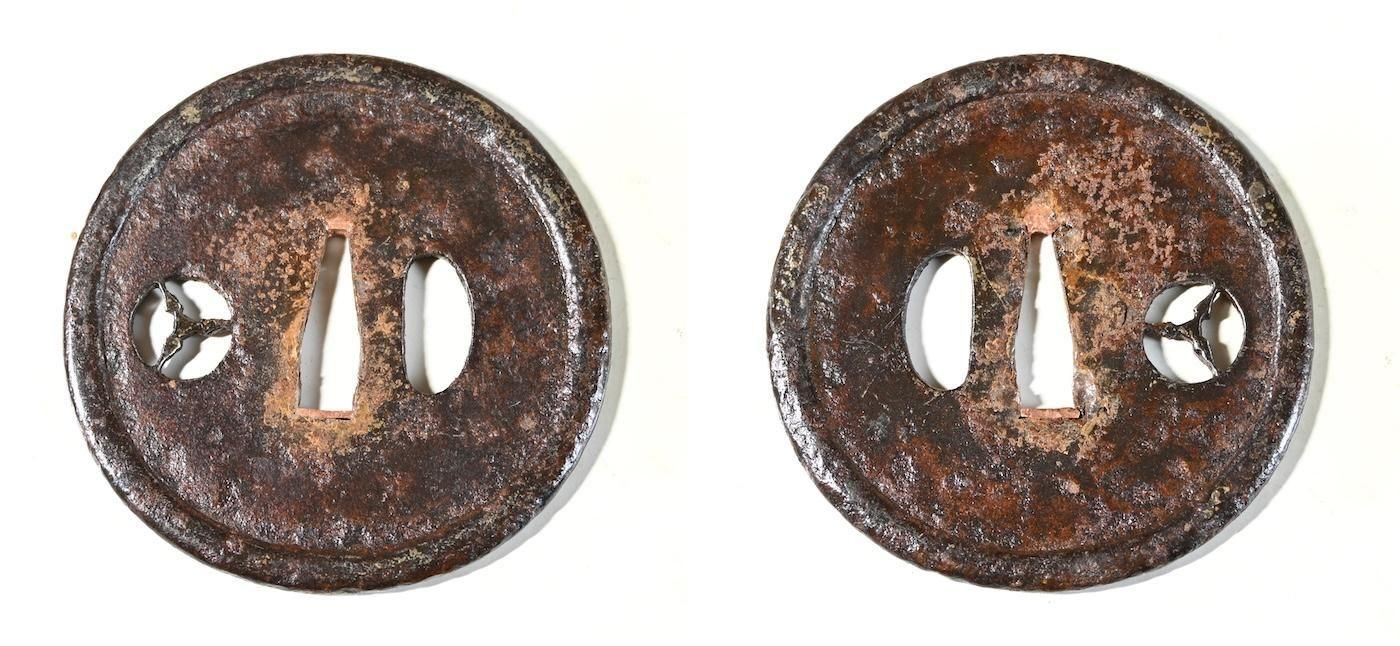
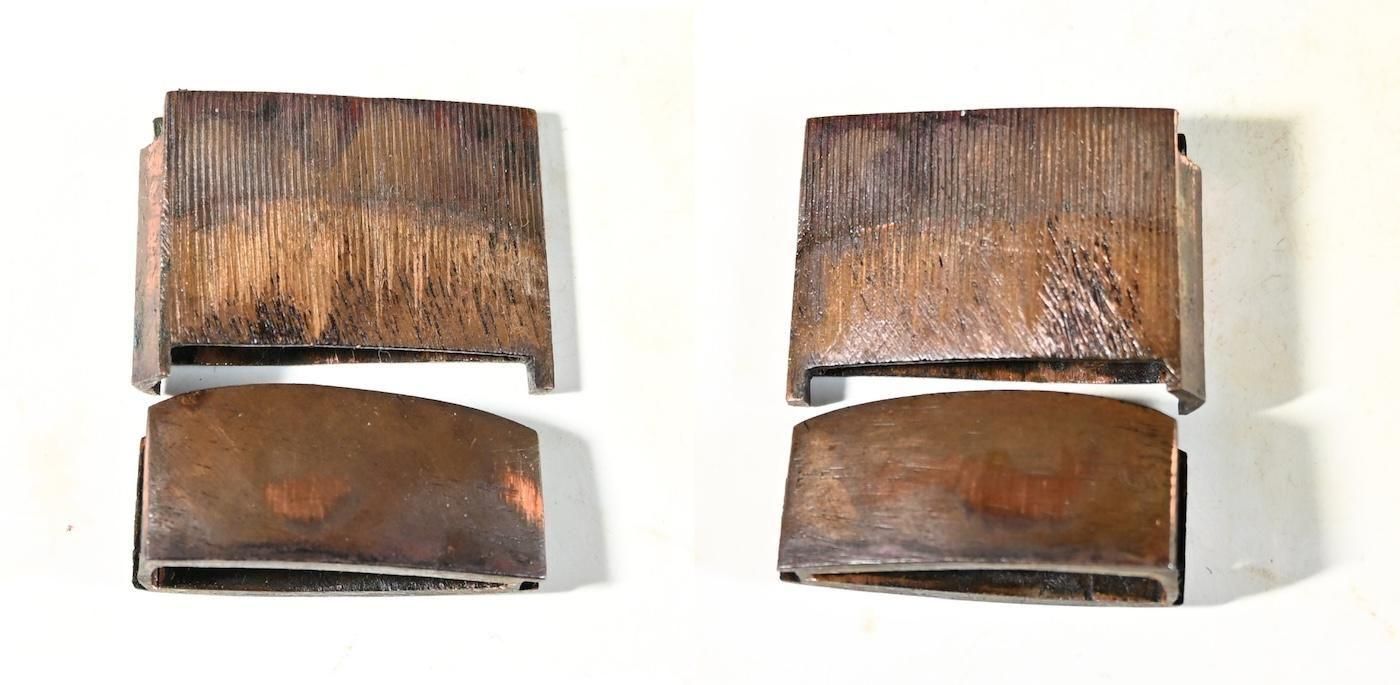
This is a katana by Kunikuni (Shibata Tsuneo), a master smith of the Showa era, dated Showa 17 (1942). The blade measures 66.8cm with a sori of 1.7cm, featuring a practical shape with thick kasane and a slightly prominent itame hada. The hamon is nie-deki with togari-ba mixed in, and the boshi returns deeply in a komaru style. The blade is in excellent condition with no noticeable flaws, and it comes with a koshirae featuring antique fittings and a black ro-saya.
 NihontoWatchBETA
mei · Showa · nagasa 66.8cm · sori 1.7cm
Yamashiro-den · Sagami · around 1312-1323
1 piece on the market now
Where Kunimitsu stands among comparable artisans: across all of nihontō, and within tradition, era, and period. The tiers (Foremost · Leading · Major · Notable) weigh official designations from the NBTHK and Japan's Agency for Cultural Affairs, together with historical honors of lasting repute such as the Sansaku and Meibutsu-chō.
Select a lens to see how it's measured.
Years he was demonstrably active, proven by signed-and-dated blades
Yamashiro-den · Yamashiro
7 pieces on the market now
The steel is the first thing one learns to read in Awataguchi work: a ko-itame kneaded so tight that the surface takes on the pear-skin sheen the texts name nashiji-hada, the ji-nie dusted over it fine and even, slender chikei threading through, the whole carrying a moist luster (潤い) and a clarity that recurs in notice after notice. This is the steel of the early Yamashiro tradition at its summit. Learn more →
| Smith | Era | Designated |
|---|---|---|
| Yoshimitsu吉光 | 1259-1260 | 45 |
| Kuniyoshi國吉 | 1275-1278 | 51 |
| Kunitsuna國綱 | 1240-1264 | 18 |
| Hisakuni久國 | 1190-1199 | 21 |
| Norikuni則國 | 1222-1224 | 15 |
We could not find an authenticity certificate on the seller’s listing. Japanese swords and fittings are normally papered by the NBTHK (or the NTHK). Without one, the attribution is the seller’s own assessment and has not been independently verified — treat it with caution and ask the dealer about certification before buying.
Please contact us promptly after the item's arrival. Except where the item is defective, we cannot accept returns. For returns due to customer circumstances, the cost is the customer's responsibility. In the case of a defective item, we bear the cost.
This is a katana by Kunikuni (Shibata Tsuneo), a master smith of the Showa era, dated Showa 17 (1942). The blade measures 66.8cm with a sori of 1.7cm, featuring a practical shape with thick kasane and a slightly prominent itame hada. The hamon is nie-deki with togari-ba mixed in, and the boshi returns deeply in a komaru style. The blade is in excellent condition with no noticeable flaws, and it comes with a koshirae featuring antique fittings and a black ro-saya.
NihontoWatchBETAmei · Showa · nagasa 66.8cm · sori 1.7cm
Yamashiro-den · Sagami · around 1312-1323
1 piece on the market now
Where Kunimitsu stands among comparable artisans: across all of nihontō, and within tradition, era, and period. The tiers (Foremost · Leading · Major · Notable) weigh official designations from the NBTHK and Japan's Agency for Cultural Affairs, together with historical honors of lasting repute such as the Sansaku and Meibutsu-chō.
Select a lens to see how it's measured.
Years he was demonstrably active, proven by signed-and-dated blades
Yamashiro-den · Yamashiro
7 pieces on the market now
The steel is the first thing one learns to read in Awataguchi work: a ko-itame kneaded so tight that the surface takes on the pear-skin sheen the texts name nashiji-hada, the ji-nie dusted over it fine and even, slender chikei threading through, the whole carrying a moist luster (潤い) and a clarity that recurs in notice after notice. This is the steel of the early Yamashiro tradition at its summit. Learn more →
| Smith | Era | Designated |
|---|---|---|
| Yoshimitsu吉光 | 1259-1260 | 45 |
| Kuniyoshi國吉 | 1275-1278 | 51 |
| Kunitsuna國綱 | 1240-1264 | 18 |
| Hisakuni久國 | 1190-1199 | 21 |
| Norikuni則國 | 1222-1224 | 15 |
We could not find an authenticity certificate on the seller’s listing. Japanese swords and fittings are normally papered by the NBTHK (or the NTHK). Without one, the attribution is the seller’s own assessment and has not been independently verified — treat it with caution and ask the dealer about certification before buying.
Please contact us promptly after the item's arrival. Except where the item is defective, we cannot accept returns. For returns due to customer circumstances, the cost is the customer's responsibility. In the case of a defective item, we bear the cost.