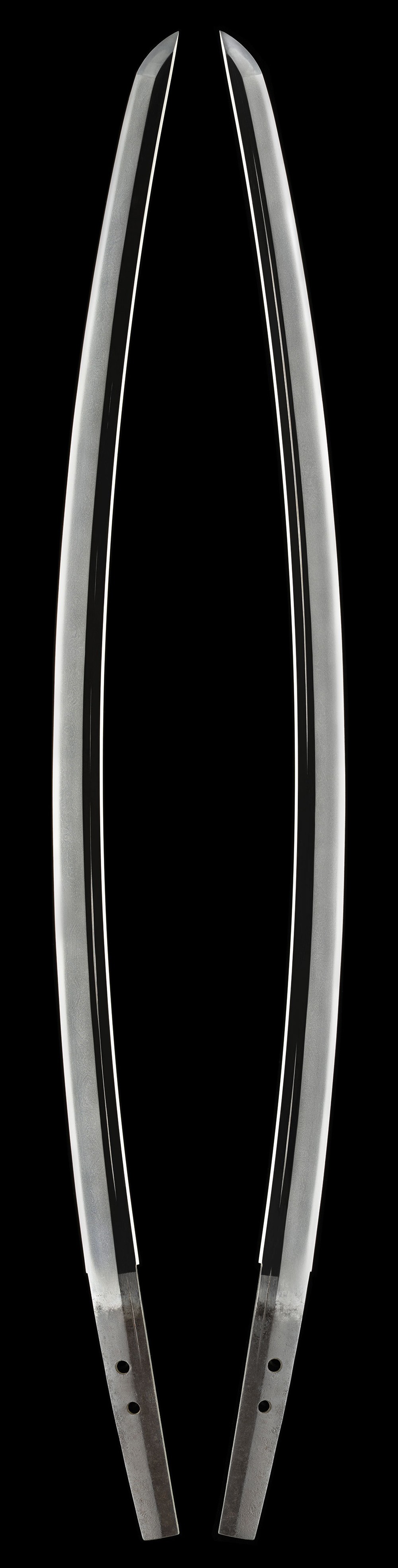
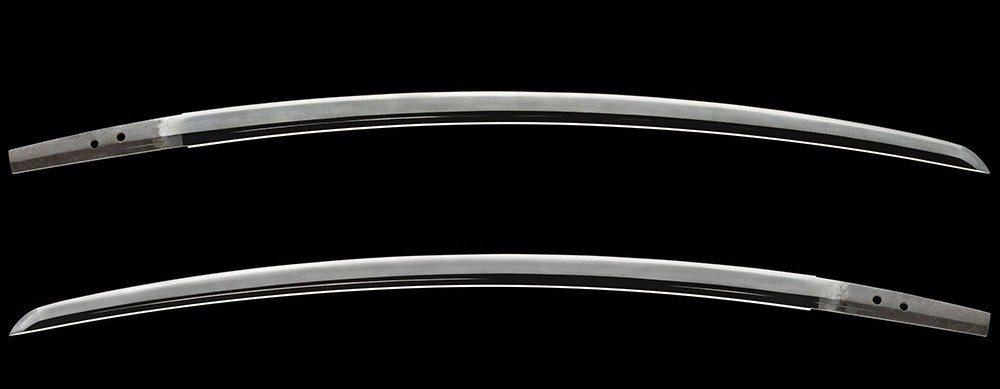
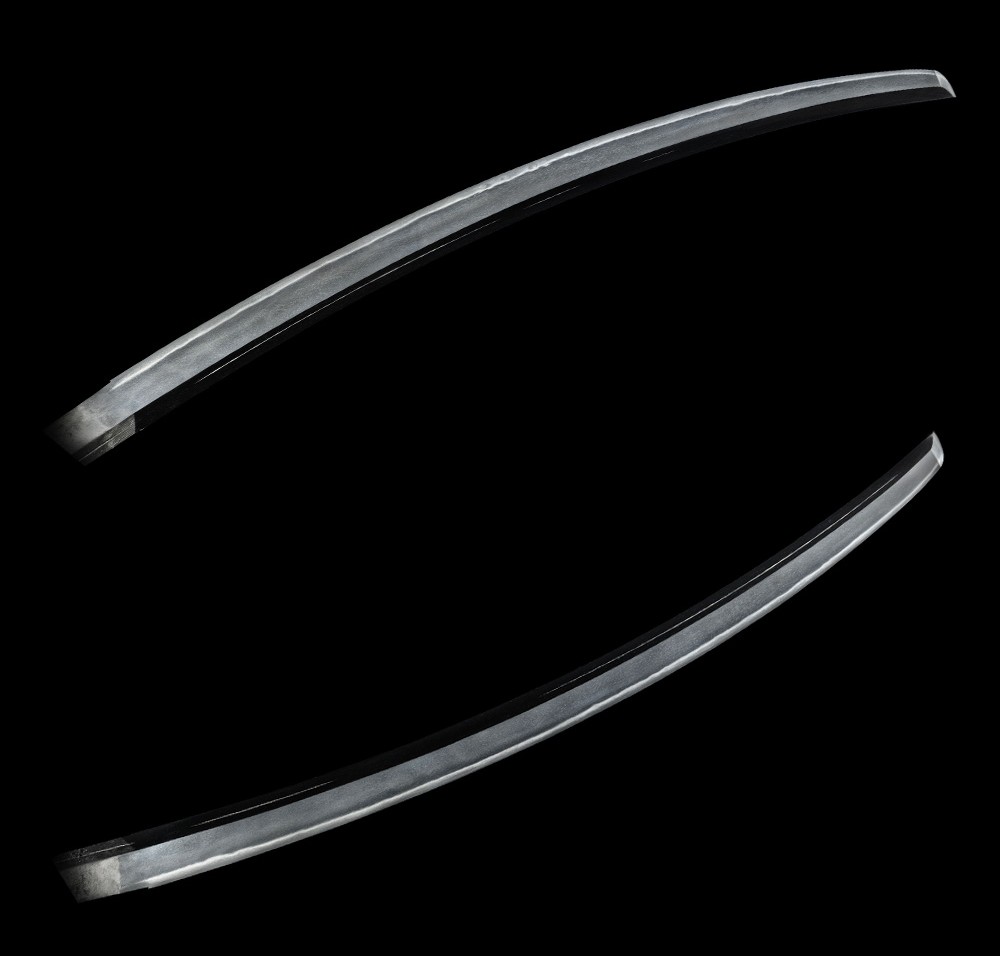
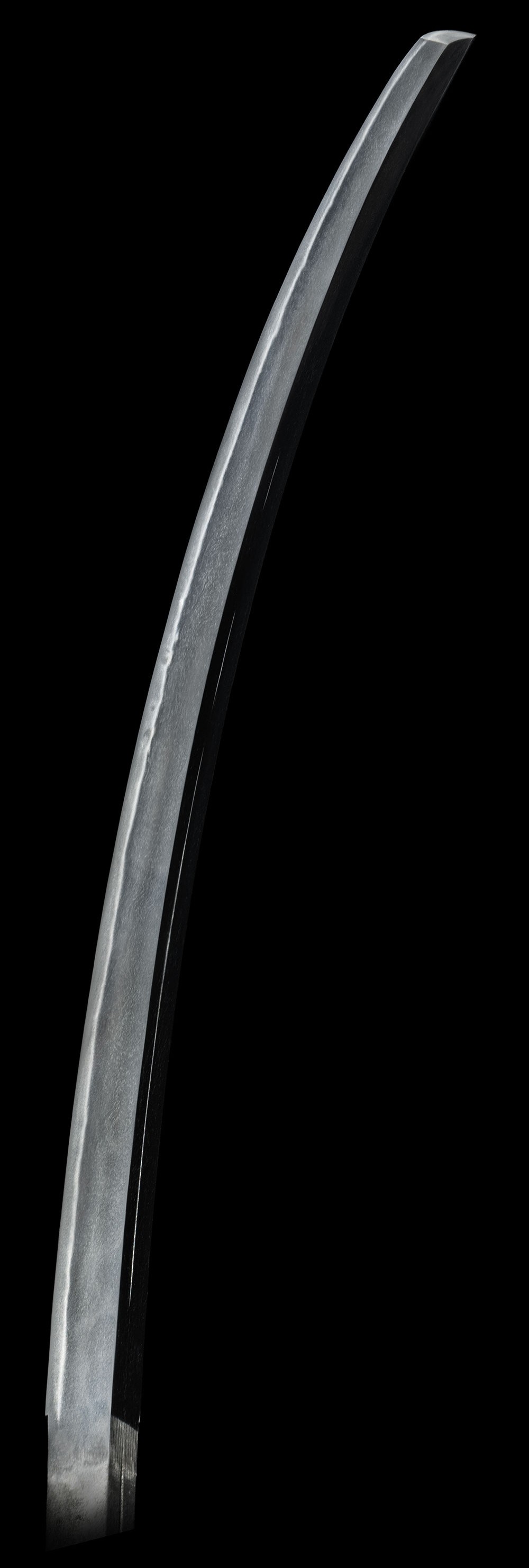
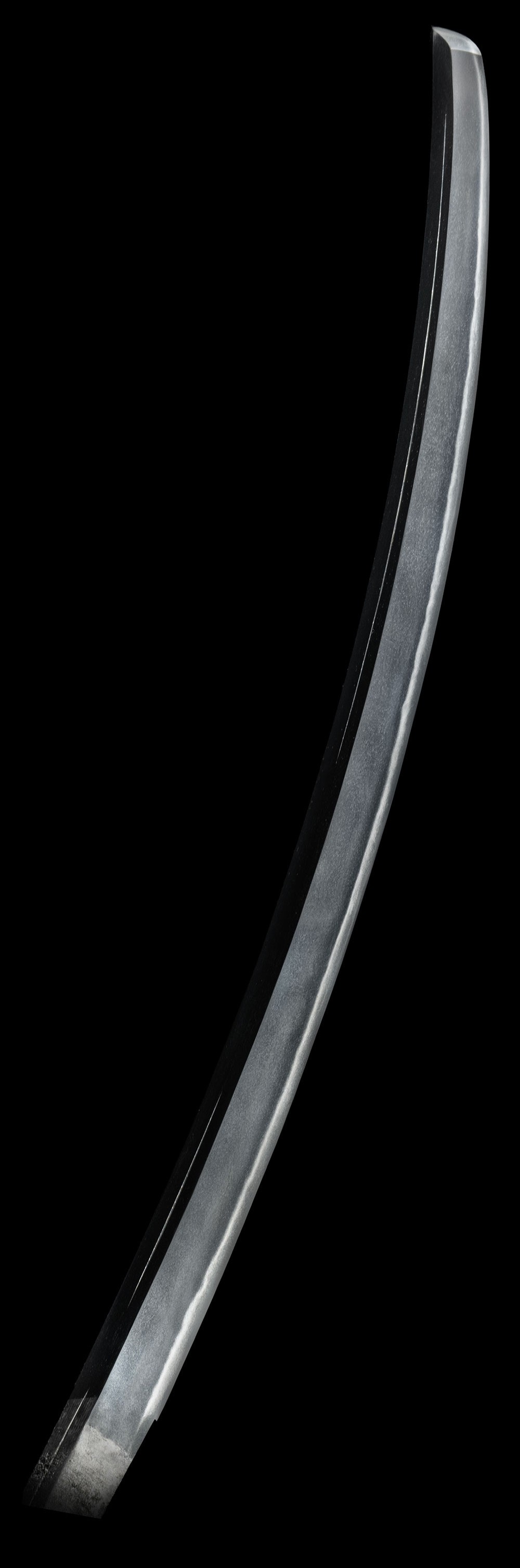
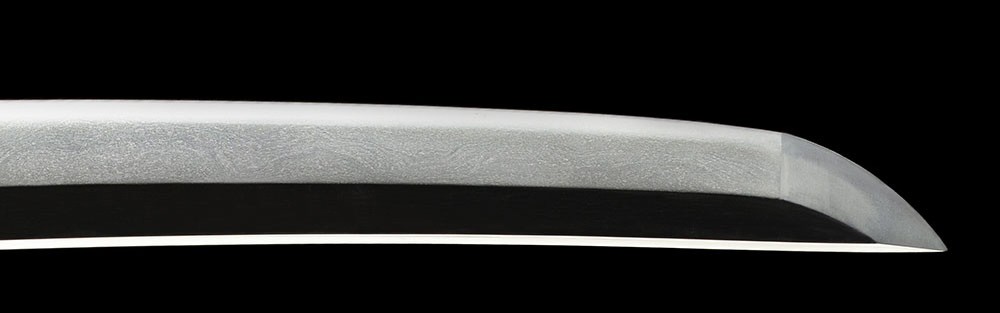
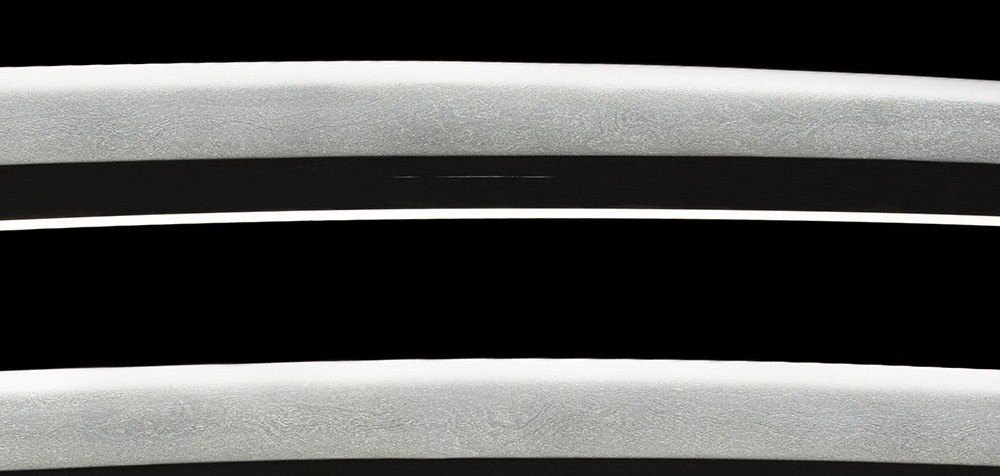
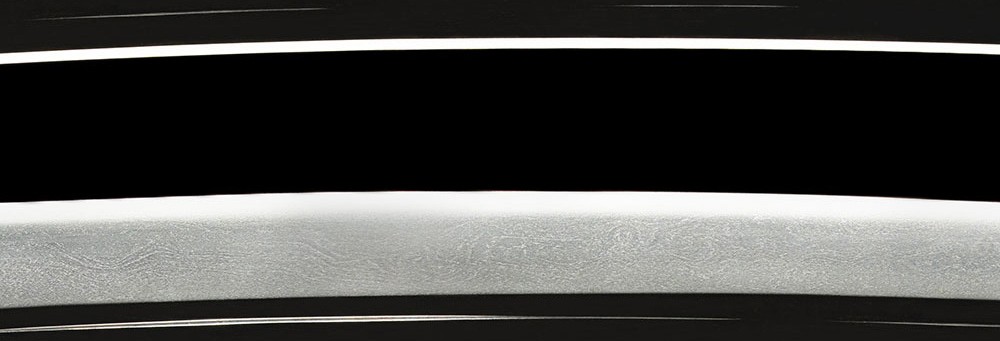
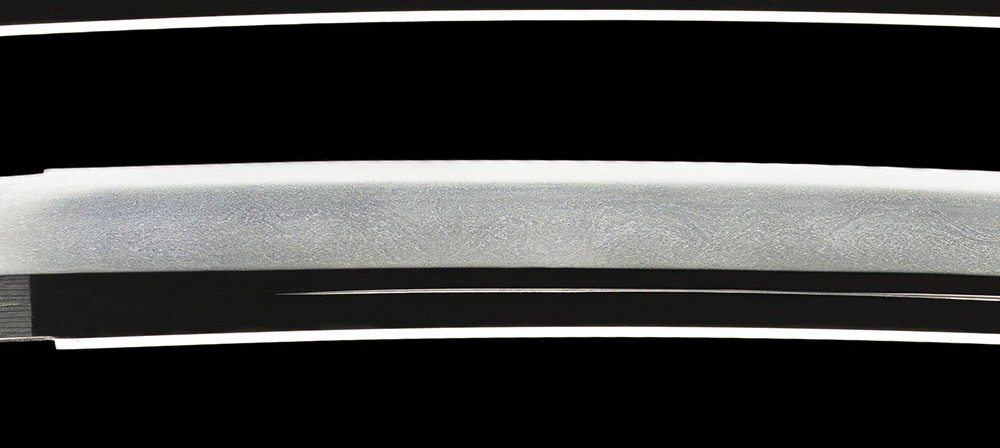
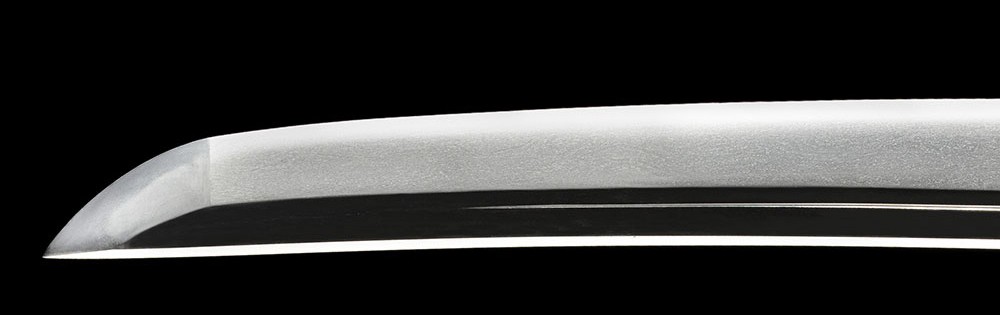
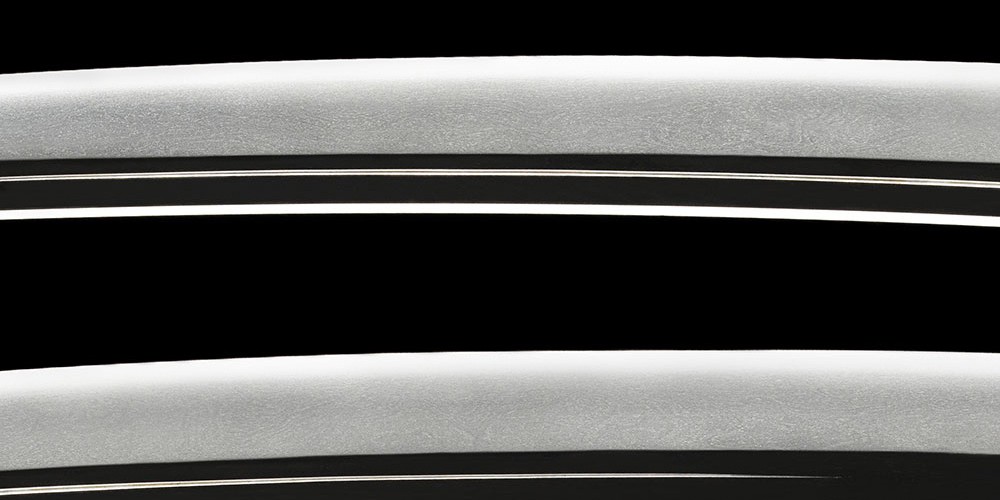
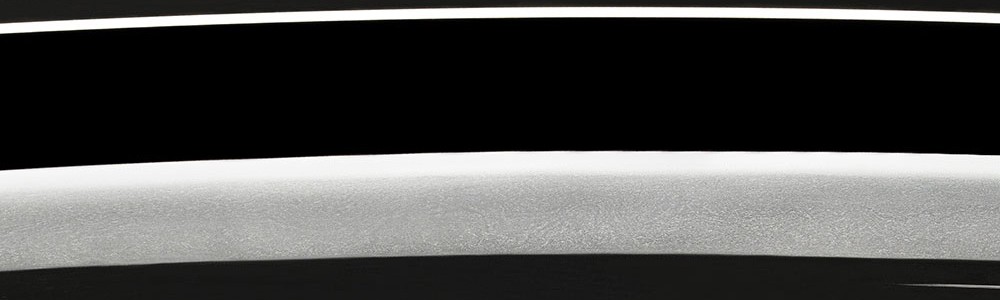
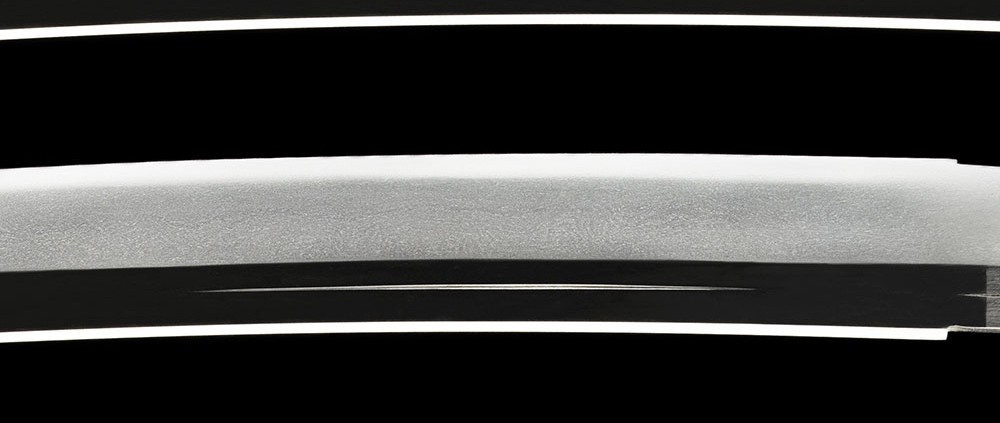
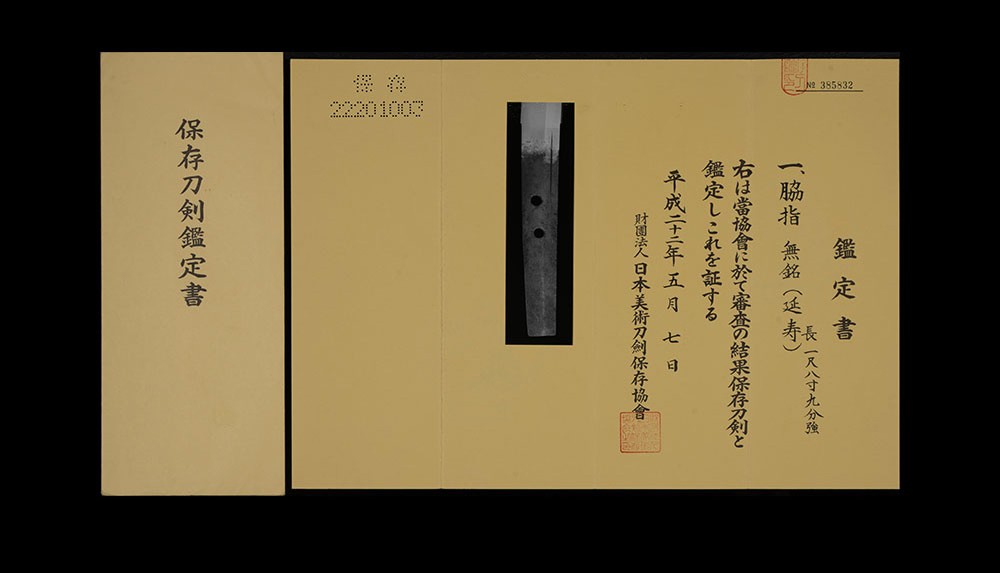
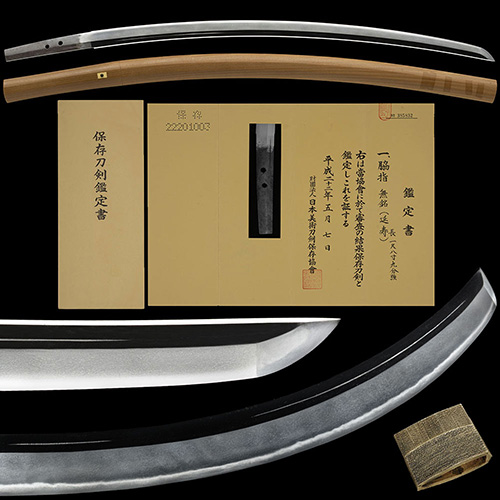
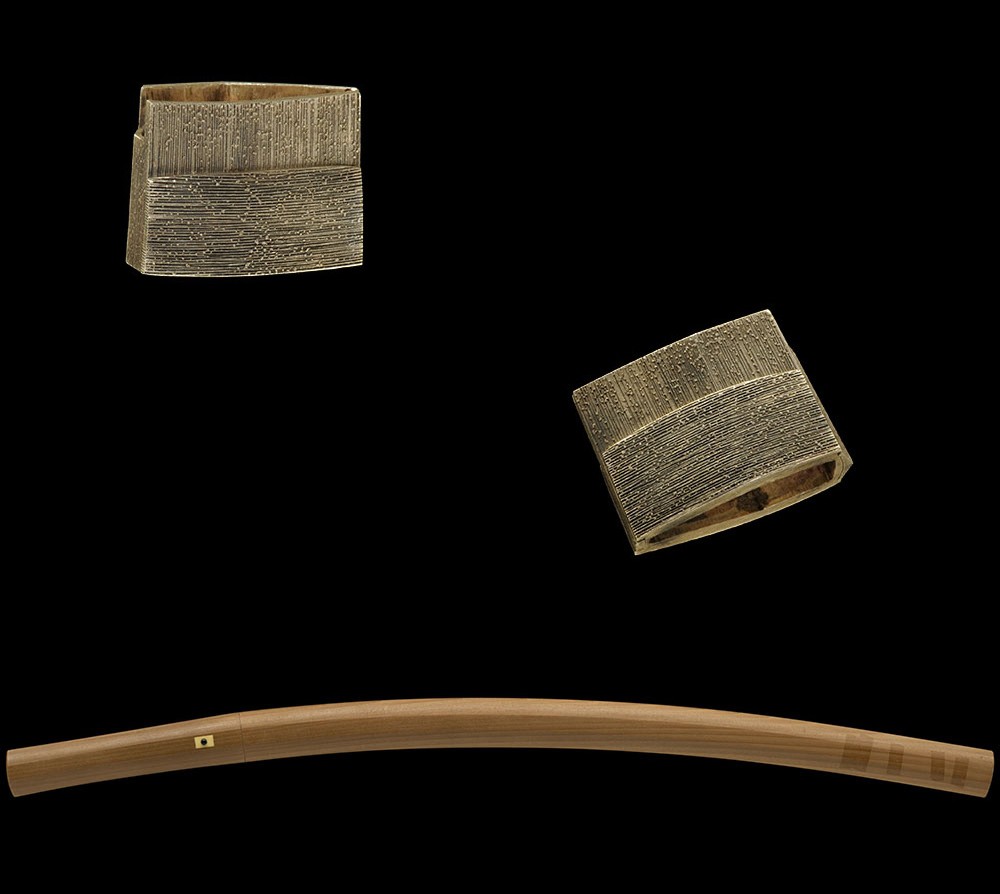
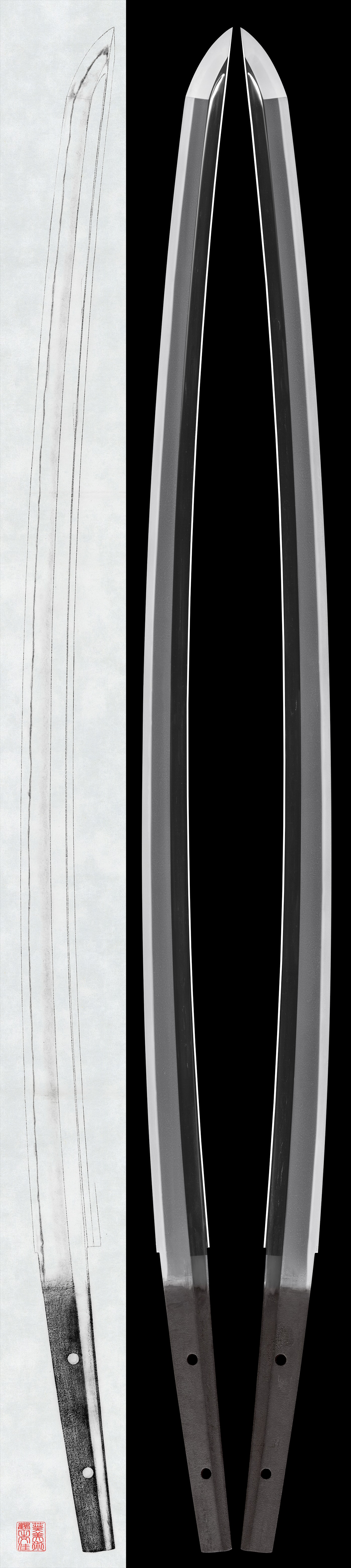
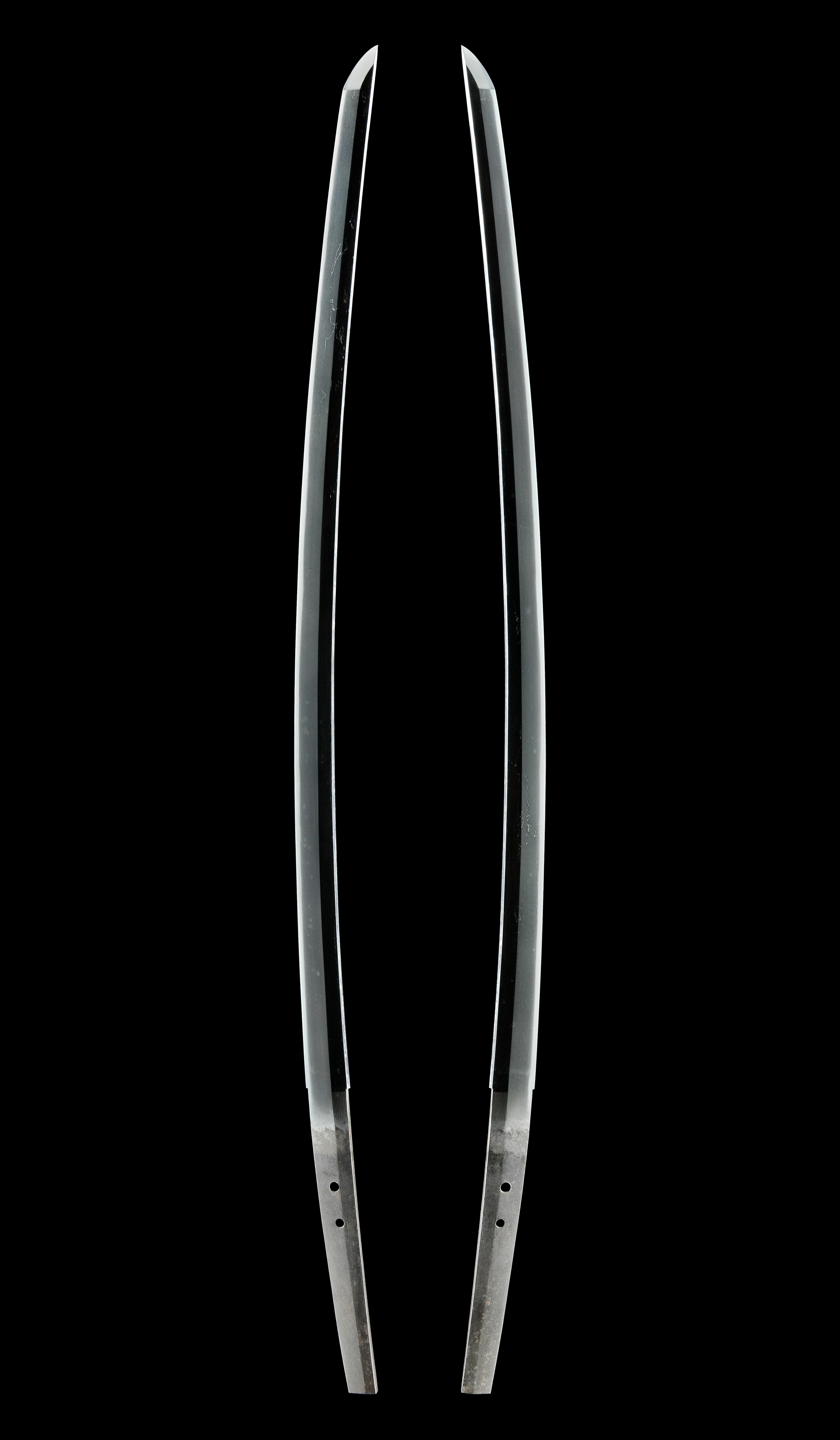
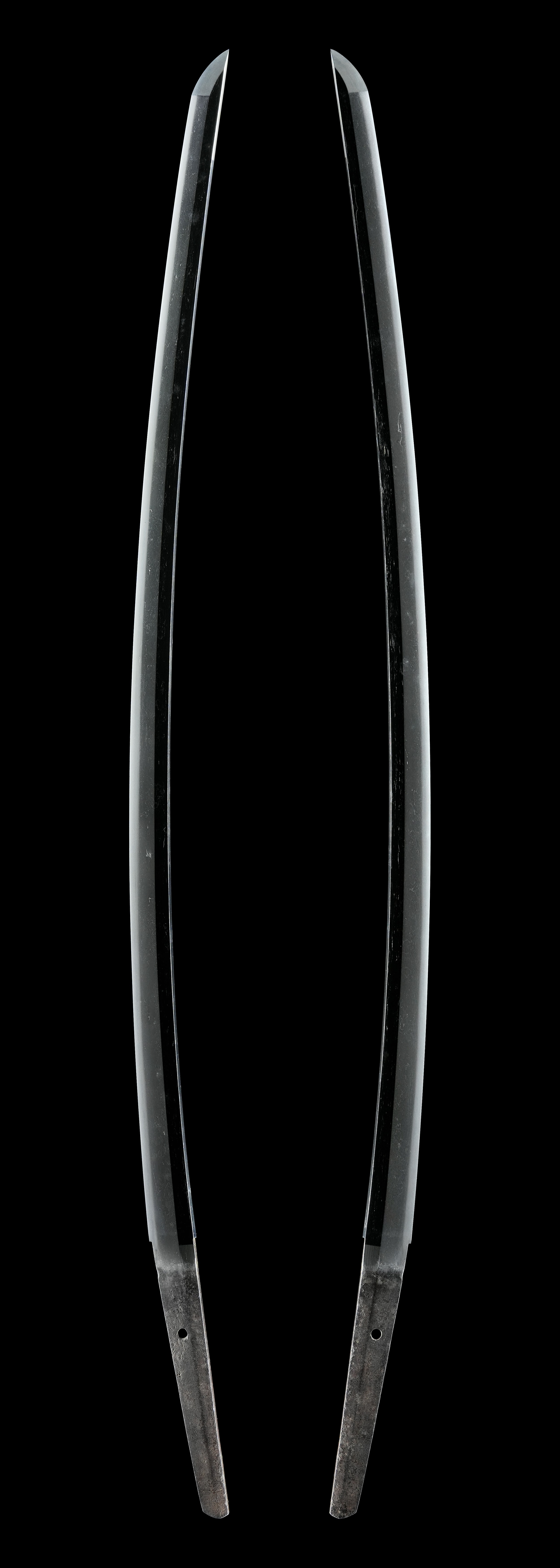
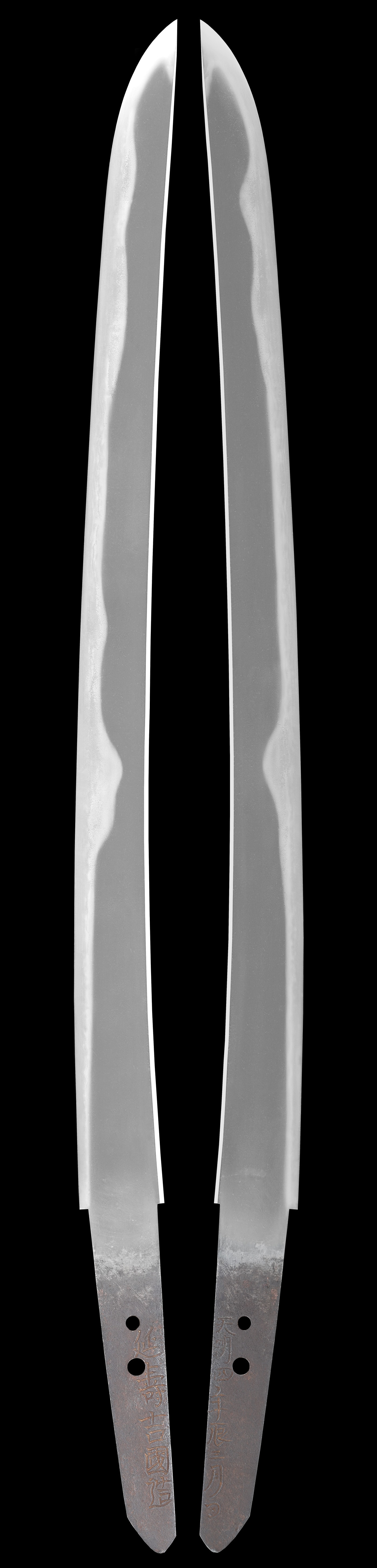
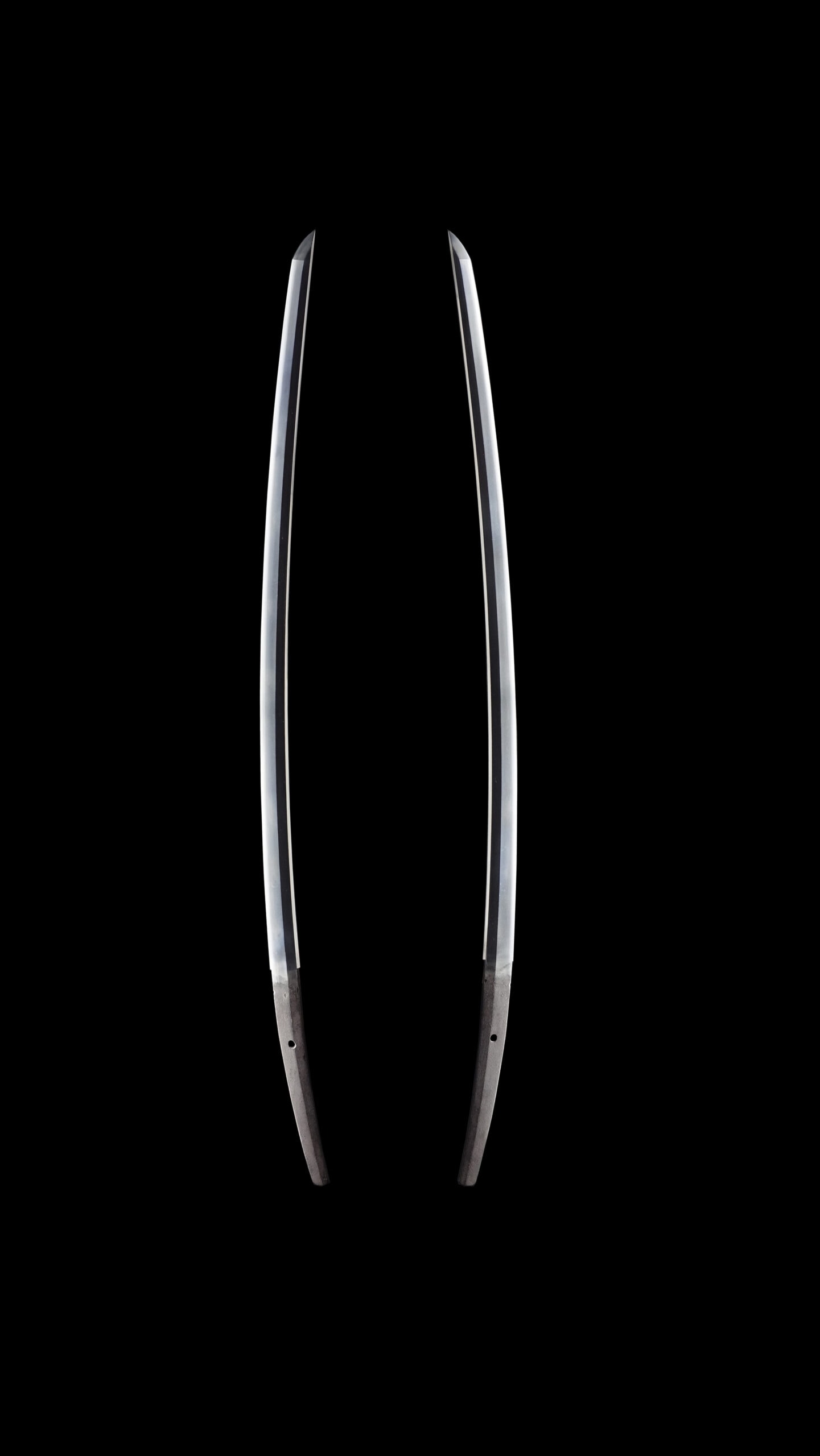
This is a Hozon-certified wakizashi by the Enju school, dating to the late Kamakura period (approx. 700 years ago). It features a refined jitetsu with clear utsuri, a chu-suguha hamon with ko-ashi and yo, and is a healthy and excellent example of the school's work. The blade is o-suriage and attributed to Enju, a school founded by Kunimura, grandson of Rai Kuniyuki.
suriage-mumei · Enju · Kamakura · nagasa 57.2cm · sori 2.4cm


Yamashiro-den · Higo
22 pieces on the market now
Among the provincial lines that carried the Kyoto manner beyond Yamashiro, the Enju (延寿) school of Higo province grew up at Kumafu in the Kikuchi District, working from the close of the Kamakura period through the Nanbokuchō era. Learn more →
| Smith | Era | Designated |
|---|---|---|
| Kunimura國村 | 1275-1278 | 15 |
| Kuniyasu國泰 | 1329-1331 | 16 |
| Kunitoki國時 | 1317-1353 | 32 |
| Kunisuke國資 | 1346-1370 | 22 |
| Kunitoki國時 | 1275-1278 | 7 |
Certifies a genuine blade worth preserving: a signature confirmed correct, or, if unsigned, an era, province, and school that the NBTHK can reliably identify.
The NBTHK (Nihon Bijutsu Tōken Hozon Kyōkai, the Society for the Preservation of Japanese Art Swords) is a public-interest incorporated foundation founded in 1948 and supervised by Japan’s Agency for Cultural Affairs (Bunkachō); it is based at the Japanese Sword Museum in Tokyo. Its expert panels physically examine each submitted work (shinsa) and issue a certificate (kanteishō) ranking it by artistic and historical merit. NBTHK papers are the most widely recognized standard of authentication for Japanese swords and fittings.
NBTHK official siteReturns/exchanges/cancellations not accepted after shipment except for significant defects; if defective, return/exchange possible within 3 days of arrival (return shipping paid by customer).
This is a Hozon-certified wakizashi by the Enju school, dating to the late Kamakura period (approx. 700 years ago). It features a refined jitetsu with clear utsuri, a chu-suguha hamon with ko-ashi and yo, and is a healthy and excellent example of the school's work. The blade is o-suriage and attributed to Enju, a school founded by Kunimura, grandson of Rai Kuniyuki.
suriage-mumei · Enju · Kamakura · nagasa 57.2cm · sori 2.4cm


Yamashiro-den · Higo
22 pieces on the market now
Among the provincial lines that carried the Kyoto manner beyond Yamashiro, the Enju (延寿) school of Higo province grew up at Kumafu in the Kikuchi District, working from the close of the Kamakura period through the Nanbokuchō era. Learn more →
| Smith | Era | Designated |
|---|---|---|
| Kunimura國村 | 1275-1278 | 15 |
| Kuniyasu國泰 | 1329-1331 | 16 |
| Kunitoki國時 | 1317-1353 | 32 |
| Kunisuke國資 | 1346-1370 | 22 |
| Kunitoki國時 | 1275-1278 | 7 |
Certifies a genuine blade worth preserving: a signature confirmed correct, or, if unsigned, an era, province, and school that the NBTHK can reliably identify.
The NBTHK (Nihon Bijutsu Tōken Hozon Kyōkai, the Society for the Preservation of Japanese Art Swords) is a public-interest incorporated foundation founded in 1948 and supervised by Japan’s Agency for Cultural Affairs (Bunkachō); it is based at the Japanese Sword Museum in Tokyo. Its expert panels physically examine each submitted work (shinsa) and issue a certificate (kanteishō) ranking it by artistic and historical merit. NBTHK papers are the most widely recognized standard of authentication for Japanese swords and fittings.
NBTHK official siteReturns/exchanges/cancellations not accepted after shipment except for significant defects; if defective, return/exchange possible within 3 days of arrival (return shipping paid by customer).