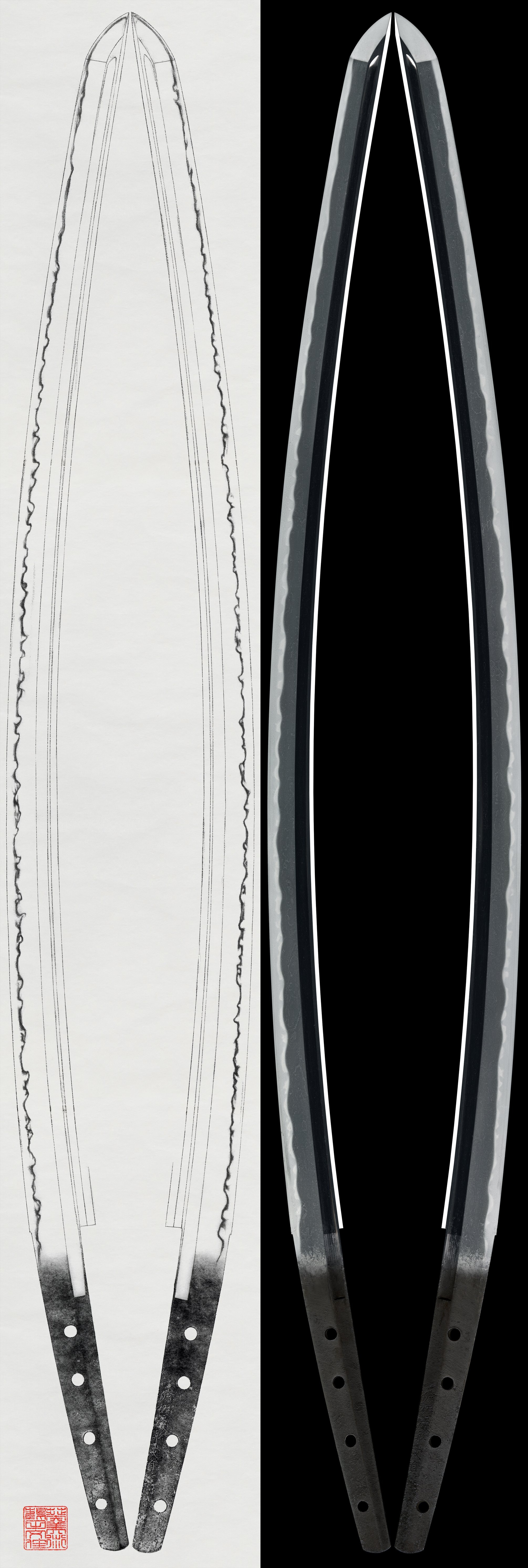
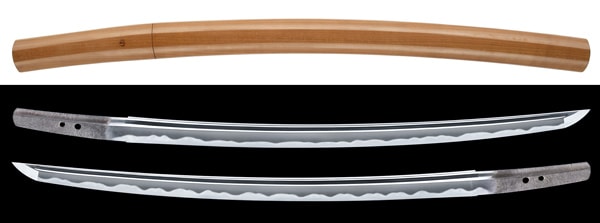
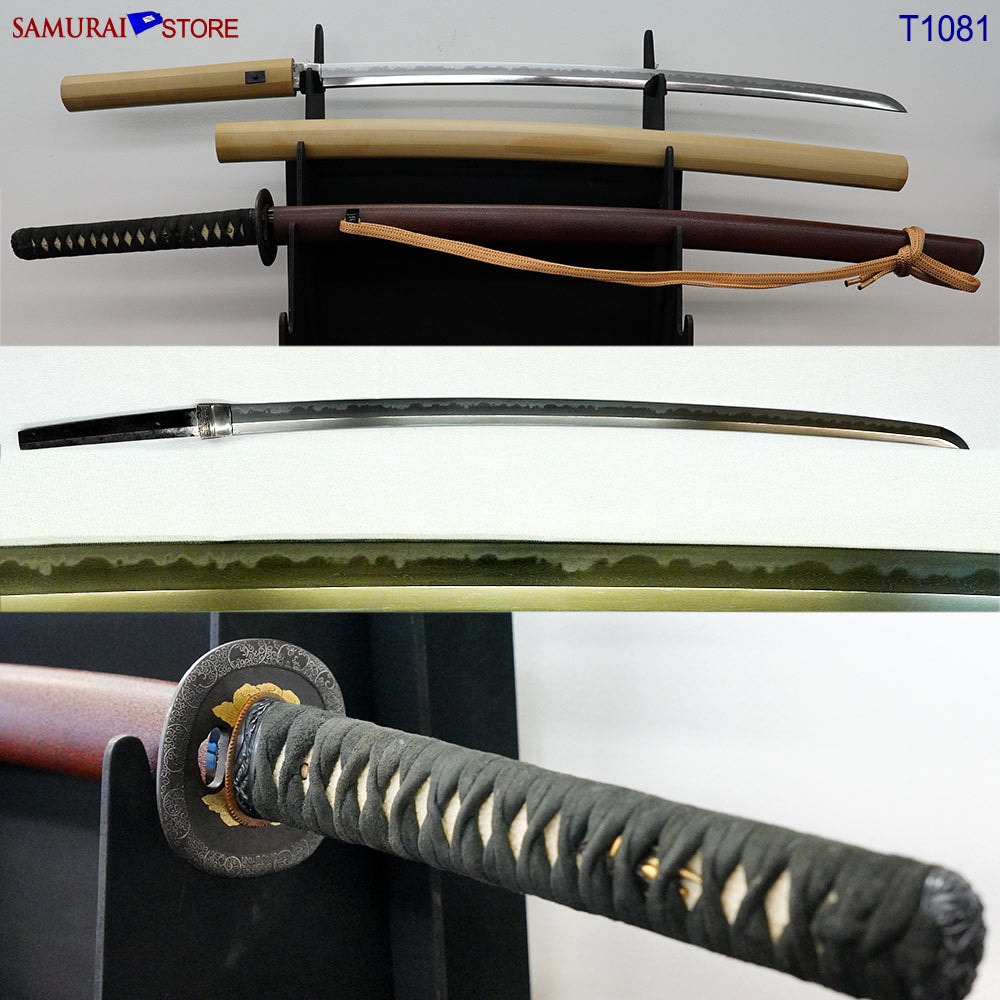
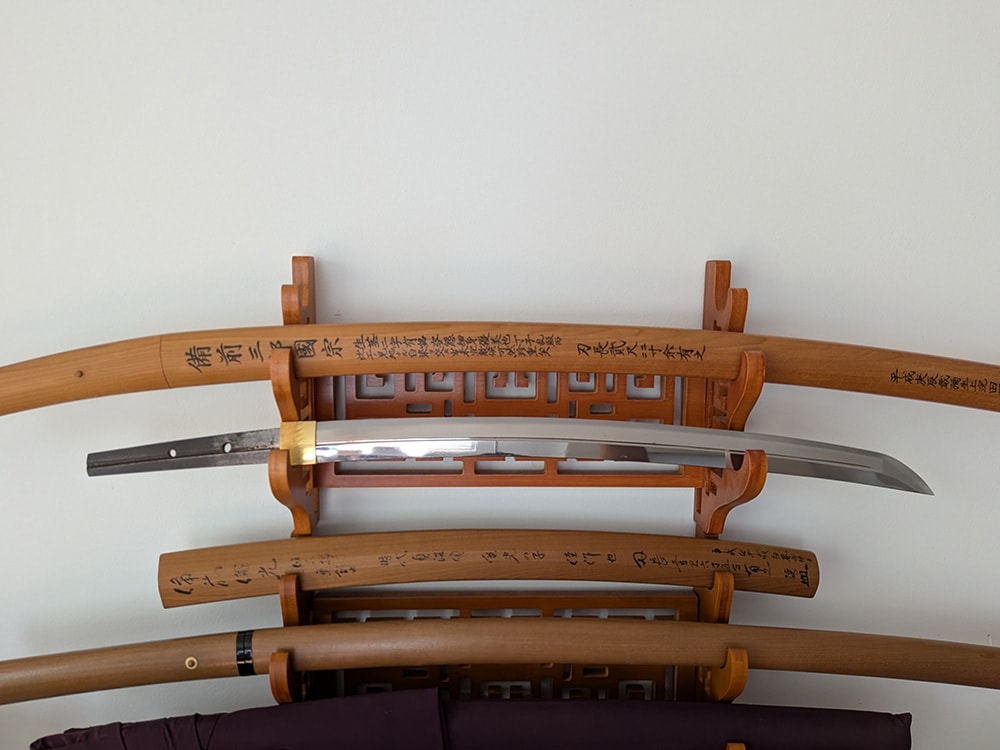
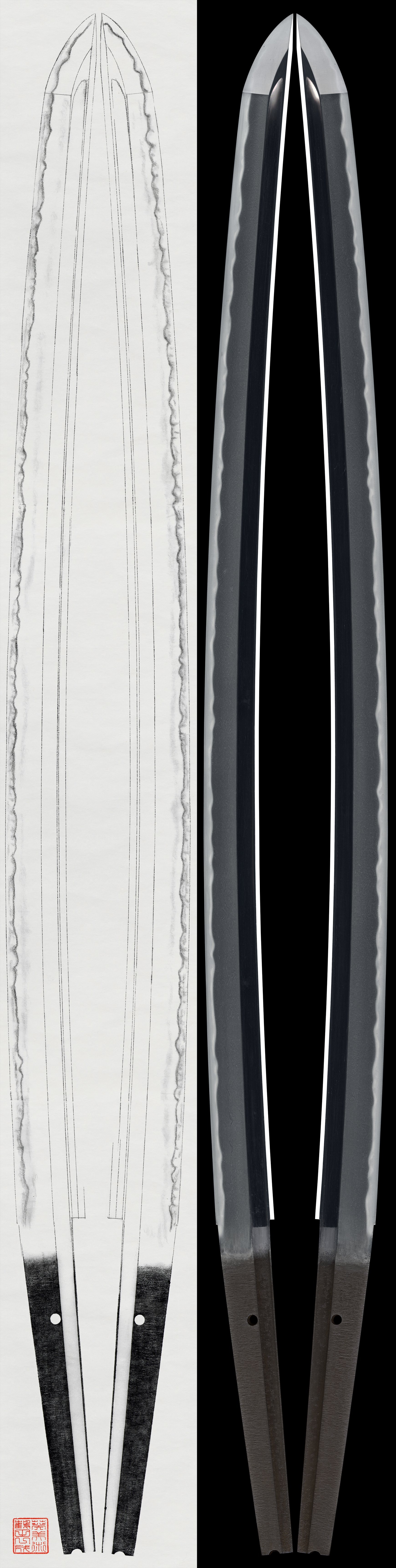
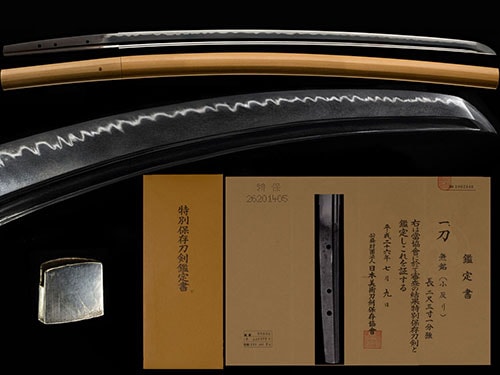
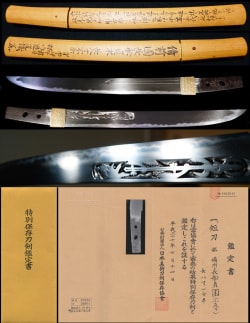
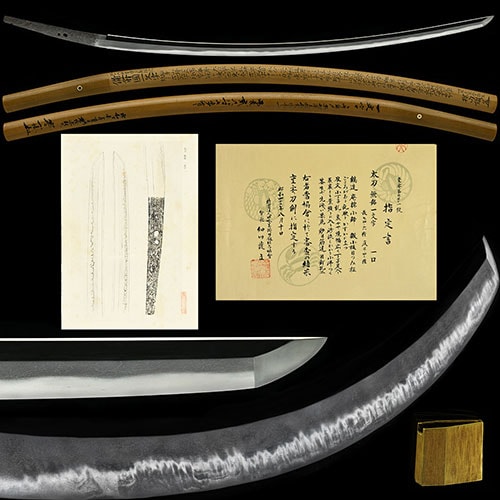
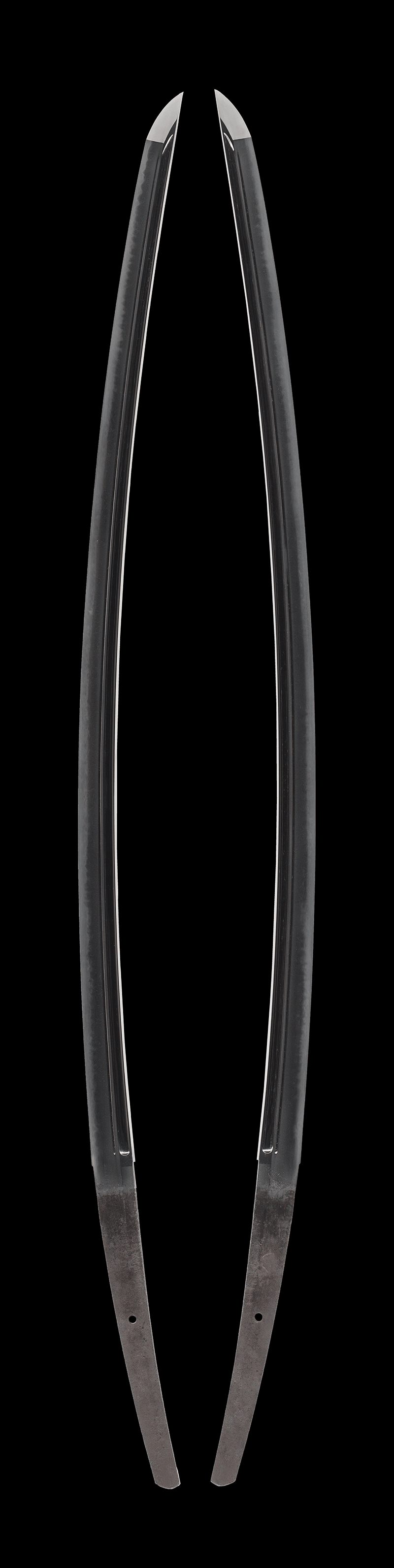
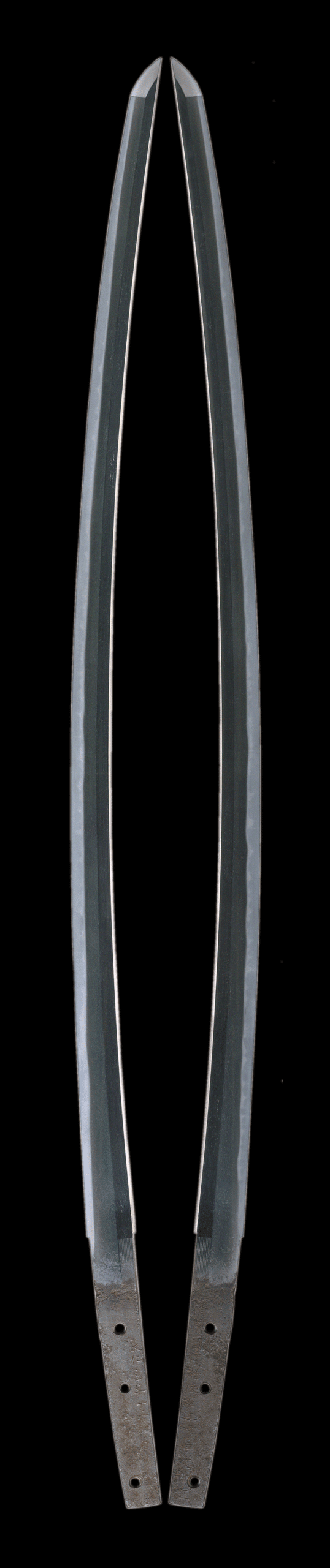
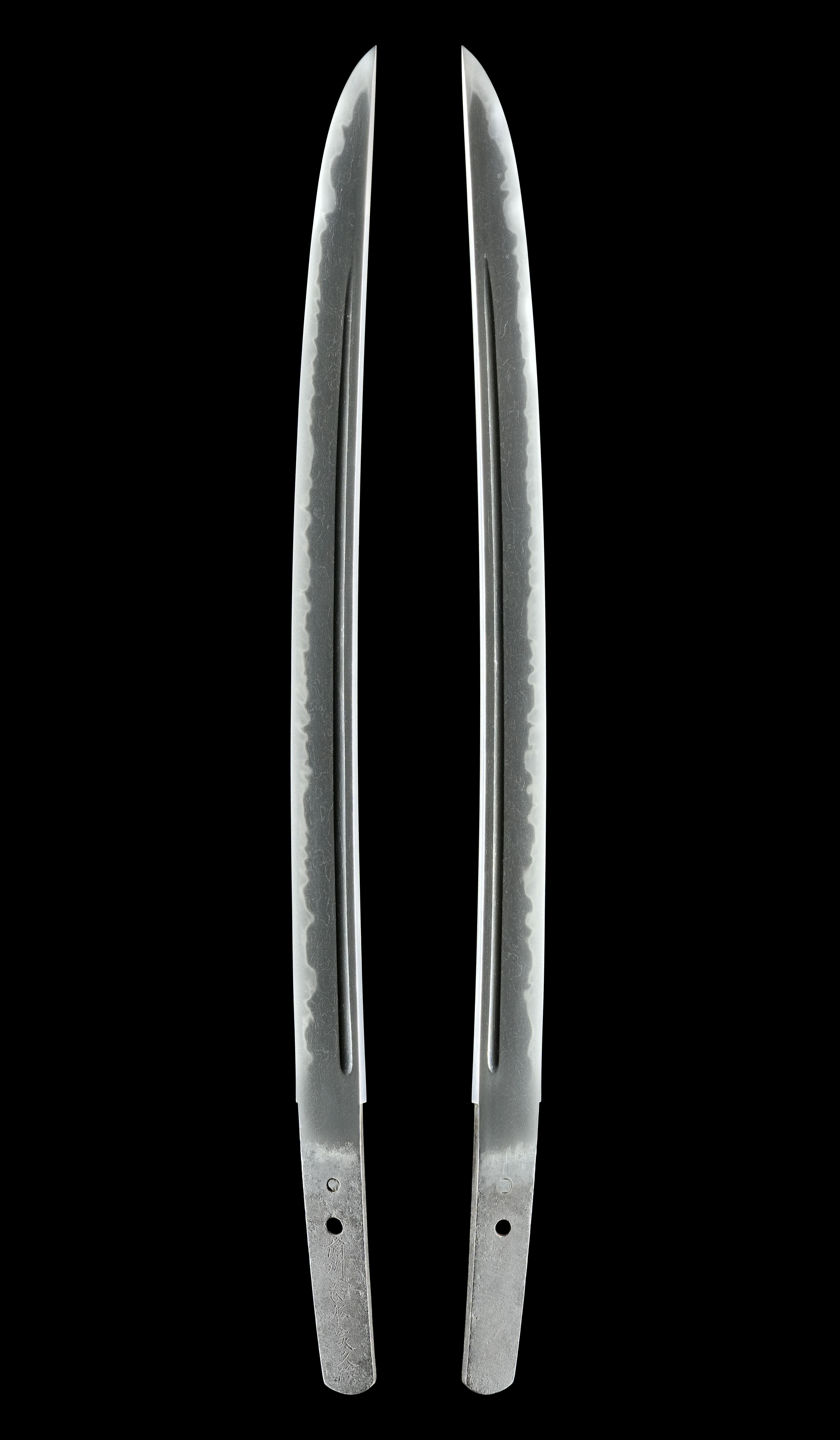
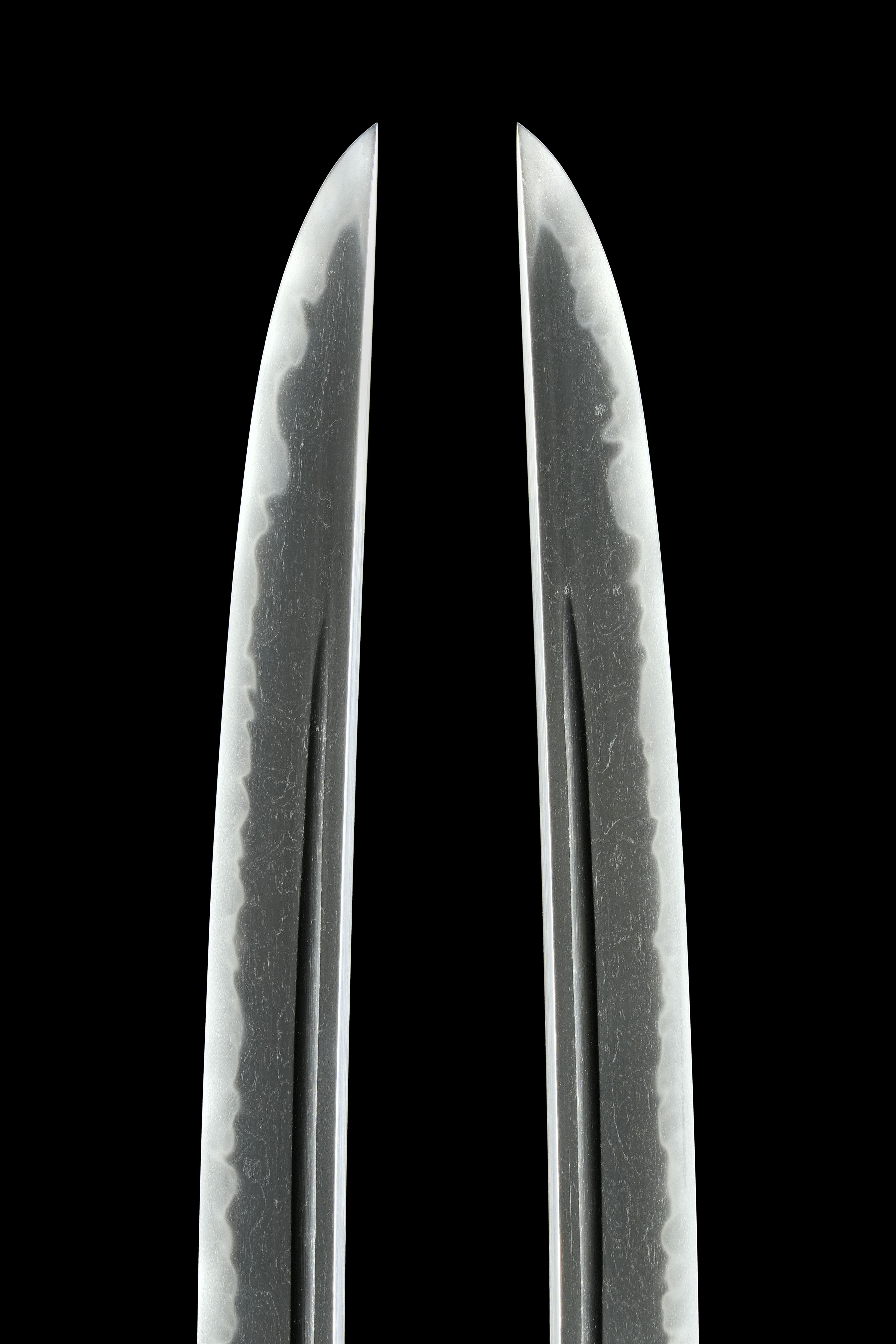
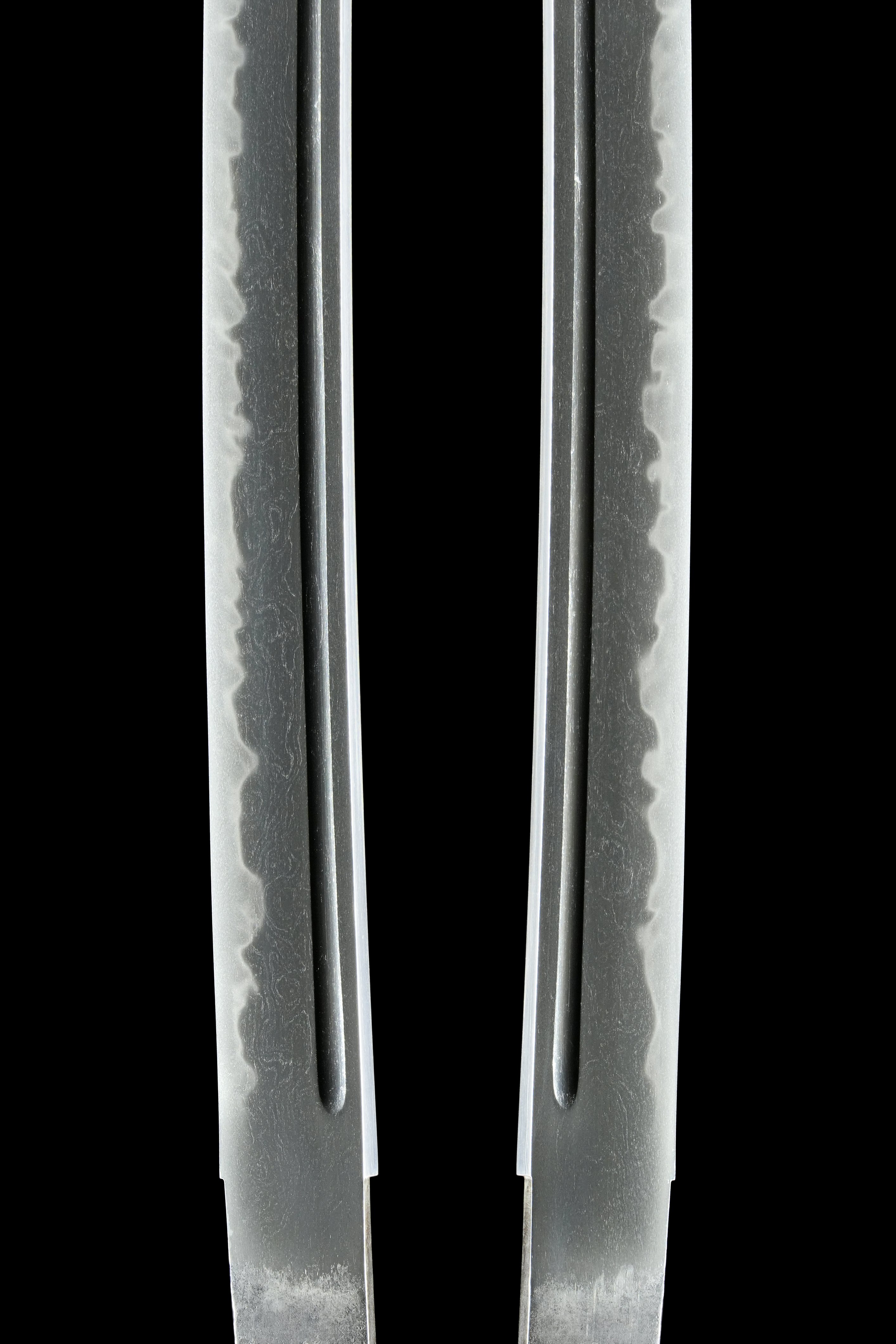
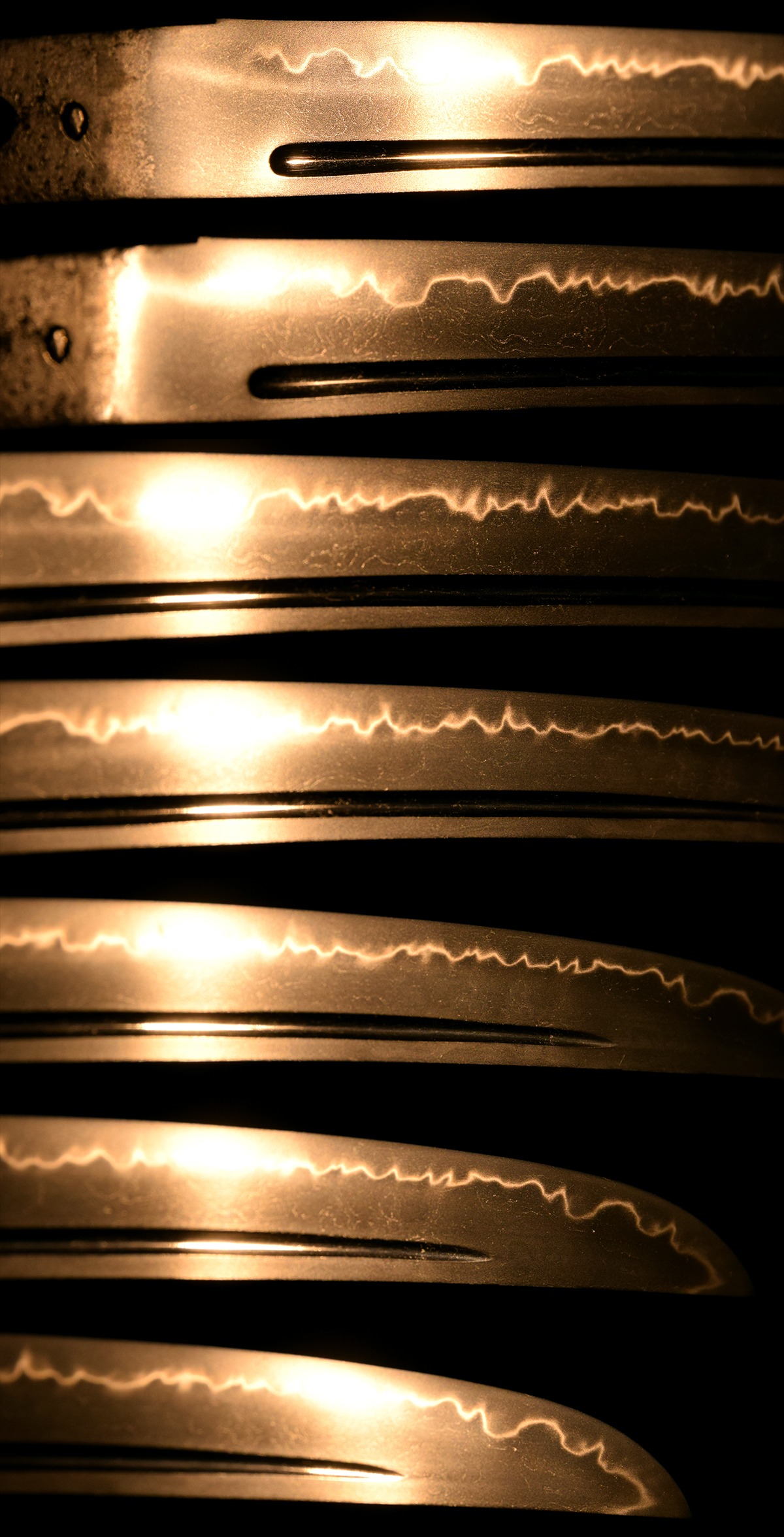
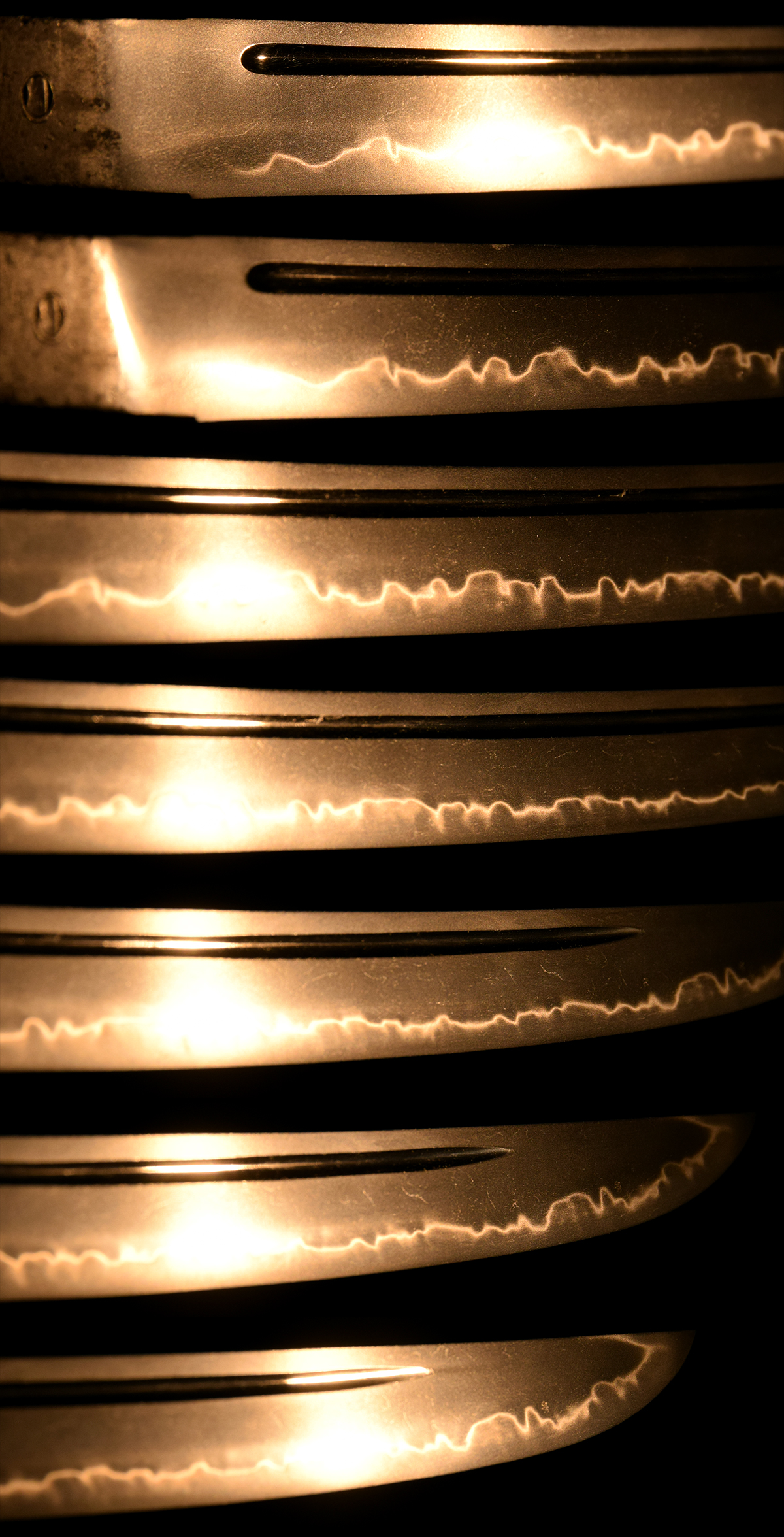
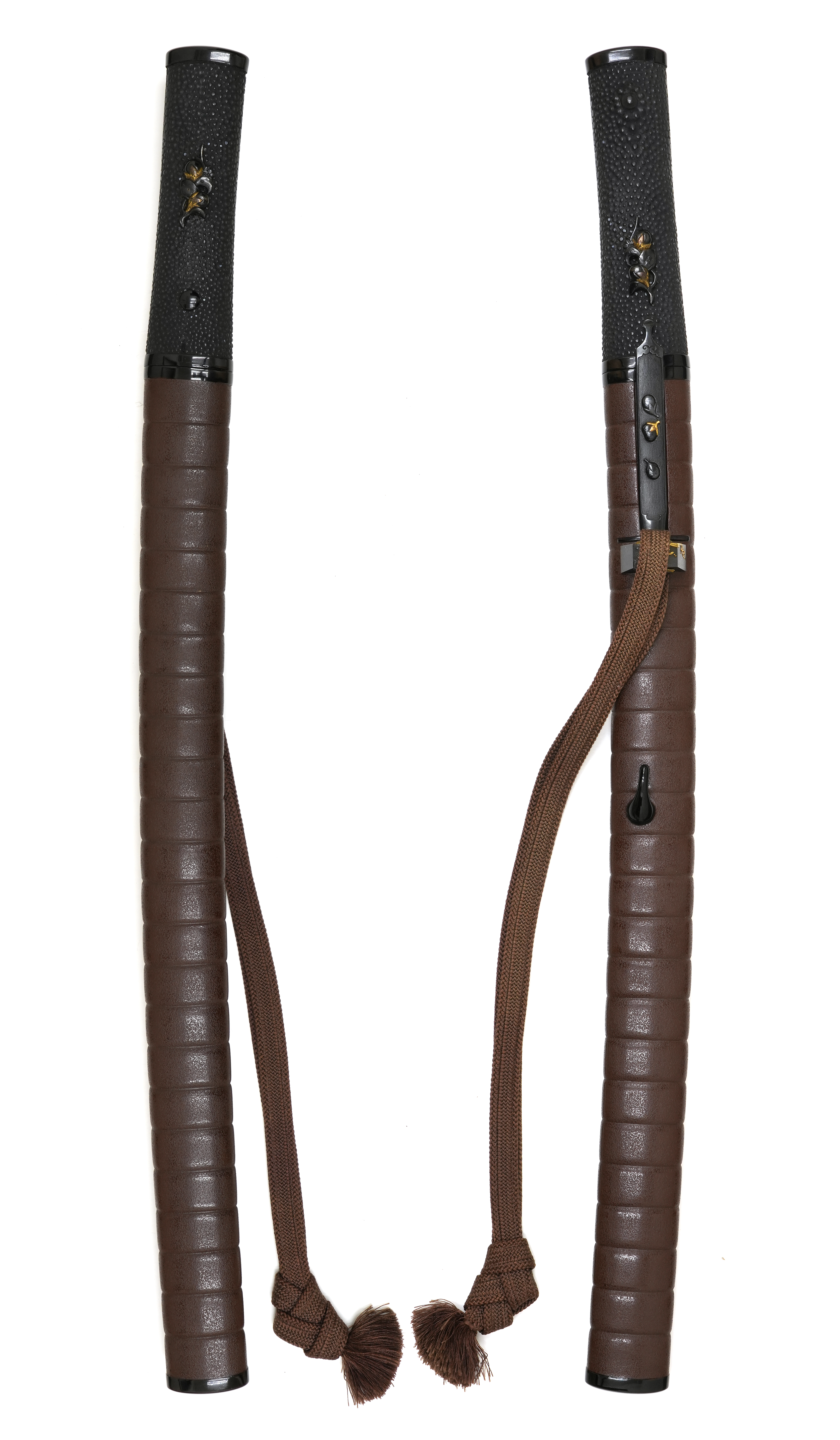
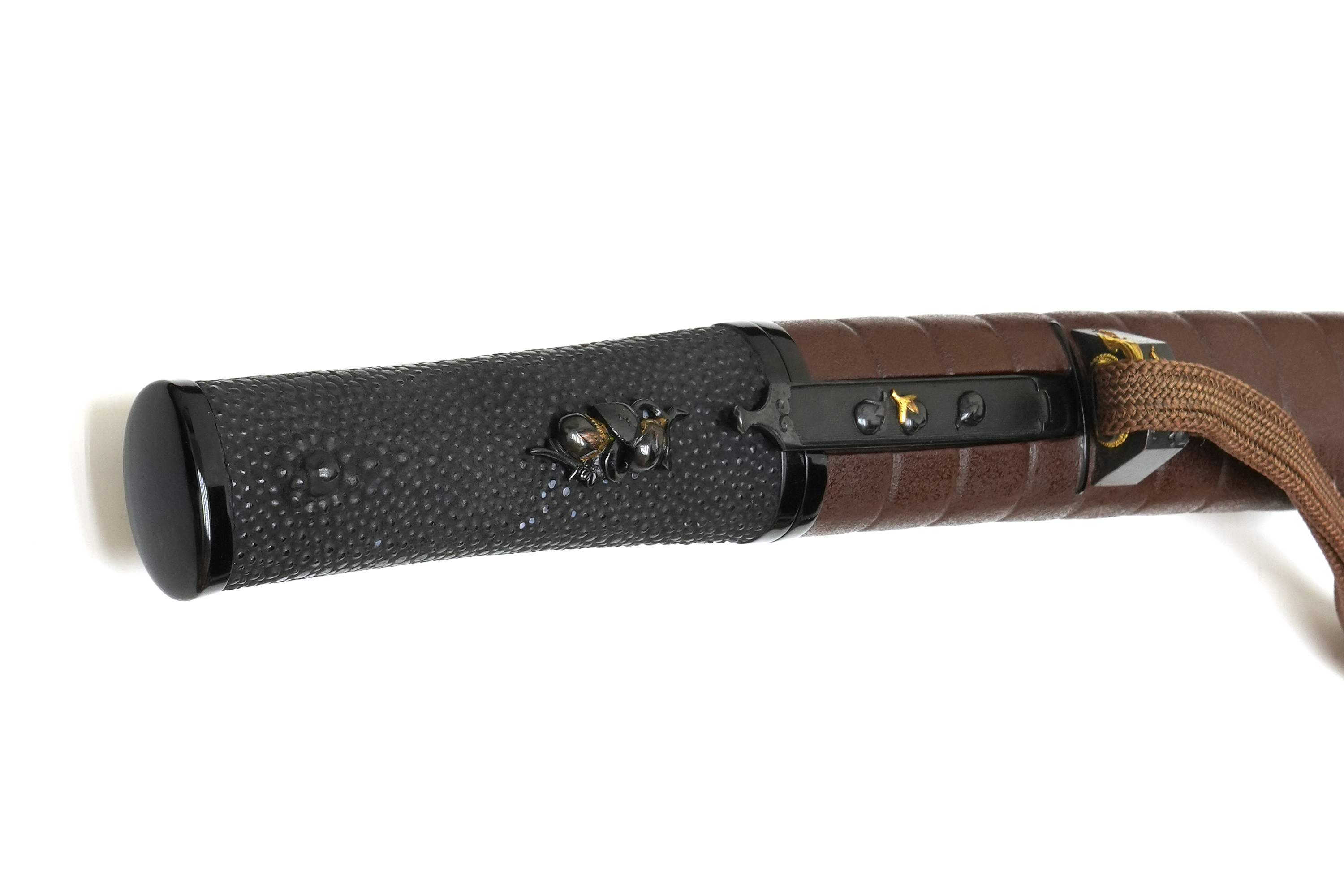
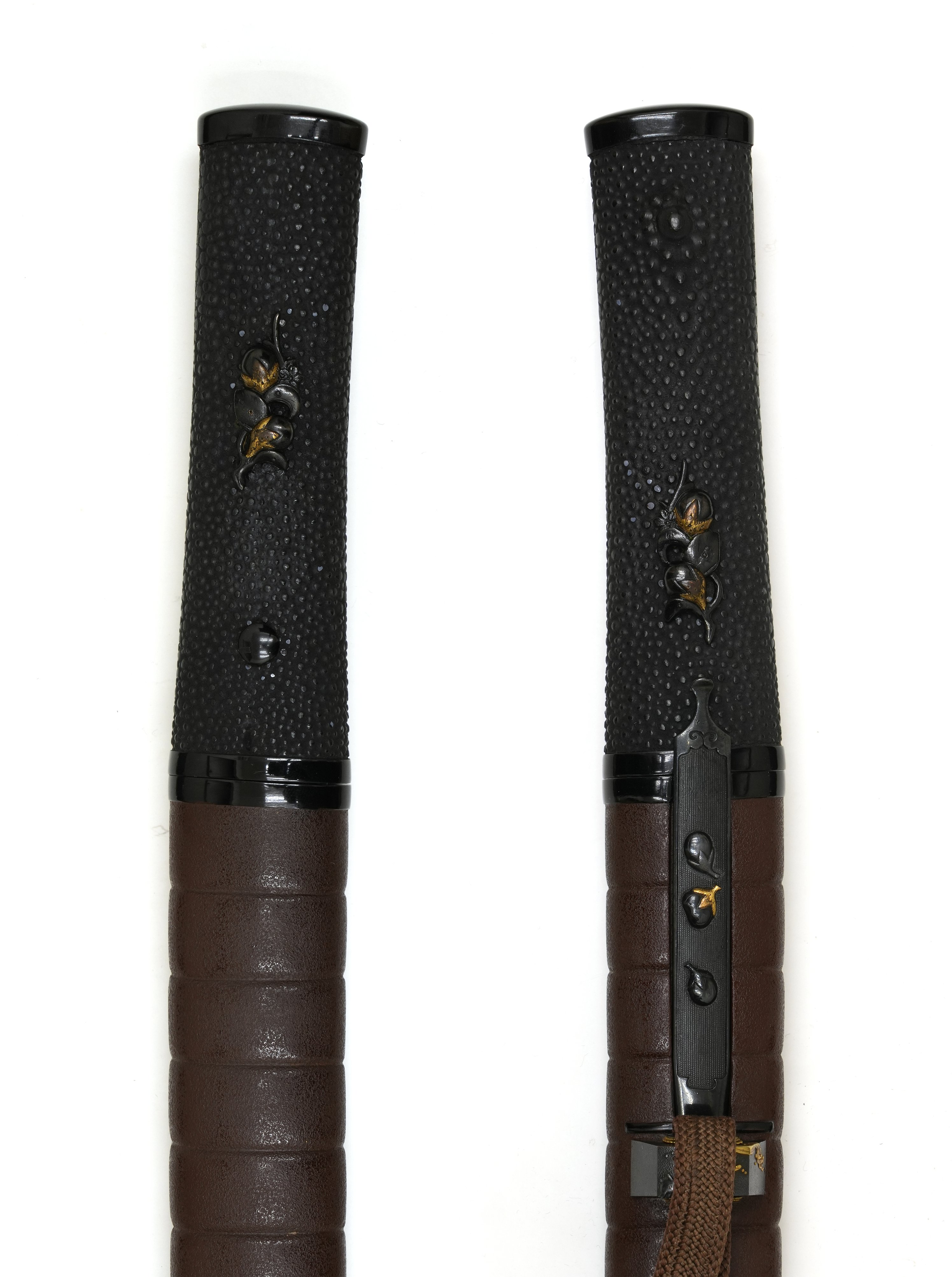
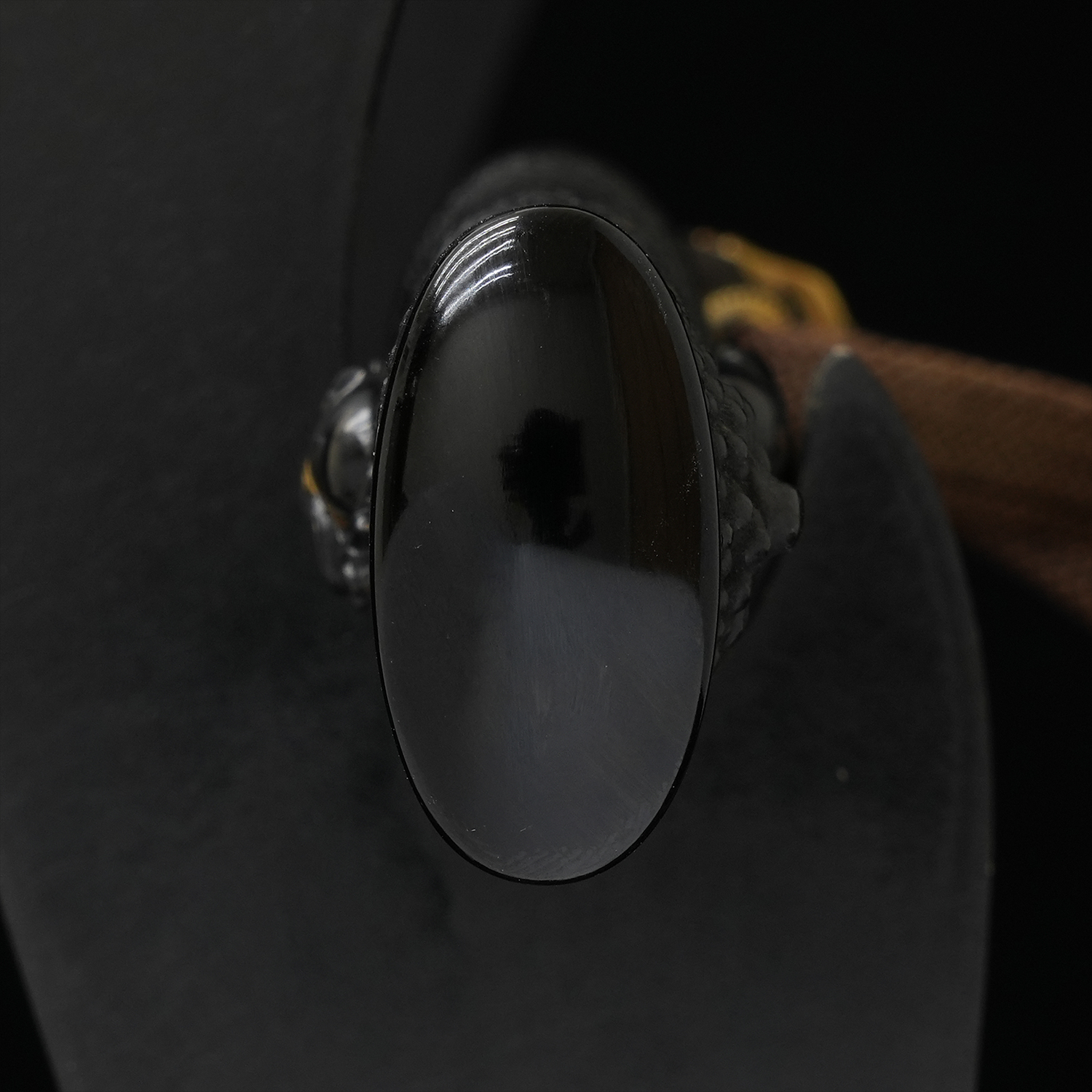
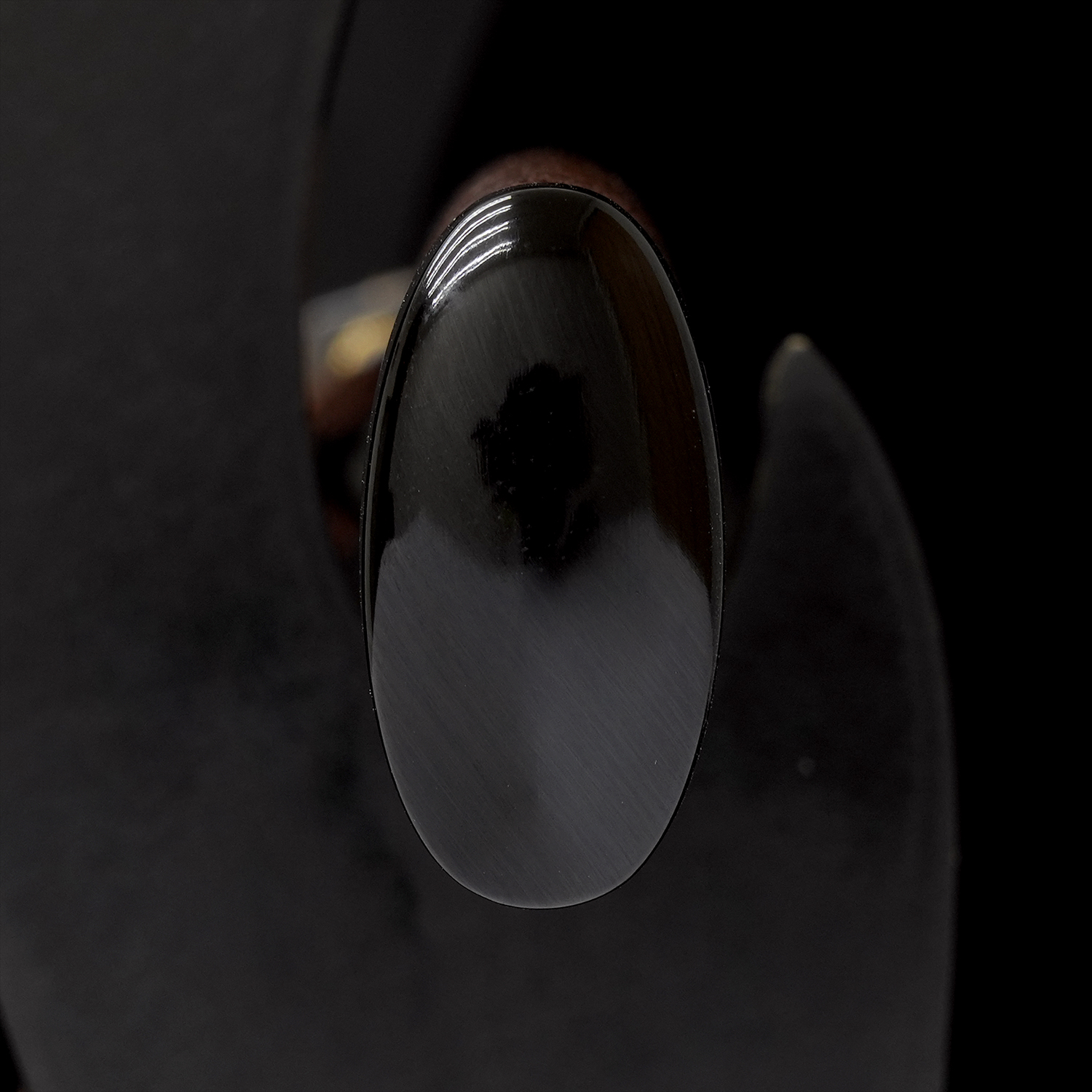
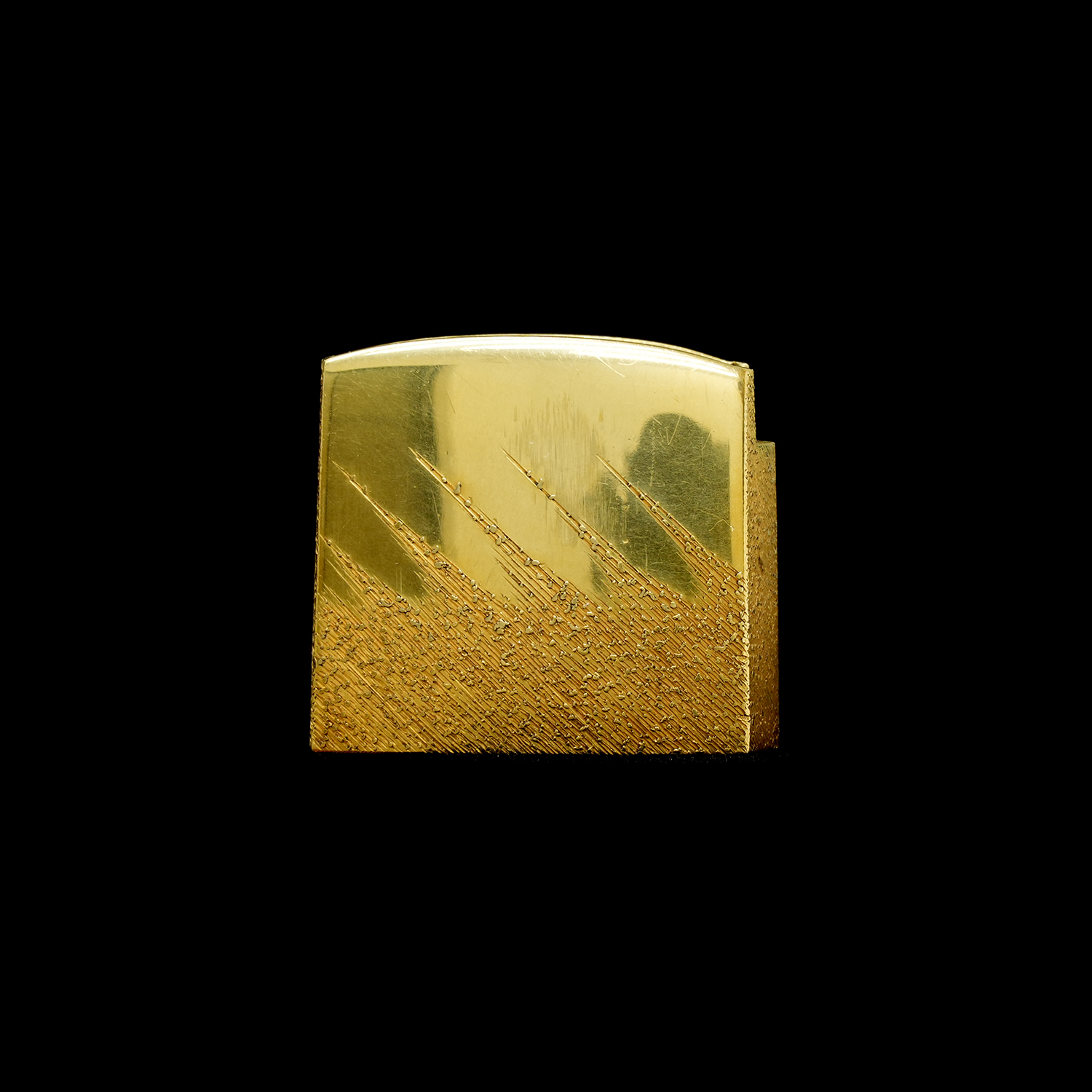
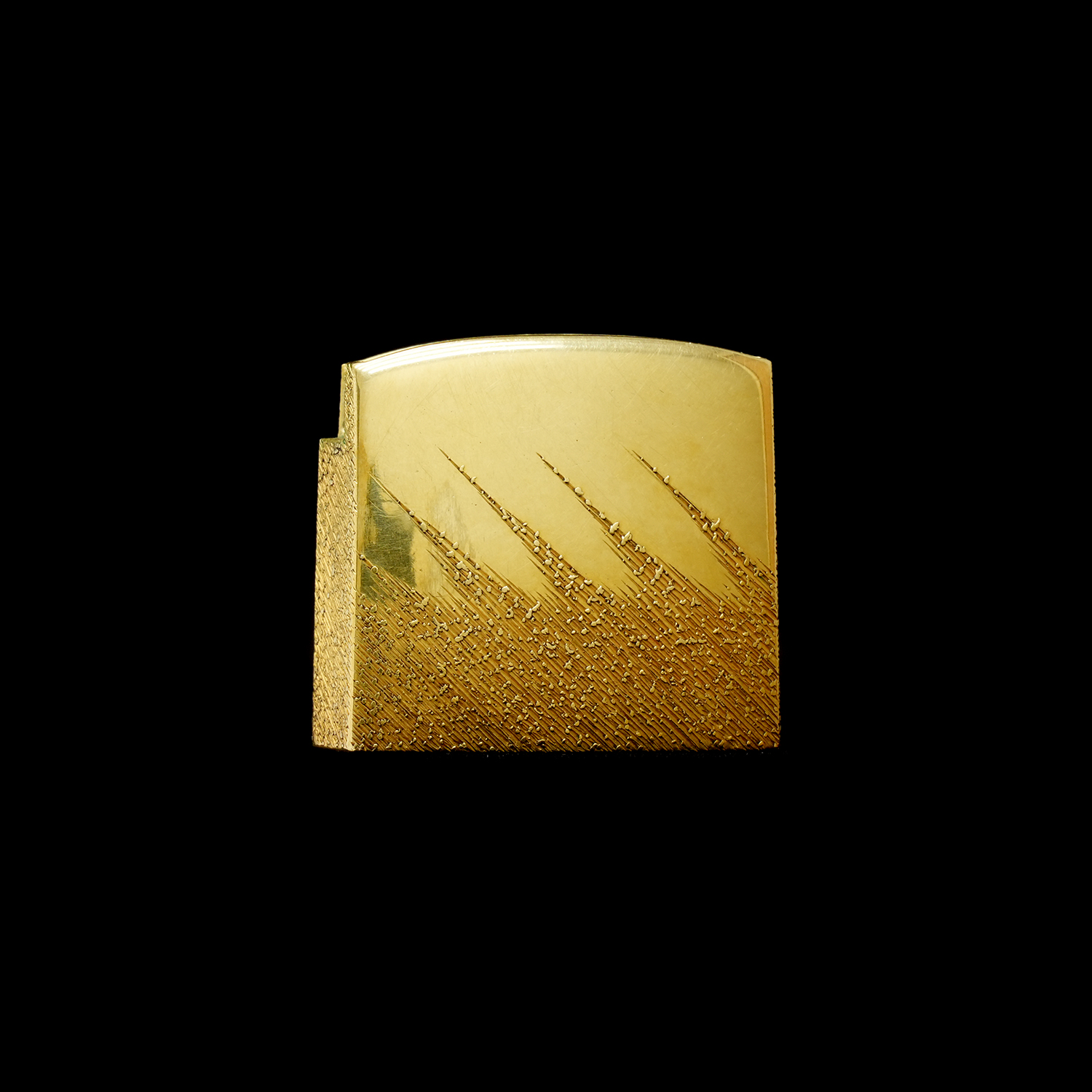
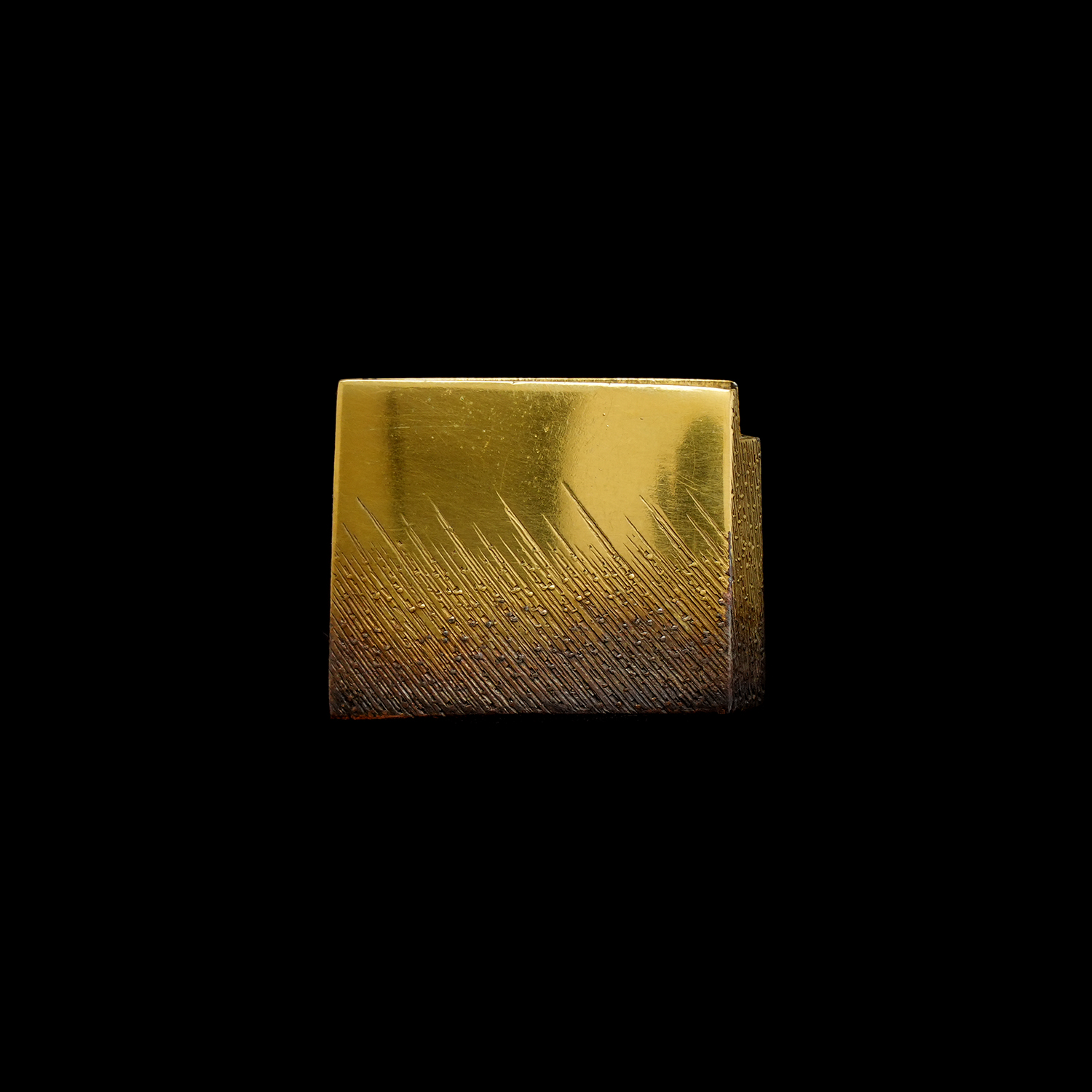
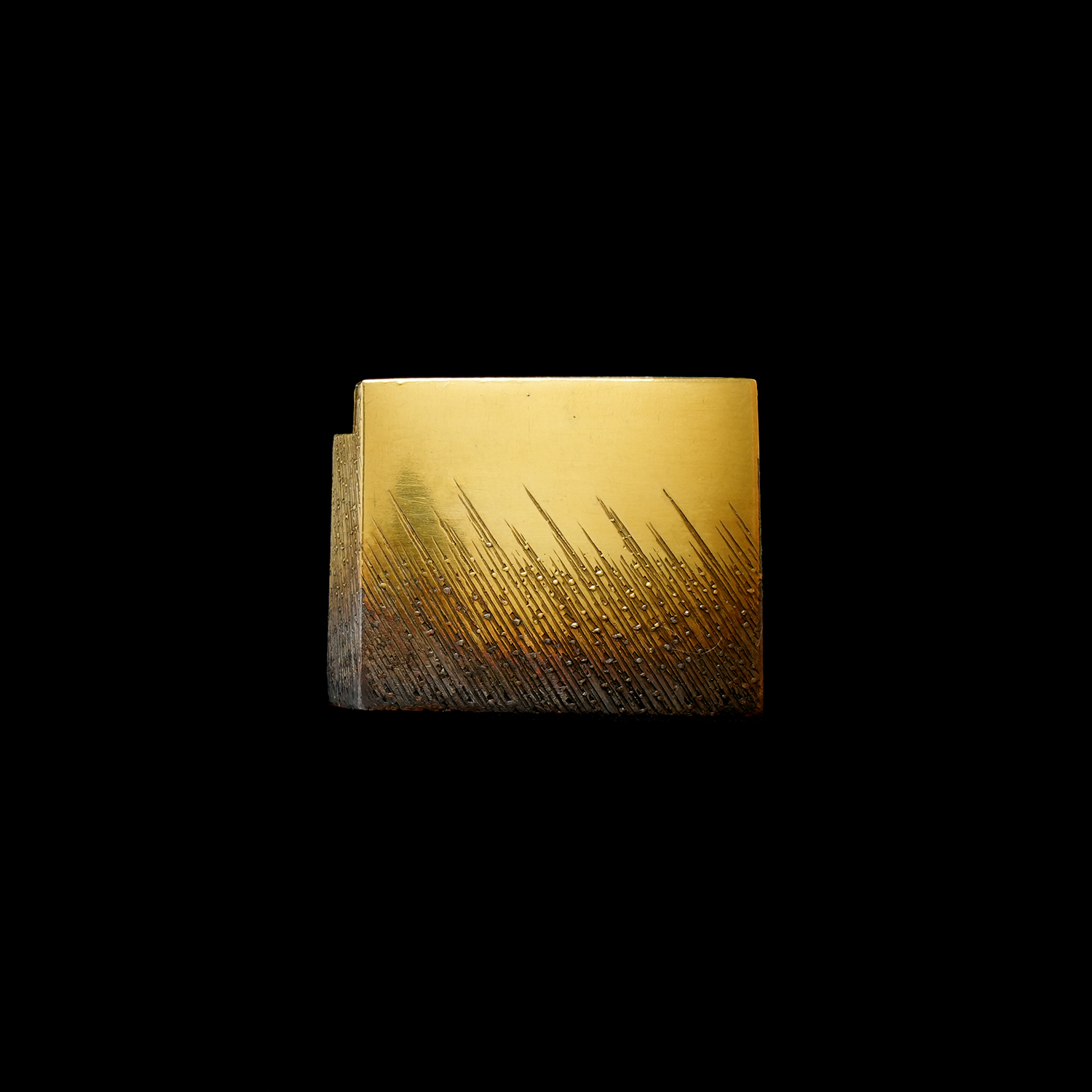
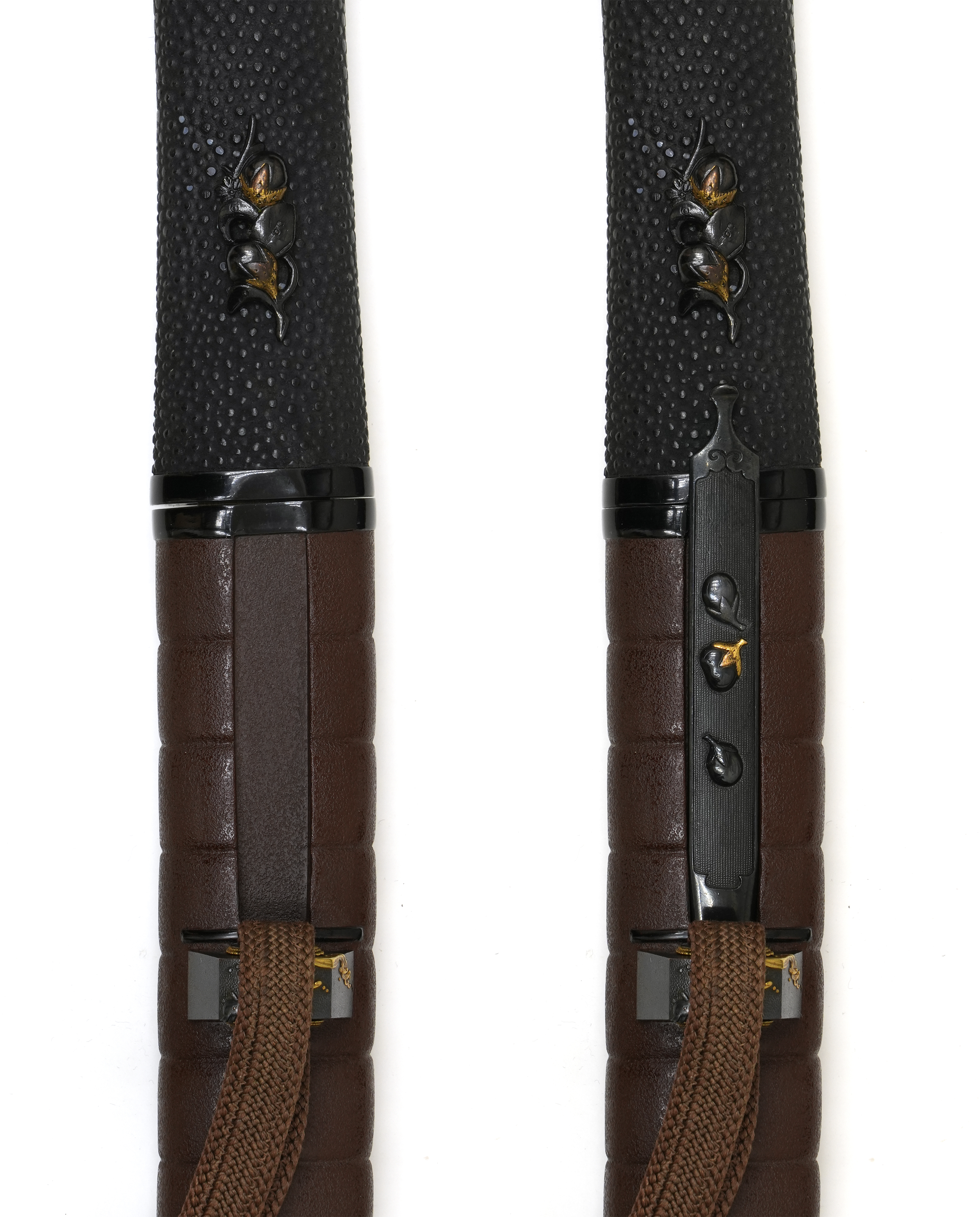
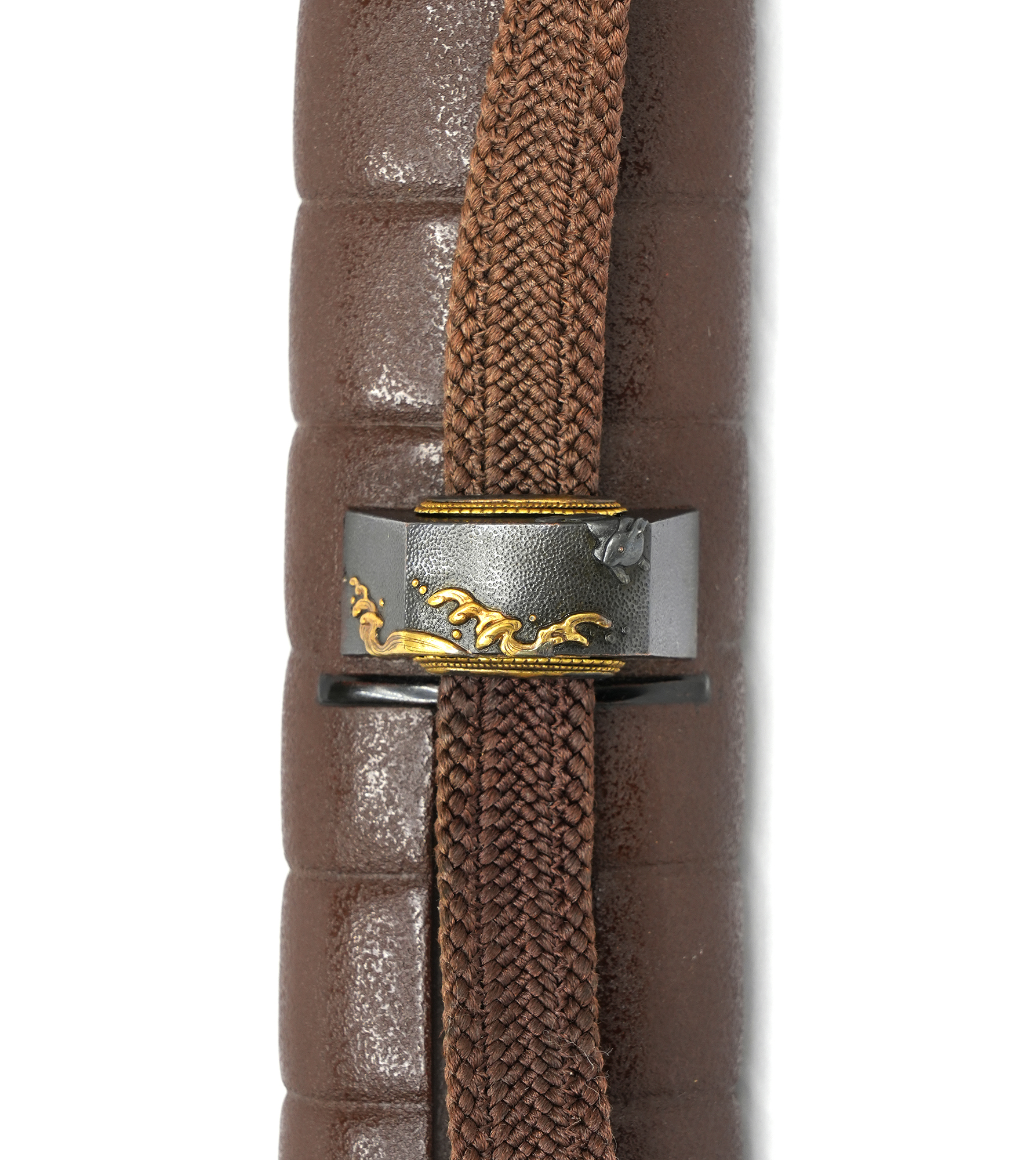
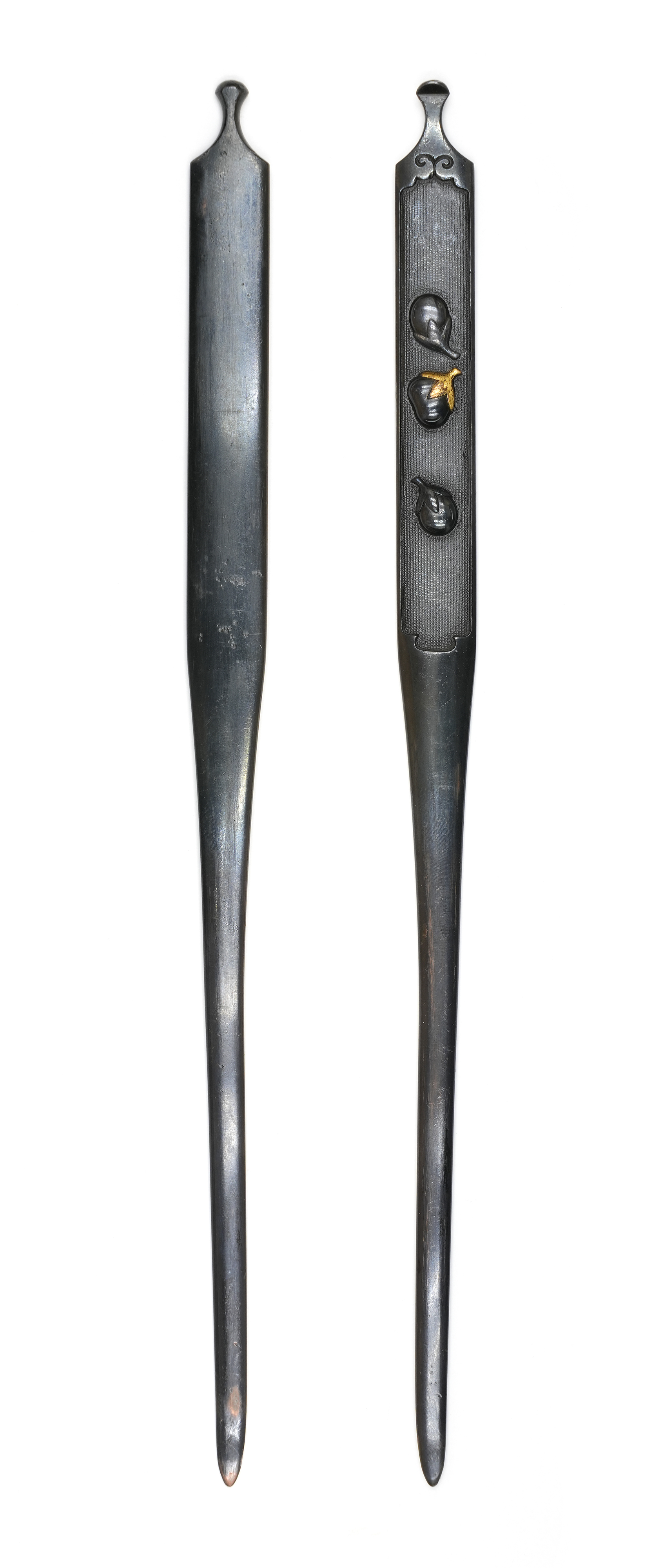
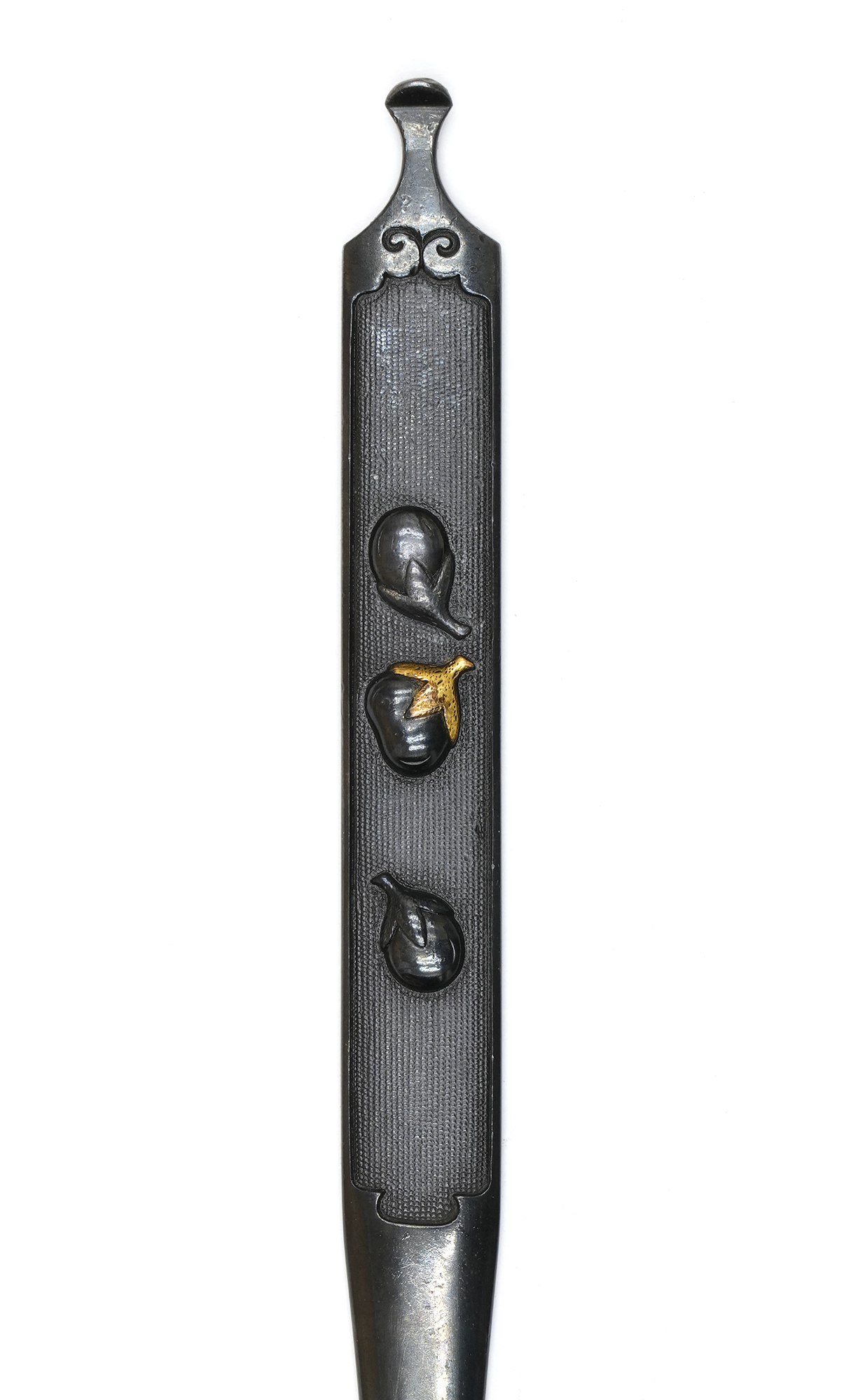
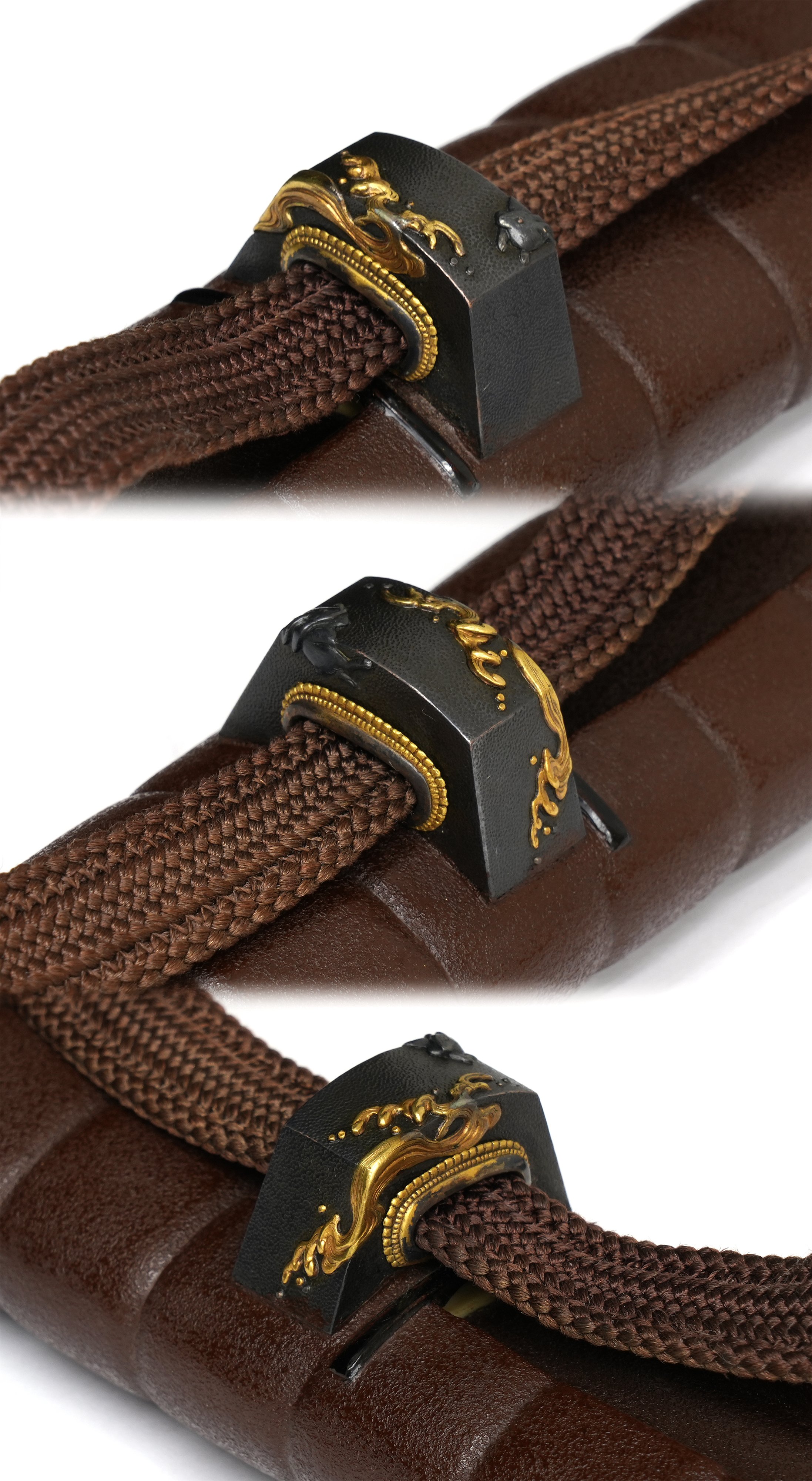
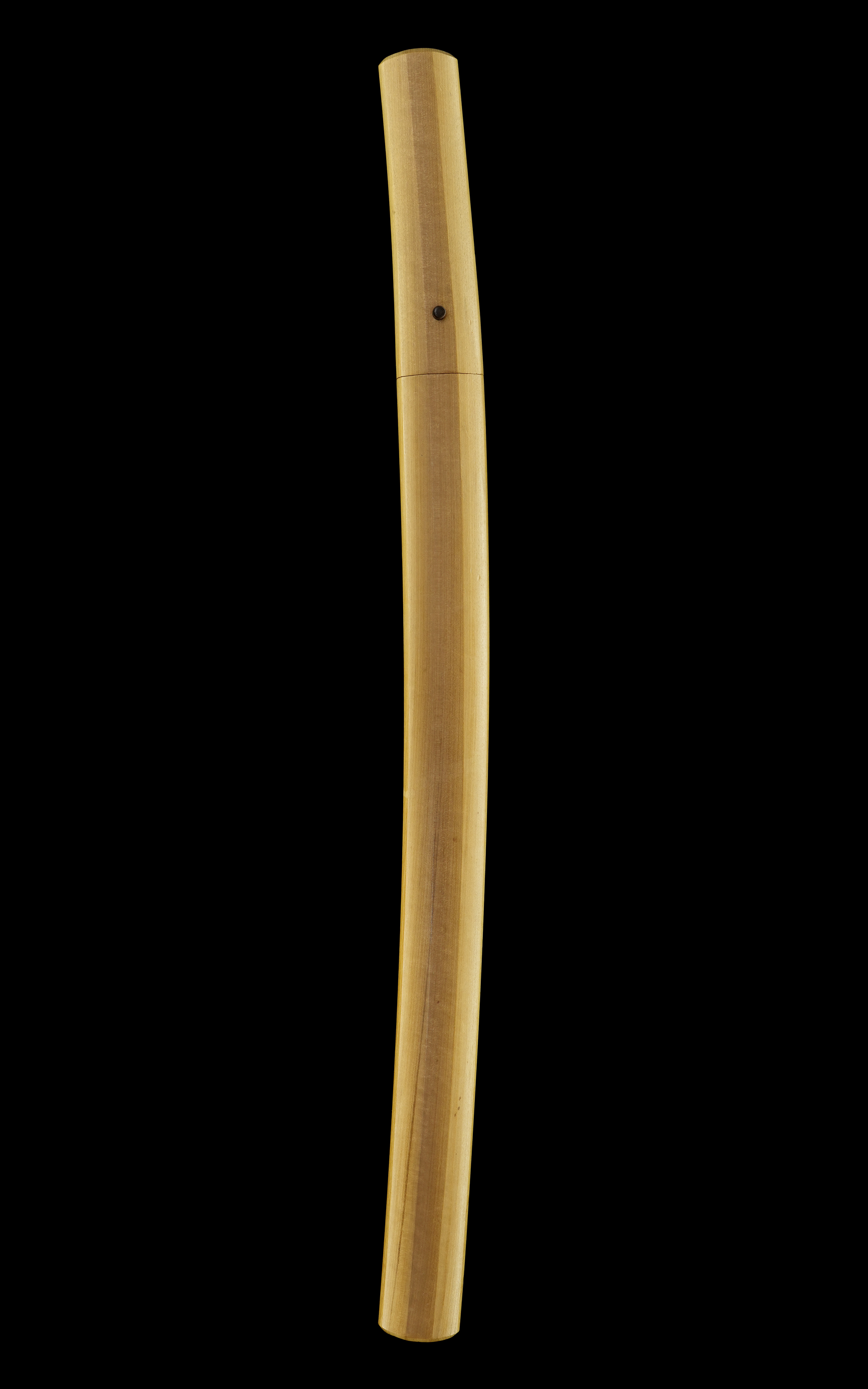
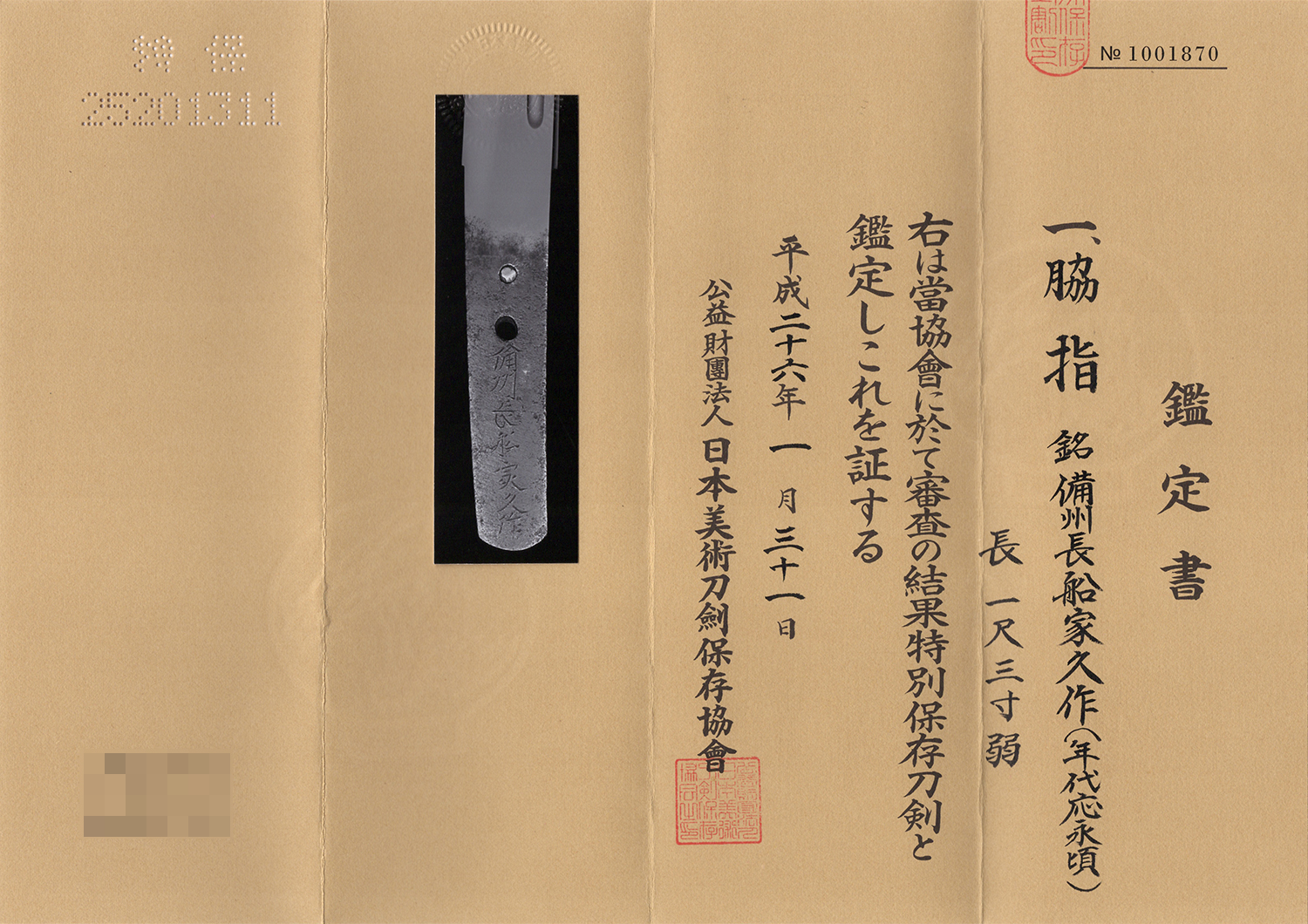
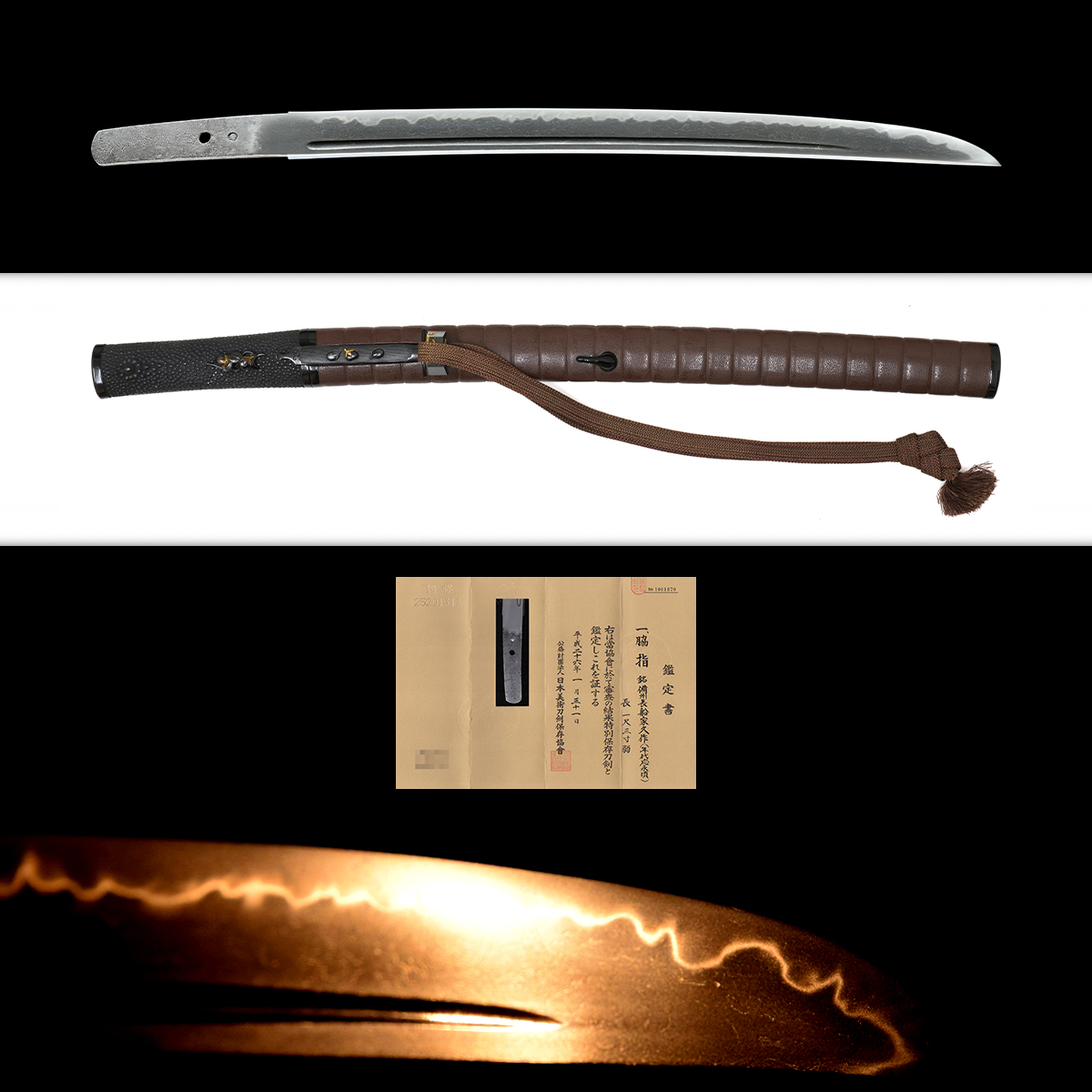
This is a wakizashi by Iehisa of Bishu Osafune, known as a 'Ko-zori' smith. It features a tight, shallow-curved form characteristic of Oei-period Bizen works, with a finely forged mokume-hada jigane and a bright, clear gunome-midare hamon. The sword comes with a high-quality brown ishime-nuri inro-kizami aikuchi koshirae made by Maeda Kosaku, and is accompanied by an NBTHK Tokubetsu Hozon certificate.
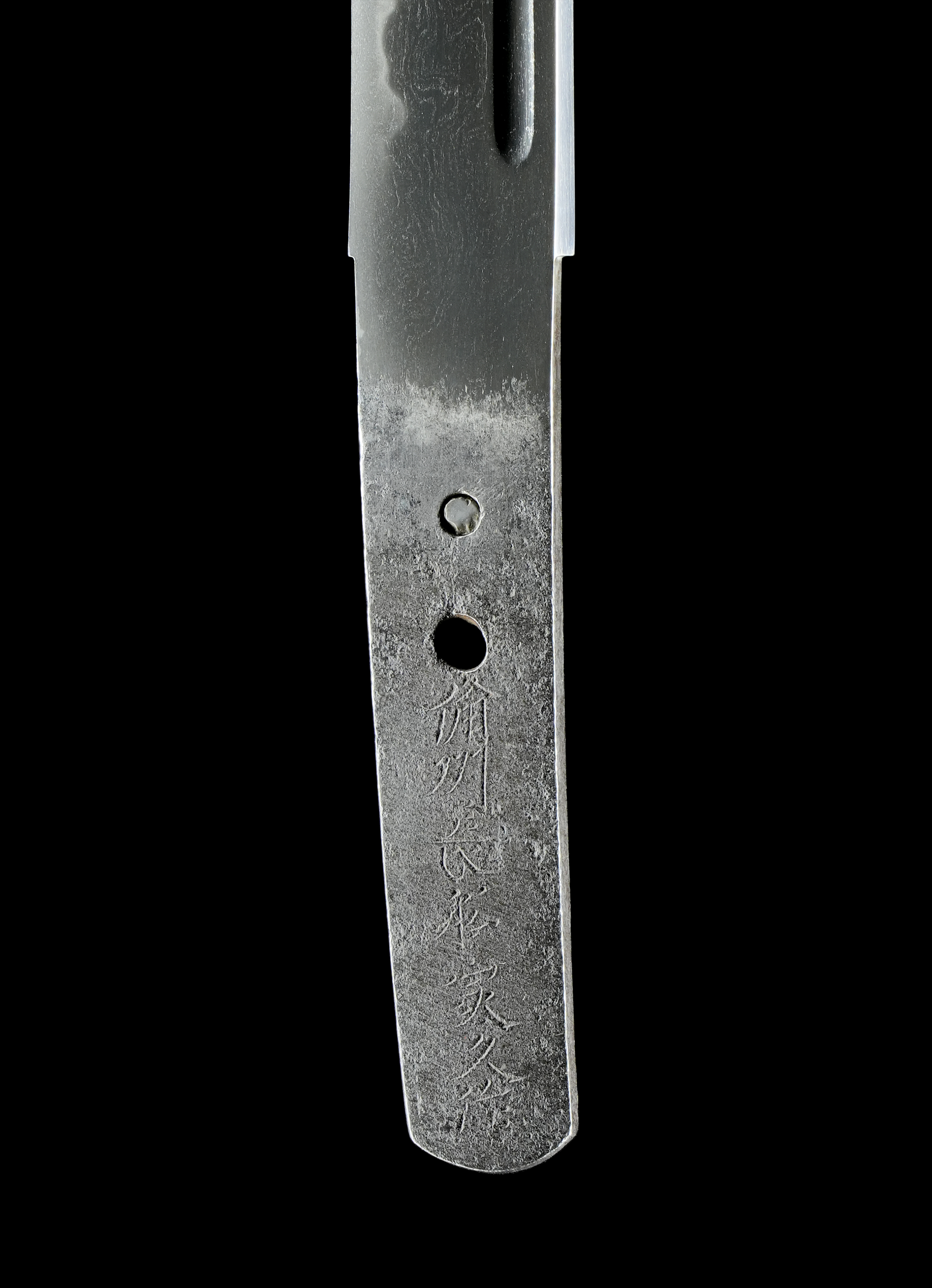
Certificate reading — 銘 備州長船家久作
 NihontoWatchBETA
mei · Osafune · Muromachi · nagasa 39.3cm · sori 0.5cm
Bizen-den · Bizen
21 pieces on the market now
The Kozori (小反り) form a loose body of Bizen smiths who worked at and around Osafune in the closing decades of the Nanbokucho period and on into early Muromachi, and the NBTHK defines them less by descent than by exclusion: they are the late-Osafune hands who fall outside the specific lineages of Kanemitsu, Chogi, Motoshige and the Omiya group, gathered under one name as a convenience. Learn more →
| Smith | Era | Designated |
|---|---|---|
| Hidemitsu秀光 | 1375-1392 | 19 |
| Iesuke家助 | 1394-1428 | 11 |
| Nariie成家 | 1352-1362 | 21 |
| Iemori家守 | 1377-1406 | 15 |
| Moromitsu師光 | 1375-1390 | 7 |
A Hozon-certified blade judged to show notably superior workmanship and a better state of preservation. The bar is higher: re-tempered blades and most unsigned Muromachi/Edo works are excluded.
The NBTHK (Nihon Bijutsu Tōken Hozon Kyōkai, the Society for the Preservation of Japanese Art Swords) is a public-interest incorporated foundation founded in 1948 and supervised by Japan’s Agency for Cultural Affairs (Bunkachō); it is based at the Japanese Sword Museum in Tokyo. Its expert panels physically examine each submitted work (shinsa) and issue a certificate (kanteishō) ranking it by artistic and historical merit. NBTHK papers are the most widely recognized standard of authentication for Japanese swords and fittings.
NBTHK official siteReturns accepted within 3 days of delivery for defective items or significant discrepancies; customer bears return shipping and bank fees.
This is a wakizashi by Iehisa of Bishu Osafune, known as a 'Ko-zori' smith. It features a tight, shallow-curved form characteristic of Oei-period Bizen works, with a finely forged mokume-hada jigane and a bright, clear gunome-midare hamon. The sword comes with a high-quality brown ishime-nuri inro-kizami aikuchi koshirae made by Maeda Kosaku, and is accompanied by an NBTHK Tokubetsu Hozon certificate.
Certificate reading — 銘 備州長船家久作
NihontoWatchBETAmei · Osafune · Muromachi · nagasa 39.3cm · sori 0.5cm
Bizen-den · Bizen
21 pieces on the market now
The Kozori (小反り) form a loose body of Bizen smiths who worked at and around Osafune in the closing decades of the Nanbokucho period and on into early Muromachi, and the NBTHK defines them less by descent than by exclusion: they are the late-Osafune hands who fall outside the specific lineages of Kanemitsu, Chogi, Motoshige and the Omiya group, gathered under one name as a convenience. Learn more →
| Smith | Era | Designated |
|---|---|---|
| Hidemitsu秀光 | 1375-1392 | 19 |
| Iesuke家助 | 1394-1428 | 11 |
| Nariie成家 | 1352-1362 | 21 |
| Iemori家守 | 1377-1406 | 15 |
| Moromitsu師光 | 1375-1390 | 7 |
A Hozon-certified blade judged to show notably superior workmanship and a better state of preservation. The bar is higher: re-tempered blades and most unsigned Muromachi/Edo works are excluded.
The NBTHK (Nihon Bijutsu Tōken Hozon Kyōkai, the Society for the Preservation of Japanese Art Swords) is a public-interest incorporated foundation founded in 1948 and supervised by Japan’s Agency for Cultural Affairs (Bunkachō); it is based at the Japanese Sword Museum in Tokyo. Its expert panels physically examine each submitted work (shinsa) and issue a certificate (kanteishō) ranking it by artistic and historical merit. NBTHK papers are the most widely recognized standard of authentication for Japanese swords and fittings.
NBTHK official siteReturns accepted within 3 days of delivery for defective items or significant discrepancies; customer bears return shipping and bank fees.