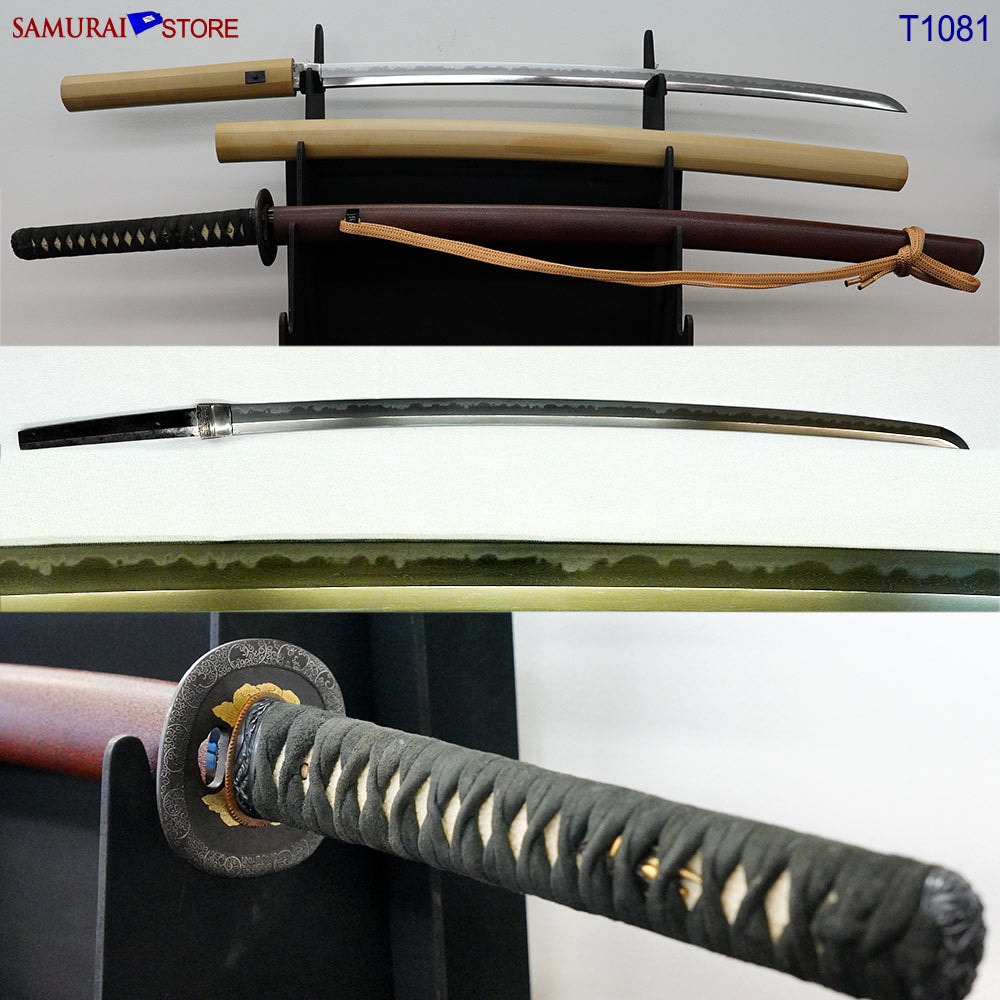
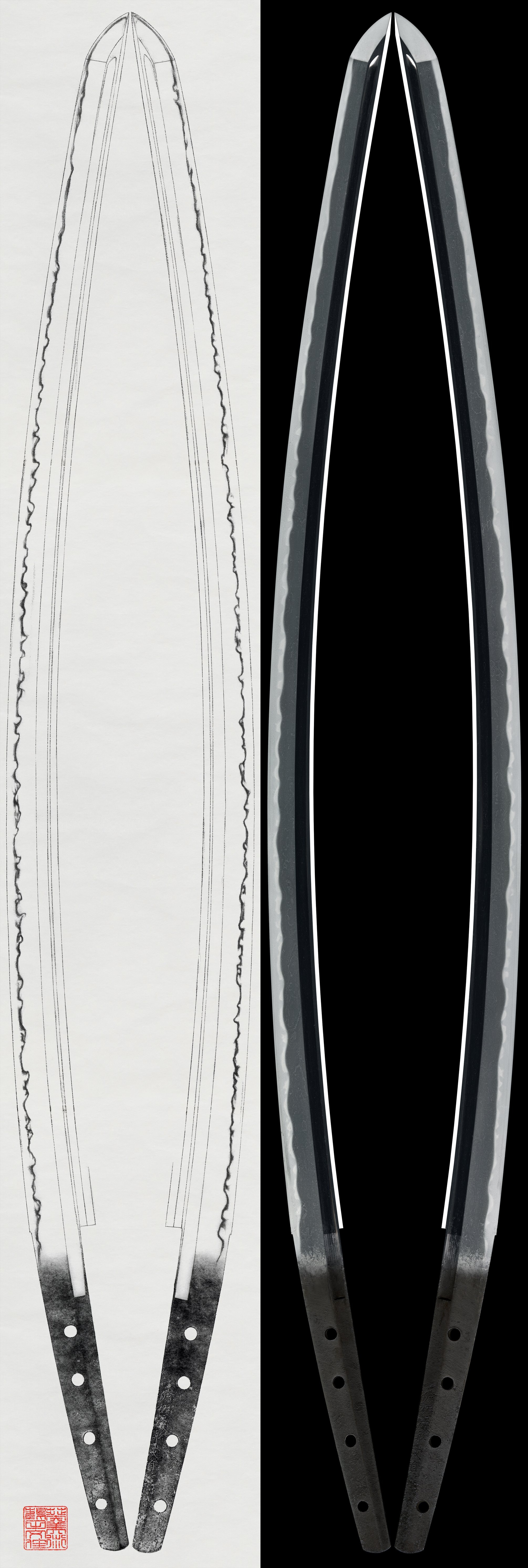
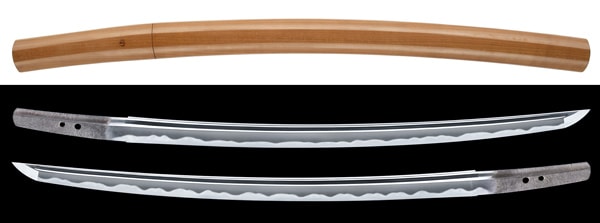
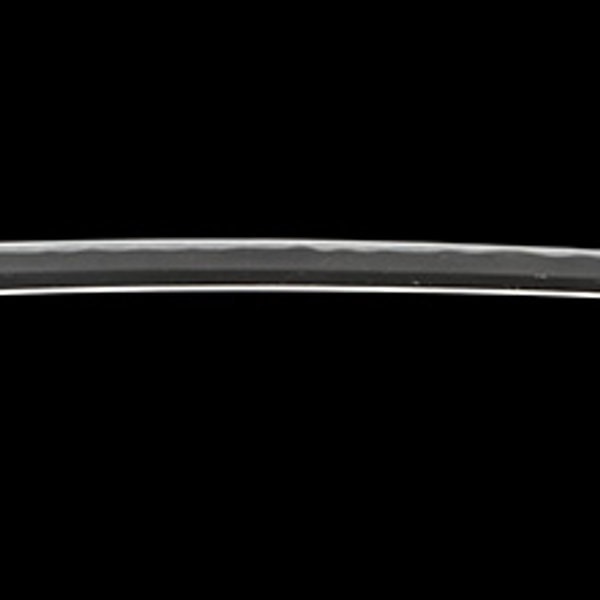
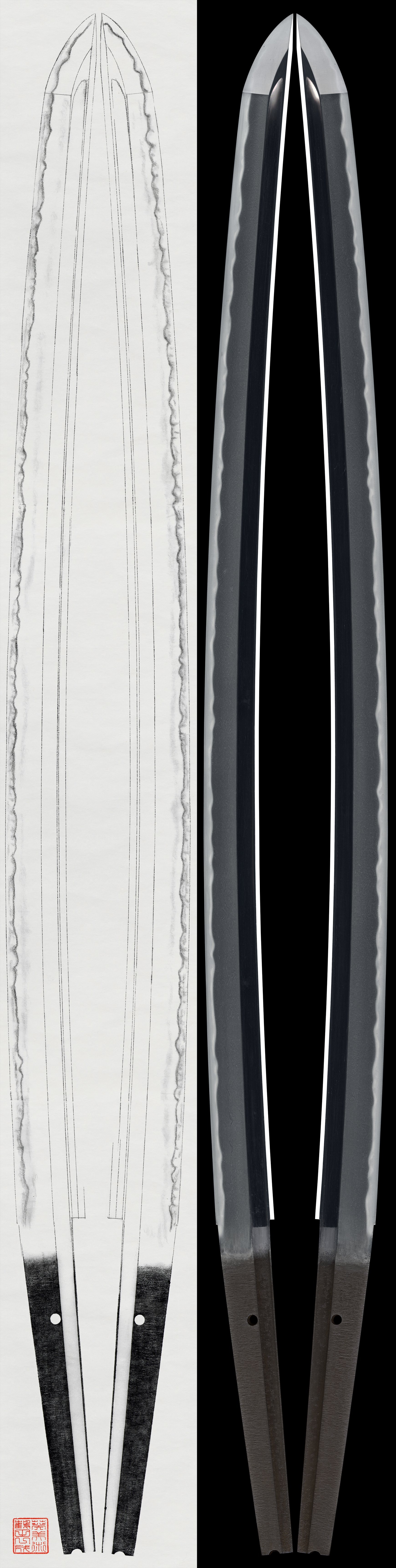
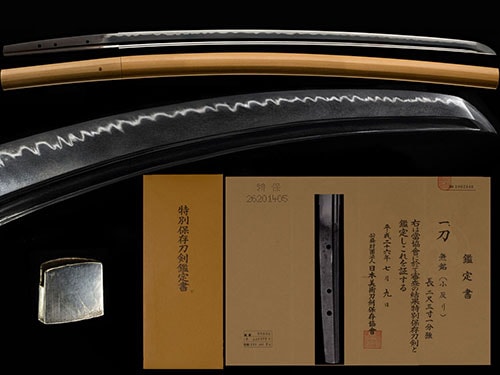
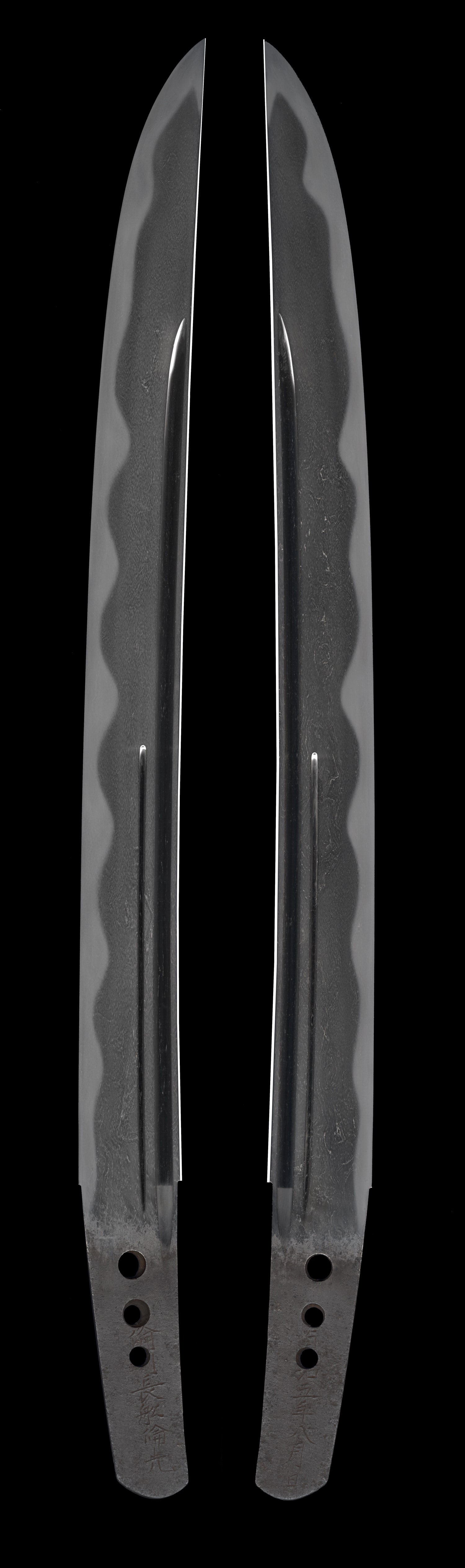
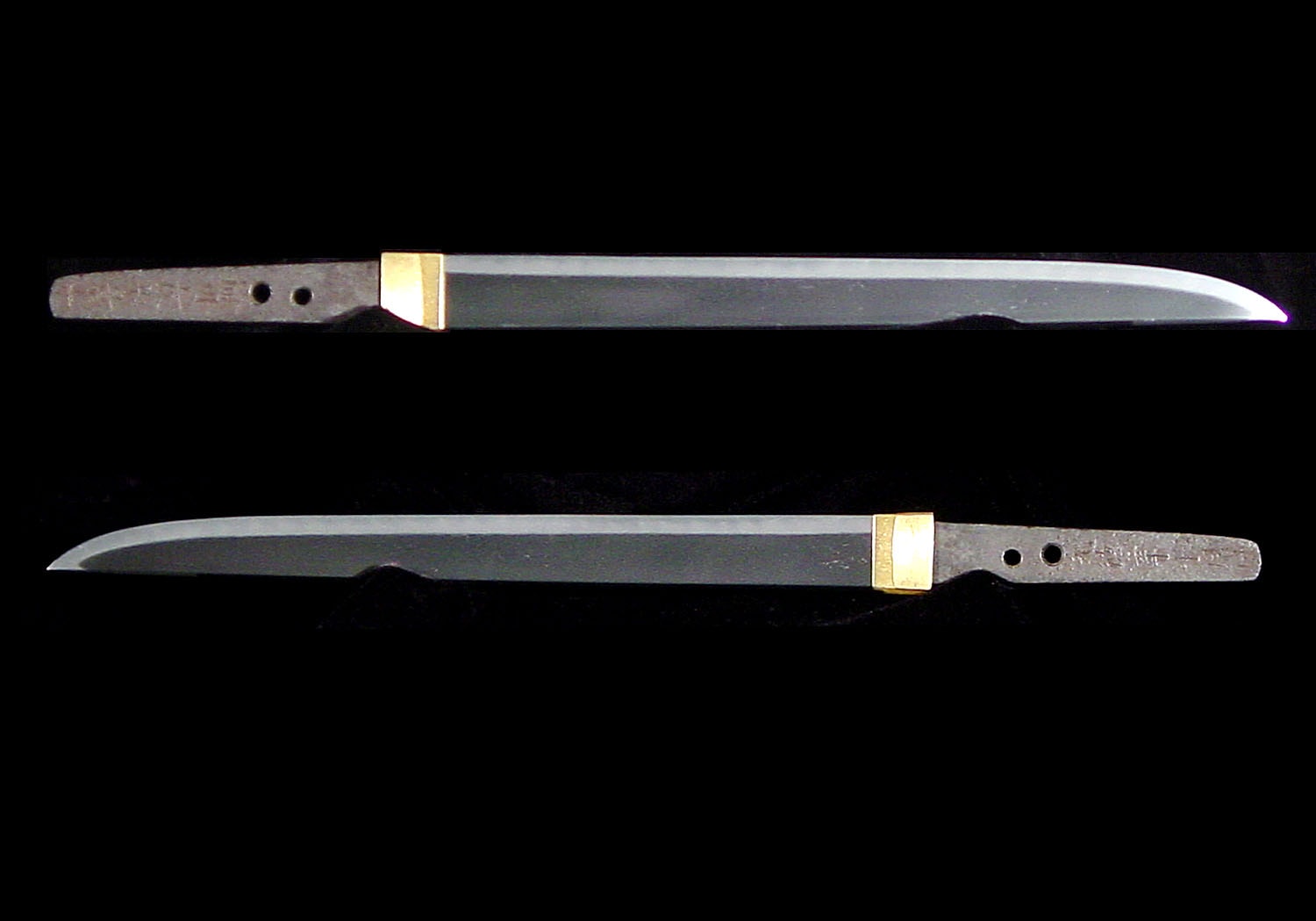
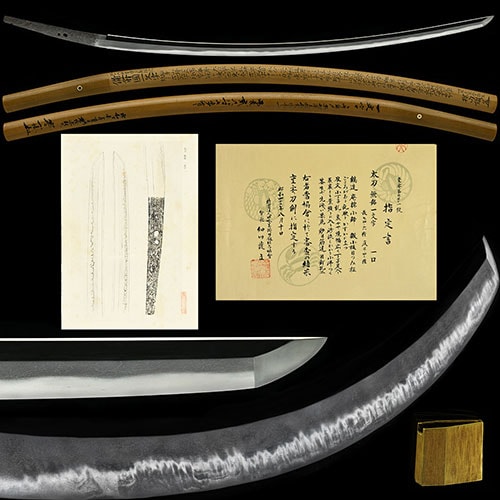
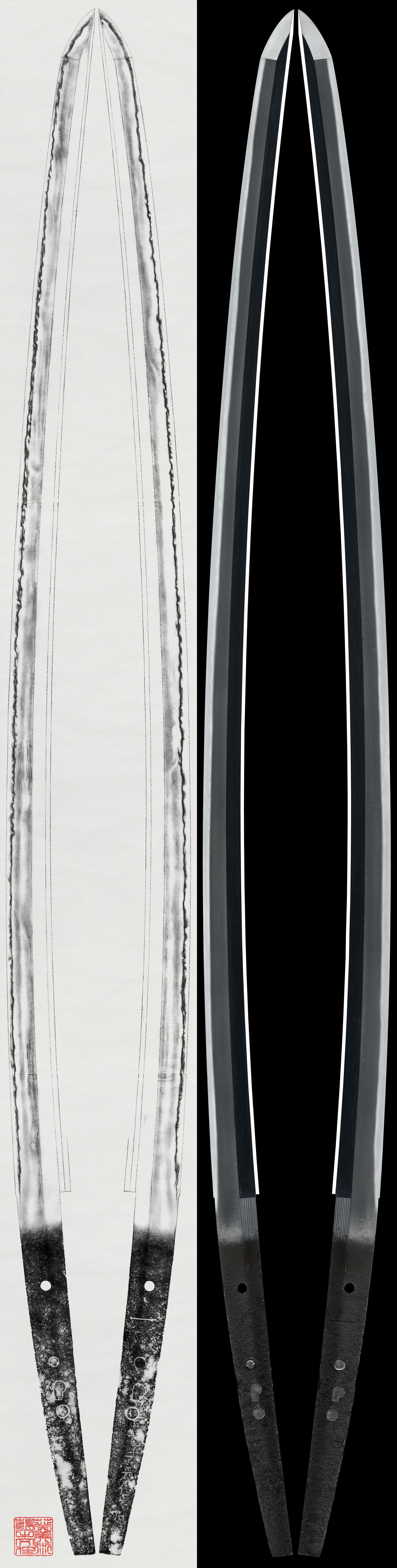
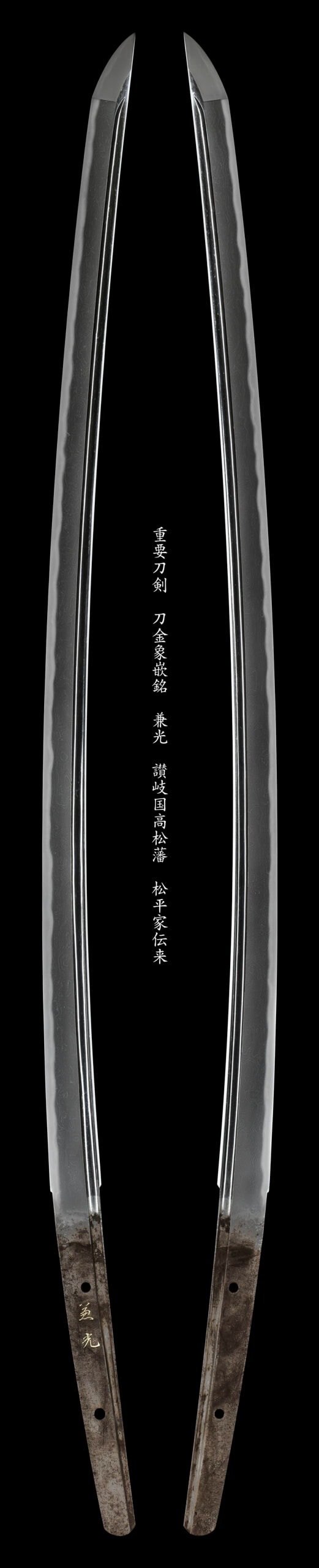
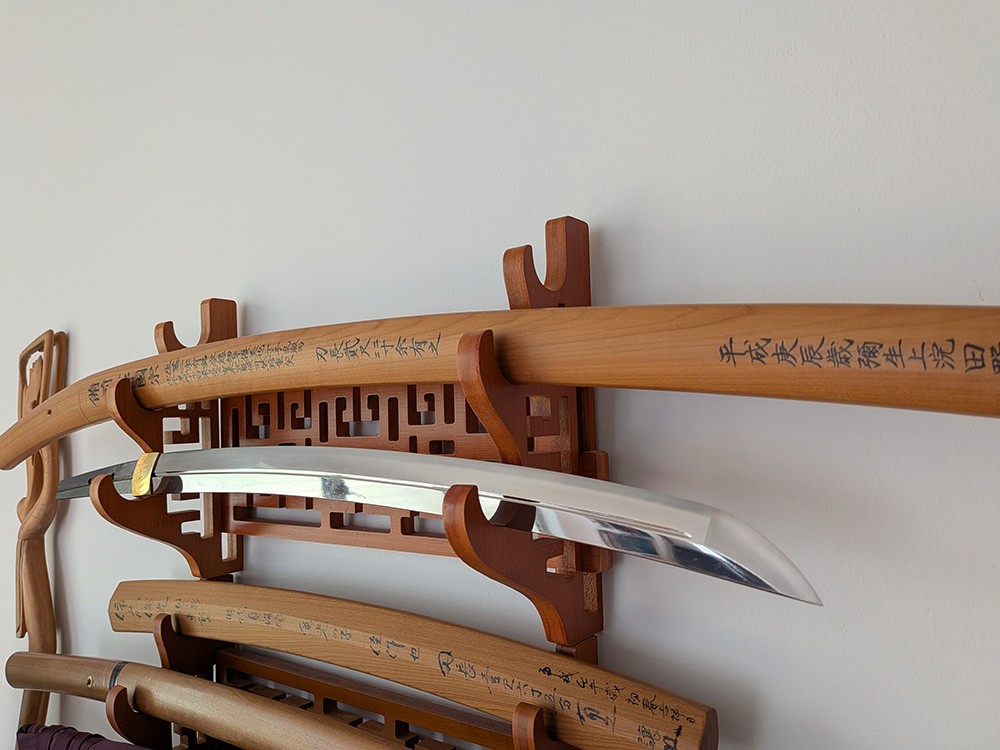
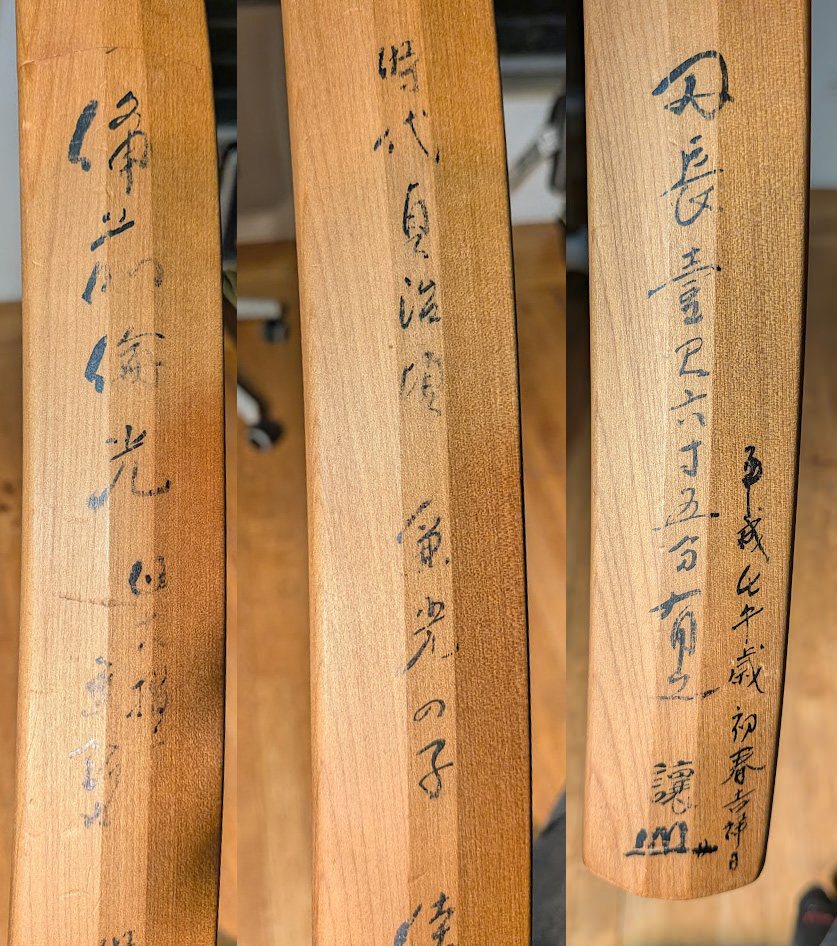
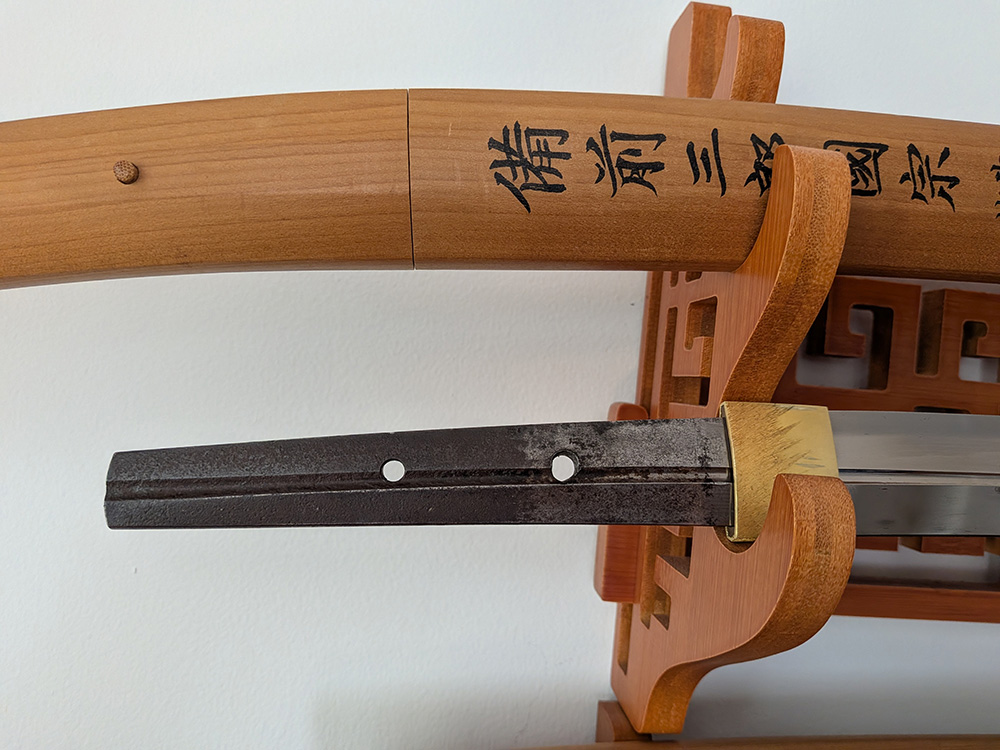
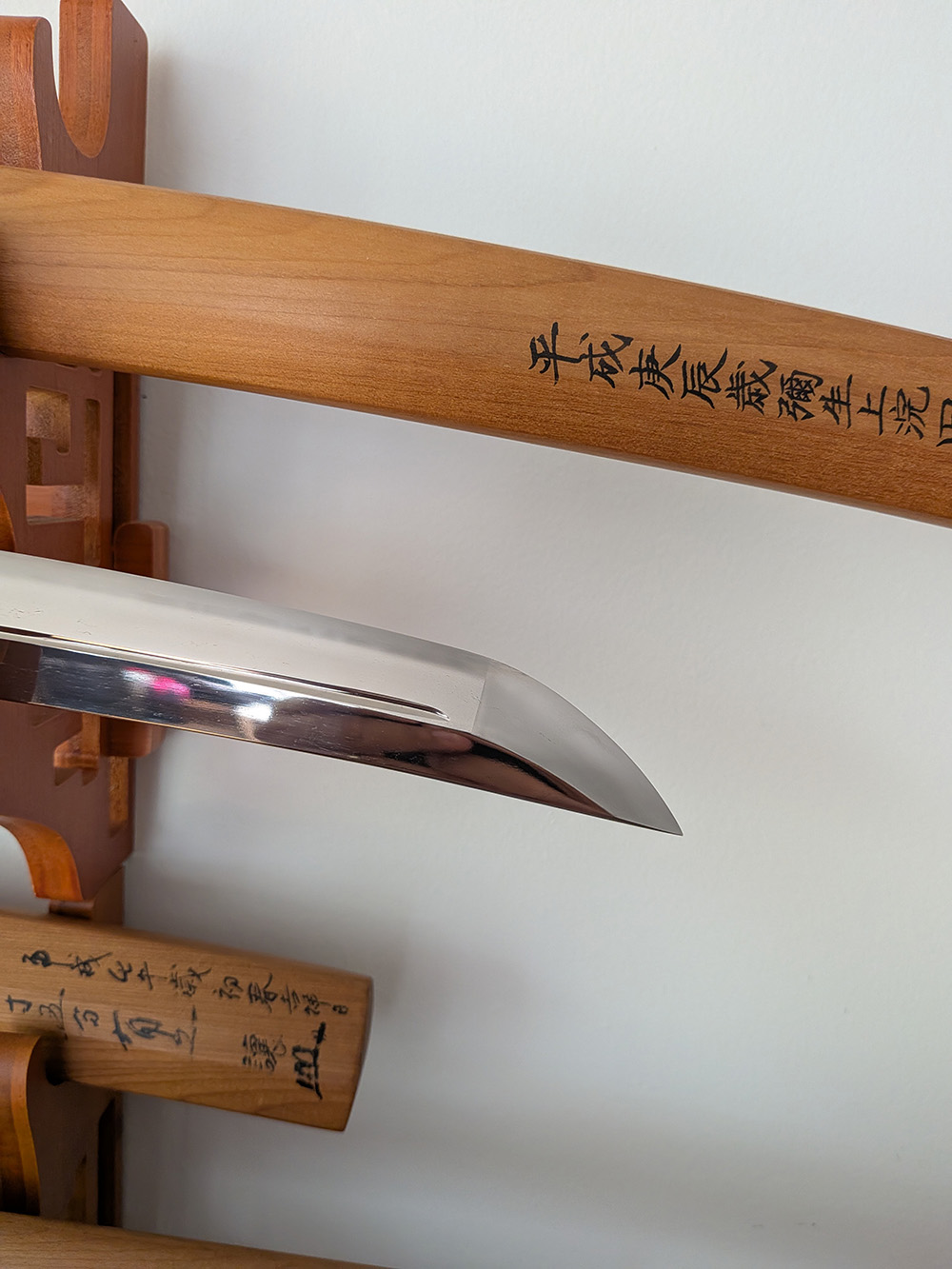
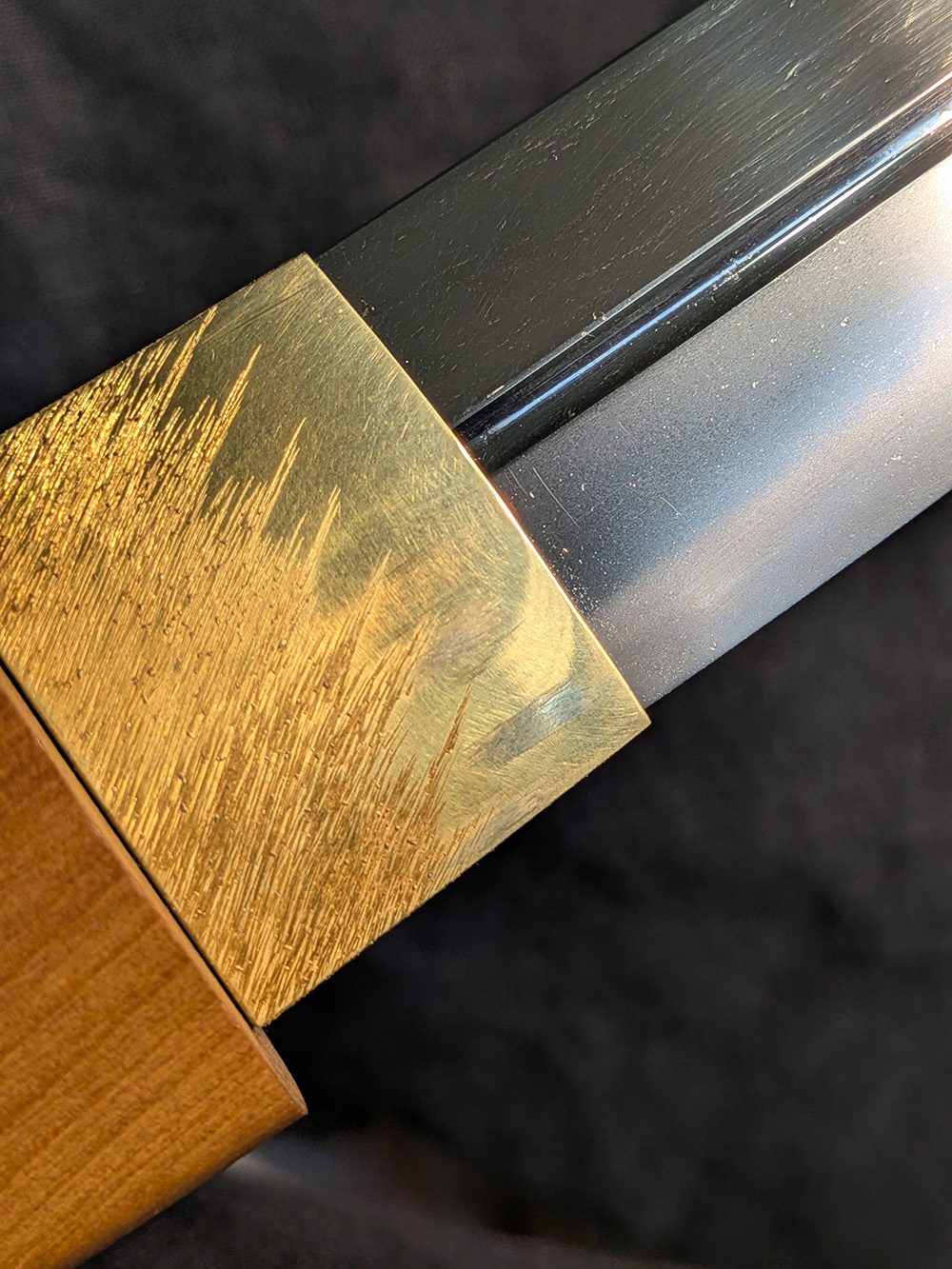
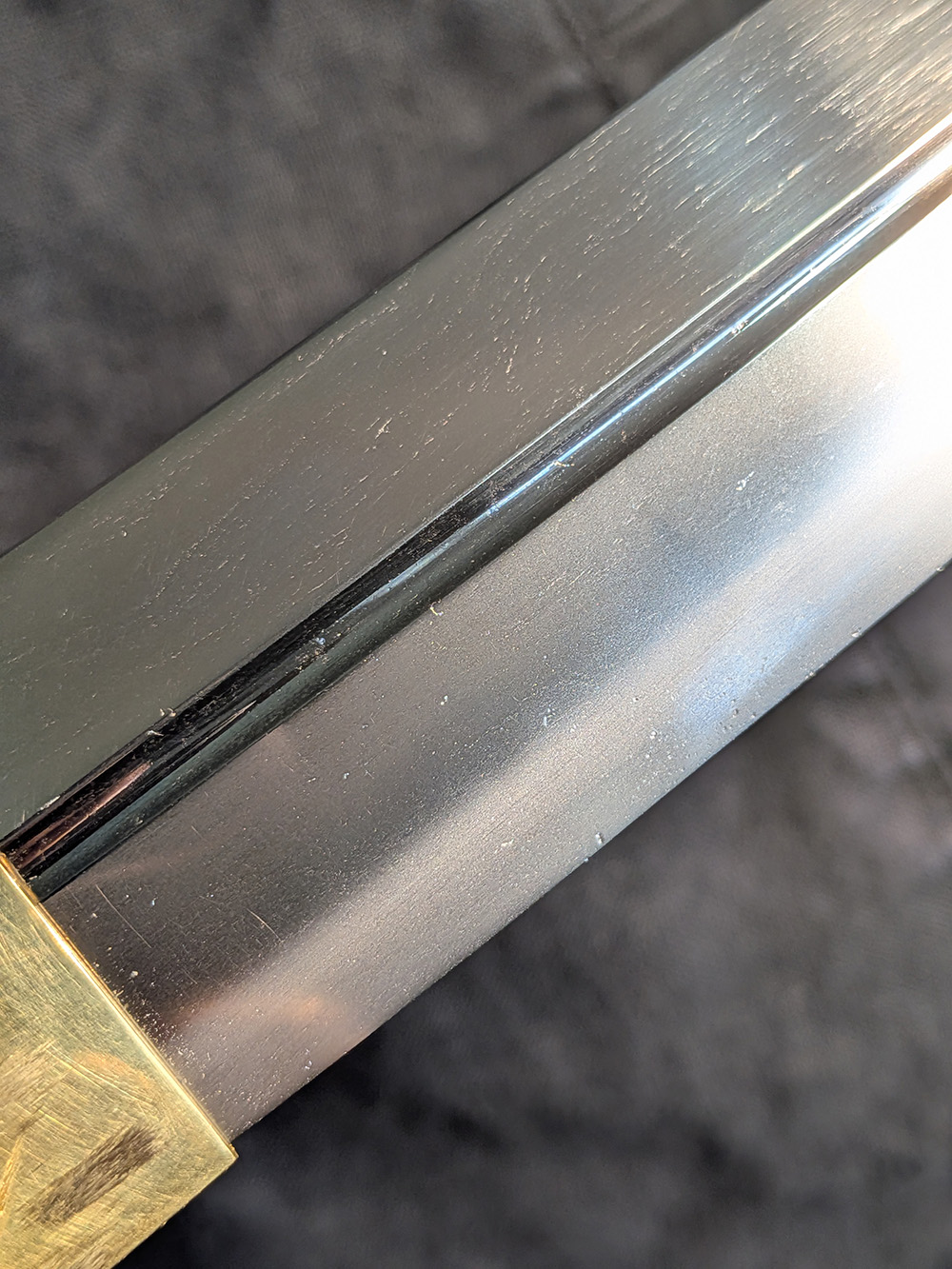
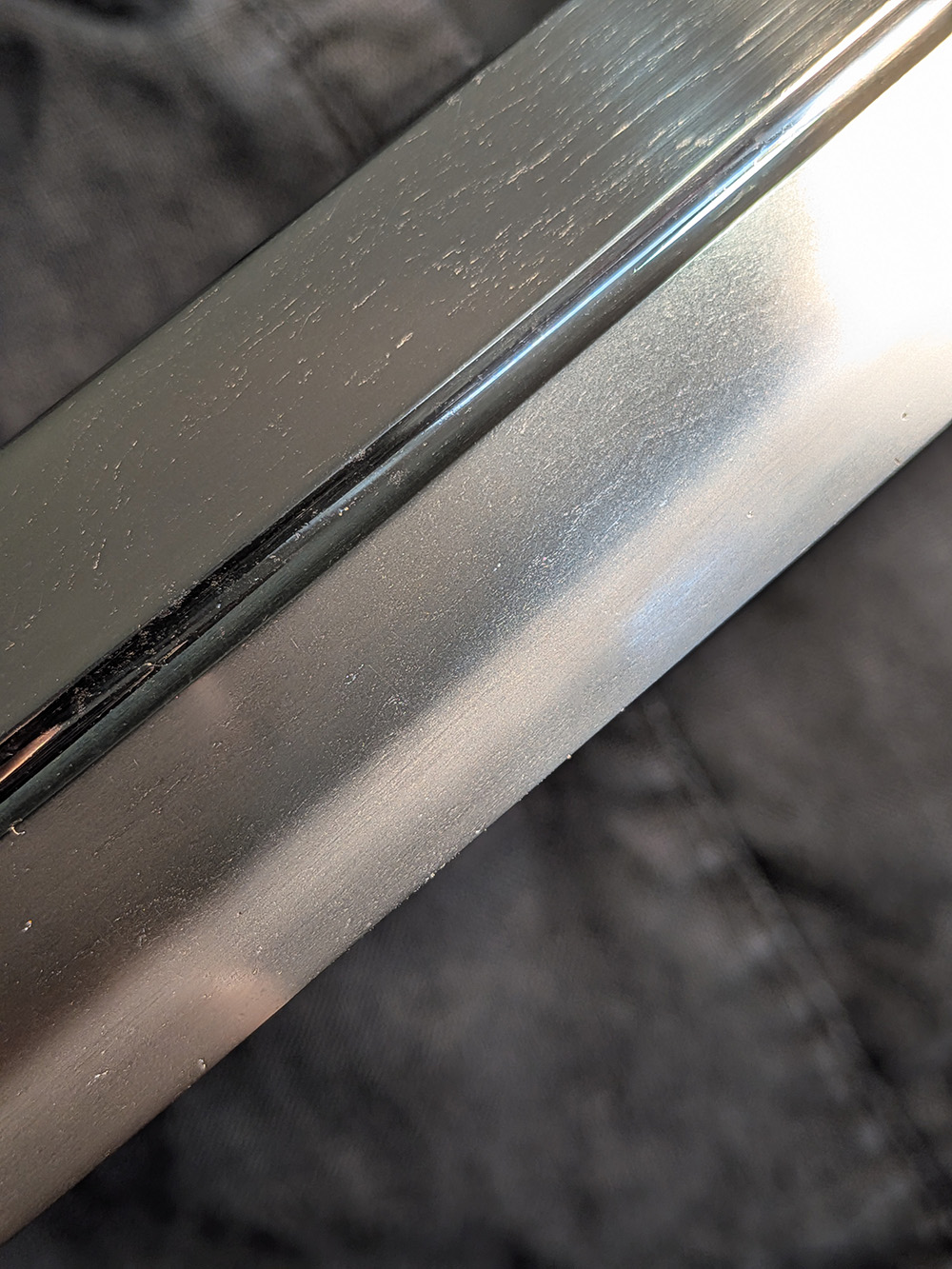
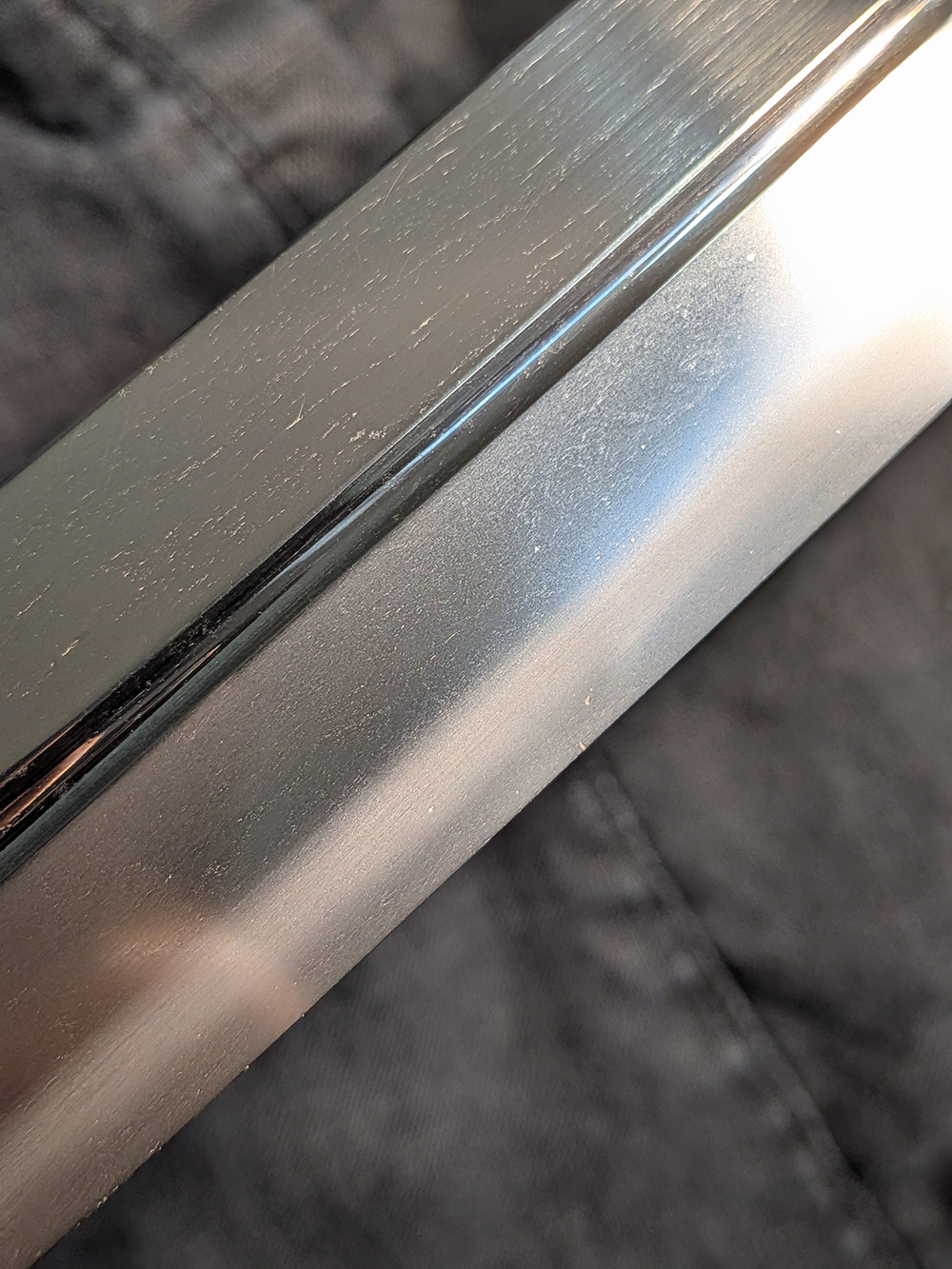
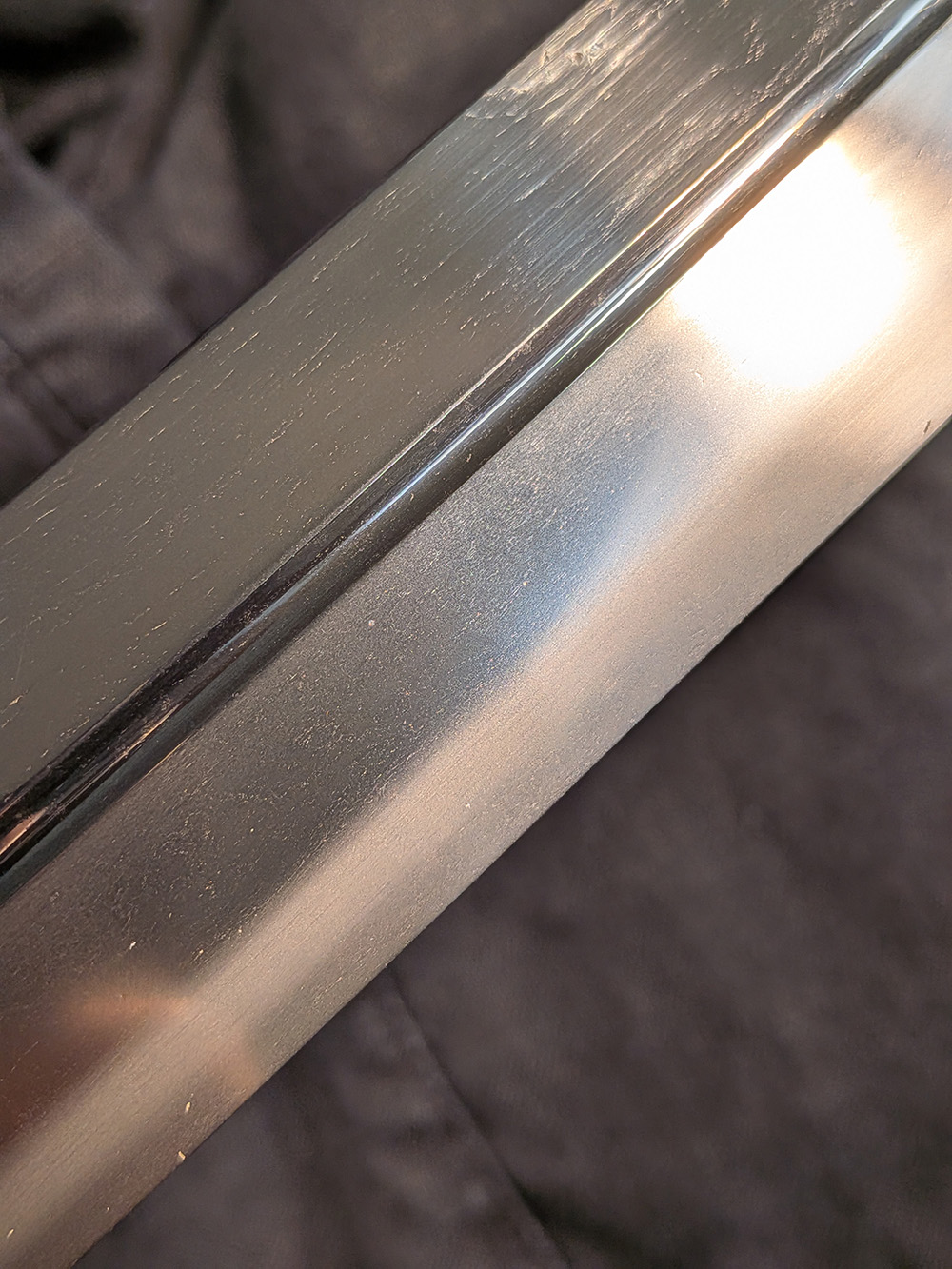
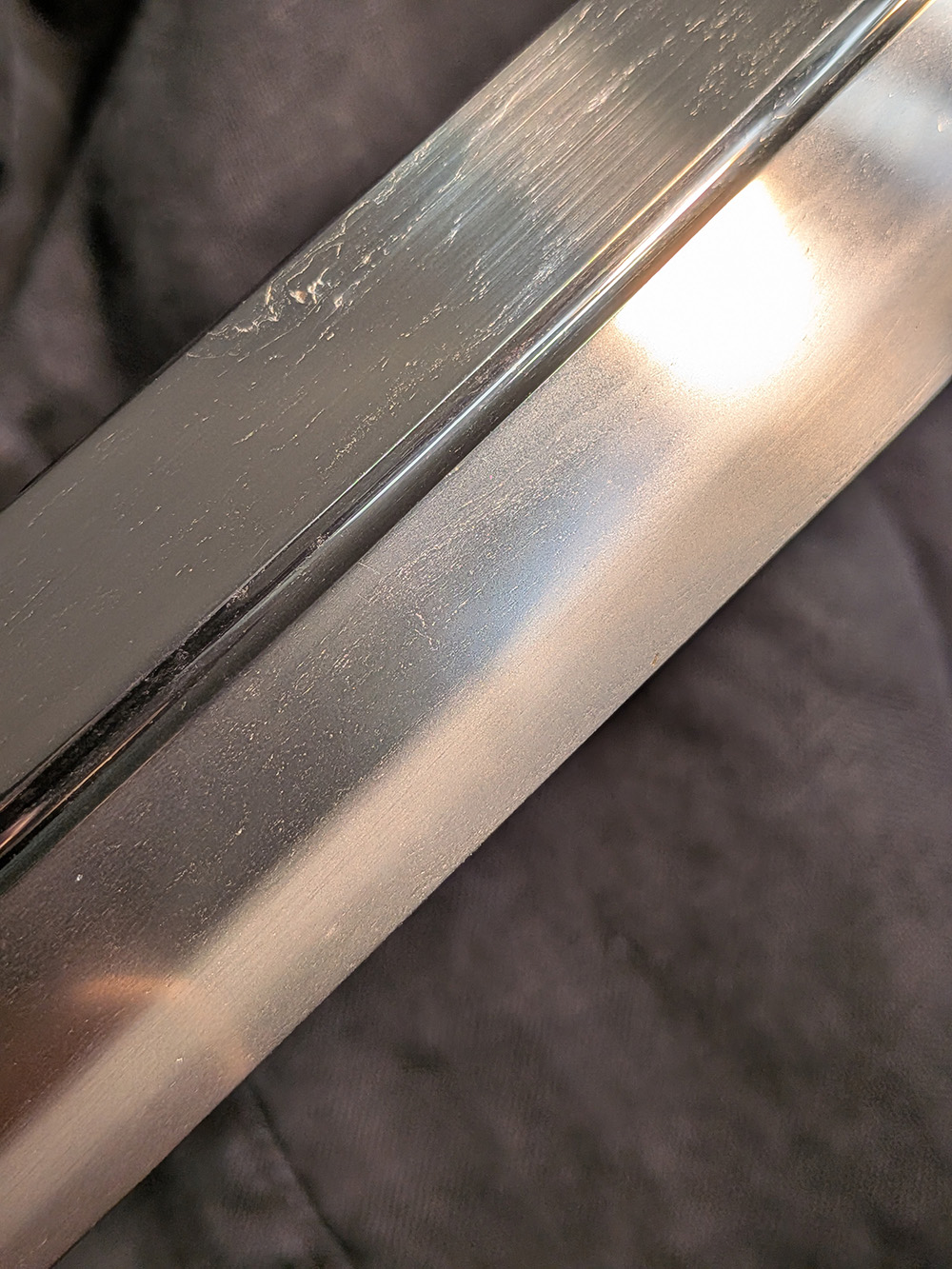
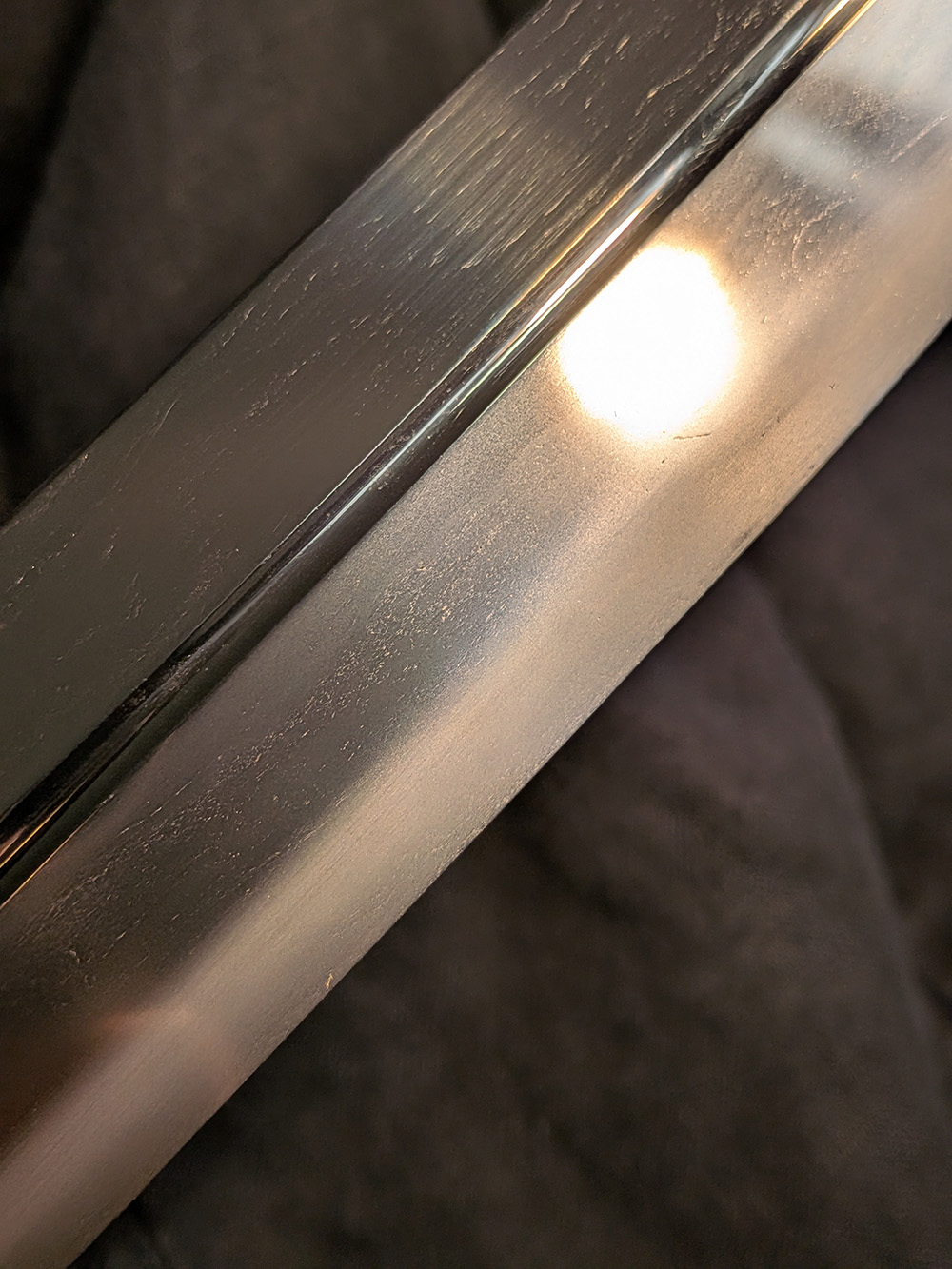
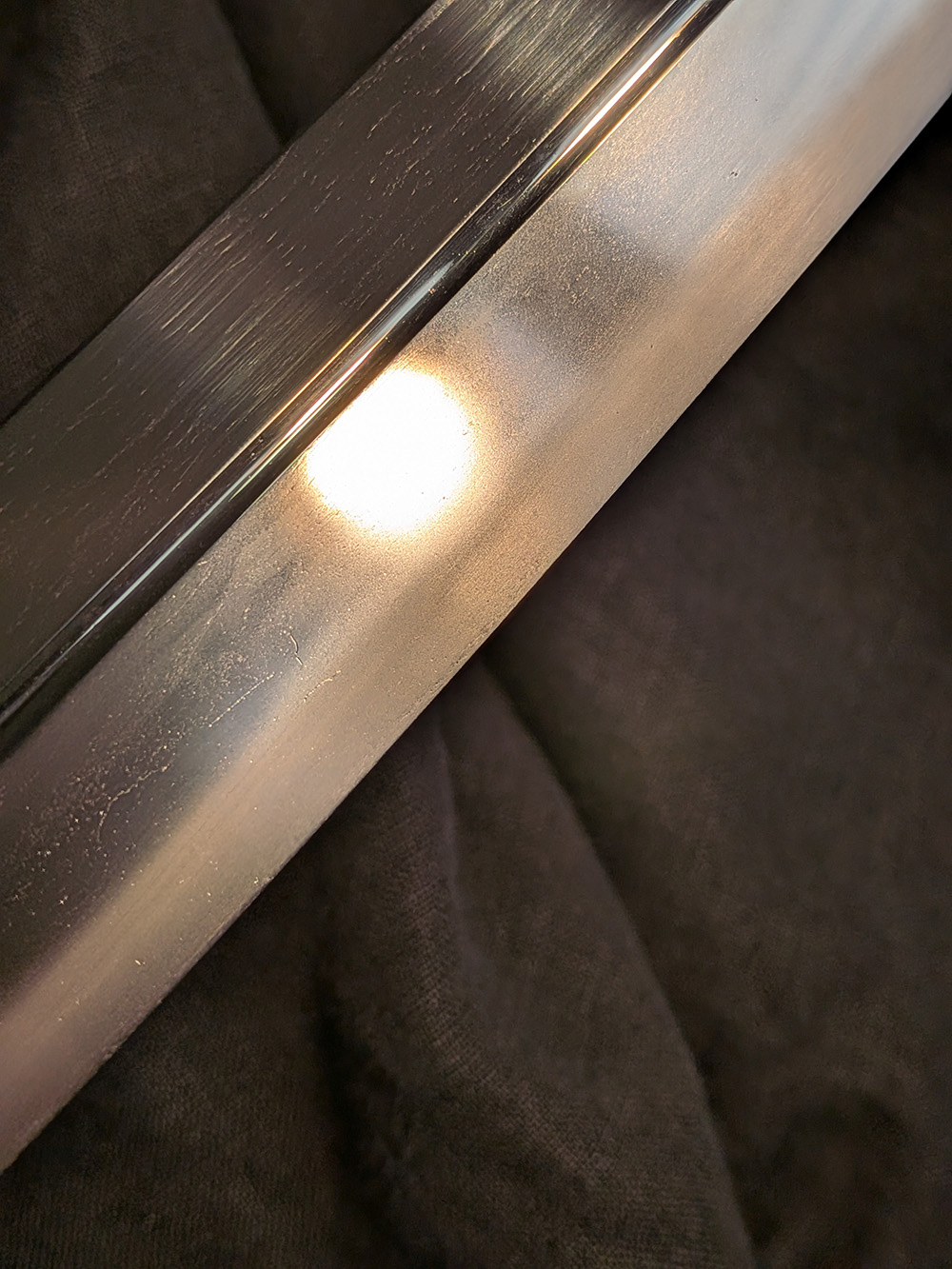
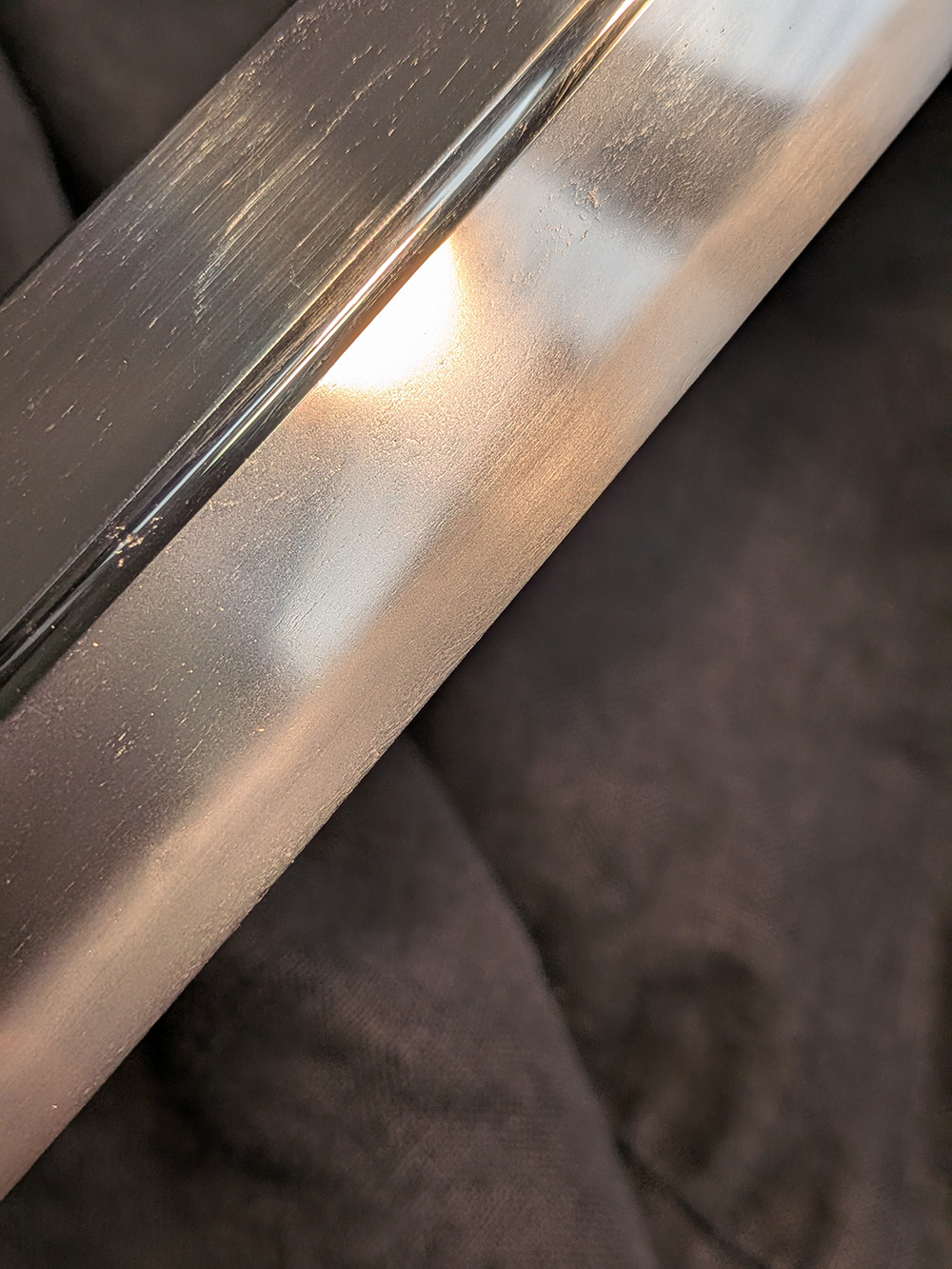
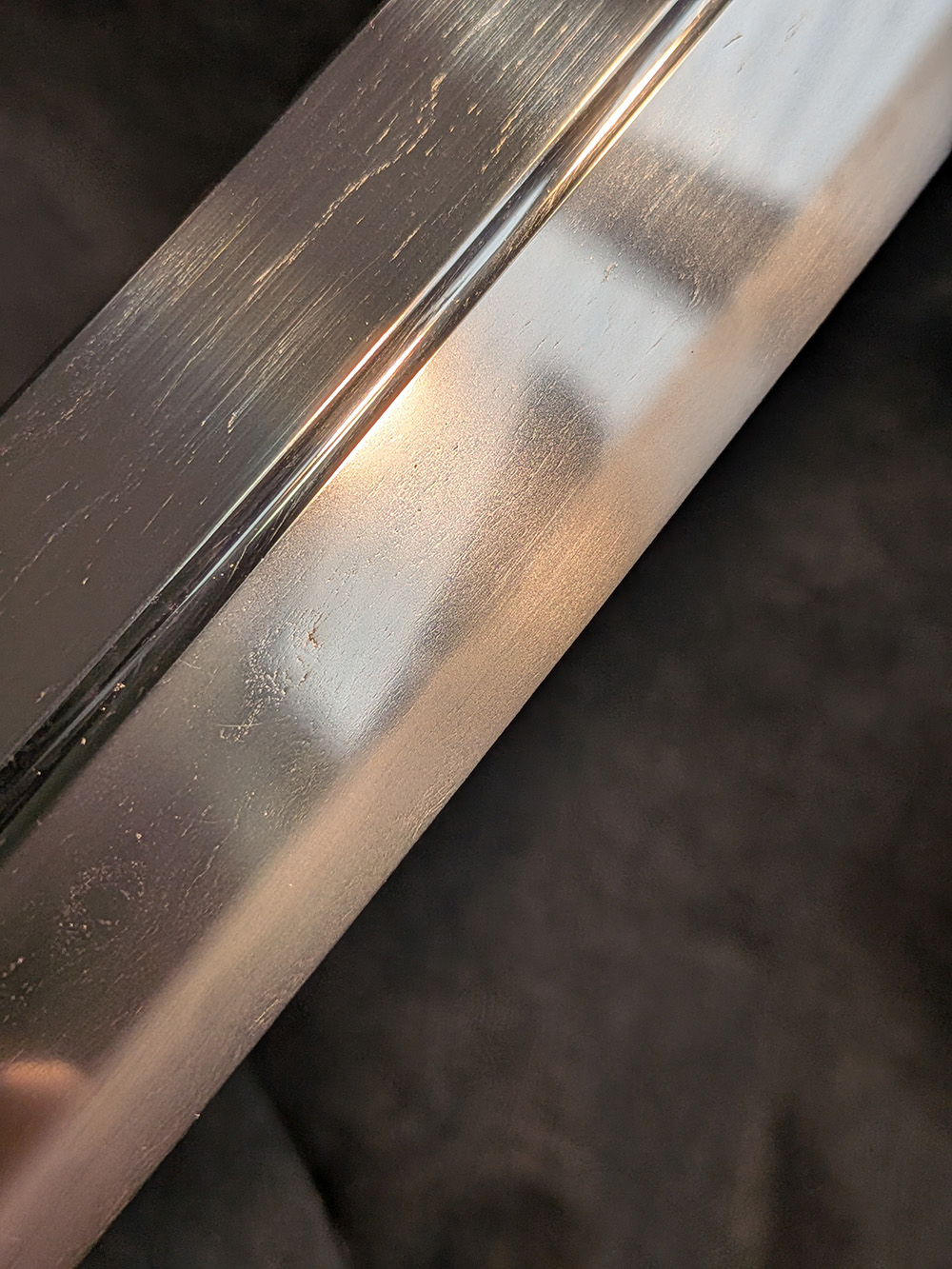
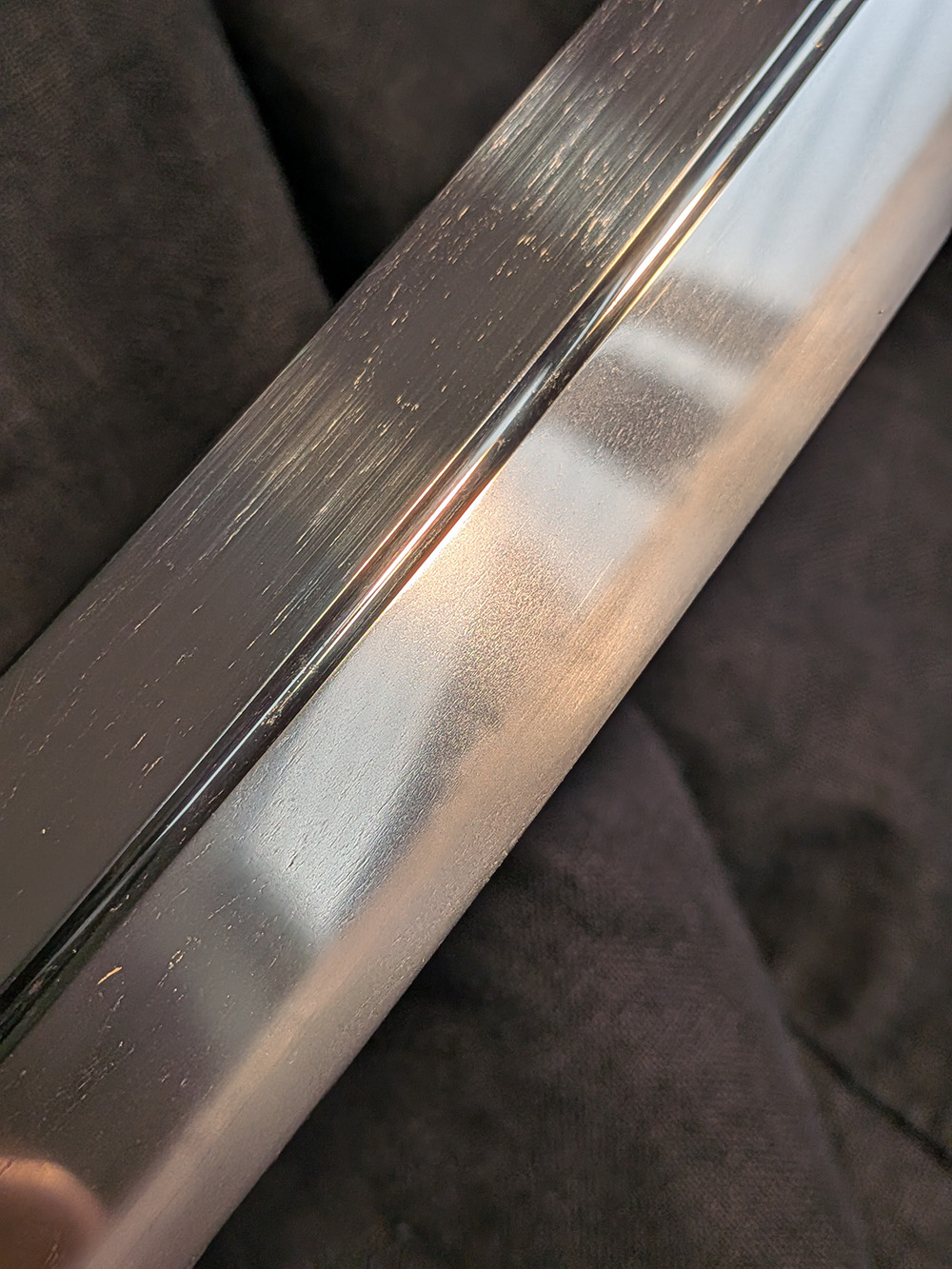
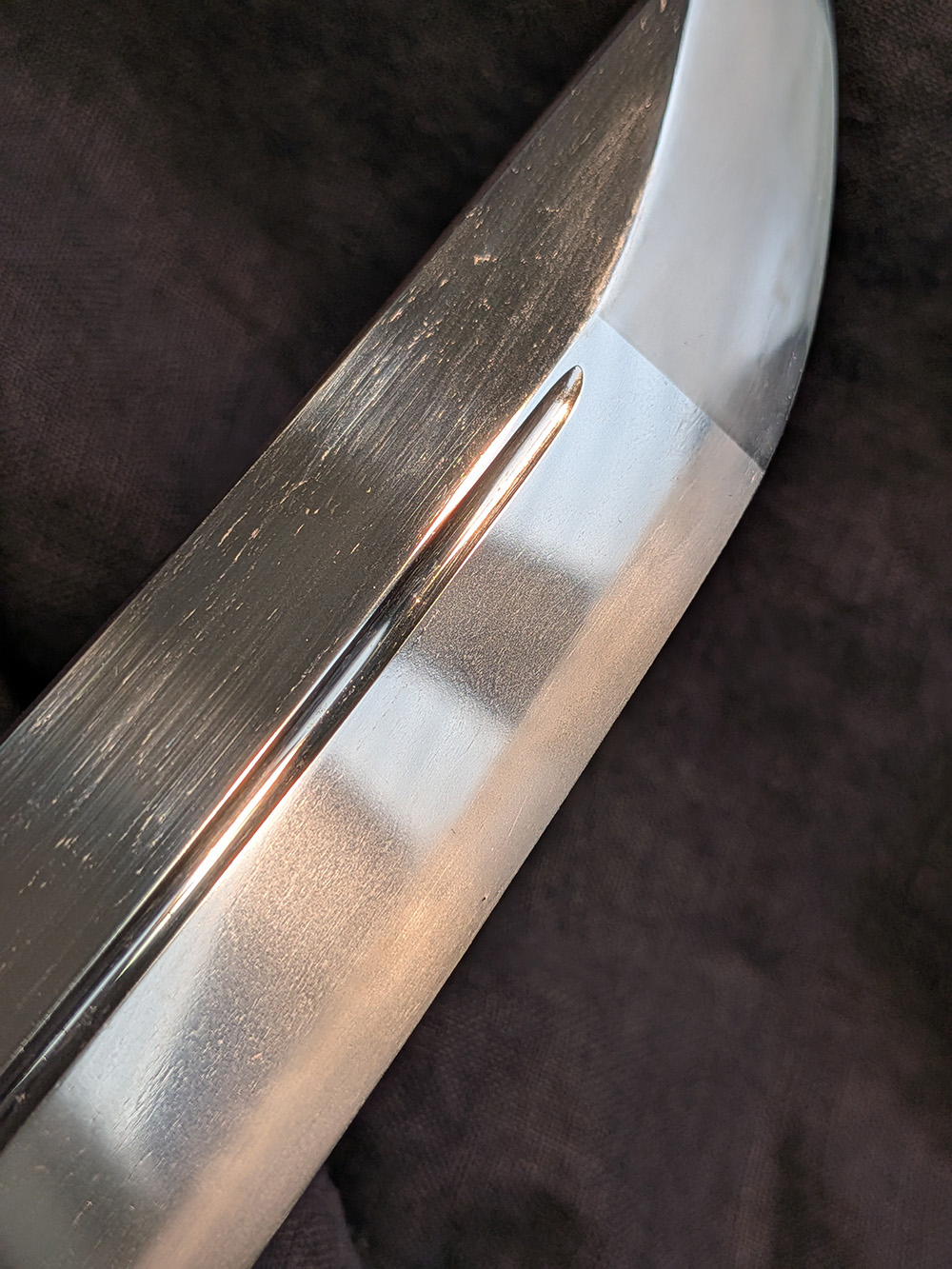
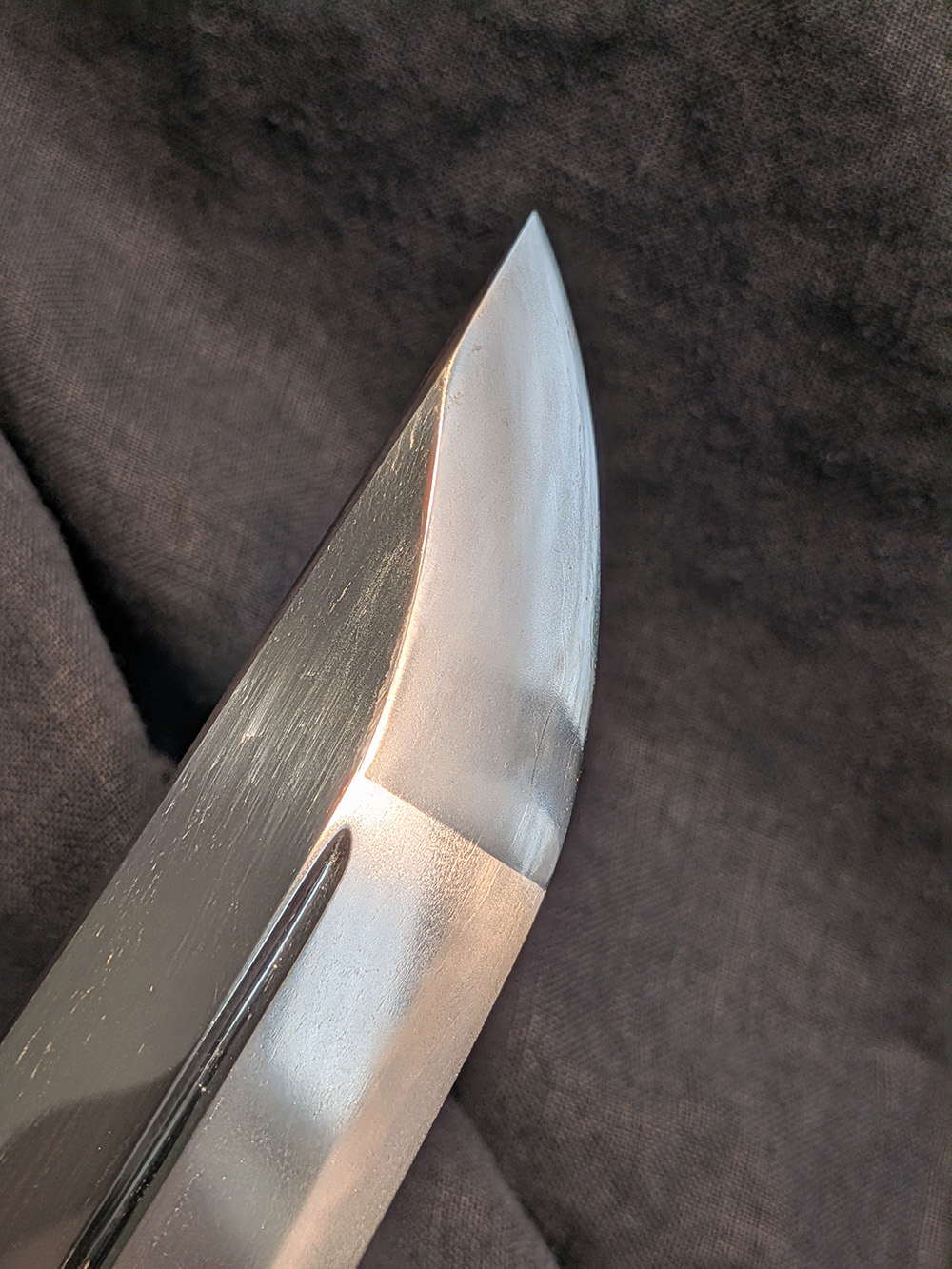
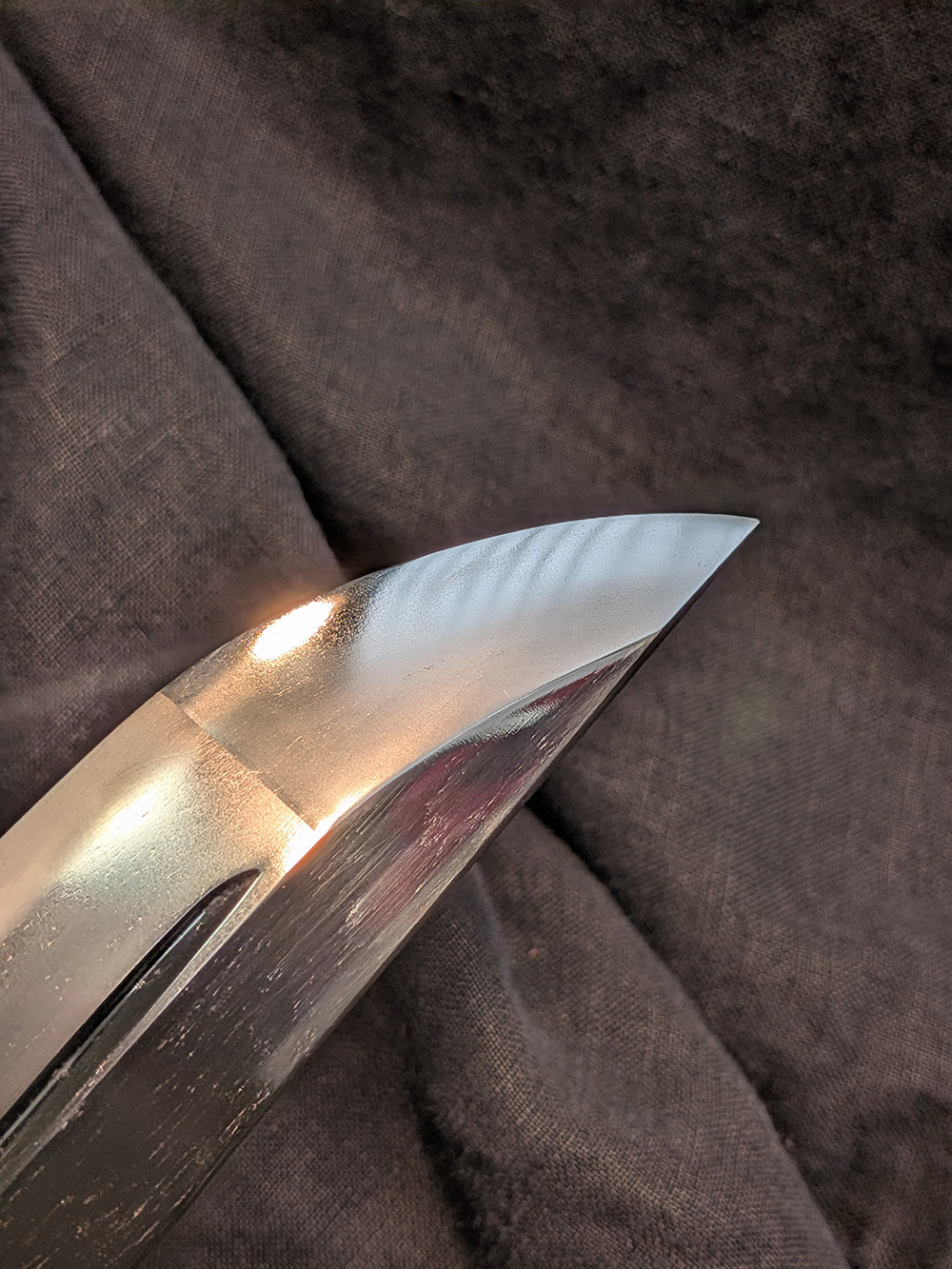
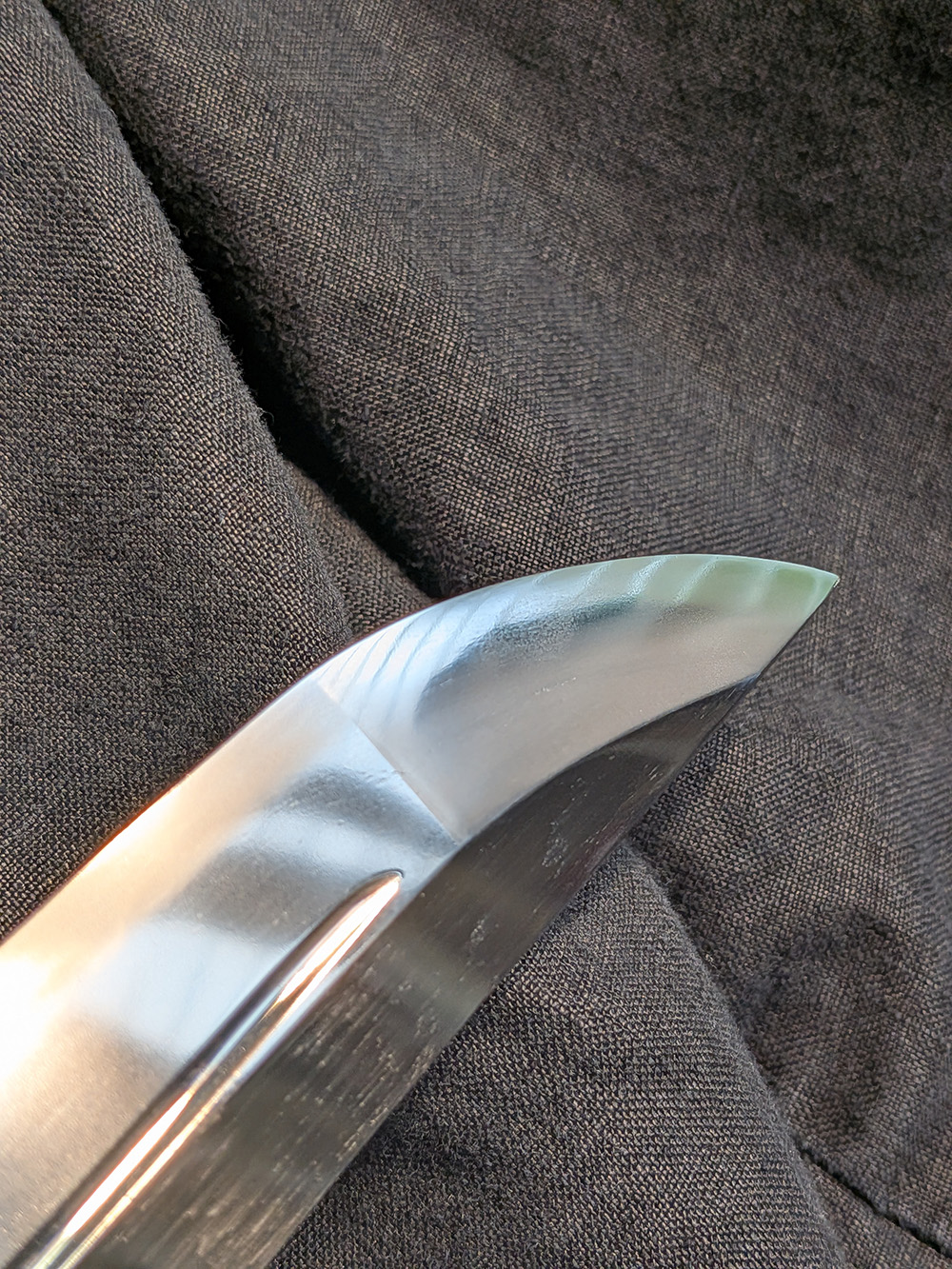
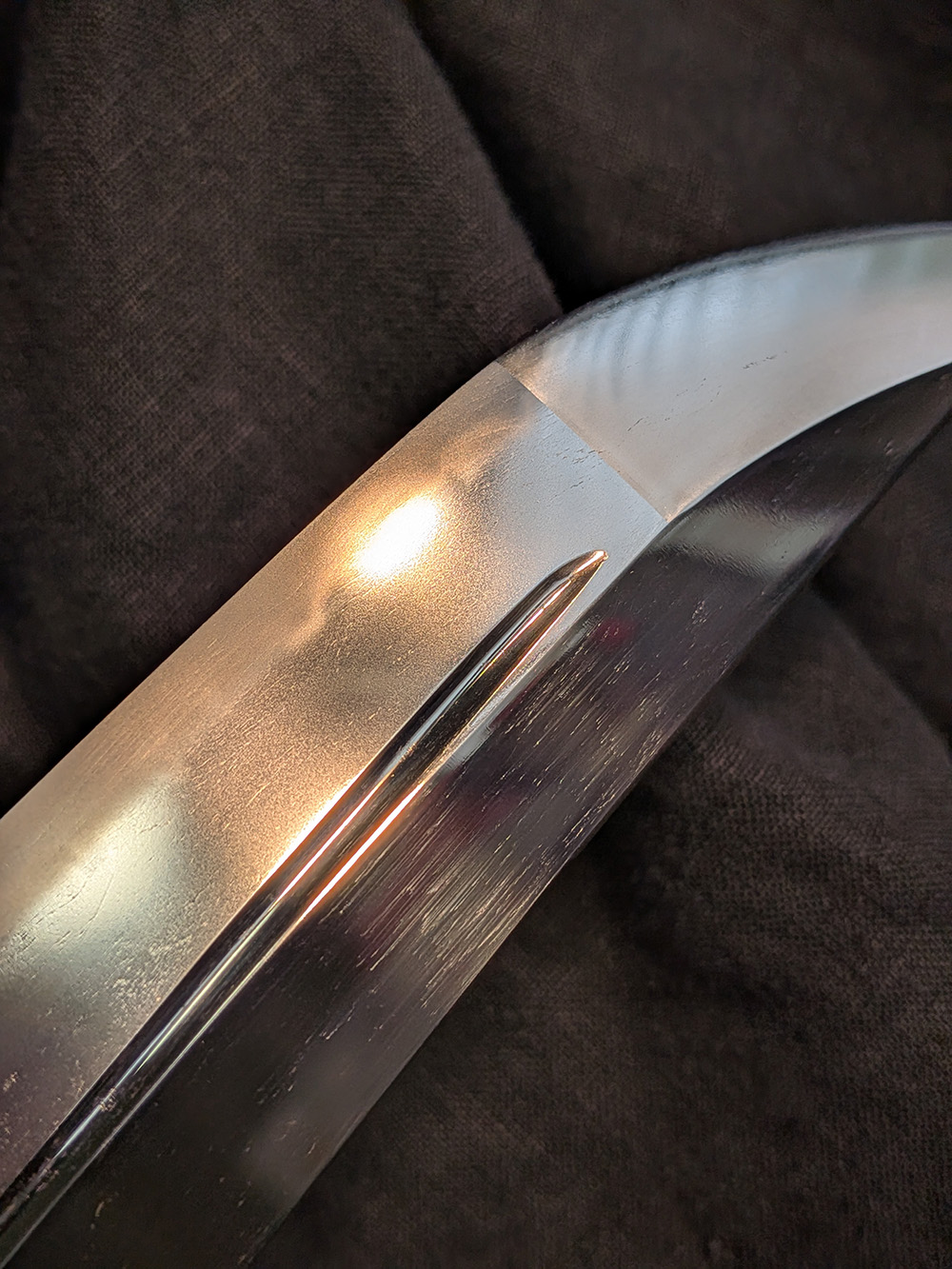
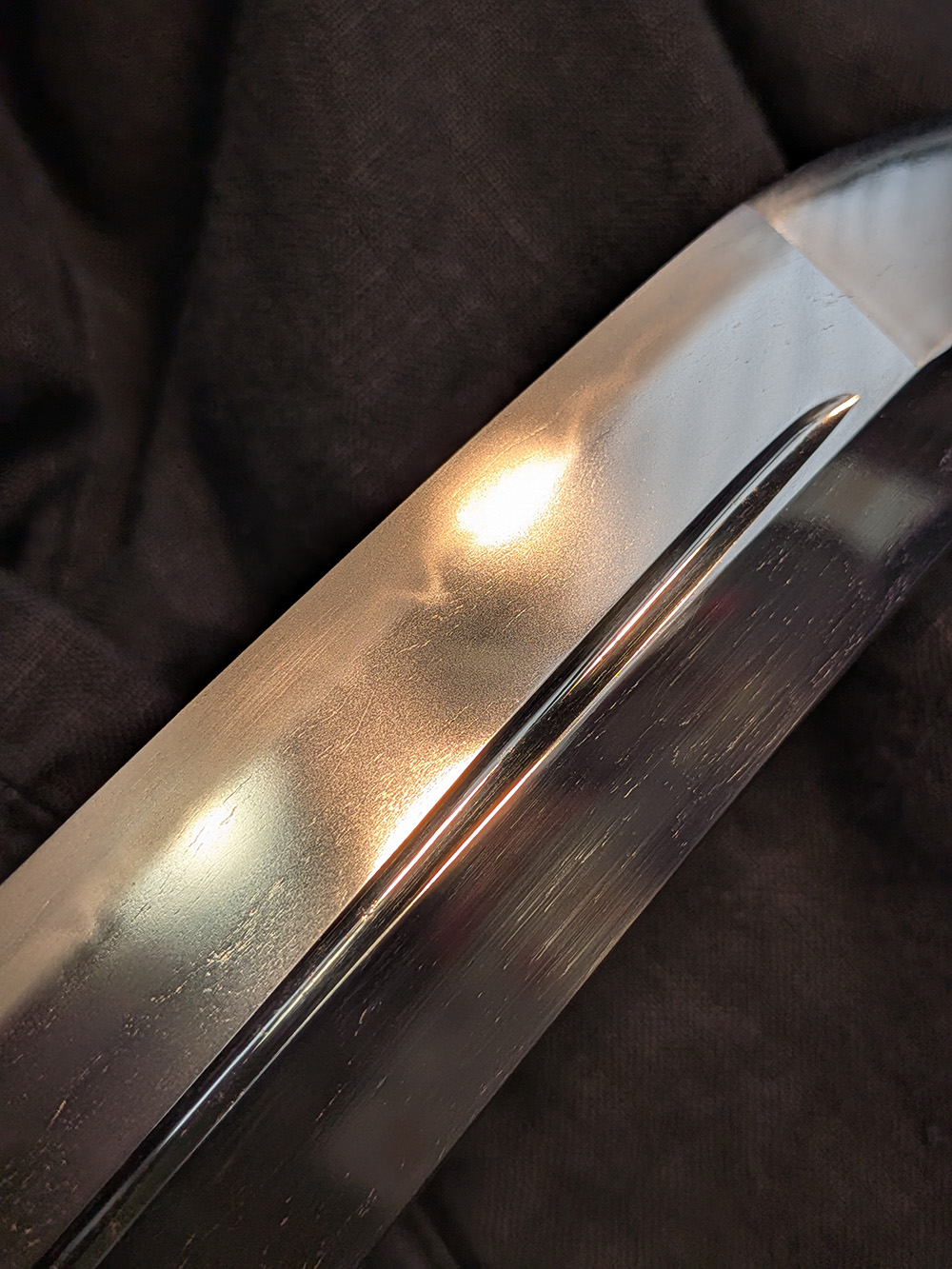
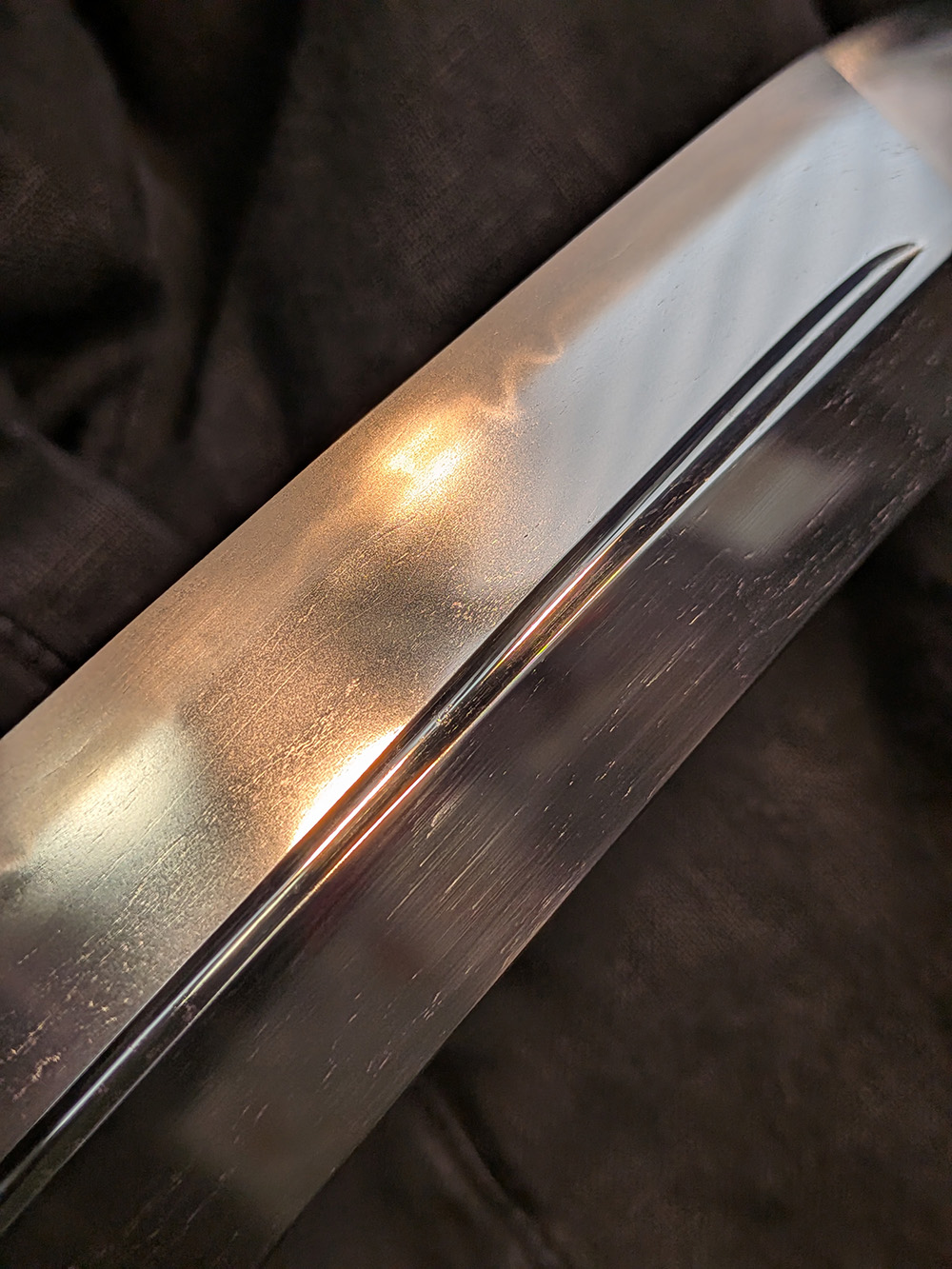
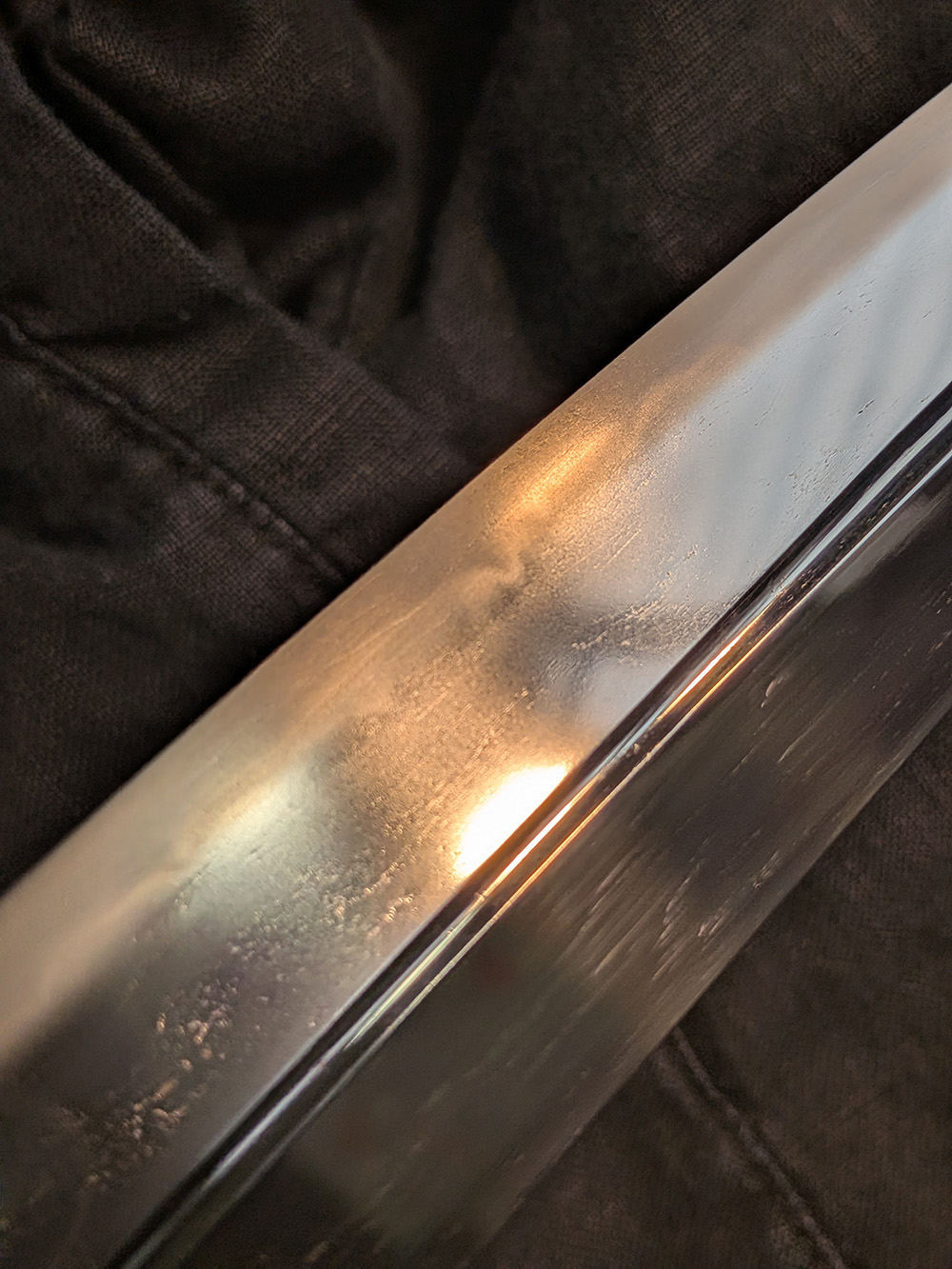
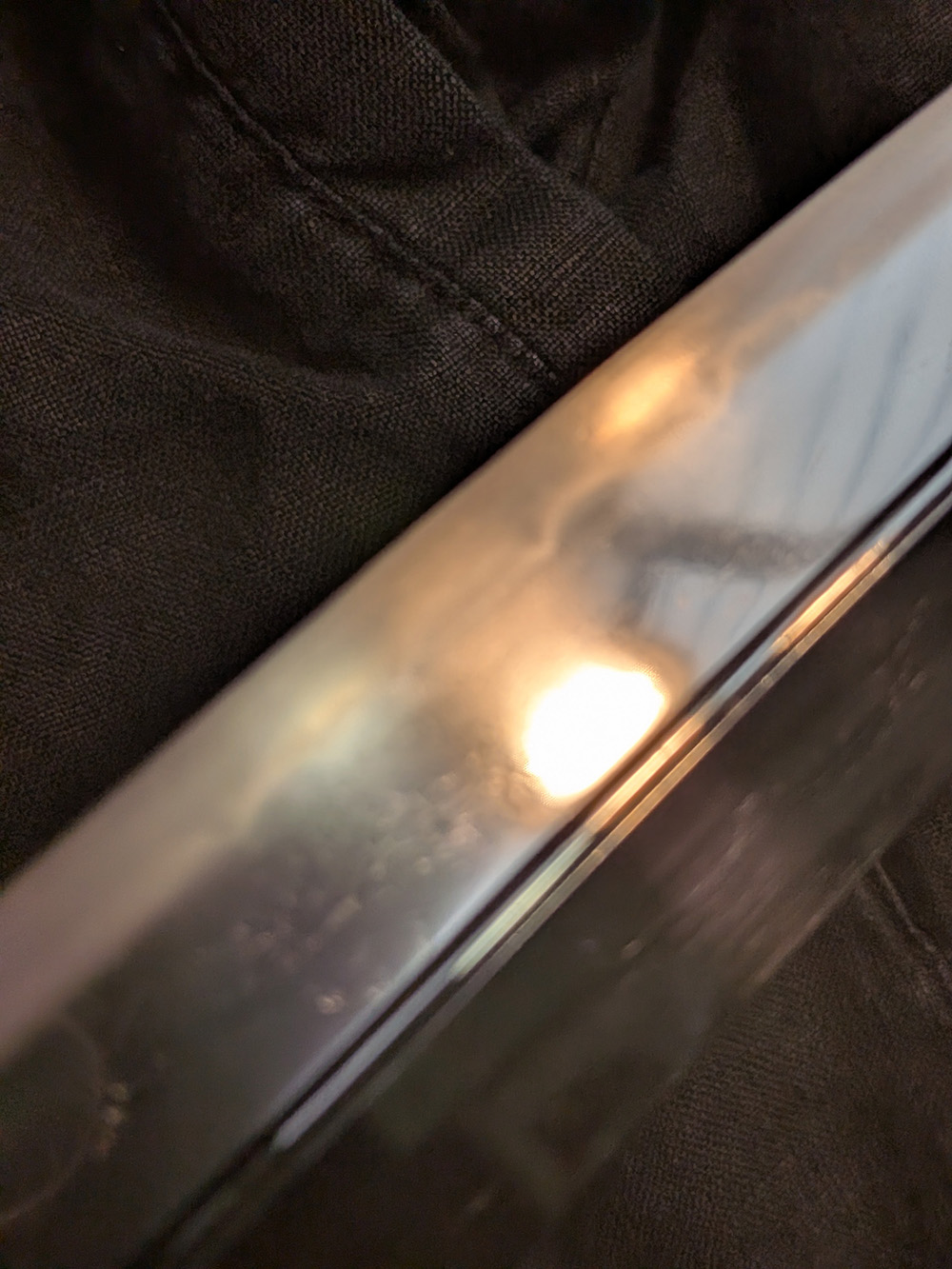
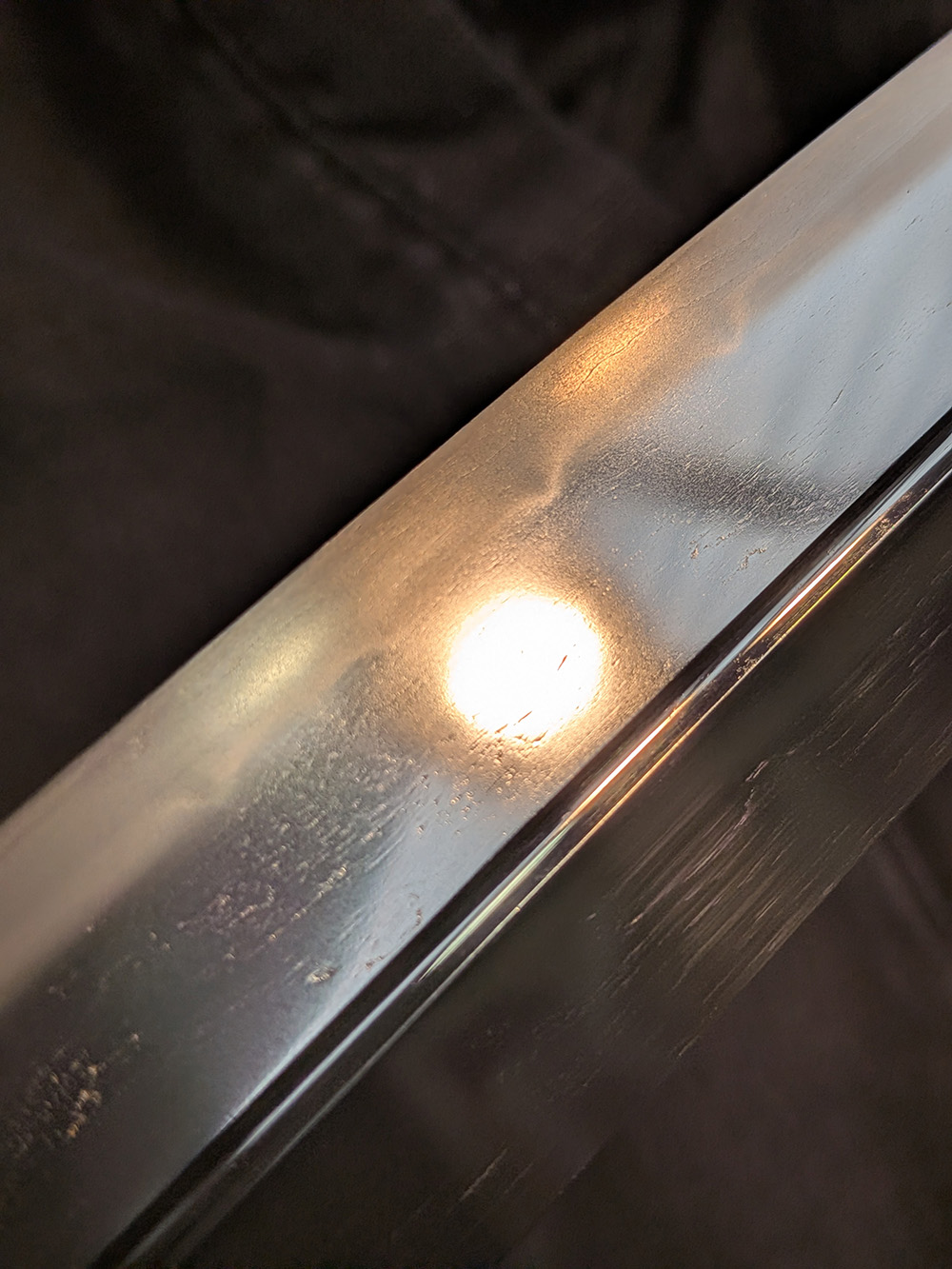
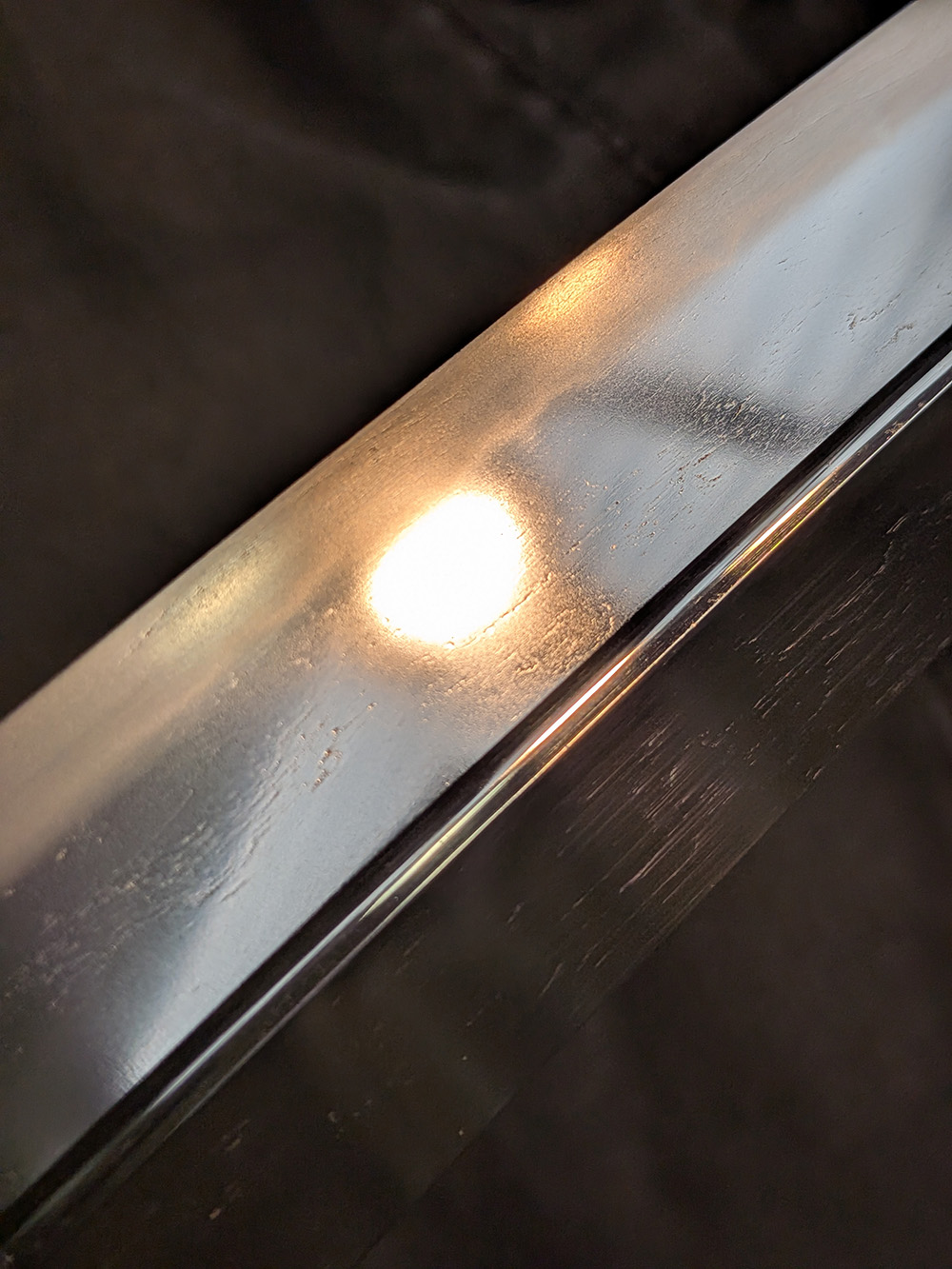
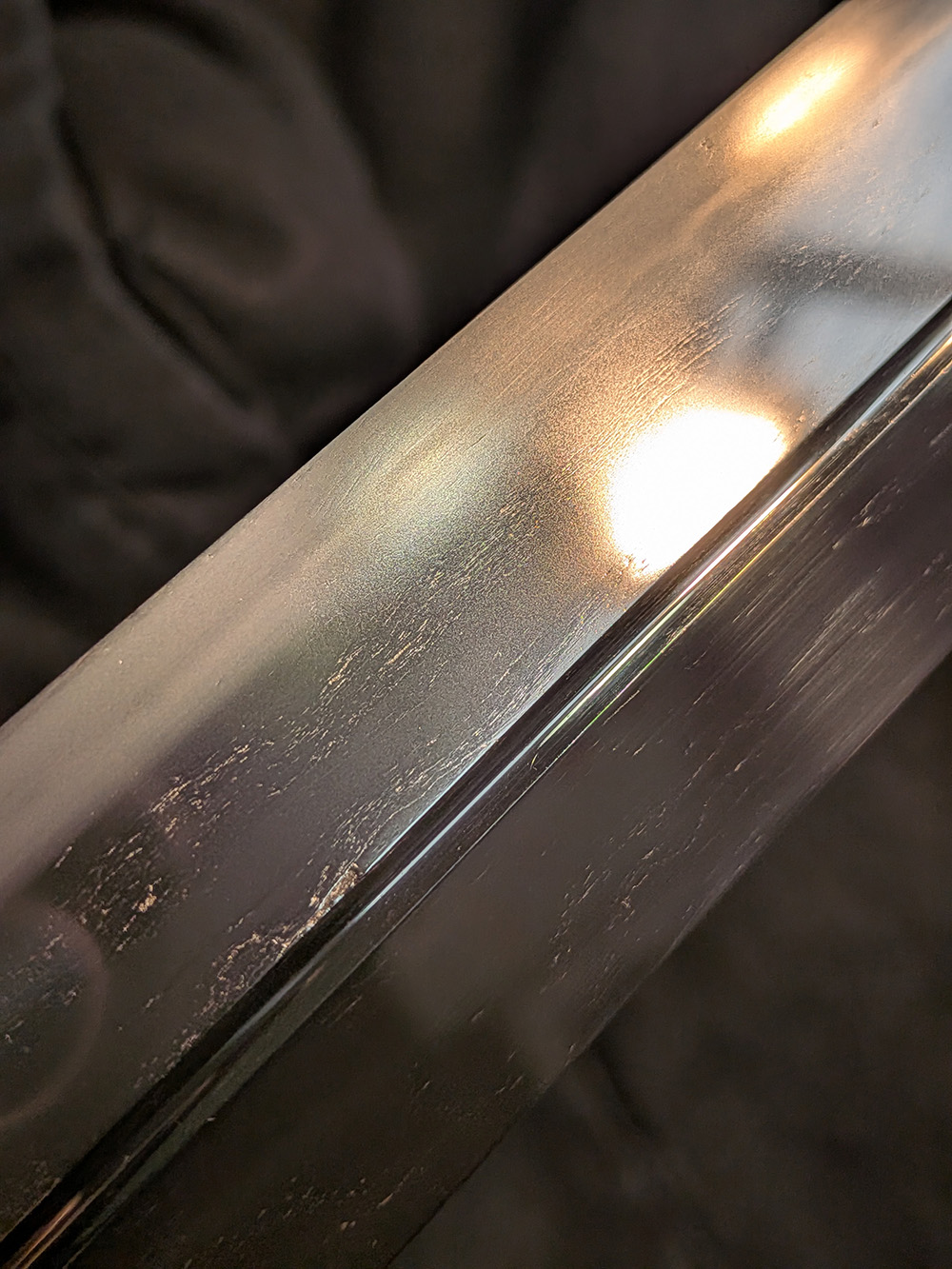
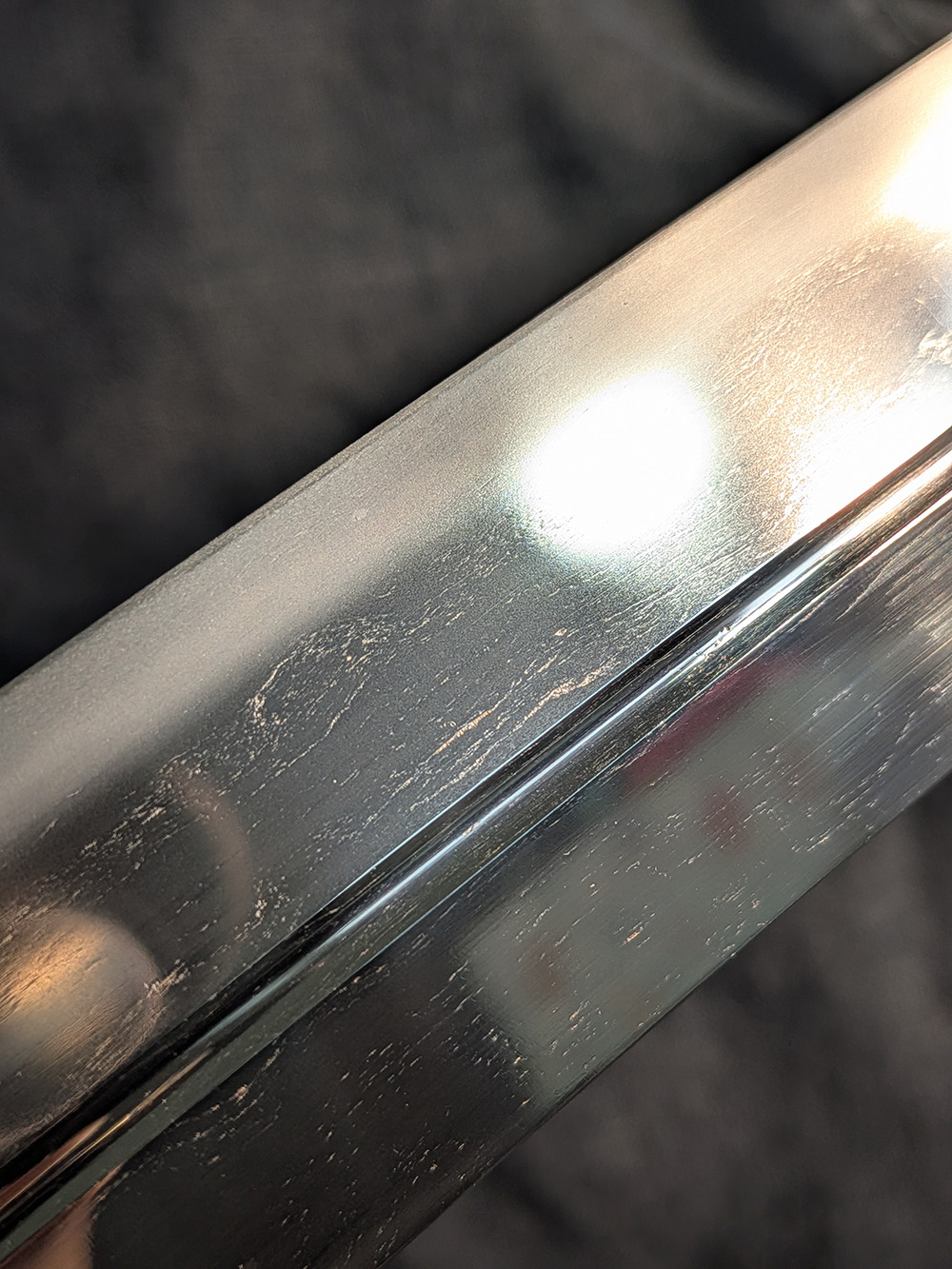
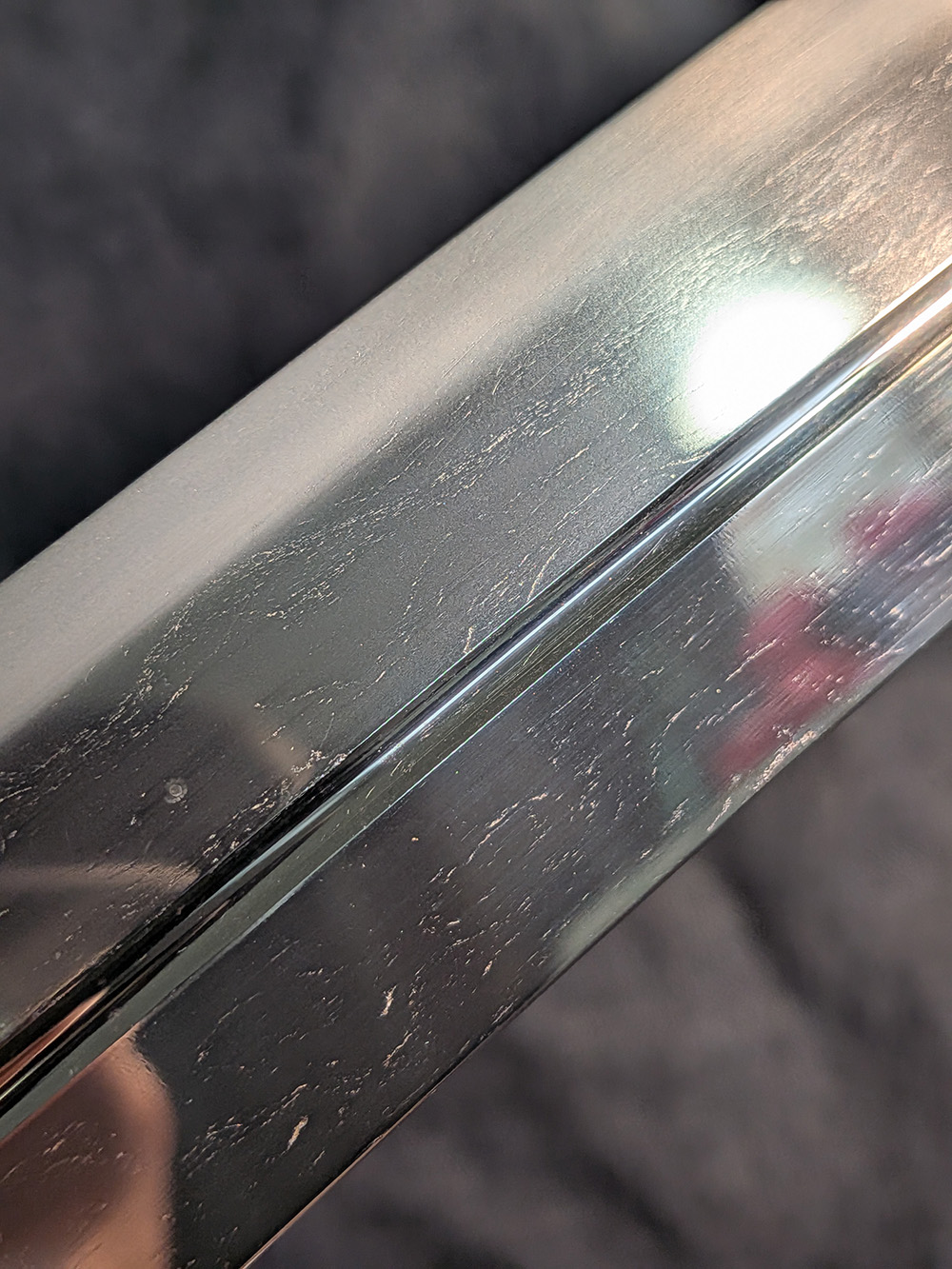
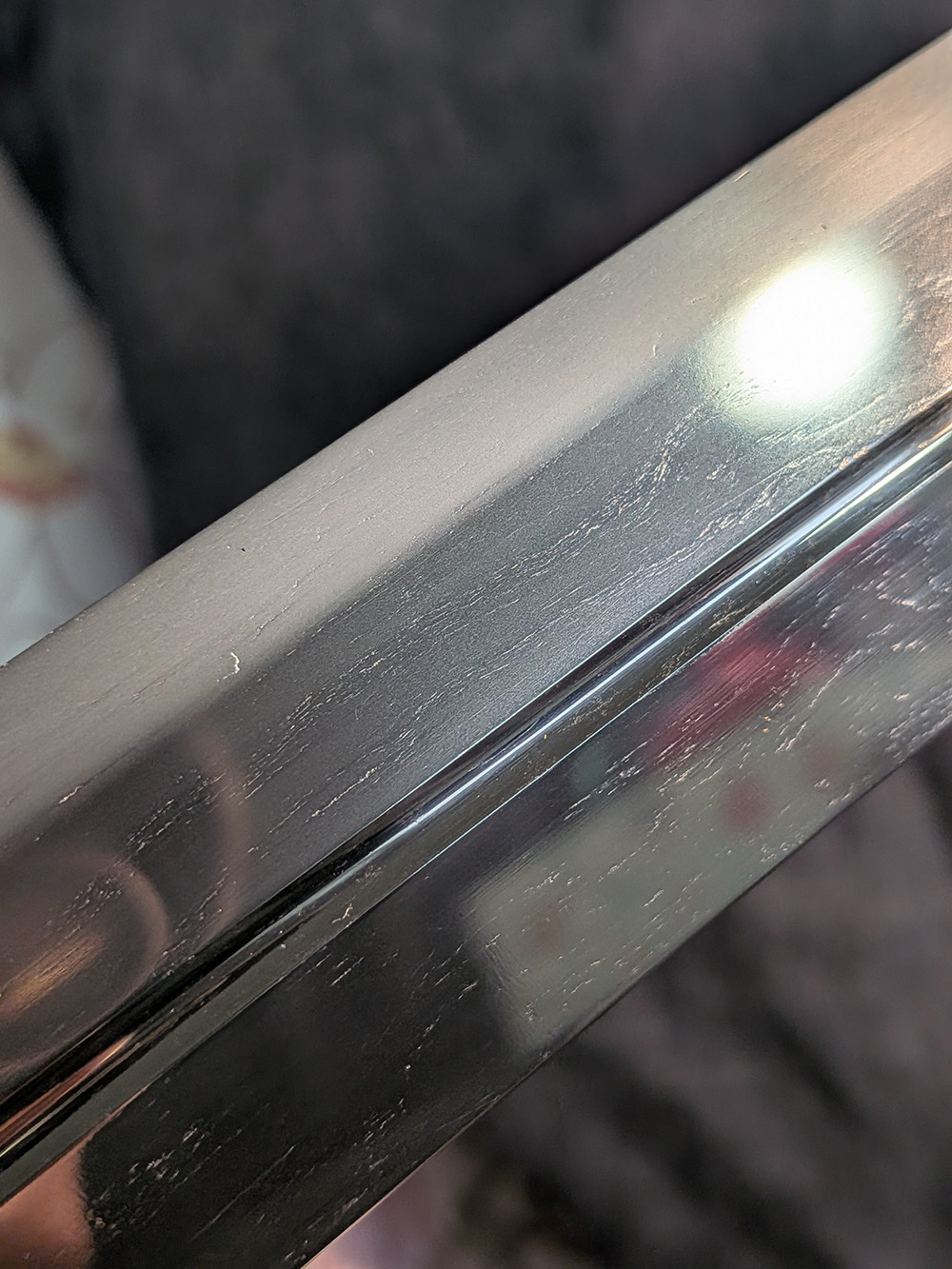
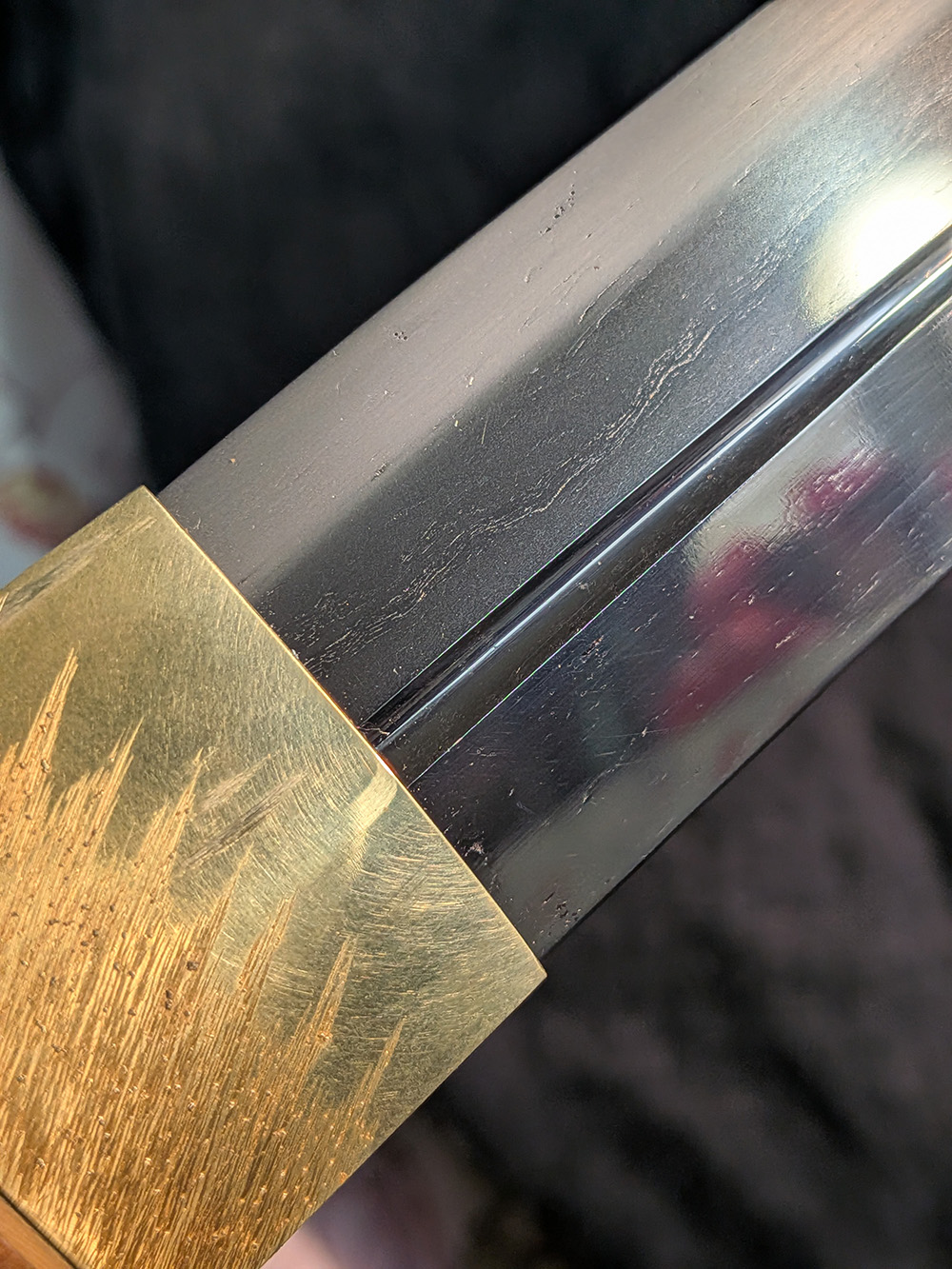
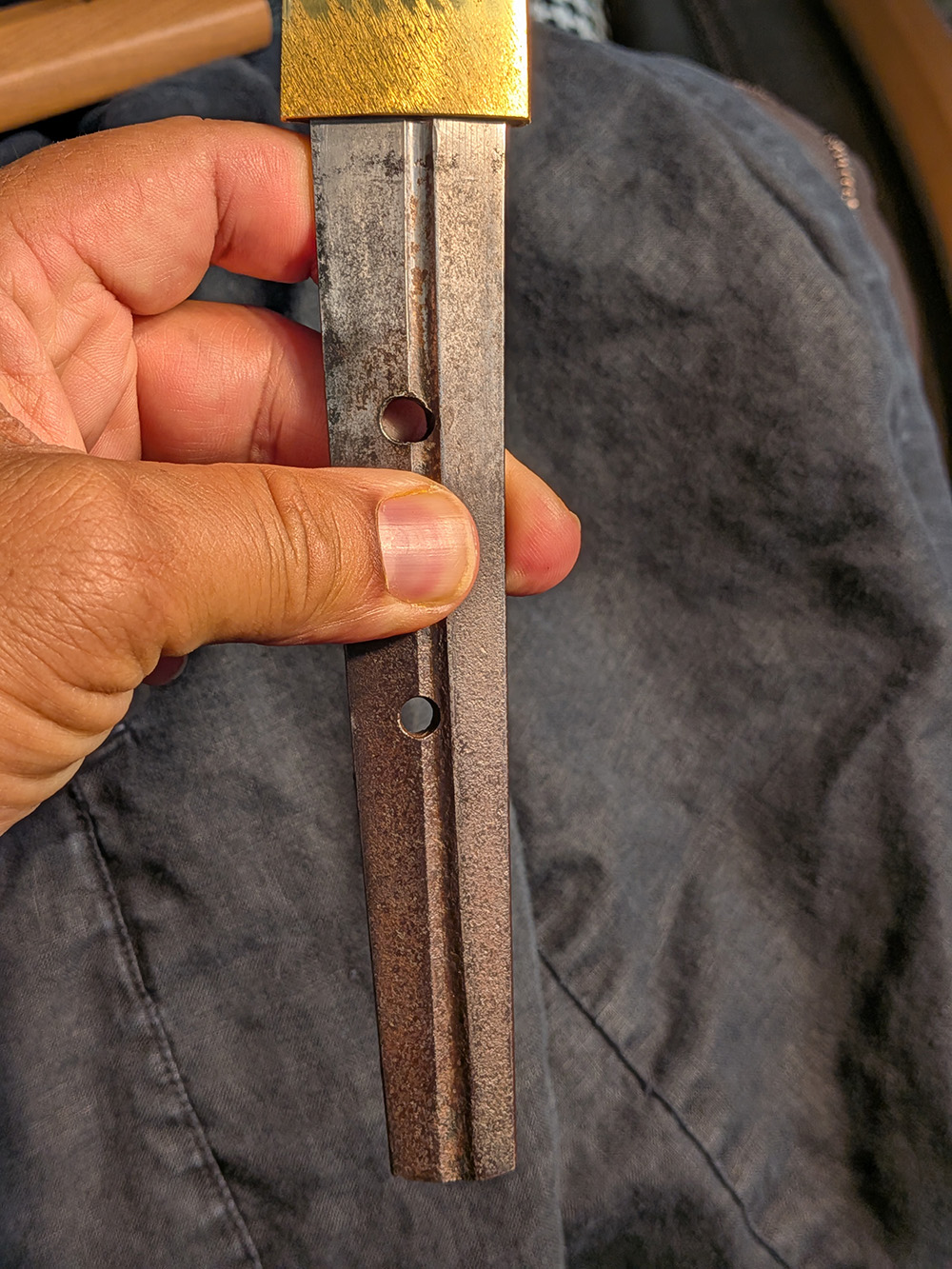
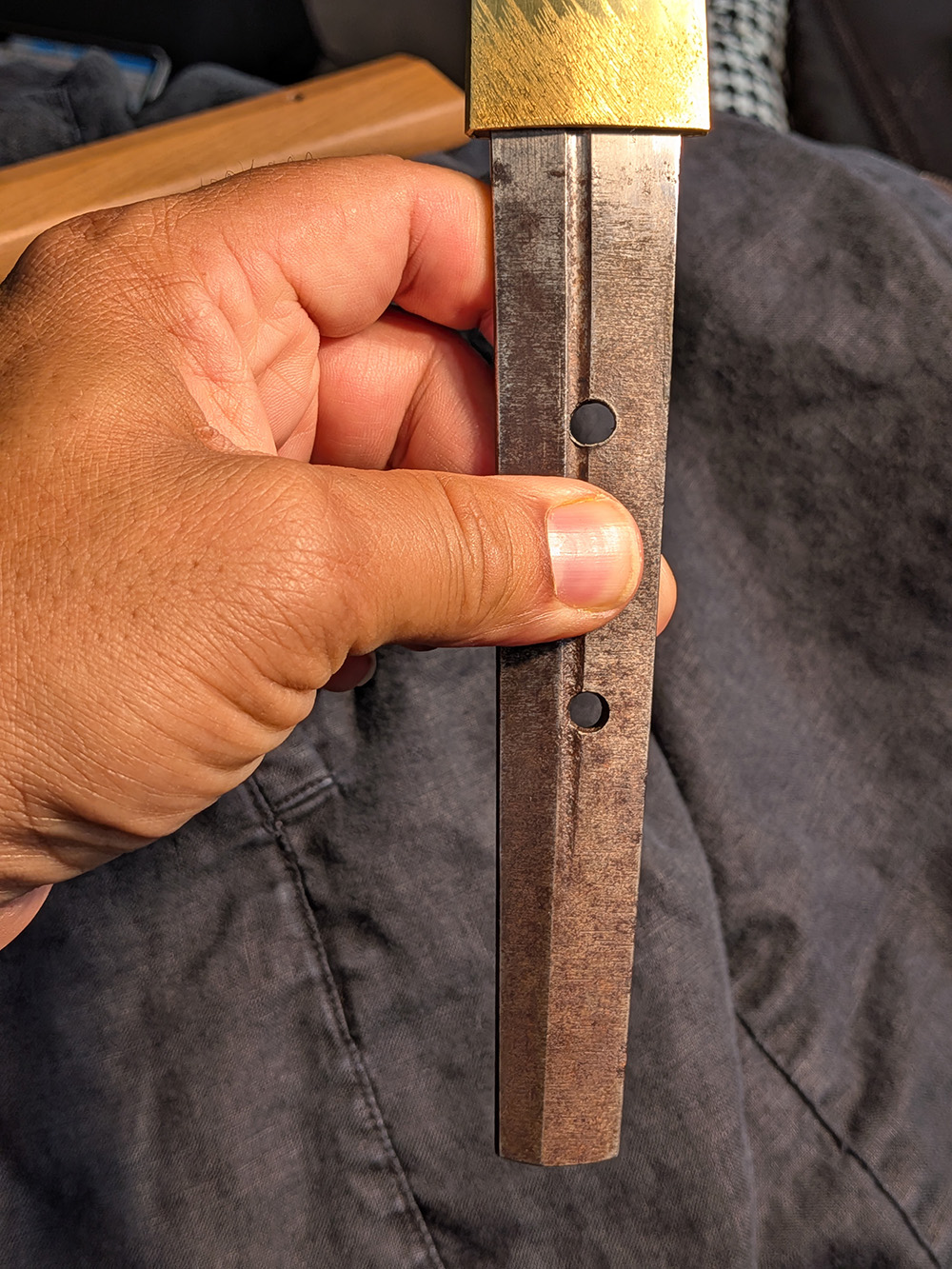
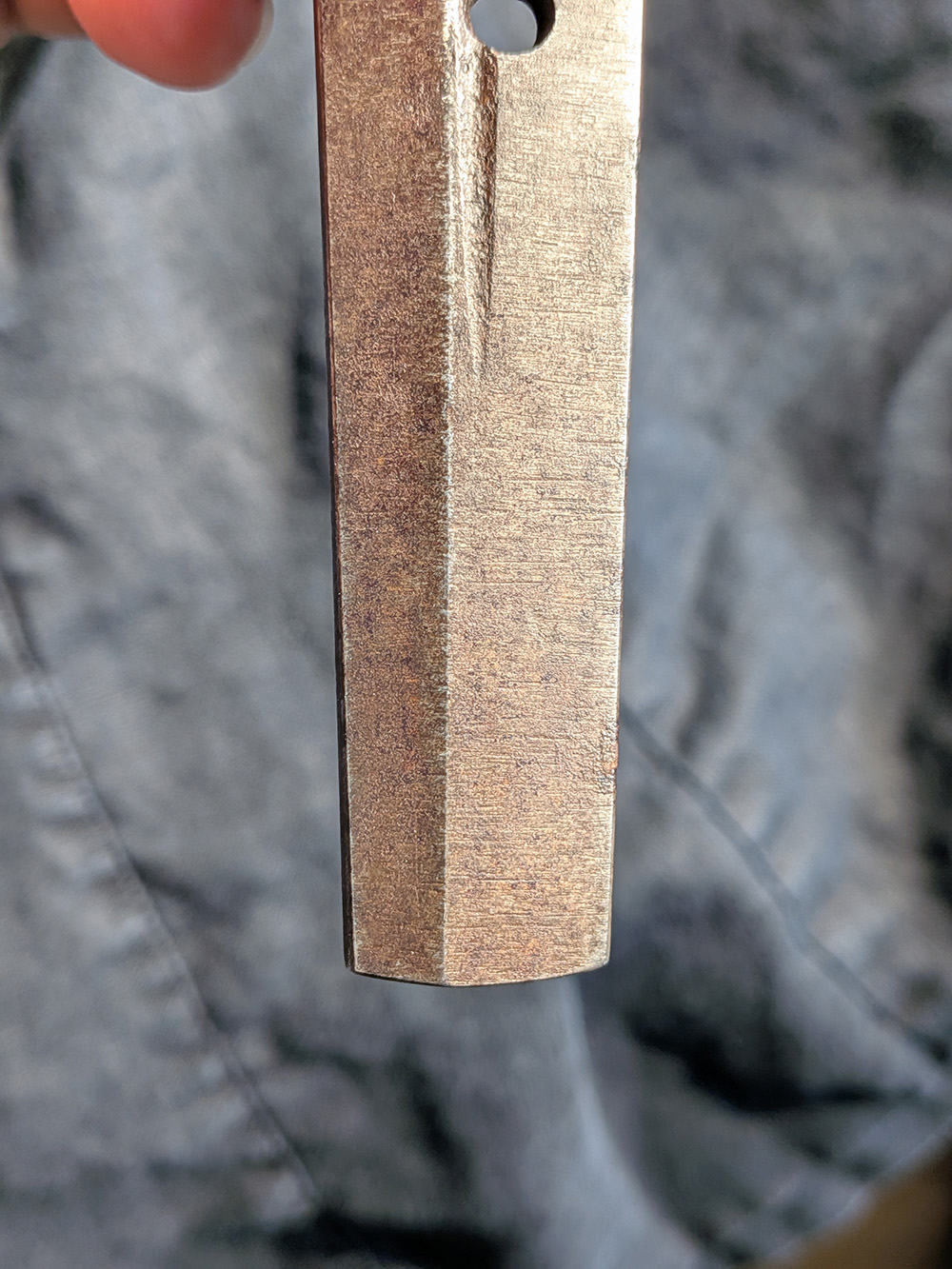
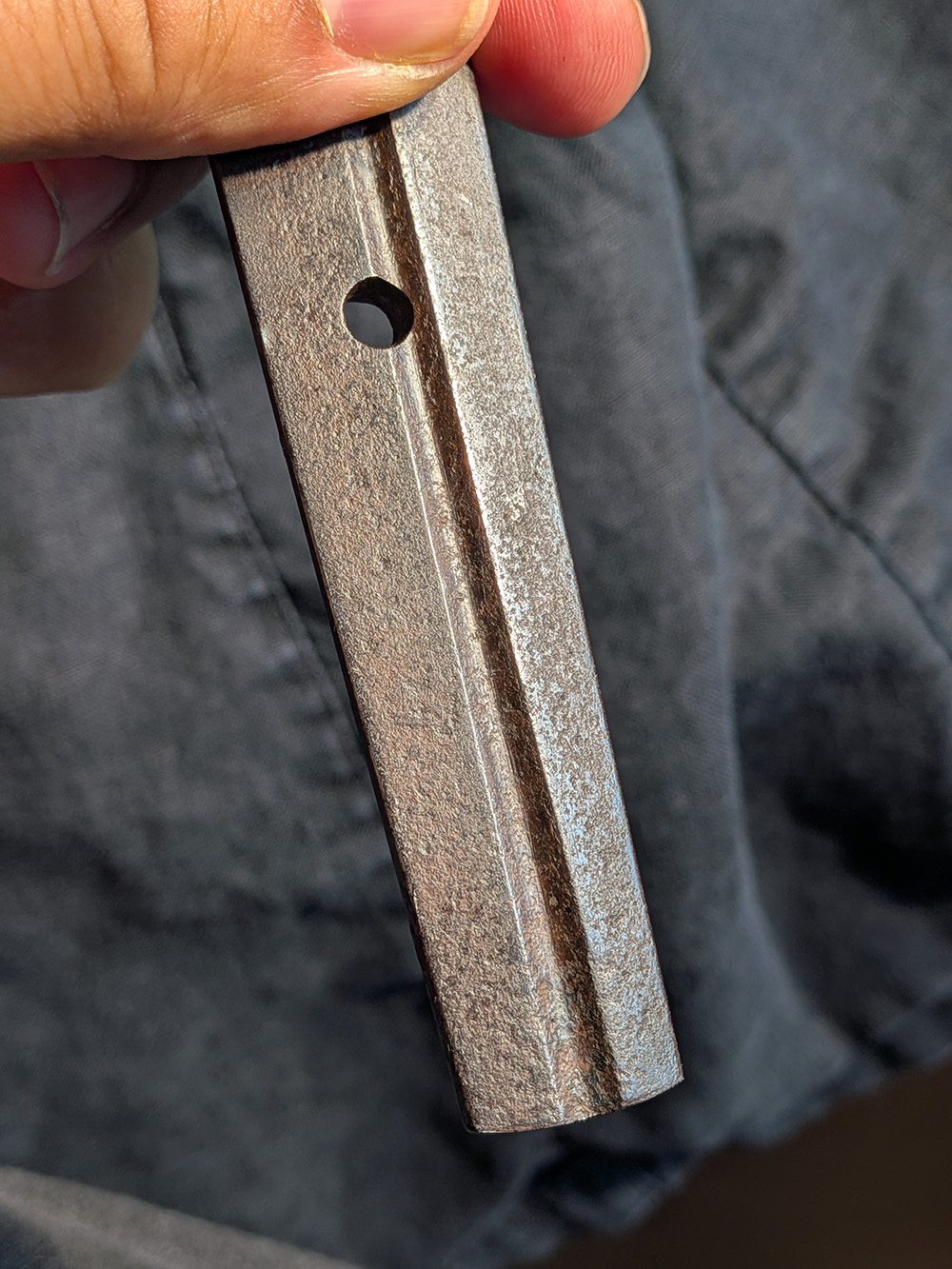
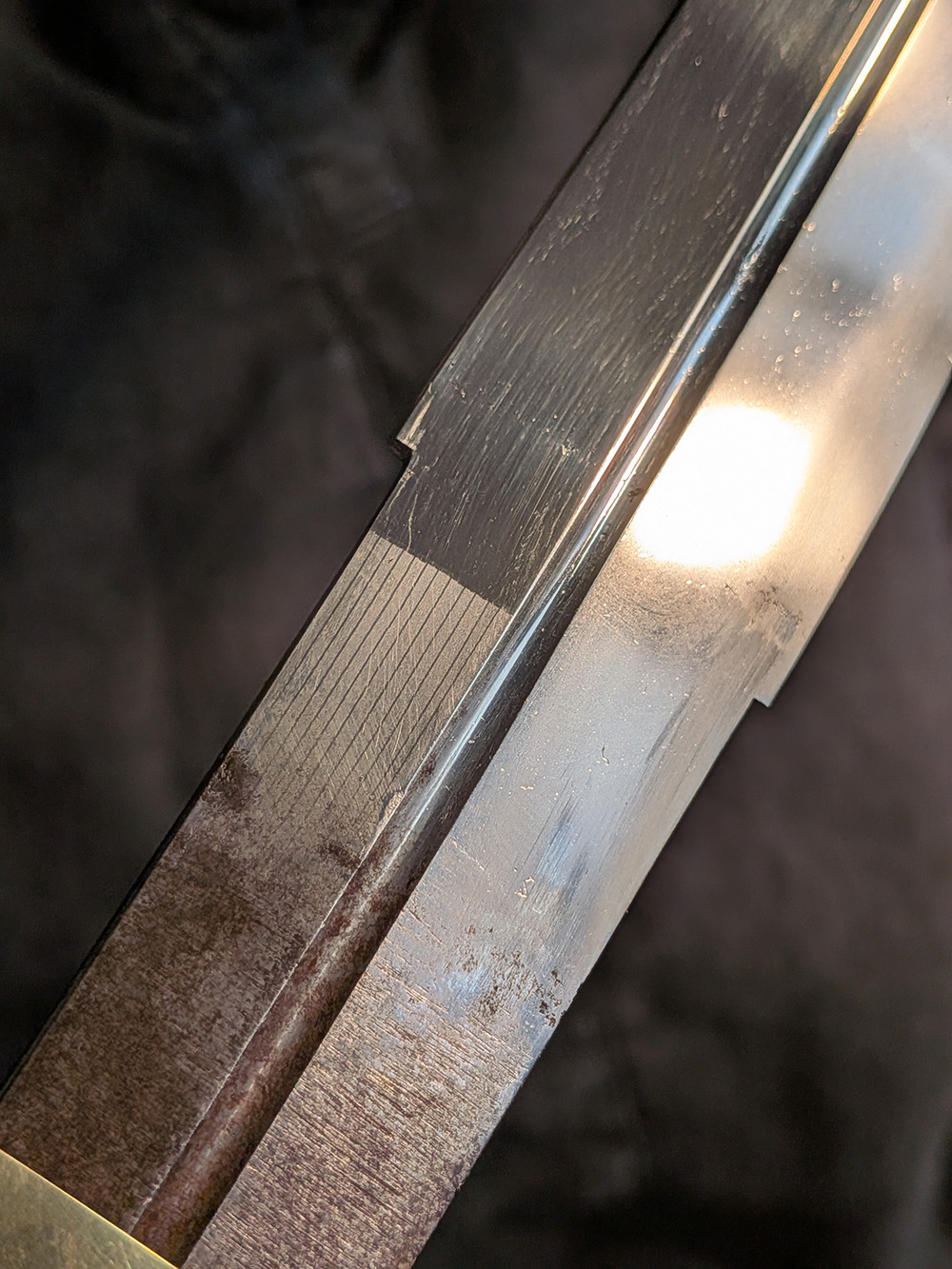
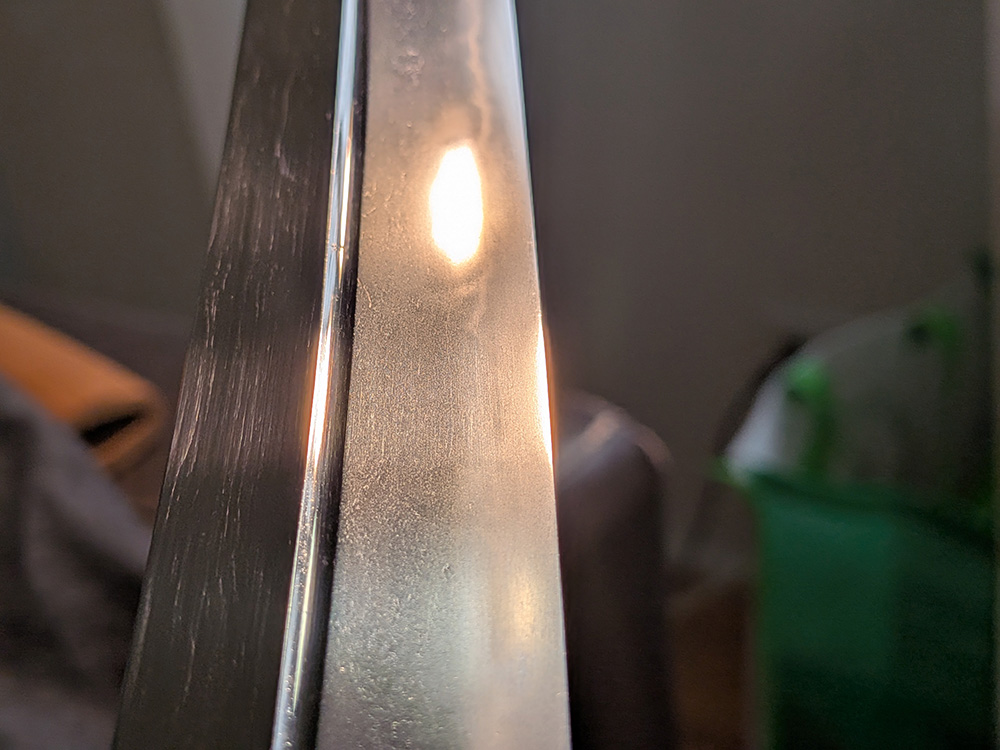
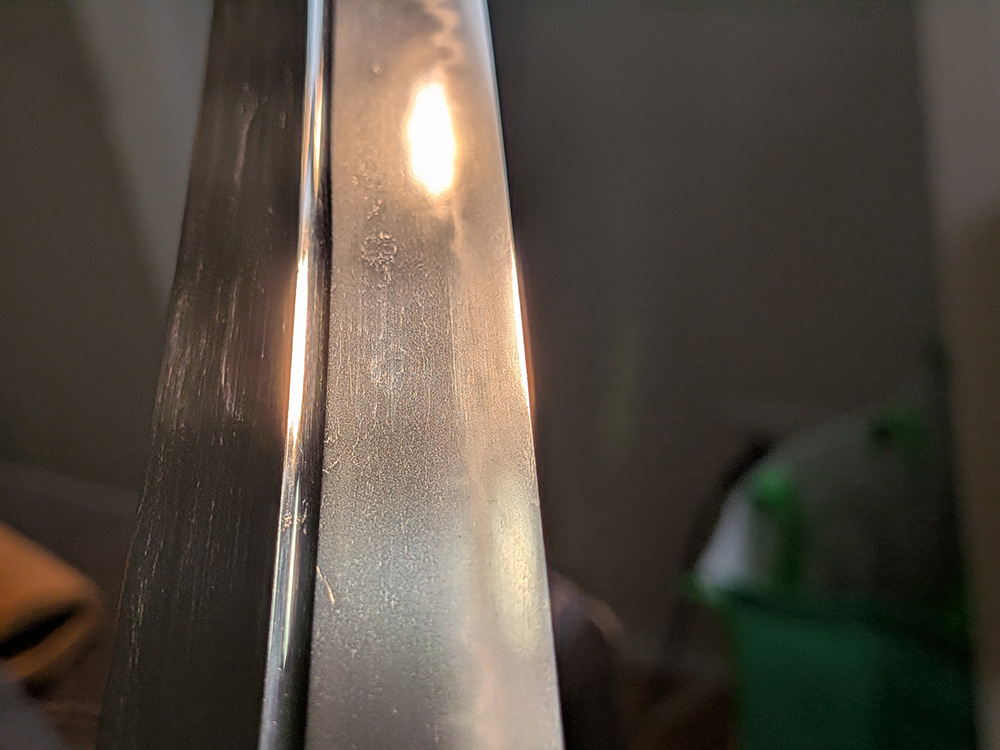
This is a refined koto wakizashi attributed to Bizen Kozori by NBTHK kanteisho, active during the late Nanbokuchō period. It also features a sayagaki attributing it to Bizen Tomomitsu, son of Kanemitsu, dating to the Jōji period (1362–1368). This combination offers both scholarly depth and collector appeal, showcasing strong Bizen workmanship from an artistically fertile period.
 NihontoWatch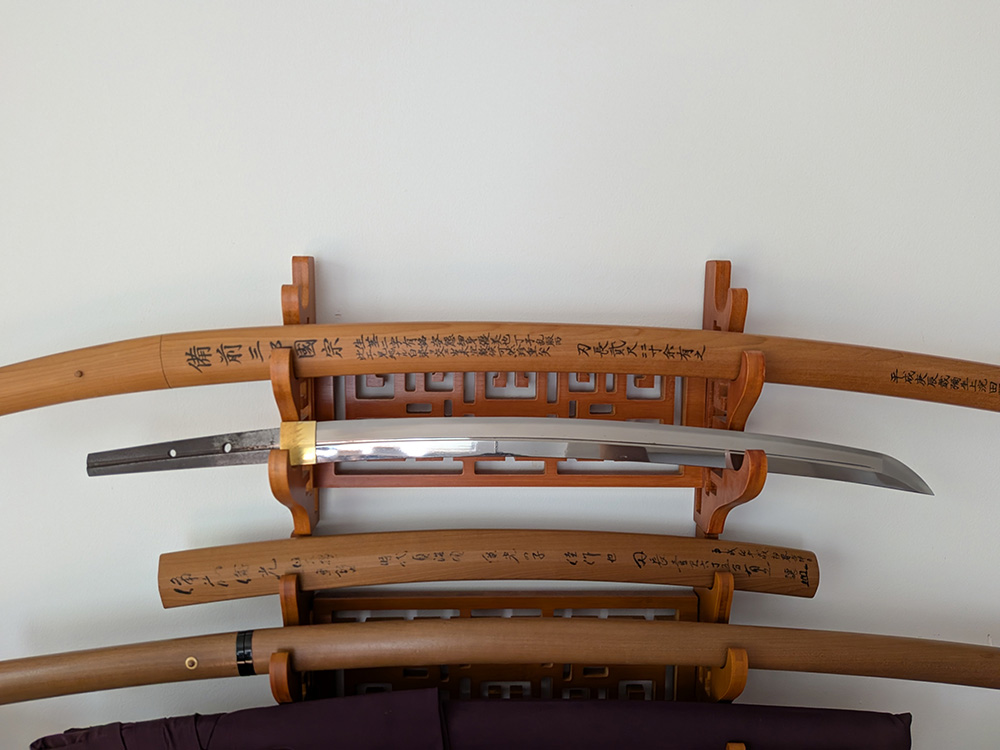
Bizen-den · Bizen
24 pieces on the market now
The Kozori (小反り) form a loose body of Bizen smiths who worked at and around Osafune in the closing decades of the Nanbokucho period and on into early Muromachi, and the NBTHK defines them less by descent than by exclusion: they are the late-Osafune hands who fall outside the specific lineages of Kanemitsu, Chogi, Motoshige and the Omiya group, gathered under one name as a convenience. Learn more →
| Smith | Era | Designated |
|---|---|---|
| Hidemitsu秀光 | 1375-1392 | 19 |
| Iesuke家助 | 1394-1428 | 11 |
| Iemori家守 | 1377-1406 | 15 |
| Nariie成家 | 1352-1362 | 21 |
| Moromitsu師光 | 1375-1390 | 7 |
We could not find an authenticity certificate on the seller’s listing. Japanese swords and fittings are normally papered by the NBTHK (or the NTHK). Without one, the attribution is the seller’s own assessment and has not been independently verified — treat it with caution and ask the dealer about certification before buying.
This is a refined koto wakizashi attributed to Bizen Kozori by NBTHK kanteisho, active during the late Nanbokuchō period. It also features a sayagaki attributing it to Bizen Tomomitsu, son of Kanemitsu, dating to the Jōji period (1362–1368). This combination offers both scholarly depth and collector appeal, showcasing strong Bizen workmanship from an artistically fertile period.
NihontoWatchBizen-den · Bizen
24 pieces on the market now
The Kozori (小反り) form a loose body of Bizen smiths who worked at and around Osafune in the closing decades of the Nanbokucho period and on into early Muromachi, and the NBTHK defines them less by descent than by exclusion: they are the late-Osafune hands who fall outside the specific lineages of Kanemitsu, Chogi, Motoshige and the Omiya group, gathered under one name as a convenience. Learn more →
| Smith | Era | Designated |
|---|---|---|
| Hidemitsu秀光 | 1375-1392 | 19 |
| Iesuke家助 | 1394-1428 | 11 |
| Iemori家守 | 1377-1406 | 15 |
| Nariie成家 | 1352-1362 | 21 |
| Moromitsu師光 | 1375-1390 | 7 |
We could not find an authenticity certificate on the seller’s listing. Japanese swords and fittings are normally papered by the NBTHK (or the NTHK). Without one, the attribution is the seller’s own assessment and has not been independently verified — treat it with caution and ask the dealer about certification before buying.