War at home and trade abroad made Muromachi Bizen the busiest forge region in Japan: a century of Sengoku demand after the Ōnin War, and export missions to Ming China carrying blades by the tens of thousands.
 NihontoWatchNihontoWatch
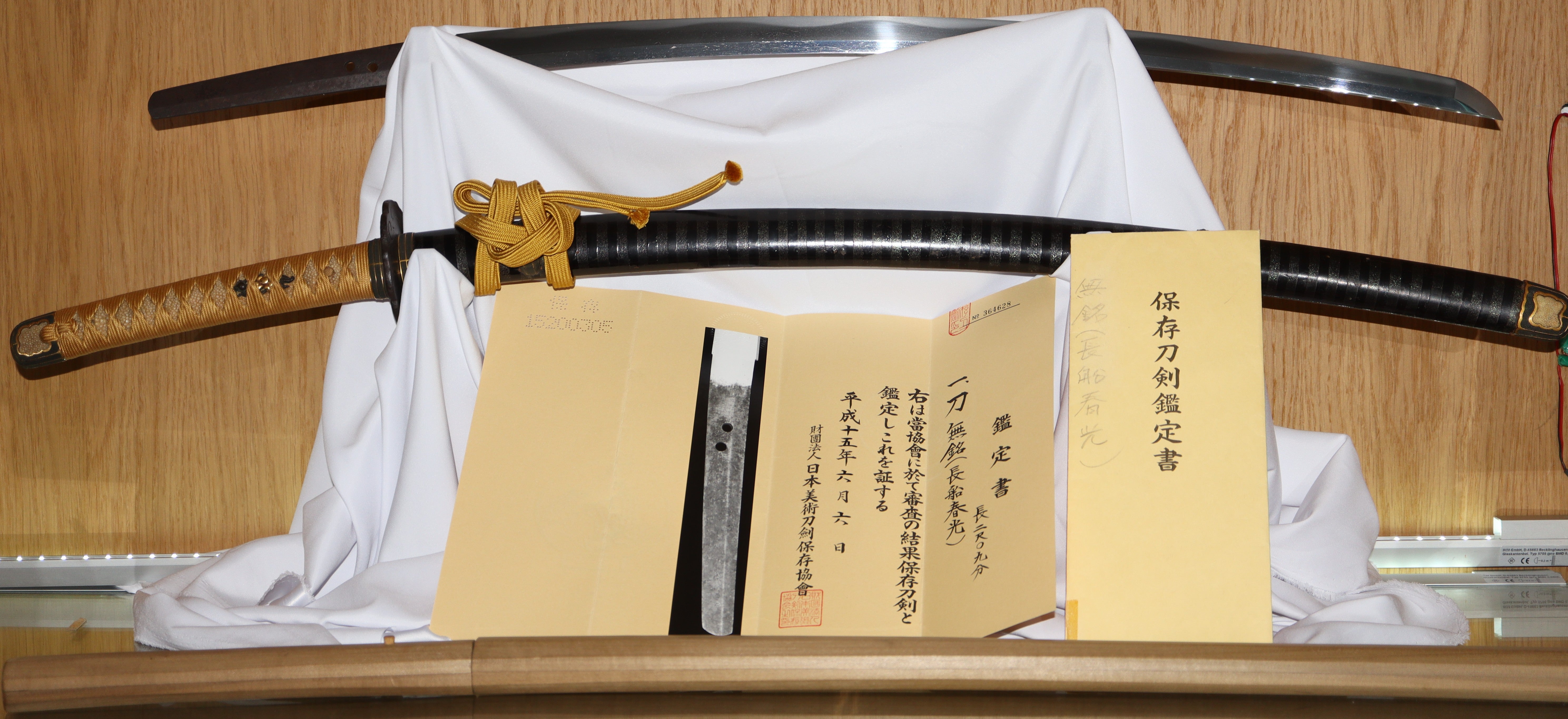
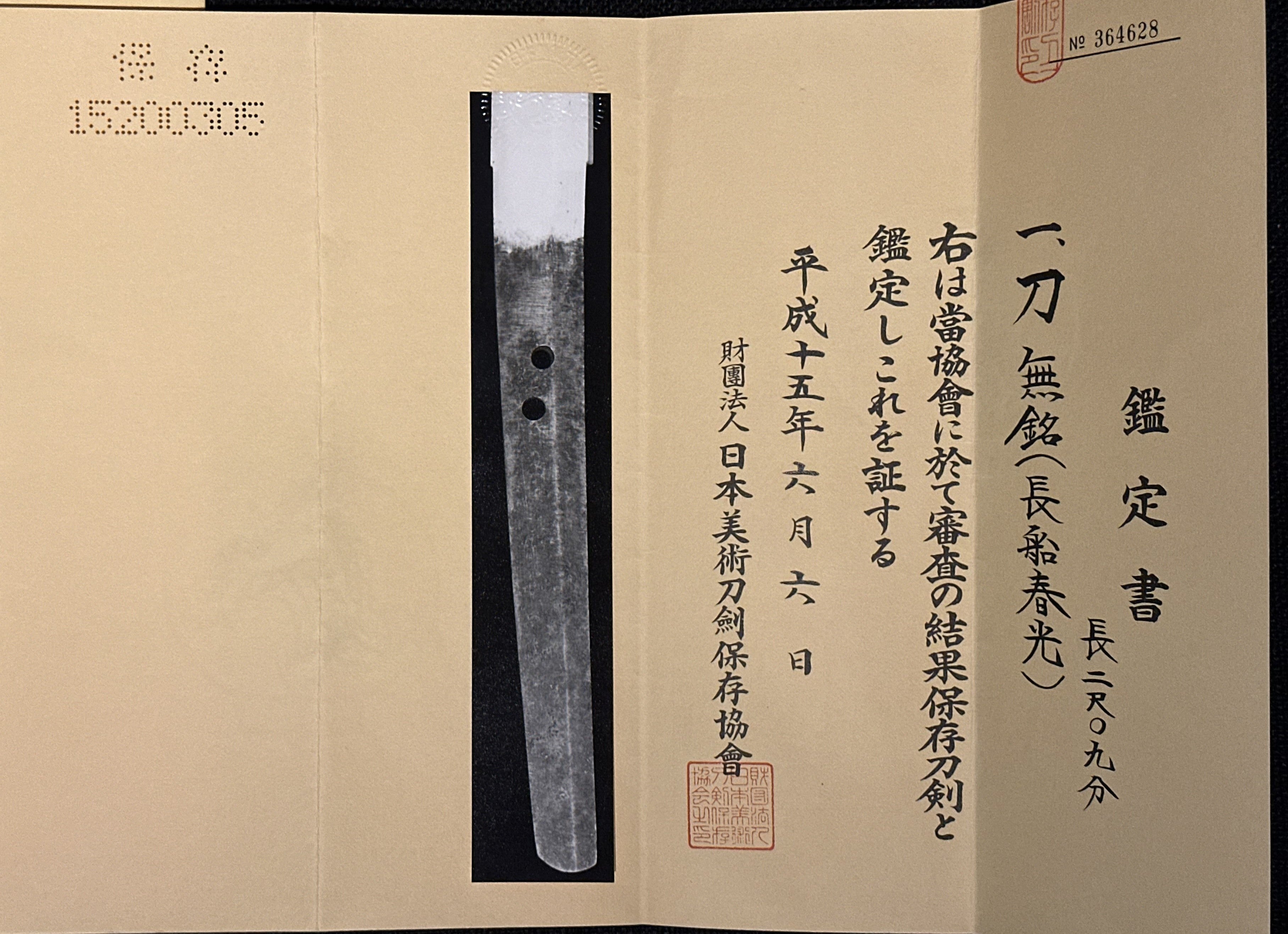
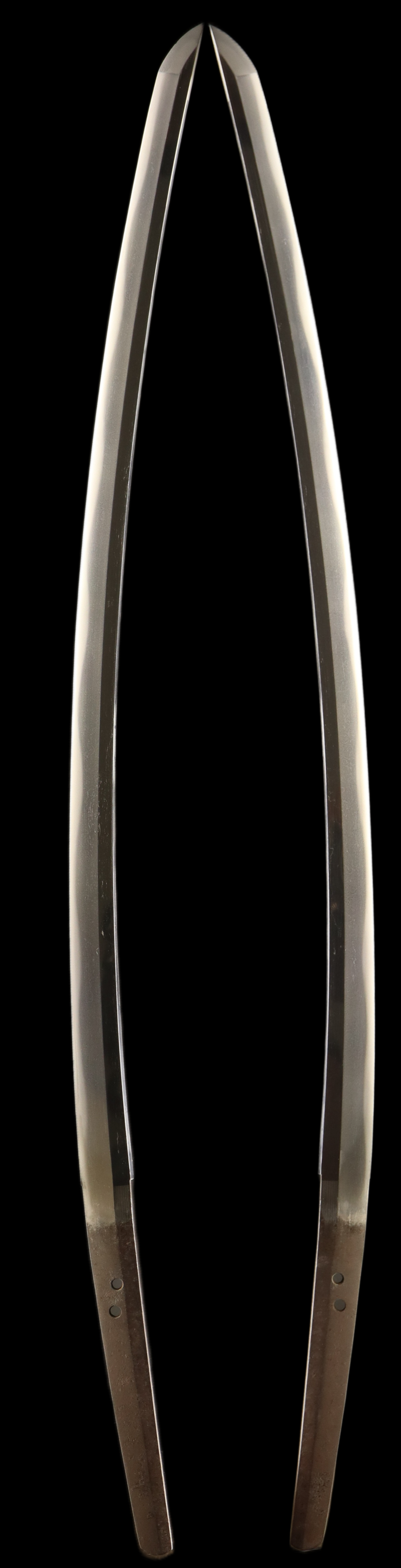
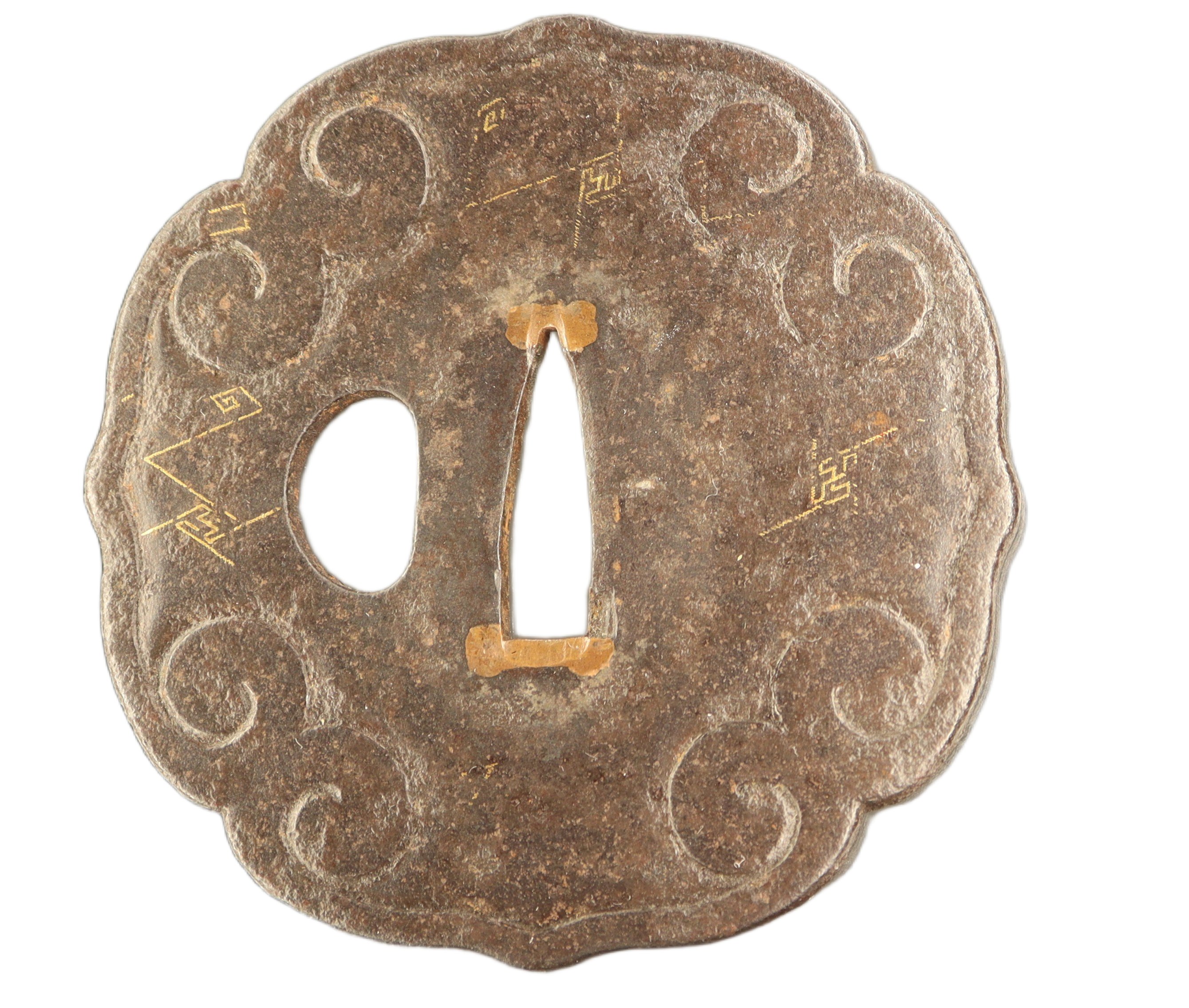
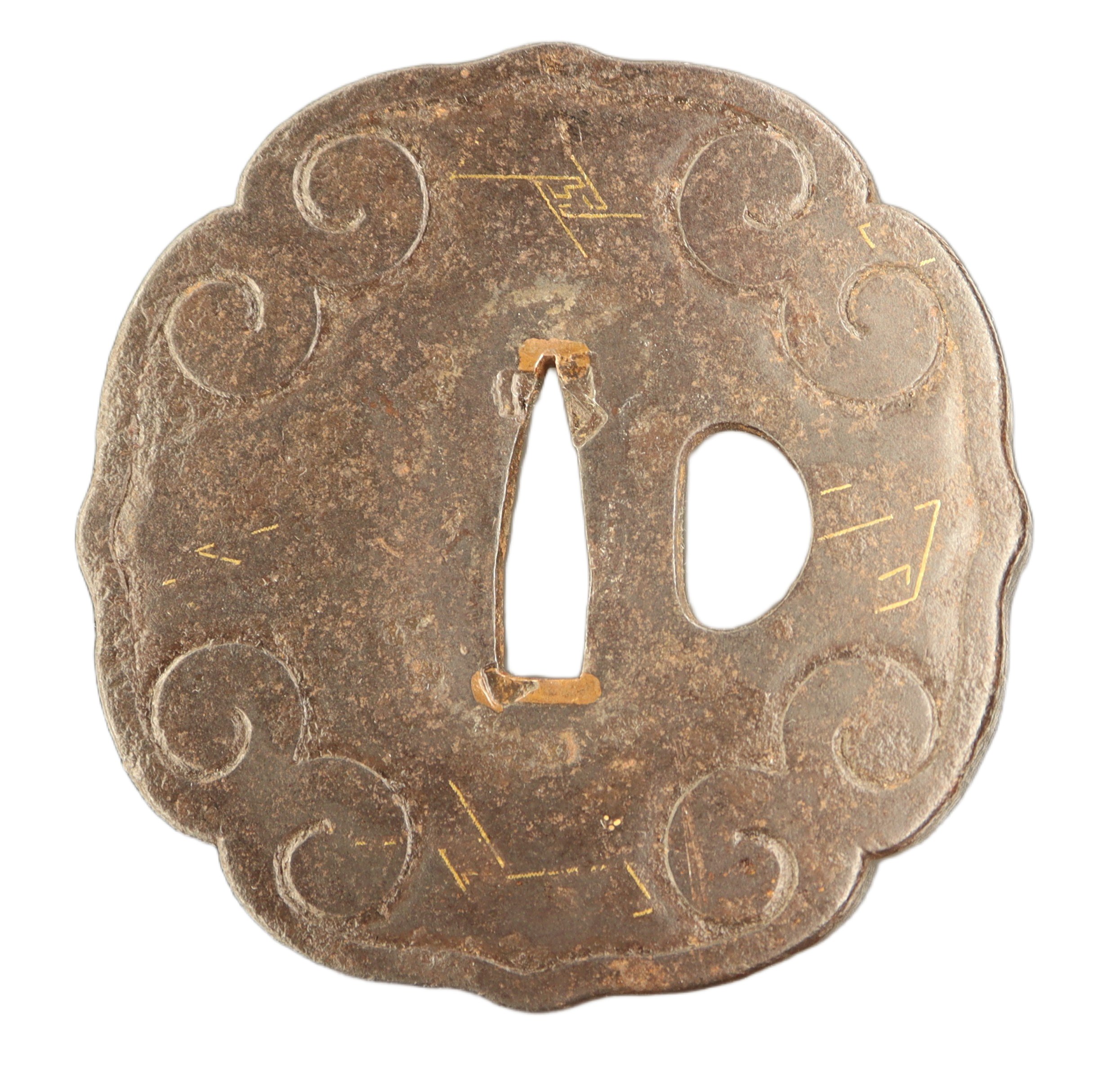
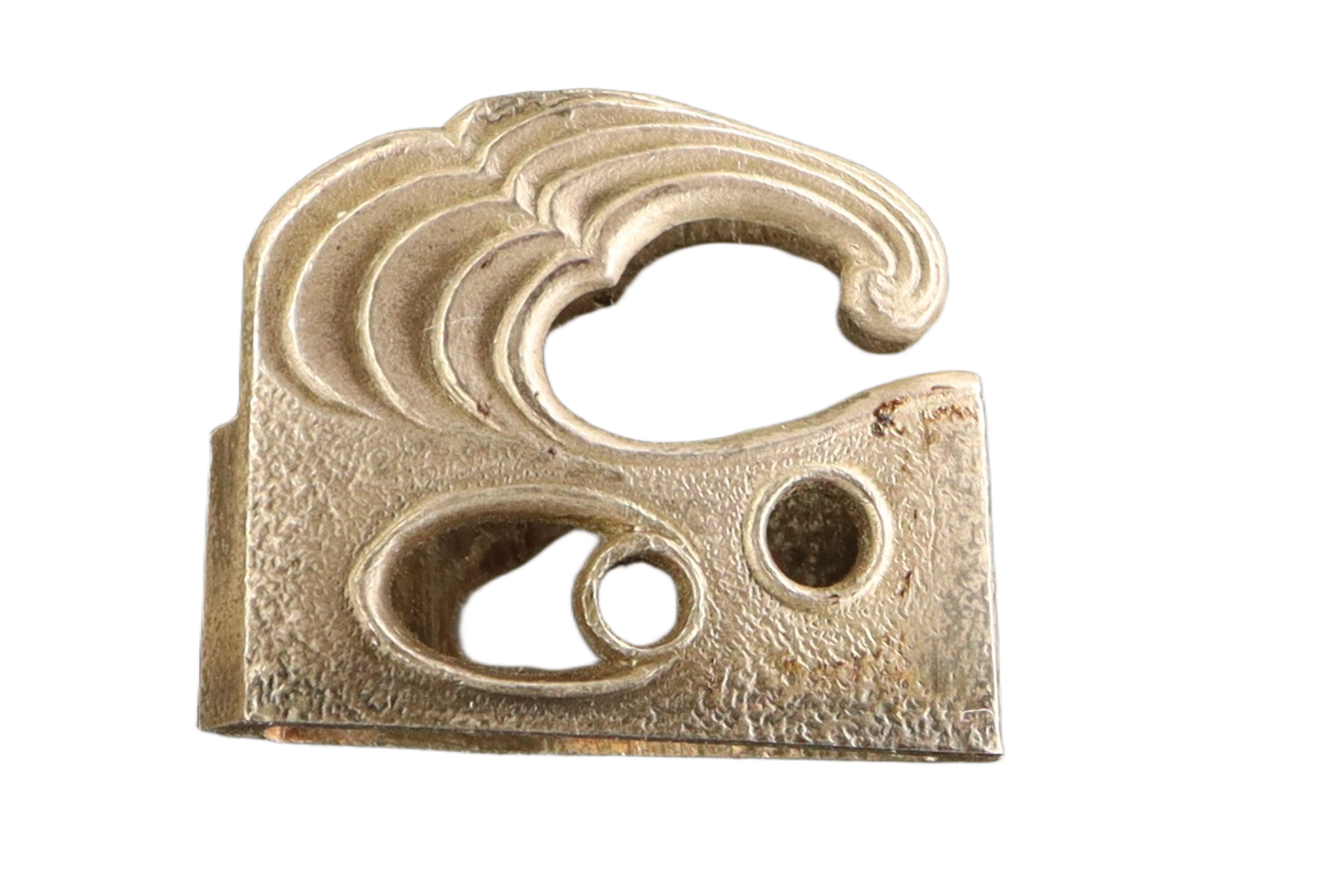
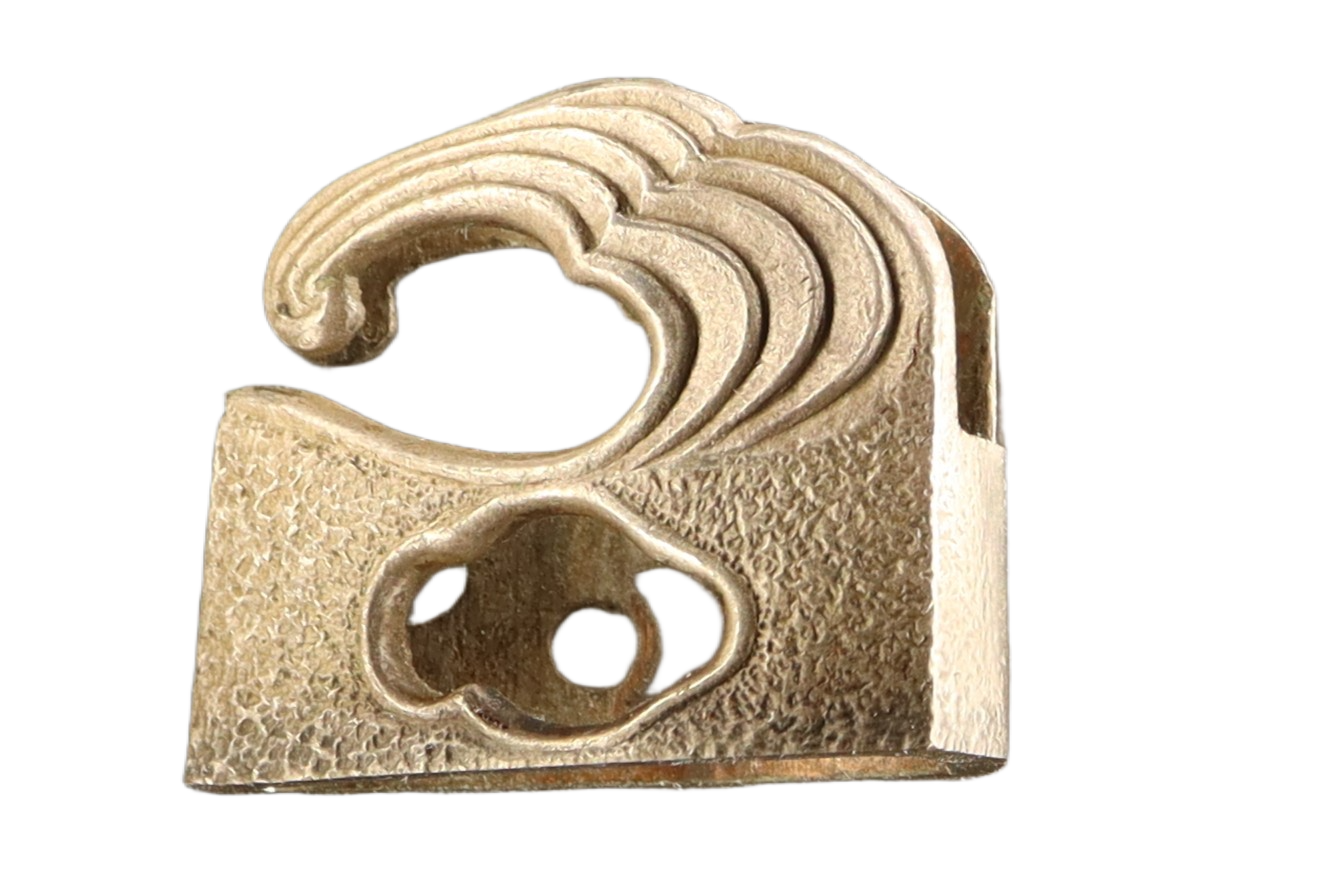
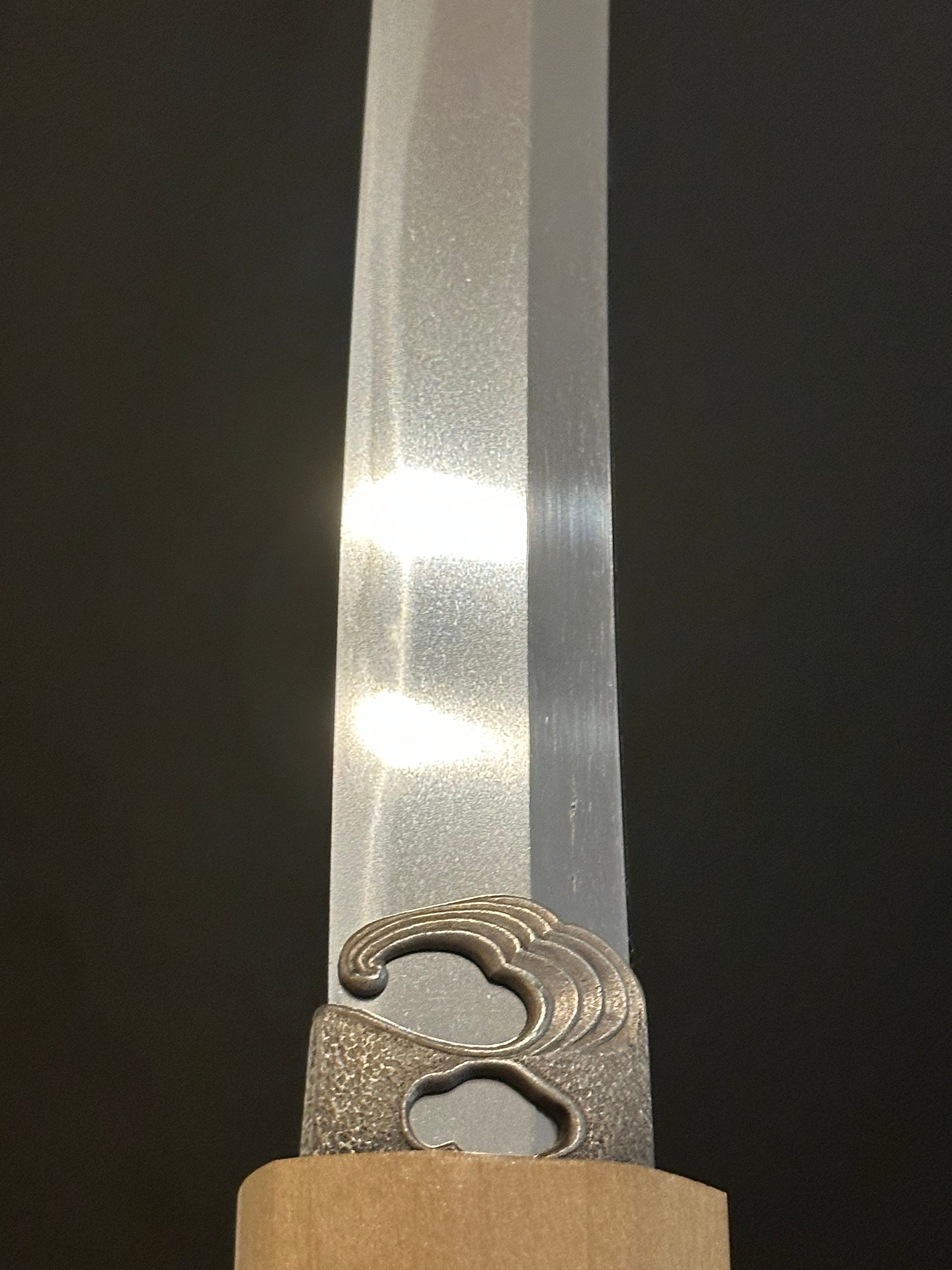
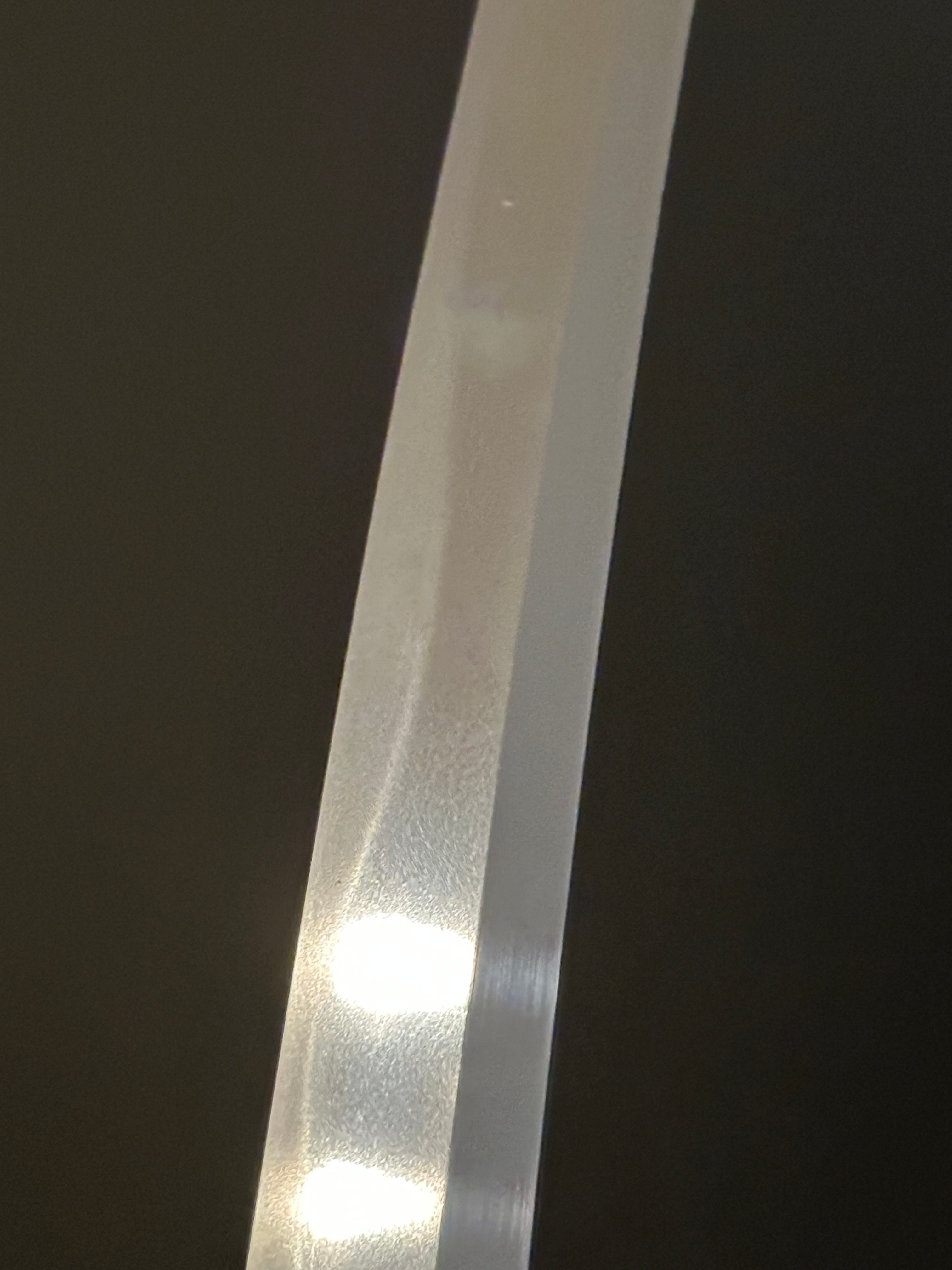
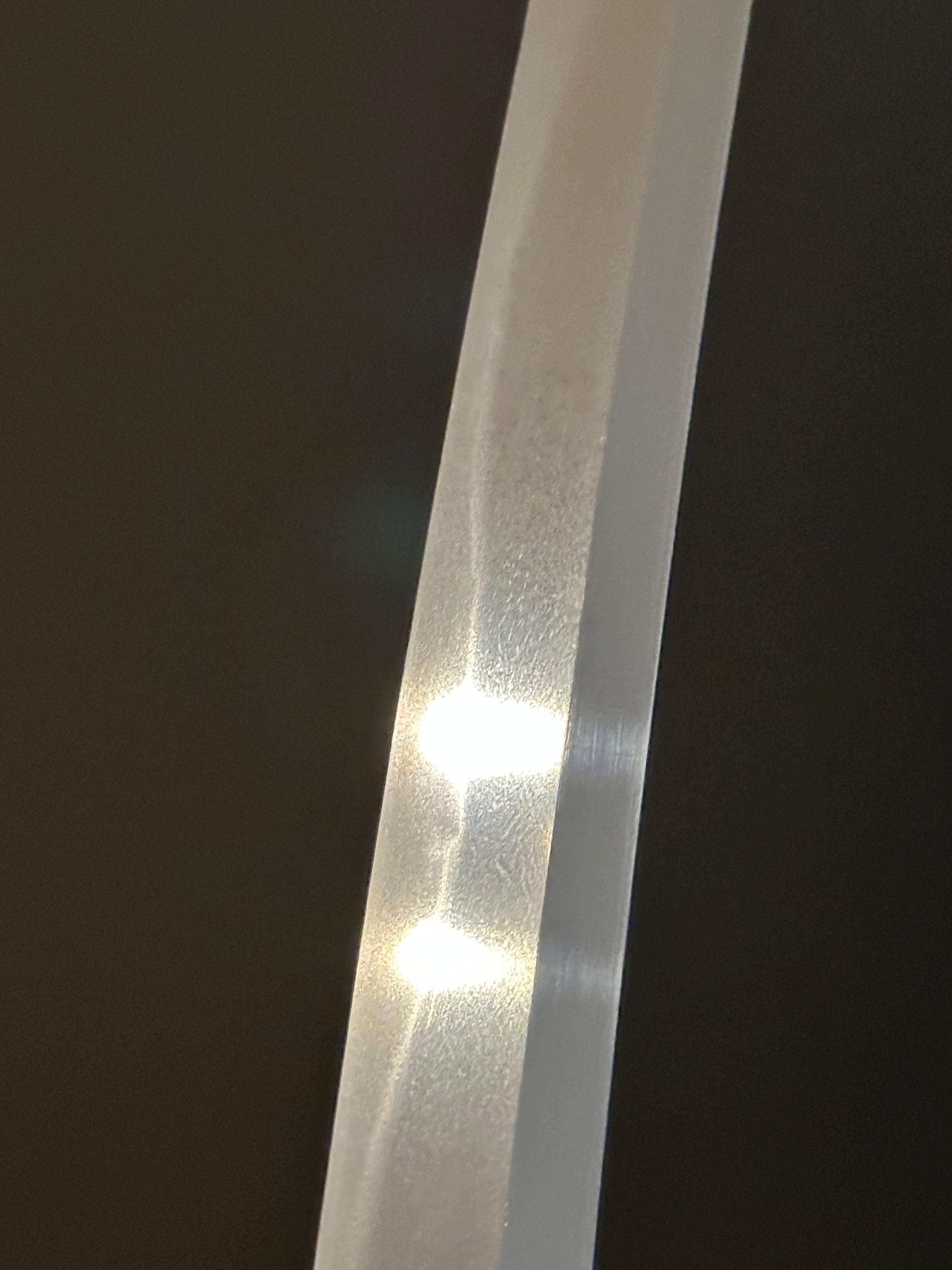
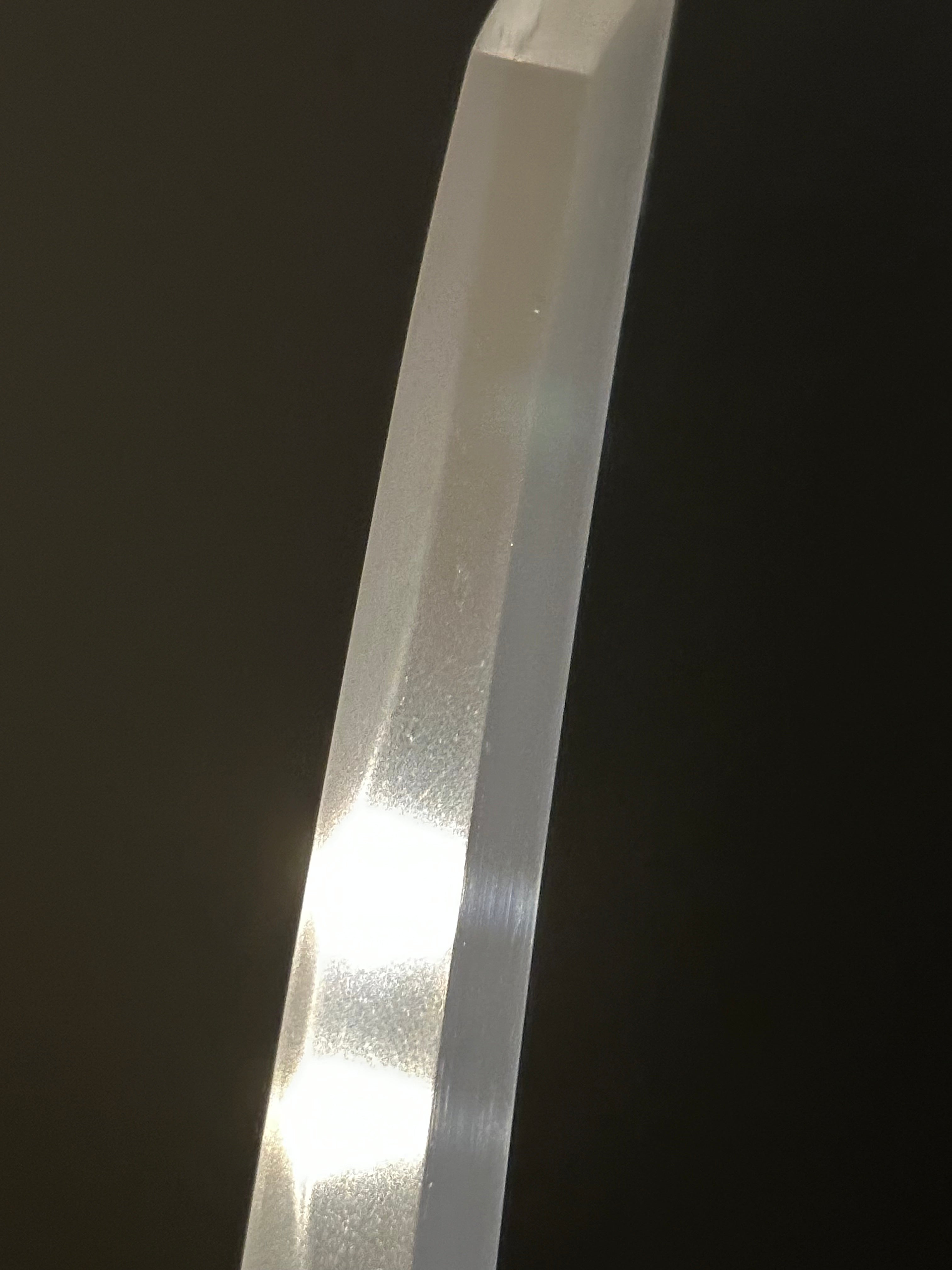
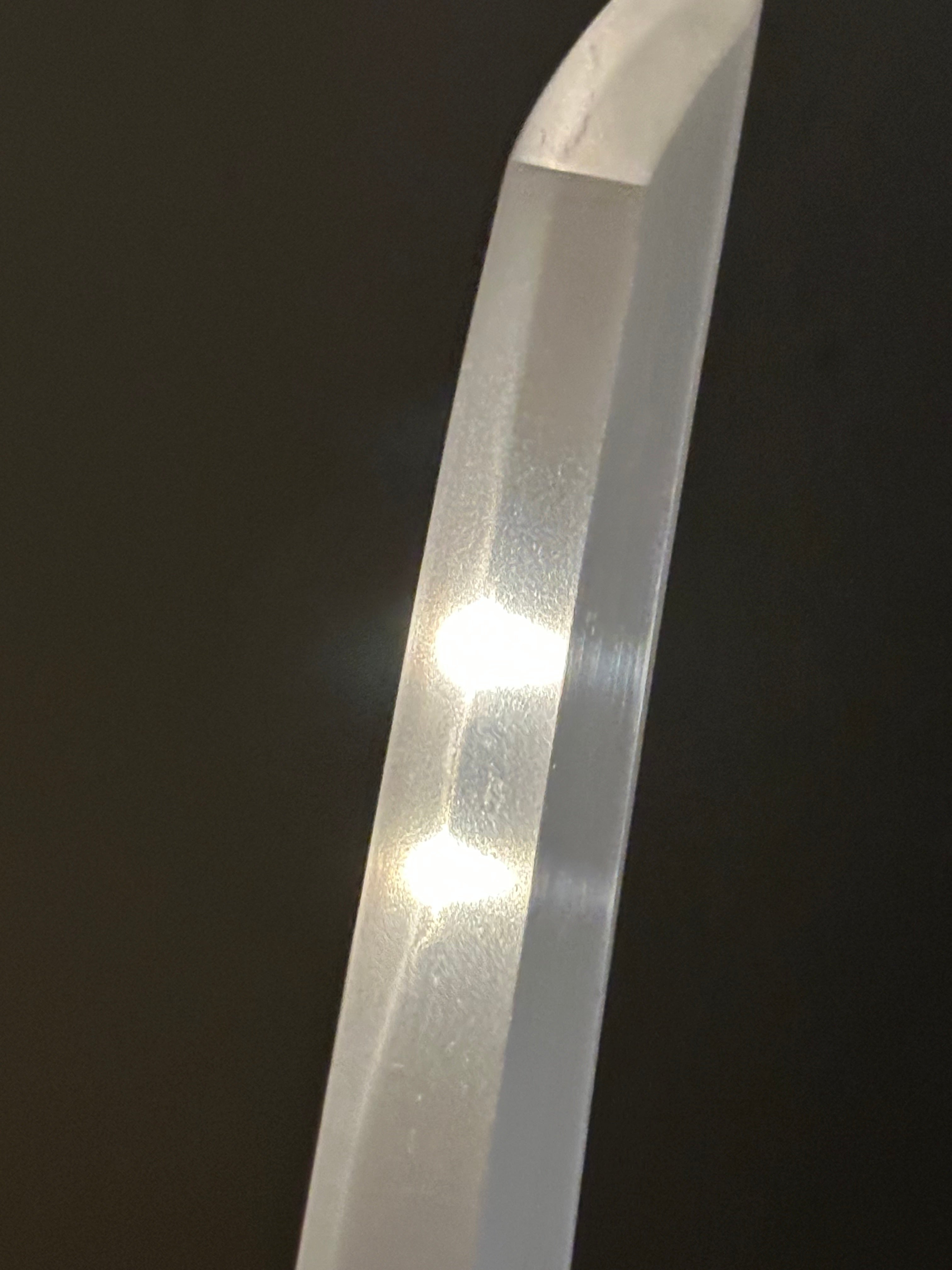
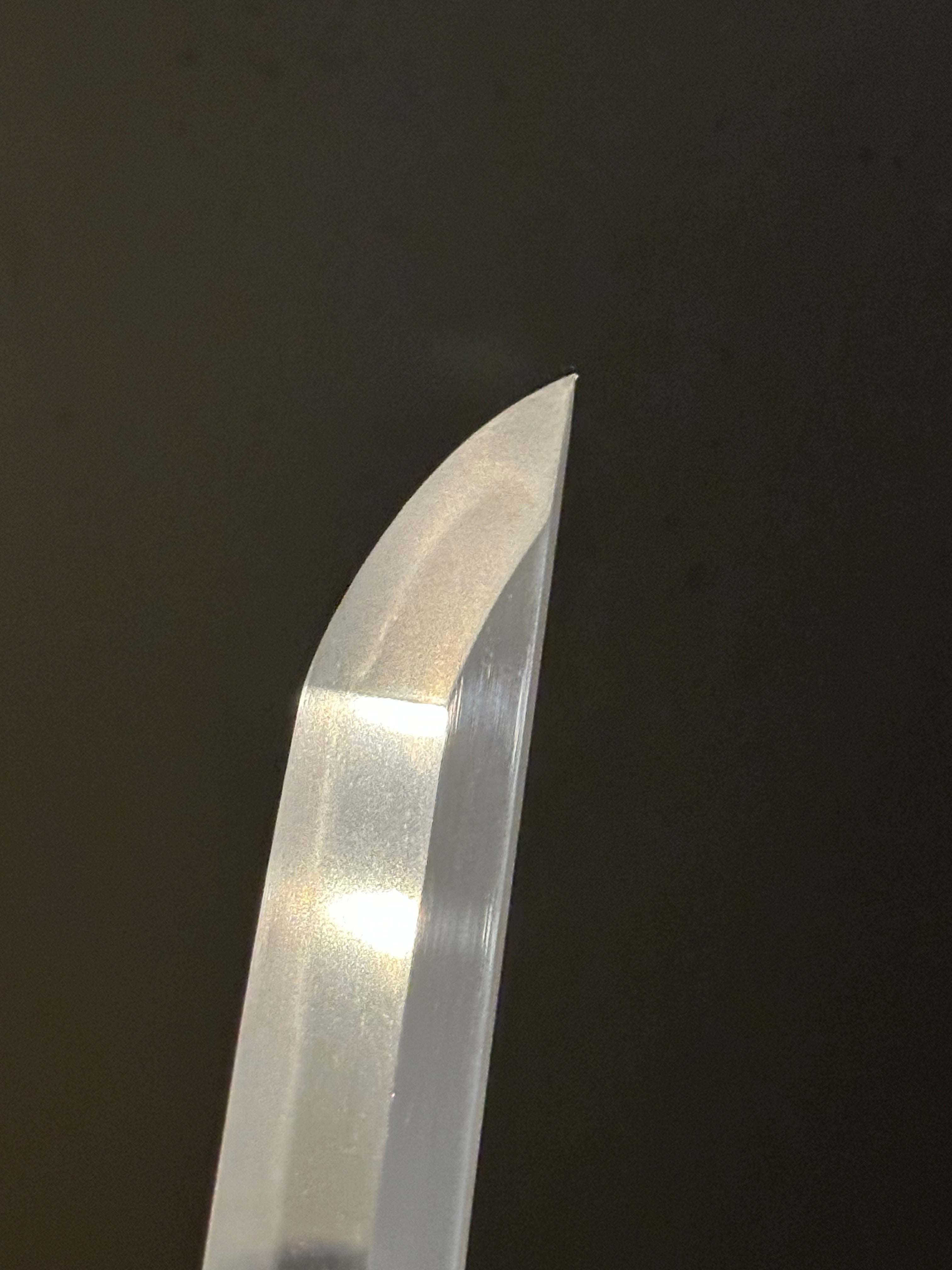
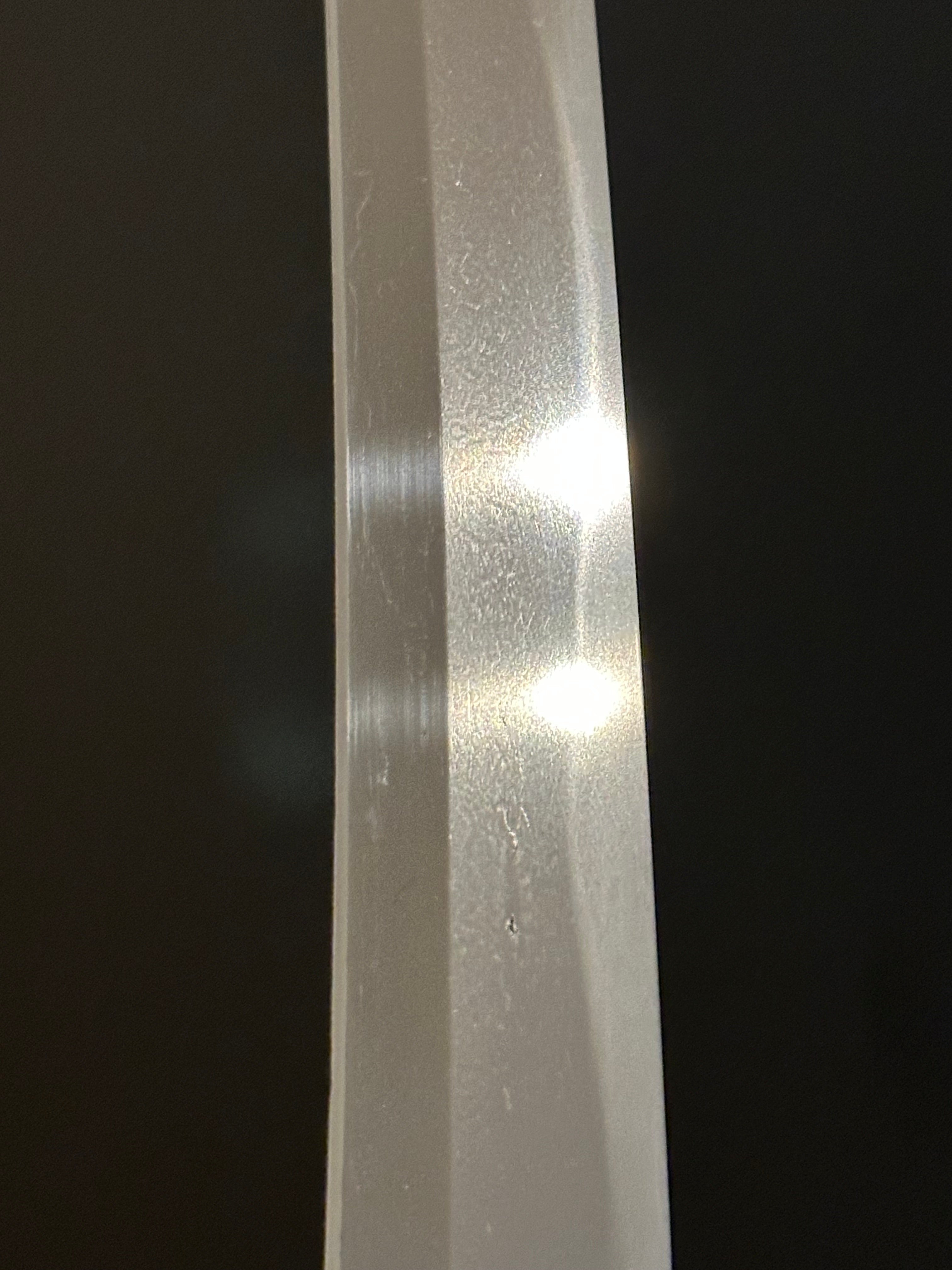
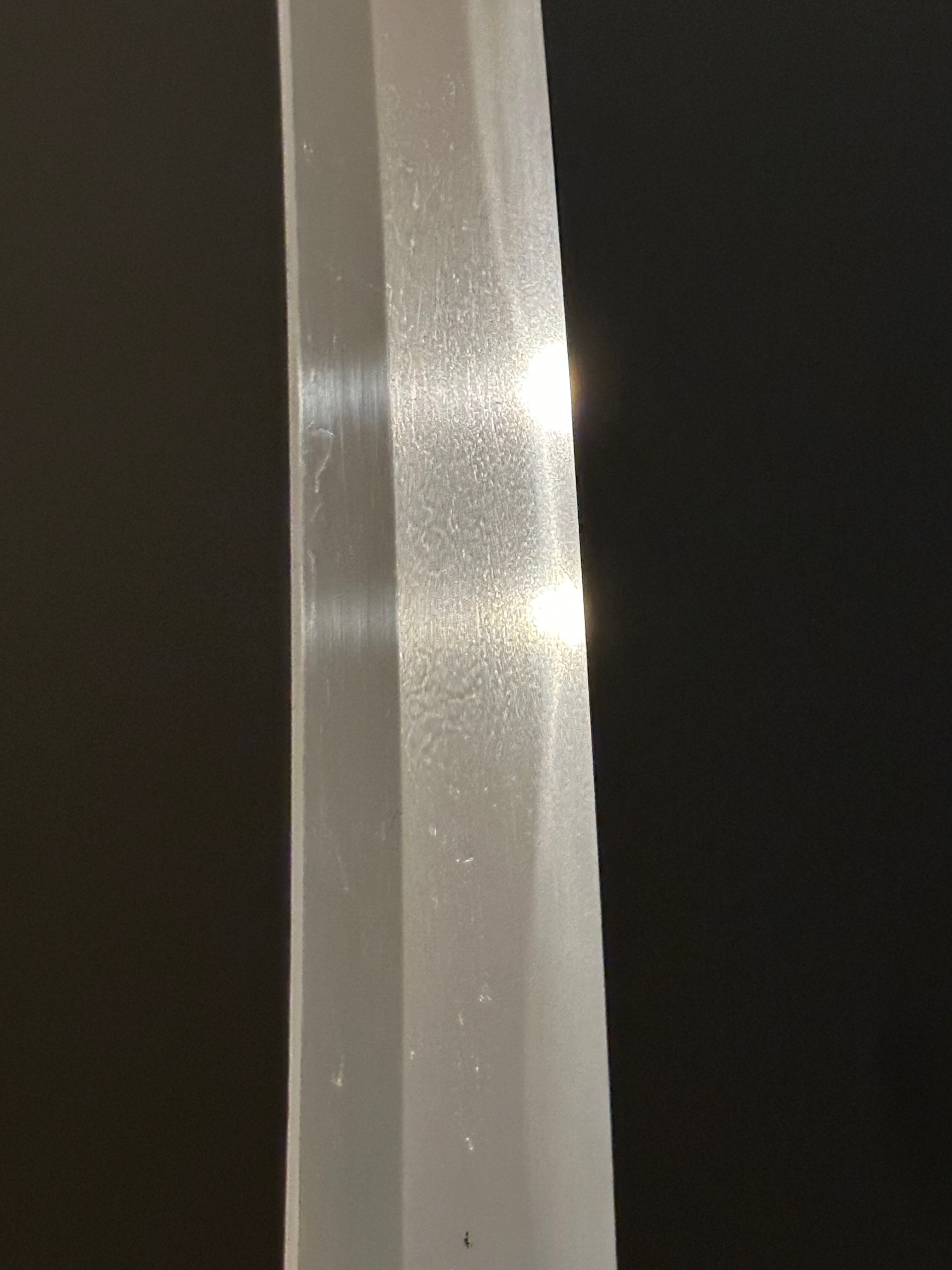
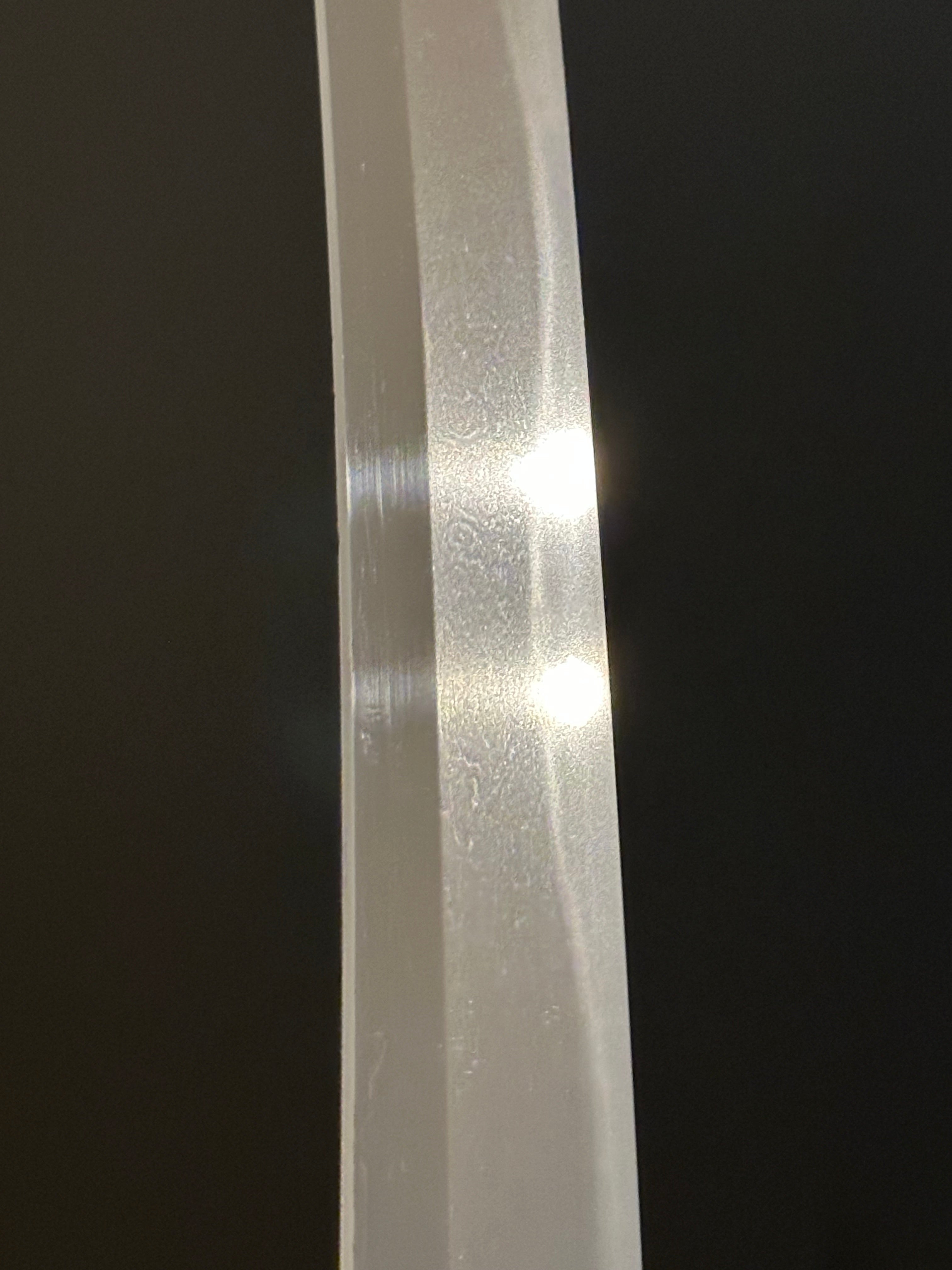
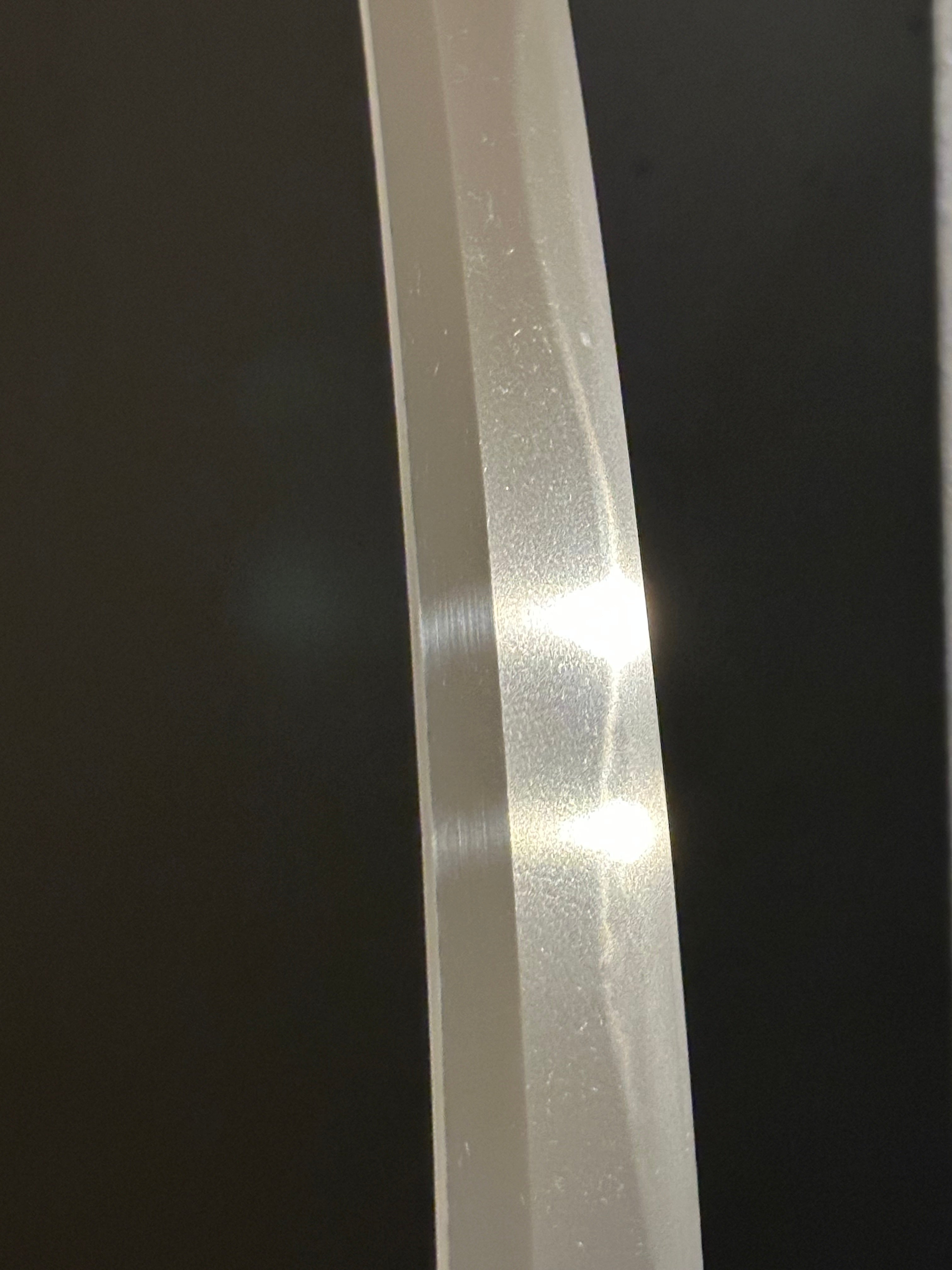
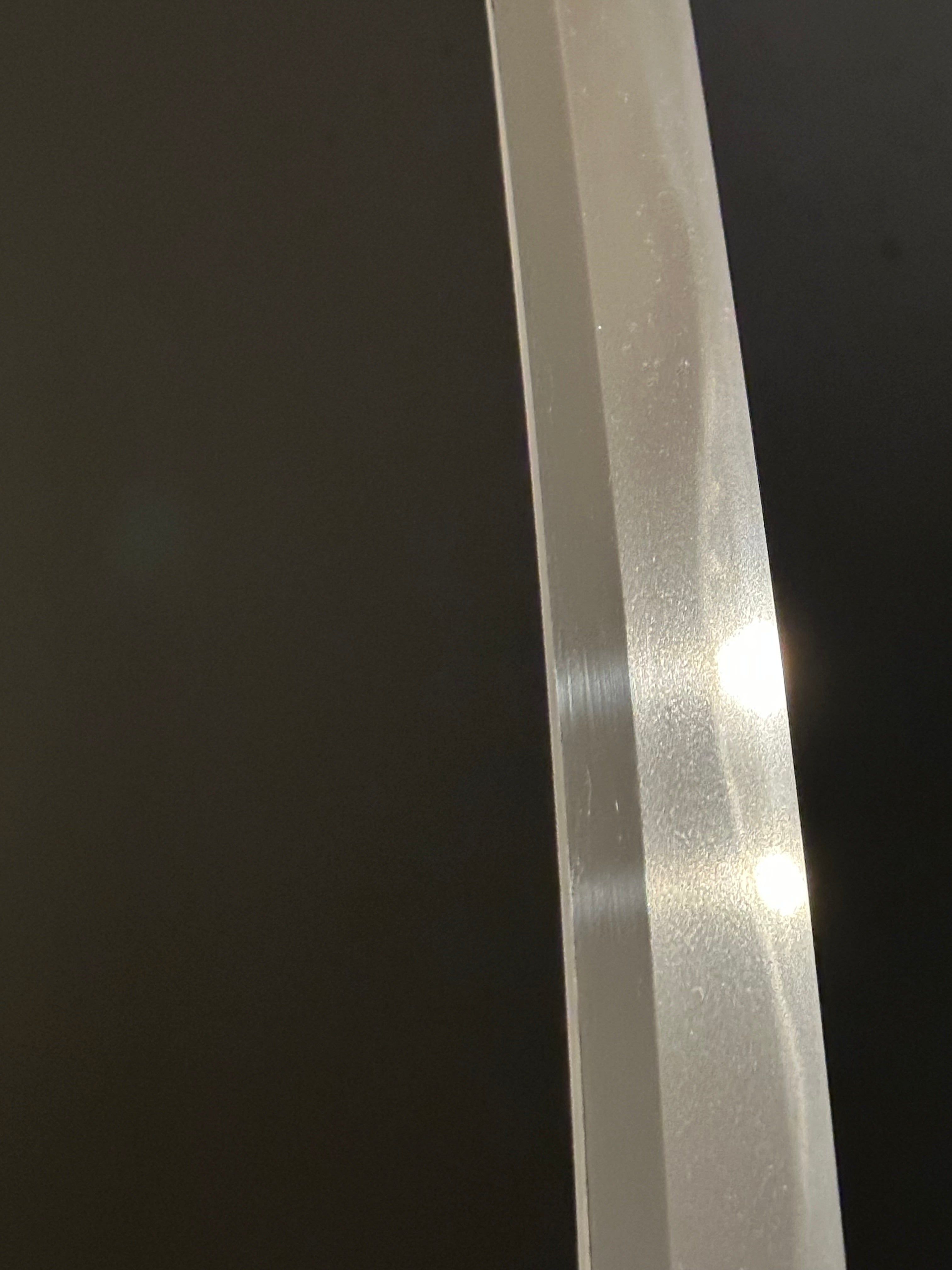
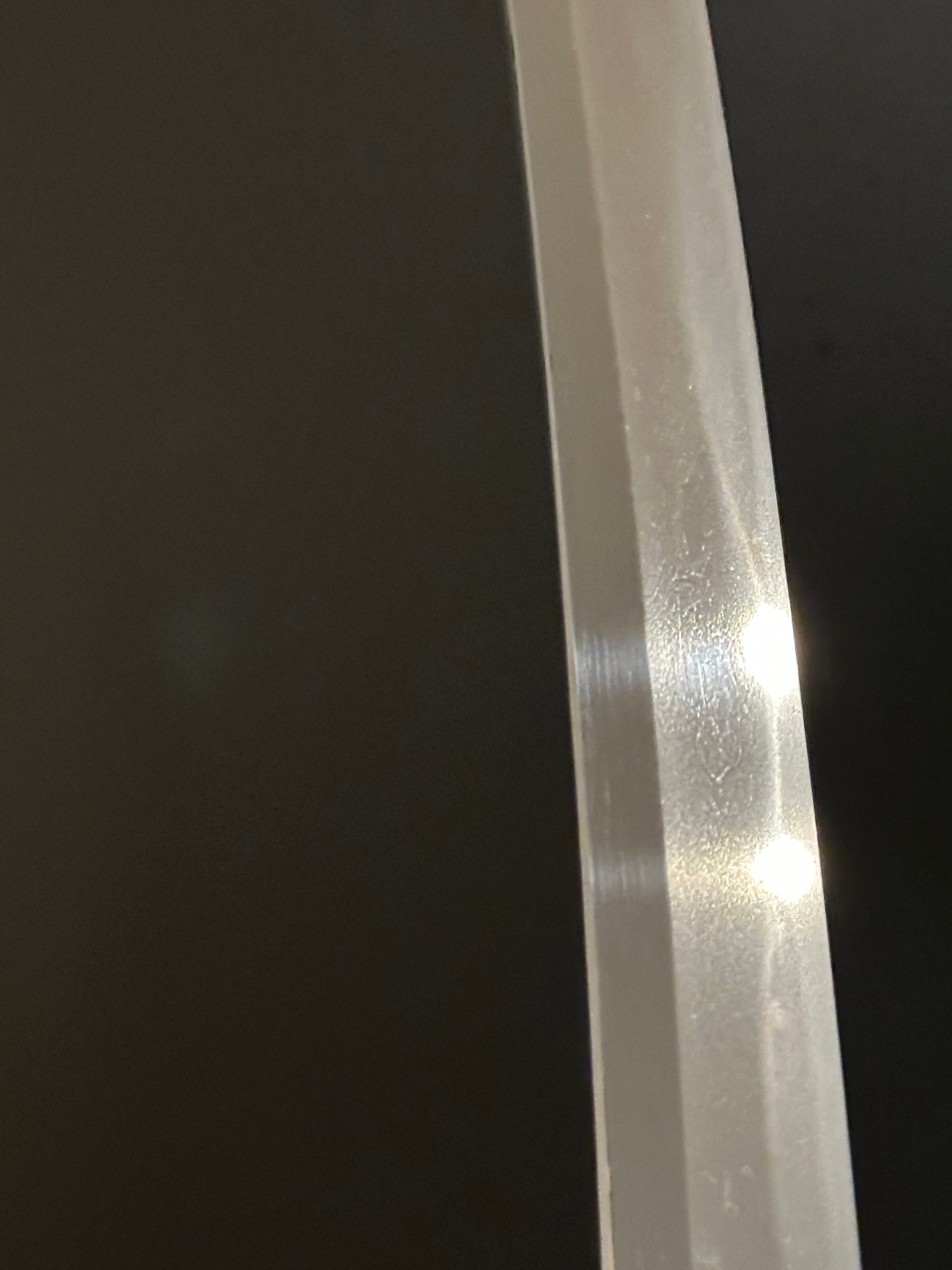
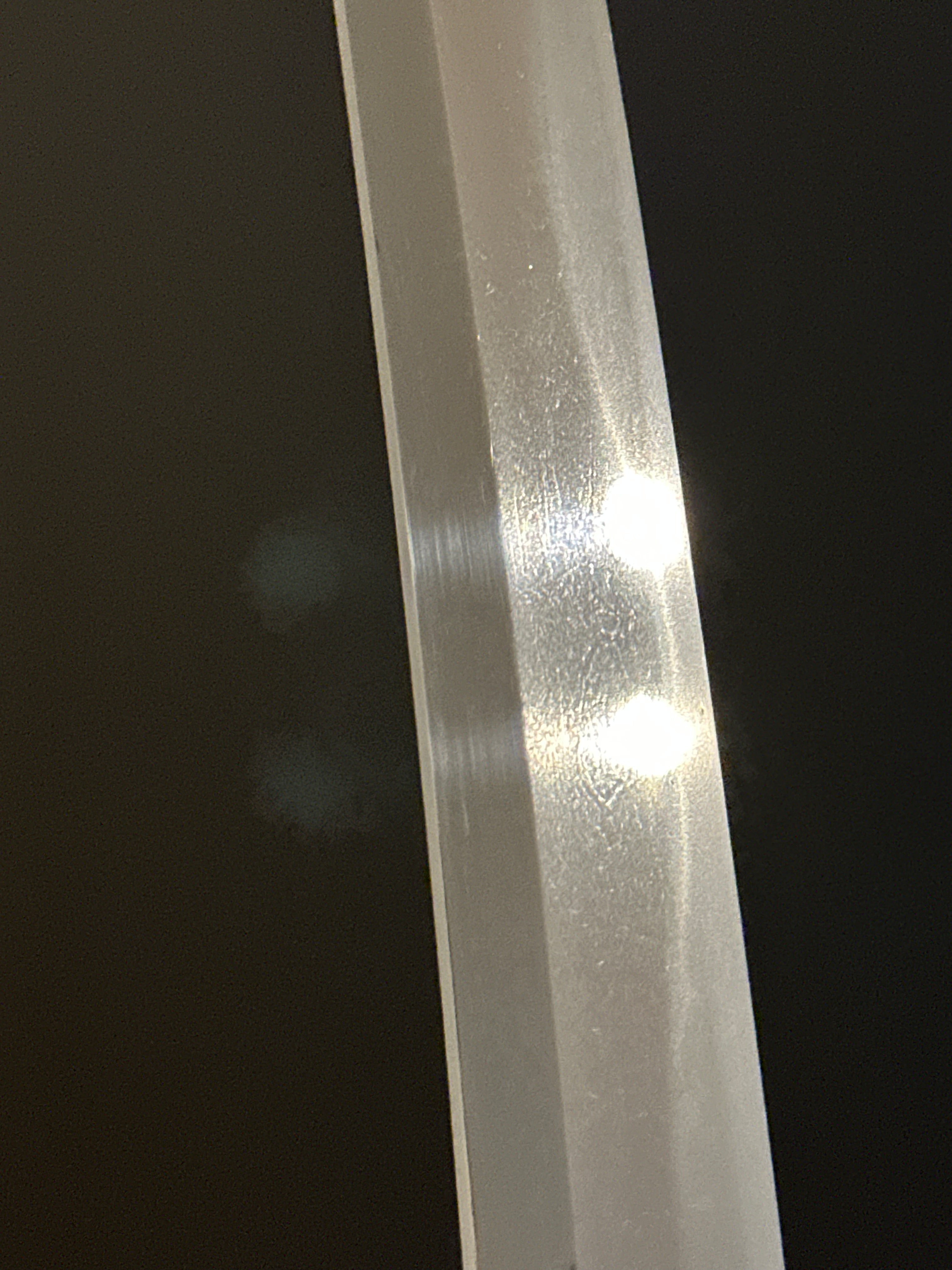
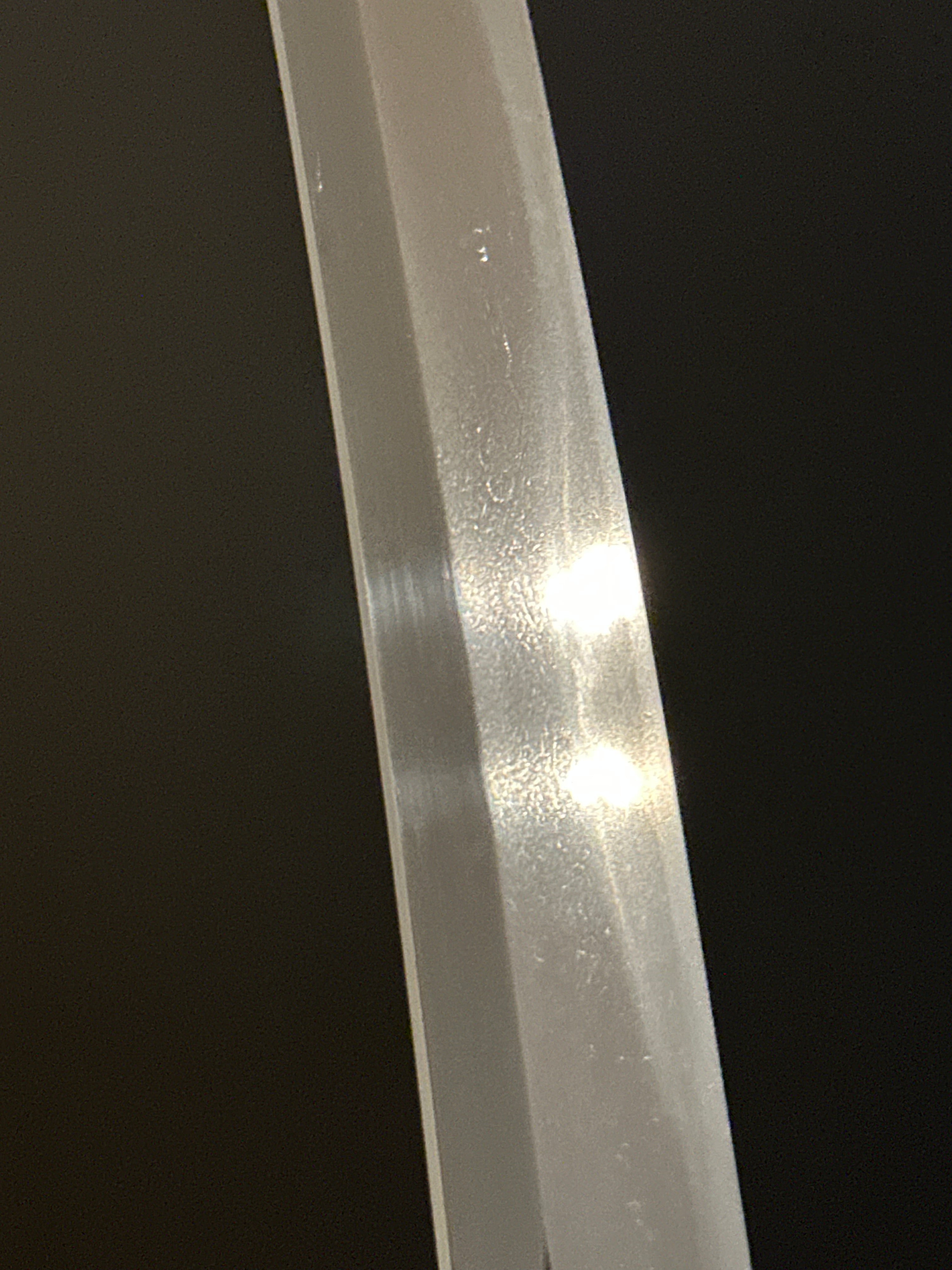
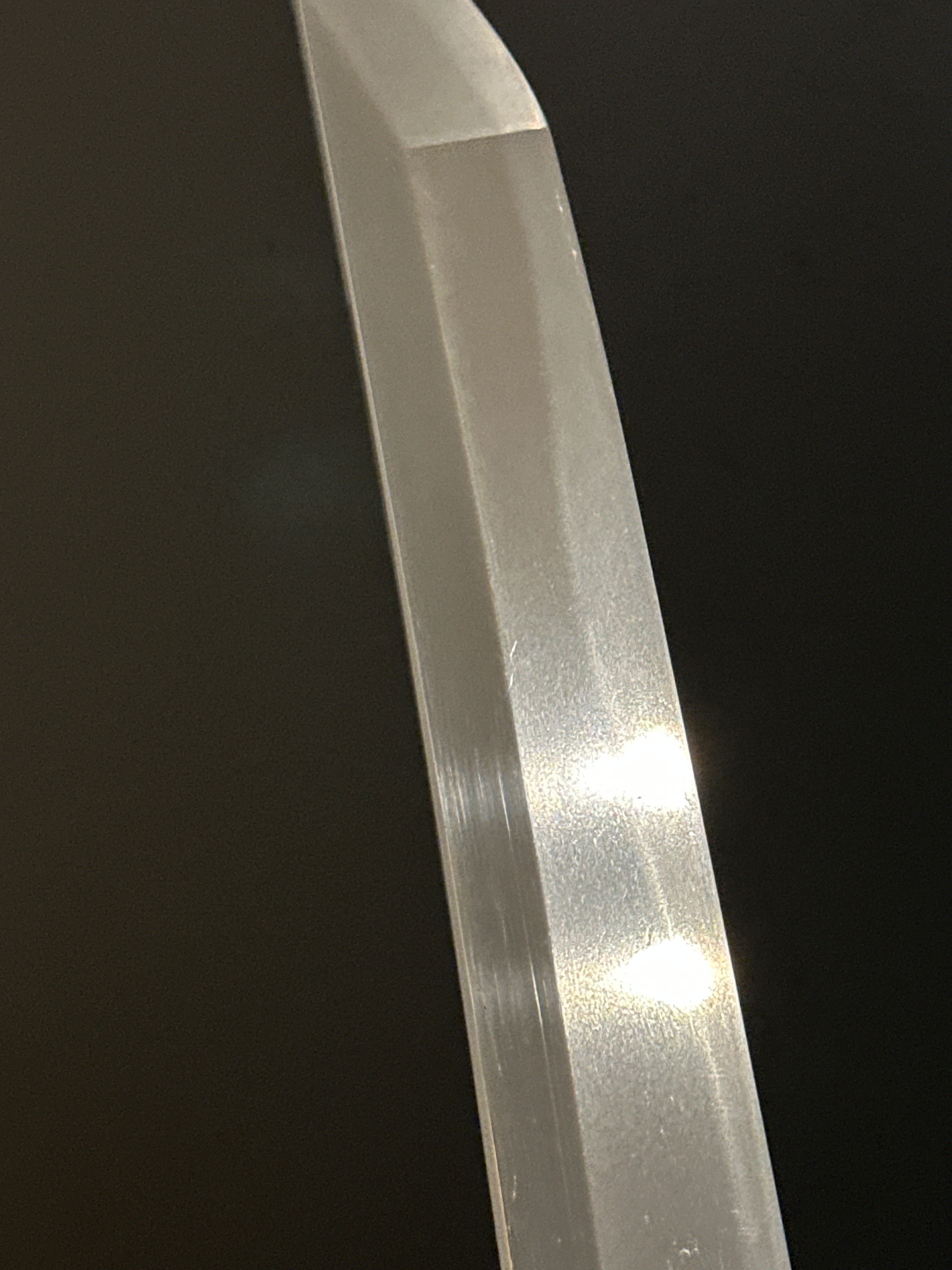
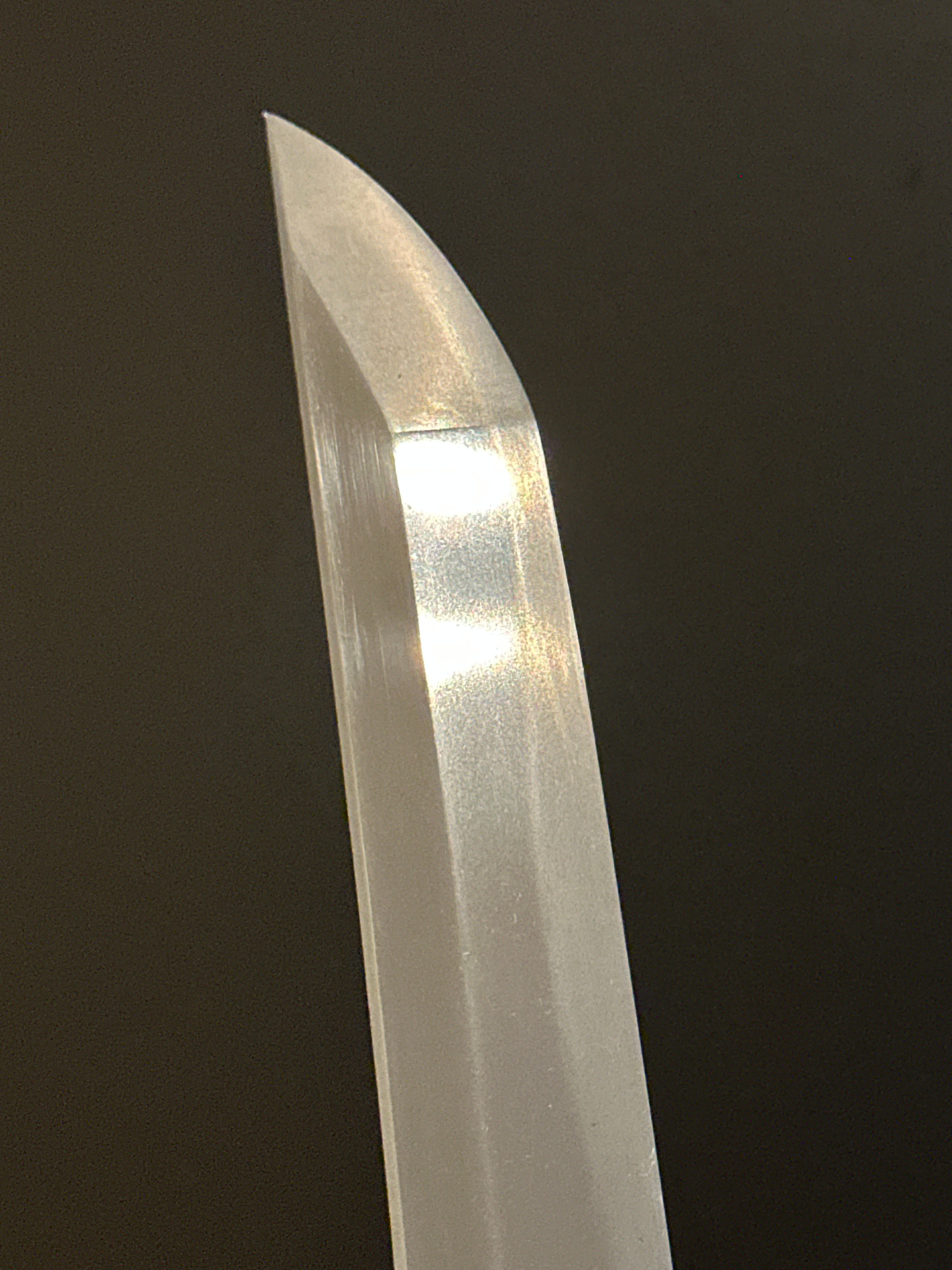
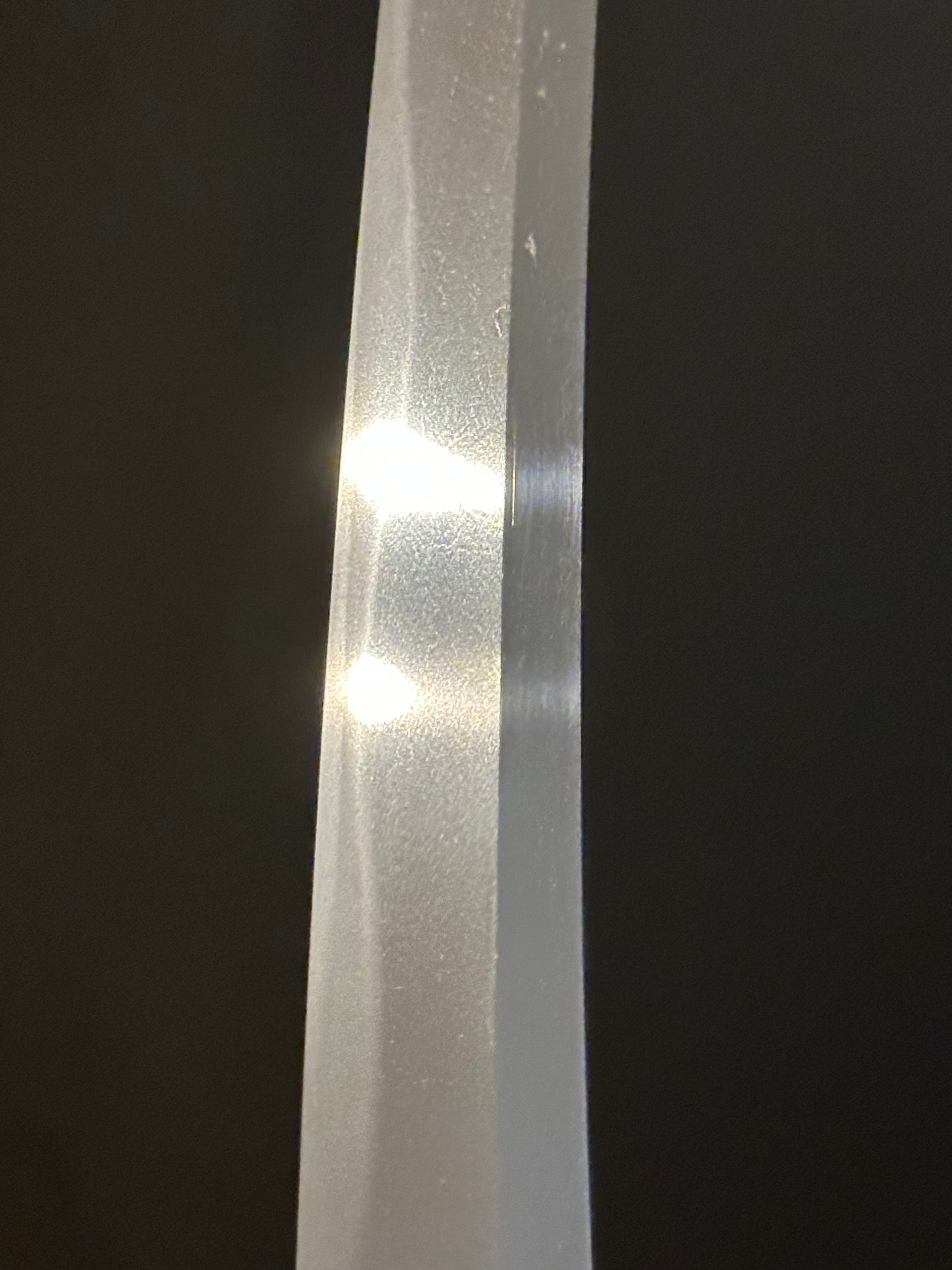
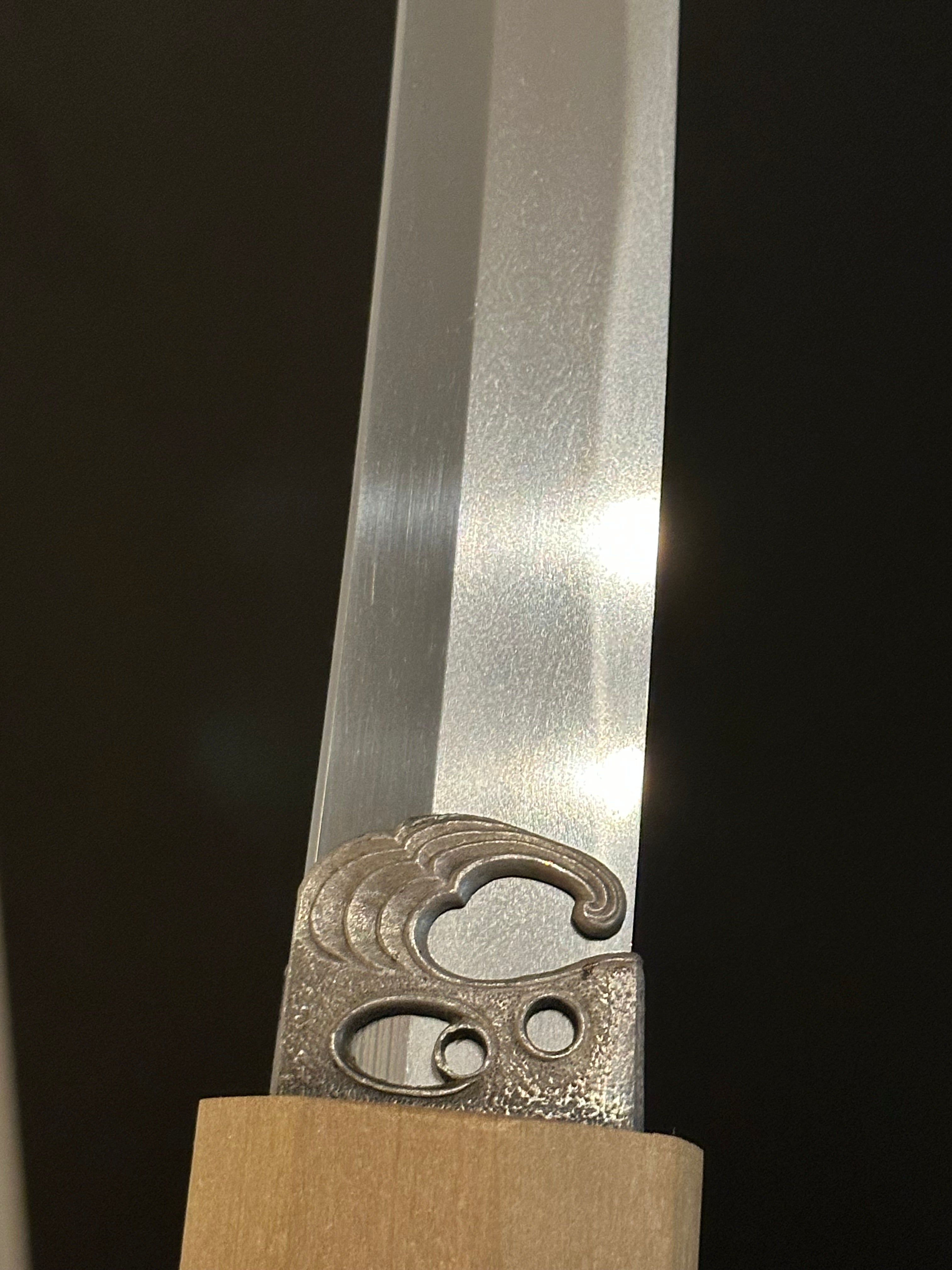
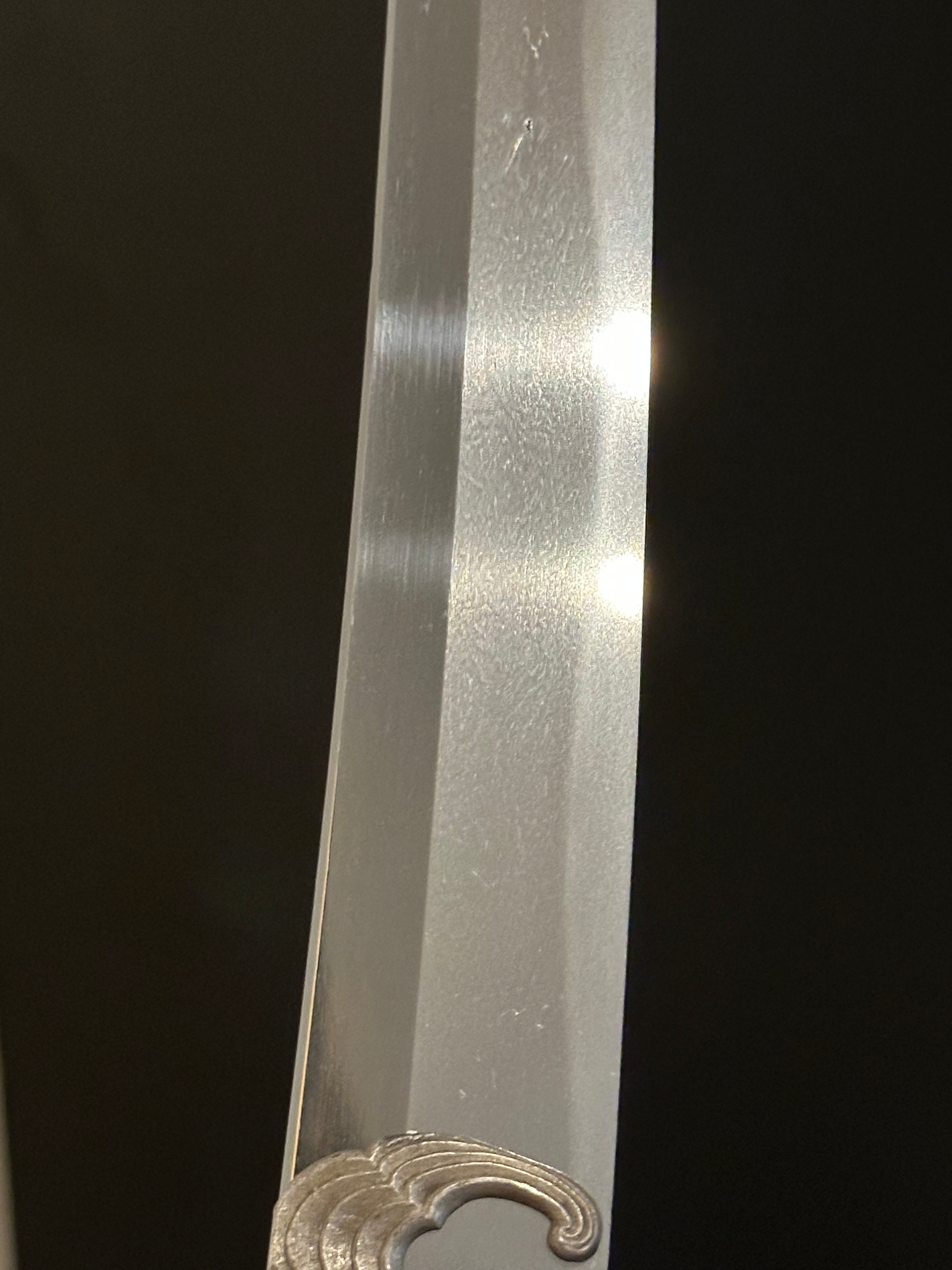
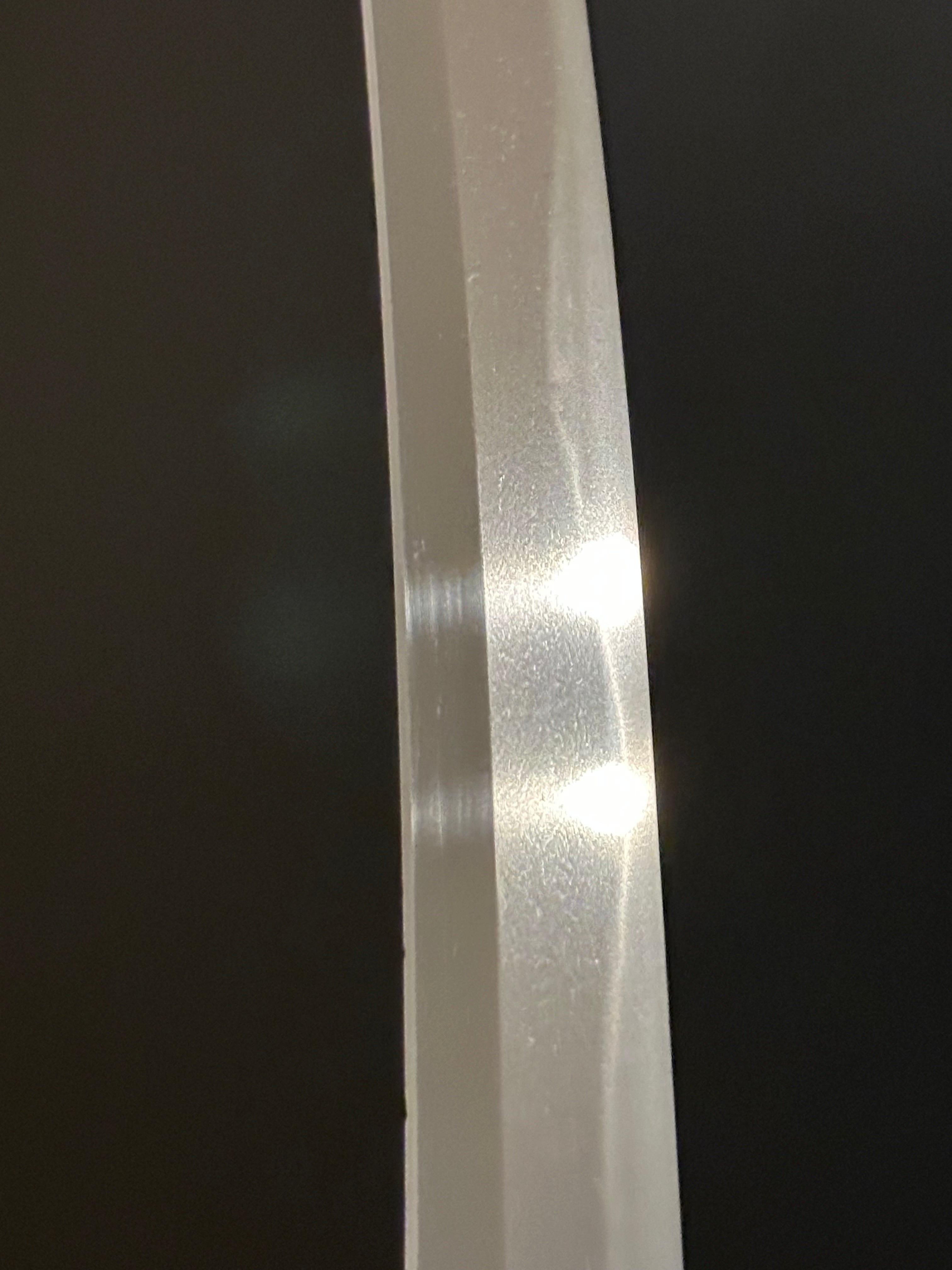
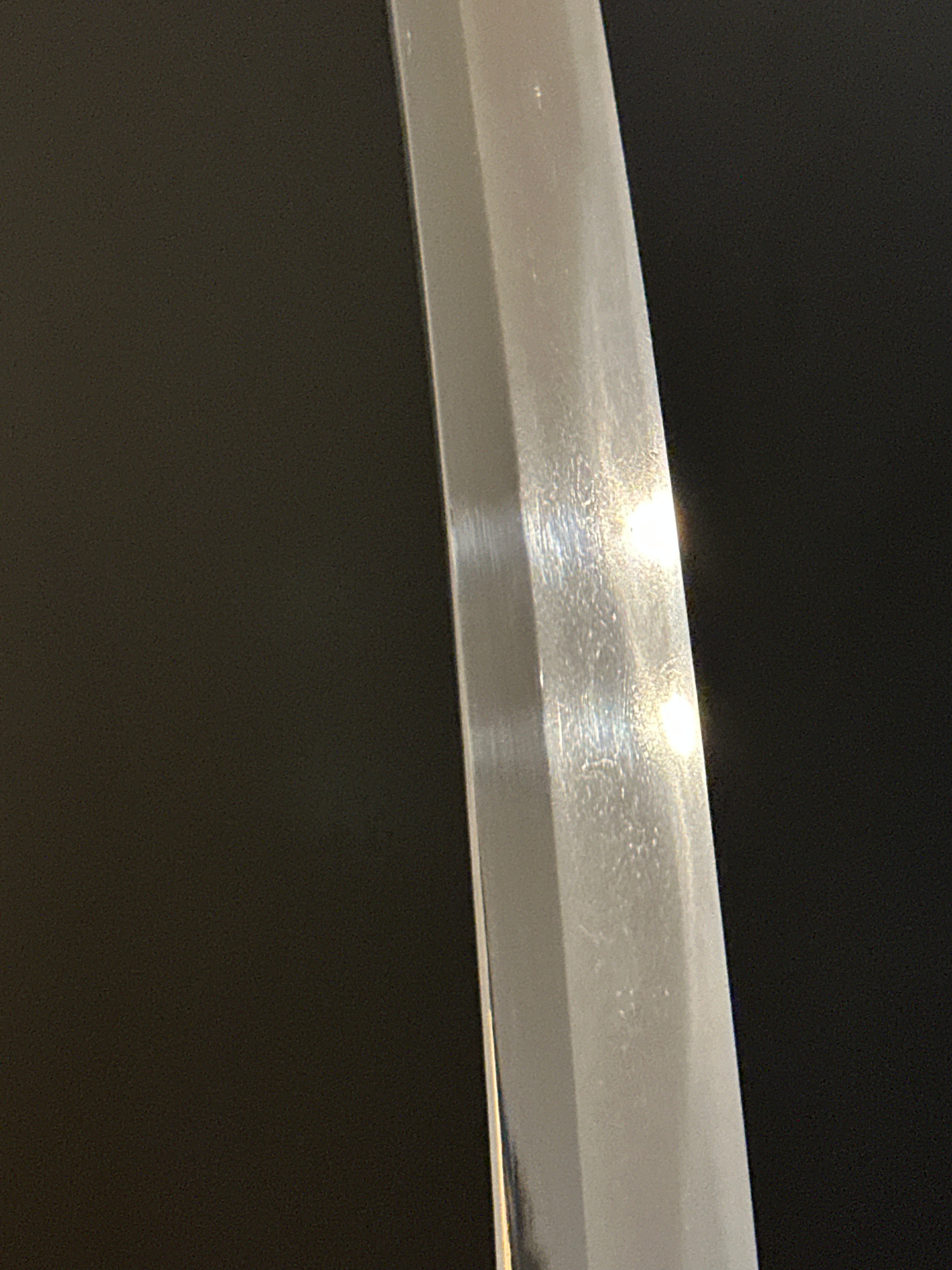
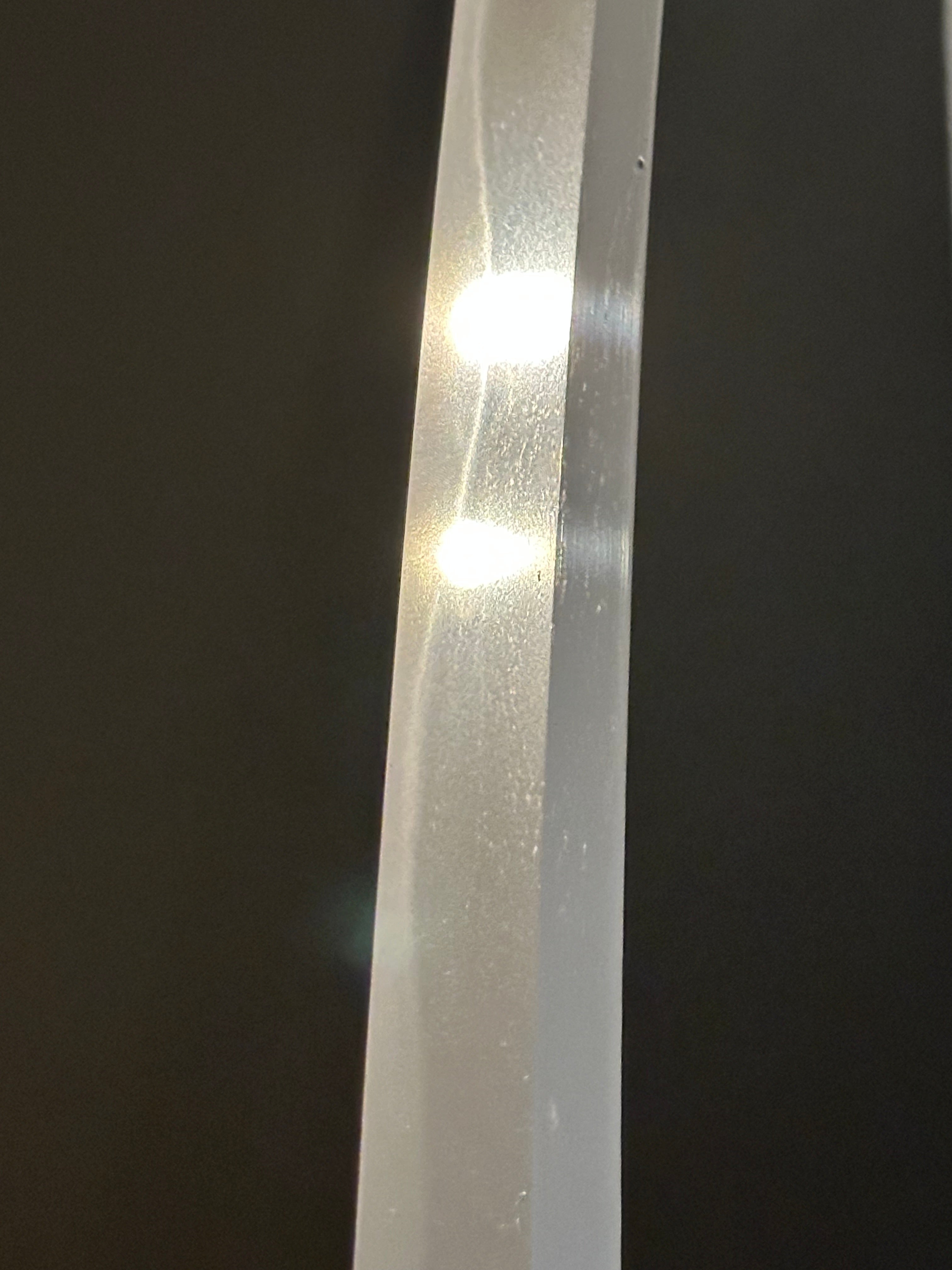
Mumei Osafune Harumitsu Katana Late Muromachi Period (Sue-Bizen) NBTHK Hozon Specifications: Nagasa: 63.4 cm (approx. 2 shaku 9 sun) Sori: 2.6 cm Motohaba: 2.86 cm Sakihaba: 1.96 cm Motokasane: 0.68 cm Sakikasane: 0.46 cm Mekugi-Ana: 2 Shinogi-zukuri, Iori-mune, Chū-kissaki Period: Late-Muromachi period around Eisho Jidai Blade Description: A stunning, unsigned katana attributed to Osafune Harumitsu, accompanied by an NBTHK Hozon certificate and mounted in koshirae. The jigane is a well-forged itame hada with mokume mixed in, of a nice appreciable level. There are areas where the hada is more dense, with mostly itame; there are some stunning parts where the sword shows nice mokume patterns, with thick ji-nie and active chikei. The hamon is a large notare-based pattern, with ko-nie and nioi forming a slightly subdued but well-controlled temper line (very similar to a wave). Within the hamon, there are ashi, ko-ashi, and yō visible. The bōshi is straight with a slight hakikake, which returns. The nakago is suriage. The blade is fitted with a silver habaki featuring a wave motif. The blade is in excellent condition; there are some slight imperfections visible on the images, including some damage to the mune (possibly Homare-kizu?). Koshirae: The blade is mounted in a late Edo period han-dachi koshirae. Total Length: 94.5 cm Tsuka Length: 24 cm Saya: Black ishime lacquer with black lacquered horn kojiri Fittings: Matching set with nanako-ji and gold edging Menuki: Shakudō with plant motif Tsuba: Iron mokkō-gata with carved decoration and gold inlay The koshirae overall is likely a Bakumatsu period piece; the tsuka has been re-wrapped, so it does not preserve the original tsuka-ito. The tsuba is considerably older than the koshirae (in my opinion).
NihontoWatchOffered by Token Oranda
This piece has sold
Get an email when a new Osafune Harumitsu piece hits the market.

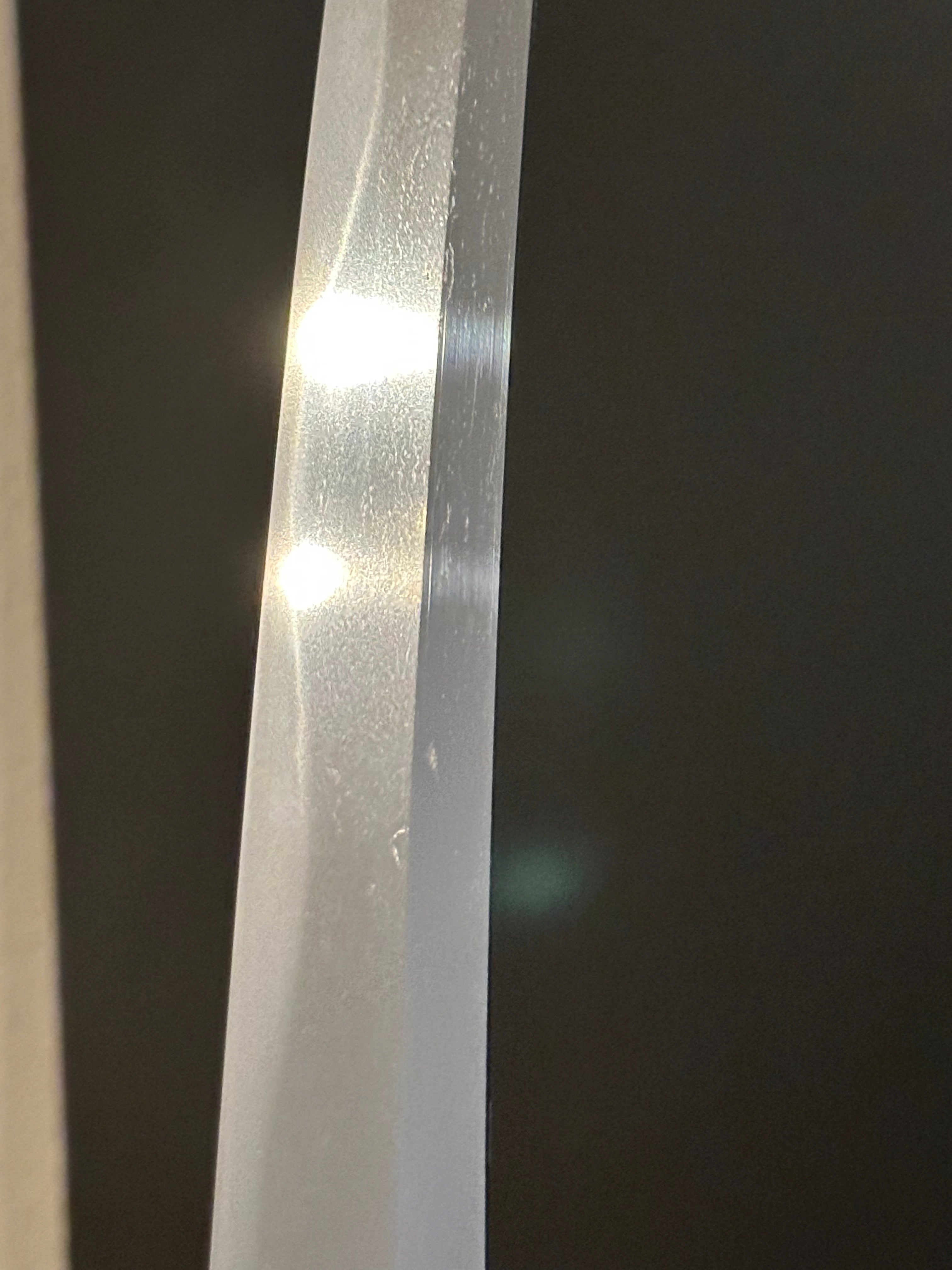
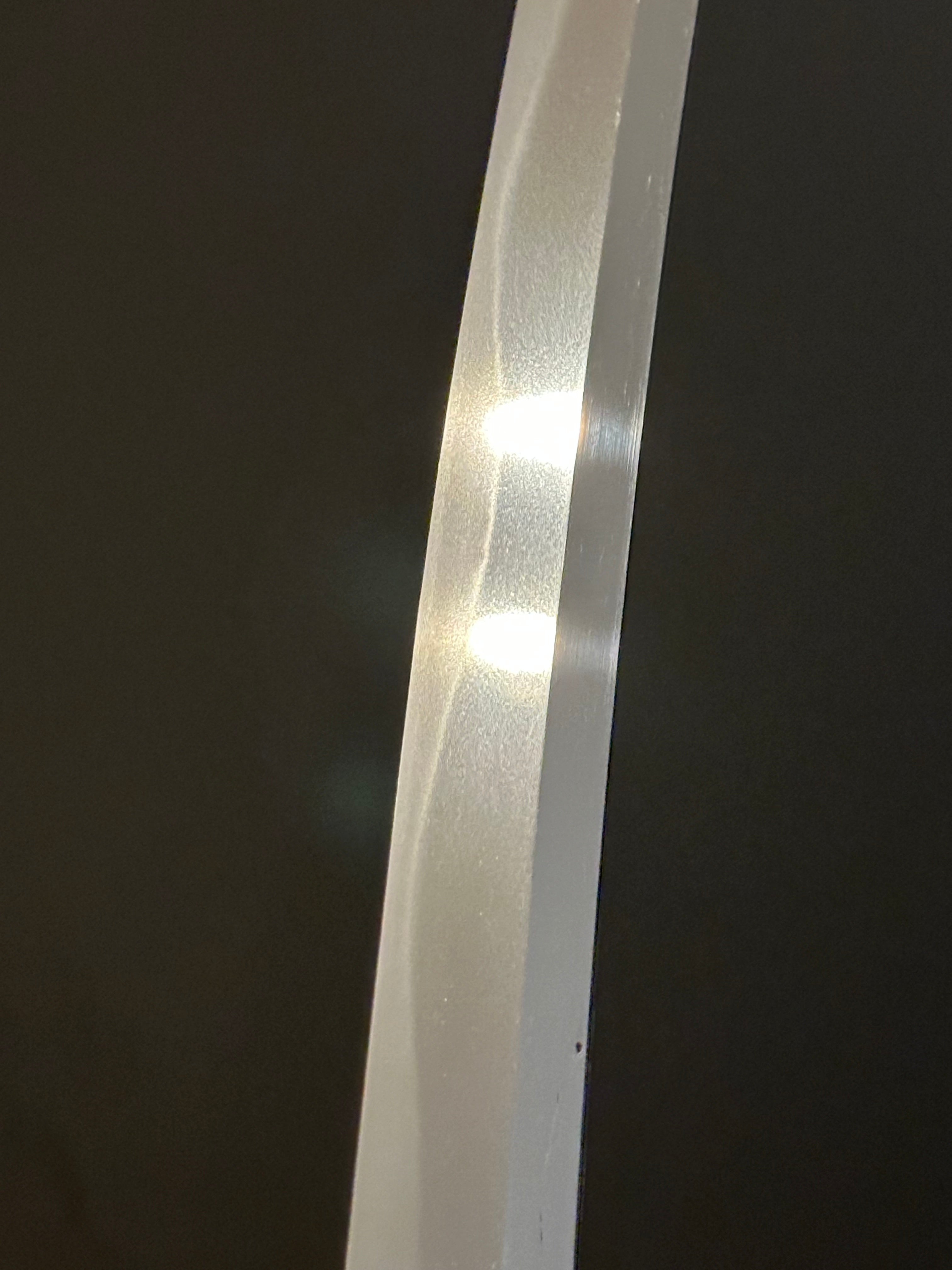
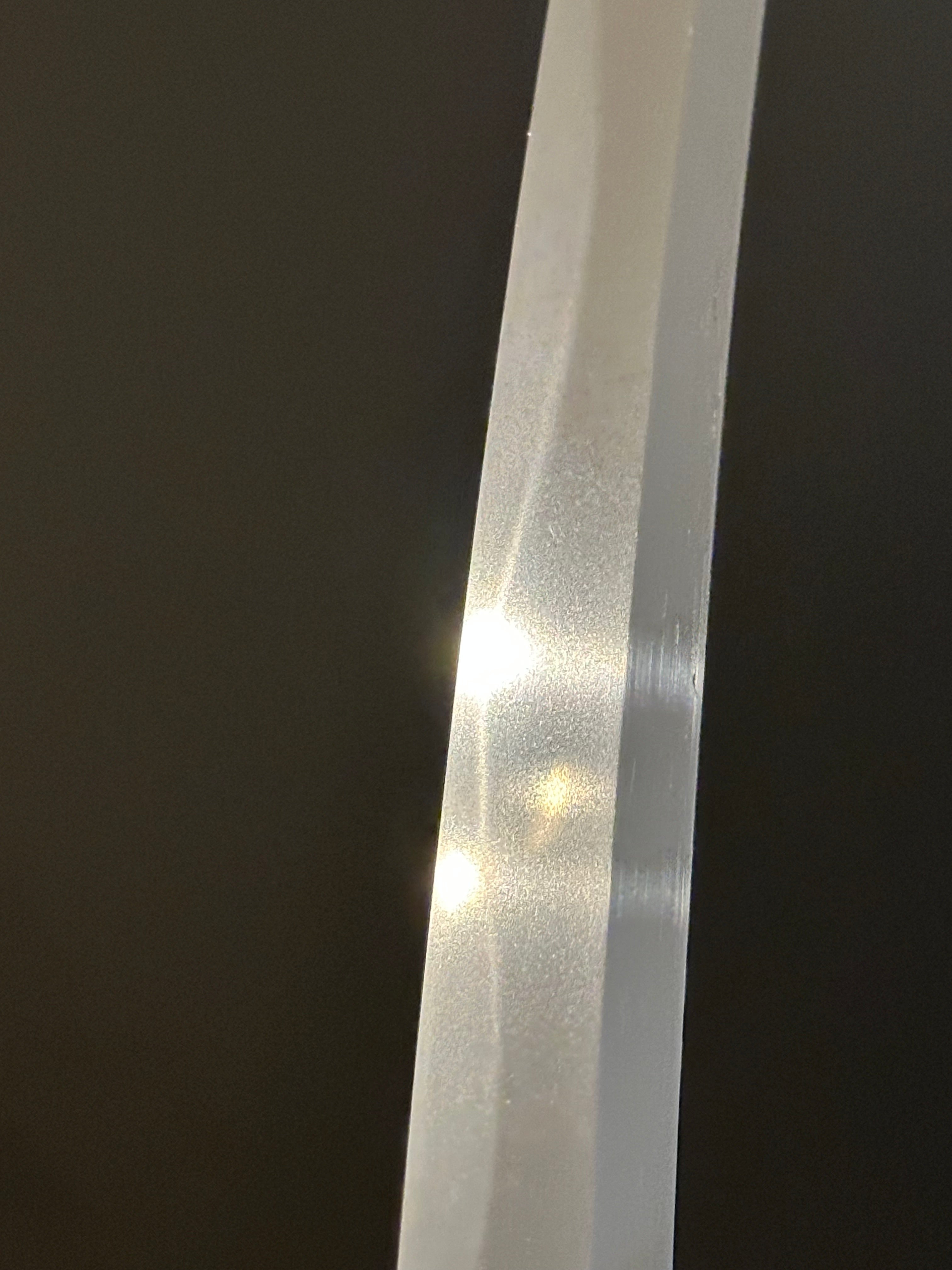
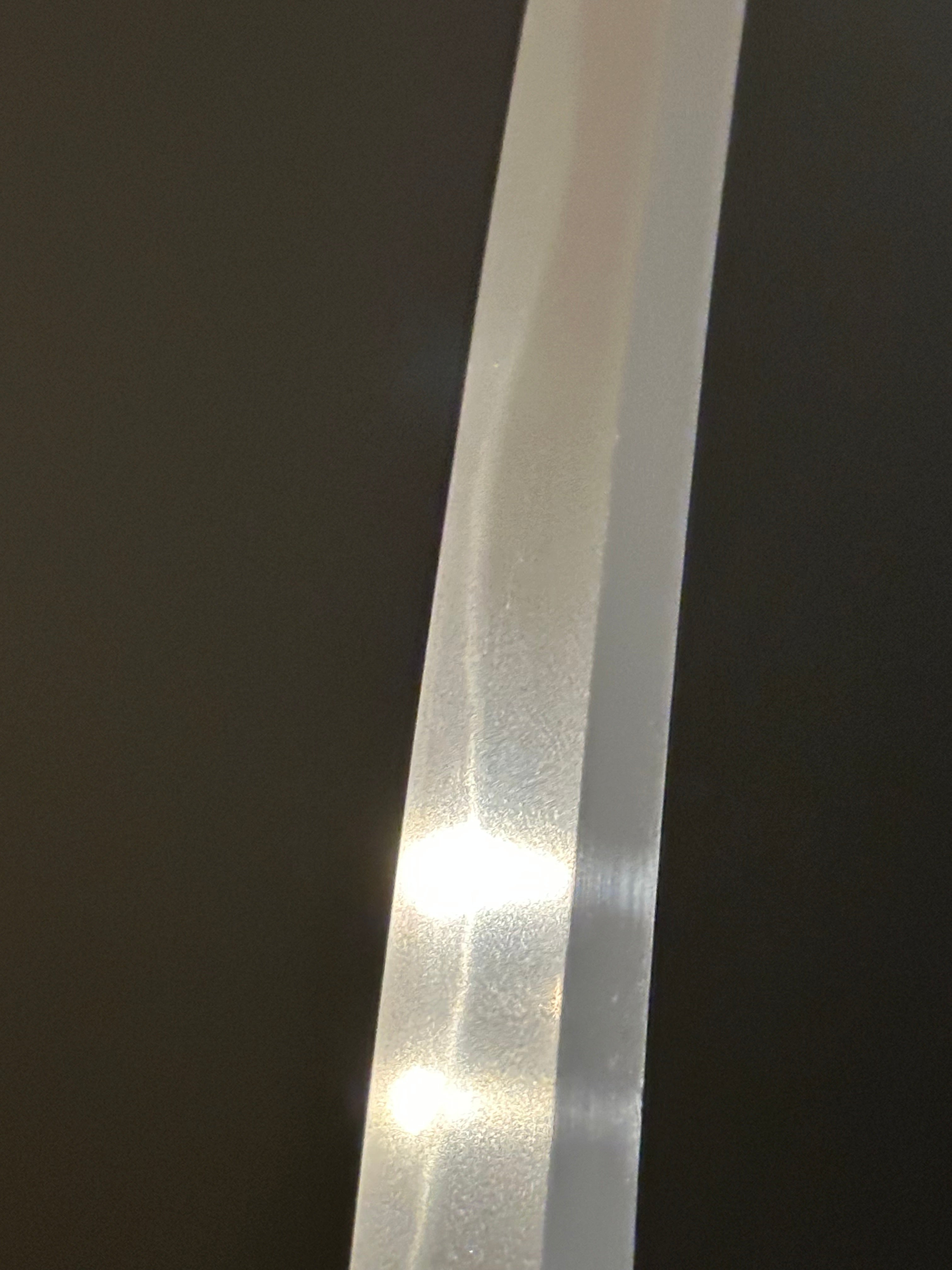
Bizen Osafune (Sue-Bizen) · Bizen · around 1521-1532
Fujishiro Jo saku · Tōken Taikan top 23%
1 piece on the market now
Osafune Harumitsu signed his blades 治光 and styled himself Jirobei-no-jo, and the published sources place him by name within a documented Sue-Bizen line: the son of Jirozaemon-no-jo Katsumitsu and the father of Jurozaemon-no-jo Harumitsu, with dated work surviving across the Eisho, Daiei and Kyoroku eras of the early sixteenth century. He belonged to the Osafune workshops in their late-Muromachi phase, the period the trade calls Sue-Bizen, when the smiths of the village worked in a shared idiom and signed with the day and month of their making. His own dated pieces are concrete: a katana of Daiei 5, a slender katana of Daiei 8, a broad katana of Daiei 4, a great naginata of Kyoroku 2, and a moroha-zukuri tanto of Daiei 7 made jointly with his father. Fujishiro rates him at the Jo-saku level.
His recognized hand is the waist-opened gunome of the Sue-Bizen group. Over a wide, strongly saki-zori uchigatana the published sources describe a broadly tempered gunome-midare with its bases opened, the koshi-no-hiraita pattern that gives the row its rhythm, mixed with slightly pointed elements and with faint yo appearing within the ha. On the slender Daiei 4 katana and on the joint tanto that opened pattern breaks further, the temper heads splitting to form the fukushiki midare the sources name as the structure peculiar to the group, with ko-ashi and yo and sunagashi running through. It is a quieter, more legible version of the same midare that the Sukesada masters were carrying to a brilliant pitch in the same decades, and it is the first thing by which his blades are known.
The forging is an itame hada, on the broad katana and the naginata standing in the grain with ji-nie adhering, on the finer blades a ko-itame packed tightly and thoroughly consolidated, mixed at times with ko-mokume. The naginata carries the fullest work of all, its ji-nie thick and chikei entering, the large gunome-midare richly covered with nie so that yubashiri and tobiyaki appear, sunagashi gathers in places, kinsuji enters and the mune is tempered. The boshi follows the temper: a midare-komi turning back, on the broad katana deeply with a shimaba at the point and an ichimai-like return, on the tanto in ko-maru, on the naginata with a pointed tendency. There is no utsuri in his work, and the kantei rests instead on the opened gunome, the tightly forged steel and the nie that gathers most strongly on his fullest blades.
The published sources draw more than one face within this single hand. On the broad Daiei 5 katana they read the koshi-opened gunome as abundant in variation and, with the blade's good preservation, call it 「同作中の出色の一口」[[c:1]], an especially outstanding example among the smith's works. On the slender Daiei 4 katana they find the temper of a smaller pattern than is typical for him and note that it 「応永備前風が遺存」[[c:2]], preserving something of the older Oei-Bizen manner, so that the slim, tachi-like sugata reaches back a century into the Bizen past. The Daiei 8 katana shows yet another facet, a broad suguha in which yo are engaged, its ko-itame strongly felt, which the sources call 「地刃健全な治光の佳作」[[c:3]], a fine work of Harumitsu sound in both ji and ha. The naginata of Kyoroku 2 carries his boldest intention, and the sources observe that he also made katana of broad width and emphatically flamboyant temper, so that the two together let one glimpse the aim behind his style.
Harumitsu is best understood beside his father. The joint tanto's commentary counts Katsumitsu among the most skillful Sue-Bizen masters alongside Munemitsu and Tadamitsu, and singles him out as the smith who 「互の目の中に丁子を交えて一段と華やかな出来口」[[c:4]], mixing choji into the gunome for a distinctly more florid and brilliant result than the plainer compound gunome general to the group. Harumitsu works within that broader group manner rather than at his father's most ornate pitch, but the published sources judge the great naginata, in ji and ha alike, a typical example of the output of the school, and they value the father-and-son joint signature as documentary material of its own. The same sources record that large naginata are not infrequently met with in Sue-Bizen, the famous one being the piece Katsumitsu forged with Yosaburozaemon-no-jo Sukesada for Ukita Noie, the lord of Bizen, which sets Harumitsu's own stout naginata within a recognized local type.
Harumitsu's surviving designated record is small and entirely signed, five blades among the Important Sword sessions from the 27th through the 44th, with no National Treasures among them, and a designation factor that places him in the middle ranks of Osafune rather than at its summit. None carries a recorded daimyo provenance, and only one has a holder of record, an institutional collection. The blades range across the wide uchigatana, the slender saki-zori katana that reads as a tachi, the stout great naginata and the moroha-zukuri tanto signed with his father, so that the small body of work shows the full breadth of his forms. He is the kind of named Sue-Bizen hand a collector encounters from time to time rather than rarely, the joint Katsumitsu-Harumitsu tanto the most documentarily interesting of the group and the great naginata the most striking, the published sources reserving for the best of them the phrase 「末備前中傑出の出来映え」[[c:5]], an outstanding level of workmanship among the works of Sue-Bizen.
Where Harumitsu stands among comparable artisans: across all of nihontō, and within tradition, era, and period. The tiers (Foremost · Leading · Major · Notable) weigh official designations from the NBTHK and Japan's Agency for Cultural Affairs, together with historical honors of lasting repute such as the Sansaku and Meibutsu-chō.
Select a lens to see how it's measured.
Years he was demonstrably active, proven by signed-and-dated blades
Bizen-den · Bizen
Phase: Sue-Bizen末備前· 1441–1596
188 pieces on the market now
The last great chapter of Osafune unfolds in the Eisho and Tenbun years of the late Muromachi, when the riverside workshop turned its accumulated craft toward an age of constant war. Where Oei-Bizen had looked backward, reviving the tachi shape and the choji temper of the Kamakura masters under Yasumitsu and Morimitsu, Sue-Bizen faces forward into Sengoku demand. The leading hands carry the same family characters one generation further: the Sukesada group, headed by Yosazaemon-no-jo Sukesada and the Hikobee-jo Sukesada said to be his father, alongside Katsumitsu (often Jirozaemon-no-jo), Munemitsu, Tadamitsu of the Heiroemon-jo line, and the Kiyomitsu smiths Magoemon-no-jo and Gorozaemon-no-jo. The setsumei draw a sharp line through their output. Commissioned blades, chumon-uchi, were signed with full zokumyo, dated, and frequently inscribed with the name of the ordering party, as on the Katsumitsu and Sadamitsu naginata of Meio 8 made for the Miyake of Kojima, a house that fed into the Ukita. Below them ran the bulk trade of kazu-uchimono, the arms that supplied the warring provinces, and it is the chumon-uchi masters that the designations preserve. What the steel does in this window is distinct from every earlier Osafune register. The shape is the uchigatana: wide mihaba with thick kasane, pronounced sakizori, an extended chu-kissaki or o-kissaki, and a short nakago suited to the katate-uchi one-handed draw, a body unlike the koshizori tachi of Ko-Osafune or the broad Nanbokucho profile of Soden-Bizen. The forging tightens into ko-itame over which a midare-utsuri stands faintly rather than vividly, weaker than the bright reflection of the founding generation.
The signature temper is the open-waisted koshi-no-hiraita gunome, splitting at the heads into fukushiki compound midare and mixed with togariba and choji; it is nioi-based with ko-nie and a bright nioiguchi, with ashi, yo, kinsuji and small tobiyaki worked through. Against this, Soden-Bizen had pushed Soshu nie and notare, while the founders had tempered flamboyant choji over a vivid utsuri. Two specialties branch off the gunome base: the Kiyomitsu and Tadamitsu suguha, calm and tightly forged, and the hitatsura of high-tempered pieces with long muneyaki and yubashiri, seen in the warlord-smiths Akamatsu Masanori and Ishikawa Yukihisa. To kantei a Sue-Bizen blade is to read the body first and the temper second. The compact uchigatana sugata with thick kasane and a short tang fixes the late-Muromachi date; the faint utsuri over dense ko-itame keeps it in Bizen; the open-waisted compound gunome names the group. The masters then separate by hand: Katsumitsu is set apart by the abundant choji he folds into the gunome, yielding a more florid, brilliant dekiguchi than his peers; Tadamitsu and the Kiyomitsu smiths are read out by their suguha, with Magoemon-no-jo's itame standing in mokume to distinguish his ground. The cutting reputation is documented directly, as on the Hikobee-jo Sukesada katana of Keicho 5 carrying a tameshi inscription naming the tester Ichihara Hachibee. Provenance threads through the supplementary signatures: Masanori's reward blades cut for his retainers, the Miyake names tying the workshop to the Ukita, and the Shinjuro Sukesada whose few large works may have ended in the Tensho flood. The horimono carried from the mainline, bonji with rendai, Fudo Myoo, and shrine dedications, persist on these blades as a final mark of the line. Learn more →
| Smith | Era | Designated |
|---|---|---|
| Mitsutada光忠 | 1238-1239 | 60 |
| Nagamitsu長光 | 1274-1304 | 254 |
| Kagemitsu景光 | 1303-1336 | 142 |
| Sanenaga眞長 | 1299-1309 | 68 |
| Kanemitsu兼光 | 1323-1370 | 235 |
Bizen in the Muromachi period
War at home and trade abroad made Muromachi Bizen the busiest forge region in Japan: a century of Sengoku demand after the Ōnin War, and export missions to Ming China carrying blades by the tens of thousands.
Certifies a genuine blade worth preserving: a signature confirmed correct, or, if unsigned, an era, province, and school that the NBTHK can reliably identify.
The NBTHK (Nihon Bijutsu Tōken Hozon Kyōkai, the Society for the Preservation of Japanese Art Swords) is a public-interest incorporated foundation founded in 1948 and supervised by Japan’s Agency for Cultural Affairs (Bunkachō); it is based at the Japanese Sword Museum in Tokyo. Its expert panels physically examine each submitted work (shinsa) and issue a certificate (kanteishō) ranking it by artistic and historical merit. NBTHK papers are the most widely recognized standard of authentication for Japanese swords and fittings.
NBTHK official site
Returns accepted within 14 days after the package is received. Return shipping paid by the customer if cancellation is preference-based; paid by Token Oranda if there are condition issues on arrival. Full refund once the returned product arrives unused. EU customers have full European rights including a guaranteed 14-day return period.