The Osafune Yokoyama family of the Shinshinto period is said to have begun with Sukehira, who was the fifth generation counting from Sozaemon Sukesada of the Keian era in the early Edo period, and later received the title of Ise no Kami. Sukehira's second son, Sukenaga, who succeeded the family line, received the title of Kaga no Suke and carved the kiku-ka mon and "Ichi" on the nakago. Some of his works also include the soemei "56th generation descendant of Tomonari," and he demonstrated outstanding skill among Bizen smiths of the same period. Sukeharu was a swordsmith of the same family active during the same period as Sukenaga, with dated works from the Tenpo, Koka, and Kaei eras; works exist where he, like Sukenaga, also carves "56th generation descendant of Tomonari."
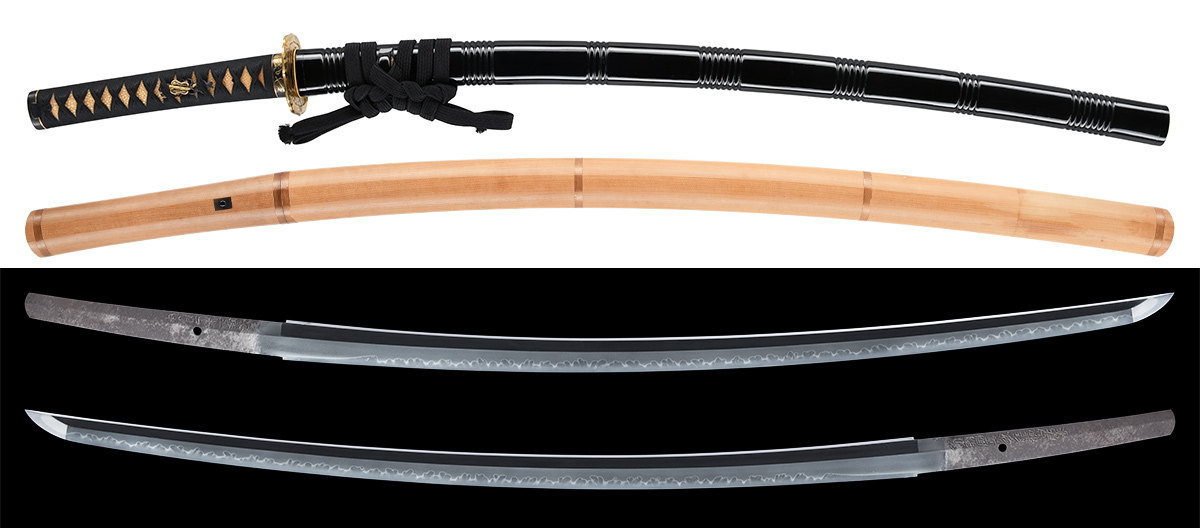
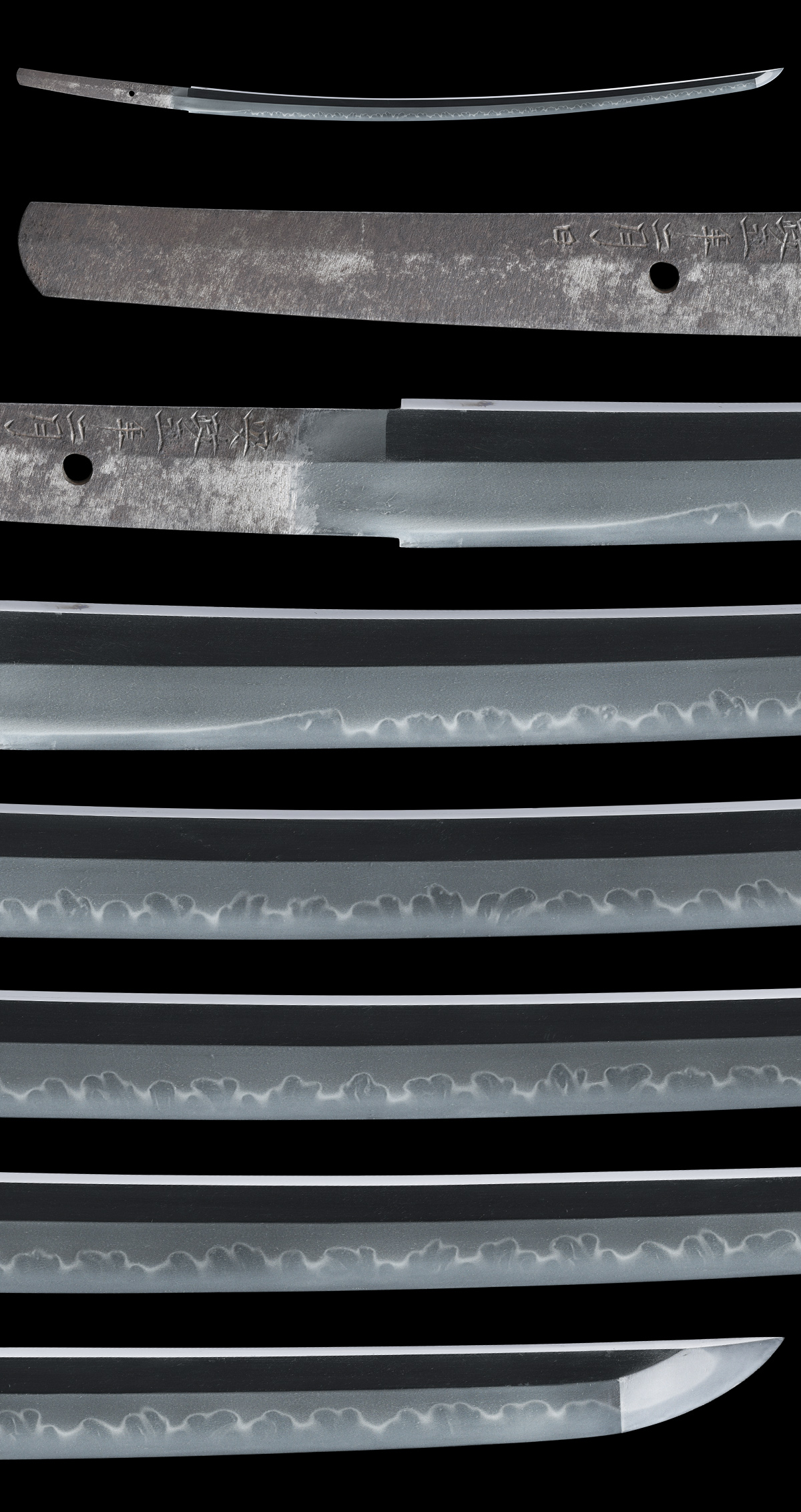
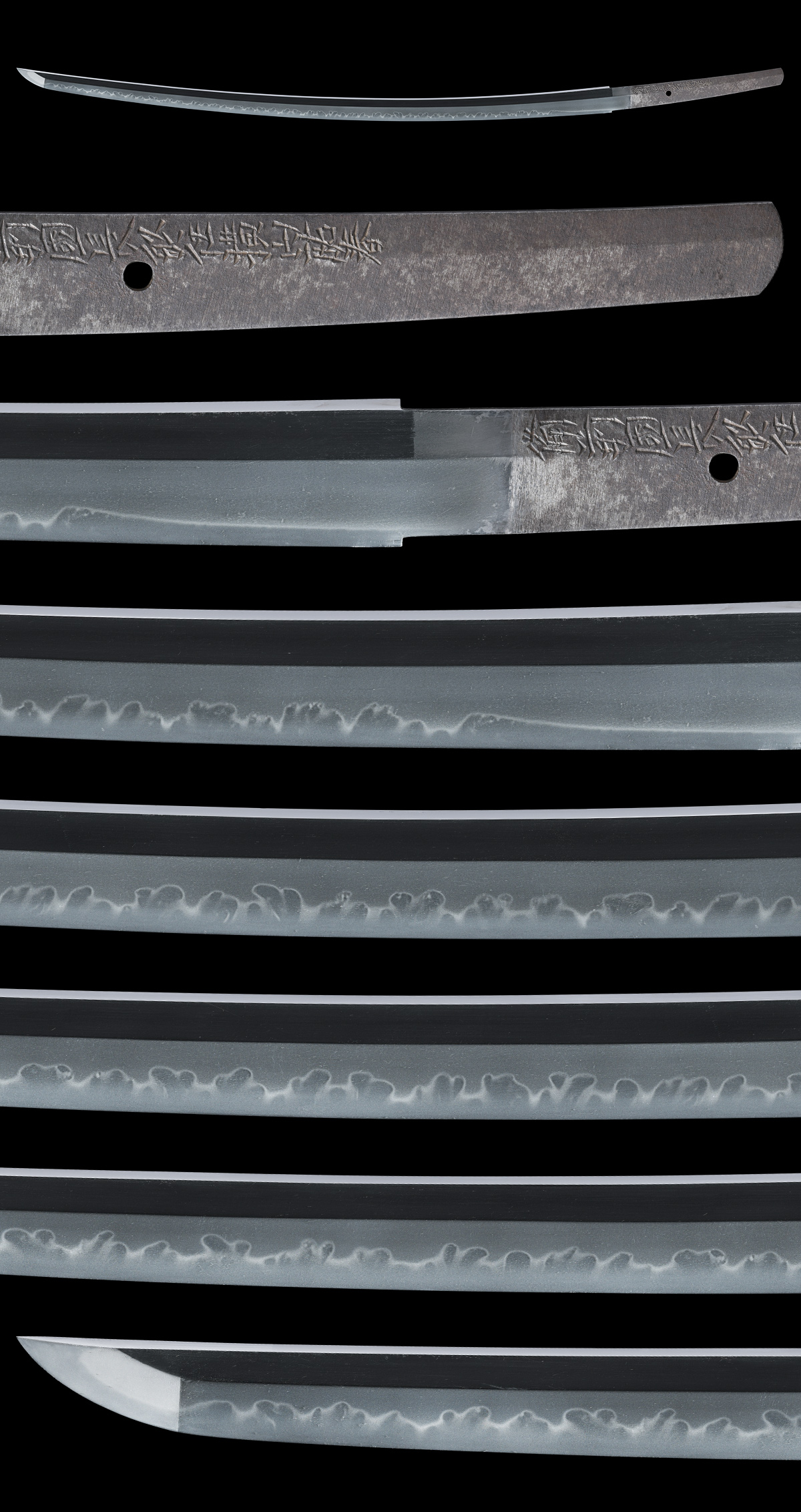
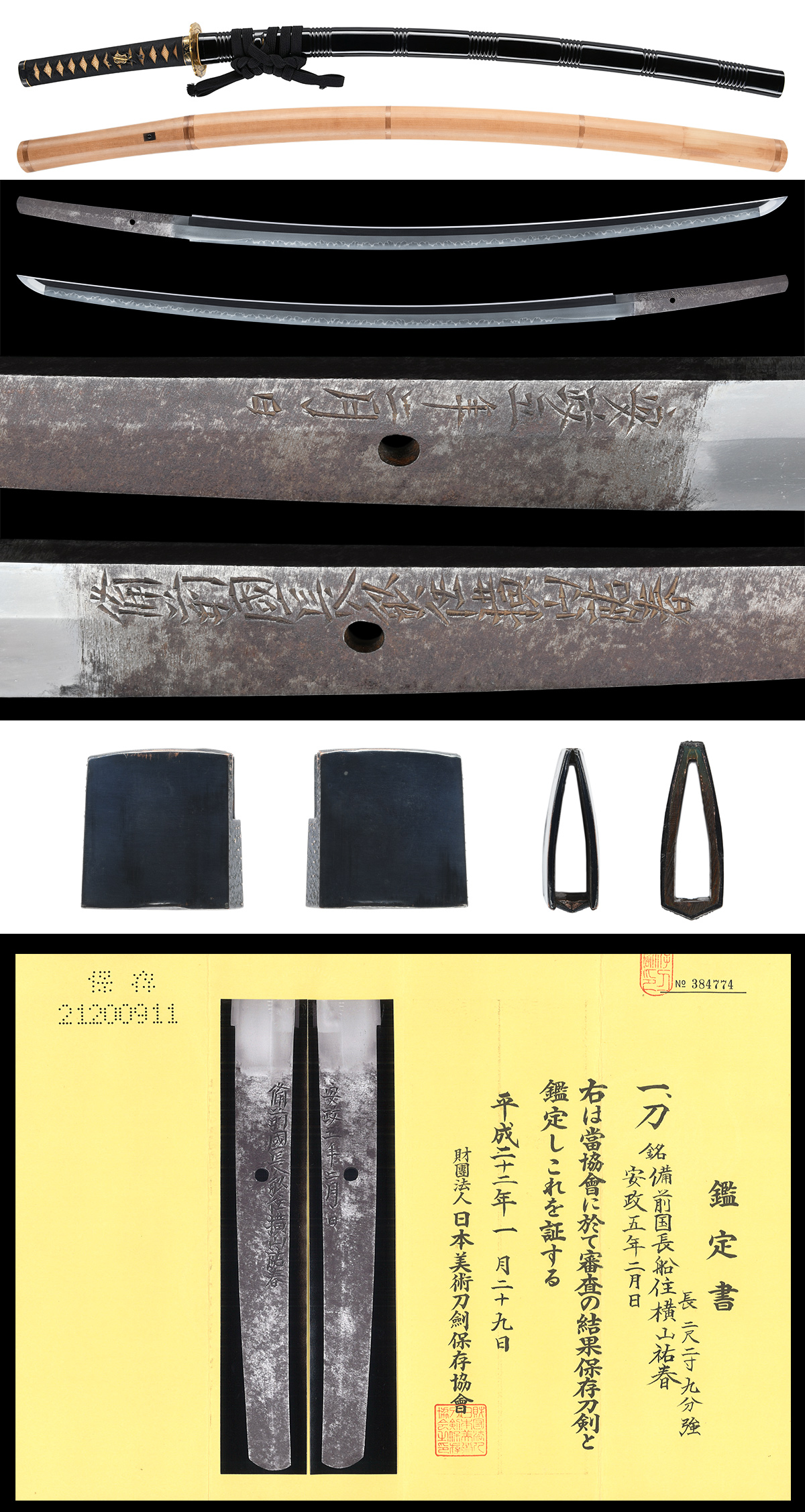
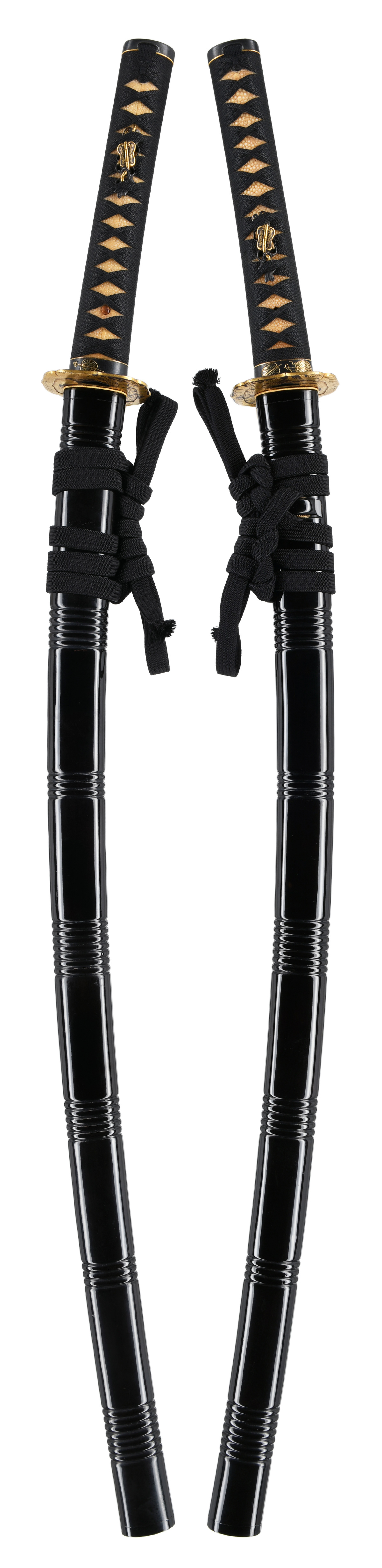
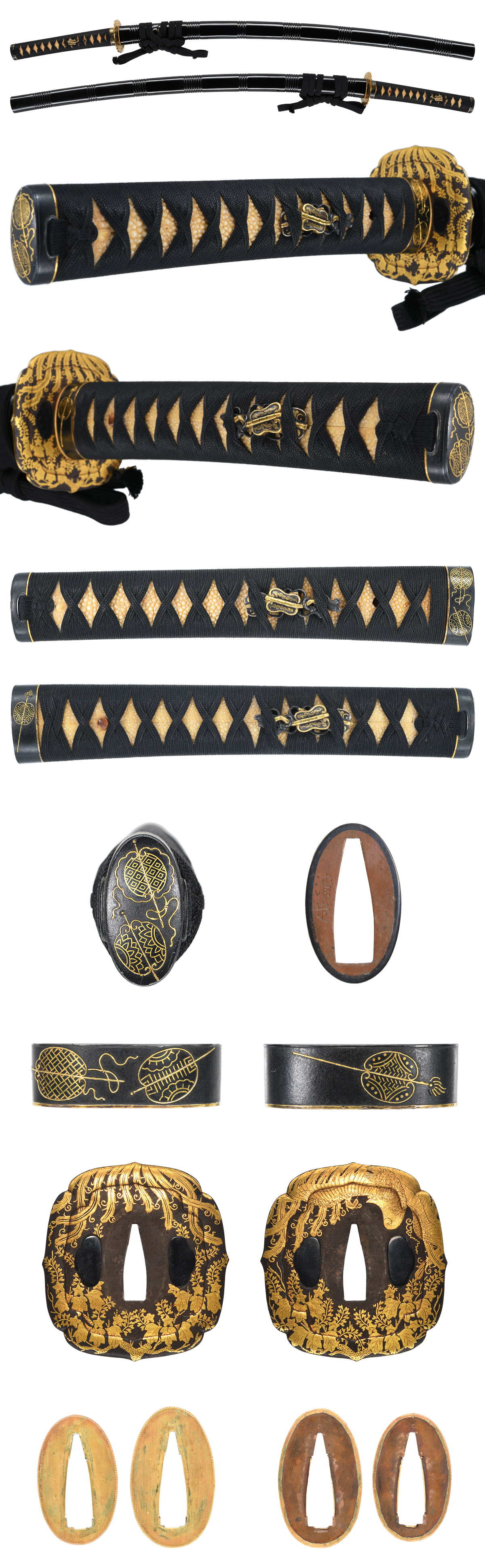
The nagasa of this katana is slightly over 2 shaku 2 sun 9 bu, with a slight difference in mihaba between the moto and saki, a standard kasane, high sori, and a chu-kissaki that feels extended, resulting in a sword sugata with a dignified presence. The kitae is ko-itame hada with fine ji-nie, resulting in a beautiful texture without becoming loose. The yakiba starts with sugu-yaki-dashi and is primarily nioi-deki choji midare mixed with kiku-ka choji and other patterns, with a nioiguchi that is somewhat tight, bright, and clear. The boshi becomes sugu and returns in ko-maru. The nakago is ubu with katte-sagari yasurime, and bears the toko mei and a date. This is a work by Sukeharu of the Osafune Yokoyama school from the Shinshinto period. The kiku-ka choji hamon, also seen in the works of his fellow school member Yokoyama Sukenaga, is a very flamboyant highlight. Shirasaya, shakudo ichiju habaki, shime-kizami kuro-roiro-nuri saya uchigatana koshirae, Hozon Token Kanteisho.
Machine translation from the shop's Japanese · may contain errors ·
The Osafune Yokoyama family of the Shinshinto period is said to have begun with Sukehira, who was the fifth generation counting from Sozaemon Sukesada of the Keian era in the early Edo period, and later received the title of Ise no Kami. Sukehira's second son, Sukenaga, who succeeded the family line, received the title of Kaga no Suke and carved the kiku-ka mon and "Ichi" on the nakago. Some of his works also include the soemei "56th generation descendant of Tomonari," and he demonstrated outstanding skill among Bizen smiths of the same period. Sukeharu was a swordsmith of the same family active during the same period as Sukenaga, with dated works from the Tenpo, Koka, and Kaei eras; works exist where he, like Sukenaga, also carves "56th generation descendant of Tomonari."
The nagasa of this katana is slightly over 2 shaku 2 sun 9 bu, with a slight difference in mihaba between the moto and saki, a standard kasane, high sori, and a chu-kissaki that feels extended, resulting in a sword sugata with a dignified presence. The kitae is ko-itame hada with fine ji-nie, resulting in a beautiful texture without becoming loose. The yakiba starts with sugu-yaki-dashi and is primarily nioi-deki choji midare mixed with kiku-ka choji and other patterns, with a nioiguchi that is somewhat tight, bright, and clear. The boshi becomes sugu and returns in ko-maru. The nakago is ubu with katte-sagari yasurime, and bears the toko mei and a date. This is a work by Sukeharu of the Osafune Yokoyama school from the Shinshinto period. The kiku-ka choji hamon, also seen in the works of his fellow school member Yokoyama Sukenaga, is a very flamboyant highlight. Shirasaya, shakudo ichiju habaki, shime-kizami kuro-roiro-nuri saya uchigatana koshirae, Hozon Token Kanteisho.
Under the Tokugawa peace the daishō became a regulated uniform, and demand gathered in the castle towns, above all Edo itself. The craft split two ways: brilliant display work for connoisseurs, and tested blades whose cutting results were sometimes inlaid in gold.
A Hozon-certified blade judged to show notably superior workmanship and a better state of preservation. The bar is higher: re-tempered blades and most unsigned Muromachi/Edo works are excluded.
About the NBTHK›
The NBTHK (Nihon Bijutsu Tōken Hozon Kyōkai, the Society for the Preservation of Japanese Art Swords) is a public-interest incorporated foundation founded in 1948 and supervised by Japan’s Agency for Cultural Affairs (Bunkachō); it is based at the Japanese Sword Museum in Tokyo. Its expert panels physically examine each submitted work (shinsa) and issue a certificate (kanteishō) ranking it by artistic and historical merit. NBTHK papers are the most widely recognized standard of authentication for Japanese swords and fittings.
No cooling-off period or returns; refund only if the purchased sword is proven fake, capped at purchase price (excludes commission sales, accessories, auction items).


 NihontoWatch