The monasteries that had sustained Yamato lost ground through the Muromachi period, and the schools thinned with them; Sue-Tegai kept the old masame manner alive in quantity. The burning of Tōdaiji’s Great Buddha hall in 1567 closed the temple age.
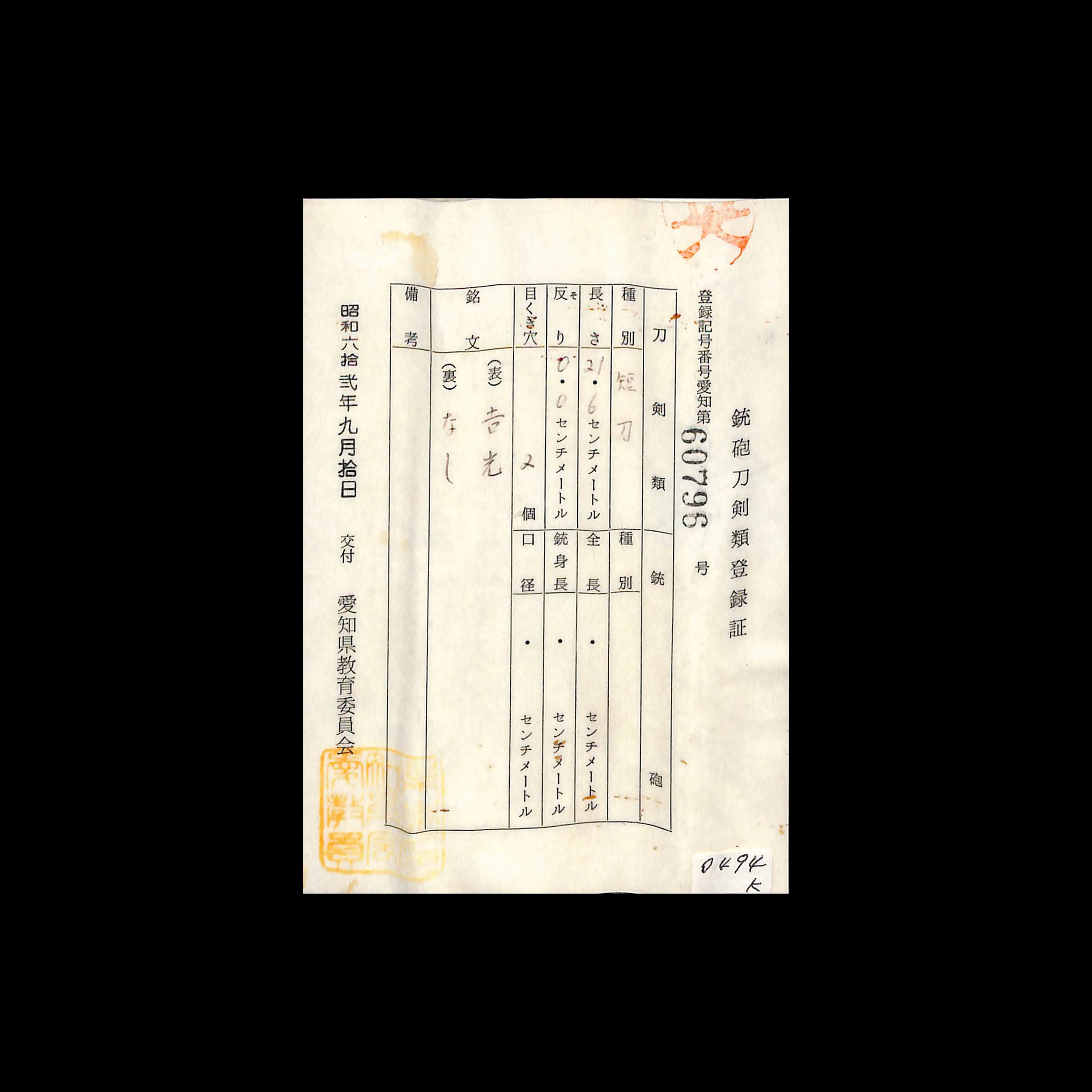
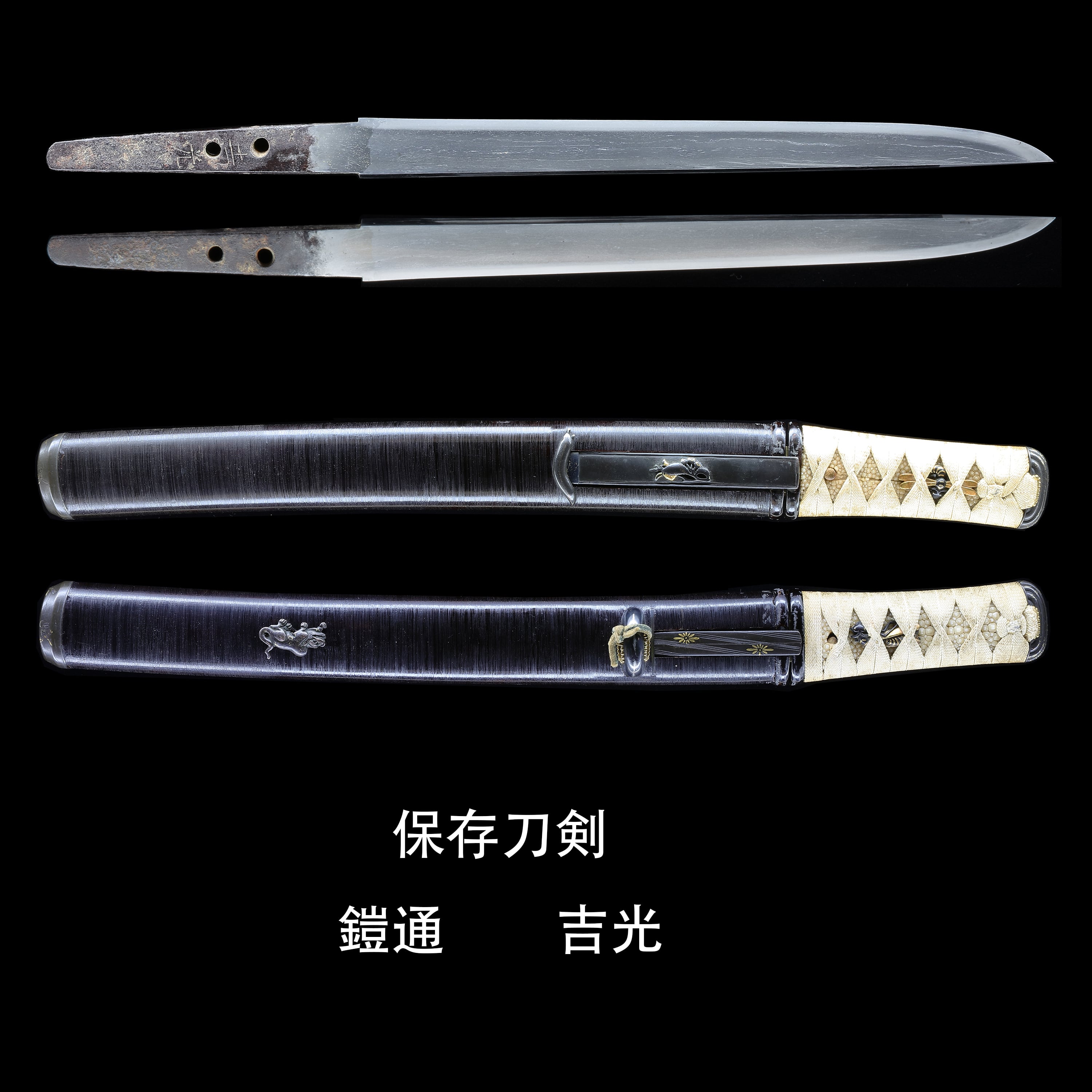
This is a Tanto by Yoshimitsu from Tosa province, active during the late Muromachi period. It is a Yoroi-doshi type, characterized by its slender yet exceptionally thick and robust construction, designed for piercing armor in close combat. The blade comes with an aikuchi koshirae and is certified Hozon Token by the NBTHK.


Yamato-den · Tosa · around 1338-1342
2 pieces on the market now
Yamato-den · Yamato
Phase: Ko-Tegai古手掻· 1200–1394
36 pieces on the market now
Ko-Tegai (古手掻) is the founding and classical phase of the Tegai school, spanning the late Kamakura period through the Nanbokuchō era. 1288-1293). Kanenaga is reckoned among the foremost Yamato masters: his signed tachi are celebrated for combining the dignity of Kamakura form with the disciplined grain of the Yamato tradition, and several are designated at the highest levels. The mainline continued through a second-generation Kanenaga and the founder's sons and pupils — Kanetsugu (包次), Kanekiyo (包清), and the early Kanezane (包眞) — into the Nanbokuchō period. In workmanship Ko-Tegai is orthodox Yamato-den.
The jigane is itame with conspicuous masame, especially along the shinogi-ji, thick with ji-nie and threaded by chikei. The hamon is built on a narrow, nie-laden suguha, frequently broken by ko-midare and ko-gunome, with nijūba and hotsure along the habuchi and abundant kinsuji and sunagashi; the bōshi runs sugu to a ko-maru or hakikake finish, often continuing into muneyaki. Early works show a slender, deeply koshizori tachi-sugata with a small kissaki, broadening into the more powerful forms of the Nanbokuchō period. The school's masame-rich grain and quiet, nie-active suguha distinguish its blades from the choji-based exuberance of contemporaneous Bizen work and place Tegai squarely within the five Yamato schools. Learn more →
| Smith | Era | Designated |
|---|---|---|
| Kanenaga包永 | 1288-1312 | 62 |
| Kanekiyo包清 | 1362-1370 | 8 |
| Kanetoshi包俊 | 1381-1384 | 4 |
| Kanetsugu包次 | 1317-1333 | 4 |
| Kanekiyo包清 | 1429-1441 | 3 |
Yamato in the Muromachi period
The monasteries that had sustained Yamato lost ground through the Muromachi period, and the schools thinned with them; Sue-Tegai kept the old masame manner alive in quantity. The burning of Tōdaiji’s Great Buddha hall in 1567 closed the temple age.
Certifies a genuine blade worth preserving: a signature confirmed correct, or, if unsigned, an era, province, and school that the NBTHK can reliably identify.
The NBTHK (Nihon Bijutsu Tōken Hozon Kyōkai, the Society for the Preservation of Japanese Art Swords) is a public-interest incorporated foundation founded in 1948 and supervised by Japan’s Agency for Cultural Affairs (Bunkachō); it is based at the Japanese Sword Museum in Tokyo. Its expert panels physically examine each submitted work (shinsa) and issue a certificate (kanteishō) ranking it by artistic and historical merit. NBTHK papers are the most widely recognized standard of authentication for Japanese swords and fittings.
NBTHK official siteExcept where the item is defective, we do not accept returns as a rule. In the case of an error on our part, please contact us by email within 3 days of the item's arrival.
This is a Tanto by Yoshimitsu from Tosa province, active during the late Muromachi period. It is a Yoroi-doshi type, characterized by its slender yet exceptionally thick and robust construction, designed for piercing armor in close combat. The blade comes with an aikuchi koshirae and is certified Hozon Token by the NBTHK.


Yamato-den · Tosa · around 1338-1342
2 pieces on the market now
Yamato-den · Yamato
Phase: Ko-Tegai古手掻· 1200–1394
36 pieces on the market now
Ko-Tegai (古手掻) is the founding and classical phase of the Tegai school, spanning the late Kamakura period through the Nanbokuchō era. 1288-1293). Kanenaga is reckoned among the foremost Yamato masters: his signed tachi are celebrated for combining the dignity of Kamakura form with the disciplined grain of the Yamato tradition, and several are designated at the highest levels. The mainline continued through a second-generation Kanenaga and the founder's sons and pupils — Kanetsugu (包次), Kanekiyo (包清), and the early Kanezane (包眞) — into the Nanbokuchō period. In workmanship Ko-Tegai is orthodox Yamato-den.
The jigane is itame with conspicuous masame, especially along the shinogi-ji, thick with ji-nie and threaded by chikei. The hamon is built on a narrow, nie-laden suguha, frequently broken by ko-midare and ko-gunome, with nijūba and hotsure along the habuchi and abundant kinsuji and sunagashi; the bōshi runs sugu to a ko-maru or hakikake finish, often continuing into muneyaki. Early works show a slender, deeply koshizori tachi-sugata with a small kissaki, broadening into the more powerful forms of the Nanbokuchō period. The school's masame-rich grain and quiet, nie-active suguha distinguish its blades from the choji-based exuberance of contemporaneous Bizen work and place Tegai squarely within the five Yamato schools. Learn more →
| Smith | Era | Designated |
|---|---|---|
| Kanenaga包永 | 1288-1312 | 62 |
| Kanekiyo包清 | 1362-1370 | 8 |
| Kanetoshi包俊 | 1381-1384 | 4 |
| Kanetsugu包次 | 1317-1333 | 4 |
| Kanekiyo包清 | 1429-1441 | 3 |
Yamato in the Muromachi period
The monasteries that had sustained Yamato lost ground through the Muromachi period, and the schools thinned with them; Sue-Tegai kept the old masame manner alive in quantity. The burning of Tōdaiji’s Great Buddha hall in 1567 closed the temple age.
Certifies a genuine blade worth preserving: a signature confirmed correct, or, if unsigned, an era, province, and school that the NBTHK can reliably identify.
The NBTHK (Nihon Bijutsu Tōken Hozon Kyōkai, the Society for the Preservation of Japanese Art Swords) is a public-interest incorporated foundation founded in 1948 and supervised by Japan’s Agency for Cultural Affairs (Bunkachō); it is based at the Japanese Sword Museum in Tokyo. Its expert panels physically examine each submitted work (shinsa) and issue a certificate (kanteishō) ranking it by artistic and historical merit. NBTHK papers are the most widely recognized standard of authentication for Japanese swords and fittings.
NBTHK official siteExcept where the item is defective, we do not accept returns as a rule. In the case of an error on our part, please contact us by email within 3 days of the item's arrival.