Around 1800 Suishinshi Masahide argued in his writings that the craft must return to the old masters’ methods: the fukkotō revival. His greatest successor Naotane worked convincingly in Bizen and Sōshū manners that had been dead for centuries.
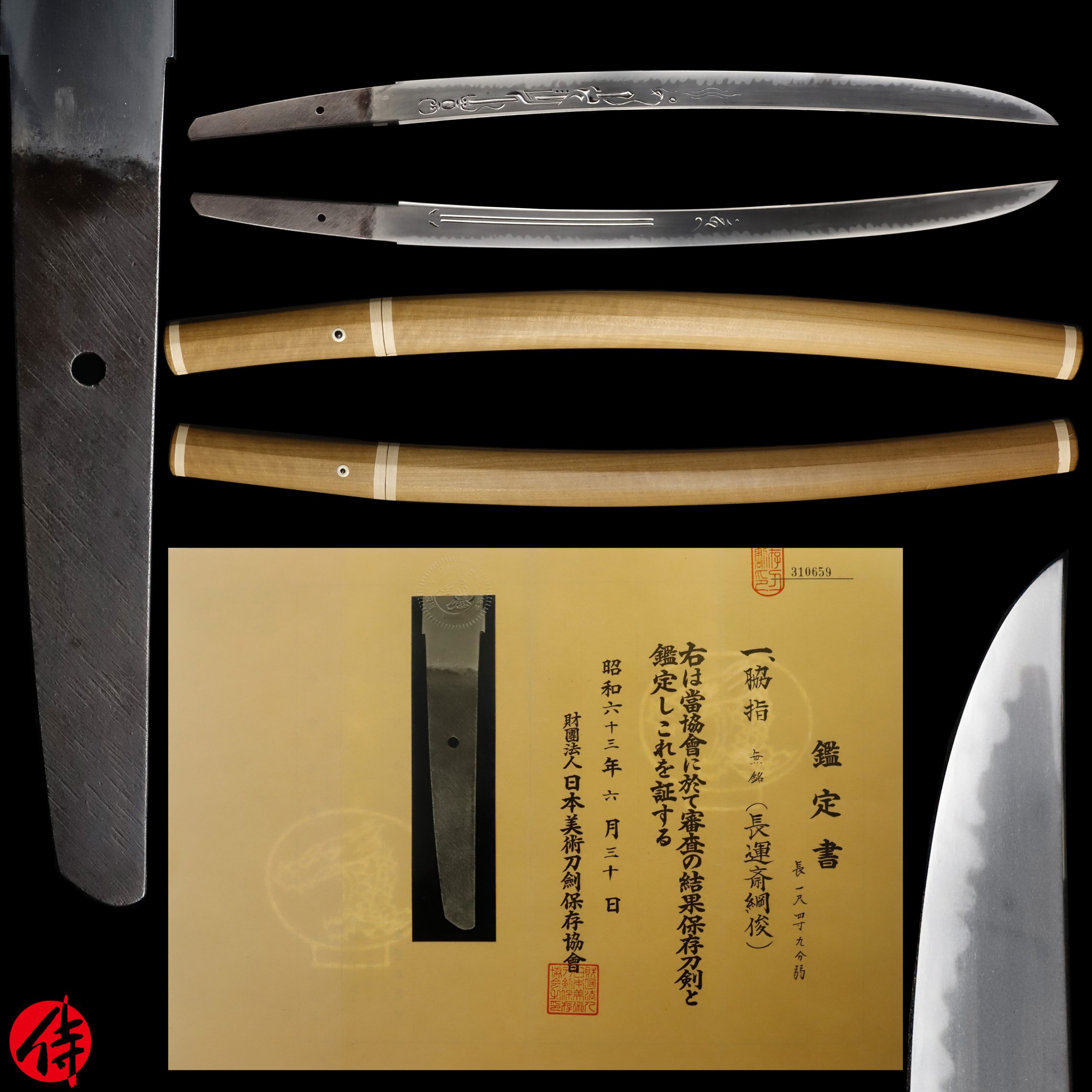
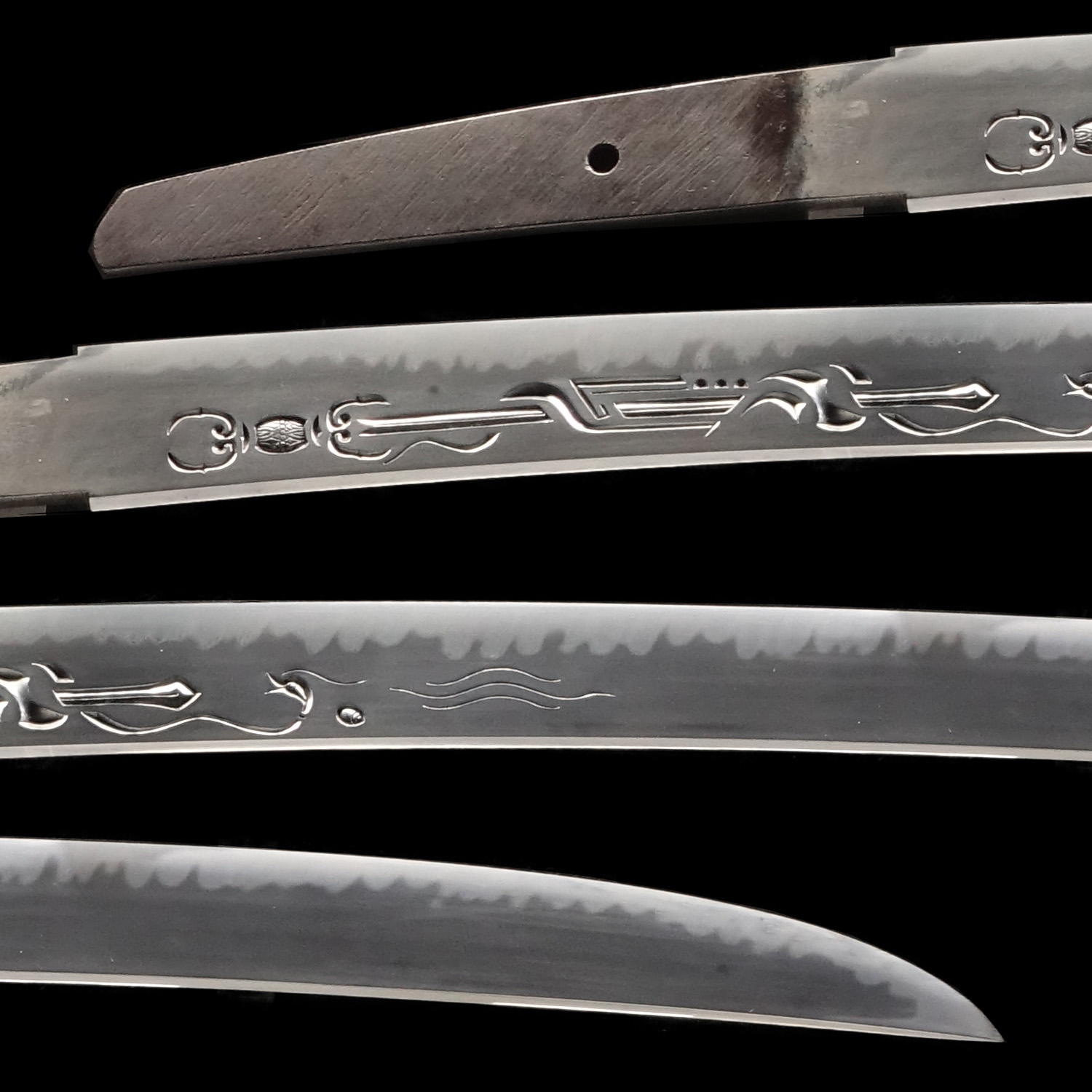
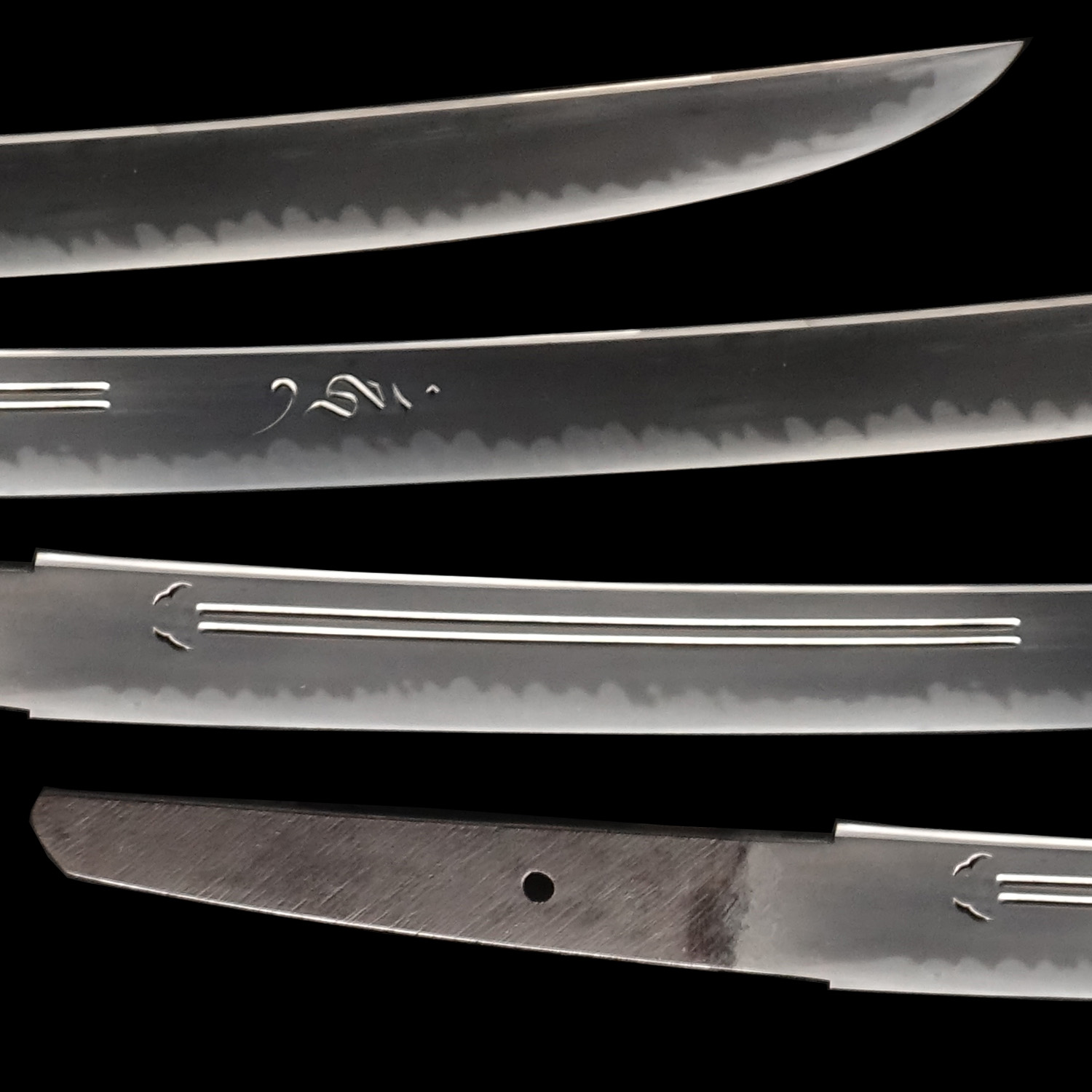
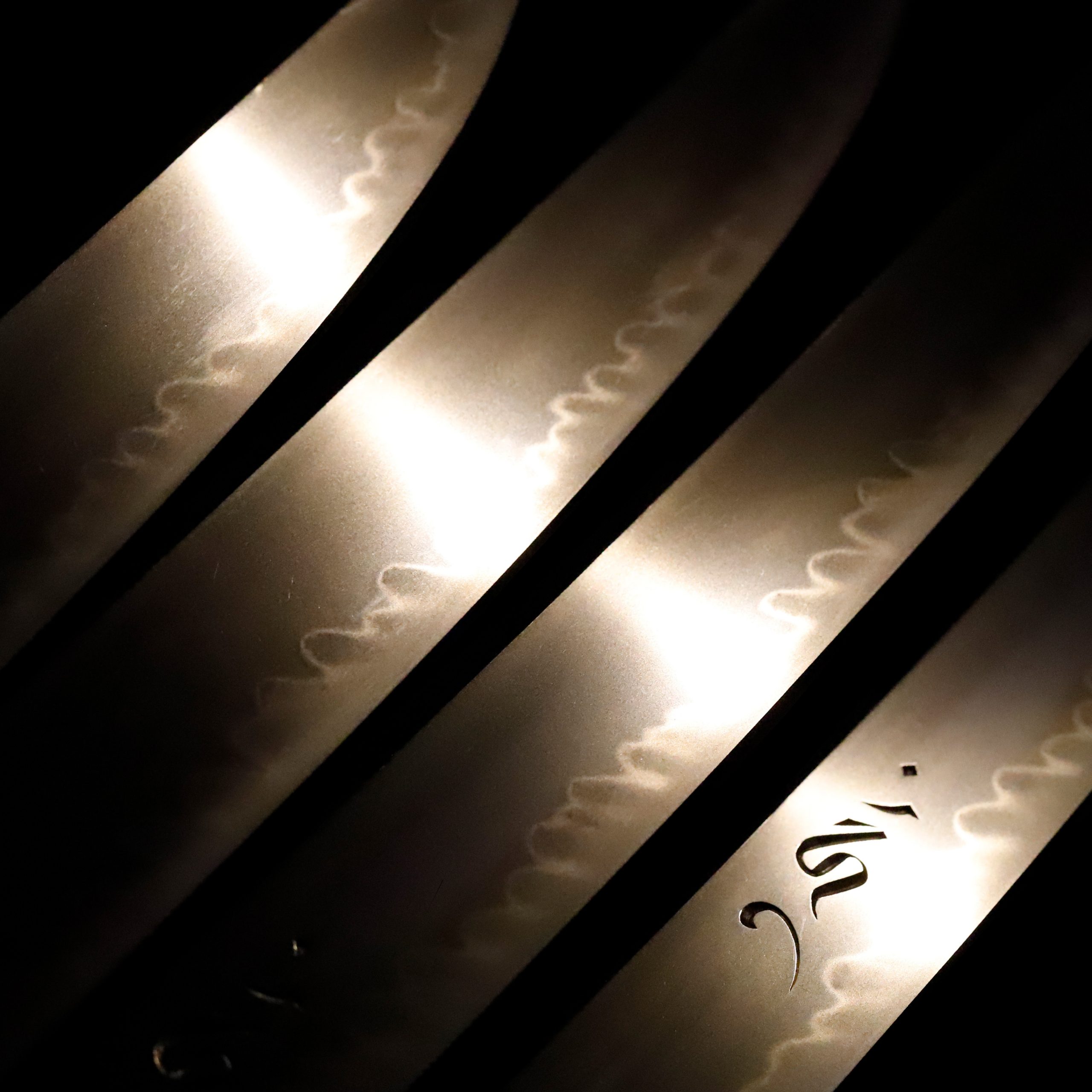
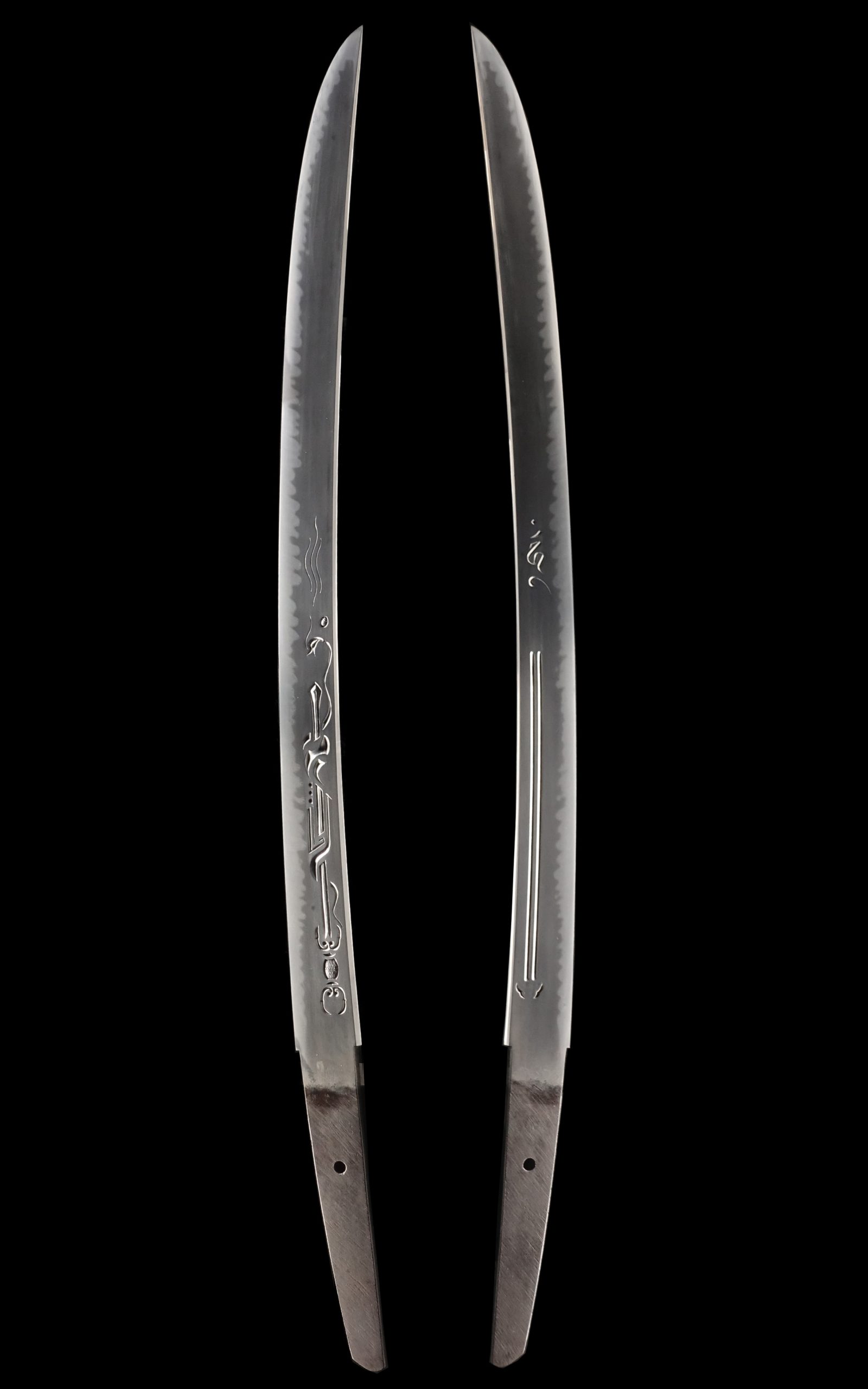
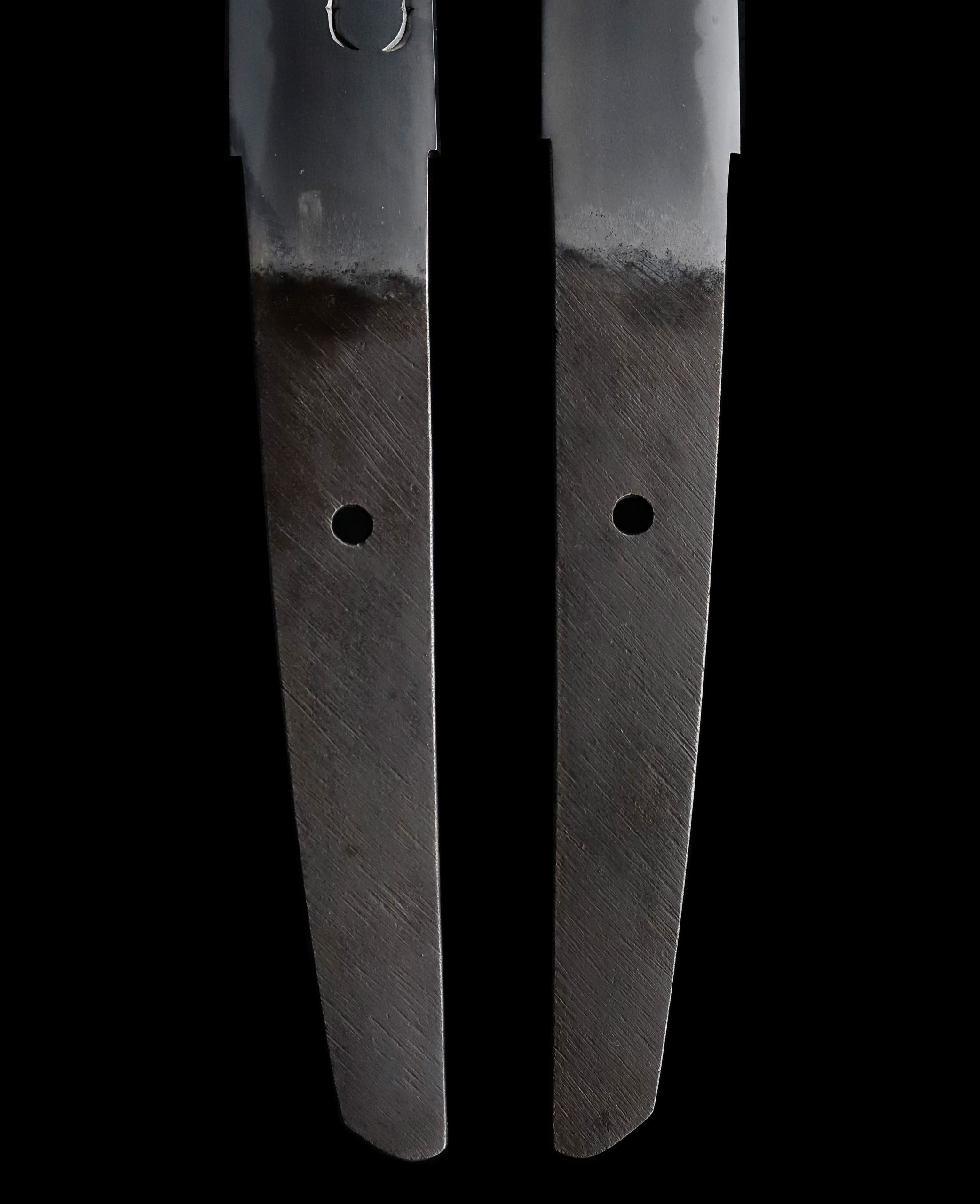
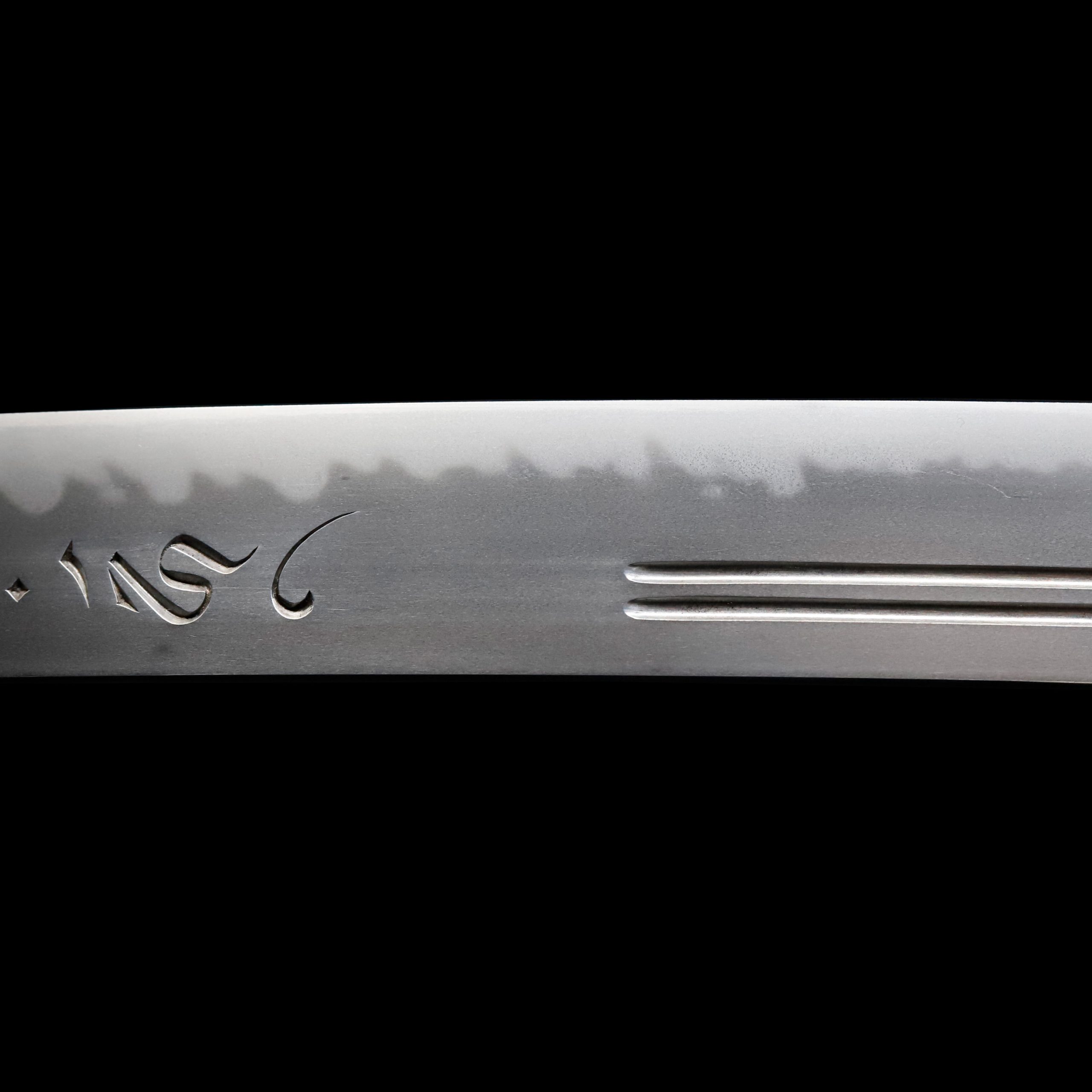
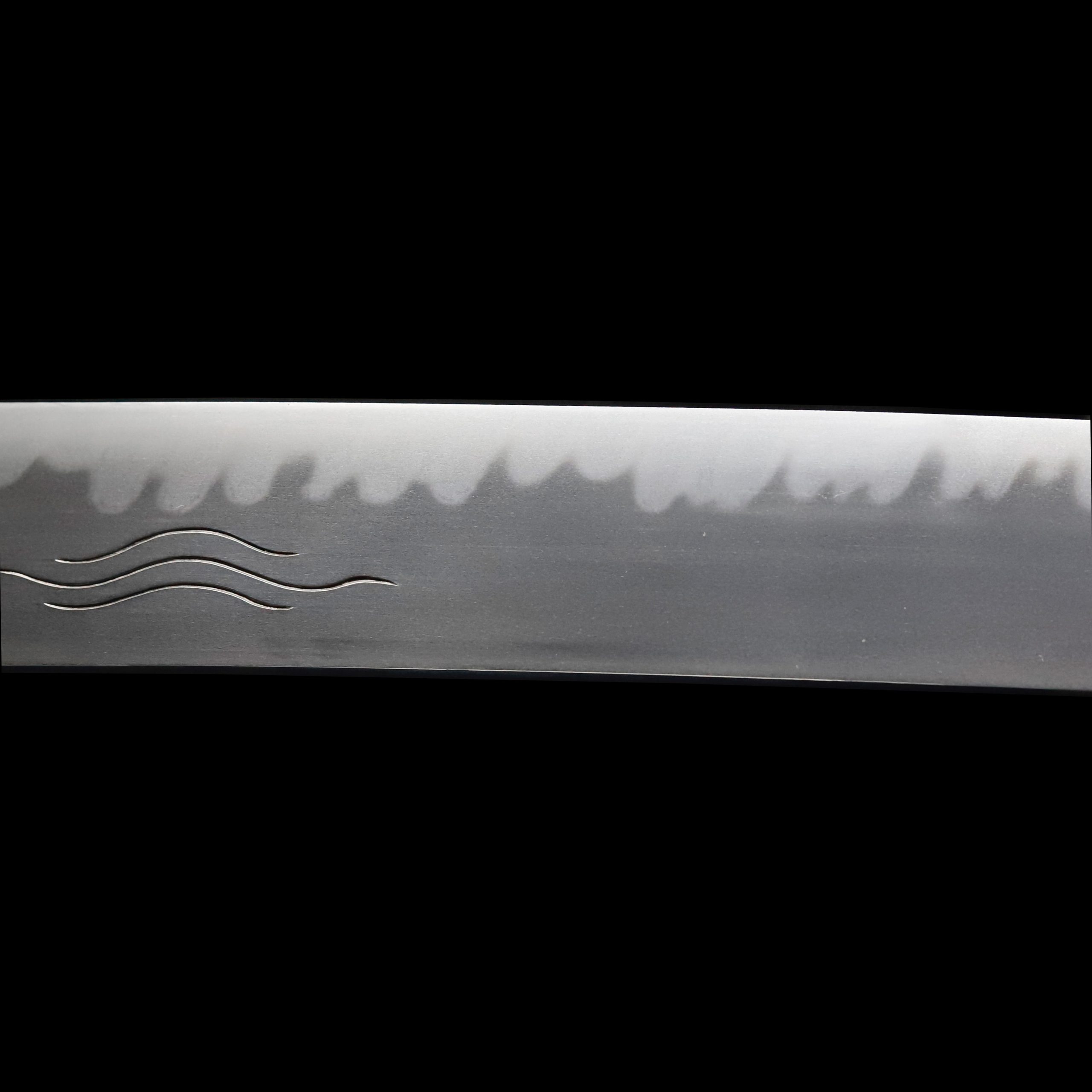
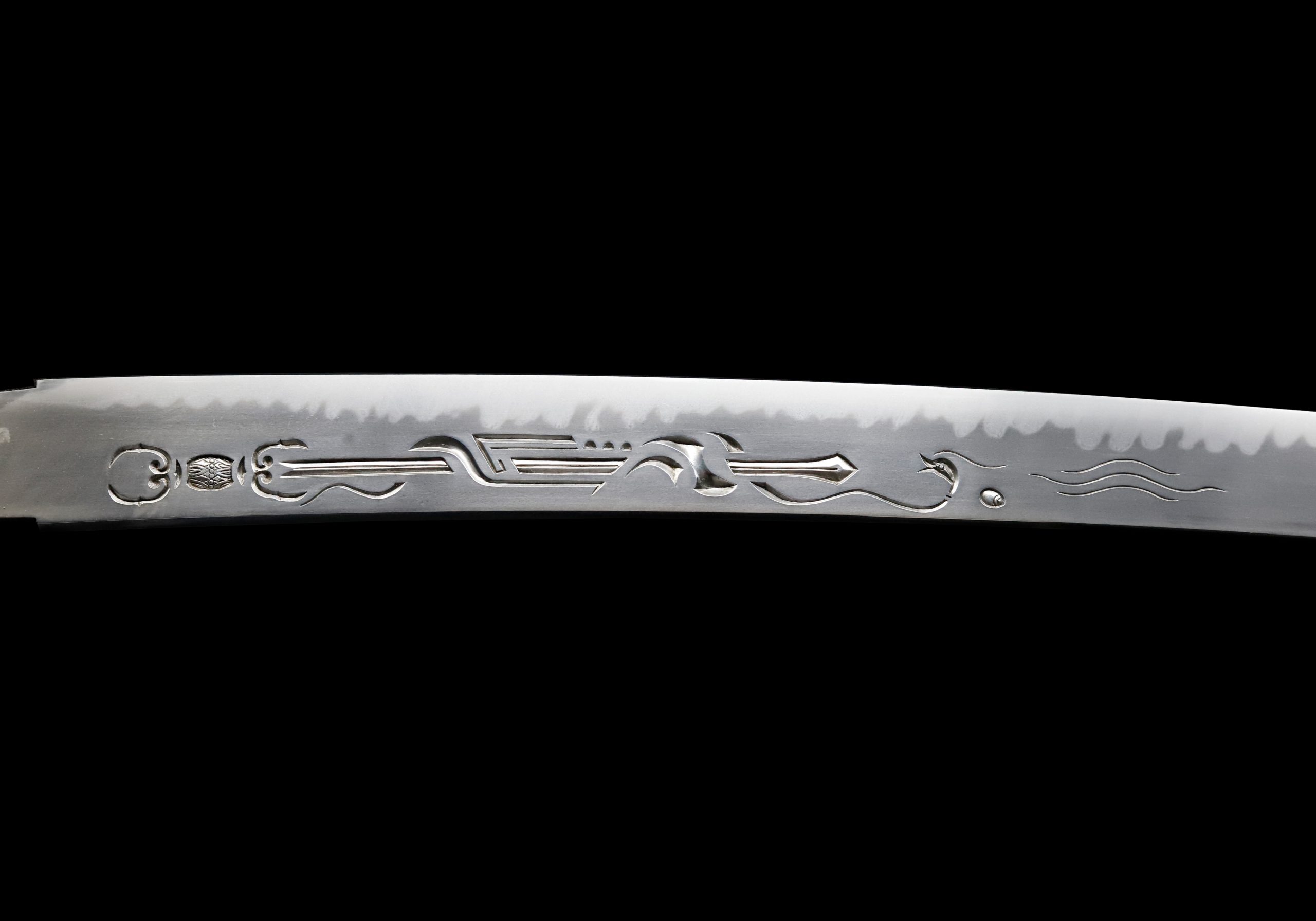
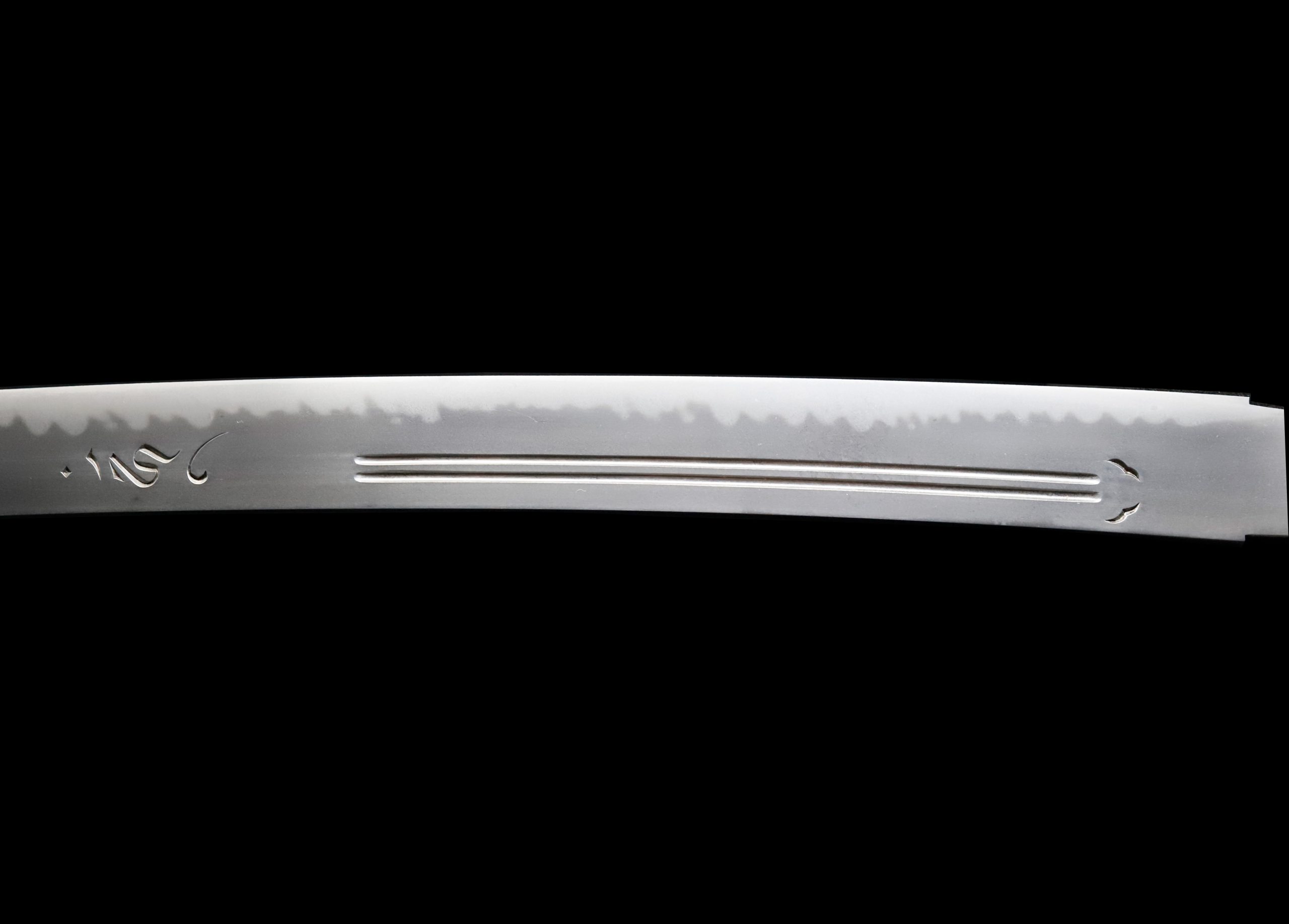
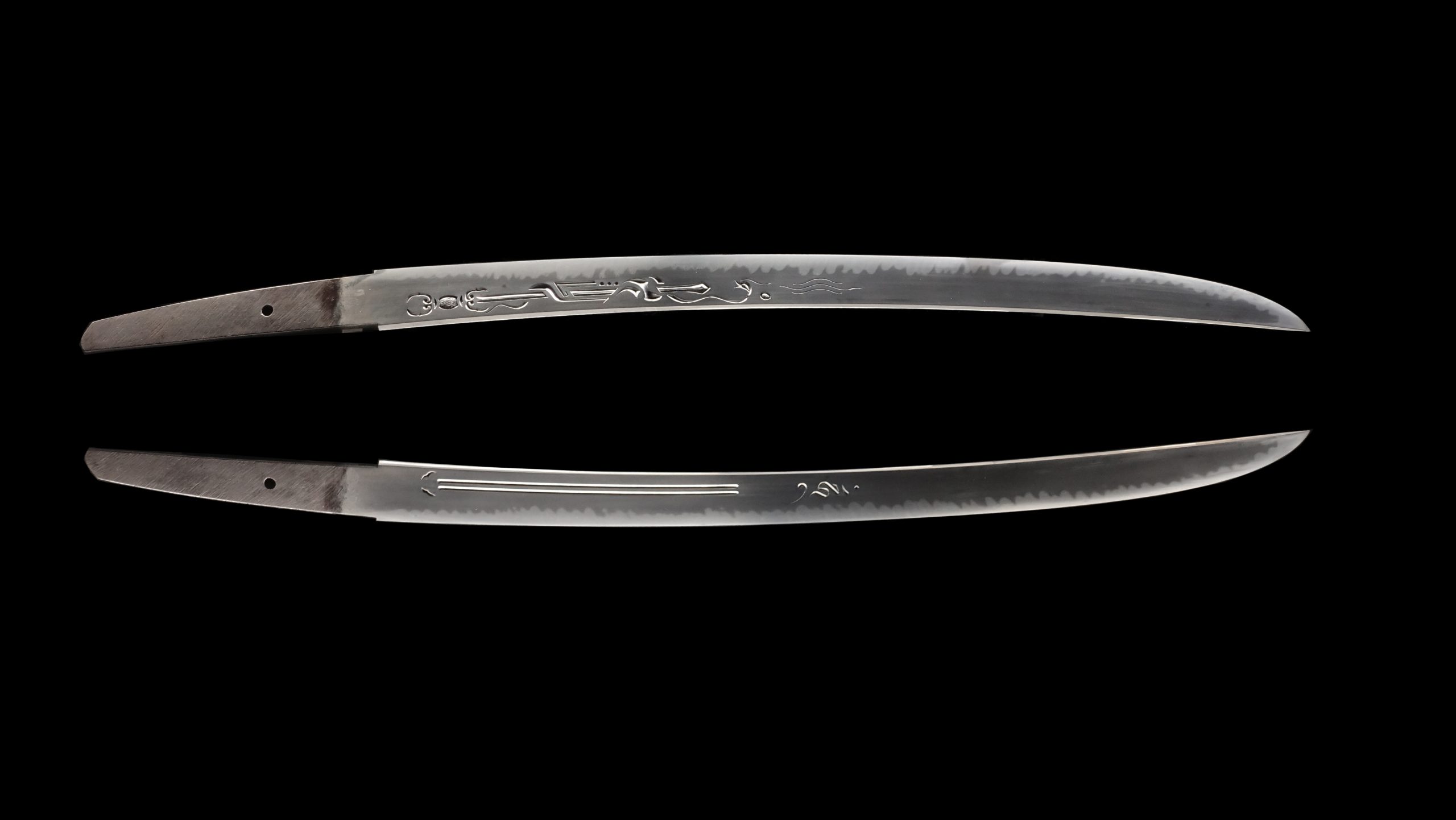
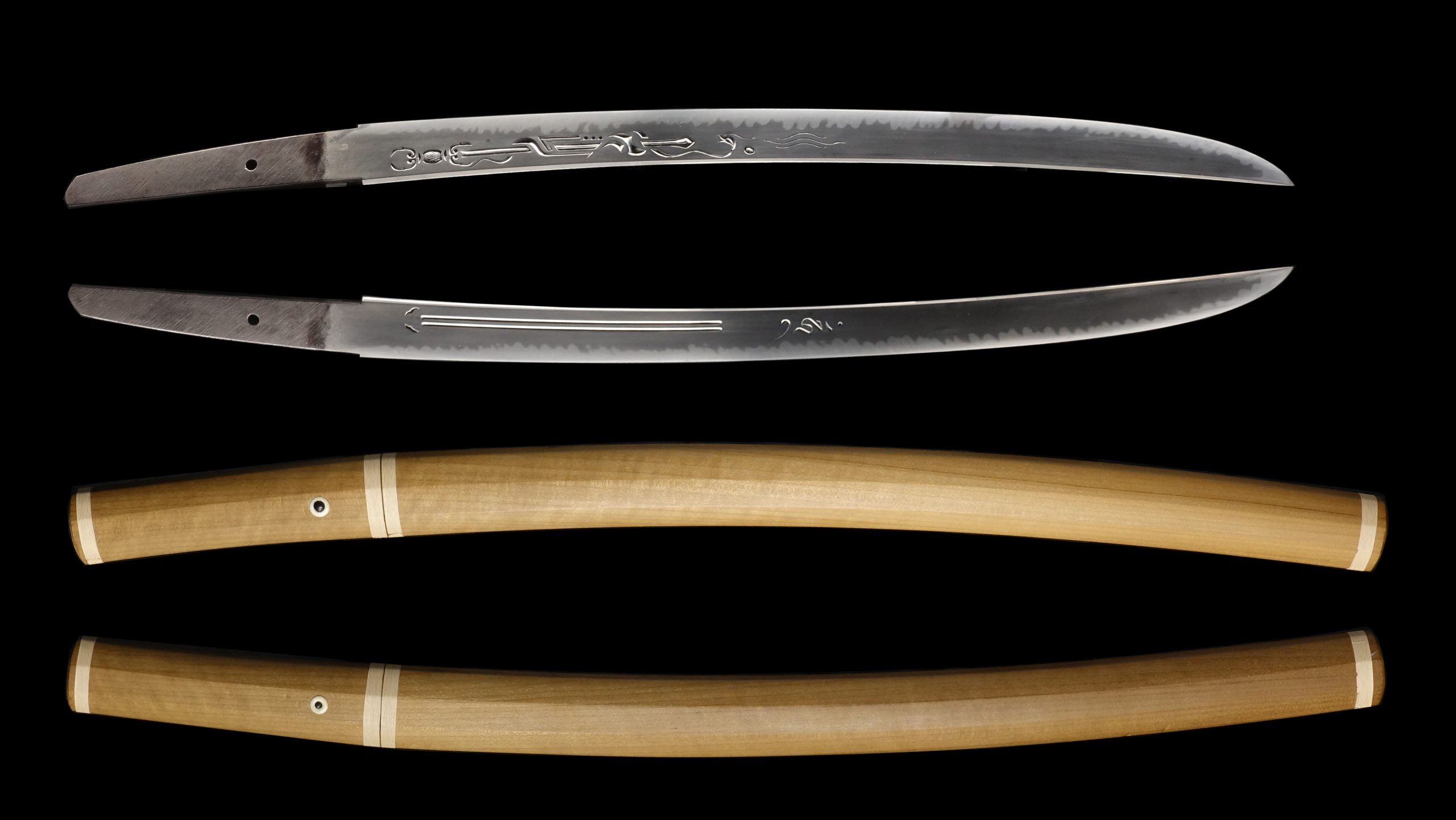
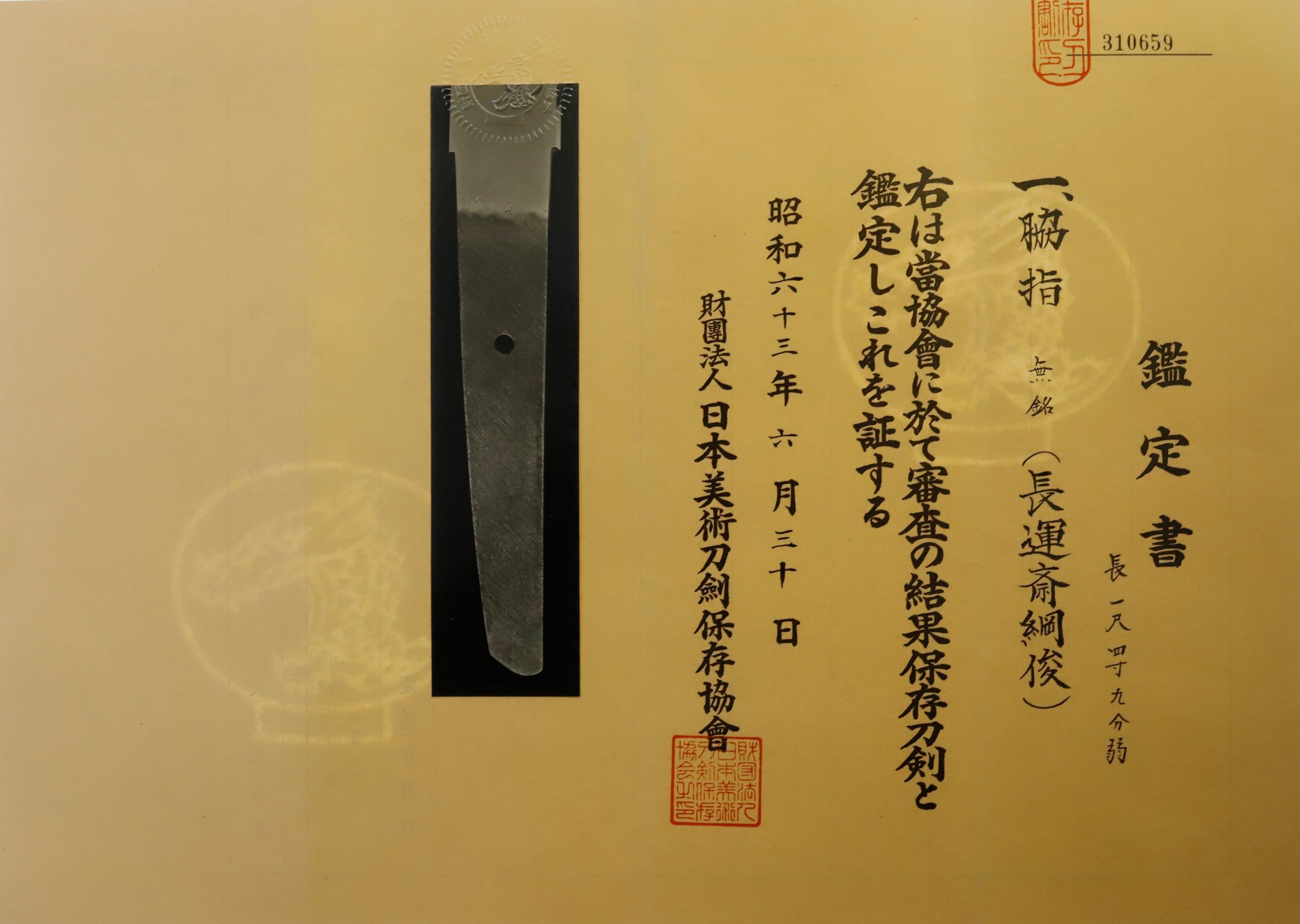
This blade is attributed to Chounsai Tsunatoshi (長運斎綱俊), who was a renowned swordsmith at the end of the Edo period (Late 19th century). Tsunatoshi was born in 1798 in Yonezawa city, Hashu province (Yamagata prefecture) as the third son of Izumi no Kami Kunihide(和泉守国英). His family name was Kato, and he was the younger brother of Kato Tsunahide (加藤綱英). Tsunatoshi’s real name was Kato Hachiro. Tsunatoshi served Yonezawa Uesugi clan, a powerful feudal lord in today’s Yamagata prefecture. During his early career, he moved to Edo city to learn superb sword-forging techniques from Suishinshi Masahide, one of the most renowned swordsmiths at the end of the Edo period. There is also a record of him forging swords in Osaka and Kumamoto while his base was in Azabu town in Edo city (Today’s Tokyo). He settled in Edo city around 1823, and he created most of his work. He started to run his school there and resided in the house of Uesugi family. It is said that he received a stipend from them. He received the honorable title Chounsai (長運斎) in the first year of the Bunka era (1804). And, he gave this title to his son Koretoshi (the second-gen Tsunatoshi) in 1856, and he got the new title Chojyusai (長寿斎). Chojyu means living a long life in Japanese. The school Tsunatoshi belonged to flourished at the end of the Edo period, training many swordsmiths who later became historically significant ones, such as Koyama Munetsugu, Takahashi Naganobu, Ishido Korekazu. Tsunatoshi excelled at forging Bizen-Den tradition swords with Choji Midare Hamon, an irregular, wavy tempering line. Most of Tsunatoshi’s work reflects Bizen Den (One of the Five Japanese sword-forging traditions). In terms of Bizen Den tradition swords, it is said that Tsunatoshi school surpassed Suishinshi Masahide school. Tsunatoshi died at the age of 66 in December 1863 after creating many great swords for high-class Samurais in Edo city. He is categorized as one of the top-tier swordsmiths during the late Edo period (SHIN SHIN TO era). And, he was the head of the prosperous school at the end of the Edo period. This blade is appraised as a Hozon Token(保存刀剣) issued by NBTHK(Nihon Bijutsu Touken Hozon Kyokai:日本美術刀剣保存協会). *Please keep in mind that there is a tiny black rust on the blade. Horimono Horimono is an engraving on the blade This blade also has Horimono(engraving) of Sanscrit letter and Kurikara Ken. Kurikara-Ken (倶利伽羅剣) is the sword that Fudo Myo-O (不動明王, acalanātha) holds with his right hand(you can see it on the tang part). Fudo Myo-O is one of the objects of worship in Buddhism. According to a theory, it is the incarnation of Dainichi Nyorai (大日如来, Mahāvairocana, the principal image of esoteric Buddhism). Kurikara-ken was named due to its appearance that Kurikara Ryu-O (倶利伽羅龍王, dragon) is winding around the sword. It is believed Kurikara-Ken could cut off worldly desires: Sandoku (三毒). Sandoku is the three fundamental earthly desires; Ton (貪, greed), Jin (瞋, anger, grudge), Chi (癡, delusion, complaint). Authentication Paper They authenticated the blade on June 30th in the 63rd year of Showa(1988). They appraised it as Hozon Touken, the blade worth preserving for Japanese society.
Suishinshi Masahide Tsunatoshi綱俊
Offered by Samurai Museum


Shinshinto · Musashi · around 1830-1844
Fujishiro Jo saku · Tōken Taikan top 37%
6 pieces on the market now
Tsunatoshi was originally from Yonezawa in Dewa Province; his personal name was Kato Hachiro, and he used the art name Chounsai. He served as a domain smith for the Uesugi clan, later going to Edo and taking up residence in Azabu. He died in Bunkyu 3 (1863) at the age of sixty-six. His active career is documented through dated works spanning the Tenpo era, with productions from Tenpo 9 (1838) through Tenpo 12 (1841) among those that have received Juyo designation.
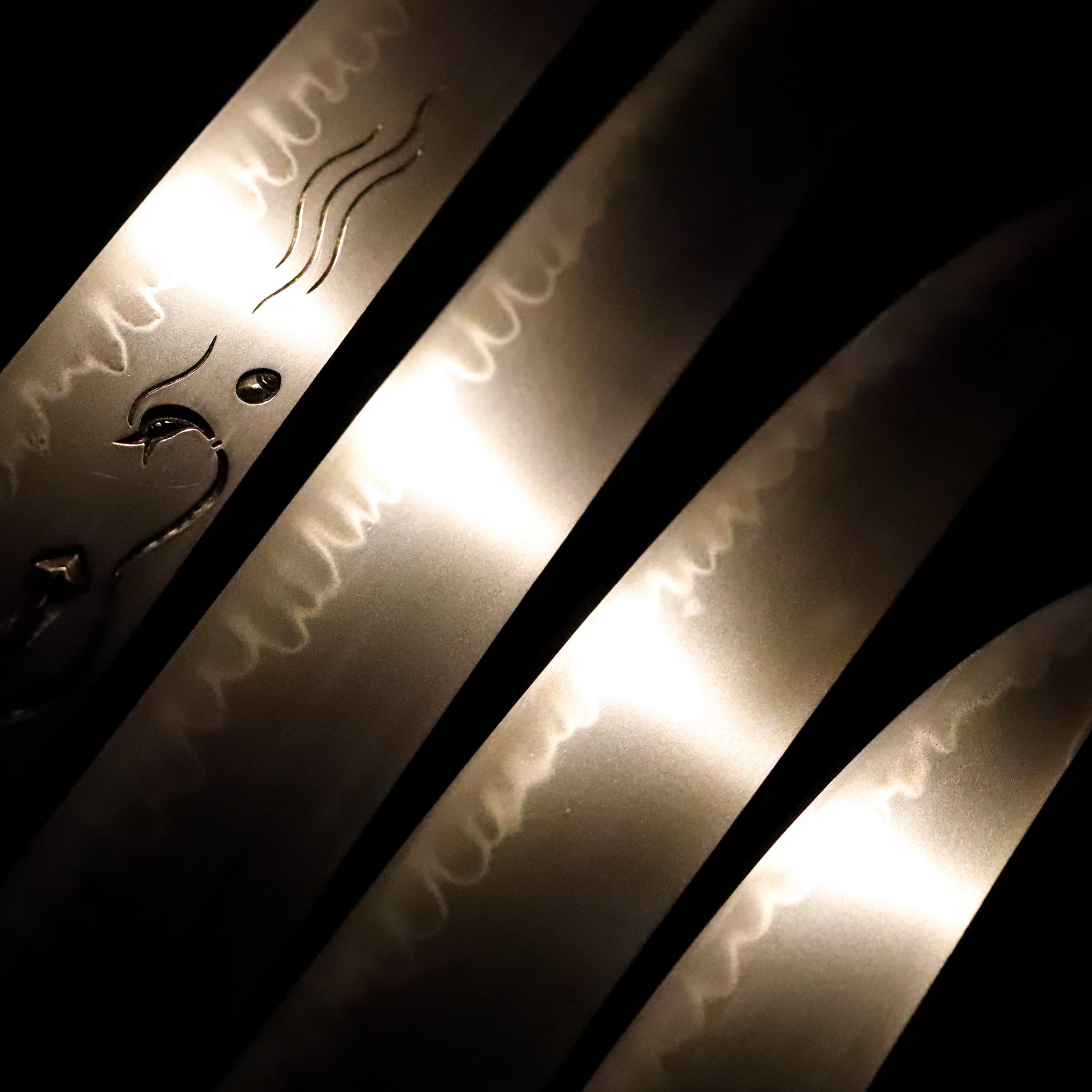
Tsunatoshi's workmanship primarily followed the Bizen tradition. His specialty was a choji temper mixed with gunome in nioi-deki, with long ashi entering and the nioiguchi tending toward tightness; in addition, he produced suguha and toran-midare. The toran-flavored mode achieves a large o-gunome midare with tama-yaki, nie adhering somewhat unevenly, and hakikake at the boshi. Across all styles, his forging is characteristically a tightly compacted ko-itame that tends toward a muji-like appearance -- the plain, featureless-looking steel common in shinshinto work, though in Tsunatoshi's case worked with particular density and carrying ji-nie. His horimono are noteworthy: bo-hi with accompanying soe-bi, bonji, shinkurikara, gomabashi, and claws, at times executed by the smith's own hand as documented by tang inscriptions stating the carvings were by the maker himself.
Tsunatoshi's extant designated works include katana, wakizashi, and a matched daisho pair -- the survival of which as a set makes it "especially useful reference material" in the NBTHK's assessment. His productions range from imposing katana of 75.5 cm with extremely deep sori to hira-zukuri wakizashi with elaborate carving, and one piece retains its original payment receipt addressed to the commissioning patron, providing documentary evidence of the domain smith's working practice.
Where Tsunatoshi stands among comparable artisans: across all of nihontō, and within tradition, era, and period. The tiers (Foremost · Leading · Major · Notable) weigh official designations from the NBTHK and Japan's Agency for Cultural Affairs, together with historical honors of lasting repute such as the Sansaku and Meibutsu-chō.
Select a lens to see how it's measured.
Years he was demonstrably active, proven by signed-and-dated blades
Shinshinto · Musashi
67 pieces on the market now
At Hamachō in Edo, in the closing decades of the eighteenth century and the opening ones of the nineteenth, Suishinshi Masahide[[c:1]] gathered the school that would turn Japanese swordmaking back toward its medieval models. Born Kawabe Gihachirō at Akayu in Dewa in 1750, signing first as Suzuki Takahide and then Eikoku, he studied under the Shitahara smith Yoshihide of Musashi, took the name Masahide in An'ei 3, and served the Akimoto house of Yamagata before settling in Edo, where he worked for nearly fifty years. He is the founding figure of the shinshintō and the theorist of the fukko-tō (revival-sword) doctrine, the argument that the sword ought to return to its Kamakura forms. Around that teaching he drew a large body of pupils, among them Taikei Naotane, who would give the revival its fullest practical form, the future second Masayoshi (Hosokawa Morihide), and a wider Edo and provincial following that carried the program into the Mito, Yonezawa, Tsuyama, and Tatebayashi domains. The shared vocabulary of the school is the deliberate reach back into the koto traditions, worked over a tightly forged, often muji-toned ko-itame with thick ji-nie. Masahide's own prime hand was the Ōsaka-utsushi, the surging tōran-midare of Tsuda Sukehiro opening from a long yakidashi and the broad suguha after Inoue Shinkai, betrayed on even his closest copies by a blackish, coarse nie that spills from the ha into the ji. Naotane gave the revival its Bizen and Sōshū faces: a reverse-leaning chōji-midare with angular kaku-gunome and saka-ashi, modeled on the late-Kamakura Osafune masters Kagemitsu and Kanemitsu and anchored by a consciously revived midare-utsuri that no ordinary shinshintō steel carries, set beside a Sōshū notare with its whorled uzumaki-hada and coarse, striped nie. The pupils divided this inheritance along their own lines. Jirōtarō Naokatsu, Naotane's adopted son, took a Bizen-den led by a kataochi-gunome from Kanemitsu with a pervasive saka-gakari slant and chōji- or midare-utsuri in the ji.
Suishinshi Masatsugu reproduced Naotane's two traditions, Sōshū and Bizen, down to the cut of his signature. Through Masayoshi the Bizen current passed to his heir Hosokawa Masamori of Tsuyama, whose chōji clusters mixed with gunome-chōji and togariba. The Osaka wave traveled separately into Mito through Naoe Sukemasa, who set a Shinkai-styled suguha and a Sukehiro tōran over a clear ko-itame, while Chōunsai Tsunatoshi of the Uesugi service carried a nioi-deki chōji mixed with gunome, suguha, and tōran-midare, often with carving by his own hand. To kantei the school is to weigh a tradition consciously copied against the period marks the copy cannot shed: the constant of the line is that the hamon is never the pure nioi-deki of old Bizen but carries nie throughout, a difference the NBTHK names outright as the divide between koto and shinshintō. The revived utsuri in Naotane and Naokatsu, the spilling nie in Masahide, the whorled uzumaki-hada shared across the line, and the broad, thick-kasane late-Edo sugata are the surest tells, narrowed further by the school's habit of full, dated signatures that make these smiths among the most exactly knowable of their age. Masahide stands at the head as the teacher and theorist, his finest work in his Ōsaka copies rather than the doctrine he proclaimed; Naotane stands ahead of him in execution, his Bizen-den held the finest among the shinshintō. Their pupils define the late-Edo Osafune and Sōshū revivals as practiced through Edo and the domains, with Naokatsu and Masatsugu read as the next hands after Naotane and Masayoshi. The provenance of the school runs through domain commission and bestowal (Mito blades forged at the Kōrakuen by lordly order, Tsuyama and Yonezawa fief work, Naotane's Sanada daishō and a tachi recorded in Honma's inventory of the Imperial collection) rather than ancient daimyō transmission, fitting for a movement that, within a single generation at Edo, redrew the direction of nineteenth-century swordmaking by turning it back toward the old models. Learn more →
| Smith | Era | Designated |
|---|---|---|
| Naotane直胤 | 1801-1837 | 40 |
| Masahide正秀 | 1777-1817 | 28 |
| Sukemasa助政 | 1804-1825 | 8 |
| Jirotaro Naokatsu直勝 | 1805-1858 | 7 |
| Masayoshi正義 | 1791-1860 | 5 |
The Shinshintō revival
Around 1800 Suishinshi Masahide argued in his writings that the craft must return to the old masters’ methods: the fukkotō revival. His greatest successor Naotane worked convincingly in Bizen and Sōshū manners that had been dead for centuries.
Certifies a genuine blade worth preserving: a signature confirmed correct, or, if unsigned, an era, province, and school that the NBTHK can reliably identify.
The NBTHK (Nihon Bijutsu Tōken Hozon Kyōkai, the Society for the Preservation of Japanese Art Swords) is a public-interest incorporated foundation founded in 1948 and supervised by Japan’s Agency for Cultural Affairs (Bunkachō); it is based at the Japanese Sword Museum in Tokyo. Its expert panels physically examine each submitted work (shinsa) and issue a certificate (kanteishō) ranking it by artistic and historical merit. NBTHK papers are the most widely recognized standard of authentication for Japanese swords and fittings.
NBTHK official siteReturns/exchanges limited to defects caused by shipping (except willful misconduct or gross negligence by the company); customers must contact within 72 hours of receiving the product.