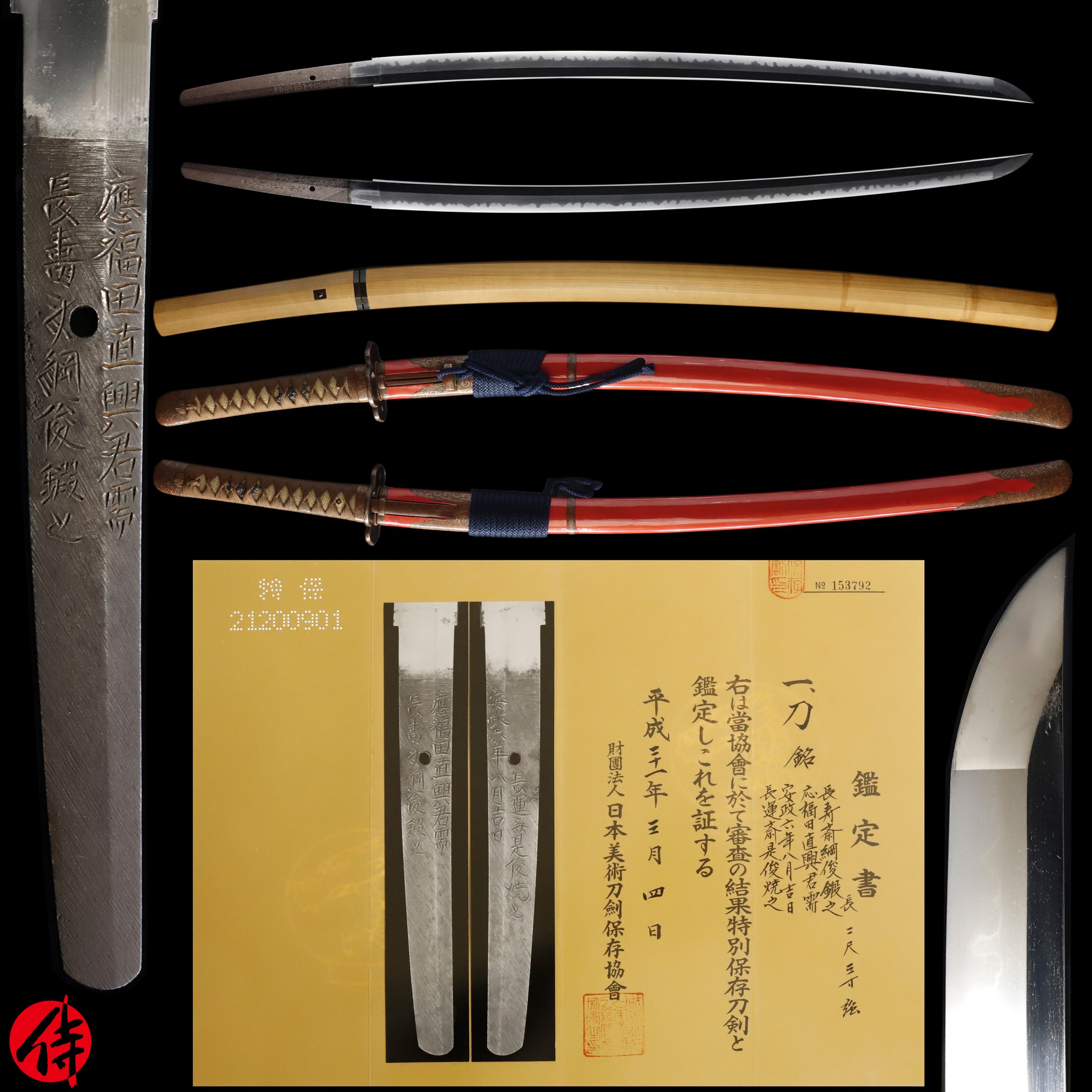
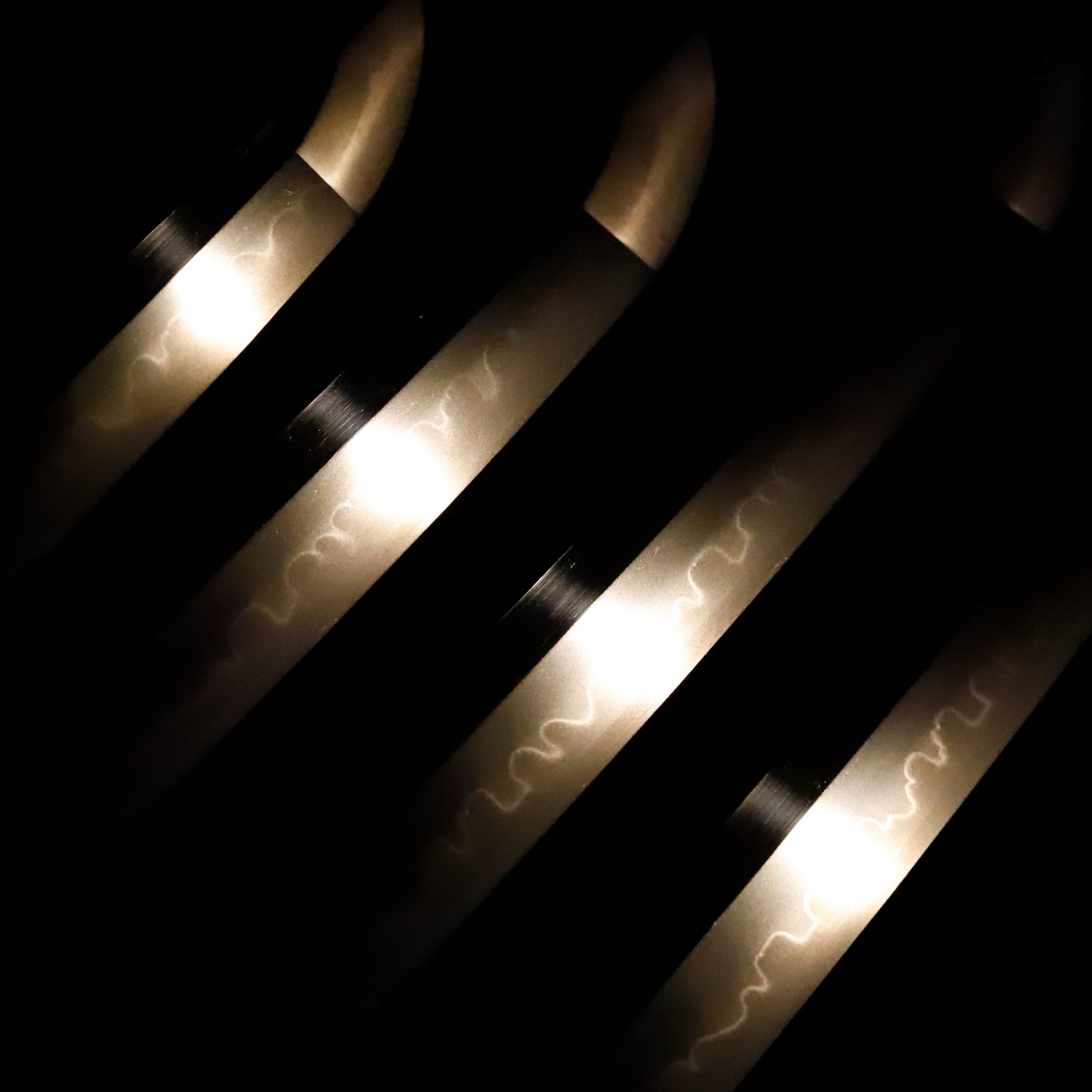
Around 1800 Suishinshi Masahide argued in his writings that the craft must return to the old masters’ methods: the fukkotō revival. His greatest successor Naotane worked convincingly in Bizen and Sōshū manners that had been dead for centuries.
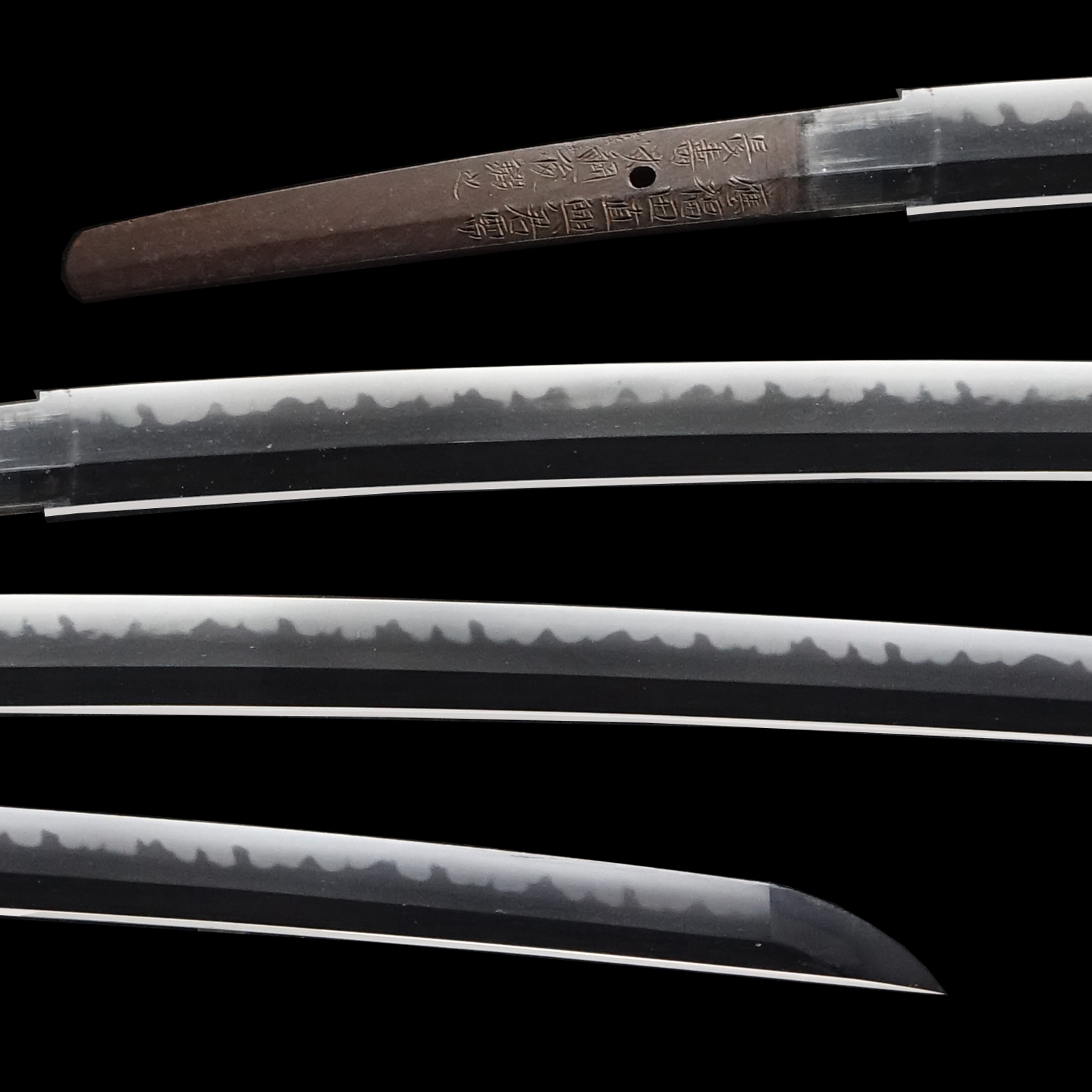
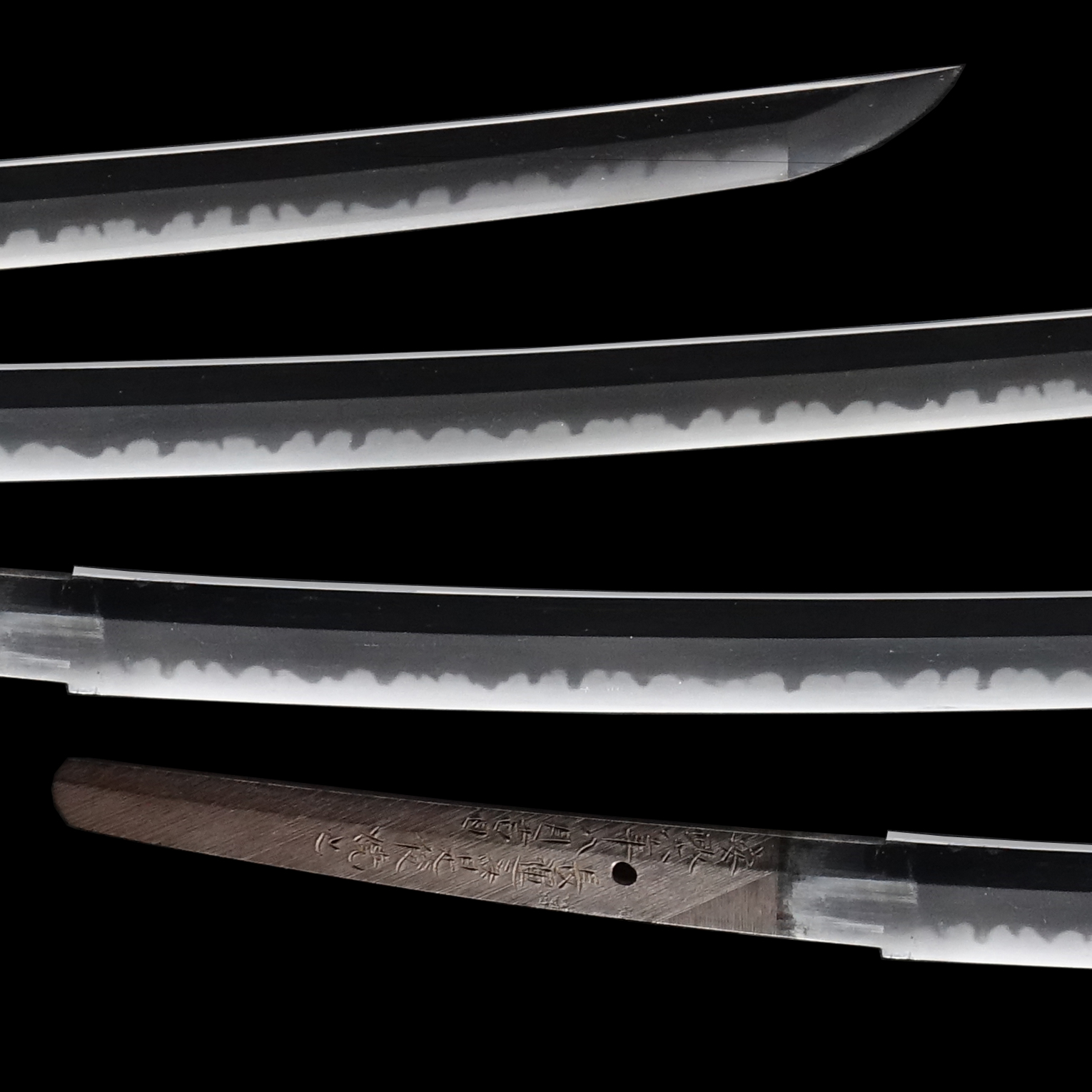
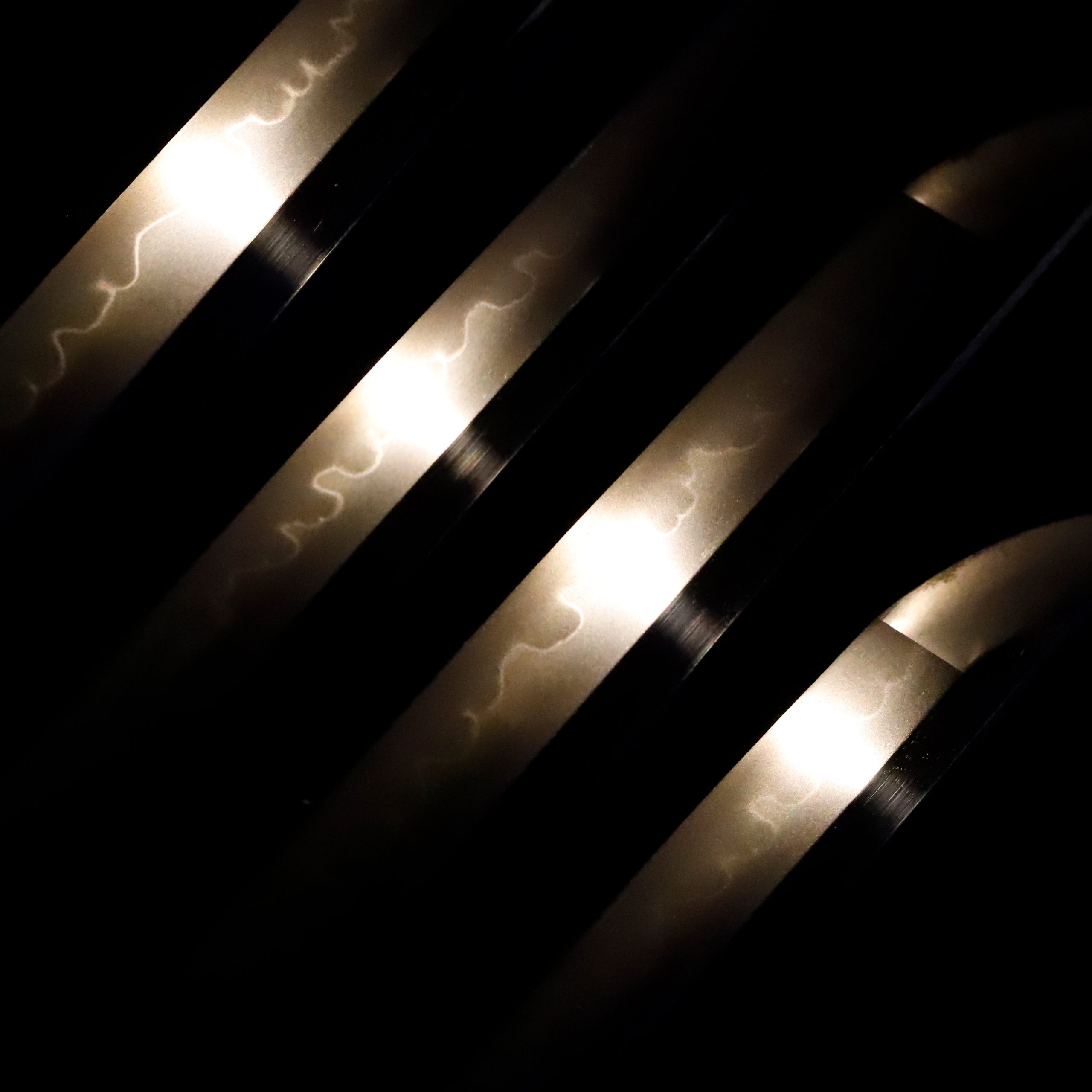
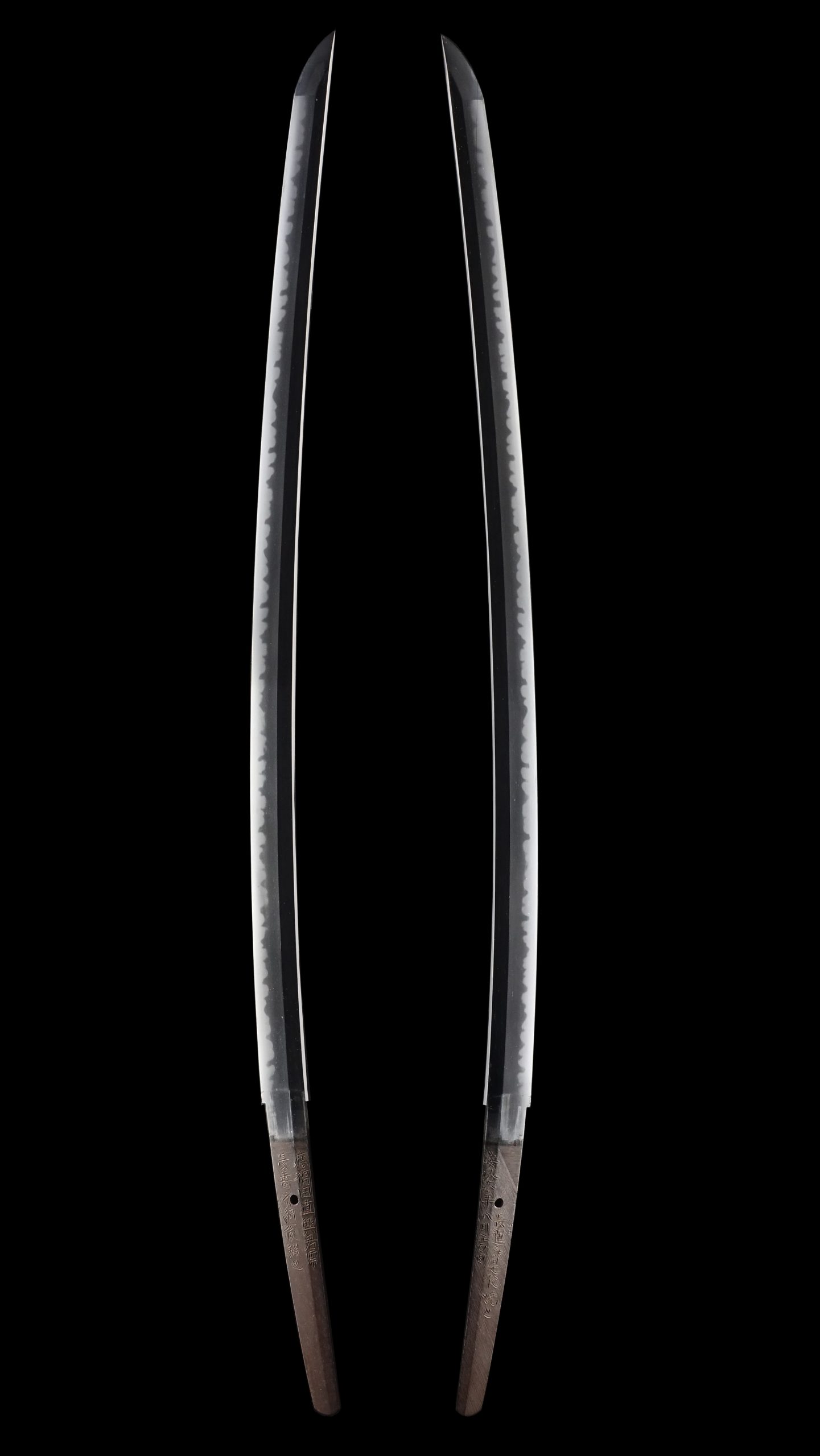
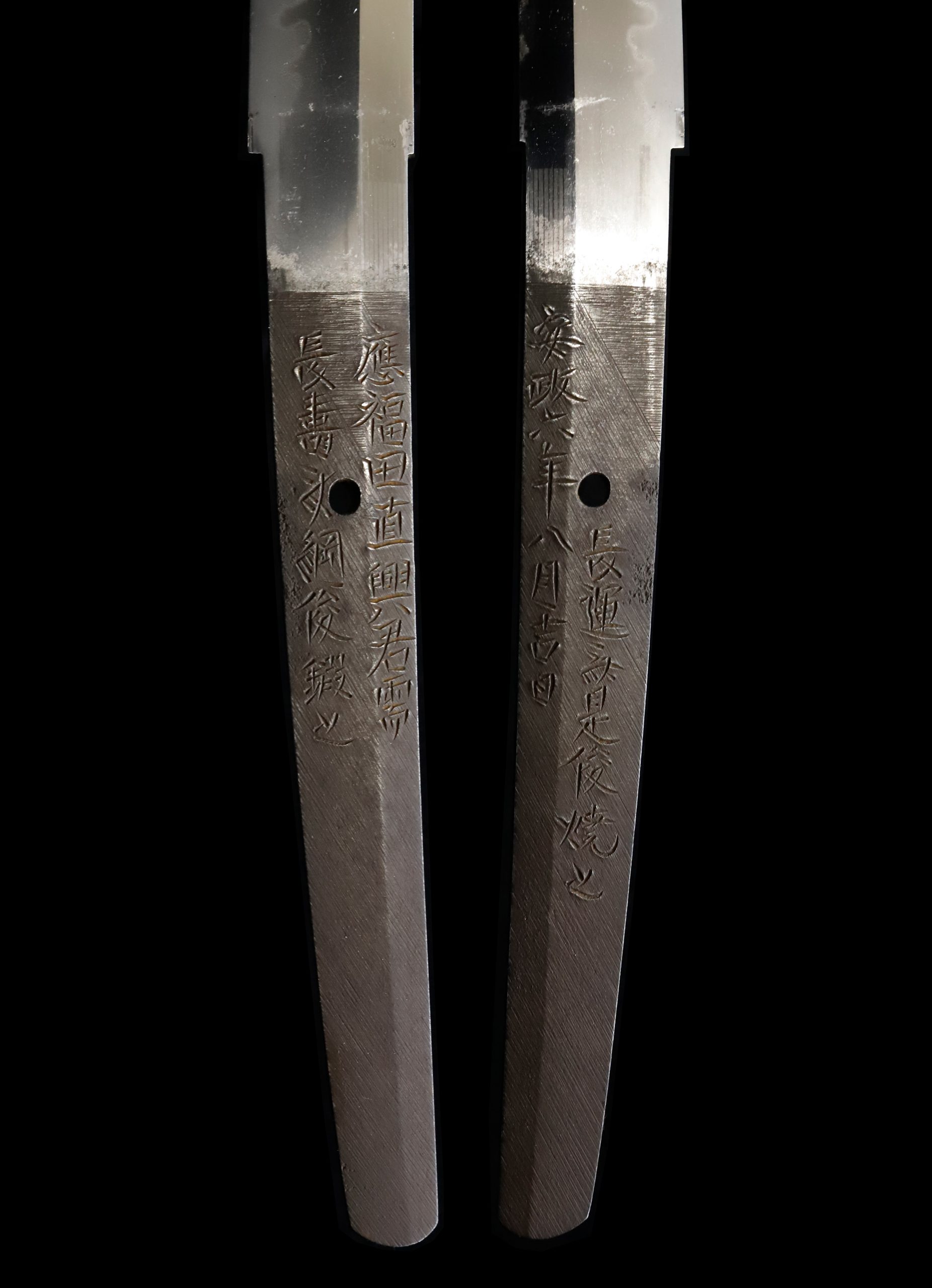
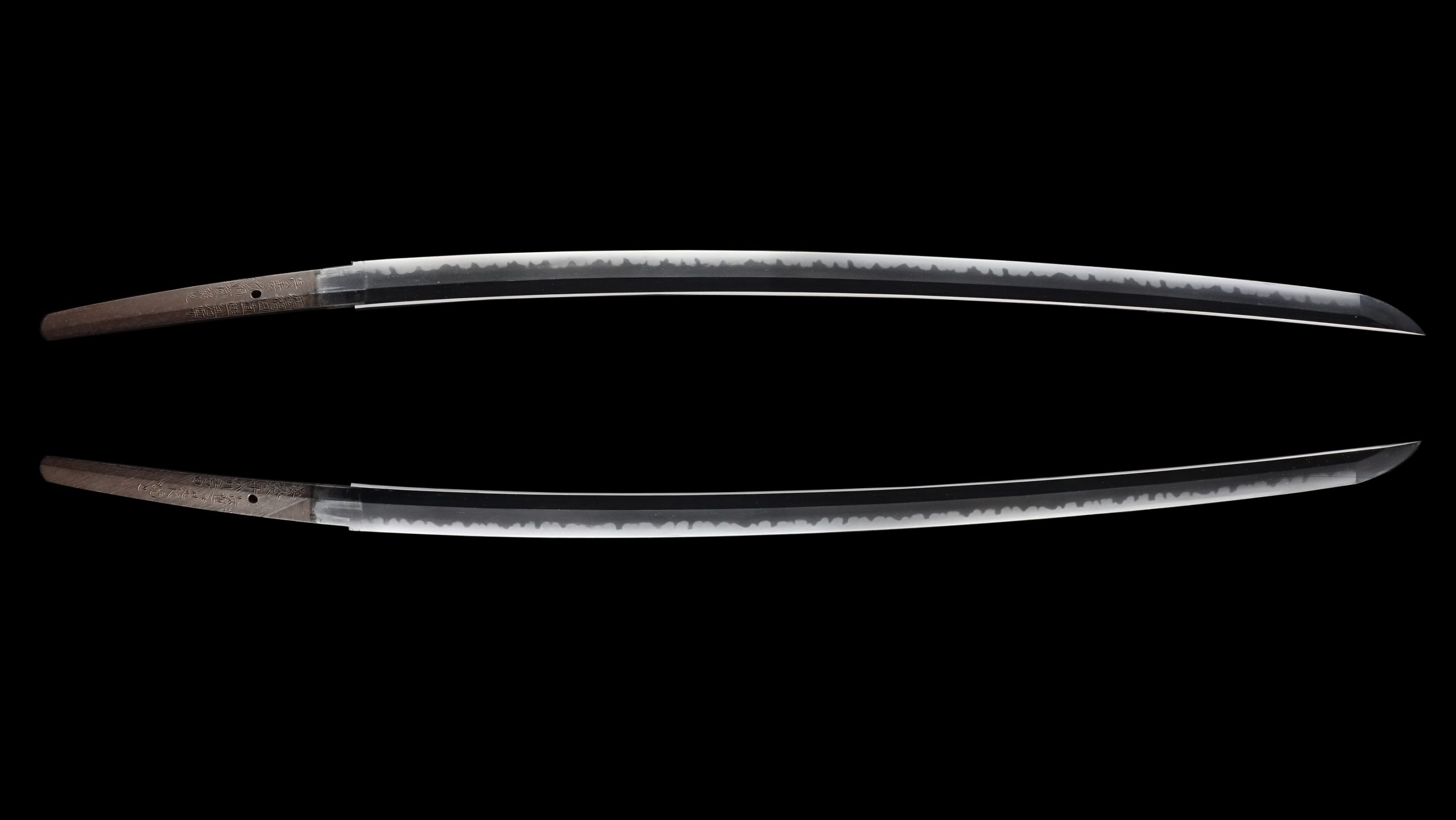
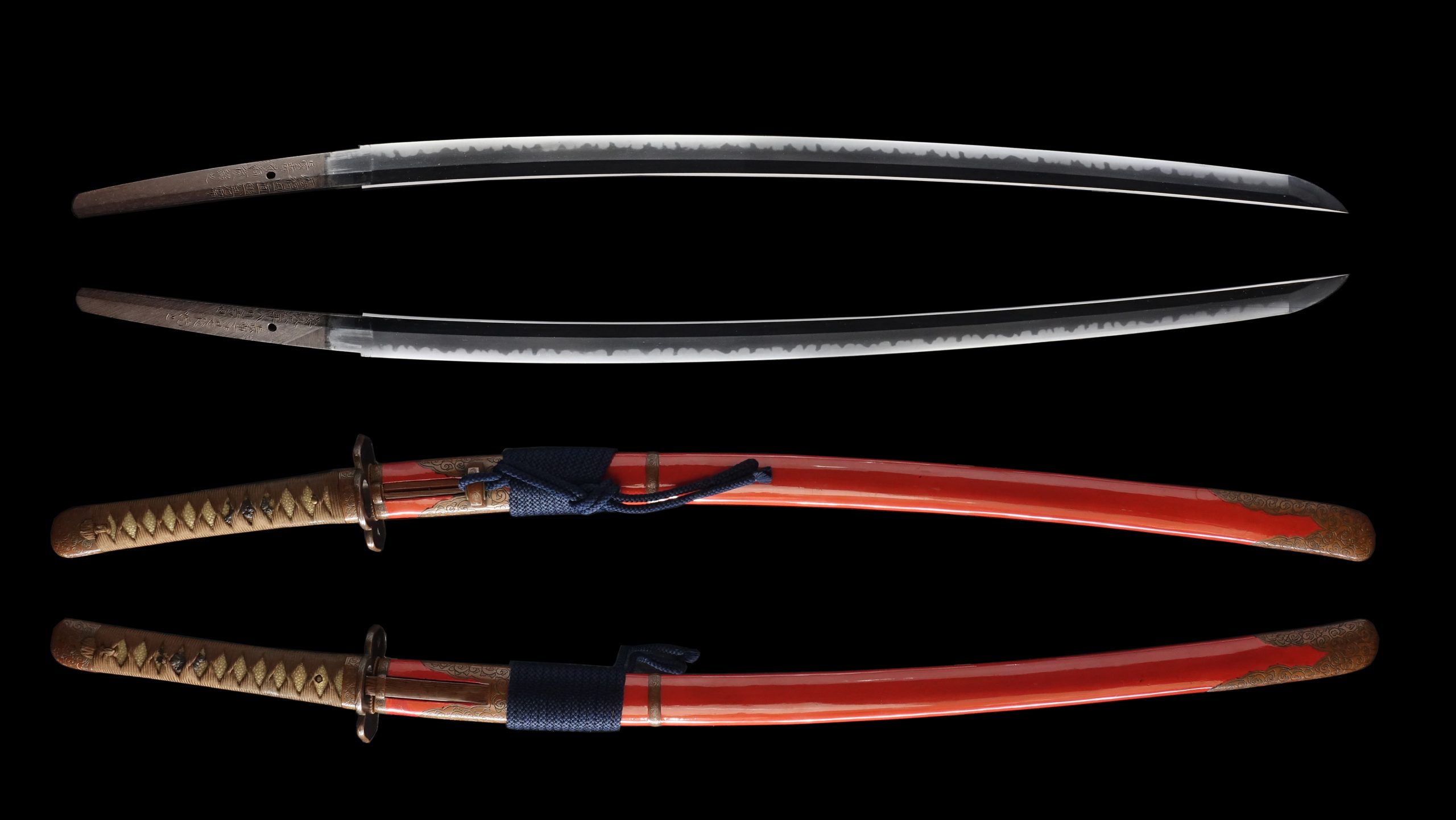
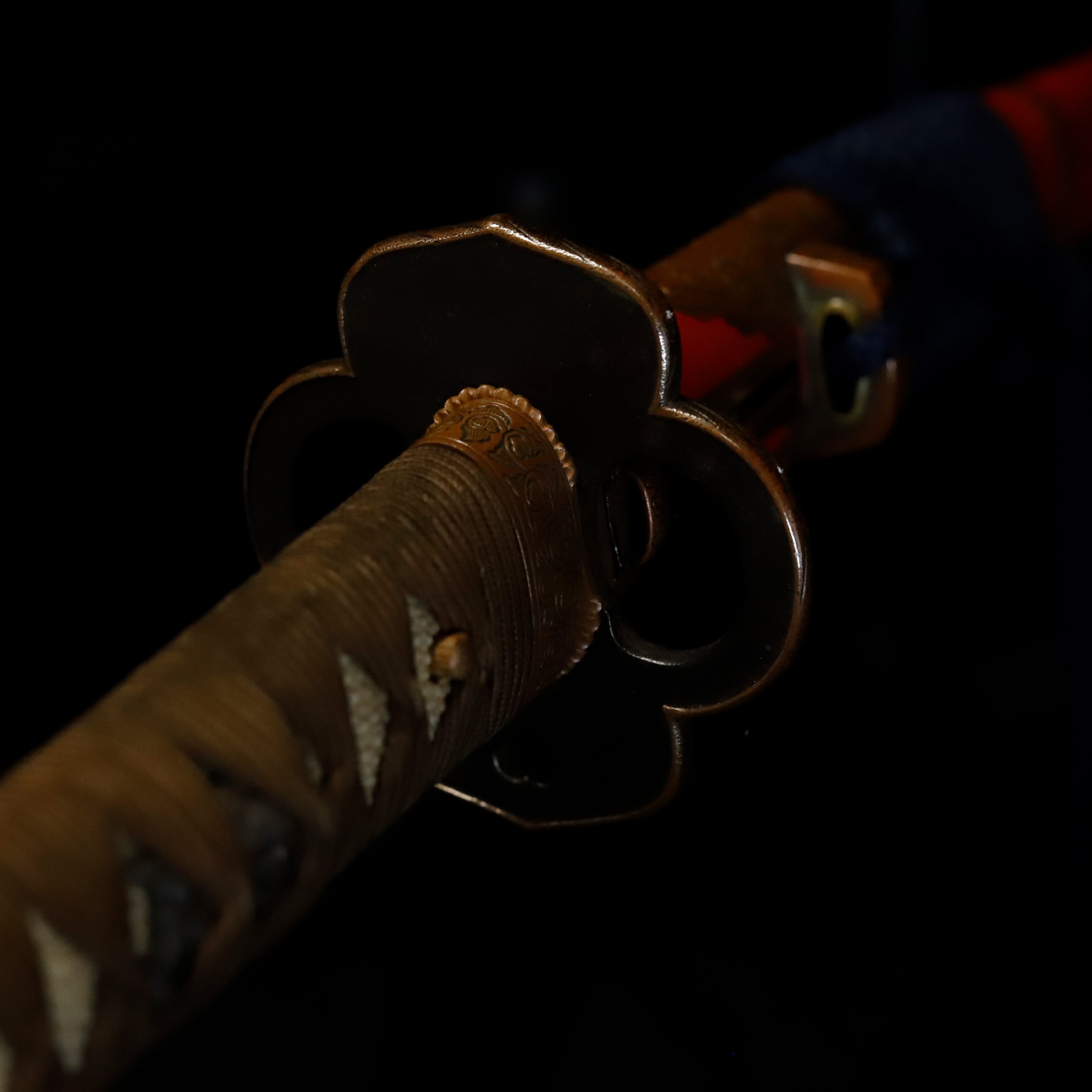
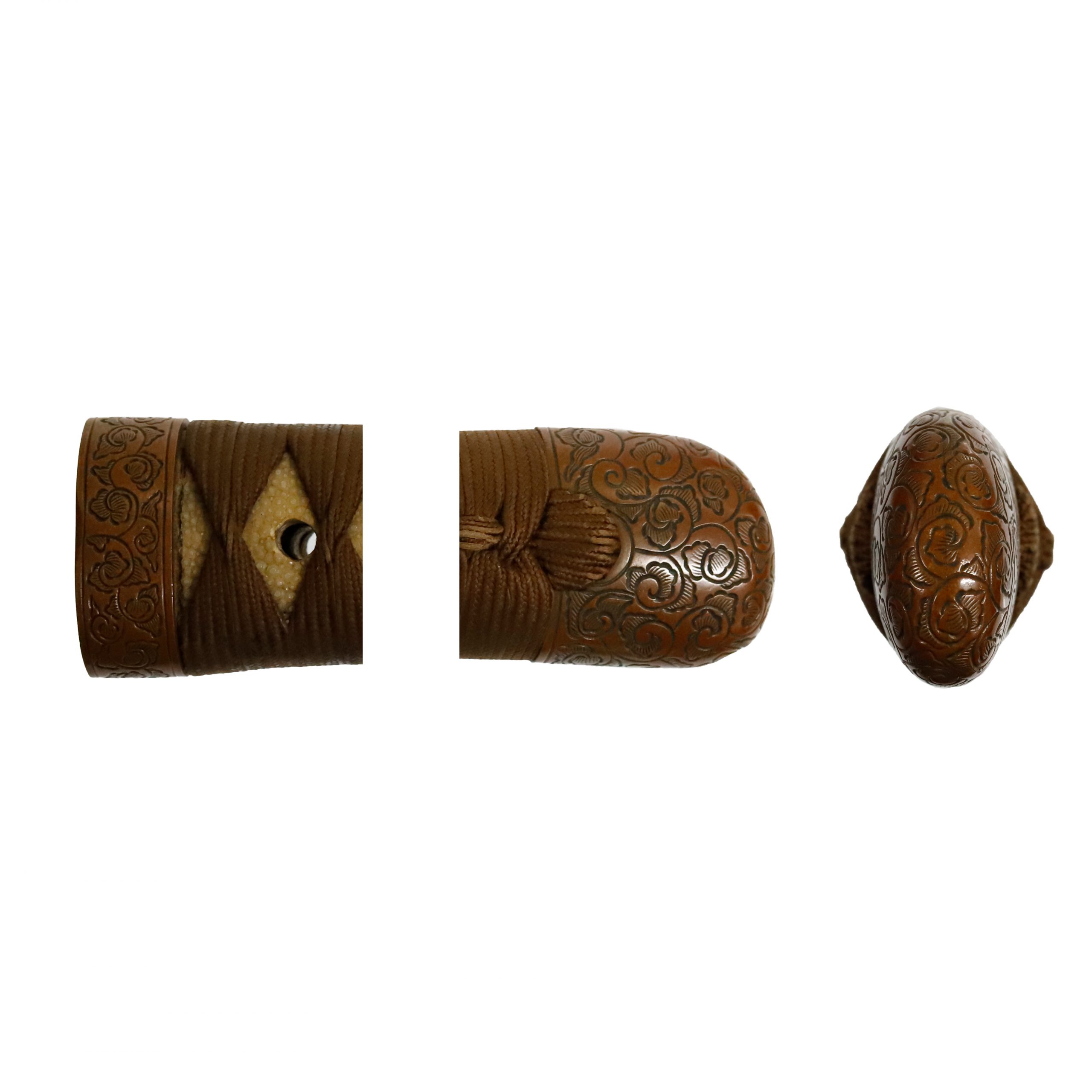
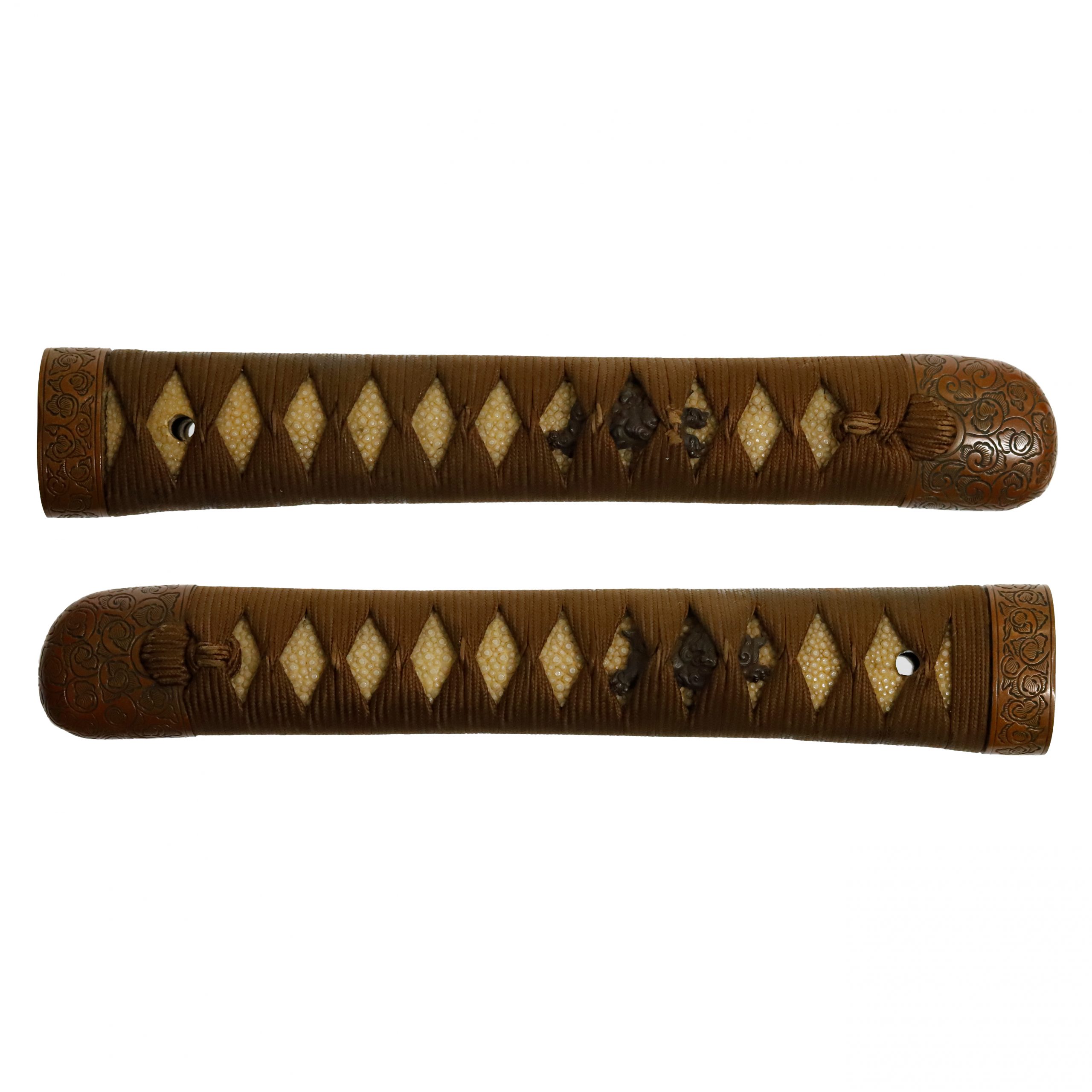
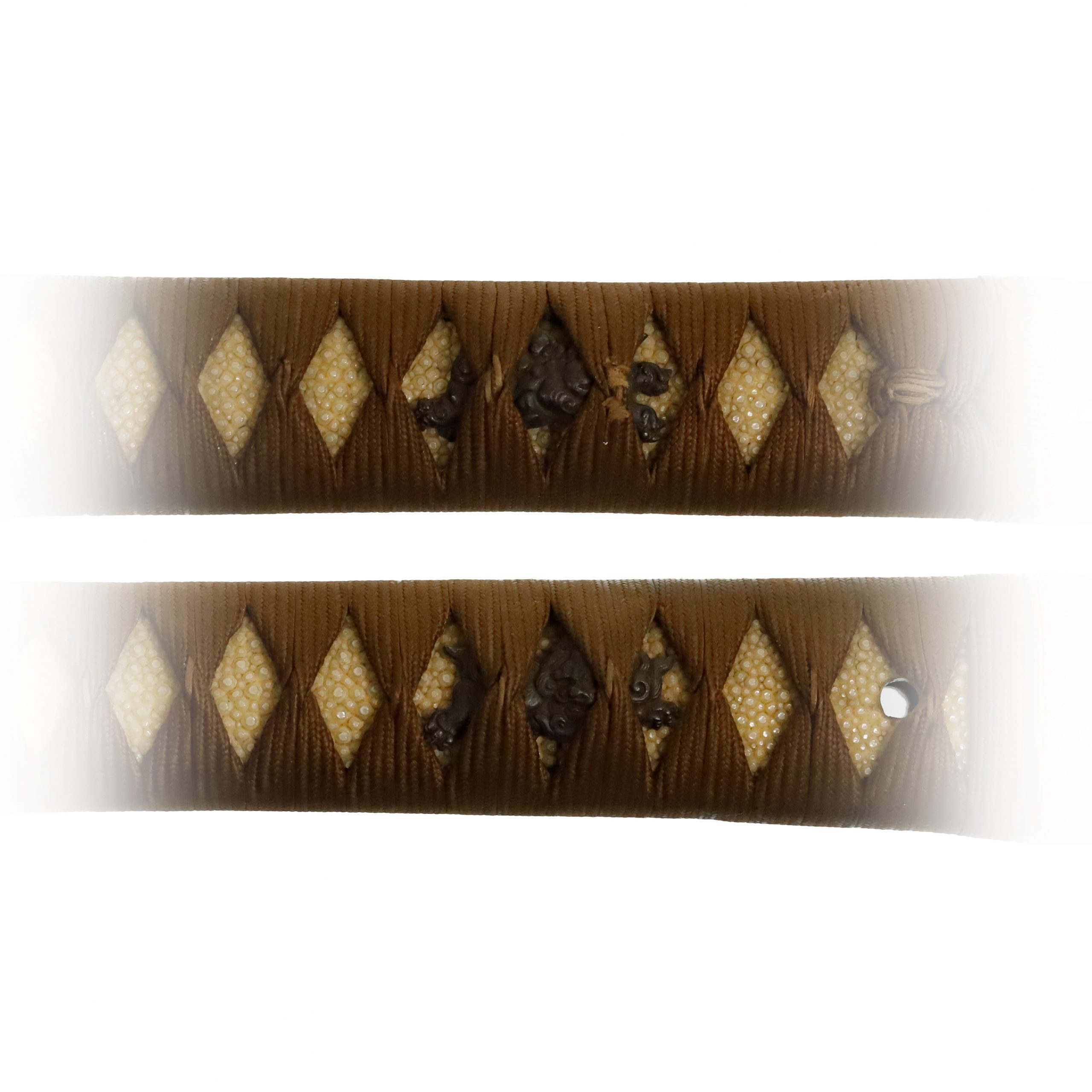
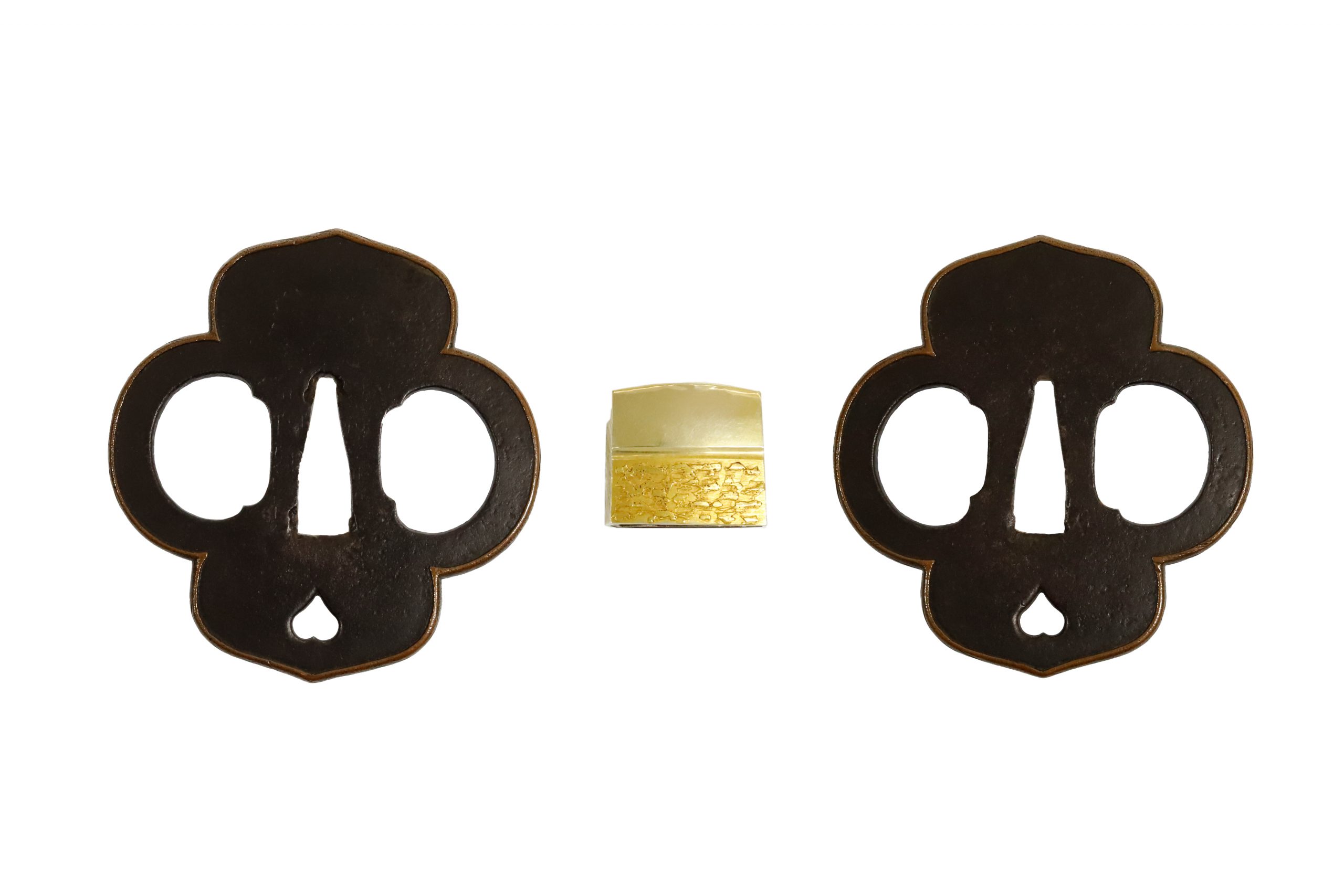
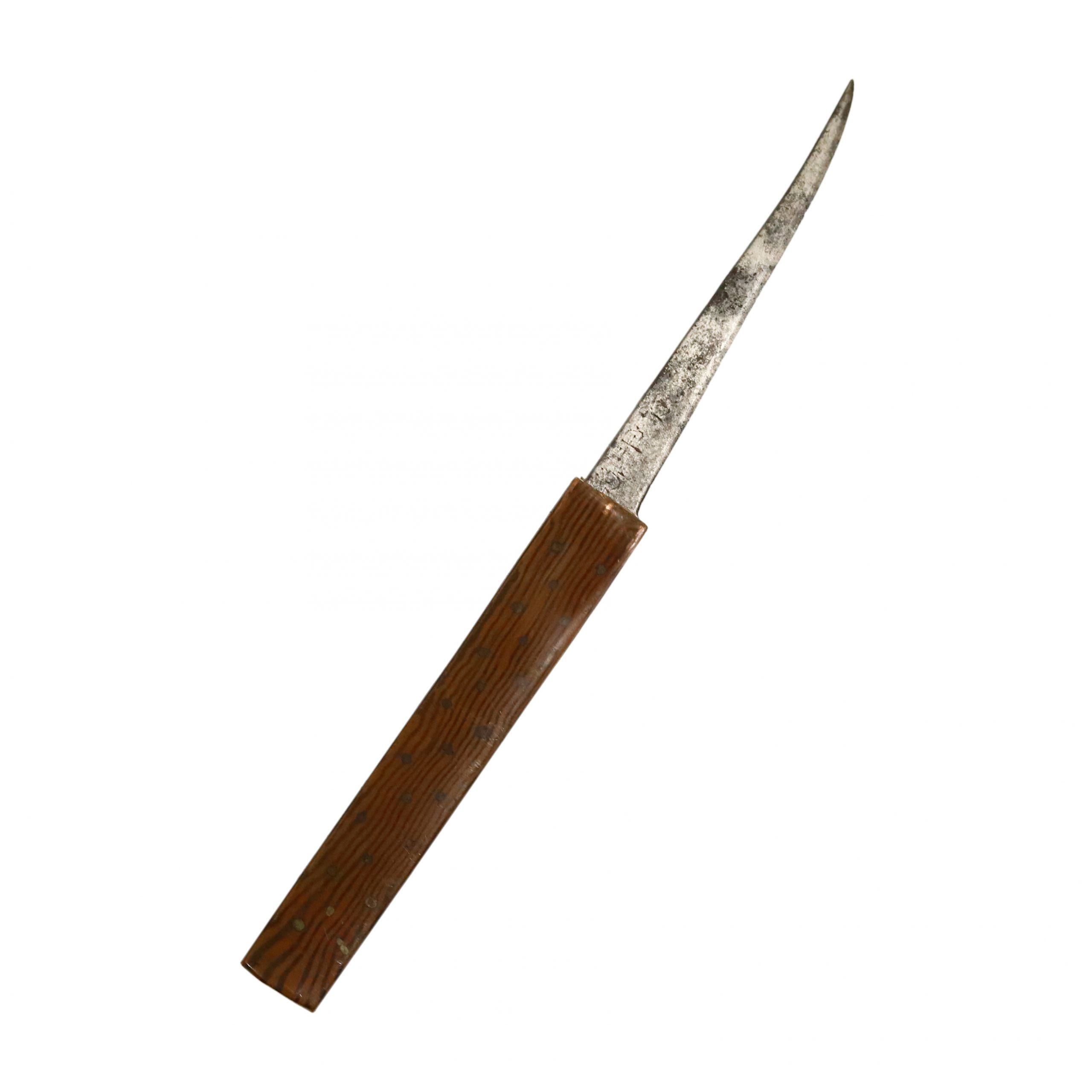
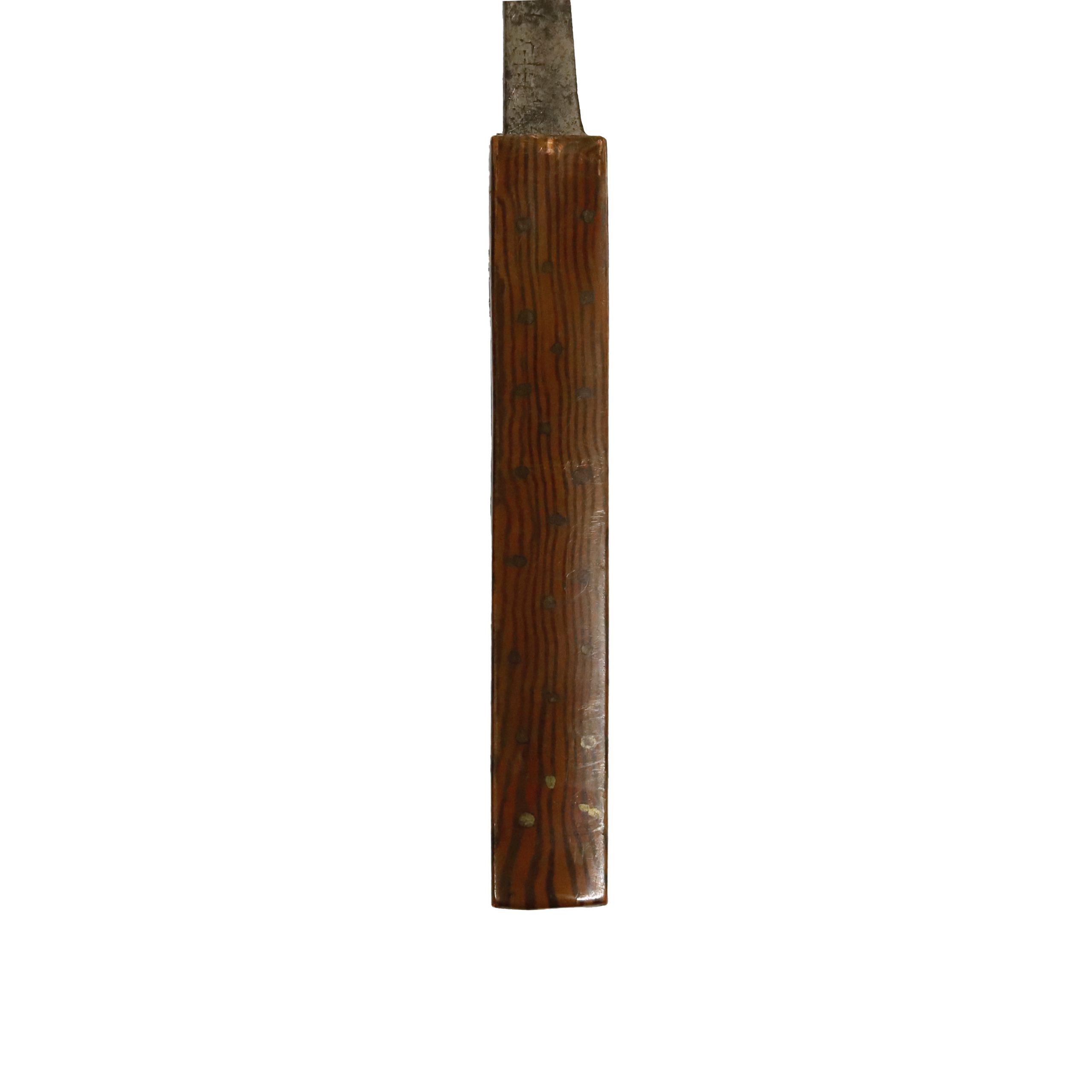
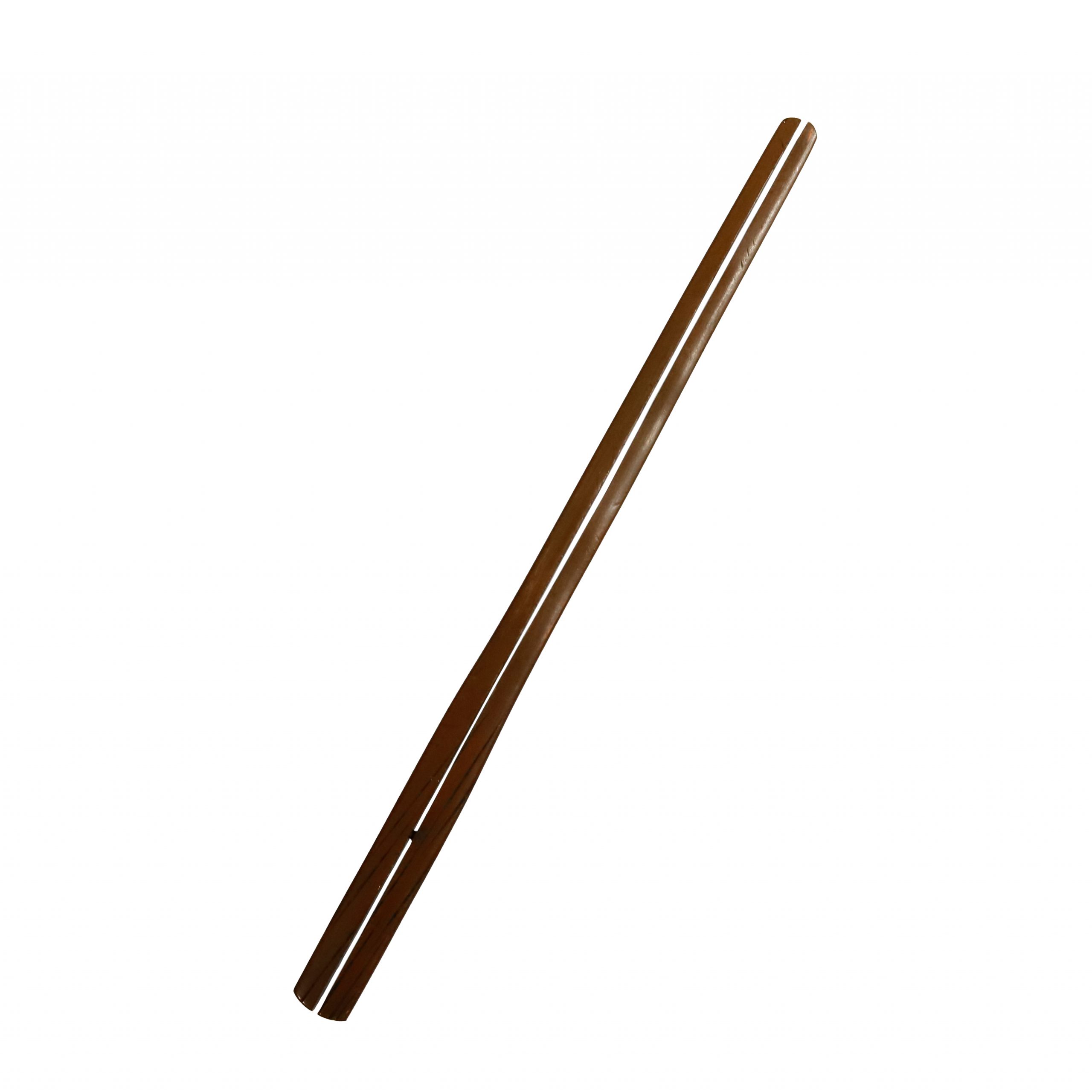
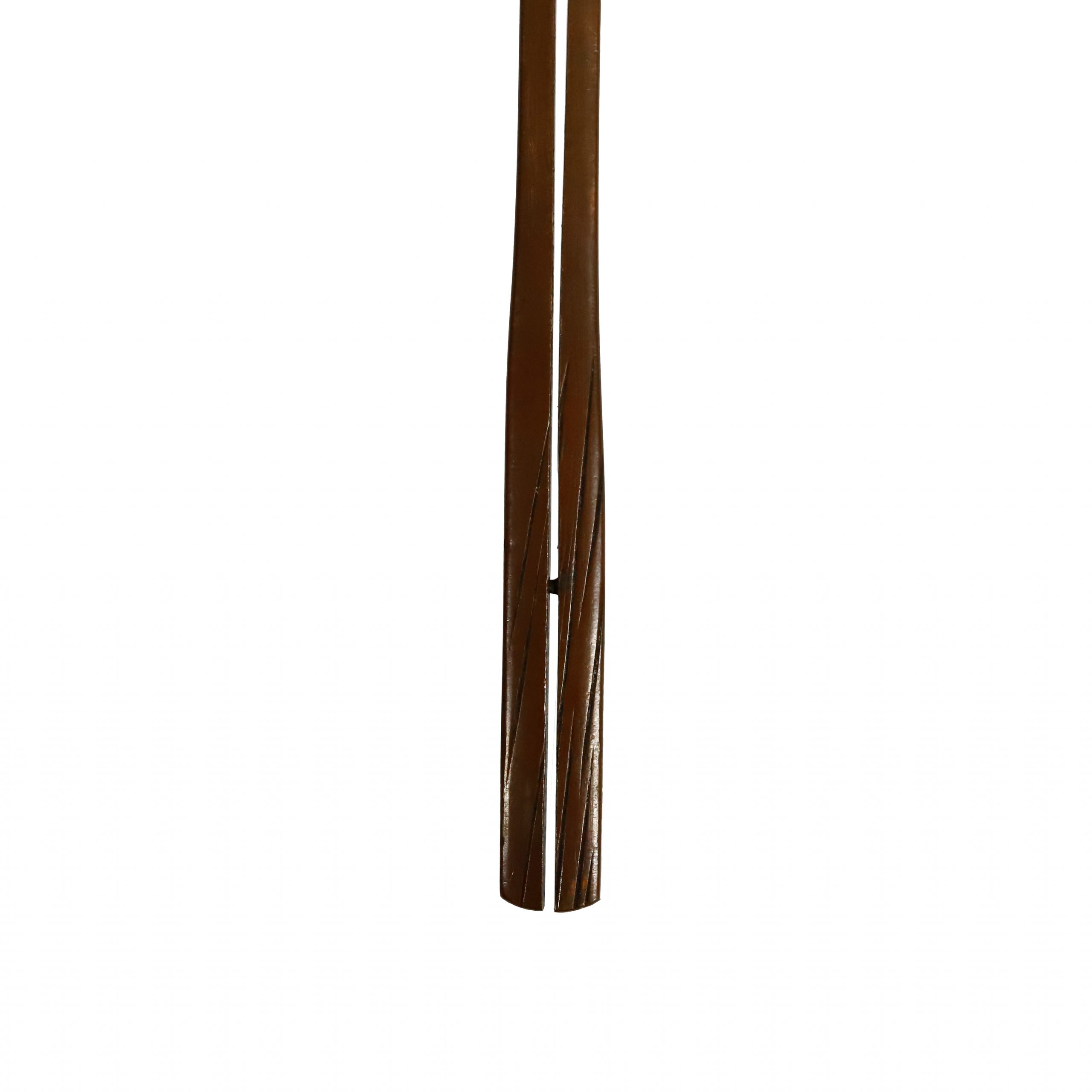
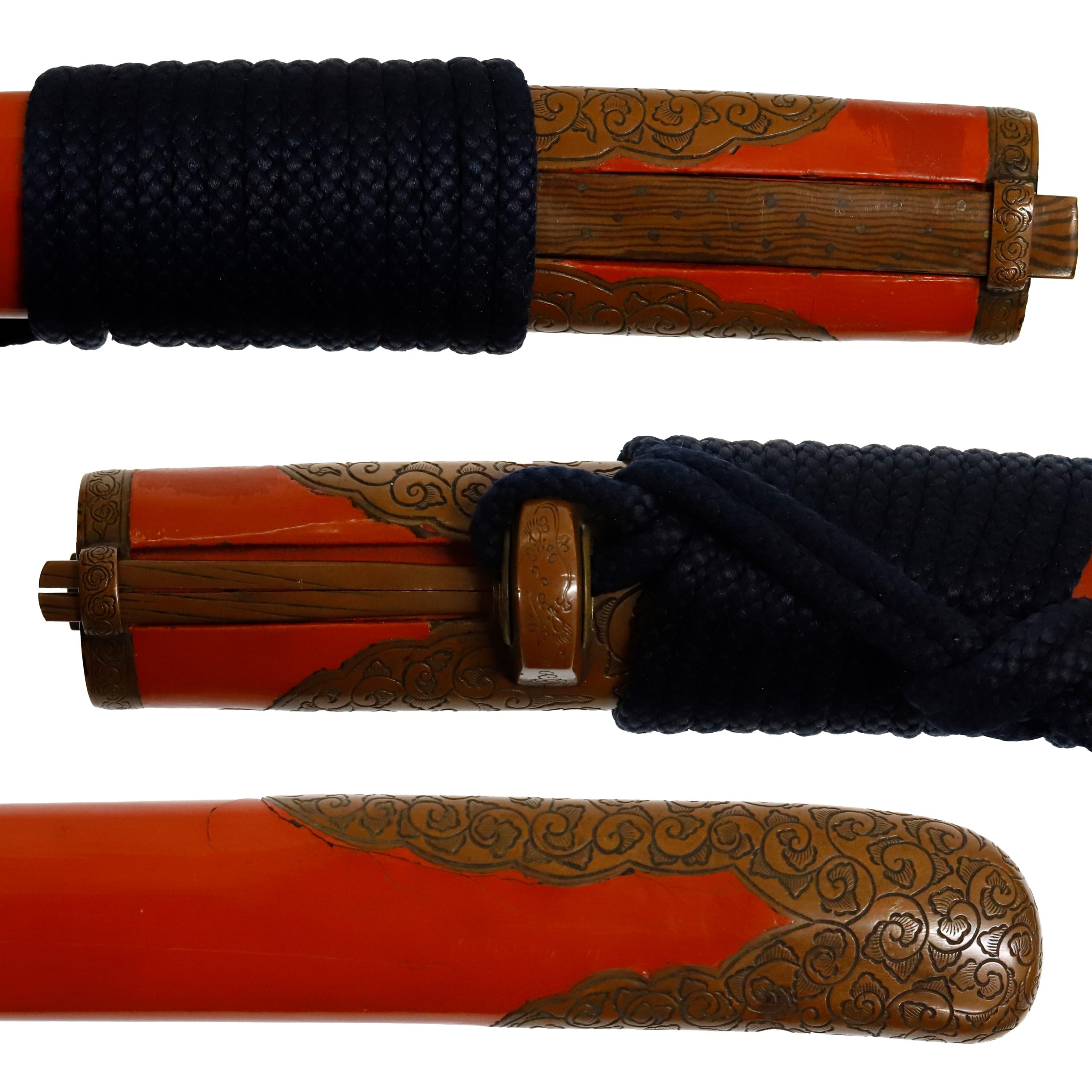
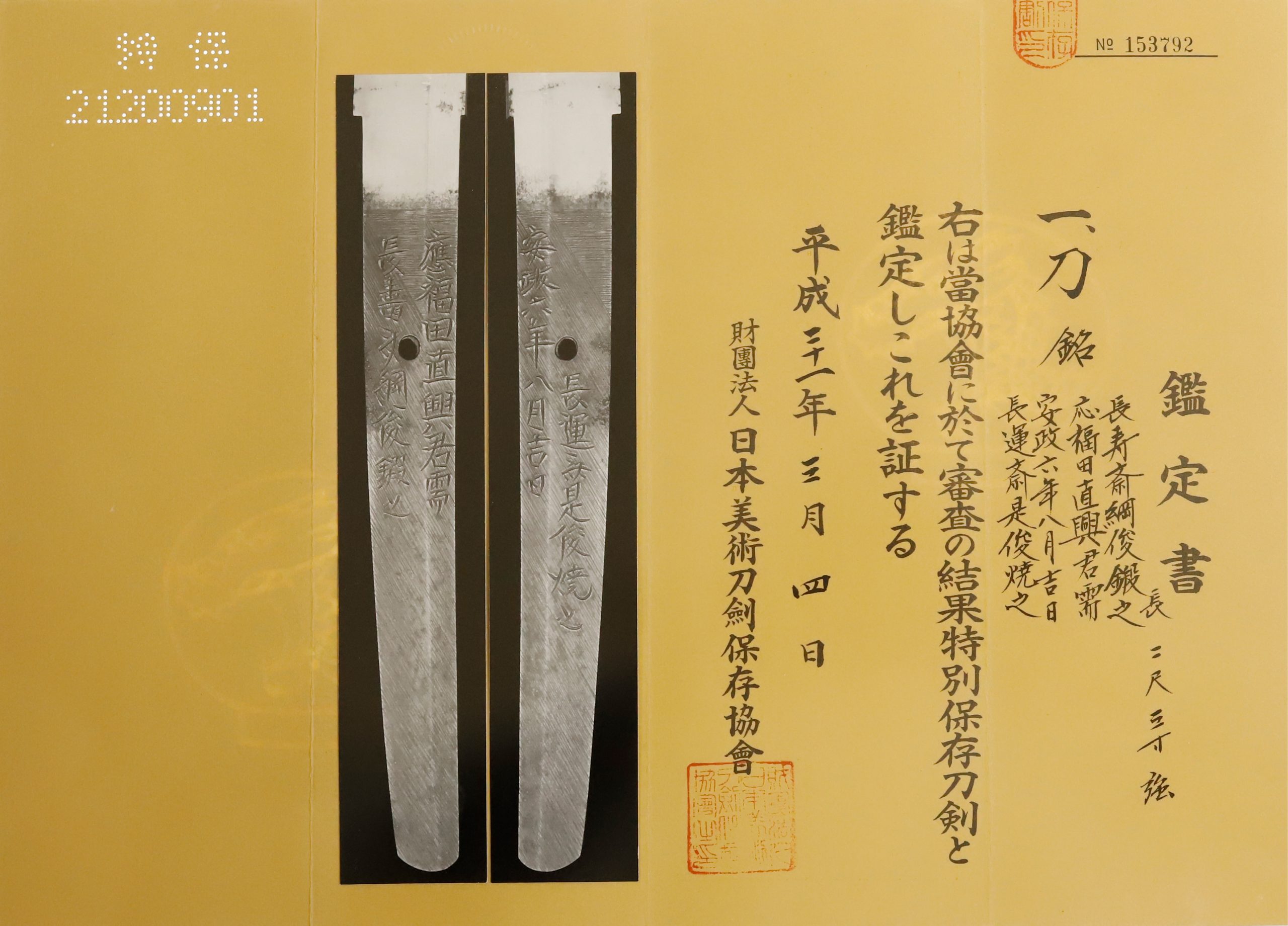
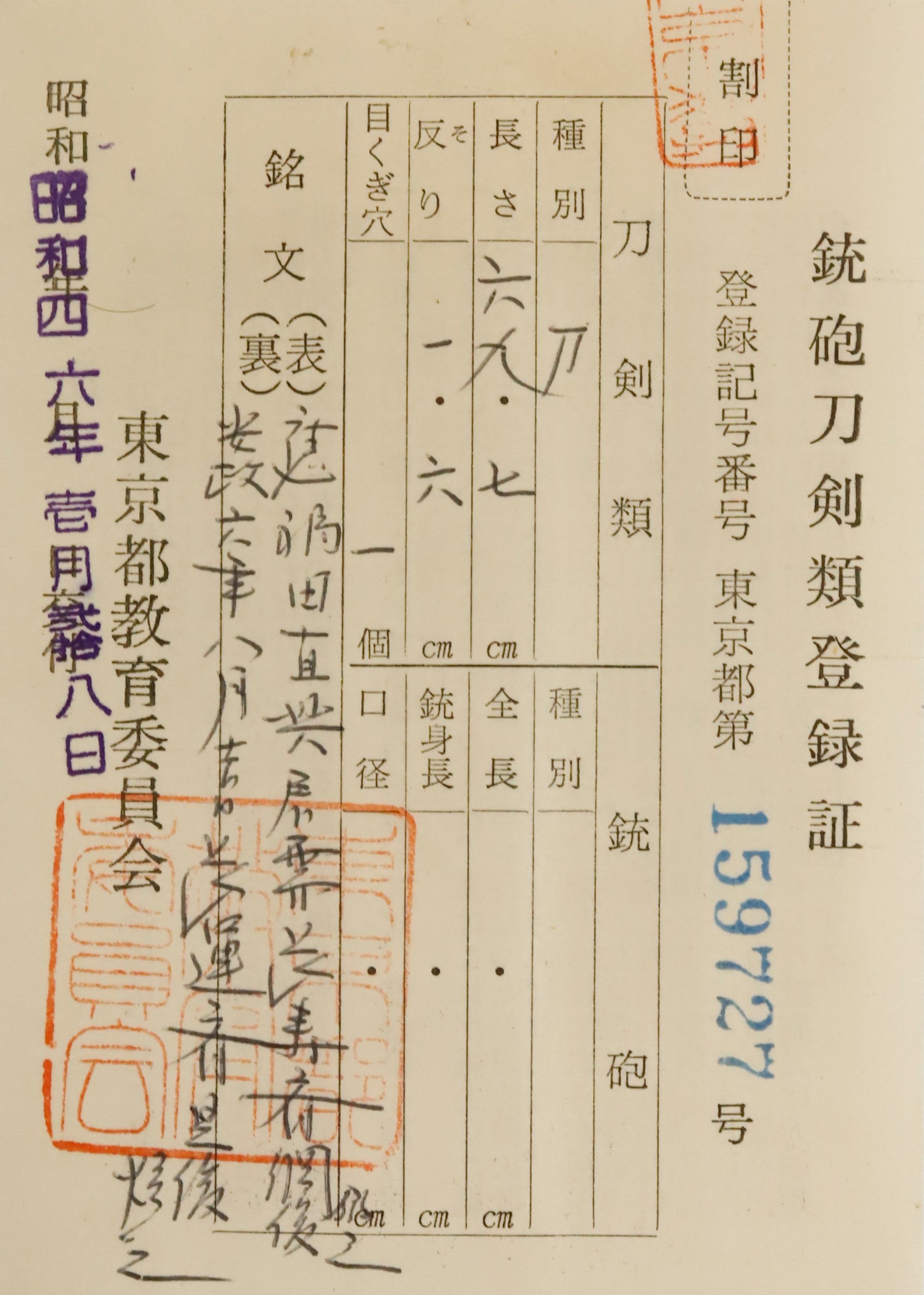
This blade was signed by Chojyusai Tsunatoshi(長寿斎綱俊) in August, the 6th year of the Ansei era (1859). The signature also says that Chounsai Koretoshi (長運斎是俊), who is the son of Tsunatoshi, was involved in this sword-forging. When two swordsmiths collaborated to create one work, it is called Gassaku (合作). It was generally done by a master and his apprentice or his son. Chojyusai Tsunatoshi is also known as the first-gen Tsunatoshi because his son also used Tsunatoshi as his maker’s name. Based on the tang, this blade was forged upon the request from Fukuda Nao-Oki (福田直興). We believe this person was a high-ranked Samurai who was wealthy enough to order a custom-made sword from a renowned swordsmith. The first-gen Tsunatoshi was born in 1798 in Yonezawa city, Hashu province (Yamagata prefecture) as the third son of Izumi no Kami Kunihide(和泉守国英). His family name was Kato, and he was the younger brother of Kato Tsunahide. Tsunatoshi’s real name was Kato Hachiro. He served Yonezawa Uesugi clan, a powerful feudal lord in today’s Yamagata prefecture. During his early career, he moved to Edo city to learn superb sword-forging techniques from Suishinshi Masahide, one of the most renowned swordsmiths at the end of the Edo period. There is also a record of him forging swords in Osaka and Kumamoto while his base was in Azabu town in Edo city (Today’s Tokyo). He settled in Edo city around 1823, and he created most of his work. He started to run his school there and resided in the house of Uesugi family. It is said that he received a stipend from them. He received the honorable title Chounsai (長運斎) in the first year of the Bunka era (1854). And, he gave this title to his son Koretoshi (the second-gen Tsunatoshi) in 1856, and he got the new title Chojyusai (長寿斎). Chojyu means living a long life in Japanese. His school flourished at the end of the Edo period, training many swordsmiths who later became historically significant ones, such as Koyama Munetsugu, Takahashi Naganobu, Ishido Korekazu. Tsunatoshi excelled at forging Bizen-Den tradition swords with Choji Midare Hamon, an irregular, wavy tempering line. You can see this characteristic in this blade as well. Most of Tsunatoshi’s work reflects Bizen Den (One of the Five Japanese sword-forging traditions). In terms of Bizen Den tradition swords, it is said that Tsunatoshi school surpassed Suishinshi Masahide school. Tsunatoshi died at the age of 66 in December 1863 after creating many great swords for high-class Samurais in Edo city. He is categorized as one of the top-tier swordsmiths during the late Edo period (SHIN SHIN TO era). And, he was the head of the prosperous school at the end of the Edo period. This blade is appraised as a Tokubetsu Hozon Token(特別保存刀剣) issued by NBTHK(Nihon Bijutsu Touken Hozon Kyokai:日本美術刀剣保存協会). Fuchi-Kashira A plant pattern is designed for this Fuchi Kashira. The same design also decorates the scabbard. Carving lines remain in good condition and make an ornamental appearance of this Koshirae. We think this plant pattern is a kind of the Karakusa (唐草, arabesque) design. It is a pattern in which stems and leaves of vines are twined and make curves. As ivy has a strong vitality and grows up without interruption, people have considered this design a symbol of prosperity and longevity. In Japanese, Vine is called Tsuru (蔓), and it has another pronunciation; “Man.” There is a word 万 (it is also read Man), which means thousand. In the Karakusa pattern, leaves and vines are connected like an Obi (帯, belt). The word 帯 can also be read “Tai.” Due to its pronunciation, the term 代 (Tai) is associated. From this word-association game, an idiom 万代 is associated, and it means a thousand generations. In other words, we imagine that people have used this design wishing prosperity and longevity for their clans for a long time. Tsuka and Menuki It is challenging to see the entire figure of Menukis through the gaps of the Tsukamaki thread. It seems a kind of animal. Regarding the curly hairs of these animals, we guess the Kara-Jishi (唐獅子) is the motif. The Shishi (獅子) means a lion in Japanese, and the Kara-Jishi is a lion brought from the Continent to Japan in the Toh period (唐, Tang dynasty, 618-907). The Kara-Jishi typically has curly hair for its head, neck, body, and tail, as you see in this work. In Buddhism, the Kara-Jishi is regarded as a symbol of wisdom, and the Monju Bosatu (文殊菩薩, Manjushri Bodhisattva) rides lions. According to a theory, the Kara-Jishi originates from the Komainu (狛犬, stone guardian dogs that exorcize evil spirits). The former owner of this sword might have been a pious Buddhist. Tsuba and Habaki This Tsuba has a symmetrical shape. Its edge is covered with a thin metal plate; it gives a decorativeness for this work. And it has practicality. For example, it prevents the wear of the edge part. We imagine it also prevents the wear and tear of the Kimono if the edge damages it by touching the cloth. You would find a heart mark in this Tsuba. It is called the Inome (猪の目) pattern. This design has been used since ancient times in Japan. As its name implies, the boar’s eyes are its origin. Some people have believed that the Inome pattern would work as an amulet to protect them from evil spirits or fire. Also, it is said it would bring good luck. Kougai The Kougai was used to arrange or fix the hairstyle of Samurais. This item is usually stored in the Kougai Hitsu. The Kozuka is often stored at the other side of the scabbard, as you see in this Koshirae. This Kougai is separated into two parts; this type of Kougai is categorized as the Wari Kougai (割笄). According to a theory, this separated type was invented in the Edo period, and it became popular as decorative metal fittings. Although there is no proof, it is said that some people used the Wari Kougai as chopsticks. Kozuka Kozuka is a small knife stored in Koduka Hitsu(groove of the sheath of the Japanese sword). A Kogatana (小刀, small knife) is stored in the Kozuka. It is probably made from copper, and its brownish color emphasizes the impression that this Kozuka looks like wood grain.; it is also because of thin line patterns. Authentication Paper They authenticated the blade on March 4th in the 21st year of Heisei (2009). They appraised them as Tokubetsu Hozon Touken, the blade especially worth preserving for Japanese society.
Suishinshi Masahide Tsunatoshi綱俊
Offered by Samurai Museum
This piece has sold
Get an email when a new Suishinshi Masahide Tsunatoshi piece hits the market.


Shinshinto · Musashi · around 1830-1844
Fujishiro Jo saku · Tōken Taikan top 37%
7 pieces on the market now
Tsunatoshi was originally from Yonezawa in Dewa Province; his personal name was Kato Hachiro, and he used the art name Chounsai. He served as a domain smith for the Uesugi clan, later going to Edo and taking up residence in Azabu. He died in Bunkyu 3 (1863) at the age of sixty-six. His active career is documented through dated works spanning the Tenpo era, with productions from Tenpo 9 (1838) through Tenpo 12 (1841) among those that have received Juyo designation.
Tsunatoshi's workmanship primarily followed the Bizen tradition. His specialty was a choji temper mixed with gunome in nioi-deki, with long ashi entering and the nioiguchi tending toward tightness; in addition, he produced suguha and toran-midare. The toran-flavored mode achieves a large o-gunome midare with tama-yaki, nie adhering somewhat unevenly, and hakikake at the boshi. Across all styles, his forging is characteristically a tightly compacted ko-itame that tends toward a muji-like appearance -- the plain, featureless-looking steel common in shinshinto work, though in Tsunatoshi's case worked with particular density and carrying ji-nie. His horimono are noteworthy: bo-hi with accompanying soe-bi, bonji, shinkurikara, gomabashi, and claws, at times executed by the smith's own hand as documented by tang inscriptions stating the carvings were by the maker himself.
Tsunatoshi's extant designated works include katana, wakizashi, and a matched daisho pair -- the survival of which as a set makes it "especially useful reference material" in the NBTHK's assessment. His productions range from imposing katana of 75.5 cm with extremely deep sori to hira-zukuri wakizashi with elaborate carving, and one piece retains its original payment receipt addressed to the commissioning patron, providing documentary evidence of the domain smith's working practice.
Where Tsunatoshi stands among comparable artisans: across all of nihontō, and within tradition, era, and period. The tiers (Foremost · Leading · Major · Notable) weigh official designations from the NBTHK and Japan's Agency for Cultural Affairs, together with historical honors of lasting repute such as the Sansaku and Meibutsu-chō.
Select a lens to see how it's measured.
Years he was demonstrably active, proven by signed-and-dated blades
Shinshinto · Musashi
70 pieces on the market now
At Hamachō in Edo, in the closing decades of the eighteenth century and the opening ones of the nineteenth, Suishinshi Masahide[[c:1]] gathered the school that would turn Japanese swordmaking back toward its medieval models. Born Kawabe Gihachirō at Akayu in Dewa in 1750, signing first as Suzuki Takahide and then Eikoku, he studied under the Shitahara smith Yoshihide of Musashi, took the name Masahide in An'ei 3, and served the Akimoto house of Yamagata before settling in Edo, where he worked for nearly fifty years. He is the founding figure of the shinshintō and the theorist of the fukko-tō (revival-sword) doctrine, the argument that the sword ought to return to its Kamakura forms. Around that teaching he drew a large body of pupils, among them Taikei Naotane, who would give the revival its fullest practical form, the future second Masayoshi (Hosokawa Morihide), and a wider Edo and provincial following that carried the program into the Mito, Yonezawa, Tsuyama, and Tatebayashi domains. The shared vocabulary of the school is the deliberate reach back into the koto traditions, worked over a tightly forged, often muji-toned ko-itame with thick ji-nie. Masahide's own prime hand was the Ōsaka-utsushi, the surging tōran-midare of Tsuda Sukehiro opening from a long yakidashi and the broad suguha after Inoue Shinkai, betrayed on even his closest copies by a blackish, coarse nie that spills from the ha into the ji. Naotane gave the revival its Bizen and Sōshū faces: a reverse-leaning chōji-midare with angular kaku-gunome and saka-ashi, modeled on the late-Kamakura Osafune masters Kagemitsu and Kanemitsu and anchored by a consciously revived midare-utsuri that no ordinary shinshintō steel carries, set beside a Sōshū notare with its whorled uzumaki-hada and coarse, striped nie. The pupils divided this inheritance along their own lines. Jirōtarō Naokatsu, Naotane's adopted son, took a Bizen-den led by a kataochi-gunome from Kanemitsu with a pervasive saka-gakari slant and chōji- or midare-utsuri in the ji.
Suishinshi Masatsugu reproduced Naotane's two traditions, Sōshū and Bizen, down to the cut of his signature. Through Masayoshi the Bizen current passed to his heir Hosokawa Masamori of Tsuyama, whose chōji clusters mixed with gunome-chōji and togariba. The Osaka wave traveled separately into Mito through Naoe Sukemasa, who set a Shinkai-styled suguha and a Sukehiro tōran over a clear ko-itame, while Chōunsai Tsunatoshi of the Uesugi service carried a nioi-deki chōji mixed with gunome, suguha, and tōran-midare, often with carving by his own hand. To kantei the school is to weigh a tradition consciously copied against the period marks the copy cannot shed: the constant of the line is that the hamon is never the pure nioi-deki of old Bizen but carries nie throughout, a difference the NBTHK names outright as the divide between koto and shinshintō. The revived utsuri in Naotane and Naokatsu, the spilling nie in Masahide, the whorled uzumaki-hada shared across the line, and the broad, thick-kasane late-Edo sugata are the surest tells, narrowed further by the school's habit of full, dated signatures that make these smiths among the most exactly knowable of their age. Masahide stands at the head as the teacher and theorist, his finest work in his Ōsaka copies rather than the doctrine he proclaimed; Naotane stands ahead of him in execution, his Bizen-den held the finest among the shinshintō. Their pupils define the late-Edo Osafune and Sōshū revivals as practiced through Edo and the domains, with Naokatsu and Masatsugu read as the next hands after Naotane and Masayoshi. The provenance of the school runs through domain commission and bestowal (Mito blades forged at the Kōrakuen by lordly order, Tsuyama and Yonezawa fief work, Naotane's Sanada daishō and a tachi recorded in Honma's inventory of the Imperial collection) rather than ancient daimyō transmission, fitting for a movement that, within a single generation at Edo, redrew the direction of nineteenth-century swordmaking by turning it back toward the old models. Learn more →
| Smith | Era | Designated |
|---|---|---|
| Naotane直胤 | 1801-1837 | 40 |
| Masahide正秀 | 1777-1817 | 28 |
| Sukemasa助政 | 1804-1825 | 8 |
| Jirotaro Naokatsu直勝 | 1805-1858 | 7 |
| Masayoshi正義 | 1791-1860 | 5 |
The Shinshintō revival
Around 1800 Suishinshi Masahide argued in his writings that the craft must return to the old masters’ methods: the fukkotō revival. His greatest successor Naotane worked convincingly in Bizen and Sōshū manners that had been dead for centuries.
A Hozon-certified blade judged to show notably superior workmanship and a better state of preservation. The bar is higher: re-tempered blades and most unsigned Muromachi/Edo works are excluded.
The NBTHK (Nihon Bijutsu Tōken Hozon Kyōkai, the Society for the Preservation of Japanese Art Swords) is a public-interest incorporated foundation founded in 1948 and supervised by Japan’s Agency for Cultural Affairs (Bunkachō); it is based at the Japanese Sword Museum in Tokyo. Its expert panels physically examine each submitted work (shinsa) and issue a certificate (kanteishō) ranking it by artistic and historical merit. NBTHK papers are the most widely recognized standard of authentication for Japanese swords and fittings.
NBTHK official siteReturns/exchanges limited to defects caused by shipping (except willful misconduct or gross negligence by the company); customers must contact within 72 hours of receiving the product.