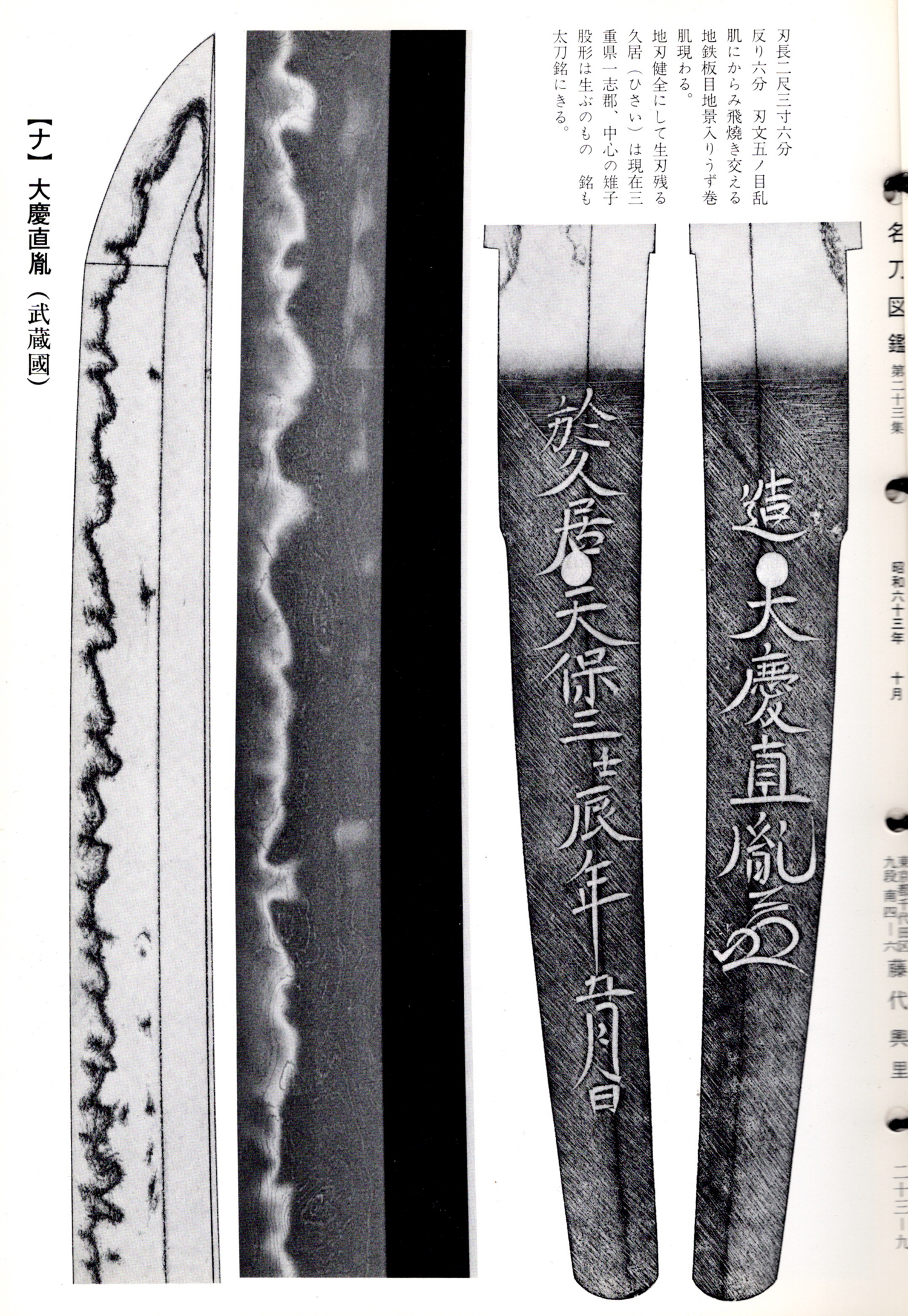
-, 34th Session — Designated April 14, 1988
, : Naotane (大慶直胤)
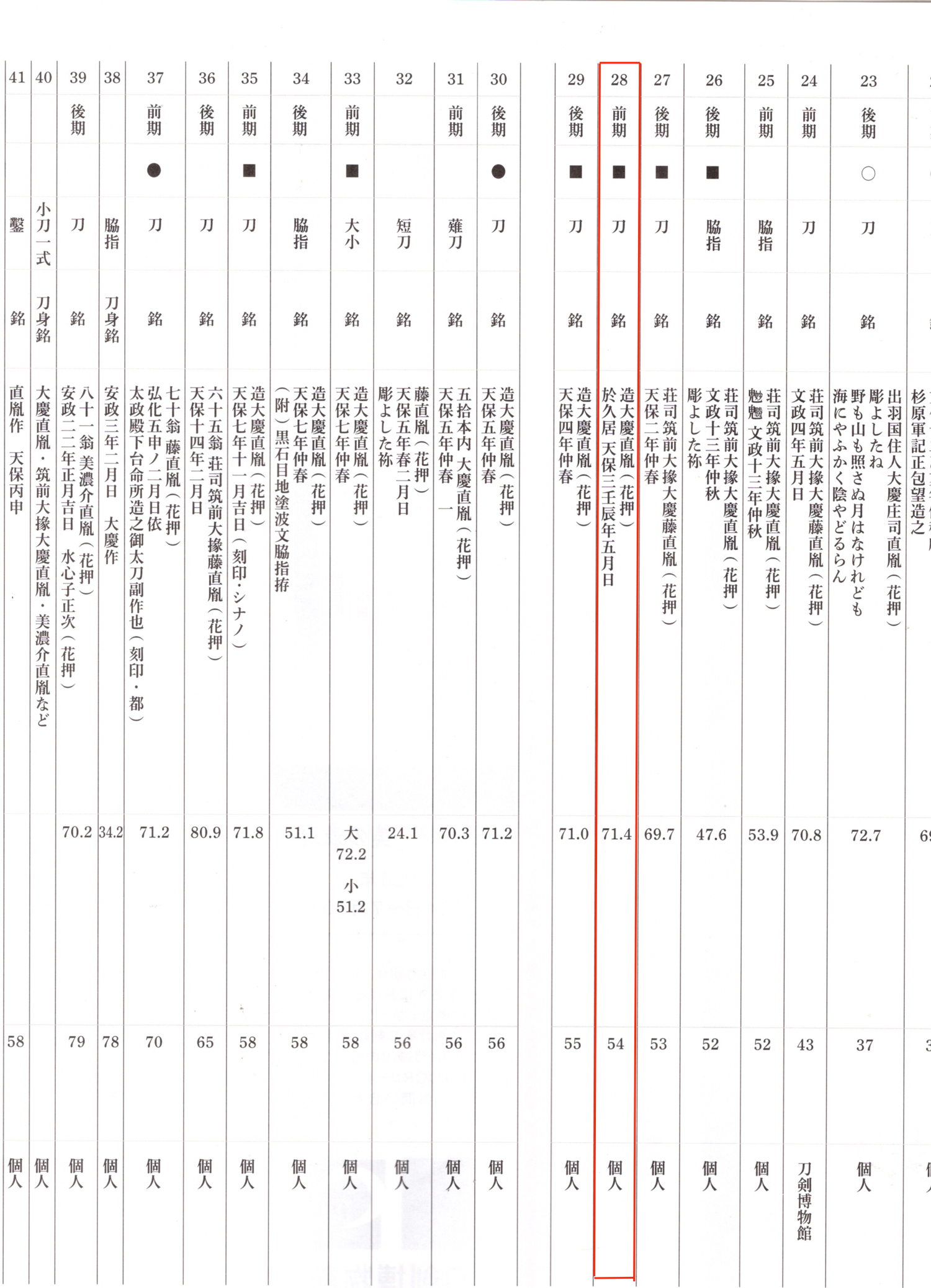
Measurements 71.4 cm, 1.6 cm, 3.4 cm, 2.4 cm, 4.6 cm, 20.95 cm
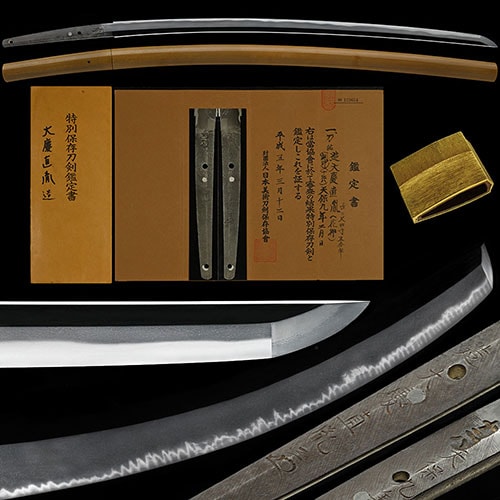
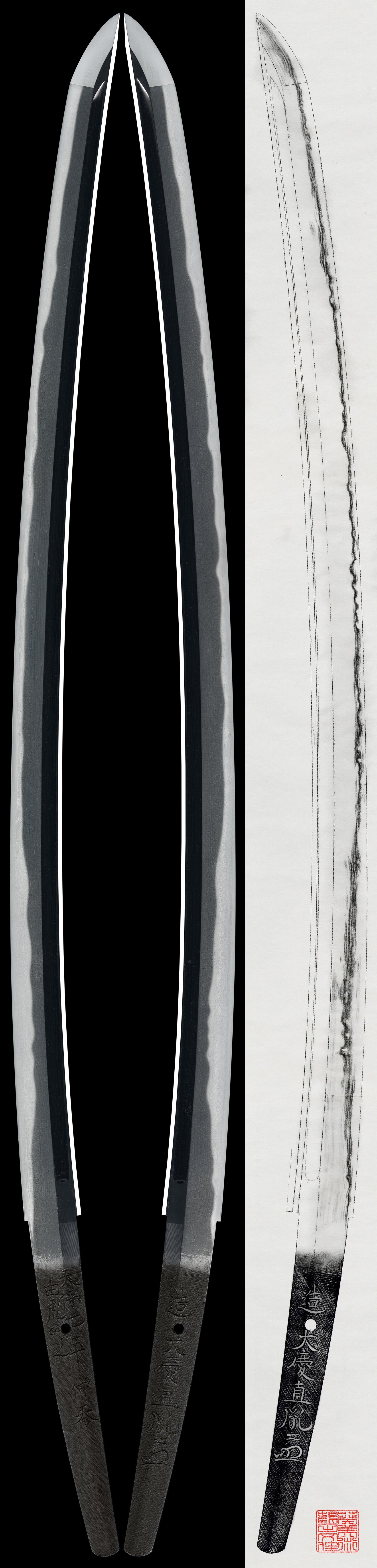
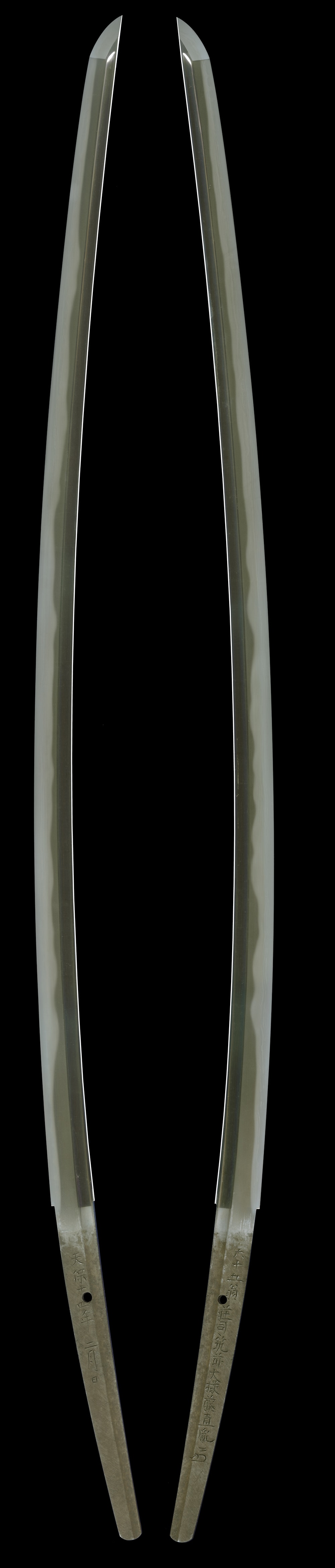
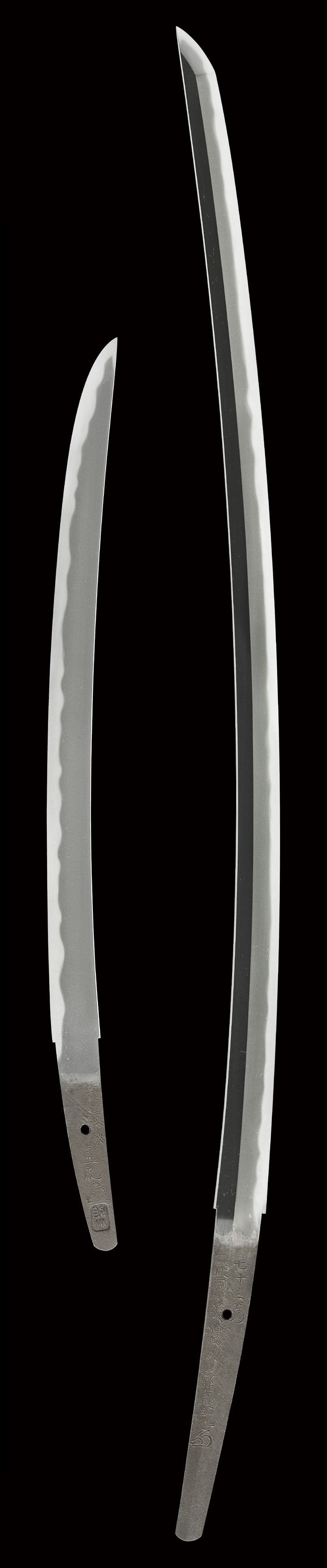
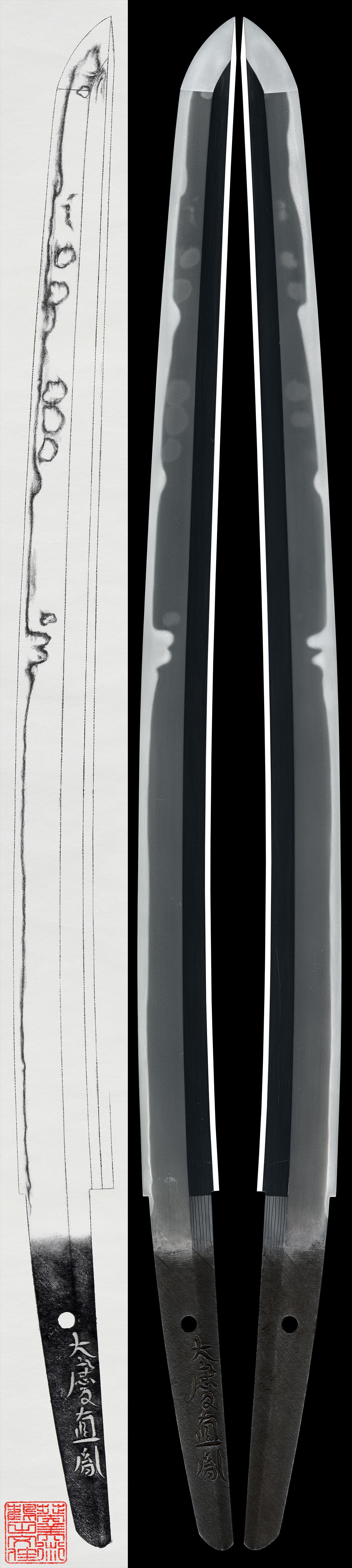
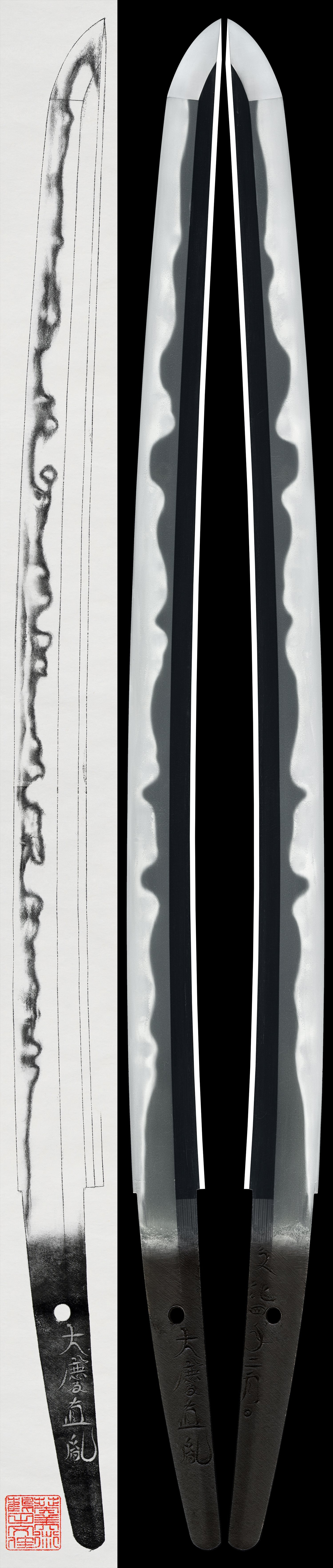
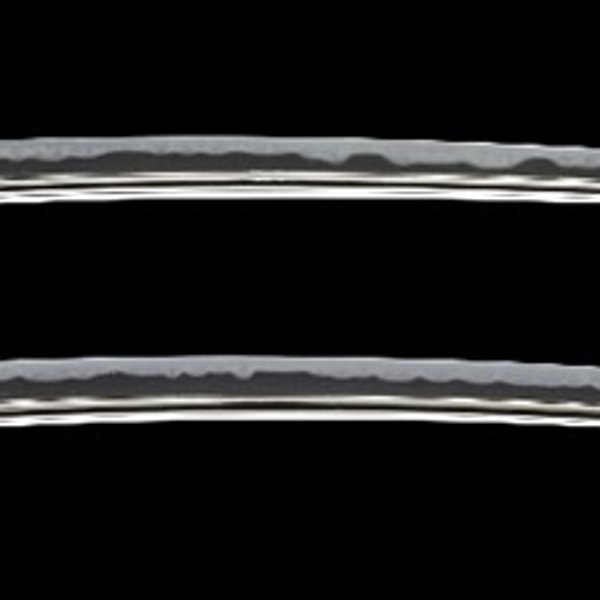
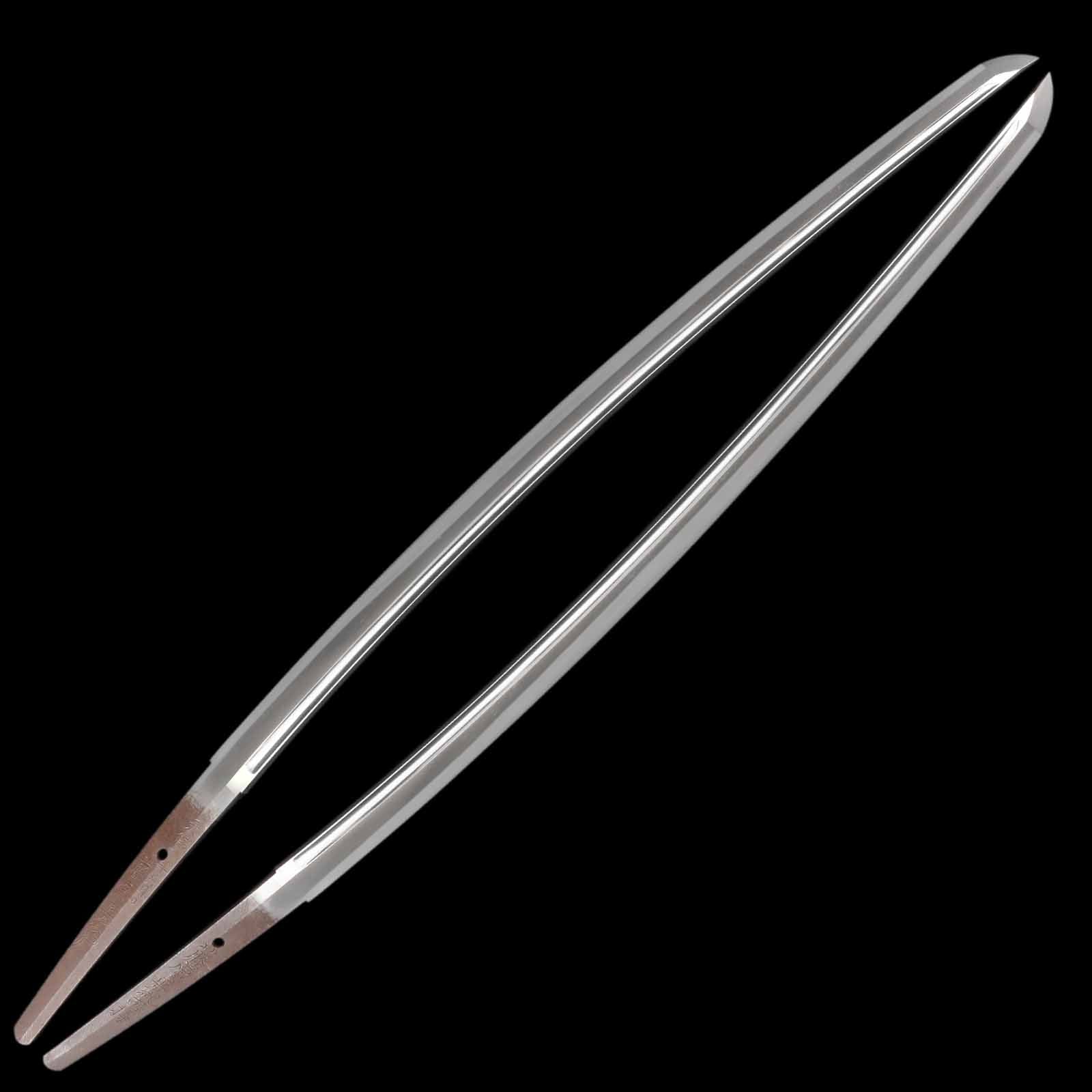
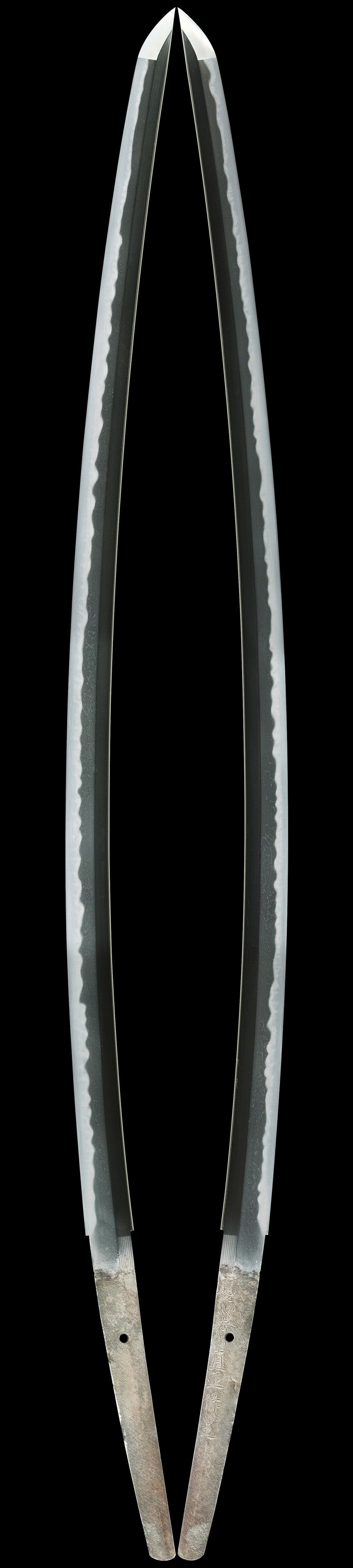
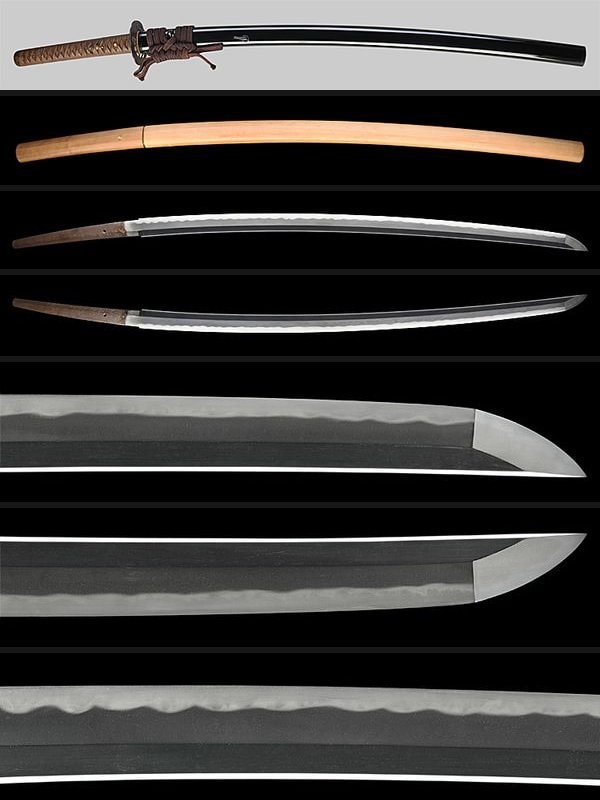
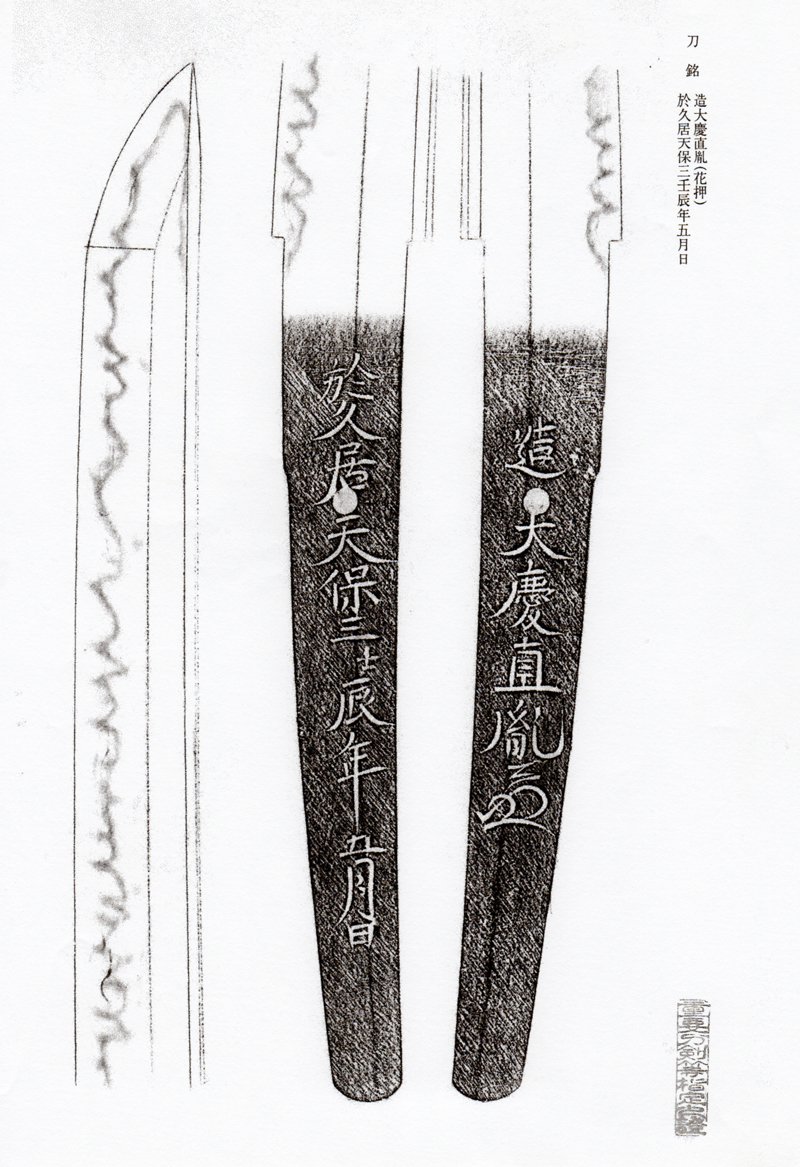
Description Keijō: , ; wide with a rather wide ; the is somewhat deep, and the is extended, giving an imposing form. : Compact , with areas of , , and mixed in; appears; -like kawarigane is seen; rises faintly. : mixed with , , and angular elements; long enter well; -prevailing with ; fine overlays, with -like lines, and a slight admixture of . : Enters in ; the point thrusts upward with a pointed tendency, turning back deeply. : None. : ; tip ; file marks are with ; one . On the , starting one character above the , there is a boldly cut five-character signature with at the center of the tang; on the , likewise above the , there is a boldly cut location inscription “於久居” (“at Hisai”), with the date below.
Artisan Naotane (大慶直胤)
Era Tenpō 3 (1832), late period ()
Explanation Naotane was born in An’ei 7 (1778) in in Dewa Province. His personal name was Shōji (also written Sōji) Minobei (also written Minohei), and he used the art name . Around Bunsei 4 (1821) he received the title Daijō, and in Kaei 1 (1848) he went up to Kyoto and changed this to no .
In his youth he went to and entered the school of Suishinshi Masahide; later, like his teacher, he served Lord Akimoto, and together with Hosokawa Masayoshi he became an outstanding talent among Masahide’s disciples. Although the exact time of his entry into Masahide’s school is not definitively known, there exists a blade made when he was twenty-three bearing the inscription “Shōji Naotane — Kansei 13 (1801), first month, a day”; thus it is inferred that he entered around Kansei 11–12 (1799–1800), two or three years earlier. He is thought to have become independent around the beginning of Bunka (1804–). He died at the age of seventy-nine on the seventh day of the fifth month of Ansei 4 (1857).
In his later years he undertook three long journeys, forging swords in various places, and on such works one finds the place names and stamps corresponding to those locations. This “Hisai forging” (Hisai-uchi) was made during his first journey, from the summer of Tenpō 2 (1831) to around the summer of Tenpō 3 (1832). The journey centered on pilgrimage to the Shrine: he traveled to Ninomiya, Mishima Taisha in Izu, and also Nirayama, Shūzenji, Hamamatsu in Enshū, Hisai in , and the Shrine, before returning to .
Among the works from this trip there is an “ forging” bearing the date as this sword—namely, “Tenpō 3, fifth month, a day.” That blade is a collaborative work by Naotane and Kawabe Masatsugu; since its inscription includes “Hōnō Amaterasu Kōtaijin” (“Respectfully dedicated to Amaterasu Ōmikami”), it was likely made for dedication to the Shrine. Its place of forging was Hisai town, not far from the shrine. It is probable that this sword, too, was made while Naotane’s party was staying there; and it is particularly intriguing that it was produced contemporaneously with the above-mentioned dedication sword.
This work, with its broad width and extended point, has a dignified and commanding presence that reflects the late Bakumatsu era’s sense of form. The shows Naotane’s characteristic forging— mixed with and —while the , a pattern mixed with , , and angular elements, formed with dominance and attendant , successfully expresses the - style in which he most excelled. This is a blade made with Naotane’s full satisfaction, and its workmanship is superior.