NihontoWatch MonNihontoWatch
MarketEncyclopediaKantei
NihontoWatch MonNihontoWatch
Market
Encyclopedia
Kantei
Overview·Historical importance·Designations·Dated Works·Lineage·School
OverviewHistorical importanceDesignationsDated WorksLineageSchool
  1. Schools
  2. Suishinshi Masahide
  3. Tsunatoshi

Suishinshi Masahide Tsunatoshi

綱俊

Jūyō
Vol. 23, No. 426 · Katana

Suishinshi Masahide Tsunatoshi

綱俊

3 ranked works

Notable smith
ProvinceMusashiEraTenpo (1830–1844)PeriodEdoSchoolSuishinshi MasahideTraditionShinshintoGeneration1stFujishiroJo sakuToko Taikan400(top 37%)TypeSwordsmithCodeTSU321
3Jūyō Tōken

Overview

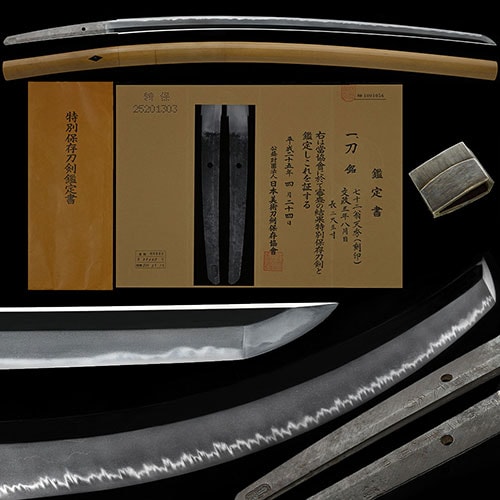
Tsunatoshi was originally from Yonezawa in Dewa Province; his personal name was Kato Hachiro, and he used the art name Chounsai. He served as a domain smith for the Uesugi clan, later going to and taking up residence in Azabu. He died in Bunkyu 3 (1863) at the age of sixty-six. His active career is documented through dated works spanning the Tenpo era, with productions from Tenpo 9 (1838) through Tenpo 12 (1841) among those that have received designation.

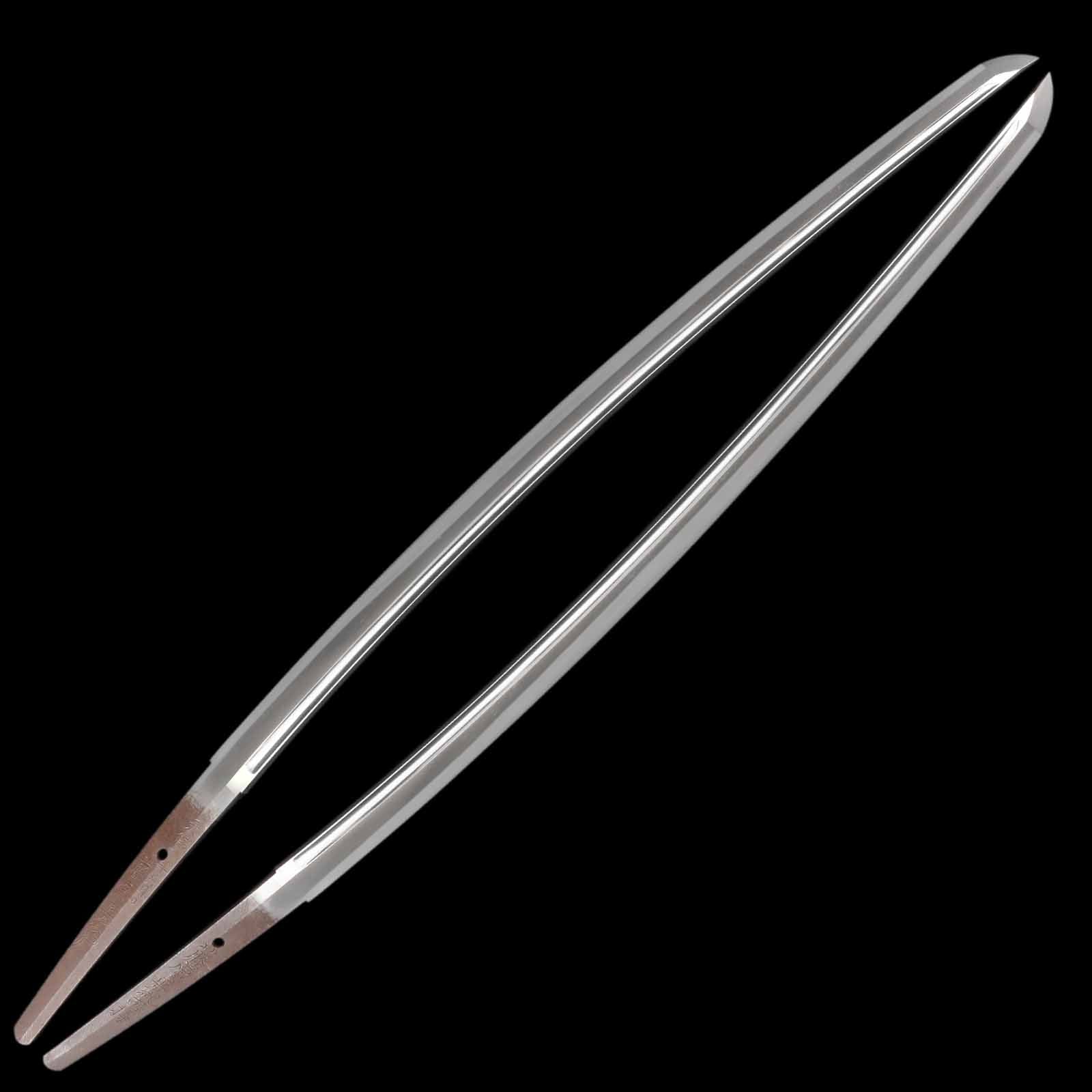
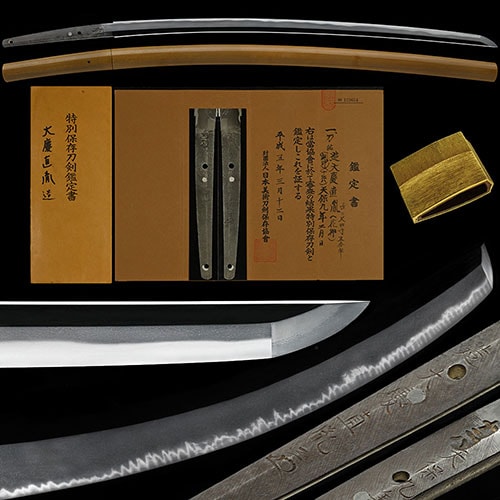
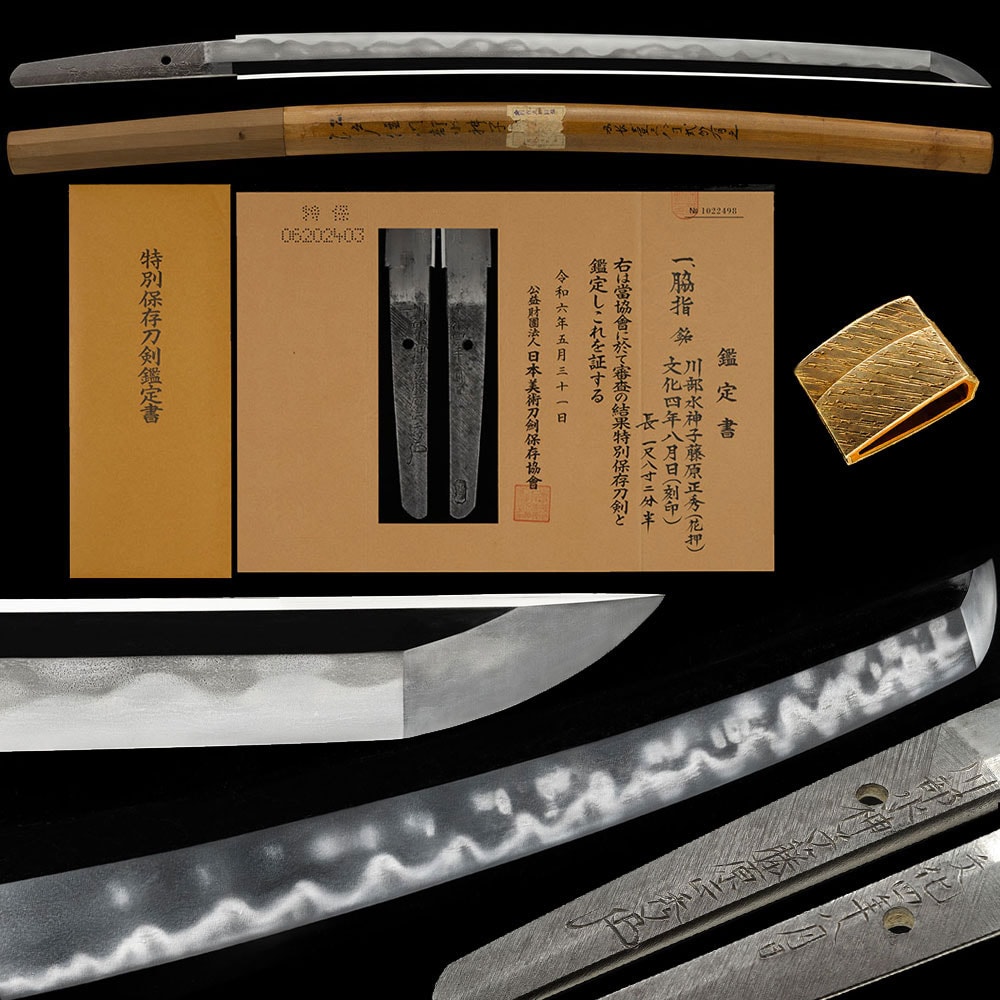
Tsunatoshi's workmanship primarily followed the tradition. His specialty was a temper mixed with in , with long entering and the tending toward tightness; in addition, he produced and toran-. The toran-flavored mode achieves a large with -, adhering somewhat unevenly, and at the . Across all styles, his forging is characteristically a tightly compacted that tends toward a -like appearance -- the plain, featureless-looking steel common in work, though in Tsunatoshi's case worked with particular density and carrying . His are noteworthy: with accompanying , , shinkurikara, , and claws, at times executed by the smith's own hand as documented by tang inscriptions stating the carvings were by the maker himself.

Tsunatoshi's extant designated works include , , and a matched pair -- the survival of which as a set makes it "especially useful reference material" in the 's assessment. His productions range from imposing of 75.5 cm with extremely deep to with elaborate carving, and one piece retains its original payment receipt addressed to the commissioning patron, providing documentary evidence of the domain smith's working practice.


Historical importance

Where Tsunatoshi stands among comparable artisans: across all of nihontō, and within tradition, era, and period. The tiers (Foremost · Leading · Major · Notable) weigh official designations from the NBTHK and Japan's Agency for Cultural Affairs, together with historical honors of lasting repute such as the Sansaku and Meibutsu-chō.

随一
Foremost
屈指
Leading
有数
Major
著名
Notable

Select a lens to see how it's measured.

Designations

Kokuhō—
Jūyō Bunkazai—
Jūyō Bijutsuhin—
Gyobutsu—
Tokubetsu Jūyō—
Jūyō Tōken3

Elite Standing

Dated Works

Currently Available

Lineage

Tsunatoshi
Students (9)
  1. 1.Munetsugu宗次7 for sale51designated
  2. 2.Korekazu是一9 for sale25designated
  3. 3.Koretoshi是寿
  4. 4.Moritoshi盛寿1 for sale
  5. 5.Naganobu長信2 for sale2designated
  6. 6.Naganobu長信
  7. 7.Tsunahide綱英2 for sale1designated
  8. 8.Tsunatoshi綱俊1 for sale
  9. 9.Tsunatoshi綱俊

Suishinshi Masahide School

Other artisans of the Suishinshi Masahide school

  1. 1.Naotane直胤14 for sale40designated
  2. 2.Masahide正秀8 for sale28designated
  3. 3.Sukemasa助政1 for sale8designated
  4. 4.Jirotaro Naokatsu直勝1 for sale6designated
  5. 5.Masayoshi正義1 for sale5designated
  6. 6.Masatsugu正次3 for sale4designated
  7. 7.Masamori正守2 for sale3designated
  8. 8.Masayoshi正義4 for sale2designated
  9. 9.Hidekuni秀國1designated
  10. 10.Masaaki正明2 for sale1designated
  11. 11.Masanao昌直1 for sale2designated
  12. 12.Munetsugu宗次1designated

More from the Suishinshi Masahide school

View all →
Sanmei
Tokuho
Katana - Tokuho - by Suishinshi Masahide Nobutaka - Katana signed Hōki no Kami Jū-dai Mago Fujiwara NOBUTAKA, dated Meiji 2nd month, with Black Stone surface lacquered scabbard Uchigatana KoshiraeKatana - Tokuho - by Suishinshi Masahide Nobutaka - Katana signed Hōki no Kami Jū-dai Mago Fujiwara NOBUTAKA, dated Meiji 2nd month, with Black Stone surface lacquered scabbard Uchigatana Koshirae

Katana

BySuishinshi Masahide Nobutaka
¥1,500,000
Katanahanbai
Tokuho
Daisho - Tokuho - by Suishinshi Masahide Naotane - Daisho: Taikei Naotane (with) Snake Skin Wrapped Daisho KoshiraeDaisho - Tokuho - by Suishinshi Masahide Naotane - Daisho: Taikei Naotane (with) Snake Skin Wrapped Daisho Koshirae

Daishō

BySuishinshi Masahide Naotane
Ask
Touken Komachi
Jūyō
Katana - Jūyō - by Suishinshi Masahide Naotane - Katana by Taikei Naotane, with ShirasayaKatana - Jūyō - by Suishinshi Masahide Naotane - Katana by Taikei Naotane, with Shirasaya

Katana

BySuishinshi Masahide Naotane
¥8,000,000
Eirakudo
Tokuho
Katana - Tokuho - by Suishinshi Masahide - Suishinshi Masahide - Tokubetsu Hozon TokenKatana - Tokuho - by Suishinshi Masahide - Suishinshi Masahide - Tokubetsu Hozon Token

Katana

BySuishinshi Masahide
¥2,000,000
Tozando
Tokuho
Katana - Tokuho - by Suishinshi Masatsugu - Antique Japanese Katana, signed "Fujiwara Masatsugu" with kaō, dated Tenpō 8 (1837) — Double NBTHK Certification & Honami Kōson sayagakiKatana - Tokuho - by Suishinshi Masatsugu - Antique Japanese Katana, signed "Fujiwara Masatsugu" with kaō, dated Tenpō 8 (1837) — Double NBTHK Certification & Honami Kōson sayagaki

Katana

BySuishinshi Masatsugu
¥1,500,000
Eirakudo
Tokuho
Katana - Tokuho - by Suishinshi Masahide Naotane - Naotane - Tokubetsu Hozon TokenKatana - Tokuho - by Suishinshi Masahide Naotane - Naotane - Tokubetsu Hozon Token

Katana

BySuishinshi Masahide Naotane
¥4,000,000
Katanahanbai
Jūyō
Katana - Jūyō - by Suishinshi Masahide Naotane - Taikei NaotaneKatana - Jūyō - by Suishinshi Masahide Naotane - Taikei Naotane

Katana

BySuishinshi Masahide Naotane
Ask
Eirakudo
Tokuho
Wakizashi - Tokuho - by Suishinshi Masahide - Masahide - Tokubetsu Hozon TokenWakizashi - Tokuho - by Suishinshi Masahide - Masahide - Tokubetsu Hozon Token

Wakizashi

BySuishinshi Masahide
¥2,500,000

Tsunatoshi

Tsunatoshi(綱俊) was a Japanese swordsmith of the Suishinshi Masahide school in Musashi province, active during the Tenpo (1830-1844) period.

The work follows the Shinshinto tradition.

Designated works by Tsunatoshi include 3 Jūyō.