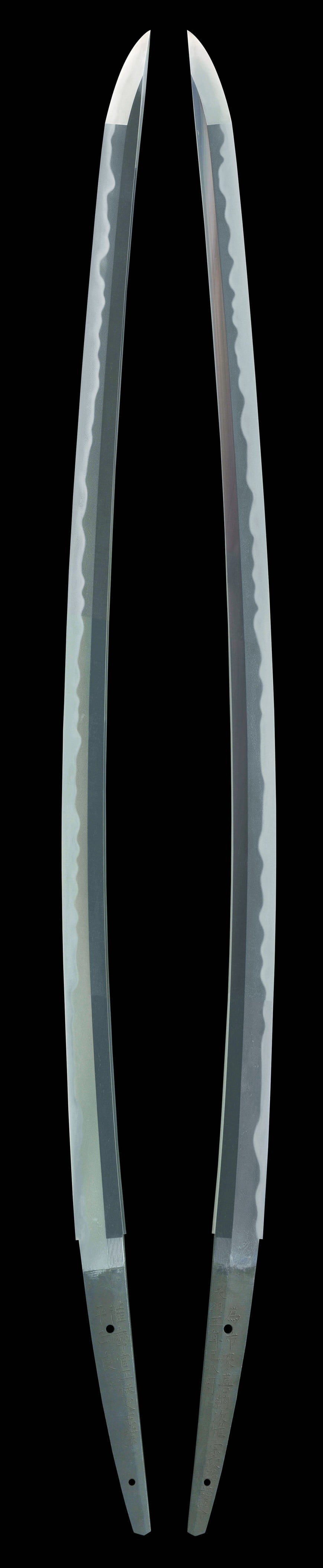
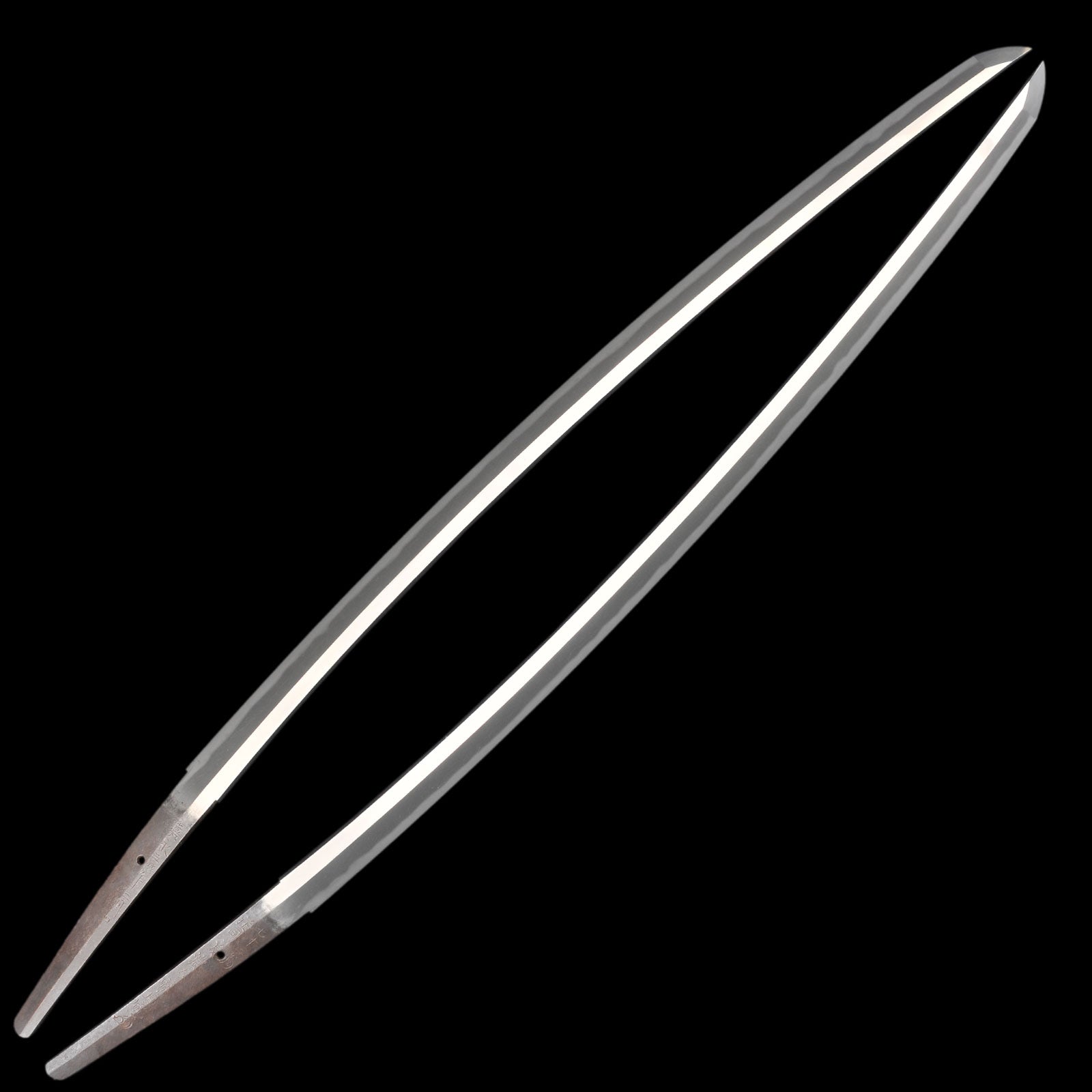
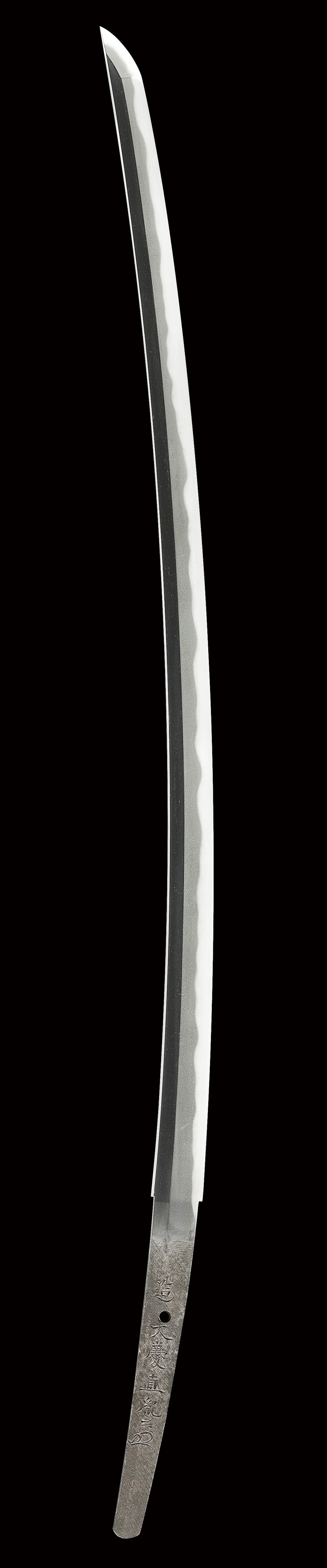
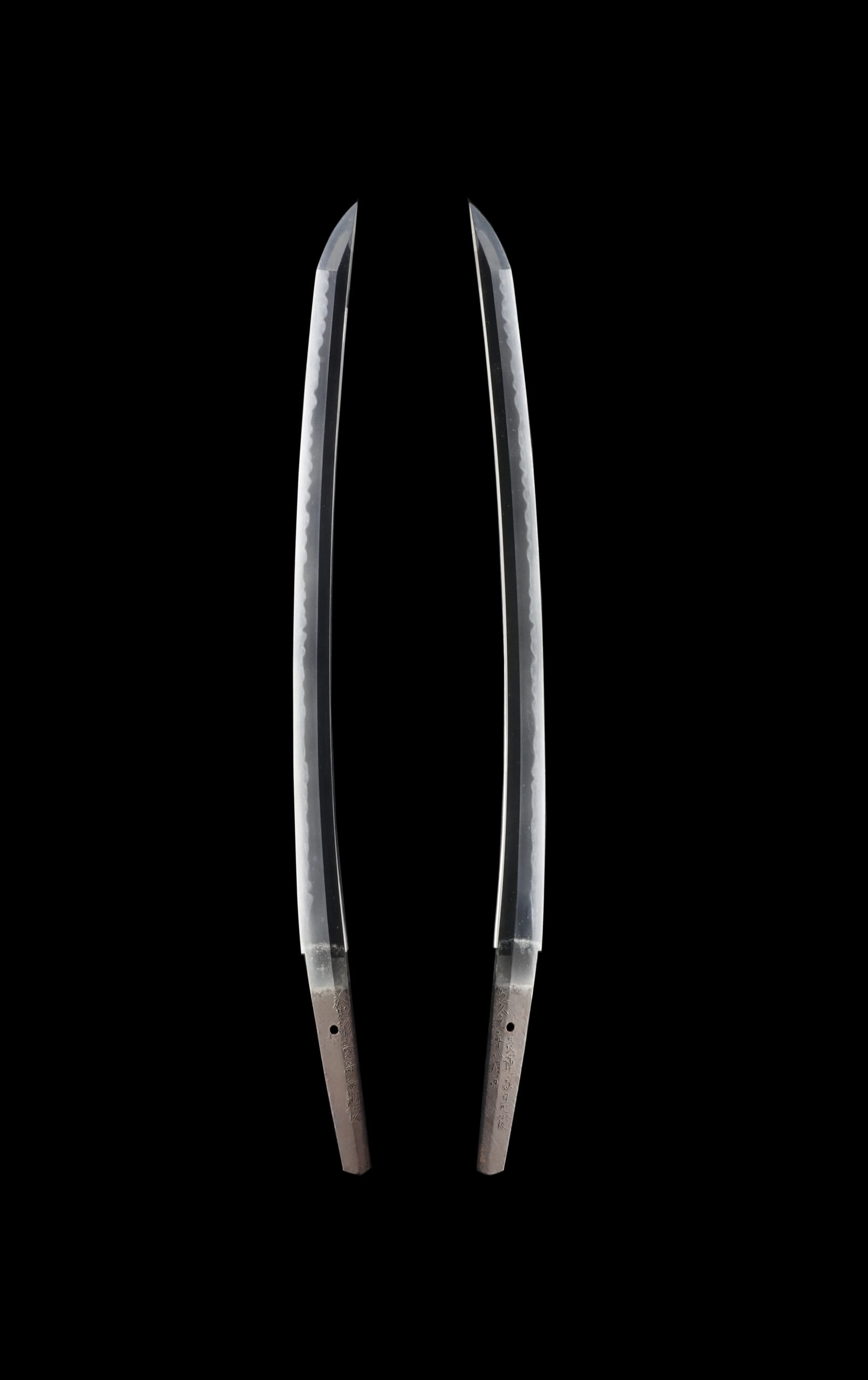
Around 1800 Suishinshi Masahide argued in his writings that the craft must return to the old masters’ methods: the fukkotō revival. His greatest successor Naotane worked convincingly in Bizen and Sōshū manners that had been dead for centuries.
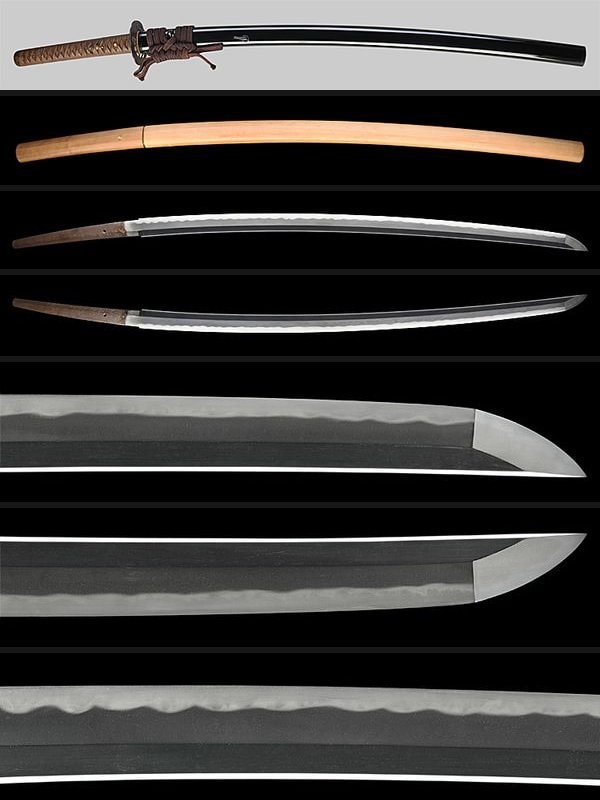
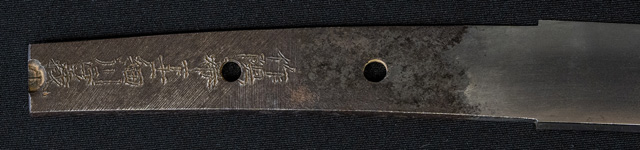
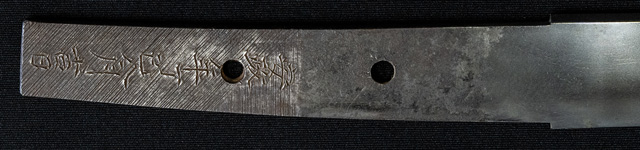
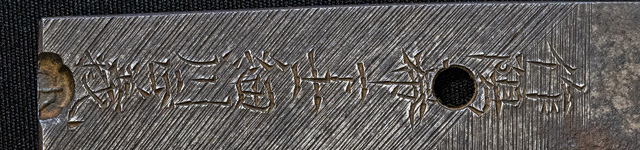
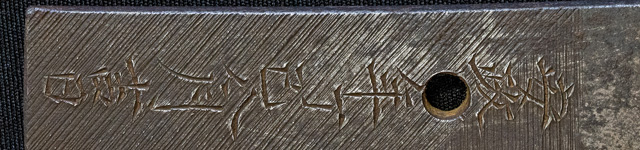
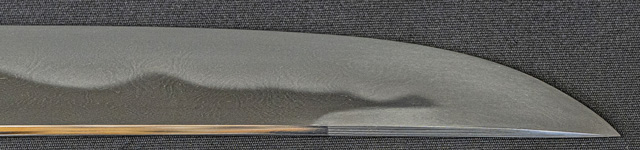
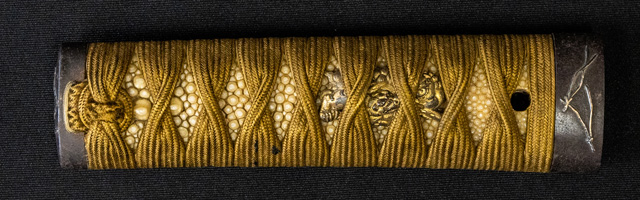
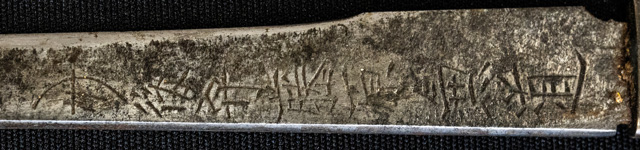
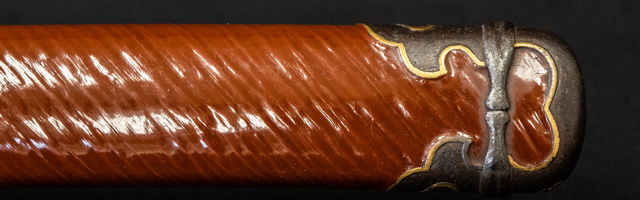
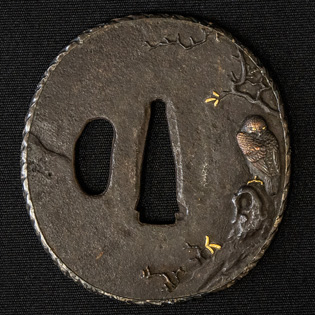
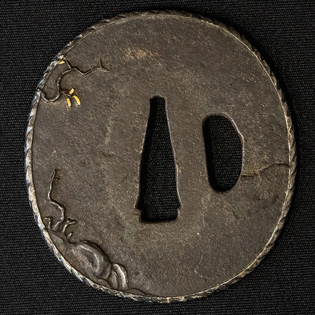
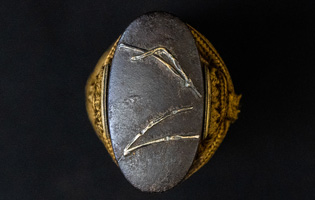
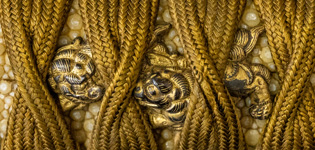
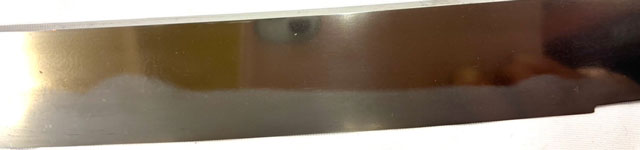
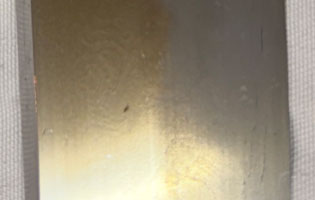
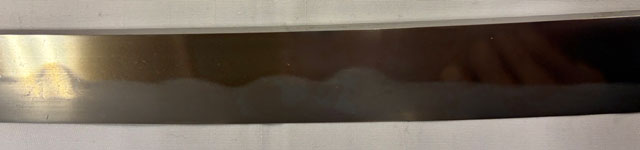
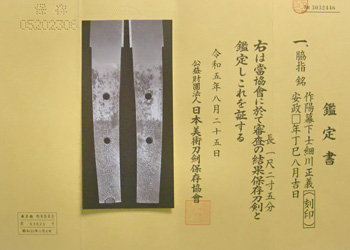
Hozon Paper Attached Wakizashi: Sakuyou Bakukashi Hosokawa MASAYOSHI Ansei Hinoto-Mi Hachigatsu Kichijitsu (August, Ansei 4) Product Number 31-2283 Wakizashi Sakuyou Bakukashi Hosokawa MASAYOSHI Province / Era Bakumatsu, Edo With Koshirae, in Shirasaya Nagasa 37.9cm (1 shaku 2 sun 5 bu) Sori 0.6cm (2 bu) Motohaba 3.14cm Sakihaba 2.78cm Motokasane 6.7mm Sakikasane 5.1mm Weight Naked blade 420g, excluding saya 700g Nakago Suriage Mekugi-ana 2 Hamon Midare-ba Price 495,000 Yen (Tax included) Hosokawa Masayoshi received instruction from Suishinshi Masahide and mastered the Soshu-den and Bizen-den traditions. In Bunsei 5, he became an okakae-kaji (retained smith) for the Tsuyama Clan. He passed away on June 6, Ansei 5 (at age 73). This work is likely from his final years (age 72) as the ninki is Hinoto-Mi. The jigane is ko-itame and the hamon is thickly covered in nie, showing excellent deki.
Certificate reading — 銘 作陽幕下士細川正義(刻印) 安政□年丁巳八月吉日
 NihontoWatch
suriage · Shin-Shinto · nagasa 37.9cm







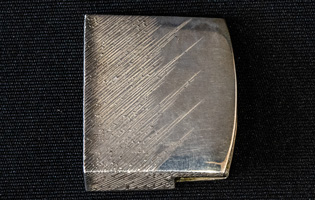
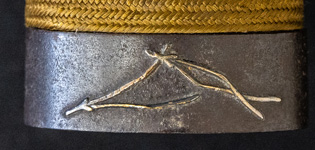
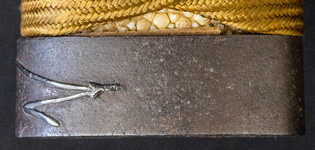
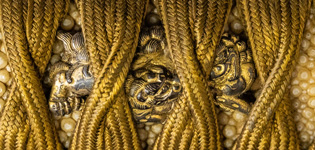


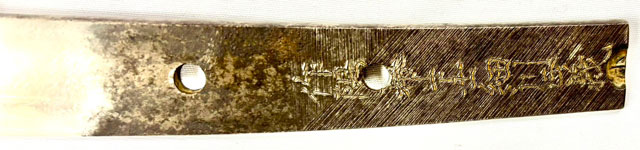
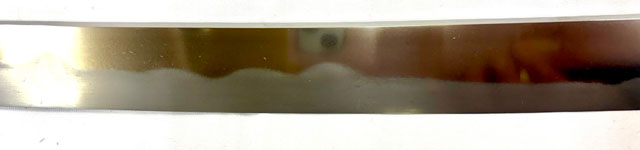
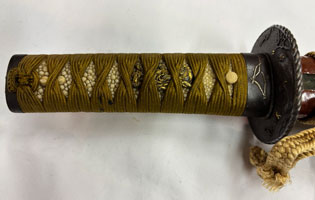
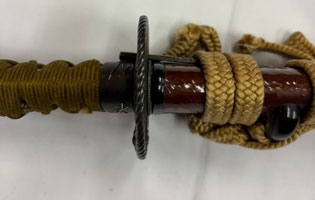
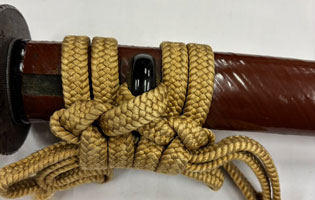
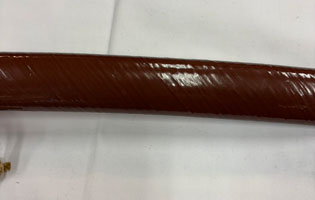
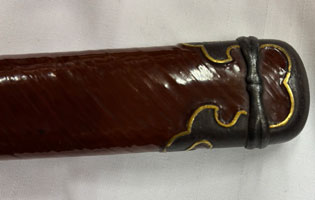
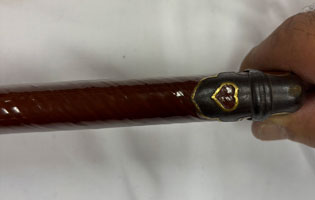
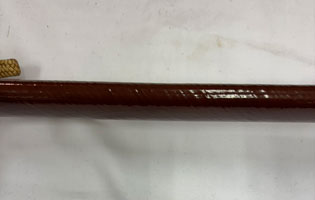
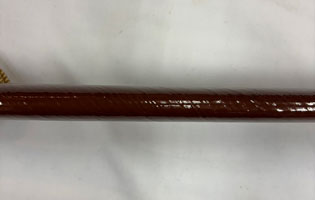
Suishinshi Masahide school, bakumatsu Shinshinto · Mimasaka · around 1791-1860
3 pieces on the market now
Hosokawa Masayoshi is the second smith to bear the name, the son of Hosokawa Yoshisuke of Shimotsuke who signed Masayoshi before him, and he is the hand the published sources mean when they speak of Masayoshi of the Suishinshi Masahide school. He entered the forge of Suishinshi Masahide, the reviver of the old koto traditions, signed first Masakata and then Morihide, and only afterward took the Masayoshi name; he became a retained smith of the Matsudaira house of the Tsuyama domain in Mimasaka, signing himself a lower vassal of Sakuyo, and worked for most of his life in Edo. He died on the sixth day of the sixth month of Ansei 5, at the age of seventy-three. The published record places him high in the bakumatsu hierarchy of the Masahide school: it calls him the effective successor within that school, names him a twin pillar with Taikei Naotane, and says without hedging that he surpassed his own father.
His work divides into a Bizen-den and a Soshu-den, and the published sources are unusually direct about the difference between them. The Bizen-den is far the superior, holding his masterpieces, while his Soshu-den, a nie-laden o-midare, leaves nothing that truly commands admiration[[c:1]]. The Bizen-den is the manner by which he is known, and it is the spine of his designated record. Over a ko-itame that forges tightly he tempers a choji-midare, the long ashi entering vigorously and yo mingling through it, the nioiguchi deep with ko-nie well adhering, the boshi running in with midare and ending in ko-maru. He tempers this skillfully rather than mechanically, and on his finest blades the choji crowds and gathers into juka-choji, ko-choji and gunome until the temper heads press together, a showy massing the published sources record in the words of the Shinto Mei Shuroku, that his choji-midare heaps up like double-cherry blossoms on the branch[[c:2]].
The jigane is the controlled, refined Shinshinto steel over which that flamboyant temper is set. The published sources describe a ko-itame forging tightly, with ji-nie, and on his best blades fine ji-nie gathering thickly with ko-chikei entering well, the surface at times becoming almost muji. It is a deliberately quiet, well-knit steel, far from the standing itame of old Bizen, and the restraint of the ji throws the activity of the ha into relief. The published sources are careful to qualify the temper itself: his Bizen-den is not a complete nioi-deki in the old manner but, like the Bizen-den of other Shinshinto smiths, carries ko-nie. The reflection of old Bizen utsuri is not part of his record; his is a revival worked in nie and nioi together rather than a copy of the koto original. Across the edge run long kinsuji and fine sunagashi, and on his broadest blades the temper widens further, the choji ashi opening left and right within the ha in a way the judges read as the hand-habit of this smith.
The richest of his recorded blades are the late, broad and long pieces with large kissaki. A katana of Kaei 4 carries an added inscription naming it the Choju-ken, the sword of long life; a second, of Ansei 2, bears his age of seventy-two carved on the tang together with the name of the man who ordered it. On both the temper is at its most crowded, the juka-choji massing until the heads abut, with long ashi, yo, deep nioi and ko-nie, the boshi midare-komi with hakikake. The published sources call these his representative Bizen-den work, robust and handsome despite their great length, and they note that even at such size the ji and ha betray no break[[c:3]]. Against this stands the half of his output the judges set explicitly below it, the Soshu-den o-midare; the record names it without illustrating a masterpiece in it, and the contrast is itself part of how he is read. His finest blades are tachi-like in shape, the ji and ha alike accomplished, and they are the ones the published sources call his work of full satisfaction.
What sets him apart within the Masahide school is the particular character of that Bizen-den. His teacher's program was the revival of every old tradition; Masayoshi made the Bizen choji-midare his own and carried it further than most of his contemporaries, while his nearest peer in standing, Taikei Naotane, ranged more widely across the koto manners. The published sources keep the comparison to Naotane at the level of rank, twin pillars of the school, rather than of style, and they reserve their stylistic praise for his choji. The angular choji heads, the way the temper heads press together, and the opening choji ashi are named as his own tells, not borrowed from any single old model, and it is on these that a Hosokawa Masayoshi is recognized rather than on the broad outline of Bizen-den that he shares with the whole revival.
Five of his blades carry the Juyo designation, four of them signed with the long signature and the carved seal he habitually used, the body of his known record. He has no National Treasures and no Important Cultural Properties, as befits a bakumatsu smith whose work is recent; his standing rests on the quality of the Bizen-den rather than on age or provenance, and no daimyo or temple descent is recorded for these blades. They are held, for the most part, in private hands, with one tang preserving the name of an Edo-period patron and another the Choju-ken title. For a collector this places him among the more attainable of the front-rank Shinshinto names: his designated blades survive in small numbers and come to the market only from time to time, a substantial choji-midare katana being a landmark when one appears, but not beyond the reach of a serious collection in the way a Kamakura masterpiece is. What he offers is the late-Edo Bizen-den at close to its height, a deep-nioi choji that the published sources judged the equal of his task and a manner they were content to set beside the best of his school.
Where Masayoshi stands among comparable artisans: across all of nihontō, and within tradition, era, and period. The tiers (Foremost · Leading · Major · Notable) weigh official designations from the NBTHK and Japan's Agency for Cultural Affairs, together with historical honors of lasting repute such as the Sansaku and Meibutsu-chō.
Select a lens to see how it's measured.
Shinshinto · Musashi
74 pieces on the market now
At Hamachō in Edo, in the closing decades of the eighteenth century and the opening ones of the nineteenth, Suishinshi Masahide[[c:1]] gathered the school that would turn Japanese swordmaking back toward its medieval models. Born Kawabe Gihachirō at Akayu in Dewa in 1750, signing first as Suzuki Takahide and then Eikoku, he studied under the Shitahara smith Yoshihide of Musashi, took the name Masahide in An'ei 3, and served the Akimoto house of Yamagata before settling in Edo, where he worked for nearly fifty years. He is the founding figure of the shinshintō and the theorist of the fukko-tō (revival-sword) doctrine, the argument that the sword ought to return to its Kamakura forms. Around that teaching he drew a large body of pupils, among them Taikei Naotane, who would give the revival its fullest practical form, the future second Masayoshi (Hosokawa Morihide), and a wider Edo and provincial following that carried the program into the Mito, Yonezawa, Tsuyama, and Tatebayashi domains. The shared vocabulary of the school is the deliberate reach back into the koto traditions, worked over a tightly forged, often muji-toned ko-itame with thick ji-nie. Masahide's own prime hand was the Ōsaka-utsushi, the surging tōran-midare of Tsuda Sukehiro opening from a long yakidashi and the broad suguha after Inoue Shinkai, betrayed on even his closest copies by a blackish, coarse nie that spills from the ha into the ji. Naotane gave the revival its Bizen and Sōshū faces: a reverse-leaning chōji-midare with angular kaku-gunome and saka-ashi, modeled on the late-Kamakura Osafune masters Kagemitsu and Kanemitsu and anchored by a consciously revived midare-utsuri that no ordinary shinshintō steel carries, set beside a Sōshū notare with its whorled uzumaki-hada and coarse, striped nie. The pupils divided this inheritance along their own lines. Jirōtarō Naokatsu, Naotane's adopted son, took a Bizen-den led by a kataochi-gunome from Kanemitsu with a pervasive saka-gakari slant and chōji- or midare-utsuri in the ji.
Suishinshi Masatsugu reproduced Naotane's two traditions, Sōshū and Bizen, down to the cut of his signature. Through Masayoshi the Bizen current passed to his heir Hosokawa Masamori of Tsuyama, whose chōji clusters mixed with gunome-chōji and togariba. The Osaka wave traveled separately into Mito through Naoe Sukemasa, who set a Shinkai-styled suguha and a Sukehiro tōran over a clear ko-itame, while Chōunsai Tsunatoshi of the Uesugi service carried a nioi-deki chōji mixed with gunome, suguha, and tōran-midare, often with carving by his own hand. To kantei the school is to weigh a tradition consciously copied against the period marks the copy cannot shed: the constant of the line is that the hamon is never the pure nioi-deki of old Bizen but carries nie throughout, a difference the NBTHK names outright as the divide between koto and shinshintō. The revived utsuri in Naotane and Naokatsu, the spilling nie in Masahide, the whorled uzumaki-hada shared across the line, and the broad, thick-kasane late-Edo sugata are the surest tells, narrowed further by the school's habit of full, dated signatures that make these smiths among the most exactly knowable of their age. Masahide stands at the head as the teacher and theorist, his finest work in his Ōsaka copies rather than the doctrine he proclaimed; Naotane stands ahead of him in execution, his Bizen-den held the finest among the shinshintō. Their pupils define the late-Edo Osafune and Sōshū revivals as practiced through Edo and the domains, with Naokatsu and Masatsugu read as the next hands after Naotane and Masayoshi. The provenance of the school runs through domain commission and bestowal (Mito blades forged at the Kōrakuen by lordly order, Tsuyama and Yonezawa fief work, Naotane's Sanada daishō and an Imperial-collection tachi) rather than ancient daimyō transmission, fitting for a movement that, within a single generation at Edo, redrew the direction of nineteenth-century swordmaking by turning it back toward the old models. Learn more →
| Smith | Era | Designated |
|---|---|---|
| Naotane直胤 | 1801-1837 | 40 |
| Masahide正秀 | 1777-1817 | 28 |
| Sukemasa助政 | 1804-1825 | 8 |
| Jirotaro Naokatsu直勝 | 1805-1858 | 7 |
| Masayoshi正義 | 1791-1860 | 5 |
The Shinshintō revival
Around 1800 Suishinshi Masahide argued in his writings that the craft must return to the old masters’ methods: the fukkotō revival. His greatest successor Naotane worked convincingly in Bizen and Sōshū manners that had been dead for centuries.
Certifies a genuine blade worth preserving: a signature confirmed correct, or, if unsigned, an era, province, and school that the NBTHK can reliably identify.
The NBTHK (Nihon Bijutsu Tōken Hozon Kyōkai, the Society for the Preservation of Japanese Art Swords) is a public-interest incorporated foundation founded in 1948 and supervised by Japan’s Agency for Cultural Affairs (Bunkachō); it is based at the Japanese Sword Museum in Tokyo. Its expert panels physically examine each submitted work (shinsa) and issue a certificate (kanteishō) ranking it by artistic and historical merit. NBTHK papers are the most widely recognized standard of authentication for Japanese swords and fittings.
NBTHK official sitePlease request cooling-off within 8 days of the item's arrival. Items that have been altered cannot be handled. Return shipping is the customer's responsibility. If the destination is overseas, returns and refunds are not available.
¥495,000