Two courts, sixty years of war, and the most dramatic silhouettes in the sword’s history: broad blades, extended points, true ōdachi later cut down into the majestic katana collectors prize. The Sōshū manner was the style of the age.
 NihontoWatchNihontoWatch
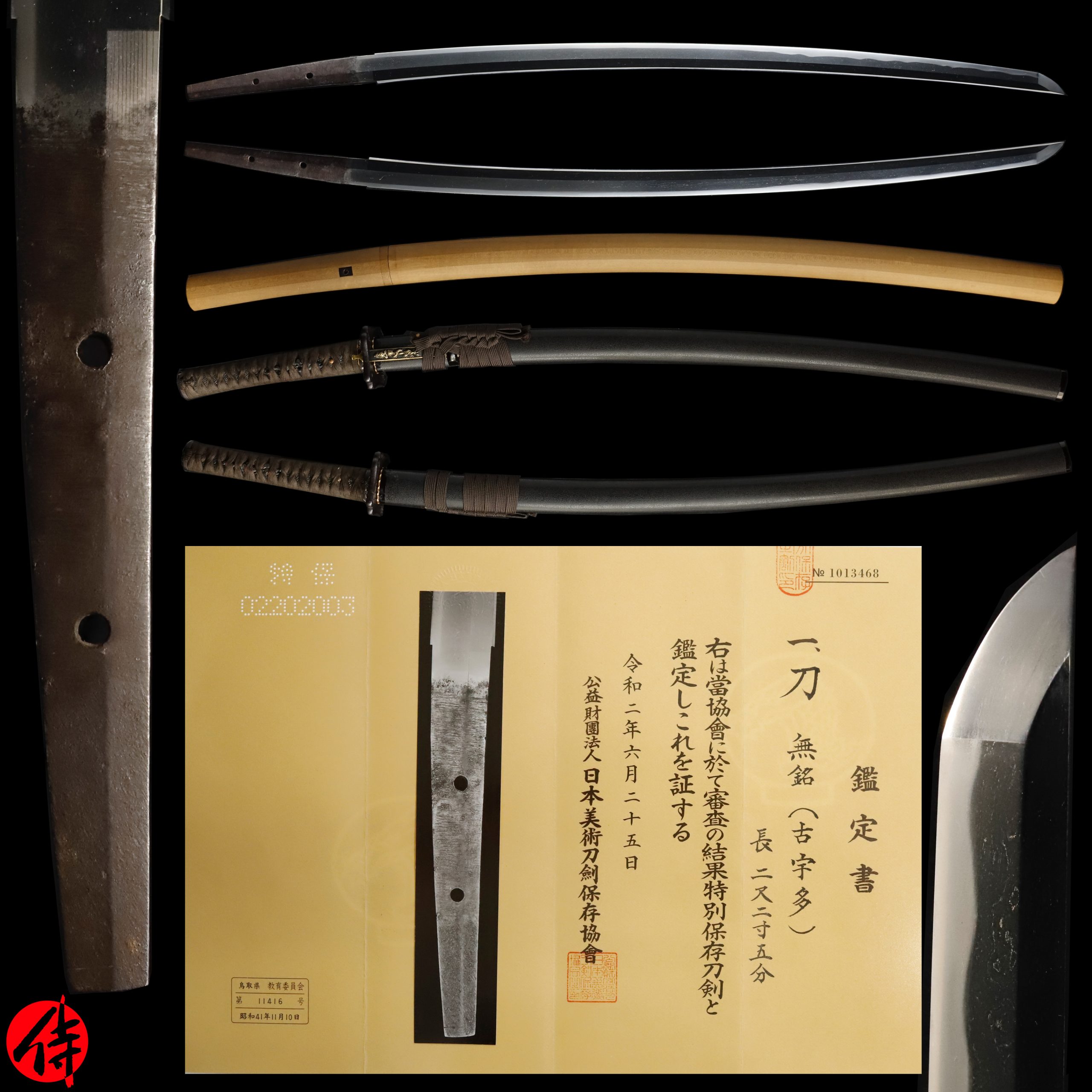
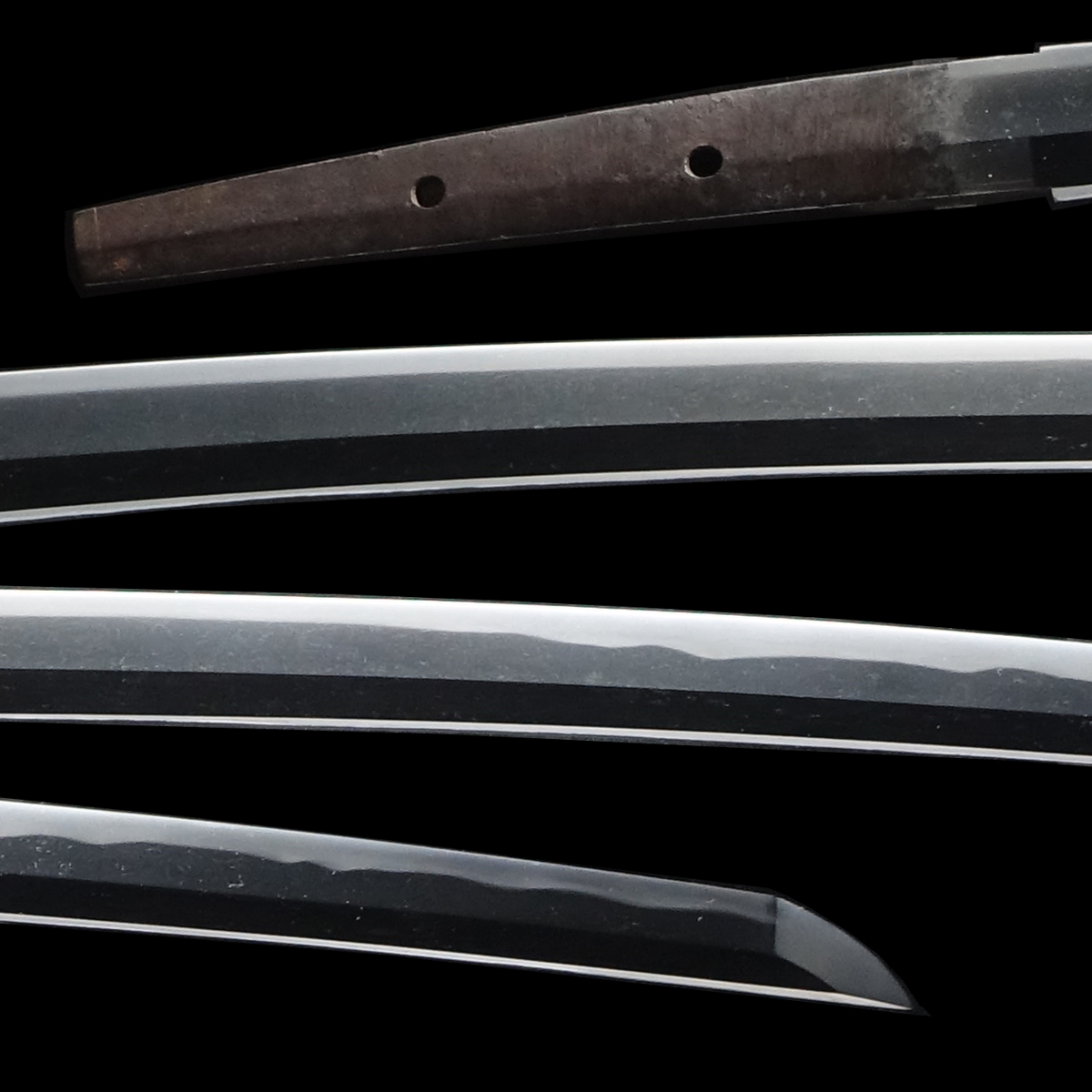
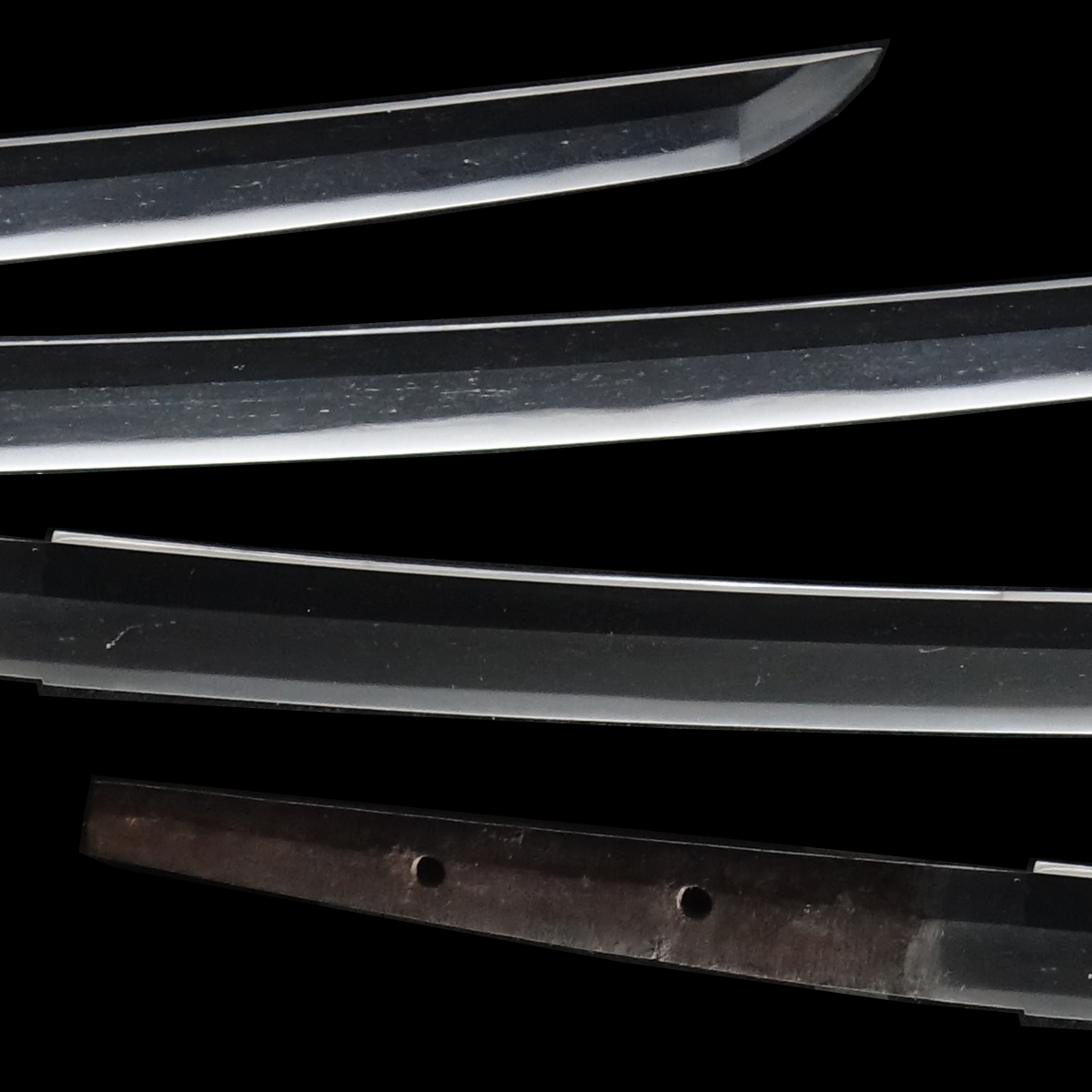
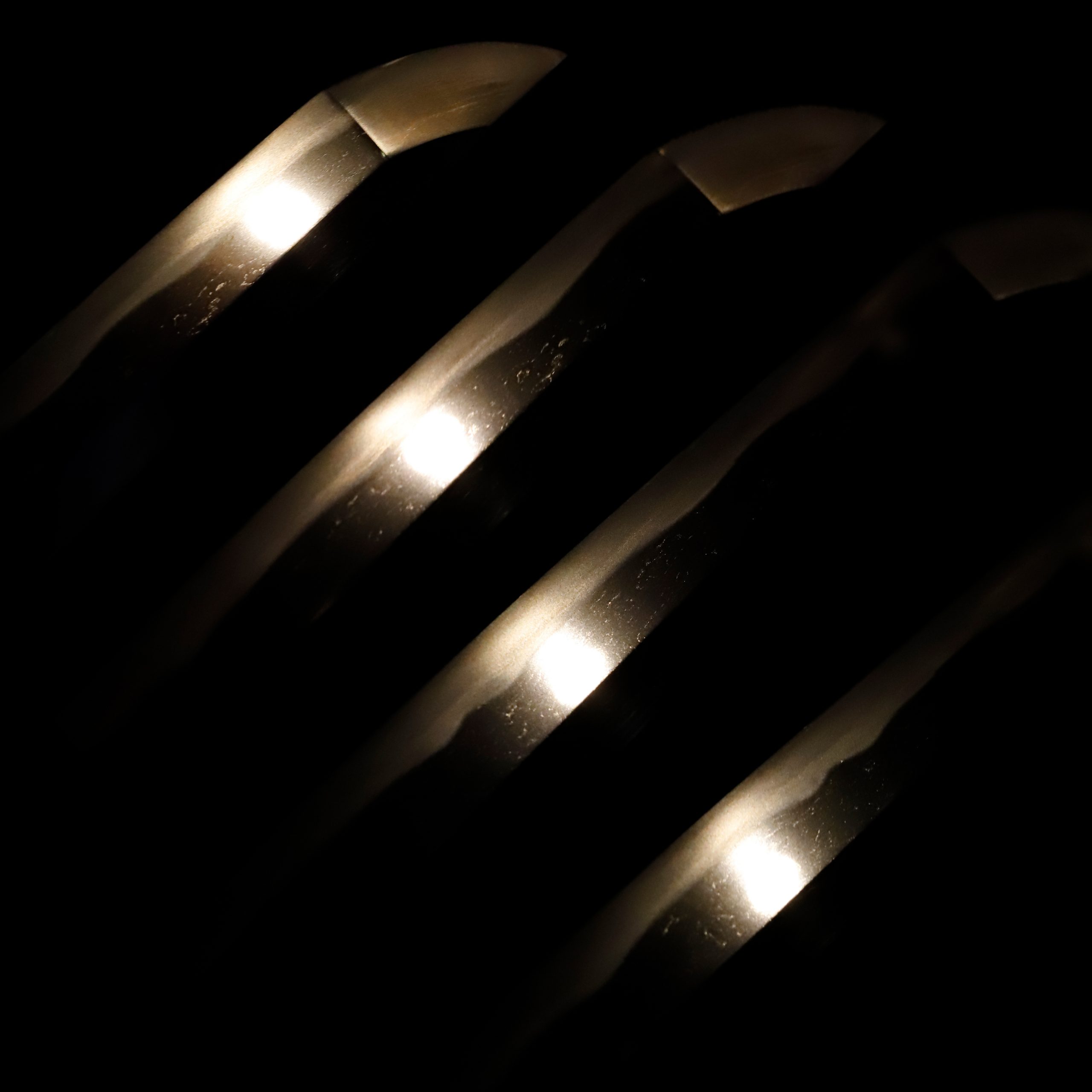
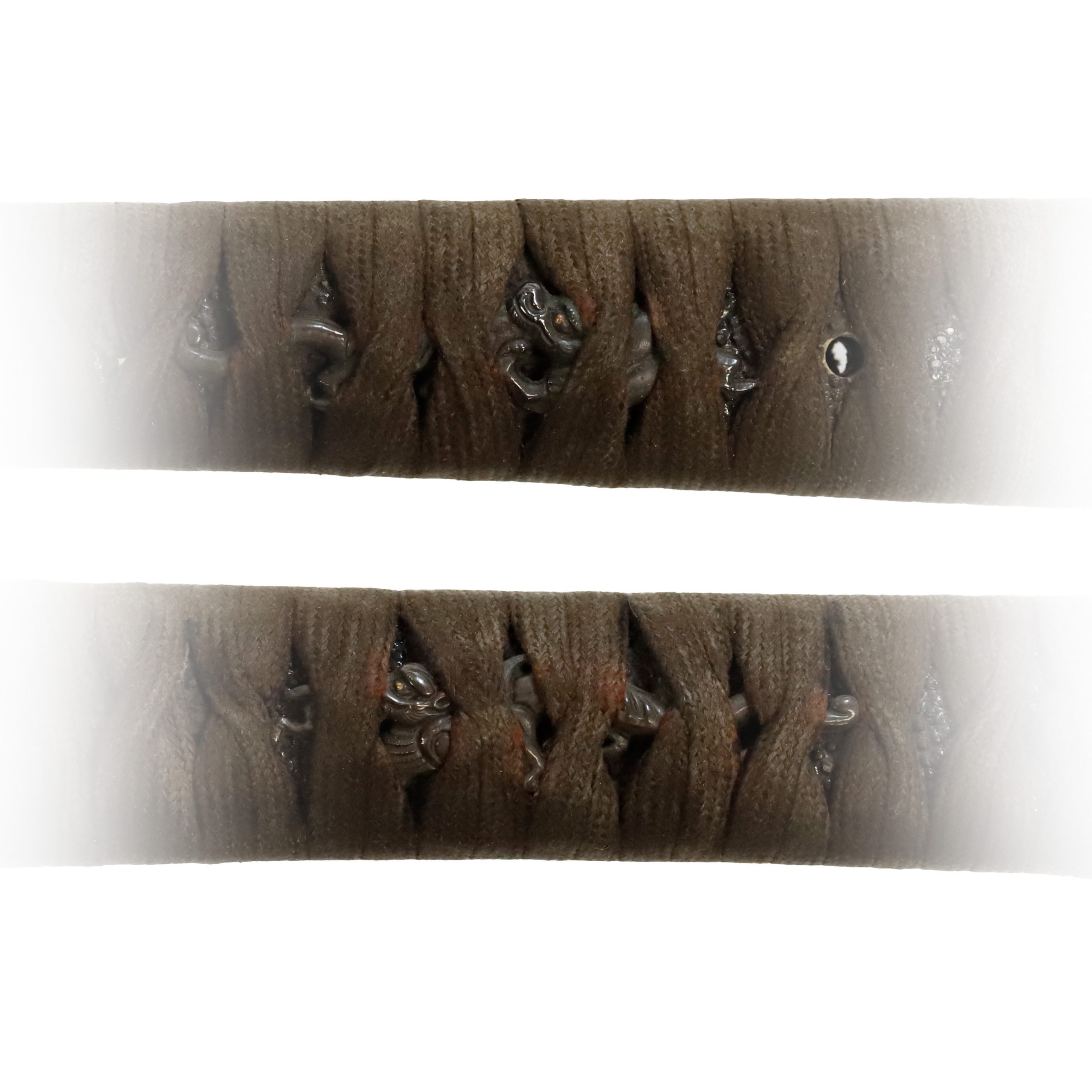
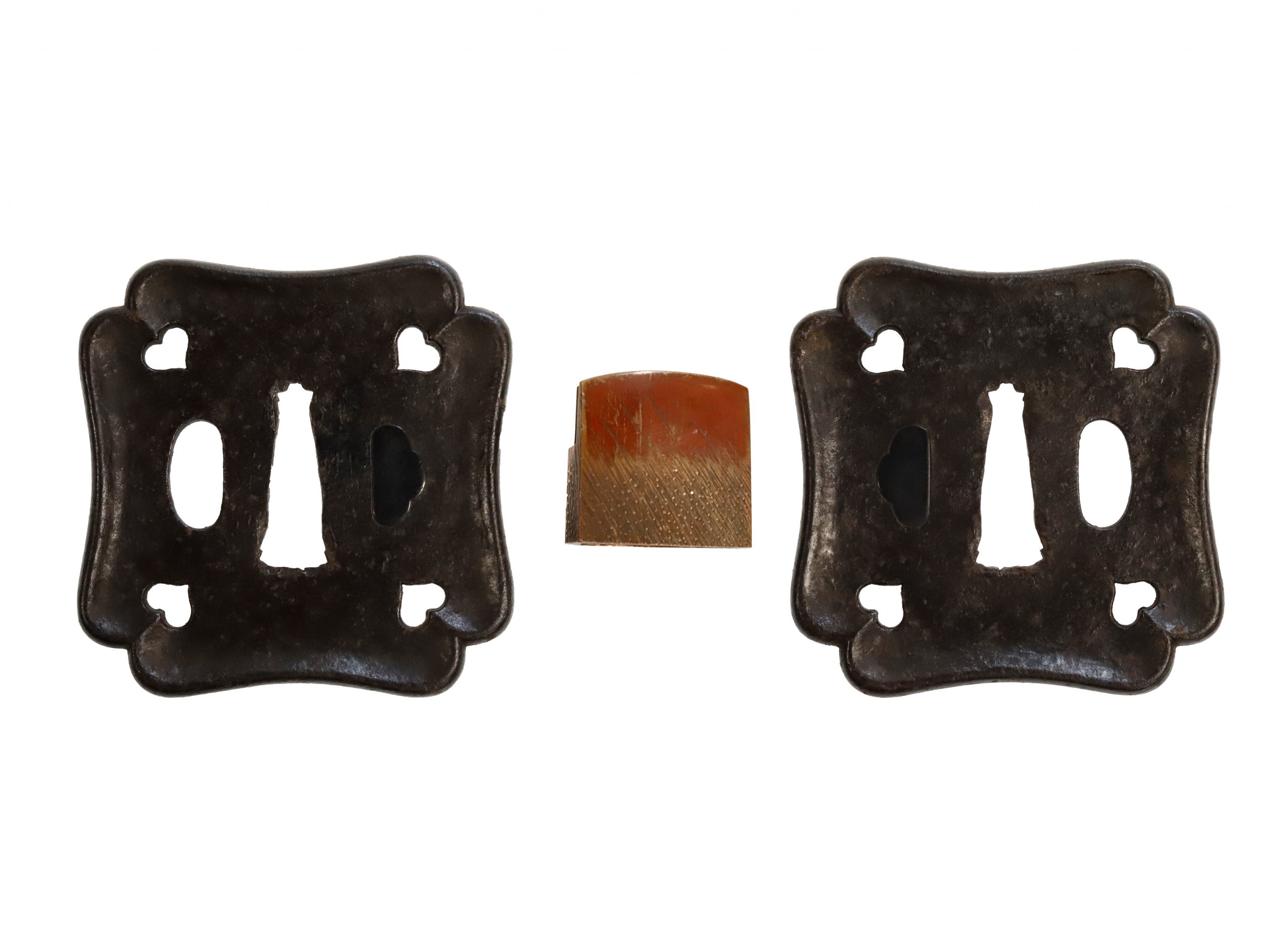
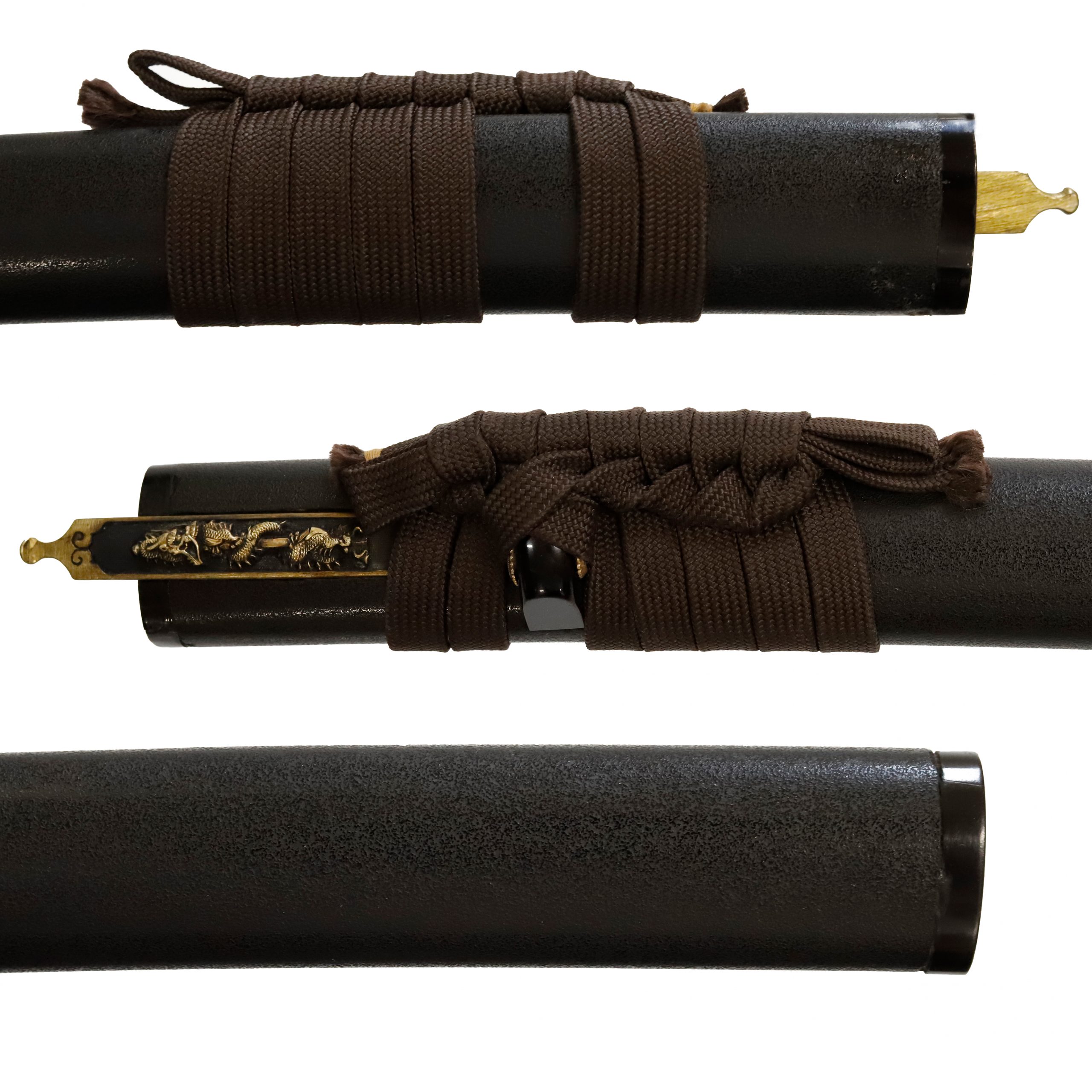
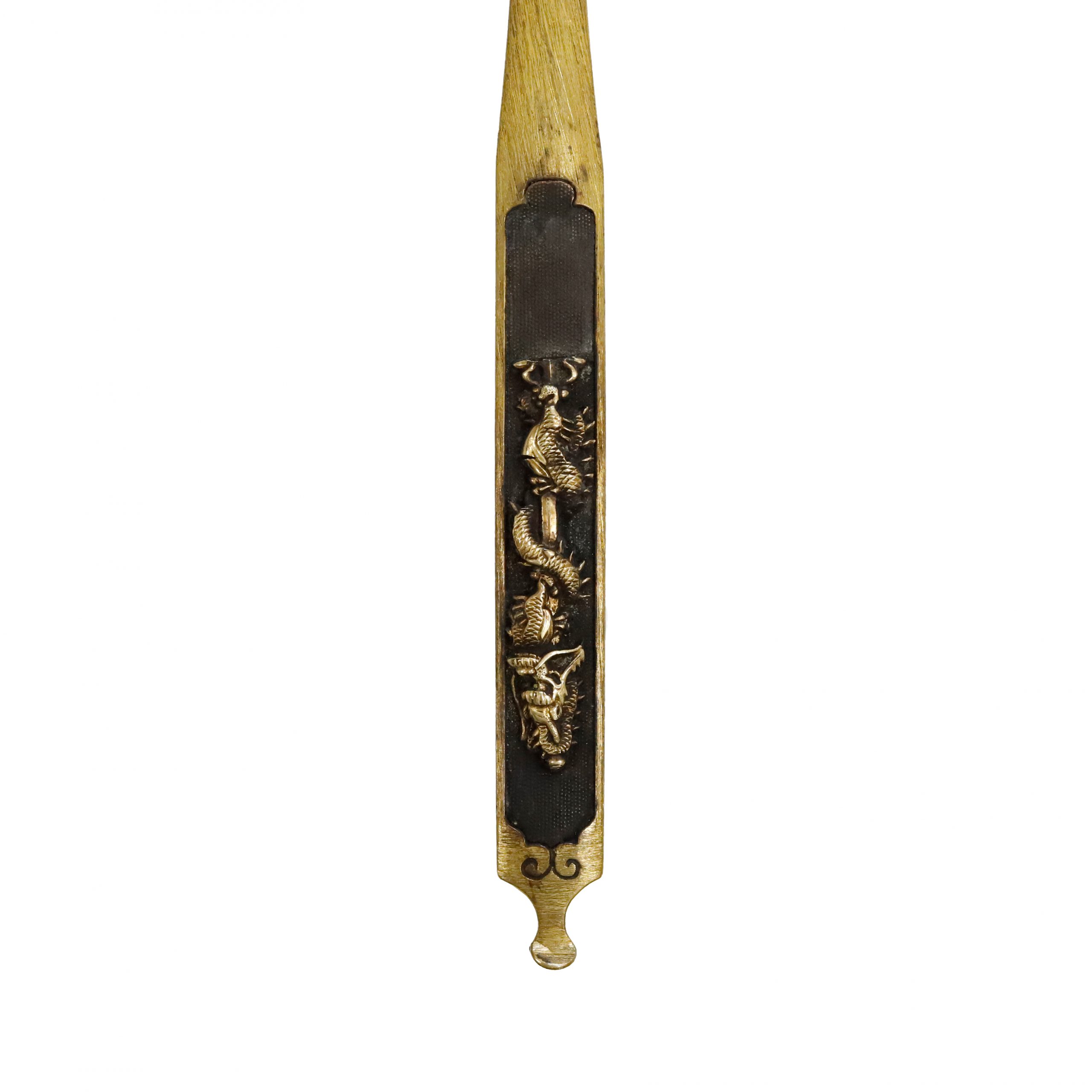
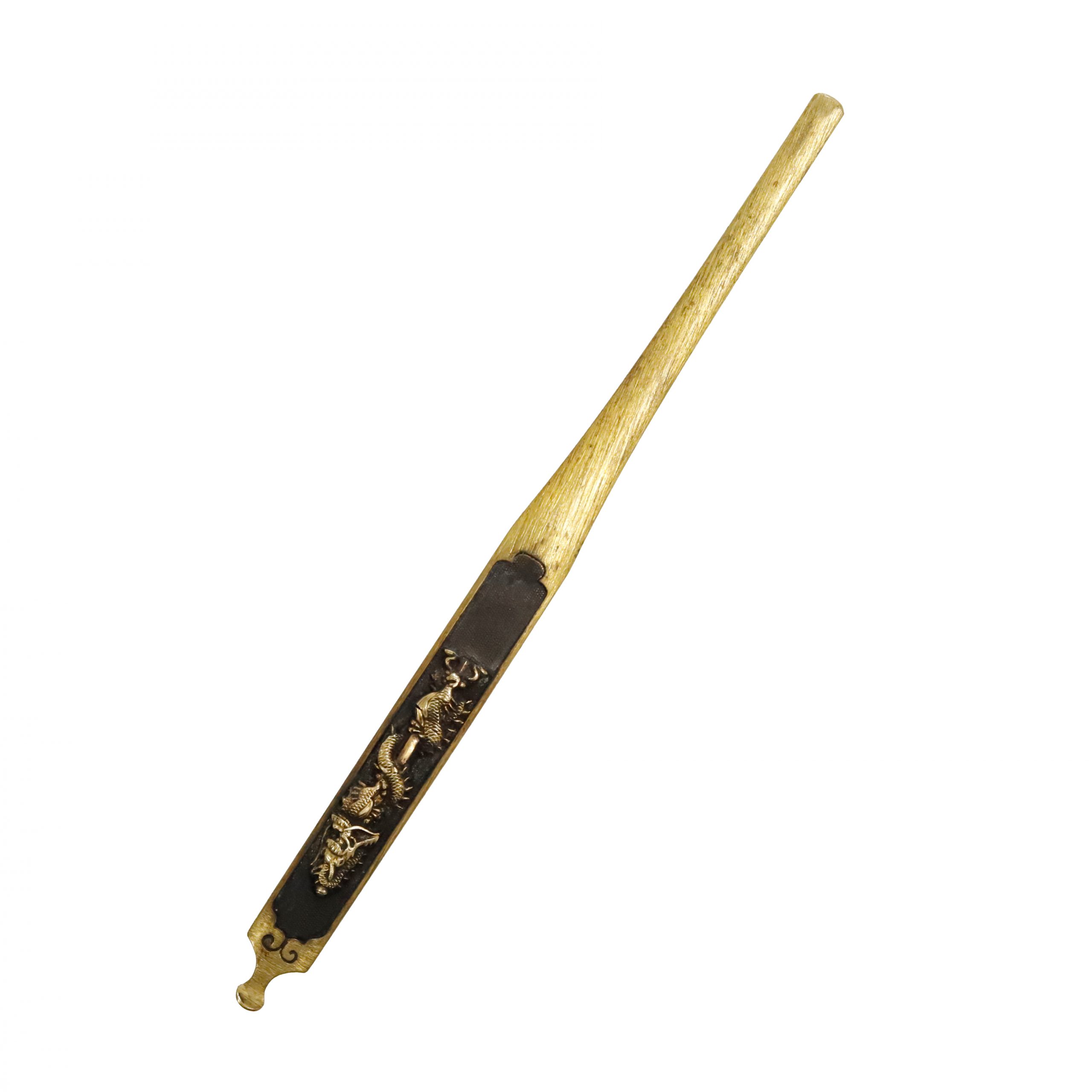
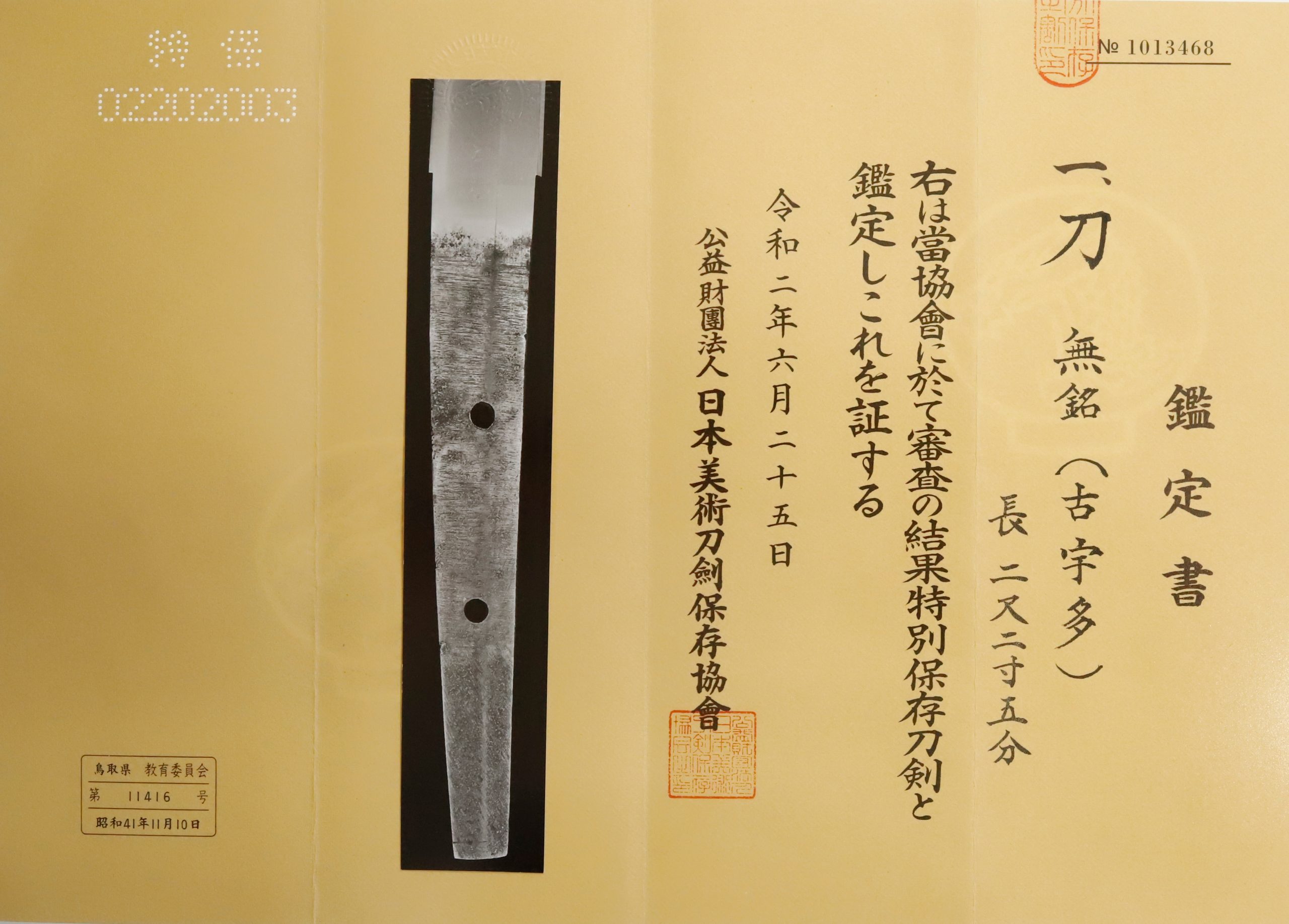
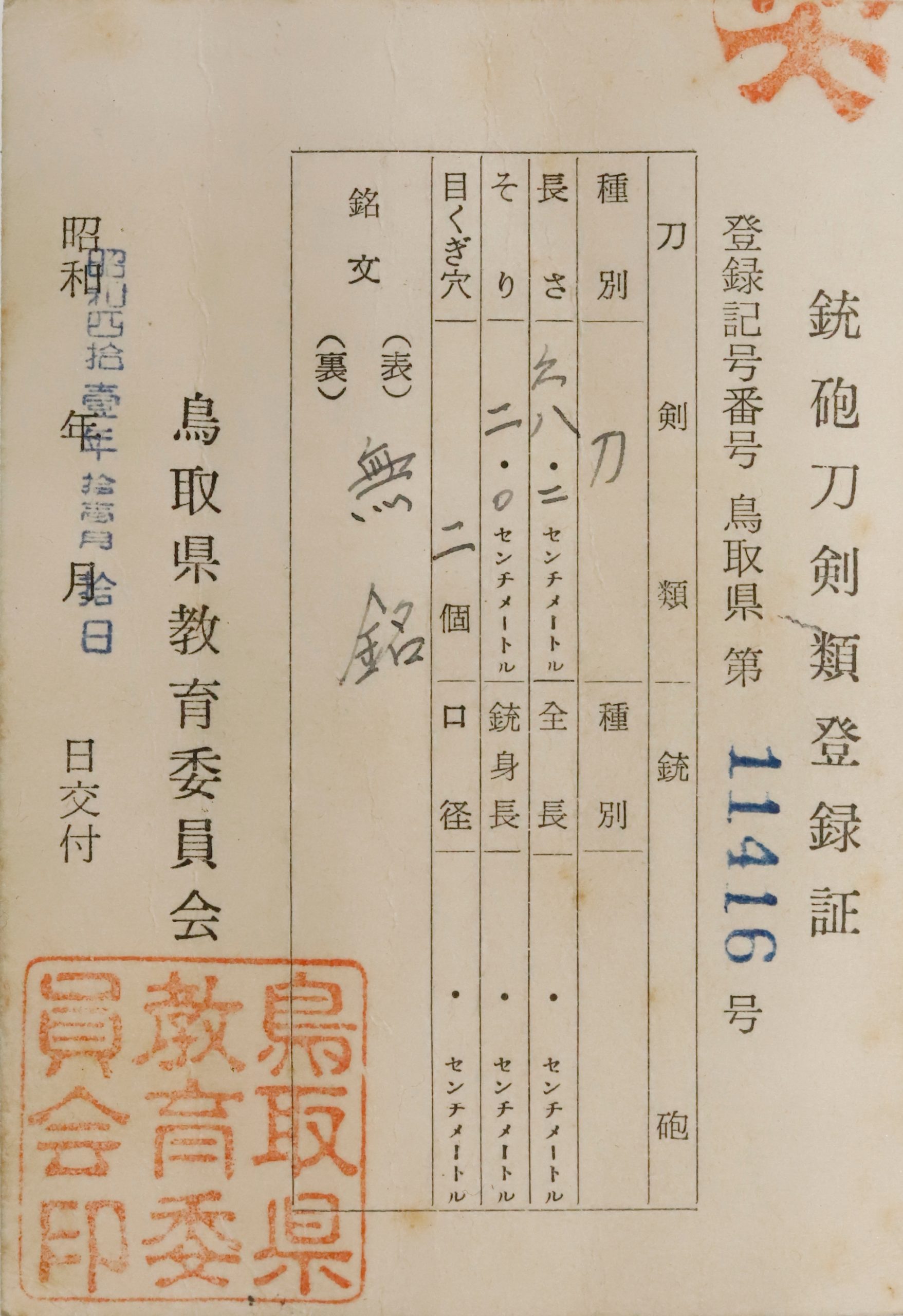
This blade is attributed to the work of Uda school by NBTHK, which authenticated this blade. While the certificate doesn’t mention when it was forged, NBTHK appraises it was made in the Kamakura-Nanbokucho period (Approx. 1299 – 1393). We made a phone call to NBTHK to confirm it. Uda is a prestigious school that flourished during the Nanbokuchoto-mid Muromachi period(approx. 1334-1491). It was founded by Kunimitsu(国光) in the late Kamakura period. The school was located in Etchu province in Toyama prefecture today. Kunimitsu was originally from Yamato Uda Gun(大和宇多郡), located in Nara prefecture but moved to Etchu in the late Kamakura period(1299-1333) with his apprentices including Kunifusa(国房), and Kunimune(国宗). Uda school was famous for producing practically designed blades, which were desirable during Nanbokucho- Muromachi period. Among other schools in the Hokuriku region(the northwestern part of Honshu), Uda school was the most prominent school. When the Uda school flourished in the Nanbokucho period, Japan had a tumultuous time because the imperial court was split into two sides(south and north). There were so many conflicts, and many Samurai were deployed. The trend in battlefields was to use a surprisingly long sword. This trend continued until the early-mid Muromachi period. This blade doesn’t look long now, but we assume it used to be quite a long sword based on the tang’s shape, meaning it was shortened a few times in the past. There are two categories in the work of Uda school. One is called Ko Uda(Old Uda), and the other is called Uda. Ko Uda swords were forged during the late Kamakura period to the Nanbokucho period. Uda blades were forged during the Muromachi period. This blade is categorized as a Ko-Uda blade. This blade is appraised as Tokubetsu Hozon certificate issued by NBTHK. This authentication paper was only given to Japanese swords, especially worth preserving by Nihon Bijutsu Touken Hozon Kyokai(the Society for the Preservation of the Japan Art Sword). It has beautiful Suguha tempering line with vivid Jihada. It accompanies with gorgeous sword mountings. Fuchi-Kashira Ume (梅, Japanese apricot blossom) decorates this Fuchi Kashira. Furthermore, Matsuba-Mon (松葉文, pine needles pattern) is also designed. These plants are inlaid with silvery metal. Japanese apricot blossoms bloom in winter that snow covers its tree. So that people thought this flower tells the arrival of spring. Japanese people appreciate this flower for a long time. People enjoy its adorable petal shape and scent, gracefully branched tree, and compose many poems. As it comes out in the cold season, it symbolizes the power of perseverance and vitality. About Matsuba-Mon, even if the pine needles fall, the roots of the two leaves are firmly connected and do not separate. Therefore, this plant motif has been treated as a lucky charm. Due to this idea, it also represents happy marriage. There was a famous Shogun who cherished this design. Tokugawa Tsunayoshi, the 5th Shogun of the Tokugawa Shogunate, used Matsuba-Mon as his Sadame-Mon (定め紋, Shogun or Daimyo set their own pattern). Tsuka and Menuki As we could see its characteristic elongated body, it might be a dragon that is the motif of this Menuki. Initially, it is an imaginary creature found in ancient traditions or myths. Furthermore, it is a symbolic beast of auspicious signs. Its body is likened to nine animals: antlers are deer, the head is a camel, eyes are demons, the neck is a snake, belly is Mizuchi (蛟, mythical animal in Japan which looks like a snake and have a horn and four legs), scales are fish, claws are falcons, palms are tigers, and ears are cows. It was thought that the dragon would reign at the top of all animals because of its odd-looking appearance. Also, in Japan, there is a belief that worships dragon as a water god and is called Ryujin Shinkou (竜神信仰). Since rice cultivation has been flourished in this country, water is always an essential resource. So that the dragon motif has been familiar with Japanese people since a long time ago, we would like to guess that it might be a reason why this beast pattern is often found even in sword mountings. Tsuba and Habaki This Tsuba is made from iron and has Kozuka and Kougai holes. Since it does not have metal inlay decoration or a complex engraving design, we hope you would enjoy the texture of the iron material itself. Also, Inome (猪の目, boar’s eye) pattern decorates its four corners. Inome pattern is used since ancient times, and it looks similar to the heart mark. Some people believed that this design works as an amulet to protect us from evil spirits or fire. Also, it is said it would bring good luck. This pattern is often found in traditional Japanese architectures such as shrines or temples and used Gegyo (懸魚, decoration under the roof, where the roof is jointed) or metal fittings for hiding timber joints. Kougai The dragon wraps around the sword. It seems the motif of this Kougai might be the Kurikara Ken (倶利伽羅剣, the sword that Fudo Myo-O brings his right hand). It is said the Kurikara Ryu (倶利伽羅龍) changed its figure to this fire. It is said Fudo Myo-O (不動明王) brings this sword. Fudo Myo-O is a protective god in Buddhism, particularly Japanese Shingon Buddhism. This god was also known as a god of wars. Authentication Paper They authenticated the blade on June 25th in the second year of Reiwa (2020). They appraised it as Tokubetsu Hozon Touken, the blade especially worth preserving for Japanese society.
Ko-Uda School古宇多派
Offered by Samurai Museum

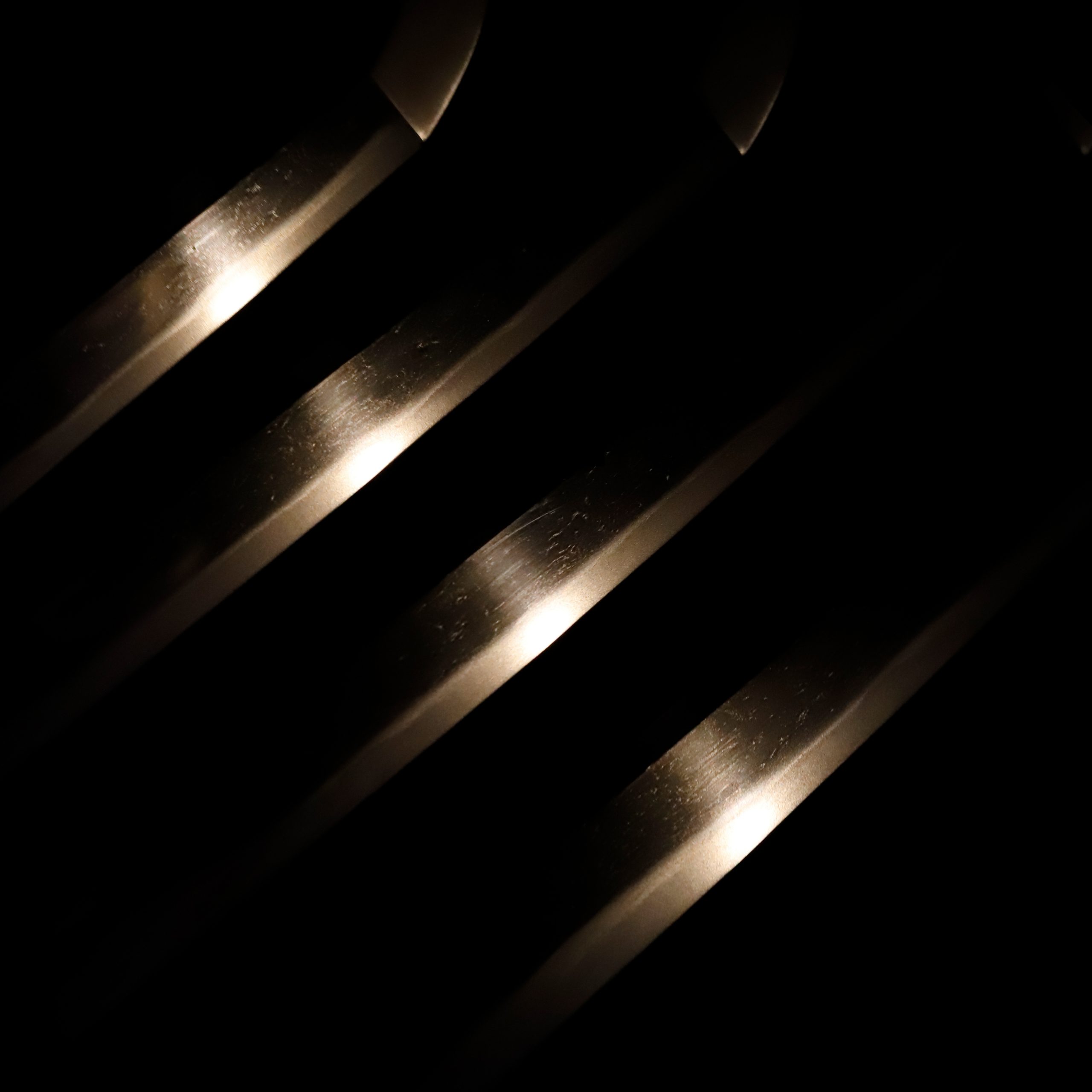
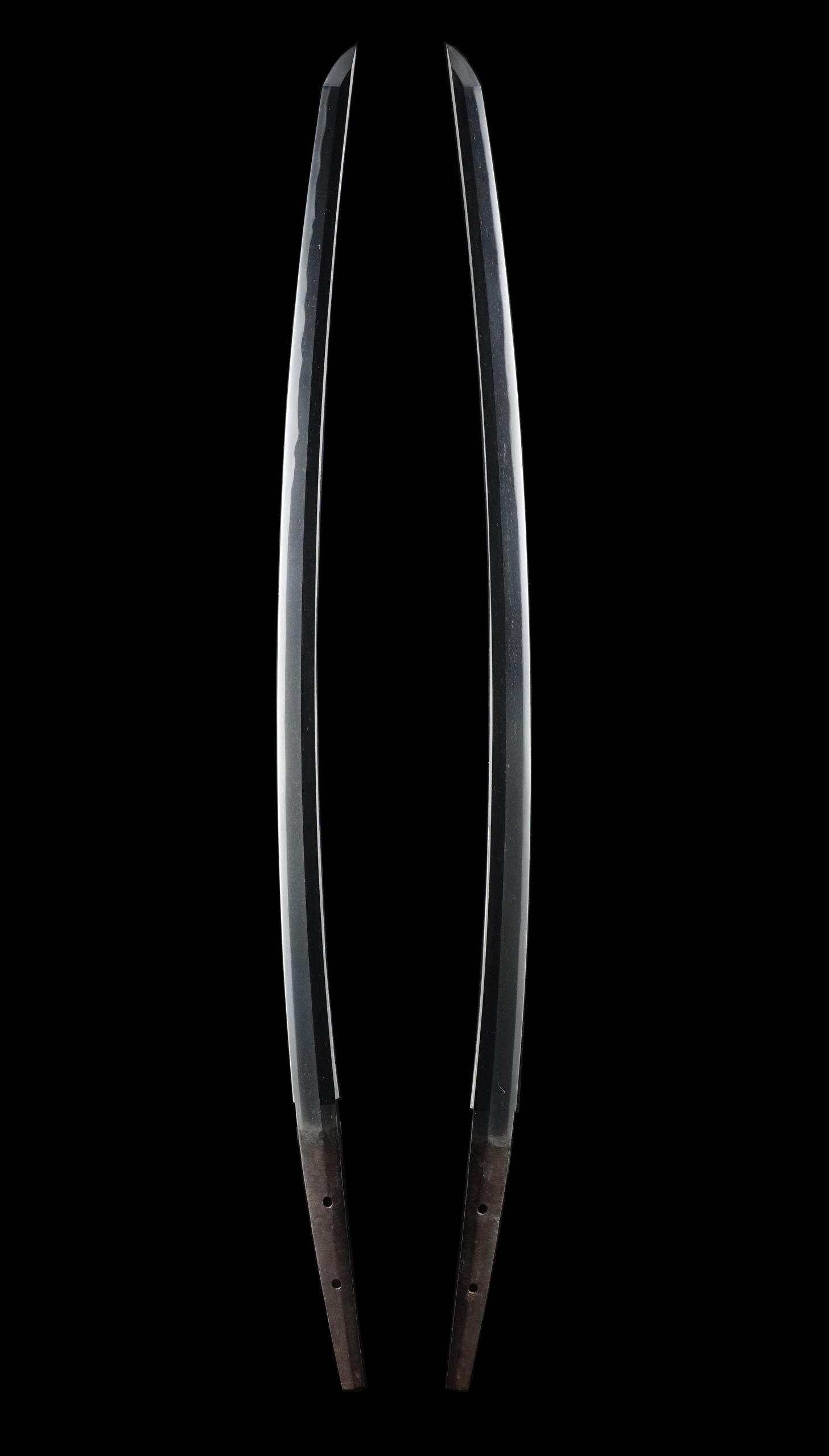
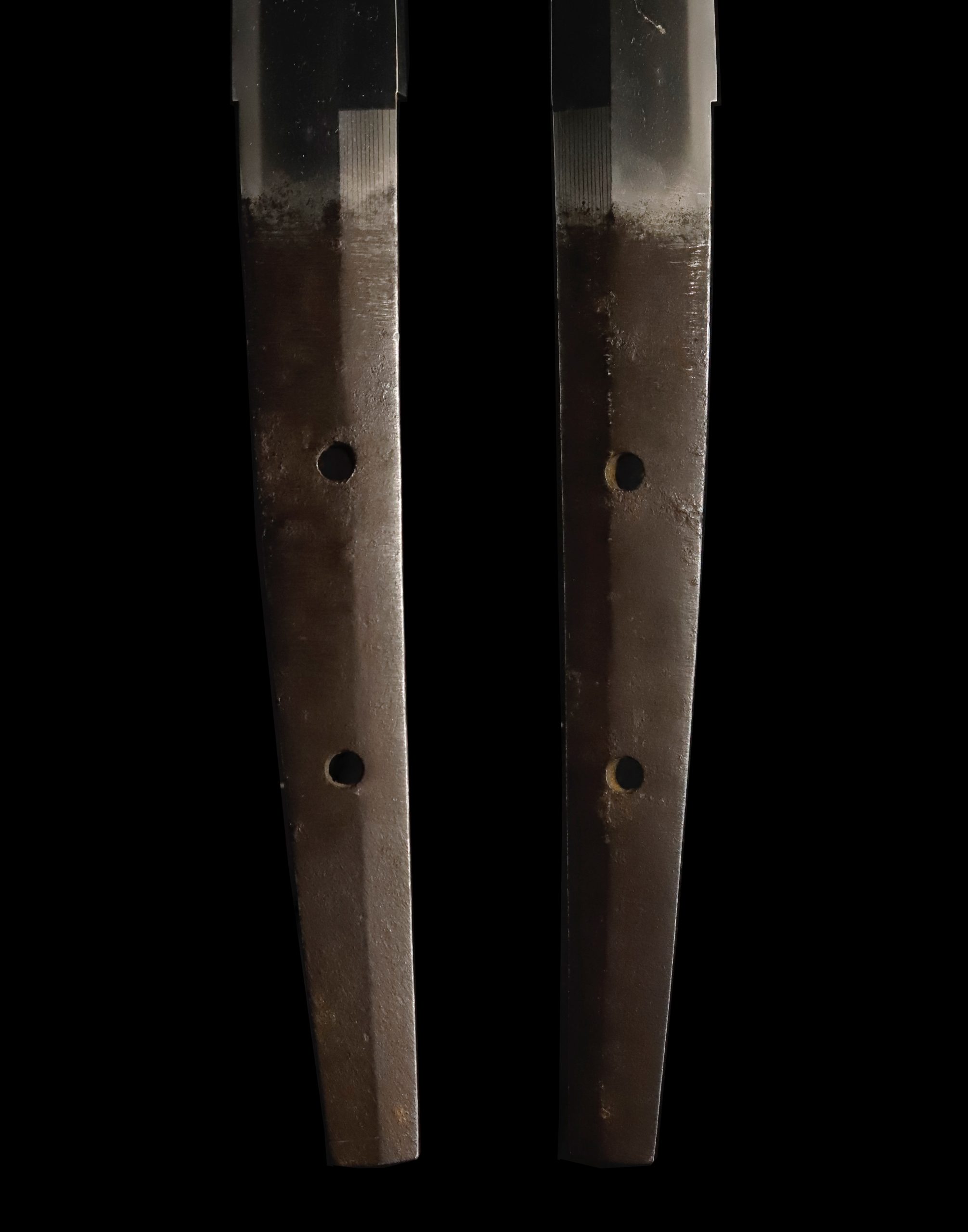
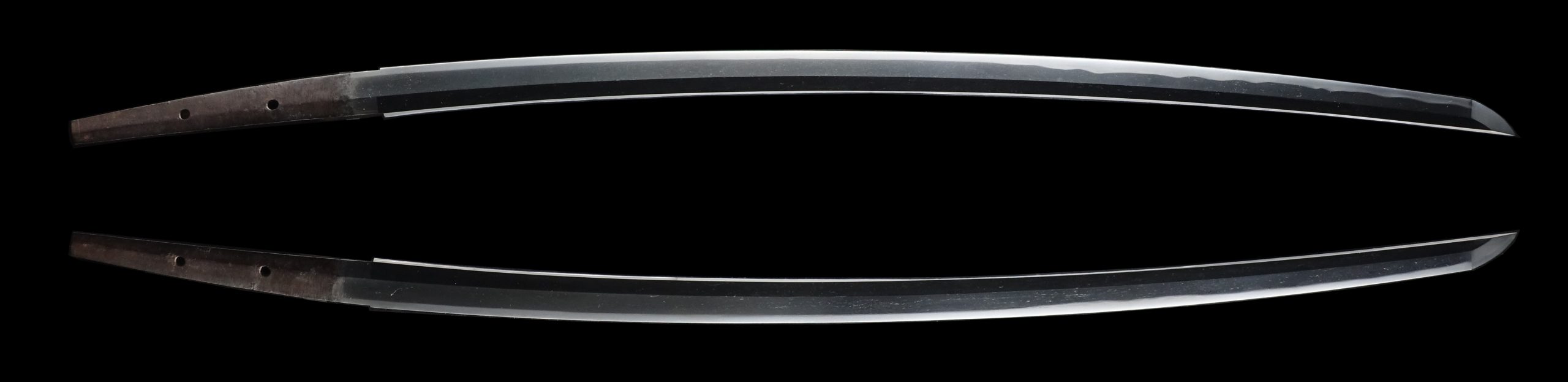
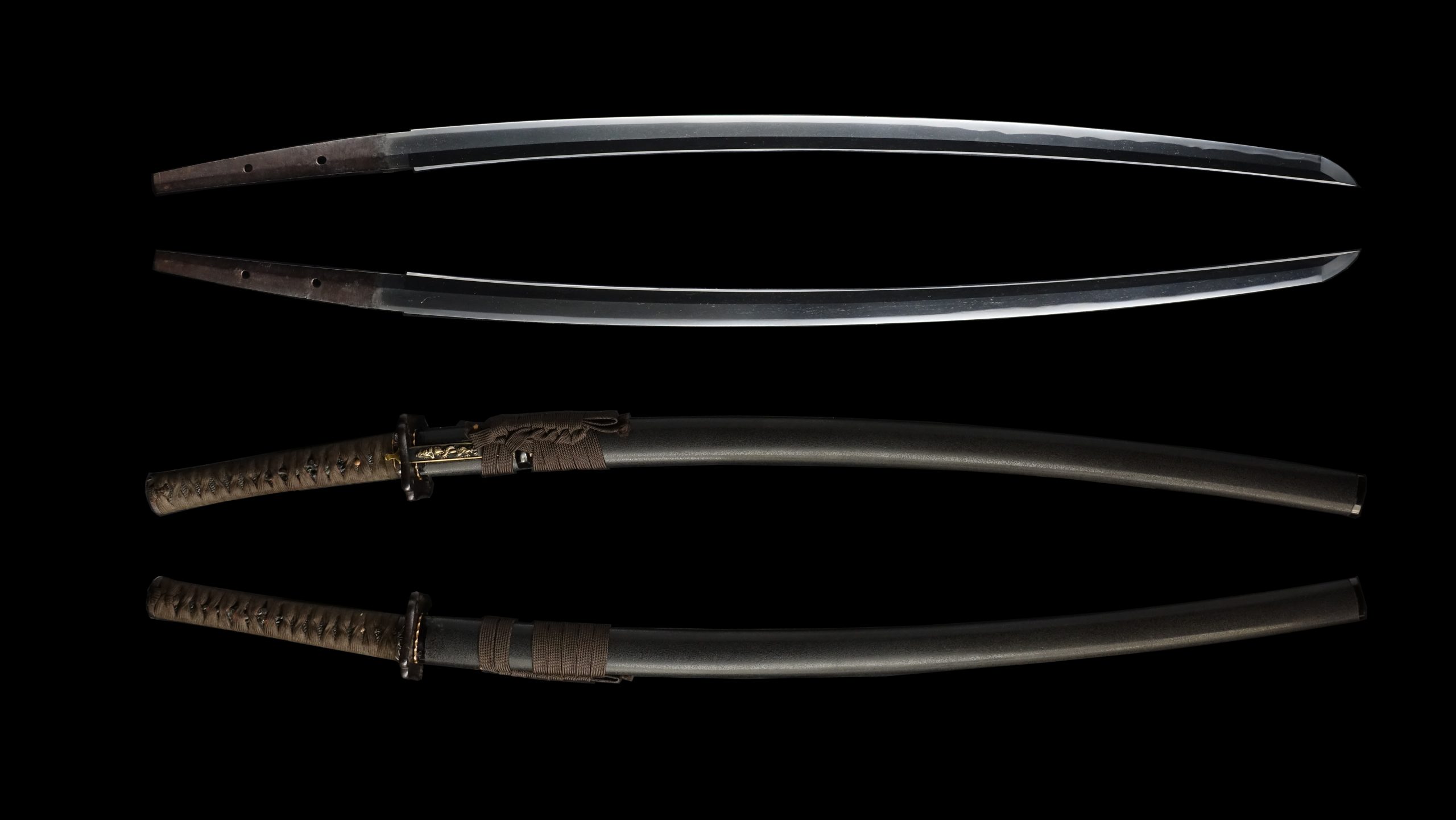
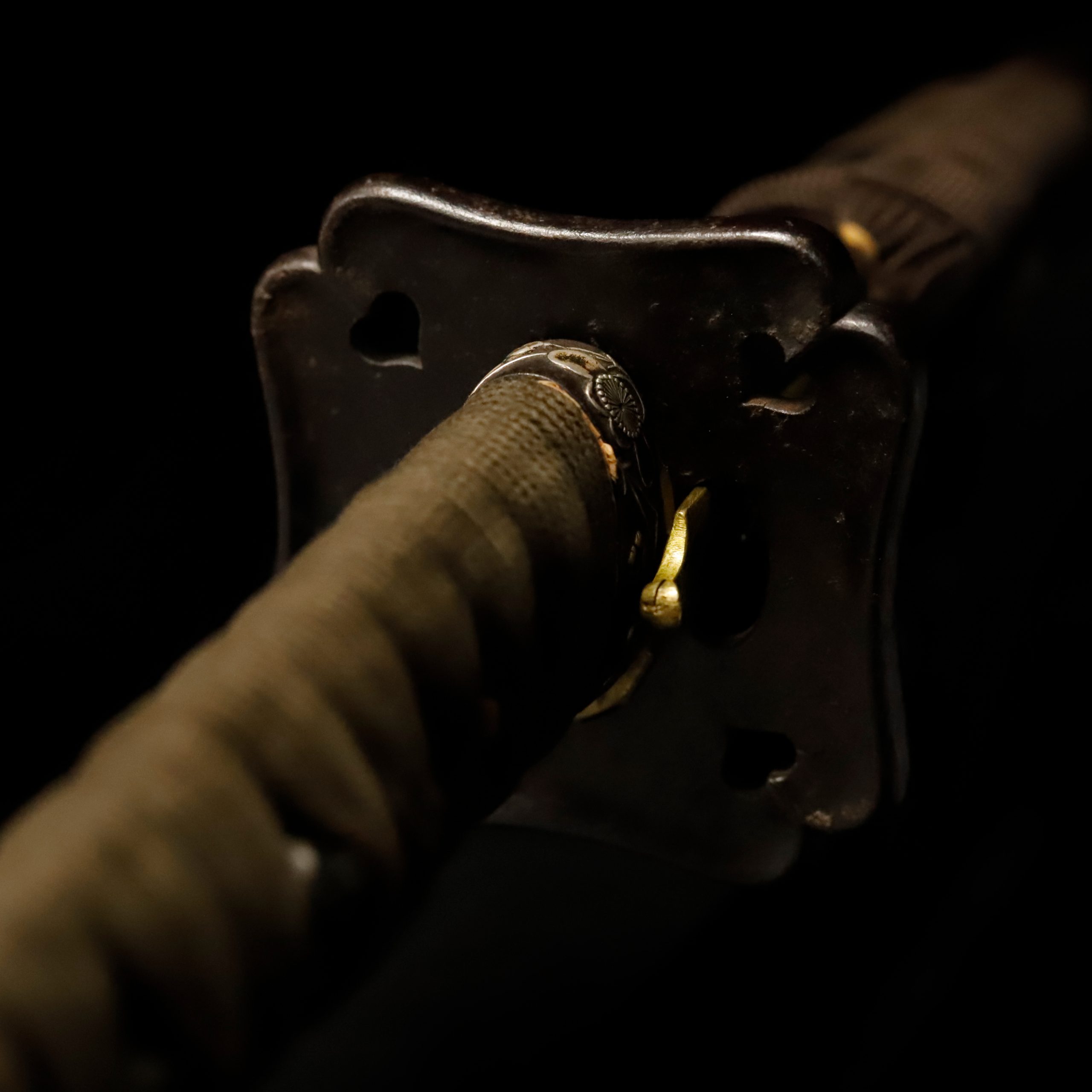
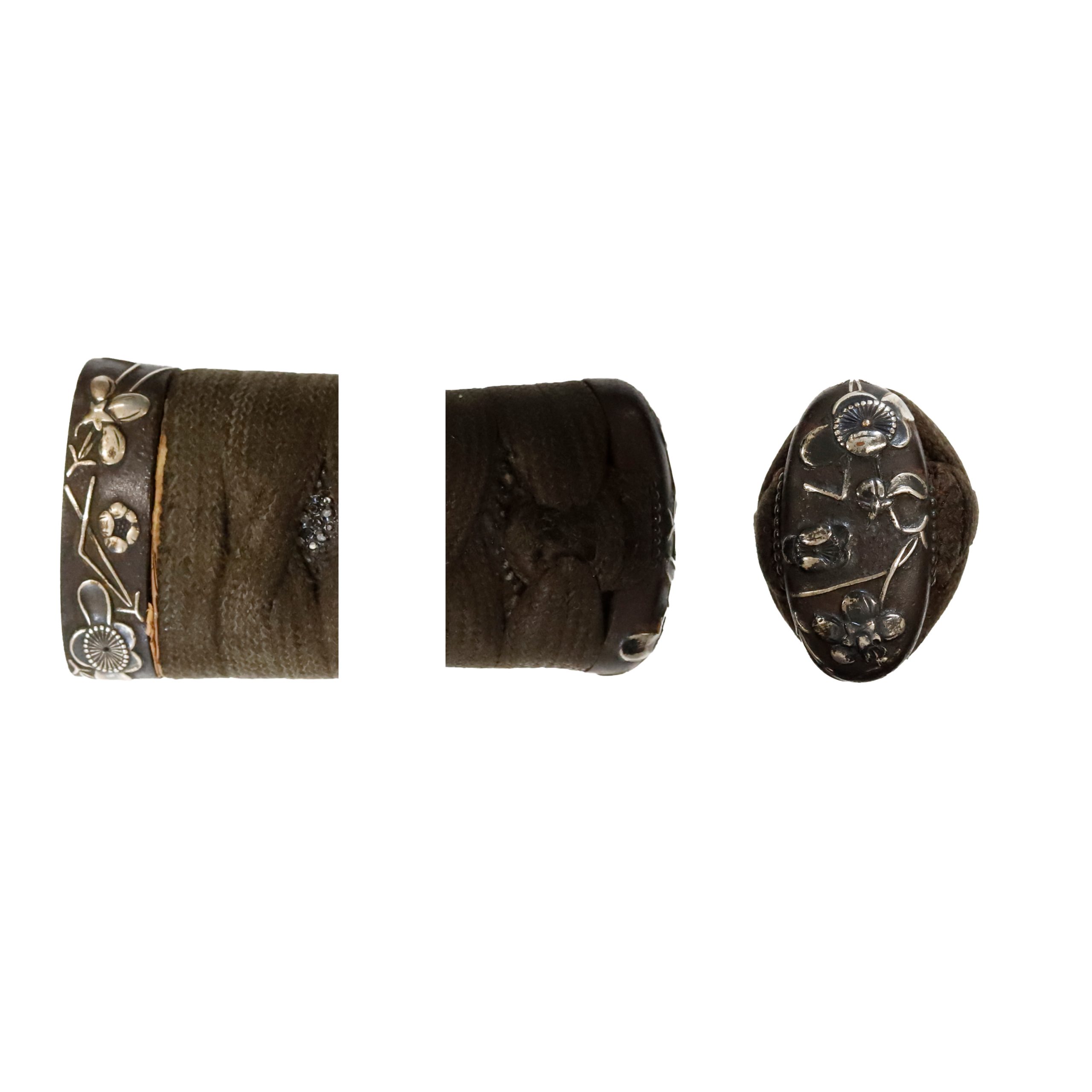
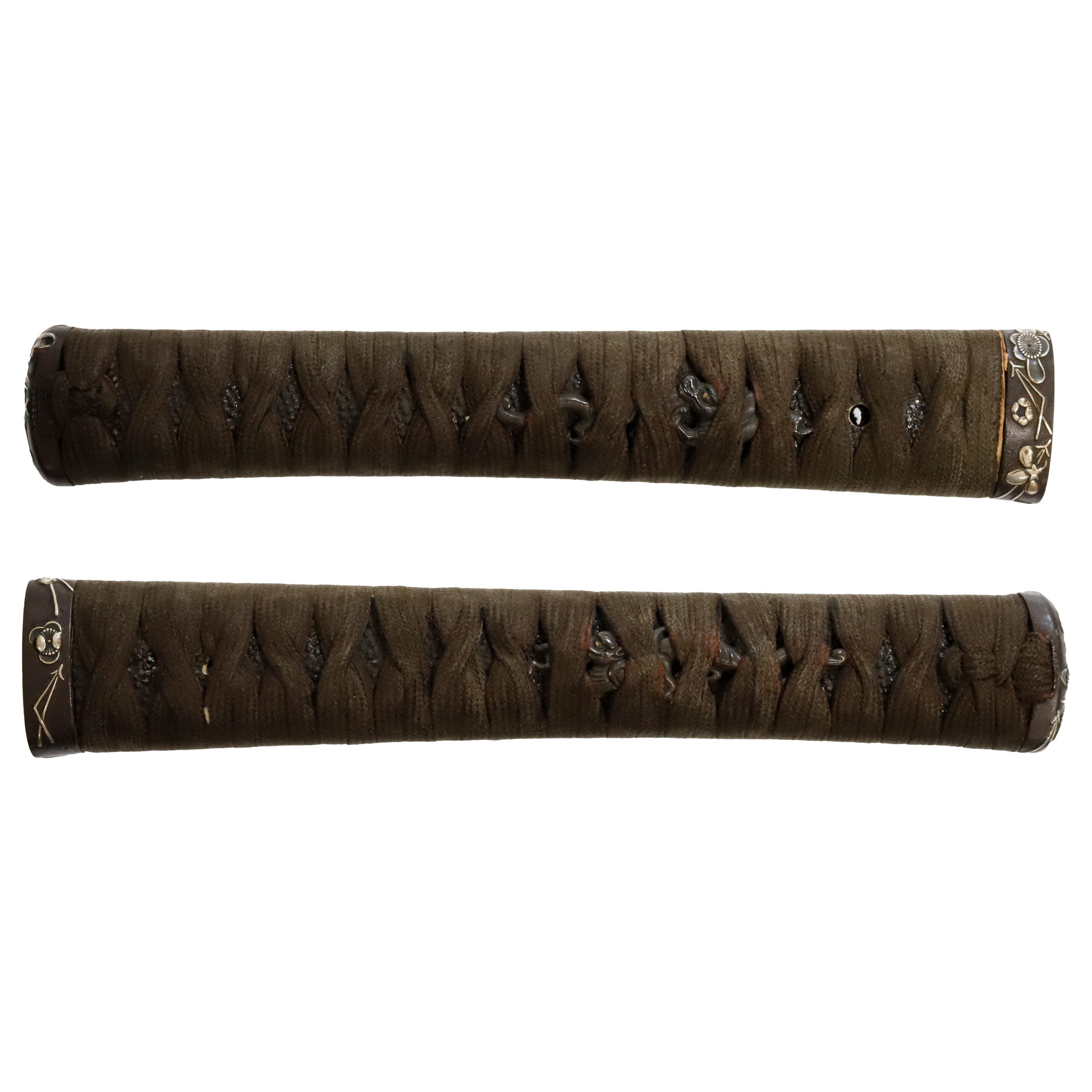
Wakimono · Etchu
9 pieces on the market now
The Ko-Uda school (古宇多) carries its origin in its own steel, a Yamato craft transplanted into the northern provinces. Its story begins with the monk-smith remembered as Ko-Nyūdō Kunimitsu, held by tradition to have come from Uda District in Yamato and to have settled at Utsu in Etchū around the Bunpō era of the late Kamakura period. From that migration the school took its name and its grounding manner. Kunimitsu is the founder and the hinge of the whole attribution, for almost no securely signed first-generation work survives, and his earliest pieces are read instead by their strong Yamato-den character. Through the Nanbokuchō period the line sent out the smiths gathered under the Ko-Uda name, among them his sons Kunifusa and Kunimune, together with Kunitsugu and Tomonori, who reused the house names down the generations as the school flourished toward the Muromachi. Within that long descent the term Ko-Uda is reserved for work of the late Kamakura through the Nanbokuchō, the formative early phase before the later Uda manner settled. A shared vocabulary binds the early generations, set first by the Yamato root the school never lost. The kitae is an itame, frequently mixed with mokume and a flowing nagare grain that tends to stand rather than lie flat, often standing into masame toward the edge, the surface carrying ji-nie with dark chikei entering. The steel takes a blackish, kanairo cast and grows hazy and standing in places, and where the forging tightens a shirake-utsuri stands clearly in the ji; this northern color is the feature the appraisal turns on, the character distinctive to works of the north.
Over it the smiths temper a suguha or quiet ko-midare, mixing in ko-gunome and shallow notare, the hardening running in nie more than nioi, the nioiguchi tending to sink rather than to glow. Into the habuchi they work the Yamato activity the school keeps as its own: fine hotsure, crossing kuichigai-ba, crescent uchinoke, with sunagashi streaming and kinsuji entering, and a bōshi that runs straight into a ko-maru or sweeps off in hakikake. A second, Sōshū-leaning manner runs beside the first, traced to the Uda study under Etchū Norishige with the smith called Gō set beside him as a model; here the temper opens into notare and gunome dense with nie, calling the Sōshū tradition to mind, though none are of purely Sōshū construction. What separates Ko-Uda from the later Uda is this early concentration of Yamato hataraki and the darkened, dry-standing steel, with Kunifusa seen in a tightly forged jigane and Kunimune more often in a standing grain. To kantei Ko-Uda is to return a nie-laden blade to the northern provinces by its jigane and its sinking temper, since a piece dense with nie, kinsuji and sunagashi that reads at first as a high Sōshū hand is held to Uda by its blackish, standing steel and its rounded ha-nie, the resemblance stopping at construction. The published commentary divides the Sōshū debt itself, assigning the finely forged bright-steeled work to the current of Yoshihiro and the standing-grain blackish-steeled work to that of Norishige. Among the best members Kunifusa and Kunimune stand as representative hands, with the founder Kunimitsu read through both the archaic Yamato face and the bolder Nanbokuchō shapes, and Tomonori ranked among the more able of the line, his quiet whitish suguha and his nie-laden hitatsura work sorting by the presence or absence of streaming nie. The school's record is overwhelmingly mumei and ō-suriage, appraised to the group rather than to a single hand, so that a signed blade of any of these names is already a document and a signed early piece rarer still. Recorded provenance is thin, the work held rather than traded, descending through such hands as the Kurokawa Institute of Ancient Cultures and passing only seldom through the market; for the student of how the Yamato and Sōshū currents met in the north, the Ko-Uda blades are the place where that meeting can actually be seen. Learn more →
| Smith | Era | Designated |
|---|---|---|
| Kunifusa國房 | 1368-1405 | 17 |
| Kunimitsu國光 | 1362-1368 | 9 |
| Tomonori友則 | 1390-1394 | 4 |
| Kunitsugu國次 | 1356-1361 | 1 |
| Kunimitsu國光 | 1317-1319 | 2 |
The Nanbokuchō period (1333 to 1392)
Two courts, sixty years of war, and the most dramatic silhouettes in the sword’s history: broad blades, extended points, true ōdachi later cut down into the majestic katana collectors prize. The Sōshū manner was the style of the age.
A Hozon-certified blade judged to show notably superior workmanship and a better state of preservation. The bar is higher: re-tempered blades and most unsigned Muromachi/Edo works are excluded.
The NBTHK (Nihon Bijutsu Tōken Hozon Kyōkai, the Society for the Preservation of Japanese Art Swords) is a public-interest incorporated foundation founded in 1948 and supervised by Japan’s Agency for Cultural Affairs (Bunkachō); it is based at the Japanese Sword Museum in Tokyo. Its expert panels physically examine each submitted work (shinsa) and issue a certificate (kanteishō) ranking it by artistic and historical merit. NBTHK papers are the most widely recognized standard of authentication for Japanese swords and fittings.
NBTHK official siteReturns/exchanges limited to defects caused by shipping (except willful misconduct or gross negligence by the company); customers must contact within 72 hours of receiving the product.