Muromachi turned sword making into an industry: the uchigatana rose with massed infantry warfare, Osafune and Seki produced bundle swords beside custom orders, and the Ming trade carried Japanese blades abroad by the tens of thousands.
 NihontoWatchNihontoWatch
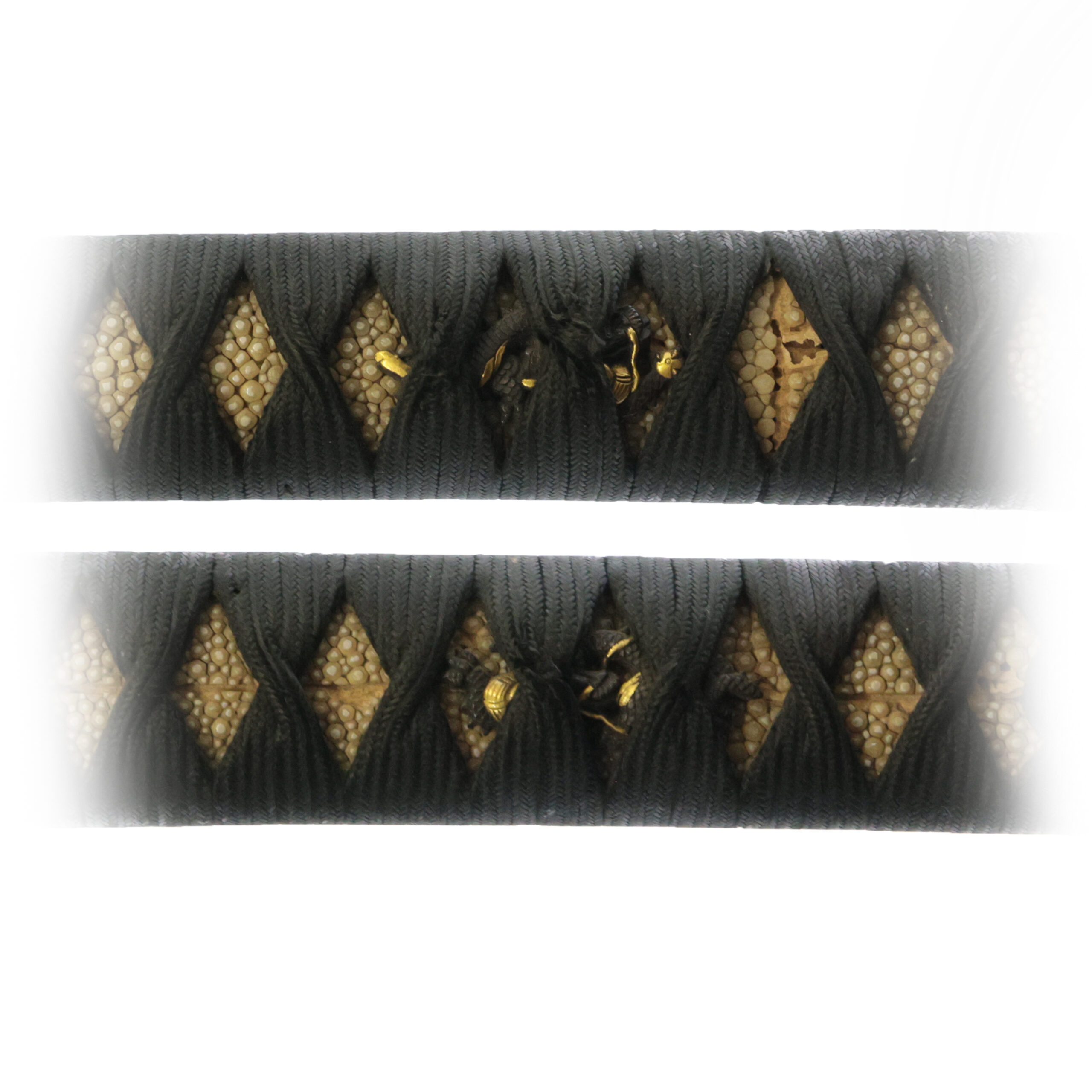
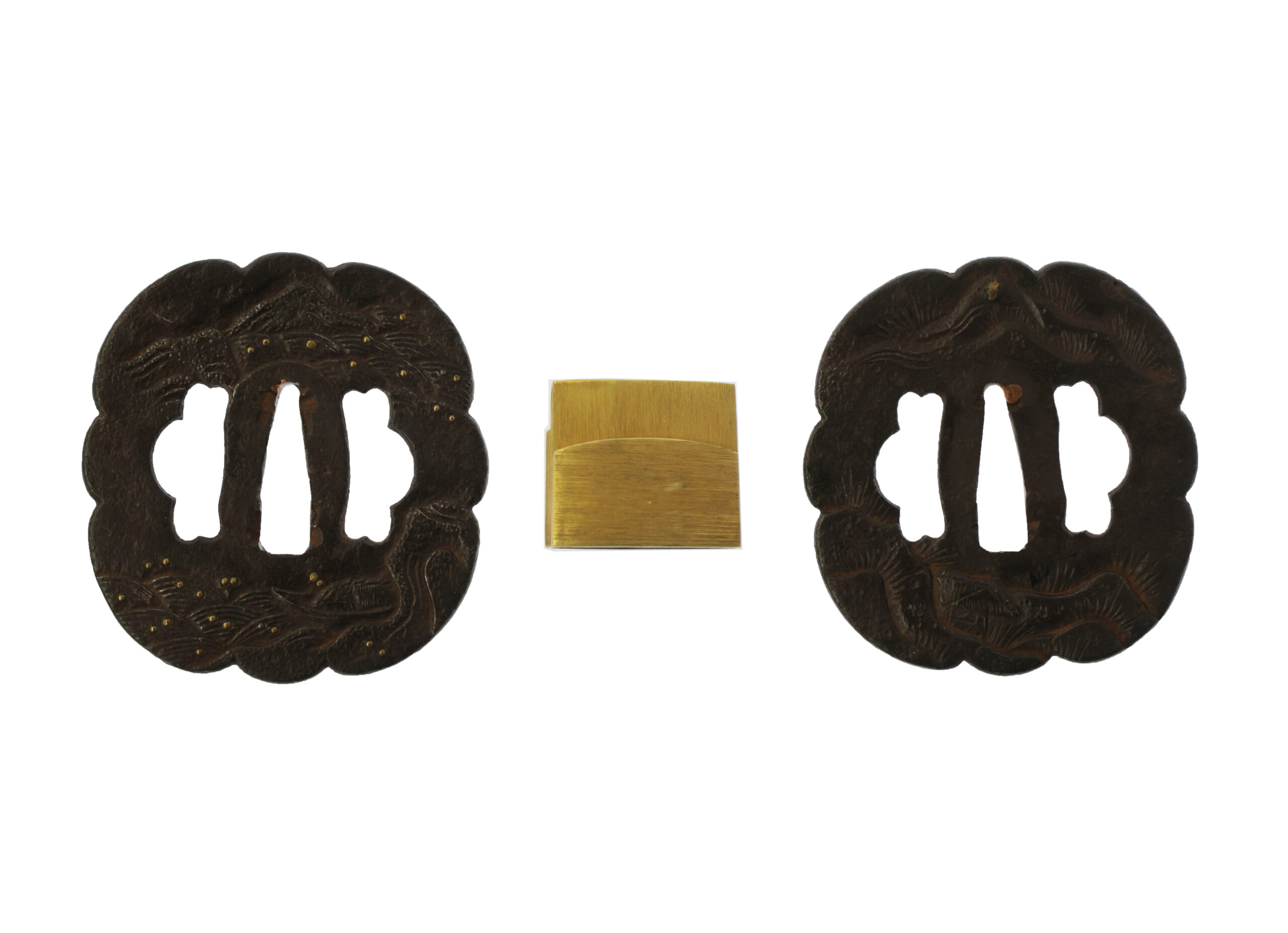
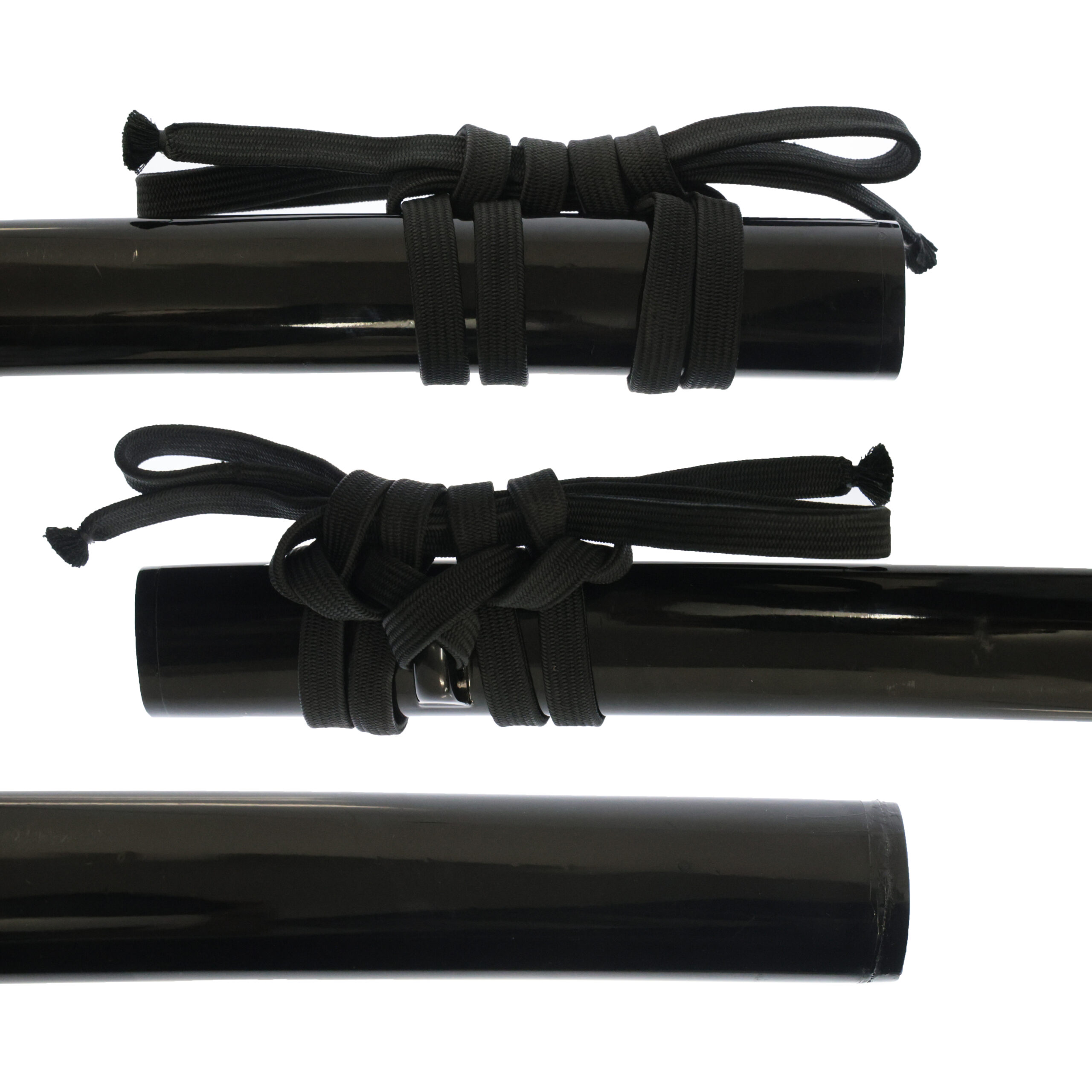
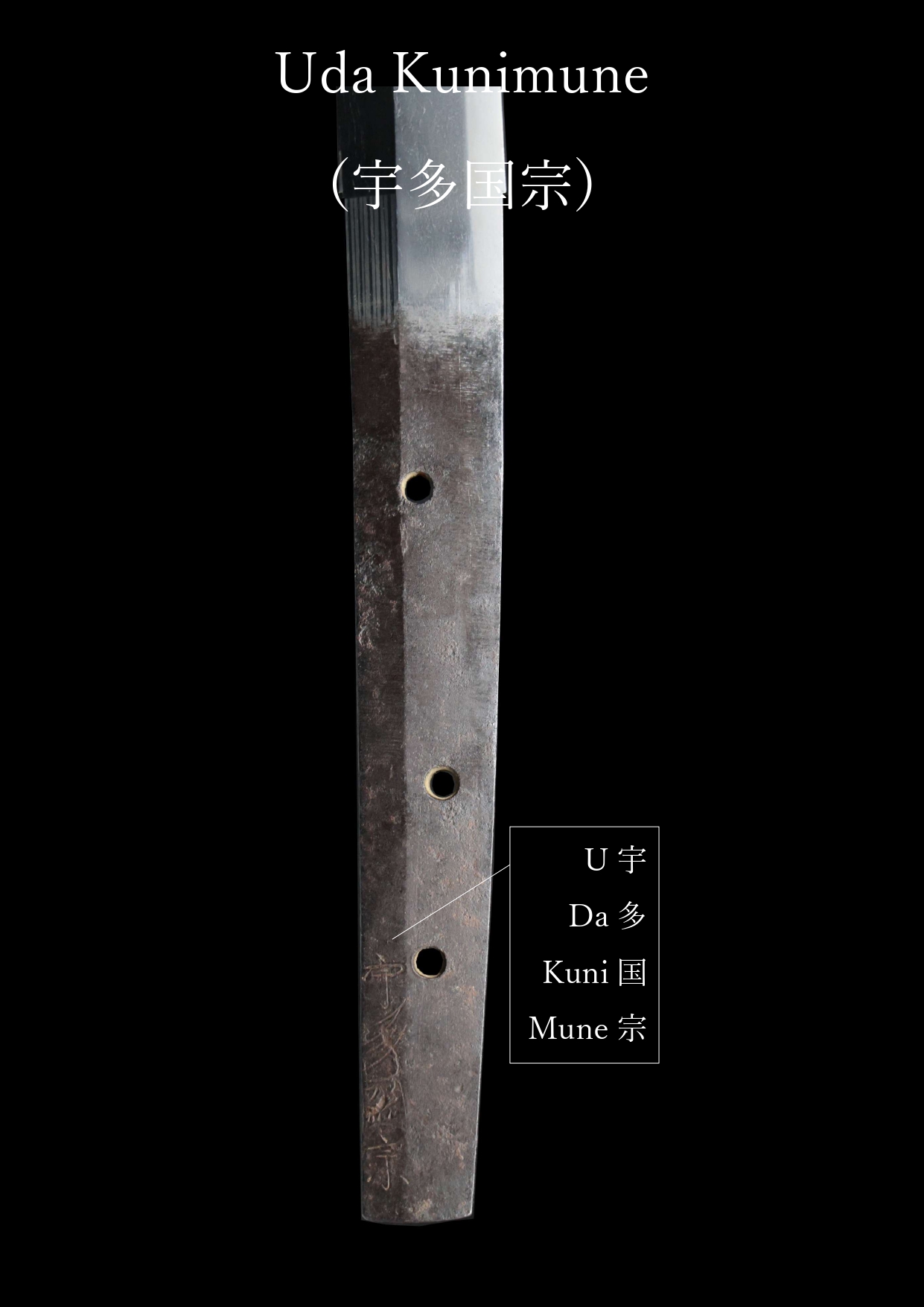
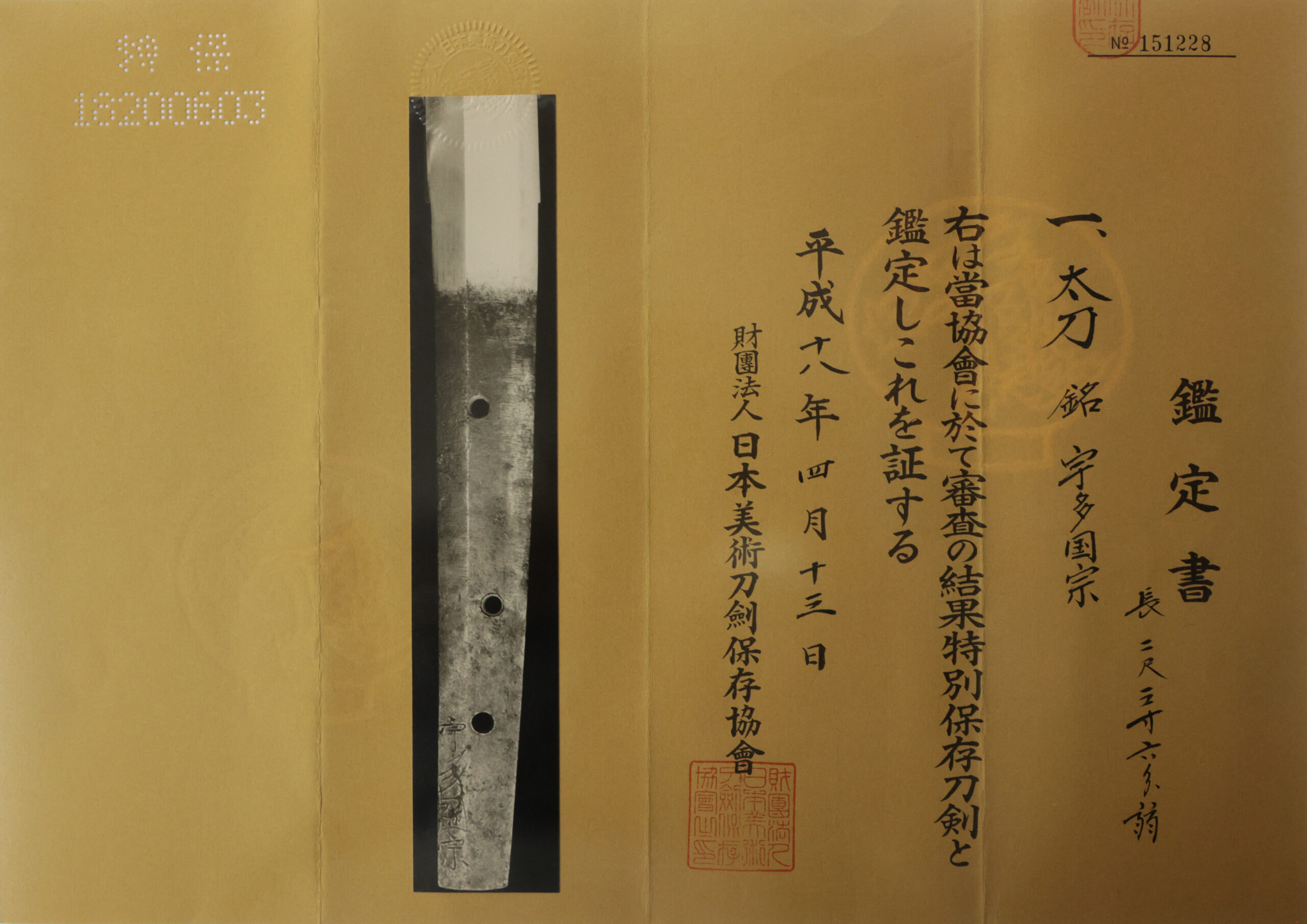
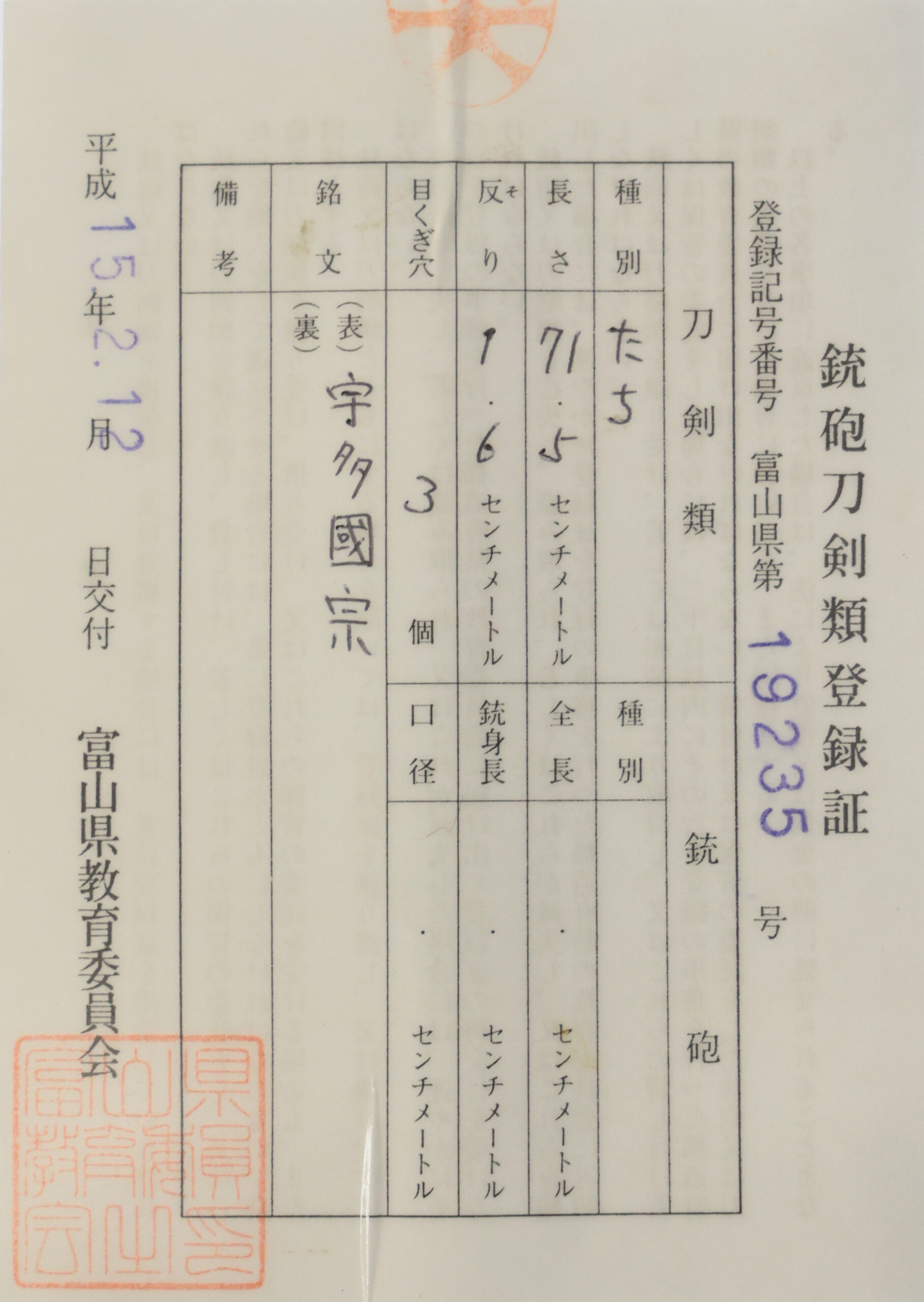
Summary This blade was signed by Uda Kunimune (宇多国宗). Although the NBTHK certificate does not specify a production date, the blade is considered by the NBTHK to date to the early Muromachi period (early-mid 15th century). Kunimune was a name used within the Uda school, a distinguished sword-making tradition based in Etchu province (present-day Toyama Prefecture). The Kunimune lineage formed part of the tradition established by Uda Kunimitsu (宇多国光), the school’s founder. The school’s workmanship reflects its roots in the Yamato tradition, combining carefully forged jigane (the steel’s surface grain) with an emphasis on practical performance. The Uda school is traditionally said to have been founded in the late Kamakura period by Kunimitsu, who came from the Uda district of Yamato province (present-day Nara Prefecture). He later moved to Etchu with his followers, including smiths known as Kunifusa (国房) and Kunimune (国宗). Their successors continued the tradition, establishing the Uda school as one of the prominent sword-making groups in the Hokuriku region of northwestern Honshu. The school flourished during the Nanbokucho and Muromachi periods, when prolonged warfare created considerable demand for dependable swords. During the Nanbokucho period, Japan’s imperial court was divided into Northern and Southern Courts, and warriors fought in conflicts throughout the country. Uda smiths supplied blades suited to the needs of samurai during these turbulent times. Works of the Uda school dating from the late Kamakura through the Nanbokucho period are generally referred to as Ko-Uda (古宇多), meaning “Old Uda,” while those from the Muromachi period are usually described as Uda. Dated to the early Muromachi period, this blade represents the continuation of the Uda tradition into a new generation of sword-making. What is Tachi? Based on the location of the signature, NBTHK judged it as a Tachi sword. The tachi is a type of Japanese sword that developed from the Heian period (794–1185) through the early Muromachi period. It was primarily used by armored samurai in mounted combat. The sword’s pronounced curvature and relatively long blade made it especially well suited for delivering powerful downward cuts from horseback, reflecting the fighting styles of the time. A tachi was worn suspended from the left side of the waist, with the cutting edge facing downward. This method of mounting allowed for smooth and efficient drawing of the blade, enabling swift transitions from drawing to striking. As a result, the tachi proved highly effective in combat situations where mounted warriors engaged enemies on the ground. From the Kamakura period through the Nanbokuchō period, the tachi became the principal weapon of the samurai class. Beyond its practical role on the battlefield, it also served as a symbol of authority and status, representing the prestige and martial identity of the warrior elite. It is appraised as a Tokubetsu Hozon Token(特別保存刀剣) issued by NBTHK(Nihon Bijutsu Touken Hozon Kyokai:日本美術刀剣保存協会). *Please keep in mind that there are a few Kitae Kizu on this blade. Fuchi-Kashira This fuchi part features a Hatō-zu (波濤図), matching the motif on the tsuba and creating a harmonious appearance throughout the sword’s mountings. The menuki depict dragons, adding another element to this water-themed design. In Japanese art, a dragon rising through turbulent waves toward the heavens, or emerging from the water with a hōju (宝珠, a wish-fulfilling jewel), is an auspicious image. Such imagery evokes aspirations for success and advancement, good fortune in overcoming challenges, and lasting prosperity. Tsuka and Menuki *Please keep in mind that the Samegawa (stingray skin) on the handle is partially missing due to its age. The theme of the Menuki is the dragon (龍, Ryū). The dragon is an imaginary creature that originated in ancient Chinese mythology and has long been regarded as an auspicious symbol associated with power, wisdom, and good fortune. According to traditional descriptions, its body combines the characteristics of nine different animals: the antlers of a deer, the head of a camel, the eyes of a demon, the neck of a snake, the belly of a Mizuchi (蛟, a Japanese mythical serpent-like creature with horns and four legs), the scales of a fish, the claws of a falcon, the paws of a tiger, and the ears of a cow. Because it embodies the finest qualities of many creatures, the dragon was believed to reign supreme over all animals. These menuki are further enhanced with gold inlay (kin-zōgan, 金象嵌), a decorative technique in which gold is carefully inlaid into the surface of the metal. This refined craftsmanship not only highlights the dragon’s dynamic form but also reflects the high level of artistry found in Japanese sword fittings. In Japan, dragons have also been revered as water deities through the tradition known as Ryūjin Shinkō (竜神信仰, Dragon God Worship). As rice cultivation has always depended on a stable water supply, dragons came to symbolize rain, rivers, fertility, and prosperity. For this reason, dragon motifs have remained one of the most popular and auspicious designs in Japanese sword mountings for centuries. Tsuba and Habaki The theme of this Tsuba is Hatō-zu (波濤図, turbulent ocean waves), a traditional Japanese motif portraying the powerful and ceaseless movement of the sea. Wave designs evoke the dynamic and ever-changing force of nature and can symbolize resilience, strength, and the ability to overcome adversity. Such imagery was well suited to sword fittings, where the relentless motion of the waves could be associated with a samurai’s determination and indomitable spirit. Saya This Saya is covered with black lacquer. Due to its high waterproof effect, lacquer has been used since ancient times in Asia. The blade of a Japanese sword is made of iron, and moisture is the greatest enemy of iron. For the purpose of carrying the blade without degrading it, people devised a method of coating the scabbard with lacquer. To prevent not only moisture but also rain and snow from penetrating the inside of the scabbard, it was necessary to apply multiple layers of lacquer. The Nushi (塗師, lacquerers) was born precisely because advanced techniques were required to handle the complicated processes. Authentication Paper They authenticated the blade on April 13th in the 18th year of Heisei (2006). They appraised it as Tokubetsu Hozon Touken, the blade especially worth preserving for Japanese society.
Offered by Samurai Museum
25 on the market

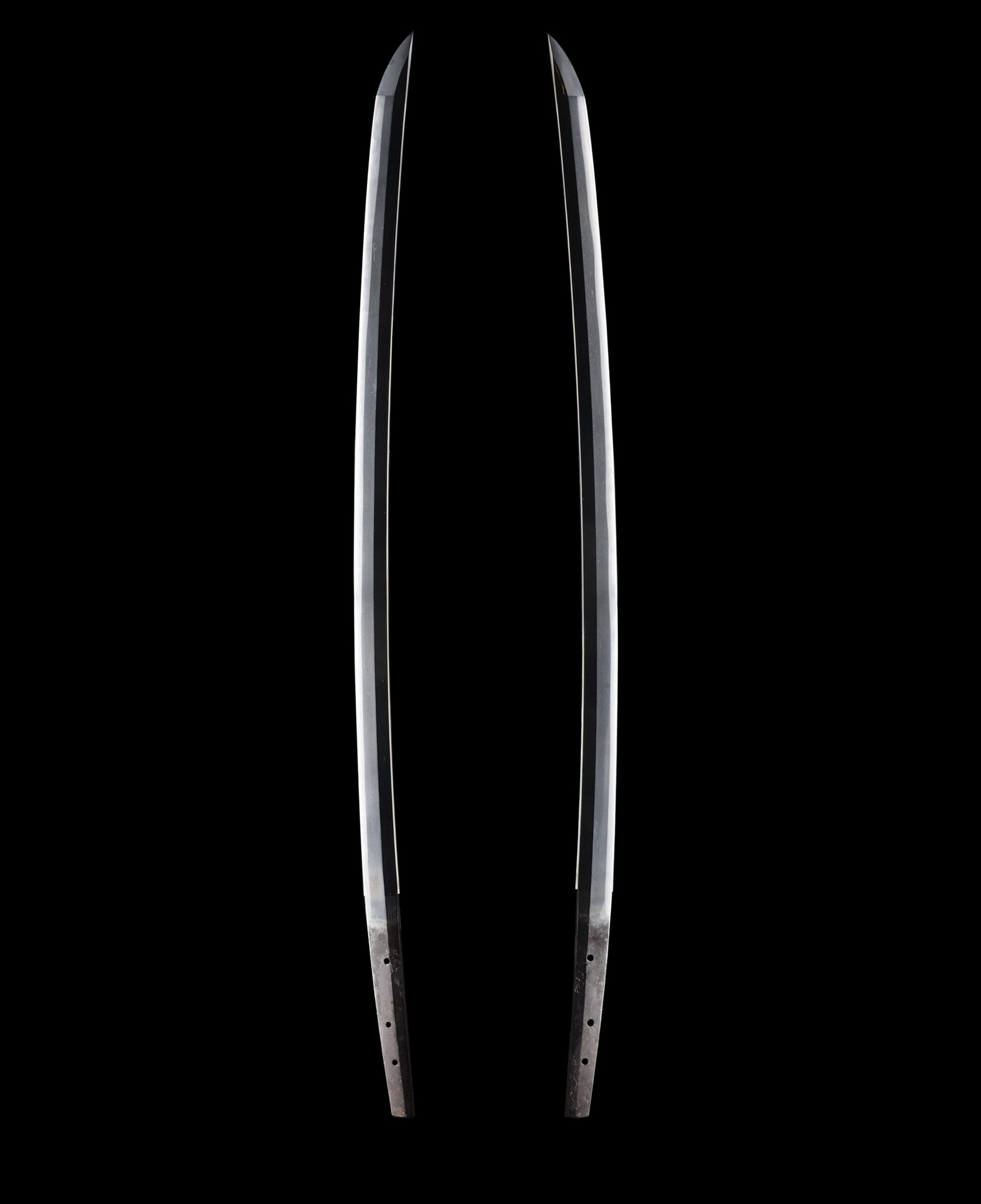
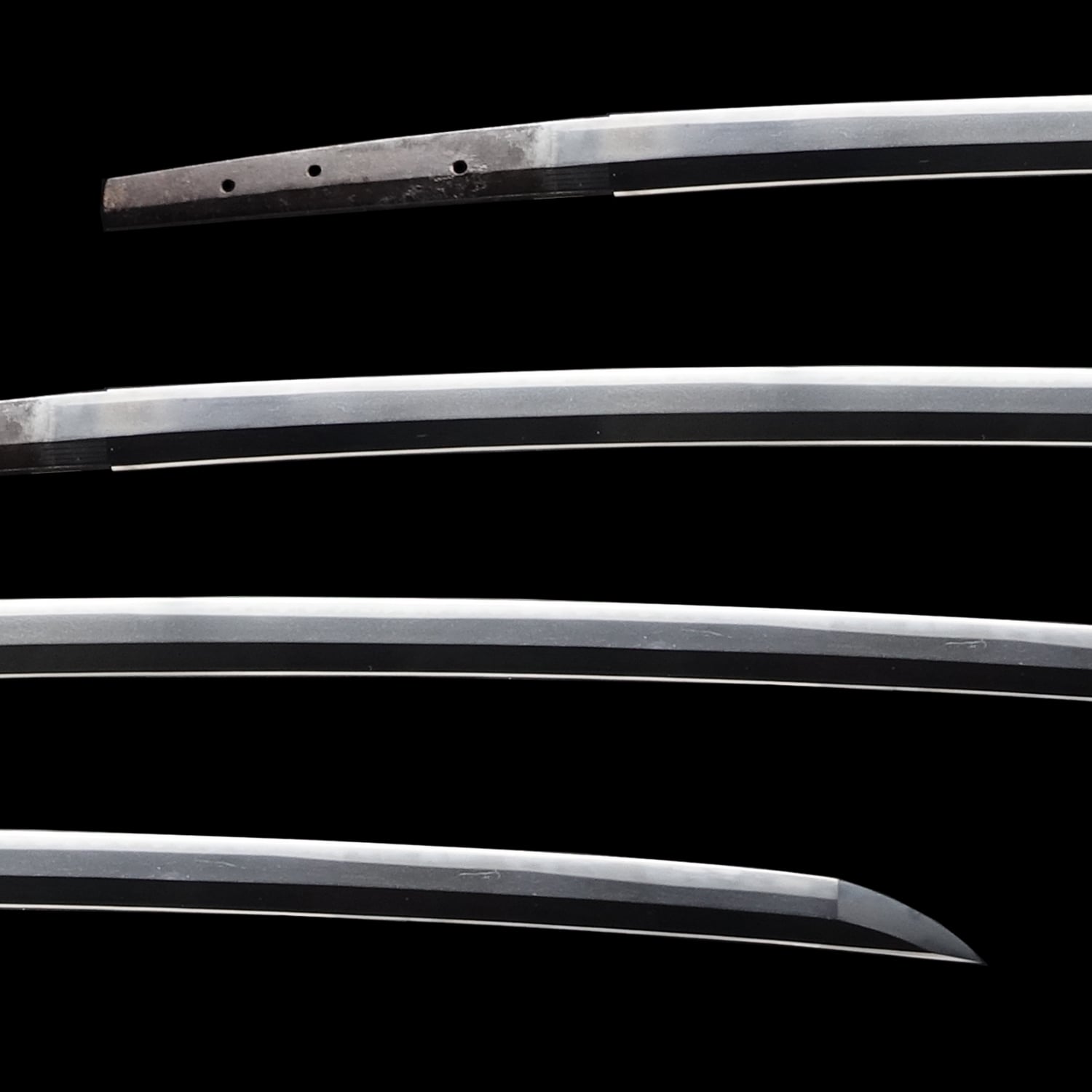
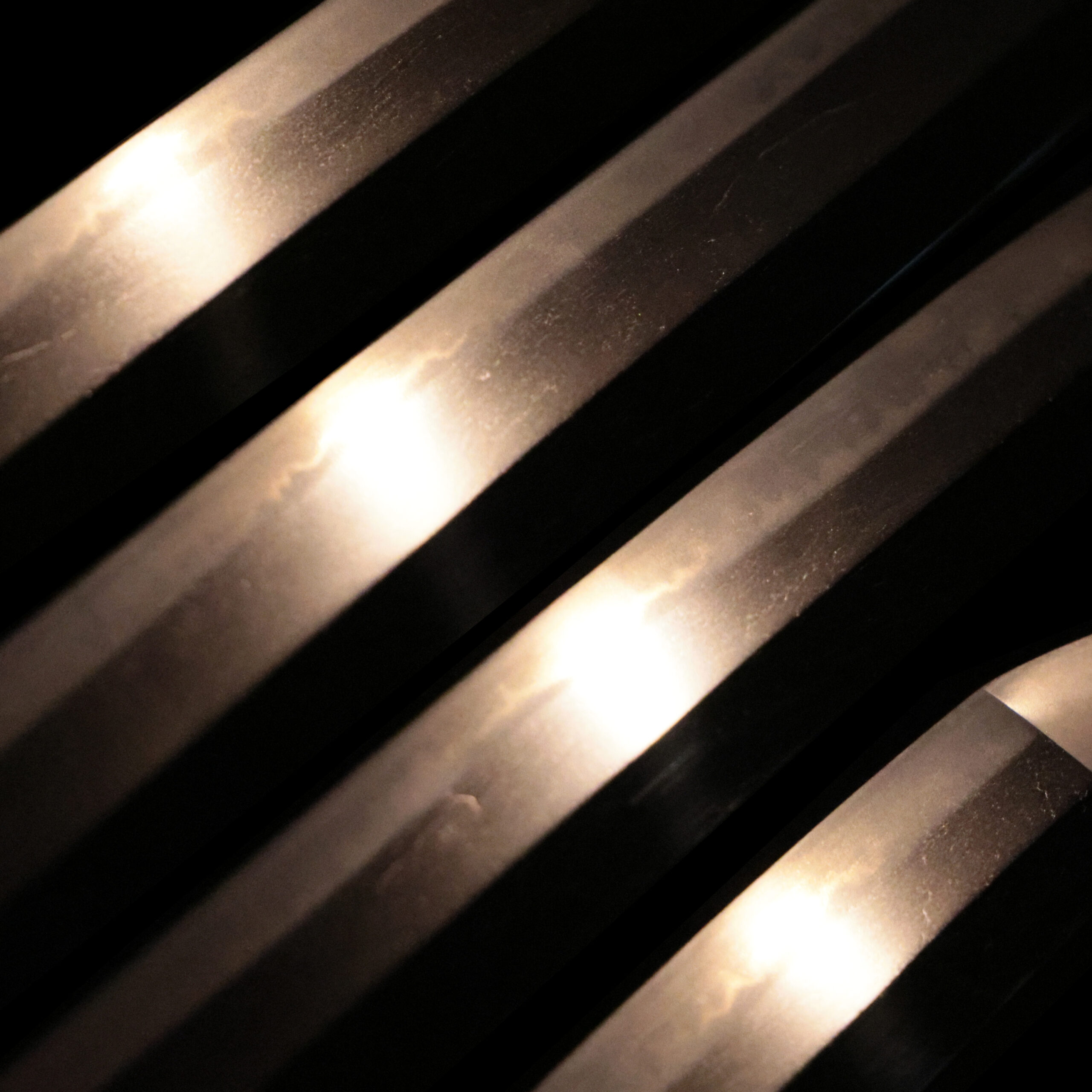
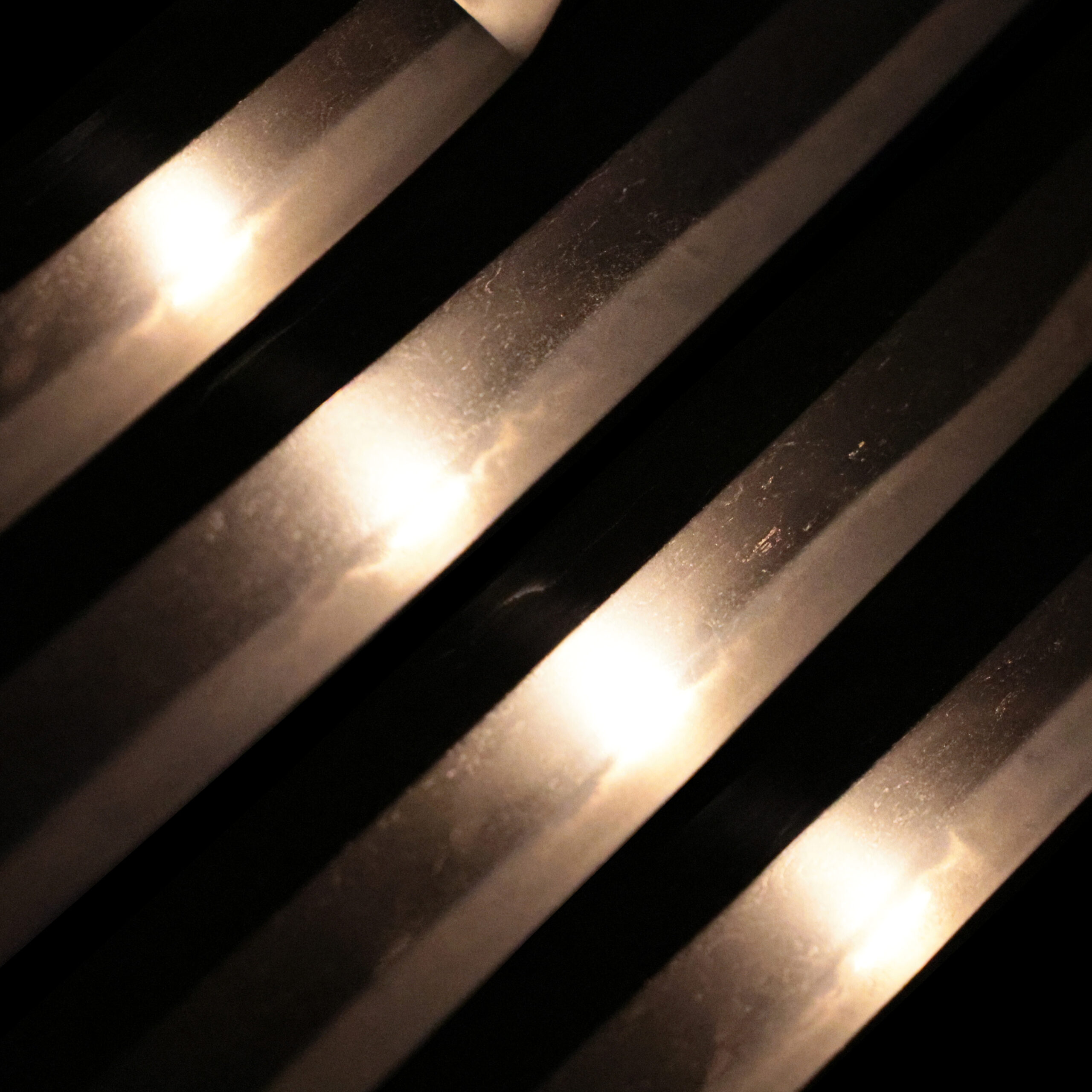
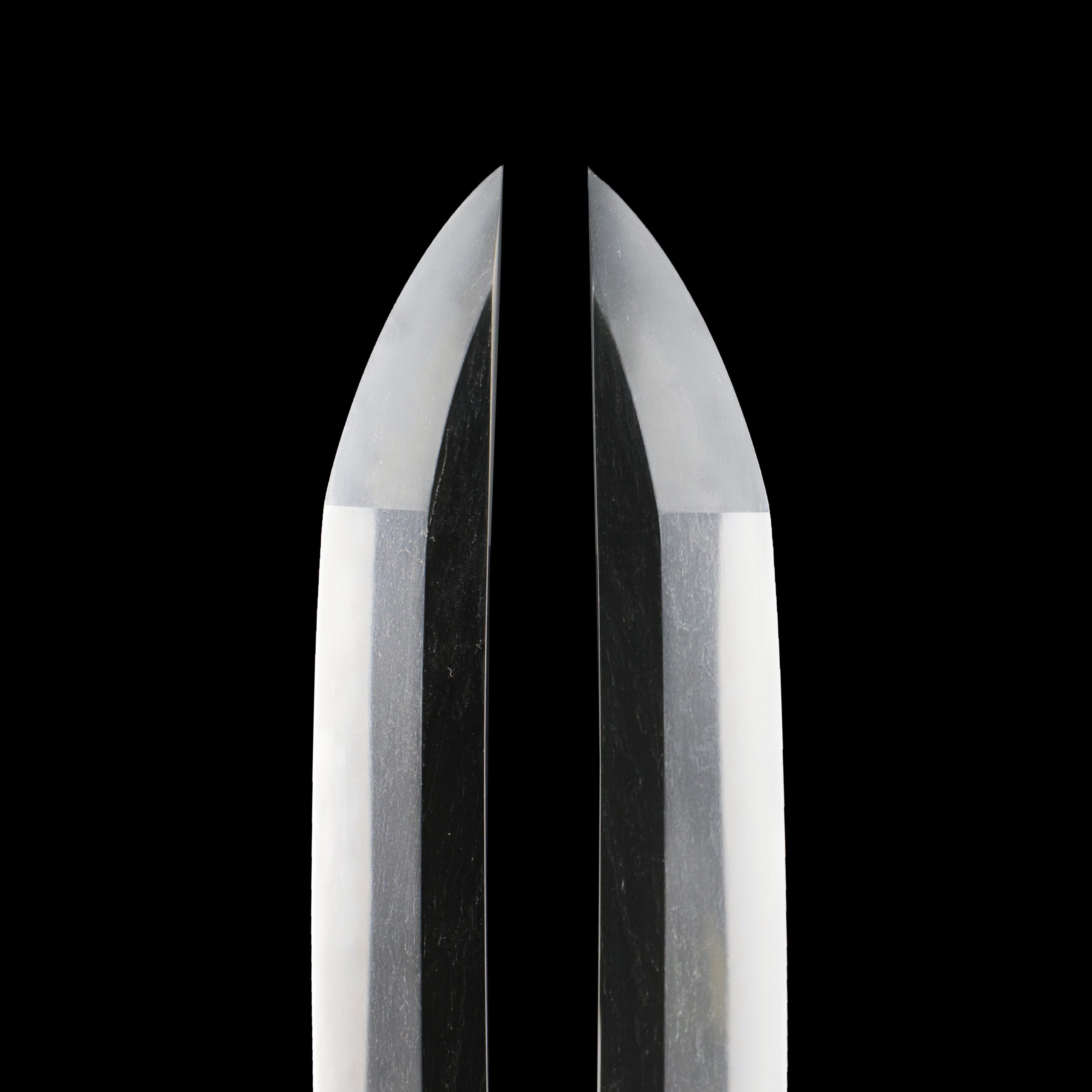
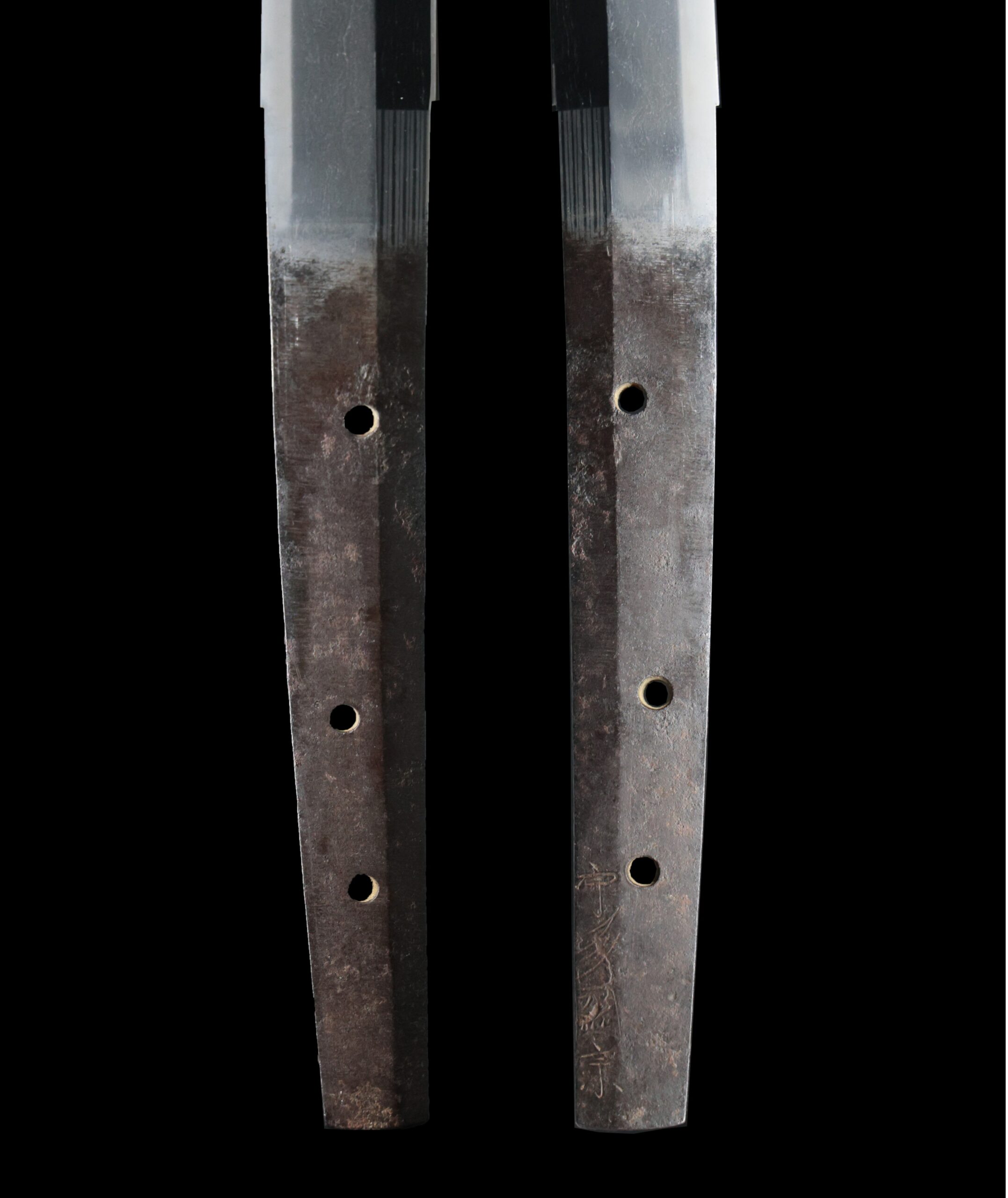
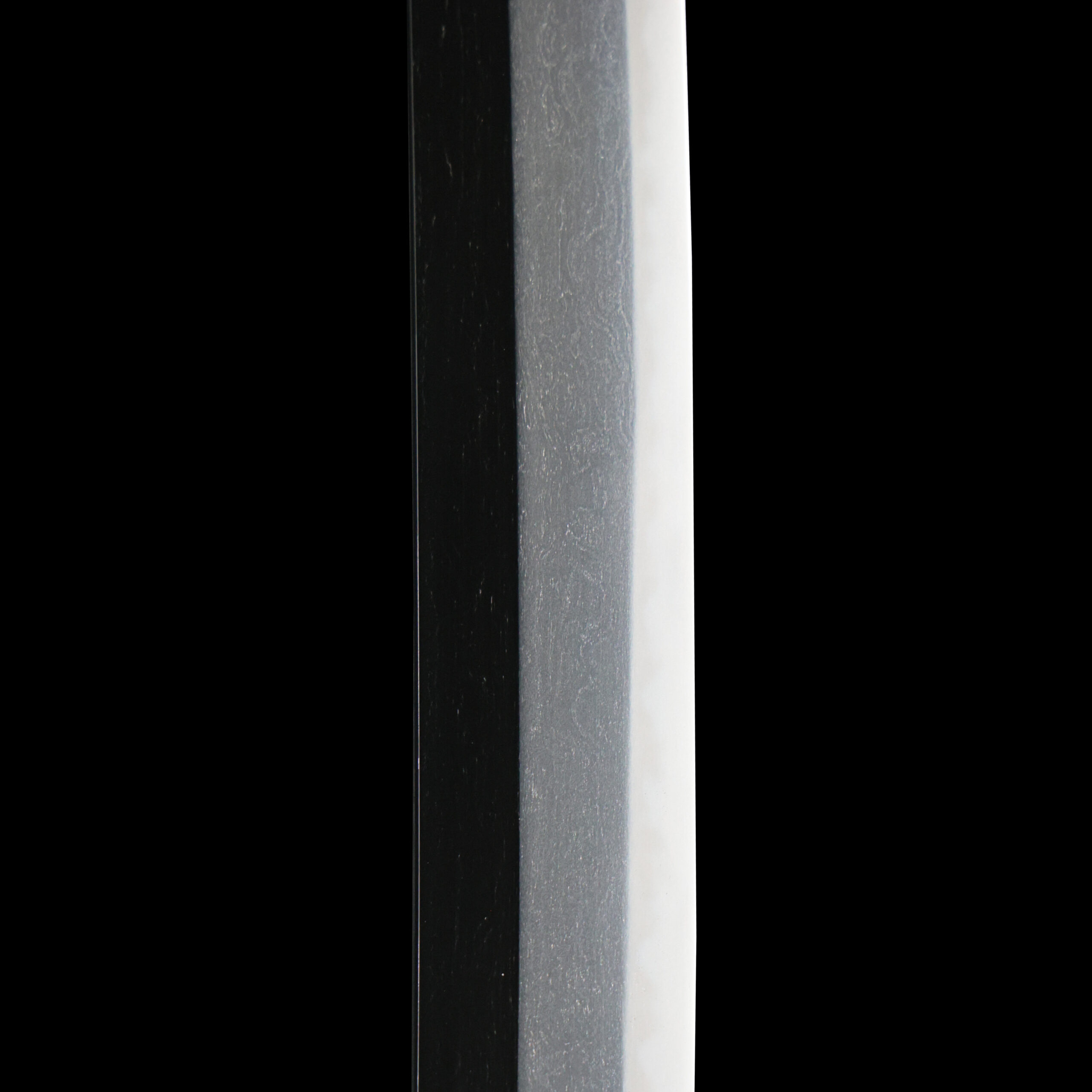
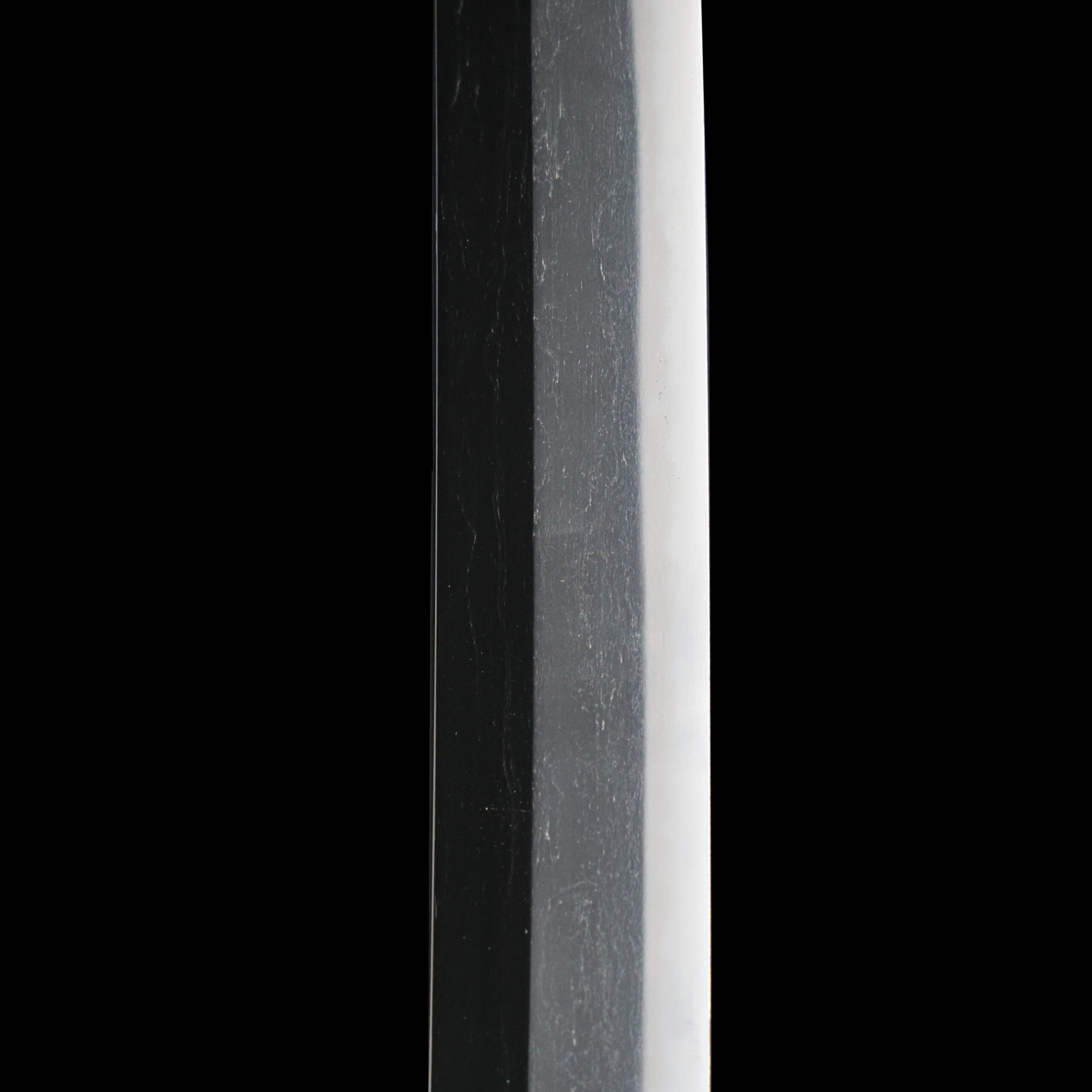
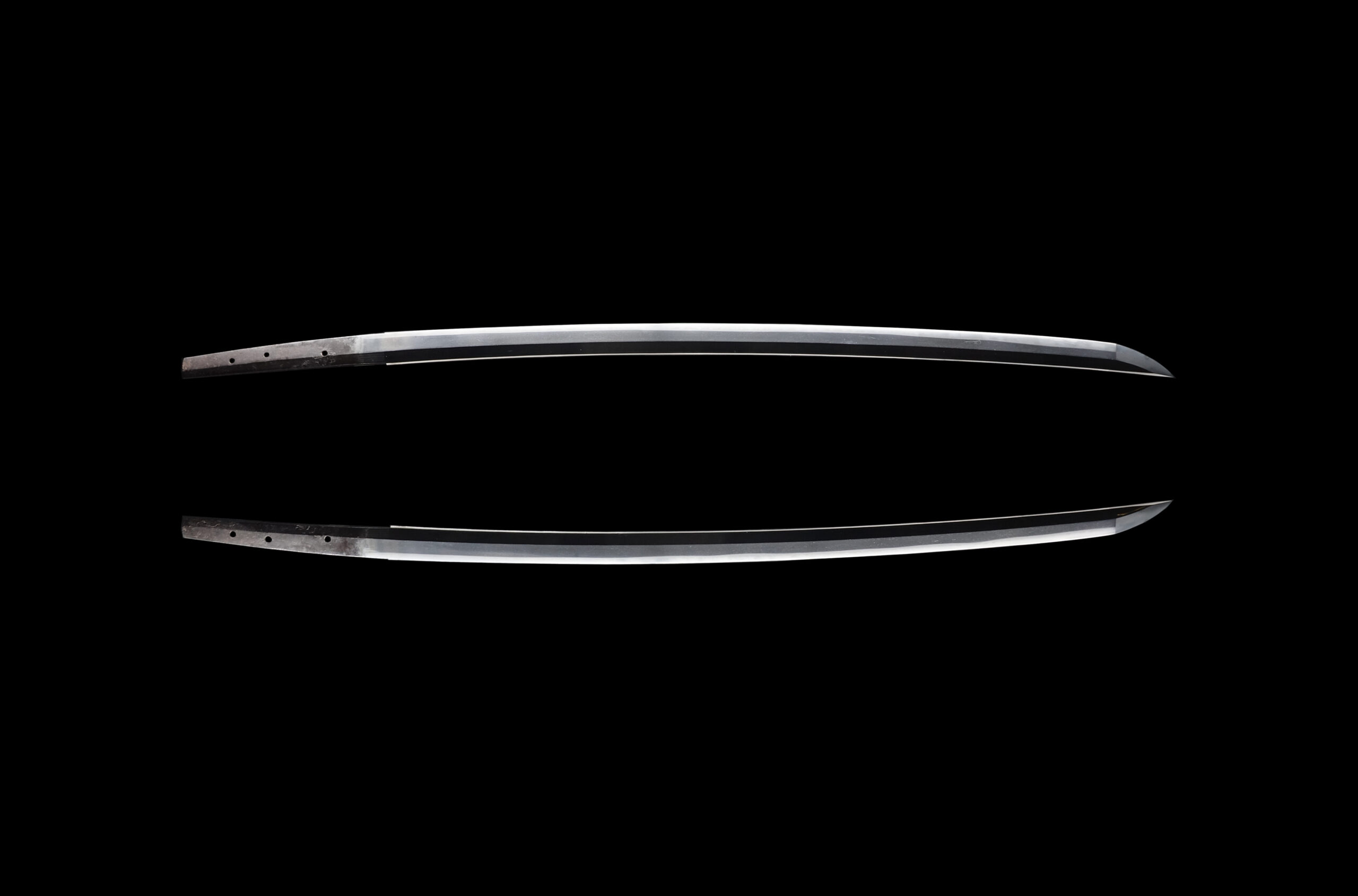
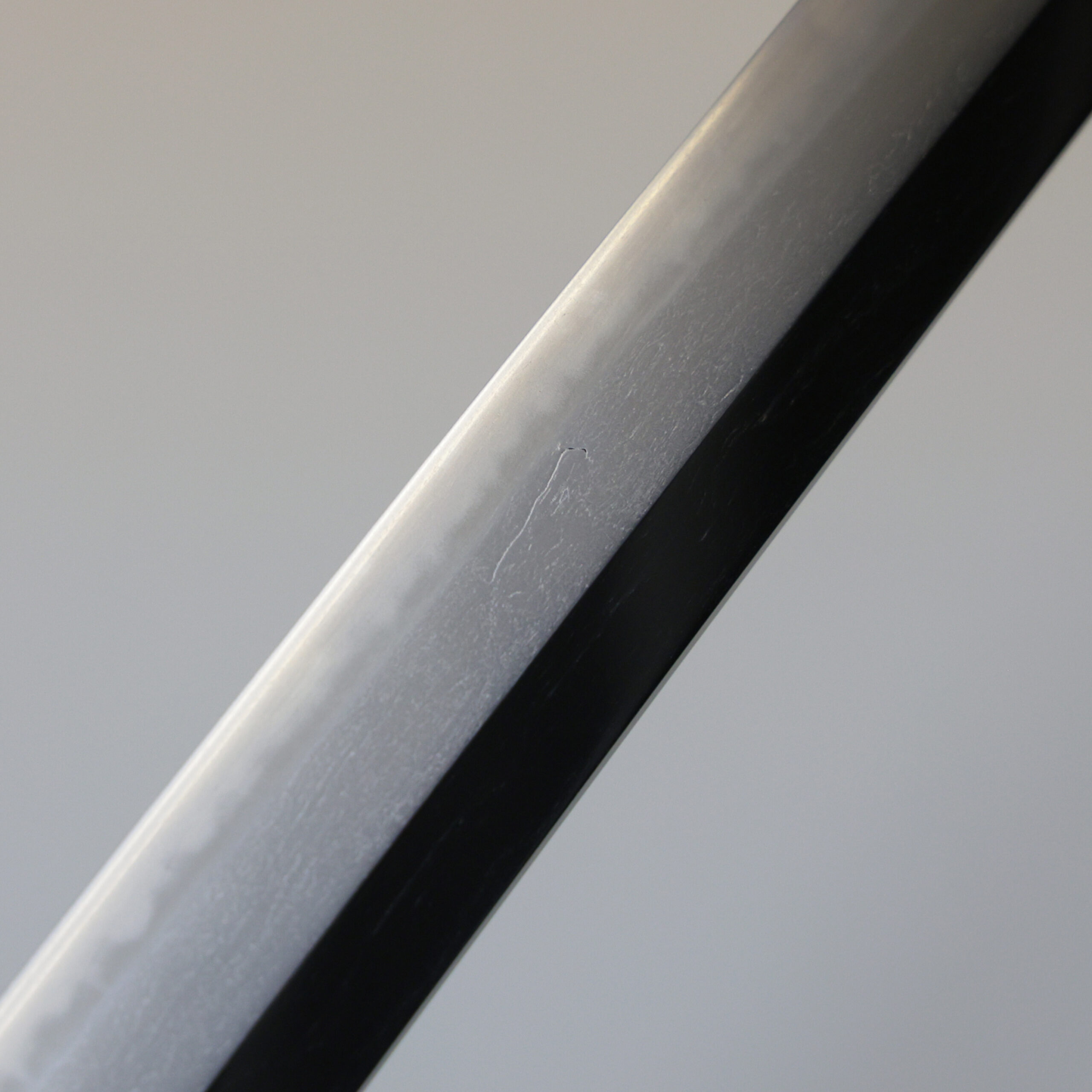
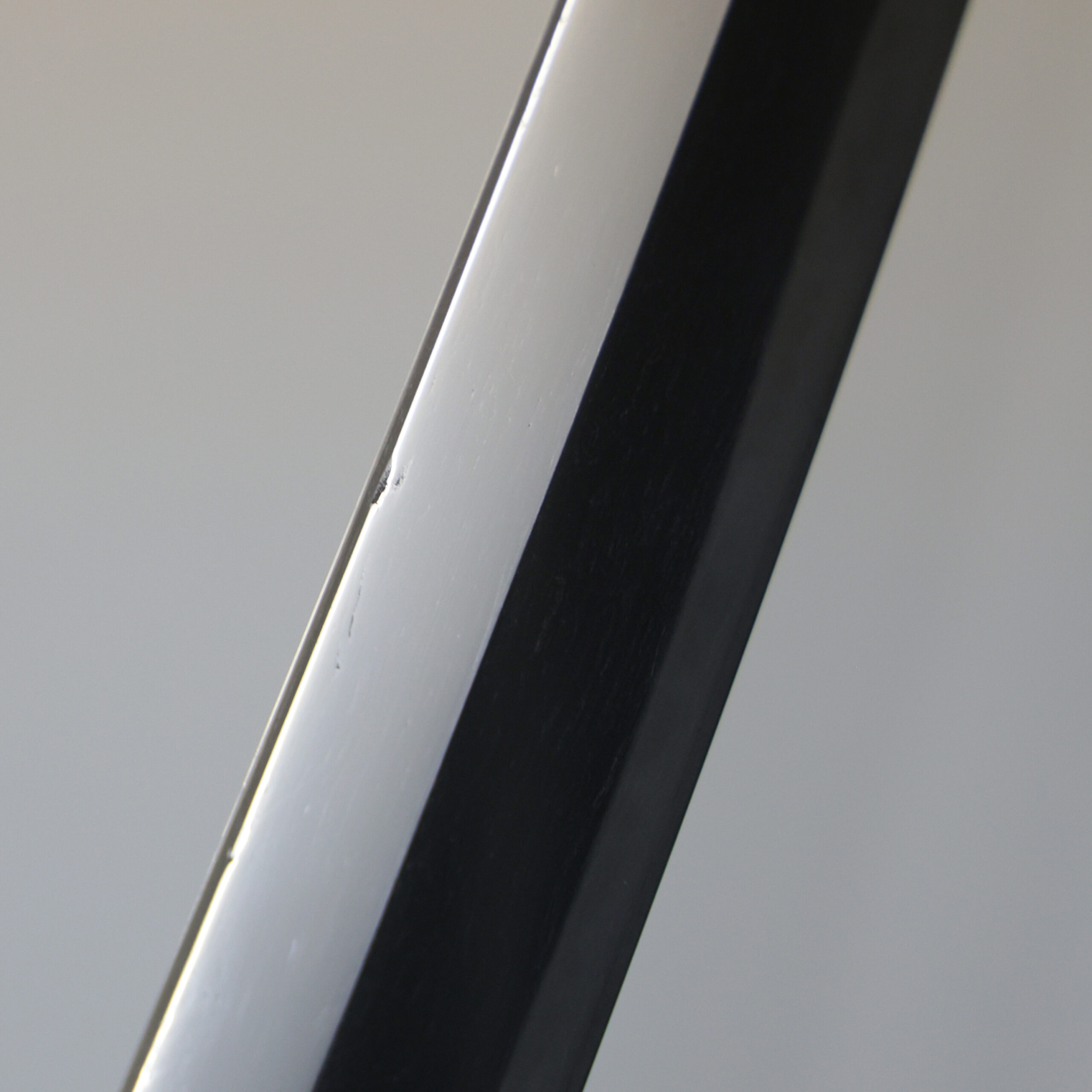
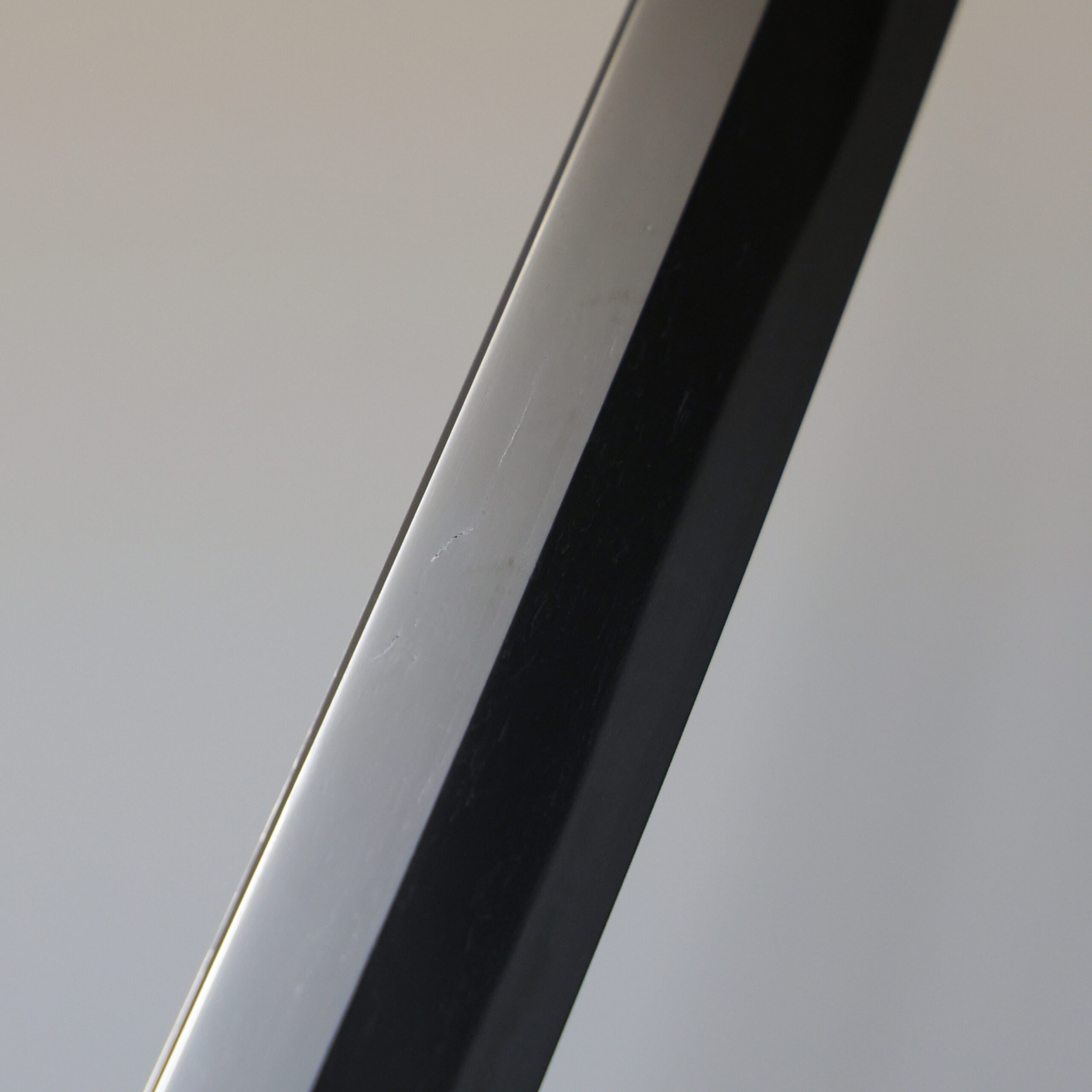
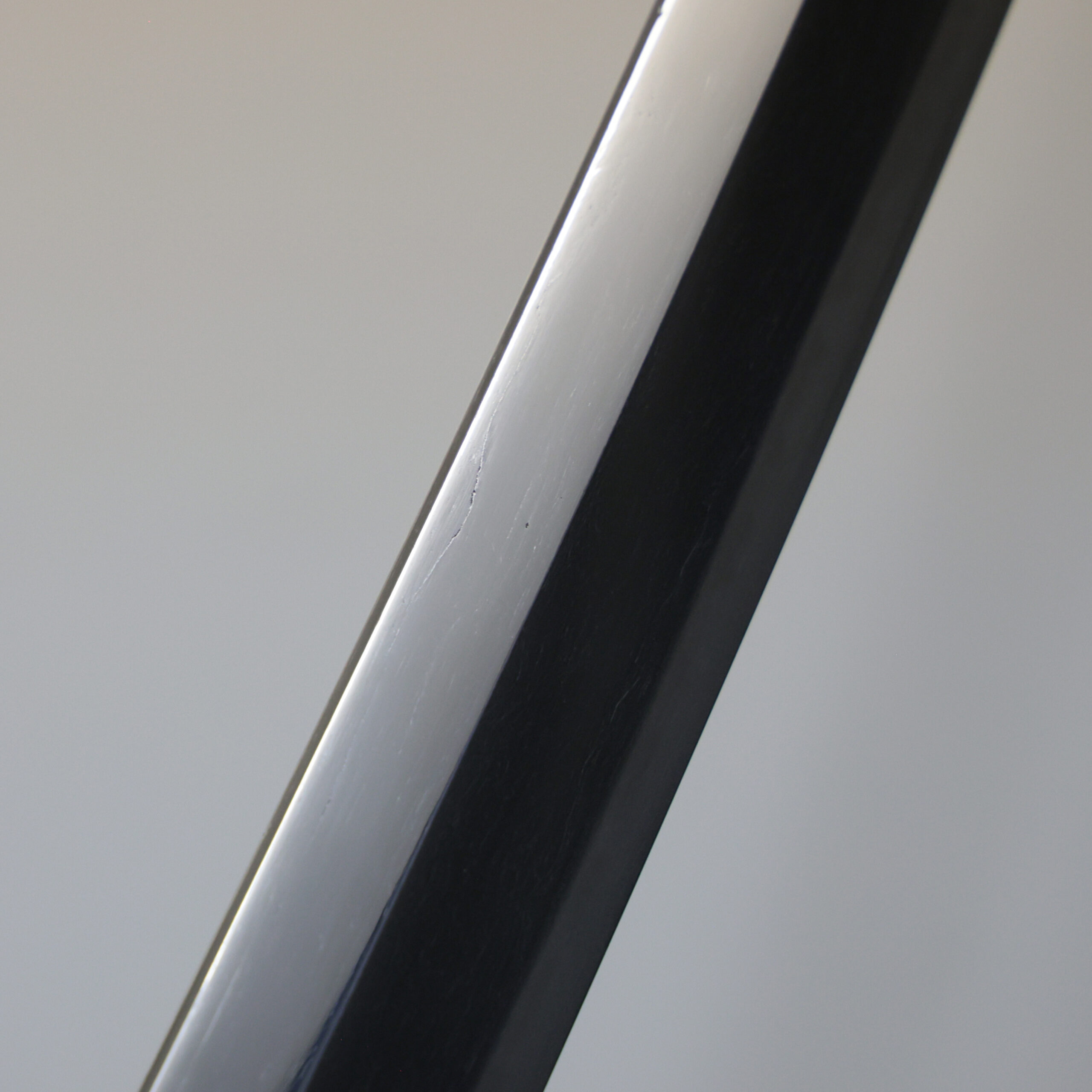
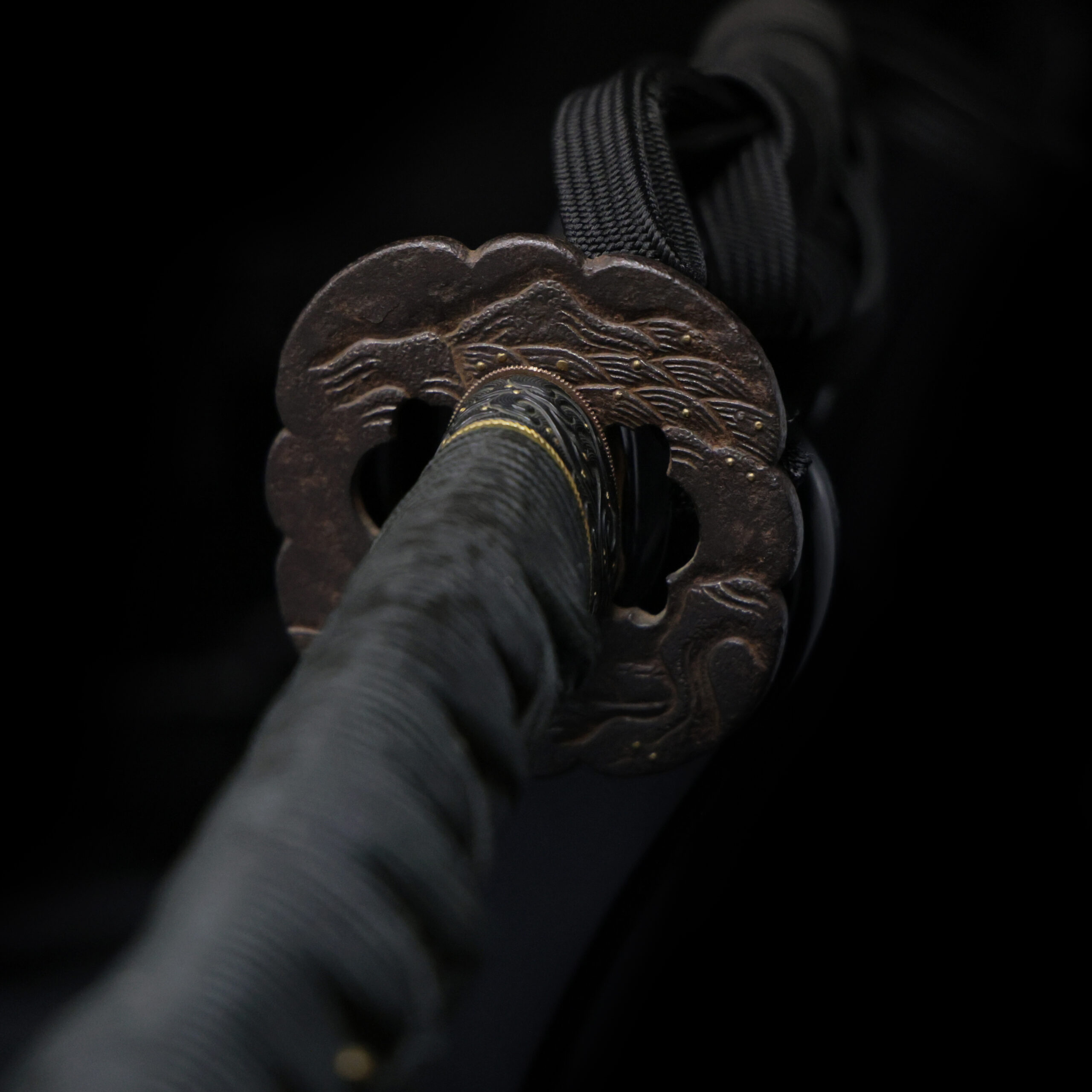
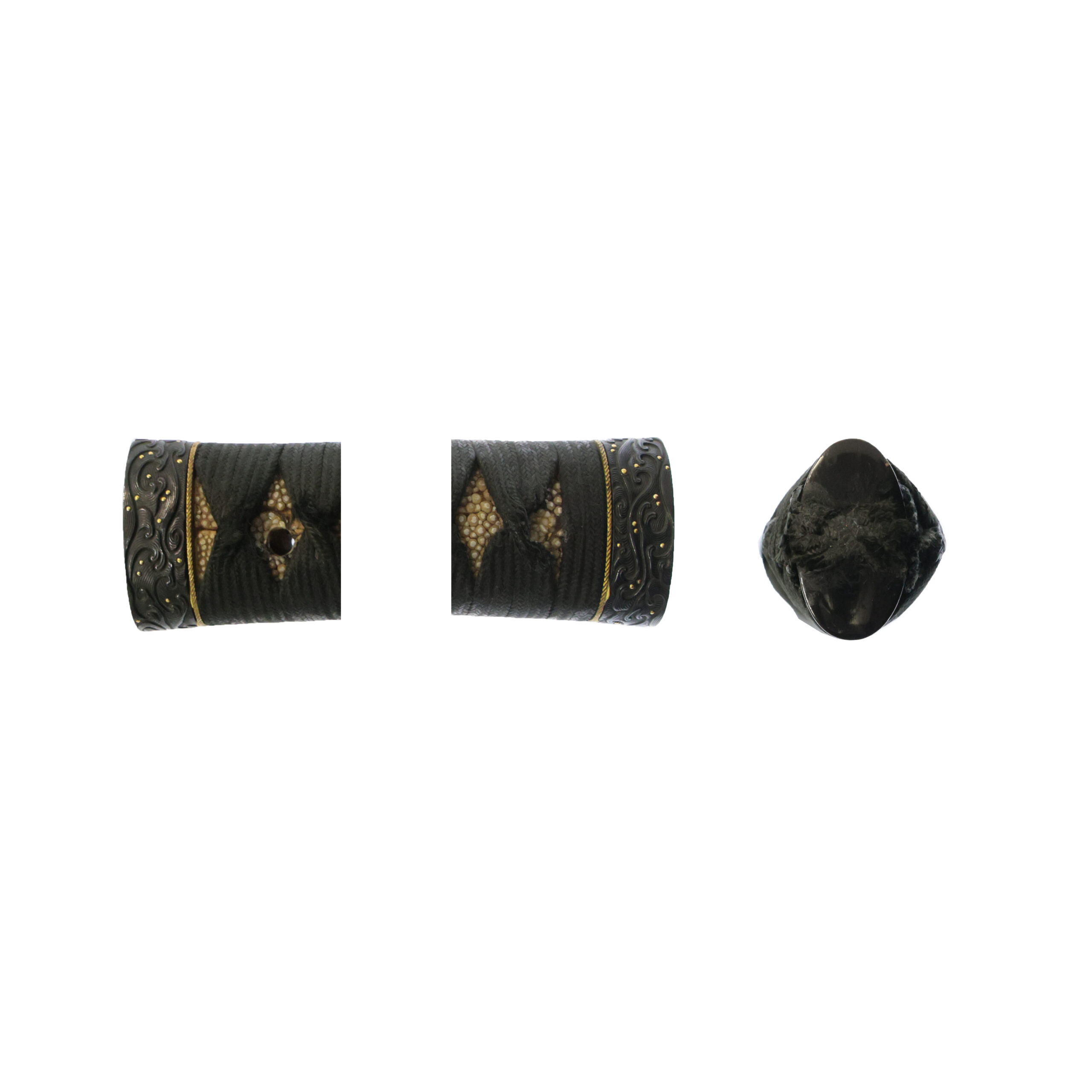
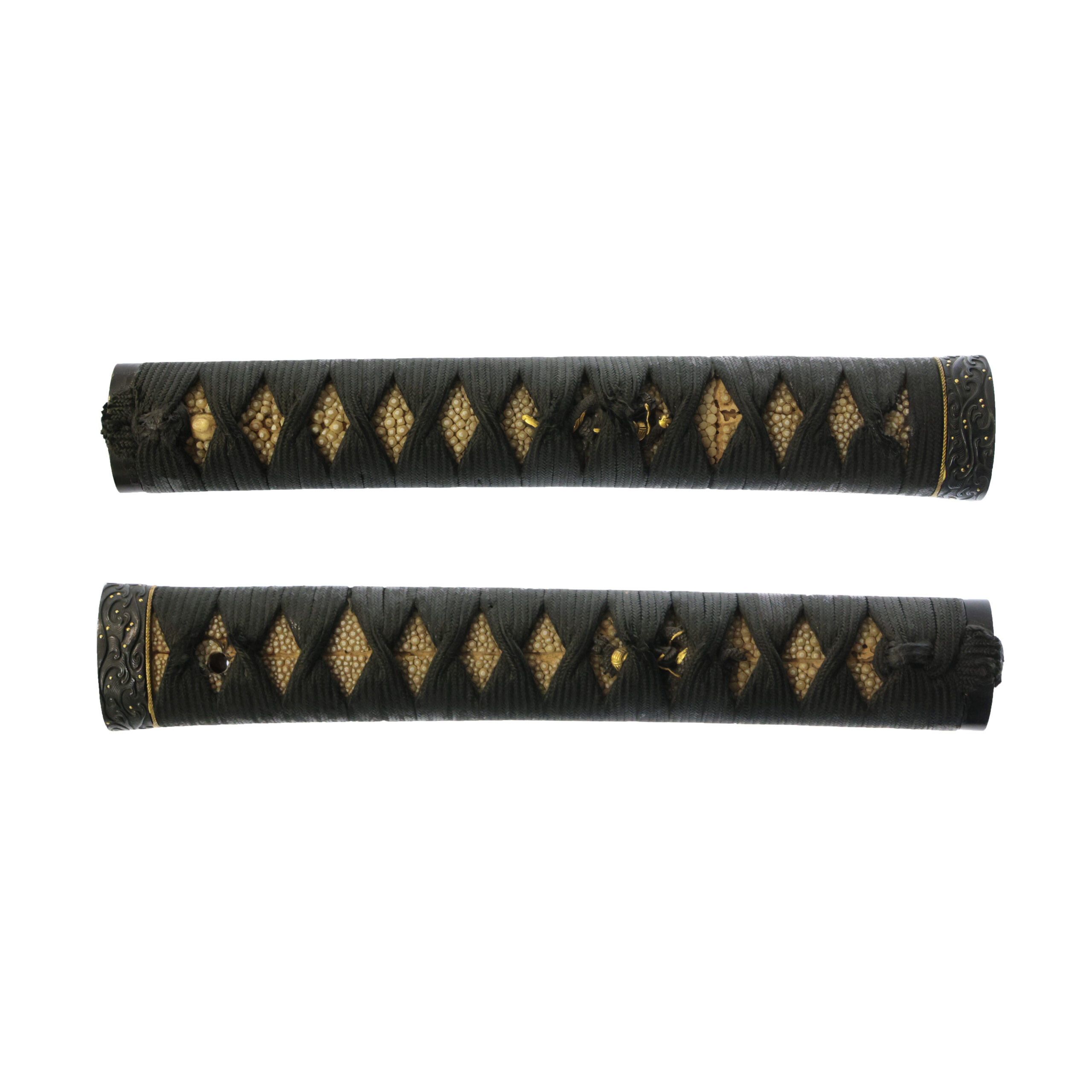
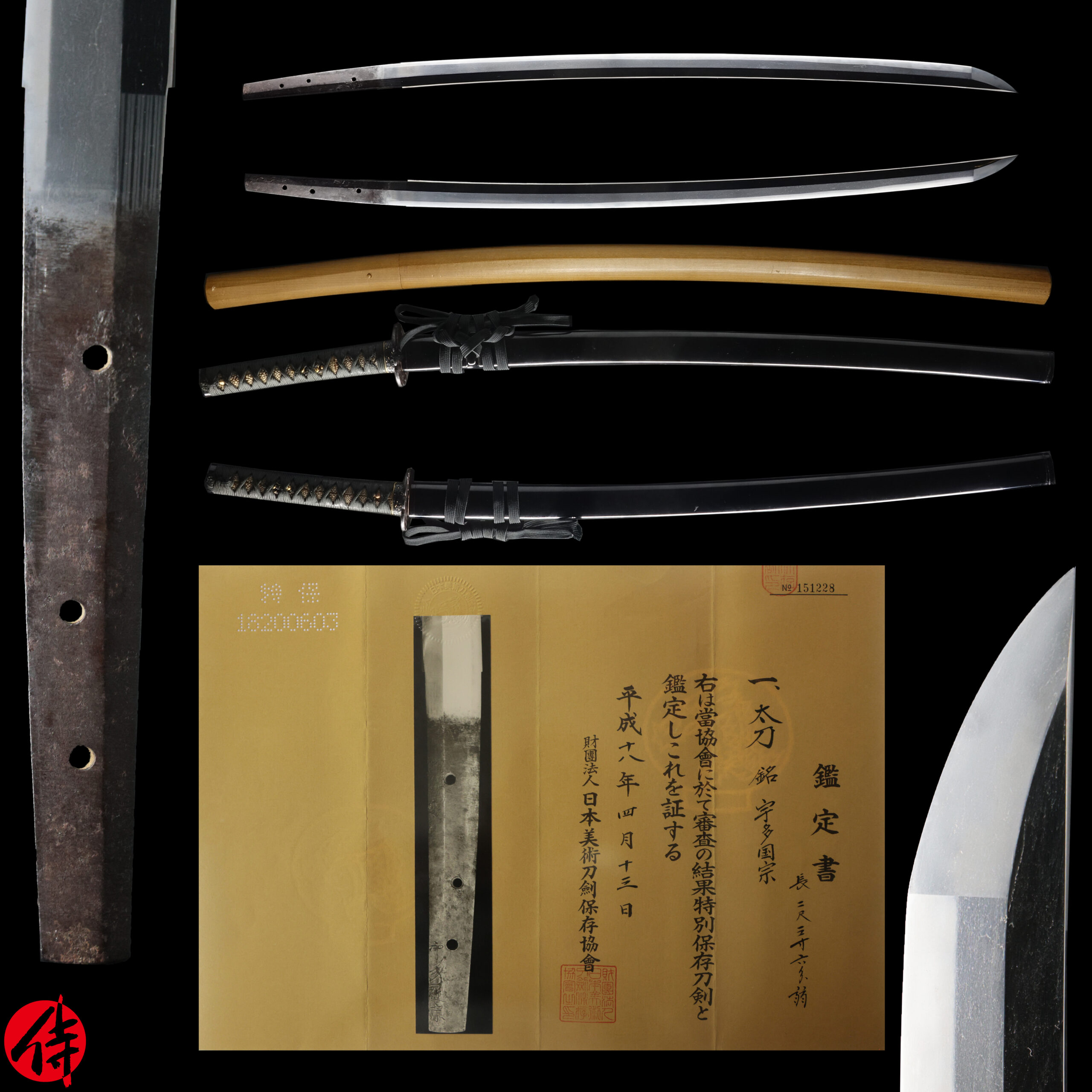
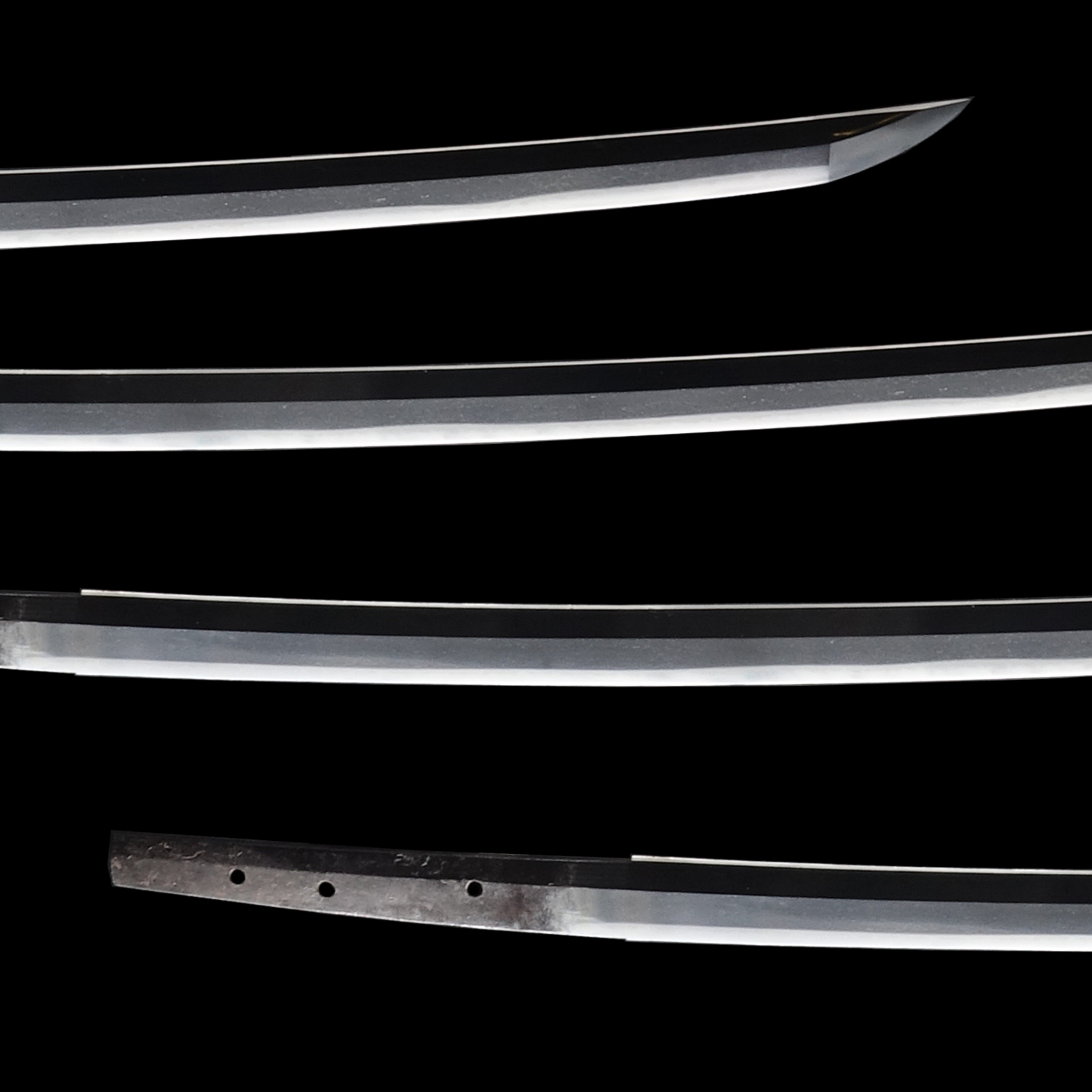
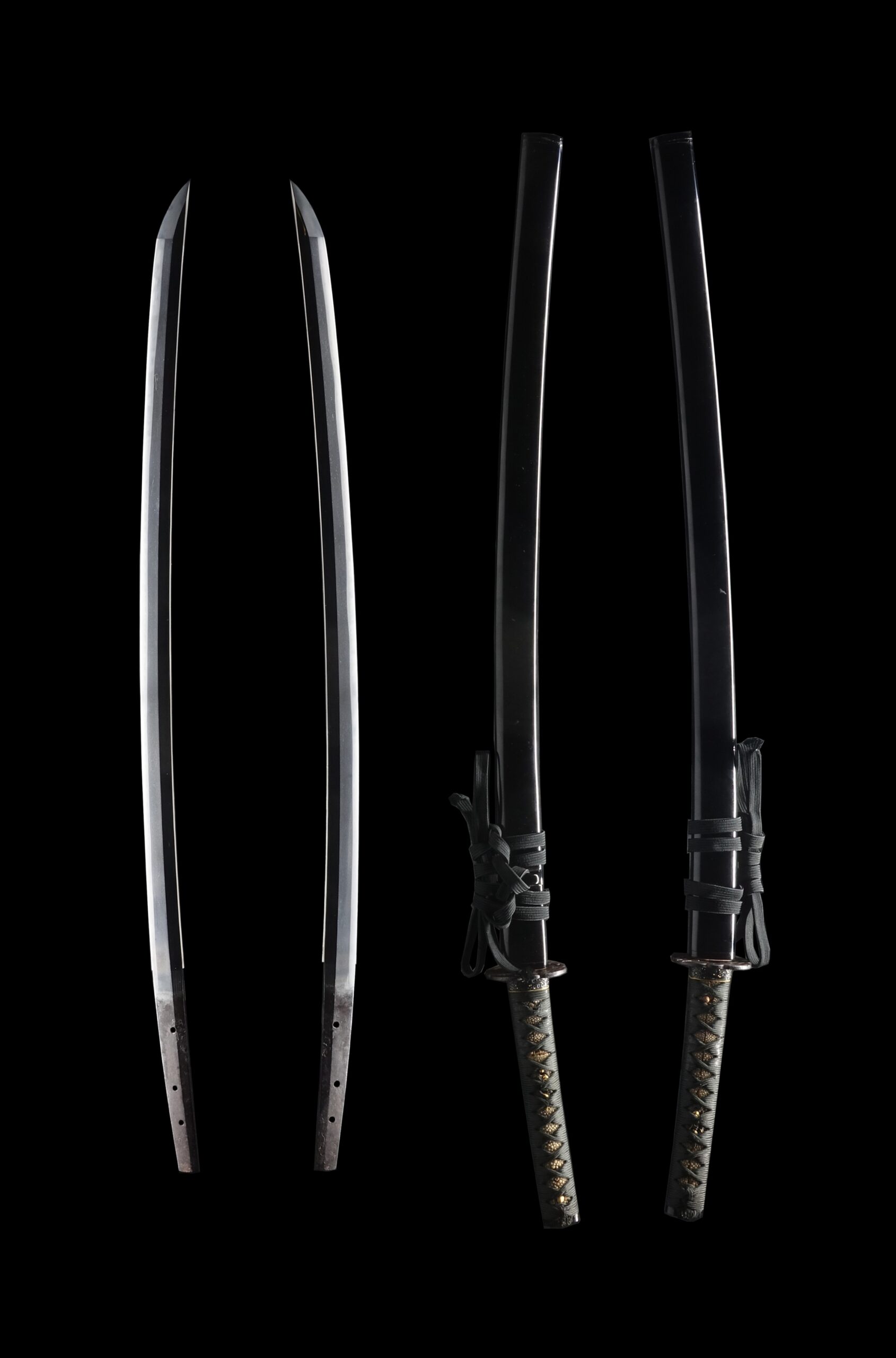
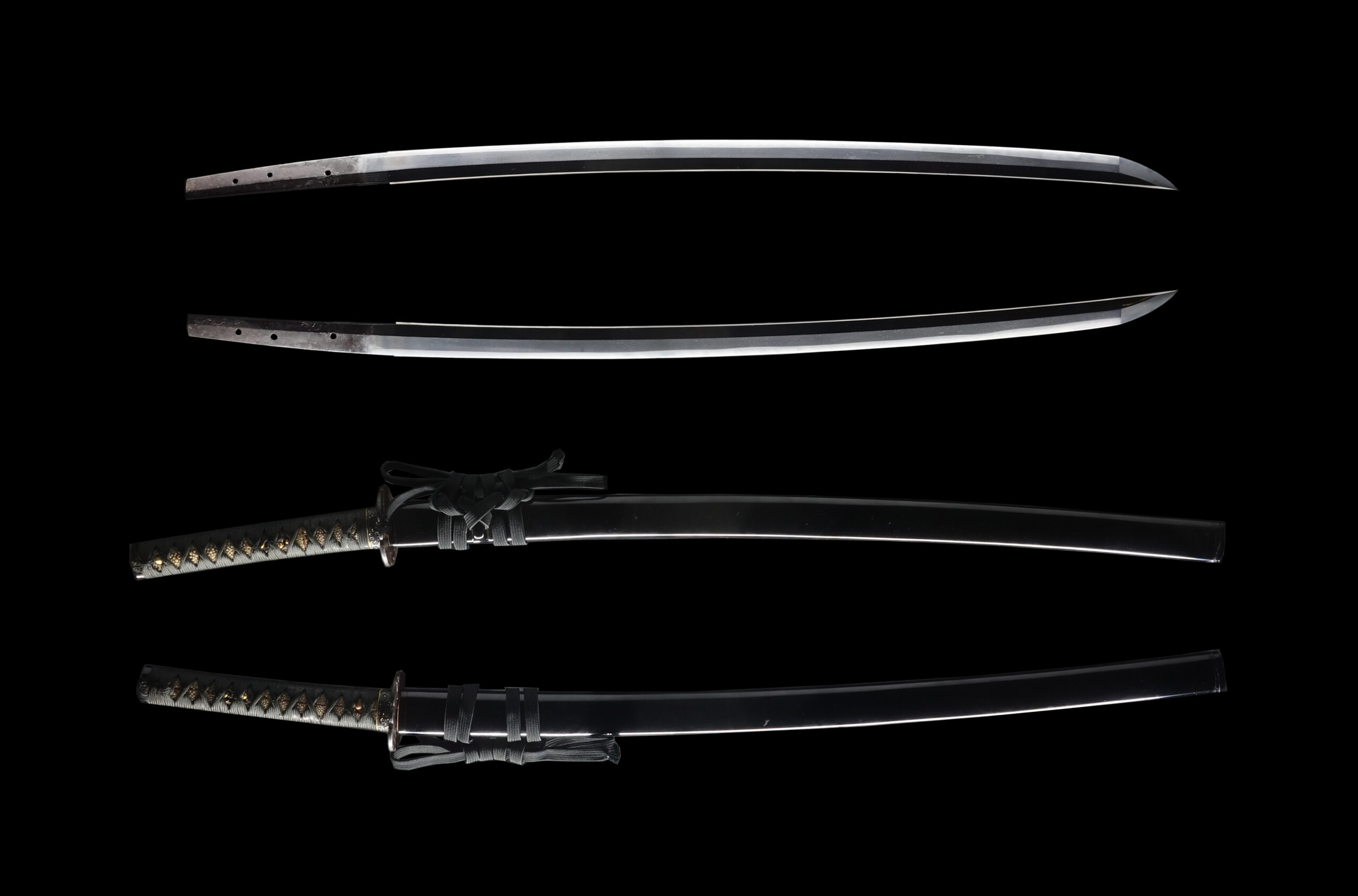
Wakimono · Etchu · around 1394-1428
Tōken Taikan top 37%
1 piece on the market now
Where Kunimune stands among comparable artisans: across all of nihontō, and within tradition, era, and period. The tiers (Foremost · Leading · Major · Notable) weigh official designations from the NBTHK and Japan's Agency for Cultural Affairs, together with historical honors of lasting repute such as the Sansaku and Meibutsu-chō.
Select a lens to see how it's measured.
Wakimono · Etchu
Phase: Uda宇多· 1390–1596
25 pieces on the market now
Where Ko-Uda closes with the Nanbokuchō generations, the chapter that follows opens in early Muromachi and runs to the end of the period. The setsumei draw the boundary plainly: works that descend no later than Nanbokuchō are called Ko-Uda, while everything thereafter is referred to simply as Uda. This later phase is the long Muromachi continuation in Etchū, where the Kuni-named line that began with Ko-Nyūdō Kunimitsu of Uda District in Yamato extends across successive generations sharing single names. Kunihisa, read by the meikan as son of Kunifusa and active from the Ōei era, runs through several generations down to the close of Muromachi; Kunimune carries from Nanbokuchō into Muromachi with dated pieces around Bunmei; and the later registers add Kuninaga, Kuniyoshi, Hirakuni, Sanekuni, Kunikiyo, Tomohisa, and Kunitsugu, names the sources place from Eikyō through Tenshō. Because individuals individuate little, a signed blade of this phase is appraised as the manner of its dated moment rather than the hand of one smith. The steel of the later phase keeps the school's northern foundation while standardizing its expression. The setsumei describe itame mixed with mokume, the grain overall standing (hada-dachi) and tending to flow (nagare), with ji-nie adhering and chikei entering; the jigane leans blackish, and a shirake-utsuri stands distinctly in the ji, sometimes with ji-madara mottling. Over this the temper most often opens as a suguha-based or chū-suguha line into which ko-gunome runs continuously from base to point, ashi and yō entering, ko-nie adhering along a bright nioiguchi, with sunagashi and occasional kinsuji.
A second, more agitated face mixes gunome, ko-notare and pointed togariba with thick nie, yubashiri and tobiyaki that on a Kuninaga wakizashi tend toward hitatsura. Against the earlier Ko-Uda this reads more regularized: where the early generations stayed close to their Yamato and Sōshū models with archaic ji-ha, the later hands settle into the elongated Ōei tantō form (broad for its width, with uchizori) and, in the katana, the wide sun-nobi sugata of advancing Muromachi. The Kunitsugu katana shows this drift toward coarseness directly, its itame standing and rough, the nie uneven and the temper darkening at the edge. To separate later Uda from Ko-Uda is to read the steel before the temper. The whitish, standing jigane with its blackish cast and shirake-utsuri returns a blade to this phase even when a nie-laden midare recalls Sōshū at first glance, and a tightly forged ko-itame may, as with the better Kunihisa pieces, approach Rai Kunimitsu or Rai Kunitsugu before the dark northern grain brings it home. Distinctive markers recur across the named smiths: the bōshi that becomes pointed and is tempered down with a long kaeri, the flaring (susodoshii) nakago-jiri, somewhat coarse rounded nie mixed within the ha, and the particular shaping of the character kuni in the signature. Dated and signed pieces anchor the chronology, from a Kunihisa tantō of Ōei 7 to a Kunimune wakizashi placed around Bunmei and Hirakuni and Sanekuni works set near Tenbun. Provenance for the phase tends toward settled holding, with examples recorded in Honma's inventory of the Imperial collection rather than circulating. Learn more →
| Smith | Era | Designated |
|---|---|---|
| Kunihisa國久 | 1394-1428 | 10 |
| Kunimune國宗 | 1429-1479 | 5 |
| Tomotsugu友次 | 1381-1384 | 3 |
| Kunitsugu國次 | 1469-1487 | 3 |
| Kunifusa國房 | 1455-1457 | 3 |
The Muromachi period (1392 to 1573)
Muromachi turned sword making into an industry: the uchigatana rose with massed infantry warfare, Osafune and Seki produced bundle swords beside custom orders, and the Ming trade carried Japanese blades abroad by the tens of thousands.
A Hozon-certified blade judged to show notably superior workmanship and a better state of preservation. The bar is higher: re-tempered blades and most unsigned Muromachi/Edo works are excluded.
The NBTHK (Nihon Bijutsu Tōken Hozon Kyōkai, the Society for the Preservation of Japanese Art Swords) is a public-interest incorporated foundation founded in 1948 and supervised by Japan’s Agency for Cultural Affairs (Bunkachō); it is based at the Japanese Sword Museum in Tokyo. Its expert panels physically examine each submitted work (shinsa) and issue a certificate (kanteishō) ranking it by artistic and historical merit. NBTHK papers are the most widely recognized standard of authentication for Japanese swords and fittings.
NBTHK official siteReturns/exchanges limited to defects caused by shipping (except willful misconduct or gross negligence by the company); customers must contact within 72 hours of receiving the product.
¥1,800,000