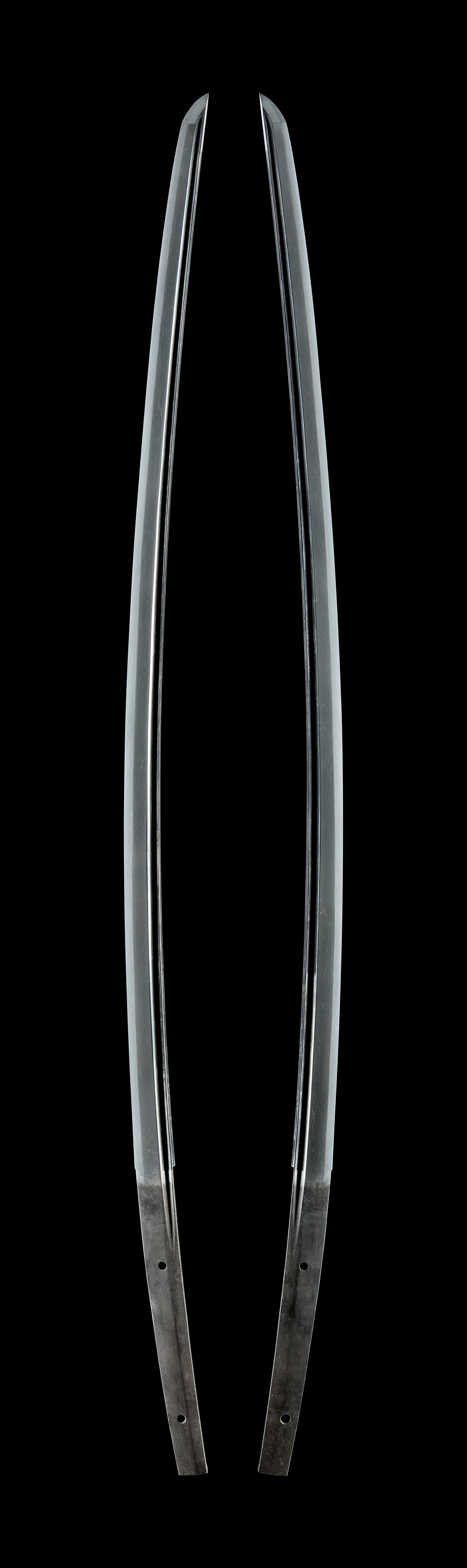
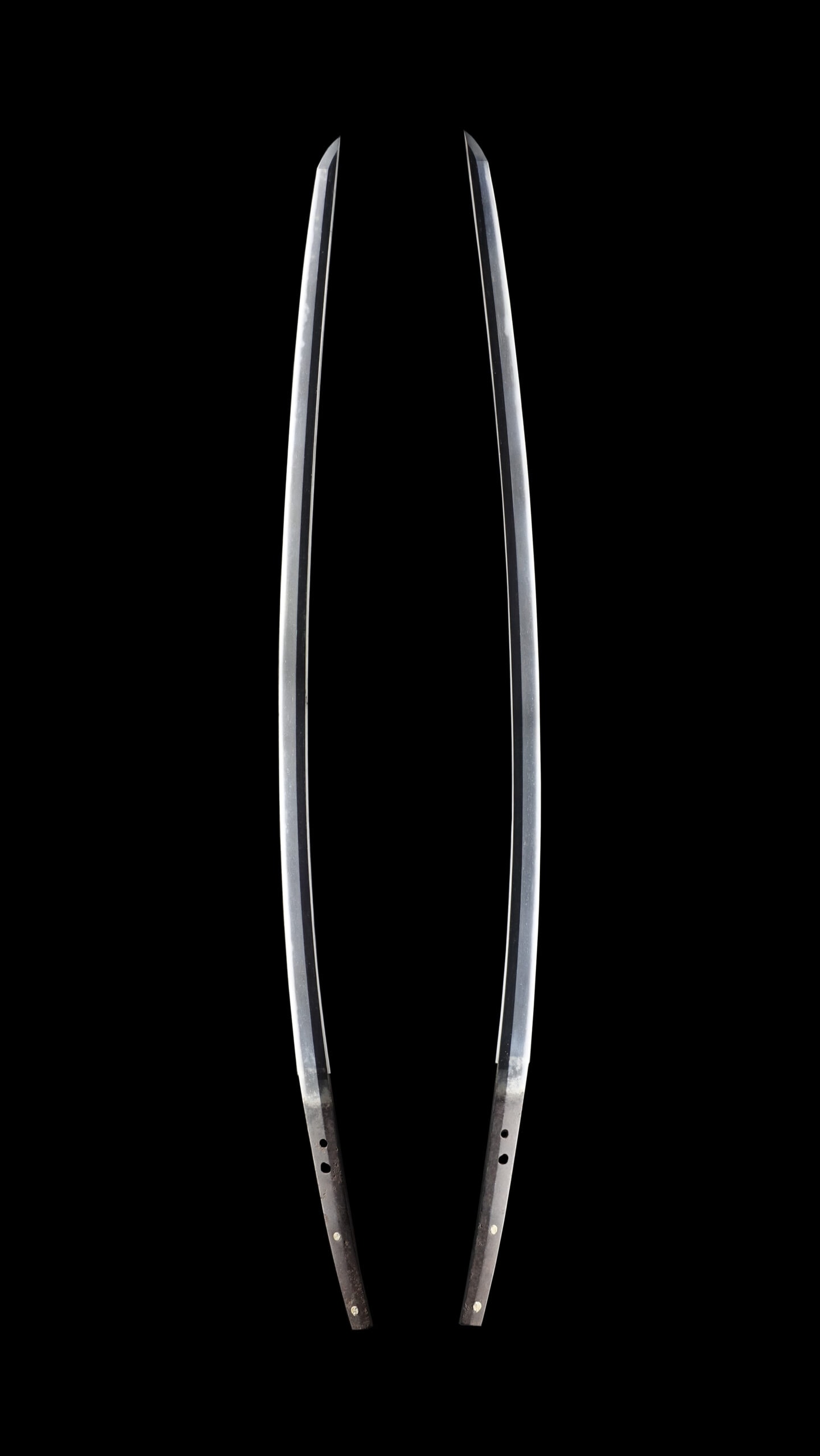
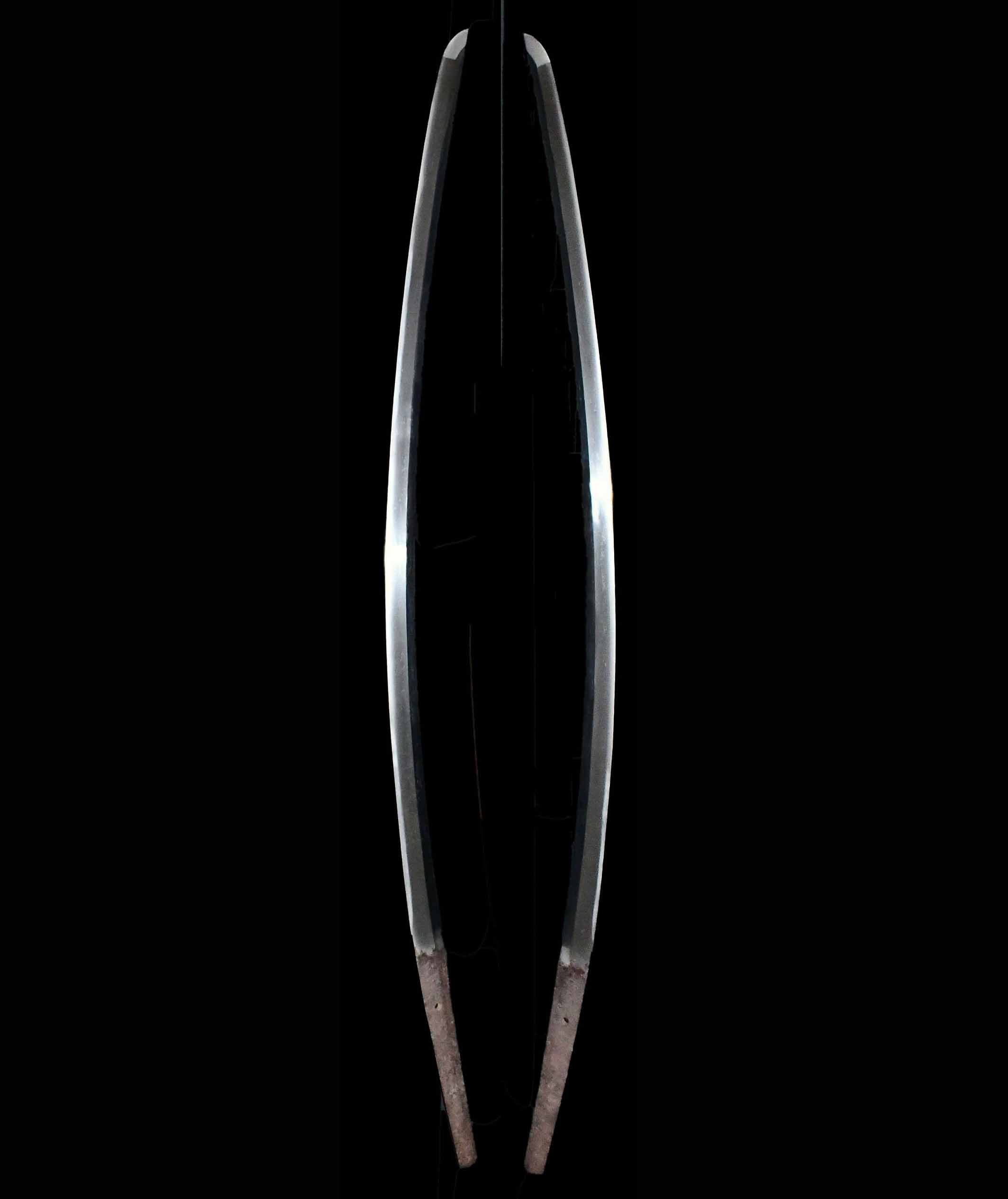
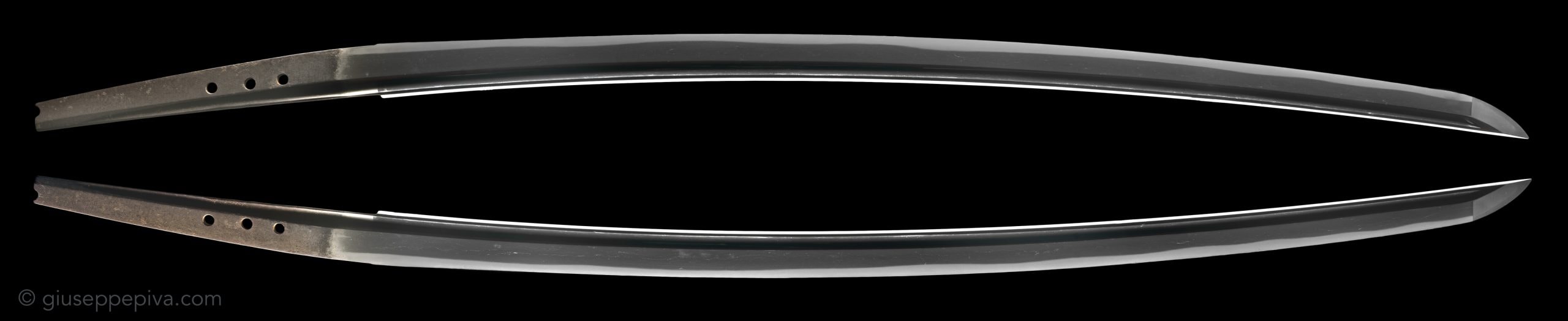
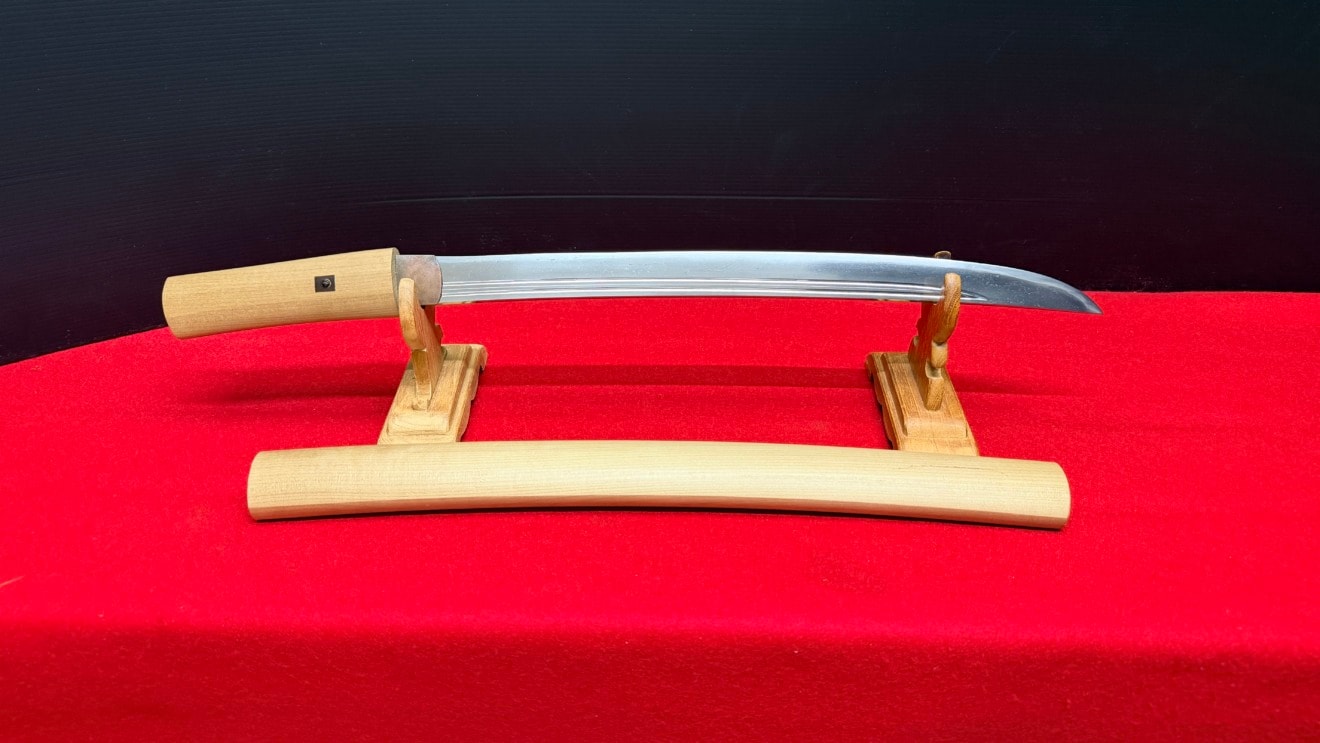
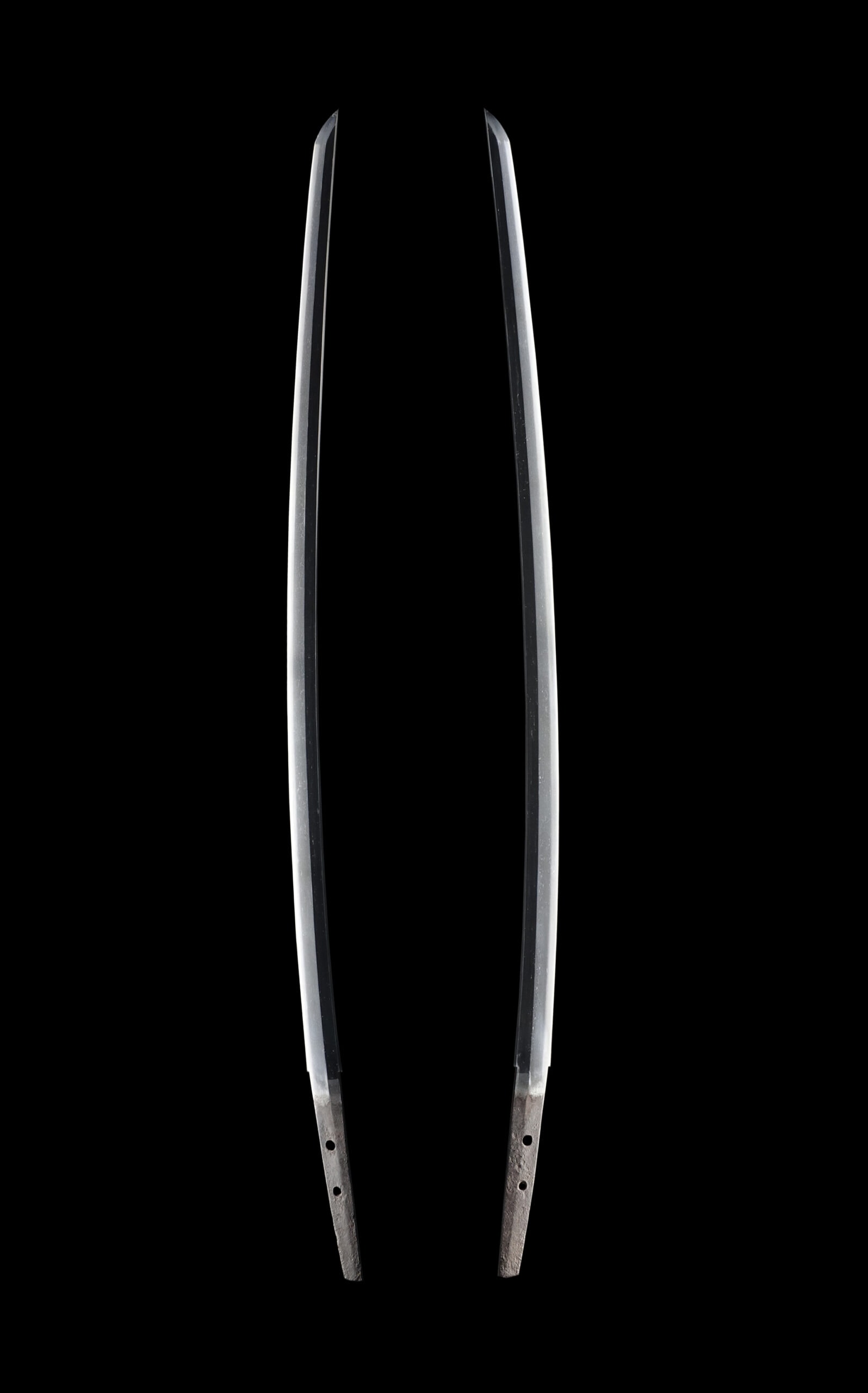
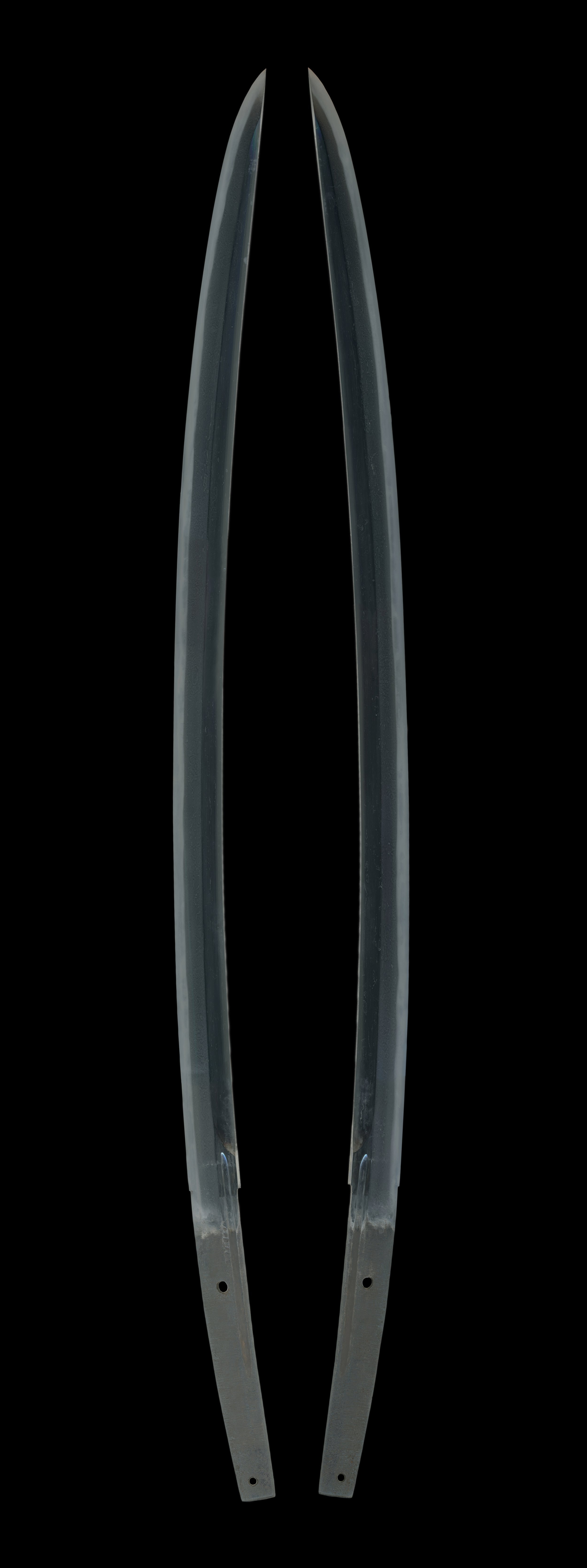
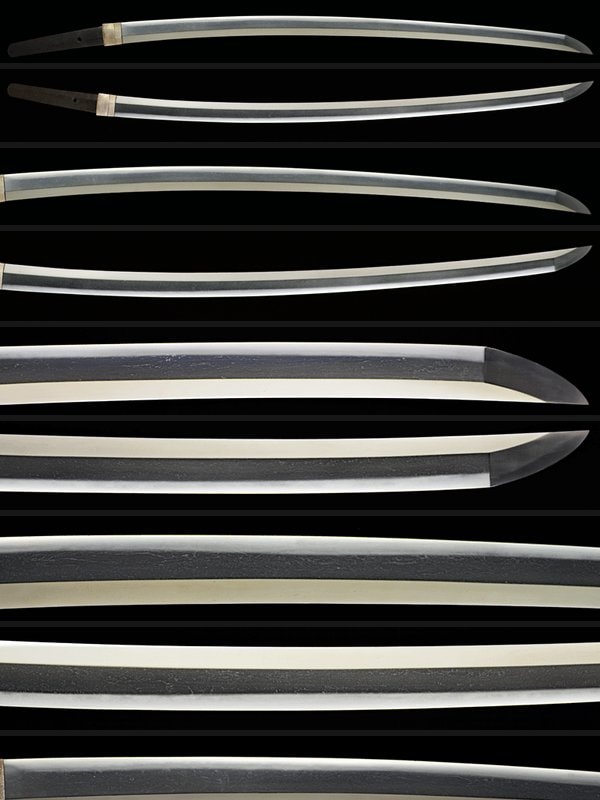
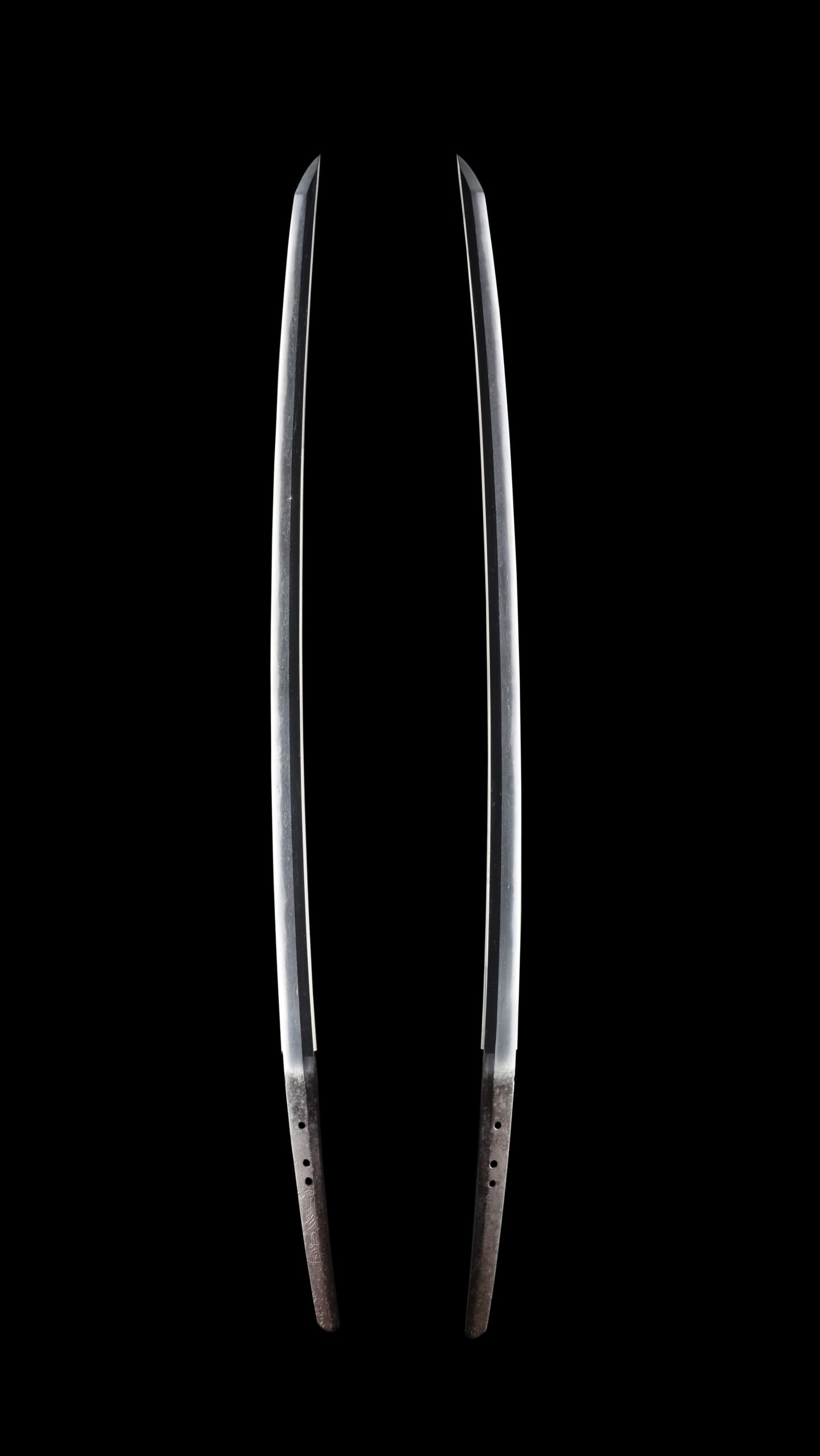
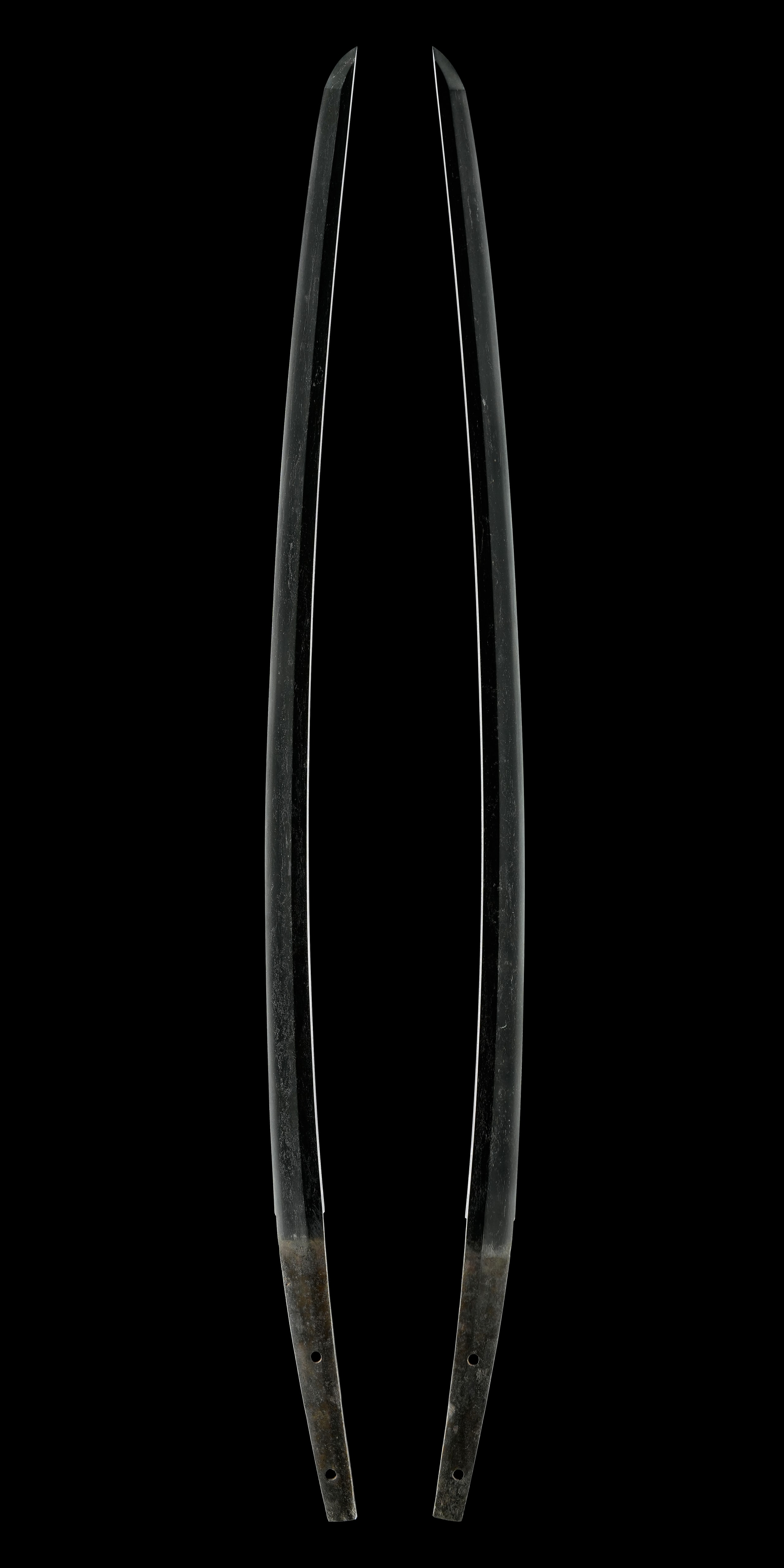
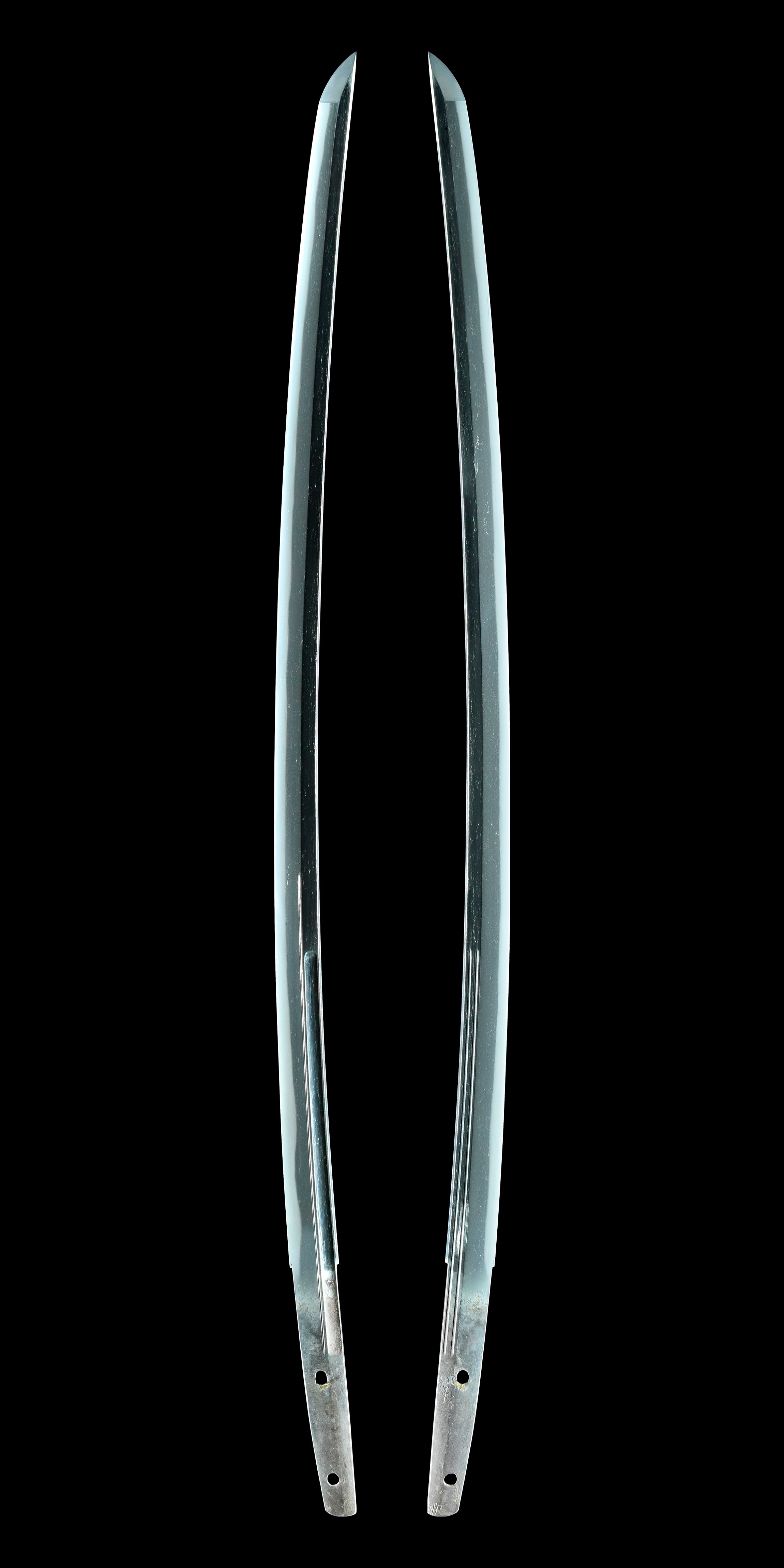
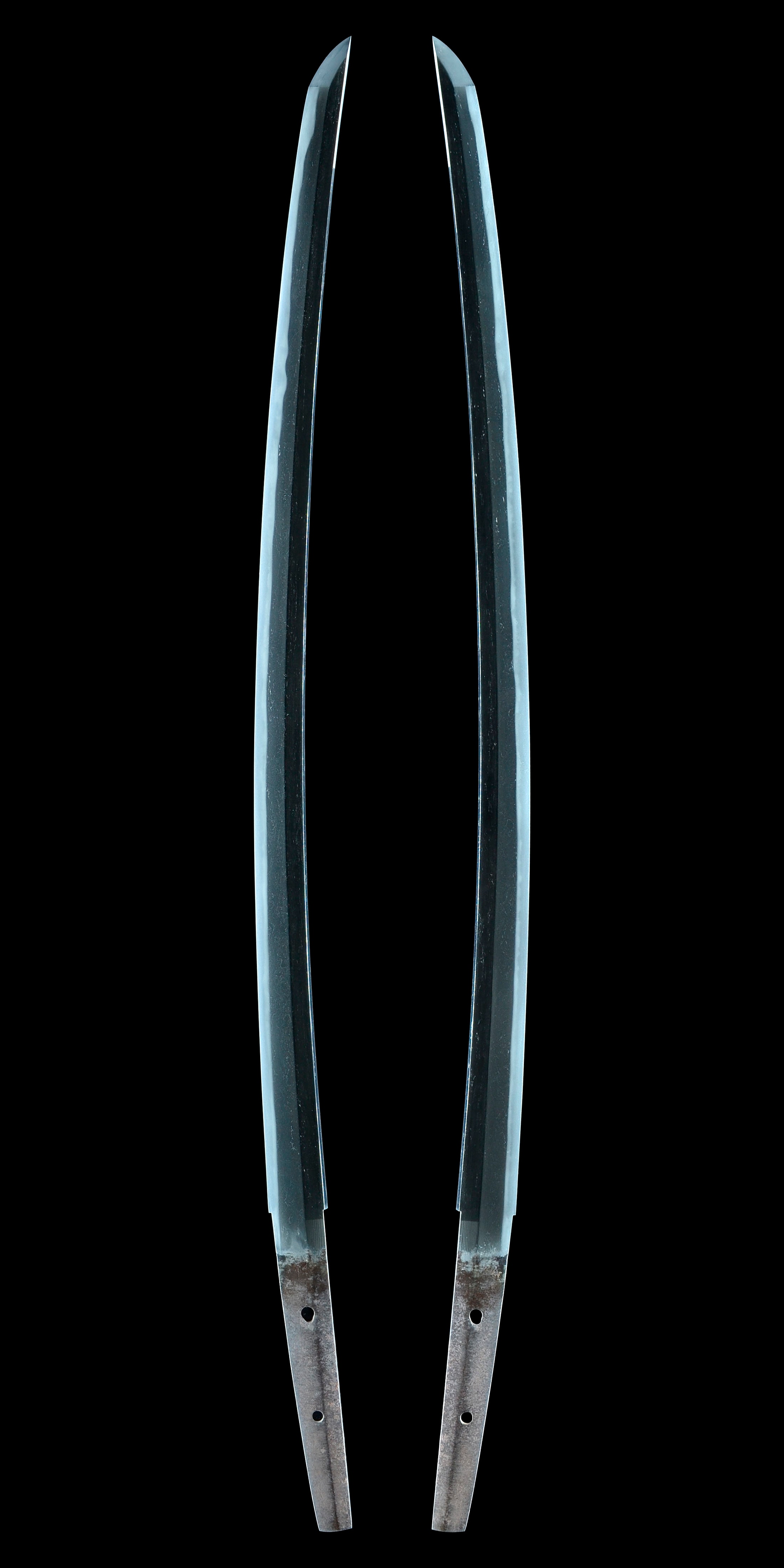
Four signed blades carry the name Tomonori (友則) into the present, each cut with a thick two-character toward the of an or modestly shortened tang, and on the earliest the published sources remark that a signed, of this kind is a rare survival for the school. Tomonori is a smith of the Uda school, working from the late into the early . His line began when the monk-smith Ko-Nyudo Kunimitsu came north from Uda District in Yamato Province and settled in in the late , carrying a Yamato-derived manner into the northern provinces; through the the school sent out smiths such as Kunifusa, Kunimune and Kunitsugu, who re-used its names down the generations, and it flourished into the late . The term is reserved, within that descent, for the work of the late through the , and it is among the smiths that the published record places these . The reference works list five Uda smiths who used the name Tomonori, the oldest active around Meitoku and the line continuing to the Eisho, and the surviving signed blades are appraised as the earliest, the Tomonori of around Meitoku.
The published record reads his hand two ways, and the two manners are the heart of recognizing him. One is quiet. Over a tight that flows a little and stands with a whitish cast he tempers a narrow or medium , mixing in and , and entering and the drawn tight and bright, predominating and the frayed into formed in fine . The disorder is kept small, the runs straight and rounds into with a slight turn-back, and on the late- the published sources judge that this register 'displays one characteristic style of this smith, is of good workmanship, and both and are sound.' The other manner is loud. The , mixed now with , stands more openly and takes a darkish tone, adhering well and fine entering, with and breaking into the ; over it a wider or a shallow breaks into gunome and , the tempered width widening in the upper half, coarse spilling into the and uneven in patches, until abundant and rise to a and the is tempered deep into a flame.
The is the constant beneath both hands. It is throughout, on the quieter tight and flowing with a slight admixture of and a whitish surface, on the -laden blades more open and standing, mixed with , set with and threaded with fine , and darkish in tone. That dark steel is the feature the published sources lean on to fix his province, the read as associated with the smiths of the northern provinces by its dark color. The activity in the tells the older half of the story. The plentiful , the running through the temper, the and the brushed at the tip are read as a Yamato character carried down from Kunimitsu's migration: 'in both and the is plentiful, and from the frequent and the abundant a Yamato disposition is evident,' the published sources say of the , before turning to the dark steel that ties the blade to the north. The two readings, Yamato in the activity and in the color, sit together in a single piece and are the the institution draws.
His four blades fall cleanly into those two registers, and the split runs partly with form and date. The quiet hand carries the two the records read as the earlier work, one a slender blade with deep and a small in the old fashion, the other appraised as the Meitoku-era smith, both tight in the and restrained in the . The -laden hand carries the and the latest, widest , where the temper departs the quiet base for , and a ; on that broadest the is wide with a pronounced taper, the thick and the curvature high, and the published sources find in the deep flame taken with the dark standing and the all-over temper that 'the characteristics of northern-province work are markedly manifest.' The dating is argued against the old directories rather than assumed: an entry grouping Tomonori with the Norishige line around the Kenmu era is held not to accord with the earliest , and another placing him in a -resident second-generation Uda line is judged too late, so that each blade is fixed instead by its own and to the and early .
Within the school he is a known quantity rather than a founder or a head, and the published record is careful about how much can be built on him. His own traits lead the appraisal: the standing dark , the coarse spilling into the , the and rising to a and the flame mark his -laden work, while the tight whitish with and a bright marks the quiet half, and it is the presence or absence of the streaming that sorts one of his blades into one register or the other. No successor line is drawn through him; with only four signed blades the corpus is too thin to extend the school forward in his name. What the sources do say is that other works of his have likewise reached Important Sword rank, and that among the Uda group, whose extant works are not numerous, 'he was a smith of high technical ability,' a judgment placing him above the run of the school without making him its head.
His whole designated record is four and , with no National Treasure or Important Cultural Property among them and no piece carrying a recorded provenance, so the connoisseurship rests on the blades themselves rather than on a roll of famous holders. That four signed pieces survive at all is the point the school's students return to, signed Uda work being uncommon, and the latest is valued expressly as documentary material, the published sources calling it 'a fine resource for the study of this smith' and noting that it appears in the Kozan before a fourth was bored, with the tang annotated ' work'. For a collector this is a name met through the tier, not held in a museum: the blades are kept, not traded, and one reaches the market only from time to time and with patience, but a signed Tomonori (友則) when it appears carries the rarer of the two things the school offers, a name surviving in the smith's own hand and a workmanship the institution ranks among the most able in the Uda line.