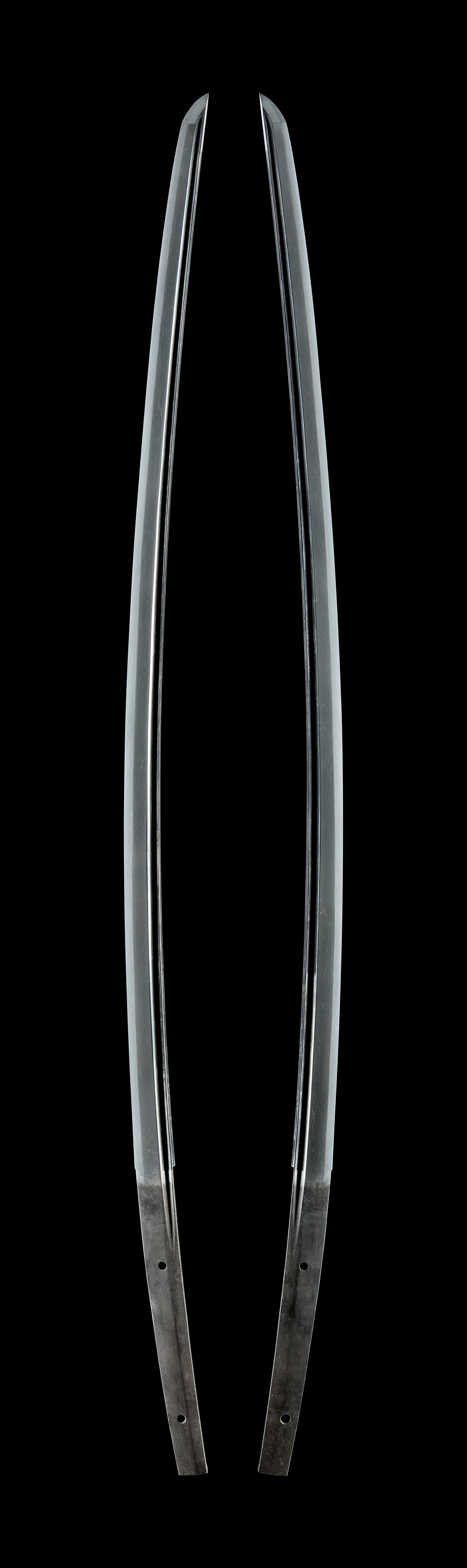
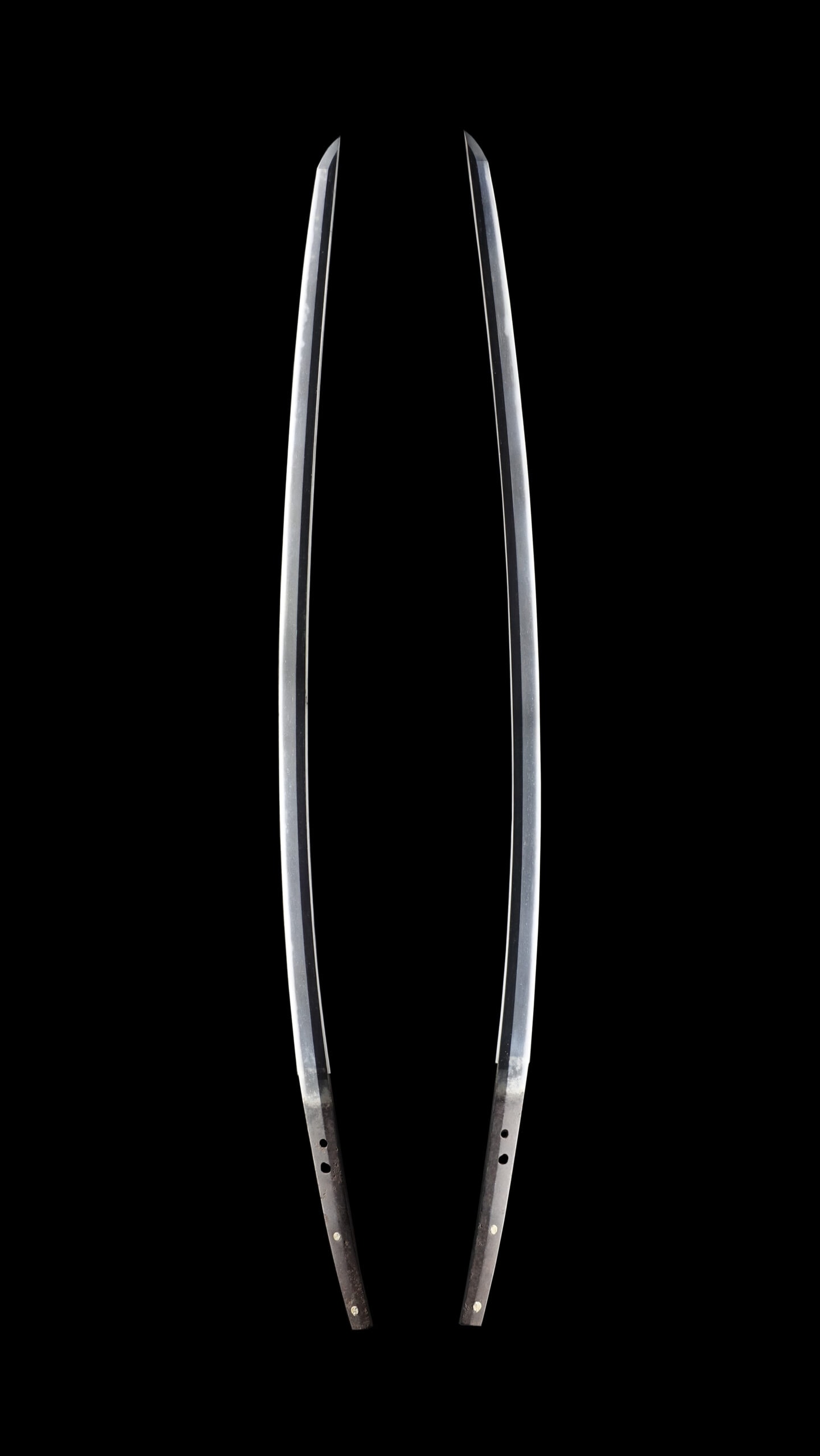
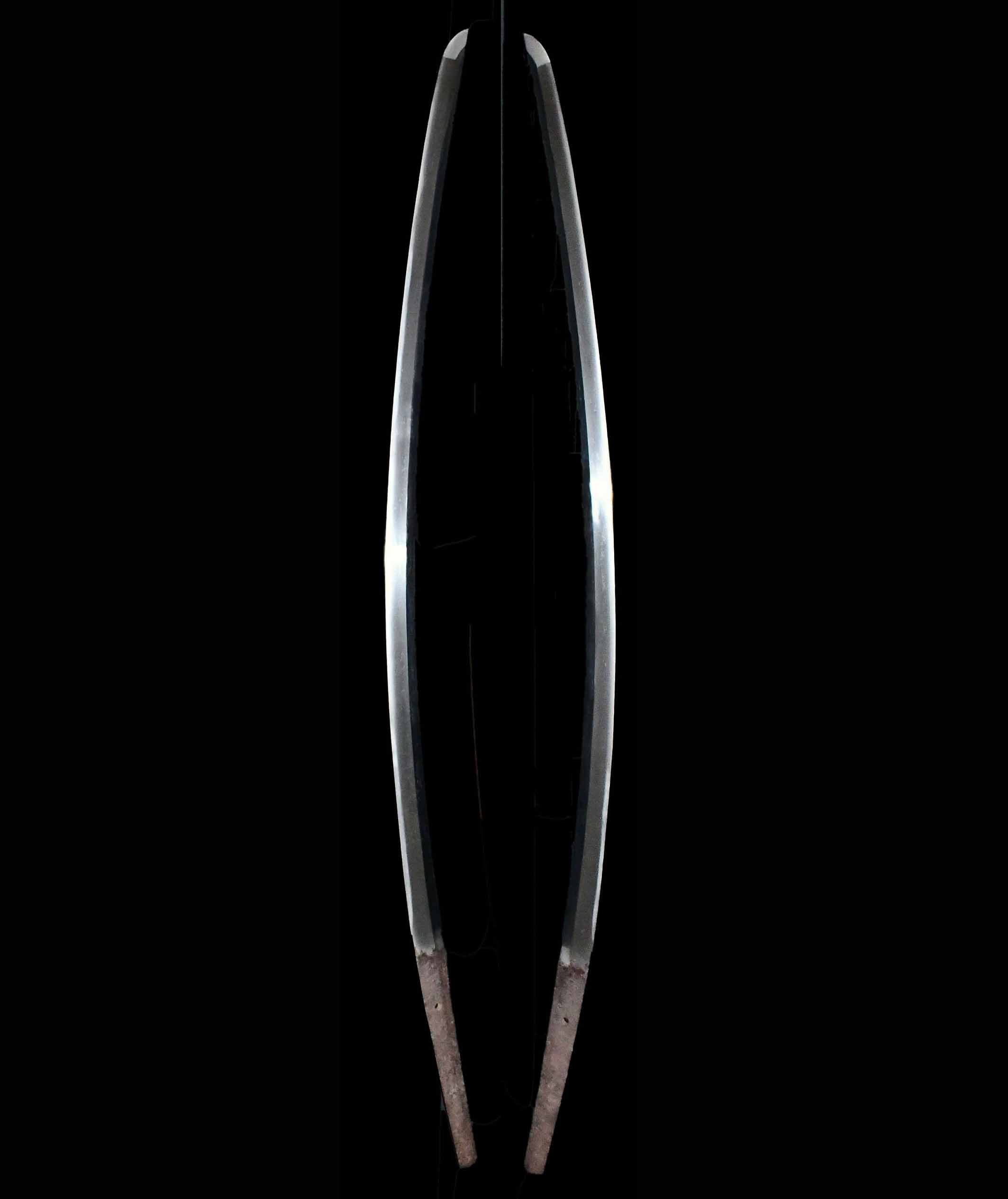
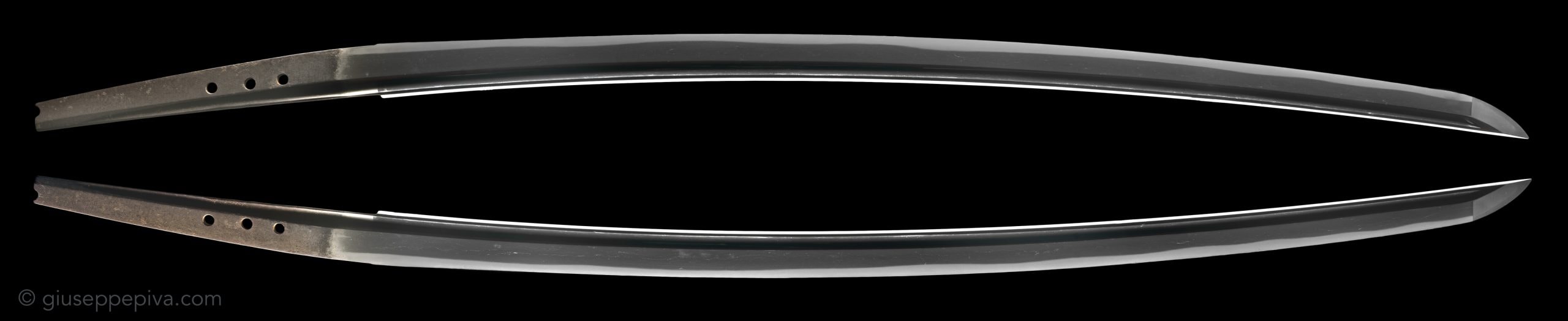
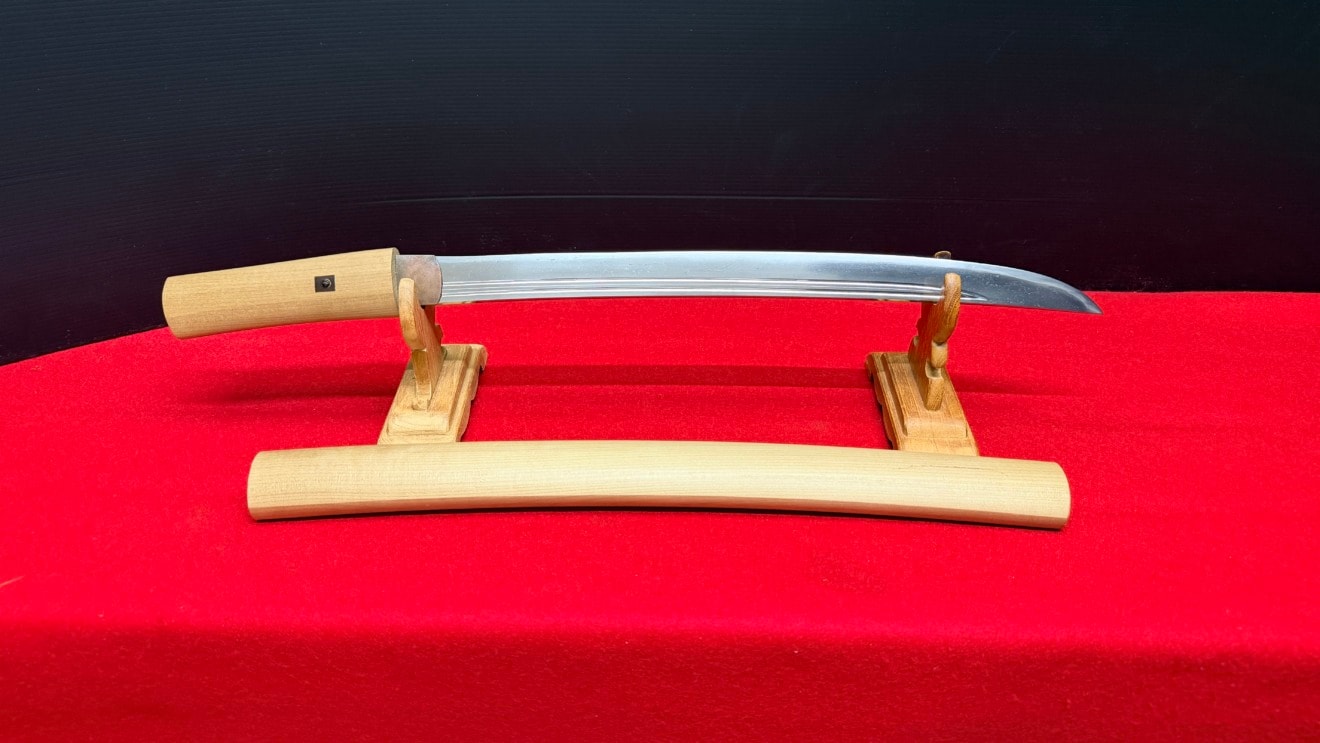
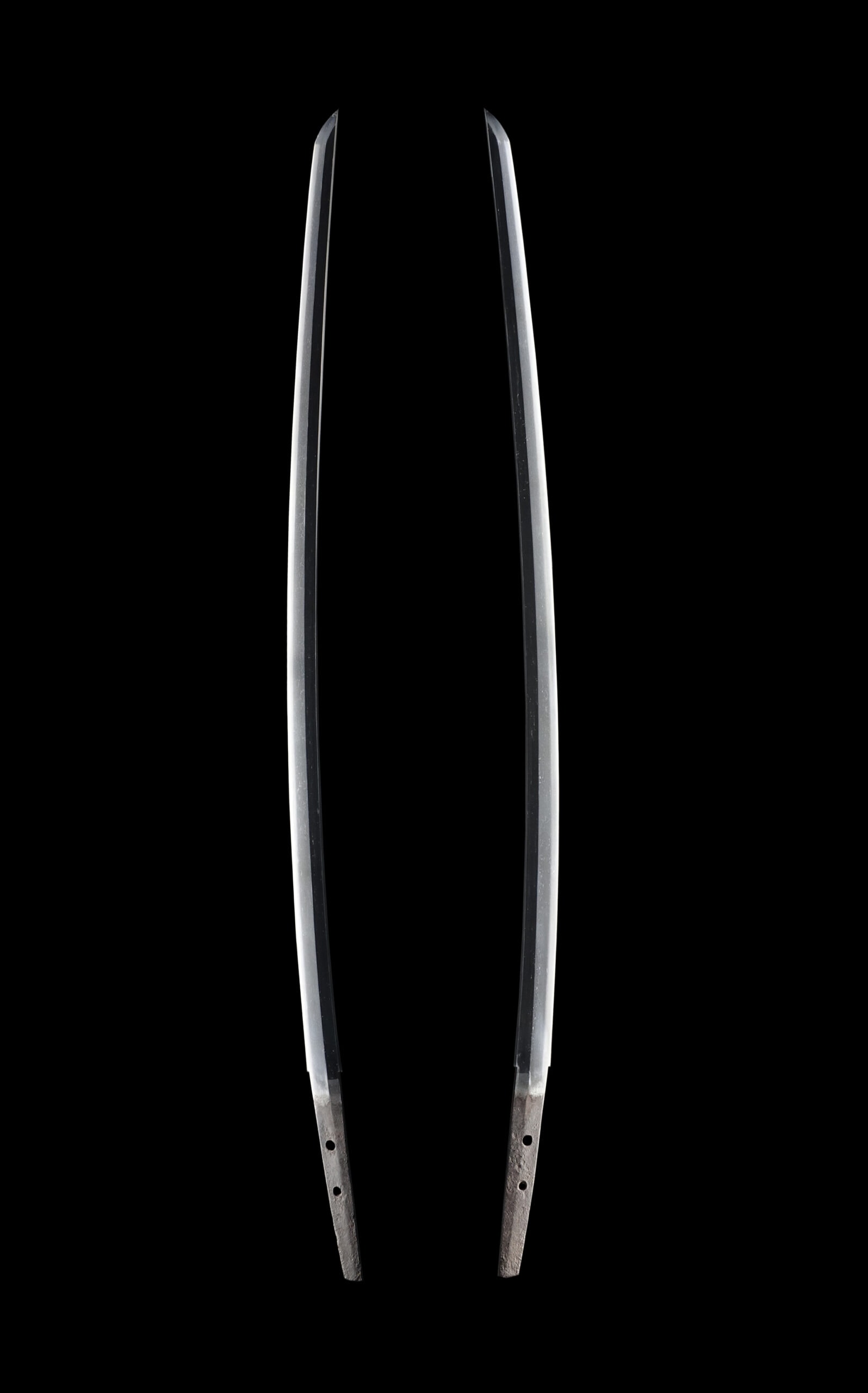
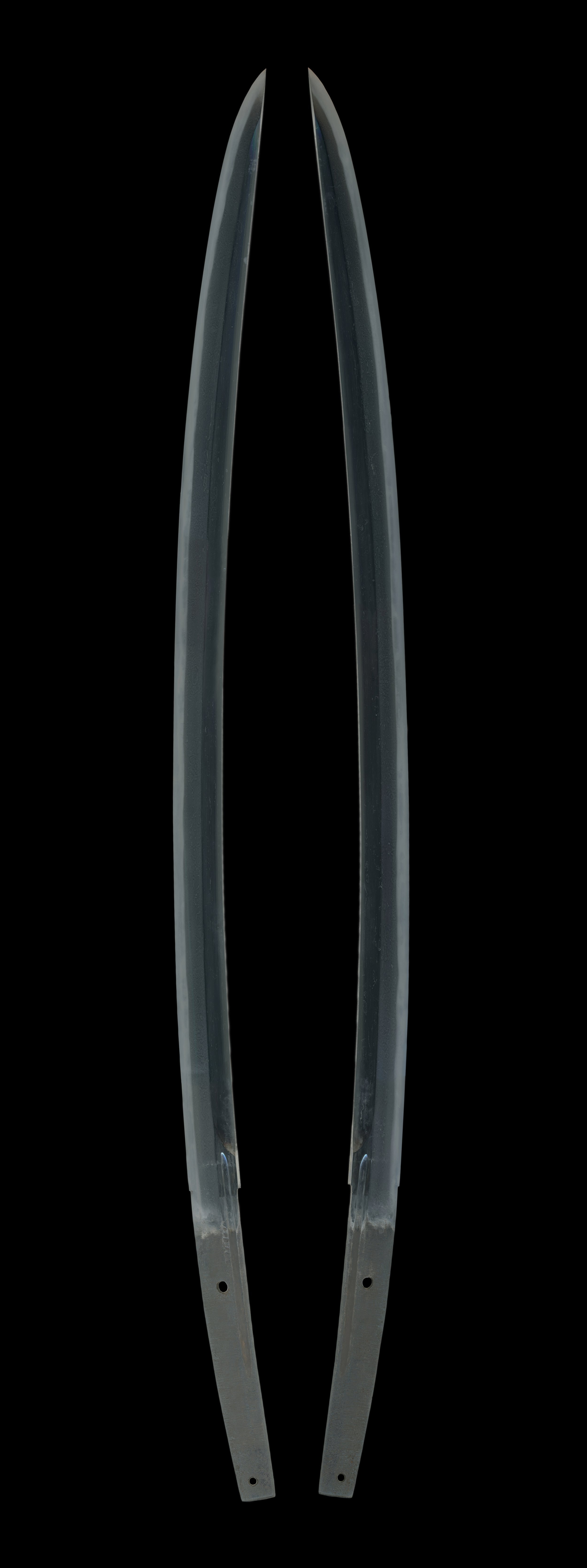
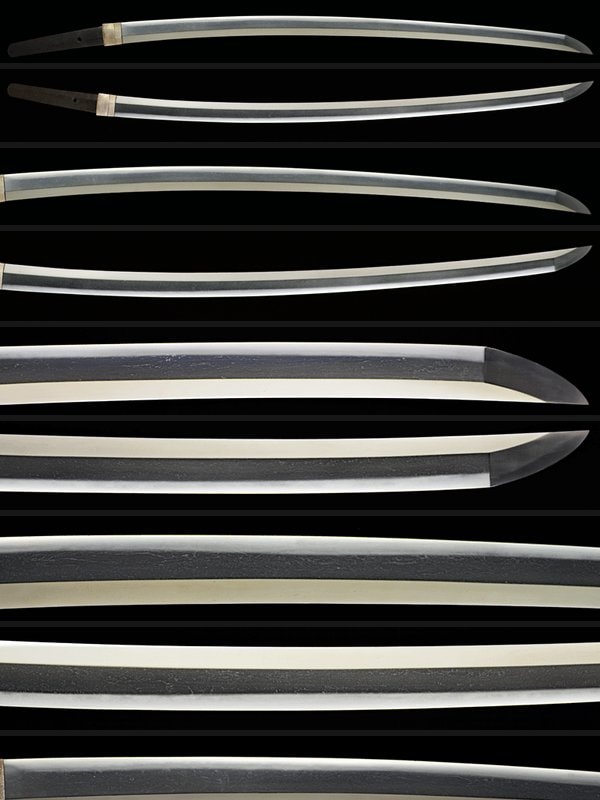
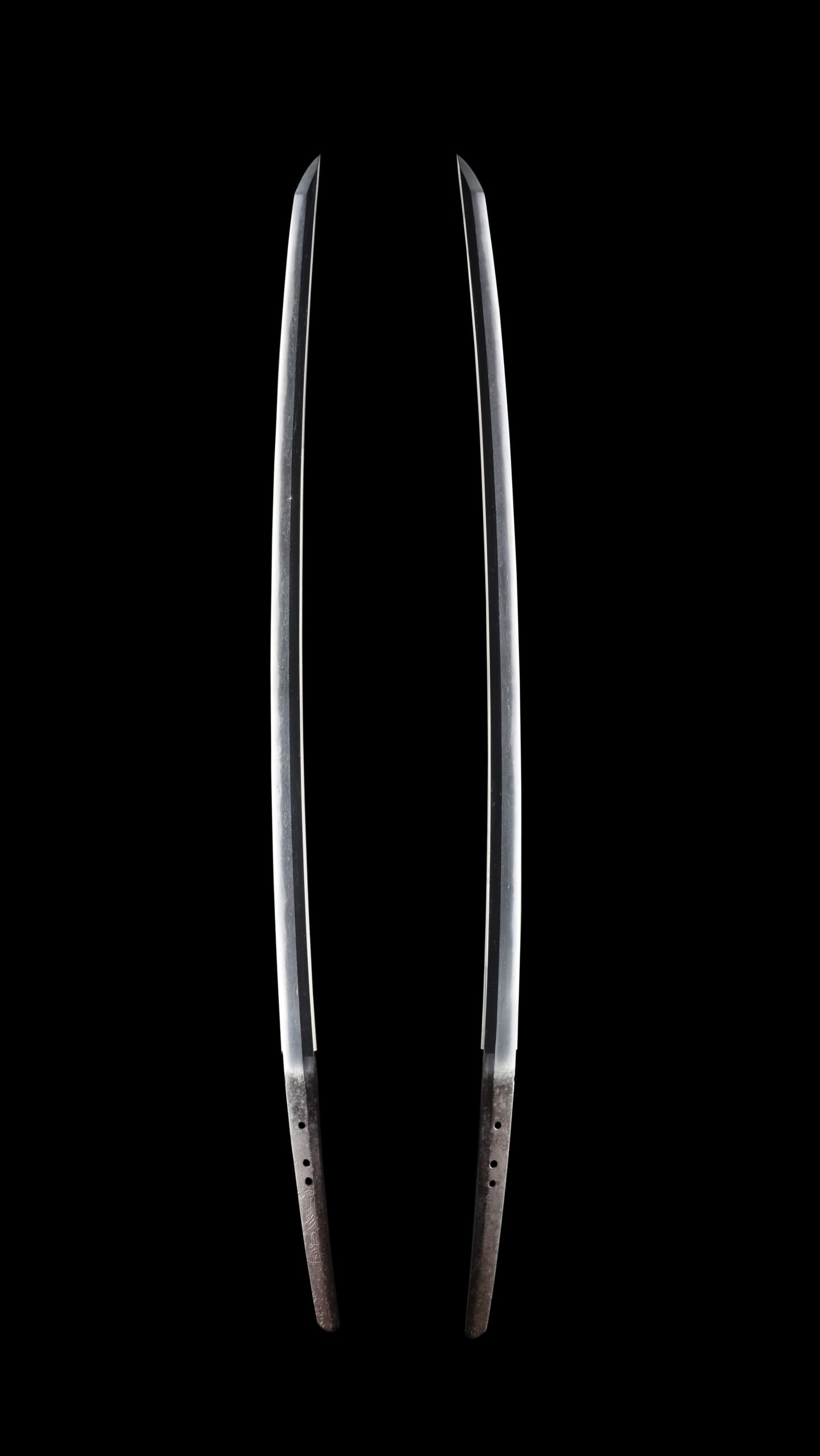
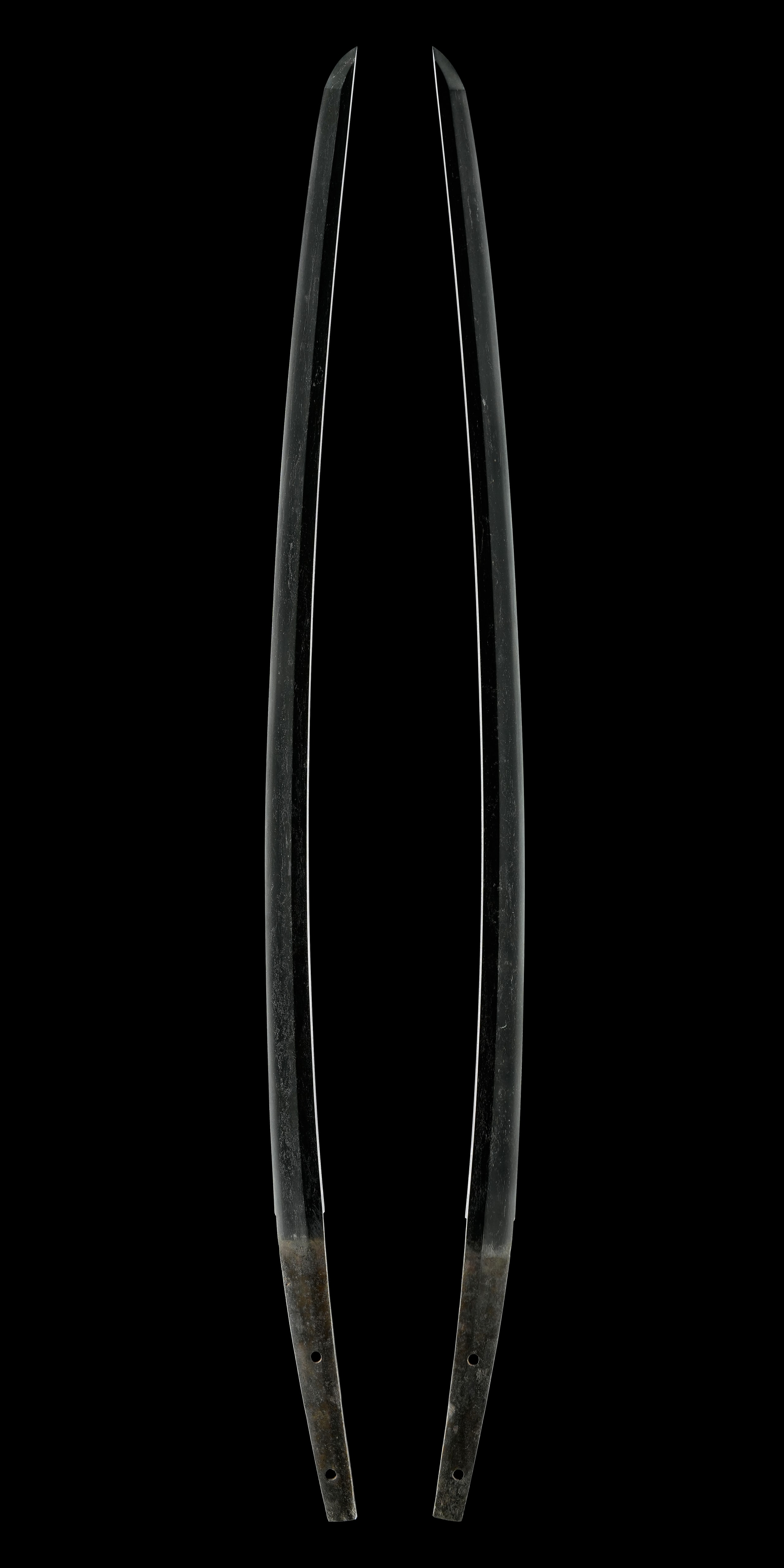
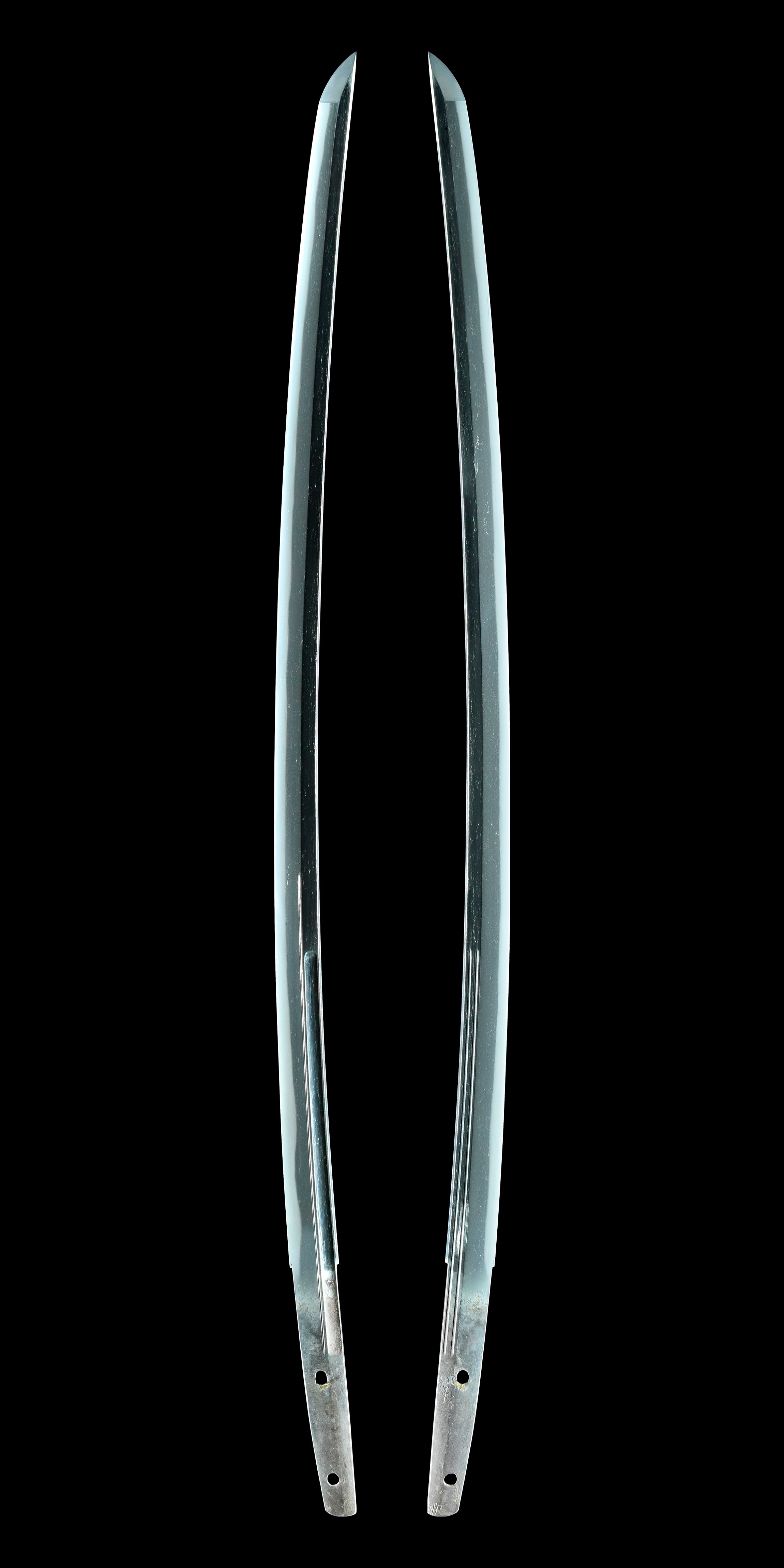
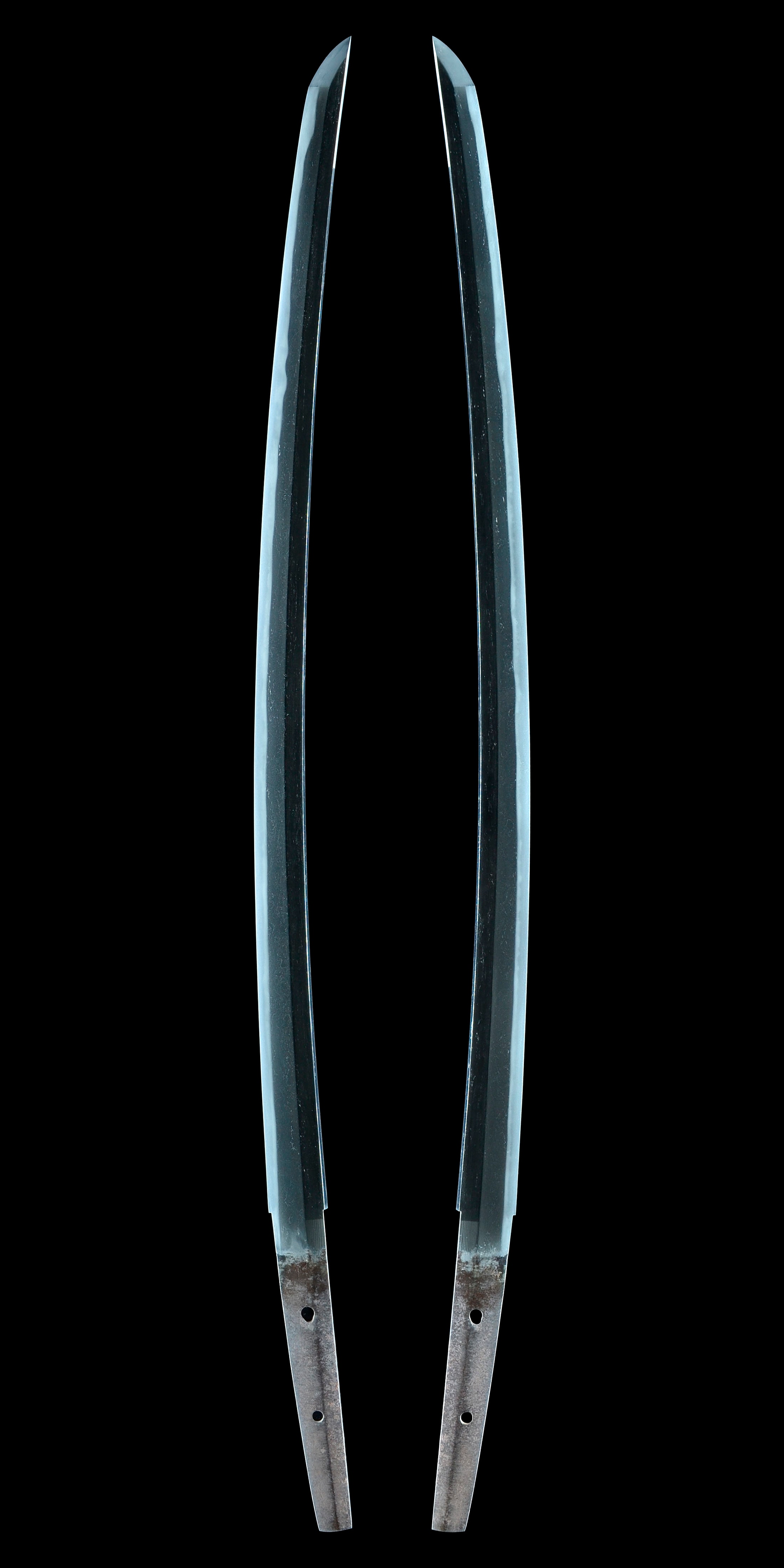
Uda Kunimitsu (宇多国光), known as Ko-nyudo Kunimitsu (古入道国光), is traditionally regarded as the founder of the Uda school. According to accepted tradition, around the Bunpo era (1317–1319) he relocated from Uda District in Yamato Province to Utsu in Province, establishing a lineage that would flourish through subsequent generations. He is said to have had sons named Kunifusa and Kunimune, and subsequent smiths bearing the name Kunimitsu appear to span several generations from the late into the period. No definitively signed works by Ko-nyudo Kunimitsu himself are confirmed; however, extant bearing the signature "Uda Kunimitsu" and datable to the late period are reasonably attributed to his hand.
Blades attributed to Ko-nyudo Kunimitsu strongly display a Yamato-like character in both and . The forging typically shows tightly worked , at times with mixed in toward the edge, well covered with and intermingled with . A whitish reminiscent of may stand out in the . The is characteristically -based, occasionally exhibiting shallow with a slight admixture of small ; adheres well, and and appear along the temper line. The returns in with at the tip. carved on both sides with is a recurring feature.
Ko-nyudo Kunimitsu occupies a position of considerable importance as the progenitor of the Uda school, one of the principal forging traditions of Province. His work demonstrates the direct transmission of characteristics into a provincial setting during the late period. Blades attributed to his hand that survive in condition constitute valuable reference material for understanding the formative period of the Uda tradition and the broader dissemination of Yamato forging methods into the northern provinces.