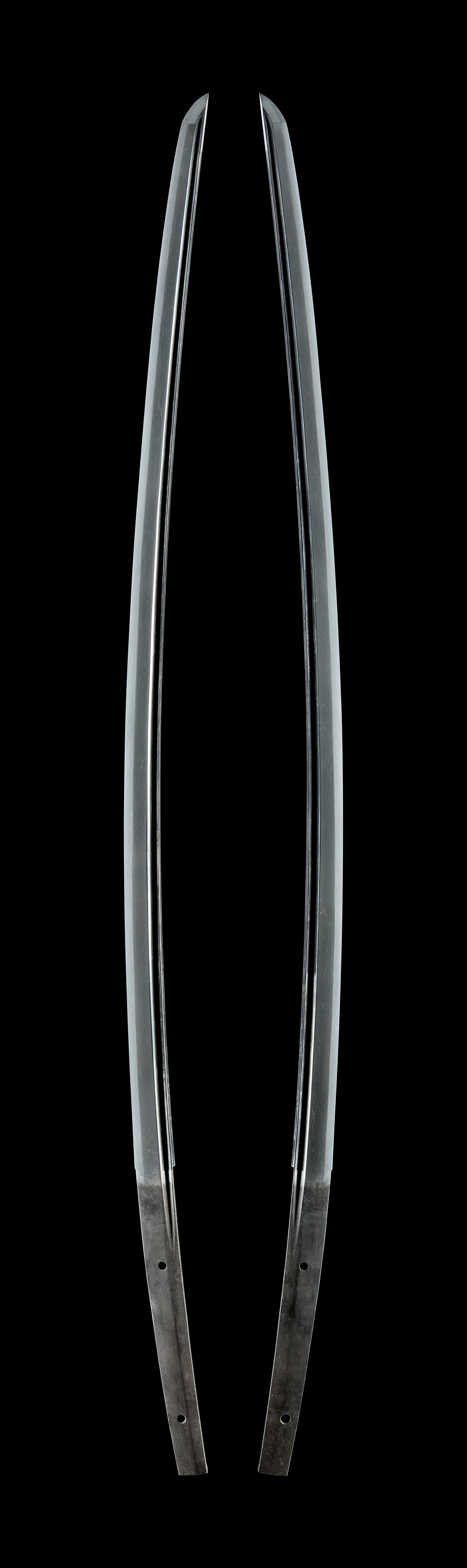
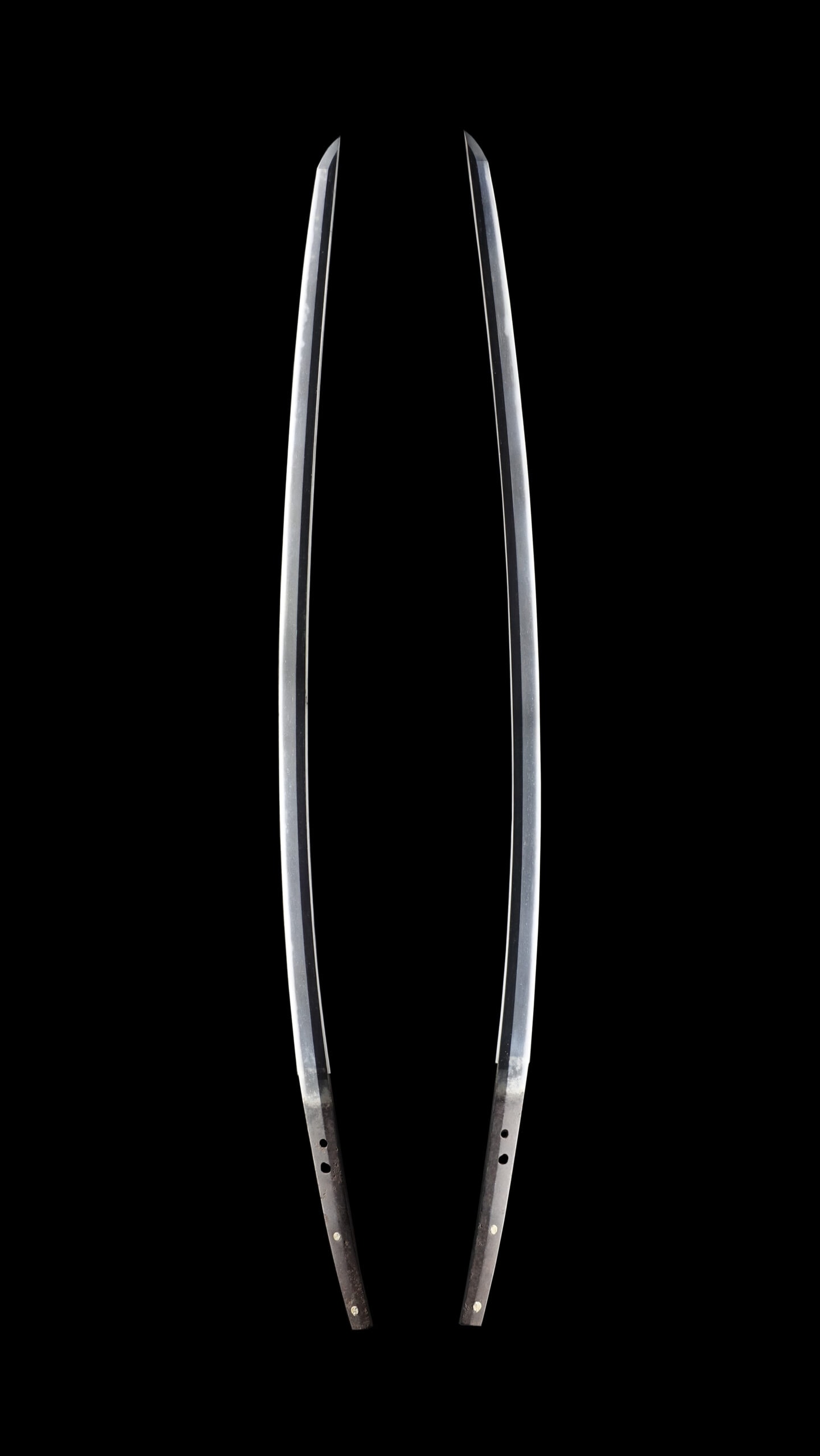
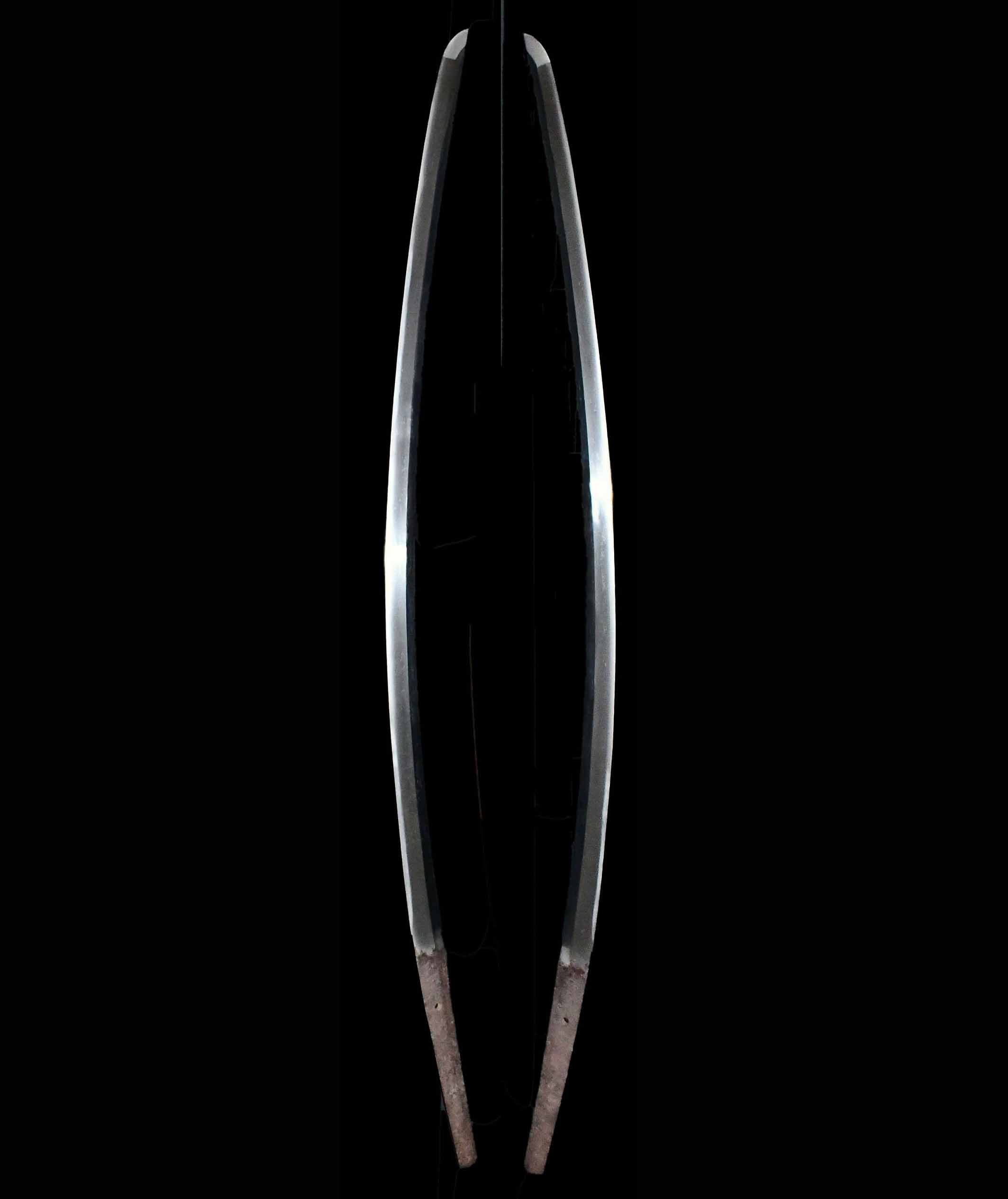
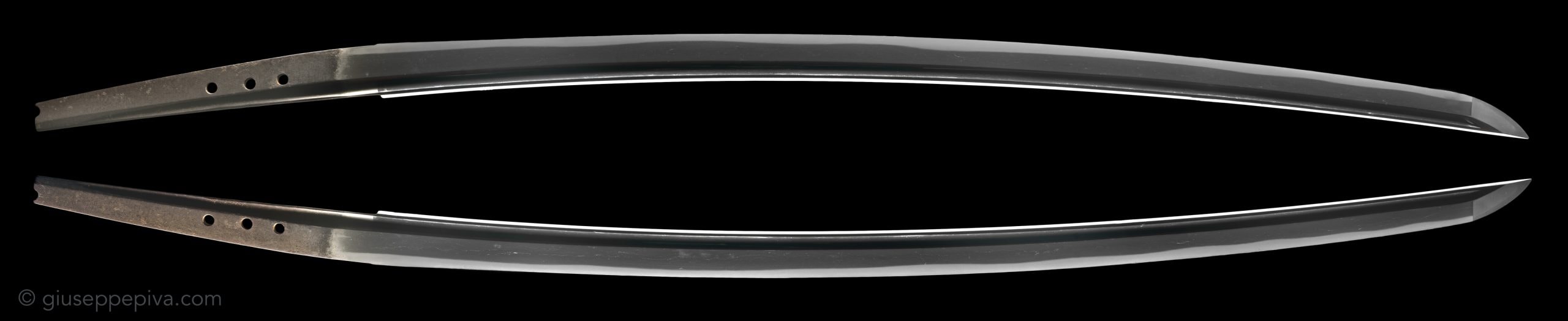
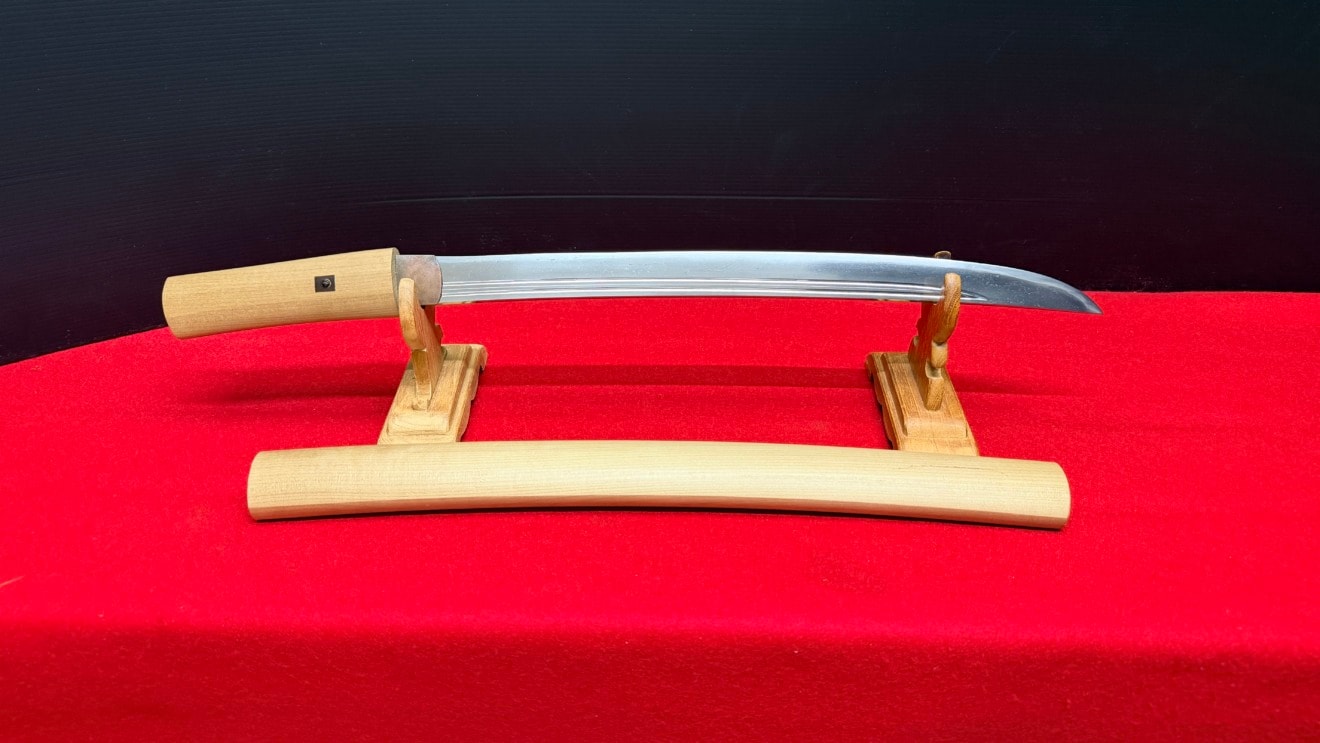
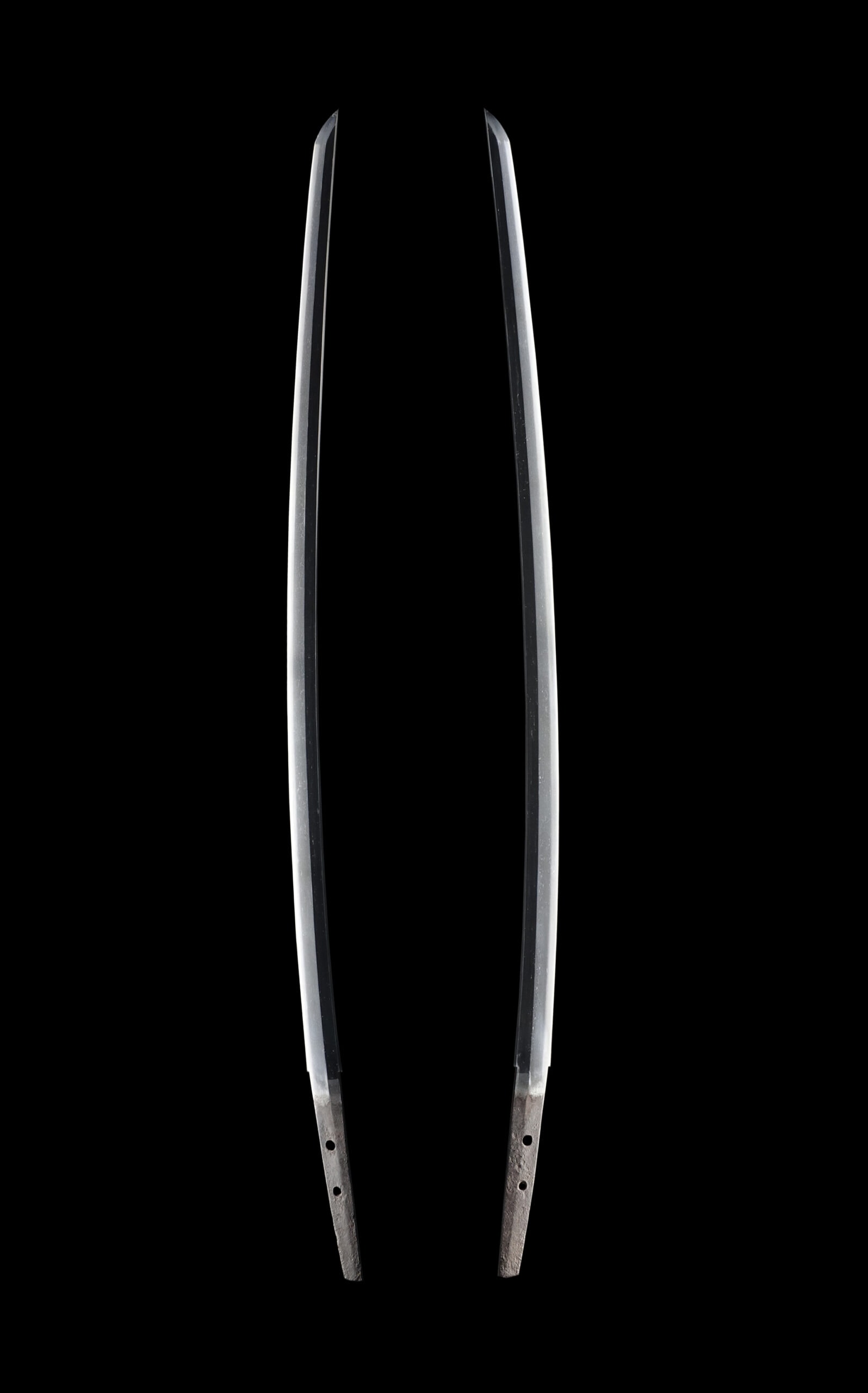
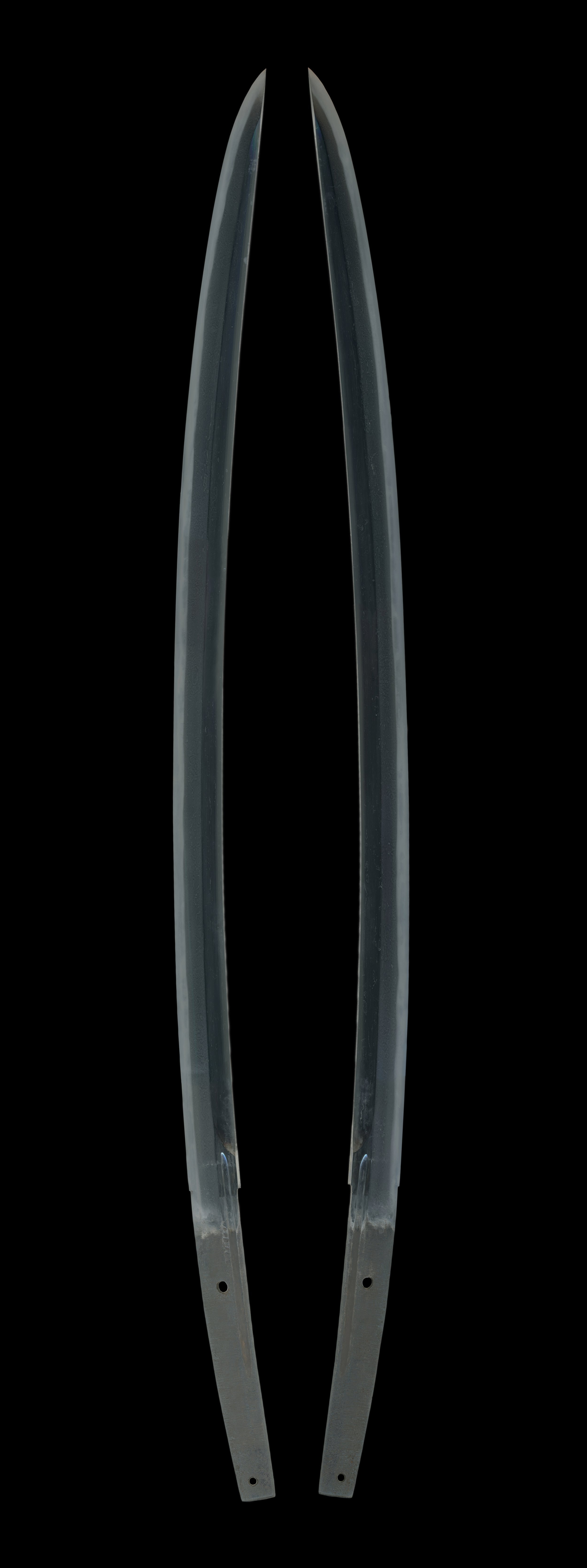
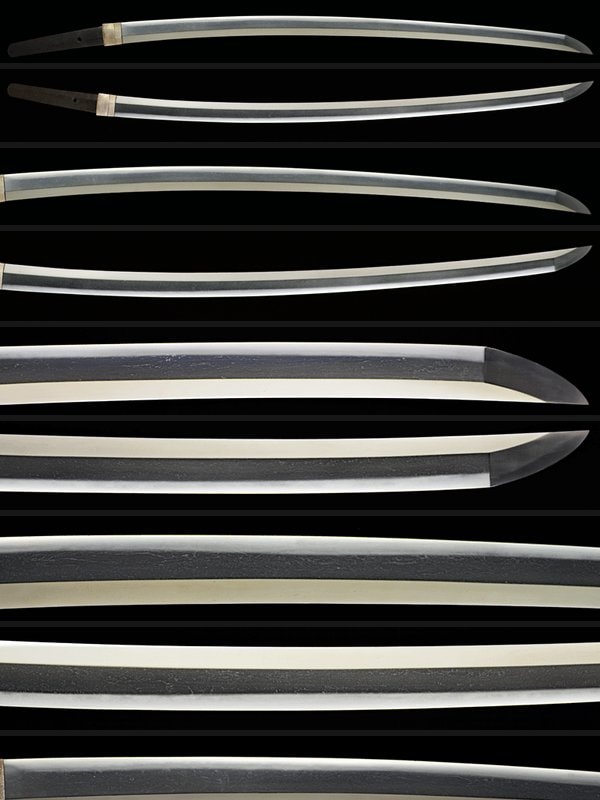
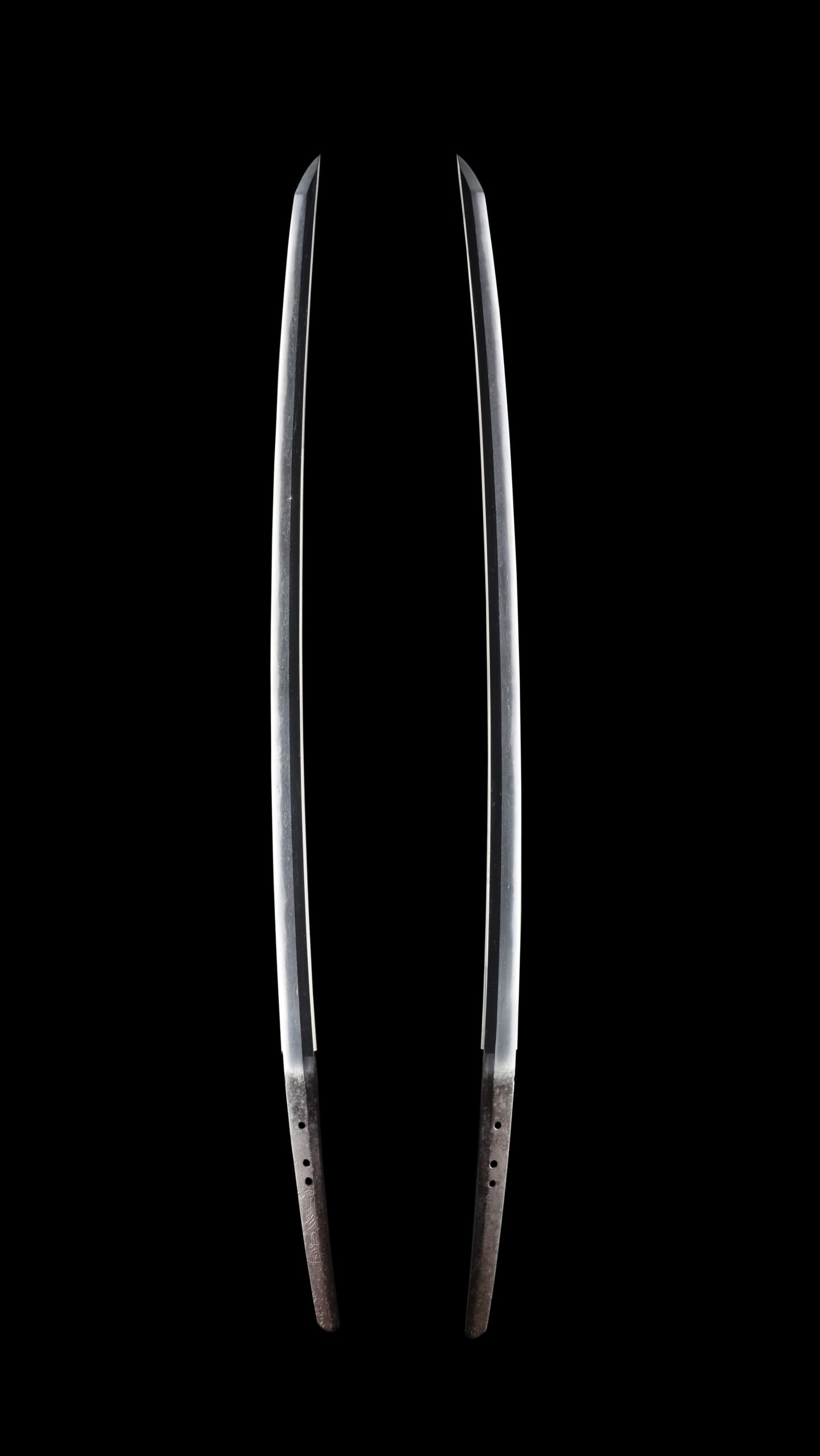
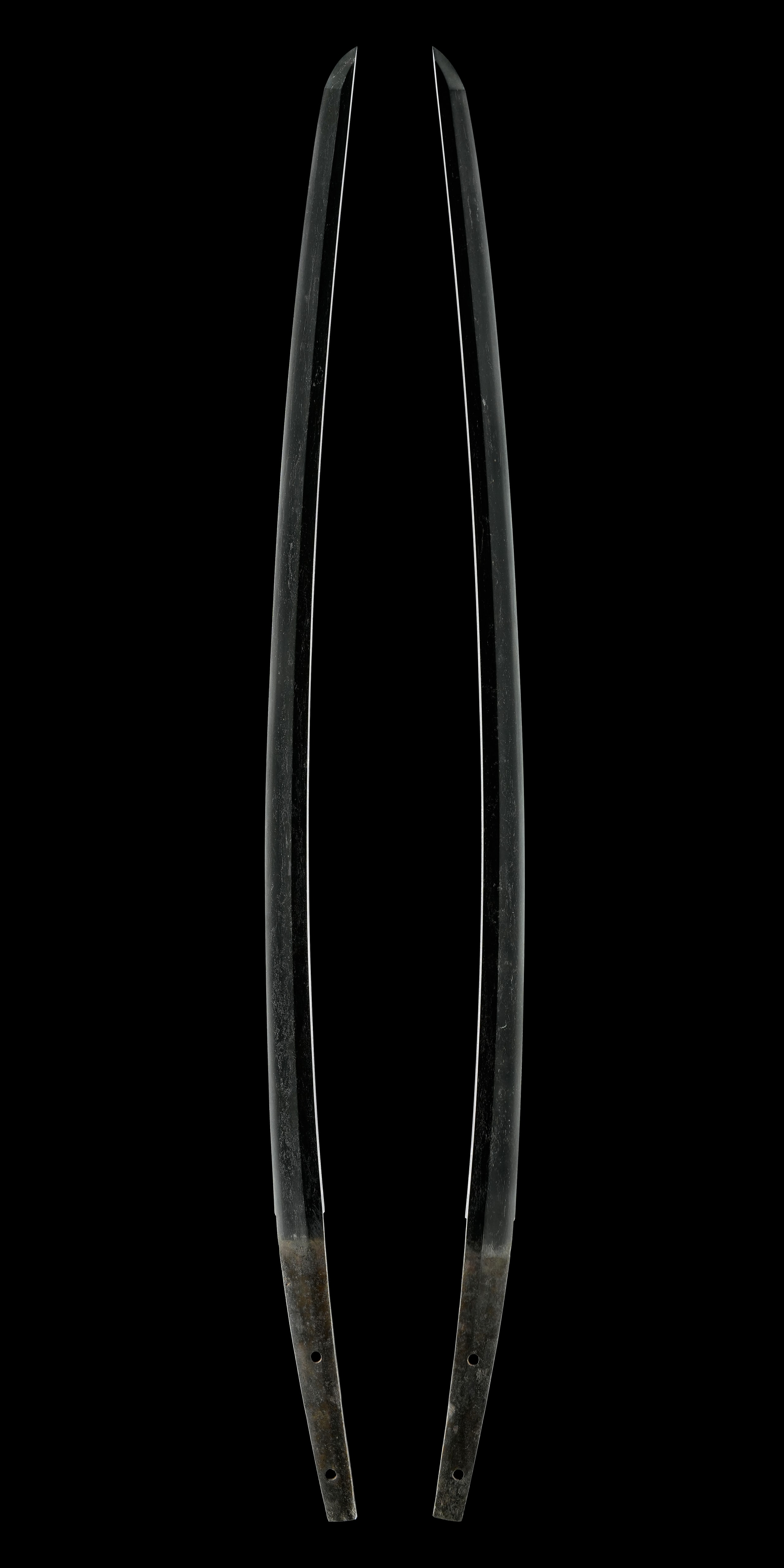
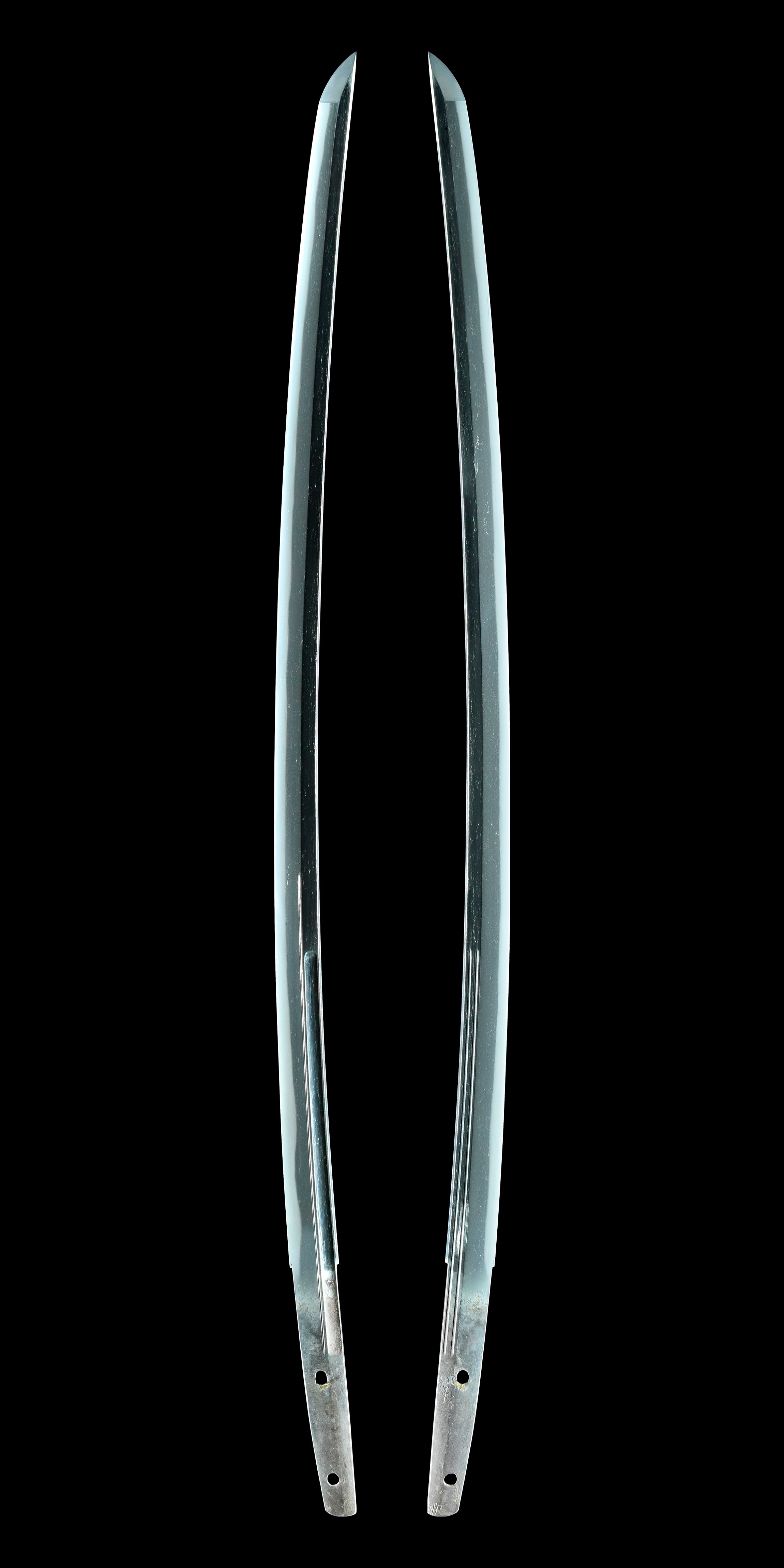
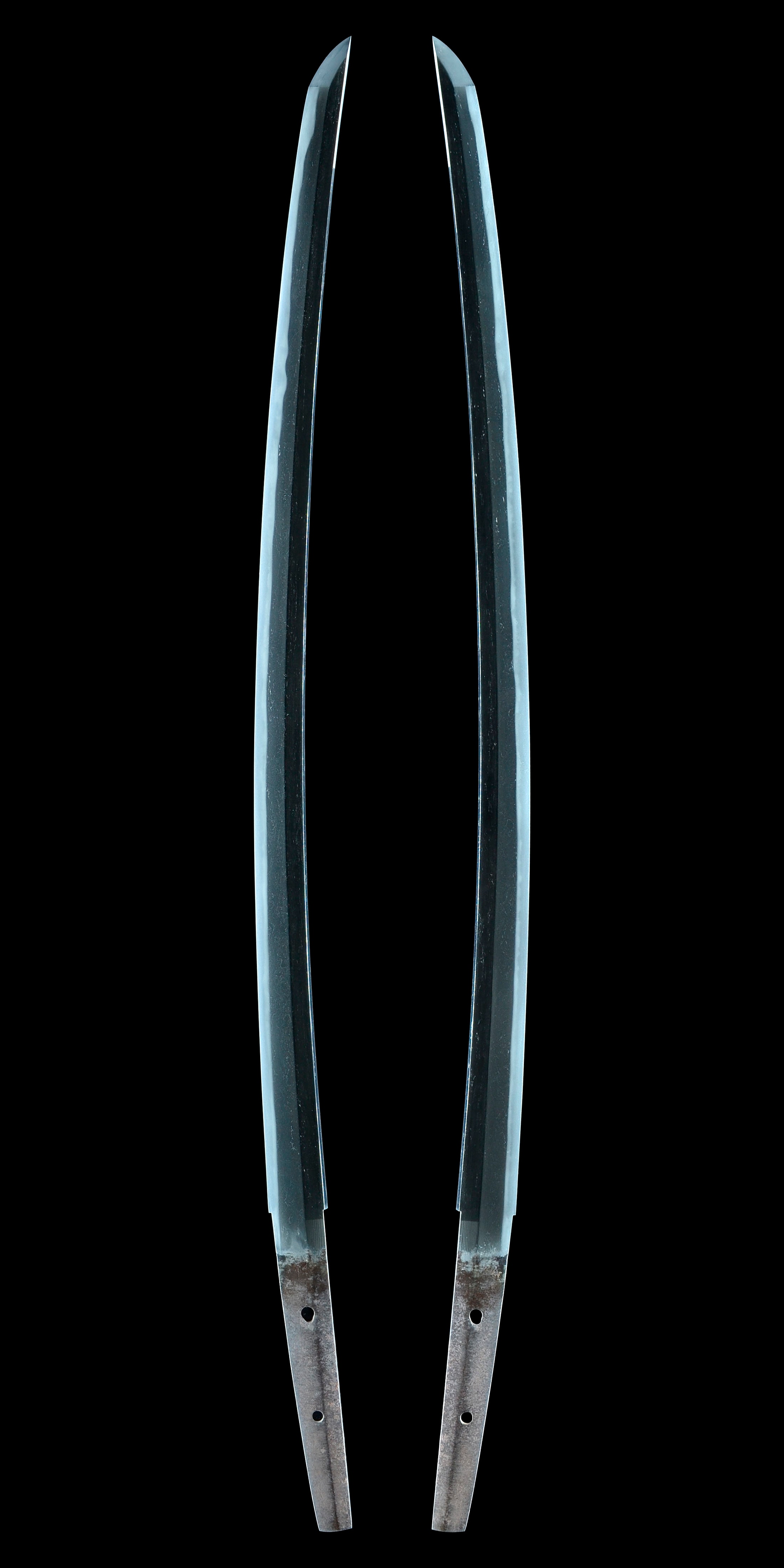
Kunimitsu is the founder of the Uda school, the monk-smith remembered as Ko-Nyūdō Kunimitsu, who is held to have come from Uda District in Yamato and to have settled at Uzu in around the Bunpō era of the late period. The published sources treat his name as the hinge of the whole attribution. Almost no securely signed work of the first generation survives, so his earliest pieces are read by their strong Yamato character and attributed to him as Ko-Nyūdō Kunimitsu, while a body of signed Uda Kunimitsu and reaching across the and into the early period carries the name into its later generations. A Kunimitsu blade may therefore date anywhere from the late down to the Ōei era, and the published record cautions that the school's makers individuate little, so that the appraisal rests on era and school more than on a single hand.
His work is read in two manners with one diagnostic holding them together. The first is the Yamato root the school never lost. Over a wood-grain that flows and tends to stand he tempers a or a quiet , and into the he works the activity the published sources name as the school's own: a crossing , fine , crescent , and a that runs straight into a small round or sweeps off in . On the dated Genō the reads the construction itself as a confession of origin, observing that the large round, burned-off tip is the work of a Yamato-born hand. It is the calmest, most archaic face of Kunimitsu, and the one the older attributed to the founder most often wear.
The is where the appraisal begins and ends. His is an , frequently mixed with and a flowing grain, the surface standing rather than lying flat, with adhering and dark entering. On his most characteristic blades the steel carries a blackish cast, and on one signed it grows hazy and whitens as it stands. The published sources keep returning to this northern color as the thing that tells the school apart, reading a darkened on one signed as the distinct flavor of a northern-province blade. Over that the hardening runs in rather than , with streaming through more than half his blades and through a third, and a that tends to sink rather than to glow. The way the itself gathers along the is named on one as an Uda mark in its own right.
The second manner is the -leaning one of the period. The published sources trace it to the Uda study under Norishige, with the smith called Gō set beside him as a model, and grant that many works of this period call the tradition to mind while insisting that none are of purely construction. Here the temper opens into a or a base broken by and , deep in , the well applied, with drifting and and running freely, and the turns into a or points faintly at the tip. One signed Uda Kunimitsu is read for exactly this division. The records that among there are two kinds, one finely forged with fine and a bright steel, the other with standing grain and large and a steel carrying a blackish cast, and assigns the two to different ancestries, holding that the former transmits the current of Yoshihiro and the latter that of Norishige. That single sentence is the clearest statement the school leaves of how its debt actually divides.
What keeps a -laden Kunimitsu blade from a verdict is precisely the northern and the sinking the second-manner pieces never lose. A blade dense with , and that would read as a high hand at first sight is returned to by its darkened, standing and its subdued temper, and the published sources are explicit that the resemblance stops at construction. Against the true masters the contrast runs through his own grounded traits rather than theirs: the Yamato he never sheds, the and and , and the blackish steel that no Norishige or Gō blade shows. His sons Kunifusa and Kunimune carried the school forward into the period, Kunifusa drawing the tradition into the Uda manner, and the Kunimitsu name itself was taken up by several later smiths, the published record placing one signed blade with the second generation and another with the Ōei-era Kunimitsu of the early fifteenth century.
The whole of his recorded work sits in the tier, where ten blades are held, a mix of attributed to the founder as Ko-Nyūdō Kunimitsu and signed Uda Kunimitsu and of the later generations. He has no National Treasures and no Important Cultural Properties, and the published record preserves no provenance or museum holding for his blades, so the honest account is of a school name carried by -ranked work rather than of a roll-call of famous swords. The singles out the best of these for the soundness of both and , calling one darkened a piece of restrained, austere quality, and naming the along its as the Uda tell. A Kunimitsu blade is not beyond reach in the way a National Treasure is, since the body that survives is and from time to time one of the signed later-generation pieces or an attributed changes hands, but the founder's own securely first-generation work is among the rarer things a collector of the northern schools could hope to encounter, and most of what exists is held rather than traded. For a student of how the Yamato and currents met in the northern provinces, his blades are the place where that meeting can actually be seen.