Muromachi turned sword making into an industry: the uchigatana rose with massed infantry warfare, Osafune and Seki produced bundle swords beside custom orders, and the Ming trade carried Japanese blades abroad by the tens of thousands.
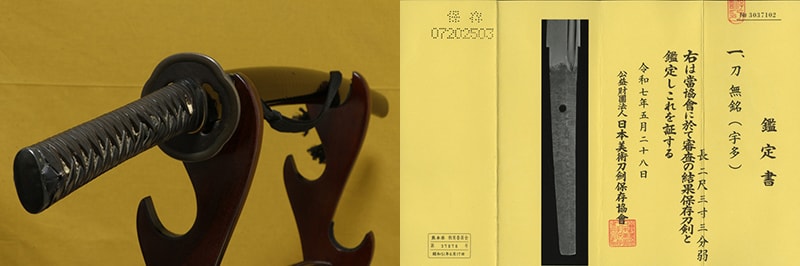
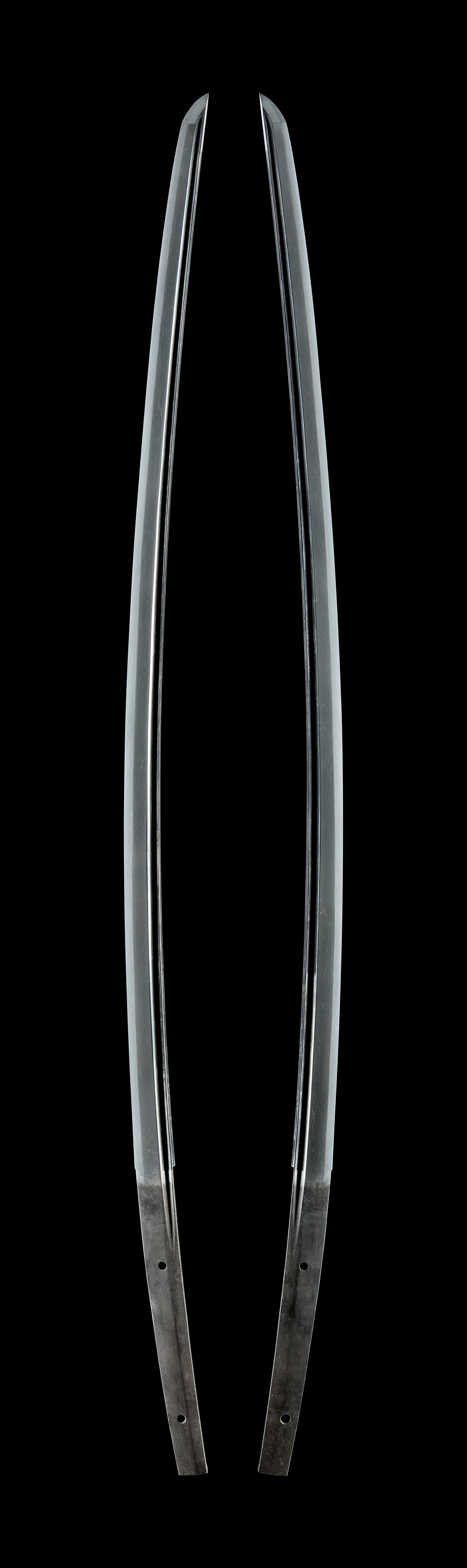
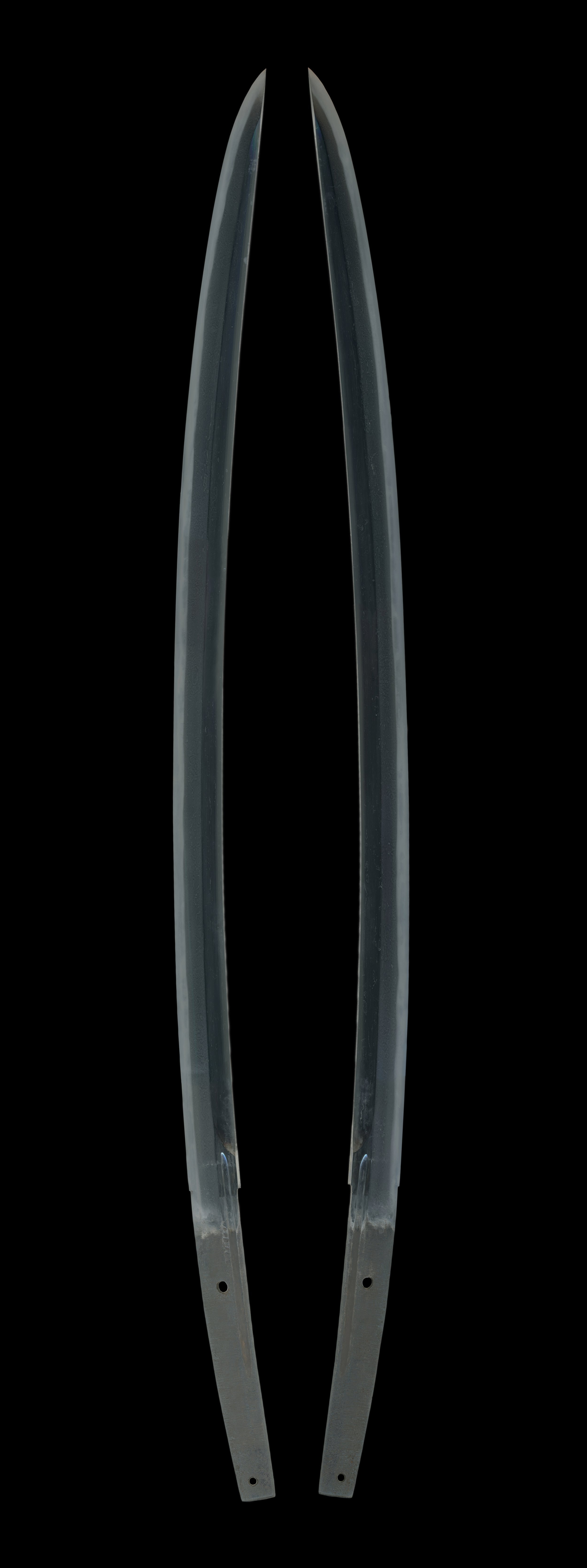
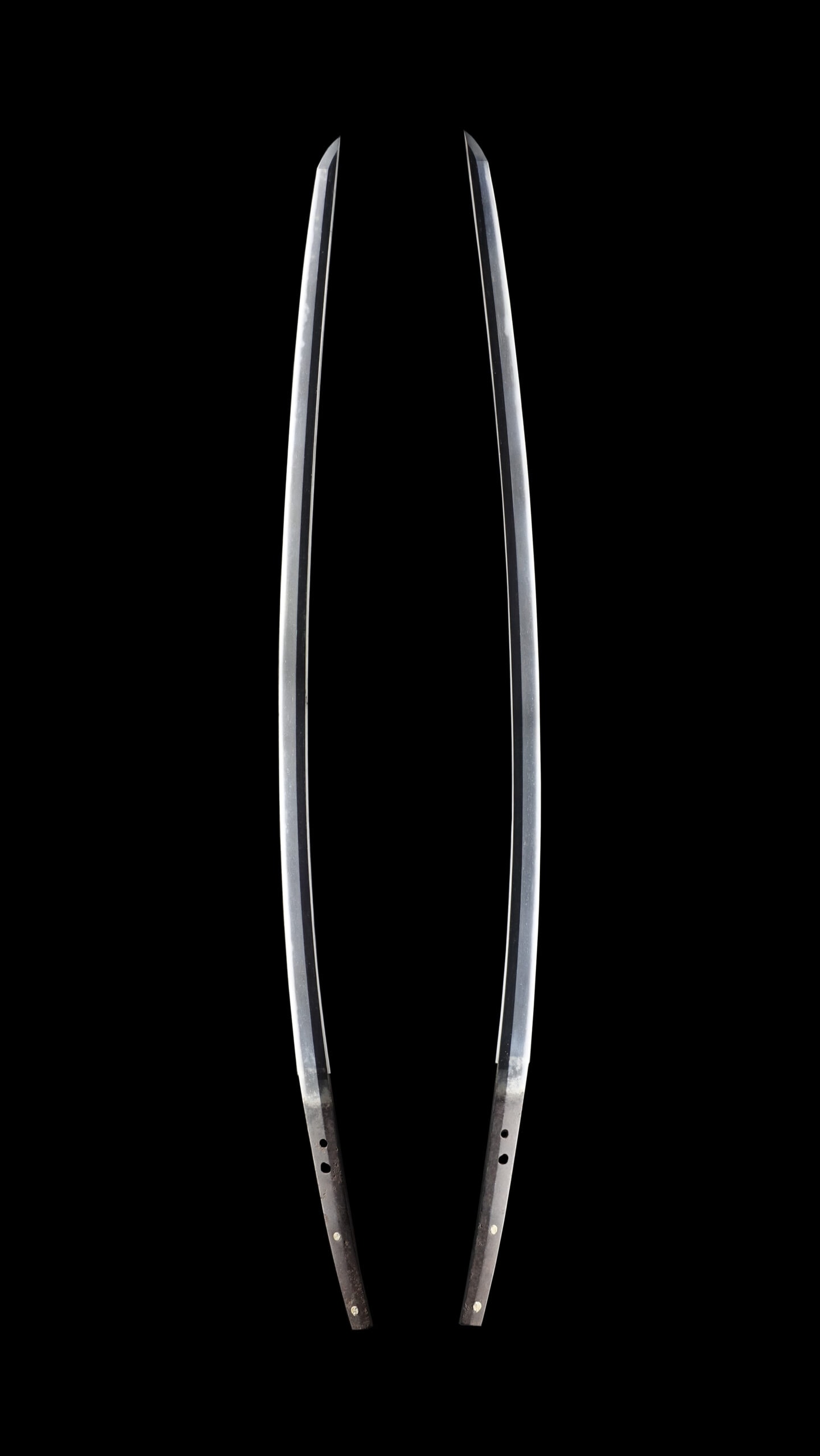
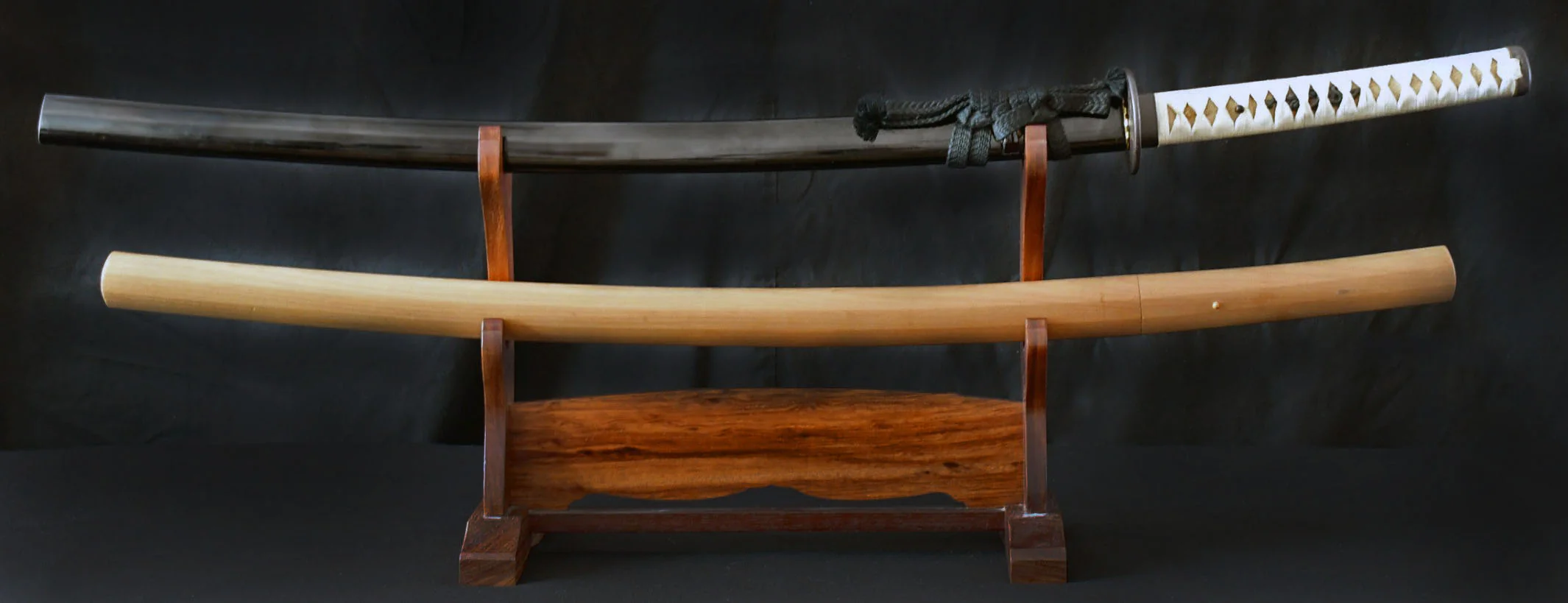
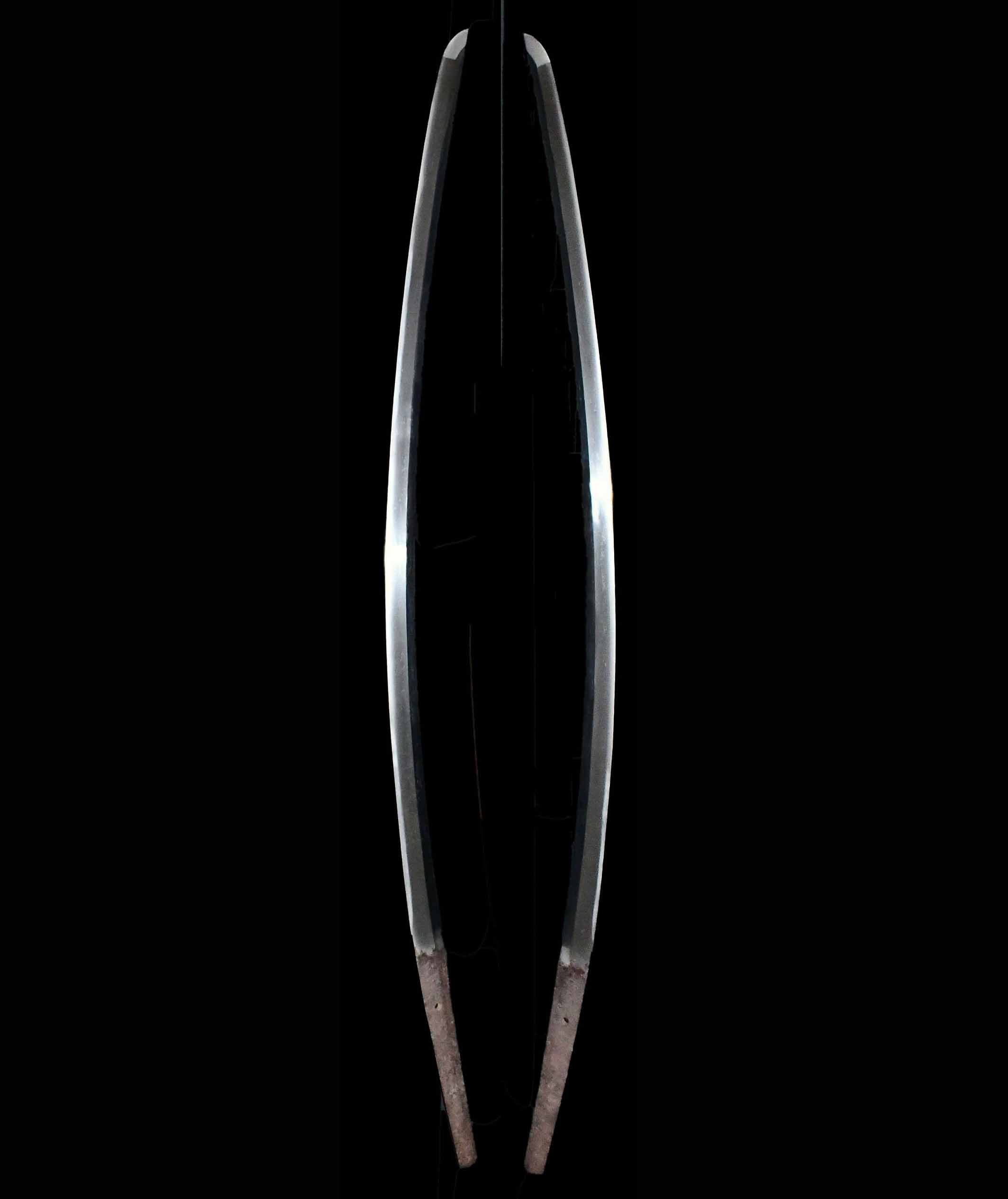
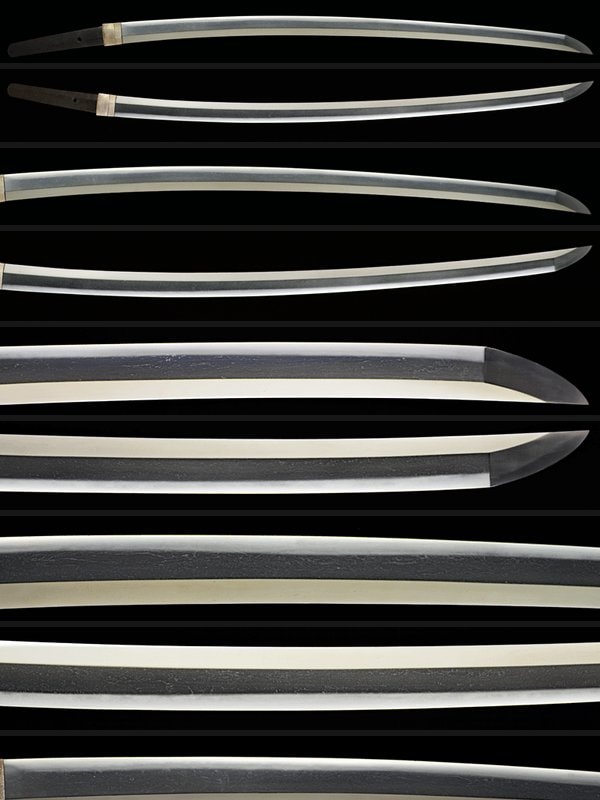
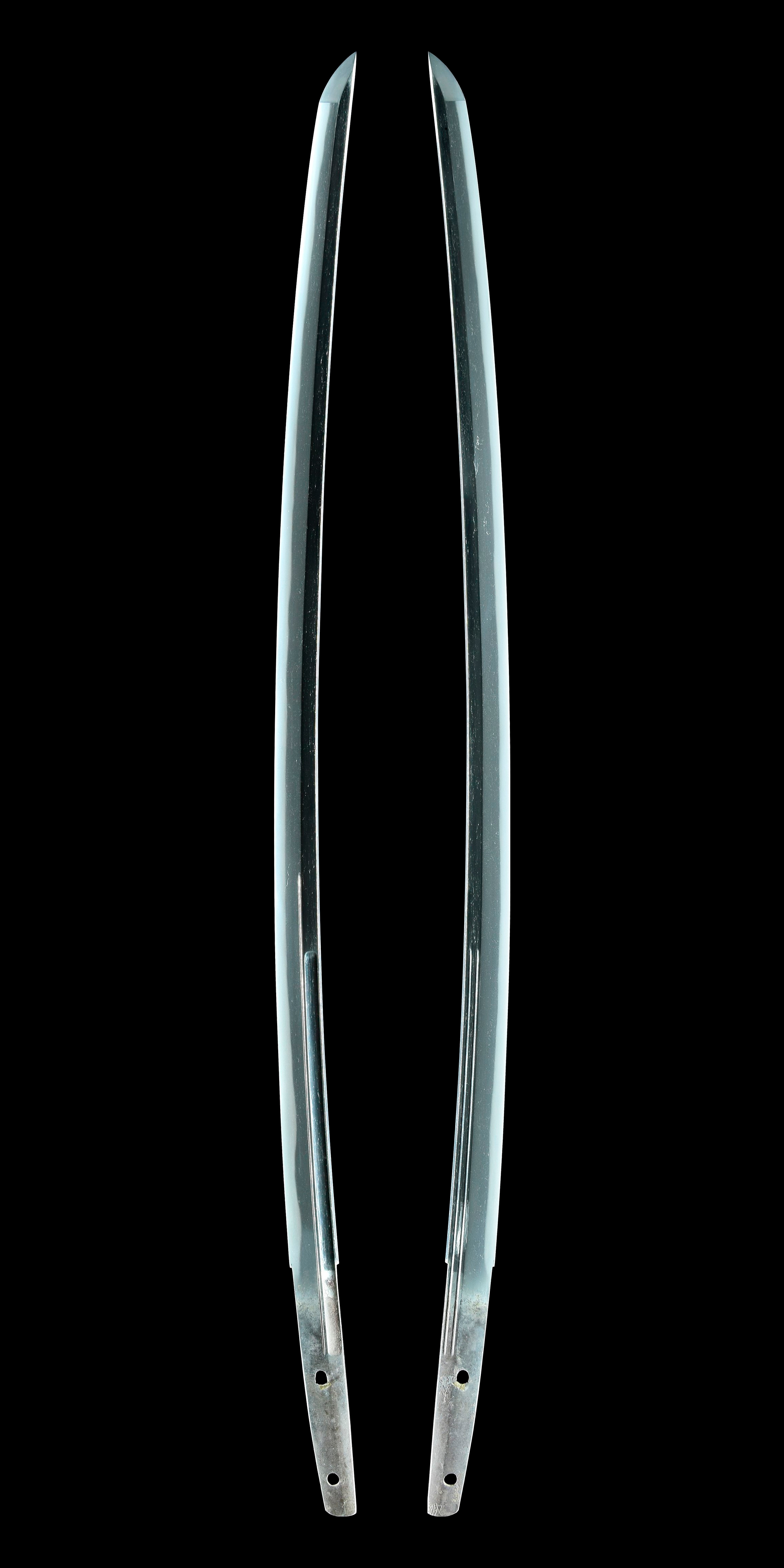
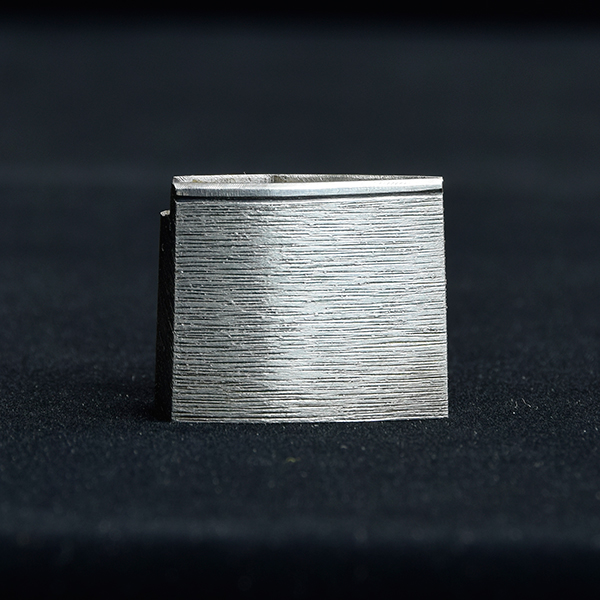
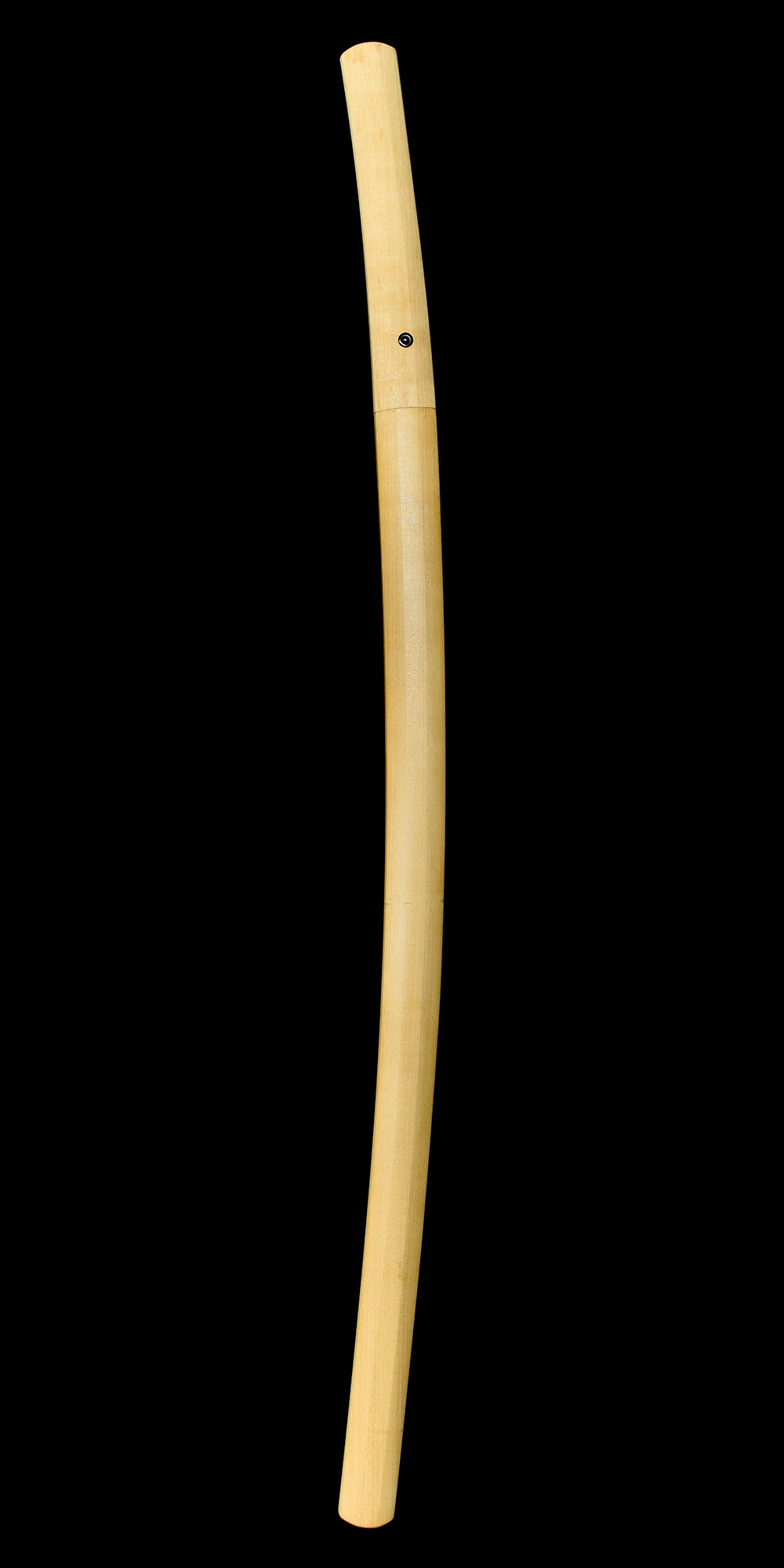
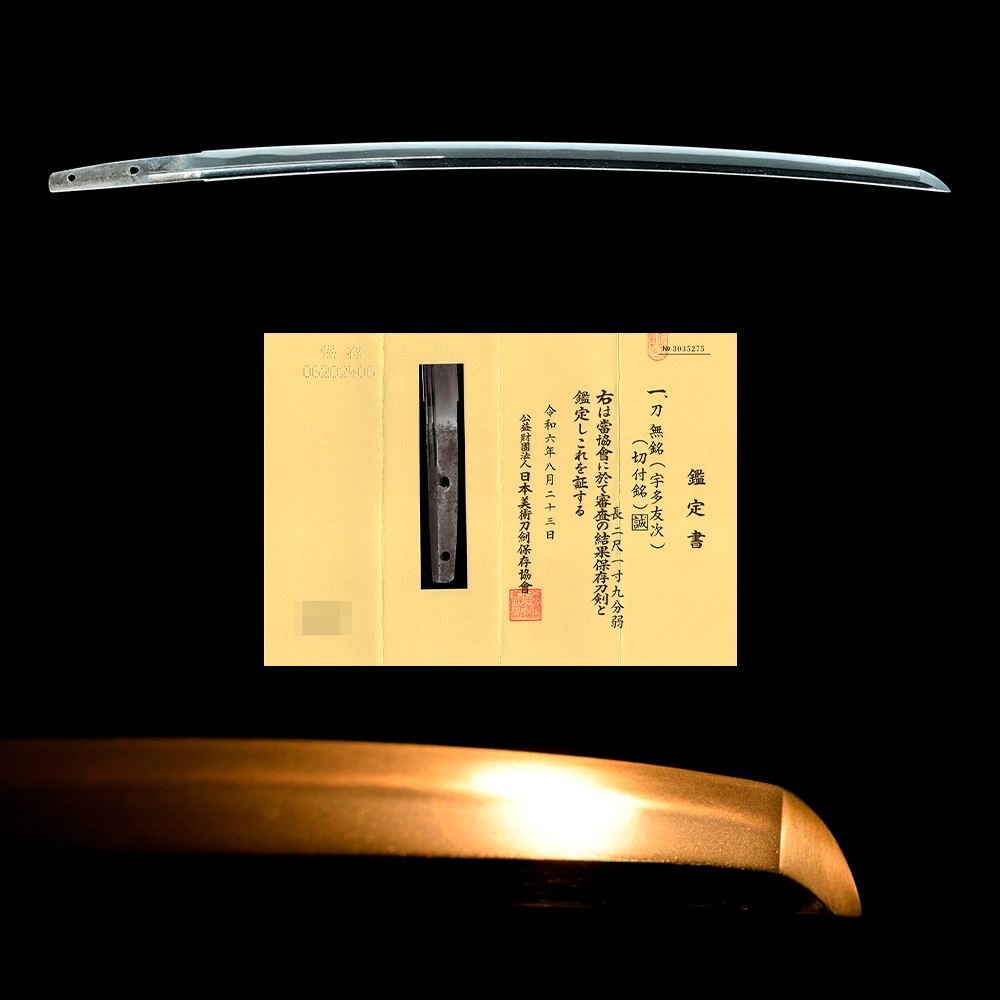
This katana is attributed to Tomotsugu of the Uda school, active during the early Muromachi period. It features a kiritsuke-mei 'Makoto' on the nakago-jiri, suggesting a deep loyalty from its former owner. The blade has a gentle sugata with a slightly extended kissaki, and a well-forged ko-itame hada mixed with mokume, showing a suguha hamon with nioi-deki.
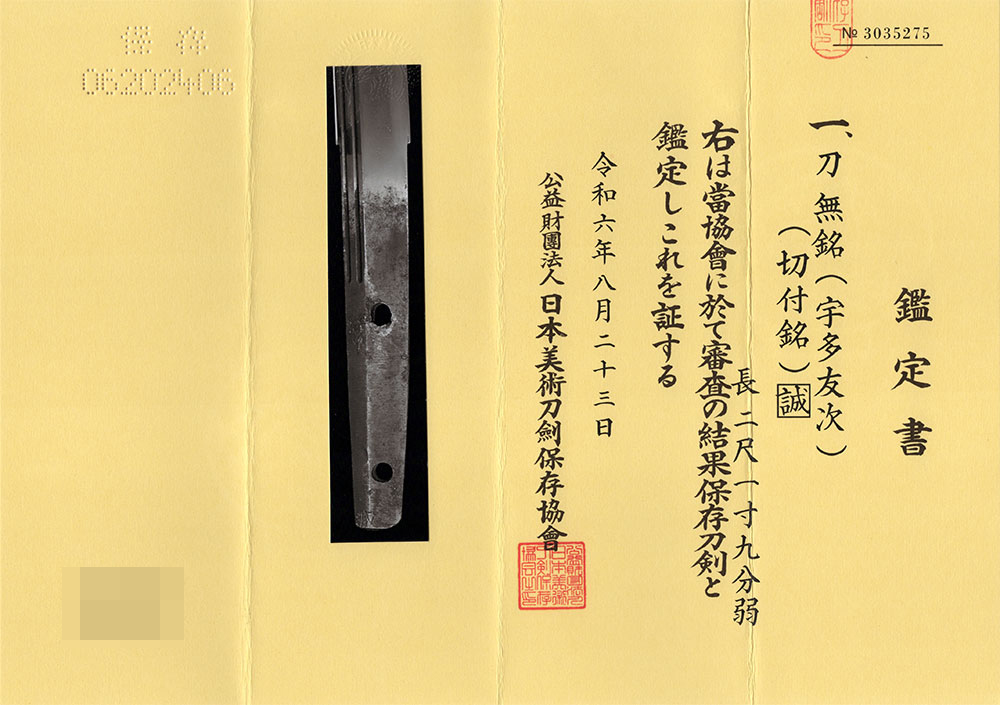
Certificate reading — 無銘(宇多友次)
 NihontoWatch
kiritsuke-mei · Uda · Muromachi · nagasa 66.23cm · sori 1.55cm
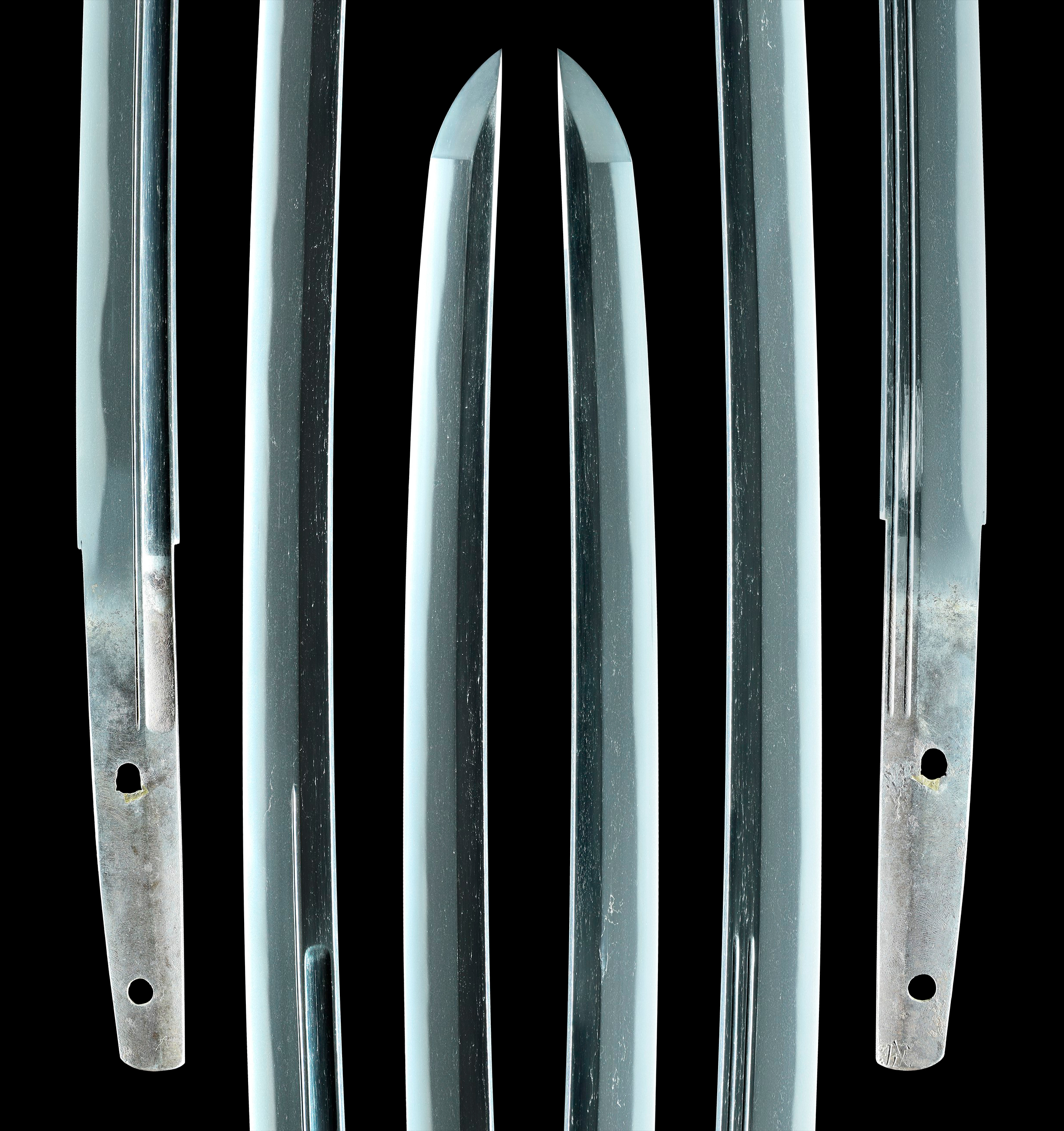
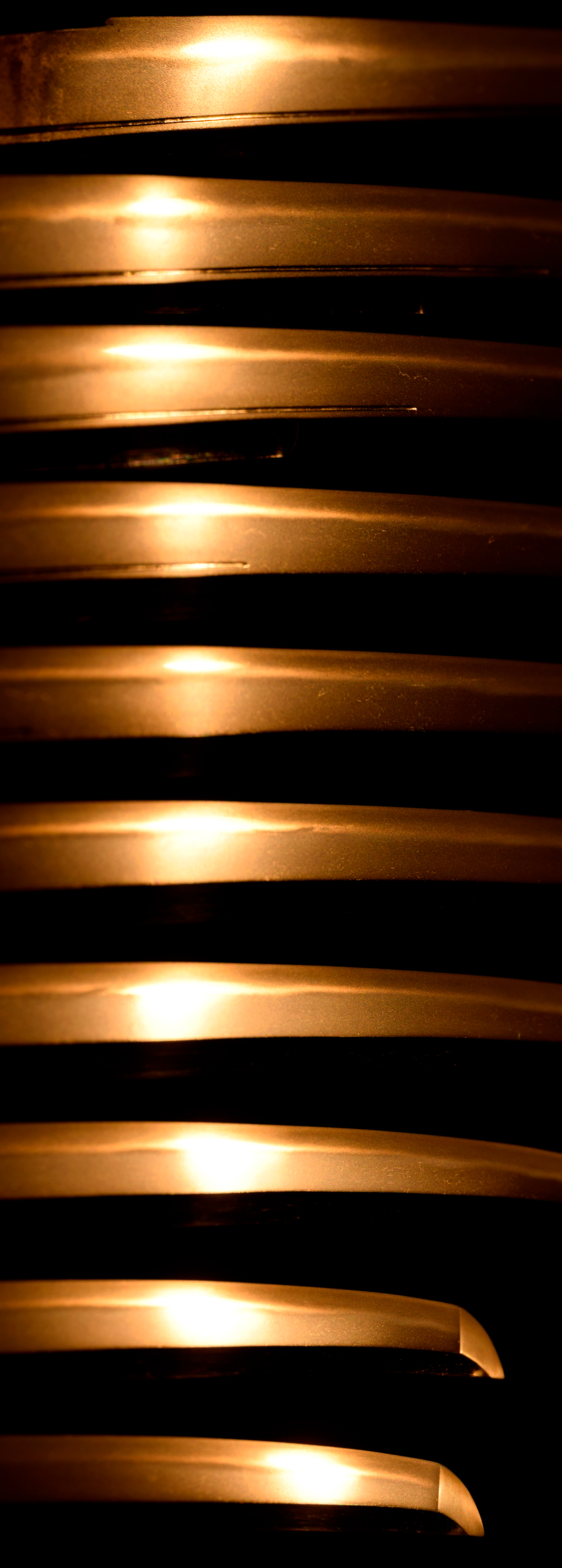
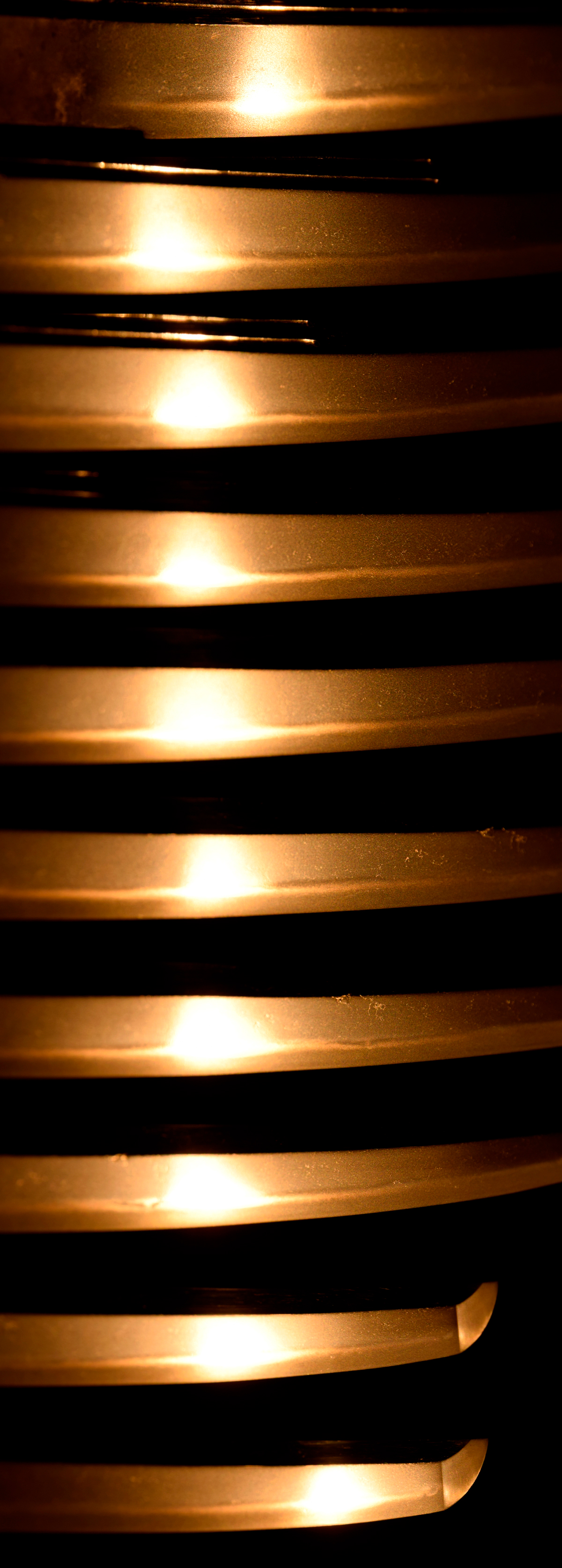
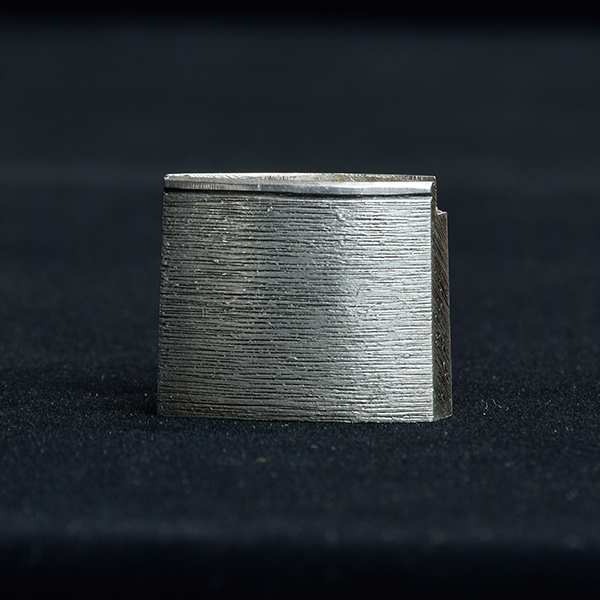
Wakimono · Etchu
34 pieces on the market now
Among the provincial lineages that carried the Yamato-den northward, the Uda school (宇多) of Etchu province holds a distinct place. Its origin lies in the late Kamakura period, when the monk-smith Kunimitsu, remembered as Ko-Nyudo Kunimitsu, migrated from Uda District in Yamato to Etchu around the close of the era. From this founder descended a long line of Kuni-named smiths; the reference registers carry Kunifusa and Kunimune as sons of the founder, Kunitsugu and Kunihisa among the generations that followed, the studio names recurring through the Oei, Hotoku, Bunmei and Tenbun eras down to the end of Muromachi and on into shinto times. The school worked the tanto (broad for its length, with little curvature) more readily than the tachi or uchigatana, and because its smiths individuate little, a signed Uda blade is read less as one hand than as the manner of its period. The school is identified first off the steel rather than the temper. The shared forging is an itame that runs and tends to stand, flowing toward masame and mixing mokume, with standing o-hada and ji-nie throughout; the steel turns whitish and at times blackish, so that a shirake-utsuri or faint bo-utsuri stands in the ji. Over this northern jigane the temper ranges from a chu-suguha opening shallowly into ko-notare and ko-midare to a vigorous gunome carrying pointed elements, ashi and yo entering, ko-nie well adhered along a tight nioiguchi. The Yamato activity of hotsure and kuichigai-ba names the old province along the habuchi, while kinsuji and sunagashi run through nearly every surviving blade.
From this base the corpus divides: a quieter Yamato-rooted suguha face, seen on the tanto; a Soshu-leaning midare face traced to Kunifusa's study under Etchu Norishige, in which the nie thickens and grows at times coarse with yubashiri and broadened yakihaba; and a refined register in which a compacted ko-itame gathers abundant ji-nie and a round, luminous nie scatters through the yakiba. Ko-Uda, the earlier work of the Nanbokucho and early Muromachi generations, reads cleaner and closer to its Yamato and Soshu models; the later Uda hands run coarser and more provincial in character. To kantei an Uda blade is to find its Yamato roots wearing a coarser northern character. The whitish, standing jigane with its masame tendency and shirake-utsuri returns the blade to the school when the temper alone might recall a Yamashiro or Soshu hand; a nie-laden example reads as Soshu at first glance and is brought home by the dark, standing steel and the nioiguchi that holds rather than glows. The best members close the distance to their models: Kunihisa, the Oei-era hand the published sources read against the founder, forged a ko-itame bright enough that the judges found his finest wakizashi and tanto all but mistakable for Rai Kunimitsu or Kunitsugu, while his standing itame and shirake-utsuri keep him within Uda. Kunimune and Kunitsugu carry the same two faces over the one northern steel, the dated and signed pieces (a Bunmei 11 katana, a Bunmei 17 yari) valued as research material for the school as much as for their make. Signed Uda blades are uncommon, so the school's standing rests heavily on mumei attributions read by jigane and temper. Provenance tends toward long, settled holding, with designated work resting in shrines, the Imperial Collection and museums rather than circulating, so that a signed Uda piece comes to a private collector only from time to time and with patience, a clear window onto how the Yamato tradition was carried into the northern provinces. Learn more →
| Smith | Era | Designated |
|---|---|---|
| Kunihisa國久 | 1394-1428 | 10 |
| Kunimune國宗 | 1429-1479 | 6 |
| Kunifusa國房 | 1455-1457 | 3 |
| Kunitsugu國次 | 1469-1487 | 3 |
| Tomotsugu友次 | 1381-1384 | 3 |
The Muromachi period (1392 to 1573)
Muromachi turned sword making into an industry: the uchigatana rose with massed infantry warfare, Osafune and Seki produced bundle swords beside custom orders, and the Ming trade carried Japanese blades abroad by the tens of thousands.
Certifies a genuine blade worth preserving: a signature confirmed correct, or, if unsigned, an era, province, and school that the NBTHK can reliably identify.
The NBTHK (Nihon Bijutsu Tōken Hozon Kyōkai, the Society for the Preservation of Japanese Art Swords) is a public-interest incorporated foundation founded in 1948 and supervised by Japan’s Agency for Cultural Affairs (Bunkachō); it is based at the Japanese Sword Museum in Tokyo. Its expert panels physically examine each submitted work (shinsa) and issue a certificate (kanteishō) ranking it by artistic and historical merit. NBTHK papers are the most widely recognized standard of authentication for Japanese swords and fittings.
NBTHK official siteReturns accepted within 3 days of delivery for defective items or significant discrepancies; customer bears return shipping and bank fees.
¥550,000
This katana is attributed to Tomotsugu of the Uda school, active during the early Muromachi period. It features a kiritsuke-mei 'Makoto' on the nakago-jiri, suggesting a deep loyalty from its former owner. The blade has a gentle sugata with a slightly extended kissaki, and a well-forged ko-itame hada mixed with mokume, showing a suguha hamon with nioi-deki.
Certificate reading — 無銘(宇多友次)
NihontoWatchkiritsuke-mei · Uda · Muromachi · nagasa 66.23cm · sori 1.55cm
Wakimono · Etchu
34 pieces on the market now
Among the provincial lineages that carried the Yamato-den northward, the Uda school (宇多) of Etchu province holds a distinct place. Its origin lies in the late Kamakura period, when the monk-smith Kunimitsu, remembered as Ko-Nyudo Kunimitsu, migrated from Uda District in Yamato to Etchu around the close of the era. From this founder descended a long line of Kuni-named smiths; the reference registers carry Kunifusa and Kunimune as sons of the founder, Kunitsugu and Kunihisa among the generations that followed, the studio names recurring through the Oei, Hotoku, Bunmei and Tenbun eras down to the end of Muromachi and on into shinto times. The school worked the tanto (broad for its length, with little curvature) more readily than the tachi or uchigatana, and because its smiths individuate little, a signed Uda blade is read less as one hand than as the manner of its period. The school is identified first off the steel rather than the temper. The shared forging is an itame that runs and tends to stand, flowing toward masame and mixing mokume, with standing o-hada and ji-nie throughout; the steel turns whitish and at times blackish, so that a shirake-utsuri or faint bo-utsuri stands in the ji. Over this northern jigane the temper ranges from a chu-suguha opening shallowly into ko-notare and ko-midare to a vigorous gunome carrying pointed elements, ashi and yo entering, ko-nie well adhered along a tight nioiguchi. The Yamato activity of hotsure and kuichigai-ba names the old province along the habuchi, while kinsuji and sunagashi run through nearly every surviving blade.
From this base the corpus divides: a quieter Yamato-rooted suguha face, seen on the tanto; a Soshu-leaning midare face traced to Kunifusa's study under Etchu Norishige, in which the nie thickens and grows at times coarse with yubashiri and broadened yakihaba; and a refined register in which a compacted ko-itame gathers abundant ji-nie and a round, luminous nie scatters through the yakiba. Ko-Uda, the earlier work of the Nanbokucho and early Muromachi generations, reads cleaner and closer to its Yamato and Soshu models; the later Uda hands run coarser and more provincial in character. To kantei an Uda blade is to find its Yamato roots wearing a coarser northern character. The whitish, standing jigane with its masame tendency and shirake-utsuri returns the blade to the school when the temper alone might recall a Yamashiro or Soshu hand; a nie-laden example reads as Soshu at first glance and is brought home by the dark, standing steel and the nioiguchi that holds rather than glows. The best members close the distance to their models: Kunihisa, the Oei-era hand the published sources read against the founder, forged a ko-itame bright enough that the judges found his finest wakizashi and tanto all but mistakable for Rai Kunimitsu or Kunitsugu, while his standing itame and shirake-utsuri keep him within Uda. Kunimune and Kunitsugu carry the same two faces over the one northern steel, the dated and signed pieces (a Bunmei 11 katana, a Bunmei 17 yari) valued as research material for the school as much as for their make. Signed Uda blades are uncommon, so the school's standing rests heavily on mumei attributions read by jigane and temper. Provenance tends toward long, settled holding, with designated work resting in shrines, the Imperial Collection and museums rather than circulating, so that a signed Uda piece comes to a private collector only from time to time and with patience, a clear window onto how the Yamato tradition was carried into the northern provinces. Learn more →
| Smith | Era | Designated |
|---|---|---|
| Kunihisa國久 | 1394-1428 | 10 |
| Kunimune國宗 | 1429-1479 | 6 |
| Kunifusa國房 | 1455-1457 | 3 |
| Kunitsugu國次 | 1469-1487 | 3 |
| Tomotsugu友次 | 1381-1384 | 3 |
The Muromachi period (1392 to 1573)
Muromachi turned sword making into an industry: the uchigatana rose with massed infantry warfare, Osafune and Seki produced bundle swords beside custom orders, and the Ming trade carried Japanese blades abroad by the tens of thousands.
Certifies a genuine blade worth preserving: a signature confirmed correct, or, if unsigned, an era, province, and school that the NBTHK can reliably identify.
The NBTHK (Nihon Bijutsu Tōken Hozon Kyōkai, the Society for the Preservation of Japanese Art Swords) is a public-interest incorporated foundation founded in 1948 and supervised by Japan’s Agency for Cultural Affairs (Bunkachō); it is based at the Japanese Sword Museum in Tokyo. Its expert panels physically examine each submitted work (shinsa) and issue a certificate (kanteishō) ranking it by artistic and historical merit. NBTHK papers are the most widely recognized standard of authentication for Japanese swords and fittings.
NBTHK official siteReturns accepted within 3 days of delivery for defective items or significant discrepancies; customer bears return shipping and bank fees.
¥550,000