Power sat in Kamakura, but taste was still made in Kyōto. The Awataguchi school’s pear-skin steel became a byword for perfection, and the Rai line supplied dignified tachi to the court, senior warriors, and the great temples alike.
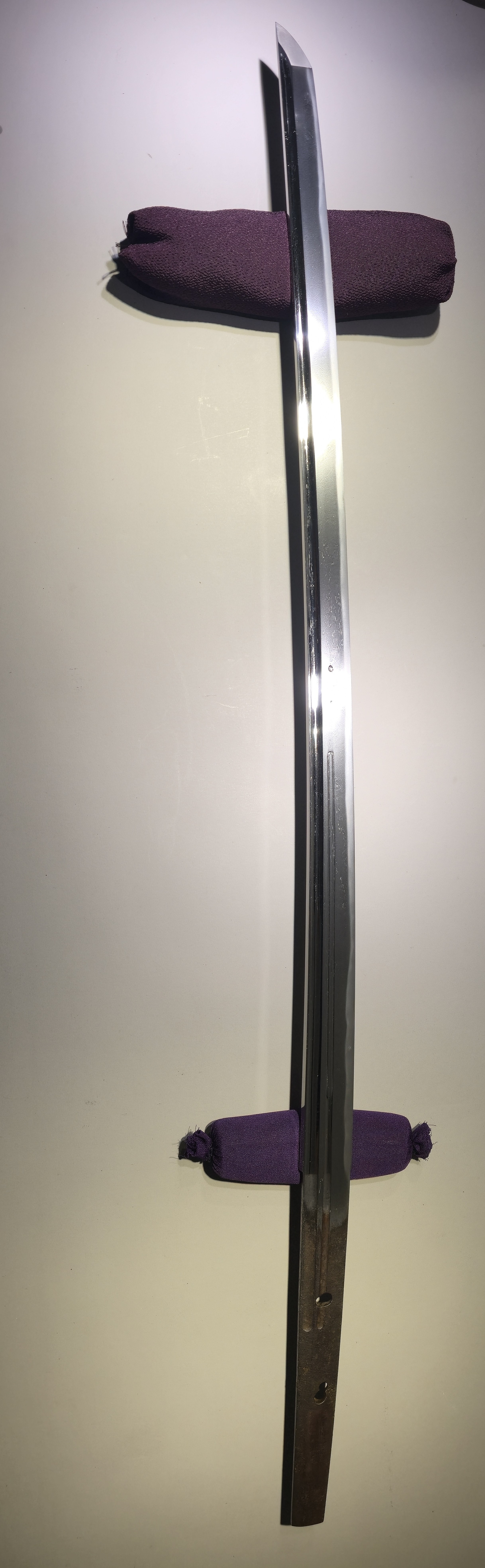
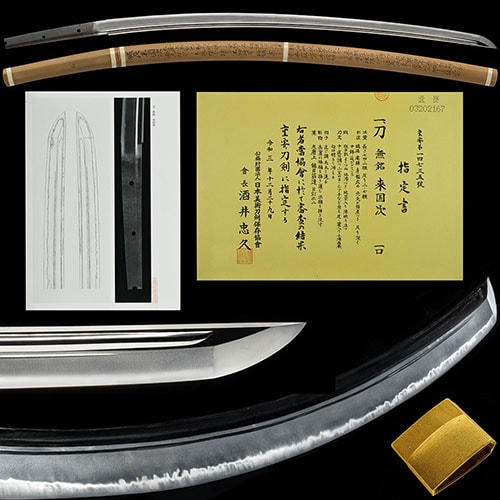
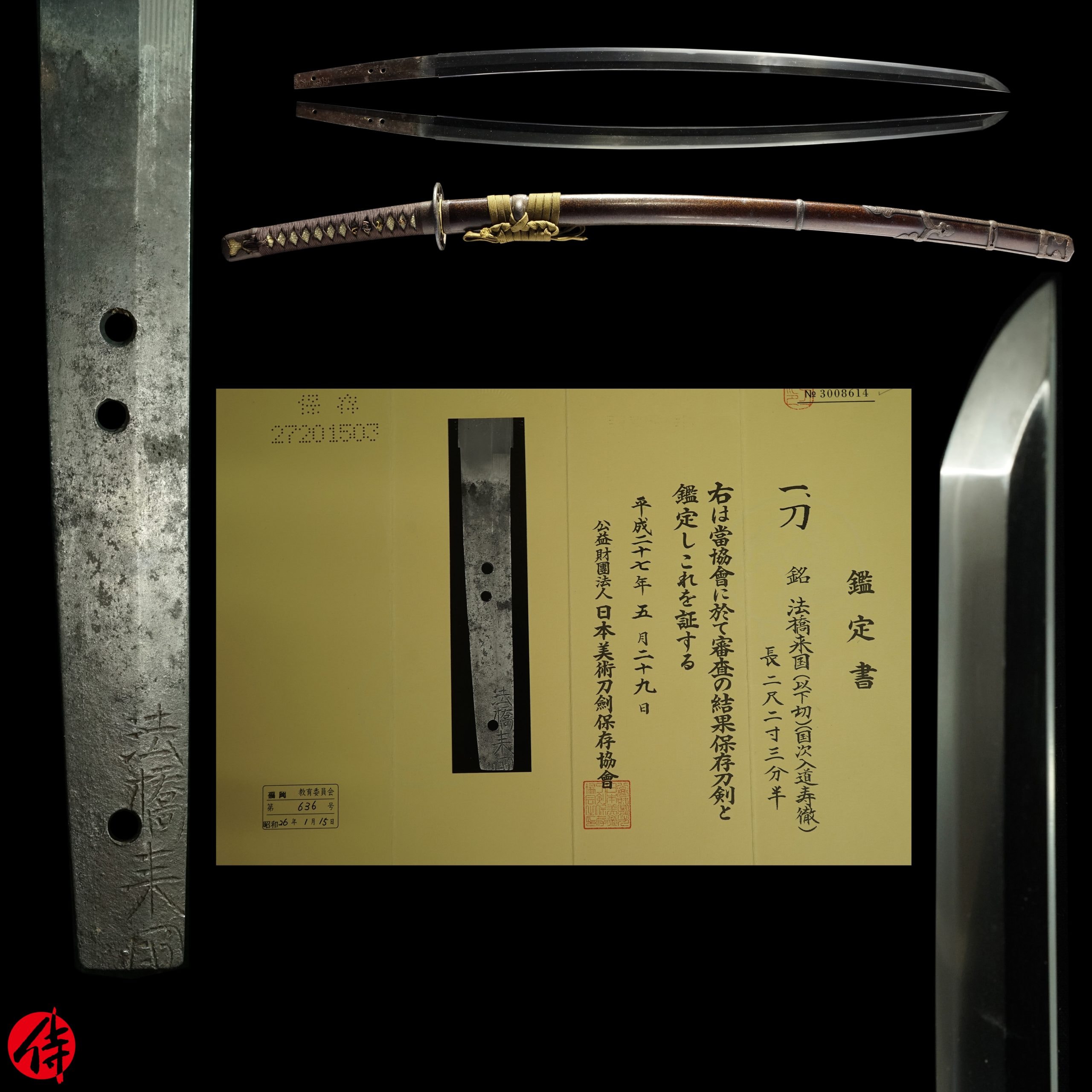
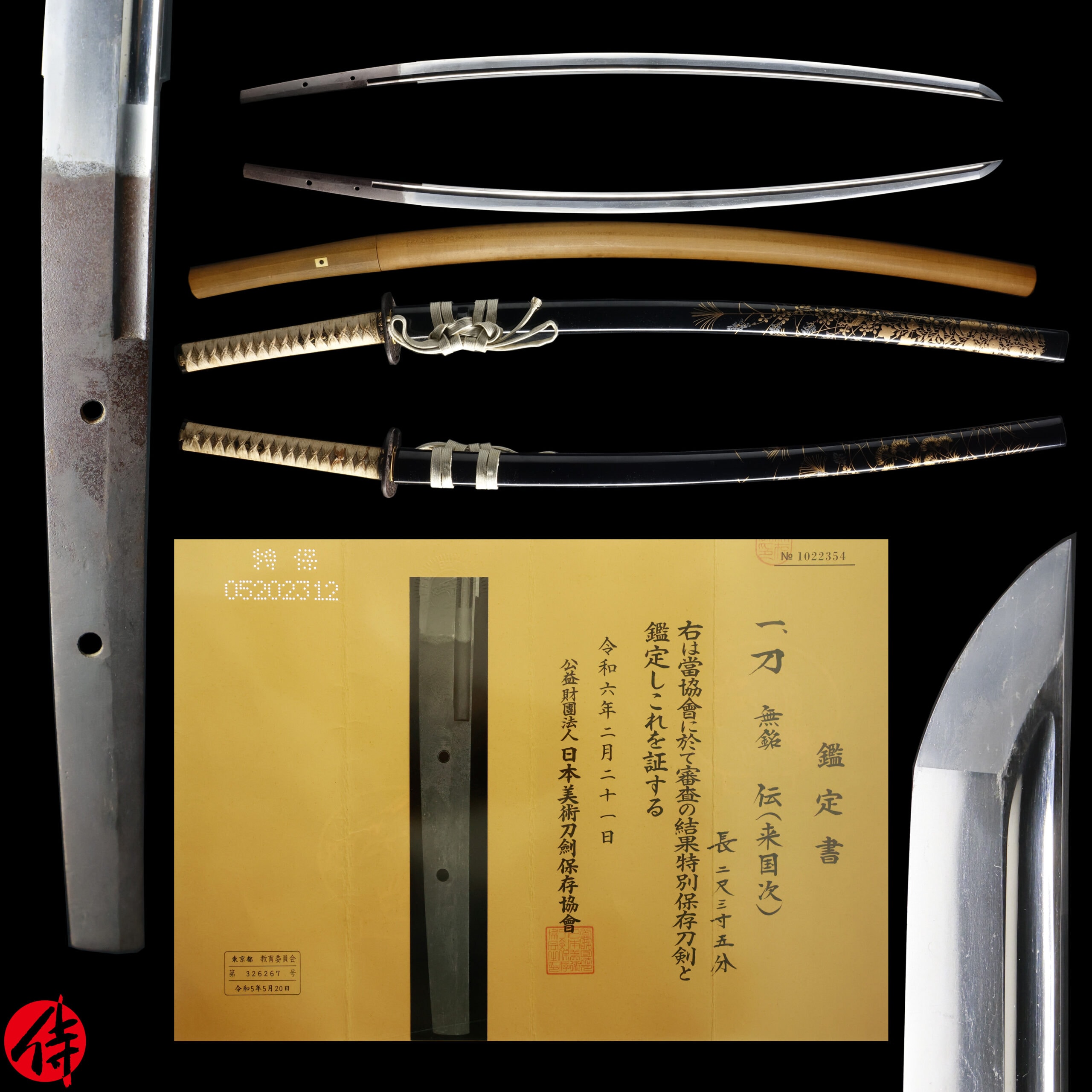
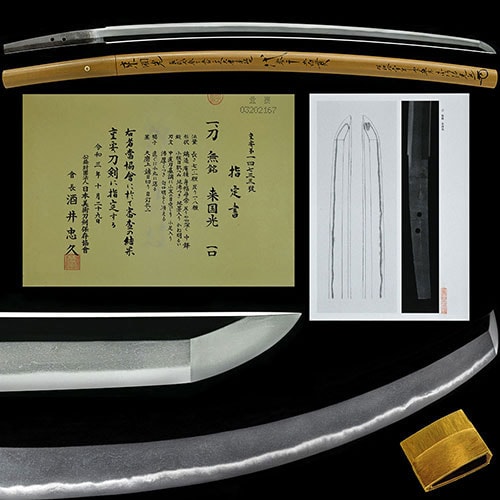
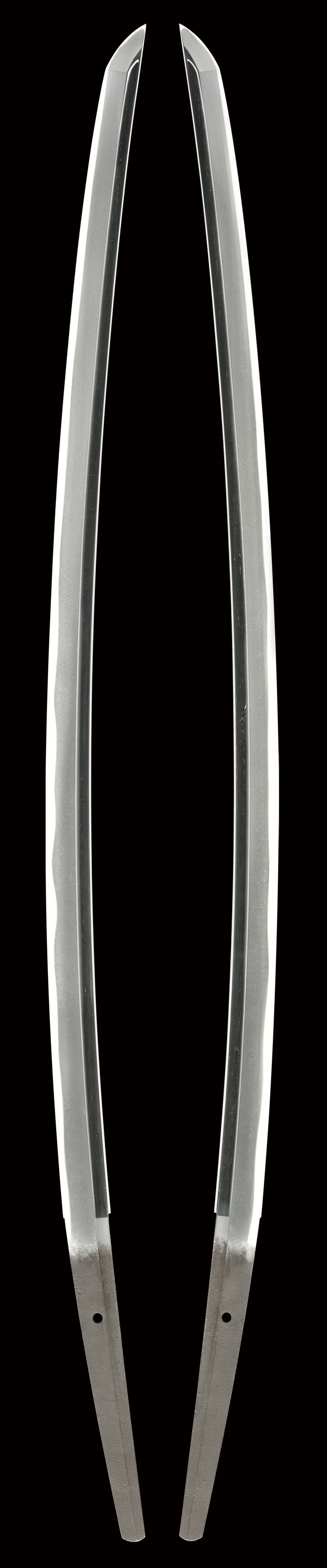
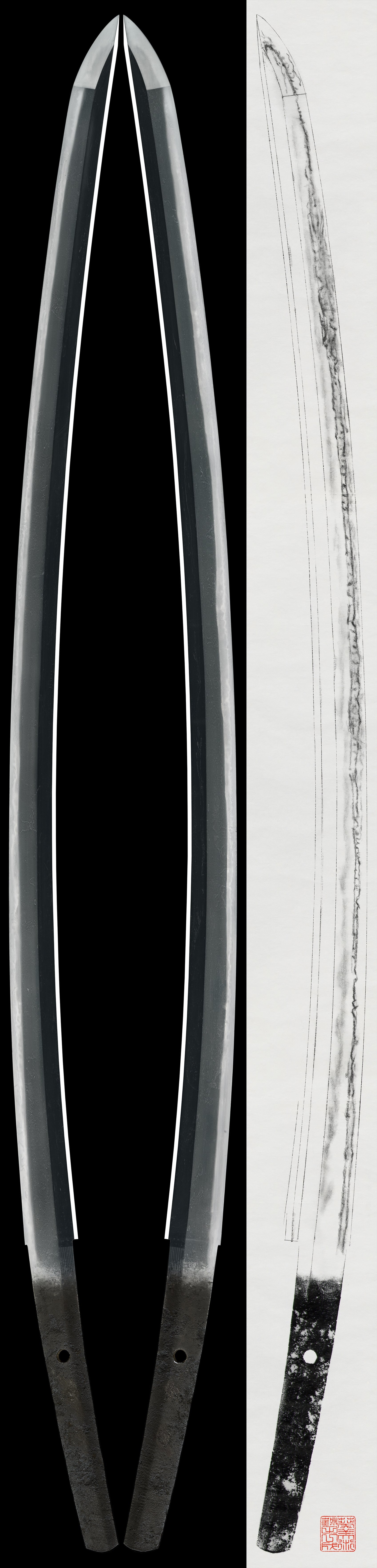
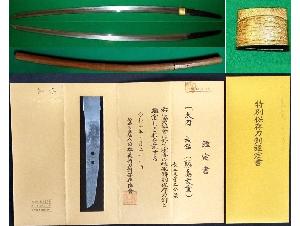
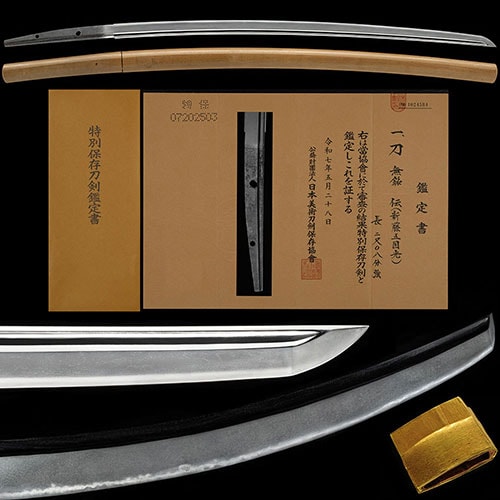
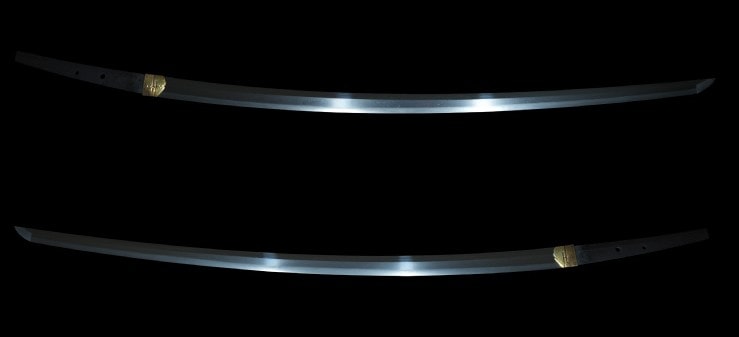
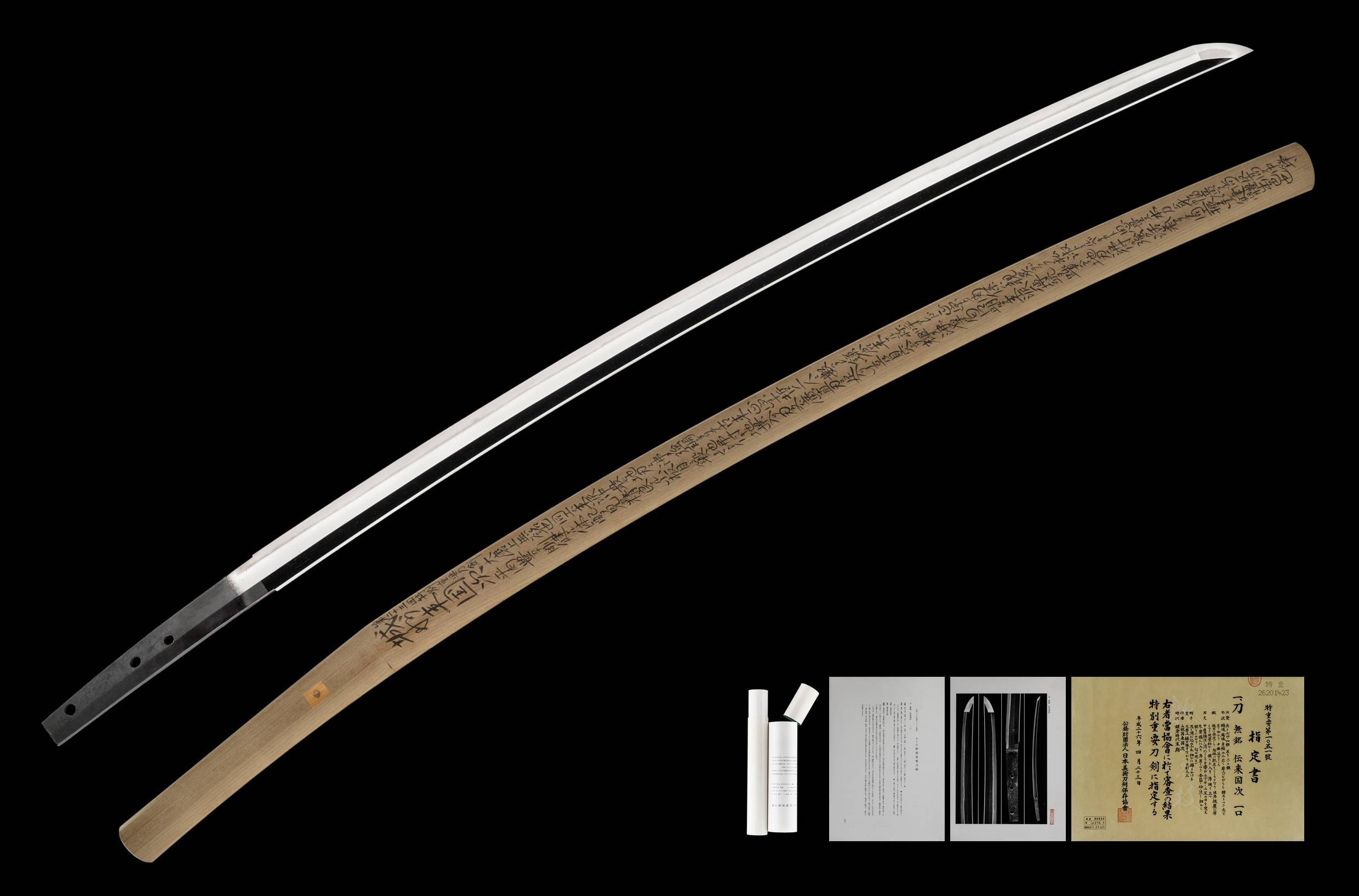
This is a rare katana by Rai Kunitsugu, a smith from the Rai School known for his nie-intensive work. It features the imposing shape of the late Kamakura period with a wide mihaba and koshizori. The blade is in strikingly healthy condition and comes with a custom koshirae currently in commission.
 NihontoWatch
mumei · Rai · Ocho (1311-1312) · nagasa 74.4cm · sori 2cm
Rai (Yamashiro) · Yamashiro · around 1311-1327
Fujishiro Jo-jo saku · Tōken Taikan top 5%
3 pieces on the market now
On the tanto recorded in the Meibutsu-cho as the Torikai Kunitsugu (鳥養国次), the NBTHK writes that the work of Rai Kunitsugu shows "the strongest nie of ji and ha within the whole Rai school"[[c:1]], and that single judgment carries the essence of the smith. The published sources place him at the very end of the Kamakura period, his activity reaching into the first years of Nanbokucho, where he stands beside Rai Kunimitsu, his slight senior, as one of the two masters who bring the Rai mainline to its close. His genealogy is unsettled across the published record: the usual account makes him a pupil of Rai Kunitoshi, one account a cousin of Rai Kunimitsu, others the son of Kunitoshi or Kunimitsu's younger brother. From of old he has been counted among the Ten Brilliant Pupils of Masamune (正宗十哲) and carries the name "Kamakura-Rai"[[c:2]], a name the published sources explain by the manner of the work itself.
That manner is a hamon the earlier Rai never showed: a midare-dominant temper of notare mixed with gunome, the nie thick and bright, kinsuji and sunagashi sweeping through the ha, yubashiri drifting along the habuchi. The kitae sets thick ji-nie over itame and weaves in frequent chikei, in places standing slightly. The recurring verdict of the published sources is that this is a workmanship "strongly shaped by the influence of Soshu-den"[[c:3]], and the comment of Honma recorded against another of his Juyo Bijutsuhin tanto holds the same line, that within the Rai school the nie of his ji and ha is conspicuously strong. Even an absence points the same way: compared with general Rai work, his ji shows fewer of the soft rai-hada patches typical of the school. The boshi of this register runs midare-komi or with a pointed tendency, often swept with hakikake.
Beneath the Soshu color the jigane stays Rai. The forging in his finest pieces is a packed ko-itame, the ji-nie fine and thick, chikei entering finely, and a pale nie-utsuri rising over the ji, the anchors that keep the work Kyoto. His most numerous surviving class is the wide osuriage mumei katana, often in a deep wa-zori with the chu-kissaki extended. On these blades a suguha-toned base mixes ko-gunome and ko-choji; ashi and yo enter long, thick and without pause; the nie sits deep into the ha, kinsuji and sunagashi run, and nijuba-like yubashiri plays at the edge. The deciding point is stated outright in the published sources: where the ji and ha are unusually bright and the nie strong, "if one fixes on the point that the nie-ashi stand out within the ha, an attribution to Rai Kunitsugu is judged proper"[[c:4]]. One Juyo katana is described as reading "just as though the midare he tempers on his tanto had been rendered on a long blade"[[c:5]].
His signed work is nearly all tanto and ko-wakizashi; the published sources repeat that surviving tachi are scarce, and that ken and yari survive only in the rarest examples. The tanto are signed below the mekugi-ana at the center of the nakago with a large, thick-chiseled three-character mei, while the slender signed tachi with high koshizori carry an elongated, finely chiseled, smaller signature that the NBTHK reads as his early hand, valued for showing the change of his manner over time. A minority of works keeps the older Rai style unaltered, a quiet suguha with ko-choji, the nie at ordinary strength; the tanto handed down in the Uesugi house is called "a calm register that holds faithfully to the Rai tradition"[[c:6]], and such work is noted as extremely rare for him. Dated pieces are nearly absent: the ken of Karyaku 2 (1327) is his earliest surviving date, worked, as with other smiths of the period, in Yamato-den; a tanto of Shokei 1 (1332) also survives, and Gentoku dates are known only from the old sword albums. On the tradition that he studied under Masamune the NBTHK itself is careful: since Kunimitsu too at times shows the same nie-strong manner, it writes, to affirm the pupil legend from the style alone would be "premature"[[c:7]].
The comparison that fixes his place is drawn against Rai Kunimitsu. Kunimitsu also left midare work beside his traditional suguha, but in his case, the published sources observe, the suguha far outnumber the midare, and "Kunitsugu is the opposite"[[c:8]]. One Juyo text goes further, judging that he carries the nie even beyond the nie-emphasized midareba of his senior, a manner the earlier Rai never had. Among the forebears of the line, Kuniyuki, Niji Kunitoshi, Rai Kunitoshi and Kunimitsu, he is the one who retains the least of the traditional Kyoto style, which is exactly why the old Masamune-pupil account drew attention. The judges also leave him room: various atypical pieces (変り出来) are acknowledged within his work, and his few signed tachi differ among themselves. With Kunimitsu he carries the Rai mainline to its close in early Nanbokucho, and the Kamakura-Rai name marks his position as the school's Soshu-facing edge.
Fujishiro grades him Jo-jo saku. One of his blades is a National Treasure and four are Important Cultural Properties, patrimony preserved wholly outside the market; beneath them stand fourteen Tokubetsu Juyo and forty Juyo, fifty-four blades in those two tiers, out of sixty-five designated works on record, twenty-nine of them signed against thirty-six unsigned. The Torikai Kunitsugu itself was certified Juyo Bijutsuhin in 1933. The provenance roll is of the first rank: the published sources single out the famous tachi handed down in the former shogunal house and in the Maeda house; another tachi, recorded in the Tokugawa Jikki, was presented by the shogun Tokugawa Tsunayoshi to Yanagisawa Yoshiyasu in Genroku 15 (1702); a katana passed from Matsudaira Nobuyasu, Ieyasu's eldest son, to his retainer Hiraiwa Chikayoshi; and tanto descended in the Uesugi, Asano, Okubo, Nabeshima and Ikoma houses and in the Yamauchi of Tosa, whose blade went to the shogunal house as a memorial gift in Kyoho 5 (1720). Of recorded whereabouts today, examples rest in the Tokyo National Museum, the Sano Art Museum and the Hikone Castle Museum. For the collector the picture is that of a major Rai master whose designated works are held far more often than they move: a mumei katana or wakizashi of the Juyo tier appears from time to time, a signed tanto only rarely, and a piece of the order of the Torikai Kunitsugu can only be awaited as an event.
Where Kunitsugu stands among comparable artisans: across all of nihontō, and within tradition, era, and period. The tiers (Foremost · Leading · Major · Notable) weigh official designations from the NBTHK and Japan's Agency for Cultural Affairs, together with historical honors of lasting repute such as the Sansaku and Meibutsu-chō.
Select a lens to see how it's measured.
Years he was demonstrably active, proven by signed-and-dated blades
Yamashiro-den · Yamashiro
45 pieces on the market now
A calm, lustrous steel is the first thing the connoisseur's eye is meant to settle on with the Rai school: a finely forged ko-itame (小板目) worked until it is dense and refined, over which the ji-nie lies thickly in minute particles, fine chikei (地景) enter, and a nie-utsuri rises in the ji. This bright, refined jihada, the surface the trade reads as Rai-hada when its softer, looser patches intrude, is the constant beneath every manner the house produced. The school took shape in Kyoto in the mid-Kamakura period around the workshop of Rai Kuniyuki (來國行), the de facto founder of the line, whose chronology is reckoned from the Koan 1 (1278) tachi of his transmitted son. From Kuniyuki the Yamashiro-den tradition of late Kamakura was built, carried by Niji Kunitoshi, the two-character 國俊, traditionally his son and the nearest of the house to his hand; by the three-character Rai Kunitoshi, the first to crown his name with the character Rai, a practice all who followed took from him; and onward through Rai Kunimitsu (來國光), Rai Kunitsugu (來國次) and the lesser names Kunizane, Tomokuni, Kunihide and Mitsukane into the early Nanbokucho period. Whether the two Kunitoshi are one smith or two remains the classic open question of the school, argued from a span of dated work running about forty years from Koan 1 to Genko 1 (1321). What unites the house is a temper of restraint and activity at once, its life carried in the nie rather than in the height of the pattern. Against Kuniyuki's wide, suguha-toned ha and against the refined chu- or hoso-suguha of the three-character line, the smiths mix ko-choji, ko-gunome and small midare; ashi and yo enter densely, often as the Kyoto-style kyo-sakaashi (京逆足) that slants back toward the nakago, the opposite of the Bizen direction; the nioiguchi runs deep and bright, ko-nie attaches thickly, and kinsuji and sunagashi move through the body of the ha. The boshi is the school's most misjudged trait: a ko-maru drawn out by hakikake, the brushed nie of the point continuing the work of the ji below, often falling into midare-komi with a pointing tip. Muneyaki along the back recurs often enough that the records name it a habit of the Rai hand, and carving in the groove, suken or gomabashi with an added side hi, is a practice the texts call peculiar to Rai work. The strength of the nie within the ha, the utsuri rising as a nie-utsuri, and the kyo-sakaashi are precisely the marks that part Niji Kunitoshi's choji-dominant midare, which the old books said resembles the Bizen Ichimonji, from the Ichimonji itself.
Where the early masters keep this calm Kyoto register, the late line bends toward Soshu-den: Kunitsugu, counted among the Ten Brilliant Pupils of Masamune and named Kamakura-Rai, shows the strongest nie of ji and ha in the whole school, a notare mixed with gunome the earlier Rai never had. For a collector the house style is the recognition tool. An unsigned, o-suriage katana settles to Rai when the packed ko-itame, the fine nie over it, the standing utsuri and the kyo-sakaashi read together; the named smith is then fixed by degree. Niji Kunitoshi and the three-character Kunitoshi, both graded Sai-jo saku by Fujishiro, anchor the canon, the latter unusually approachable because his signed work is abundant and roughly half of it tanto, late Yamashiro work in its purest form. Kunimitsu, the most prolific and most versatile of the house, gives the impression of surpassing his father in force; Kunitsugu, graded Jo-jo saku, is the Soshu-facing edge whose signed tachi are scarce. Mitsukane, the Chudo Rai who withdrew to forge on Mt. Hiei, stands apart as the strong pole, his ji-nie laid thicker than Kunitoshi's or Kunimitsu's and likened upward to Awataguchi Yoshimitsu; the smaller Kunizane, Tomokuni and Kunihide carry the jigane a step into the Nanbokucho. The provenance roll is of the first rank, with blades worn by Ieyasu and held beside the Honjo Masamune, meibutsu such as the Aizen Kunitoshi, the Torikai Kunitsugu and the Midare-Mitsukane, and descent through the Owari and Kishu Tokugawa, the Maeda, Uesugi and Shimazu houses. Much sits locked as National Treasure and patrimony, yet the Juyo tier of the major names, and the whole record of the minor hands, remains a goal a serious collector can actually reach. Learn more →
| Smith | Era | Designated |
|---|---|---|
| Kuniyuki國行 | 1259-1260 | 125 |
| Kunitoshi國俊 | 1278-1288 | 79 |
| Kunitsugu國次 | 1311-1327 | 65 |
| Kunimitsu國光 | 1326-1351 | 259 |
| Kunitoshi國俊 | 1288-1319 | 196 |
Yamashiro in the Kamakura period
Power sat in Kamakura, but taste was still made in Kyōto. The Awataguchi school’s pear-skin steel became a byword for perfection, and the Rai line supplied dignified tachi to the court, senior warriors, and the great temples alike.
The NBTHK’s highest grade, reserved for the rare Jūyō blades of exceptional artistry, condition, and historical value, judged on par with a nationally designated Important Cultural Property (Jūyō Bunkazai).
Only 1,211 swords have ever reached Tokubetsu Jūyō, about 1 in 2,064 registered blades.
The NBTHK (Nihon Bijutsu Tōken Hozon Kyōkai, the Society for the Preservation of Japanese Art Swords) is a public-interest incorporated foundation founded in 1948 and supervised by Japan’s Agency for Cultural Affairs (Bunkachō); it is based at the Japanese Sword Museum in Tokyo. Its expert panels physically examine each submitted work (shinsa) and issue a certificate (kanteishō) ranking it by artistic and historical merit. NBTHK papers are the most widely recognized standard of authentication for Japanese swords and fittings.
NBTHK official siteAll swords come with a three-day inspection period beginning from the date of delivery. If not satisfied, the sword may be returned within this period for a full refund of the purchase price. Outside of this period, all sales are final. Swords purchased on a layaway payment plan are not eligible for the three-day inspection period.
This is a rare katana by Rai Kunitsugu, a smith from the Rai School known for his nie-intensive work. It features the imposing shape of the late Kamakura period with a wide mihaba and koshizori. The blade is in strikingly healthy condition and comes with a custom koshirae currently in commission.
NihontoWatchmumei · Rai · Ocho (1311-1312) · nagasa 74.4cm · sori 2cm
Rai (Yamashiro) · Yamashiro · around 1311-1327
Fujishiro Jo-jo saku · Tōken Taikan top 5%
3 pieces on the market now
On the tanto recorded in the Meibutsu-cho as the Torikai Kunitsugu (鳥養国次), the NBTHK writes that the work of Rai Kunitsugu shows "the strongest nie of ji and ha within the whole Rai school"[[c:1]], and that single judgment carries the essence of the smith. The published sources place him at the very end of the Kamakura period, his activity reaching into the first years of Nanbokucho, where he stands beside Rai Kunimitsu, his slight senior, as one of the two masters who bring the Rai mainline to its close. His genealogy is unsettled across the published record: the usual account makes him a pupil of Rai Kunitoshi, one account a cousin of Rai Kunimitsu, others the son of Kunitoshi or Kunimitsu's younger brother. From of old he has been counted among the Ten Brilliant Pupils of Masamune (正宗十哲) and carries the name "Kamakura-Rai"[[c:2]], a name the published sources explain by the manner of the work itself.
That manner is a hamon the earlier Rai never showed: a midare-dominant temper of notare mixed with gunome, the nie thick and bright, kinsuji and sunagashi sweeping through the ha, yubashiri drifting along the habuchi. The kitae sets thick ji-nie over itame and weaves in frequent chikei, in places standing slightly. The recurring verdict of the published sources is that this is a workmanship "strongly shaped by the influence of Soshu-den"[[c:3]], and the comment of Honma recorded against another of his Juyo Bijutsuhin tanto holds the same line, that within the Rai school the nie of his ji and ha is conspicuously strong. Even an absence points the same way: compared with general Rai work, his ji shows fewer of the soft rai-hada patches typical of the school. The boshi of this register runs midare-komi or with a pointed tendency, often swept with hakikake.
Beneath the Soshu color the jigane stays Rai. The forging in his finest pieces is a packed ko-itame, the ji-nie fine and thick, chikei entering finely, and a pale nie-utsuri rising over the ji, the anchors that keep the work Kyoto. His most numerous surviving class is the wide osuriage mumei katana, often in a deep wa-zori with the chu-kissaki extended. On these blades a suguha-toned base mixes ko-gunome and ko-choji; ashi and yo enter long, thick and without pause; the nie sits deep into the ha, kinsuji and sunagashi run, and nijuba-like yubashiri plays at the edge. The deciding point is stated outright in the published sources: where the ji and ha are unusually bright and the nie strong, "if one fixes on the point that the nie-ashi stand out within the ha, an attribution to Rai Kunitsugu is judged proper"[[c:4]]. One Juyo katana is described as reading "just as though the midare he tempers on his tanto had been rendered on a long blade"[[c:5]].
His signed work is nearly all tanto and ko-wakizashi; the published sources repeat that surviving tachi are scarce, and that ken and yari survive only in the rarest examples. The tanto are signed below the mekugi-ana at the center of the nakago with a large, thick-chiseled three-character mei, while the slender signed tachi with high koshizori carry an elongated, finely chiseled, smaller signature that the NBTHK reads as his early hand, valued for showing the change of his manner over time. A minority of works keeps the older Rai style unaltered, a quiet suguha with ko-choji, the nie at ordinary strength; the tanto handed down in the Uesugi house is called "a calm register that holds faithfully to the Rai tradition"[[c:6]], and such work is noted as extremely rare for him. Dated pieces are nearly absent: the ken of Karyaku 2 (1327) is his earliest surviving date, worked, as with other smiths of the period, in Yamato-den; a tanto of Shokei 1 (1332) also survives, and Gentoku dates are known only from the old sword albums. On the tradition that he studied under Masamune the NBTHK itself is careful: since Kunimitsu too at times shows the same nie-strong manner, it writes, to affirm the pupil legend from the style alone would be "premature"[[c:7]].
The comparison that fixes his place is drawn against Rai Kunimitsu. Kunimitsu also left midare work beside his traditional suguha, but in his case, the published sources observe, the suguha far outnumber the midare, and "Kunitsugu is the opposite"[[c:8]]. One Juyo text goes further, judging that he carries the nie even beyond the nie-emphasized midareba of his senior, a manner the earlier Rai never had. Among the forebears of the line, Kuniyuki, Niji Kunitoshi, Rai Kunitoshi and Kunimitsu, he is the one who retains the least of the traditional Kyoto style, which is exactly why the old Masamune-pupil account drew attention. The judges also leave him room: various atypical pieces (変り出来) are acknowledged within his work, and his few signed tachi differ among themselves. With Kunimitsu he carries the Rai mainline to its close in early Nanbokucho, and the Kamakura-Rai name marks his position as the school's Soshu-facing edge.
Fujishiro grades him Jo-jo saku. One of his blades is a National Treasure and four are Important Cultural Properties, patrimony preserved wholly outside the market; beneath them stand fourteen Tokubetsu Juyo and forty Juyo, fifty-four blades in those two tiers, out of sixty-five designated works on record, twenty-nine of them signed against thirty-six unsigned. The Torikai Kunitsugu itself was certified Juyo Bijutsuhin in 1933. The provenance roll is of the first rank: the published sources single out the famous tachi handed down in the former shogunal house and in the Maeda house; another tachi, recorded in the Tokugawa Jikki, was presented by the shogun Tokugawa Tsunayoshi to Yanagisawa Yoshiyasu in Genroku 15 (1702); a katana passed from Matsudaira Nobuyasu, Ieyasu's eldest son, to his retainer Hiraiwa Chikayoshi; and tanto descended in the Uesugi, Asano, Okubo, Nabeshima and Ikoma houses and in the Yamauchi of Tosa, whose blade went to the shogunal house as a memorial gift in Kyoho 5 (1720). Of recorded whereabouts today, examples rest in the Tokyo National Museum, the Sano Art Museum and the Hikone Castle Museum. For the collector the picture is that of a major Rai master whose designated works are held far more often than they move: a mumei katana or wakizashi of the Juyo tier appears from time to time, a signed tanto only rarely, and a piece of the order of the Torikai Kunitsugu can only be awaited as an event.
Where Kunitsugu stands among comparable artisans: across all of nihontō, and within tradition, era, and period. The tiers (Foremost · Leading · Major · Notable) weigh official designations from the NBTHK and Japan's Agency for Cultural Affairs, together with historical honors of lasting repute such as the Sansaku and Meibutsu-chō.
Select a lens to see how it's measured.
Years he was demonstrably active, proven by signed-and-dated blades
Yamashiro-den · Yamashiro
45 pieces on the market now
A calm, lustrous steel is the first thing the connoisseur's eye is meant to settle on with the Rai school: a finely forged ko-itame (小板目) worked until it is dense and refined, over which the ji-nie lies thickly in minute particles, fine chikei (地景) enter, and a nie-utsuri rises in the ji. This bright, refined jihada, the surface the trade reads as Rai-hada when its softer, looser patches intrude, is the constant beneath every manner the house produced. The school took shape in Kyoto in the mid-Kamakura period around the workshop of Rai Kuniyuki (來國行), the de facto founder of the line, whose chronology is reckoned from the Koan 1 (1278) tachi of his transmitted son. From Kuniyuki the Yamashiro-den tradition of late Kamakura was built, carried by Niji Kunitoshi, the two-character 國俊, traditionally his son and the nearest of the house to his hand; by the three-character Rai Kunitoshi, the first to crown his name with the character Rai, a practice all who followed took from him; and onward through Rai Kunimitsu (來國光), Rai Kunitsugu (來國次) and the lesser names Kunizane, Tomokuni, Kunihide and Mitsukane into the early Nanbokucho period. Whether the two Kunitoshi are one smith or two remains the classic open question of the school, argued from a span of dated work running about forty years from Koan 1 to Genko 1 (1321). What unites the house is a temper of restraint and activity at once, its life carried in the nie rather than in the height of the pattern. Against Kuniyuki's wide, suguha-toned ha and against the refined chu- or hoso-suguha of the three-character line, the smiths mix ko-choji, ko-gunome and small midare; ashi and yo enter densely, often as the Kyoto-style kyo-sakaashi (京逆足) that slants back toward the nakago, the opposite of the Bizen direction; the nioiguchi runs deep and bright, ko-nie attaches thickly, and kinsuji and sunagashi move through the body of the ha. The boshi is the school's most misjudged trait: a ko-maru drawn out by hakikake, the brushed nie of the point continuing the work of the ji below, often falling into midare-komi with a pointing tip. Muneyaki along the back recurs often enough that the records name it a habit of the Rai hand, and carving in the groove, suken or gomabashi with an added side hi, is a practice the texts call peculiar to Rai work. The strength of the nie within the ha, the utsuri rising as a nie-utsuri, and the kyo-sakaashi are precisely the marks that part Niji Kunitoshi's choji-dominant midare, which the old books said resembles the Bizen Ichimonji, from the Ichimonji itself.
Where the early masters keep this calm Kyoto register, the late line bends toward Soshu-den: Kunitsugu, counted among the Ten Brilliant Pupils of Masamune and named Kamakura-Rai, shows the strongest nie of ji and ha in the whole school, a notare mixed with gunome the earlier Rai never had. For a collector the house style is the recognition tool. An unsigned, o-suriage katana settles to Rai when the packed ko-itame, the fine nie over it, the standing utsuri and the kyo-sakaashi read together; the named smith is then fixed by degree. Niji Kunitoshi and the three-character Kunitoshi, both graded Sai-jo saku by Fujishiro, anchor the canon, the latter unusually approachable because his signed work is abundant and roughly half of it tanto, late Yamashiro work in its purest form. Kunimitsu, the most prolific and most versatile of the house, gives the impression of surpassing his father in force; Kunitsugu, graded Jo-jo saku, is the Soshu-facing edge whose signed tachi are scarce. Mitsukane, the Chudo Rai who withdrew to forge on Mt. Hiei, stands apart as the strong pole, his ji-nie laid thicker than Kunitoshi's or Kunimitsu's and likened upward to Awataguchi Yoshimitsu; the smaller Kunizane, Tomokuni and Kunihide carry the jigane a step into the Nanbokucho. The provenance roll is of the first rank, with blades worn by Ieyasu and held beside the Honjo Masamune, meibutsu such as the Aizen Kunitoshi, the Torikai Kunitsugu and the Midare-Mitsukane, and descent through the Owari and Kishu Tokugawa, the Maeda, Uesugi and Shimazu houses. Much sits locked as National Treasure and patrimony, yet the Juyo tier of the major names, and the whole record of the minor hands, remains a goal a serious collector can actually reach. Learn more →
| Smith | Era | Designated |
|---|---|---|
| Kuniyuki國行 | 1259-1260 | 125 |
| Kunitoshi國俊 | 1278-1288 | 79 |
| Kunitsugu國次 | 1311-1327 | 65 |
| Kunimitsu國光 | 1326-1351 | 259 |
| Kunitoshi國俊 | 1288-1319 | 196 |
Yamashiro in the Kamakura period
Power sat in Kamakura, but taste was still made in Kyōto. The Awataguchi school’s pear-skin steel became a byword for perfection, and the Rai line supplied dignified tachi to the court, senior warriors, and the great temples alike.
The NBTHK’s highest grade, reserved for the rare Jūyō blades of exceptional artistry, condition, and historical value, judged on par with a nationally designated Important Cultural Property (Jūyō Bunkazai).
Only 1,211 swords have ever reached Tokubetsu Jūyō, about 1 in 2,064 registered blades.
The NBTHK (Nihon Bijutsu Tōken Hozon Kyōkai, the Society for the Preservation of Japanese Art Swords) is a public-interest incorporated foundation founded in 1948 and supervised by Japan’s Agency for Cultural Affairs (Bunkachō); it is based at the Japanese Sword Museum in Tokyo. Its expert panels physically examine each submitted work (shinsa) and issue a certificate (kanteishō) ranking it by artistic and historical merit. NBTHK papers are the most widely recognized standard of authentication for Japanese swords and fittings.
NBTHK official siteAll swords come with a three-day inspection period beginning from the date of delivery. If not satisfied, the sword may be returned within this period for a full refund of the purchase price. Outside of this period, all sales are final. Swords purchased on a layaway payment plan are not eligible for the three-day inspection period.