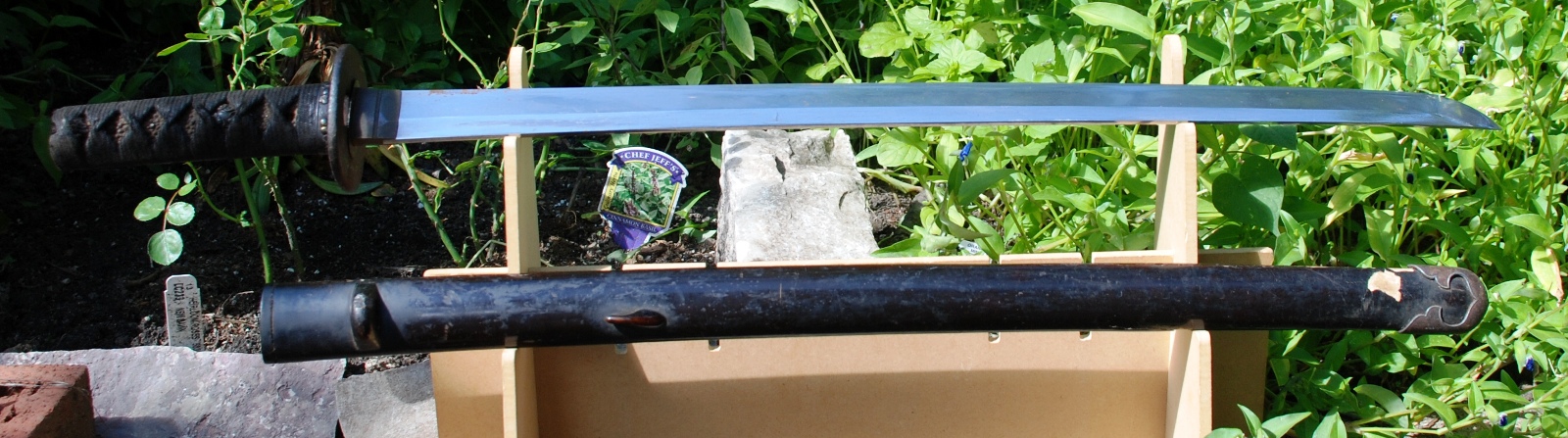
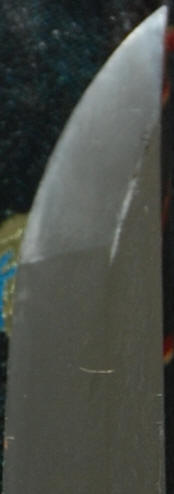
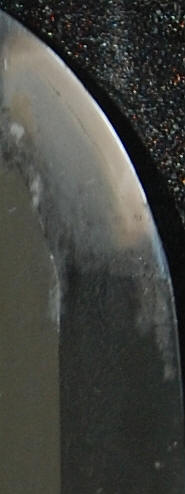
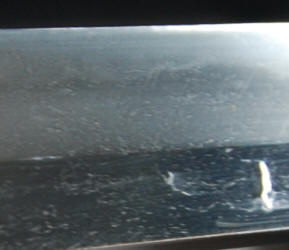
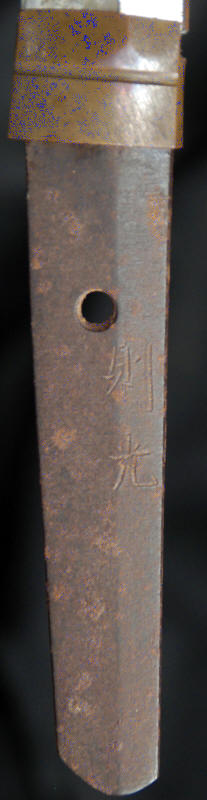
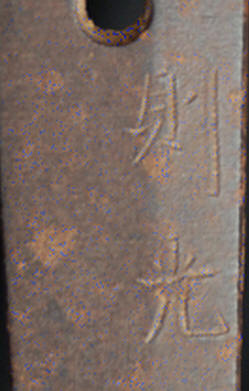
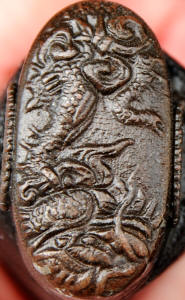
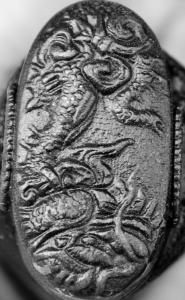
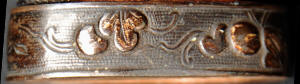
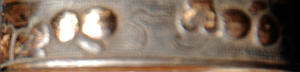
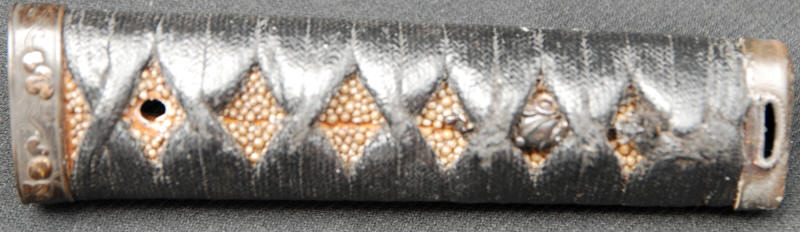
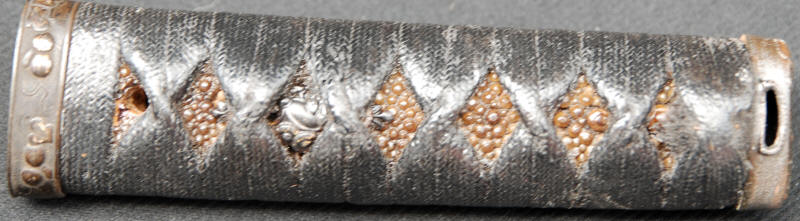
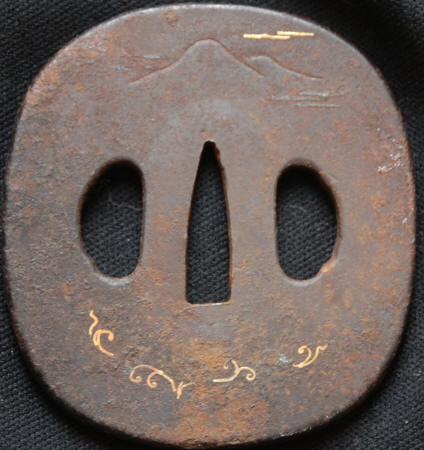
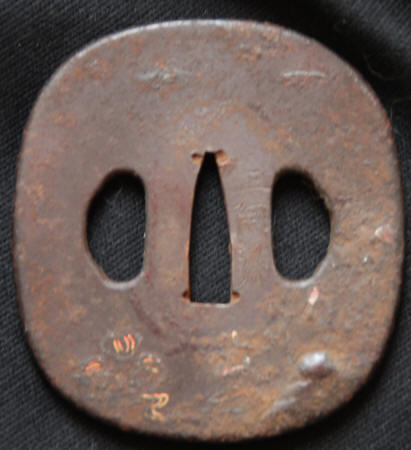
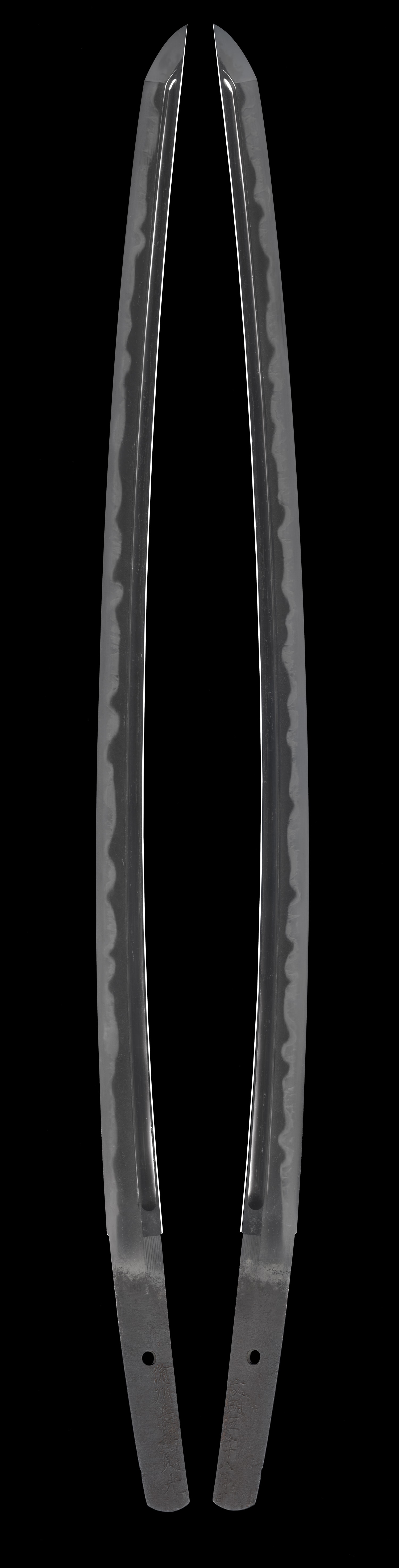
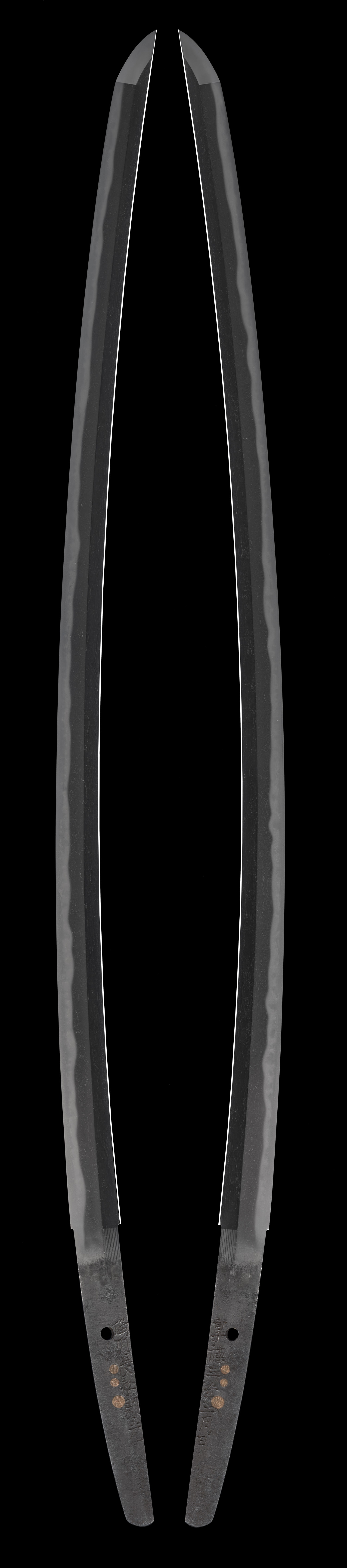
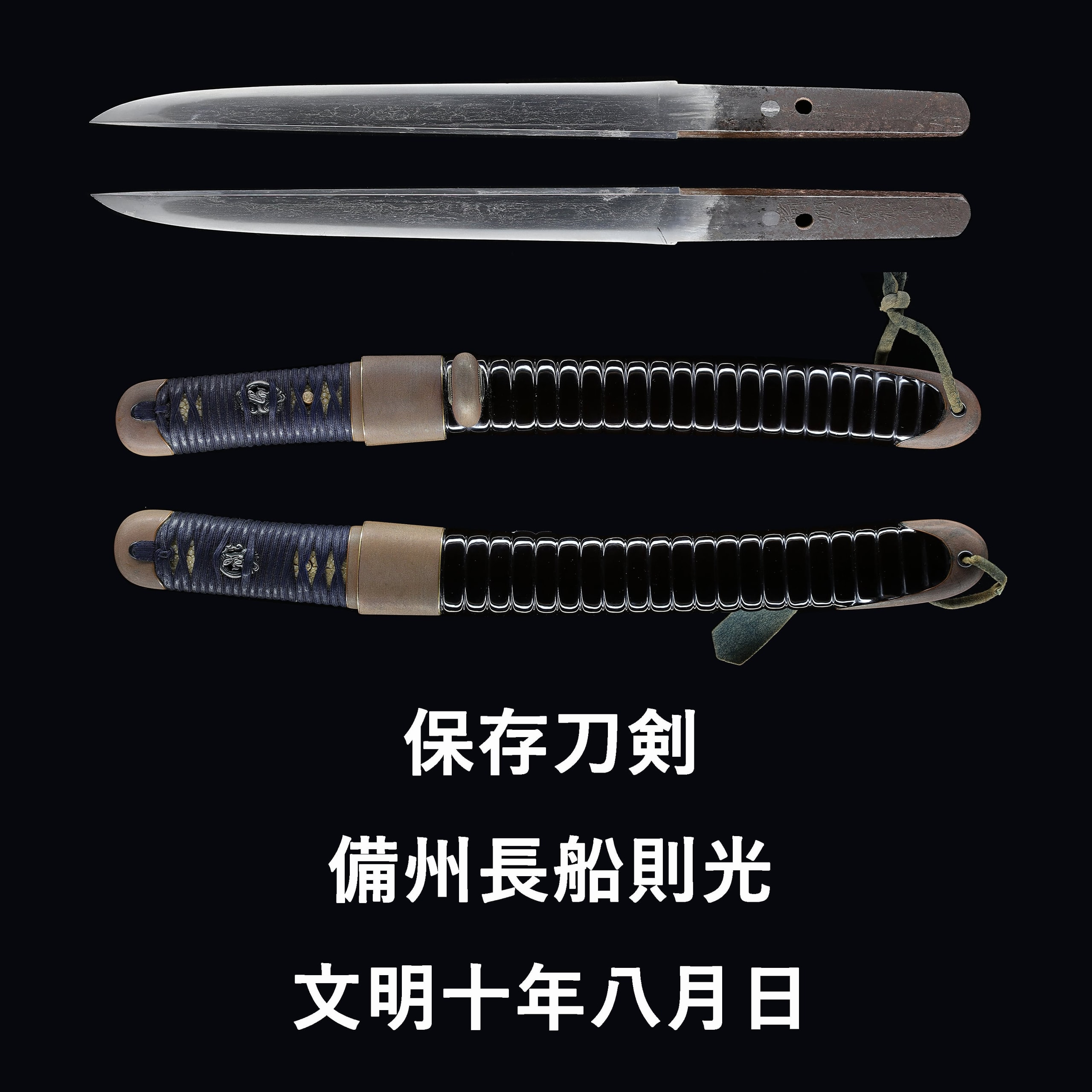
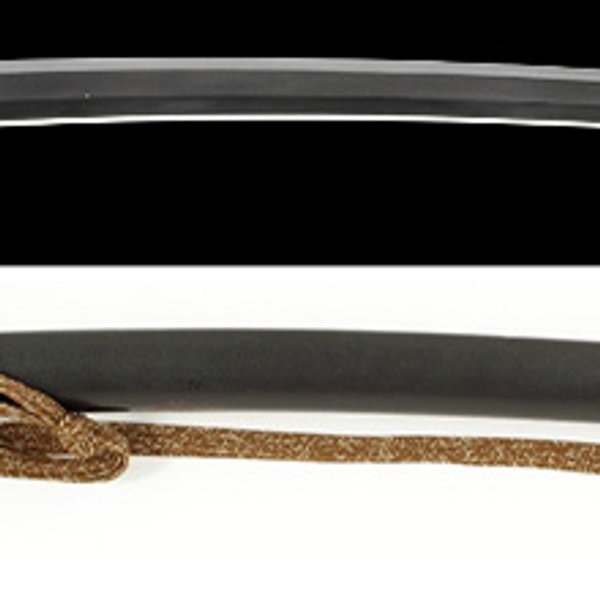
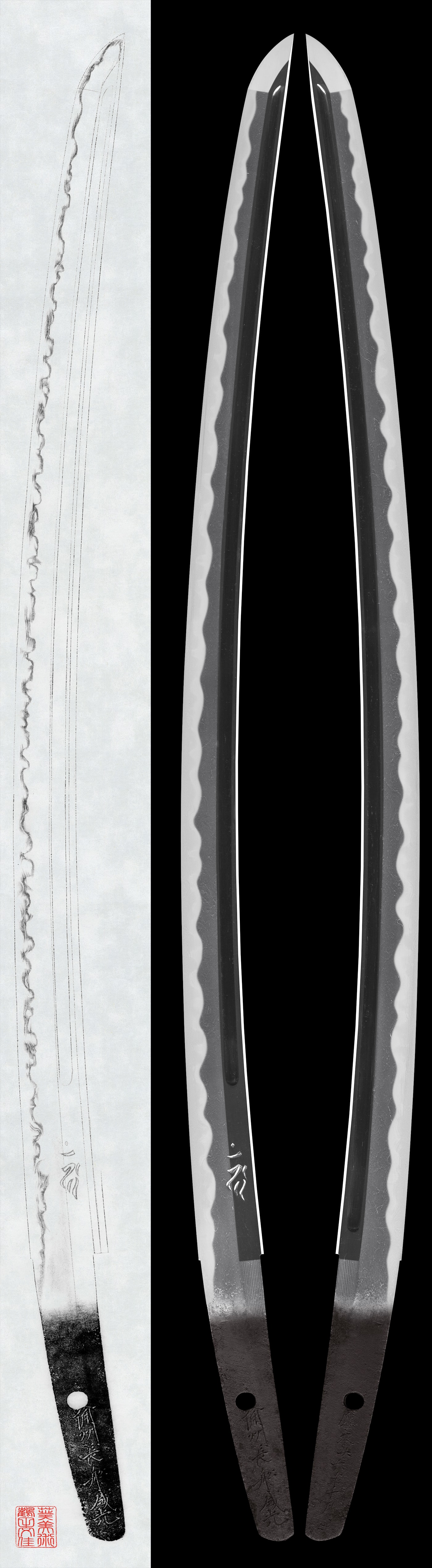
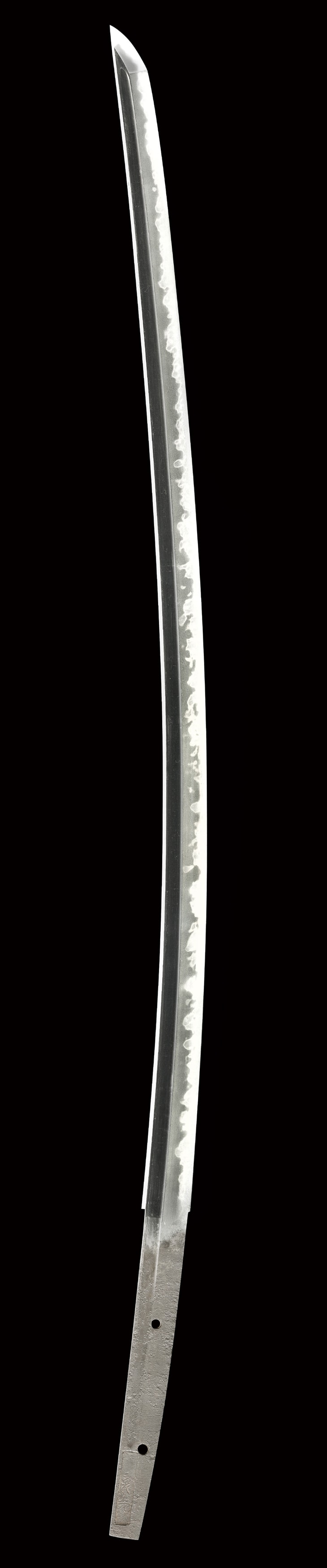
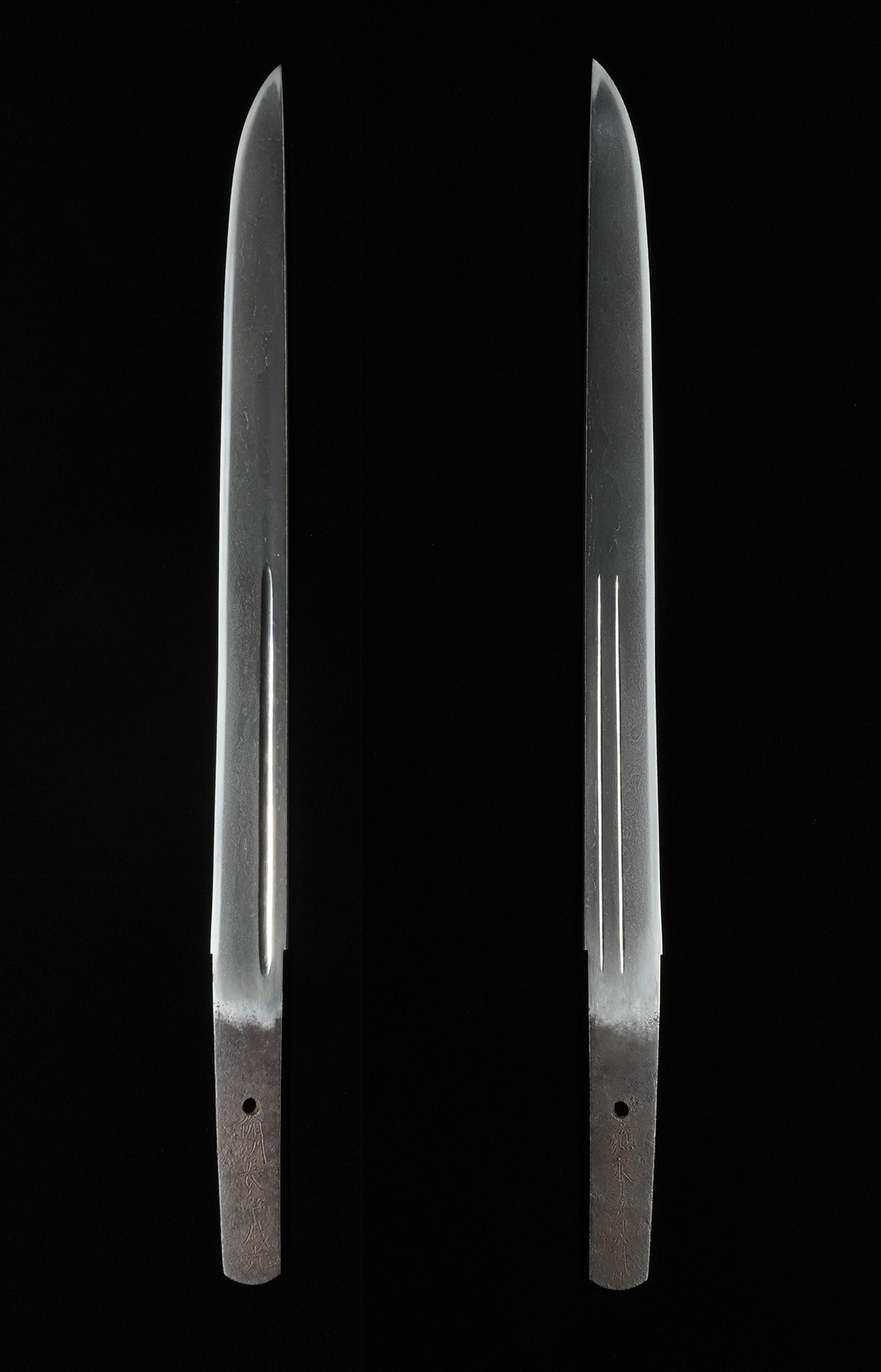
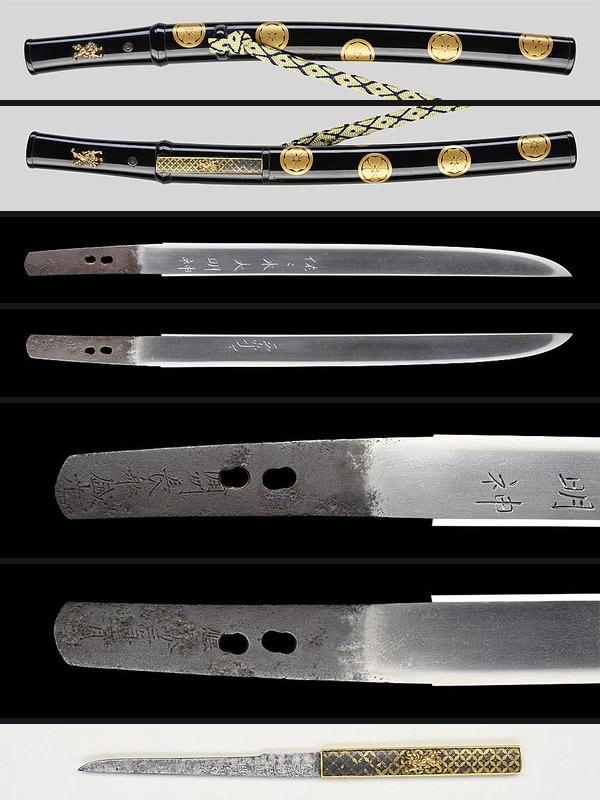
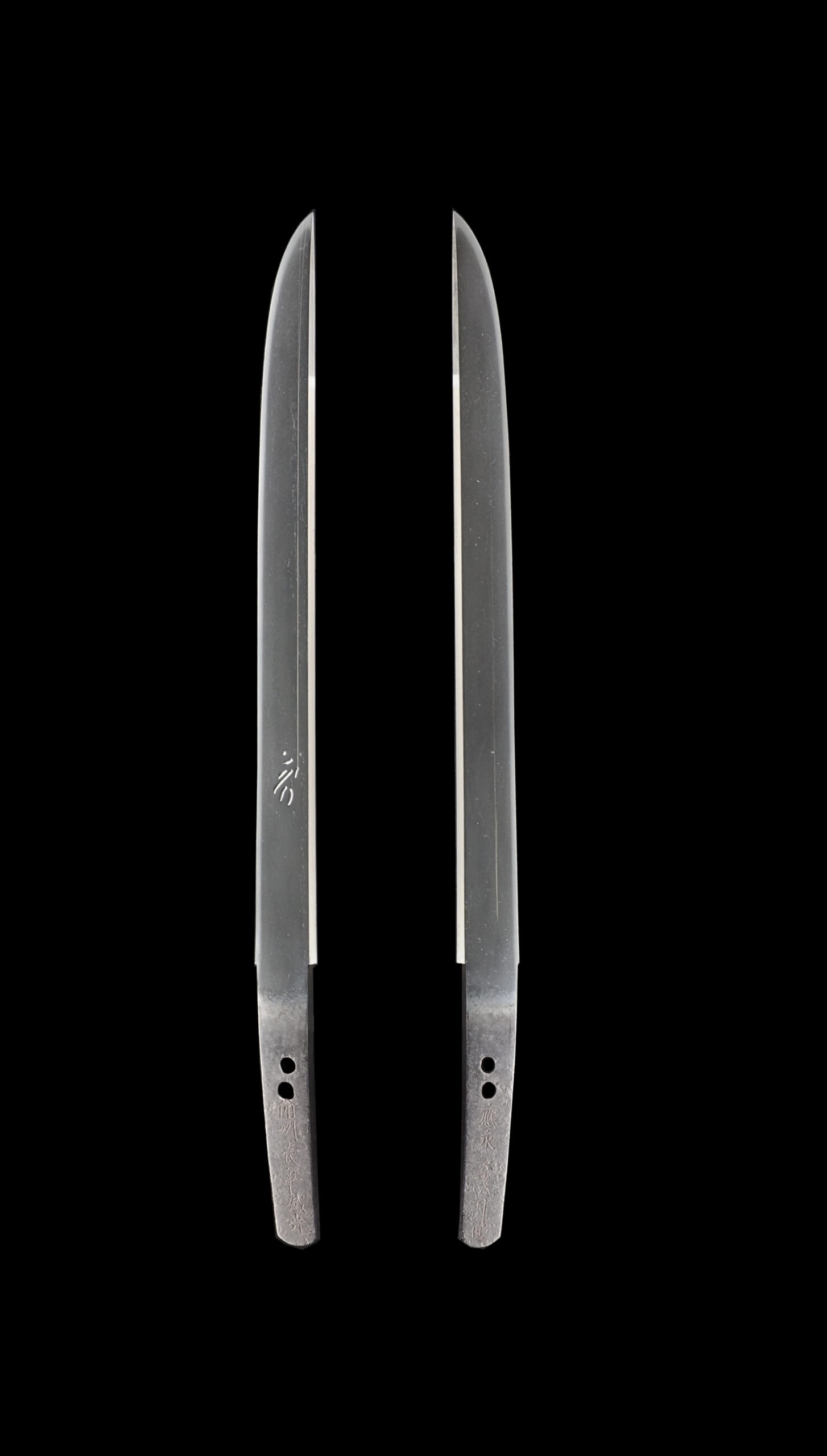
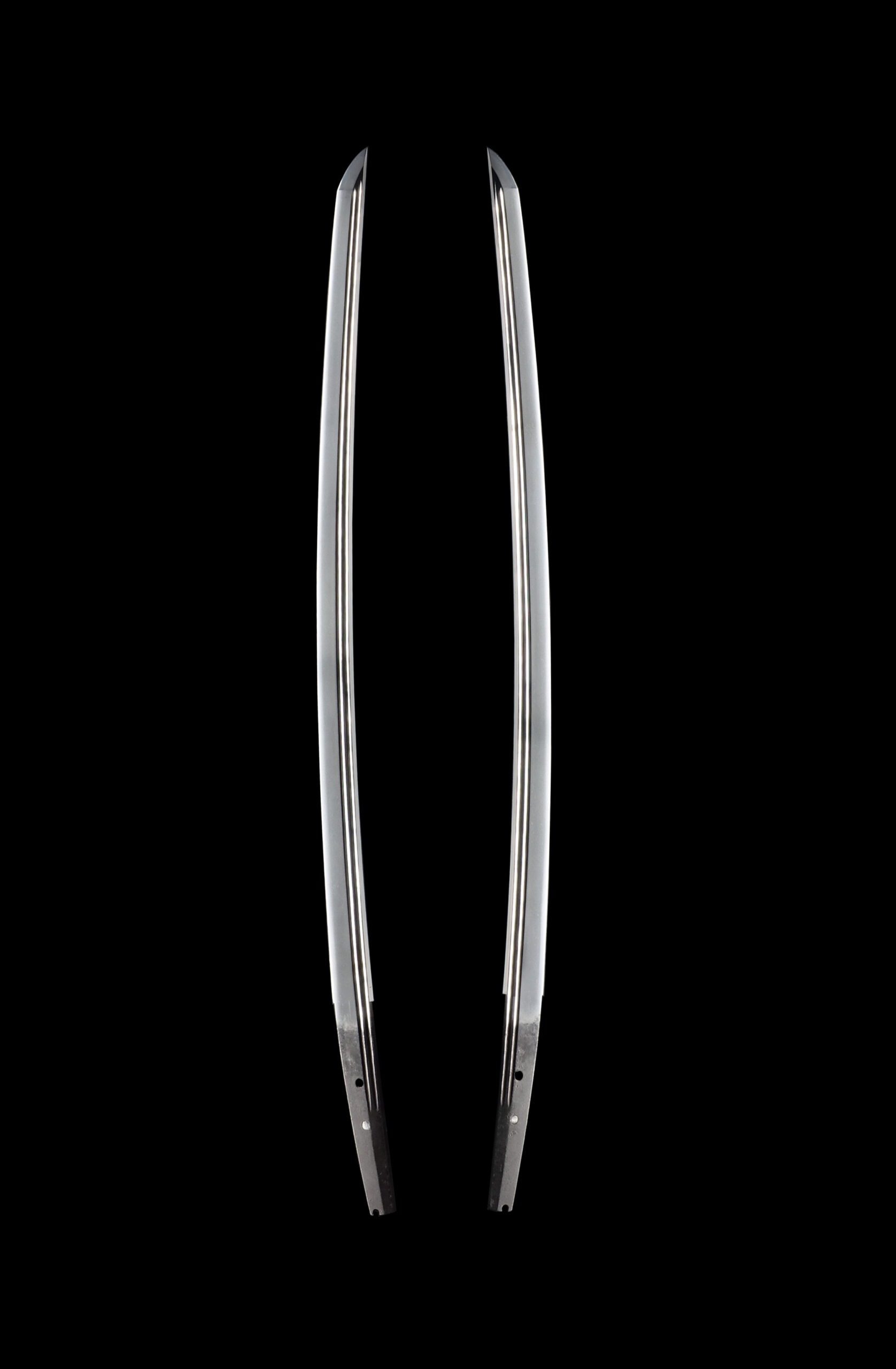
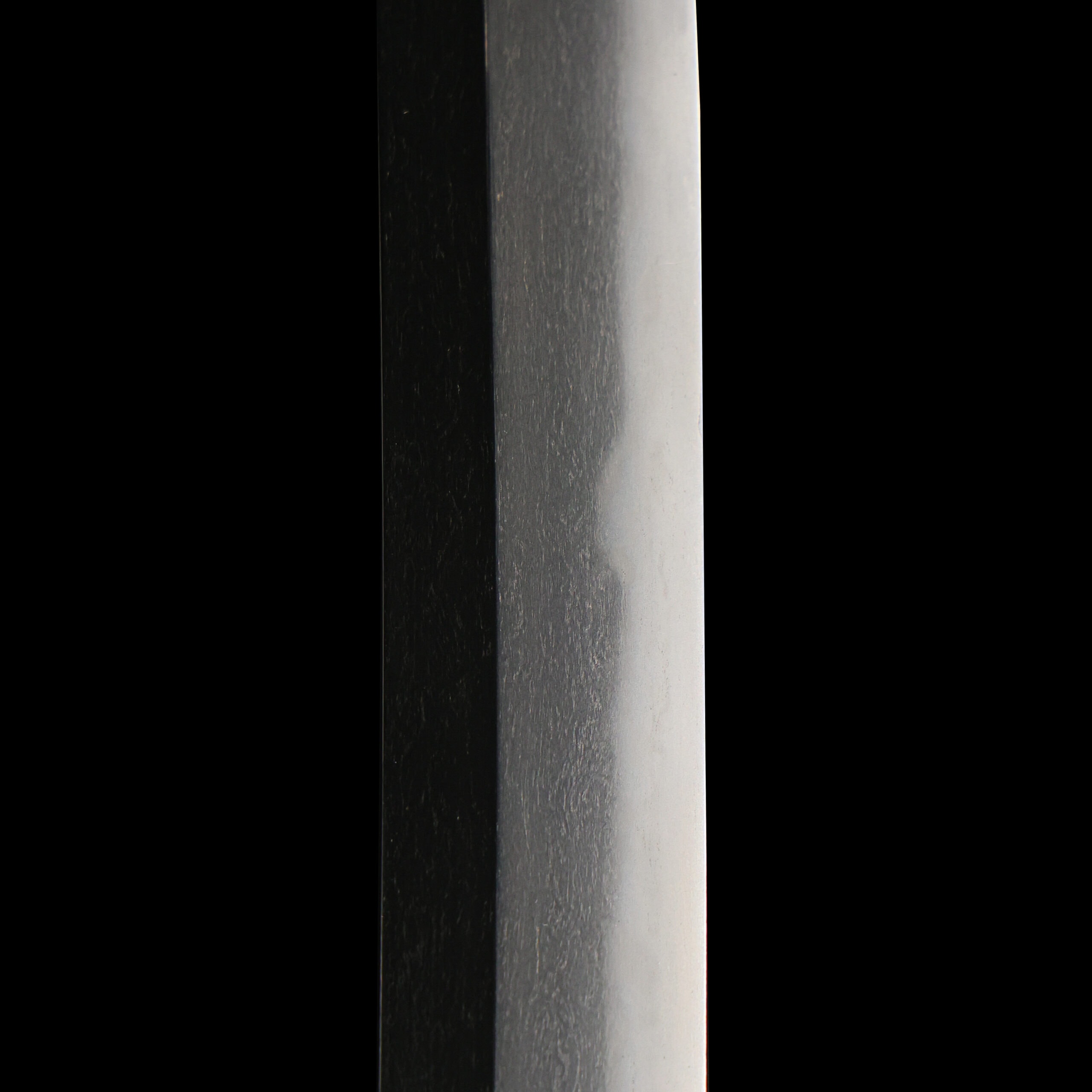
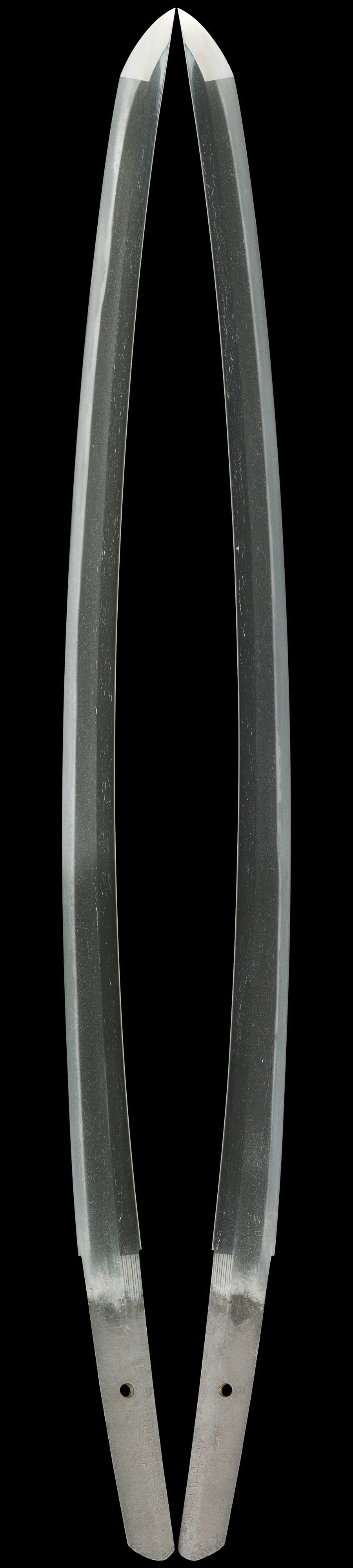
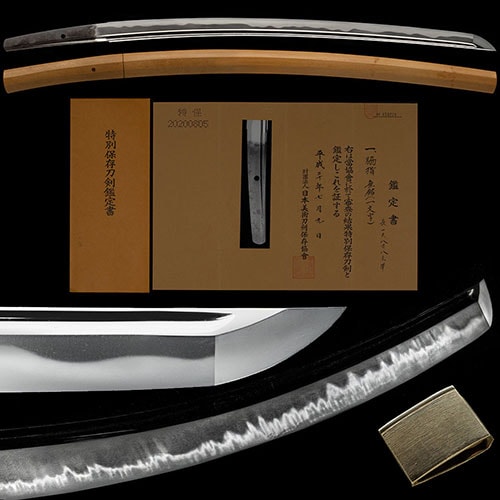
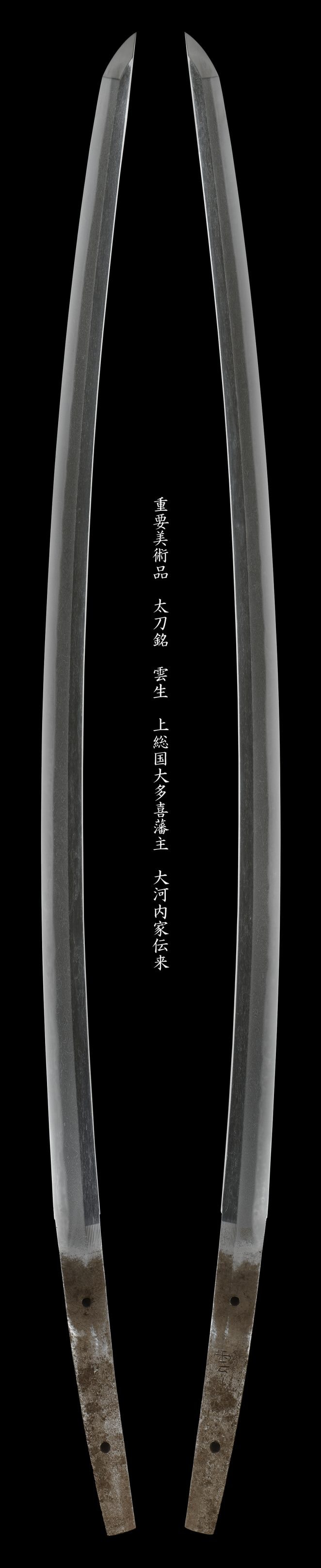
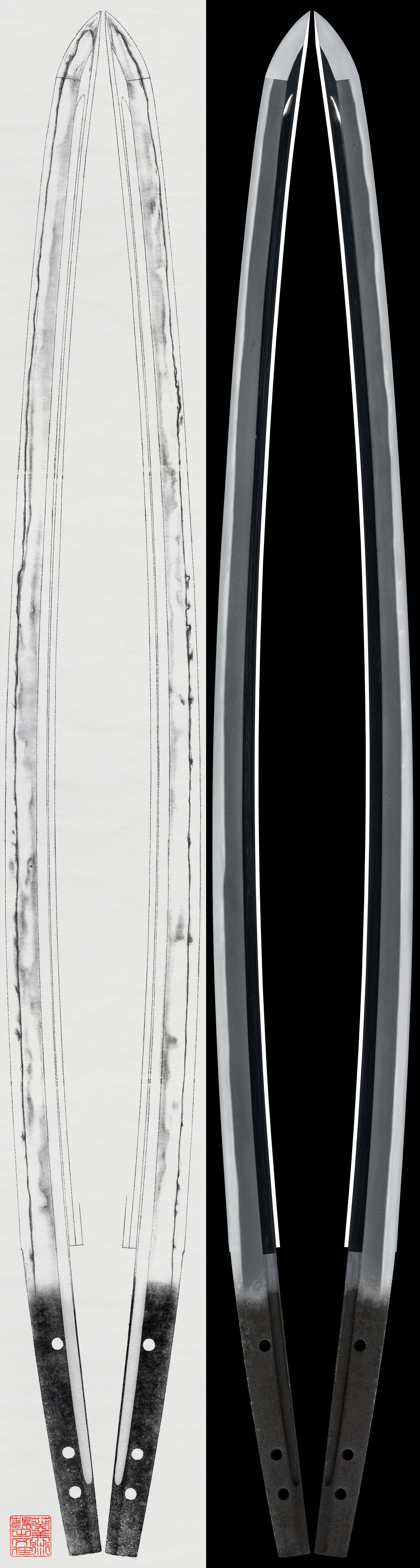
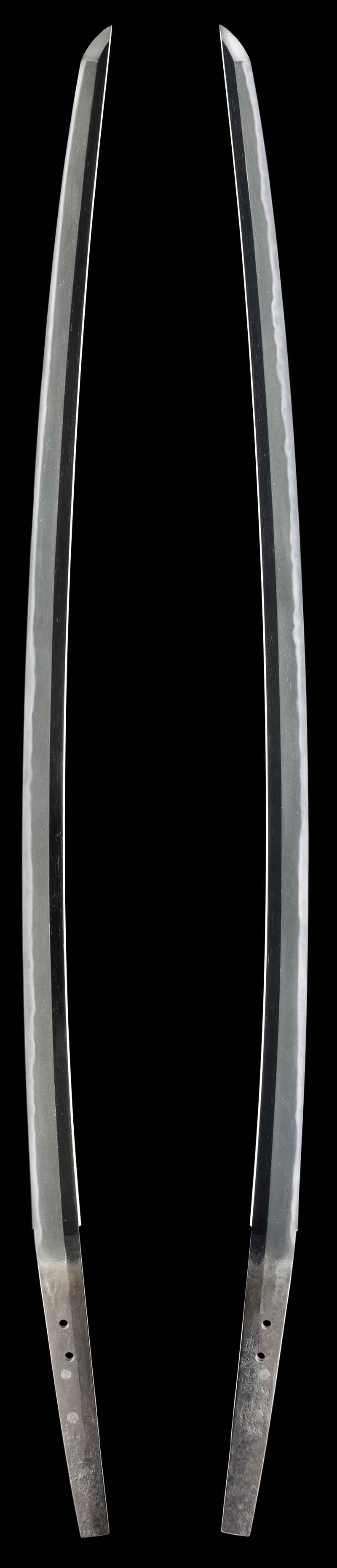
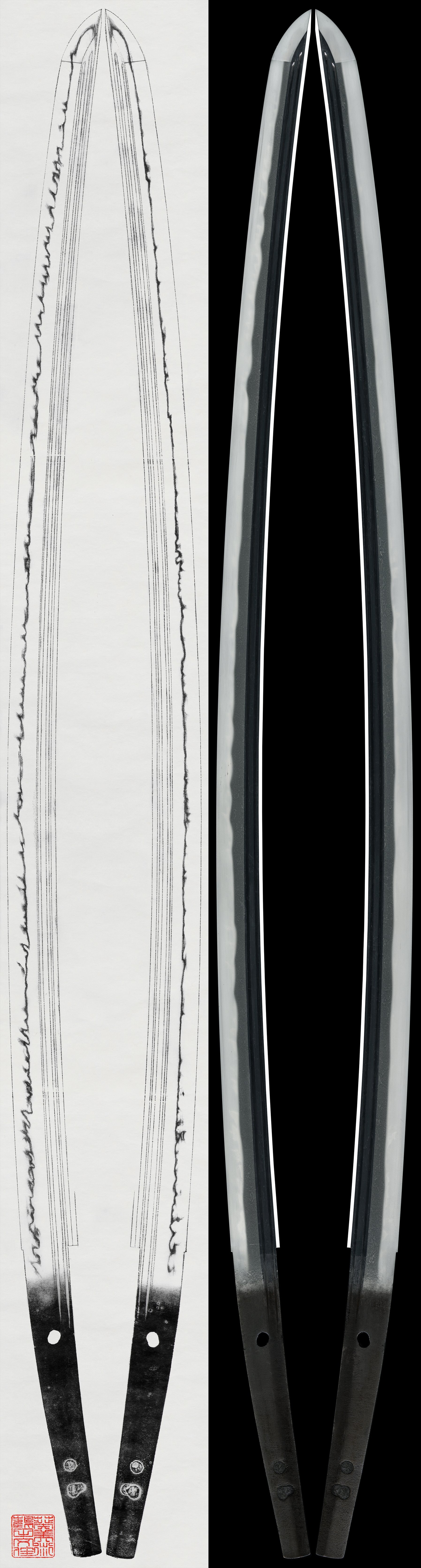
This is an ubu Muromachi Bizen Uchigatana signed Norimitsu, presented in older koshirae. It features a gunome togare hamon in notare midare, with an itame jigane. The koshirae includes a brown/black lacquer saya with an iron kojiri, a Shoami signed iron tsuba, and chrysanthemum menuki.
mei · Muromachi · nagasa 59.1cm


Bizen-den · Bizen · around 1462-1487
Fujishiro Jo-jo saku
5 pieces on the market now
Norimitsu belongs to the Osafune lineage of Bizen Province and is traditionally identified as a student of Osafune Nagamitsu. The earliest extant works bearing the Norimitsu signature date to the Kagen era of the late Kamakura period, and the name was transmitted through numerous generations down to the close of the Muromachi period — a span encompassing perhaps more than ten successive smiths. The most celebrated works are those dated to the Kansho era, and the smith active in the Bunmei era occupies a position of particular scholarly interest, as the NBTHK notes there "remains room for research as to whether it was made by the same individual as Kansho Norimitsu or by the next generation." Critically, the Kansho-to-Bunmei-era Norimitsu stands between the Oei-era masters Morimitsu and Yasumitsu on one hand, and the later Sue-Bizen smiths Katsumitsu and Sukesada on the other, displaying an intermediate style that bridges these two periods.
Norimitsu's sword work characteristically employs itame-hada with midare-utsuri standing out in the jihada, and his hamon alternates between two principal modes: a koshi-biraki gunome-midare showing a fukushiki-like double-structured tendency with ashi and yo entering freely, and a chu-suguha with a tightened nioiguchi and frequent ko-choji ashi. The bosshi typically enters midare-komi, often with asymmetrical treatments between omote and ura. His forging in masame-hada on spear works, with nie-laden suguha and hotsure, follows the long-established convention for older spears and is acknowledged as distinct from his characteristic Osafune manner. His blades frequently display bo-utsuri or midare-utsuri, and bo-hi with soe-hi or kaku-dome terminations are regularly encountered.
The NBTHK repeatedly characterizes Norimitsu's productions as displaying "good workmanship in both ji and ha" and as "orthodox and straightforward." His signed, ubu examples are valued as material that "conspicuously reveals distinctive features in both the jihada and the tempered edge," and his work constitutes, in the Board's assessment, "valuable source material for the study of Bizen smiths of this period." His yari, among the earliest bearing Bunmei-era dates, are commended as "orderly and well made" and recognized as representative spears of the Muromachi period. Across all forms — tachi, katana, tanto, and yari — Norimitsu's oeuvre documents the evolving character of mid-Muromachi Bizen craftsmanship with scholarly precision.
Where Norimitsu stands among comparable artisans: across all of nihontō, and within tradition, era, and period. The tiers (Foremost · Leading · Major · Notable) weigh official designations from the NBTHK and Japan's Agency for Cultural Affairs, together with historical honors of lasting repute such as the Sansaku and Meibutsu-chō.
Select a lens to see how it's measured.
Years he was demonstrably active, proven by signed-and-dated blades
Bizen-den · Bizen
Phase: Ōei-Bizen応永備前· 1390–1441
17 pieces on the market now
The Oei-Bizen and Eikyo-Bizen smiths represent the resurgence of the Osafune school in Bizen Province during the early Muromachi period, an era in which a conscious revival of Kamakura-period aesthetics transformed the character of Bizen swordmaking after the bold, expansive forms of the Nanbokucho period. The school's foremost representatives are Yasumitsu and Morimitsu, described by the NBTHK as the "twin pillars" of Oei-Bizen, both active around the Oei era (1394--1428). Learn more →
| Smith | Era | Designated |
|---|---|---|
| Yasumitsu康光 | 1394-1428 | 49 |
| Morimitsu盛光 | 1394-1428 | 60 |
| Yasumitsu康光 | 1424-1443 | 6 |
| Sanemitsu實光 | 1394-1428 | 4 |
| Koremitsu是光 | 1394-1428 | 1 |
We could not find an authenticity certificate on the seller’s listing. Japanese swords and fittings are normally papered by the NBTHK (or the NTHK). Without one, the attribution is the seller’s own assessment and has not been independently verified — treat it with caution and ask the dealer about certification before buying.
Three day, no penalty, inspection on every item. Returns must be in the same condition as shipped. Actual costs will be charged on returned items. No restocking fee. If you did not like the item is a good enough reason for return.
This is an ubu Muromachi Bizen Uchigatana signed Norimitsu, presented in older koshirae. It features a gunome togare hamon in notare midare, with an itame jigane. The koshirae includes a brown/black lacquer saya with an iron kojiri, a Shoami signed iron tsuba, and chrysanthemum menuki.
mei · Muromachi · nagasa 59.1cm


Bizen-den · Bizen · around 1462-1487
Fujishiro Jo-jo saku
5 pieces on the market now
Norimitsu belongs to the Osafune lineage of Bizen Province and is traditionally identified as a student of Osafune Nagamitsu. The earliest extant works bearing the Norimitsu signature date to the Kagen era of the late Kamakura period, and the name was transmitted through numerous generations down to the close of the Muromachi period — a span encompassing perhaps more than ten successive smiths. The most celebrated works are those dated to the Kansho era, and the smith active in the Bunmei era occupies a position of particular scholarly interest, as the NBTHK notes there "remains room for research as to whether it was made by the same individual as Kansho Norimitsu or by the next generation." Critically, the Kansho-to-Bunmei-era Norimitsu stands between the Oei-era masters Morimitsu and Yasumitsu on one hand, and the later Sue-Bizen smiths Katsumitsu and Sukesada on the other, displaying an intermediate style that bridges these two periods.
Norimitsu's sword work characteristically employs itame-hada with midare-utsuri standing out in the jihada, and his hamon alternates between two principal modes: a koshi-biraki gunome-midare showing a fukushiki-like double-structured tendency with ashi and yo entering freely, and a chu-suguha with a tightened nioiguchi and frequent ko-choji ashi. The bosshi typically enters midare-komi, often with asymmetrical treatments between omote and ura. His forging in masame-hada on spear works, with nie-laden suguha and hotsure, follows the long-established convention for older spears and is acknowledged as distinct from his characteristic Osafune manner. His blades frequently display bo-utsuri or midare-utsuri, and bo-hi with soe-hi or kaku-dome terminations are regularly encountered.
The NBTHK repeatedly characterizes Norimitsu's productions as displaying "good workmanship in both ji and ha" and as "orthodox and straightforward." His signed, ubu examples are valued as material that "conspicuously reveals distinctive features in both the jihada and the tempered edge," and his work constitutes, in the Board's assessment, "valuable source material for the study of Bizen smiths of this period." His yari, among the earliest bearing Bunmei-era dates, are commended as "orderly and well made" and recognized as representative spears of the Muromachi period. Across all forms — tachi, katana, tanto, and yari — Norimitsu's oeuvre documents the evolving character of mid-Muromachi Bizen craftsmanship with scholarly precision.

Where Norimitsu stands among comparable artisans: across all of nihontō, and within tradition, era, and period. The tiers (Foremost · Leading · Major · Notable) weigh official designations from the NBTHK and Japan's Agency for Cultural Affairs, together with historical honors of lasting repute such as the Sansaku and Meibutsu-chō.
Select a lens to see how it's measured.
Years he was demonstrably active, proven by signed-and-dated blades
Bizen-den · Bizen
Phase: Ōei-Bizen応永備前· 1390–1441
17 pieces on the market now
The Oei-Bizen and Eikyo-Bizen smiths represent the resurgence of the Osafune school in Bizen Province during the early Muromachi period, an era in which a conscious revival of Kamakura-period aesthetics transformed the character of Bizen swordmaking after the bold, expansive forms of the Nanbokucho period. The school's foremost representatives are Yasumitsu and Morimitsu, described by the NBTHK as the "twin pillars" of Oei-Bizen, both active around the Oei era (1394--1428). Learn more →
| Smith | Era | Designated |
|---|---|---|
| Yasumitsu康光 | 1394-1428 | 49 |
| Morimitsu盛光 | 1394-1428 | 60 |
| Yasumitsu康光 | 1424-1443 | 6 |
| Sanemitsu實光 | 1394-1428 | 4 |
| Koremitsu是光 | 1394-1428 | 1 |
We could not find an authenticity certificate on the seller’s listing. Japanese swords and fittings are normally papered by the NBTHK (or the NTHK). Without one, the attribution is the seller’s own assessment and has not been independently verified — treat it with caution and ask the dealer about certification before buying.
Three day, no penalty, inspection on every item. Returns must be in the same condition as shipped. Actual costs will be charged on returned items. No restocking fee. If you did not like the item is a good enough reason for return.