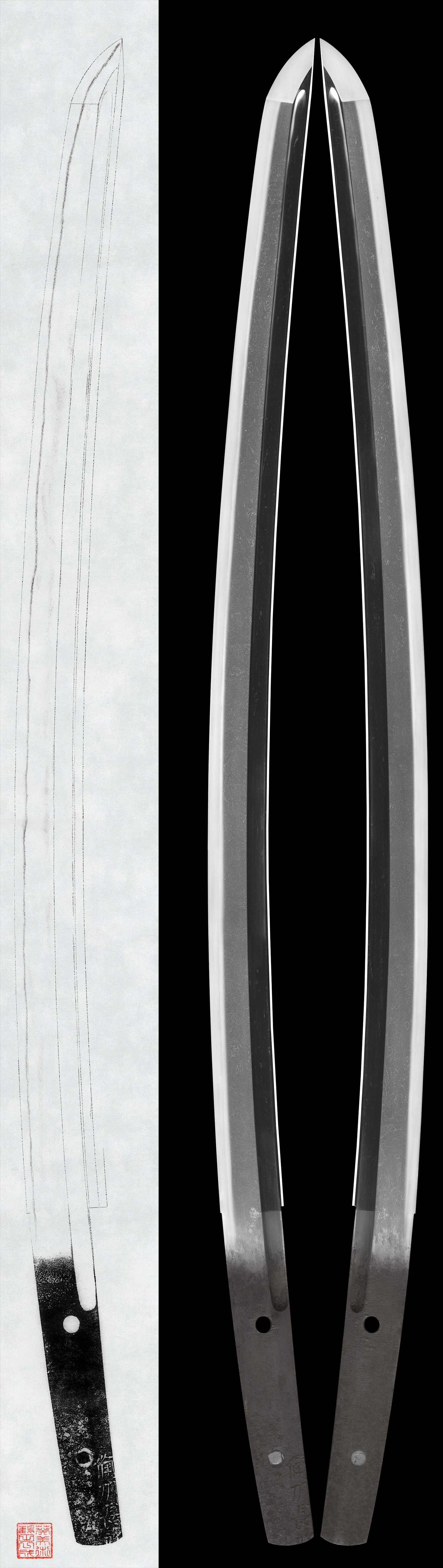
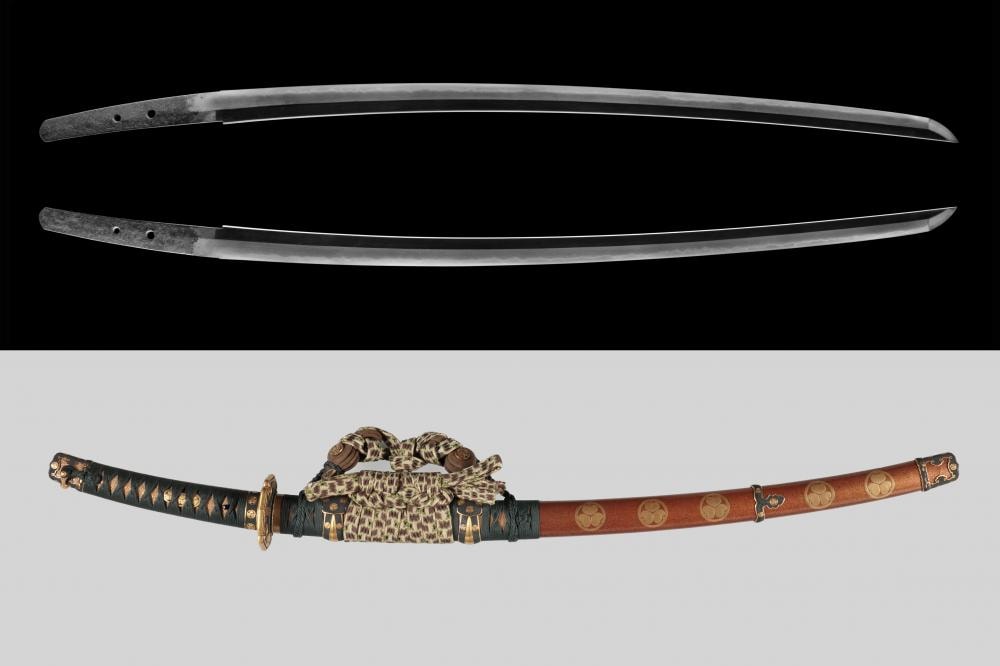
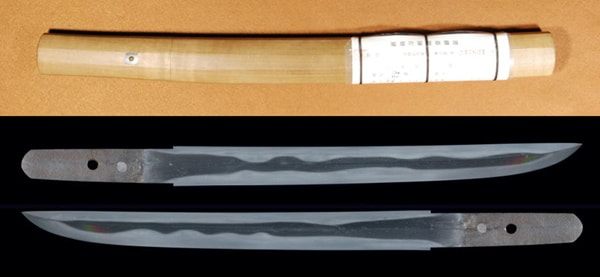
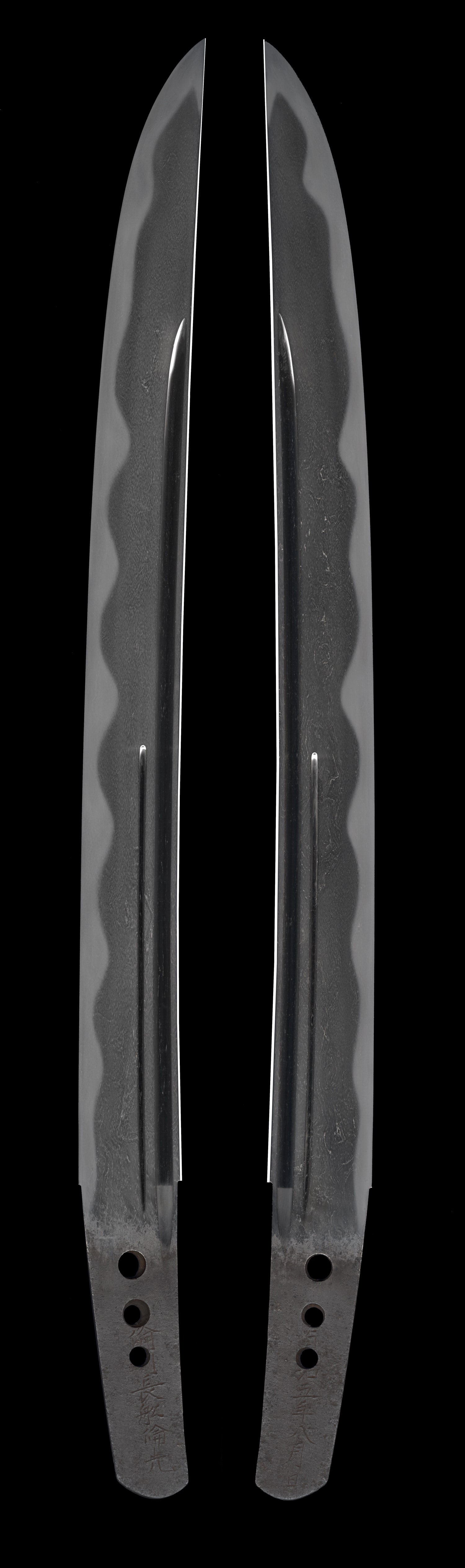
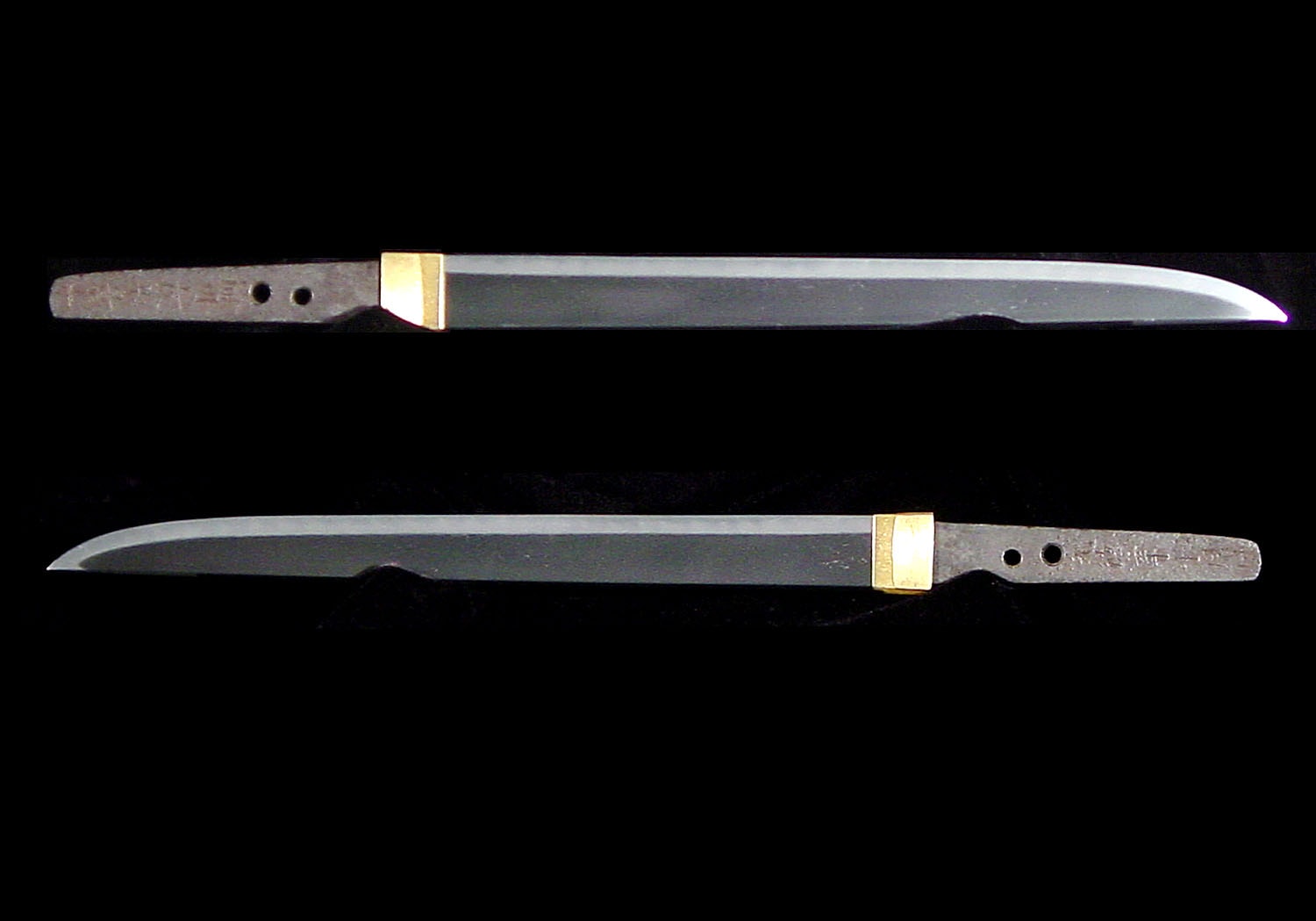
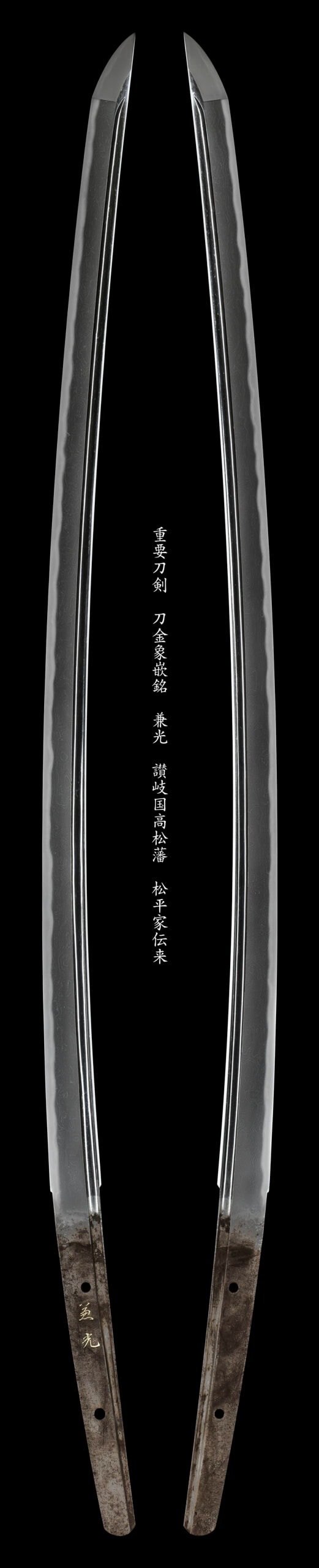
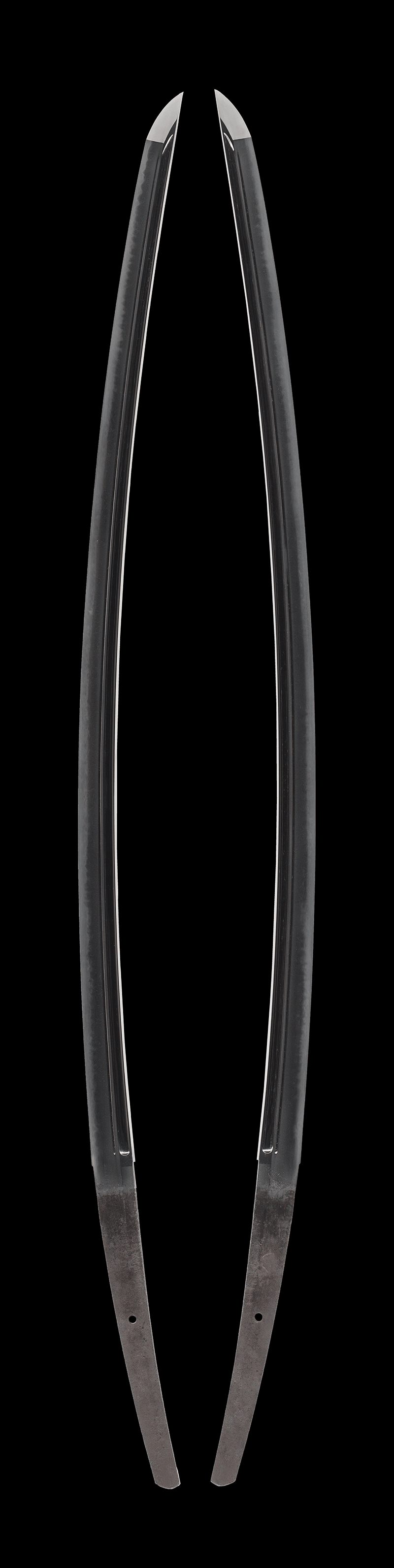
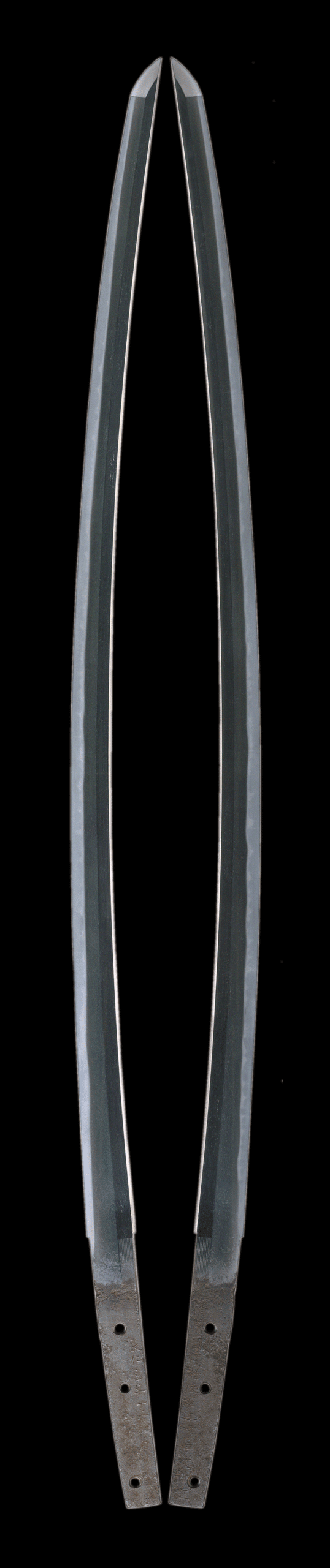
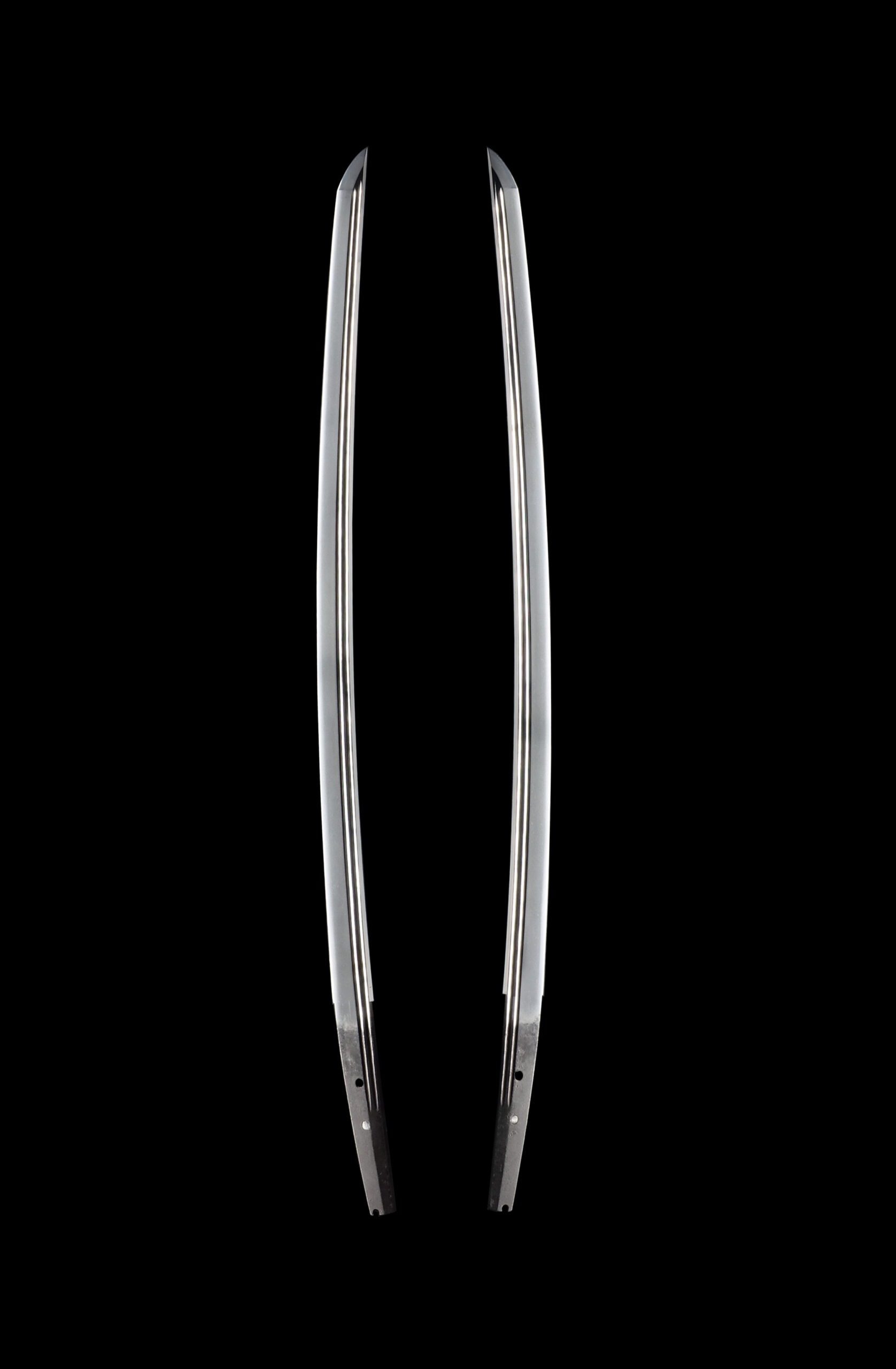
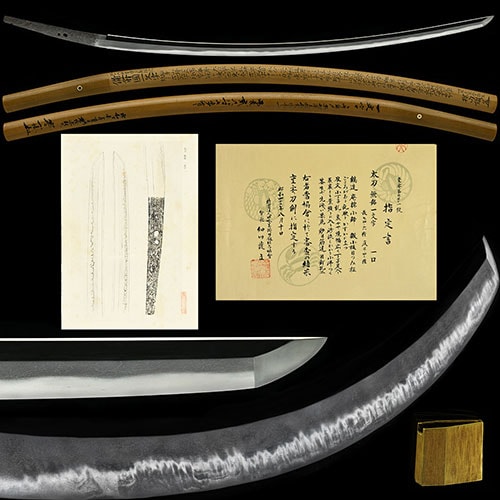
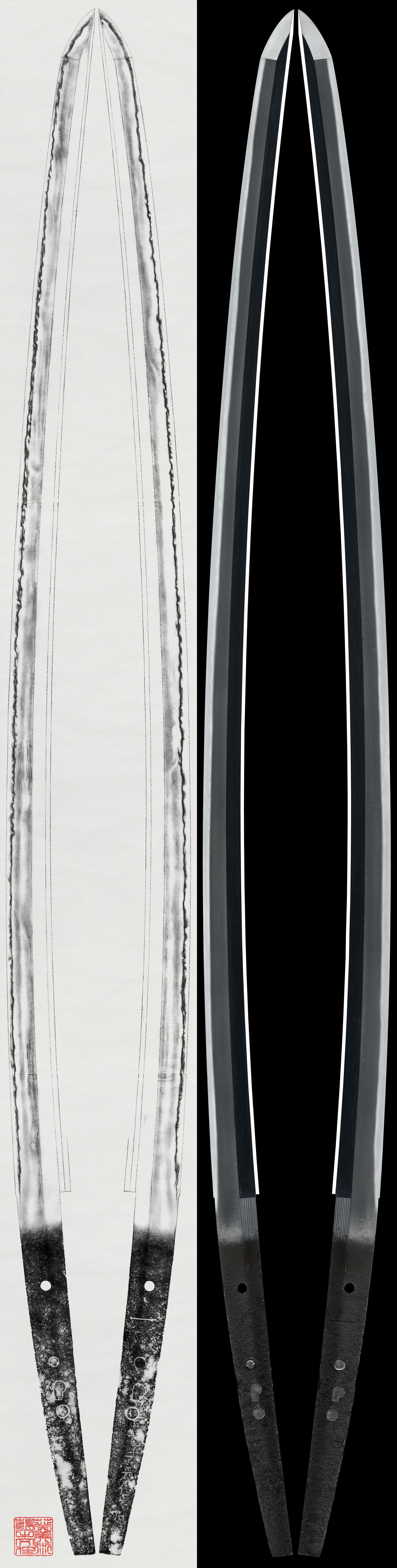
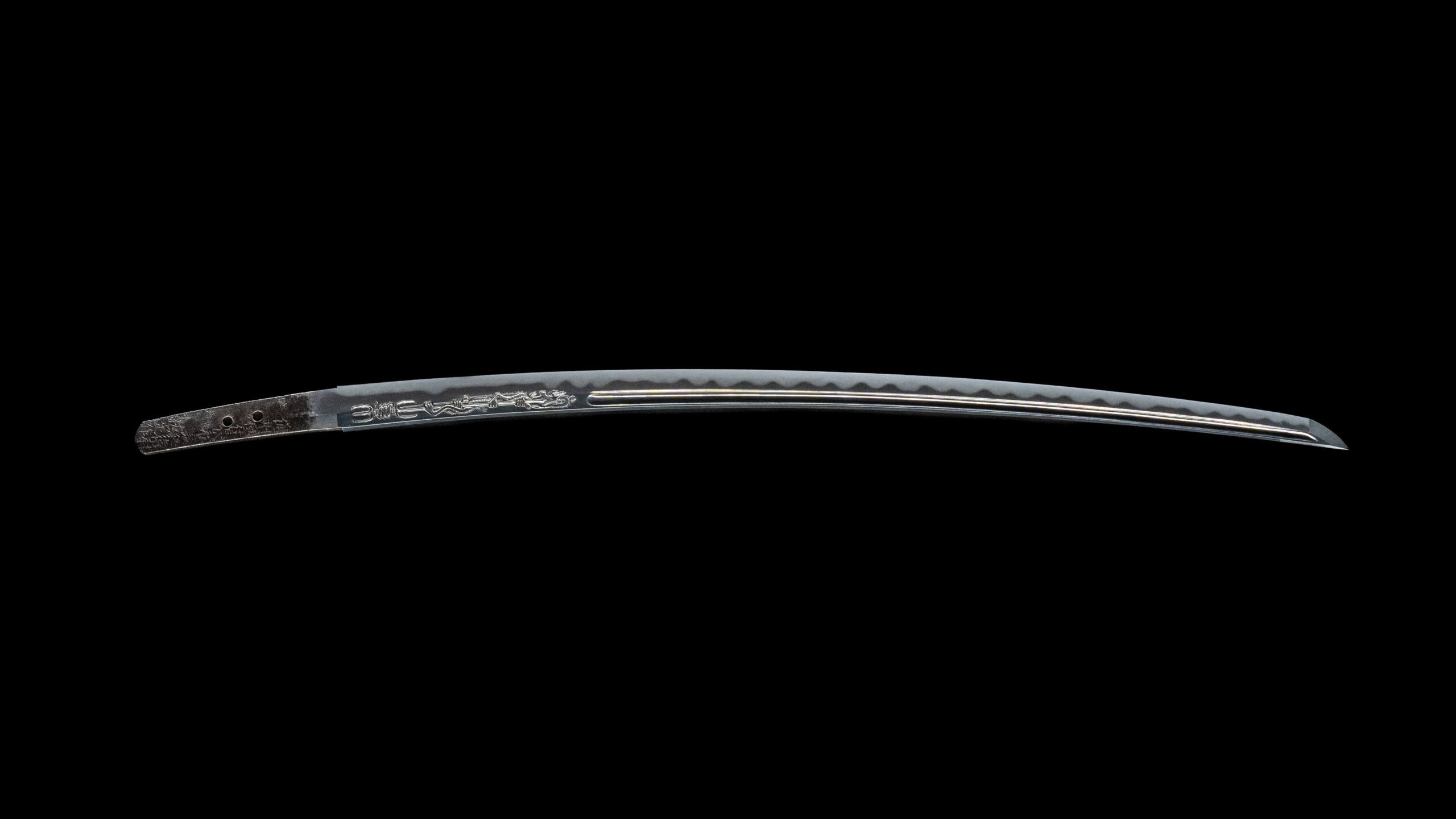
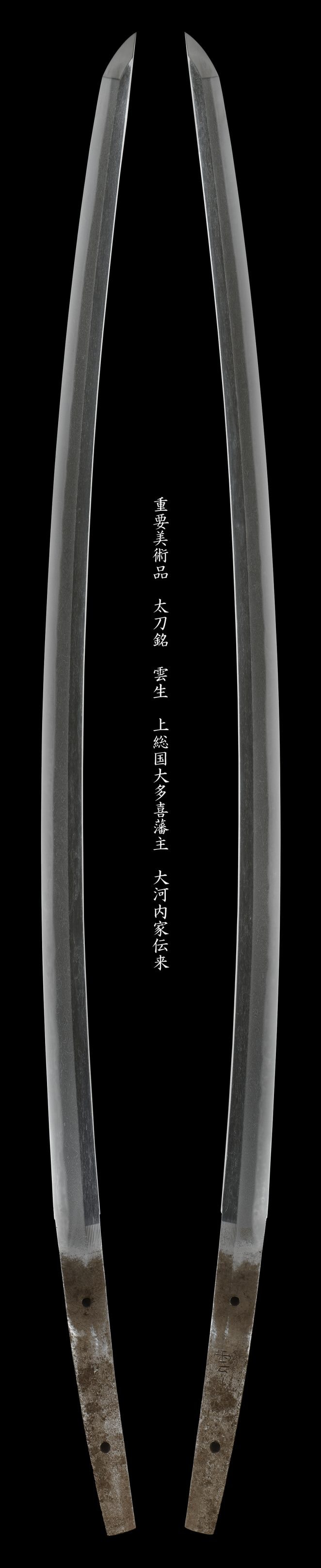
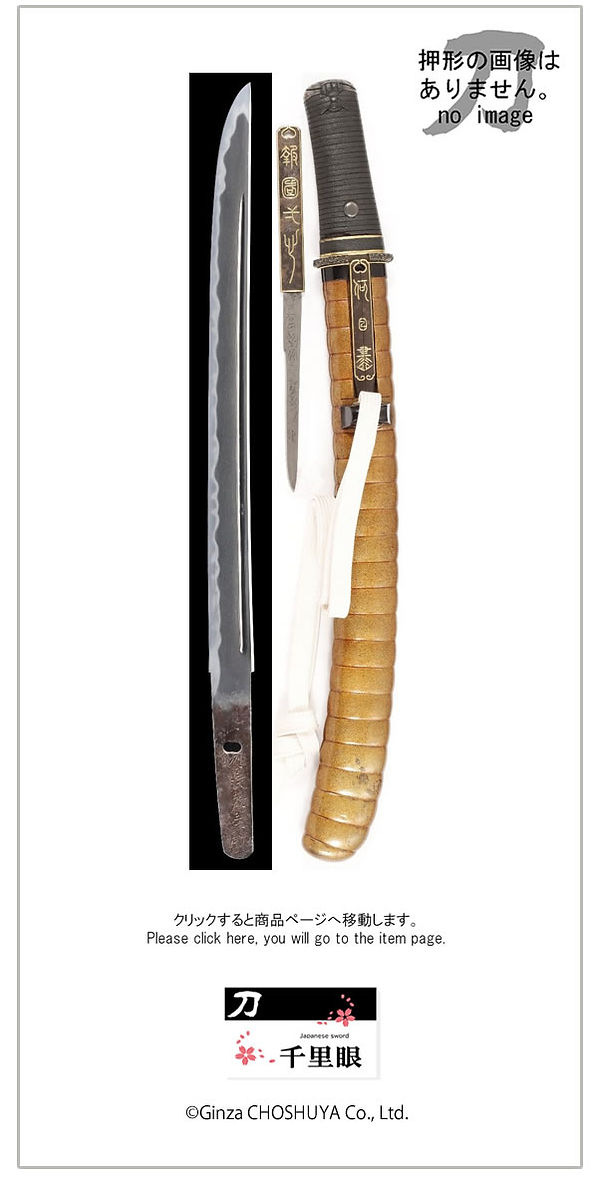
This is a hirazukuri wakizashi by Iesuke, dated Bun'an Gannen (1444). It features a robust body with sufficient kasane and a slight sori. The fine horimono of a narrow hi carved near the mune gives it a refined appearance, reminiscent of Oei Bizen works. The finely chiseled mei resembles that of Oei Iesuke.
 NihontoWatch
mei · Muromachi
Bizen-den · Bizen
231 pieces on the market now
No single workshop in the history of Japanese swordmaking grew larger or lasted longer than Osafune, the riverside village in Bizen Province whose name became, across three centuries, a byword for the province's mainline. Its de facto founder was Mitsutada (光忠), working at Osafune in the middle Kamakura period; tradition makes him the son of Chikatada, and the genealogies derive his line from the Ko-Bizen Masatsune group already settled in the village. Learn more →
| Smith | Era | Designated |
|---|---|---|
| Mitsutada光忠 | 1238-1239 | 60 |
| Nagamitsu長光 | 1274-1304 | 244 |
| Kagemitsu景光 | 1303-1336 | 143 |
| Kanemitsu兼光 | 1323-1370 | 231 |
| Sanenaga眞長 | 1299-1309 | 64 |
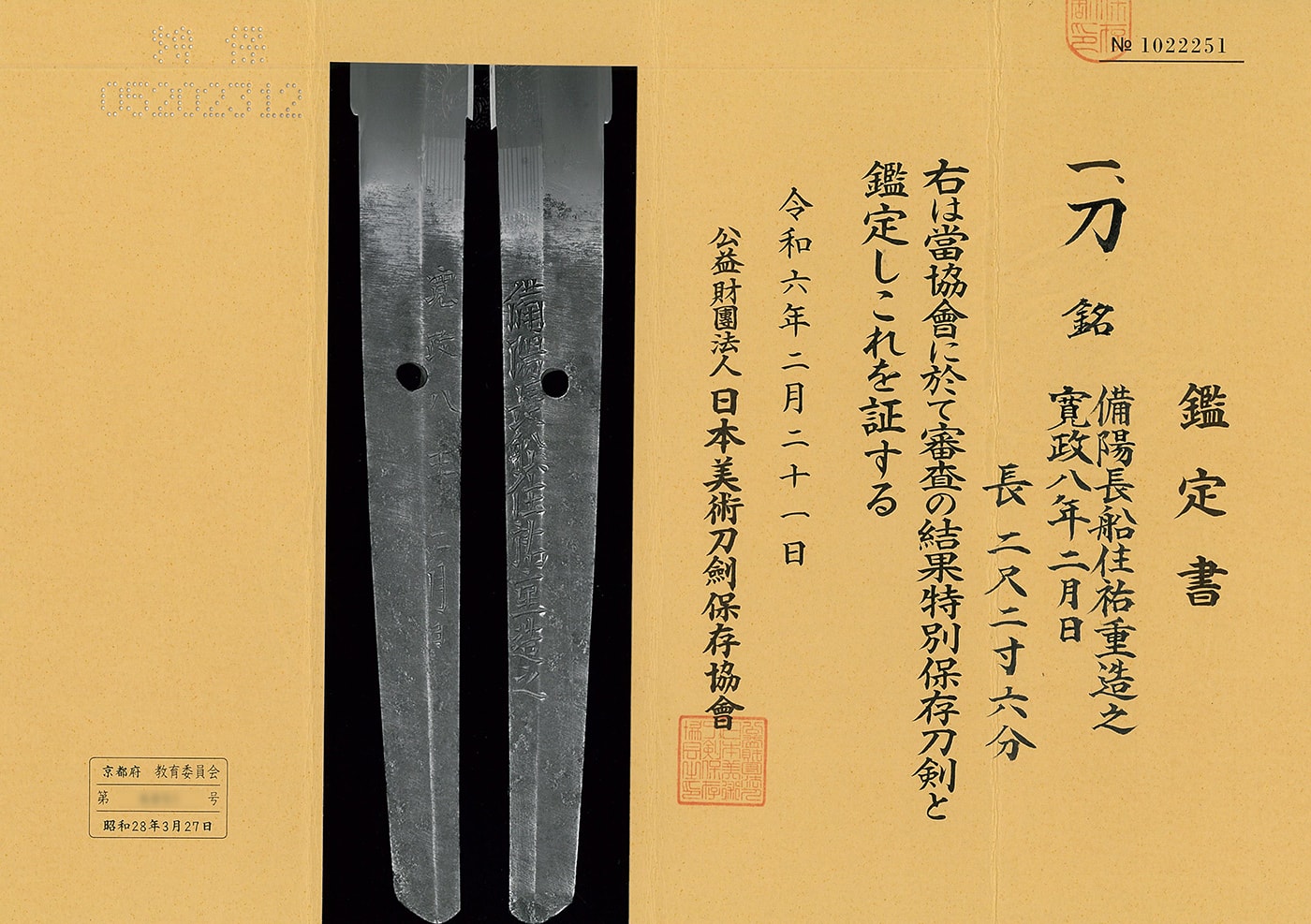
We could not find an authenticity certificate on the seller’s listing. Japanese swords and fittings are normally papered by the NBTHK (or the NTHK). Without one, the attribution is the seller’s own assessment and has not been independently verified — treat it with caution and ask the dealer about certification before buying.
If, due to our fault, the item differs significantly from its proper condition, the item may be returned. Cooling-off is within one week of the item's arrival.
This is a hirazukuri wakizashi by Iesuke, dated Bun'an Gannen (1444). It features a robust body with sufficient kasane and a slight sori. The fine horimono of a narrow hi carved near the mune gives it a refined appearance, reminiscent of Oei Bizen works. The finely chiseled mei resembles that of Oei Iesuke.
NihontoWatchmei · Muromachi
Bizen-den · Bizen
231 pieces on the market now
No single workshop in the history of Japanese swordmaking grew larger or lasted longer than Osafune, the riverside village in Bizen Province whose name became, across three centuries, a byword for the province's mainline. Its de facto founder was Mitsutada (光忠), working at Osafune in the middle Kamakura period; tradition makes him the son of Chikatada, and the genealogies derive his line from the Ko-Bizen Masatsune group already settled in the village. Learn more →
| Smith | Era | Designated |
|---|---|---|
| Mitsutada光忠 | 1238-1239 | 60 |
| Nagamitsu長光 | 1274-1304 | 244 |
| Kagemitsu景光 | 1303-1336 | 143 |
| Kanemitsu兼光 | 1323-1370 | 231 |
| Sanenaga眞長 | 1299-1309 | 64 |
We could not find an authenticity certificate on the seller’s listing. Japanese swords and fittings are normally papered by the NBTHK (or the NTHK). Without one, the attribution is the seller’s own assessment and has not been independently verified — treat it with caution and ask the dealer about certification before buying.
If, due to our fault, the item differs significantly from its proper condition, the item may be returned. Cooling-off is within one week of the item's arrival.