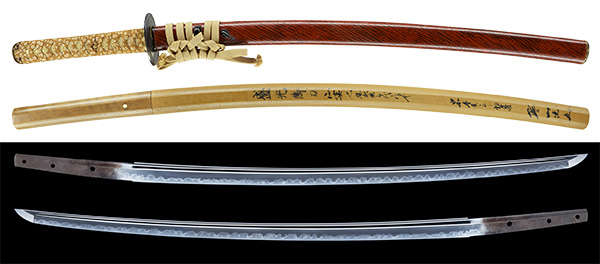
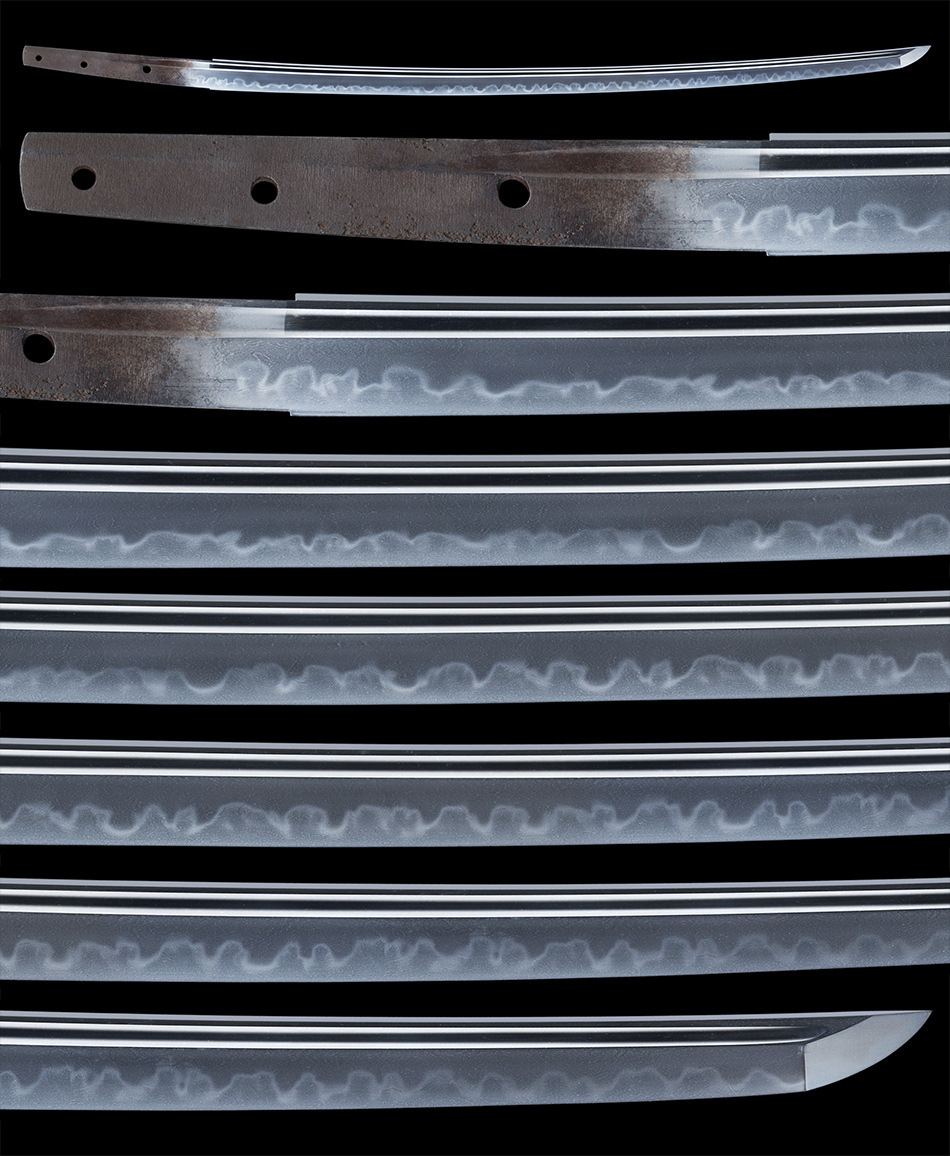
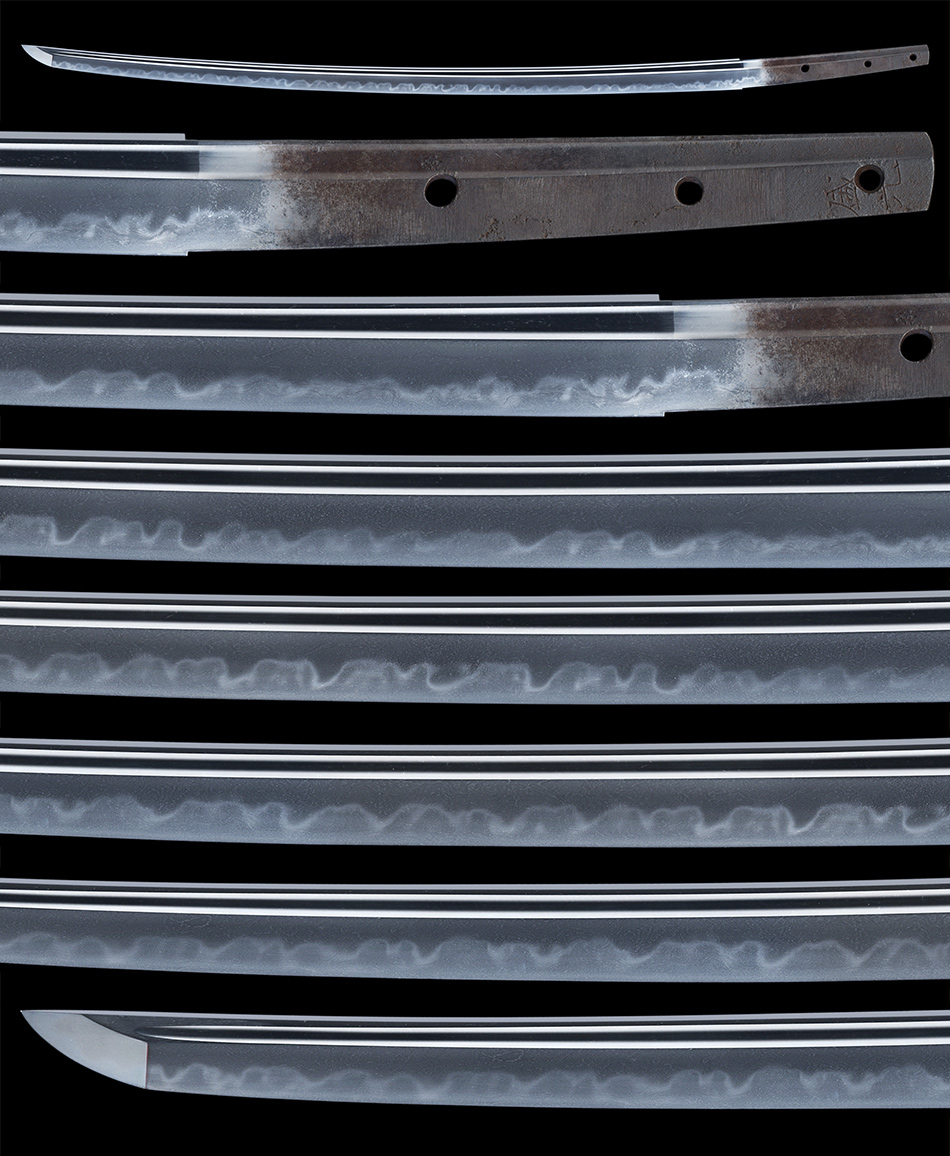
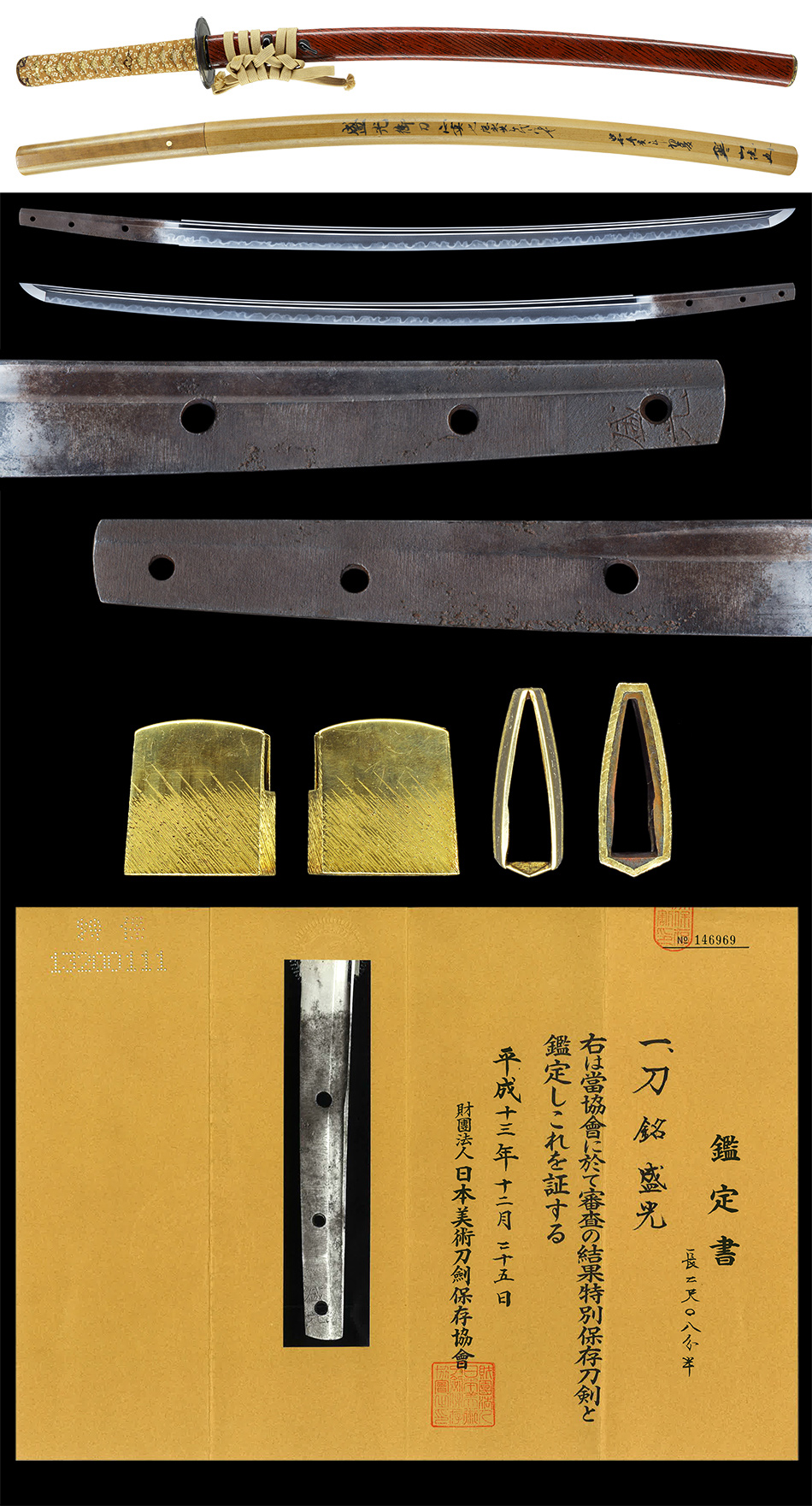
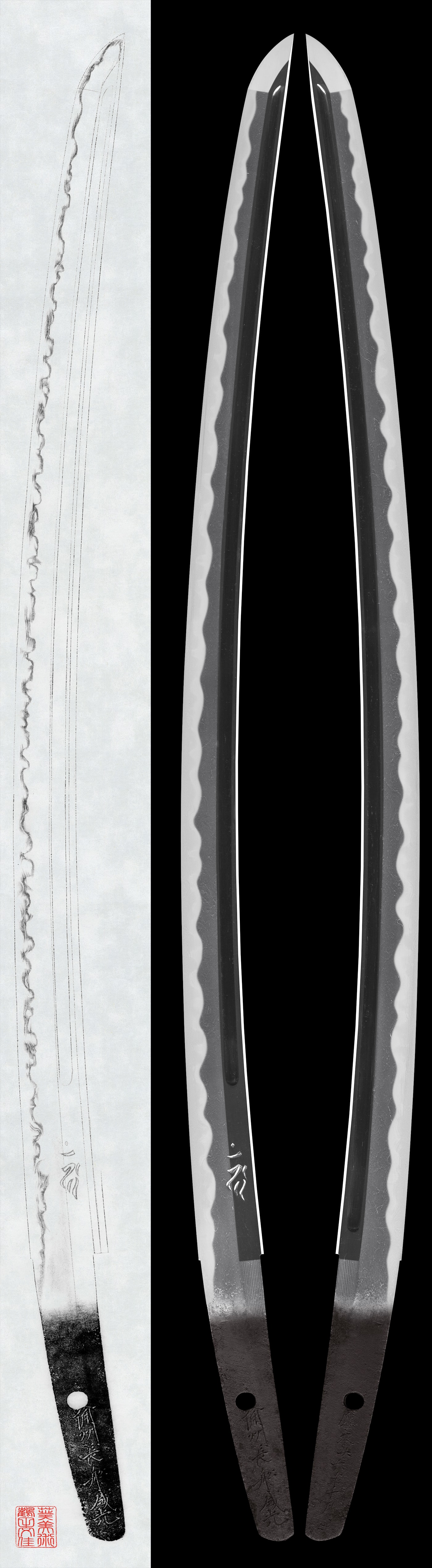
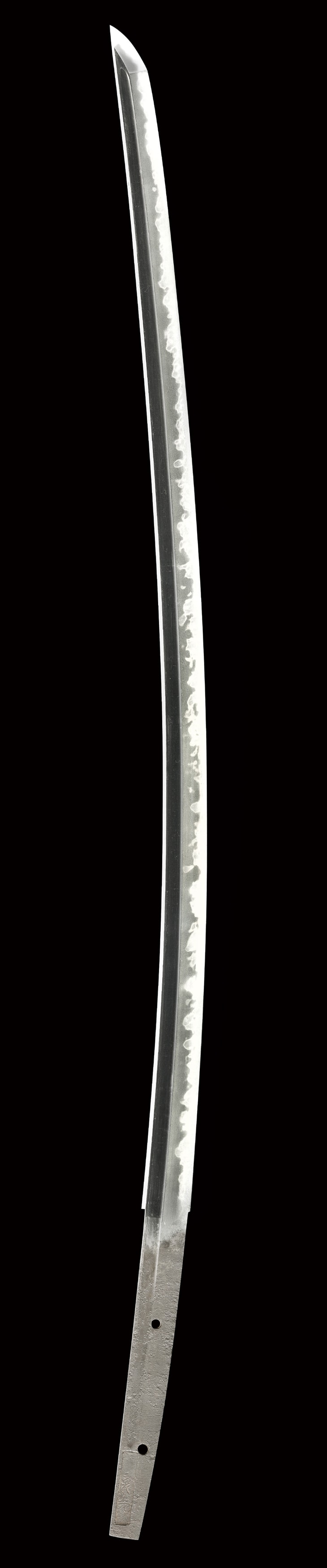
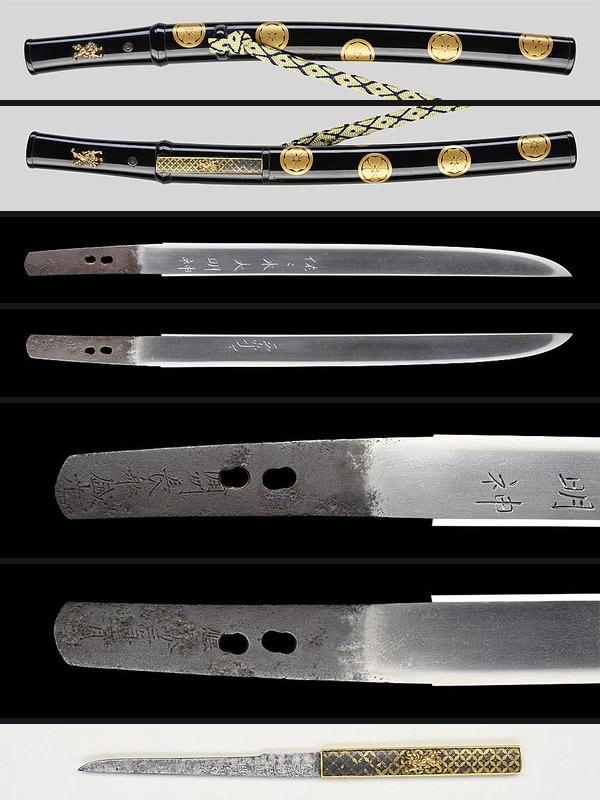
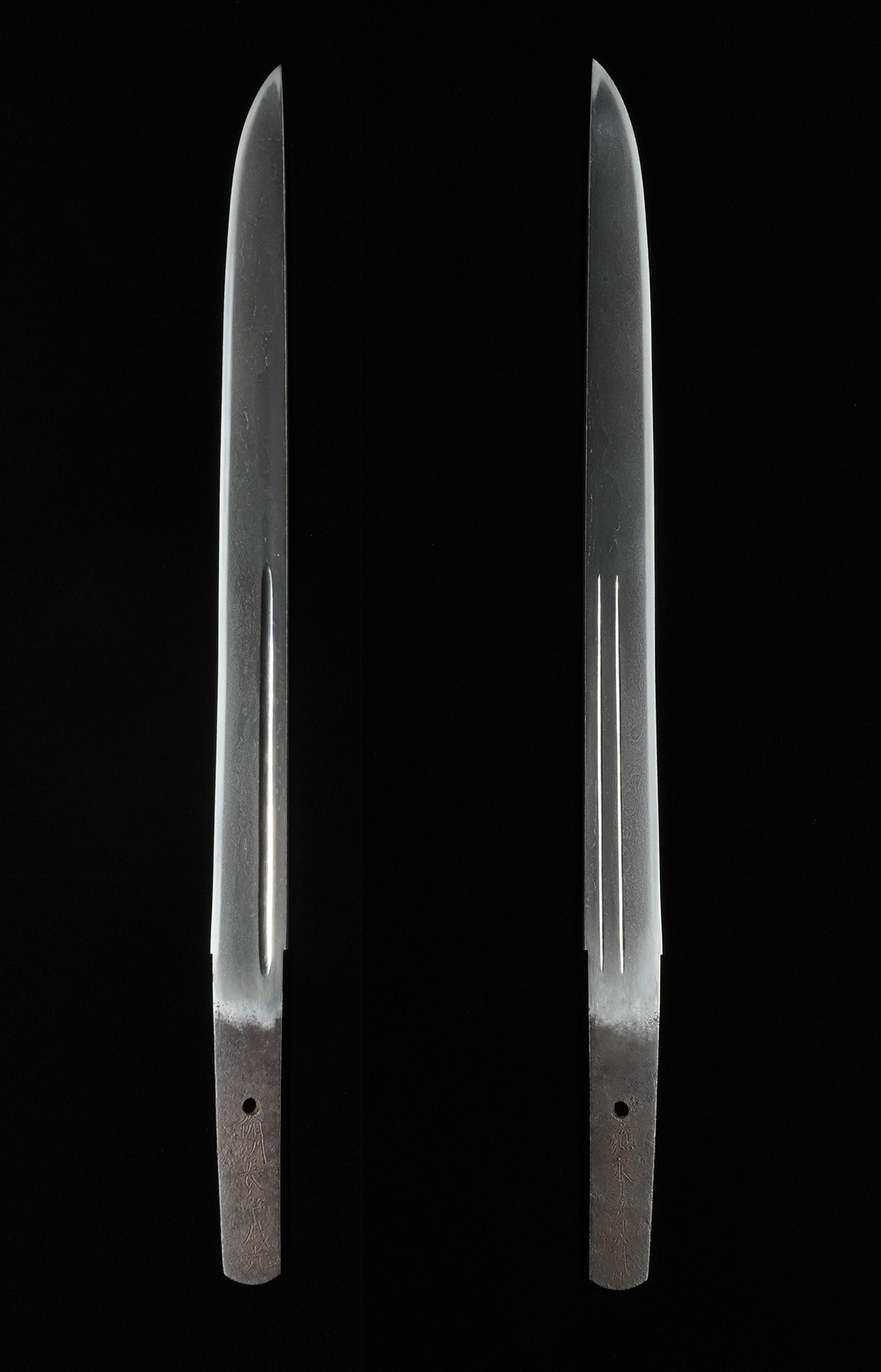
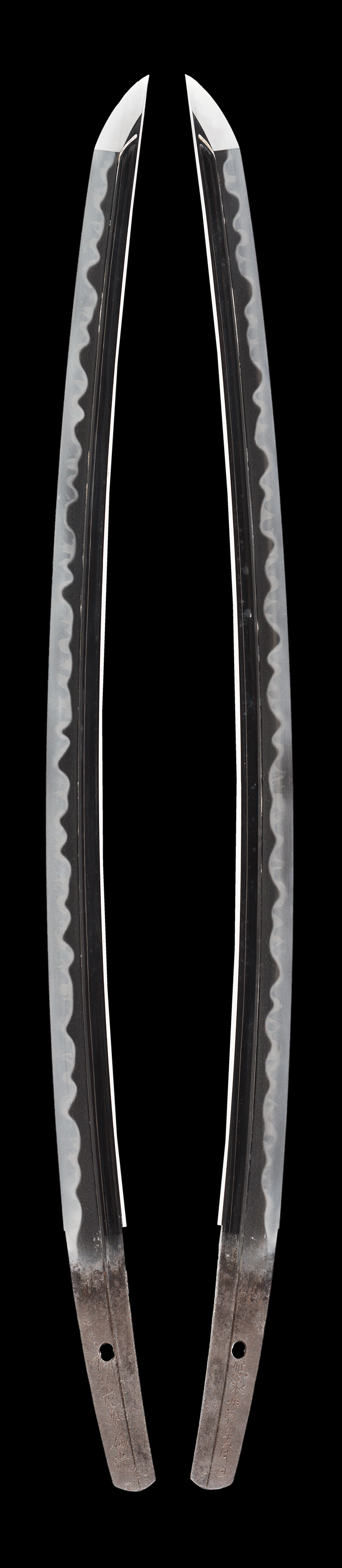
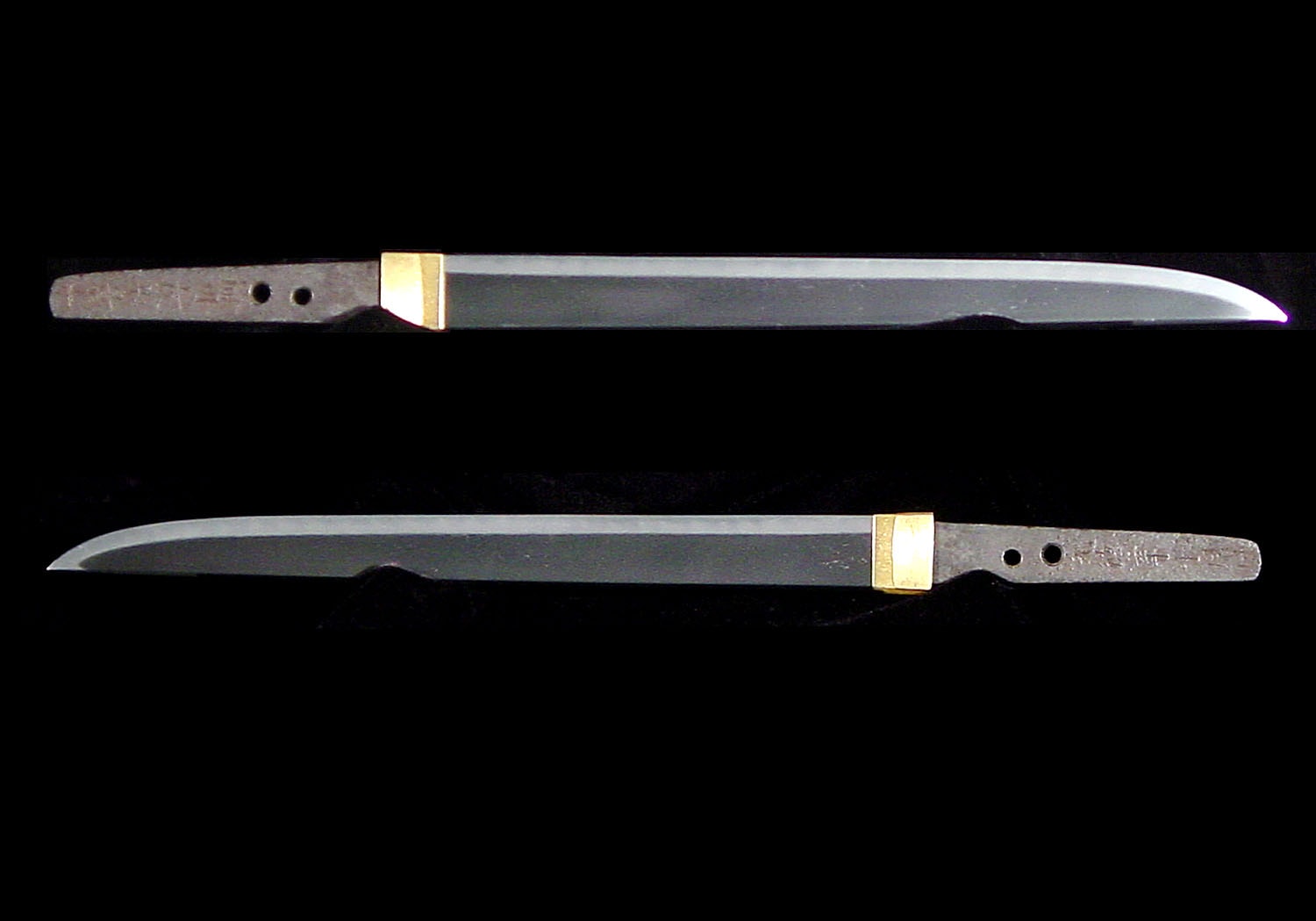
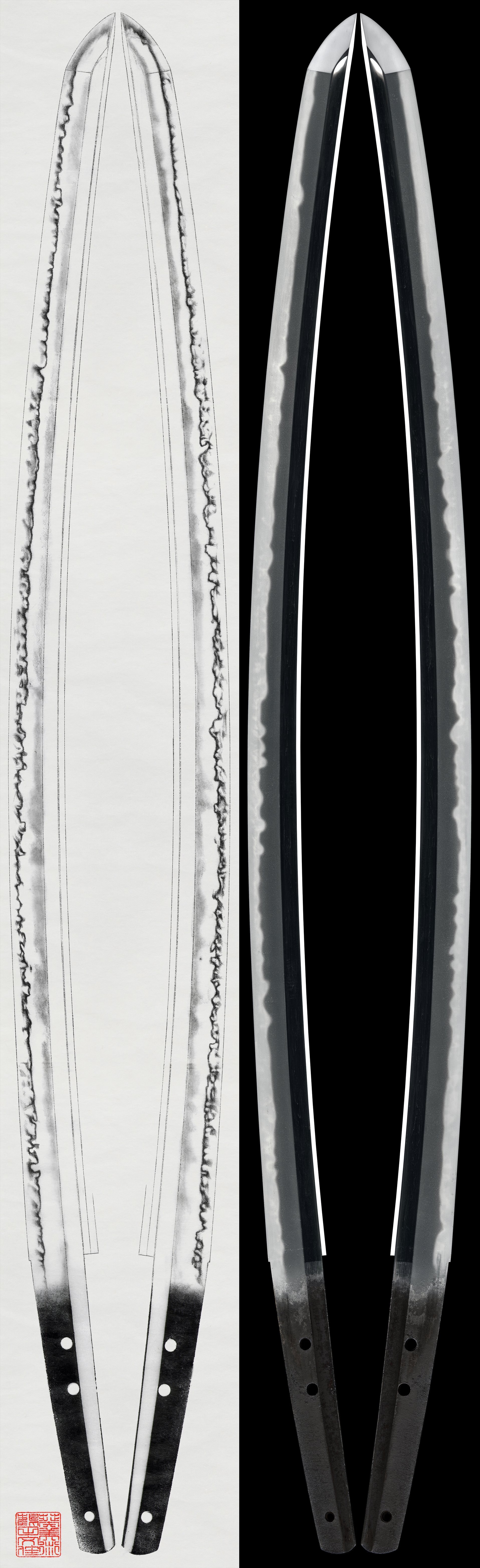
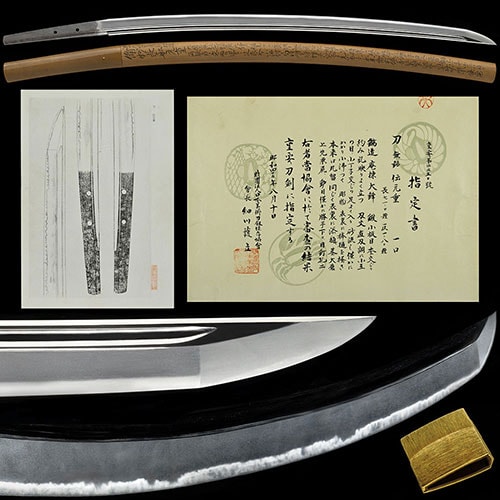
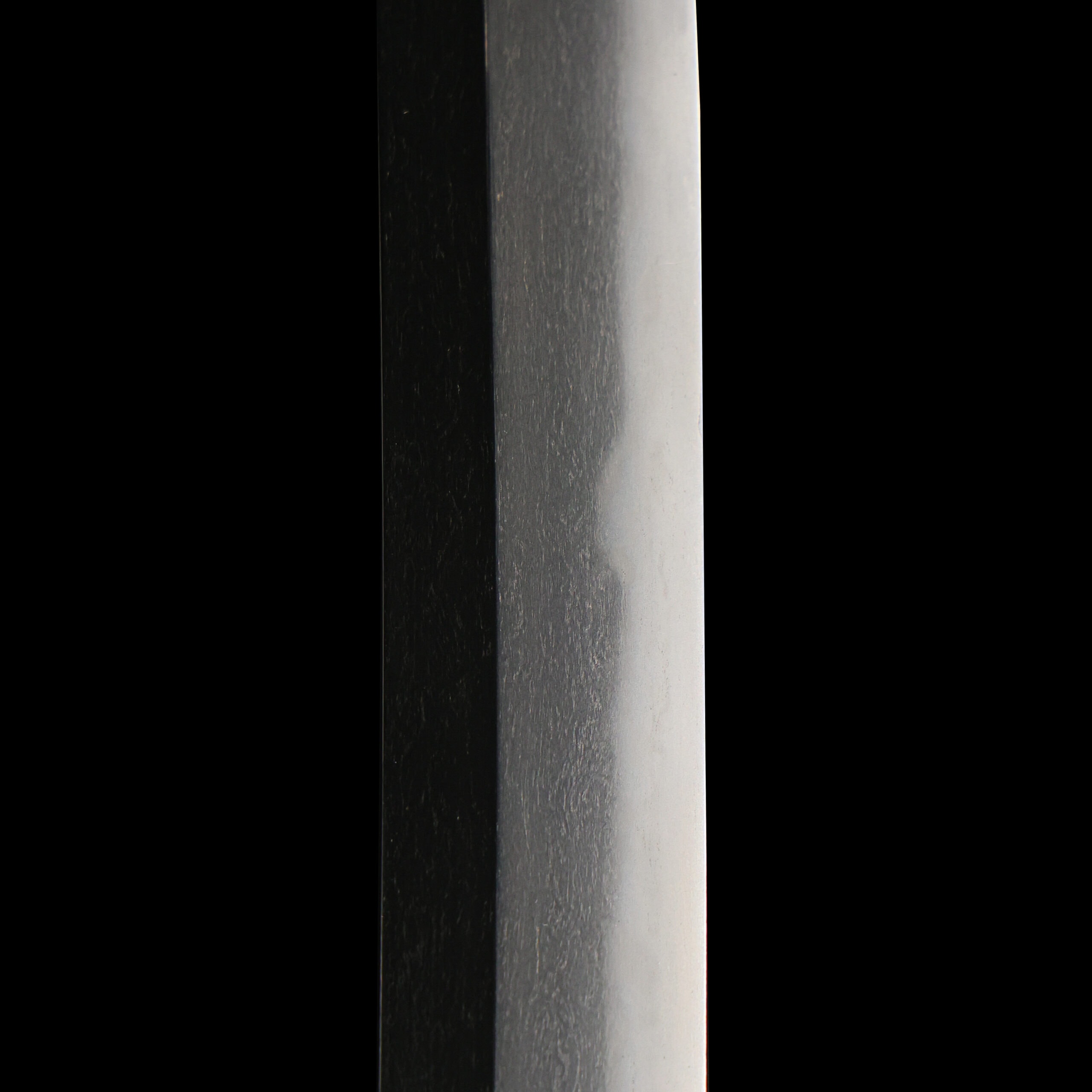
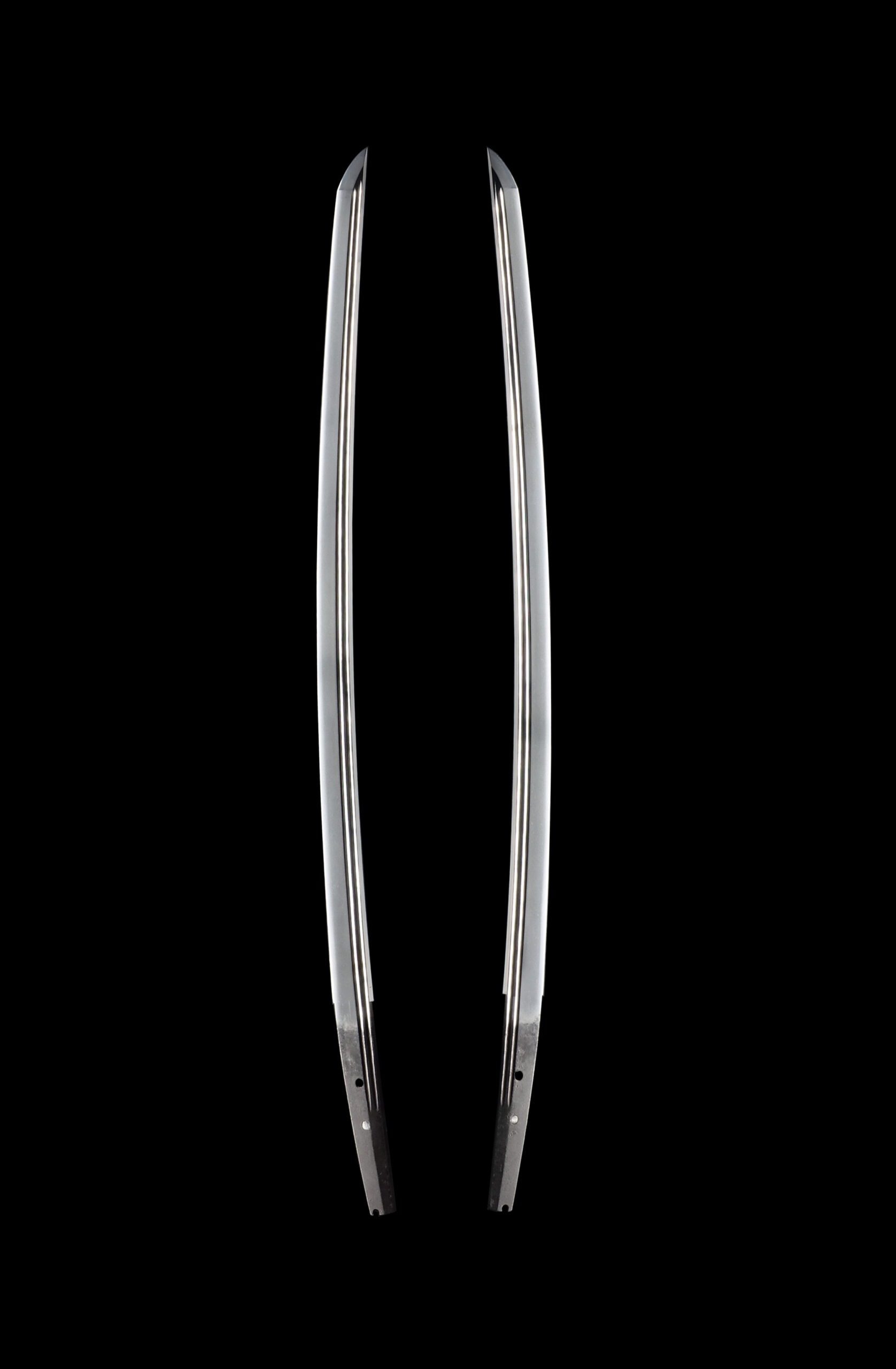
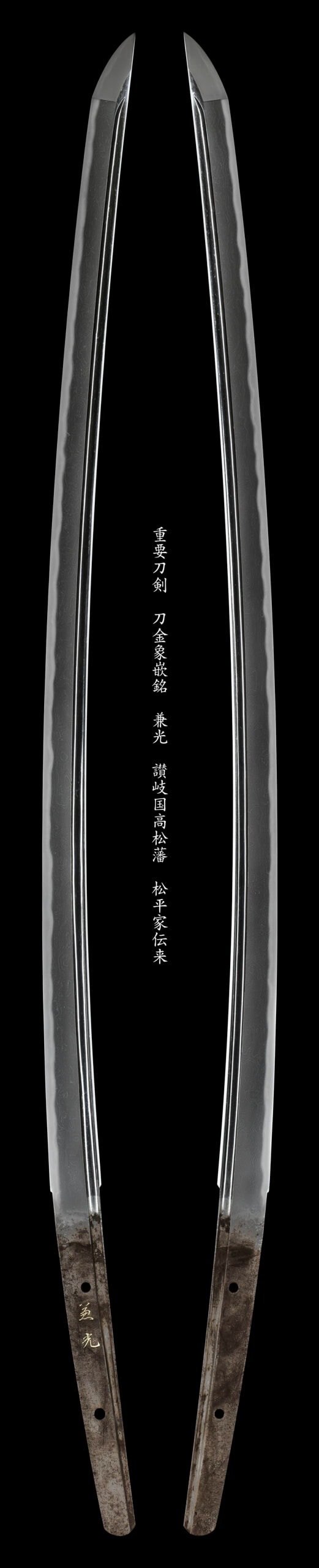
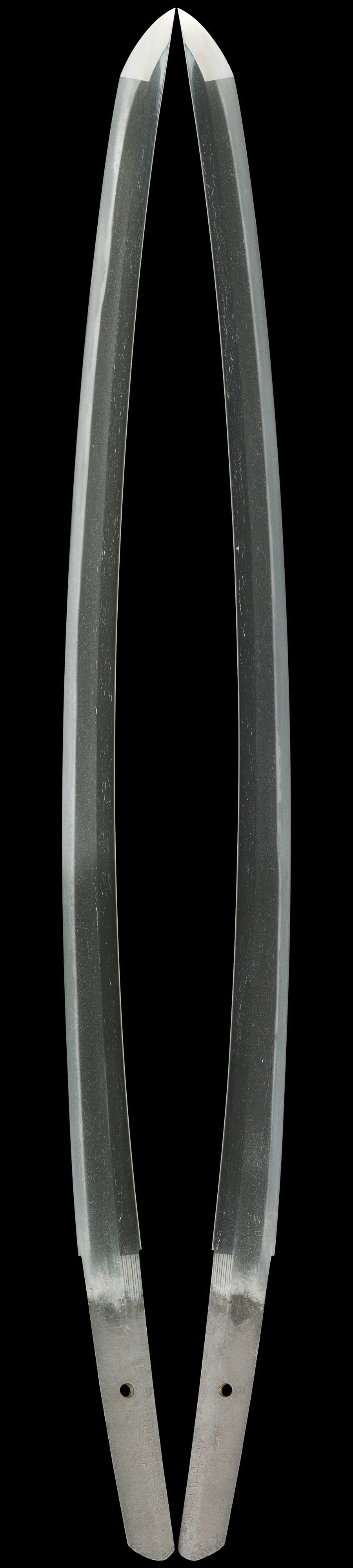
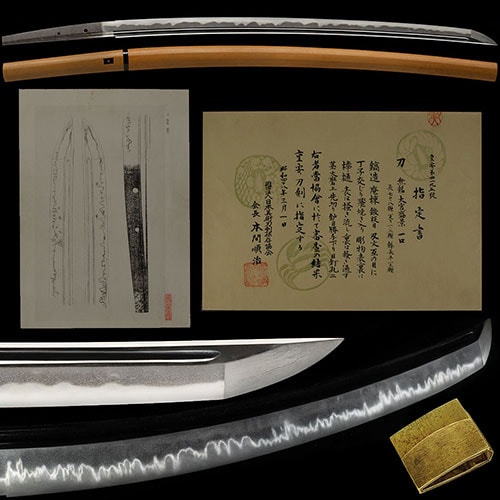
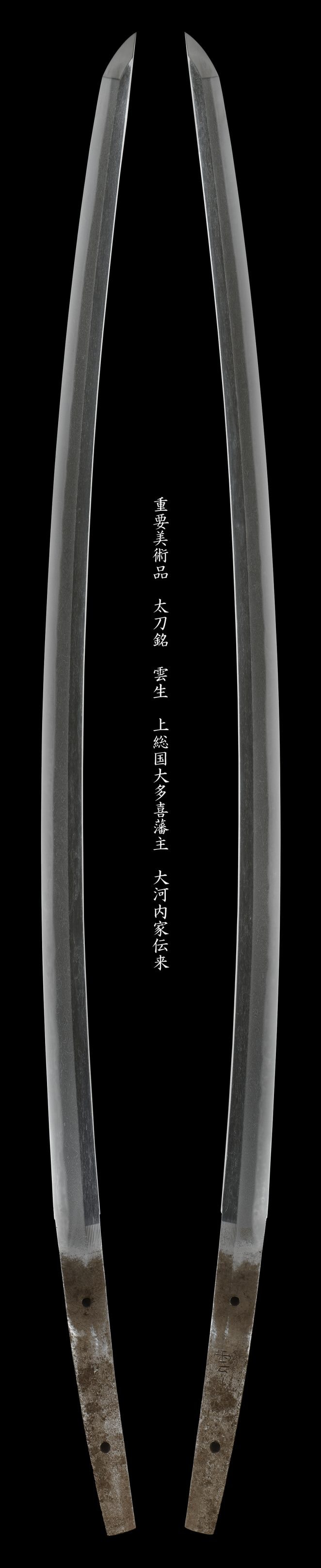
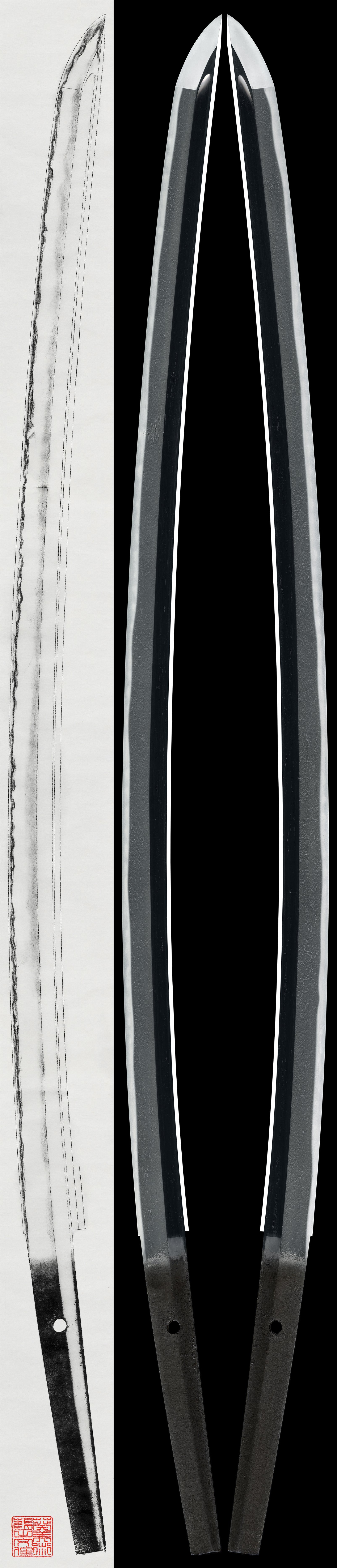
The Oei-Bizen and Eikyo-Bizen smiths represent the resurgence of the Osafune school in Bizen Province during the early Muromachi period, an era in which a conscious revival of Kamakura-period aesthetics transformed the character of Bizen swordmaking after the bold, expansive forms of the Nanbokucho period. The school's foremost representatives are Yasumitsu and Morimitsu, described by the NBTHK as the "twin pillars" of Oei-Bizen, both active around the Oei era (1394--1428). Morimitsu is held by one tradition to have been the son of Moromitsu, a representative smith of the late Nanbokucho ko-zori group, and his earliest dated works bridge the transitional character of his father's generation and the fully developed Oei-Bizen idiom. The name Yasumitsu was successively inherited through as many as five generations, while the succeeding Eikyo-Bizen phase -- centered on the fourth-generation Norimitsu and his contemporary Sukemitsu -- carried the tradition forward into the mid-Muromachi period. Related smiths such as Tsuneie of the Hatakeda branch worked in a manner so closely aligned with Osafune production that the NBTHK observes there are "no grounds -- whether in workmanship, the character of the signature, or any other point" by which their work could be distinguished from the main line. Within the Oei-Bizen manner, two principal modes of tempering are recognized. " In both modes the school's identity is revealed through shared forging characteristics: itame-hada mixed with mokume in which the grain stands out conspicuously, with dark lines resembling chikei entering the jihada and midare-utsuri or bo-utsuri standing prominently in the ground. " The boshi assumes the idiosyncratic form popularly termed the "candlewick" (rosoku no shin), becoming pointed at the tip -- a diagnostic hallmark of the school.
A further point of connoisseurship is the finishing of bo-hi with rounded ends (maru-dome) above the machi. The transition from Oei-Bizen to Eikyo-Bizen is marked by Norimitsu's development of a somewhat intermediary character, retaining the koshi-biraki gunome and bright nioiguchi of the earlier masters while introducing tighter grain and elements that point toward the eventual Sue-Bizen style. Moromitsu's earlier production establishes the bridge from the opposite direction, his ko-zori period works showing "signs foreshadowing the style of Oei-Bizen" in their more flamboyant midare passages. The ideal pursued by the Oei-Bizen and Eikyo-Bizen smiths "appears to have been a revival of the Kamakura period," visible in their elegant tachi proportions and in the deliberate re-creation of choji tempering that had fallen out of favour during the Nanbokucho period. Yet the NBTHK consistently emphasizes that the school's own distinctive character is always discernible beneath this revivalist surface. " Both masters' works are consistently described as kenzen -- sound and well-preserved -- with a jigane of superior quality possessing an urumi richness. The school's influence pervaded early Muromachi sword production, and the Eikyo-Bizen continuation through Norimitsu ensured that the Osafune tradition maintained vitality and refinement well into the fifteenth century. Whether in the commanding vigour of the large-pattern choji-midare or in the quiet classical elegance of the suguha mode, the Oei-Bizen and Eikyo-Bizen smiths collectively represent one of the most accomplished chapters in the long history of Bizen swordsmithing. Learn more →