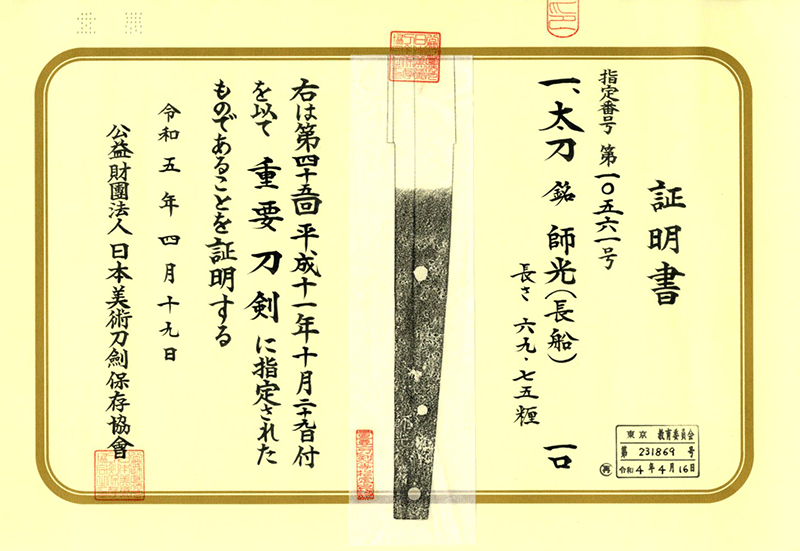
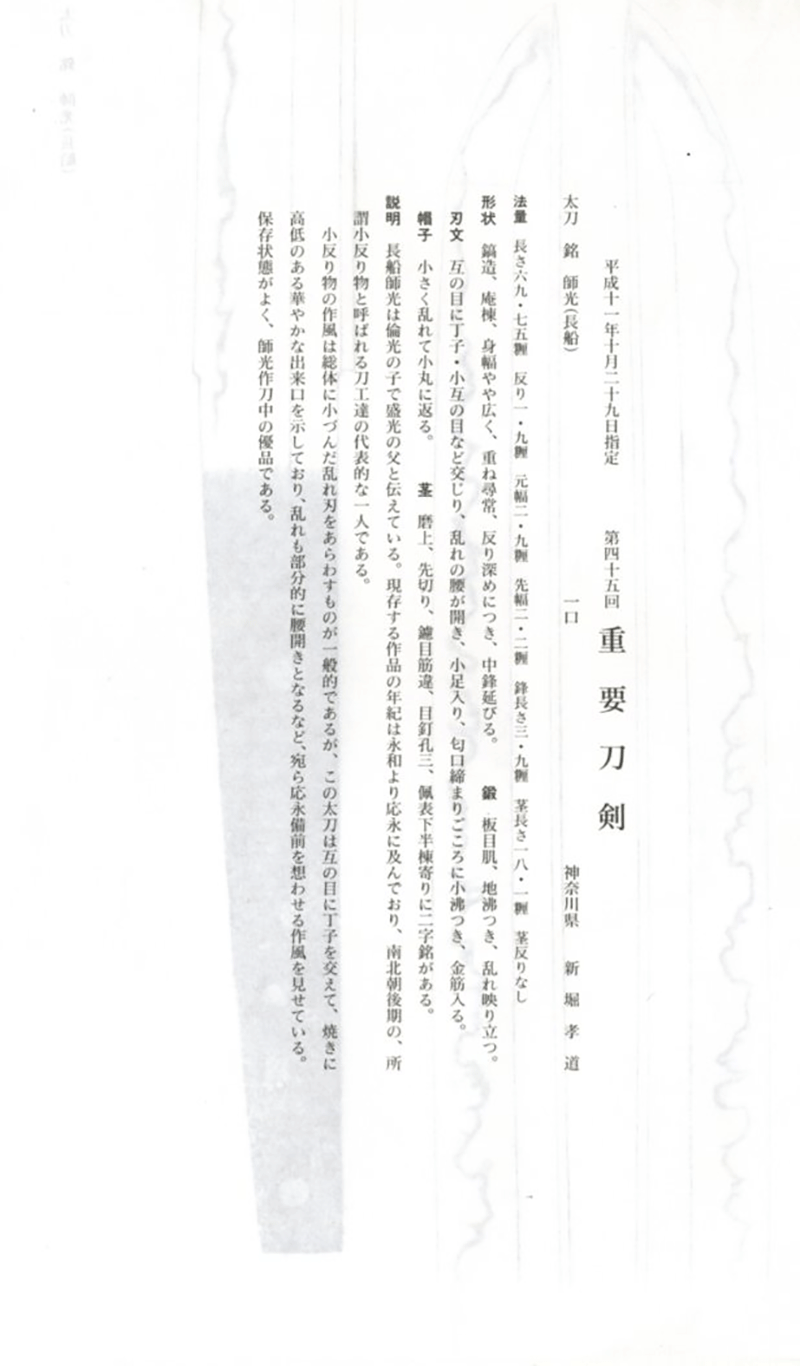
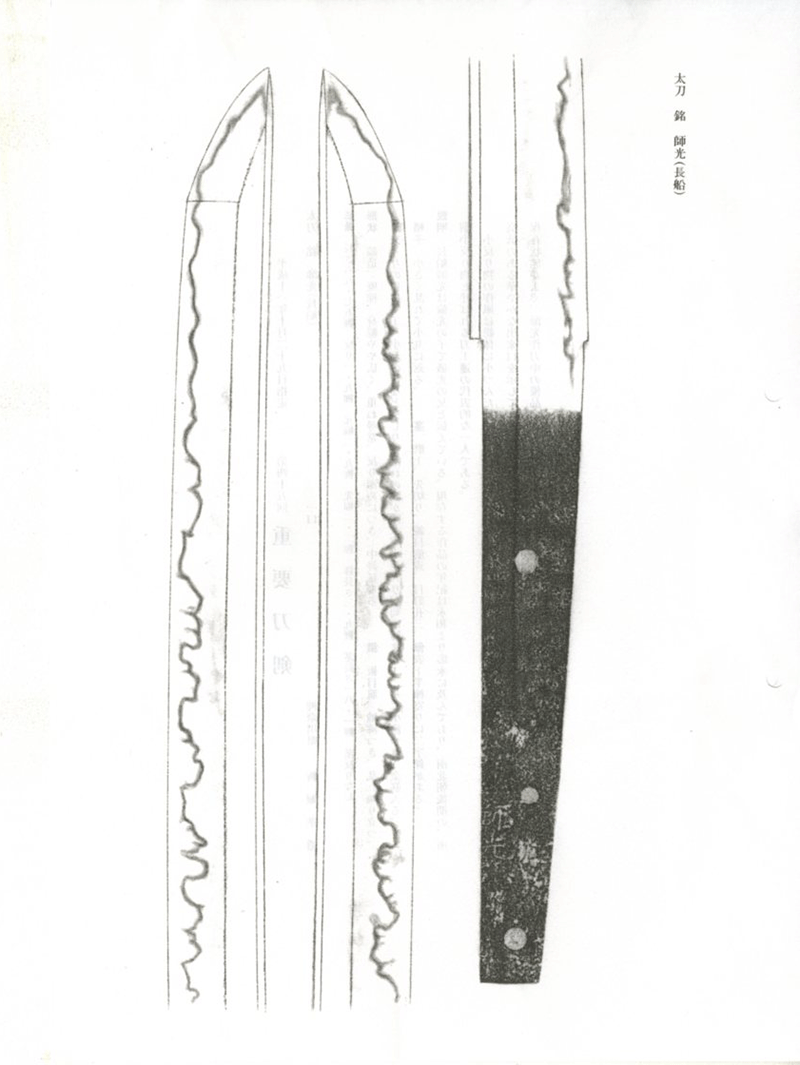
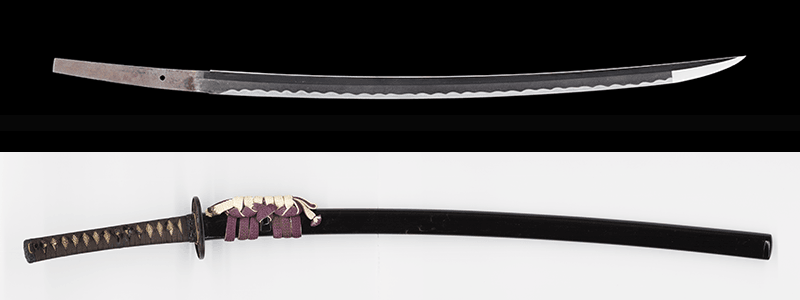
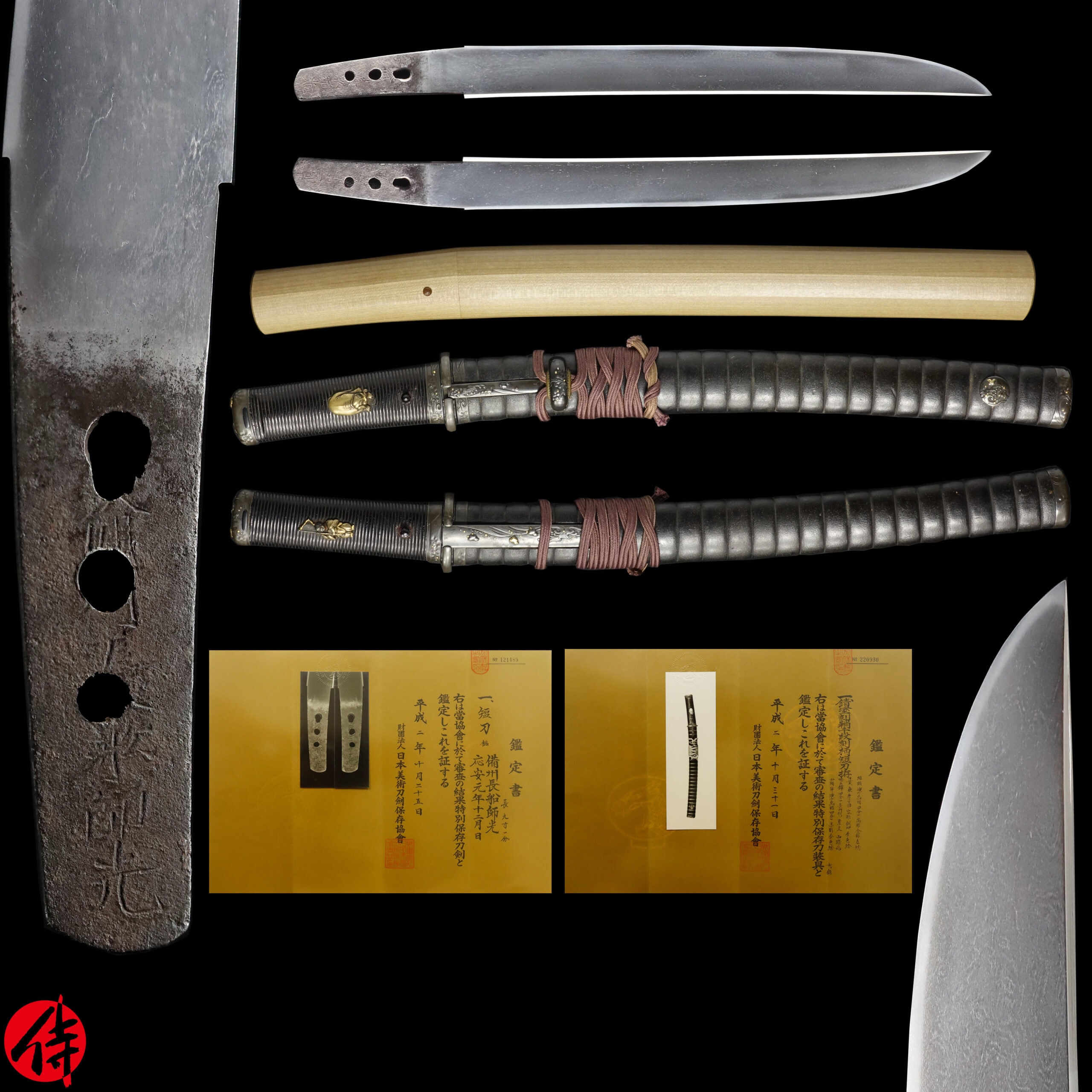
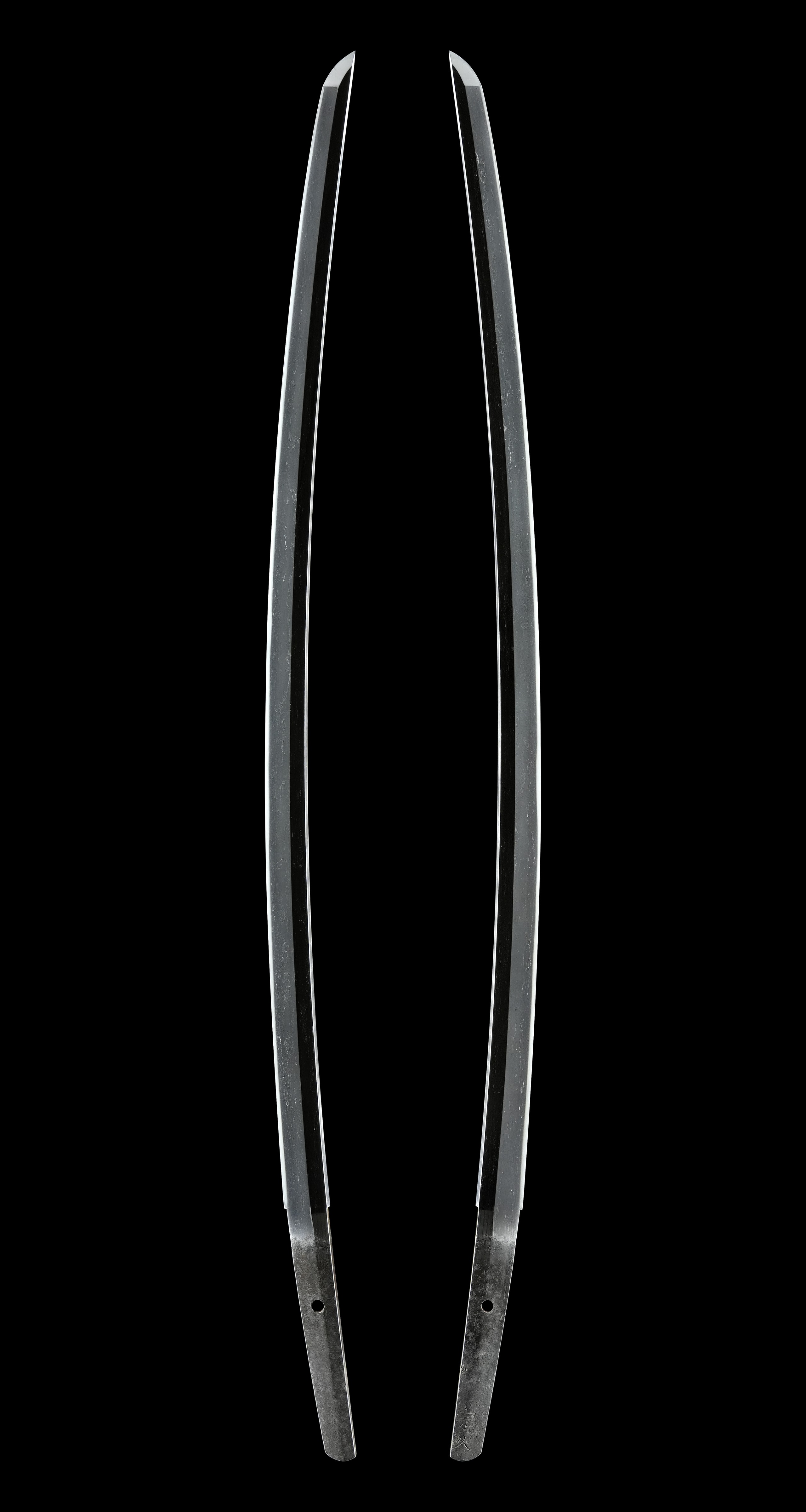
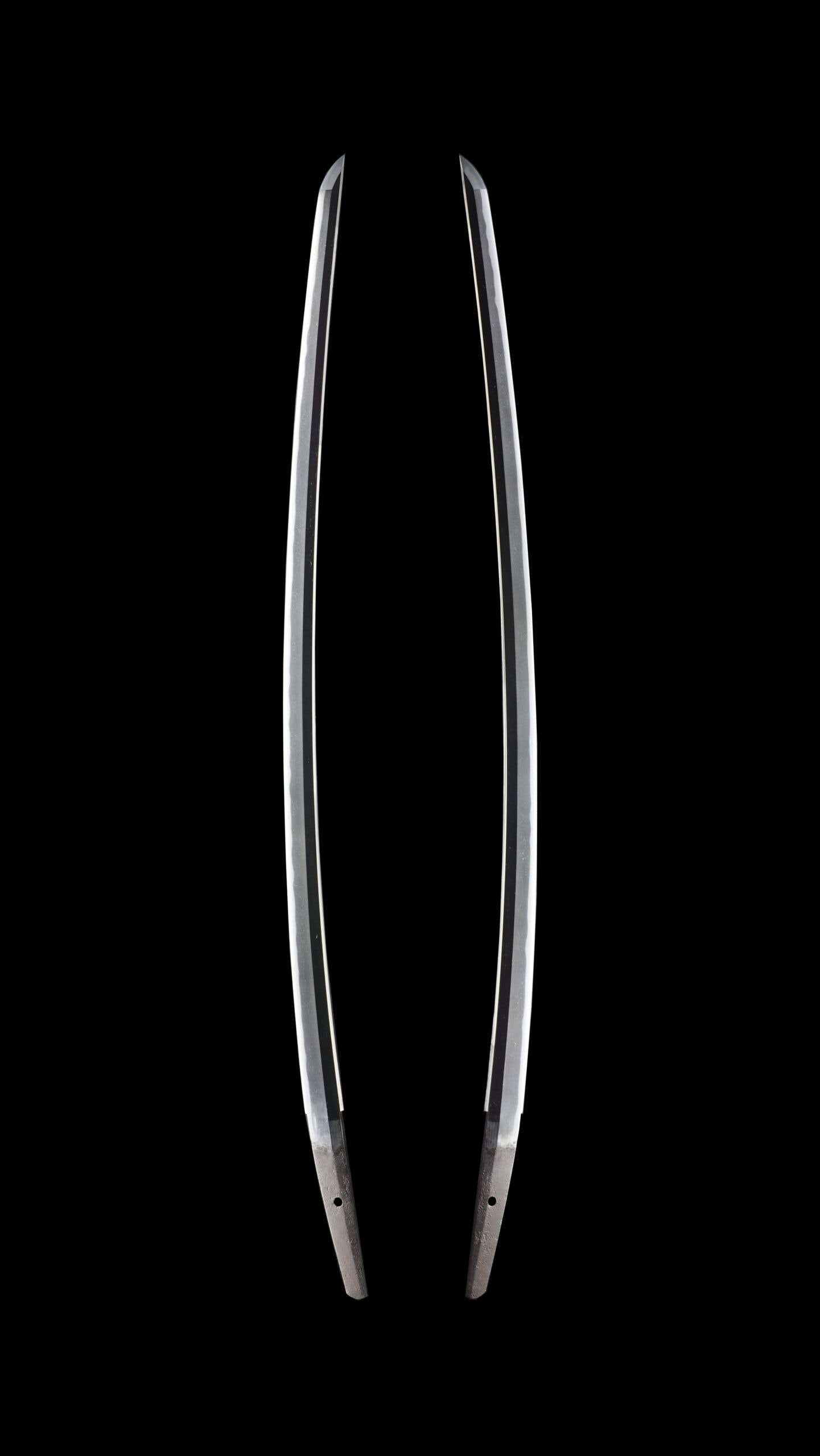
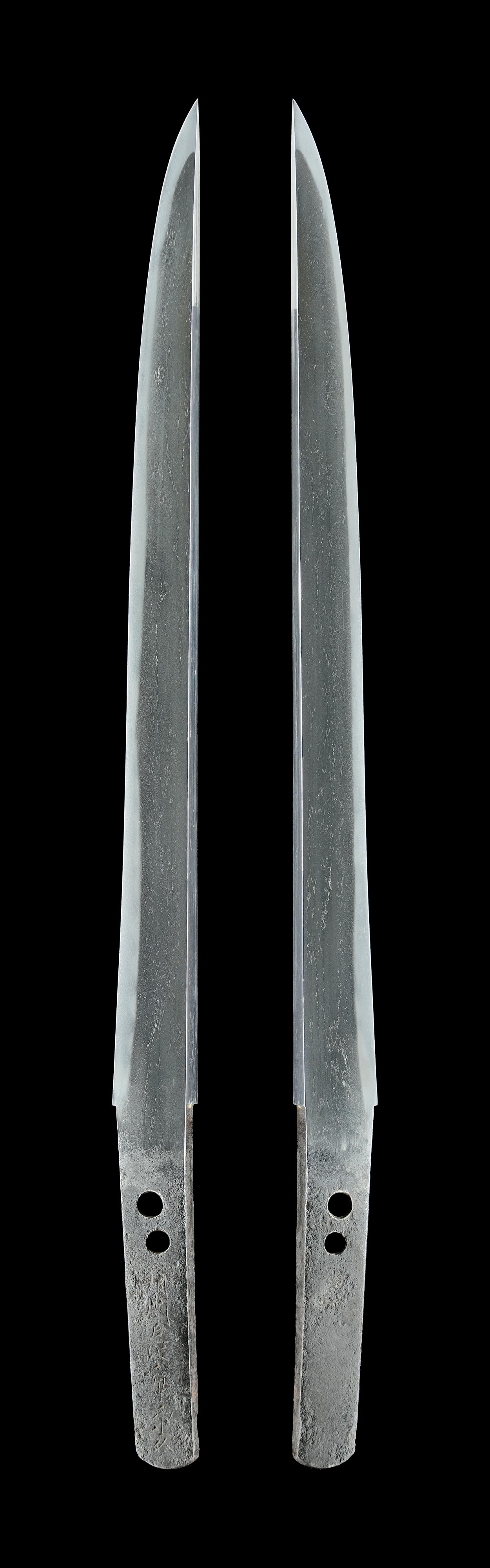
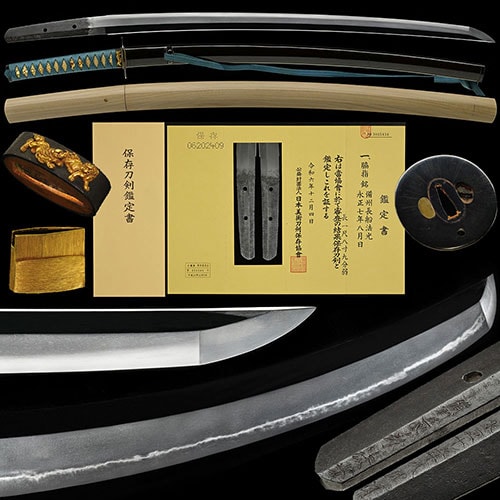
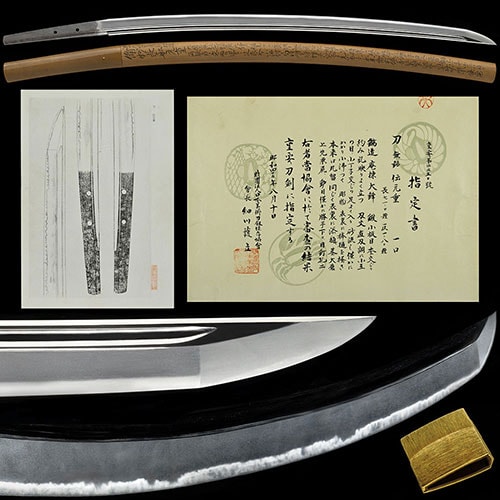
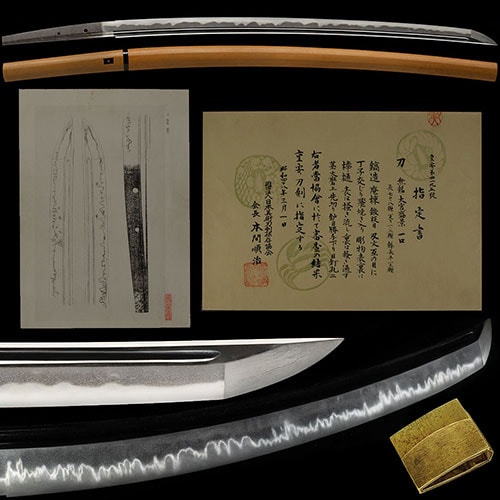
Moromitsu is a Bizen Osafune smith of the late Nanbokucho period, and the published sources hand him down in the Meikan as the son of Rinko and the father of the Oei-Bizen master Morimitsu. Signed and dated tachi survive from the Eiwa, Oan and Shitoku eras through Eitoku and Meitoku, and the references read the present blades as the first generation of the name, a hand earlier than the Oei-dated Moromitsu who carried it on. He belongs to the group of late-Nanbokucho Osafune smiths the published record collectively calls Kozori, the small-curvature makers who worked at the periphery of the great workshop, and the NBTHK names him plainly as one of its leading hands, 「南北朝後期の, 所謂小反り物と呼ばれる刀工達の, 代表的な一人である」[[c:1]]. The line is recorded as continuing for several generations into the Muromachi period, but it is this first Moromitsu whose dated tachi anchor the group, the Eitoku piece of 1381 and the Shitoku and Eiwa blades among the few firmly dated witnesses to Osafune work just before the Oei flowering.
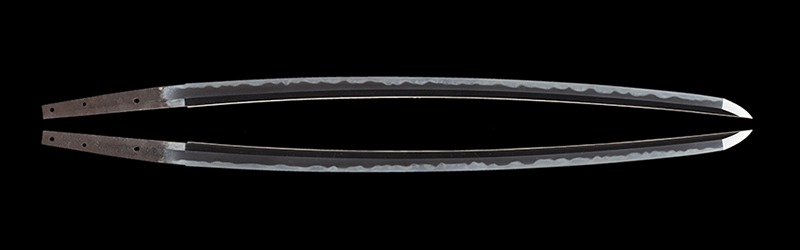
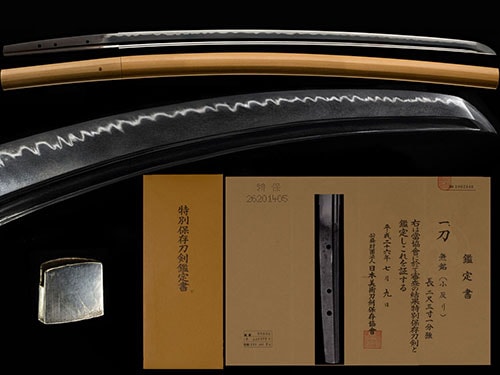
His characteristic hand is a small-patterned midare built on a shallow ko-notare. Into that quiet base he sets ko-gunome, gunome running two by two in sequence, slight togariba and a little choji, the whole kept small and held down so that the temper, as the published sources put it on his most archaic tachi, lies low across the blade. Ko-ashi and yo enter, the temper is carried in nioi with ko-nie adhering, and fine sunagashi run through the pattern, on his best work joined by kinsuji. The reading the NBTHK return again and again is one of restraint: his is the subdued register of Bizen, 「刃文は盛光, 康光に比して地味であり, いわゆる小反りの作域のものである」[[c:2]], a manner more reticent than that of his son Morimitsu and of Yasumitsu, who would temper the same Bizen idea in the bolder, more decorative pattern of Oei-Bizen. The scale itself is the tell. Where the mainstream Osafune of the Nanbokucho height reaches for height and flourish, Moromitsu compacts everything, the midare running in small forms that demand to be read closely, and the published sources judge the result, on a dated tachi shortened only a little, 「いかにも師光の持味を発揮した出来の宜しい一口といえよう」[[c:3]].
The jigane is an itame, often standing and flowing toward the edge, mixed with mokume and on the finest blades forged tight with the grain standing finely. Over it lie ji-nie, frequent chikei and patches of ji-madara, and out of that Bizen steel rises the utsuri, sometimes faint, on his best late tachi a conspicuous midare-utsuri, and on one small Eitoku tachi a straight sugu-utsuri standing clear. The published record reads this jigane as the proof of the Bizen-den beneath the quiet temper, and on the Meitoku tachi of 1391 it goes further, praising a jigane bright and clear with a blue-black cast, 「青黒い色調に冴えた地鉄が強く, 総じて優れた出来の一口である」[[c:4]]. The bearing of these blades is archaic. They keep koshizori with pronounced funbari, the kasane often thick for the width, and on the oldest the chu-kissaki compacts toward an ikubi profile, all of which the NBTHK reads as marks of the late Nanbokucho date. The boshi answers the small midare with a midare-komi that tends to a pointed tip or settles into a ko-maru, the very point often brushed with hakikake; many of the tachi carry a bo-hi, and several add devotional carving, a bonji, a sankoken, a kurikara cut in grass style at the foot of the groove.
The corpus admits a reading in three registers without straining the evidence. The staple is the subdued small-pattern midare just described, the work the published sources call the typical Kozori manner. A second, narrower register is his most varied, set down on the Shitoku-dated tachi: there the temper opens into ko-choji mixed with ko-gunome, ko-notare and pointed elements, a saka-ashi tendency appearing here and there, ko-ashi entering well and the nioiguchi full and rounded, a piece the NBTHK reads as more varied in range while keeping a high degree of completeness. A third register widens past the Kozori norm altogether. On one signed tachi the gunome takes choji into itself with the valleys opening toward the koshi, and the deki turns flamboyant. The NBTHK frames it as the exception that proves the rule, observing first that 「小反り物の作風は総体に小づんだ乱れ刃をあらわすものが一般的である」[[c:5]] and then that this blade instead 「焼きに高低のある華やかな出来口を示しており」[[c:6]], a temper of marked height variation that 「宛ら応永備前を想わせる作風を見せている」[[c:7]]. It is on that threshold that the smith is most clearly located, the choji-mixed gunome and the opening midare already foreshadowing the work his son would bring to its flowering.
What sets Moromitsu apart is read best from his own blades rather than by contrast. His bright midare-utsuri over standing itame, his small-pattern ko-notare carrying ko-gunome and slight choji, and his midare-komi boshi place him squarely in the Bizen-den, while the smallness and restraint of the whole separate him from the Osafune mainstream of the Nanbokucho height and from his own bolder successors. The published sources weave his lineage into nearly every entry, the Meikan giving him as 「銘鑑に倫光子, 盛光の父とあり」[[c:8]], son of Rinko and father of Morimitsu, and they place him at the hinge of the school's history, the last quiet phase of Nanbokucho Osafune and the first intimation of Oei-Bizen carried in a single hand. The faint dating spread of his signed works, Eiwa through Meitoku in the present blades and on to Oei in the references, gives the group its chronological spine, so that his blades serve the study of the period as much as the eye.
Moromitsu survives almost entirely as signed and dated tachi, and seven of his blades carry the Juyo designation; he holds no National Treasure or Important Cultural Property, so his record runs through the Juyo tier rather than the patrimony preserved in museums and shrines. Fujishiro rates him Jo-saku. The value of the surviving work lies as much in its documentary weight as in its beauty: ubu, signed, dated blades are read in entry after entry as fine reference material for the Kozori group and for the Bizen smiths standing at the threshold of Oei, the rare Eitoku and Shitoku dates singled out as precious, the NBTHK calling the Shitoku tachi 「とりわけ至徳年紀が貴重な同工の優品である」[[c:9]]. Provenance is thin and worth stating plainly: of the recorded whereabouts, one of his finest tachi, sound in sugata, ji and ha, is an old treasured piece of the Shonai Sakai family, 「庄内酒井家の旧蔵品である」[[c:10]]. For a private collector the Kozori Moromitsu is not beyond reach in the way a National Treasure is, his designated work sitting in the Juyo tier rather than locked in public hands, yet a signed and dated tachi by the first-generation hand comes to market only rarely, a quiet landmark of late-Nanbokucho Osafune when it does.