In the Sengoku era the school served a second warrior court: the Later Hōjō at Odawara, whose patronage kept the Tsunahiro line forging hitatsura for the uchigatana age until the castle fell to Hideyoshi in 1590.
 NihontoWatchNihontoWatch
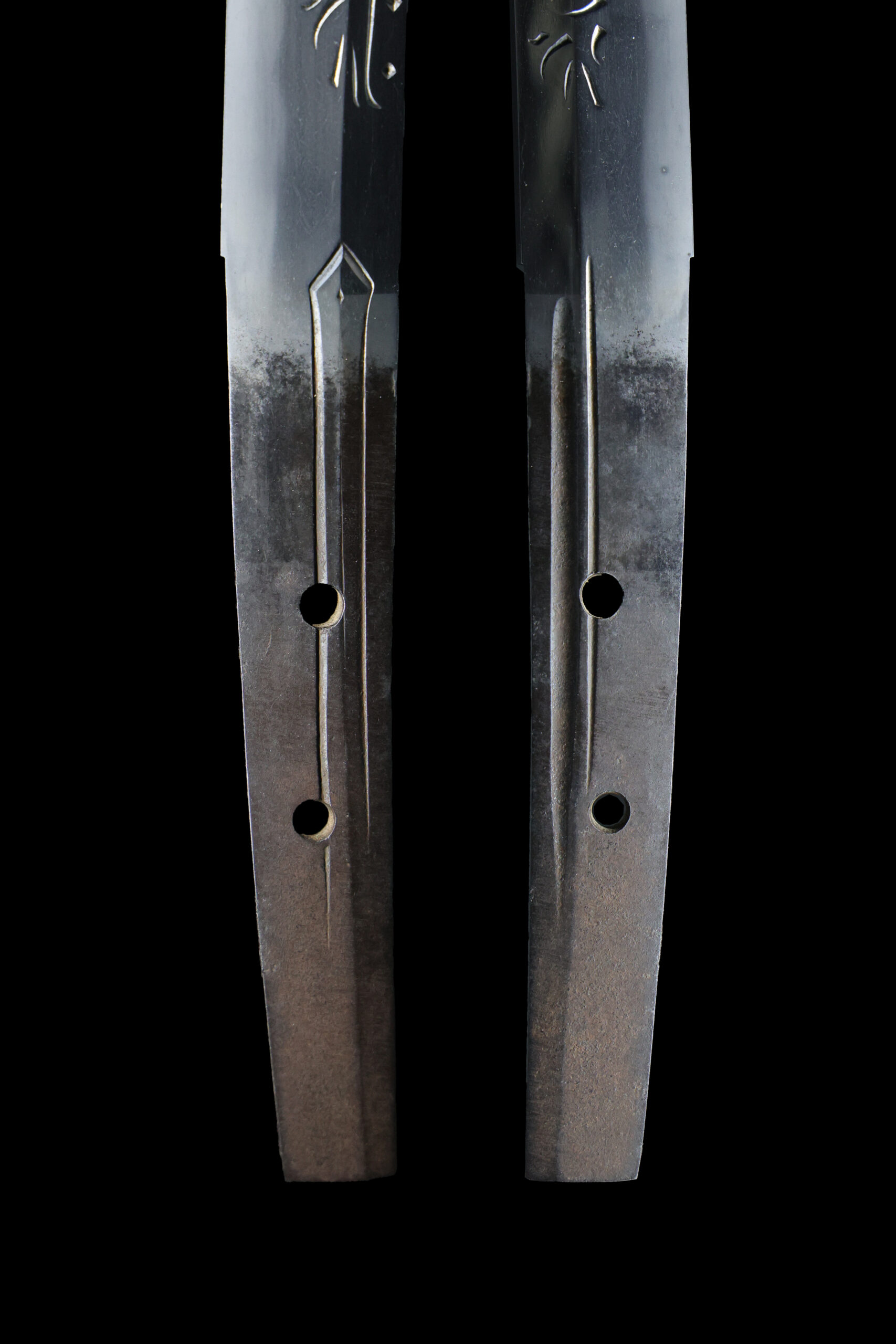
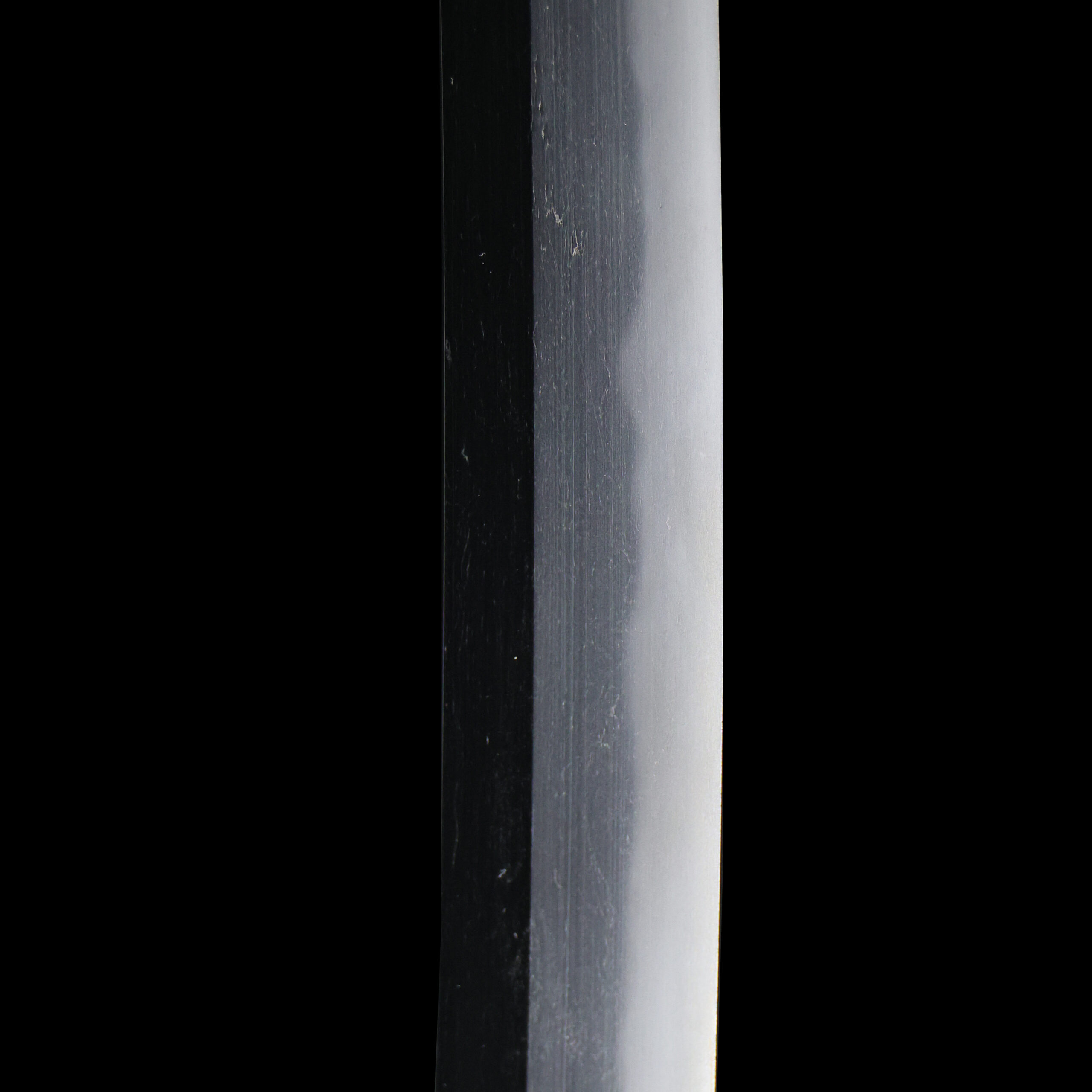
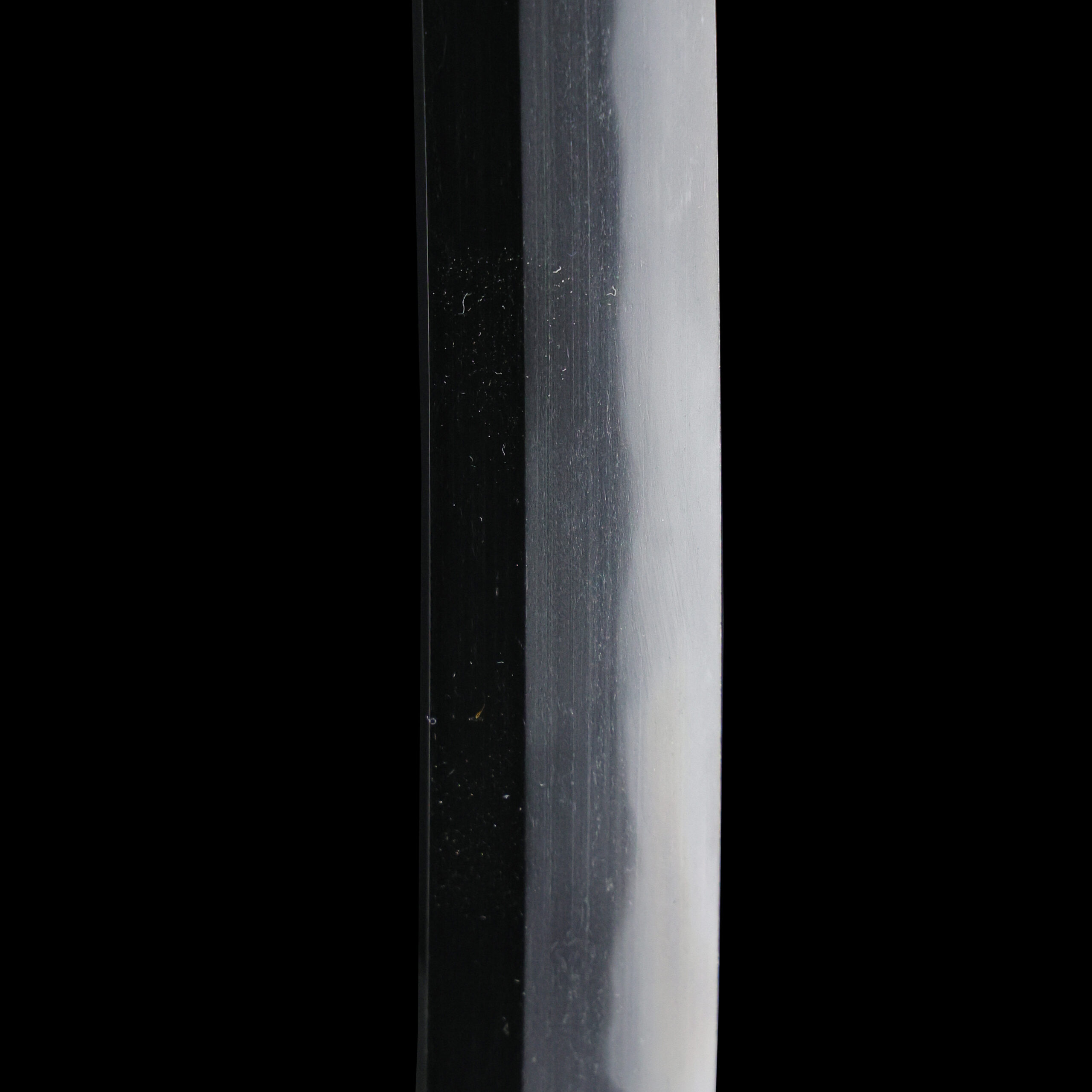
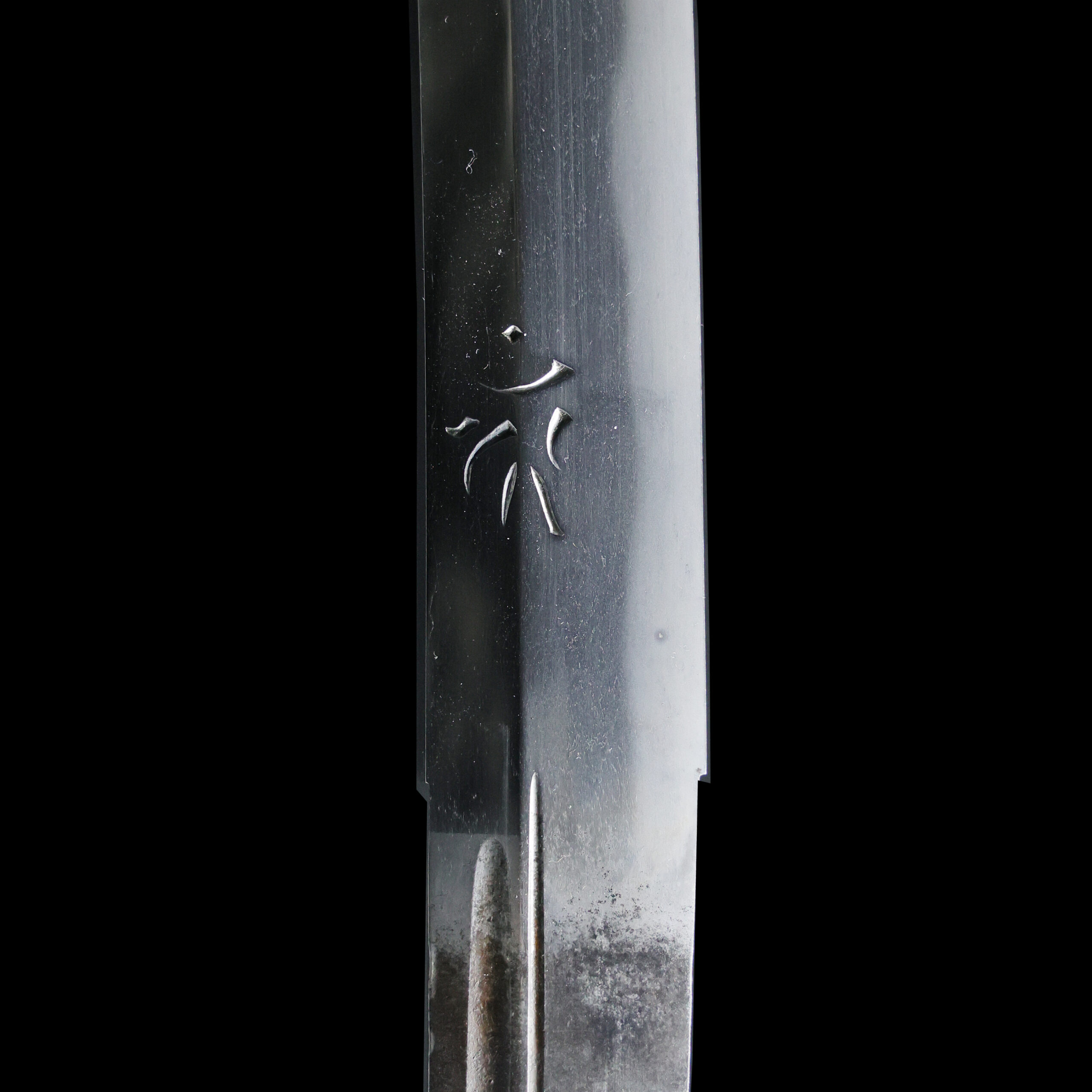
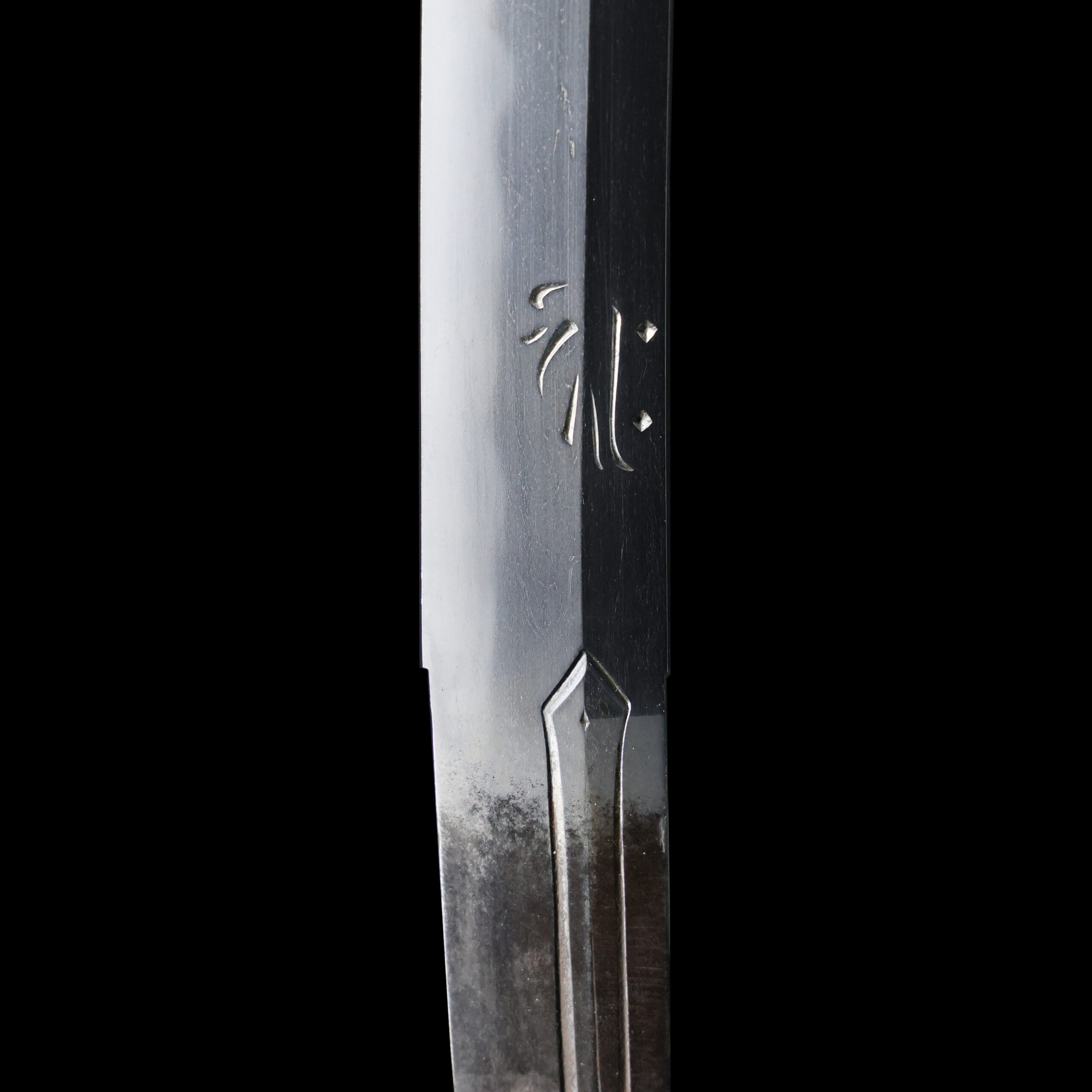
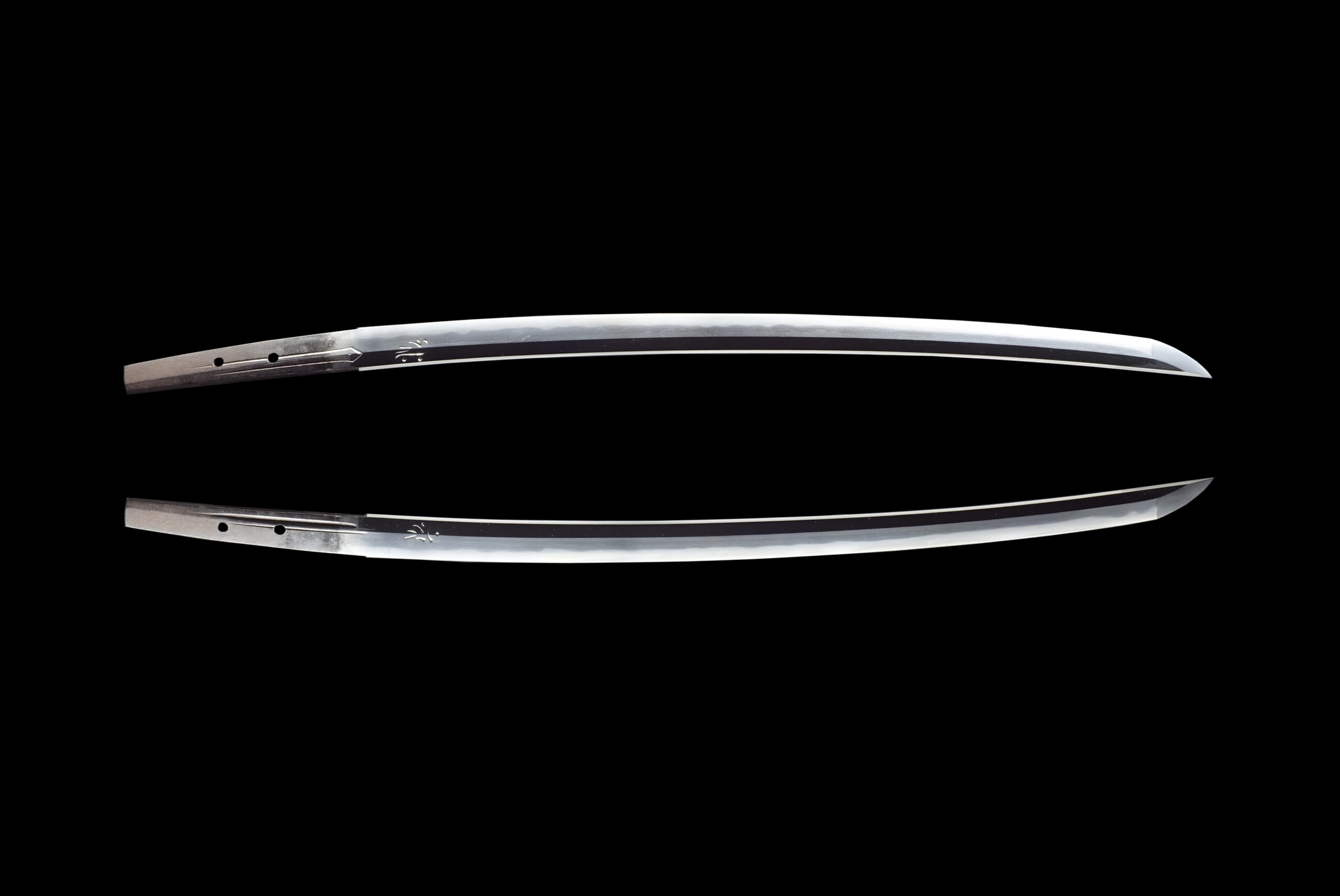
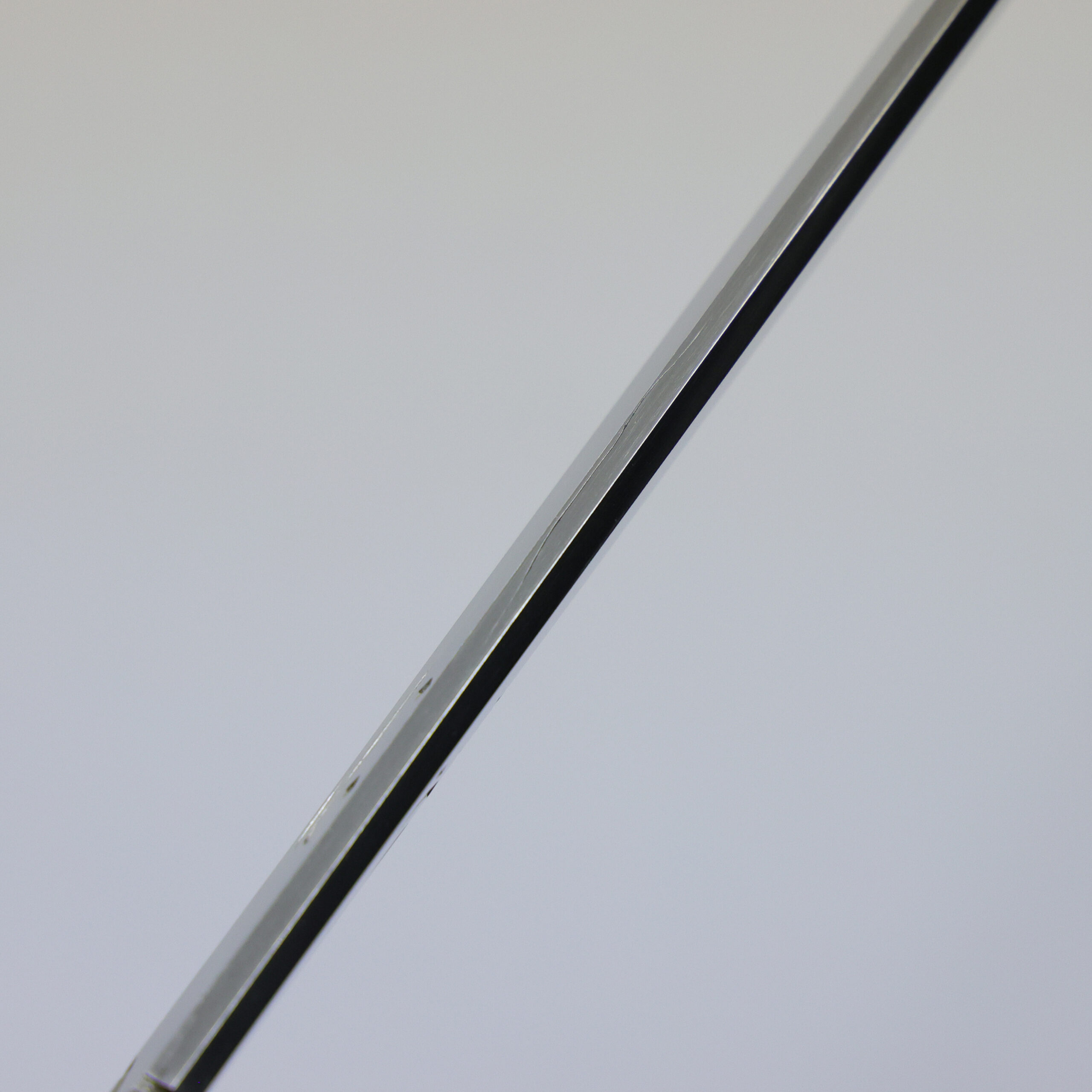
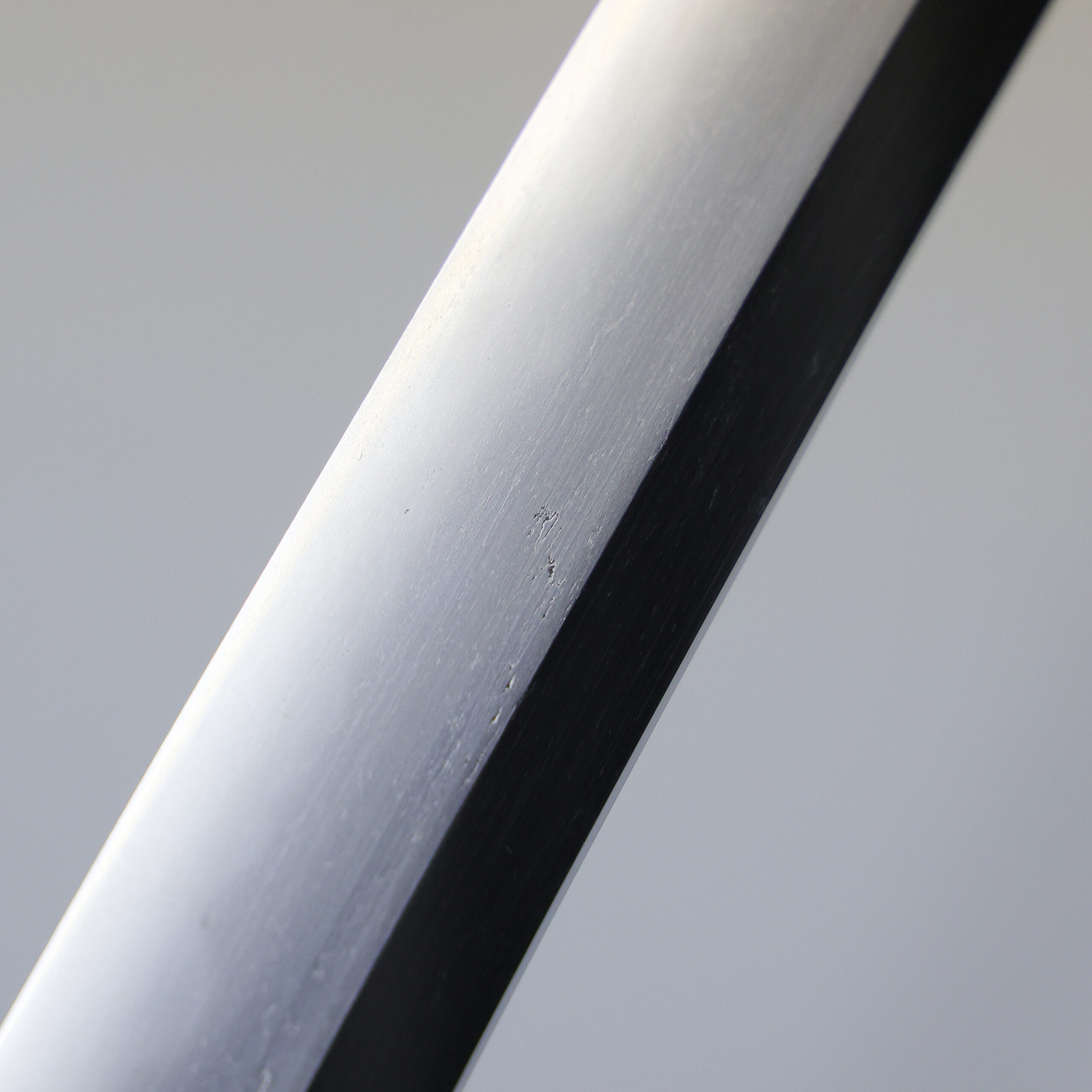
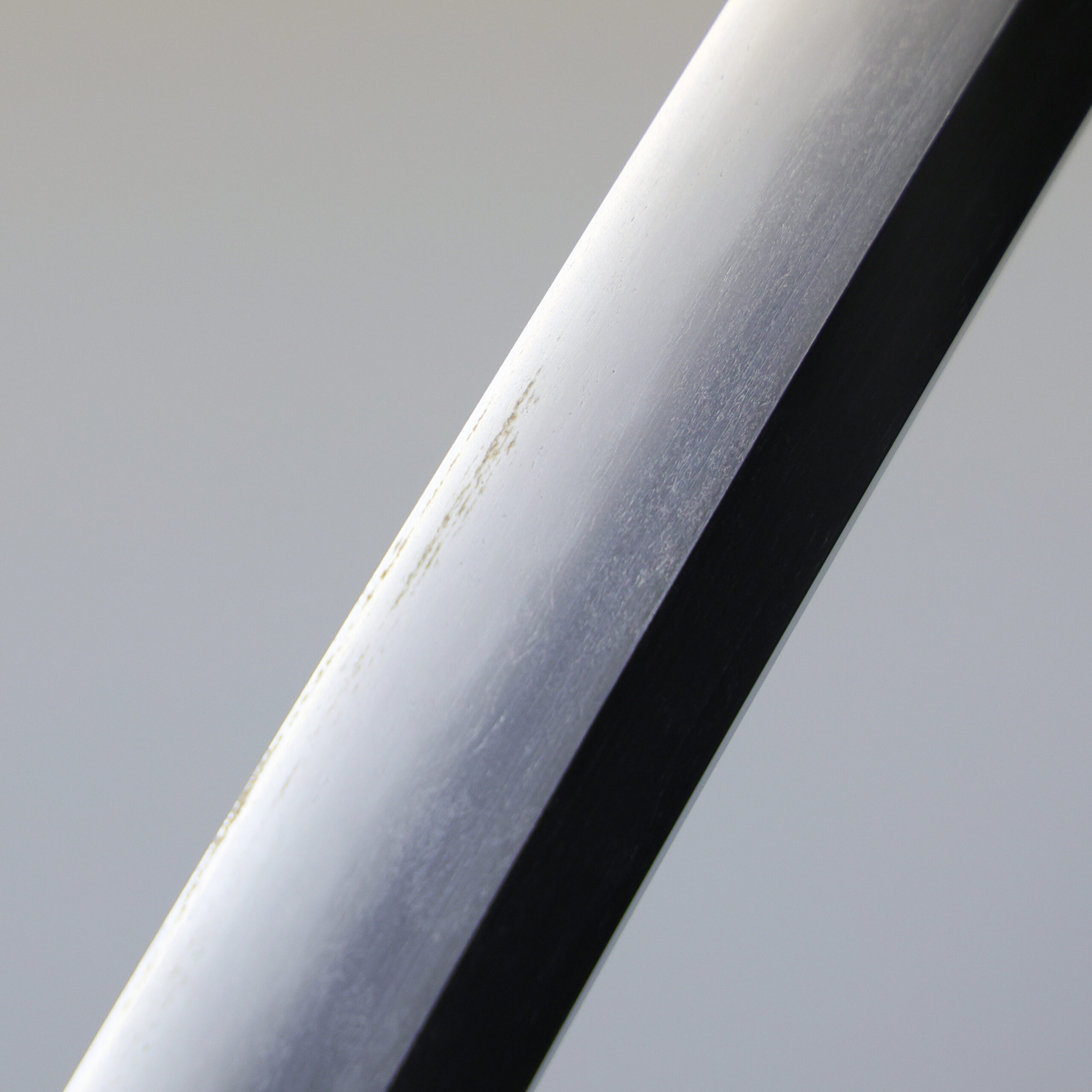
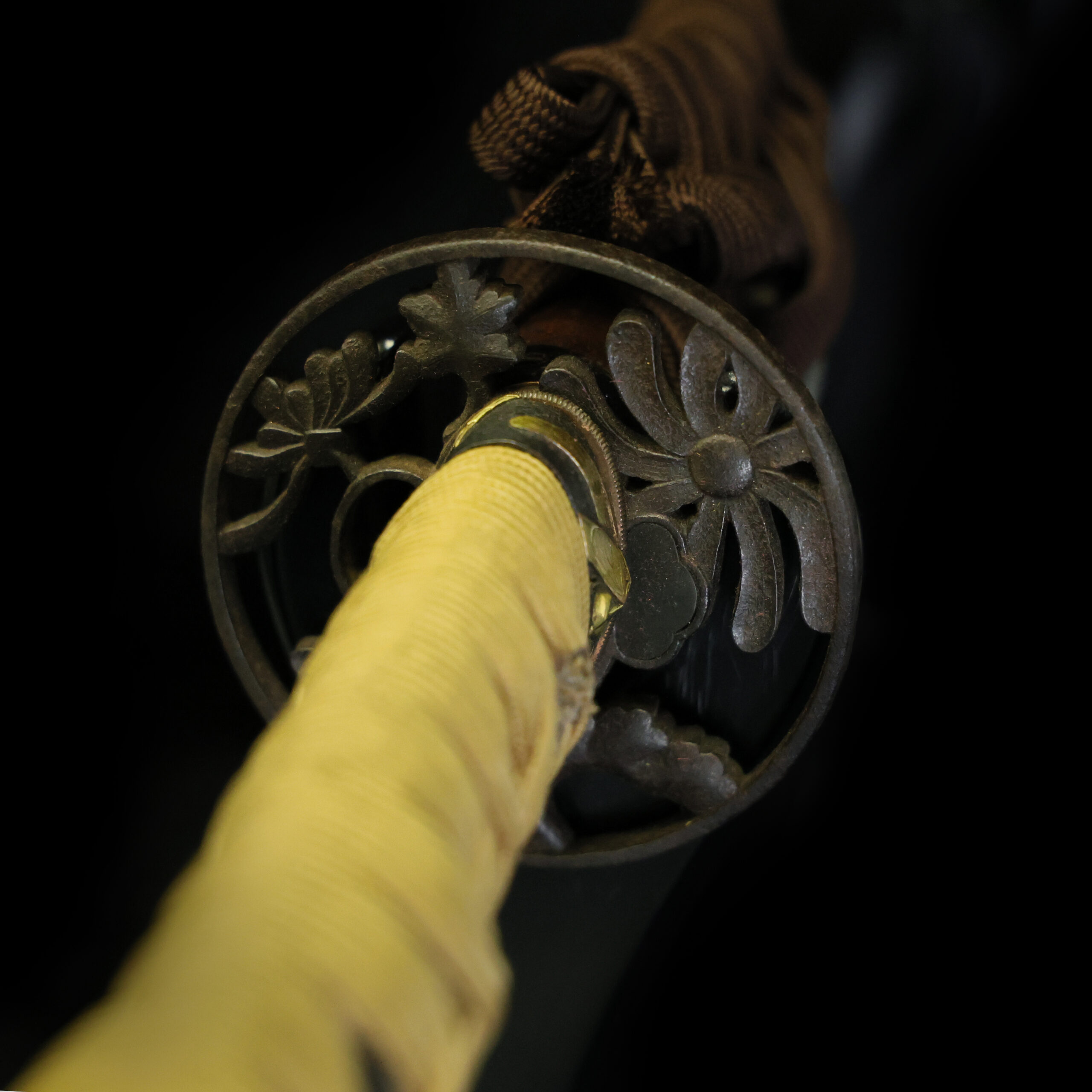
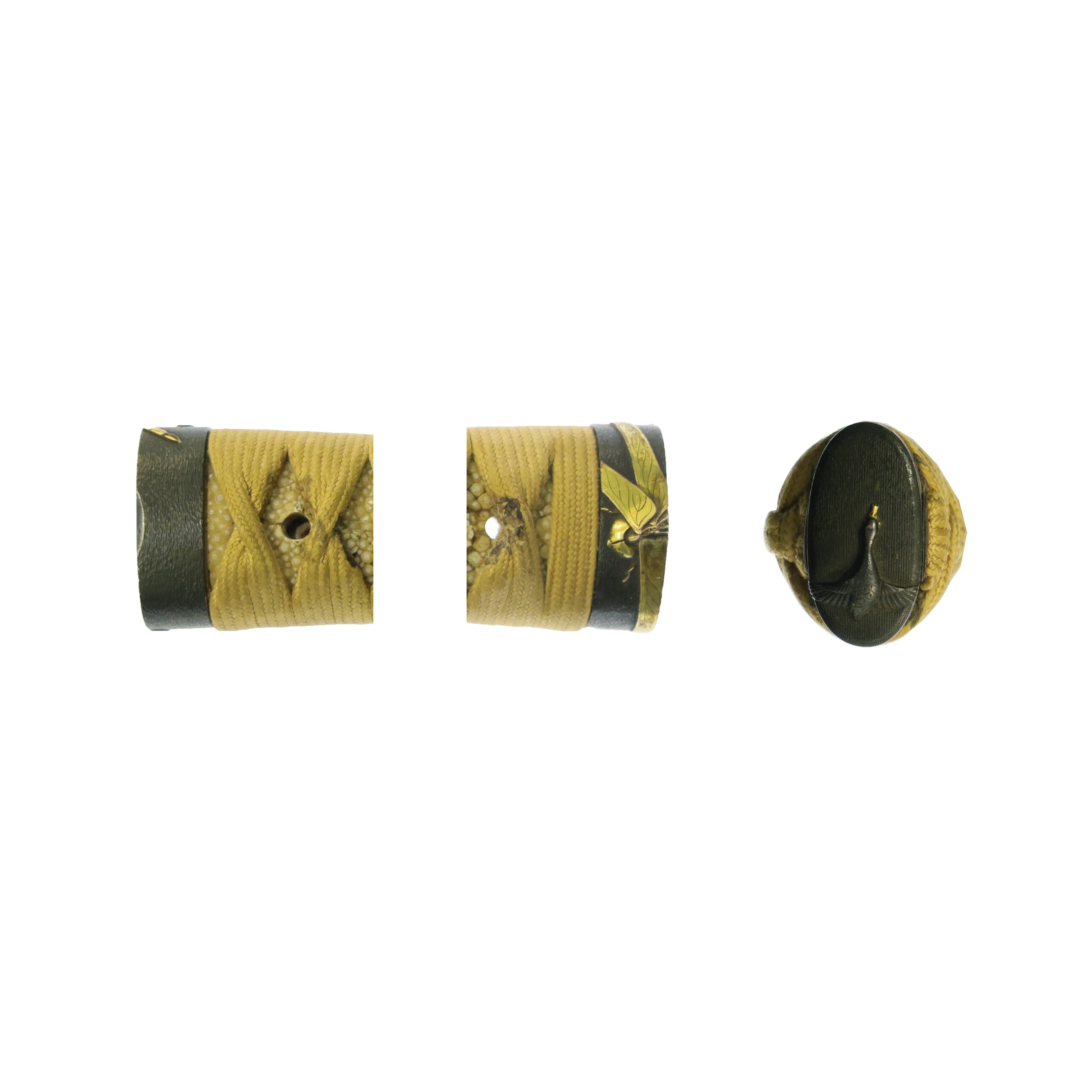
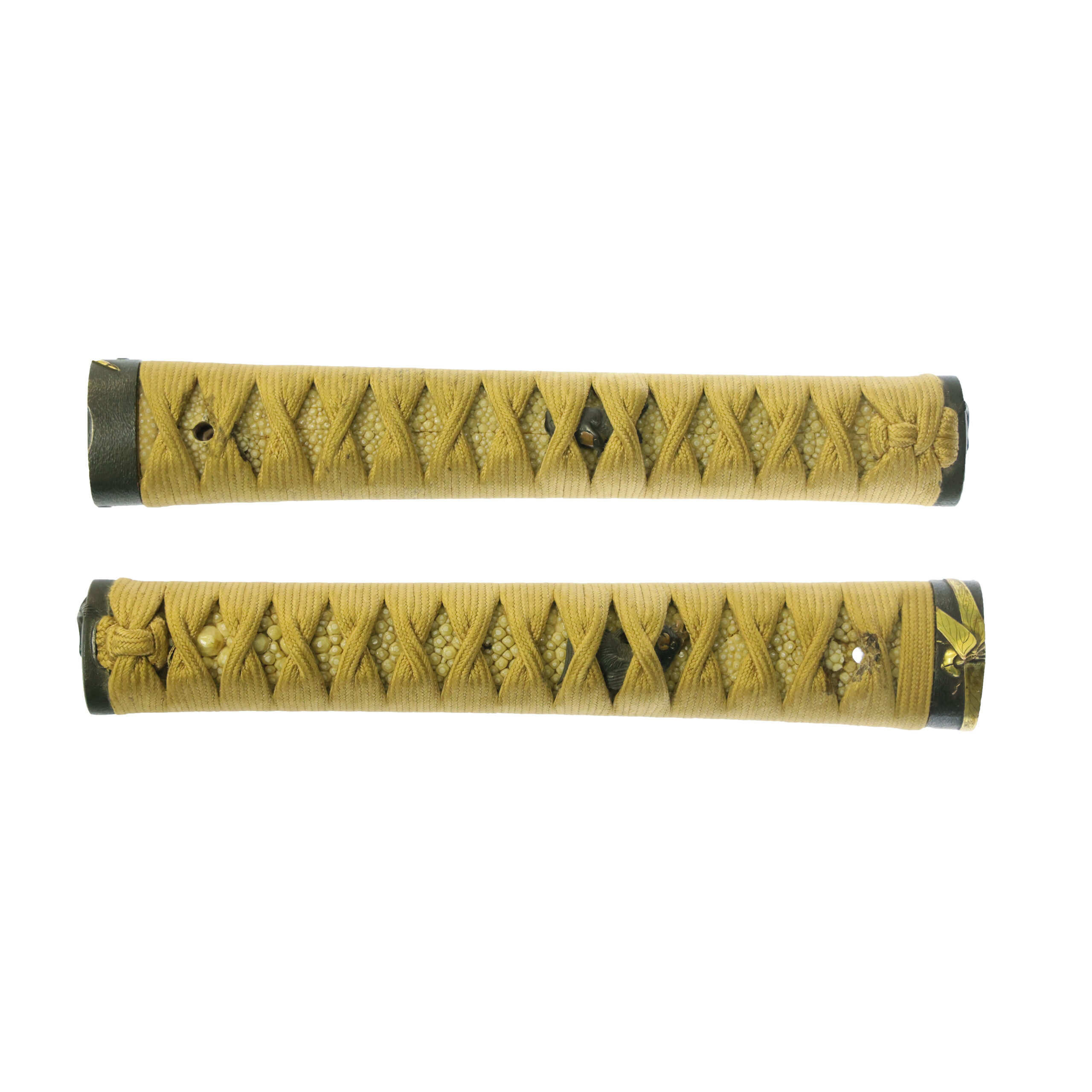
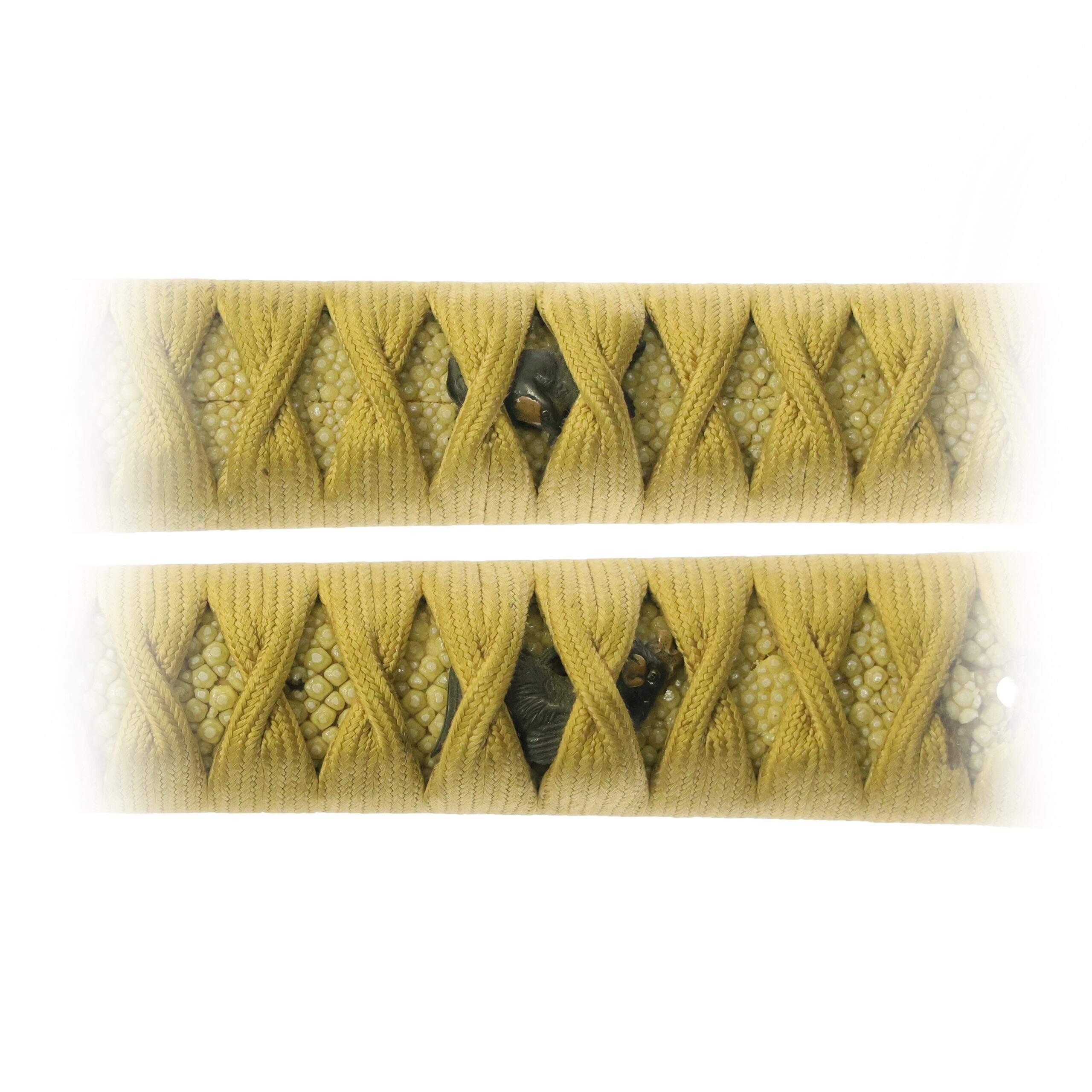
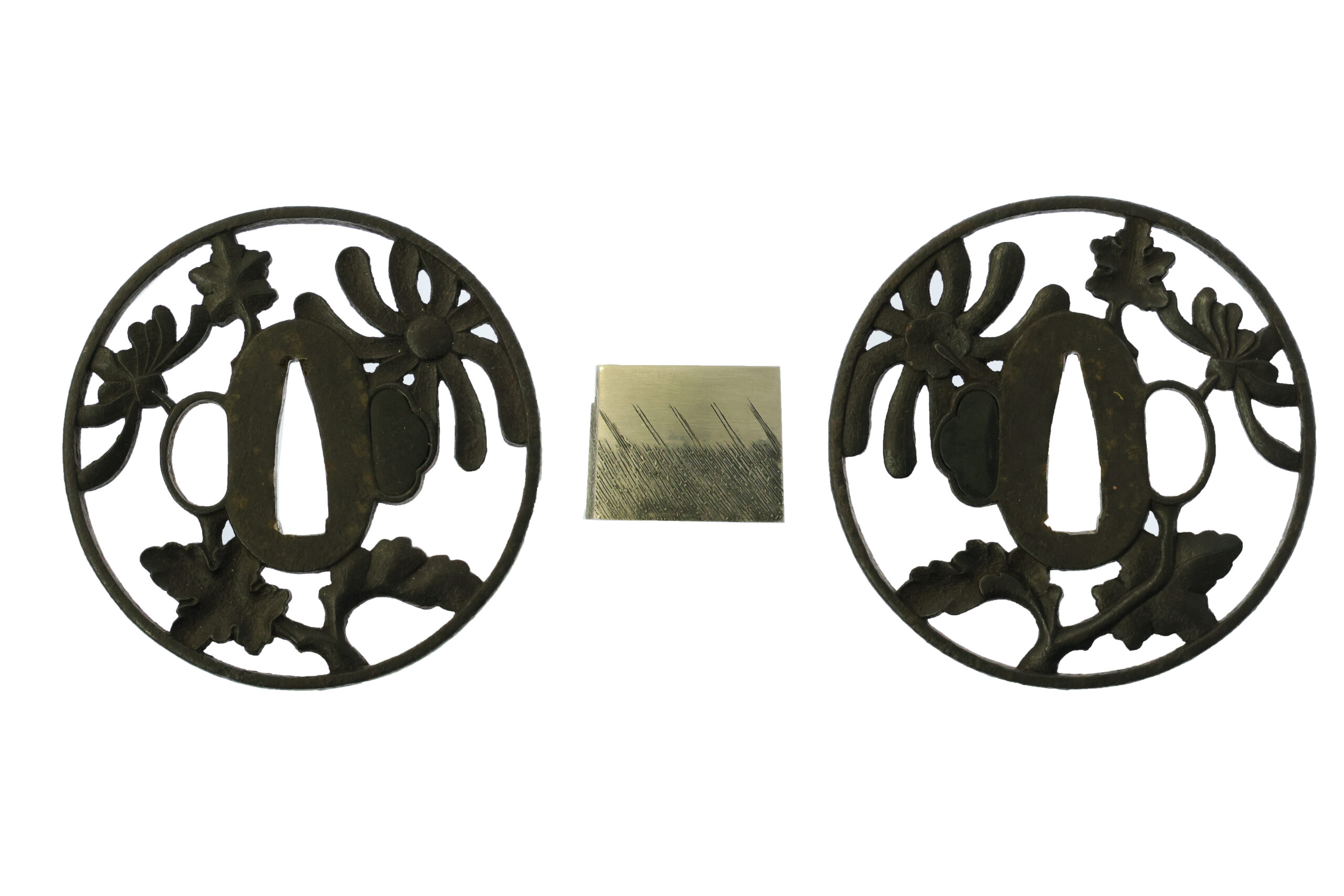
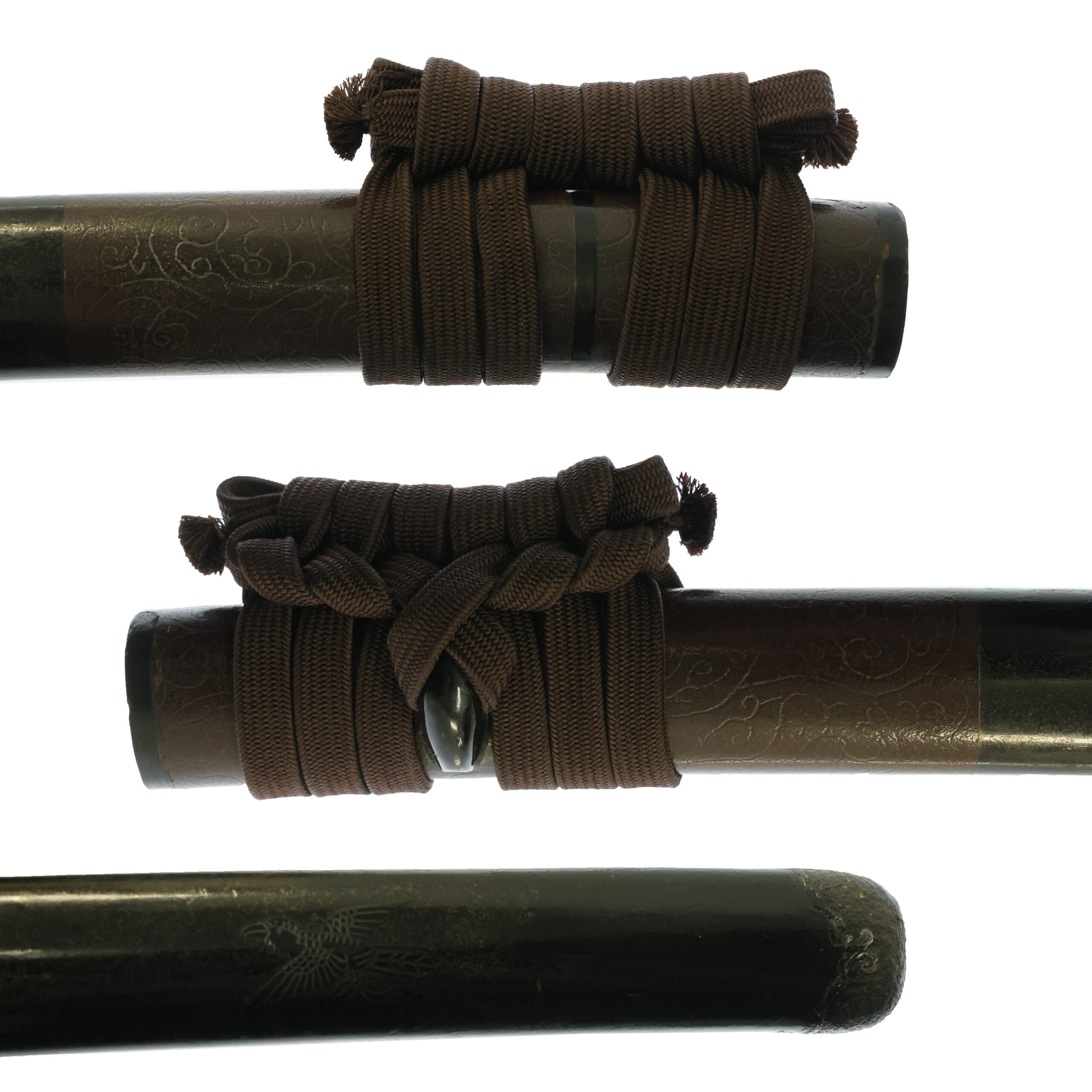
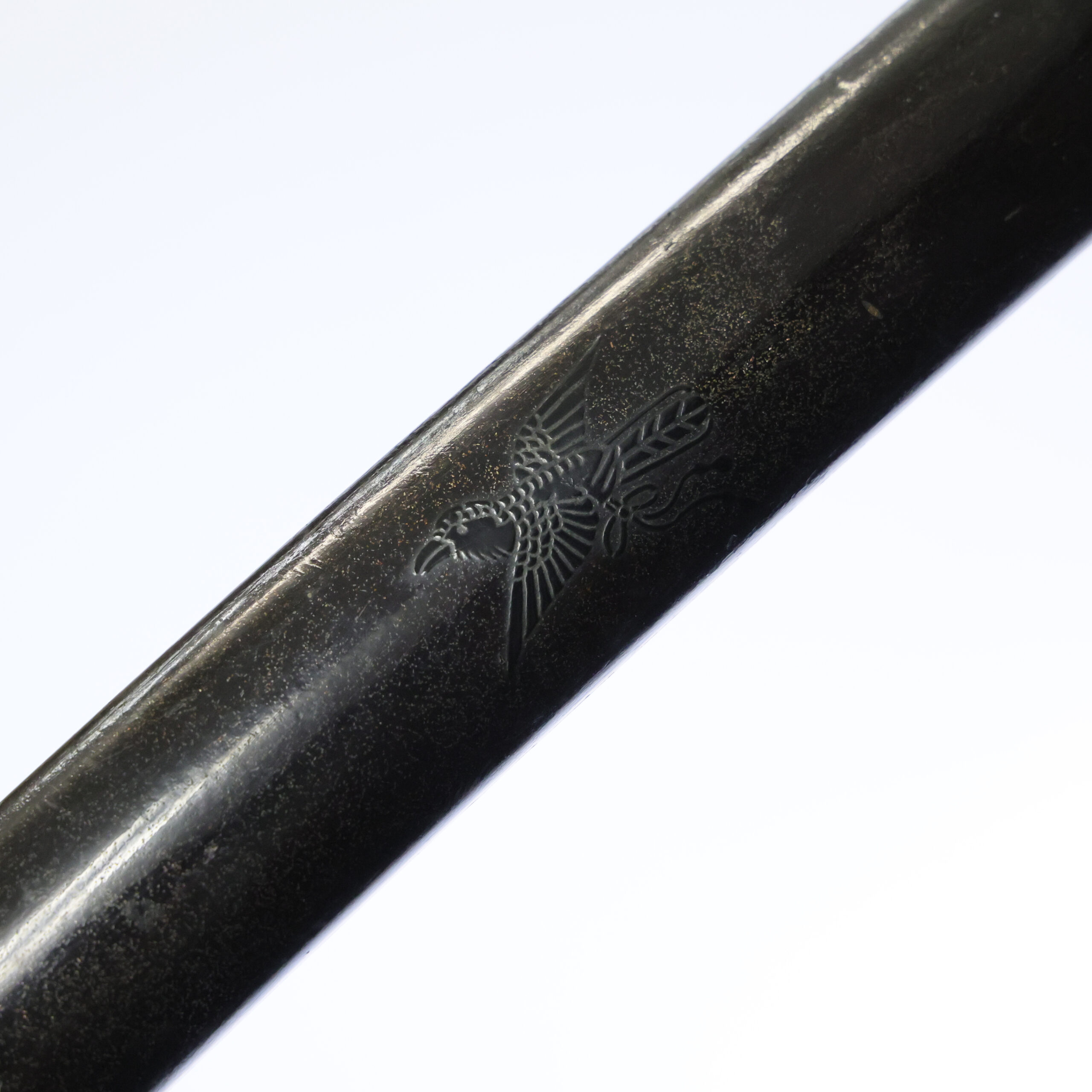
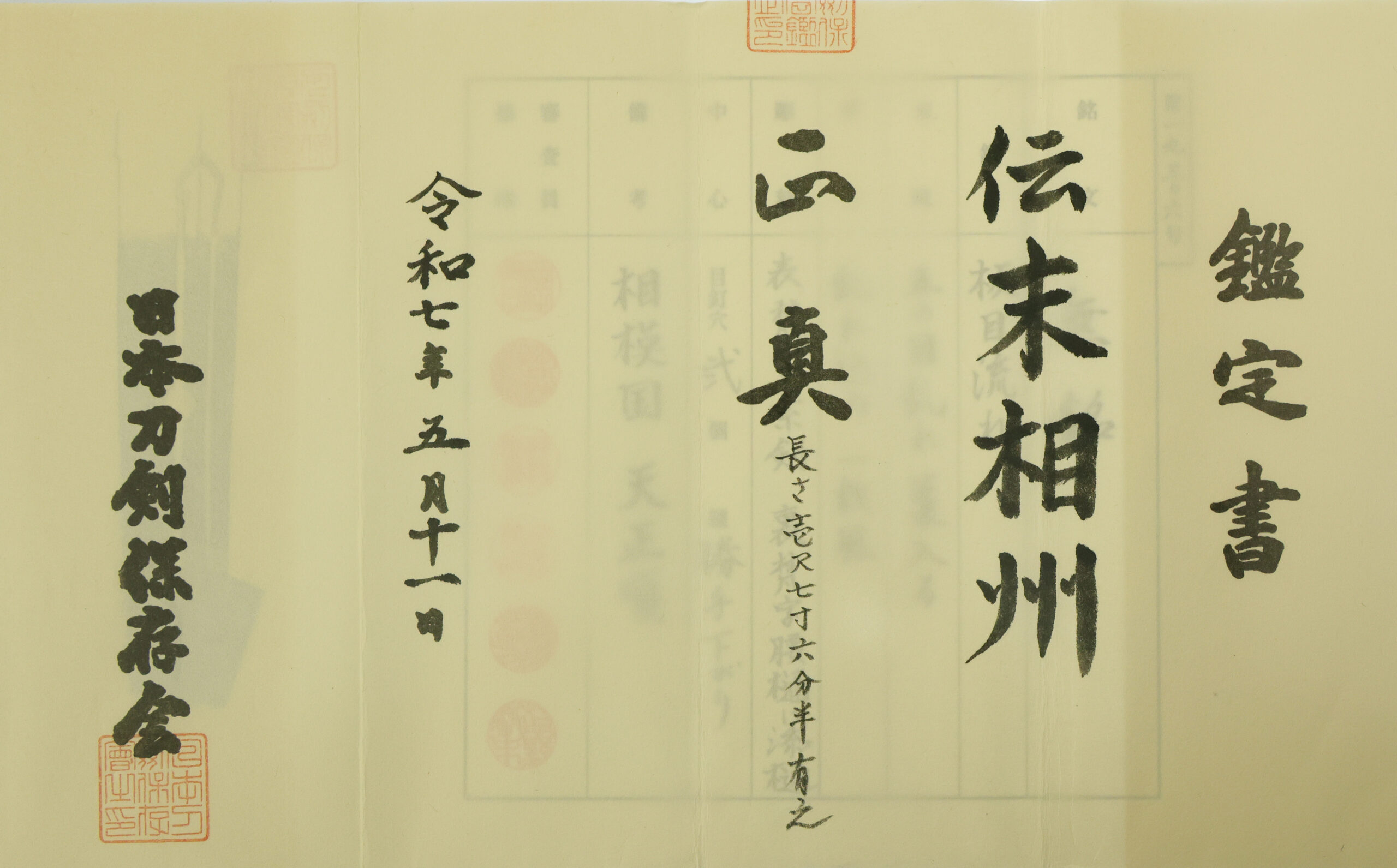
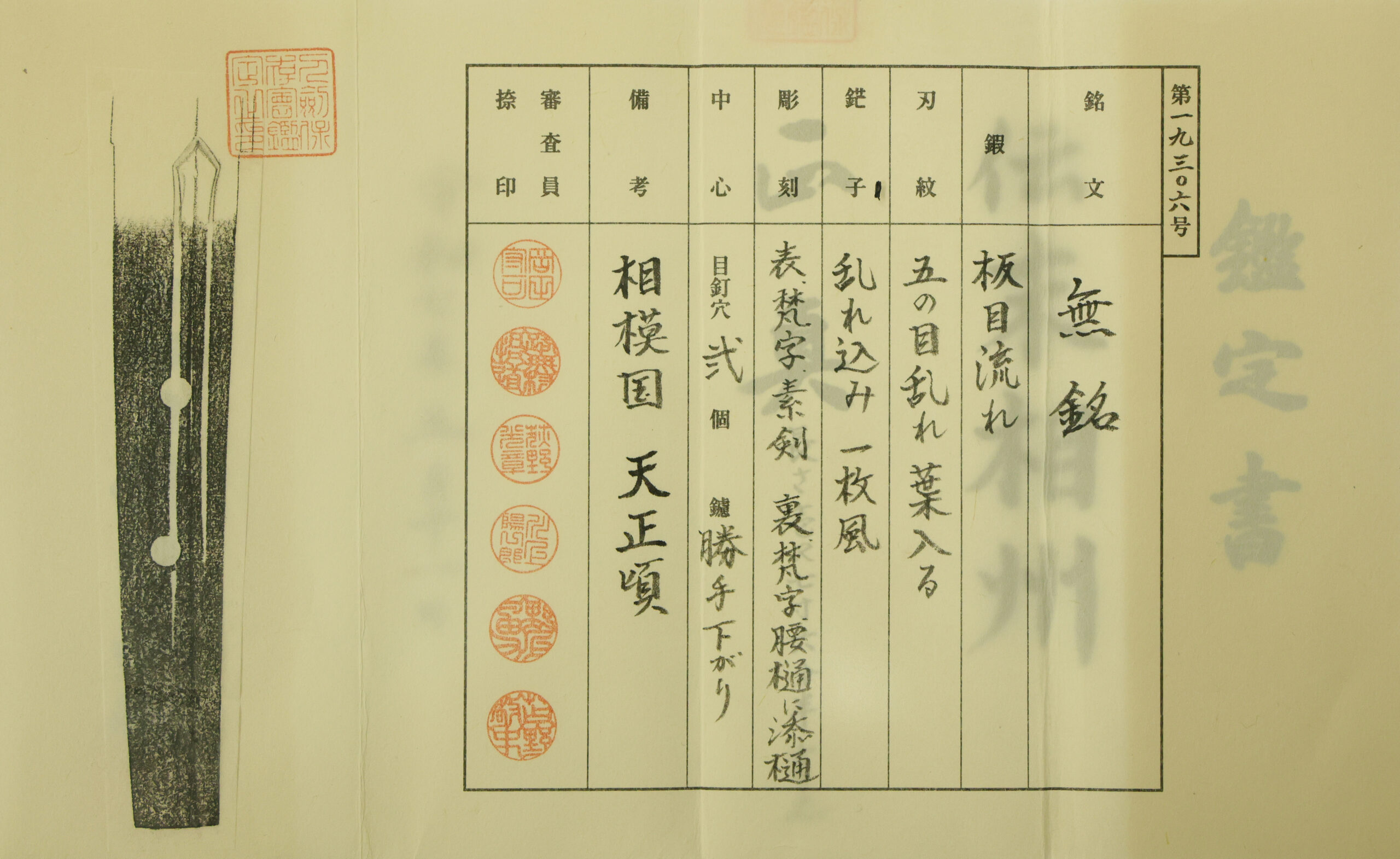
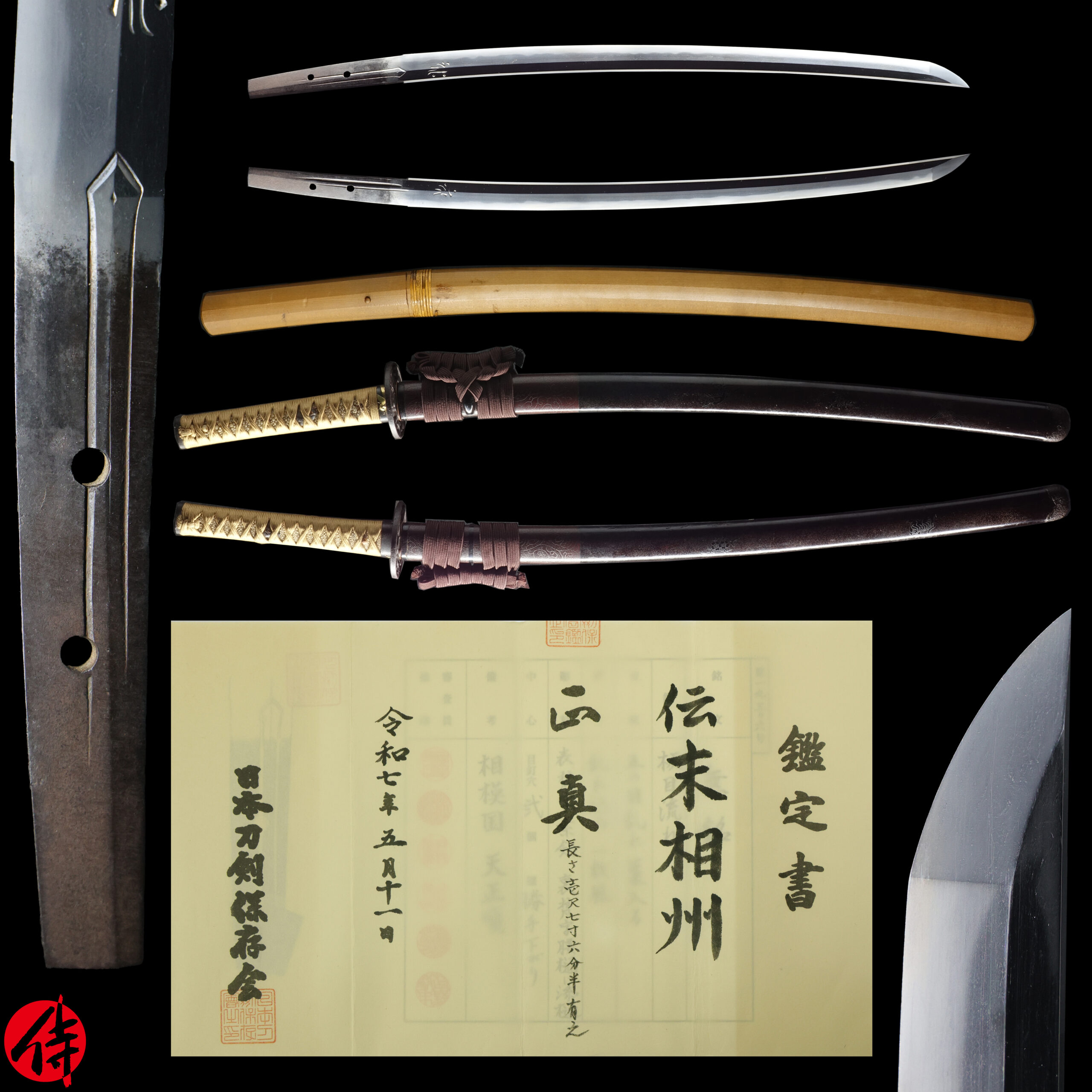
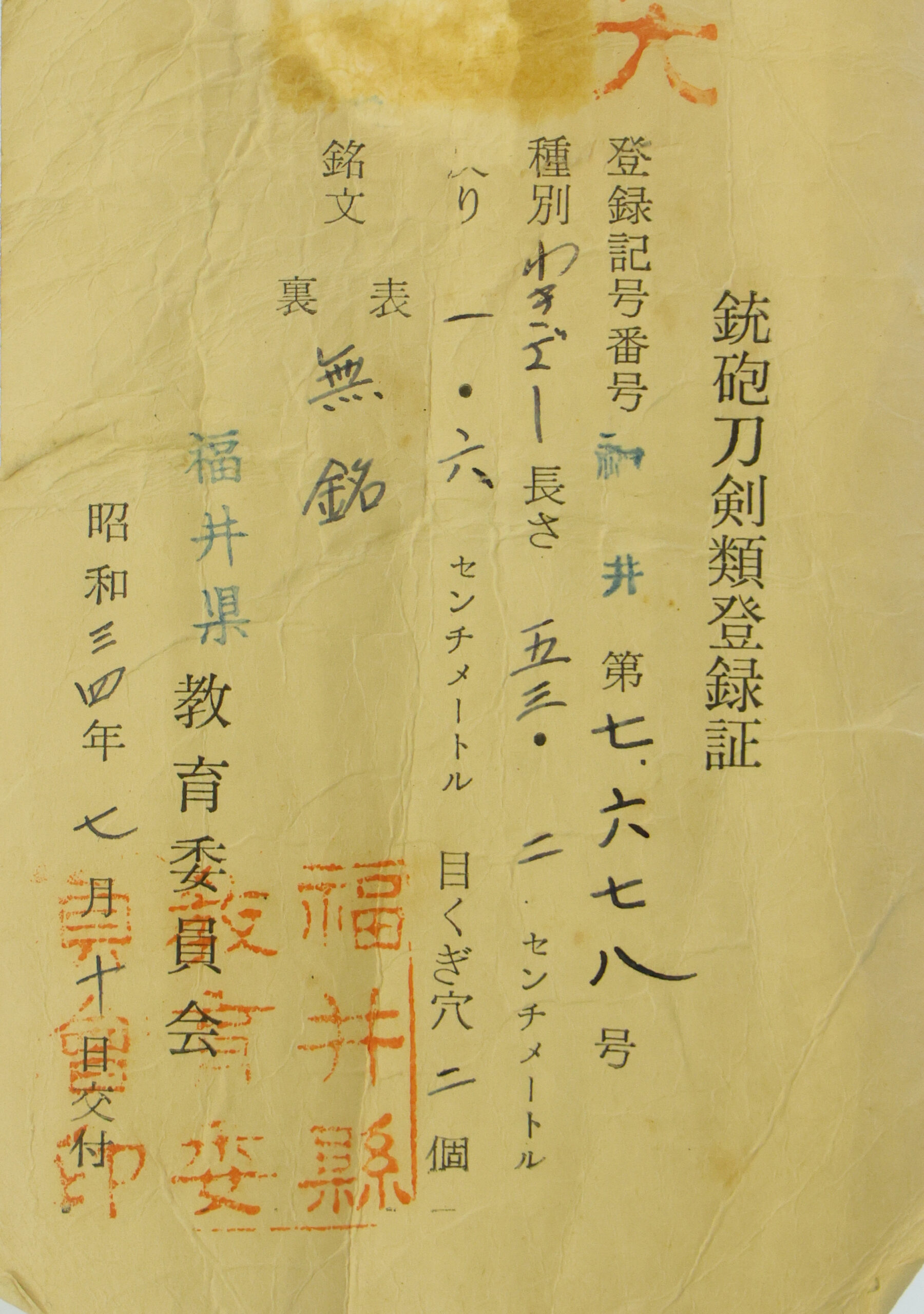
This blade is attributed to Sue Soshu (末相州) and dates it to around the Tensho era (1573–1592) according to NTHK. Sue Soshu refers to the swordsmiths who carried on the Soshu tradition in Sagami Province (present-day Kanagawa Prefecture) during the Muromachi period. The Soshu tradition originated in Kamakura and reached its peak during the late Kamakura and Nanbokucho periods through renowned swordsmiths such as Masamune (正宗), Hiromitsu (広光), and Akihiro (秋広). Their techniques were passed down through successive generations of swordsmiths into the Muromachi period. The Sue Soshu school developed mainly in two areas, Kamakura and Odawara. During the middle Muromachi period, successive generations of swordsmiths using the name Hiromasa (広正) played an important role in maintaining the tradition. By the late Muromachi period, the center of sword production gradually shifted to Odawara under the patronage of the Later Hojo clan (後北条氏), a powerful samurai family that ruled the region. Soshu Den The foundation of Soshu traditions (Soshu DEN) dates back to the establishment of the Kamakura government(1185-1333). The Shogun at the time, Hojo Tokiyori, gathered swordsmiths of Yamashiro-Den and Bizen-Den to create a new tradition named Soshu-Den. Following the Mongolian Invasion caused in 1274 and 1281, they had to improve the strength of their swords. Skilled swordsmiths such as Shintougo Kunimitsu, Yukimitsu, and Masamune pursued their craft to bring Soshu-Den to the exquisite level, achieving both beauty and practicality that they had not seen before. Horimono This blade also features horimono (彫物), or carvings in the steel. On the front (omote), a bonji (梵字) appears alongside a suken (素剣), a carving in the shape of a straight, double-edged sword. Bonji are Sanskrit characters used in Japanese Buddhism to represent sacred figures. The reverse also bears a bonji. Near the base of the blade is a koshi-bi (腰樋), a short groove, with a narrower groove called a soe-bi (添樋) running alongside it. *Please keep in mind that there are a couple of partial Kitae Kizu and black rust. Fuchi-Kashira This set of fuchi-kashira (縁頭), the collar and pommel at either end of a Japanese sword’s hilt, features dragonflies and birds. The birds appear to be wild geese. During Japan’s Warring States period, samurai prized the dragonfly (tombo, 蜻蛉) as an emblem of victory and called it kachimushi (勝ち虫), or “victory insect.” Its swift flight in pursuit of prey evoked the warrior’s resolve to advance without retreating, an ideal known as futaiten (不退転), or unwavering determination. The dragonfly motif also appeared on helmets, armor, and battle coats. Wild geese are traditionally associated with autumn in Japan, when their distinctive calls announce their return. Their seasonal migration also gave rise to the image of a goose as a messenger bearing good news from afar. For centuries, poets have evoked the sound of their calls, while artists have depicted their graceful silhouettes in paintings, on sword fittings, and in family crests. Tsuka and Menuki The motif of this Menuki is Niwatori (鶏: rooster and hen). In ancient times, this bird was used for rituals to offer to gods. It is said this is why the chicken pattern was incorporated into family crests. As this bird tells the arrival of morning, people regard it as the Ake-no Tori (明けの鳥, bird of the dawn). Also, chickens have been treated as auspicious birds because they sing at first in the new year. In another theory, there is a wordplay: Yoikoto-wo “Tori”komu (良いことを取り込む, “take” good things). This Tori (取り) and Tori (鳥, bird) are associated based on the common pronunciation. Some people believe that this bird would bring a plentiful harvest or success in business. This Menuki design might have been chosen due to these ideas. Tsuba and Habaki This round tsuba features two blossoms with long, curling petals in the upper half. Below them, a curved stem follows the slender outer rim, with lobed leaves spreading to either side. The design uses ji-sukashi (地透かし), a form of openwork. The maker cut through the metal around the flowers, stems, and leaves, leaving the design itself in place. Saya There is also a little bird depicted on this Saya. We assume it is sparrows (雀, Suzume). As sparrows form a flock and act among birds, the sparrow pattern represents abundant crops and prosperity. It is said this bird has been used as a motif since the late Heian period (1094-1184). Their tiny and adorable figures have attracted people for a long time. In addition, since sparrows have strong vitality, they have been considered symbols of prosperity for descendants. Authentication Paper NTHK, also known as Nihon Touken Hozon Kai, is the oldest organization for sword authentication of Japanese swords in modern times. It was established in 1910 during the post-Samurai era. They authenticated the blade on May 11th in the 7th year of Reiwa (2025). Registration Number It is called Jyu Hou Touken Rui Torokusho (銃砲刀剣類登録証).
Soshu School相州派
Offered by Samurai Museum

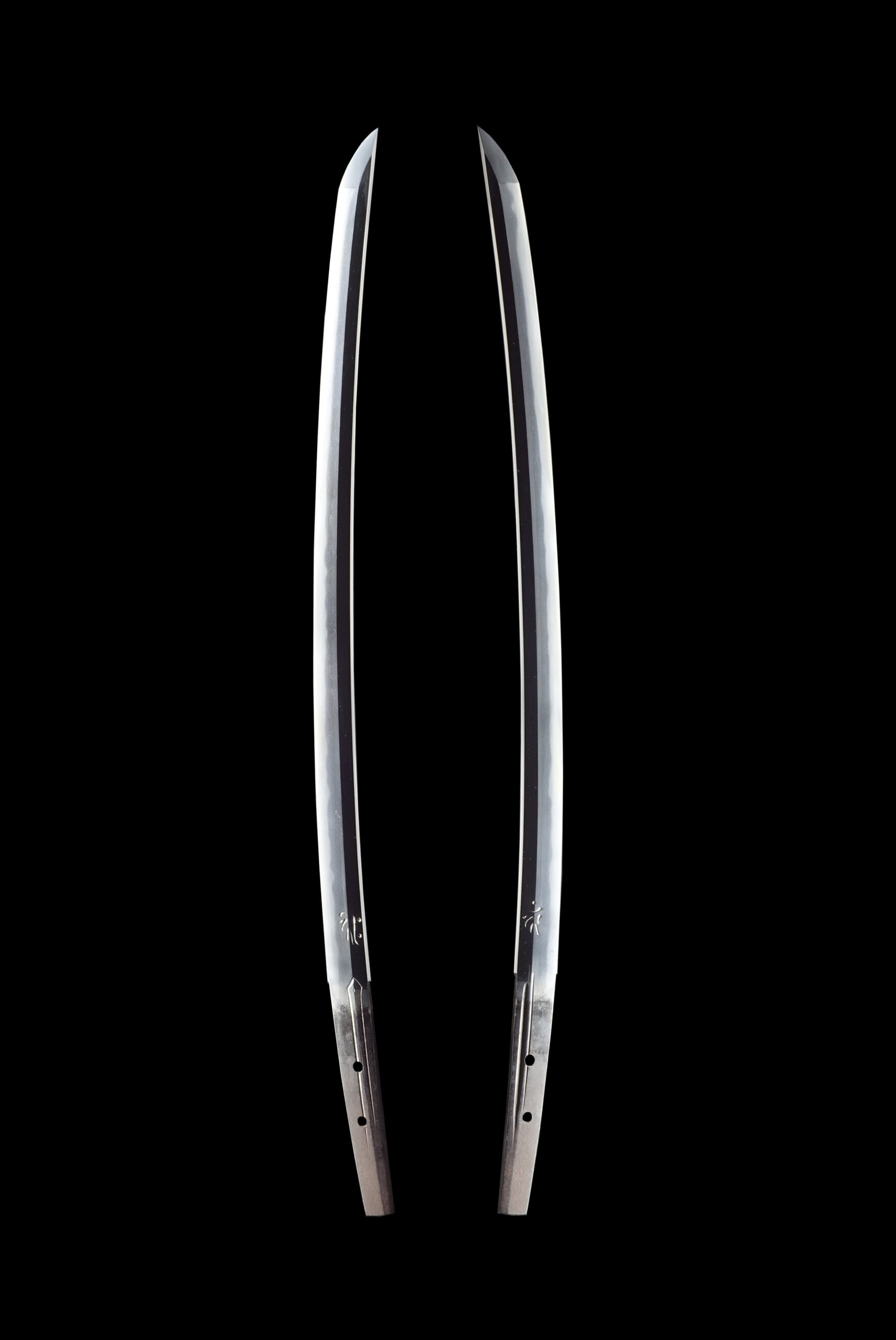
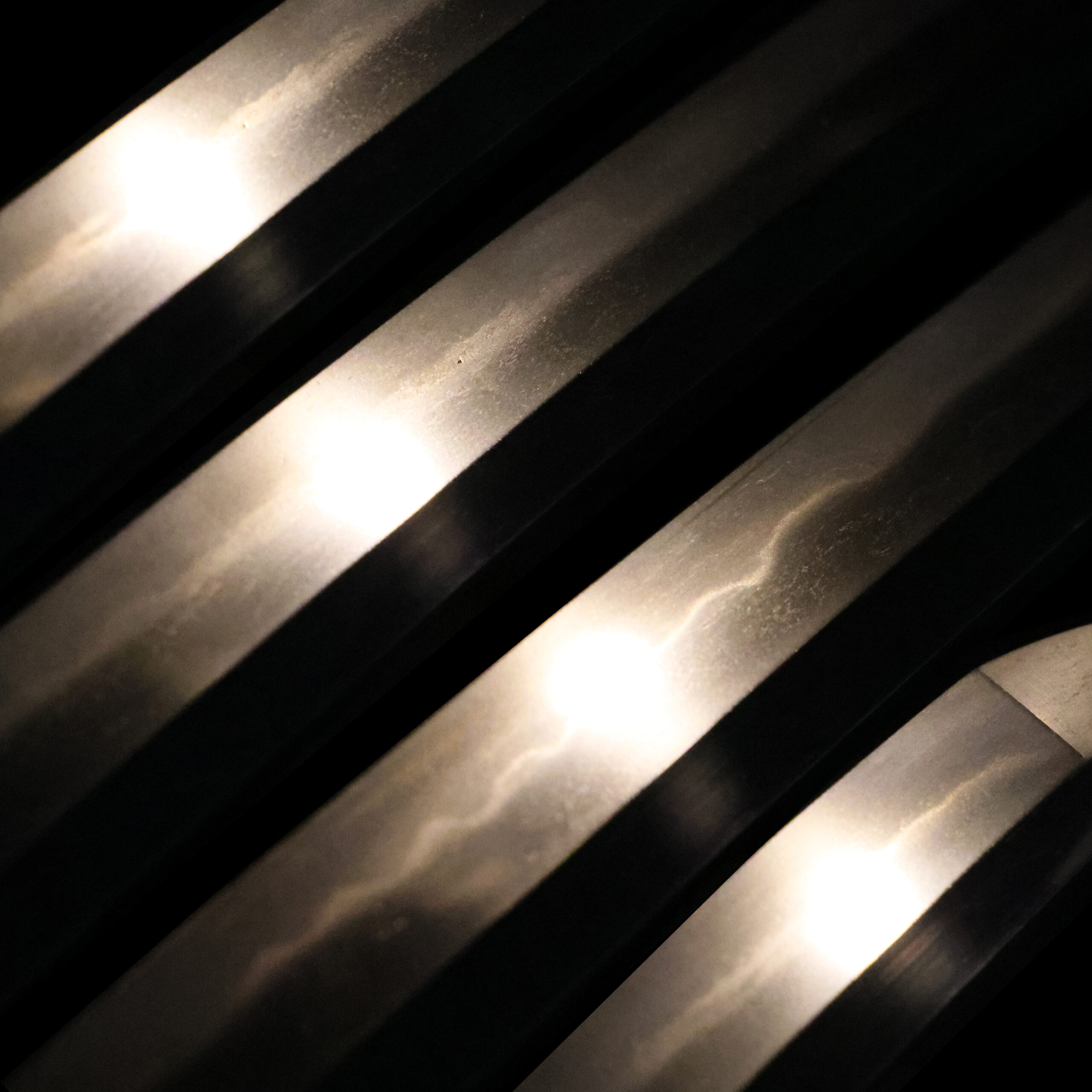
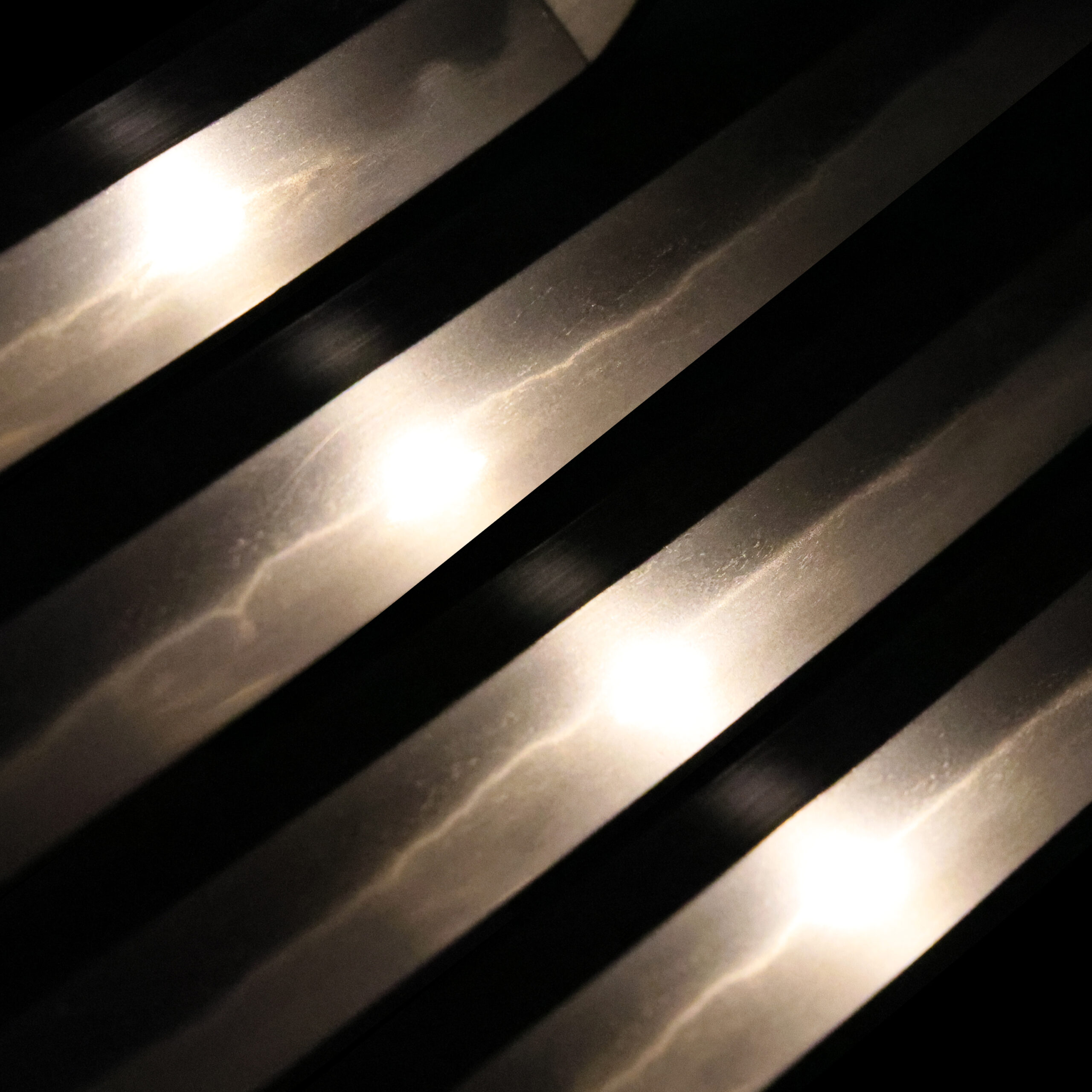
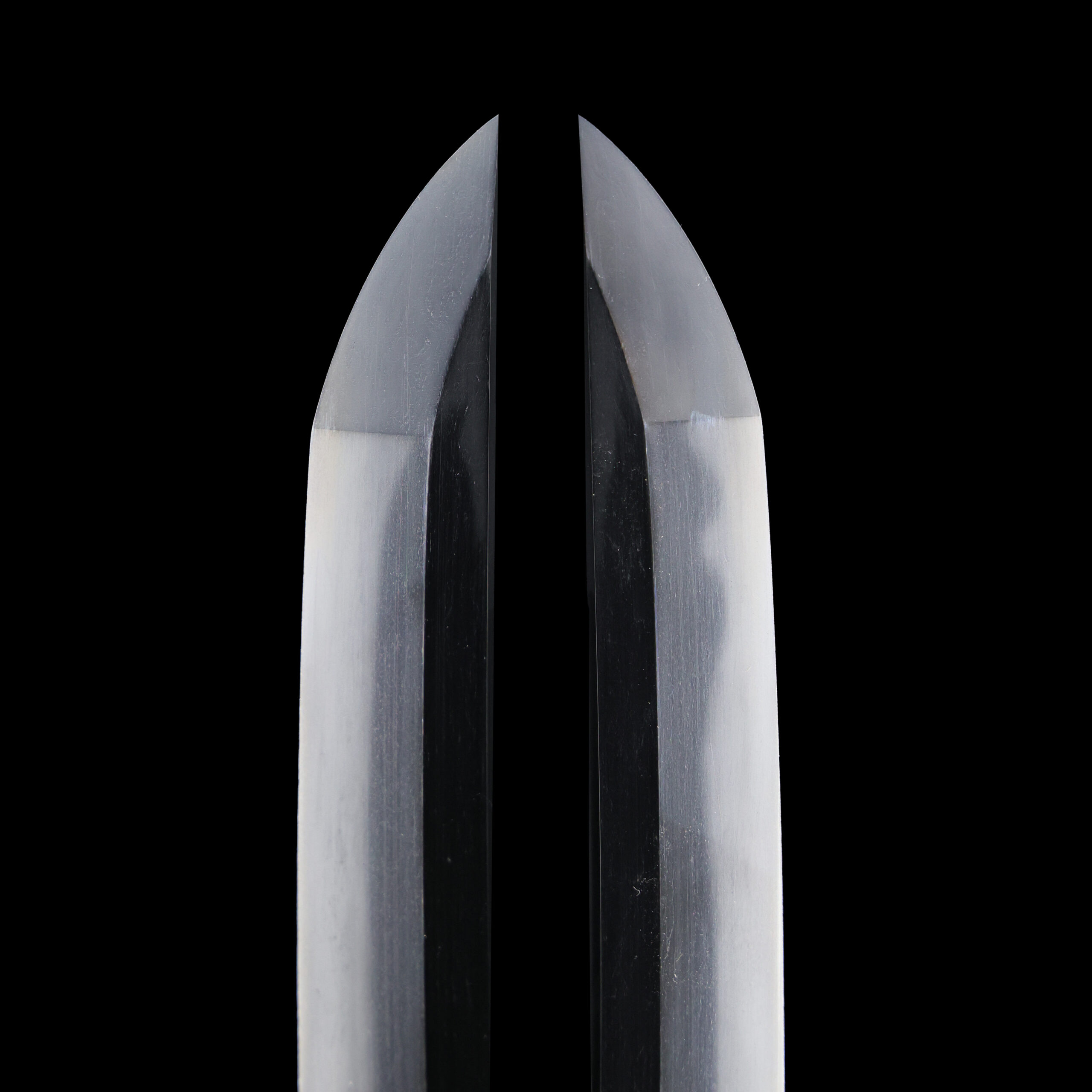
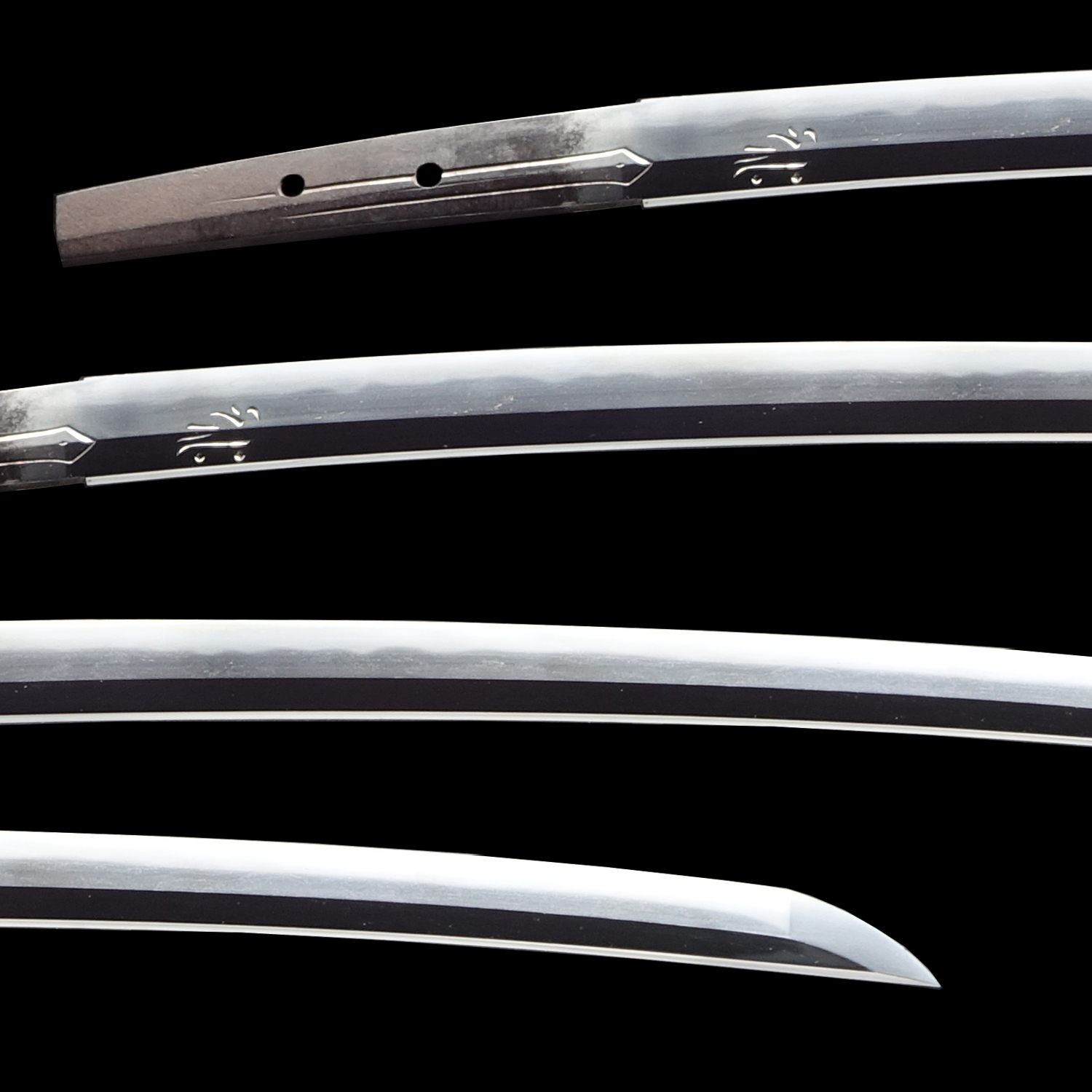
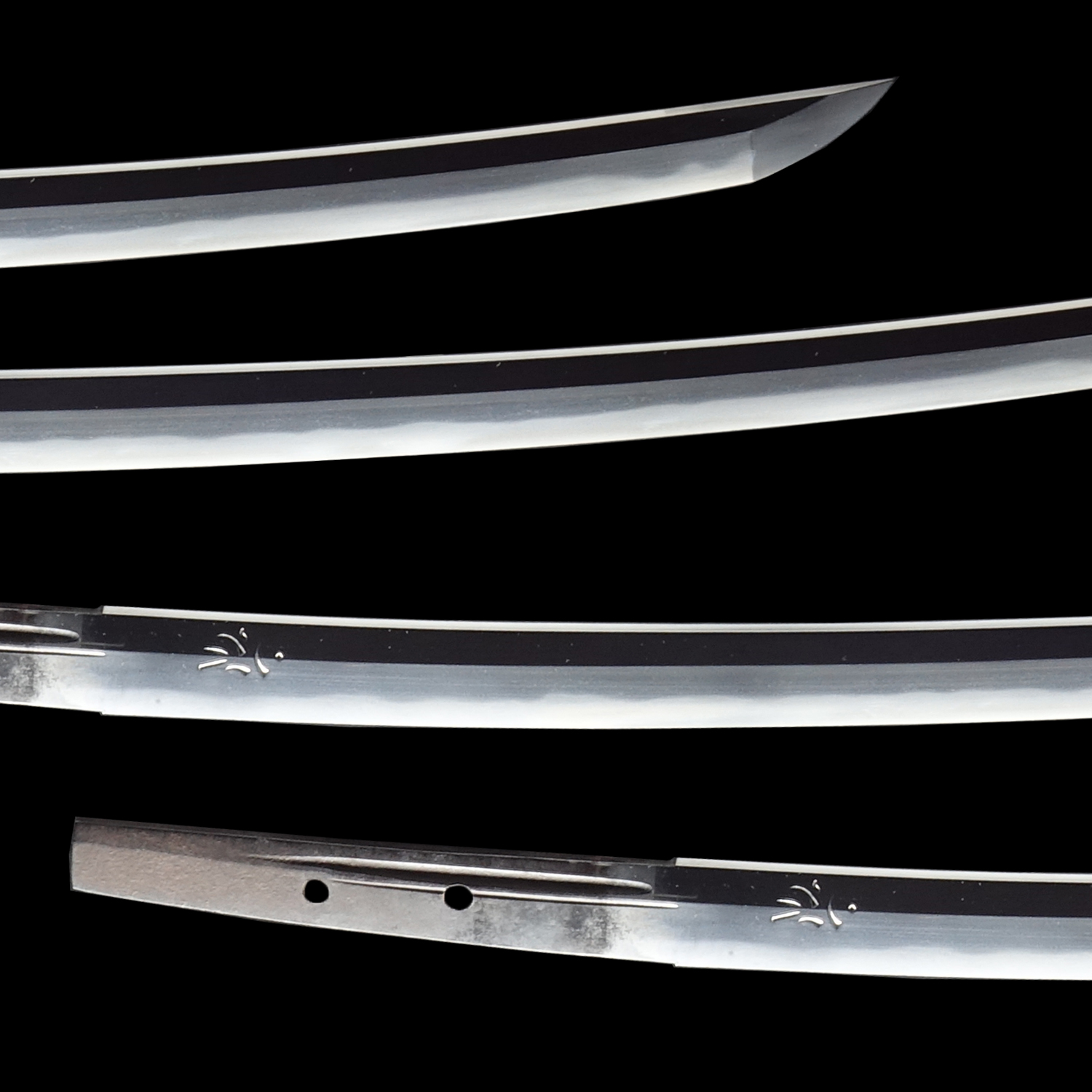
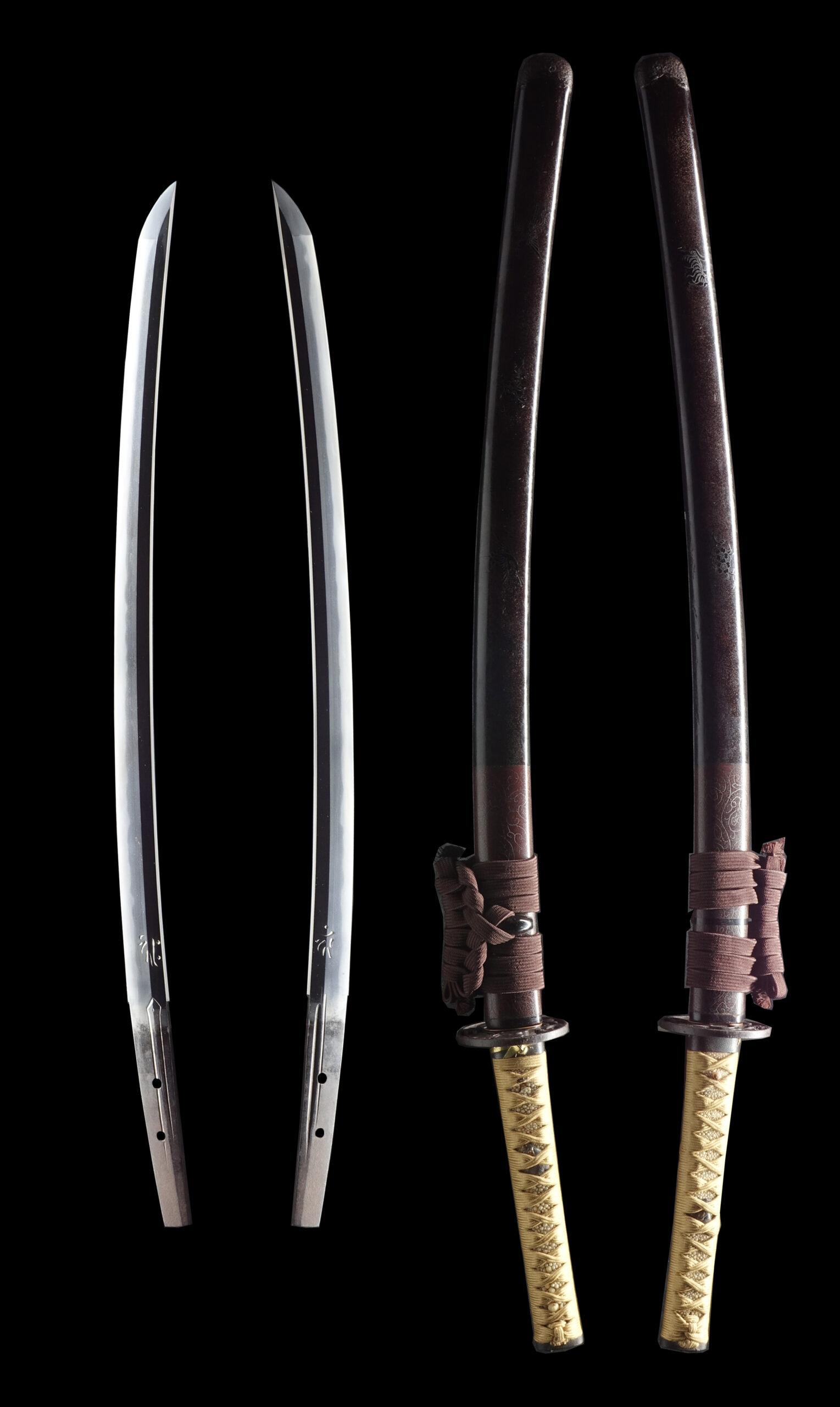
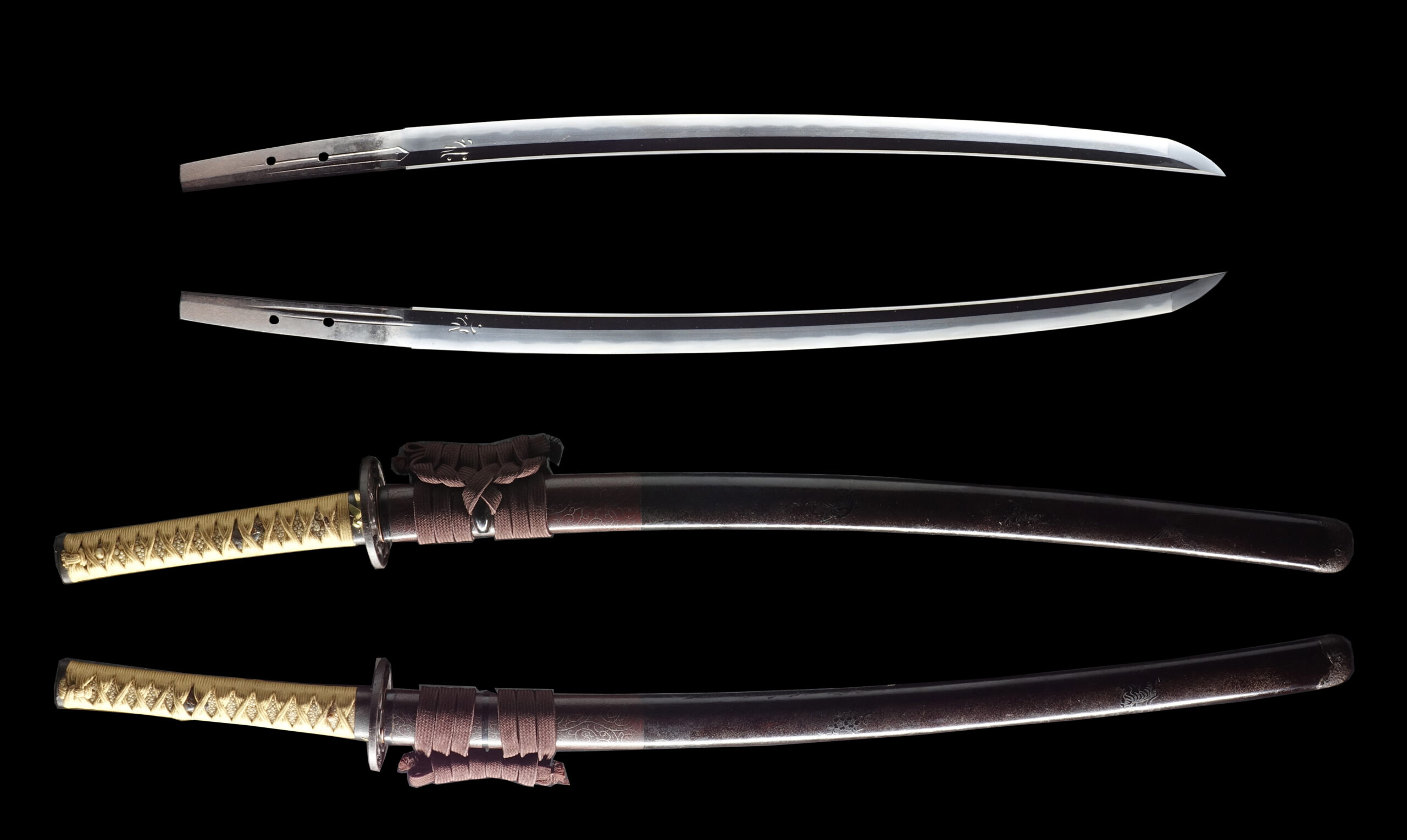
Soshu-den · Sagami
40 pieces on the market now
The Soshu school took root in Kamakura, the seat of the Hojo regents in Sagami province, where the demand of the warrior government drew the country's leading smiths to a single town. The published sources count Awataguchi Kunitsuna of Yamashiro and the Bizen masters Kunimune and Sukezane among the immigrant pioneers of Kamakura sword-making, but the first native smith of Sagami, the man who cut his Kamakura residence and his dates into the nakago, was Shintogo Kunimitsu, reckoned the de facto founder of the Soshu-den. Working from the close of the thirteenth century into the 1330s, Kunimitsu built his refined manner on Awataguchi foundations: his tanto read at a glance like Yamashiro work until the conspicuous chikei and kinsuji in ji and ha betray the new tradition. From his forge came the three masters Yukimitsu, Masamune and Norishige, with Daishinbo Yukei as carving specialist and Kunihiro among the smith's own sons; through them the nie-laden suguha of the founder opened into the mature nie-deki that would define the school. A shared vocabulary runs through the whole register. The forging is itame mixed with mokume, the grain standing in places, covered in thick ji-nie with chikei entering abundantly, so the steel reads bright and clear in the manner the texts call particular to the upper rank of Soshu-den work. Over it the temper runs as a notare mixed with gunome, the nioiguchi deep, the nie thick, kinsuji and sunagashi working busily through the ha, with yubashiri drifting into the ji and a swept hakikake boshi above. From this common ground the internal arc unfolds.
Kunimitsu and Yukimitsu hold the restrained early hand, a calm suguha tending to shallow notare; Norishige carries the bold standing grain laced with thick chikei until the surface reads like pine bark (matsukawa-hada), his nioiguchi subdued and sunken. Masamune raises the nie to its highest refinement, a notare-based midareba alive with leaping kinsuji and chikei that the sources liken to splashed-ink (haboku) landscape painting; Sadamune, succeeding him in the mainline, works a calmer, more relaxed notare and excels as the carving master of the school. With Hiromitsu and Akihiro the temper escapes the edge entirely into the full-fledged hitatsura of Nanbokucho, tobiyaki and muneyaki firing the whole blade, Hiromitsu marked by his round dango-choji and Akihiro by a rougher, more openly active steel. A collector seeks Soshu for the nie itself, the most refined expression of hardened-steel artistry the tradition produced, and Masamune stands at its summit, his name carrying the heaviest weight of designation in the field and a place among Fujishiro's Sai-jo saku. To kantei the school is to read the recognition core the appraisers return to again and again: a chikei-rich standing itame, a deep and bright nioiguchi, busy kinsuji and sunagashi, and the swept boshi. The discriminations are fine and qualitative, Norishige's sunken nioiguchi and heavier grain set against Masamune's tighter quieter ji; Go Yoshihiro, who carried the manner west into Etchu, lit a degree brighter still with masame creeping into the hada and a deep ichimai-swept point; Yukimitsu kept the smaller, quieter pattern; Takagi Sadamune, who took the tradition into Omi, stood a touch more and ran shizumi in the nioiguchi where he fell short of the master. Because the great names left almost nothing signed, most of what survives is o-suriage mumei resting on Hon'ami attribution, and the signed meibutsu (the Kinoshita Masamune, the Mutsu Shintogo, the Okurikara Hiromitsu) carry provenance through the men who held the country: Oda Nobunaga, Toyotomi Hideyoshi, Tokugawa Ieyasu, and the Maeda, Date, Hosokawa and Uesugi houses, with the highest blades resting in the great museums and shrines. The school's influence radiated outward, Norishige's pine-bark forging passing through Tametsugu to the later Etchu smiths and the perfected hitatsura reaching swordsmiths of other provinces, so that the Soshu-den became one of the five great traditions by which the whole field is read. Learn more →
| Smith | Era | Designated |
|---|---|---|
| Masamune正宗 | 1288-1293 | 87 |
| Sadamune貞宗 | 1329-1331 | 88 |
| Go Yoshihiro義弘 | 1299-1302 | 53 |
| Kunimitsu國光 | 1293-1322 | 69 |
| Akihiro秋廣 | 1346-1370 | 28 |
Sōshū in the Muromachi period
In the Sengoku era the school served a second warrior court: the Later Hōjō at Odawara, whose patronage kept the Tsunahiro line forging hitatsura for the uchigatana age until the castle fell to Hideyoshi in 1590.
The NTHK’s principal certificate, issued for a blade of considerable quality. It confirms a genuine signature, or, for an unsigned (mumei) work, records the judges’ attribution to a smith or school. The paper carries a detailed worksheet with a numerical point score.
The NTHK (Nihon Tōken Hozon Kai, the Society for the Preservation of the Japanese Sword) is the oldest of Japan’s sword-appraisal bodies, founded in 1910, decades before the NBTHK. After the death of its long-serving head it divided into two successor societies, the NTHK and the NTHK-NPO, both of which continue to hold shinsa. NTHK blade certificates are known for a detailed worksheet that records a numerical point score alongside the judges’ written opinion (fitting papers carry the judges’ opinion without a point score), and the society is especially respected for its attribution of unsigned (mumei) work.
Returns/exchanges limited to defects caused by shipping (except willful misconduct or gross negligence by the company); customers must contact within 72 hours of receiving the product.
¥700,000