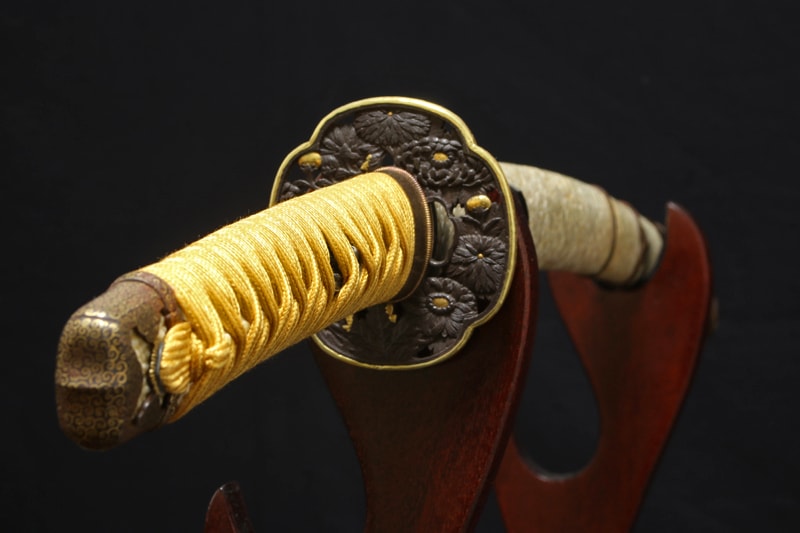
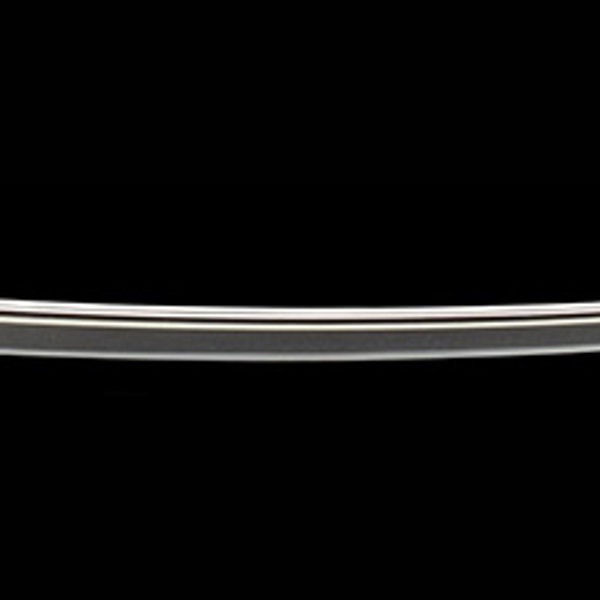
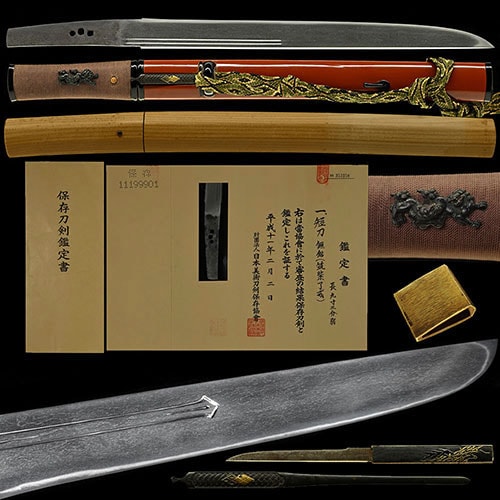
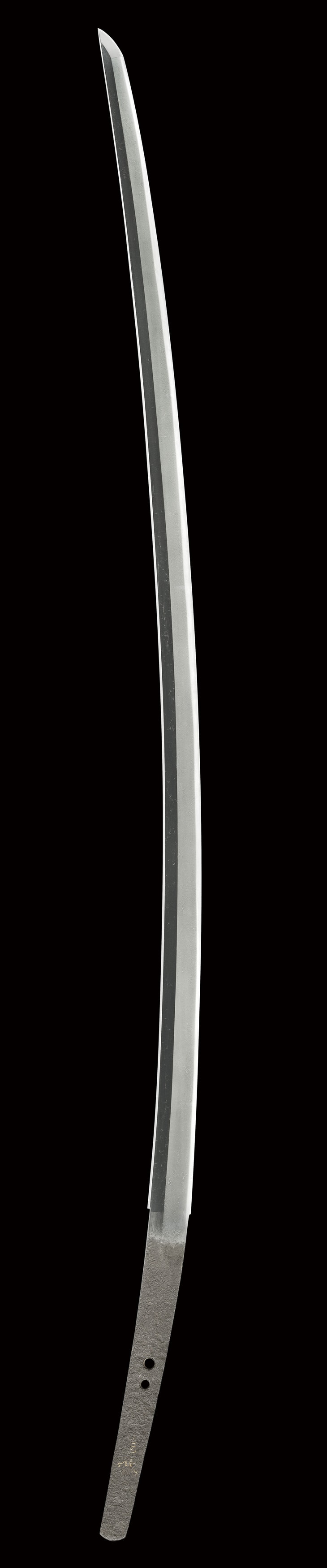
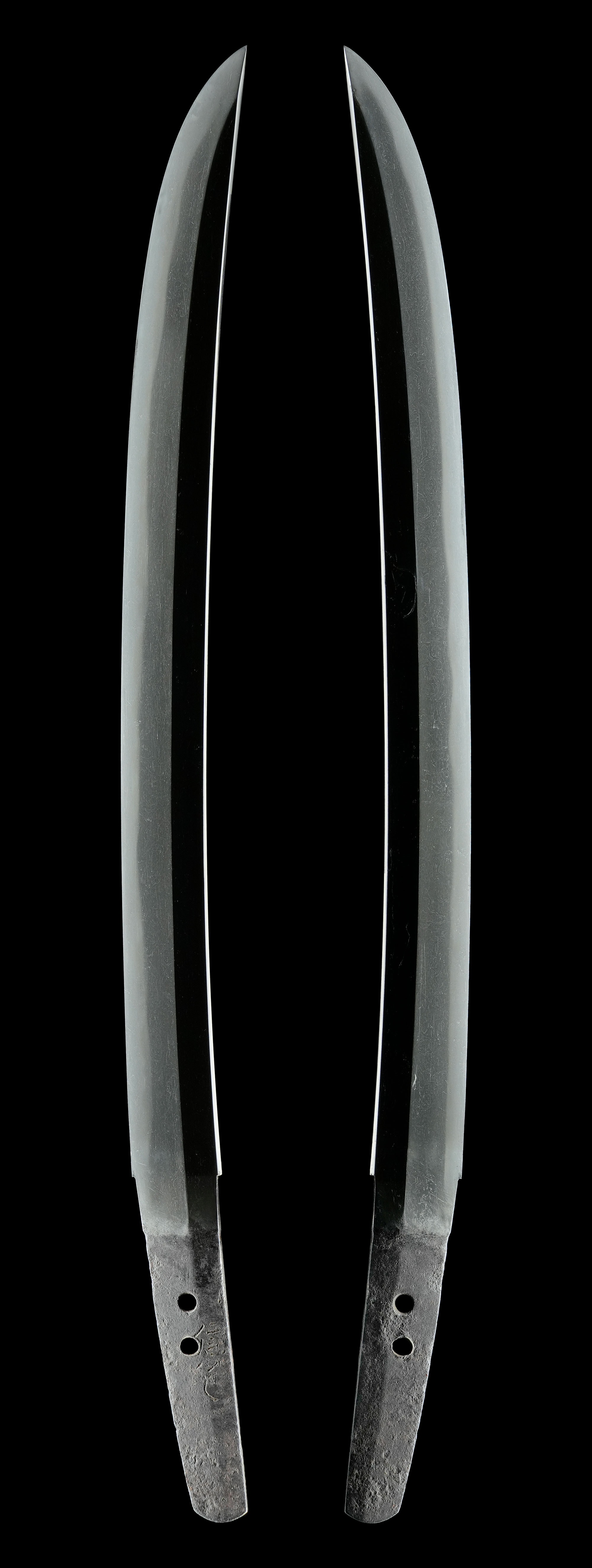
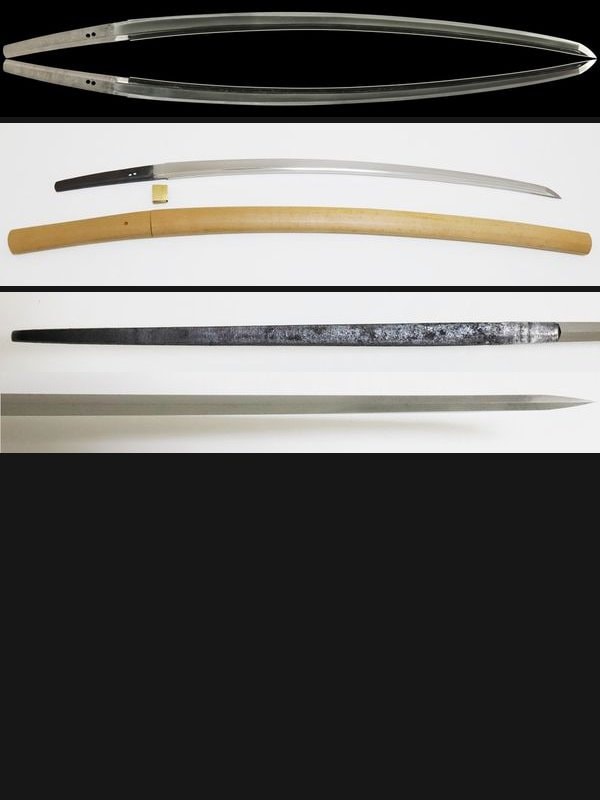
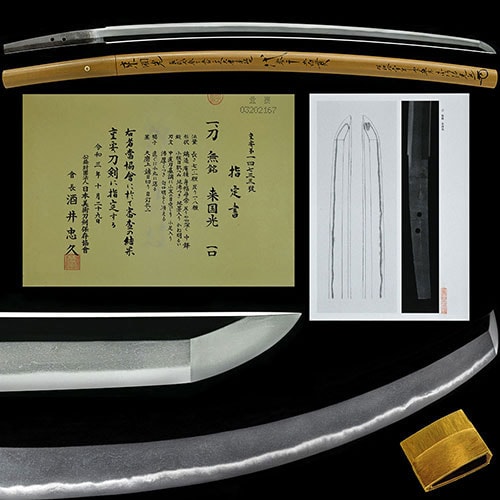
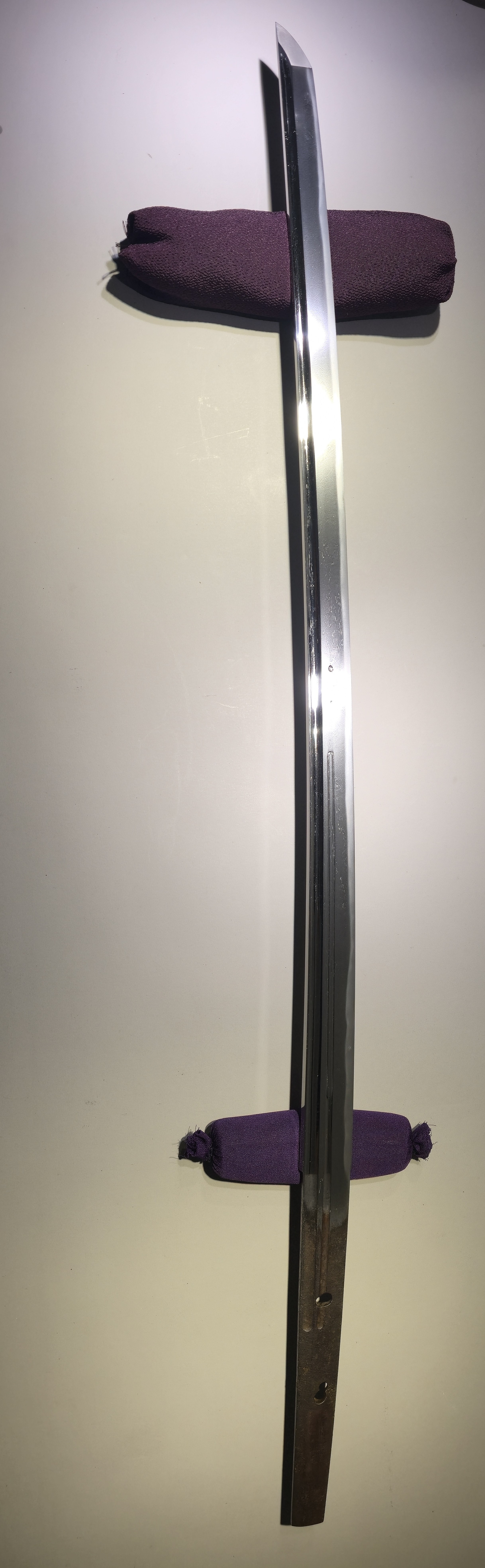
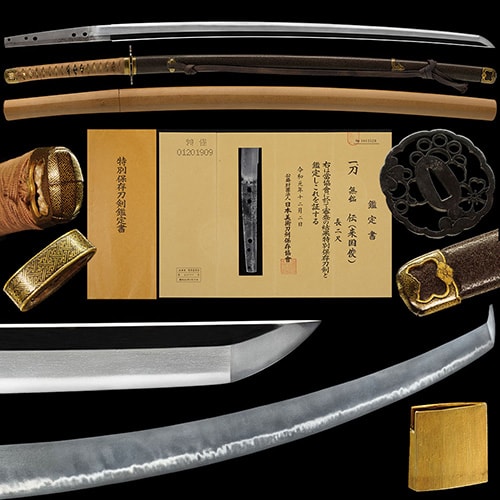
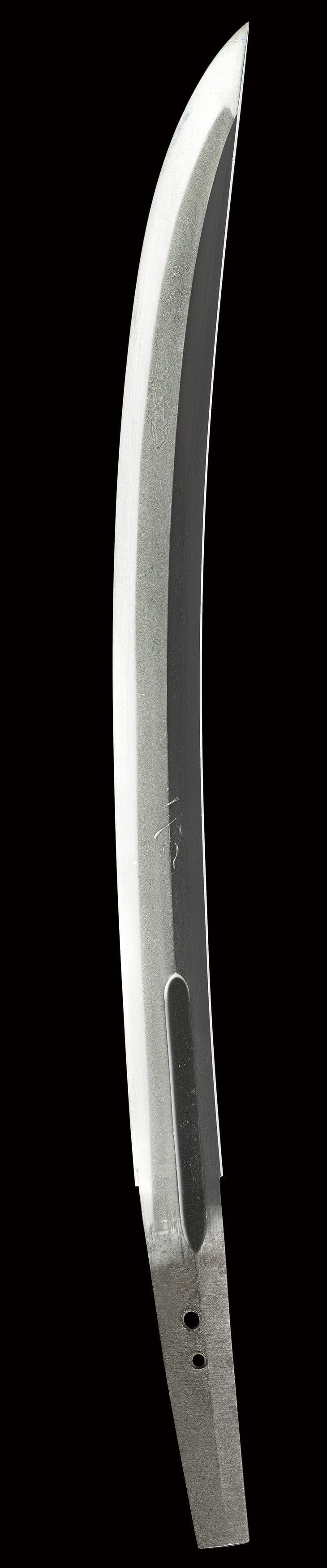
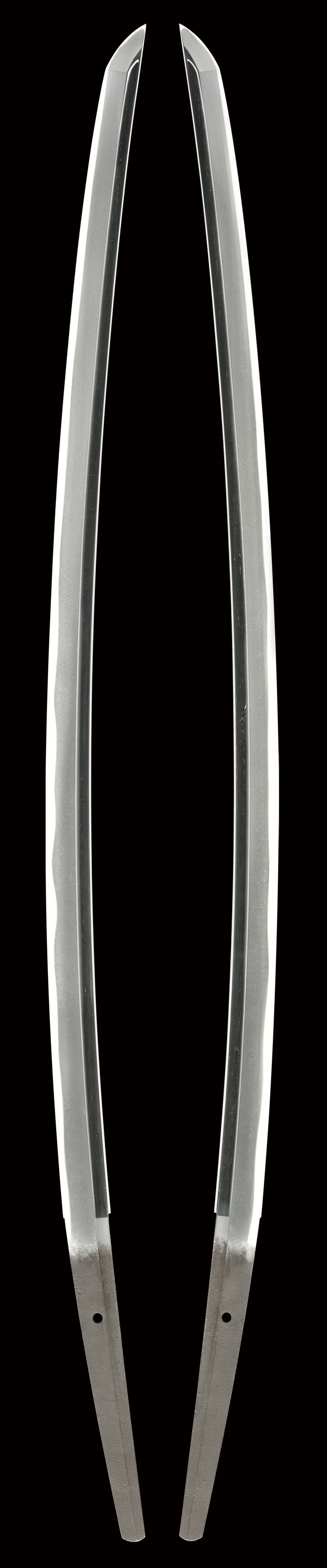
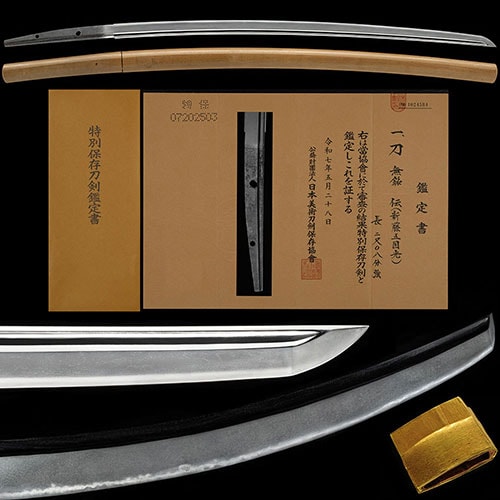
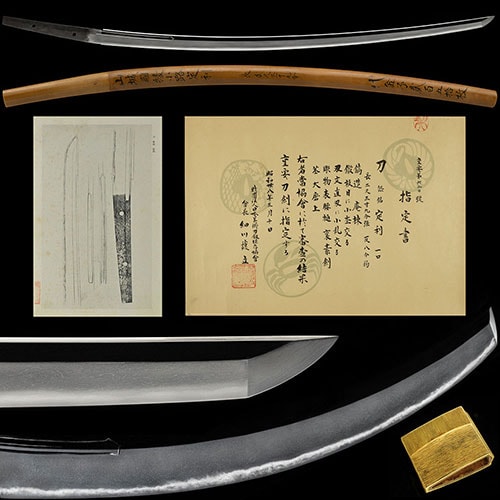
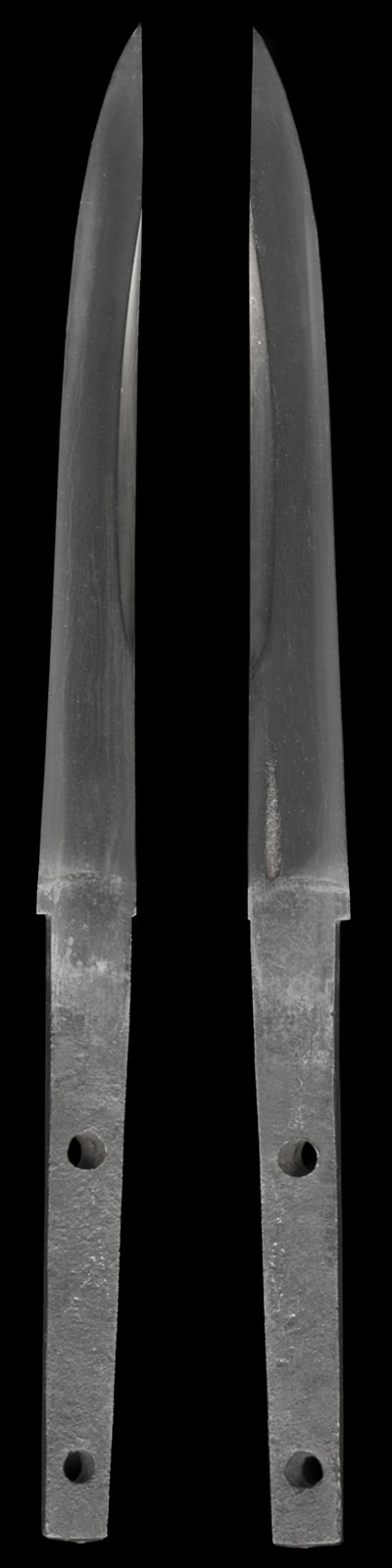
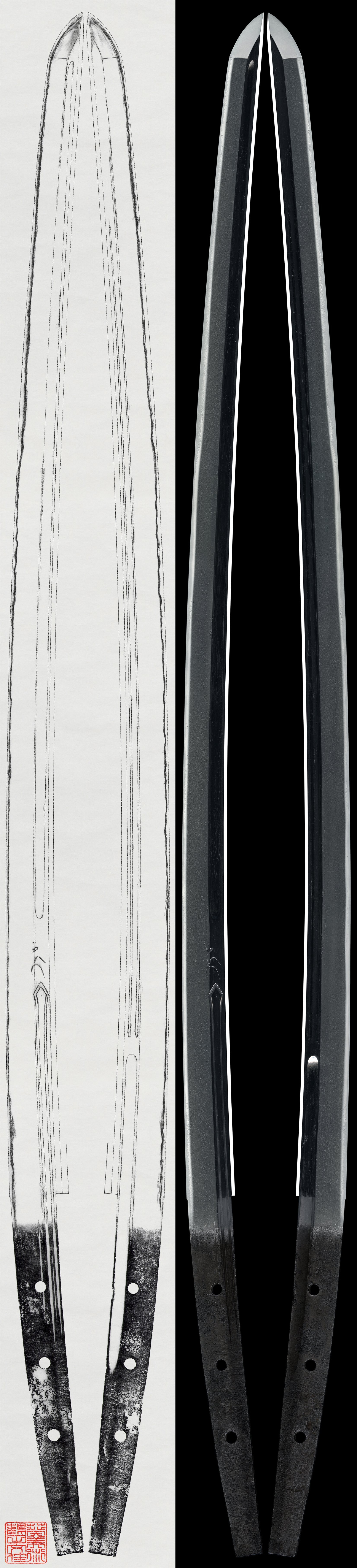
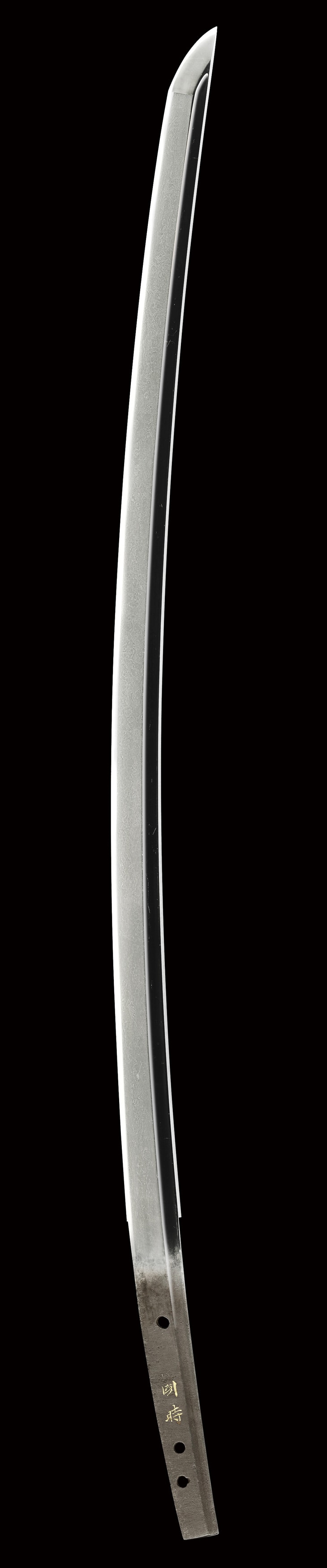
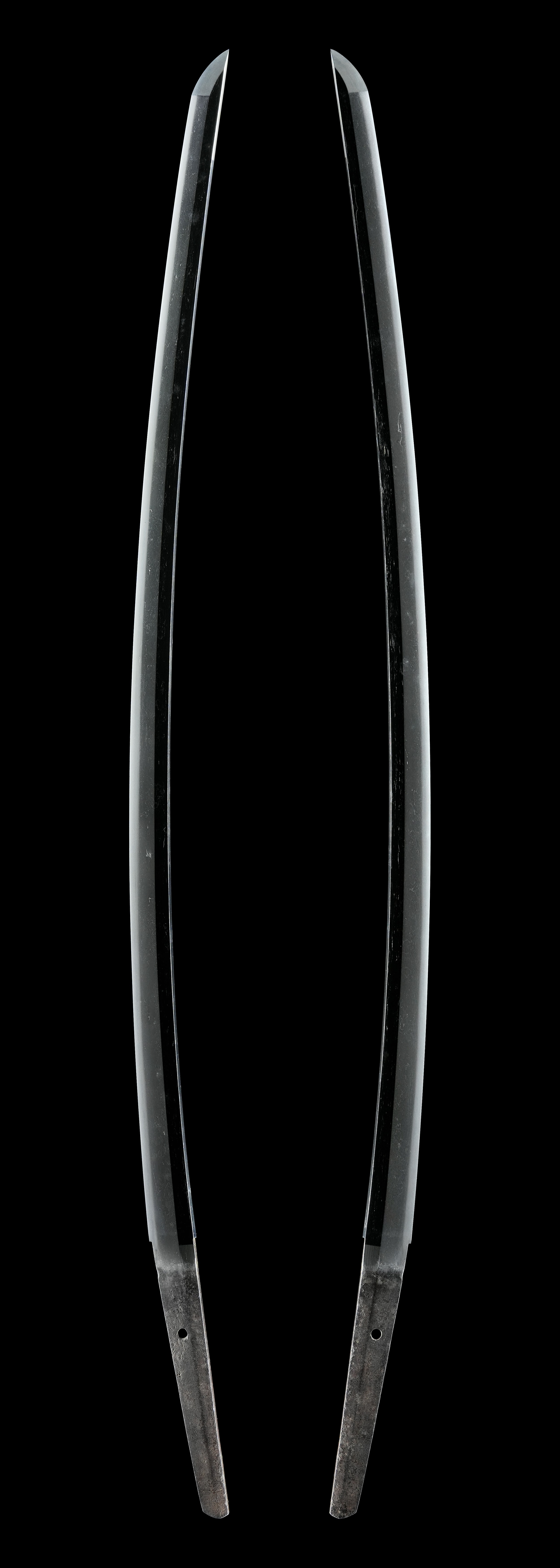
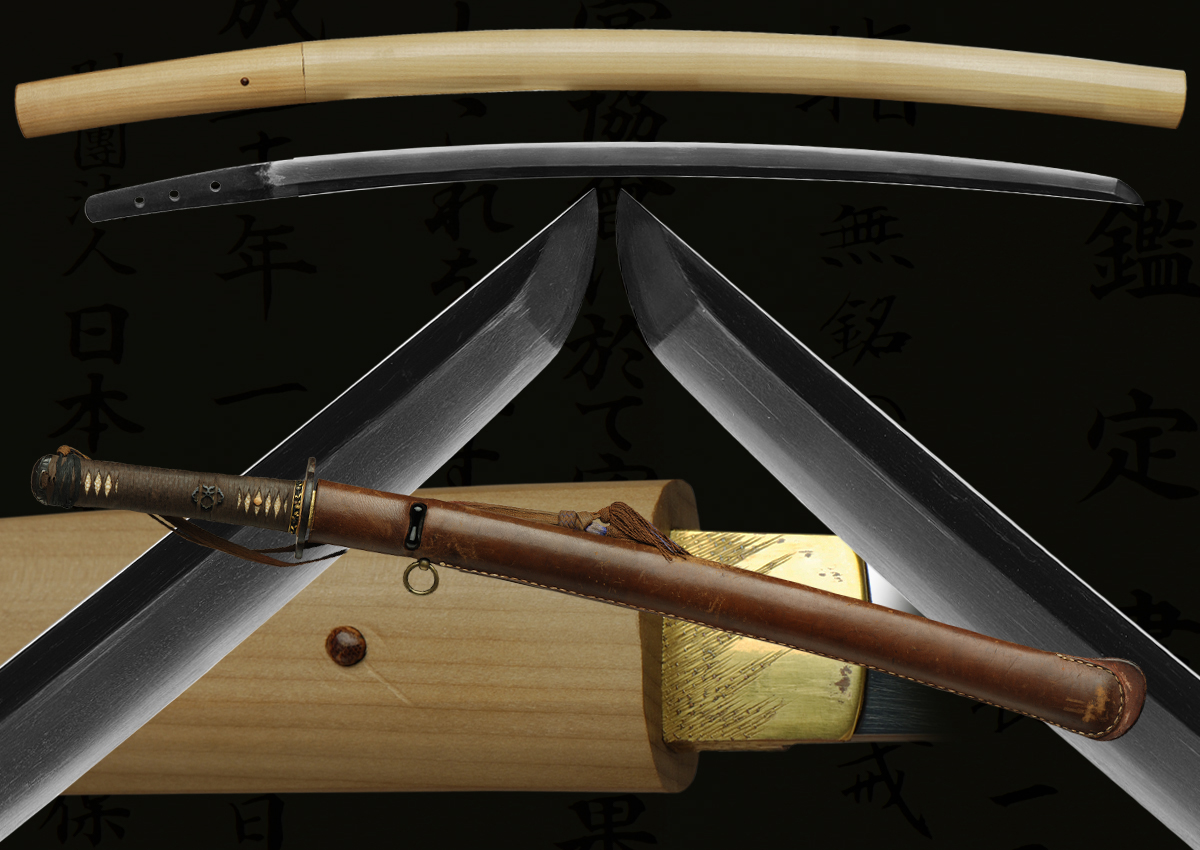
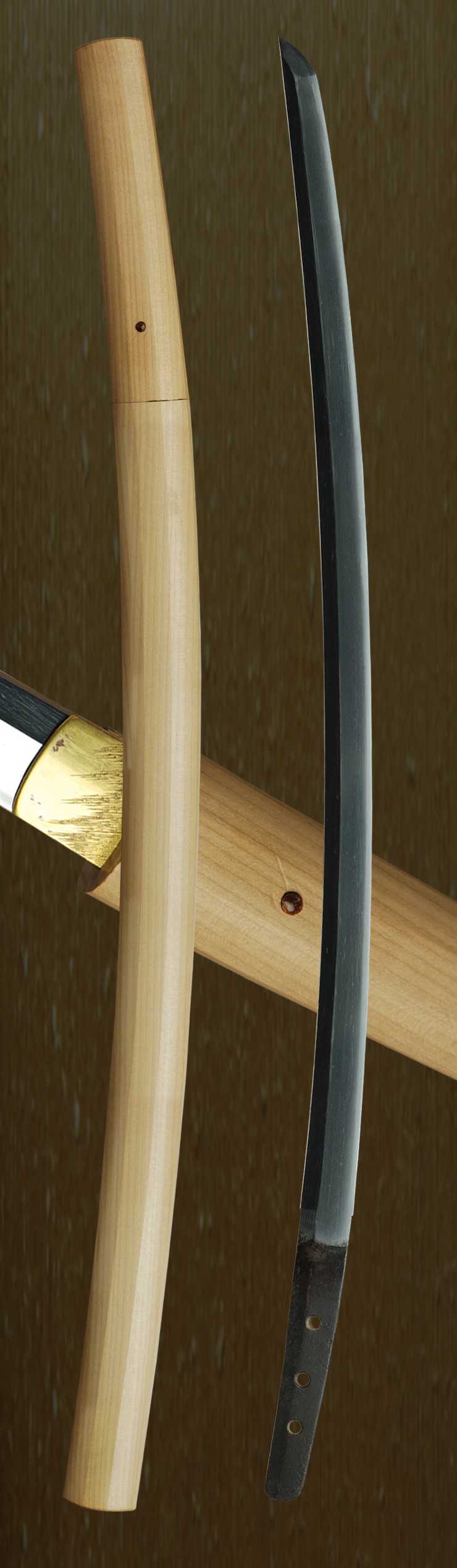
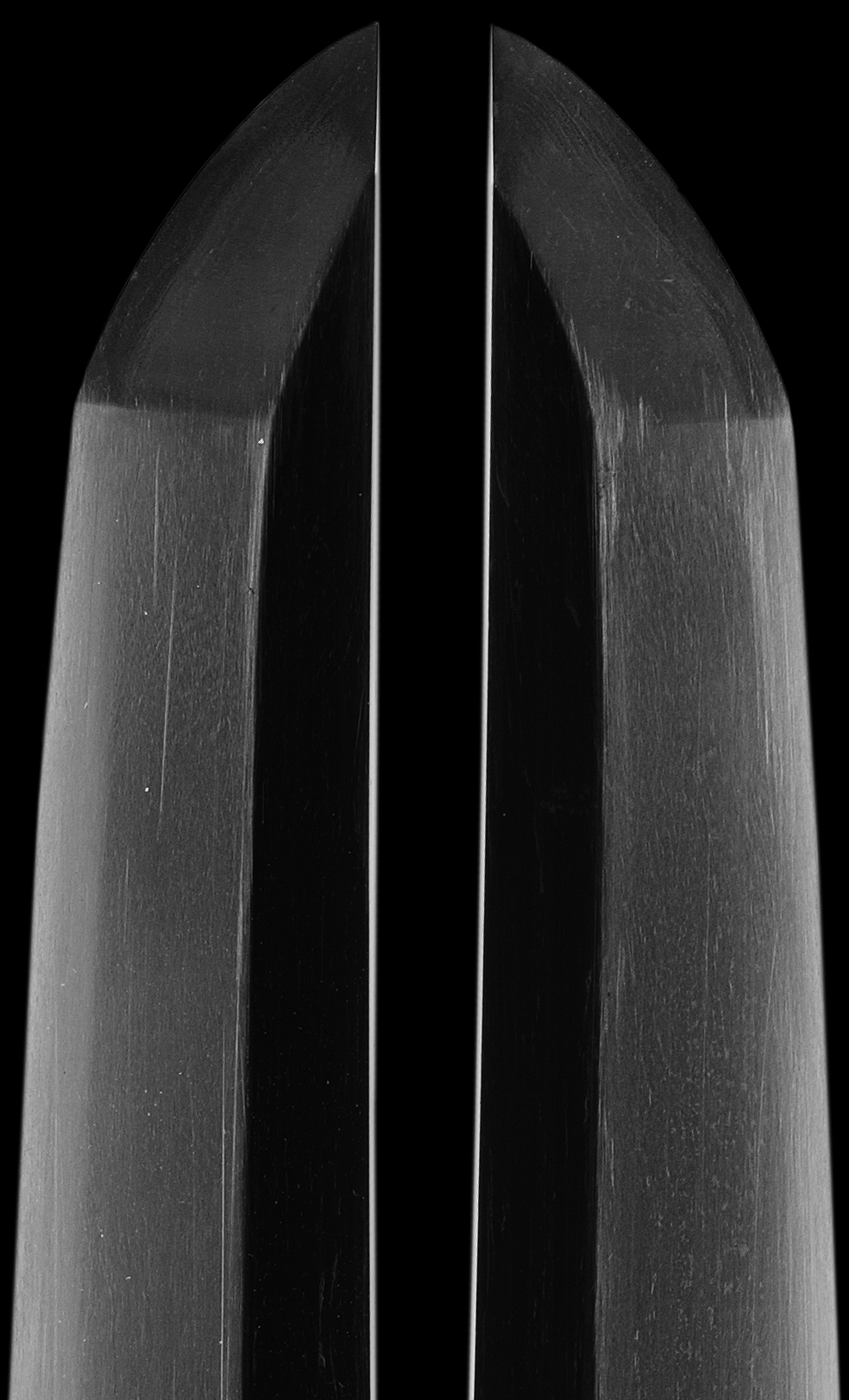
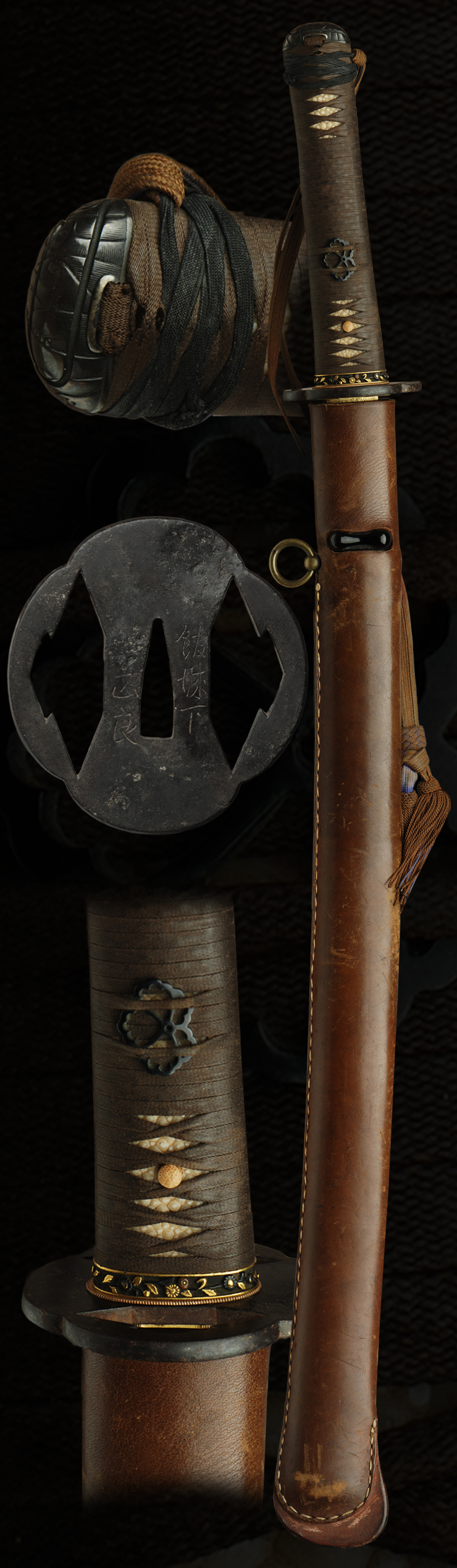
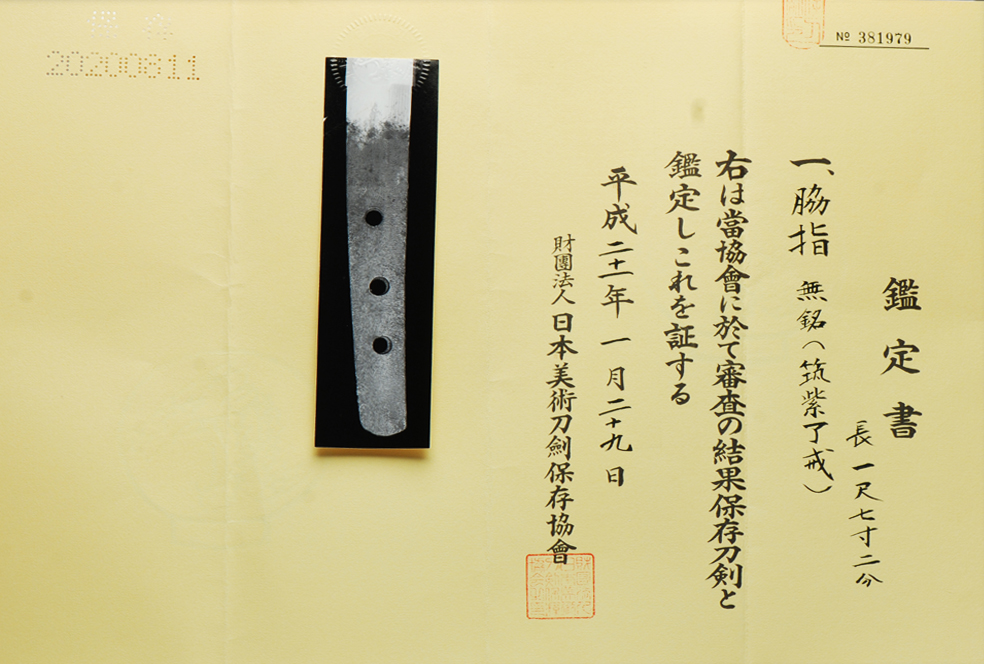
This is a fine example of a Koto era Ryôkai blade, shortened to wakizashi size. The sword is most likely from the late Nambokucho through the early Muramachi period, with a suguha hamon and itame hada emulating the Yamashiro style. It comes with a set of papers from the NBTHK attesting to the authenticity and validity of the sword.
 NihontoWatch
mumei · Tsukushi-Ryôkai · Koto · nagasa 52.1cm · sori 1.3cm

Yamashiro-den · Yamashiro
14 pieces on the market now
The Ryokai school (了戒) took shape in the late-Kamakura capital of Kyoto, in Yamashiro Province, around the smith Ryokai, who worked through the era names Shoo, Einin, Kagen, Enkyo and Ocho at the turn of the fourteenth century. The old account makes him a son or a pupil of Rai Kunitoshi, and one version has him adopted into Kunitoshi's house; because his dated blades place him almost level with Kunitoshi, however, the NBTHK reads him more naturally as a contemporary (an aitedeshi, a fellow disciple) who formed his own line within the wider Rai circle. Learn more →
| Smith | Era | Designated |
|---|---|---|
| Ryokai了戒 | 1288-1305 | 97 |
| Hisanobu久信 | 1304-1308 | 5 |
| Nobumasa信正 | 1345-1350 | 0 |
| Nobumasa信正 | 1390-1394 | 0 |
| Nobuyoshi宣能 | 1444-1449 | 0 |
Certifies a genuine blade worth preserving: a signature confirmed correct, or, if unsigned, an era, province, and school that the NBTHK can reliably identify.
The NBTHK (Nihon Bijutsu Tōken Hozon Kyōkai, the Society for the Preservation of Japanese Art Swords) is a public-interest incorporated foundation founded in 1948 and supervised by Japan’s Agency for Cultural Affairs (Bunkachō); it is based at the Japanese Sword Museum in Tokyo. Its expert panels physically examine each submitted work (shinsa) and issue a certificate (kanteishō) ranking it by artistic and historical merit. NBTHK papers are the most widely recognized standard of authentication for Japanese swords and fittings.
NBTHK official siteWe offer a 48 hour inspection period for all Antique items shipped within the United States only. If the item is not to your satisfaction, we will gladly refund your money less any shipping and handling fees. All sales are final after the 48 hour inspection period. Please note that all discounted items are a final sale and not returnable.
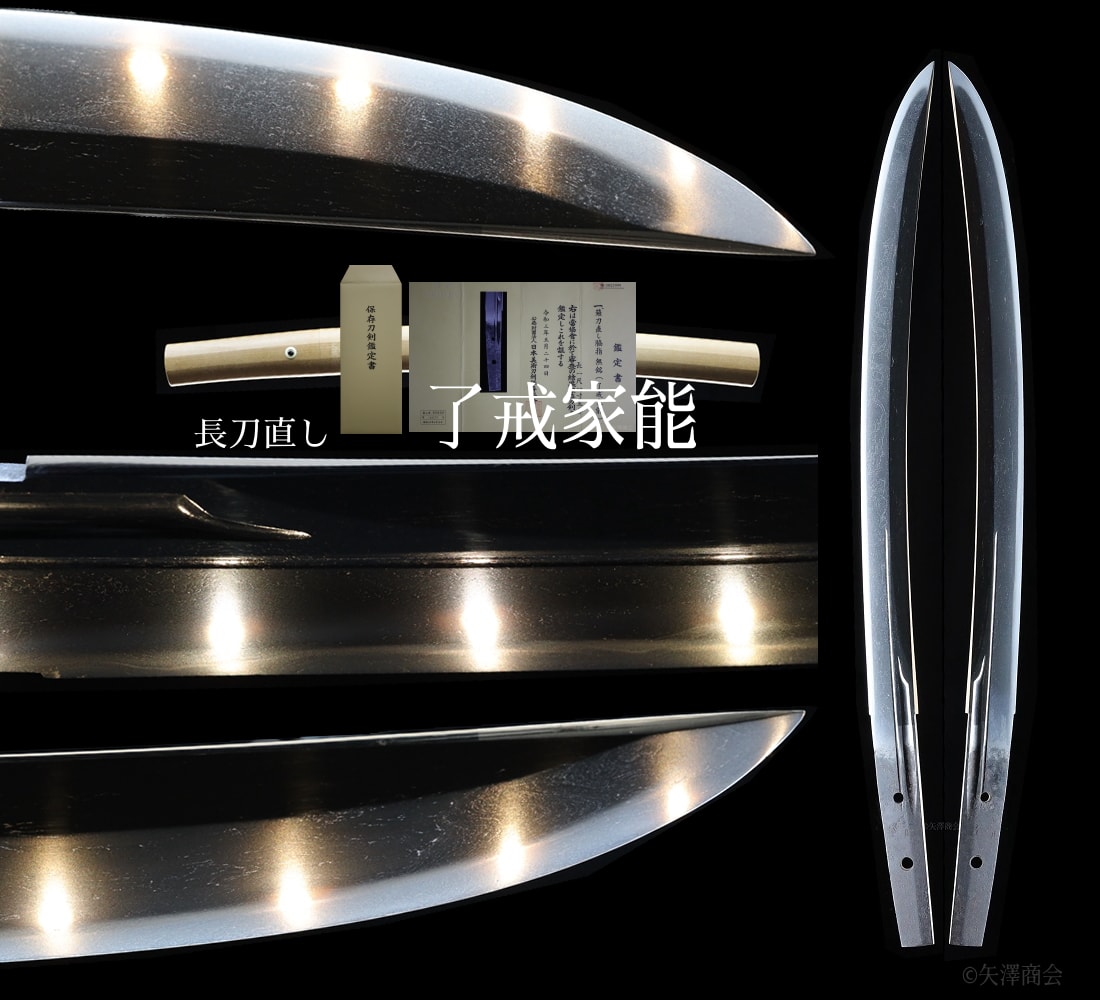
This is a fine example of a Koto era Ryôkai blade, shortened to wakizashi size. The sword is most likely from the late Nambokucho through the early Muramachi period, with a suguha hamon and itame hada emulating the Yamashiro style. It comes with a set of papers from the NBTHK attesting to the authenticity and validity of the sword.
NihontoWatchmumei · Tsukushi-Ryôkai · Koto · nagasa 52.1cm · sori 1.3cm
Yamashiro-den · Yamashiro
14 pieces on the market now
The Ryokai school (了戒) took shape in the late-Kamakura capital of Kyoto, in Yamashiro Province, around the smith Ryokai, who worked through the era names Shoo, Einin, Kagen, Enkyo and Ocho at the turn of the fourteenth century. The old account makes him a son or a pupil of Rai Kunitoshi, and one version has him adopted into Kunitoshi's house; because his dated blades place him almost level with Kunitoshi, however, the NBTHK reads him more naturally as a contemporary (an aitedeshi, a fellow disciple) who formed his own line within the wider Rai circle. Learn more →
| Smith | Era | Designated |
|---|---|---|
| Ryokai了戒 | 1288-1305 | 97 |
| Hisanobu久信 | 1304-1308 | 5 |
| Nobumasa信正 | 1345-1350 | 0 |
| Nobumasa信正 | 1390-1394 | 0 |
| Nobuyoshi宣能 | 1444-1449 | 0 |
Certifies a genuine blade worth preserving: a signature confirmed correct, or, if unsigned, an era, province, and school that the NBTHK can reliably identify.
The NBTHK (Nihon Bijutsu Tōken Hozon Kyōkai, the Society for the Preservation of Japanese Art Swords) is a public-interest incorporated foundation founded in 1948 and supervised by Japan’s Agency for Cultural Affairs (Bunkachō); it is based at the Japanese Sword Museum in Tokyo. Its expert panels physically examine each submitted work (shinsa) and issue a certificate (kanteishō) ranking it by artistic and historical merit. NBTHK papers are the most widely recognized standard of authentication for Japanese swords and fittings.
NBTHK official siteWe offer a 48 hour inspection period for all Antique items shipped within the United States only. If the item is not to your satisfaction, we will gladly refund your money less any shipping and handling fees. All sales are final after the 48 hour inspection period. Please note that all discounted items are a final sale and not returnable.