Power sat in Kamakura, but taste was still made in Kyōto. The Awataguchi school’s pear-skin steel became a byword for perfection, and the Rai line supplied dignified tachi to the court, senior warriors, and the great temples alike.
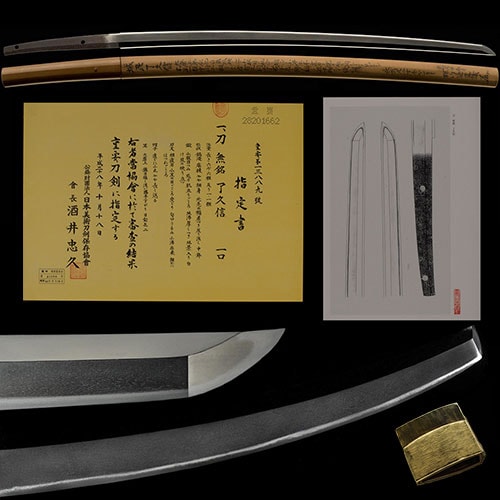
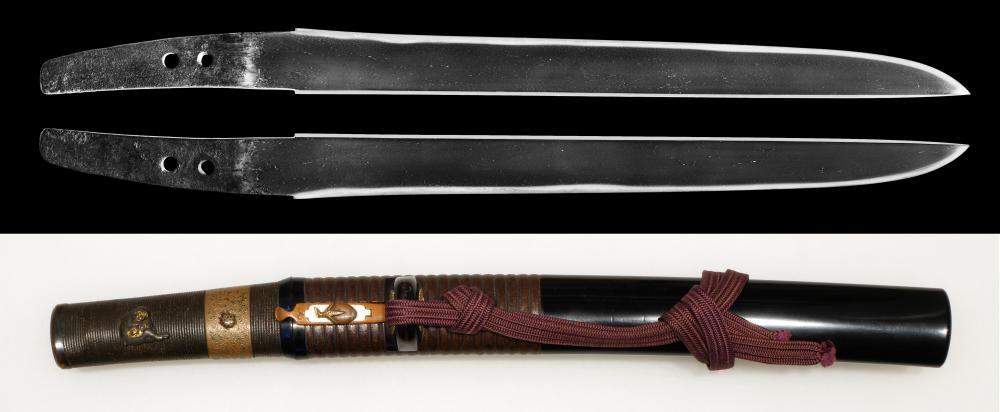
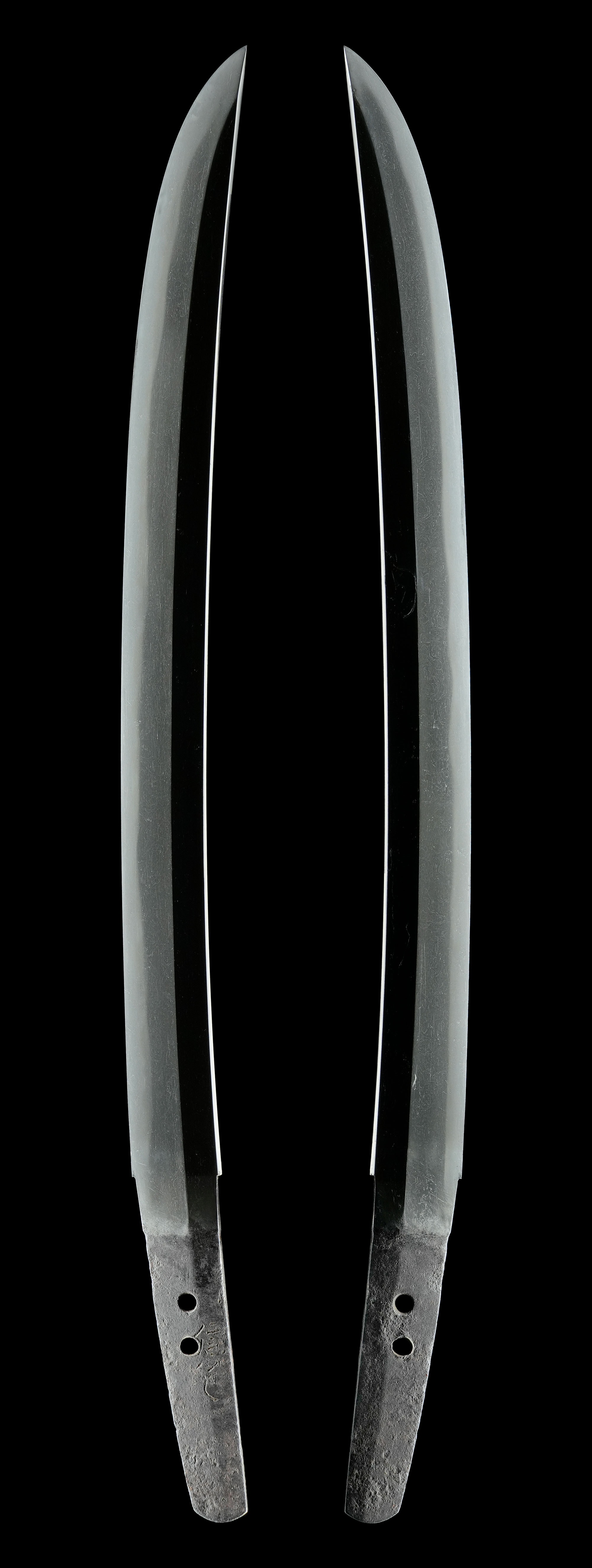
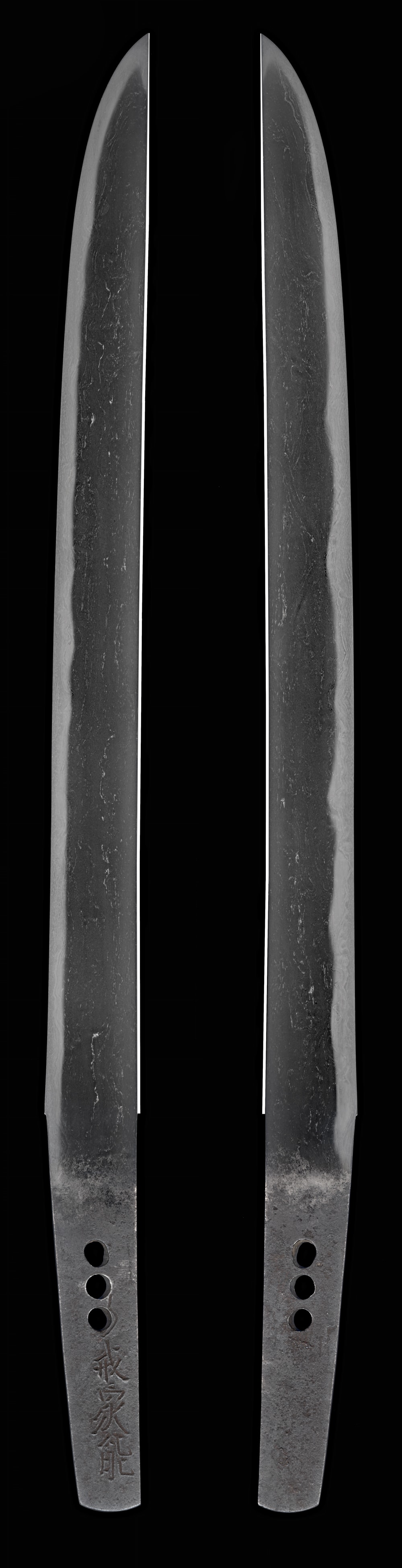
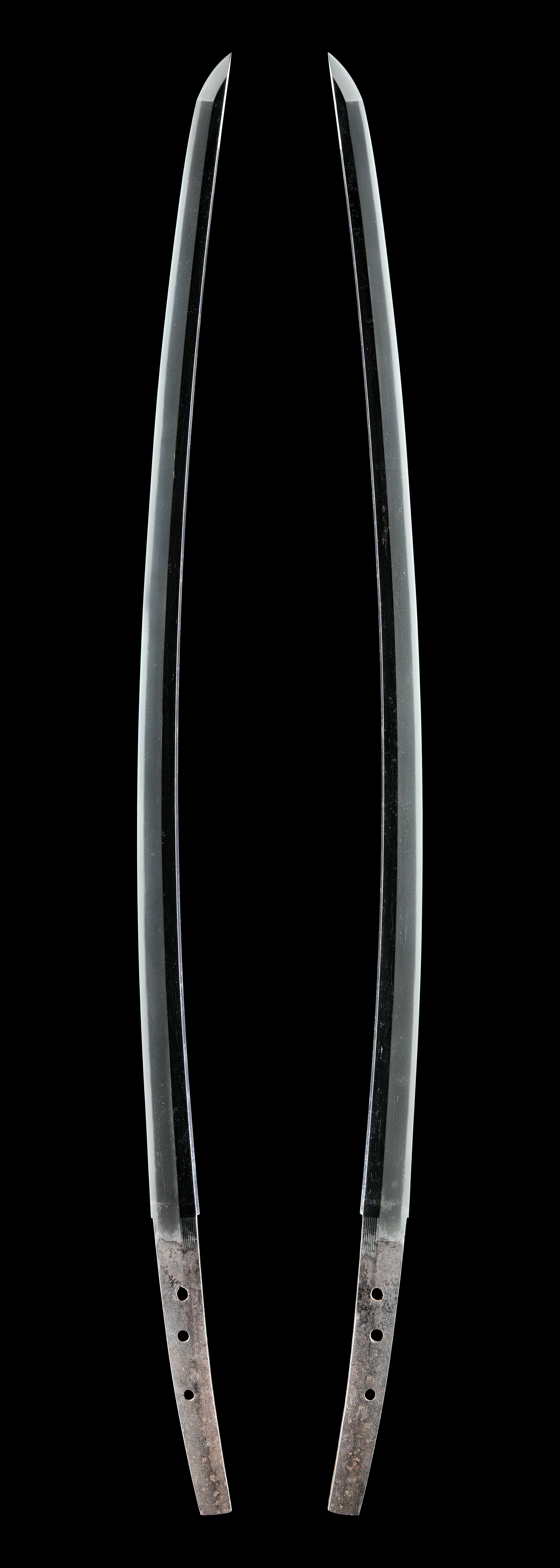
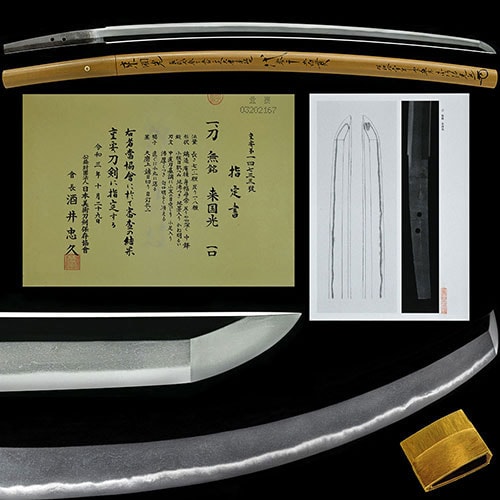
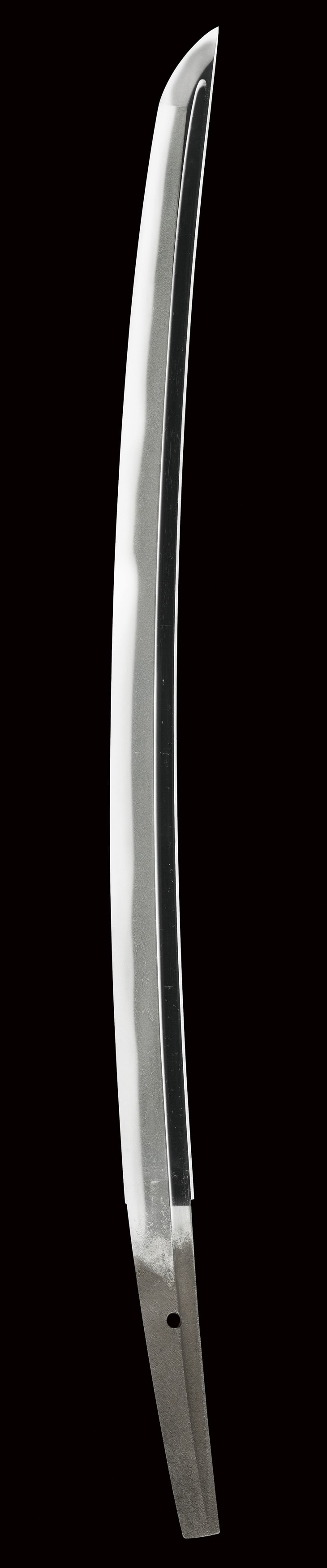
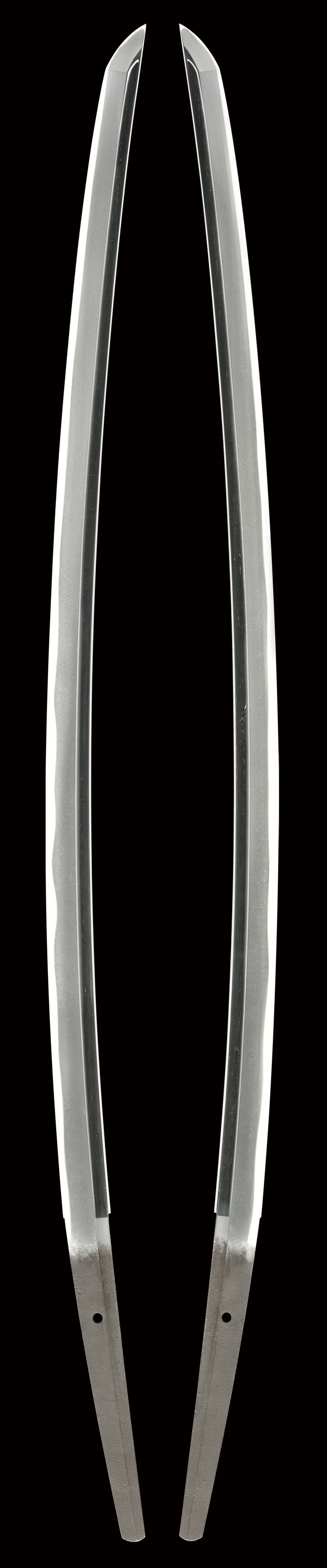
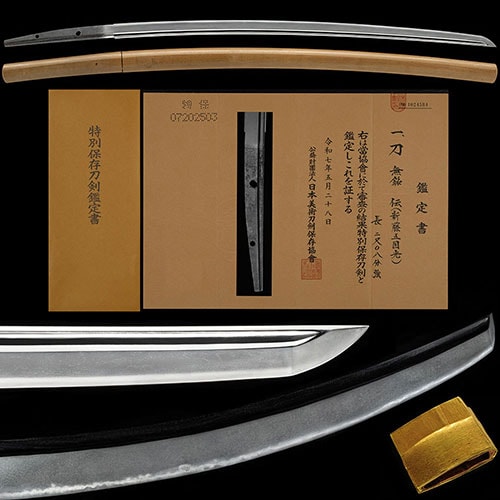
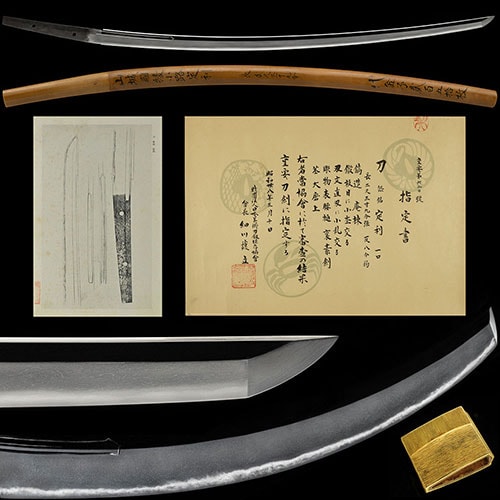
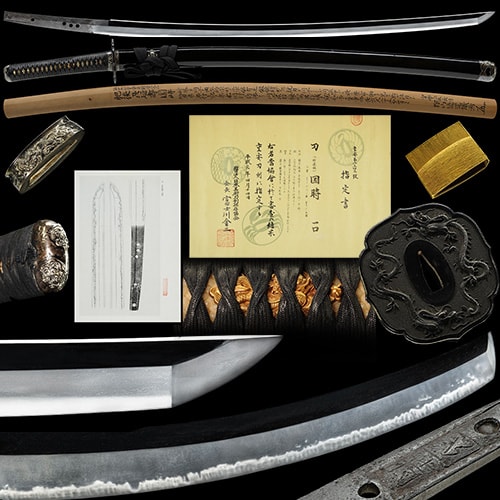
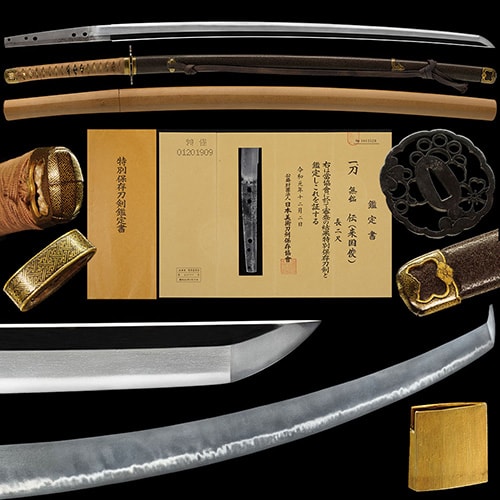
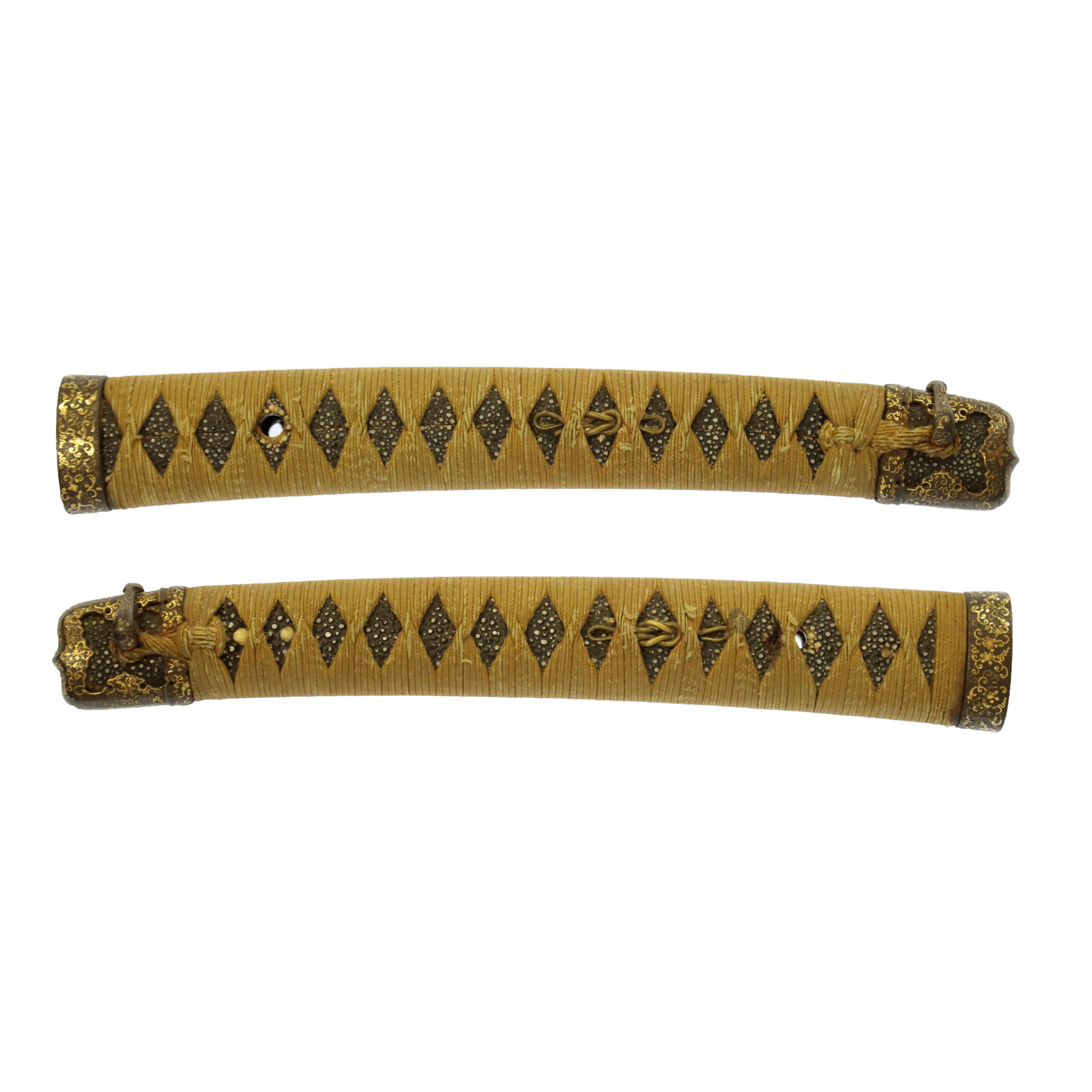
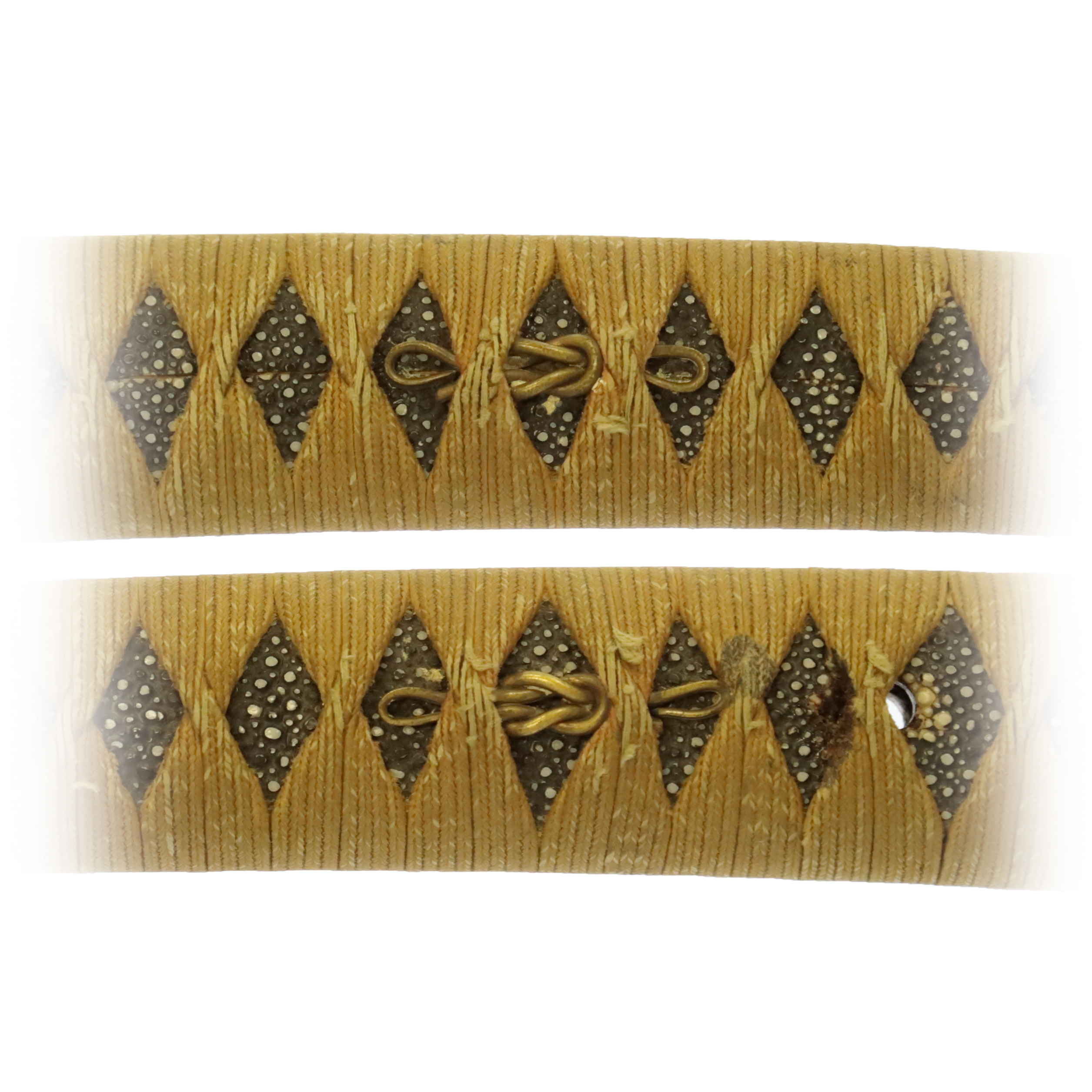
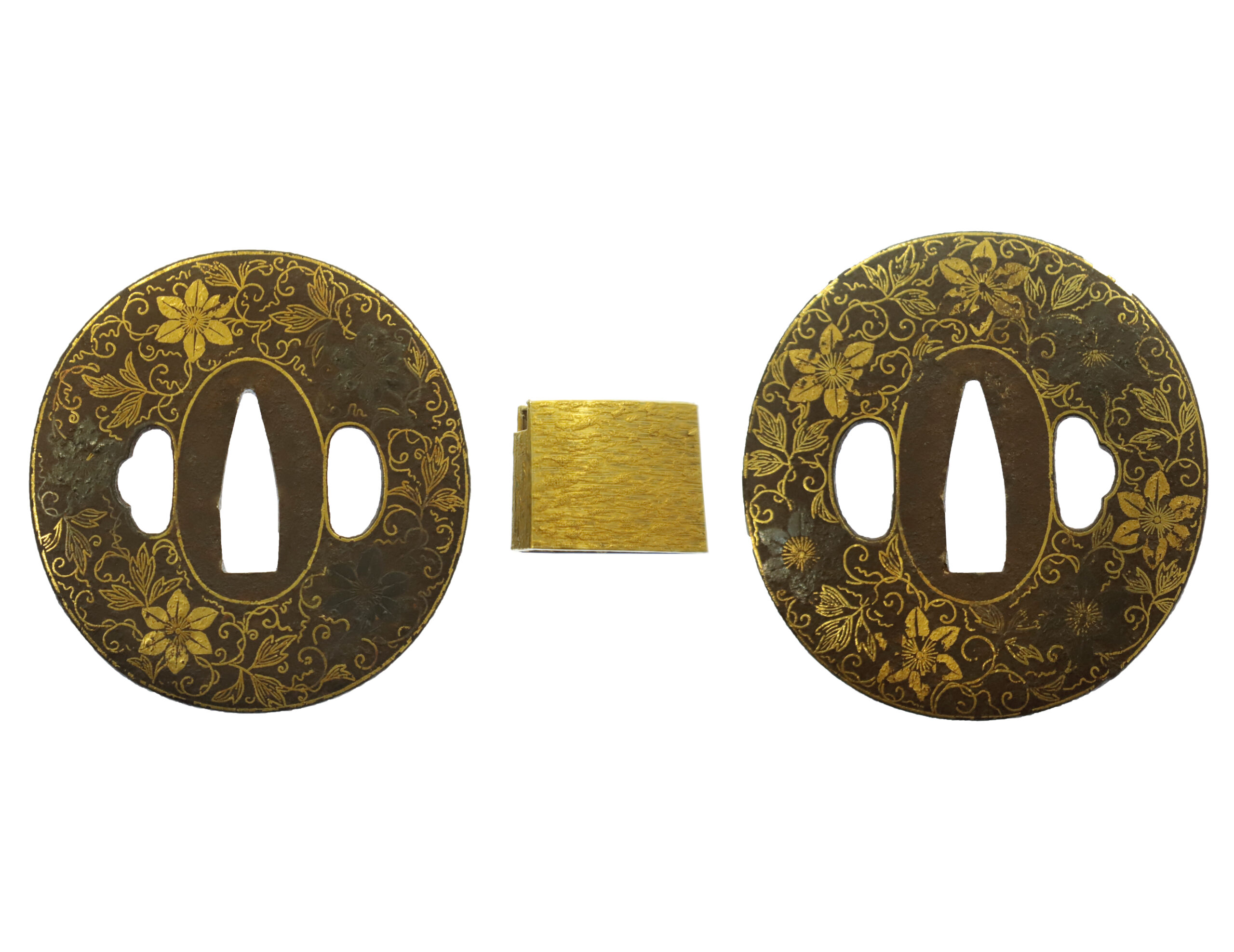
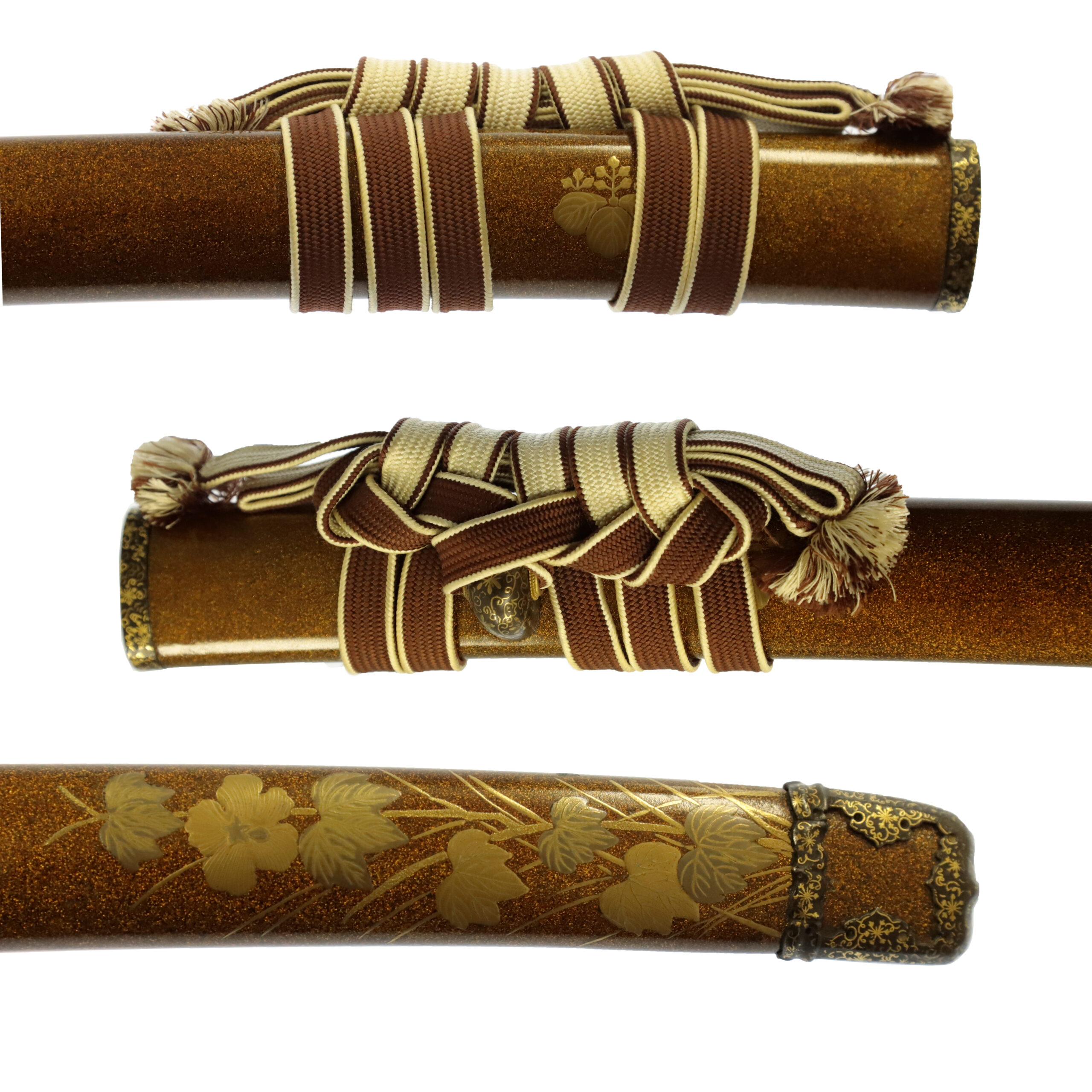
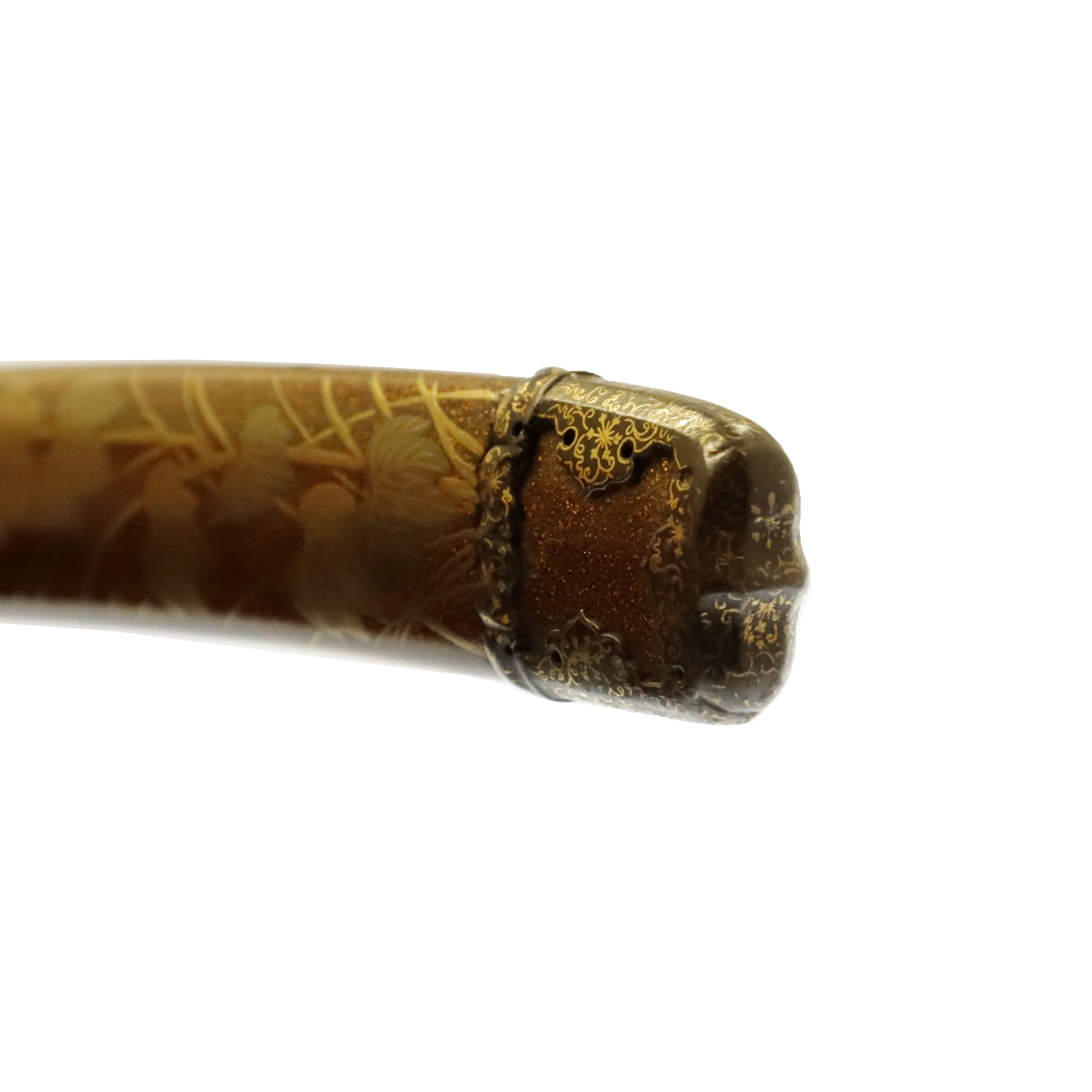
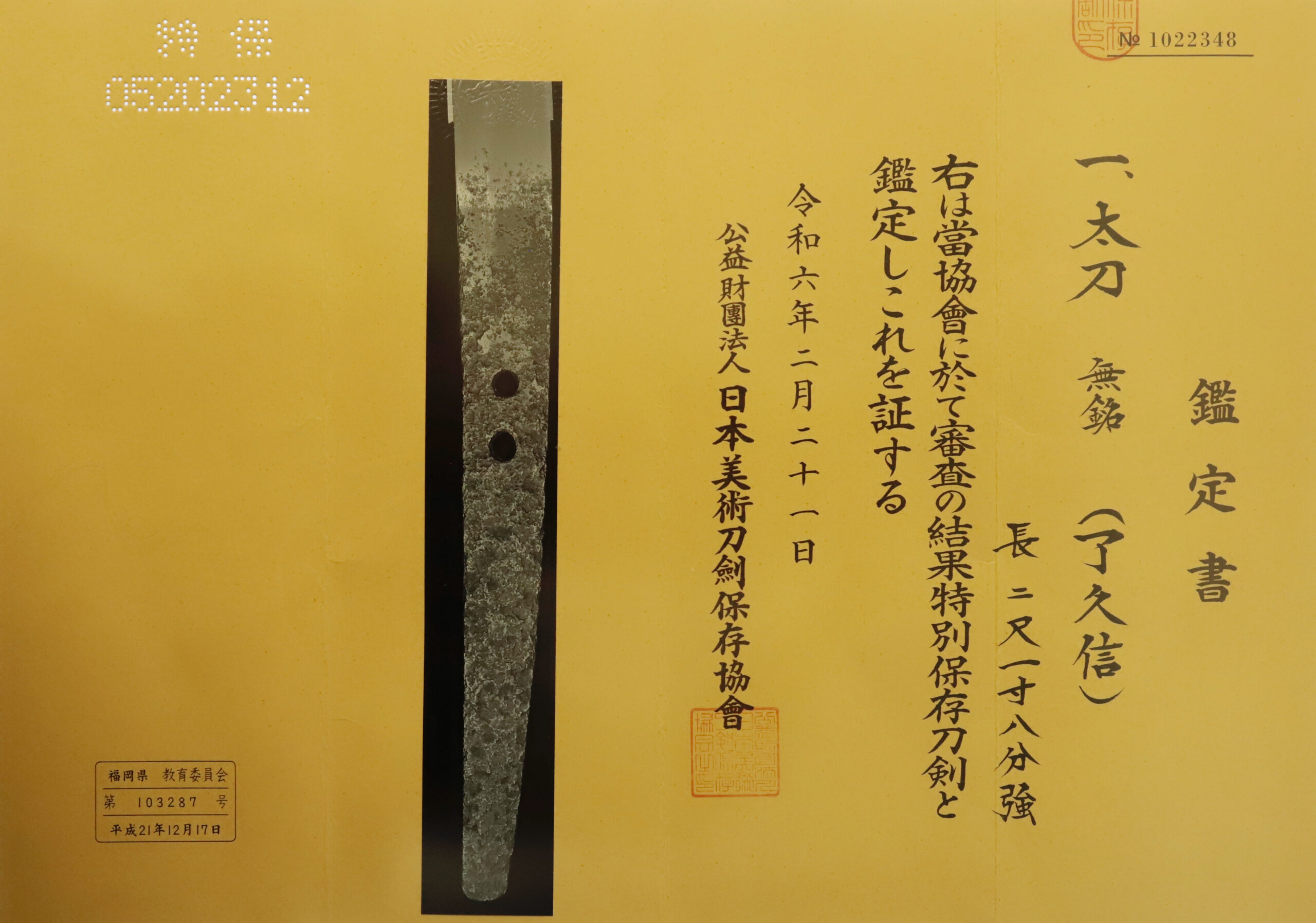
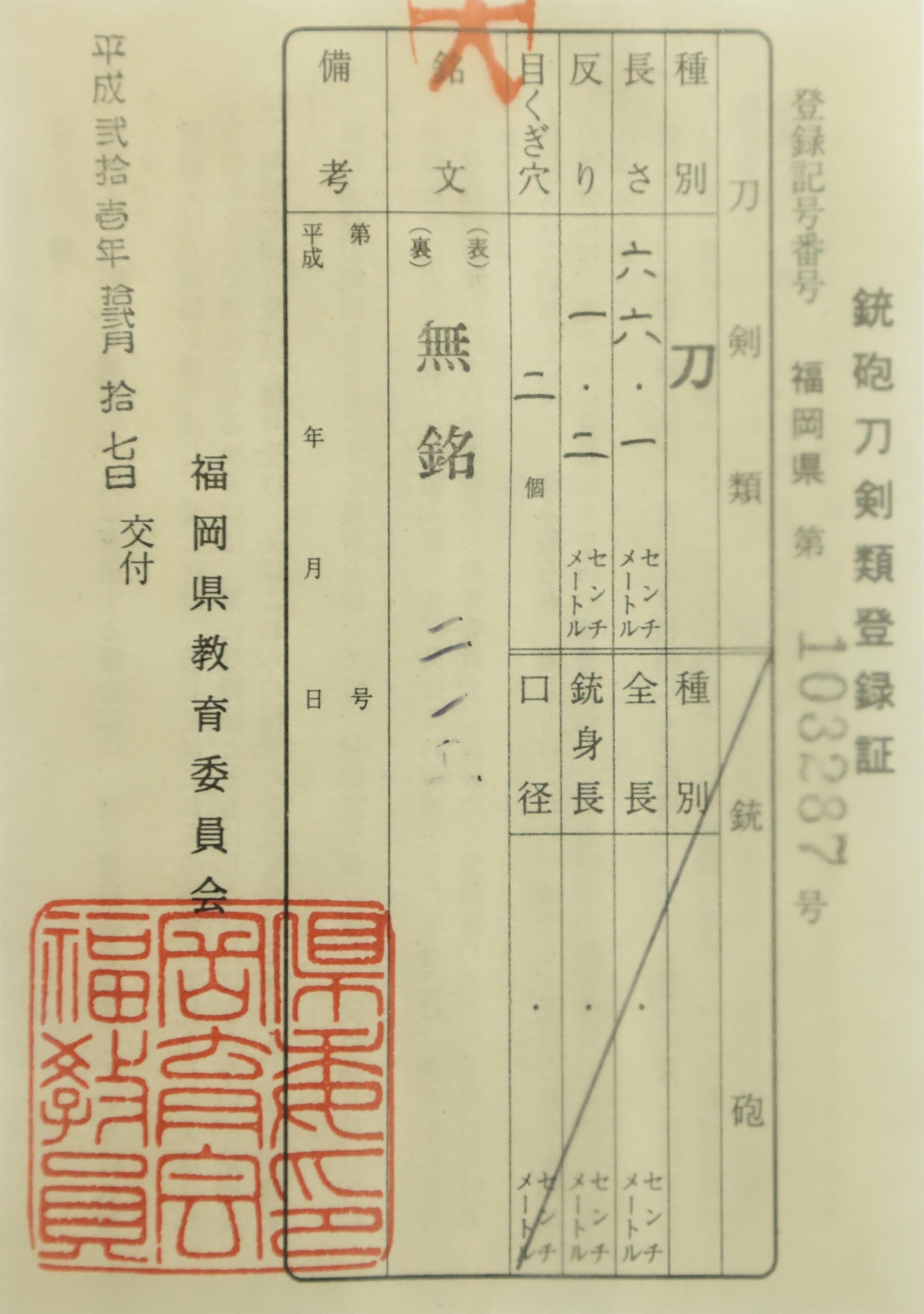
This Tachi blade is attributed to Ryokai Hisanobu, an active swordsmith during the late Kamakura period (1306-1317) in Yamashiro Province. It comes with an NBTHK Tokubetsu Hozon Certificate, a shirasaya case, and a half-Tachi style koshirae. The koshirae features Kikyou (Japanese bellflower) motifs on the Fuchi-Kashira and Tsuba, and an Asagao (morning glory) motif on the Saya.
 NihontoWatch
mumei · Ryokai · Kamakura · nagasa 66.1cm · sori 1.2cm
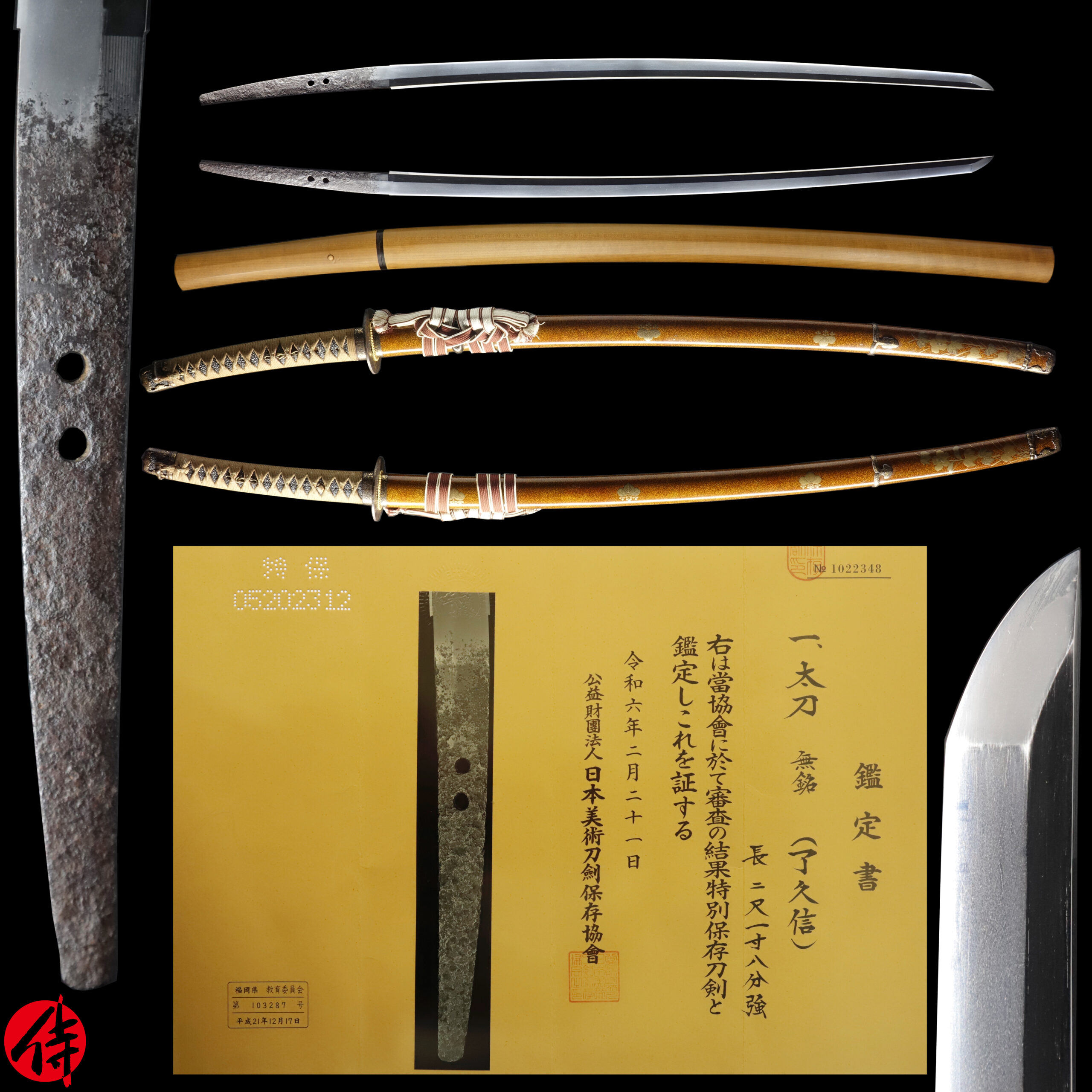
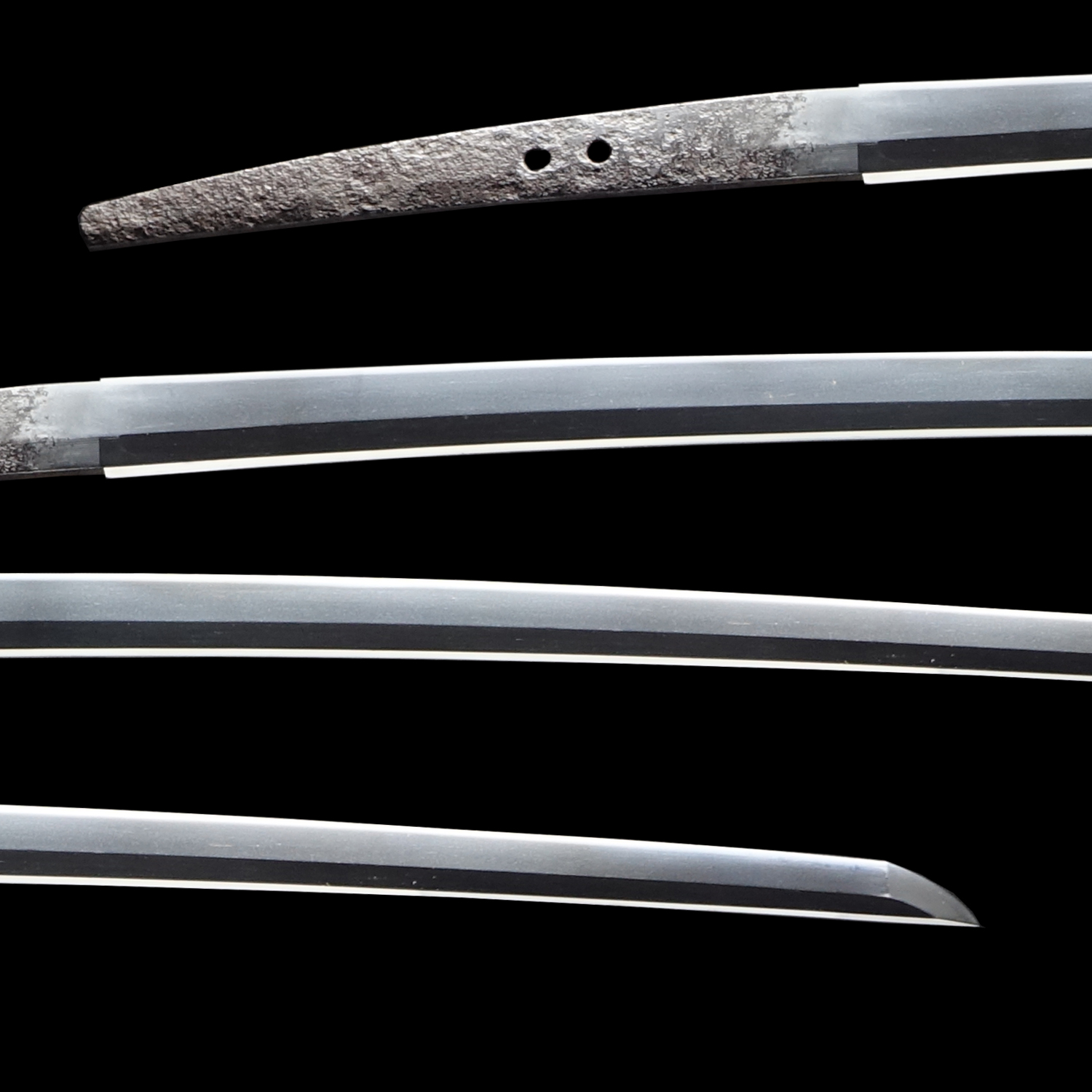
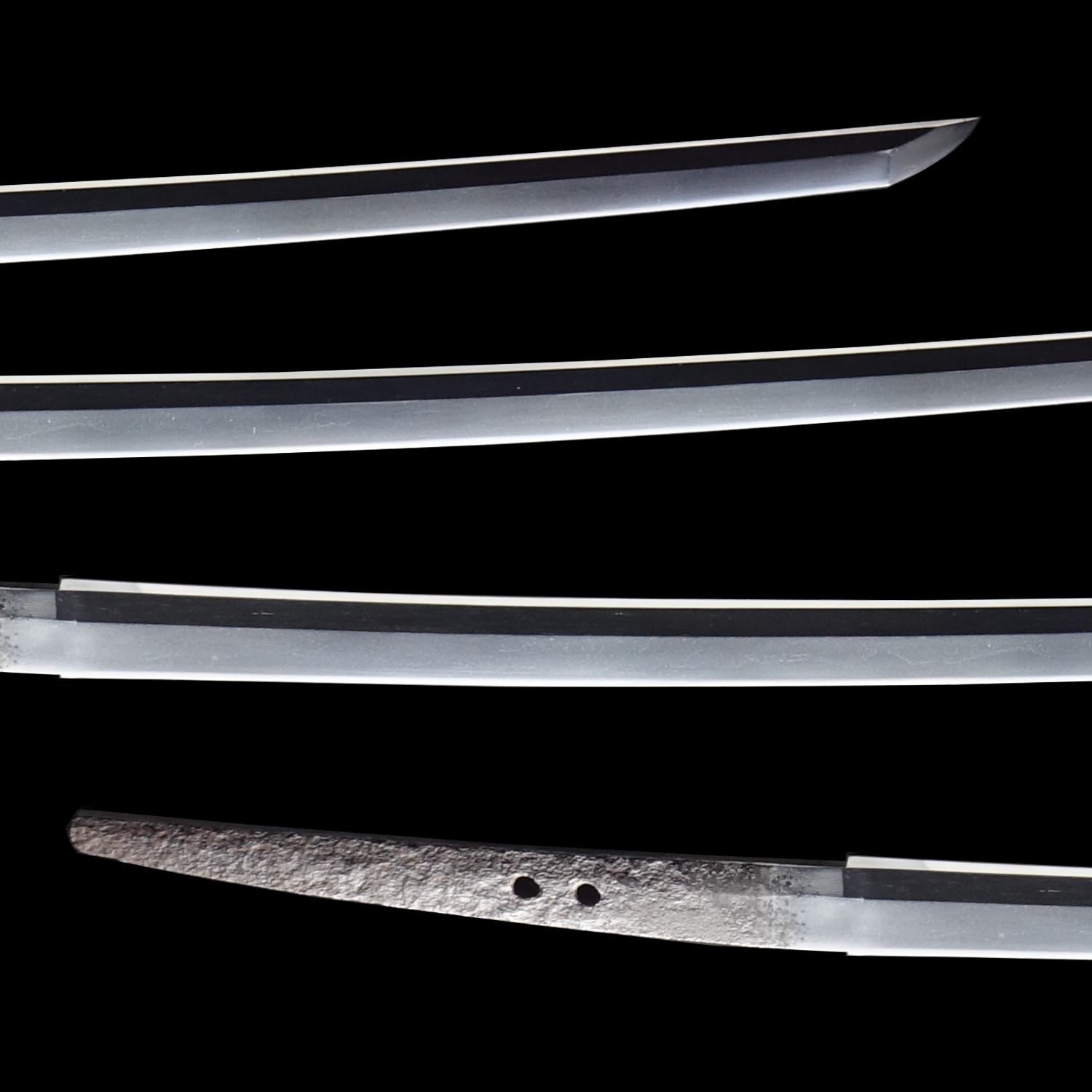
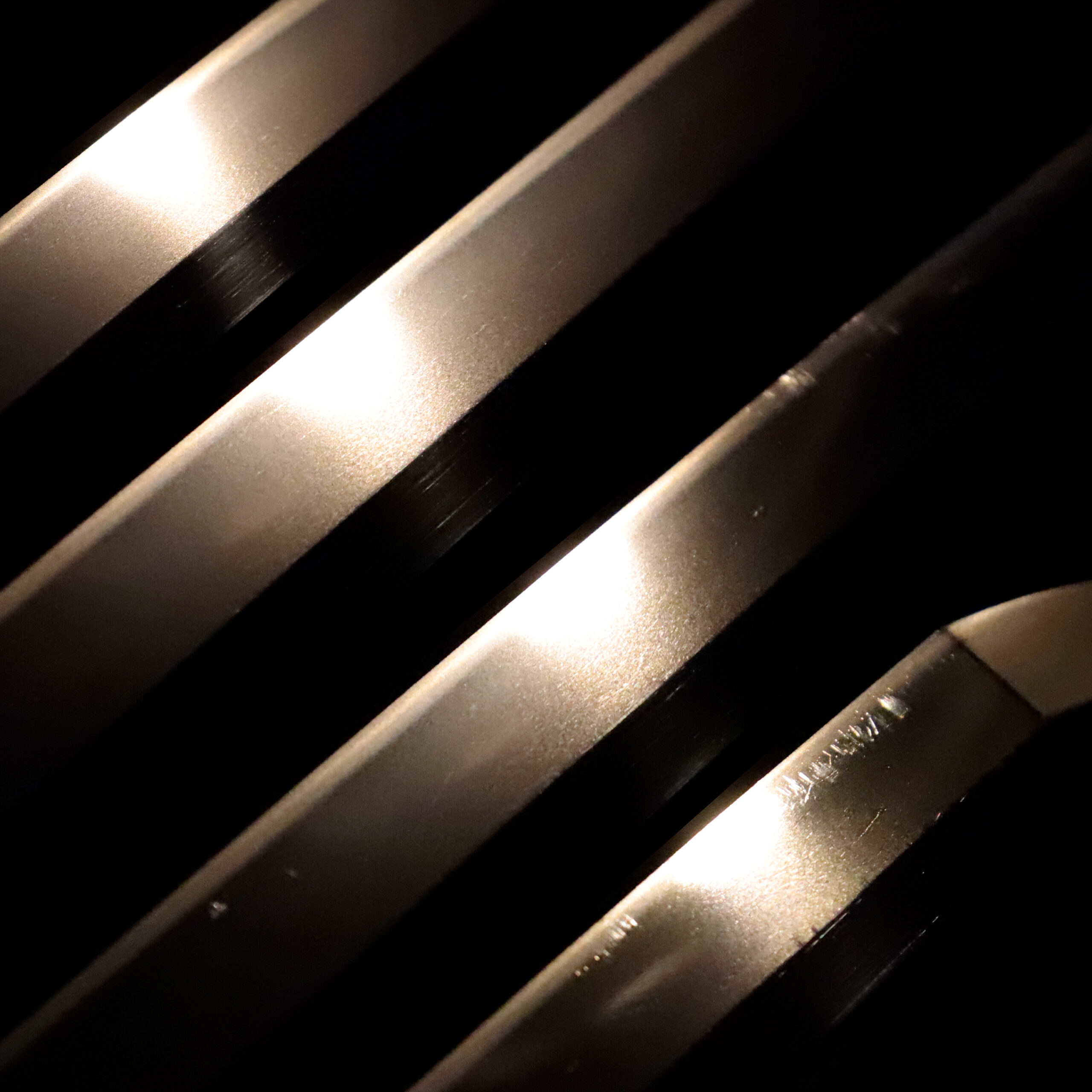
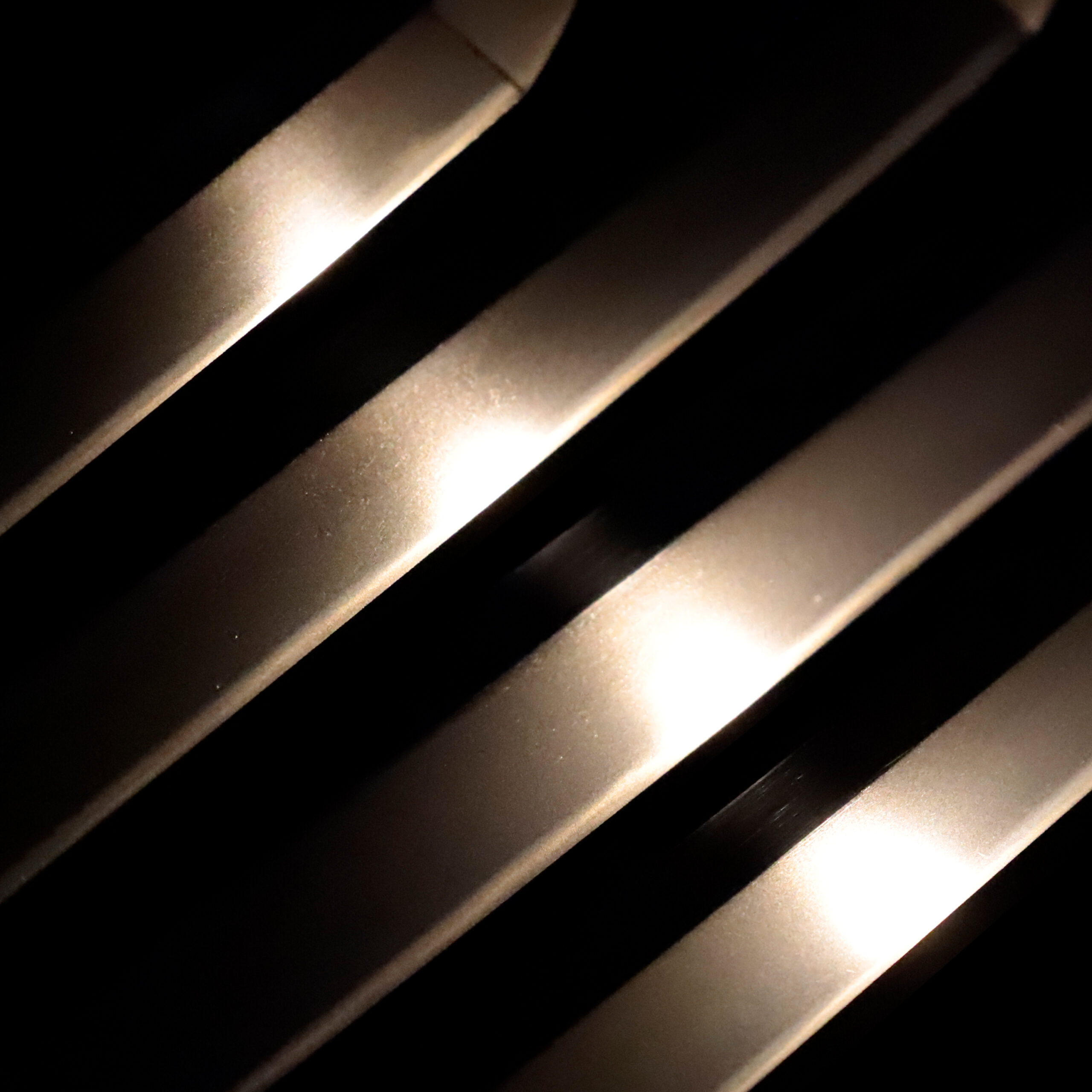
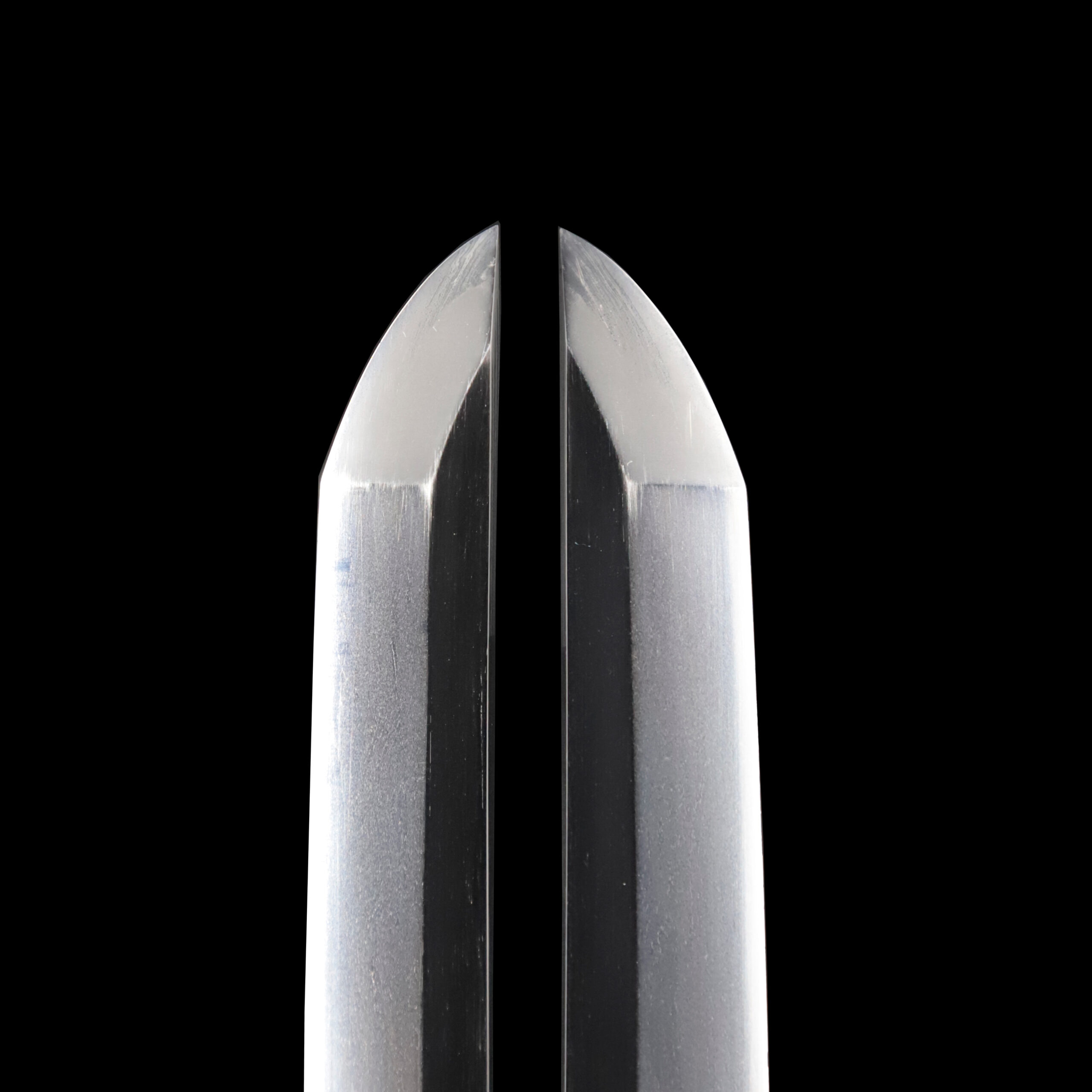
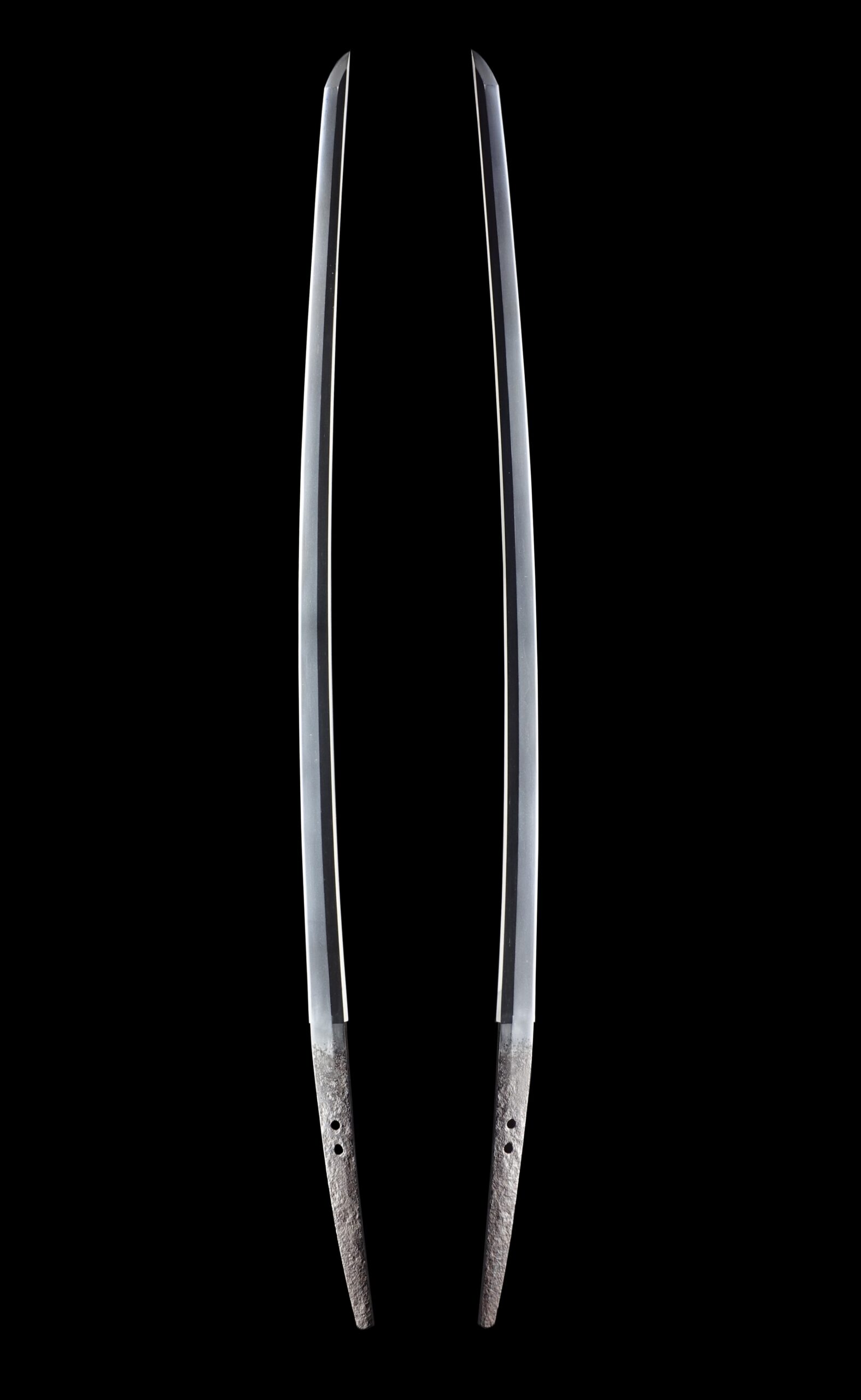
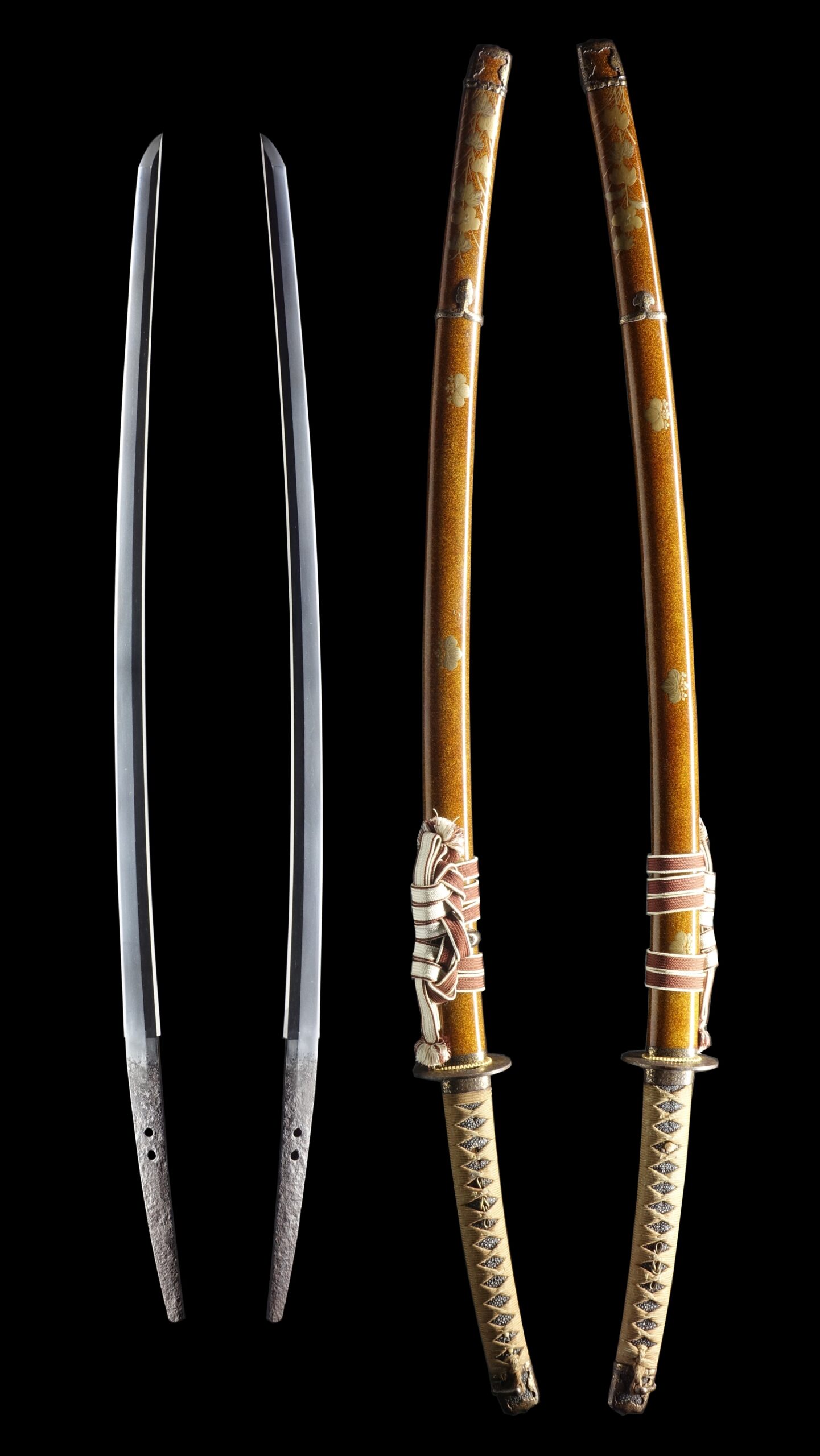
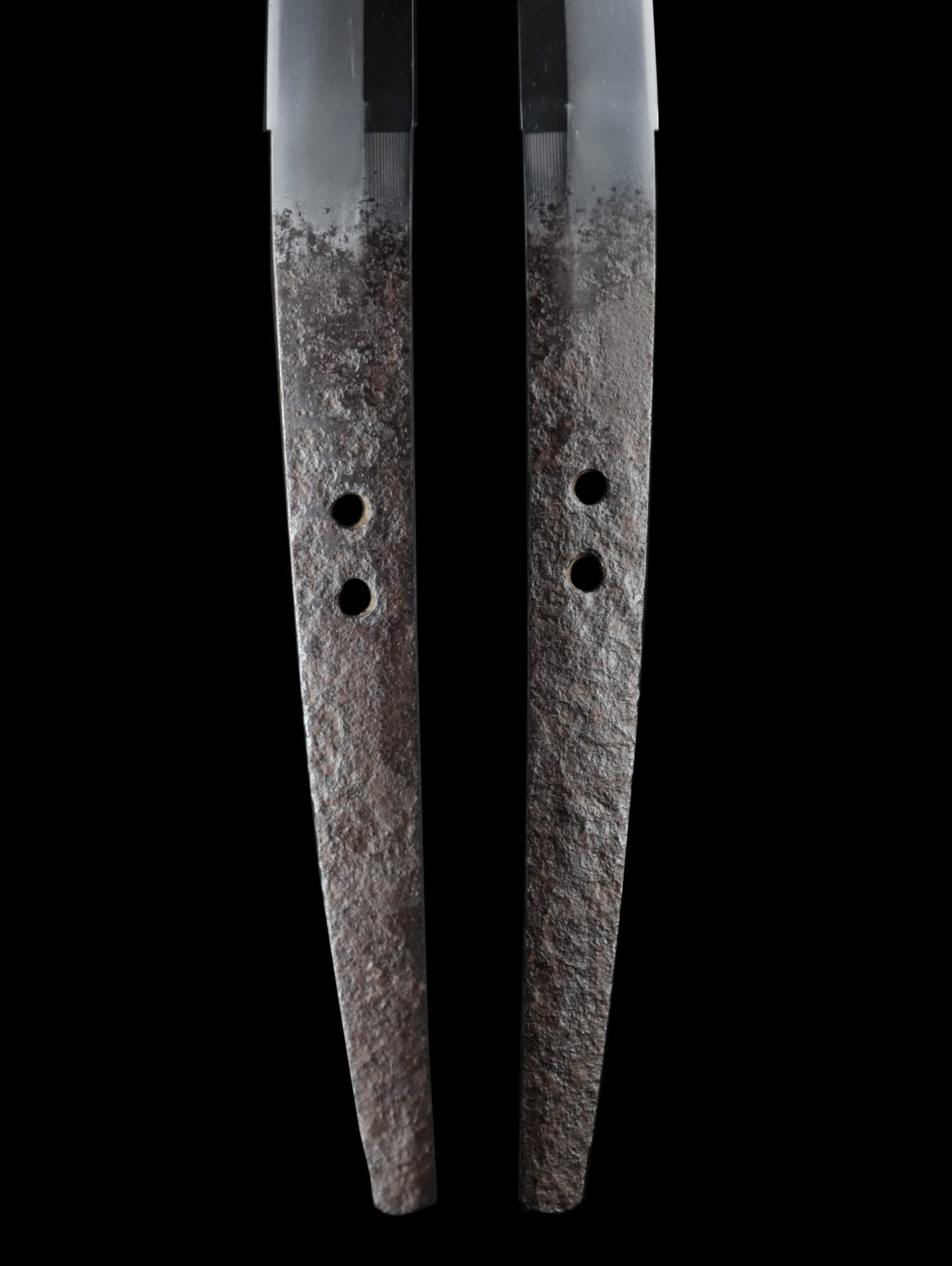
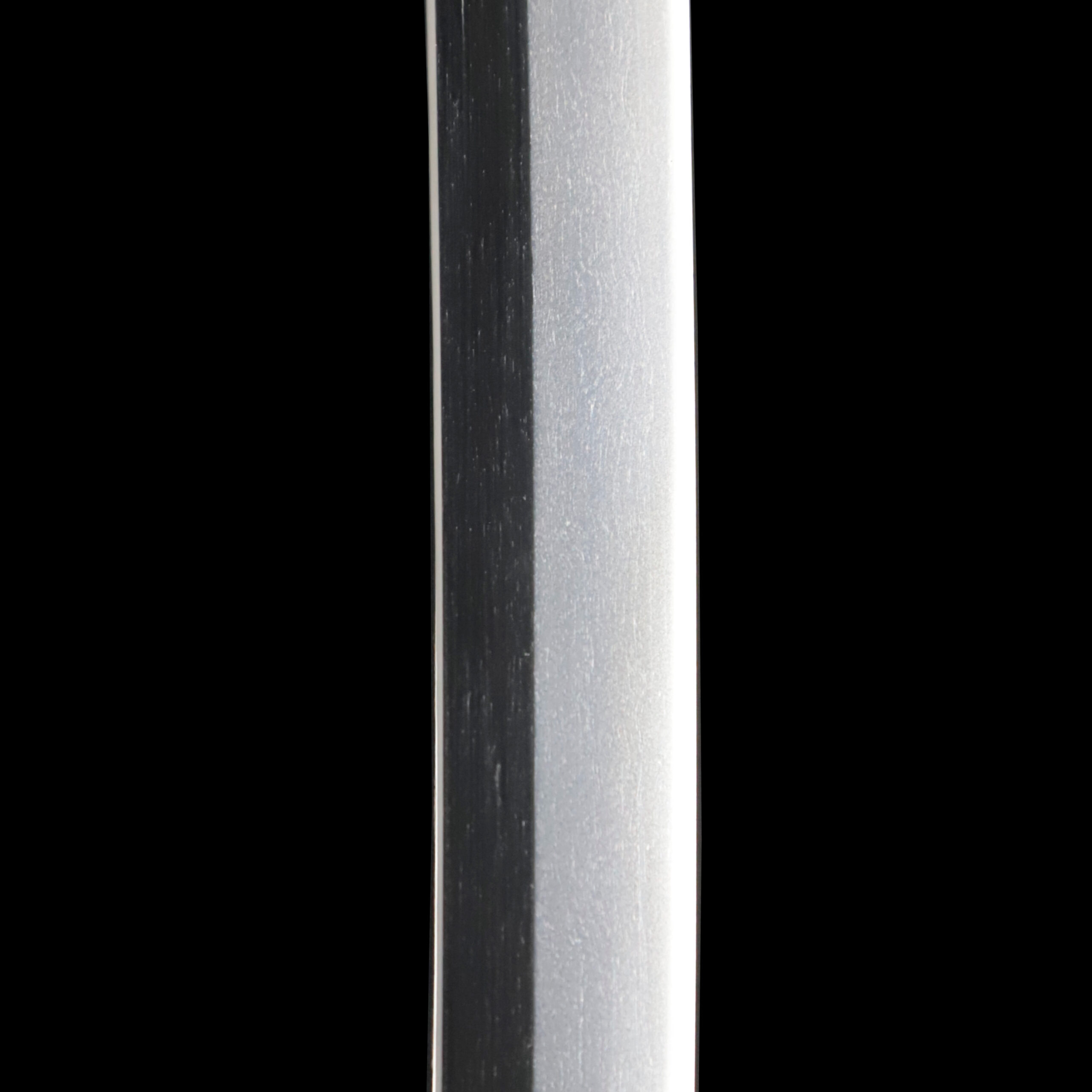
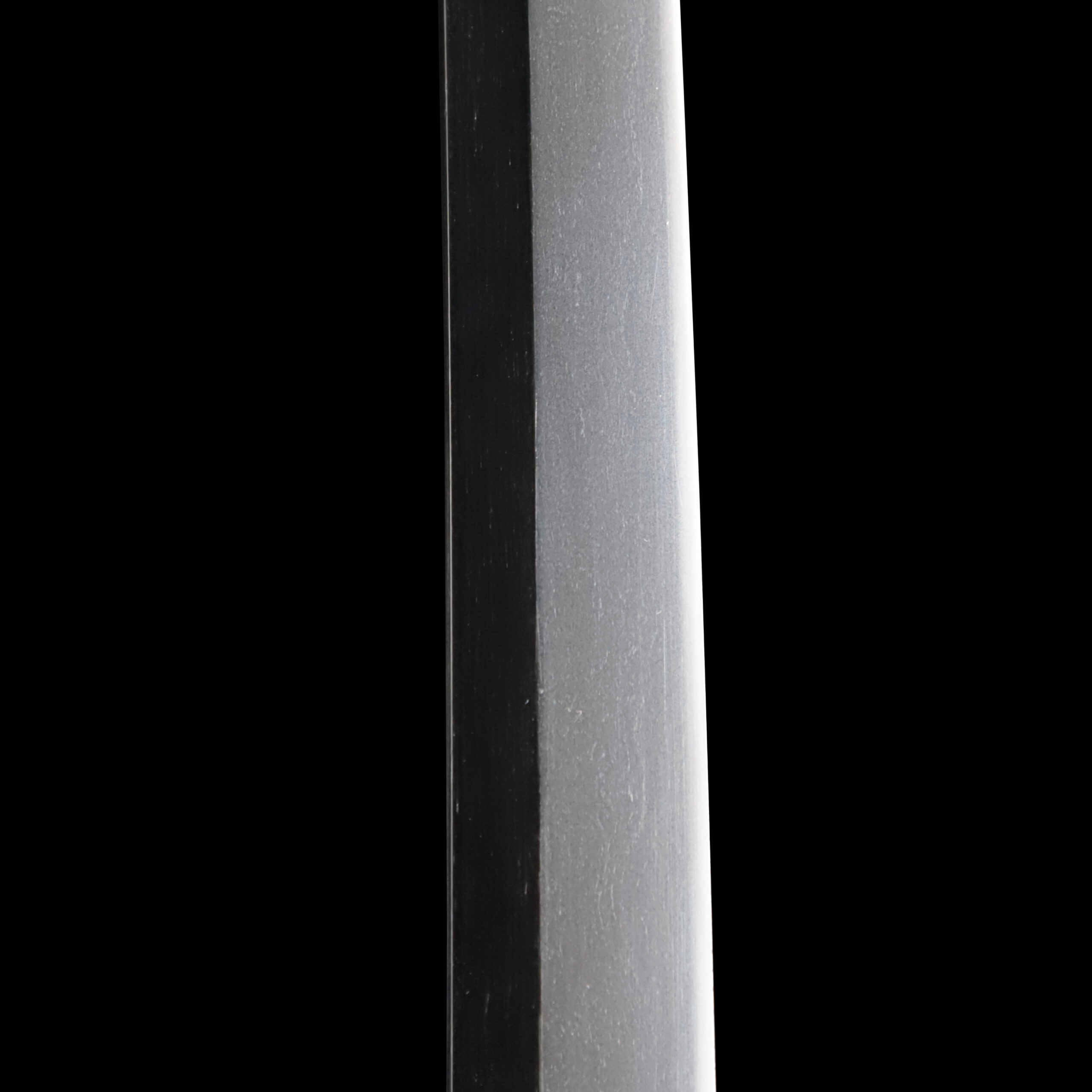
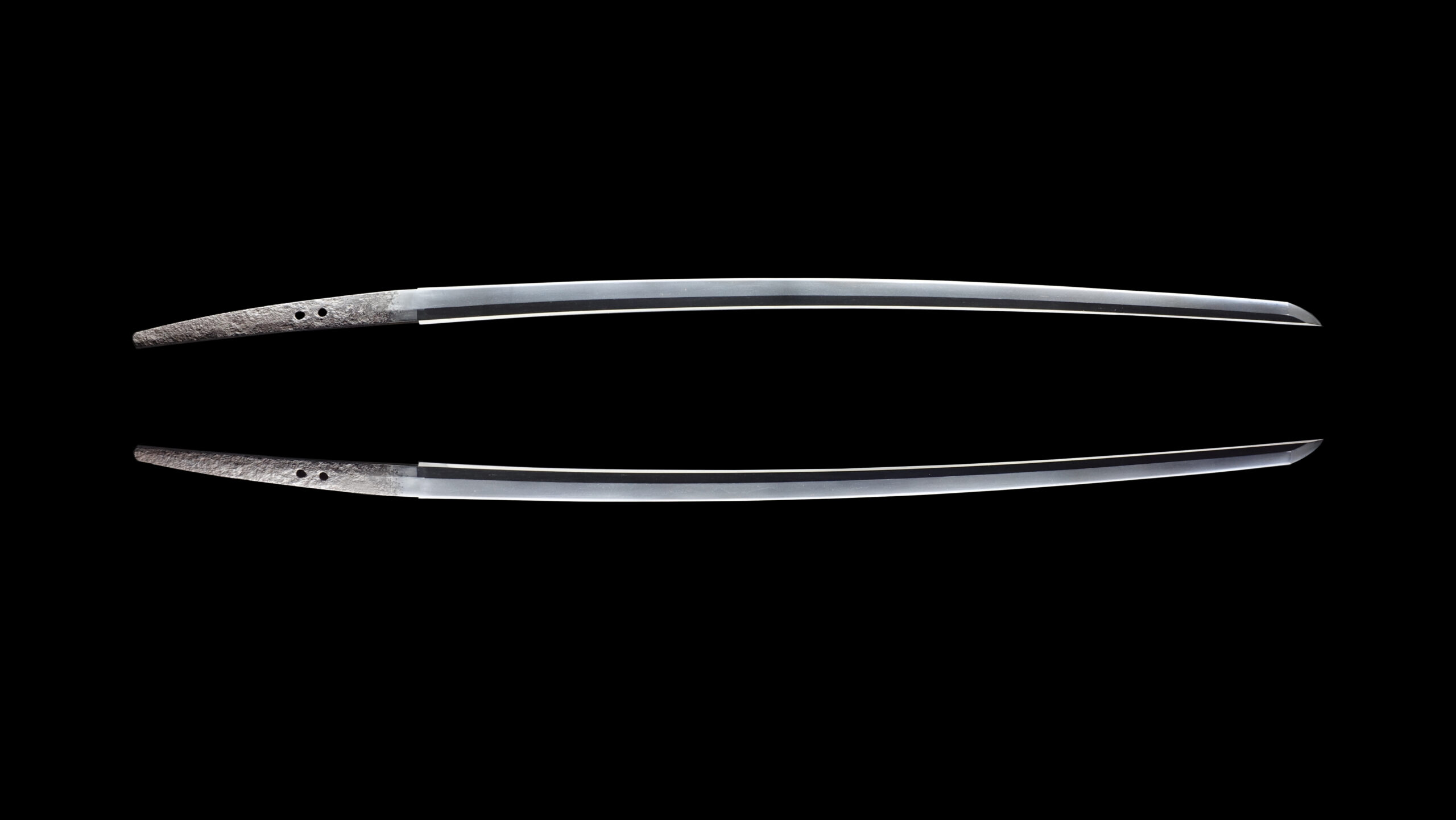
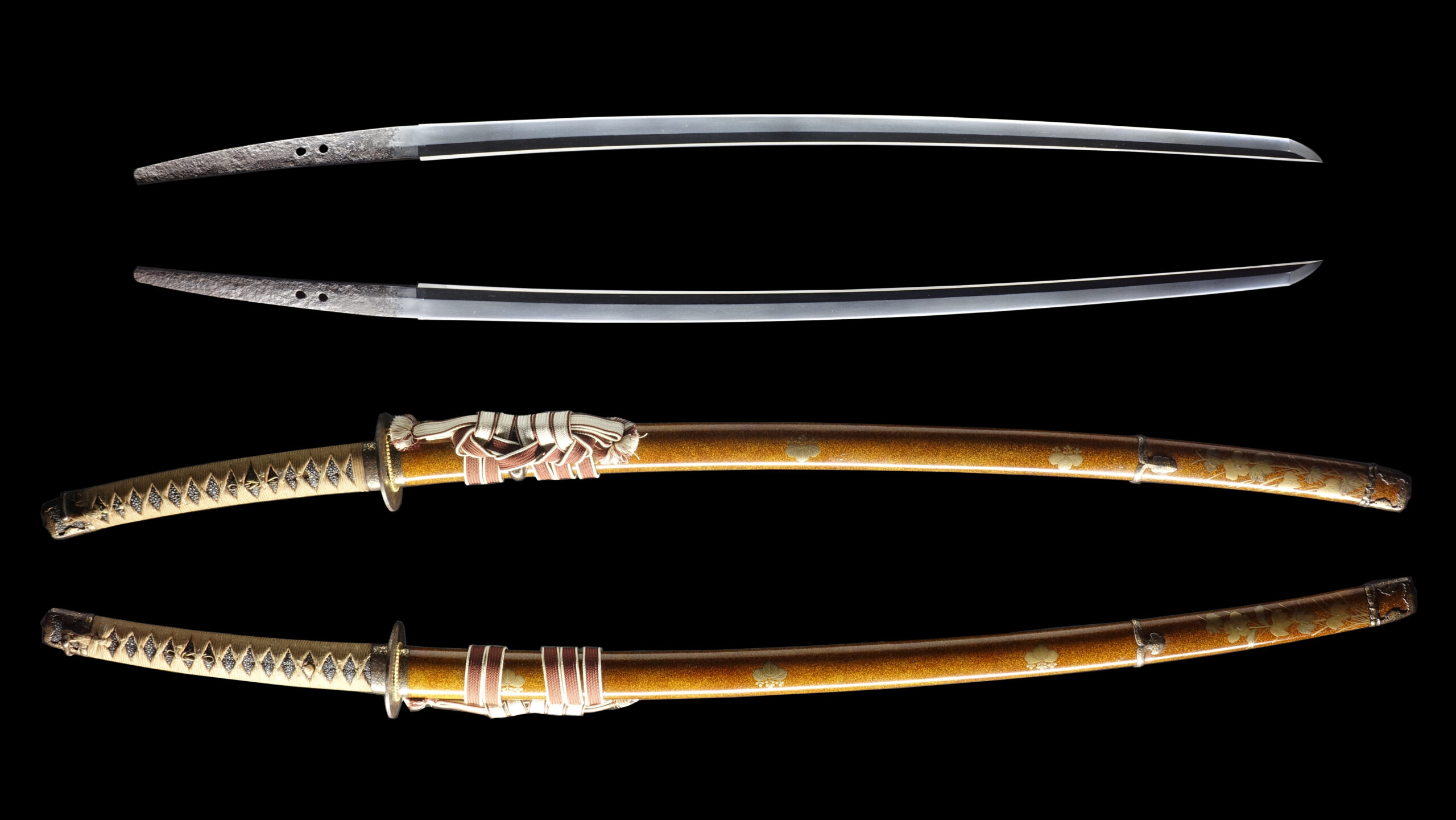
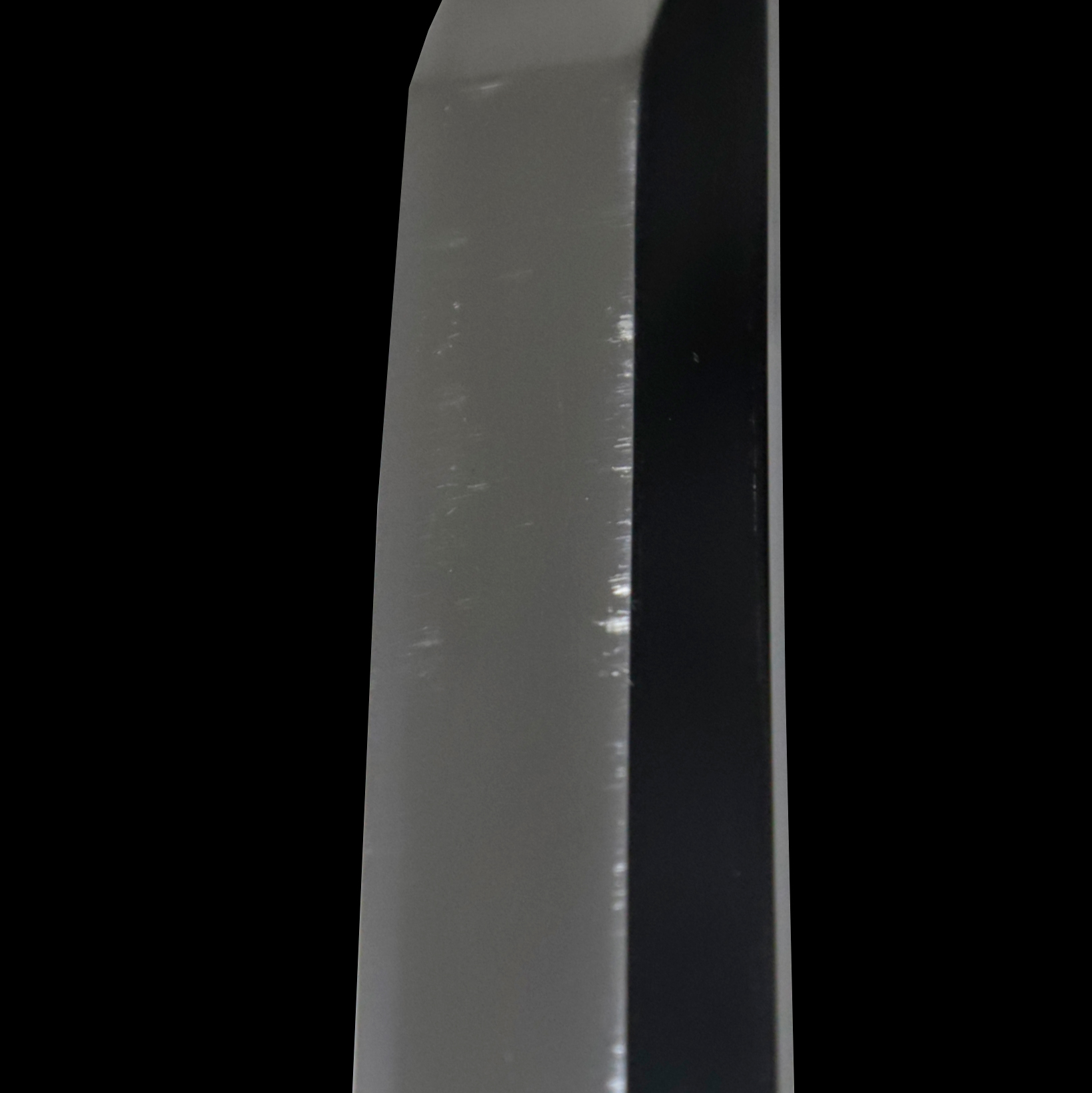
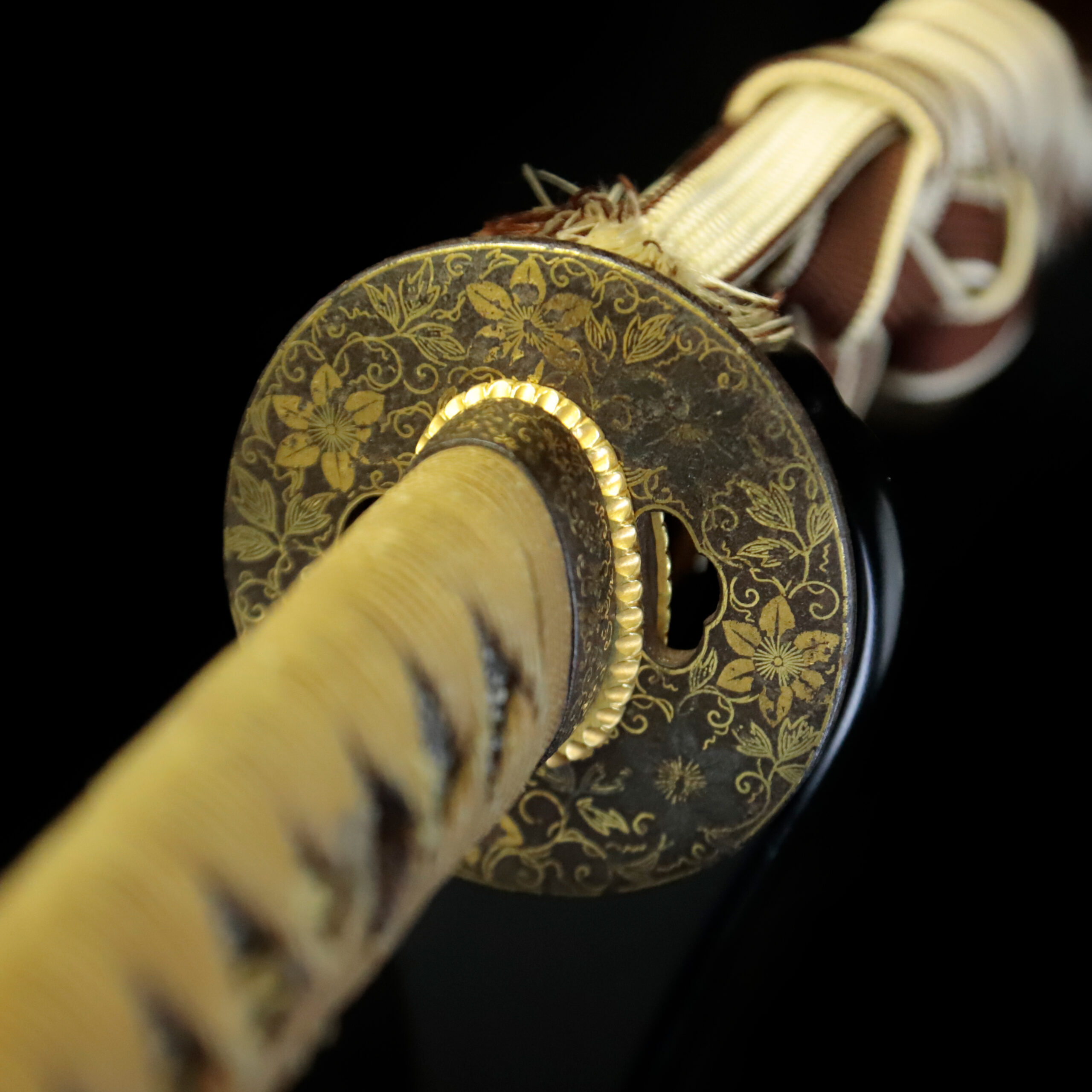
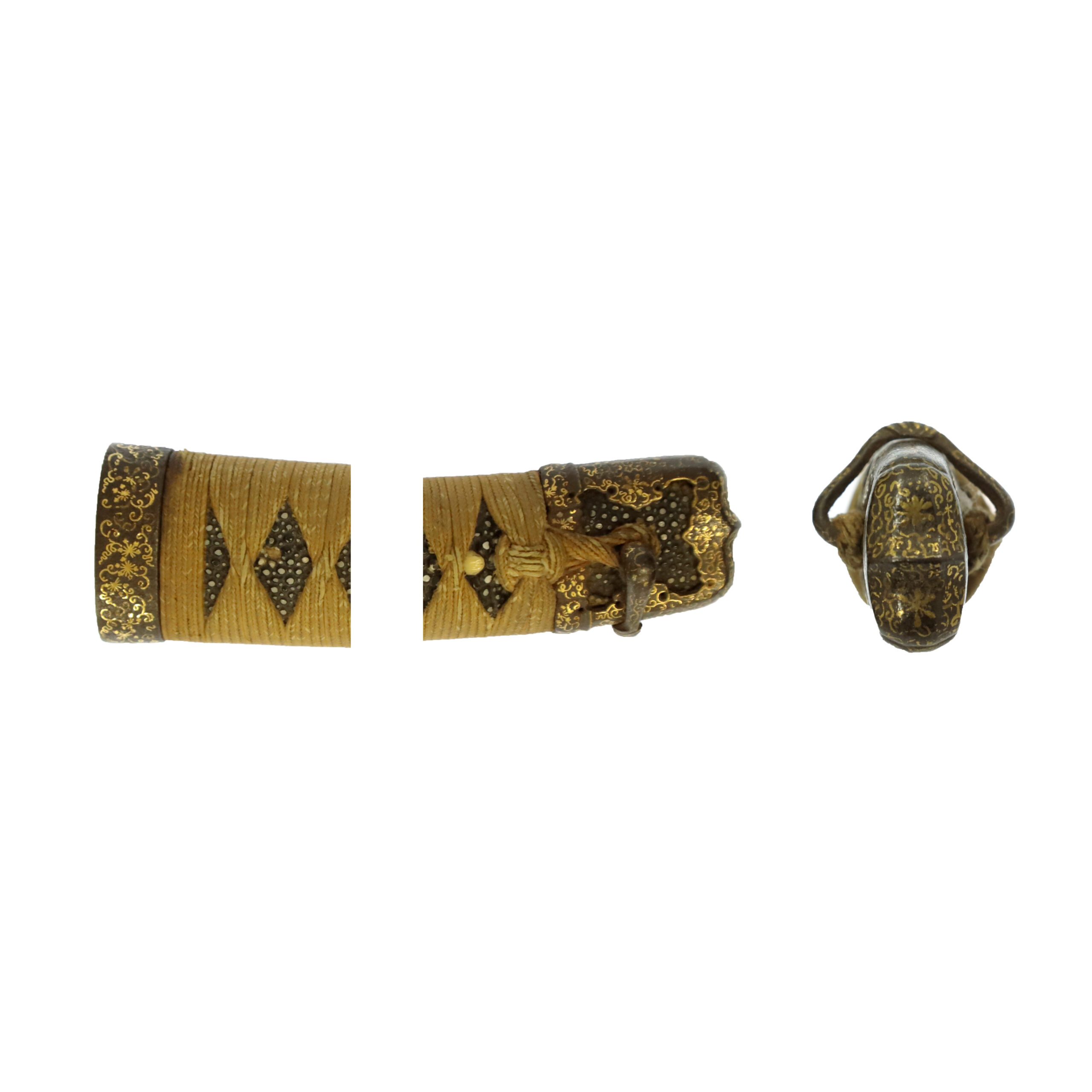
Ryokai (Yamashiro) · Yamashiro · around 1304-1308
Fujishiro Jo-jo saku · Tōken Taikan top 14%
On a long-signed tachi dated Kagen 2 (1304) the smith cut his full name and personal title, Kuro-zaemon-no-jo Hisanobu, and that single inscription fixes much of what is known of him. Ryo Hisanobu, signing Ryo-Hisanobu, was the son of the founder of the Ryokai school of Yamashiro and the second generation of that line, working at the very end of the Kamakura period on the dated evidence of his surviving blades, the year-signatures Kagen, Tokuji and Engyo placing him almost level with his father at the turn of the fourteenth century. The Ryokai school stood among the recognized offshoots of the great Rai workshop of Kyoto, and the published sources describe Hisanobu as carrying his father's hand on with little change. He is rated Jo-jo saku in the reference texts, a high standing for so little-recorded a smith, and his work survives in a handful of designated blades, signed and attributed, by which his manner can be read.
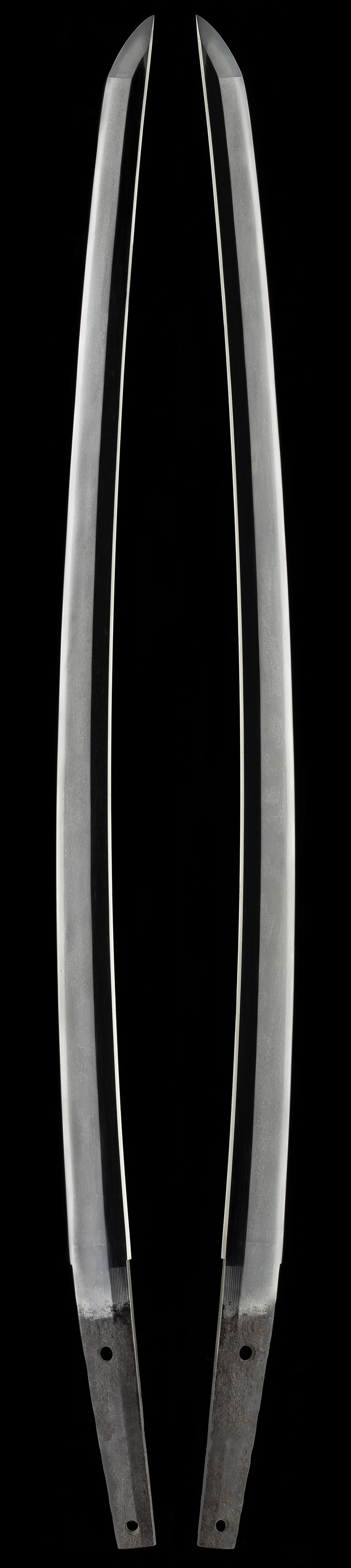
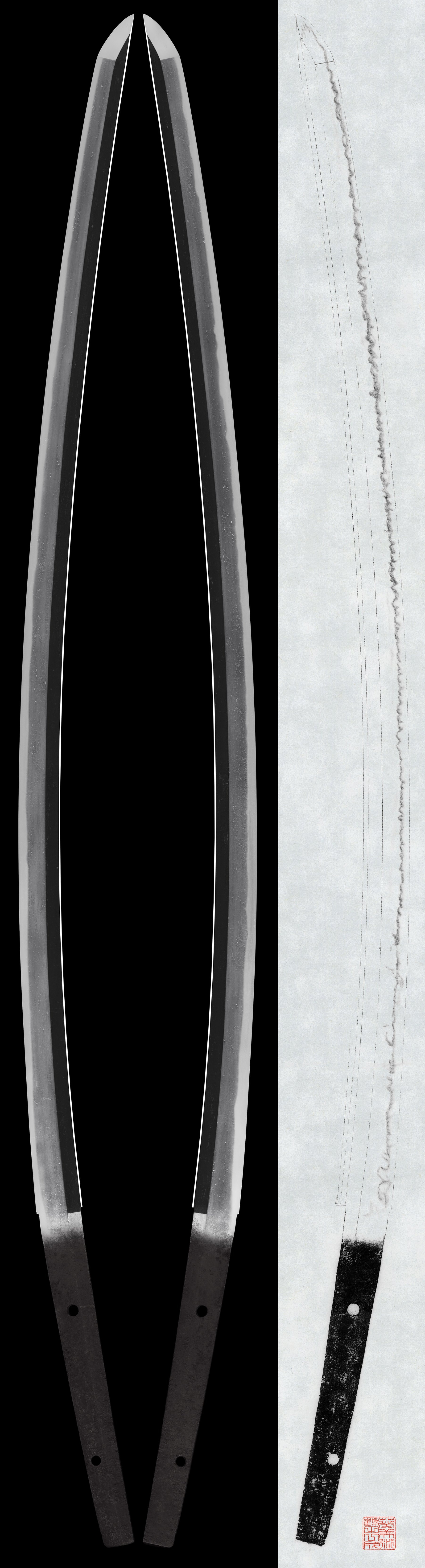
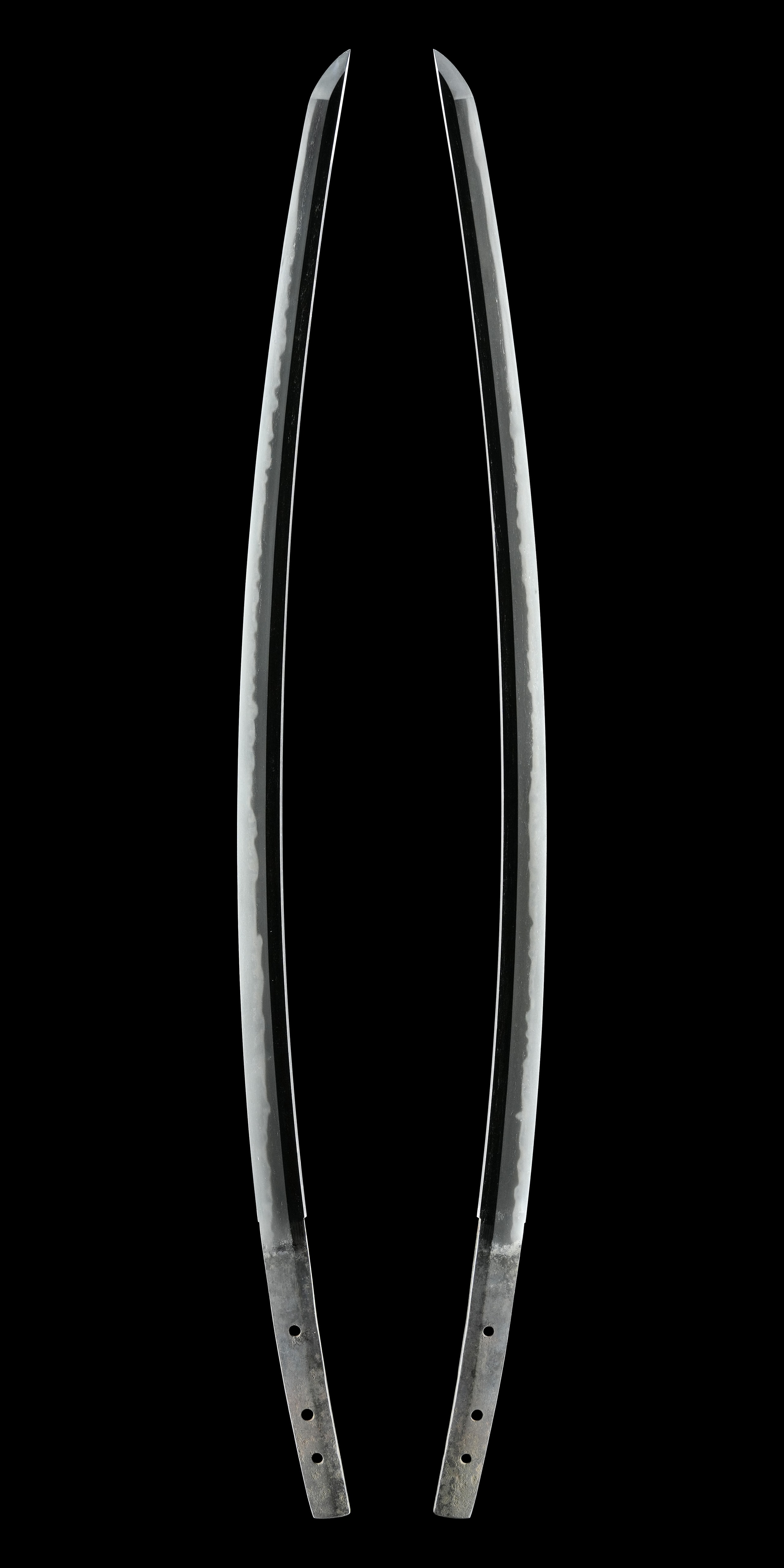
His is the quiet Yamashiro suguha of the Ryokai line. Over a forging of itame or ko-itame that flows toward masame and stands a little open, the ji carries dust-fine ji-nie and the school's whitish shirake-utsuri, which on the slenderer blades rises in a straight band from the machi before spreading up the jigane. The temper is a calm chu- or hoso-suguha, or a suguha-cho mixing small ko-gunome with a few ko-choji and ko-midare, the nioiguchi tightening and clouding into urumi in places, with ko-ashi and yo entering, a faint fraying of hotsure along the habuchi and fine sunagashi, the boshi closing straight into a small ko-maru. The first Juyo tachi the published sources call an offering that well displays the characteristics of the Ryokai school, the phrase 「了戒一派の特色がよく表示された出来口」[[c:1]] standing as a fair summary of his hand.
The jigane is the foundation of the recognition. Across every one of his blades the whitish shirake-utsuri stands in the ji, the inherited Ryokai tell that separates the line from the Rai parent, in whose work it is essentially absent. The itame leans toward masame, the Yamato-ward drift of this Rai offshoot, so that the surface stands and flows where the packed Rai ji stays smooth, ji-nie clinging dust-fine and an occasional chikei running. In the ha the calm suguha shows minute work, ko-ashi and yo entering thickly on the best pieces, the nioiguchi clouding softly, an occasional tobiyaki or yubashiri drifting across, a little nijuba showing low on one kodachi. On his finest attributed tachi the published sources praise the abundant ashi and yo, the good nioiguchi and the finely worked ji together, judging it a particularly fine example among his attributed work with the words 「同工極め中にあって特に優品といえる」[[c:2]].
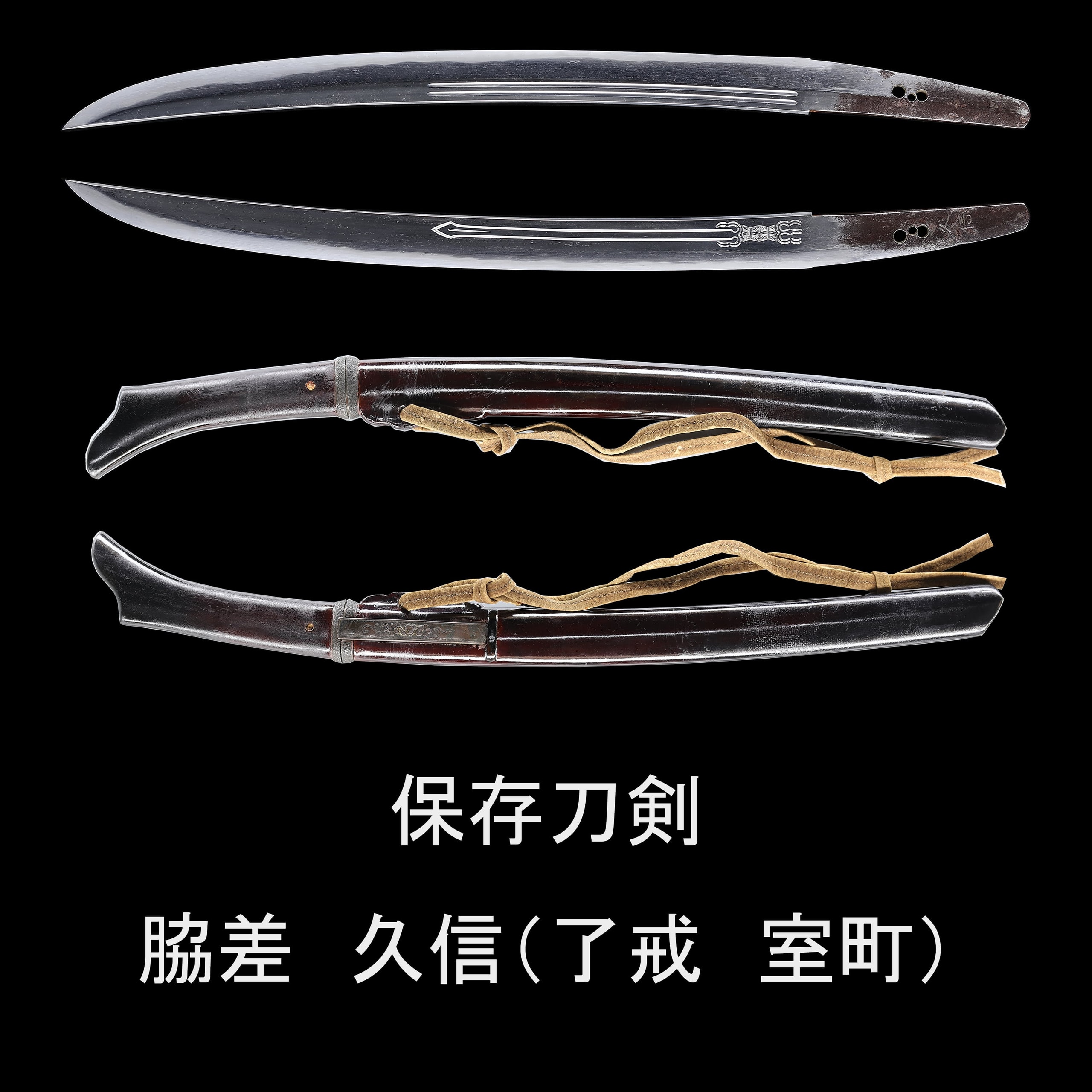
The small body of his designated work divides into two registers. The first is his rare signed survivals, ubu tachi and kodachi carrying a three-character Ryo-Hisanobu toward the mune above the mekugi-ana, and the one long-signed dated tachi giving the full personal name; one tachi is carved with bonji and suken on the omote and bonji and gomabashi on the ura, the late-Kamakura Kyoto manner. The published sources call the signed kodachi precious as one of the few in-mei works of this smith, ubu and well preserved, its hand recalling the father, 「作風は父了戒を想わせるような出来口」[[c:3]]. The second register is mumei blades attributed to him on the same reading, one an ubu mumei tachi of well-made ko-itame, one an osuriage mumei katana slightly high in the shinogi. Signed work is described again and again as extremely few, which is why his year-signed and dated pieces carry such documentary weight, one of them called of very high reference value as one of the scarce in-mei works of this smith, 「数少ない同工の有銘の作として資料価値は頗る高い」[[c:4]].
The kantei is drawn against two near neighbours. The first is Rai Kunitoshi, the parent of the line, against whom the published sources resolve one of his mumei katana directly: the ko-gunome, hotsure and other changes at the ha-border of his fine suguha read a degree quieter and lonelier than Kunitoshi, the calm narrow line still showing minute activity, the verdict 「来国俊に比してやや蕭然たるもの」[[c:5]], with the boshi running straight into a settled ko-maru, so that the Hisanobu attribution is correctly affirmed. The masame and shirake more marked, the nioiguchi tighter and the whole calmer, these are the points that part him from Rai. The second neighbour is the father himself, from whom Hisanobu is separated less by any feature than by the signature, since signed work of the son is rarer still; a plain Hisanobu suguha is at a glance easily taken for the father's, and a soft Rai Kunitoshi for either of them. His single most consequential blade is the dated tachi that, by giving his personal name, established his zokumyo as Kuro-zaemon and through it showed that an earlier nationally designated tachi, once read as the father's sole work, is in fact a joint work of father Ryokai and son Hisanobu.
Hisanobu has no National Treasures and no Important Cultural Properties of his own, and none of his recorded blades is locked permanently out of private hands; his standing is that of a scarce but genuinely collectable name. Five of his blades are on the official designation record, all at the Juyo tier, and the published sources lean on his year-dated work and on outside documents to fix his place, the Tokuji 3 naginata in the Tokugawa Art Museum carrying the inscription 「了戒子息久信作」 that confirms him as Ryokai's son. No provenance owners are recorded for his designated blades, whose whereabouts of record run to private collections across several prefectures. A signed Hisanobu, ubu and with its mei intact, is among the scarcer things a collector of late-Kamakura Yamashiro work could hope to encounter, coming to light only from time to time and prized as documentary evidence as much as for itself; a mumei tachi or katana attributed to him appears a little more readily, and it is on these, with their shirake-utsuri and clouding suguha read against the quieter Rai line, that his hand is most often met. The published sources close on one such mumei blade as a calm fine suguha that yet shows minute work, 「静閑な細直刃ながらも微細な働きをみせる」[[c:6]], a deep and savoured offering, which is as fair a verdict on the smith as on the blade.
Where Hisanobu stands among comparable artisans: across all of nihontō, and within tradition, era, and period. The tiers (Foremost · Leading · Major · Notable) weigh official designations from the NBTHK and Japan's Agency for Cultural Affairs, together with historical honors of lasting repute such as the Sansaku and Meibutsu-chō.
Select a lens to see how it's measured.
Years he was demonstrably active, proven by signed-and-dated blades
Yamashiro-den · Yamashiro
14 pieces on the market now
The Ryokai school (了戒) took shape in the late-Kamakura capital of Kyoto, in Yamashiro Province, around the smith Ryokai, who worked through the era names Shoo, Einin, Kagen, Enkyo and Ocho at the turn of the fourteenth century. The old account makes him a son or a pupil of Rai Kunitoshi, and one version has him adopted into Kunitoshi's house; because his dated blades place him almost level with Kunitoshi, however, the NBTHK reads him more naturally as a contemporary (an aitedeshi, a fellow disciple) who formed his own line within the wider Rai circle. Whichever account one follows, his is the Rai Yamashiro hand softened by a degree, and from him the Ryokai name descended for several generations, his son Ryo Hisanobu (久信) following as the second master, with a Kyushu branch, the Chikushi Ryokai of Bungo and Buzen, forming by the Nanbokucho and Muromachi eras. What the members hold in common is a quiet manner read against, and just apart from, the Rai parent. Over a packed itame or ko-itame that flows toward masame and stands a little open, fine ji-nie clings and faint chikei enter, while a whitish shirake-utsuri rises in the ji; this paler, drier utsuri, against the clear midare- or jifu-utsuri of Rai proper, is the first thing that separates a Ryokai blade from its source. The temper is a calm chu- or hoso-suguha, mixing here a little ko-choji, ko-gunome or ko-midare, with ko-ashi and yo entering and sometimes a Kyoto reverse ashi; kinsuji and sunagashi run within a tight nioiguchi that grows austere and, in places, clouds into urumi, the moist soft quality the published sources name again and again as a Ryokai point. The boshi closes sugu into a small ko-maru, often brushed with a touch of hakikake. The school stands so close to Rai Kunitoshi that the two are confused at sight; the attribution settles not on any single feature but on the softer ji and ha, the standing masame, the whitish utsuri and the clouding line, the judges noting that compared with Kunitoshi the activity within the temper runs lonelier and the nioiguchi one degree tighter.
Against the sister Enju school the distinction is the boshi: where Enju turns a large deep o-maru and leaves the line bright, Ryokai closes a small ko-maru and clouds into urumi. The masame and the whitish cast carry the line a step toward Yamato and Yamato-den, and downstream toward Nobukuni and the Soshu-shaded work that followed. To kantei a Ryokai blade is to recognize the Rai air of wa-zori and refined steel, then to read the tells that part it from the parent: the jihada leaning to masame and standing where Rai stays smooth, the shirake in place of bright utsuri, and the tight, clouding nioiguchi. Among the members the founder, Ryokai, holds first standing, rated Jo-saku by Fujishiro and represented by slender ubu tachi and tanto signed with a boldly cut two-character mei, several carved with bonji and suken, alongside the bulk of his attributed record in osuriage mumei katana given to him on the hand; one such tanto the published sources call altogether elegant and a representative work, the signature itself of the archetypal type. Hisanobu, the second master, rated Jo-jo saku, carried the father's suguha on with little change, his rare signed tachi and kodachi prized as documentary evidence, one dated piece establishing through his given name that an earlier nationally designated tachi once read as the father's sole work is in fact a joint work of father and son; the remaining members and the later Kyushu generations continue the manner generically. Provenance follows the founder above all: blades passing through the Isahaya, Date and Maeda families, one preserving a tradition that it was a sword worn by Miyamoto Musashi, and the finest pieces held and studied in long-standing public and private collections including the Tokyo National Museum, the Sano Art Museum and Monobe Jinja. A signed ubu Ryokai blade in particular is among the scarcer things a collector of Kyoto Kamakura work will meet, coming to hand only with patience. Learn more →
| Smith | Era | Designated |
|---|---|---|
| Ryokai了戒 | 1288-1305 | 97 |
| Hisanobu久信 | 1304-1308 | 5 |
| Nobumasa信正 | 1345-1350 | 0 |
| Noshin能真 | Early Muromachi | 1 |
| Nobuyoshi宣能 | 1444-1449 | 0 |
Yamashiro in the Kamakura period
Power sat in Kamakura, but taste was still made in Kyōto. The Awataguchi school’s pear-skin steel became a byword for perfection, and the Rai line supplied dignified tachi to the court, senior warriors, and the great temples alike.
A Hozon-certified blade judged to show notably superior workmanship and a better state of preservation. The bar is higher: re-tempered blades and most unsigned Muromachi/Edo works are excluded.
The NBTHK (Nihon Bijutsu Tōken Hozon Kyōkai, the Society for the Preservation of Japanese Art Swords) is a public-interest incorporated foundation founded in 1948 and supervised by Japan’s Agency for Cultural Affairs (Bunkachō); it is based at the Japanese Sword Museum in Tokyo. Its expert panels physically examine each submitted work (shinsa) and issue a certificate (kanteishō) ranking it by artistic and historical merit. NBTHK papers are the most widely recognized standard of authentication for Japanese swords and fittings.
NBTHK official siteReturns/exchanges limited to defects caused by shipping (except willful misconduct or gross negligence by the company); customers must contact within 72 hours of receiving the product.
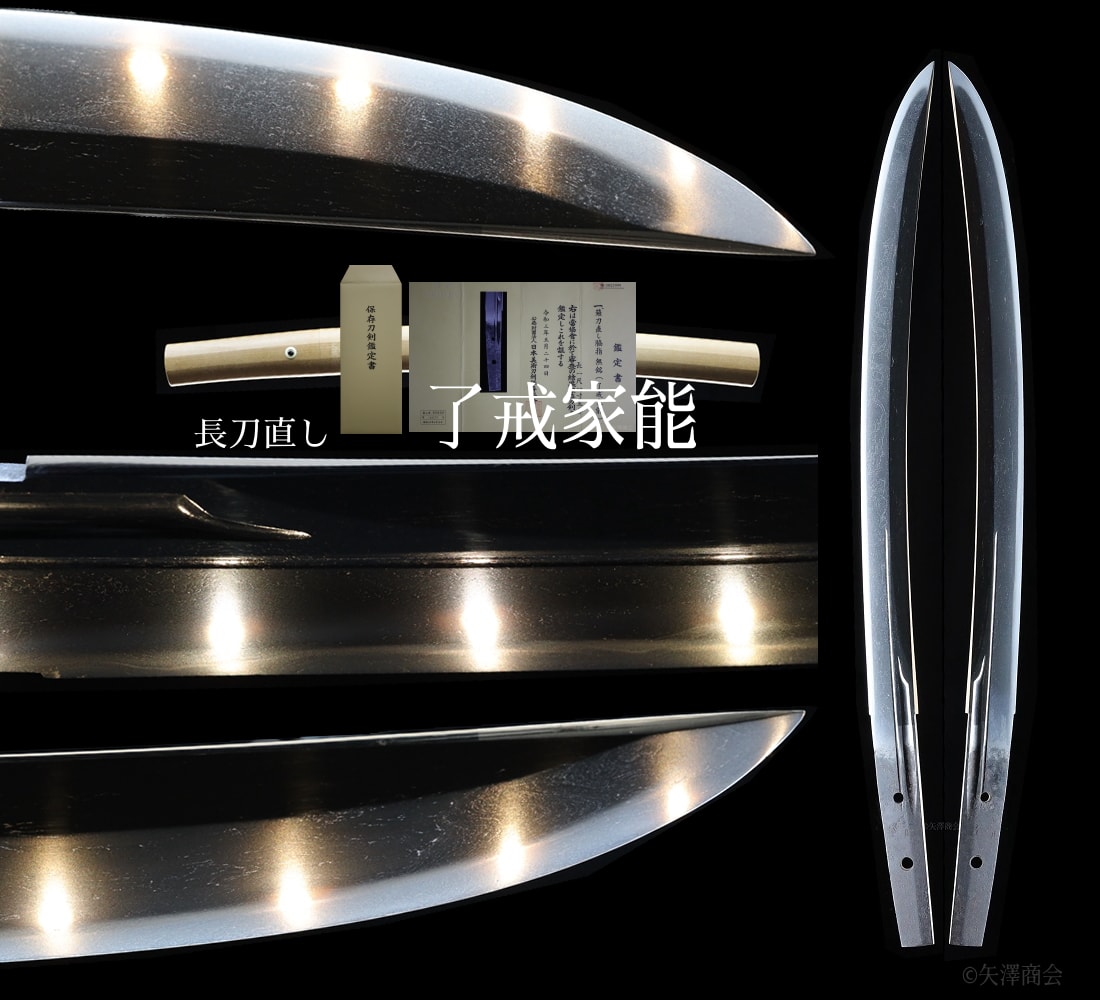
This Tachi blade is attributed to Ryokai Hisanobu, an active swordsmith during the late Kamakura period (1306-1317) in Yamashiro Province. It comes with an NBTHK Tokubetsu Hozon Certificate, a shirasaya case, and a half-Tachi style koshirae. The koshirae features Kikyou (Japanese bellflower) motifs on the Fuchi-Kashira and Tsuba, and an Asagao (morning glory) motif on the Saya.
NihontoWatchmumei · Ryokai · Kamakura · nagasa 66.1cm · sori 1.2cm
Ryokai (Yamashiro) · Yamashiro · around 1304-1308
Fujishiro Jo-jo saku · Tōken Taikan top 14%
On a long-signed tachi dated Kagen 2 (1304) the smith cut his full name and personal title, Kuro-zaemon-no-jo Hisanobu, and that single inscription fixes much of what is known of him. Ryo Hisanobu, signing Ryo-Hisanobu, was the son of the founder of the Ryokai school of Yamashiro and the second generation of that line, working at the very end of the Kamakura period on the dated evidence of his surviving blades, the year-signatures Kagen, Tokuji and Engyo placing him almost level with his father at the turn of the fourteenth century. The Ryokai school stood among the recognized offshoots of the great Rai workshop of Kyoto, and the published sources describe Hisanobu as carrying his father's hand on with little change. He is rated Jo-jo saku in the reference texts, a high standing for so little-recorded a smith, and his work survives in a handful of designated blades, signed and attributed, by which his manner can be read.
His is the quiet Yamashiro suguha of the Ryokai line. Over a forging of itame or ko-itame that flows toward masame and stands a little open, the ji carries dust-fine ji-nie and the school's whitish shirake-utsuri, which on the slenderer blades rises in a straight band from the machi before spreading up the jigane. The temper is a calm chu- or hoso-suguha, or a suguha-cho mixing small ko-gunome with a few ko-choji and ko-midare, the nioiguchi tightening and clouding into urumi in places, with ko-ashi and yo entering, a faint fraying of hotsure along the habuchi and fine sunagashi, the boshi closing straight into a small ko-maru. The first Juyo tachi the published sources call an offering that well displays the characteristics of the Ryokai school, the phrase 「了戒一派の特色がよく表示された出来口」[[c:1]] standing as a fair summary of his hand.
The jigane is the foundation of the recognition. Across every one of his blades the whitish shirake-utsuri stands in the ji, the inherited Ryokai tell that separates the line from the Rai parent, in whose work it is essentially absent. The itame leans toward masame, the Yamato-ward drift of this Rai offshoot, so that the surface stands and flows where the packed Rai ji stays smooth, ji-nie clinging dust-fine and an occasional chikei running. In the ha the calm suguha shows minute work, ko-ashi and yo entering thickly on the best pieces, the nioiguchi clouding softly, an occasional tobiyaki or yubashiri drifting across, a little nijuba showing low on one kodachi. On his finest attributed tachi the published sources praise the abundant ashi and yo, the good nioiguchi and the finely worked ji together, judging it a particularly fine example among his attributed work with the words 「同工極め中にあって特に優品といえる」[[c:2]].
The small body of his designated work divides into two registers. The first is his rare signed survivals, ubu tachi and kodachi carrying a three-character Ryo-Hisanobu toward the mune above the mekugi-ana, and the one long-signed dated tachi giving the full personal name; one tachi is carved with bonji and suken on the omote and bonji and gomabashi on the ura, the late-Kamakura Kyoto manner. The published sources call the signed kodachi precious as one of the few in-mei works of this smith, ubu and well preserved, its hand recalling the father, 「作風は父了戒を想わせるような出来口」[[c:3]]. The second register is mumei blades attributed to him on the same reading, one an ubu mumei tachi of well-made ko-itame, one an osuriage mumei katana slightly high in the shinogi. Signed work is described again and again as extremely few, which is why his year-signed and dated pieces carry such documentary weight, one of them called of very high reference value as one of the scarce in-mei works of this smith, 「数少ない同工の有銘の作として資料価値は頗る高い」[[c:4]].
The kantei is drawn against two near neighbours. The first is Rai Kunitoshi, the parent of the line, against whom the published sources resolve one of his mumei katana directly: the ko-gunome, hotsure and other changes at the ha-border of his fine suguha read a degree quieter and lonelier than Kunitoshi, the calm narrow line still showing minute activity, the verdict 「来国俊に比してやや蕭然たるもの」[[c:5]], with the boshi running straight into a settled ko-maru, so that the Hisanobu attribution is correctly affirmed. The masame and shirake more marked, the nioiguchi tighter and the whole calmer, these are the points that part him from Rai. The second neighbour is the father himself, from whom Hisanobu is separated less by any feature than by the signature, since signed work of the son is rarer still; a plain Hisanobu suguha is at a glance easily taken for the father's, and a soft Rai Kunitoshi for either of them. His single most consequential blade is the dated tachi that, by giving his personal name, established his zokumyo as Kuro-zaemon and through it showed that an earlier nationally designated tachi, once read as the father's sole work, is in fact a joint work of father Ryokai and son Hisanobu.
Hisanobu has no National Treasures and no Important Cultural Properties of his own, and none of his recorded blades is locked permanently out of private hands; his standing is that of a scarce but genuinely collectable name. Five of his blades are on the official designation record, all at the Juyo tier, and the published sources lean on his year-dated work and on outside documents to fix his place, the Tokuji 3 naginata in the Tokugawa Art Museum carrying the inscription 「了戒子息久信作」 that confirms him as Ryokai's son. No provenance owners are recorded for his designated blades, whose whereabouts of record run to private collections across several prefectures. A signed Hisanobu, ubu and with its mei intact, is among the scarcer things a collector of late-Kamakura Yamashiro work could hope to encounter, coming to light only from time to time and prized as documentary evidence as much as for itself; a mumei tachi or katana attributed to him appears a little more readily, and it is on these, with their shirake-utsuri and clouding suguha read against the quieter Rai line, that his hand is most often met. The published sources close on one such mumei blade as a calm fine suguha that yet shows minute work, 「静閑な細直刃ながらも微細な働きをみせる」[[c:6]], a deep and savoured offering, which is as fair a verdict on the smith as on the blade.
Where Hisanobu stands among comparable artisans: across all of nihontō, and within tradition, era, and period. The tiers (Foremost · Leading · Major · Notable) weigh official designations from the NBTHK and Japan's Agency for Cultural Affairs, together with historical honors of lasting repute such as the Sansaku and Meibutsu-chō.
Select a lens to see how it's measured.
Years he was demonstrably active, proven by signed-and-dated blades
Yamashiro-den · Yamashiro
14 pieces on the market now
The Ryokai school (了戒) took shape in the late-Kamakura capital of Kyoto, in Yamashiro Province, around the smith Ryokai, who worked through the era names Shoo, Einin, Kagen, Enkyo and Ocho at the turn of the fourteenth century. The old account makes him a son or a pupil of Rai Kunitoshi, and one version has him adopted into Kunitoshi's house; because his dated blades place him almost level with Kunitoshi, however, the NBTHK reads him more naturally as a contemporary (an aitedeshi, a fellow disciple) who formed his own line within the wider Rai circle. Whichever account one follows, his is the Rai Yamashiro hand softened by a degree, and from him the Ryokai name descended for several generations, his son Ryo Hisanobu (久信) following as the second master, with a Kyushu branch, the Chikushi Ryokai of Bungo and Buzen, forming by the Nanbokucho and Muromachi eras. What the members hold in common is a quiet manner read against, and just apart from, the Rai parent. Over a packed itame or ko-itame that flows toward masame and stands a little open, fine ji-nie clings and faint chikei enter, while a whitish shirake-utsuri rises in the ji; this paler, drier utsuri, against the clear midare- or jifu-utsuri of Rai proper, is the first thing that separates a Ryokai blade from its source. The temper is a calm chu- or hoso-suguha, mixing here a little ko-choji, ko-gunome or ko-midare, with ko-ashi and yo entering and sometimes a Kyoto reverse ashi; kinsuji and sunagashi run within a tight nioiguchi that grows austere and, in places, clouds into urumi, the moist soft quality the published sources name again and again as a Ryokai point. The boshi closes sugu into a small ko-maru, often brushed with a touch of hakikake. The school stands so close to Rai Kunitoshi that the two are confused at sight; the attribution settles not on any single feature but on the softer ji and ha, the standing masame, the whitish utsuri and the clouding line, the judges noting that compared with Kunitoshi the activity within the temper runs lonelier and the nioiguchi one degree tighter.
Against the sister Enju school the distinction is the boshi: where Enju turns a large deep o-maru and leaves the line bright, Ryokai closes a small ko-maru and clouds into urumi. The masame and the whitish cast carry the line a step toward Yamato and Yamato-den, and downstream toward Nobukuni and the Soshu-shaded work that followed. To kantei a Ryokai blade is to recognize the Rai air of wa-zori and refined steel, then to read the tells that part it from the parent: the jihada leaning to masame and standing where Rai stays smooth, the shirake in place of bright utsuri, and the tight, clouding nioiguchi. Among the members the founder, Ryokai, holds first standing, rated Jo-saku by Fujishiro and represented by slender ubu tachi and tanto signed with a boldly cut two-character mei, several carved with bonji and suken, alongside the bulk of his attributed record in osuriage mumei katana given to him on the hand; one such tanto the published sources call altogether elegant and a representative work, the signature itself of the archetypal type. Hisanobu, the second master, rated Jo-jo saku, carried the father's suguha on with little change, his rare signed tachi and kodachi prized as documentary evidence, one dated piece establishing through his given name that an earlier nationally designated tachi once read as the father's sole work is in fact a joint work of father and son; the remaining members and the later Kyushu generations continue the manner generically. Provenance follows the founder above all: blades passing through the Isahaya, Date and Maeda families, one preserving a tradition that it was a sword worn by Miyamoto Musashi, and the finest pieces held and studied in long-standing public and private collections including the Tokyo National Museum, the Sano Art Museum and Monobe Jinja. A signed ubu Ryokai blade in particular is among the scarcer things a collector of Kyoto Kamakura work will meet, coming to hand only with patience. Learn more →
| Smith | Era | Designated |
|---|---|---|
| Ryokai了戒 | 1288-1305 | 97 |
| Hisanobu久信 | 1304-1308 | 5 |
| Nobumasa信正 | 1345-1350 | 0 |
| Noshin能真 | Early Muromachi | 1 |
| Nobuyoshi宣能 | 1444-1449 | 0 |
Yamashiro in the Kamakura period
Power sat in Kamakura, but taste was still made in Kyōto. The Awataguchi school’s pear-skin steel became a byword for perfection, and the Rai line supplied dignified tachi to the court, senior warriors, and the great temples alike.
A Hozon-certified blade judged to show notably superior workmanship and a better state of preservation. The bar is higher: re-tempered blades and most unsigned Muromachi/Edo works are excluded.
The NBTHK (Nihon Bijutsu Tōken Hozon Kyōkai, the Society for the Preservation of Japanese Art Swords) is a public-interest incorporated foundation founded in 1948 and supervised by Japan’s Agency for Cultural Affairs (Bunkachō); it is based at the Japanese Sword Museum in Tokyo. Its expert panels physically examine each submitted work (shinsa) and issue a certificate (kanteishō) ranking it by artistic and historical merit. NBTHK papers are the most widely recognized standard of authentication for Japanese swords and fittings.
NBTHK official siteReturns/exchanges limited to defects caused by shipping (except willful misconduct or gross negligence by the company); customers must contact within 72 hours of receiving the product.