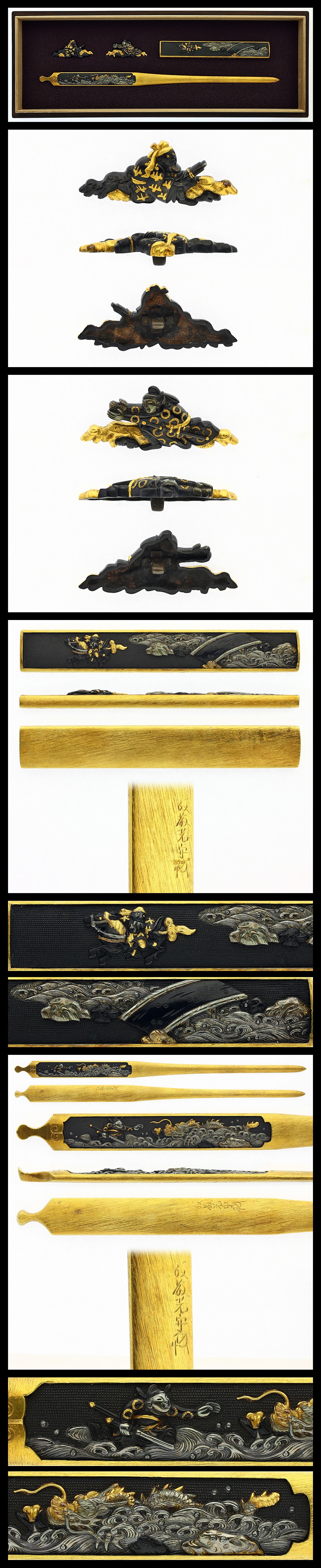
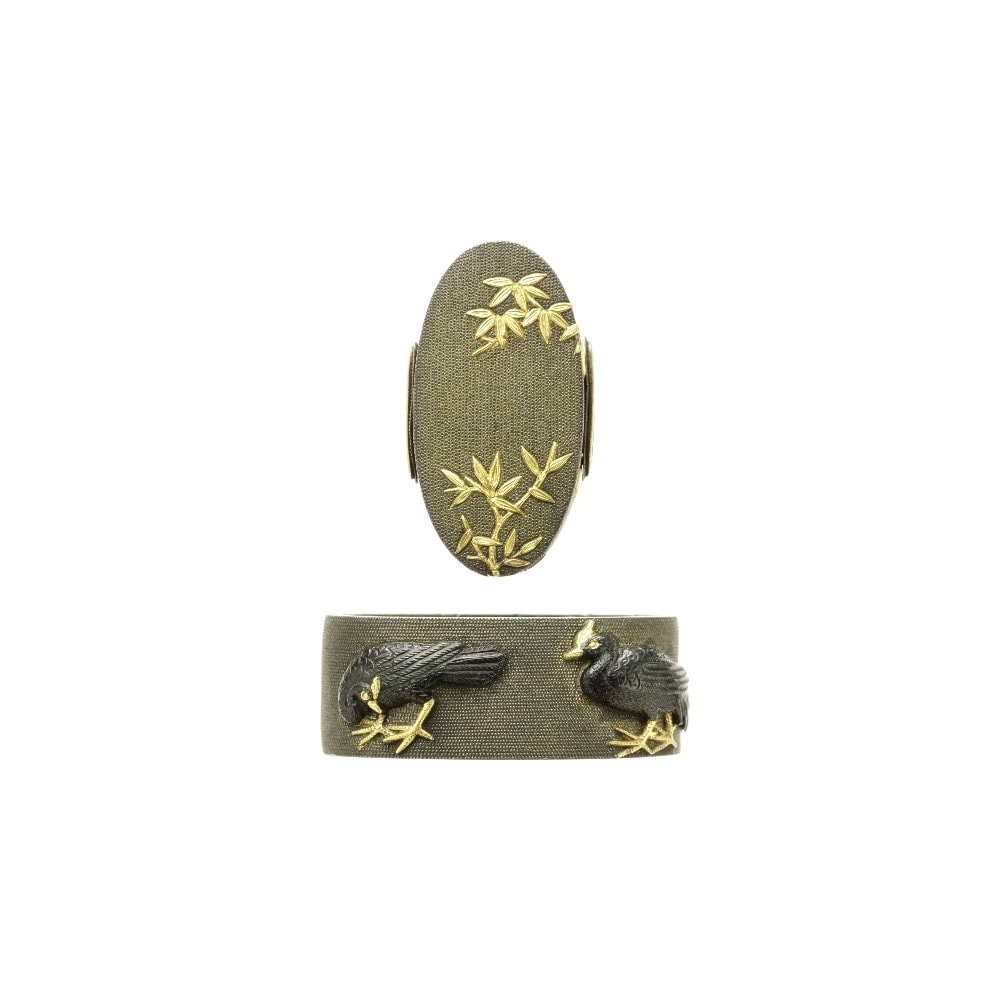
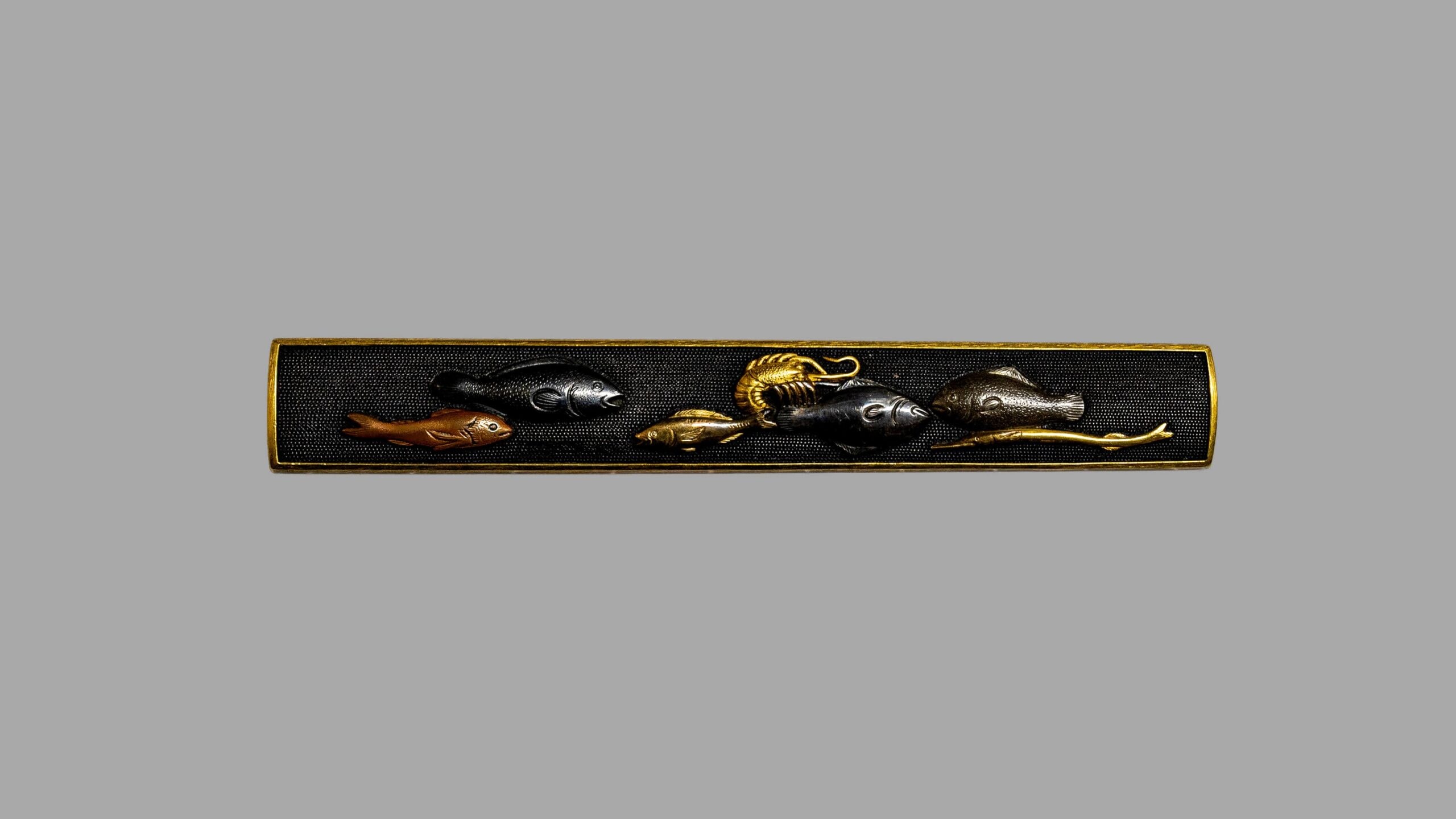
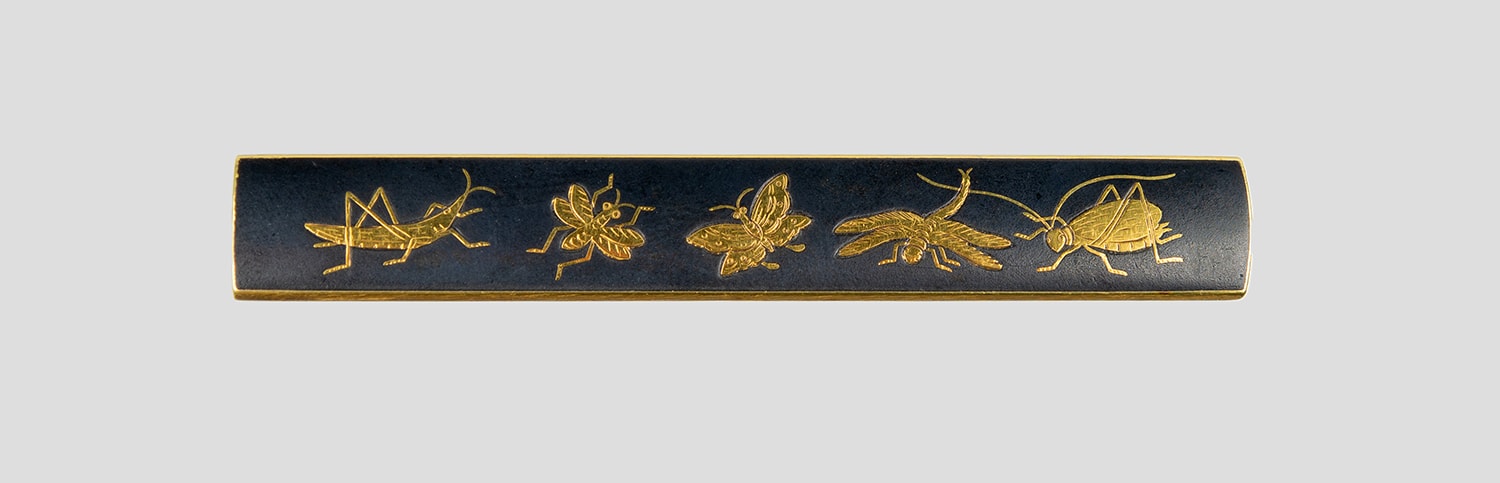
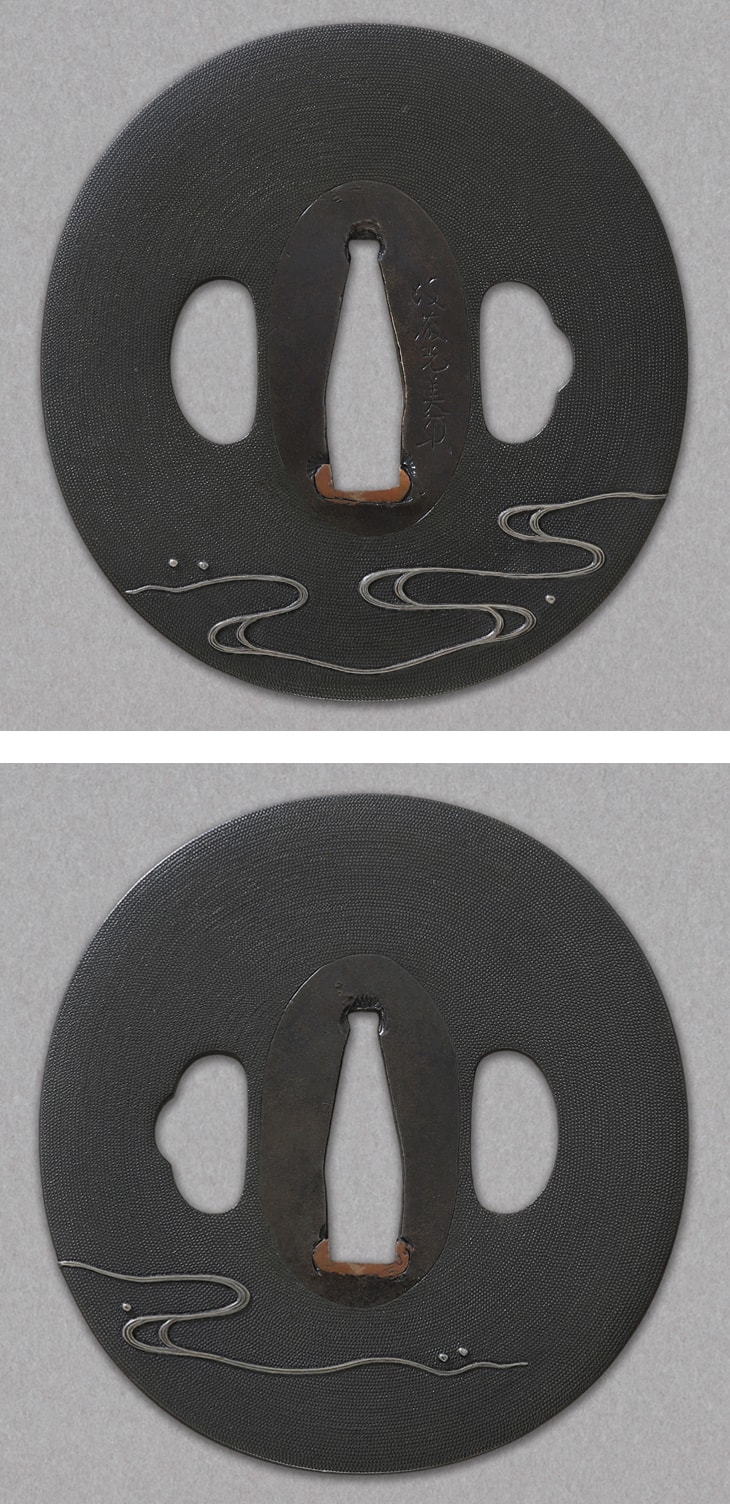
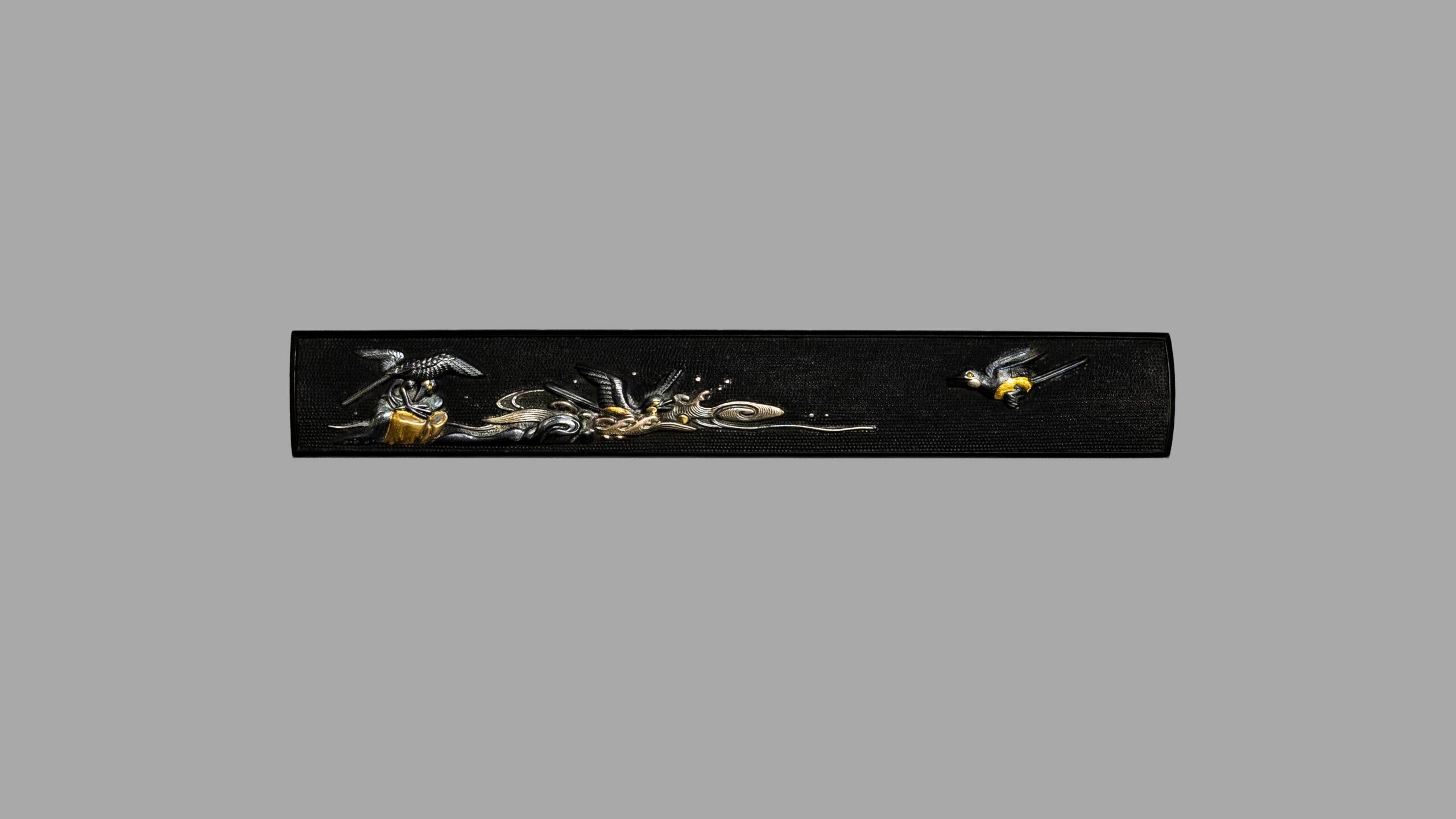
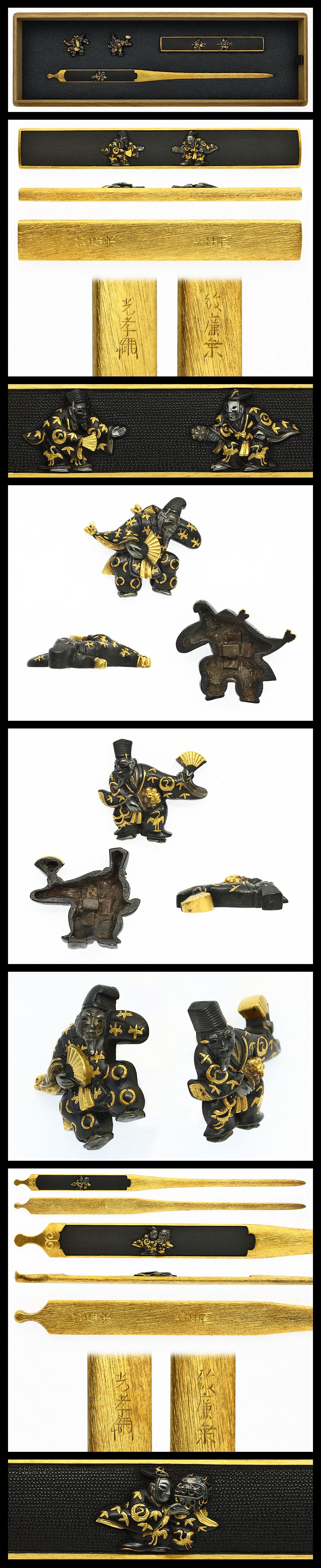
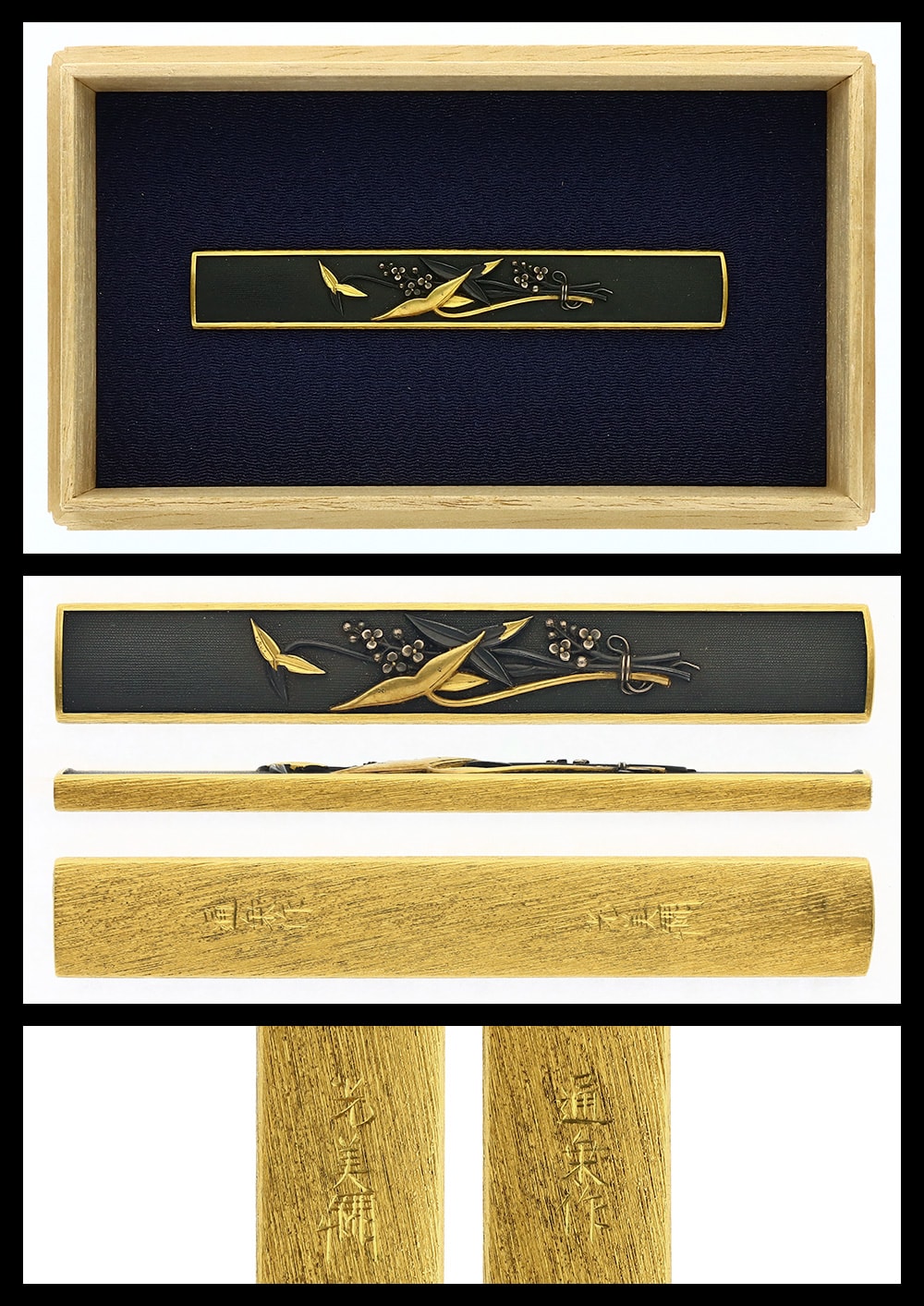
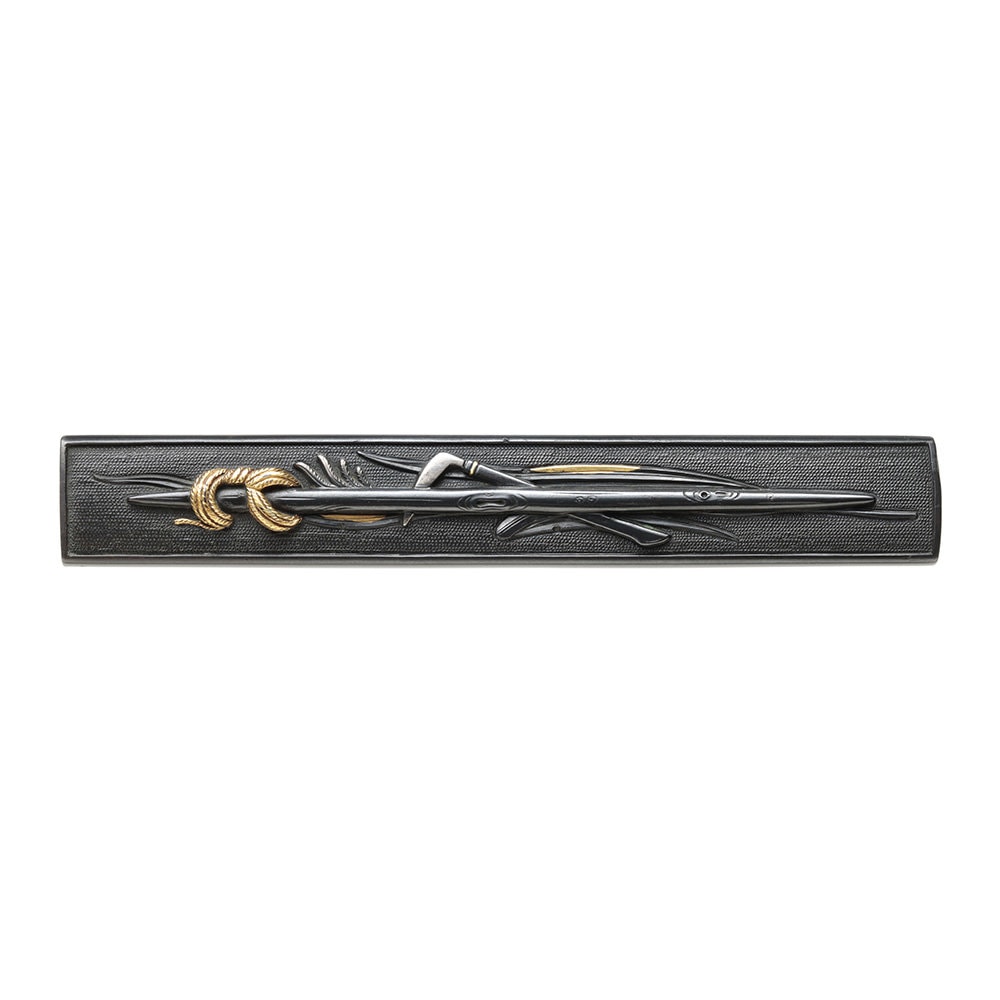
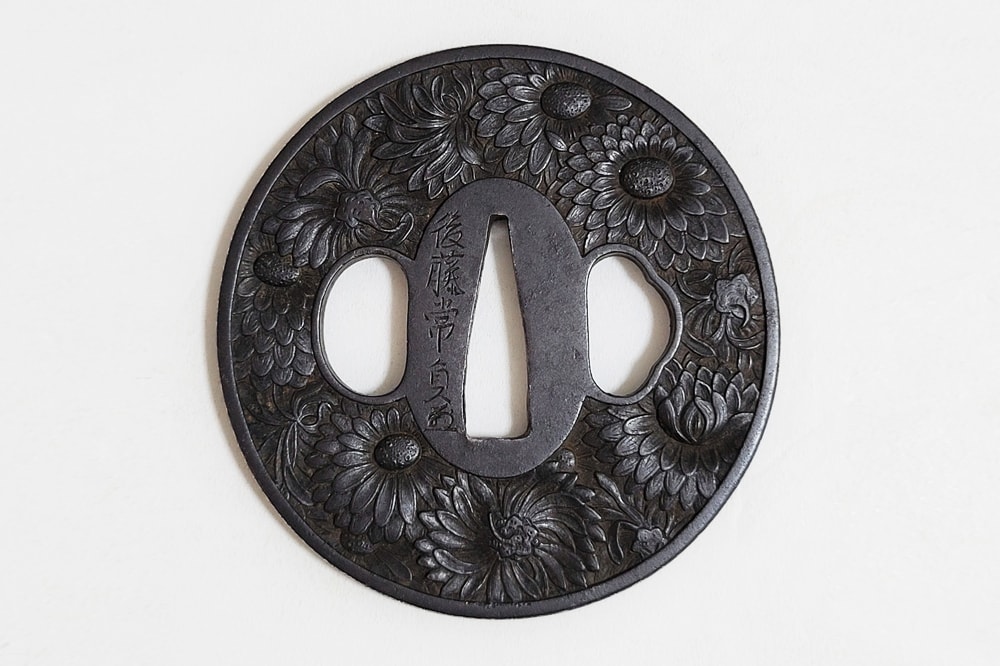
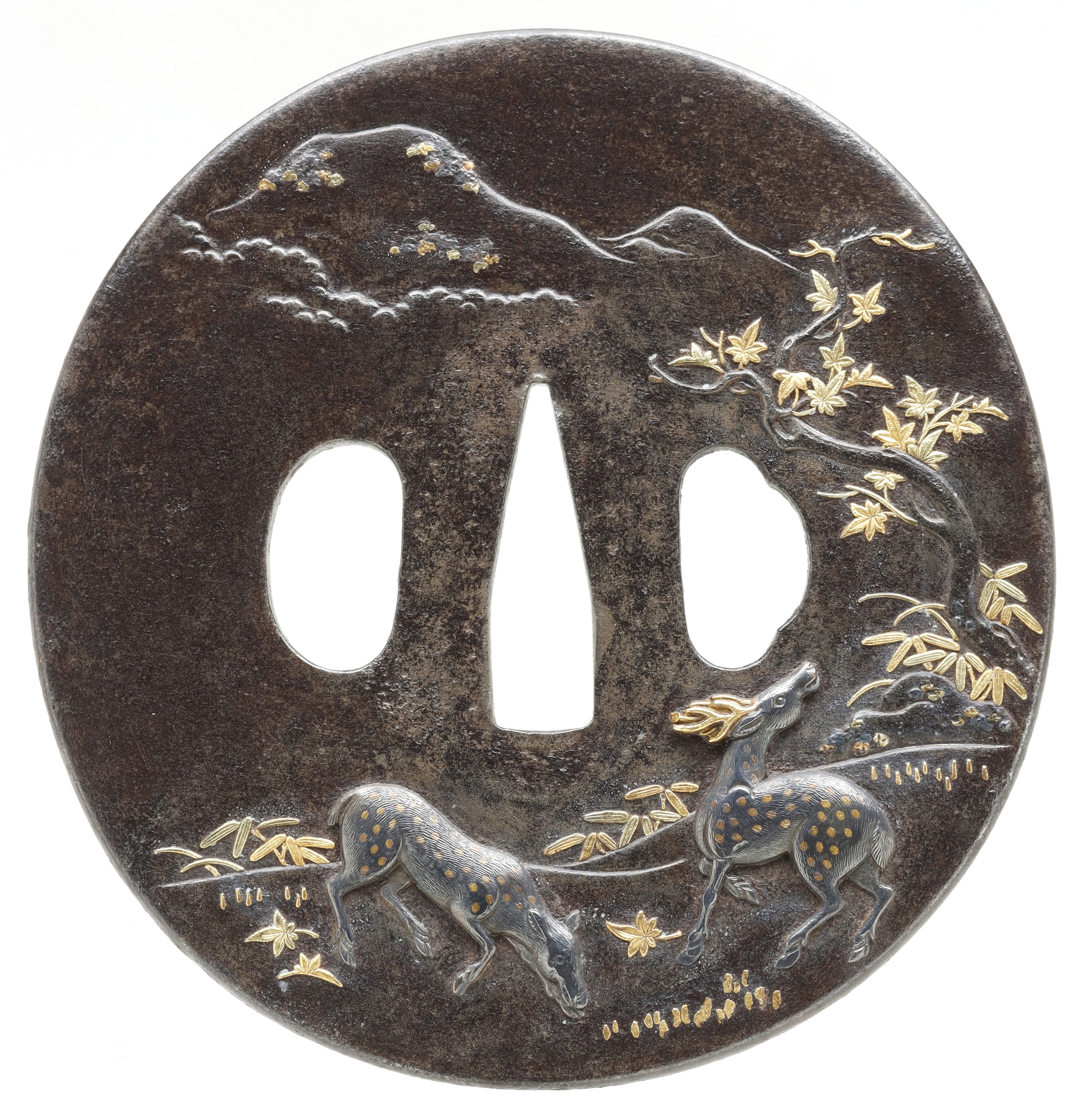
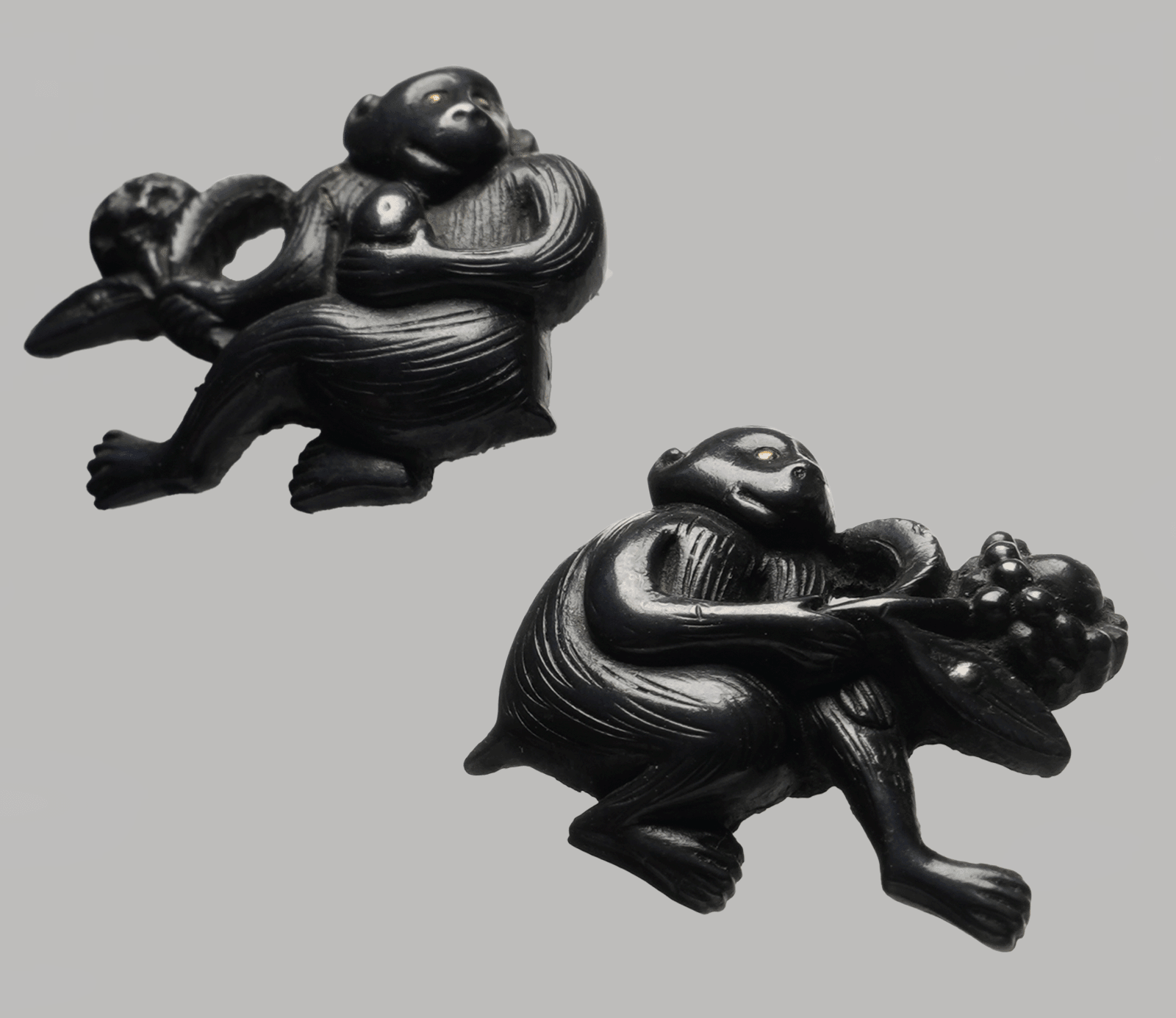
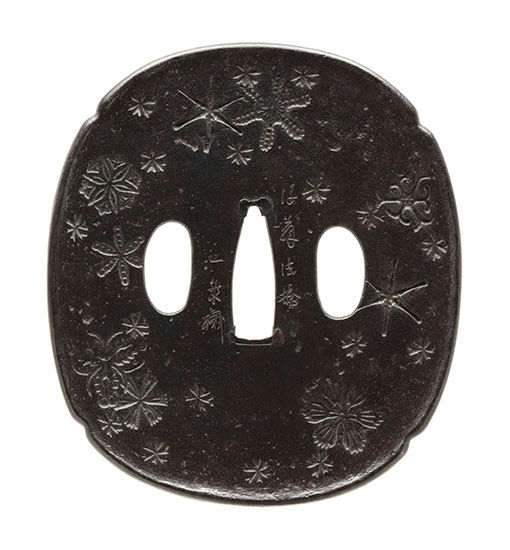
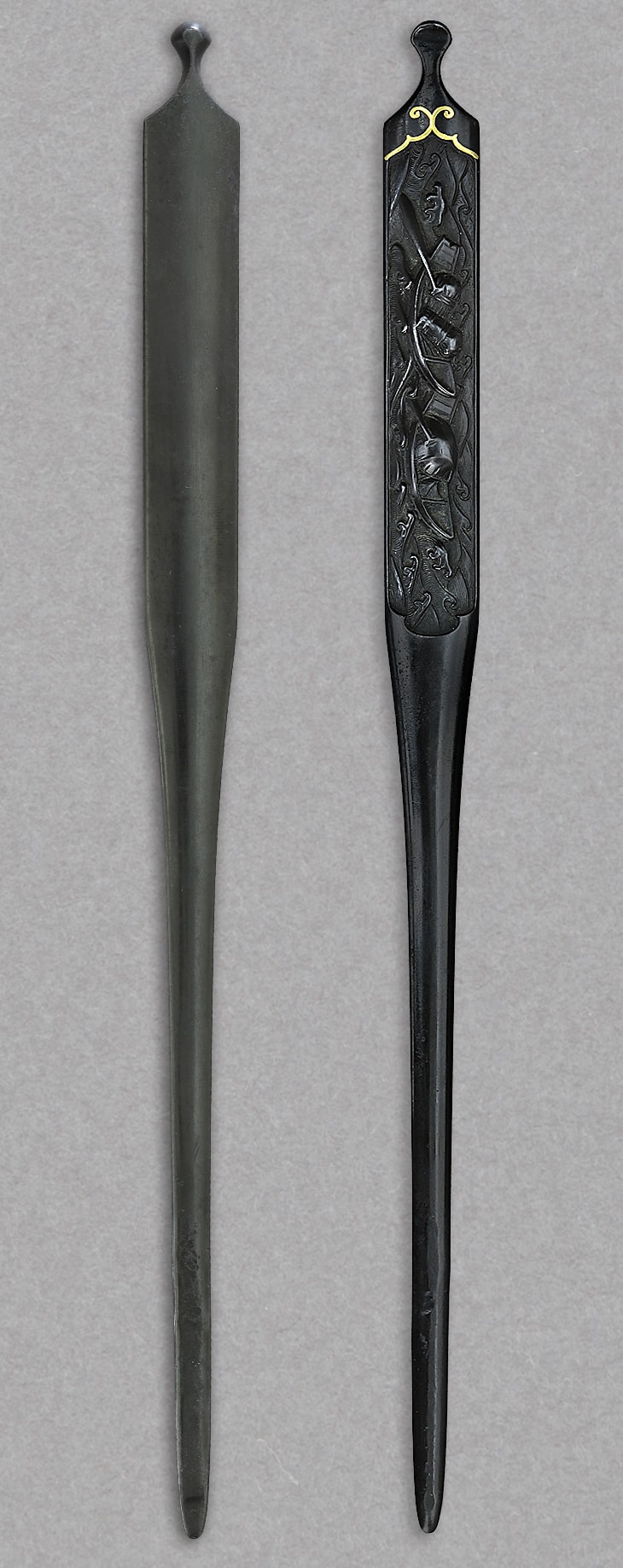
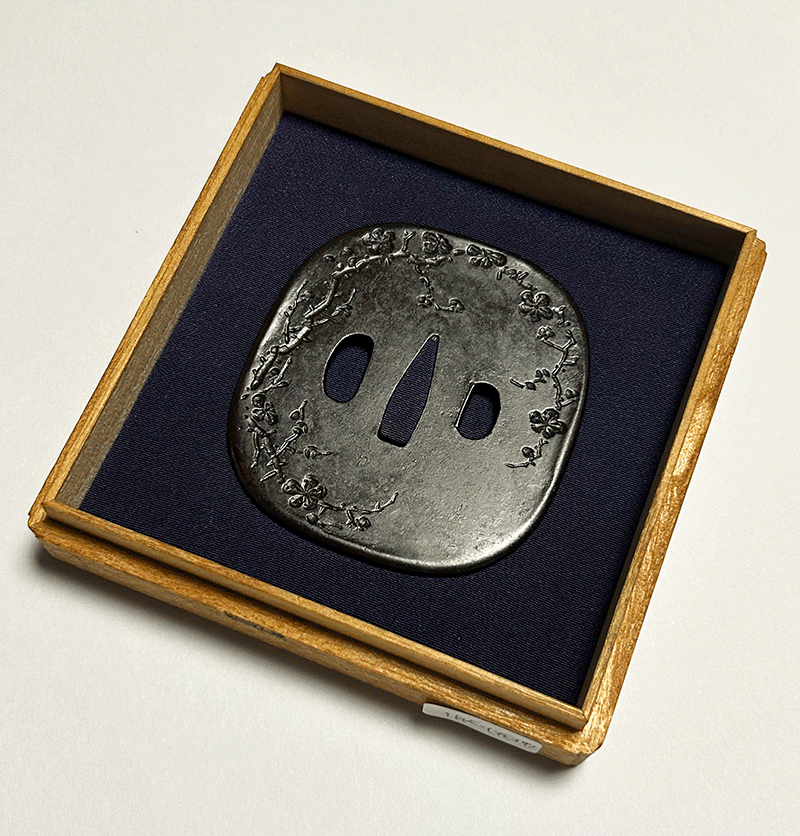
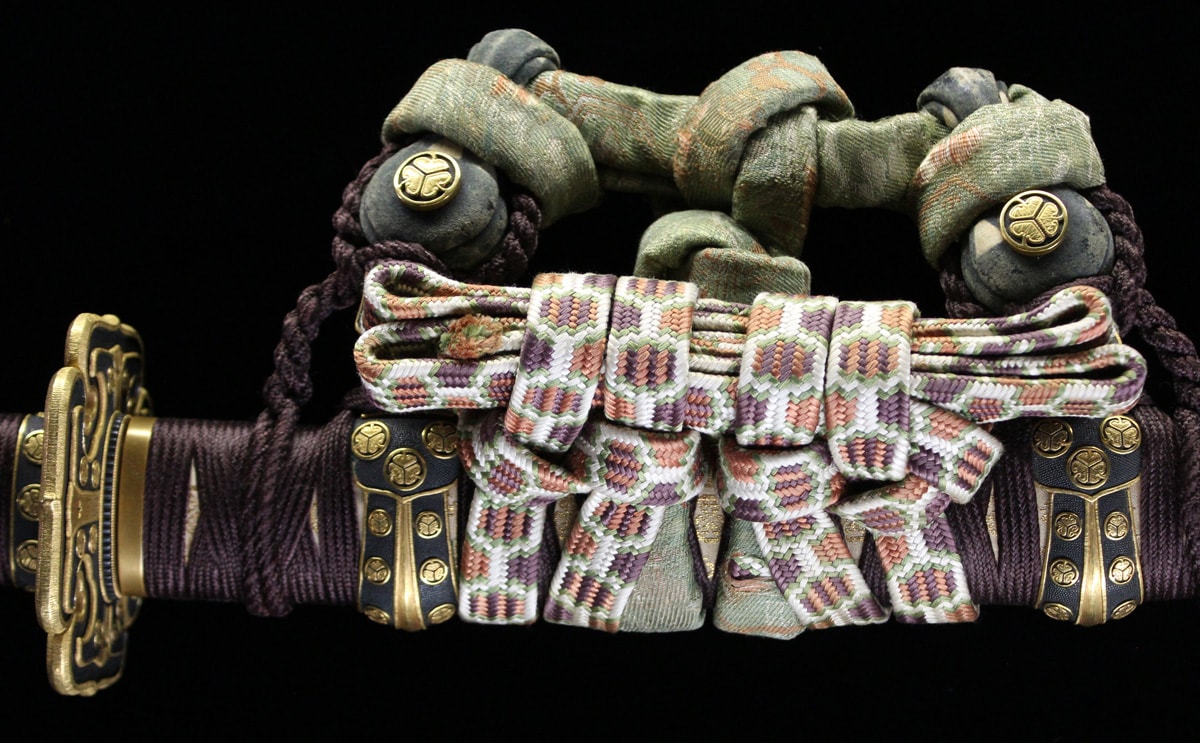
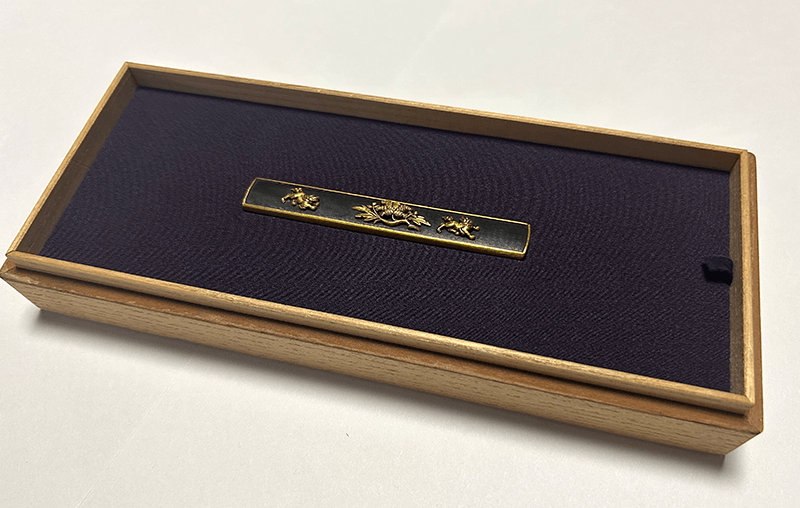
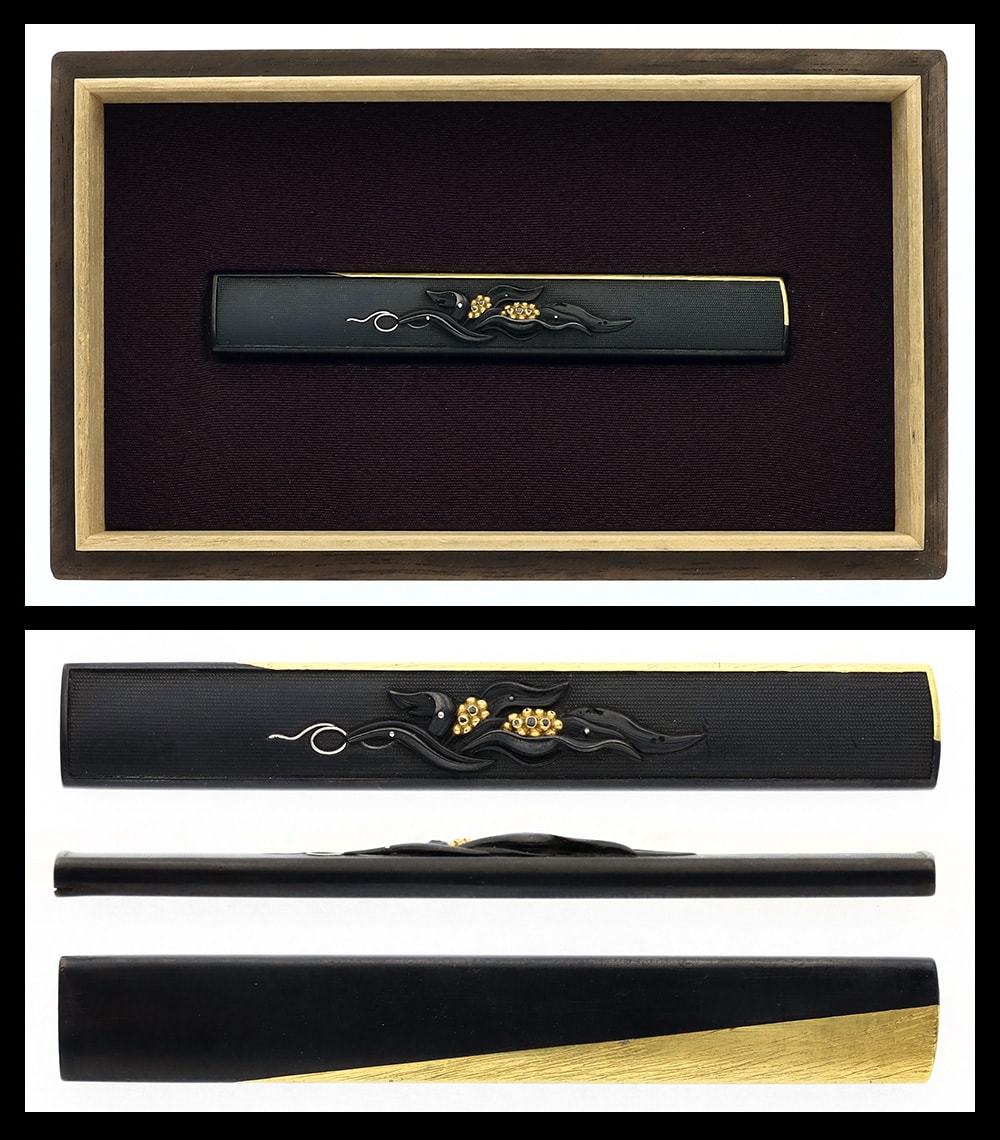
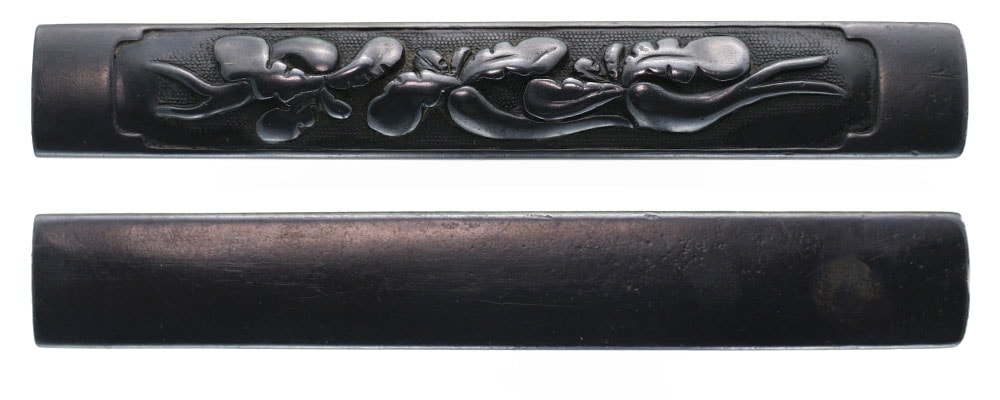
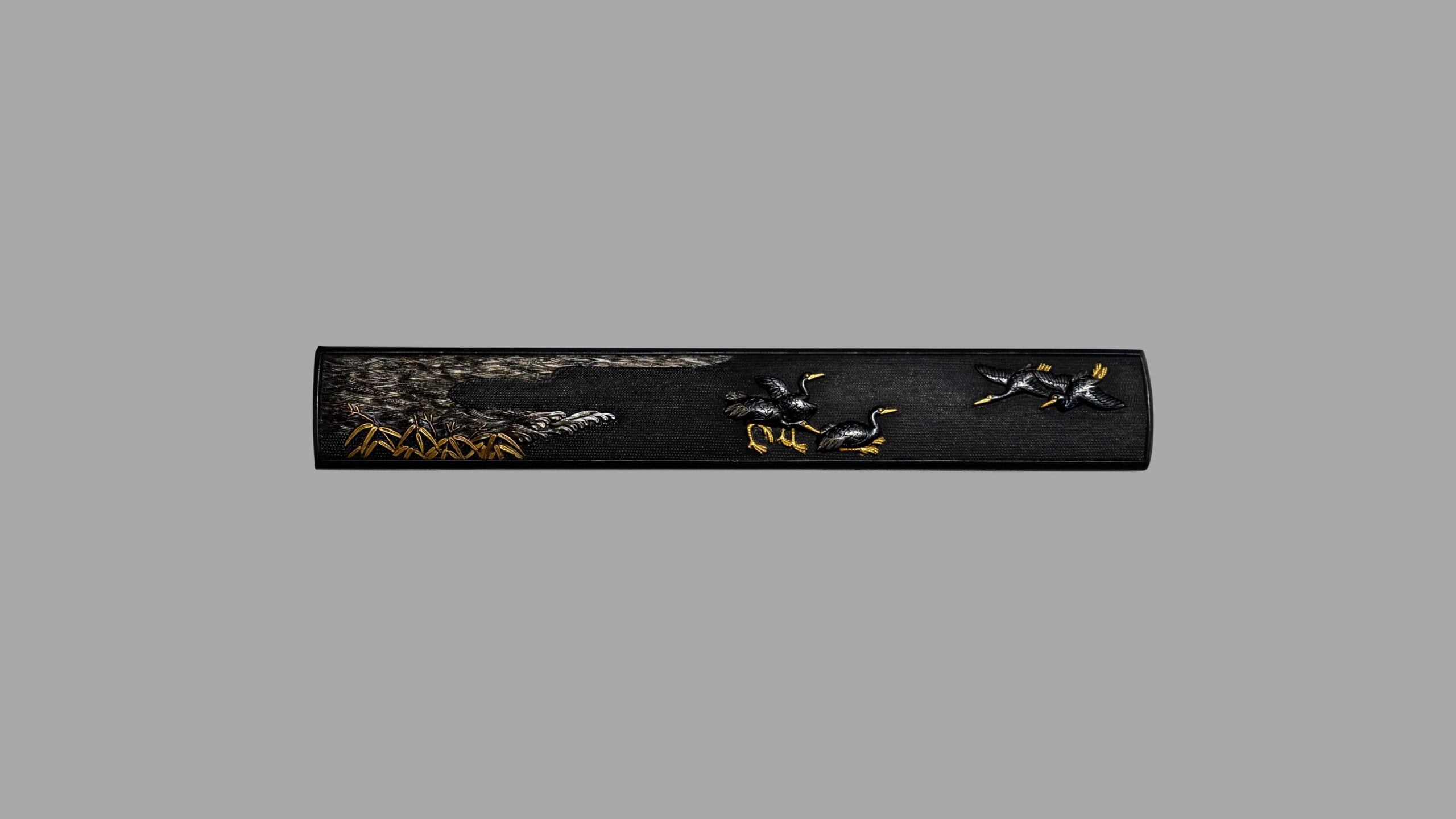
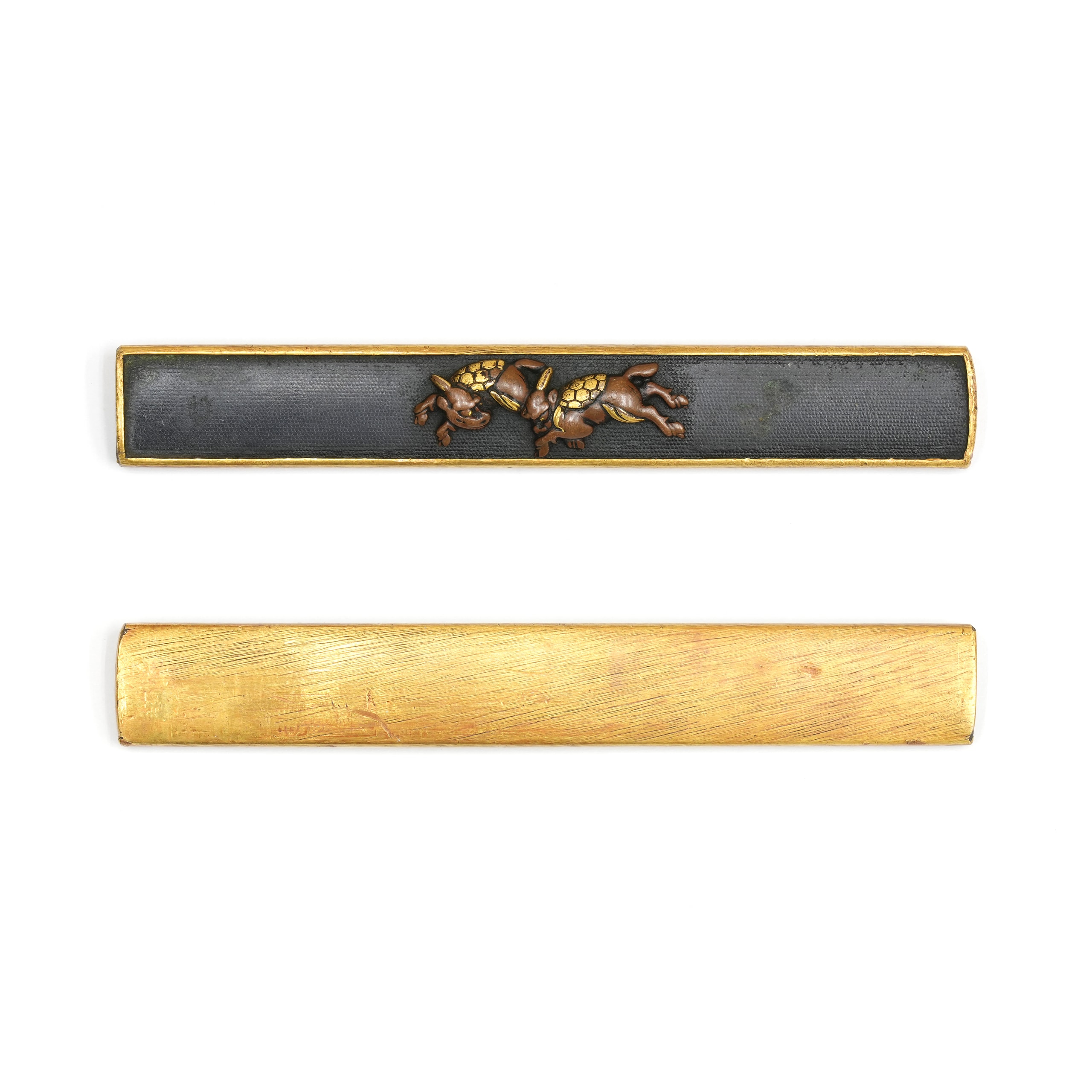
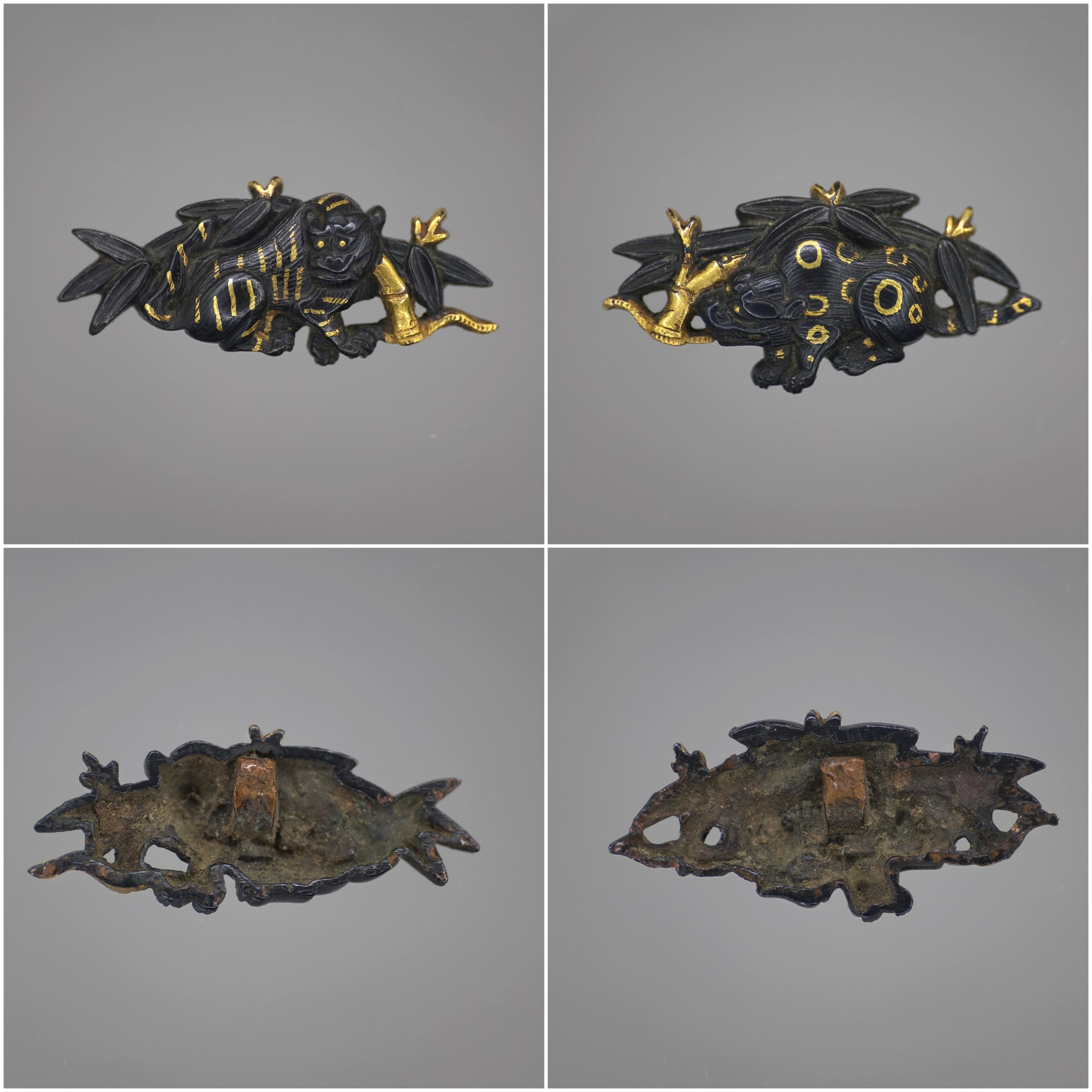
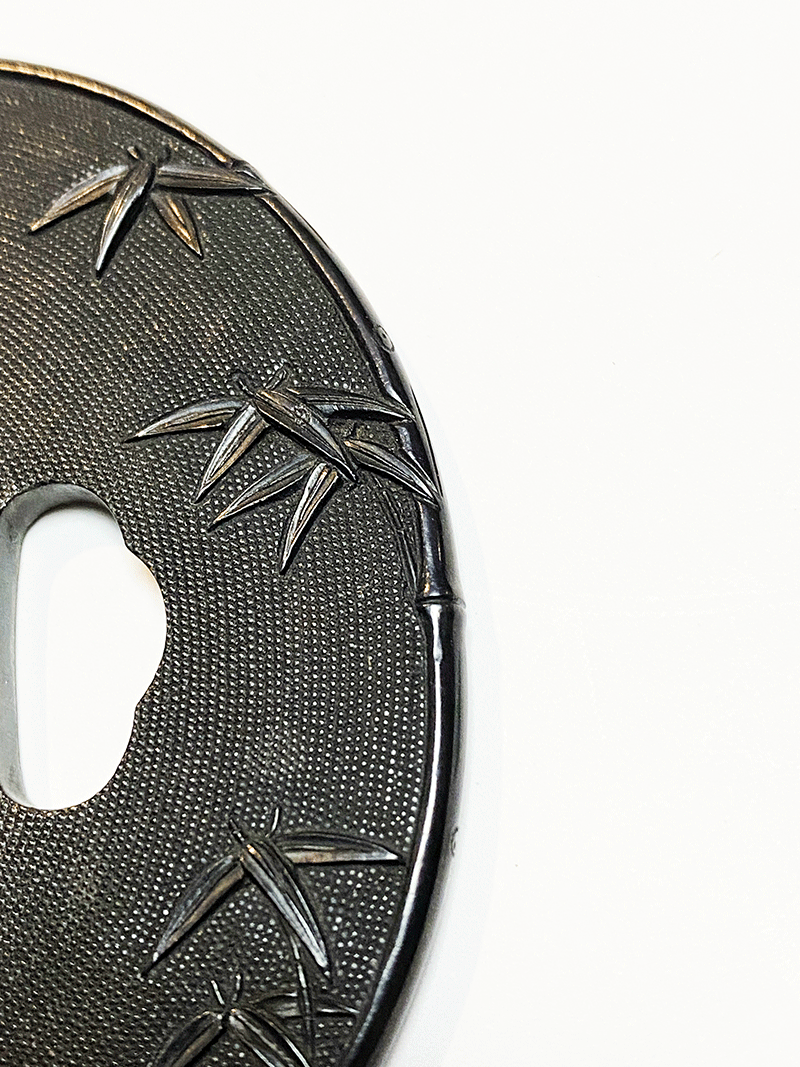
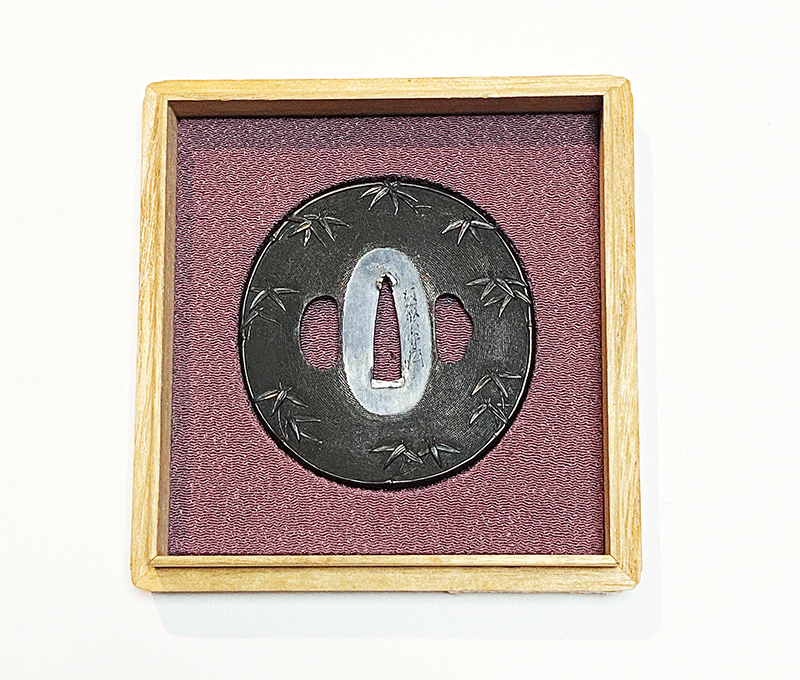
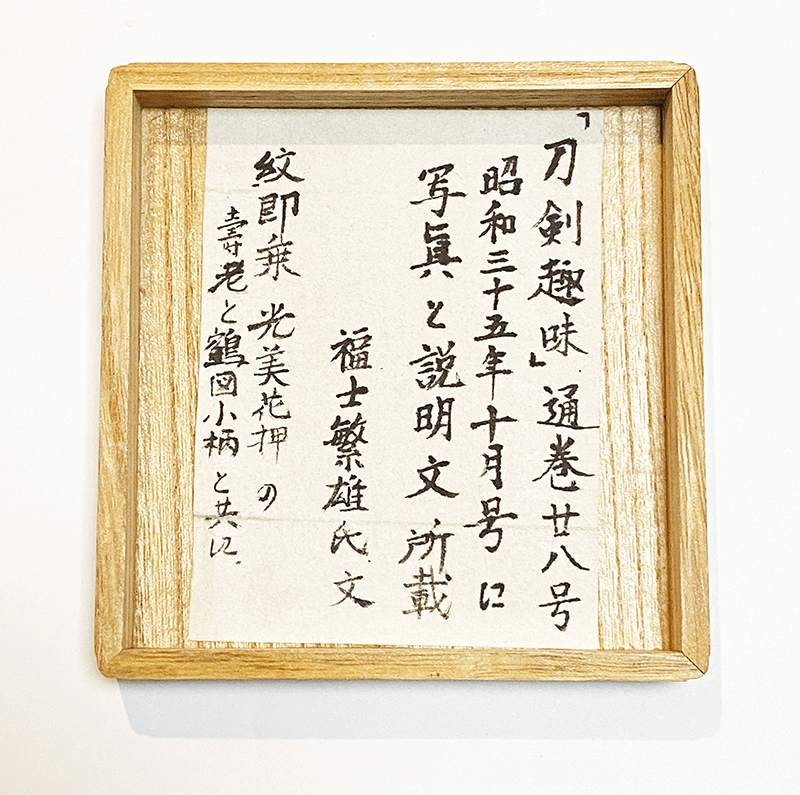
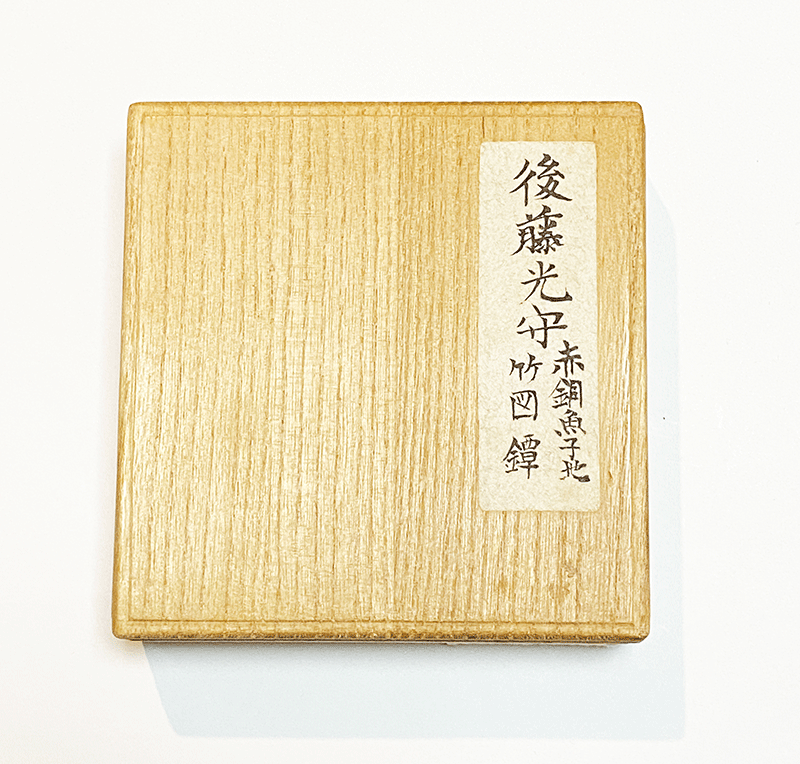
This is a tsuba by Goto Mitsumori, the 14th generation head of the Goto main family. The Goto family was a prominent lineage of sword fitting artisans from the late Muromachi period to the end of the Edo period, serving various shogunal families. This rare signed tsuba by Mitsumori, who was known for the scarcity of his signed works, showcases the high status of the Goto family and his meticulous craftsmanship in shakudo.
 NihontoWatch
mei · Goto · Mid-Late Edo (1741-1804)
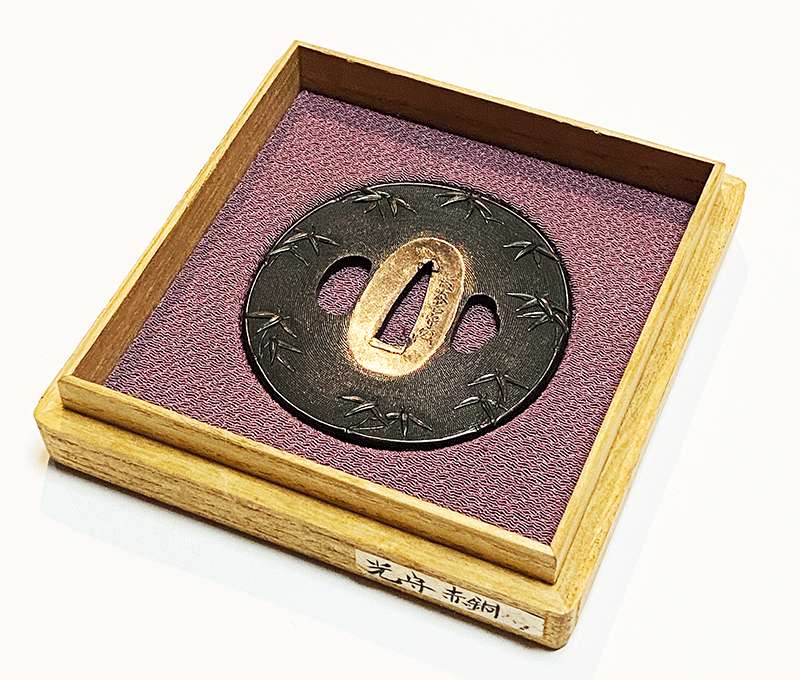
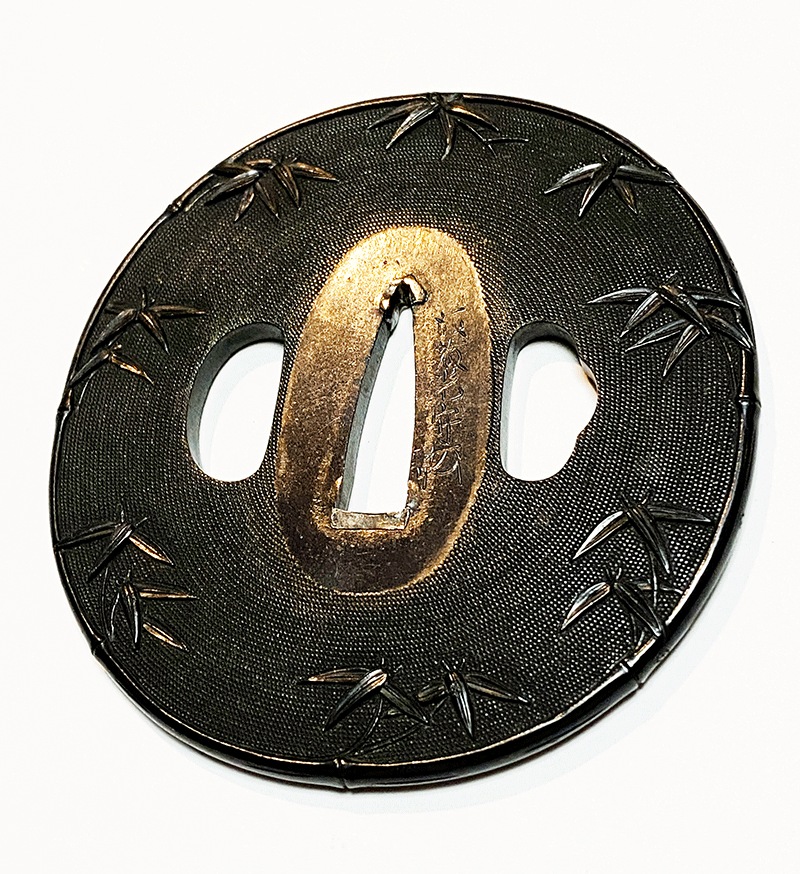
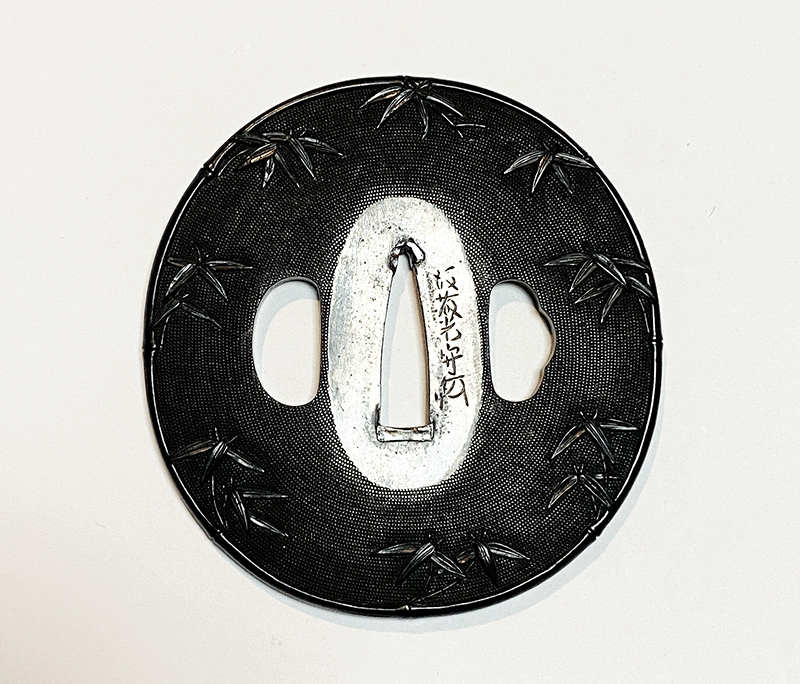
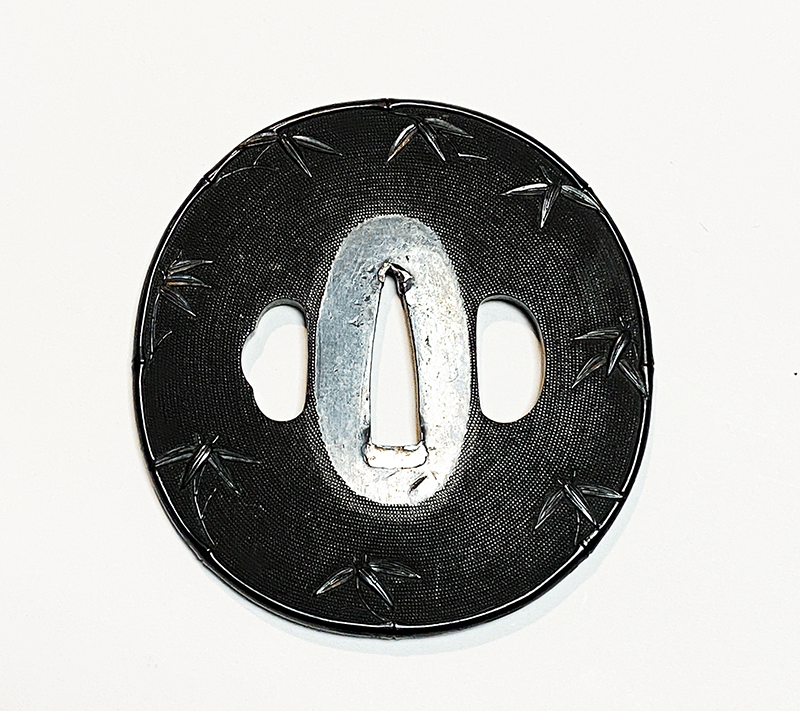
Goto Keijo
Mid-Late Edo (1741-1804)
Signed
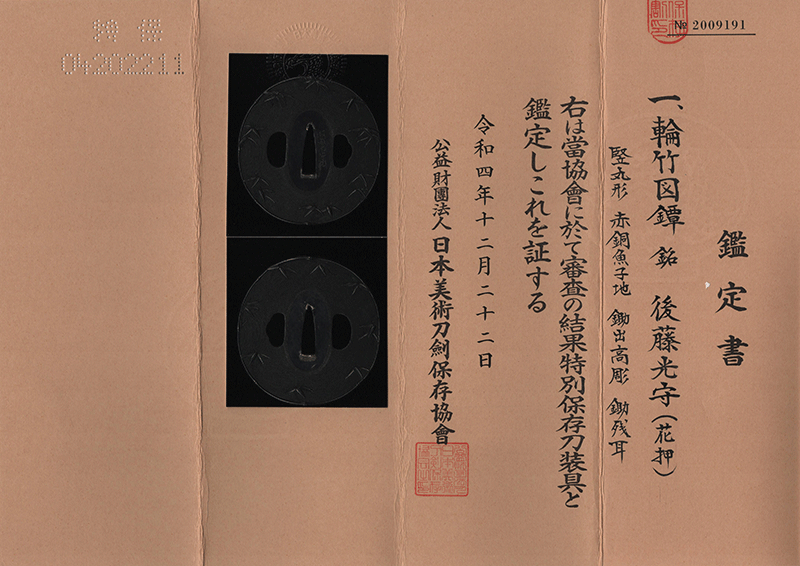
Hozon (NBTHK)
Iebori · Yamashiro · around 1741-1804
2 pieces on the market now
Goto Mitsumori, art name Keijo, was the third son of the twelfth head of the main Goto line, Jujo Mitsusato. He was born in Kanpo 1 (1741), bearing the personal name Mitsutomo and the common name Kichigoro. Because the thirteenth head, Mitsutaka, left no heir, Mitsumori was adopted by his elder brother; after Mitsutaka's death, he changed his name to Shirobei Mitsumori and succeeded as the fourteenth head of the mainline Goto house. His position thus placed him at the summit of the most venerable metalworking lineage in the Japanese tradition, carrying forward the unbroken succession from Yujo through fourteen generations of service to the ruling authorities.
Mitsumori's oeuvre demonstrates the solid and reliable carving manner characteristic of the Goto house tradition (iebori), executed with painstaking attention throughout. His works are unified in a refreshing, pure black tonality of shakudo, rendered in both nanako-ji and migaki-ji grounds. He employed takabori, kebori with accents of kosuki-bori, and iroe in gold and silver, achieving compositions of ample volume and richly rounded high relief. His subjects encompassed traditional Goto themes — Kurikara, the legend of Huang Shigong and Zhang Liang, takara-zukushi, and kirin — while also extending to more pictorial compositions in a painting-like manner. The gold crests on his kozuka and kogai are noted for their large scale, excellent volume, and powerfully expressed presence.
The NBTHK characterizes Mitsumori's finest works as possessing a distinctive sense of "inner sumptuousness" achieved through restrained coloration and confident carving — a quality that brings forth his particular strengths to the fullest. Works bearing his own signature are comparatively few, lending additional significance to signed examples as important reference pieces. His mitokoromono sets are especially scarce and are counted among his representative achievements. Mitsumori's contribution resides in his faithful stewardship of the mainline Goto tradition during the latter half of the eighteenth century, demonstrating that the hereditary house manner retained its vitality and high standard into the late Edo period.
Where Goto Keijo stands among comparable artisans: across all of nihontō, and within tradition, era, and period. The tiers (Foremost · Leading · Major · Notable) weigh official designations from the NBTHK and Japan's Agency for Cultural Affairs, together with historical honors of lasting repute such as the Sansaku and Meibutsu-chō.
Select a lens to see how it's measured.
Iebori · Yamashiro
Phase: Goto Main Line後藤宗家· 1573–1900
325 pieces on the market now
| Smith | Era | Designated |
|---|---|---|
| Goto Joshin後藤乗真 | 1512-1562 | 68 |
| Goto Yujo後藤祐乗 | 1440-1512 | 41 |
| Goto Kenjo後藤顕乗 | 1586-1663 | 46 |
| Goto Sojo後藤宗乗 | 1461-1538 | 55 |
| Goto Eijo後藤栄乗 | 1577-1617 | 35 |
Certifies a genuine fitting worth preserving: a correct signature, or, if unsigned, an identifiable era and school, with recognized artistic and craft value.
The NBTHK (Nihon Bijutsu Tōken Hozon Kyōkai, the Society for the Preservation of Japanese Art Swords) is a public-interest incorporated foundation founded in 1948 and supervised by Japan’s Agency for Cultural Affairs (Bunkachō); it is based at the Japanese Sword Museum in Tokyo. Its expert panels physically examine each submitted work (shinsa) and issue a certificate (kanteishō) ranking it by artistic and historical merit. NBTHK papers are the most widely recognized standard of authentication for Japanese swords and fittings.
NBTHK official siteCustomer-initiated returns accepted within two days of arrival; return shipping paid by customer and fees non-refundable. Returns/refunds unavailable for overseas deliveries.
¥1,650,000
This is a tsuba by Goto Mitsumori, the 14th generation head of the Goto main family. The Goto family was a prominent lineage of sword fitting artisans from the late Muromachi period to the end of the Edo period, serving various shogunal families. This rare signed tsuba by Mitsumori, who was known for the scarcity of his signed works, showcases the high status of the Goto family and his meticulous craftsmanship in shakudo.
NihontoWatchmei · Goto · Mid-Late Edo (1741-1804)
Goto Keijo
Mid-Late Edo (1741-1804)
Signed
Hozon (NBTHK)
Iebori · Yamashiro · around 1741-1804
2 pieces on the market now
Goto Mitsumori, art name Keijo, was the third son of the twelfth head of the main Goto line, Jujo Mitsusato. He was born in Kanpo 1 (1741), bearing the personal name Mitsutomo and the common name Kichigoro. Because the thirteenth head, Mitsutaka, left no heir, Mitsumori was adopted by his elder brother; after Mitsutaka's death, he changed his name to Shirobei Mitsumori and succeeded as the fourteenth head of the mainline Goto house. His position thus placed him at the summit of the most venerable metalworking lineage in the Japanese tradition, carrying forward the unbroken succession from Yujo through fourteen generations of service to the ruling authorities.
Mitsumori's oeuvre demonstrates the solid and reliable carving manner characteristic of the Goto house tradition (iebori), executed with painstaking attention throughout. His works are unified in a refreshing, pure black tonality of shakudo, rendered in both nanako-ji and migaki-ji grounds. He employed takabori, kebori with accents of kosuki-bori, and iroe in gold and silver, achieving compositions of ample volume and richly rounded high relief. His subjects encompassed traditional Goto themes — Kurikara, the legend of Huang Shigong and Zhang Liang, takara-zukushi, and kirin — while also extending to more pictorial compositions in a painting-like manner. The gold crests on his kozuka and kogai are noted for their large scale, excellent volume, and powerfully expressed presence.
The NBTHK characterizes Mitsumori's finest works as possessing a distinctive sense of "inner sumptuousness" achieved through restrained coloration and confident carving — a quality that brings forth his particular strengths to the fullest. Works bearing his own signature are comparatively few, lending additional significance to signed examples as important reference pieces. His mitokoromono sets are especially scarce and are counted among his representative achievements. Mitsumori's contribution resides in his faithful stewardship of the mainline Goto tradition during the latter half of the eighteenth century, demonstrating that the hereditary house manner retained its vitality and high standard into the late Edo period.
Where Goto Keijo stands among comparable artisans: across all of nihontō, and within tradition, era, and period. The tiers (Foremost · Leading · Major · Notable) weigh official designations from the NBTHK and Japan's Agency for Cultural Affairs, together with historical honors of lasting repute such as the Sansaku and Meibutsu-chō.
Select a lens to see how it's measured.
Iebori · Yamashiro
Phase: Goto Main Line後藤宗家· 1573–1900
325 pieces on the market now
| Smith | Era | Designated |
|---|---|---|
| Goto Joshin後藤乗真 | 1512-1562 | 68 |
| Goto Yujo後藤祐乗 | 1440-1512 | 41 |
| Goto Kenjo後藤顕乗 | 1586-1663 | 46 |
| Goto Sojo後藤宗乗 | 1461-1538 | 55 |
| Goto Eijo後藤栄乗 | 1577-1617 | 35 |
Certifies a genuine fitting worth preserving: a correct signature, or, if unsigned, an identifiable era and school, with recognized artistic and craft value.
The NBTHK (Nihon Bijutsu Tōken Hozon Kyōkai, the Society for the Preservation of Japanese Art Swords) is a public-interest incorporated foundation founded in 1948 and supervised by Japan’s Agency for Cultural Affairs (Bunkachō); it is based at the Japanese Sword Museum in Tokyo. Its expert panels physically examine each submitted work (shinsa) and issue a certificate (kanteishō) ranking it by artistic and historical merit. NBTHK papers are the most widely recognized standard of authentication for Japanese swords and fittings.
NBTHK official siteCustomer-initiated returns accepted within two days of arrival; return shipping paid by customer and fees non-refundable. Returns/refunds unavailable for overseas deliveries.
¥1,650,000