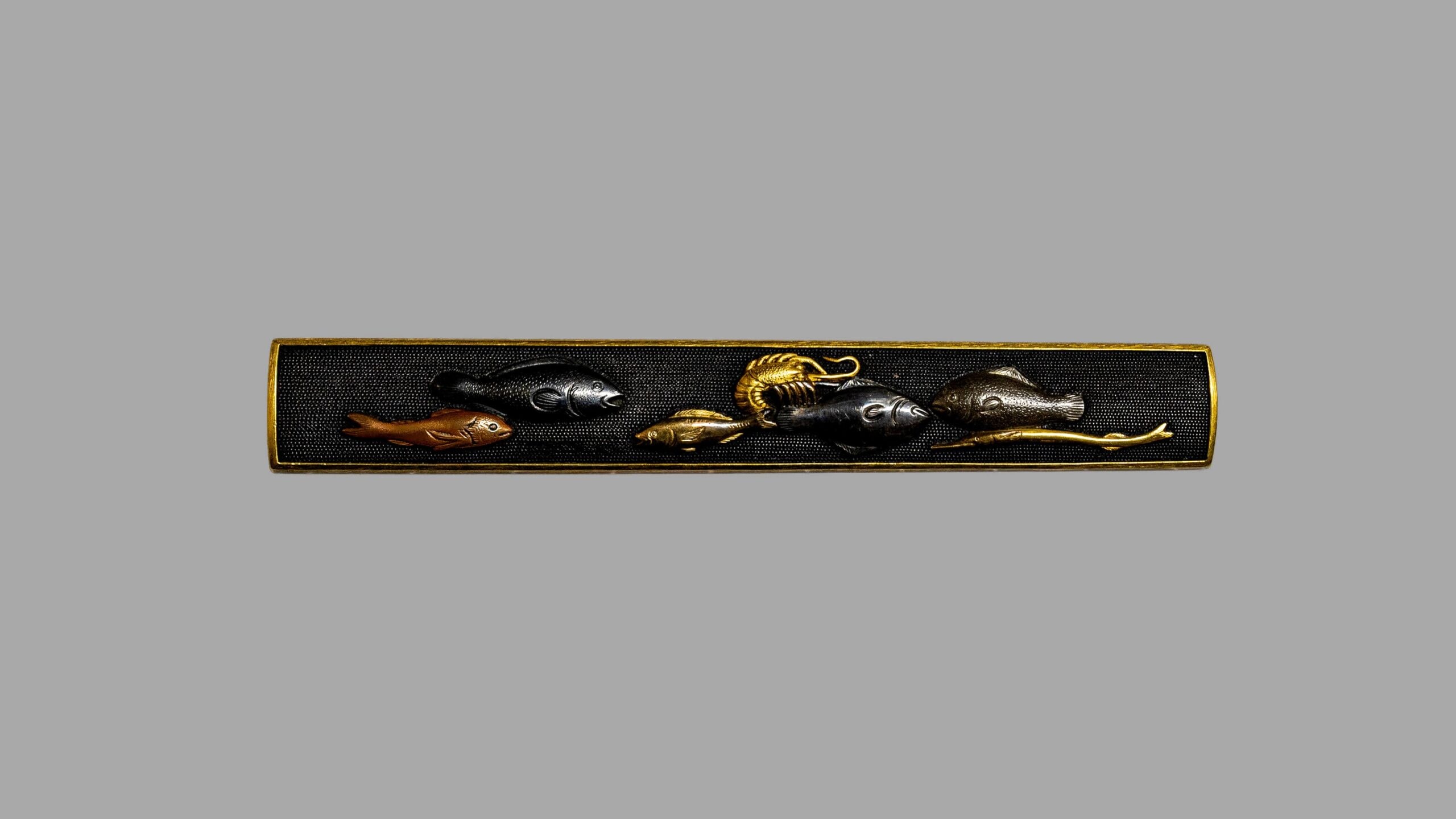
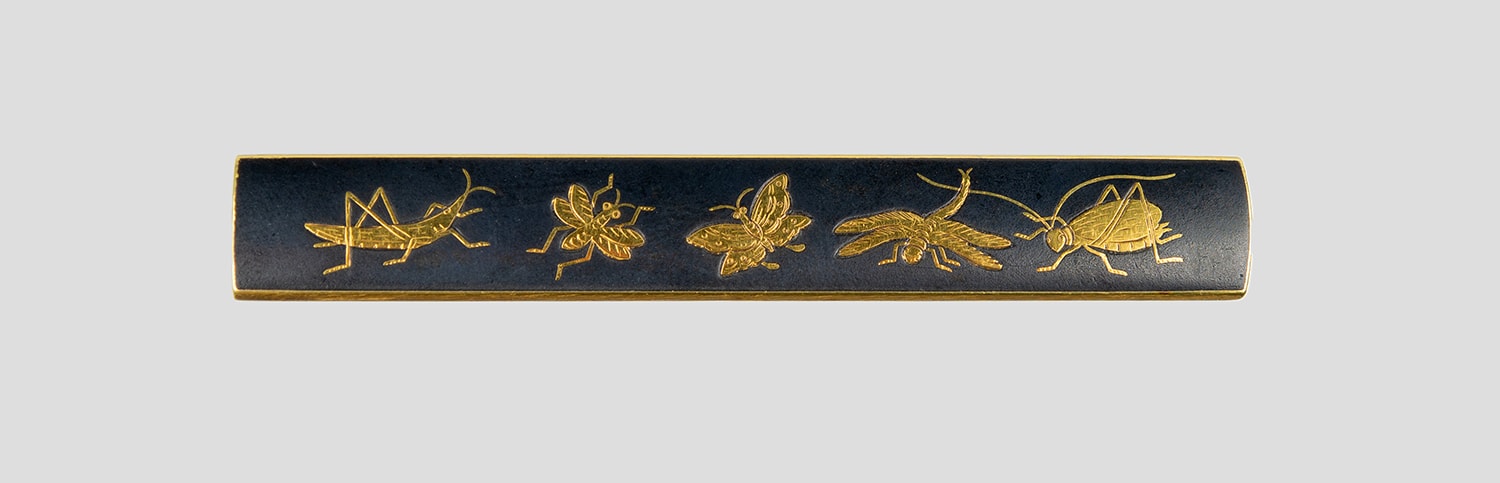
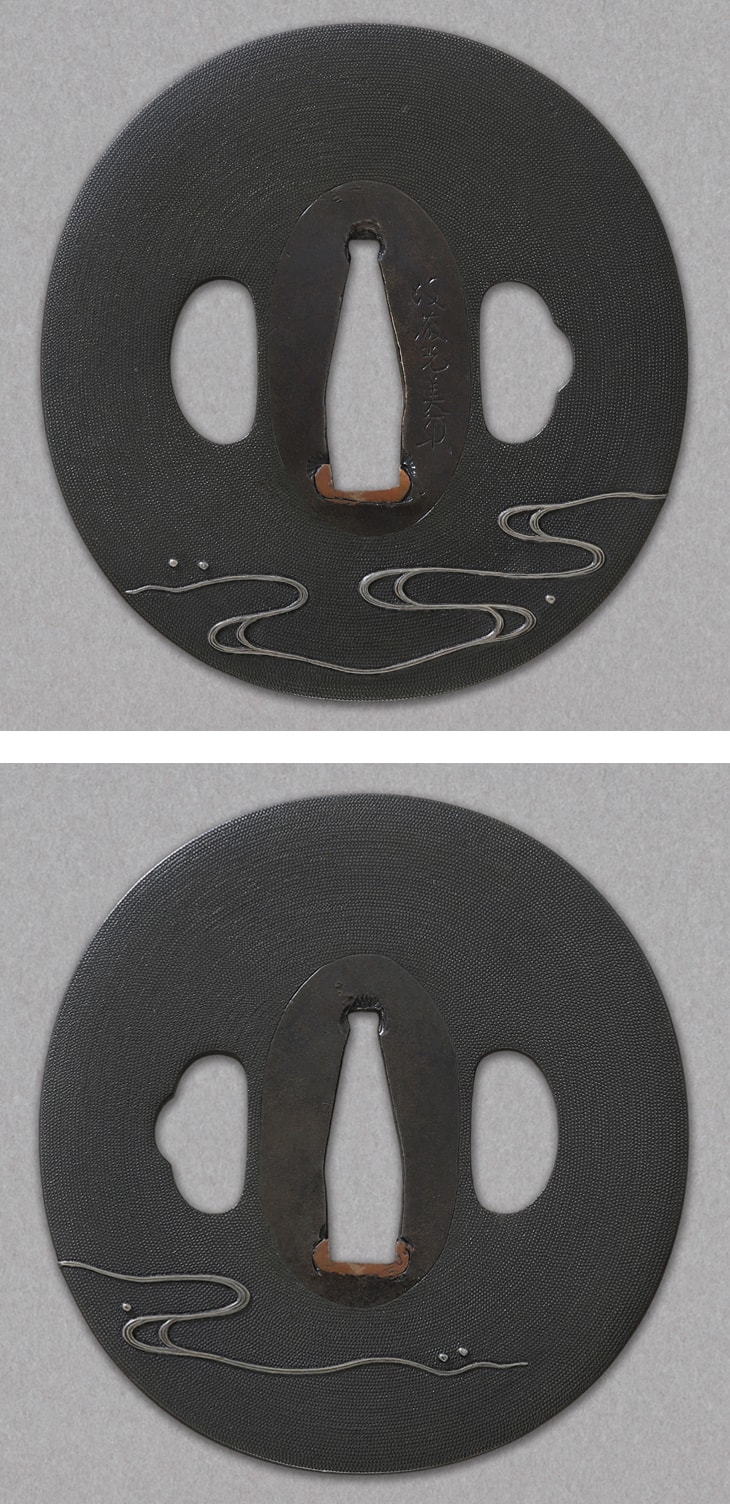
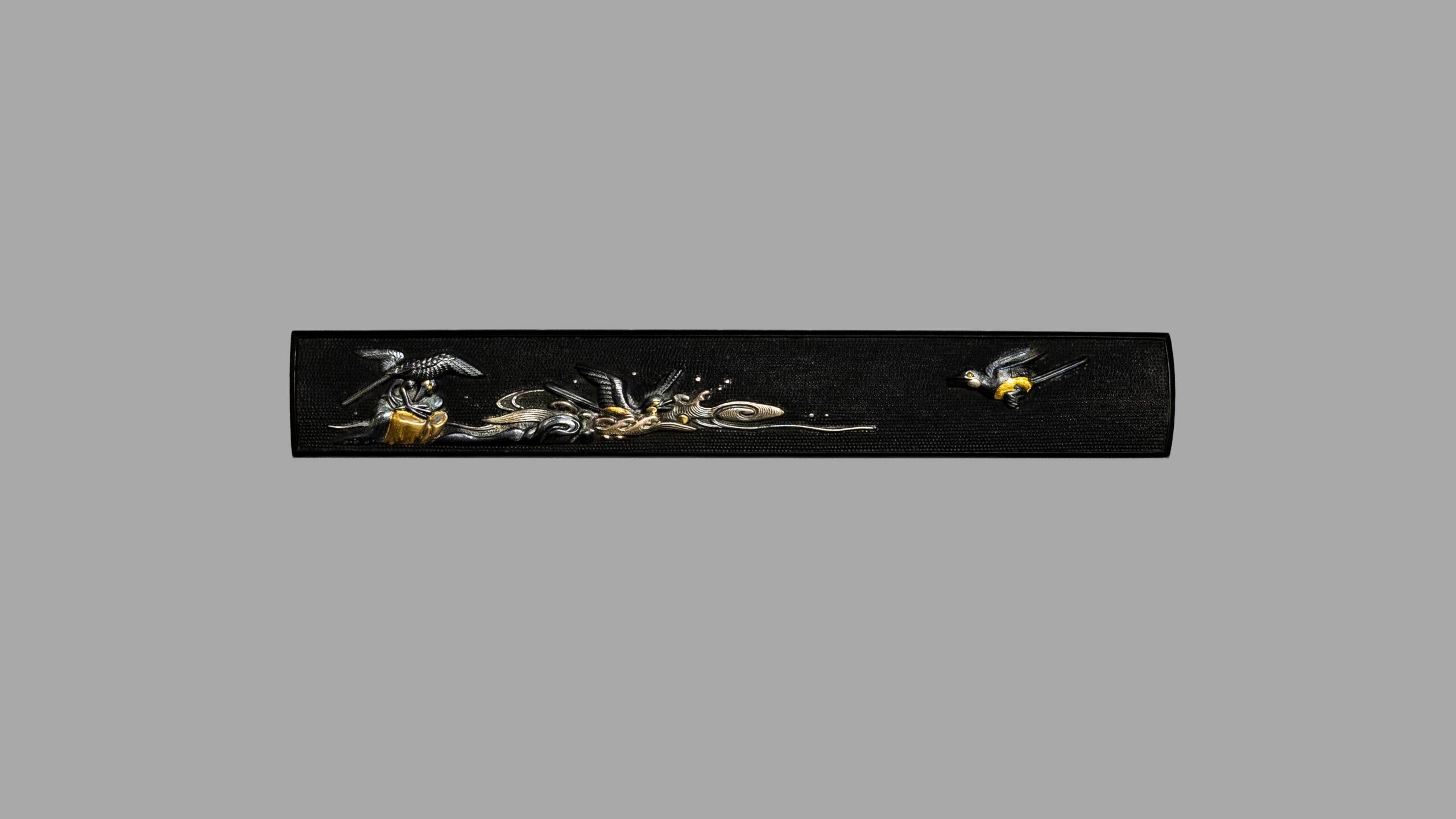
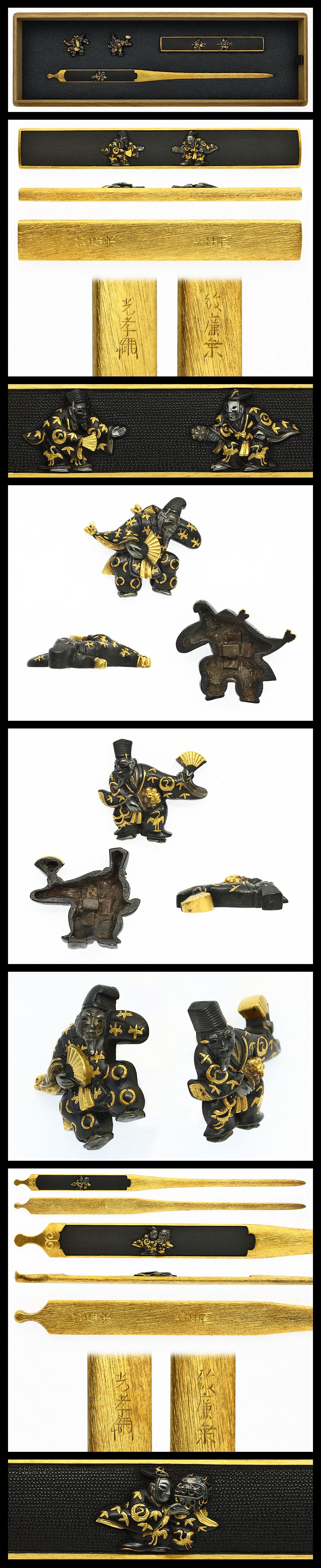
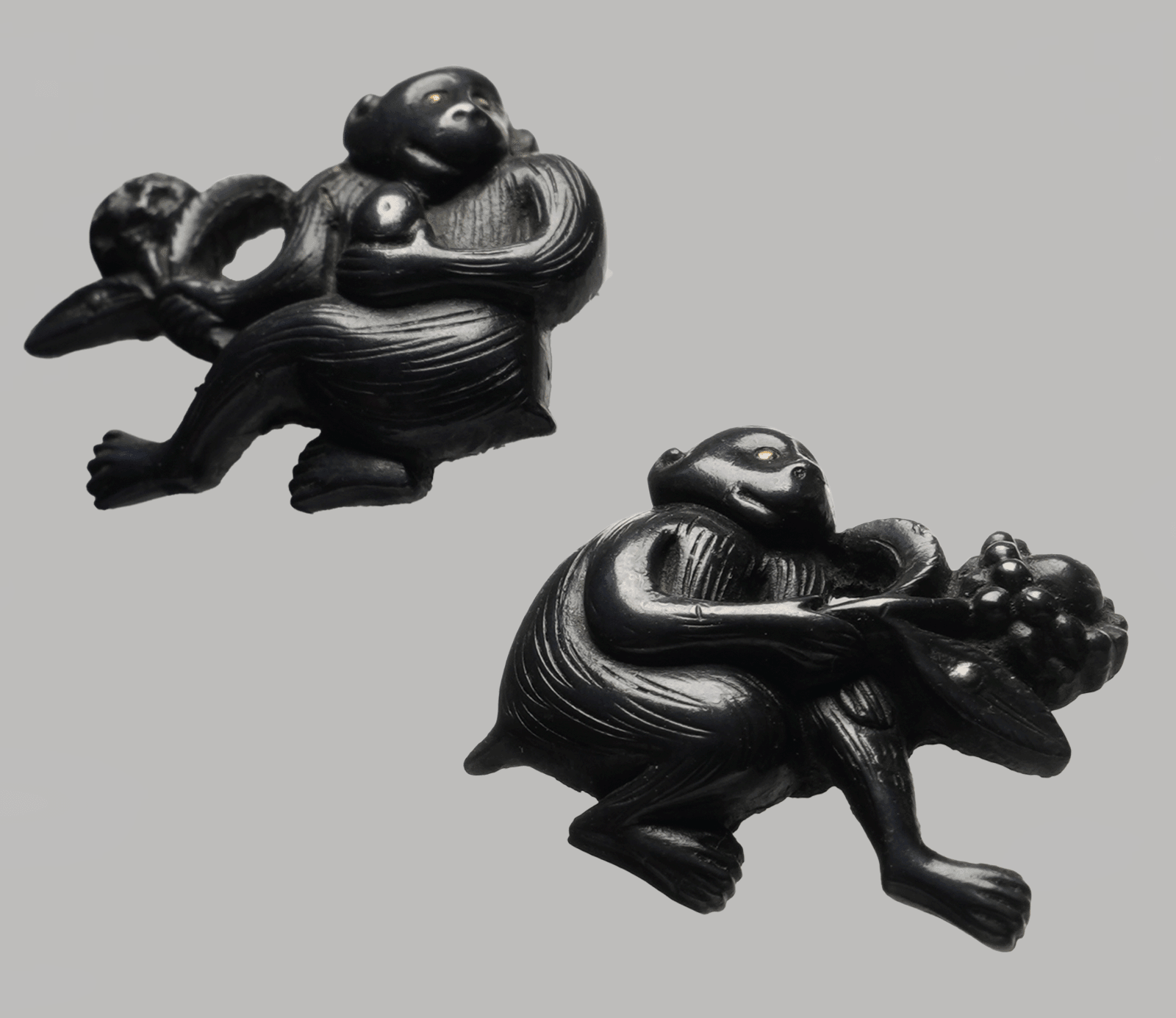
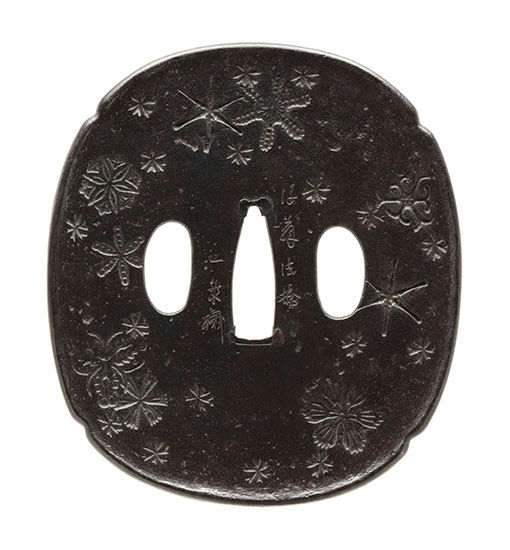
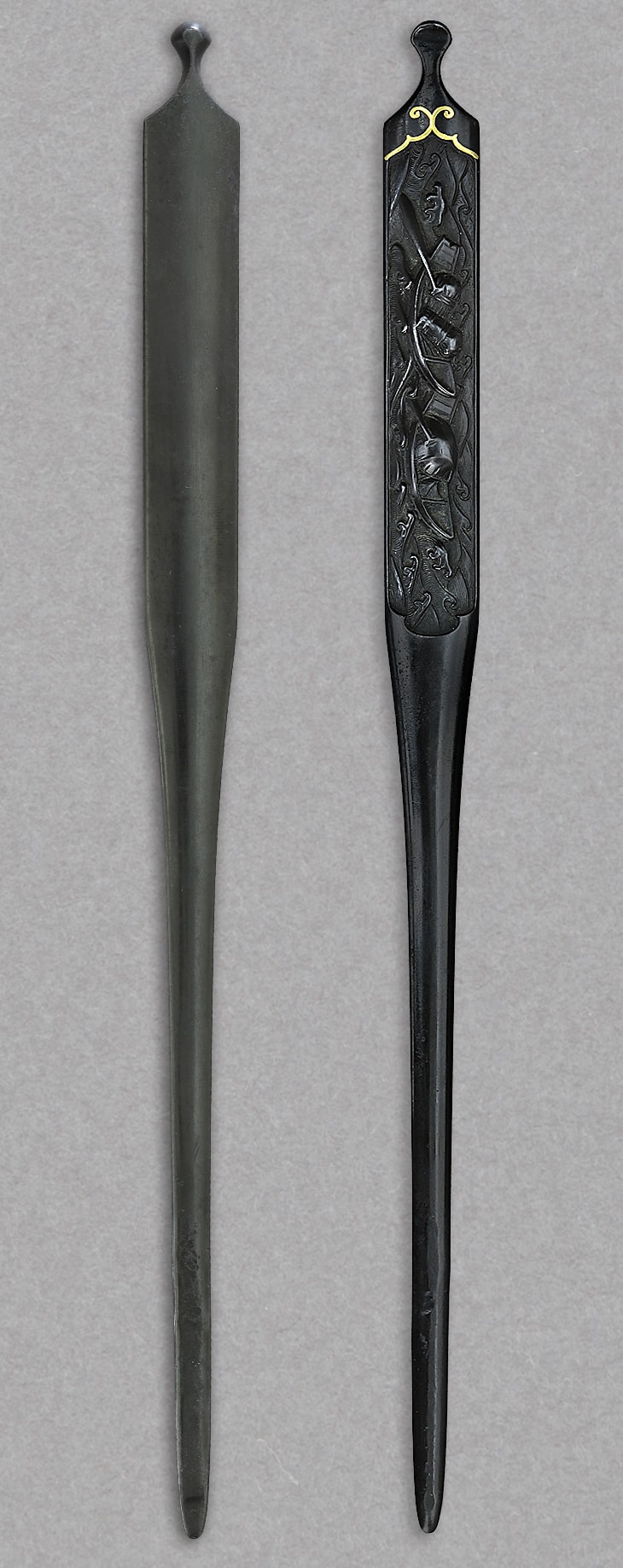
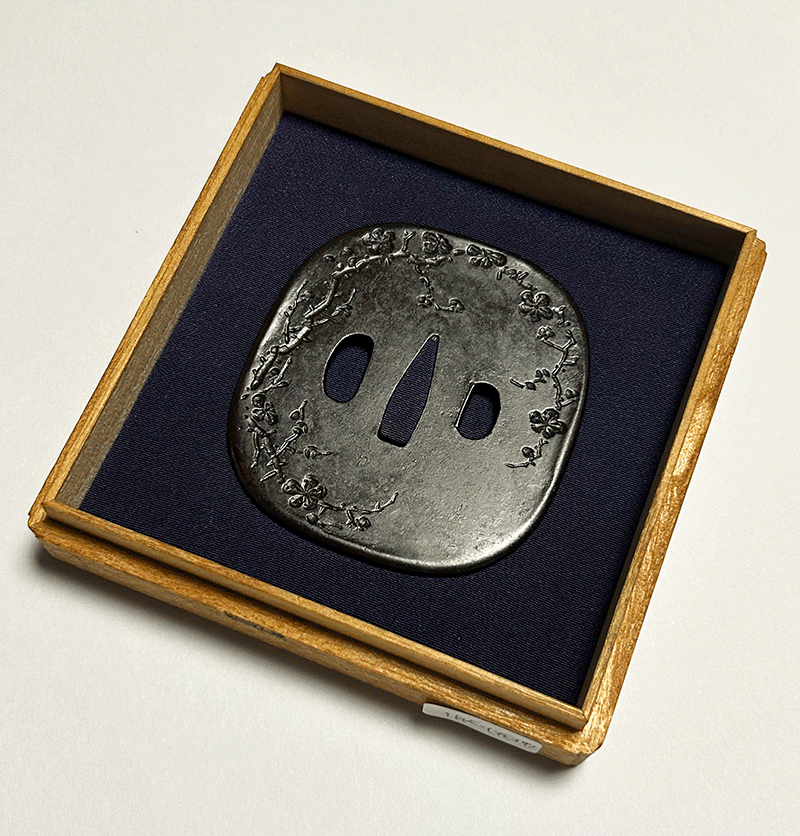
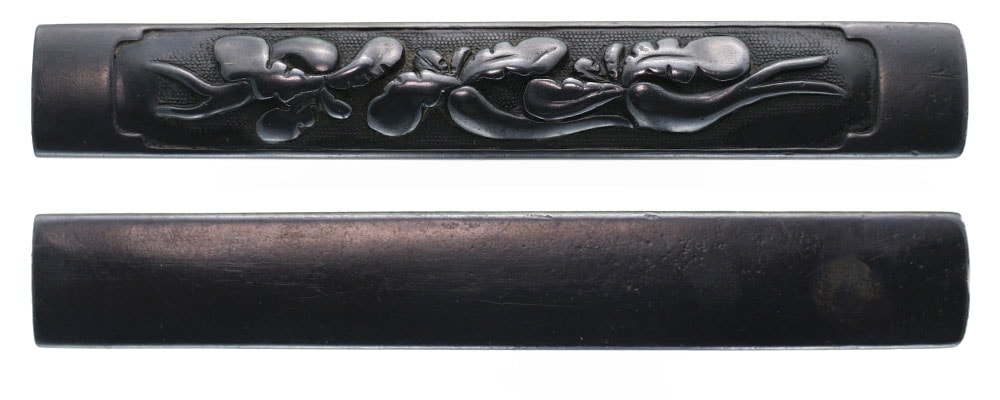
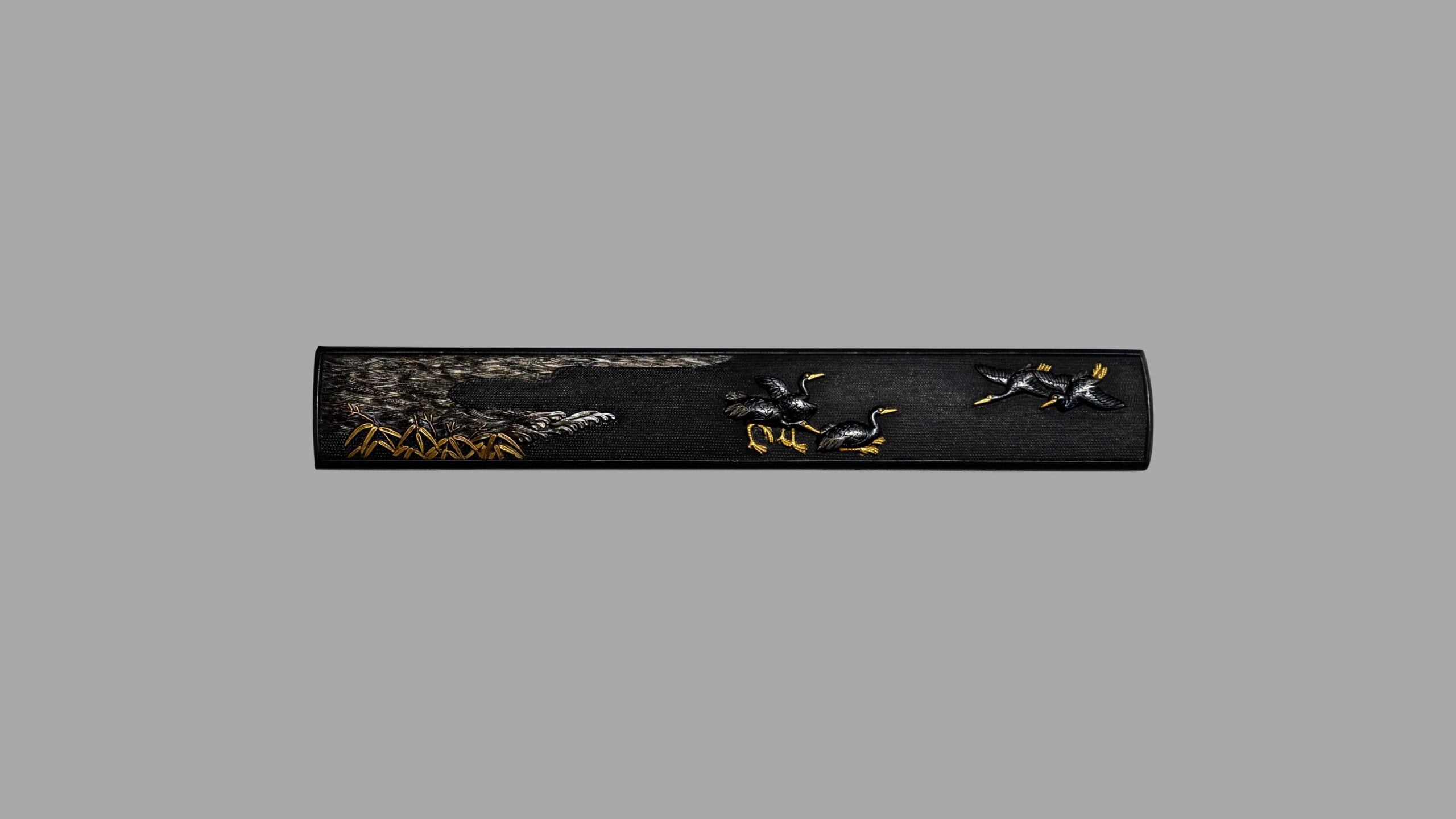
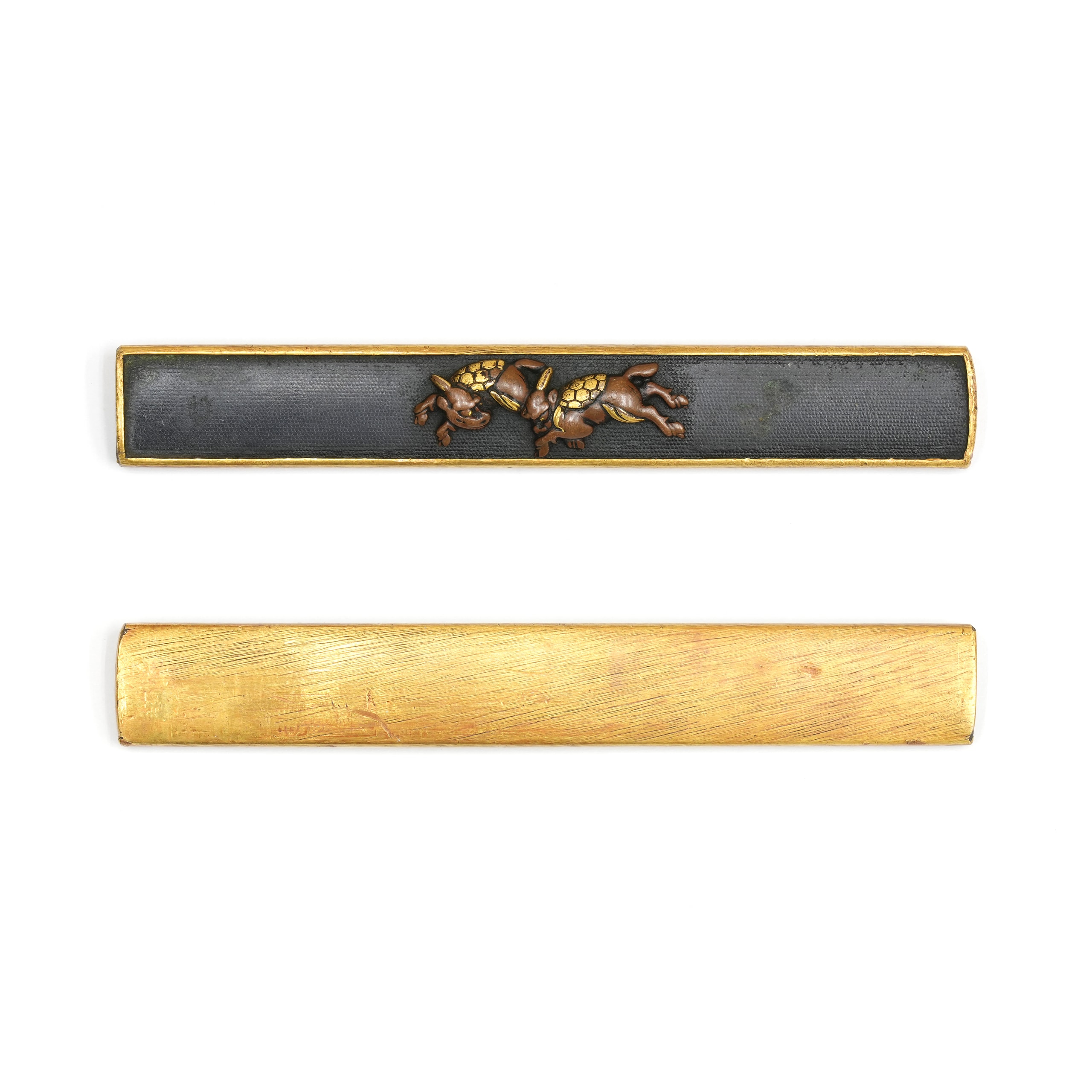
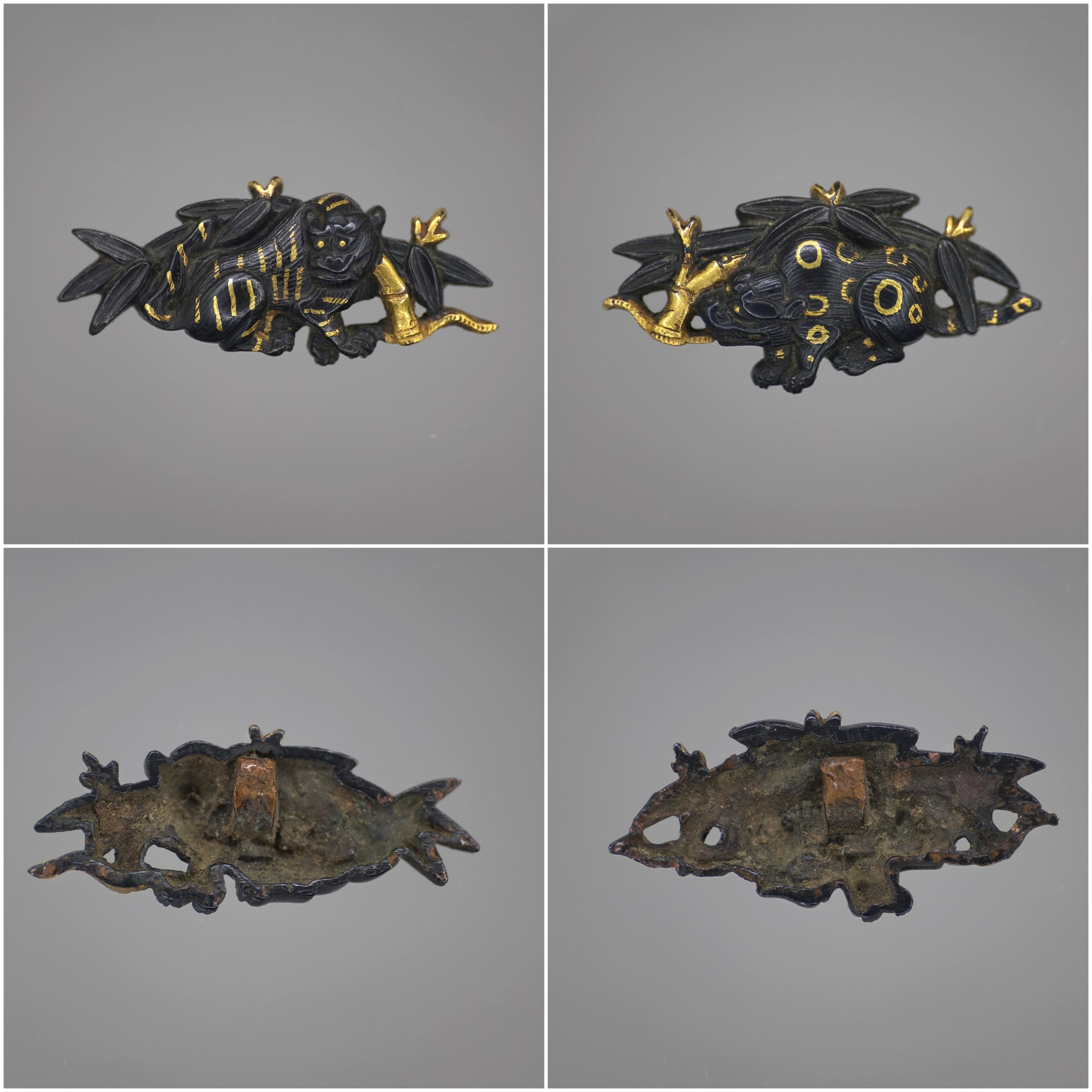
Goto Mitsumori, art name Keijo, was the third son of the twelfth head of the main Goto line, Jujo Mitsusato. He was born in Kanpo 1 (1741), bearing the personal name Mitsutomo and the common name Kichigoro. Because the thirteenth head, Mitsutaka, left no heir, Mitsumori was adopted by his elder brother; after Mitsutaka's death, he changed his name to Shirobei Mitsumori and succeeded as the fourteenth head of the mainline Goto house. His position thus placed him at the summit of the most venerable metalworking lineage in the Japanese tradition, carrying forward the unbroken succession from Yujo through fourteen generations of service to the ruling authorities.
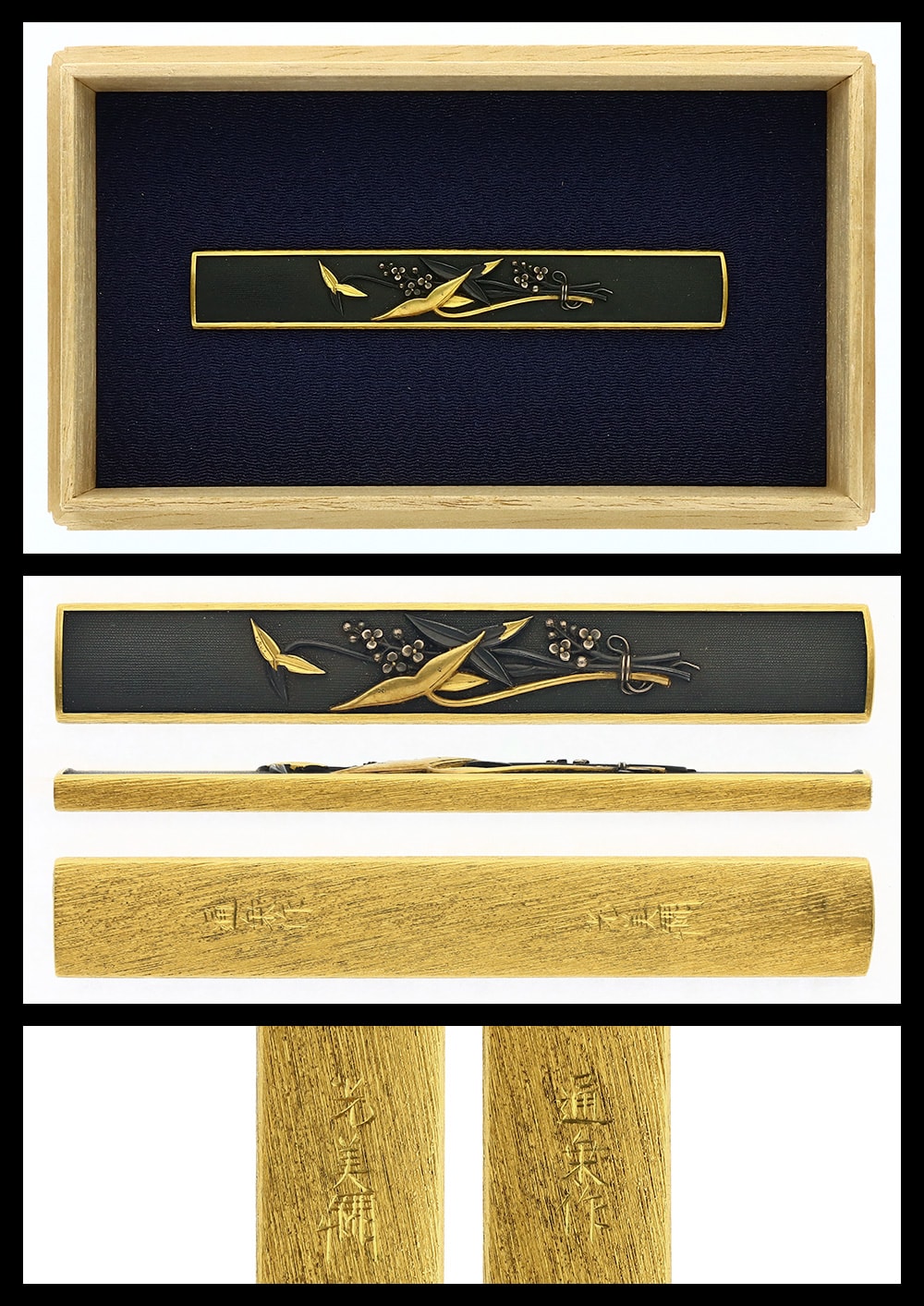
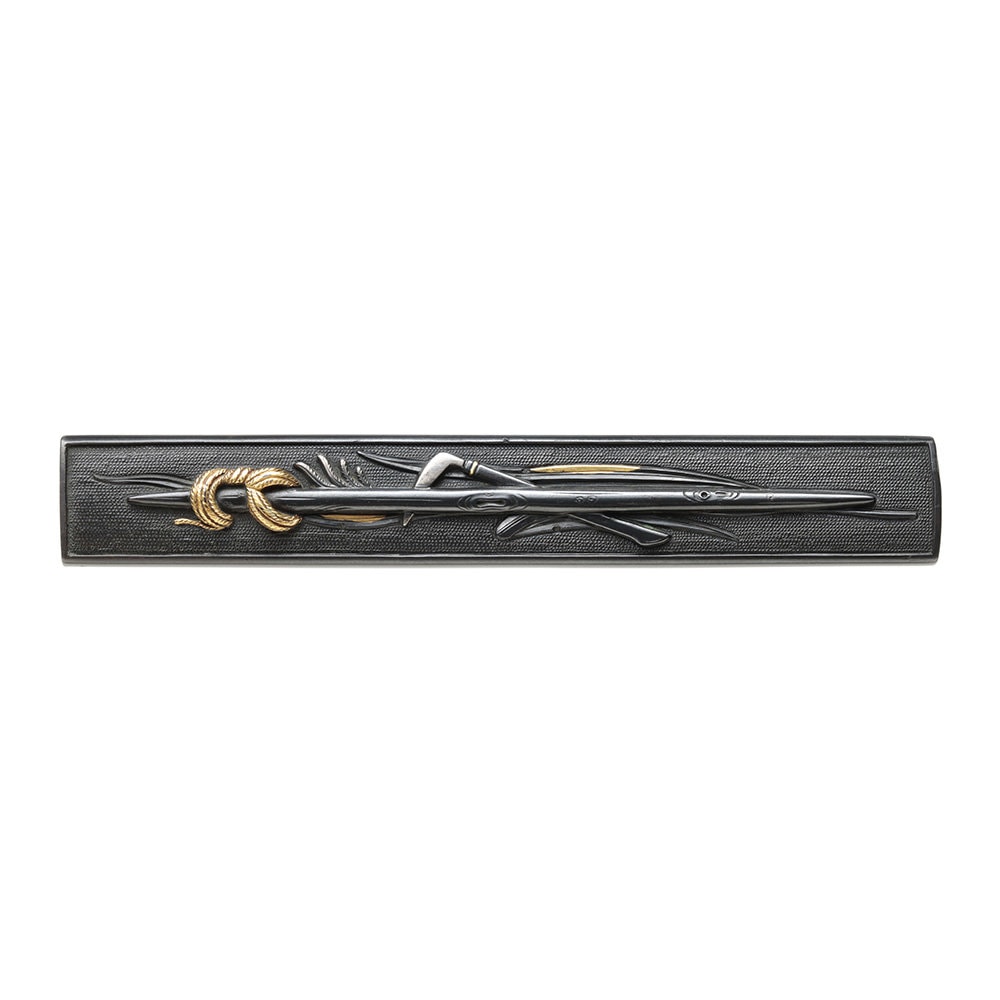
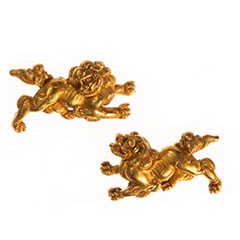
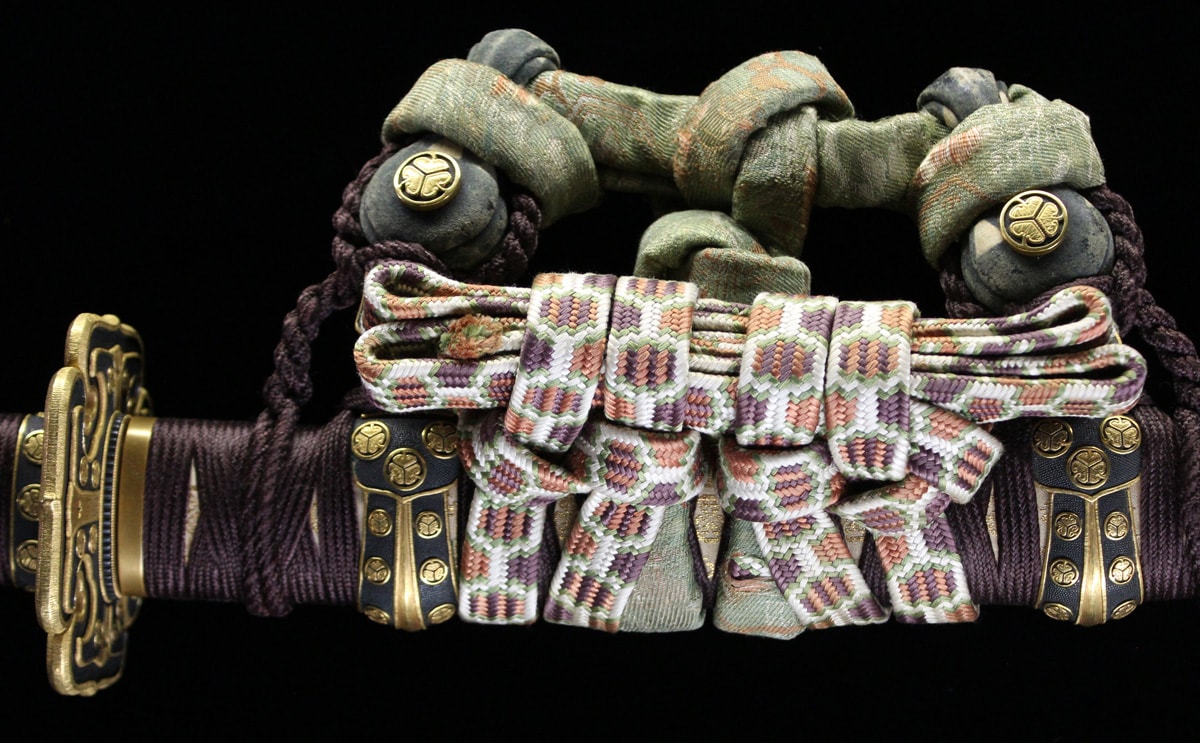
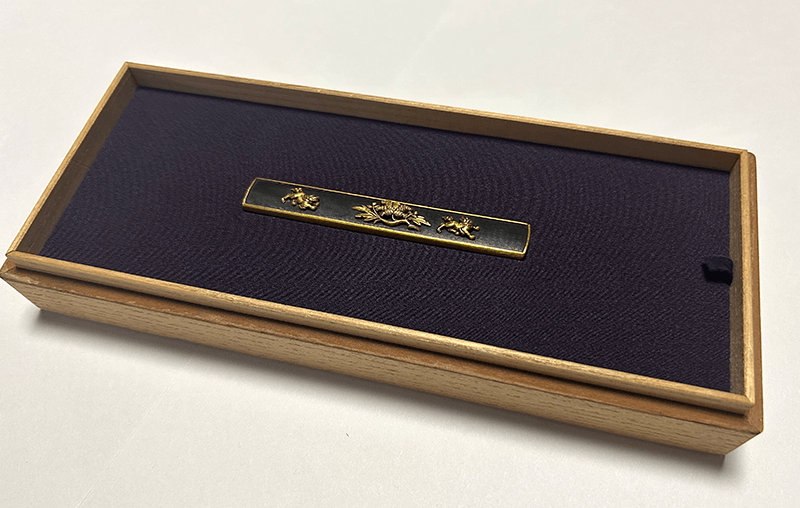
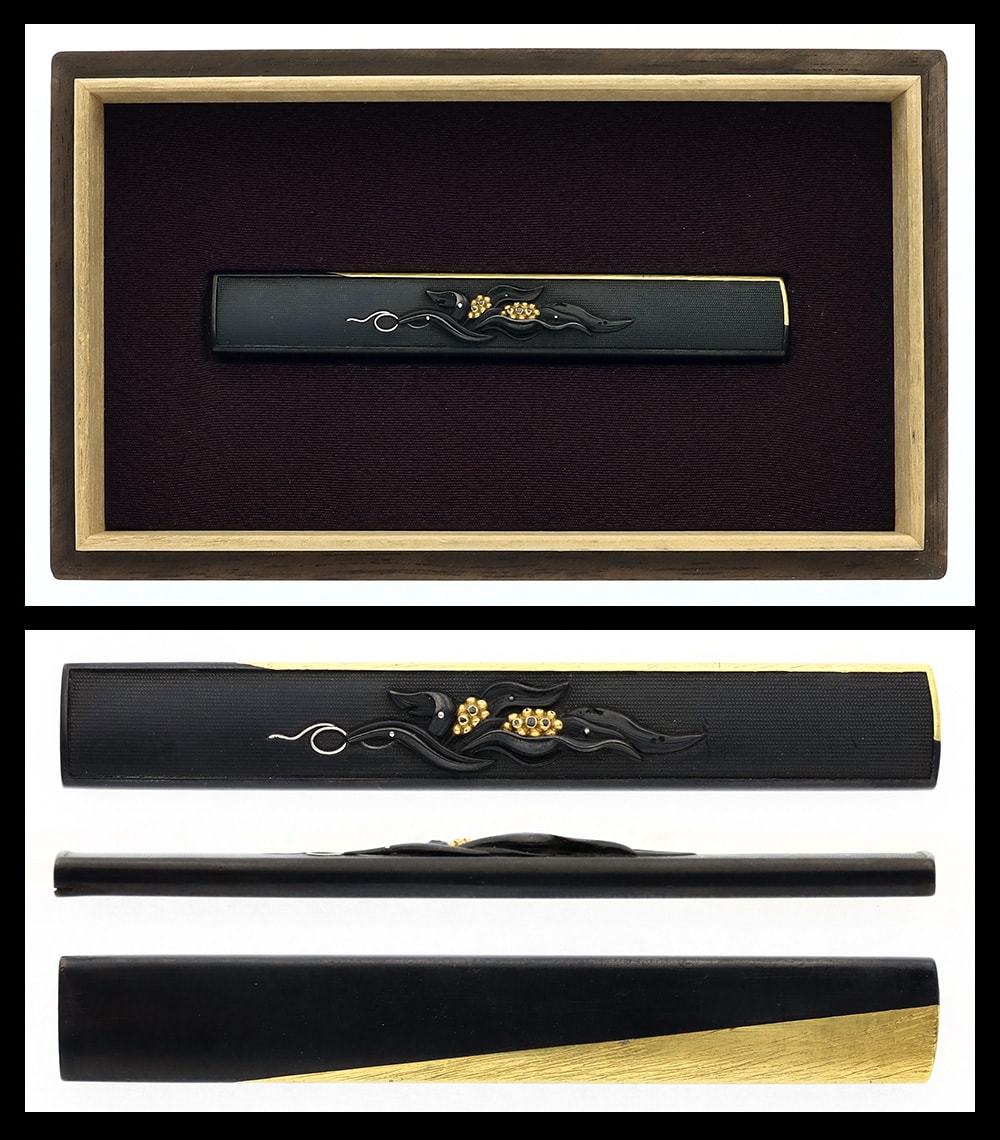
Mitsumori's oeuvre demonstrates the solid and reliable carving manner characteristic of the Goto house tradition (iebori), executed with painstaking attention throughout. His works are unified in a refreshing, pure black tonality of , rendered in both and grounds. He employed , with accents of kosuki-bori, and in gold and silver, achieving compositions of ample volume and richly rounded high relief. His subjects encompassed traditional Goto themes — , the legend of Huang Shigong and Zhang Liang, , and kirin — while also extending to more pictorial compositions in a painting-like manner. The gold crests on his and are noted for their large scale, excellent volume, and powerfully expressed presence.
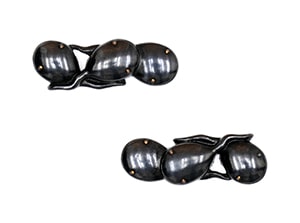
The characterizes Mitsumori's finest works as possessing a distinctive sense of "inner sumptuousness" achieved through restrained coloration and confident carving — a quality that brings forth his particular strengths to the fullest. Works bearing his own signature are comparatively few, lending additional significance to signed examples as important reference pieces. His sets are especially scarce and are counted among his representative achievements. Mitsumori's contribution resides in his faithful stewardship of the mainline Goto tradition during the latter half of the eighteenth century, demonstrating that the hereditary house manner retained its vitality and high standard into the late period.